
Returning guest writer and creator Amit Tishler joins Byron to talk all about his upcoming middle-grade graphic novel Solar Sisters from Papercutz.
We take a sequential sojourn into the complex cosmic world-building of the project, discuss transitioning into the middle-grade storytelling genre, and explore how modern influencer culture influenced the project. Amit also reveals how they are expanding the Solar Sisters universe into a full multimedia experience complete with an original pop EP, a tabletop board game, and more.
"Cool things only happen if you have the ambition and the drive to try and pursue them. It doesn't mean you'll get everything that you want, but my experience has been that if you try, it definitely raises your odds." - Amit Tishler
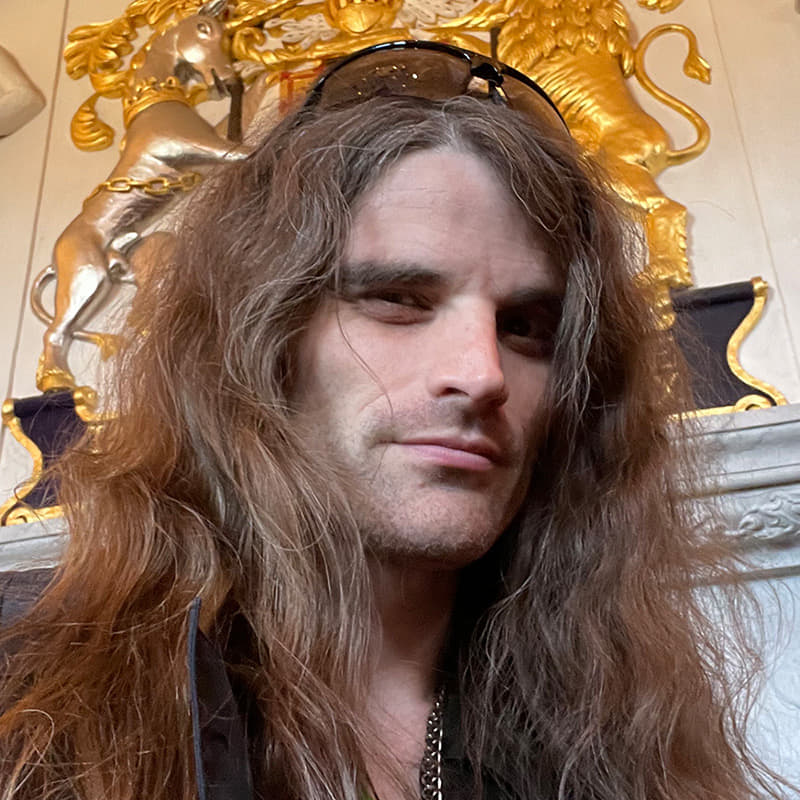
📚 PRE-ORDER SOLAR SISTERS: • Papercutz: https://papercutz.com/product/solar-sisters-vol-1/
🎲 FOLLOW THE SOLAR SISTERS BOARD GAME ON KICKSTARTER: • https://www.kickstarter.com/projects/lichenwoodgames/stardom-the-solar-sisters-game
👉 Mindsplatter Newsletter: https://mindsplatter.substack.com
WATCH THE VIDEO VERSION OF OUR CHAT ON YOUTUBE!
Solar Sisters from Papercutz
From the publisher
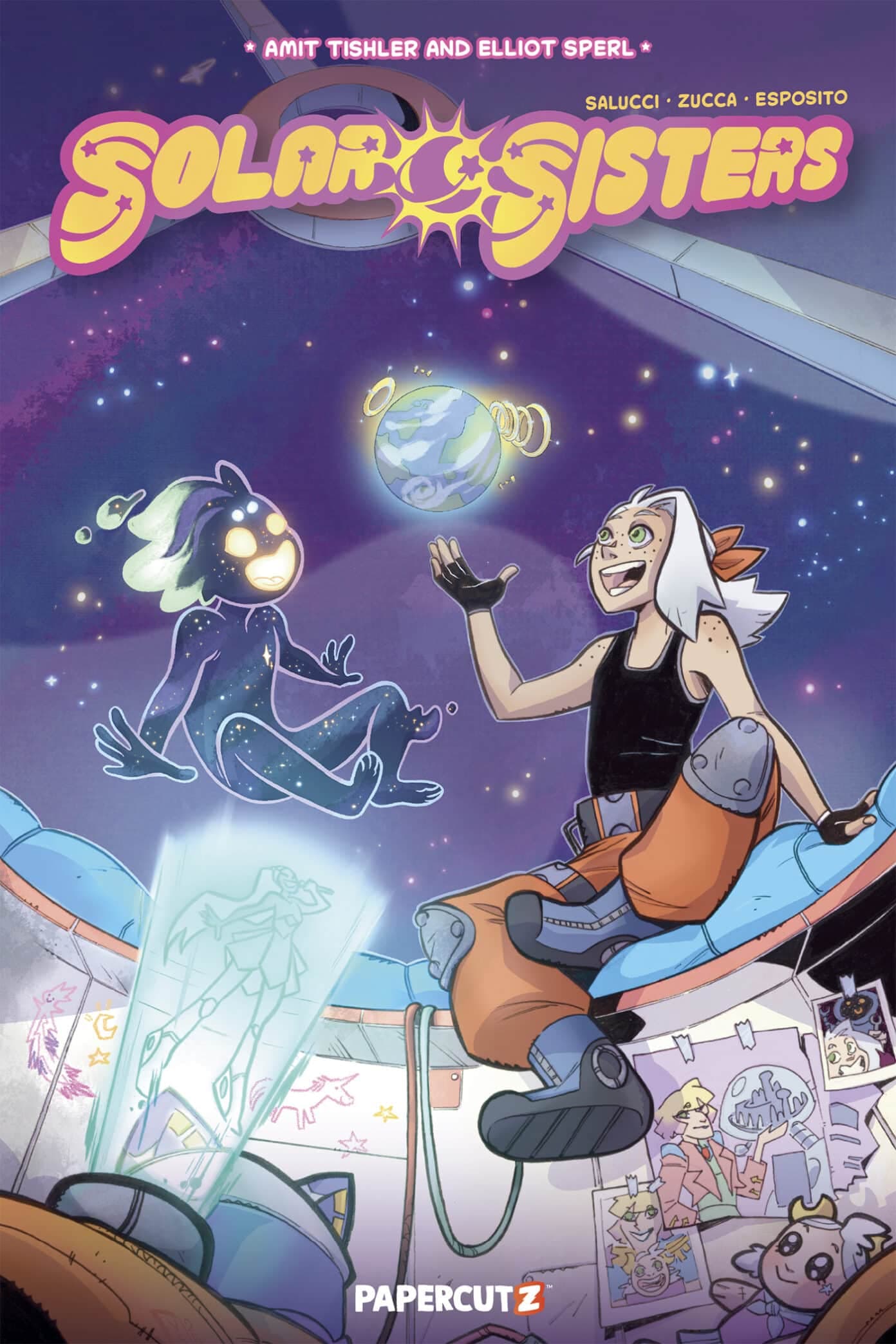
A washed-up moon kid, an accidental alien superstar, and a lesson that fame isn’t always worth the spotlight. Phoebe Dust’s days as a child star are over. Born and raised on the moon, she’s shocked to discover her mom’s tourist trap, the Lunar Link, is deep in debt and circling the drain. Determined to save it, Phoebe hatches a plan that accidentally rockets her alien sister, Luna, into interstellar superstardom. Overnight, the Lunar Link is swarmed with tourists, the perils of fame close in, and Nova Starr, the galaxy’s most ruthless influencer, is plotting to claw the spotlight back by any means necessary. With the forces of fame, fortune, and cutthroat rivals pulling from every direction, Phoebe must keep her family's future from being blown into stardust.
Follow Comic Book Yeti
🔗 Comic Book Yeti LinkTree: https://linktr.ee/ComicBookYeti
For partnership and ad inquiries, please contact: thecomicsyeti@gmailcom
Follow your hosts
ARKENFORGE
Play TTRPG games? Make sure to check out our partner Arkenforge. Use the discount code YETI5 to get $5 off your order.
Make sure to check out our sponsor 2000AD.

[00:00:00] - [Speaker 0]
Your ears do not deceive you. You have just entered the cryptid creator corner brought to you by your friends at Comic Book Yeti. So without further ado, let's get on to the interview.
[00:00:11] - [Speaker 1]
The future is calling. 2,000 AD is the galaxy's greatest comic with new issues published every single week. Every 32 page issue of 2,000 AD brings you the best in sci fi and horror featuring characters like judge dread, rogue trooper, and more. Get a print subscription in 2,000 AD, and it'll arrive to your mailbox every week. And your first issue is free.
[00:00:35] - [Speaker 1]
Or subscribe digitally, and you can download DRM free copies of each issue for only 9 a month. That's 128 pages of incredible comics every month for less than $10. Head to 2,000 AD and click on subscribe now or download the 2,000 AD app and start reading today.
[00:00:55] - [Speaker 2]
Hello, everybody, and welcome to today's episode of the Cryptic Creator Corner. I'm Byron O'Neil, your host for our comics creator chat. Today, I'm welcoming back on the show one of my friends who I have not had the occasion to chat with in quite some time, so I'm really happy to get a chance to catch up. He's got a delightful new middle grade graphic novel dropping this fall with paper cuts called Solar Sisters with fellow collaborators, Elliott Spurl, Virginia Salucci, Julia yeah. Julia.
[00:01:22] - [Speaker 2]
Yes. Julia Zuka. I hope I'm getting all these right here. And Taylor Esposito. Well, welcome back.
[00:01:30] - [Speaker 2]
The man who seems to multitask better than multiple man and whose hair is befitting Bucky Barnes, my friend, Amit Tischler. How are you, my friend?
[00:01:41] - [Speaker 3]
Thank you so much, Byron. It is an absolute pleasure talking to you and absolute pleasure being here. Thank you for having me again. I like that. My hair comes up in every conversation.
[00:01:53] - [Speaker 3]
It kind of puts this pressure of like, oh my God, I better keep it there for as long as I humanly can, because I feel like if one day I just shave my head, that's it. I'm no longer recognizable. Like, I'm an alien now.
[00:02:09] - [Speaker 2]
Well, when I wrote that into the monologue, I was like, he's totally going to show up with, like, this shaved head or something like that. It's going to screw screw my whole thing up. But, you know, you you didn't disappoint. And kind of while I work through my own hair envy as a bald man, you were fresh off attending the annual American Library Conference, which I know is one of your favorites. So was it a good show this year?
[00:02:31] - [Speaker 3]
Oh, it was it was wonderful. I mean, I I love that show in general just because it has a very I mean, there's multiple things going on that make it fun, I think, for creators. One, it's librarians, and they're just a delightful audience. Right? Like, you're talking about people who are professionally dealing with, hey, promoting reading, creating these spaces for people to read, to get exposed to new content.
[00:02:58] - [Speaker 3]
Like, they're fans of the medium, and they're also professionally involved in it in a very different way, in way of education and advocacy. And that's a different crowd. Right? They are fans, but it's not the general fandom of, let's say, Comic Con, which is a lot more diverse and a lot more like, these are buyers. These are librarians and educators, so you immediately get this like very, very different bite.
[00:03:23] - [Speaker 3]
It's not an event for families, which makes everything more chill. Right? And it also lowers the level of pressure because when you're with publishers in, let's say, a comic con or a fan expo, there is a certain pressure when you're doing a signing, you're selling books. Right? Right.
[00:03:37] - [Speaker 3]
And ALA is a lot about most publishers don't actually sell in ALA. They do a lot of giveaways for new books because they know, hey, if we expose librarians to our new books, if they really like it, they will order sign for their library. They will bring it to their audience. So it is so it also means that when people come to the booth for your signing or for your panel, it's for a different reason. There isn't that pressure of like, okay, I need to sell you on this thing.
[00:04:06] - [Speaker 3]
It's more like, hey, if they're passionate, they'll just take it and it's very easy for everybody. And then it's more of a, you know, how much space do they have in their tote bag and whether they want your book in there, whether that's high priority. But that does make everything very chill and very fun and very calm. So I just love that event. Also this year was in Chicago and Chicago was an awesome place to visit.
[00:04:29] - [Speaker 3]
So it was Cool.
[00:04:32] - [Speaker 2]
So is it, are the panels themselves structured more like an education than, I mean, they say educating with a regular con panel, but that's a whole lot more about, this is why our new, you know, crossover launch is so cool as opposed to actually teaching people how to do something. That's kind of what I got in my head.
[00:04:51] - [Speaker 3]
Yeah. It's, it's, you know what? It's pretty close. I mean, there are a lot of different kinds of panels there. The panels that I usually do with Papercuts or MadCave are BookBuzz, which is quite literally them showing off, hey, this is, for example, Papercuts.
[00:05:06] - [Speaker 3]
We're showing off five of our upcoming titles and, you know, like, here are the creators to actually talk about them because you are essentially pitching them to librarians, right, first and foremost, more than directly to consumers. So the questions that come up are a lot more about they're a lot more promotional, not in a marketing sense, but more you're talking to a librarian, hey, this is why this book, this is the background for the book, this is the background of the creator, this is what they want to achieve. You're talking through this filter of education, of libraries as third spaces, of how to reach new people, how to promote reading, like the, the, it's less of a fan experience and a lot more to put it in like cold terms. It's a lot more B2B, right? Like business to business.
[00:05:58] - [Speaker 3]
Which once again means that it has a more professional, slightly less loose own to it, but it's still fun in the end. Like, when you put a bunch of comic creators on a panel, it's gonna be fun. Right? And people have fun with it. But, yeah, it does feel different because there is especially now that, you know, I'm releasing a title called Papercuts.
[00:06:18] - [Speaker 3]
It is middle grade. It's all family. It is gentler, and there are other components to it that need to be emphasized more than others, just inherently. So it means that the way that the way you're pitching it, what you're talking about, what people are interested in hearing about just tends to be a little bit different.
[00:06:36] - [Speaker 2]
That's really cool. Yeah, that's awesome. Yeah. Maybe someday, you know, I won't have to deal with my limitations of lupus anymore, and I can join you there. It's definitely at the top of my list of one of the ones I want to check out.
[00:06:47] - [Speaker 3]
That would be wonderful. And honestly, like you would love it. I'm also in a very weird it's weird to me coming in this year because for the first time, and I didn't even think about this until Spencer, like he does marketing for Papercuts. In, in the panel, he was talking about, you know, and this is this creator, and this is Amit who is also an educator. He's a teacher now.
[00:07:09] - [Speaker 3]
And I'm like, oh, that's right. I am. I can't, so I teach now in Vancouver Phil School. It's something that I've never done before, but when I moved to Vancouver, it's, you know, it was a good opportunity for networking with local industry because I am new in town. I came from LA.
[00:07:27] - [Speaker 3]
And I it ended up being very fun. And, you know, it's a well known establishment, but I'm still me. So thinking of myself as the teacher was like, oh, okay. So I kinda had to make a joke about it. Like, look at the people that they allow to teach nowadays.
[00:07:42] - [Speaker 3]
Holy shit. But it was, but it was it was kind of fun. Now I'm coming in through that lens as well, even though, you know, I teach in essentially a trade school for film and for media. So, yeah, that was that was another twist on top that I didn't expect to kind of have in my head during and after.
[00:08:03] - [Speaker 2]
I bet. Yeah. You'll have to add, to your mental CV professor. So
[00:08:08] - [Speaker 3]
Yes, exactly.
[00:08:09] - [Speaker 2]
Yeah. Cool. Well, let's get in the book before I get us sidetracked all day. I read the copy of Solar Sisters that you sent over. Kind of to give people a snapshot, you have a washed up galactic child star who ends up with an unexpected alien sister, and the perils of fame are examined as well as the bonds of found family.
[00:08:30] - [Speaker 2]
You have told me some time ago that your next project would be unexpected. Truth. But I didn't expect Lilo and Stitch beats Jim and the Holograms in space. So where did the idea come from?
[00:08:45] - [Speaker 3]
Yeah. That's so I I was actually really excited reactions to anybody that knows my work, you know, from, like, Eden Frost or Last Gordon's, very dark. Like, I I feel like there is still a lot of the same, you know for as poppy, as pink, and as sparkly as this story is, inherently with everything that I do and that I work on with Elliot as well, there is a hint of I won't say darkness, but there's a hint of, like, this emotional core that hurts And a little this one still has it. So, even though it feels like a such a massive departure in terms of the tone and the vibe and the fact that it's so glitzy and flashy and funny, and it still has a lot of sadness in it, and it still has a lot of, you know, tragedy, even though it is gentler, and a lot of struggle. Like, it has all of those elements, and, you know, for me, you know this by now, like, I like to sit with the emotional moments.
[00:09:51] - [Speaker 3]
Like, I I don't like to do what they did they do a lot with the Marvel universe where you have to give it a, you know, a joke in the end so that it doesn't hurt too much. I'm like, no. I'm gonna let you sit with it. So I feel like this book has all those elements as well, and and I am proud of that because I want that to be I want that to be a through line through all of the things that I work on. So while it is a departure, I still feel like it's authentic.
[00:10:16] - [Speaker 3]
Yeah. In terms of where the idea came from, it's fun. You know? Like, when Neil Elliott developed any concept, we always start off with a core, let's say structure. And then when we iterate on it, that structure evolves.
[00:10:34] - [Speaker 3]
But a lot of the core things about it always stay through all the iterations because we never kind of get married to one thing. Part of the process is just like, let's break it apart, let's keep on fleshing it out and see where it takes us until it feels solid, and we spend a good amount of time doing that and even like pitching just to see what sticks, what doesn't stick, going back to the drawing board. The original, very first version, like I pitched the original concept to Elliot to get us started, and you can see which elements stayed. In the very stripped down, first core of the idea, we always had, you know, in the world, and this is an introduction to everybody listening about kind of like the lore of the world of Solar Sisters, because it's very character driven, but you could very quickly get this idea of how the world is built and what happened in it. So we're in the twenty second century, and we have this technology that just, you know, like people started colonizing the moon and Mars, like we're starting to colonize the surfaces outside of Earth's orbit, and it's a big deal, but it's a slow process and new opportunities come from that.
[00:11:43] - [Speaker 3]
And then all of a sudden, this new technology comes into the scene. We kind of know how that feels, right? It's called the Interloop. It's essentially a warp drive. Right?
[00:11:52] - [Speaker 3]
It's technology that allows you to get from Earth to Pluto in a matter of seconds. And that means that all of a sudden, it's it's a final it's a, you know, it's a new frontier. Right? And now everybody can get to any surface in the solar system in seconds, so you have a gold rush of, like, let's colonize every space and spaces like the moon, which right now is, hey. This is the only place where we can really try to do these things because of proximity.
[00:12:18] - [Speaker 3]
Nobody cares anymore. Right? The value just drops to zero or drops significantly because there's so much out there. This was in the core original version as well. Right?
[00:12:29] - [Speaker 3]
So interloop comes in, all of a sudden moon is left in the dust. In the original version, we have still Selena Dust, you know, Phoebe's mom, essentially opening at the time, now it's a hotel chain called, you know, or a hotel called the Lunar Link. But originally, it was still called the Lunar Link, but it was a gas station. Right? If a lot of people are trying to get to Mars or anywhere else, you need a stop because you still need you don't have the interlude.
[00:12:55] - [Speaker 3]
You can't just do a jump. Right? So she was like, you know what's gonna be genius? I'm gonna start a chain of gas stations that are on asteroids, and the first one's gonna be on the moon because everybody's gonna need to stop on the moon to refuel. So she opens this cheesy fifties style gas station on the moon with a diner and everything like that, and that ends up booming.
[00:13:16] - [Speaker 3]
And that stayed the same except we turned it then into a Vegas style hotel, into a full resort. But in the core idea, that was still the case. And the other thing that stayed is Phoebe, her daughter, was essentially somebody who was the mascot of the Lunar Link, which is the case here as well, except for she's more of a performer and not just a symbol. And after the Angel Loop is created, nobody cares about the moon and the the the entire business just falls apart. And in the original concept, it was Phoebe essentially working in that gas station alone with her brother who was essentially Luna.
[00:13:55] - [Speaker 3]
Right? A little alien that they discovered on the moon. So a lot of these elements were there. Right? But a lot of the things that came out of the main plot weren't.
[00:14:06] - [Speaker 3]
That was just the core because now the plot really involves, you know, Nova Star and stardom is such a major element. So all of these components, just by throwing in this performance and media and fandom and stardom into it, all of these things, it really changed how the story unraveled. But the core idea was always like, you know, business on the moon that really relied on, hey, the spark of, like, we opened it at the right time at the right place, and then the complete collapse when new technology comes in, and how do we deal with this the day after? A lot of the characters have the same elements. Selena was always, I'm going to hustle.
[00:14:44] - [Speaker 3]
I'm going to be in denial about how things are going and it's going to be fine. It's going to be fine. Kind of like a better, very better cold soul, but with better intentions. Swindler, hustler, always trying to make things work. And then her daughter who is really grumpy about her entire life being dominated by having to keep this business going just for her mom and for the family.
[00:15:08] - [Speaker 3]
All of these elements were there. Sprinkle in this new angle of celebrity culture and stardom, and you get what Solar Sisters is now.
[00:15:18] - [Speaker 2]
Yeah. I really enjoyed somebody from East Tennessee, the connective tissue being, kind of the gas station intergalactic diner tourist trap. It's fun to explore as the story's anchor point, because I grew up close to Gatlinburg. I'm not sure if you've ever been there. Do you know No.
[00:15:35] - [Speaker 2]
Nothing about it? Okay. So it's just like picture a mini redneck Las Vegas where if you consider the wider context of Pigeon Forge as well. Right? So it's it's glitz in what past us for a country version of glamour, with the promise of a moonshine hangover and apple fritters.
[00:15:53] - [Speaker 2]
It's kind of a whole, it's kind of a whole lot of, Hey, there's Dolly Parton. Thank you. Drive thru. You know, but the book gives me this feeling. You get that confined, you get that sort of universal wanting to not be told what to do, which is Teenage Blueprint 101,
[00:16:10] - [Speaker 3]
right? Yeah. Yeah. Yeah, absolutely. It's funny.
[00:16:14] - [Speaker 3]
Like it is the corniness of the Lunar Link as a setting. And again, for anybody listening, our story really focuses on like, the main character is Phoebe, who grew up essentially as a child star. So we turned her into a Shirley Temple type. Right? So Selena opens up this super glitzy but corny as hell themed resort on the moon that came from a very specific inspiration, by the way.
[00:16:42] - [Speaker 3]
I did a project for, like, Universal Studios in my last job, and they sent me out to Florida to, to work on it. It was like the Minions ride or something like that. And they put us in a hotel. I don't remember the name anymore, but it was all very, like, Americana. So it was, like, nineteen fifties style.
[00:17:01] - [Speaker 3]
And you know how these hotels are. So they're themed. It's it's this weird liminal space because we had to wake up at, like, five in the morning. Right? And nobody's there, but the music is still playing.
[00:17:12] - [Speaker 3]
It's super colorful. It's surreal. And when I was walking through it, I'm like, alright. This is kind of insane. And I kind of I love it, and I hate it at the same time.
[00:17:22] - [Speaker 3]
So that's where a lot of the inspiration for the design of the Lunar Link of, let's capture this, like, you know, magical time, family friendly, everything is great, atomic age aesthetic. So all that became really core to how this tourist trap is designed and also the festive nature of it, which you could see from Selena's mom, from Phoebe's mom, Selena, she's into it. She likes to be like, she's dressed up like a ringmaster. Right? Like, she enjoys the the attention and she enjoys the success, and she loves this idea, and she kind of drops this on her daughter Phoebe who becomes she's the first moon baby.
[00:18:03] - [Speaker 3]
She's a human who was born on the moon, And for her, that's just like, I love my child, but that is one hell of a marketing opportunity. So she turns her into the mascot, the moon baby, and she becomes a Shirley Temple type. And, you know, she's the carrot top for the Luxor. Like, people come in to see her, right, because she's a big hit. But we also see the toll that it takes on her.
[00:18:24] - [Speaker 3]
She wants her mom to be happy and she loves in a very early scene, we see that she really craves her mother's pride and love that everybody showers her with, but she suffers from it. She's anxious. She's got stage fright. Like, this is taking a serious toll on her. So in many ways, when things fall apart, sure, she's grumpy because Selena, her mom is still kind of a child.
[00:18:52] - [Speaker 3]
Right? And she's very irresponsible, and the only one developing this sense of responsibility and really keeping the hotel going is the daughter, is Phoebe. So she's got this, like, grumpiness and she's more cynical, and she looks at her old moon baby days and like, oh my god, so embarrassing. Right? Like, I don't even wanna think about this anymore.
[00:19:11] - [Speaker 3]
But she's also relieved in a sense because she is happy to leave that behind. And that becomes a really big emotional struggle point for her throughout the story because you're seeing the friction between her and her mom who still sees her as that moon baby. And Selena, I think is one of my favorite characters to write simply because she is very complicated. Right? She's nuanced.
[00:19:36] - [Speaker 3]
She is a mom who does genuinely love both her kids. She wants to do well, but she's in denial and she's been hiding the fact that the hotel is struggling and they're about to be evicted. She just keeps pretending, no, no, I can do it. I can swing it. And then you find out, no, her back is against the wall.
[00:19:54] - [Speaker 3]
We're about to be evicted. This is a huge disaster and you haven't practiced it. Right? And there is a lot that goes into her story arc of learning, like, you know what? I dropped my dream on my kids, and I shouldn't haven't.
[00:20:07] - [Speaker 3]
That's a theme for all the characters from protagonist to antagonist. And of course, Luna becomes a big added element because when Phoebe finds this alien egg, now she has an alien twin sister that is this is the world where, sure, space colonization is going on, but nobody knows if aliens exist. Like, there's no proof of it yet. And here you have an alien that communicates like a human because it imprinted on Phoebe. It basically mimics her shape and her behavior and acts like her little sister.
[00:20:37] - [Speaker 3]
And she is genuinely like just a sweet Labrador retriever style personality that wants to be loved and she's kind of envious. She wants humanity to see her, but she's stuck. Right? Nobody can see her because she's in a secret. And when she ends up getting revealed to the world as a part of this stunt to bring people back to the lunar link, it's her big moment because it ends up at first, seeming like a great result.
[00:21:08] - [Speaker 3]
People absolutely love her. So there's a lot that goes on with this plot, but it really the thematic core of our two key locations, which is the Lunar Link, the place where they grew up, that resort, and the Stargazer, which is the Disney cruise line that is built by the same company that made the interloop. Right? It's essentially like a it's a imagine if Disneyland, like the entire construct of Disneyland was on a cruise line and you could, instead of stopping, you know, in a harbor in Vancouver or Alaska, you stop in Titan, you stop next to Neptune. Right?
[00:21:45] - [Speaker 3]
Like, you're going everywhere in the galaxy, and they have their own star, which is the new the biggest idol in human history, NovaStar. She's the main attraction, and her stadium is there. Those are our two key locations, and they both have a very distinct personality and a corniness to them. That tourist trap element is just everywhere in this universe because it's a new frontier. It's a new landscape, and and that's a fun element to play with.
[00:22:15] - [Speaker 2]
I mean, it is, but it's also sort of an old landscape because I keep coming back to Paris Hilton as a landmark, not, not just as a person and her own personality, but as a brand. So let's dive into kind of influencer culture here because it's not something either of us really experienced as much growing up or certainly not in the same way that kids do today. Know, thankfully, I grew up in a world where I didn't have to know who Mr. Beast was. That was actually wonderful in my mind.
[00:22:42] - [Speaker 2]
But what made you want to dive into that with NovaStar?
[00:22:46] - [Speaker 3]
Yeah. So it's funny. Right? Because that happens with both NovaStar and with Luna. Right.
[00:22:52] - [Speaker 3]
Like, that's what also creates that competition. NovaStar is the most popular thing ever. All of a sudden, Luna into the scene and steals the spotlight, and that starts that animosity and that challenge. What's weird is, yes, I'm older, but one of my one of the biggest chapters in my career was as a startup founder. Kind of changed my, I guess, entire career trajectory for a very long time.
[00:23:19] - [Speaker 3]
And our go to market, our first product was an app where we essentially had a creator program. So I got to work very closely with an entire group of YouTube influencers. Right? YouTube creators. During that time, we did a lot of user profiling.
[00:23:38] - [Speaker 3]
We talked to them directly about a lot of stuff because they worked with us. Right? We tried to do something very experimental and very kinda like, in retrospect, we were way ahead of the curve, but we did very cool stuff with them, and they were awesome in terms of, like, being our early adopters because they just told us a lot about the world. And so many of the things that I've learned by working directly with some of them really stuck with me because there was the narrative that they have to sell to the world about who they are, the kind of lifestyle that they have. But this entire component of the parasocial relationships and their life outside of it and the actual struggles and difficulties of running an operation like that, because they're all fairly young, not, you know, some of them are closer to my age, some of them are very young, but no matter what, they all have to struggle with the same kinds of things.
[00:24:38] - [Speaker 3]
And it was both heartbreaking and fascinating to see how they navigated some of this and what they ended up struggling with, which a lot of it, were hoping to also solve solve for them with this product, with this technology. But that actually taught me a lot about the culture, the kind of behind the scenes in front of the camera, and it dictated a lot of a lot of where this came In the other element, as you know, both Elliot and I have been working in entertainment, in traditional entertainment for a very long time. So we also get to both experience and work with actors, which are the same thing except institutionalized in a different way. That's like the older generation that still exists, but it's a branch of the same practice no matter how we look at it. I think like, you know, streamers and YouTube creators and TikTok creators, like any essentially, like, digital creative that creates stuff to throw out into the world in that way where they are a personality brand, that's a new kind of both profession and a new kind of such psychological state to be in.
[00:25:54] - [Speaker 3]
And I think coming from traditional entertainment, you really see it because a digital creator, no matter and by the way, I don't care if anybody doesn't like how a certain word sounds. I don't care. It's a shorthand deal with it. So I'm just using shorthands. Essentially, if you're a digital creator of that kind, you're not like a traditional actor that just has an agent.
[00:26:17] - [Speaker 3]
Right? They have their agents go out there and shop around everything for them, and their manager manages things for them. Like, even actors nowadays have to do a lot more just to stay in the loop. But these kinds of creators need to know graphic design to some extent, video editing. They have to know how to operate all their platforms, how to operate their monetization, ads, sponsorships.
[00:26:39] - [Speaker 3]
Like, these are ecosystems that are all moving really fast, changing really fast. They enter the scene out of nowhere, and all of these talents end up becoming really skilled generalists, like, to an incredible extent where I would go, some of these people are better at some of their generalist like skills than I've seen professionals that are specialists that that's all they do. Sure. And yet, they're not treated in the same way. So, all of that to me, as a generalist myself, fascinating to look at, fascinating to learn.
[00:27:14] - [Speaker 3]
And I wanted to, in a sense, put a spotlight on that as well in a way of just what it does to a person psychologically. And even when all of the intentions are good, where the pressures can come from on a small scale and on a large scale. To me, it's more interesting than the operational stuff as well that you have to know. It's more of, like, working with the people and understanding what they're going through gives you a lot of empathy towards it. And I wanted that to be reflected because I think even Nova Star, which is such a critical character to the story, she is the antagonist and she does some pretty terrible things in it, but she does have a redemption arc.
[00:28:01] - [Speaker 3]
And throughout the entire thing, though she is upward and conniving, we almost instantly show where it's coming from. Right? The relationship with her father, the pressure that's put on her, how she's being controlled. These things are important because when we hear about these stories, when we even just, like, unthinkingly watch these people, we tend to forget that they're human beings. Like, very easy to forget.
[00:28:30] - [Speaker 3]
That's part of the parasol of social relationship. In a sense, we love the fact that they're human beings and they feel closer to us than ever because good luck, you know, you can respond to a tweet that, you know, some PA wrote for, I don't know, Tom Cruise on Twitter. Tom Cruise is not reading it, and he doesn't get shit. But these creators, they do, and they do read the comments. And that that low barrier or that presumptive low barrier really can be damaging, right, and can put a lot of pressure on the human being itself, and that could lead people to do some pretty terrible things as well to both themselves and to others.
[00:29:09] - [Speaker 3]
But there is some empathy that we can show because we tended to forget that these are just these are just people working in a pretty small scale because there are very few mister beasts and markipliers. Right? The vast majority are people just like us, just trying to survive and keep the the thing that they're doing going.
[00:29:31] - [Speaker 2]
And it's not just a question of the brand. It's a question of the potential for brand damage too, which I think is embedded in the book as an interesting concept. So I don't know if you've kept track of it in the last twenty four to forty eight hours. Pepsi said something very controversial online, and I'm sure it was just designed to get, as all those things are, cut through all of the muck and get attention. But it was not interpreted in I that
[00:30:00] - [Speaker 3]
speak government, so this is new to me.
[00:30:02] - [Speaker 2]
Oh, okay. Yeah. It it was it was basically advocating that, advocating, I think, is a more accurate way, responsibility for yourself. It's almost it was almost like a rape culture okay sort of thing. Yeah.
[00:30:17] - [Speaker 2]
It it it did not go off well. People are are big mad about it. Yeah. But it is it is something sort of I locked on to the book because you have these these two different versions of child stars at very different stages. Right?
[00:30:30] - [Speaker 2]
So my favorite scene in the book is one with Phoebe. She's the center of the universe in this big splash panel, and she's being drawn down, a moon as a prop. Here's the child star. Here's and not just, it's the here's the child star to the universe. Right?
[00:30:49] - [Speaker 2]
Because there's a beautifully center weighted panel there with her singing and the panel breakouts come off like this pie chart showing the moon, earth, Titan, Mars, As a former stage manager, I absolutely love that page. But she functions as a foil to Luna, right? Because she's remarkably grounded in a way that Luna is at least not yet. Maybe more tied to the business. Maybe that's because you know, Luna doesn't also have a sister to be con maybe the family element is the most important thing.
[00:31:20] - [Speaker 3]
You're talking about Nova, like the antagonist, or Phoebe, the protagonist?
[00:31:25] - [Speaker 2]
Talking about Phoebe, just because she yeah. The the the different place that she's in. She's, like, five steps ahead of Luna.
[00:31:33] - [Speaker 3]
Yeah. Absolutely. So that that was actually very much by design. Right? So the way we defined in our character profiling the relationship between, let's say, the three women of the Dust family, like, you know, Selena, the mom, Phoebe, the daughter, and then the smallest sister, Luna.
[00:31:50] - [Speaker 3]
I think we called it we even had it in the original pitch when we presented it to Papercuts. We said that Phoebe, mothers her I think she no. She's, it was like she mothers her mom and babies her sister. That's kind of the relationship. Right?
[00:32:10] - [Speaker 3]
Because her mom is childish and a little irresponsible. She got, like, a big breakout that made her look like a genius early on, but she's not very adept. Right? She doesn't know how to actually deal with everything that's coming. She's just like, success happens.
[00:32:24] - [Speaker 3]
Woo hoo. Let's keep on expanding. She kinda goes nuts. Right? And the reason Phoebe is the way she is is because she had to be, and that's very different from Luna.
[00:32:35] - [Speaker 3]
Right? She turns on this, like, I have to be responsible. I have to learn how to fix these robots because they're falling apart, and all my mom can do is keep pretending everything is okay and, you know, more glitz and more marketing stunts, like an but the hotel is not operational. She doesn't know how to do these things, and it creates this very it's not toxic, but it is a little toxic relationship where Selena starts relying on Phoebe, the kid, to do these very difficult things because she just doesn't take care of them. So even though she would never give her shit for, oh, you didn't fix the robots, right, she's also gonna be very callous about it, and she's gonna take it for granted that it's okay.
[00:33:18] - [Speaker 3]
Phoebe's gonna fix it. Oh, Phoebe, come. You know, like guests are leaving right now. They need your help carrying the luggage because the robot had his arms snap off because it's old. Right?
[00:33:27] - [Speaker 3]
So it creates this expectation and dynamic that evolves out of necessity, but also out of lack of awareness because each of them is kind of stuck in their own heads. And then you have Luna, who is essentially growing up in a bubble because they keep her sheltered. She wants to be out there, so it's not actually her fault, but Phoebe is always anxious about if people find out that we have an alien living here. Oh my god. They're just gonna take her away.
[00:33:55] - [Speaker 3]
It's gonna be in like, we can't afford it. So she shelters her. Right? And Selina just wants to be best friends with both her daughters. It's to seem cool.
[00:34:04] - [Speaker 3]
Right? So it's not like she's doing anything to mitigate it or stopping it. So it turns Phoebe into the real mother of the family in a sense. Right? And for Luna, because she is constantly sheltered from everything, she's just extremely naive.
[00:34:21] - [Speaker 3]
And the personality that she has is also inherently different from Phoebe. And part of it, you can argue, is nature, and part of it is definitely nurture. If you get to see all of these things through, you know, she goes to holographic school, so she has an avatar, she actually has friends, but they don't know who she really is. So she's always hidden and her identity is always a secret and she never gets to interact with anybody directly and that's as optimistic and smiley as she could be. That is really hard and that is really isolating.
[00:34:53] - [Speaker 3]
It's really scary, but she wants to trust in her mom and Phoebe because they have taken care of her. And if they say it's dangerous, it probably is. Right? So that's what creates that dynamic between the characters. Phoebe is forced to be responsible because it just got dropped on her because nobody else would take on it, and for Luna, she ends up getting infantilized, and that leaves her vulnerable for exploitation.
[00:35:22] - [Speaker 2]
Yeah. It was it was interesting because I should get on board the Phoebe train because she gives off major gen X older kid energy. And that's me. That's who I am. Yeah.
[00:35:35] - [Speaker 2]
But I immediately connected with Luna a lot more. And I think that's because as someone with a disease that keeps me out of much of the normal ebb and flow of life that a lot of other people enjoy, you know, her desire to move beyond the safety of Lunar Link and experience the wider galaxy resonated with me. And that feeling of being alien, you know, of being separate is is all too common. And not just for teens, which I think is more of the demographic we're trying to hear with the book, but but for all of us.
[00:36:06] - [Speaker 3]
Yeah. Oh, absolutely. And, you know, this is, this is something that I hope definitely came through. I think outside of Soul, which you understand, like, Soul is, you know, Nova's dad, the antagonist's dad. He is the clearest just villain villain in this story, but also because you kind of understand he just has business aspirations that are very specific.
[00:36:29] - [Speaker 3]
Right? That's all he cares about, and he's cold. Right? He's not like some sadistic person, but he's selfish. He's self centered.
[00:36:39] - [Speaker 3]
He's very he's very Beethoven. Right? That's kind of who But he for all the other characters, they're they were all built to be flawed from the get go so that you can both sympathize with them and empathize with them, but also see them as, hey. These are flawed people that are just trying their best given the circumstances. And all of them, because of their inherent personality and circumstances are vulnerable to making pretty serious mistakes, but you can always see where it's coming from.
[00:37:12] - [Speaker 3]
It always has to feel in character where you go, of course, she would do this because. Right? So everything feels justified, and I feel like when there is conflict because you're right. Like, Phoebe in a sense becomes the foil for Luna, something that Nova very much detects. Because Nova steps into the scene, okay, I need to cut the competition out.
[00:37:32] - [Speaker 3]
Right? And Phoebe's very defensive. You know, my sister, this is new to her. The fact that the world now I I don't trust anything, so she's overprotected. Nova can pick up on that.
[00:37:44] - [Speaker 3]
Right? Nova is somebody who's also being very much, like, controlled both for, like, her brand and for her father's media empire. And she knows about exploited because she pits the sisters against each other. And the I think the painful thing is that when there's a moment where Luna snacks at her sister for the first time ever, she actually pushes back, and the part that hurts about that entire argument is that she has a point. Right?
[00:38:16] - [Speaker 3]
Nova was cruel in that sense, but she did pick up on something that was correct. And when the sisters reconciled, they both kind of they have to face and admit their own mistakes in this. And I feel like that happens to all the characters. It happens to Selena. It happens to Phoebe.
[00:38:33] - [Speaker 3]
It happens to Luna, and it definitely happens to Nova as well. They all have to face the mistakes that they've made that when we see them happen, we constantly understand why it happened. It never feels just out of nowhere. It doesn't feel like it's just random cruelty. The motivations are always very clear, and we can kind of imagine what we would do in that situation if we weren't us, but if we're happy with that life.
[00:39:01] - [Speaker 2]
Yeah, absolutely. Well, I wonder too, with, with all of this, you're, you're working on something that's a middle grade, which is definitively a shift, but it's not just that. So you're, you have to flex even more. As somebody with a background in music, I particularly enjoyed the song writing aspect of this, know, and it's really interesting to see how people will approach music in a visual medium. So how was that for you?
[00:39:27] - [Speaker 3]
Oh, man. So so this, it's it's kind of a loaded question because, as you know, and this has been announced, so that's not a big secret. You know, big part of what I do with every project and especially with this one is I I grew up on multimedia. Like, I'm a multimedia person. Like, I was the one who I'm a big Spider Man fan, so I'm gonna buy the comic, and then I'm gonna watch the TV show, and then I'm gonna play the video game.
[00:39:55] - [Speaker 3]
If it sucks, it's absolutely crushing. So when I got to a point in my career where I had both the skills and the network and the means to be able to do this with my own stories, that's just opened Pandora's box. And since Last Wardens, it's something that I've been obsessed with. So much like Last Wardens had, you know, like a tabletop RPG that came out from Studio of Far Horizons that gets a one year anniversary edition that Mad Cave is publishing now. And it had an audio drama with Felicia Day and everybody.
[00:40:24] - [Speaker 3]
Like, we had all these adaptations. Same thing with Solar Sisters, but because it's a property that inherently has music as a central element to it, you know, we're doing the the tabletop game with Lycanwood Games, and that's its own thing. I'll be happy to address in a second because that project is massive in scale, and it is also simply beautiful. It's a completely different angle of something I've never done before. And it also has a music album.
[00:40:53] - [Speaker 3]
Right? And that came from quite literally the thinking of, you know, we wrote lyrics into the book. There's both PB's song, which was very much like based on a Shirley Temple song, and then a fully original, like the the big single that NovaStar is coming out with that is, you know, taking the solar system by storm and Luna's a massive fan of it, solar cyclone. So we actually wrote the lyrics into the book. And part of the plan very early on, even as we were doing this, I already started playing with, alright.
[00:41:28] - [Speaker 3]
What kind of multimedia adaptations would make sense to this? Because it's not it's not about the cash grab. It's about what would be interesting to do that feels authentic, that feels correct, and that feels like something I would also enjoy learning while working on with partners that know better than me in those fields. I'm a big music fan. Despite my look, I am not a musician.
[00:41:49] - [Speaker 3]
Here's a tangent. My wife bought me a kazoo because I don't know how to play music, but wherever I go because of the hair and just the general look, people are like, so what do you play? And I always have to kind of disappoint them with nothing. And now I just have this, like, troll stunt where I can go well and I just pull out a kazoo and I'm totally gonna do it. I literally got it a few weeks ago.
[00:42:11] - [Speaker 3]
So anyway Yeah. To the side, because I'm a troll, the idea of actually creating the NovaStar album, like an EP for real, pretending, hey. NovaStar is the real star. This is what the music sounds like, and actually using those lyrics. I'm those that was the core idea of, like, this would be interesting, but I'm not a musician.
[00:42:35] - [Speaker 3]
Right? Luckily for me, I've worked in this field long enough as in, like, entertainment, both linear and now in print, to know a lot of composers and to work with a very talented composer who became a very good friend of mine. We've been working together for, I wanna say, thirteen years now. Like, we started when I was just an indie animator. Like, then we continued when I, you know, started directing stuff.
[00:43:02] - [Speaker 3]
I could get companies that I worked for to hire him to do things. So it was a relationship that we evolved together and have done a lot of cool things. And I knew his level of talent. His name is Elong Kaplin. He is unbelievable.
[00:43:16] - [Speaker 3]
And I just kind of called him. I was like, alright. I have a weird idea for you. It's not something that you know, it's it's a sweat equity project because I'm just it's something I wanna play with, but I need a partner who can actually I'll write the lyrics. I will do all of the production things to try and make this a bigger thing, but I need literally the composer, right, the music producer.
[00:43:38] - [Speaker 3]
And he's used to my shenanigans by now, and he was a good supporter. He was just like, let's fucking do it. So we did. And we're producing a music album with three songs. One of them is Solar Cyclone.
[00:43:49] - [Speaker 3]
Here's the thing I cannot say yet, but I've alluded to it in a few interviews up until now. We have and this was a big thing. We have a label. We have a distributor, and it's one of Warrior Music's labels, it's ADA Music. But we also have an actual talent.
[00:44:08] - [Speaker 3]
We found a real life Nova Stark, somebody who's gonna sing the song, someone who's a big deal, which we're very we feel very fortunate that she signed up to work with us on this, and that was kind of a surreal moment. But that was also one of the aspirational goals. Hey, we're gonna produce really cool music, but I want people to actually hear it. I want to team up with people who know what they're doing in this industry. And this particular pop star was very interested and we're working right now with her on the final masters for this, and it's going to be a whole thing.
[00:44:46] - [Speaker 3]
So to me, that component of a, being able to have it in the book as an element that you can understand, connect with, connect with and expand on, but also to create the real life version, that's kind of the dream. Now I won't lie. It's also torture because I'm managing all these projects at the same time, and it is a lot of work, but it's also amazing because how many chances of life do you get to do something like that? Yeah. But, yeah, that that's been a very strange journey because it's also my first time writing lyrics for a song.
[00:45:22] - [Speaker 3]
Like, I've worked with a composer in terms of audio direction. I've some audio editing myself. This is different. So I get to learn a lot about that process, both the terrible things about it and the wonderful things about it. And that's just been a lot of fun.
[00:45:36] - [Speaker 2]
Yeah. I'd I'm not surprised in any way that your any friend of yours should expect the phone call that's like, Hey, I so I have this wild idea. Have you do you know anything about K pop demon hunters? Because that's exactly what I went to with this in in kind of your fascination with all these different streams, because that as, as an IP, its success relies in cross demographic, you know, exposure to not just, you know, age, sex, what have you, but it just pulls from so many different directions. And that's, that's what makes it so good.
[00:46:14] - [Speaker 3]
Thank you. And, you know, like it's, it's funny, like that was not, producing the music thing wasn't the inherently in the concept to begin with. The music element was very early on once we started writing this, but producing the album that came in after we finished the script and I know, because that's how I always work. We finished the script. Now art production begins, and now I get to start thinking about, alright, what else can I do with this?
[00:46:40] - [Speaker 3]
How can I grow this? That's when I start looking for these kinds of opportunities and seeing what interests me and what makes sense. And it's funny because Apop demon hunters came out around like, we were already done with the script, I think, by that point. Right? This was not inspired by in any way, but I can't lie, it didn't hurt in terms of how people think about it, but it's funny because it was kind of a Oh, this a good pun.
[00:47:09] - [Speaker 3]
Planets aligning. Yes. Relevant. There you go. Feel like that kind of moment where I'm like, well, advantageous to do this now.
[00:47:18] - [Speaker 3]
Sure. But but that's just luck. That's just dumb luck. But I do think no matter what, this is a just a fun angle to take. And I I always think of, like, when I'm a fan of something and, you know, I'm a huge nerd of so many things and I have been it's what drew me to do what I do to begin with.
[00:47:40] - [Speaker 3]
This is the kind of stuff that I love. Right? When you I think I often use this as like the even though it came so late in life because I think licensed projects or cross media projects for a really long time didn't get the love and respect that they deserved because they were just a cast grab. Like, I grew up with a lot of things that I wish were so much better when they adapted the kinds of mediums that I love, but there has been a shift that now kids growing up today, teens growing up today, man, they just have better stuff. I'll be honest.
[00:48:15] - [Speaker 3]
Like, they actually get an industry that saw the opportunity has and has evolved to accommodate it, and all of a sudden, you get things like Stick of Truth. Right? South Park Stick of Truth, which feels like a South Park game and story, and it feels authentic, and it's not just a perfect fan experience, but it's just a good experience, period. We live in a world where that's possible now, and I feel like that's that is my guiding light because if somebody becomes a fan of Solar Sisters and then they discover, hey. There's an album.
[00:48:50] - [Speaker 3]
There's a game, and they come in and they're like, yes. This is when I imagine a game based on Solar Sisters or a music album from NovaStar, this is what I was imagining. This feels that is such a good feeling. That is so cool. Right?
[00:49:05] - [Speaker 3]
That's what I hope to create.
[00:49:09] - [Speaker 2]
What's the timeline on all this stuff? Because I wanna beat the preorder drum here. You know, we gotta make sure to call shops and get the advance orders in for Solar Sisters. Why do we need to? What's the timeline?
[00:49:22] - [Speaker 3]
So much shorter than you'd think. So the book from Papercuts is coming out October 13. I'm gonna be in New York Comic Con with Elliott's doing probably a signing, maybe panel, whatever they kind of sign us up for. But you could already preorder it pretty much from everywhere, like from Papercut's website, from Barnes and Noble, Indigo, wherever you wanna order or your local comic book shop, but it only goes on the Lunar catalog. I think shops will be able to start preordering it July 21.
[00:49:52] - [Speaker 3]
So in, like, a couple of weeks, it goes up on Lunar. We're gonna make a big push for as many both libraries and comic book shops and book shops picking it up because this book is just I really do think it's one of the best things we have ever done, period. And I'm very, very proud of it. So that's for paper cuts. Go out there.
[00:50:12] - [Speaker 3]
Preorder it. It's gonna be worth every second. The music album, as of today, we're aiming for October 2, two weeks before the book's release. It we may adjust it depending on what else we want to tie with it because we're talking about a lot of different things we wanna do, but it's gonna be in October. If not, then, you know, anybody following my newsletter.
[00:50:34] - [Speaker 3]
I'll I'll keep people posting posted about this, but October 2 right now is the date. And if not, it's any any other time in October to essentially align with the book's release. The game is going to be a 2027 release. So we're gonna run right now, we have, like, a the like, Lycanwood Games is the game developer and publisher of this, and they have, like, a follow page, like, on Kickstarter for their campaign. It's just sitting there, not doing promotions yet, but you could already follow the project.
[00:51:06] - [Speaker 3]
It's called Stardan, the Solar Sisters game. So it's already technically there, but we haven't started actually like pushing it yet. We will start doing promotions like later this year, because right now we're literally producing assets with Virginia. So we're gonna be stuck in production for the next few months on the prototype so we can send it to reviewers. We're gonna run a Kickstarter campaign in March, and we're gonna kick it off around Emerald City Comic Con, which we're also talking to doing a bunch of stuff with Emerald City specifically.
[00:51:37] - [Speaker 3]
So I'm probably gonna be there. So will Peter from Lyckenwood Games and maybe more things that I can't talk about yet that we're trying to line up. But we're gonna start essentially running the, you know, like ads for it in January, and the official campaign is gonna be in March 2027 with the goal of the game going into manufacturing and eventually, like, coming out October 2027, a year later. So that's the current timeline and everything. So right now you can follow Start on the Solar Sisters game on Kickstarter.
[00:52:09] - [Speaker 3]
You can preorder the game, the the book from Papercuts or any other shop and the EP. Follow social media. Follow me for sure. And Papercuts, I'm also talking to them about doing some promotions for this as well. But don't worry.
[00:52:25] - [Speaker 3]
You will find out more about it as we get close to October. And the book actually has a poster with a QR code that also is going to lead directly to this because we pre plan stuff. So you're gonna be able to find out about it, if you follow any of us or any of these things. I'm gonna keep people posted.
[00:52:48] - [Speaker 2]
Waco, I'll put links in the show notes for anybody on the Kickstarter and everything, where to preorder books, all that kind of jazz. And in my head, just based upon what you've said, I'm seeing potentially a concert at Emerald City next year. I have no knowledge of this for for people. You know? I I don't know anything secret, and and I don't expect you and me to elaborate on that.
[00:53:07] - [Speaker 2]
But all I gotta say is go hard if that does happen. Because my bar for that was my first con was actually went to Atlanta for Dragon Con and Gwar was there. So So you got a high bar. High bar if you That pull that
[00:53:23] - [Speaker 3]
is amazing. Look. I didn't even know Guar appeared in wow. That's that is badass. Okay.
[00:53:29] - [Speaker 3]
Now I feel like I feel this like, oh, man. I I missed out on all the good shit. But I can't tell you what it is that we're planning, and I can't tell you how much of it is going to end up happening because I'm dealing with so many different parties, but we're we're trying to work things out to to do something cool. Once we have things solidified, you'll not.
[00:53:53] - [Speaker 2]
Cool. I always appreciate the ambition. So I always like to see people going in hard. Well, I'm a big go ahead.
[00:54:00] - [Speaker 3]
I'd say cool things only happen if you have the ambition and the drive to try and pursue them. It doesn't mean you'll get everything that you want, but my experience has been that if you try and definitely raises your odds. When we started the EP, for example, I told like, Alain, I was like, I don't know if I'll be able to get us anything past what we're doing, but by God, I'm gonna try. And then months later, you have the talent, you have the label, you have the not saying that's every single time, but you set a goal, you start pursuing it. There's a better chance of things happening.
[00:54:37] - [Speaker 2]
Oh, absolutely. Well, you got to manifest. That's the whole thing.
[00:54:39] - [Speaker 3]
Pretty much.
[00:54:41] - [Speaker 2]
Yeah. Well, on that note, I'm a big believer that attitude shapes reality or at very least, very least impacts it in a positive way, which seems like a good lead in for my shout out segment. I don't I think this is probably new from when you were on last time, but basically, I'm asking for something that inspired you recently or just a shout out. You get to mention somebody that did something nice for you that you'd just like to thank. And I'll go first to kind of give you a moment to think about that.
[00:55:07] - [Speaker 2]
We've got friends that are coming into town that we haven't seen in a couple of years, and it's really nice as somebody who can't get out that much, can't travel much these days, that we have friends that understand that and are willing to make that trek because they're coming from the Seattle area to see us. So that's going to be really cool. I just really appreciate having good friends that understand, what's going on with me. What do you got?
[00:55:31] - [Speaker 3]
That is wonderful. Man, you throw a curveball like me, it's like a million things immediately pop into my head. I'm like, but I have to pick one. It's kind of difficult because I've been, you know, dipping into so many different things this year. I think just I'll I'll just follow my instinct because it's the first thing that came to my head, which is probably telling.
[00:55:52] - [Speaker 3]
Honestly, like a lot of people in Vancouver and specifically people in Vancouver film school, it was, you know, when you show up in a new town, you don't know a lot of people. And I knew very few, and I can say both people that I've been in touch with, like other comic book creators that I kind of loosely knew from before and people in Vancouver film school that I didn't know at all have been so incredibly welcoming because moving to a new country, it's my second time doing this. And this is as an adult and it's me and my wife. And it's a lot of change in a very short time. And I'm very thankful because I feel like people have been so incredibly welcoming and understanding here, both on the professional front, from the people that I have met through the Vancouver Comes Good, also on the social front, right?
[00:56:39] - [Speaker 3]
Like people that I've reached out to from years ago that I found out now live here that immediately reconnected, immediately were helpful, like it revitalized relationships that when you move to different countries, you know, things just fade. And when you come here, of a sudden, you're like, hey, I do know more people than I think. And having them reach out or be there, be welcoming, be helpful is it makes such a big difference because
[00:57:05] - [Speaker 2]
Oh, wow. Absolutely.
[00:57:06] - [Speaker 3]
Moving to a new country is so much there's so many logistics that you have to deal with and having resources, people to actually rely on for any assistance, even just advice. It's huge. So it's a pretty broad umbrella, but it's all under that category, I think.
[00:57:23] - [Speaker 2]
Oh, that's okay. We're just thanking other people and like, what's better than, what's better than community and the ability to say, Hey, people understand and people care. And that's that, especially in 2026, we need to hear way more of that.
[00:57:38] - [Speaker 3]
Agreed. Agreed. Yeah.
[00:57:41] - [Speaker 2]
Well, cool. It is always a pleasure catching up with you, professor Tischler. So thank you for coming on again.
[00:57:46] - [Speaker 3]
Professor Tischler was my dad. Not Oh, okay. Weird.
[00:57:53] - [Speaker 2]
Thanks for coming on again, man. It's always great to catch up.
[00:57:56] - [Speaker 3]
Thank you so much, Byron. Always a pleasure, and thank you for everybody who listen.
[00:58:01] - [Speaker 2]
Alright. This is Byron O'Neil. And on behalf of all of us at Comic Book Getty, thanks for tuning in, and we will see you next time. Take care, everybody. Peace.
[00:58:08] - [Speaker 2]
This is Byron O'Neil, one of your hosts of the Cryptic Creator Corner brought to you by Comic Book Yeti. We hope you've enjoyed this episode of our podcast. Please rate, review, subscribe, all that good stuff. It lets us know how we're doing and more importantly, how we can improve. Thanks for listening.
[00:58:28] - [Speaker 0]
If you enjoyed this episode of the Cryptid Creator Corner, maybe you would enjoy our sister podcast, Into the Comics Cave. Listen and subscribe wherever you get your podcasts.