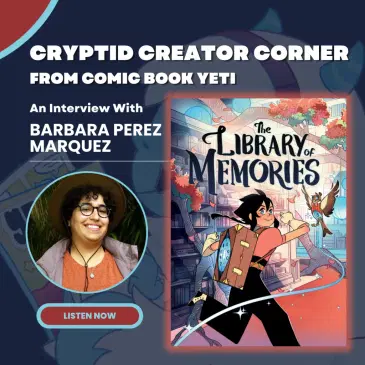

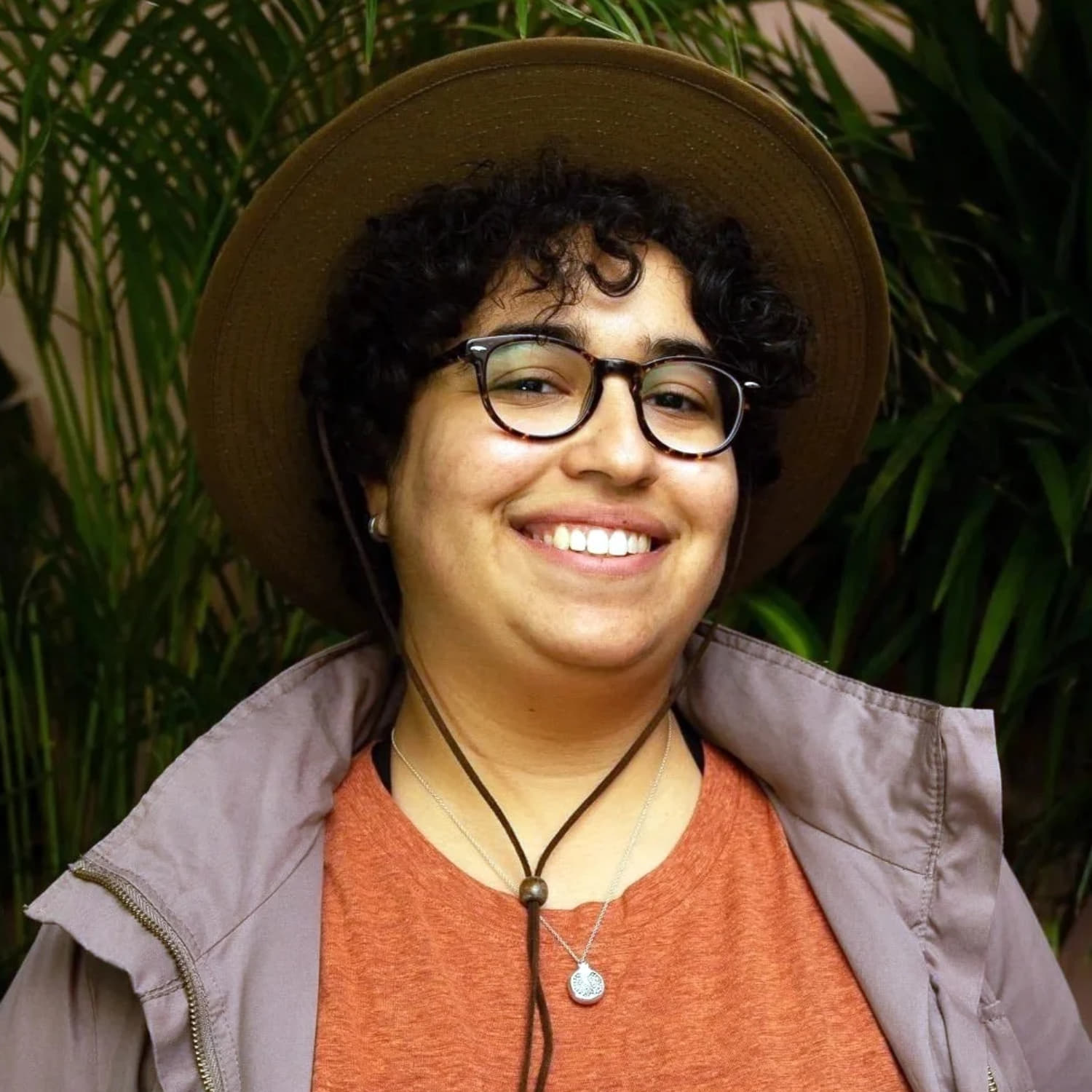
Jimmy chats with returning guest Barbara Perez Marquez about The Library of Memories, collaborating with Lissy Marlin, being a Dominican creator, writing stories that help middle grade readers deal with topics like grief, the differences with writing manga for TOKYOPOP, playing in the Disney Universe, and so much more!
"We don't want to talk down to our readers, ever. If we can't figure out how to not do that, we don't have a book." - Barbara Perez Marquez
WATCH THE VIDEO VERSION OF OUR CHAT ON YOUTUBE!
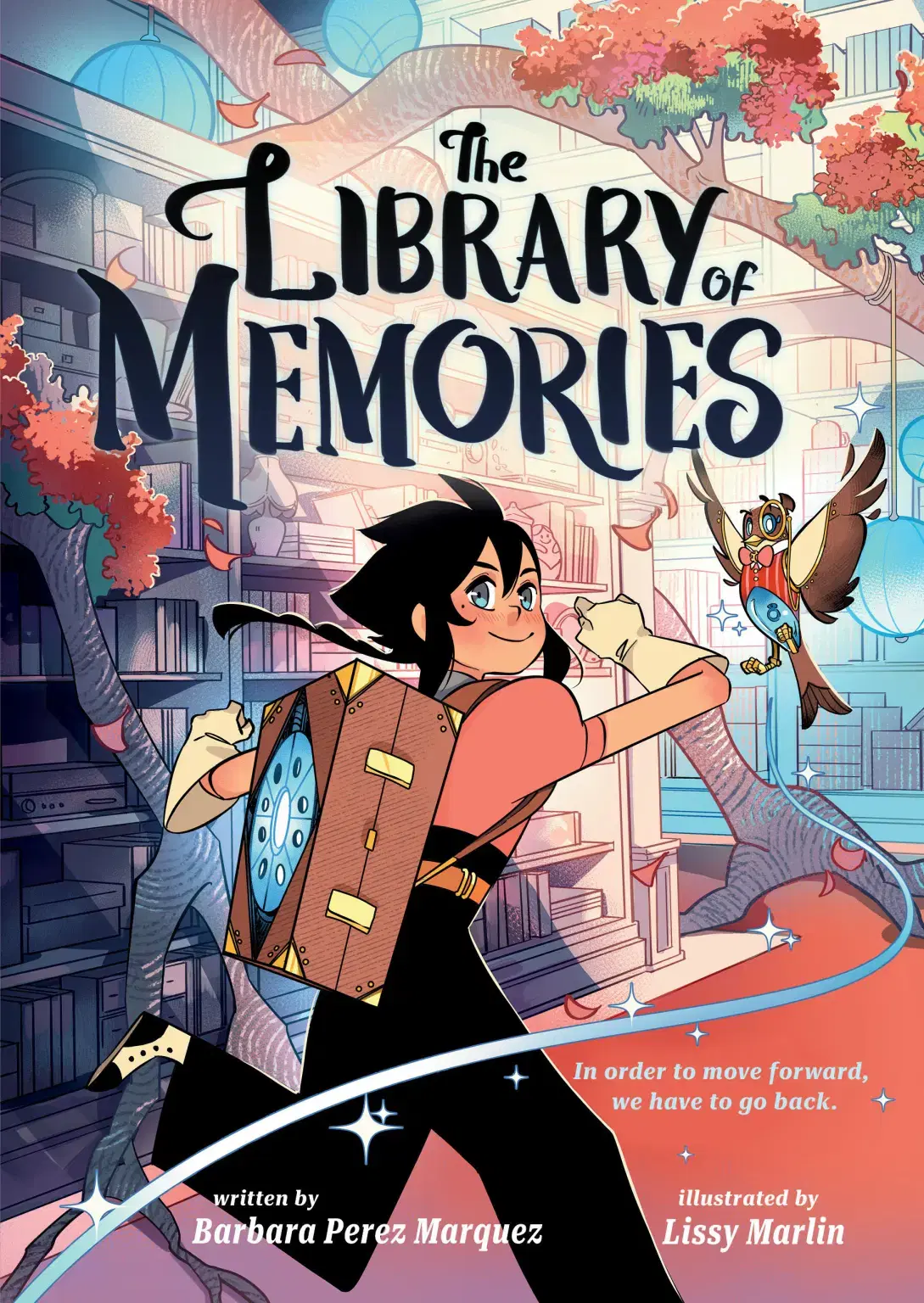
The Library of Memories
From the publisher
In this breathtaking middle grade graphic novel full of magic and mystery, bestselling creators Barbara Perez Marquez and Lissy Marlin ink a story that explores the power of memories. Perfect for fans of Pixar’s Inside Out and The Moth Keeper.
Copenhagen arrived at the library one day with little memory of who she is, and she’s been stuck here ever since. She takes to helping preserve the library alongside the wise mechanical creatures who tend to its care, but the longer she stays, the more she forgets. Unless she can find her memories, Copenhagen will cease to remember everything that makes her who she is.
But the library has been losing magic for quite some time, and with it, all the memories it holds. To save this wondrous place from ruin, Copenhagen will have to journey deeper into the library than she’s ever ventured before, even if what she finds shatters everything she thought she knew.
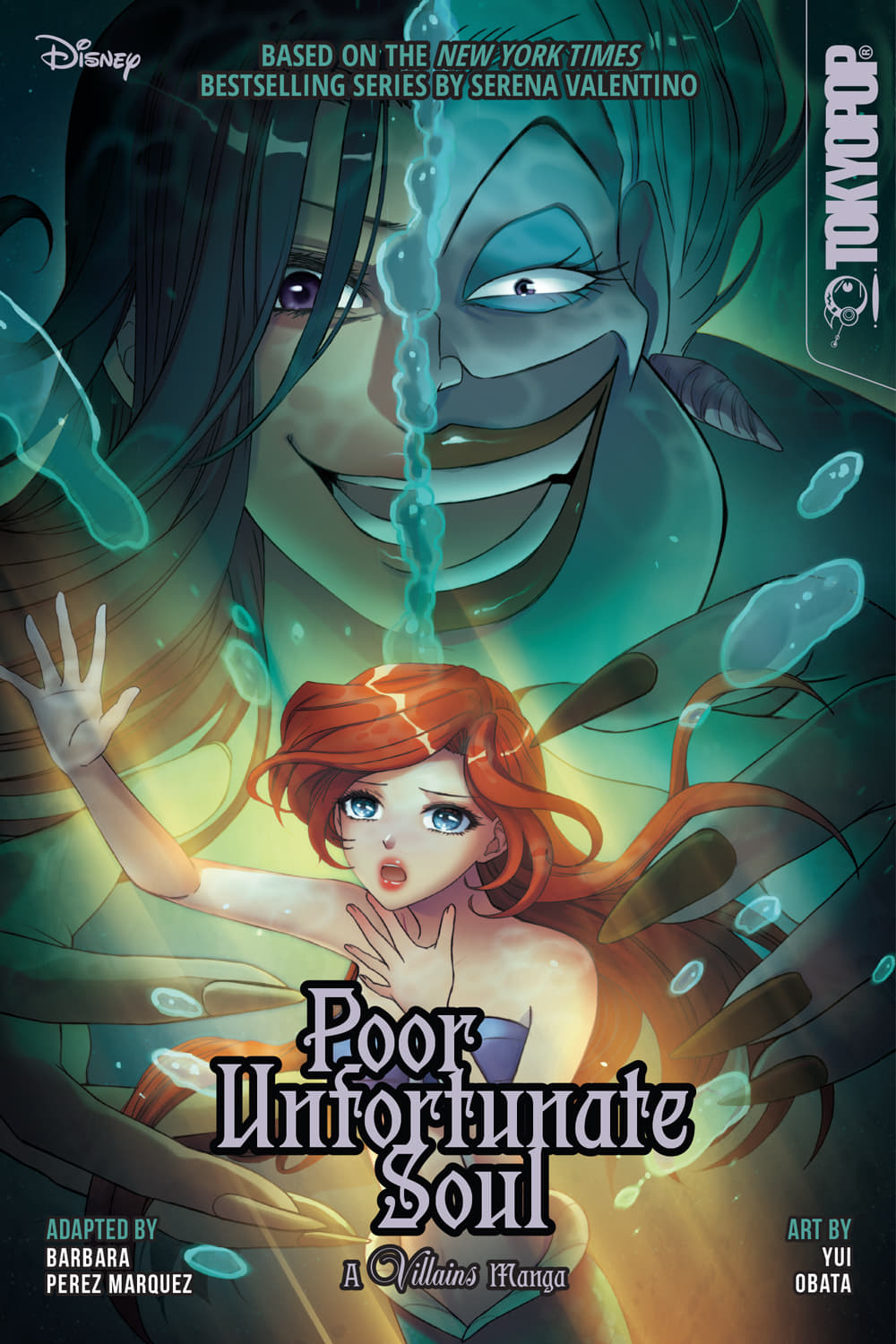
Poor Unfortunate Soul: A Villains Manga
From the publisher
The manga adaptation of Serena Valentino’s New York Times bestselling story. The sea witch who tricked a mermaid, the events that led her there, and the way the world shaped her into the villainess she ultimately became.
The sea witch who tricked a mermaid — and the way the world shaped her into a villainess.
Before she became the sea witch collecting poor unfortunate souls, Ursula was just a lost girl who yearned for acceptance. What led to her becoming so twisted, scorned, and filled with hatred?
From her tragic relationship with King Triton to her schemes against Ariel with her friends the Odd Sisters, this manga tells the tale of the witchy and monstrous minds plotting in the backdrop of Ariel’s story.
Follow Comic Book Yeti
🔗 Comic Book Yeti LinkTree: https://linktr.ee/ComicBookYeti
For partnership and ad inquiries, please contact: thecomicsyeti@gmailcom
Follow your hosts
ARKENFORGE
Play TTRPG games? Make sure to check out our partner Arkenforge. Use the discount code YETI5 to get $5 off your order.
Make sure to check out our sponsor 2000AD.

[00:00:00] Your ears do not deceive you. You have just entered the Cryptid Creator Corner, brought to you by your friends at Comic Book Yeti. So without further ado, let's get on to the interview. The future is calling! 2000AD is the galaxy's greatest comic with new issues published every single week. Every 32-page issue of 2000AD brings you the best in sci-fi and horror featuring characters like Judge Dredd, Rogue Trooper, and more.
[00:00:28] Get a print subscription to 2000AD and it'll arrive to your mailbox every week. And your first issue is free. Or, subscribe digitally and you can download DRM-free copies of each issue for only $9 a month. That's 128 pages of incredible comics every month for less than $10. Head to 2000AD and click on subscribe now. Or download the 2000AD app and start reading today.
[00:00:54] Hello and welcome to Comic Book Yetis Cryptid Creator Corner. I am one of your hosts, Jimmy Gasparo, and I am very excited for tonight's guest. It is a returning guest, which I always love. It means that someone enjoyed the talk the first time and wanted to come back. I am very excited for tonight's guest. But we are going to talk about the Library of Memories, which came out in August.
[00:01:20] And you can find it anywhere you find your books or graphic novels. And please welcome, we have a couple other things to talk about too, but please welcome back to the podcast, Barbara Perez Marquez. Barbara, how are you doing today? Not too bad. I think we're getting the first feels of fall here. Thinking about August still.
[00:01:44] But yeah, like it's, you know, we're getting into fall. It's feeling the cozy time to grab a book and read it. So not too bad. Oh, yeah, absolutely. Especially in the mornings where I am in Delaware. It's, you know, it's a little colder in the mornings. It does start to warm up a tiny bit. But that chill in the air in the morning, it's exactly what I want to do. I don't want to go to work.
[00:02:08] I just, I want to, I long for a house with a fireplace so I could start a fire and sit and read a book and eat some soup. Yeah. But yeah. So the Library of Memories, let's get right into it. It came out in August. You and Lissy Marlin. And I think it's Little Brown published it. Yes, Little Brown Ink. Little Brown Ink.
[00:02:35] And yeah, I, you had told me about this last time you were on when we talked about the Curie Society. And I loved the idea of it. Just from what I had heard of the concept, the character who was kind of in this library, the Library of Memories.
[00:02:52] And kind of the longer she is there or the more she explores, like she starts to lose her memories or, you know, doesn't really have a sense of her own identity. And I just, I kind of liked the idea of her trying to figure out like what is going on, the little bit of a mystery of it. And it talked about, it deals with like, it deals with memory. It deals with loss. It deals with grief.
[00:03:19] And I was very curious as to how all of these things came together. It's beautifully illustrated. Let's see, Marlin just did an incredible job. I mean, the monster. Oh my gosh. The library itself is just incredible. Especially, I don't know if it's called like the conservatory or the garden. There's like a huge tree and a ship in it and like all these different landscapes.
[00:03:47] And Lissy's transitions as well from going from the library to Copenhagen is the main character, kind of going into a memory are just so eloquently done. It's very, it's very, it is very like dreamlike. It's very like getting, getting lost into a, in a memory.
[00:04:12] And also the difference between when objects of the memories come to life and when they aren't the coloring of the book, how it's almost sepia-toned at times when things are kind of like not activated. It just, you really get lost in this, in this world. And I will say without giving up the ghost. Yeah. I love, I love the story of it.
[00:04:38] I, I just absolutely love when it all really started to come together and I was figuring out like what exactly was going on. So, I want to say those things up front, but why don't you, you know, explain to listeners, like how, how do you, you know, pitch? How do you sell? How do you tell folks about the library of memories? Yeah. I mean, you kind of hit, hit the nail on the head, right?
[00:05:05] The story follows Copenhagen, finds herself in the library of memories. And yeah, something is happening to the library where the sort of like energy that powers it is sort of drying out. And with it, it's taking Copenhagen's memories with her. Uh, and so, you know, it's a search for herself and for sort of trying to help this place that is so special for her. And I mean, yeah, like, let's see is such a dynamic illustrator.
[00:05:35] She's had a really awesome career in sort of covers and, you know, sort of like illustrating prose books. Um, and sort of like that side of publishing and all that. And we've known each other since we were 15. So this is like the cheat code of like coming up with like really awesome ideas, convince your friends, keep creating with you for 20 plus years. And then you're really gonna hit it one of these days.
[00:06:02] But right, like we talk about collaborators and comics, of course, you know, myself being just a writer only, right? Like I, I always find that like this, the dynamic with my collaborators, that is so like essential to comics, right? And so getting to do this with Lizzie, having known each other for so long was really awesome.
[00:06:27] Because yeah, I like I wanted to pull her into like graphic novels and comics because it's like, you just need to like play, right? Like those colors that you reacted to Jimmy and like, thank you so much for those words, because that's it. Like we wanted to create this world that immerged the reader and just allowed people to sort of think about like what is happening around the corner in the library, because we were never going to get to see all of it. So we wanted to leave people like wanting more of this world.
[00:06:57] And that's exactly, you know, how I felt reading it and kind of going through it. I mean, there, it's, it's the type of idea that if you, you know, this is a complete story. But it's something that if you wanted to return to, you're like, oh, yes, you could easily deal with another theme or other characters or these same characters in a different way in the library of memories. Now that this world is, is created.
[00:07:26] Yeah, there were so many interesting things about it that, that I loved. I also love that the character's name, like her name was Copenhagen. I just was like, was there. So what is with it? Is there something behind that? Because we keep getting this question. I was like, man, maybe I should have a better answer for this. I mean, you know, we were looking for something like what's fun.
[00:07:51] And like, when you write for middle grade in particular, right, like to get a little bit into like the nitty gritty of it. Last time I was here for the Career Society Game of Code, which is a YA story. So you're writing for like an older audience a little bit and your teens and the themes are a little different. But with middle grade, I find them so fascinating in ways that we can like challenge younger readers, like, like those tweens to like really think about like,
[00:08:20] what's happening in the book, like, you know, there's like the whole research of like graphic novels, including like so many more like advanced word vocabularies for readers. So, you know, in thinking of that, and just sort of like building the building blocks of the story, Copenhagen has as a place is a thing that's mentioned later on in the story and sort of where things sort of go to happen.
[00:08:48] But we wanted to just find something that like was a nice echo. And we were like, what's like a what's like a cool place? We've never been the government. The government of Copenhagen is not sponsoring our book. We just thought it's like a nice way, especially because it repeats so much. Right. Like we we were using this like idea of repetition throughout the book. So we were like, what's like really startled? Like, like it'll stand out in the page.
[00:09:18] So we want it to be long. We wanted it to sort of be like so dissonant. I think that that's kind of what people are really responding to. It just feels so outside of everything else we present in the book that people are like, what's that about? And it's like it's doing its job. So that I'll take that. I mean, from a personal perspective, it's just funny because Copenhagen was a place that I don't think I had ever given much thought to until recently.
[00:09:49] Like in the past year or so, something came up and I don't know if it was like a tick tock video or maybe it was the TV show, the bear, like where they the character traveled to Copenhagen. And I was like, man, like Copenhagen looks really cool. And then you like you say it once in front of your phone and then like Copenhagen videos just pop up. And I'm like, wait, why are there so many hot dog places in cope? I'm like, now I want to go to Copenhagen.
[00:10:16] And then like you sent me the arc, you know, the advanced reader copy of this. And I'm like, wait, the character's name. Copen. Why is it cool? Why is Copenhagen coming up so much in my life all of a sudden? It's all the signs. All the signs are coming up, Jimmy. Yeah, I know. So Copenhagen is now on my bucket list of places to go to. And take me with you. Let me know. OK, we'll do a whole thing. Yeah, we'll do a big trip. I like I like food tours. I just set up places to eat.
[00:10:43] So hopefully now let me know of any dietary restrictions, Barbara. None. No, maybe I should have. We should have called her Japan. Like that's where I want to go. OK, you know, it's one of those things. But no, it's just fun. You know, like when you're creating stuff, you're like pulling things out of thin air. It's like what is working when it's not. It just stuck. It works. No, it is. You know, there doesn't have to be a. Yeah.
[00:11:10] An amazing story like it's great if there is. But I think it's great if there isn't. It's just like, I don't know. We needed to name her something and we wanted it to be this. And yeah, we thought, you know, somebody said, what about Copenhagen? We're like, yeah, that'll work. Let's. That should be fine. Now, we went through some iterations that just like didn't make the cut. And there are so many other things that we sort of hid with more of that, like conscious reasoning.
[00:11:40] I don't think this one's a particular spoiler. But the clocks in the in the library everywhere, they're all stopped at the same time. And it's the it's like the date we signed our contract for the book, you know, so we like you. You include that little magic. But that one's like, oh, that's cute. And, you know, it made our editor smile while she was reading through like revisions and stuff. That's like that's right.
[00:12:08] That's what we do it sometimes, you know? Right. Yeah, it's true. You know, you do it to make yourself laugh, your collaborator laugh, your editor. What are the things just speaking of that? I thought I read somewhere else. I don't know if it was on Little Brown Inc.'s website or there's or somewhere else that that you maybe both you and Lissy had a lot of like or some Easter eggs to like the Dominican Republic.
[00:12:38] Yeah, yeah. So when we set out to write the story, we knew it was going to be fantasy very, very early on. And we as Dominican creators, both of us, we have this sort of like personal mission that we're like, we're going to make this indisputably Dominican without necessarily having to like necessarily lean into like contemporary stories, which no harm with those.
[00:13:05] But, you know, Lissy and I are like fantasy genre wise, first and foremost. And so, you know, creating something that was so like outside of like the recognition of what what makes something Dominican. We ended up just like including Easter eggs for that. There's a bunch of Easter eggs for a lot of the like media that shaped us as kids.
[00:13:30] And it just felt like a way to homage and sort of ring that bell of like this is a world beyond our own. But it includes things that are from, you know, like our home country, like our home, like upbringing and things like that. So that's how we sort of ended up there. The tree is also like one of the things that we could talk like the tree and Lawrence are
[00:13:57] another two really big sort of like it. They're kind of like if you know, you know, kind of thing. So the tree is a flamboyan, which is one of sort of like the really iconic trees that grow in the Dominican Republic. And then Lawrence is actually a palm chat, which is a very specific type of bird that is endemic to the island. And it's the national bird of the Dominican Republic.
[00:14:23] So we have all these like intentionalities to make a Dominican without sort of like falling into like obviously like our own stereotypes of like what people are have come to expect from a Dominican story. Oh, okay. Wow. Do you do you find like when you like it because I ran into you at both Baltimore and New York Comic Con.
[00:14:46] And so if folks come up to you, you know, about this, like, do you find that folks that like are Dominican like pick up on these things like right away? I mean, I, you know, I haven't like quite gotten there yet. I think like these kind of appearances. I'm being like, Hey guys, like, yeah, like this is some things we did. But last weekend we were at the Boston Book Festival and there were a couple of people
[00:15:17] attending that were Dominican and they had sort of, they kind of clocked the tree. They were like, what's up with that tree? And we sort of confirmed it to them. And they're like, yeah, like it's a flamboyan. They're like, of course. So, so again, like there is this, like it's something seems to like click at some point. And, you know, we hope that more readers will sort of find it and sort of recognize it or hear about it and then get excited about the book. Yeah.
[00:15:42] Was this a book, you know, because you've known Lissy so long with the two of you working on it together? Was it something that was kind of like gestating for a while? Is it something you kept returning to or was just, you know, right now the right time for this story? Yeah. Um, I think definitely it was like the right time for us to work together. We had sort of, you know, we were teens together. So everybody has that one like comic that they did in their teenage years that you're
[00:16:11] like, man, that was nothing. Like that was just us having fun. And like nothing was going to come out of that kind of thing. And we, we, we sort of kept being like parallel to each other in our careers. We had done a crowdfund many, many years ago, just as like me, just like pushing Lissy's, um, sort of like the impetus with that project. But this, right, this was like us creating like, like, let's build it together.
[00:16:39] And it definitely has shapes from a lot of different things that we'd had like rattling around in our heads. But we found that the library of memories sort of connected those like bits together in a way that neither of us was going to be able to like get it to the finish line alone. So that felt really nice. Yeah. Um, but yeah, I mean, like, you know, like, uh, the journal in the book is sort of from
[00:17:06] like an idea that I'd had many years ago that like I presented to Lissy and I was like, listen, is this anything? Um, and then like the backpack that we see in the book is from another, from a pitch that she'd been working on. That was also sort of like a short story format. So all of these building blocks, we sort of kept bumping into them throughout the years. And then we were like, let's just pitch something. And like, we just put it all together in the sandbox and like, made this story.
[00:17:37] Well, I mean, I really like that, you know, in the beginning of it, you are kind of with Copenhagen and trying to figure out what is going on. I mean, as a reader, because Copenhagen, we learn, you know, in the beginning that when she interacts with some of these memories, she kind of forgets. And so Lawrence, who is, I think, uh, is it a gyrotron? He like, uh, you know, automaton type of bird.
[00:18:06] Um, and, uh, Lawrence is kind of her guide and he has to keep reminding her like about the rules of, of the library. So I, I like in the beginning of it that we're trying to figure out like almost with Copenhagen, like what, what is going on? What are the rules of the library? Like, what is it she has to do? And as we, we get into the story and we learn, you know, as I think I said earlier, she's
[00:18:35] also trying to find like her memories because she doesn't remember a lot of personal details about her life or even how she got to the library. Um, and then we, you really have developed a really, you know, rich story here. And, you know, you're dealing with some, um, really, I think important themes in terms of,
[00:19:01] uh, you know, how individuals, uh, or really groups of people deal with maybe some type of shared trauma or loss or grief. And the story gets into that and I, I won't, you know, go into further detail cause I want readers to discover, you know, the story as I did, but you know, what do you think is important
[00:19:27] to keep in mind when you're writing, you know, as an adult, we deal with things differently, but when you're dealing with those types of big themes, you're writing for a young adult audience or a middle grade audience, like how do you approach that? So that it is kind of like digestible for your audience, um, without, you know, going, uh, over anybody's head or without, Oh no, I've dumped this down way too much.
[00:19:54] Yeah. Yeah. Yeah. No, I think that that's something that we like took very seriously. Um, when we were sort of having those conversations, like at the outline stage and coming out, like working on the script with our editor, um, we were really like, like very specific. Alicia and I were like very early on, like, we don't want to talk down to our readers like ever. Like if, if, if we can't figure out how to not do that, like we don't have a book.
[00:20:21] So like, it becomes a matter of like trusting that the reader will like fall into like what you've made. I think that that's sort of where we landed. Like, it's this idea of like, listen, like, I'm not going to give you all the answers right at the beginning. It's like, there are many things that I can't tell you right now, but we're sort of working through it together.
[00:20:43] So that when we get to that sort of like, like heavy, heavy moments, we can sort of like land on them, like as gracefully as we possibly can. Um, so I think that that's where we were sort of playing at the idea of that. And also like, we found that very early on, like, we kind of had two books, right? We had the book that is like the emotional message that we sort of ended up with.
[00:21:09] And then we were like, oh, what's like the fun playground aspect of the library? Like this, like really cool fantasy aspect of it. And so like getting to marry both of those was really like where the challenge laid to really, you know, not, not like make it super repetitive in the aspect of like, here's how the world works.
[00:21:32] And here's how we got here. Like we were like that. Forget about those like portal world aspects so we can get right into it. And again, so sure just like, like plunge the reader right in so that we can get to the meat of the story. So that's sort of where we sort of like gambled that a little bit where like, you know, if we give you enough of both pieces of both parts, like we got one part in full.
[00:21:57] Yeah. I mean, I, I really appreciated that because I feel like, you know, Copenhagen in the beginning is kind of a little bit disoriented and because we are kind of thrown in, you know, with her, it, it does make for a better reading experience, kind of like figuring out as we go along. And I mean, again, Lissy's illustration certainly, certainly.
[00:22:25] You're not going to be, you know what I'm saying? Like you're not going to be alone at any point. It's like she puts so much into it that it's like you can spend days on just one spread at the beginning. And we have so many sort of like, we wanted to make sure that the opening was again, like, yes, it's not going to give you a lot of answers, but it was really expansive. That's sort of where we were like, we have to dedicate time to the idea that this is sort of like an infinite space.
[00:22:53] So that was, that was like one of the things we like early on, she was, she was like, why did we make this place so big? Like, what are we going to populate this with? Like, what are we going to put in here? And that's sort of how we kind of ended up with a library because we were like, well, we know we need like a big room, like a big space of whatever-ness. And then like, what if there was shelves? What is there was things and there was trinkets and then levels.
[00:23:18] I like the tree. Like at one point we got Lizzie's mom is an architect. So we got her involved with like the imaginary architectural plans of the libraries, like central gardens. So we're hoping one day we'll get to show a little bit of that behind the scenes because we did sort of put so much thought into like, what's the ideal fantasy world?
[00:23:43] And then we just sort of, once we had all of that, that we had spent like at that point weeks and months just like putting down details. We were like, okay, now we're going to step back and use maybe like 20% of that. You know? So now we have all these other details. But I think that that breathes so much life into it because that allowed us to tell the story confidently. That it's like, you just like, come with me. Like, we're going to tell you a story and like it's happening in this world.
[00:24:13] And there are these things that may or may not make it onto like explicitly on the page. But they are there like providing a foundation almost. Yeah. And where did the influence come in with like the gyrotrons, the other characters or animals like Lawrence is the bird.
[00:24:32] And I mean, in terms of the clocks as well, like there's almost kind of like if you pushed it in a certain direction, like there's almost like a steampunk kind of influence to it as well. Yeah. Where does that influence come in? Yeah. Early on, we thought we were shooting for more of like a nature inspired something.
[00:24:57] And then very quickly as the themes took shape, you know, memory, like all of these sort of like emotional touch points, the journal. Suddenly, then you end up. It's like, oh, well, you know, should there be some sort of like. Like the the piping system of the library was like, well, now we have pipes and then suddenly have gears. And then it's sort of it assumed the pseudo like steampunk aspect to it.
[00:25:27] That we definitely didn't set out to start at. But I think that it's it's those again, like you touch on things that then you end up sort of like building into into them. We looked at a lot of like European like sort of like classical architecture. We were sort of building out like a lot of the stained glass from the library and things like that.
[00:25:52] It's like Versailles and like the the Hall of Mir. The Hall. I think it's called the Hall of Mir or something like that. It's in Spain. So a lot of the things that we were resonating with to sort of build out the sort of like funky looking space, I think attributed a little bit to create that again, like this backdrop. It's like pseudo steampunk, but it's not steam powered. Yeah. Yeah. And then, yeah, the gyrotrons.
[00:26:20] So we knew they were going to run on this idea of like the raw memorate. It's like the energy that memories create. And so we knew they had to be like vessel like early on. They were like, what if they had like a wood grain? So they were like all sort of like carved animals almost. But then like Lissy started being like, you already have me drawing a room full of gears, you know, like at some point your artist is going to say enough is enough.
[00:26:50] And I respect that. Yeah. So. So, yeah. So there was there were some things that we were like, this is fun and we're going to stick with it because it's worth it for the look of it. And then there were some things that I was like, Lissy, are you sure you want to draw 50 plus in, you know, interconnected gears on the ceiling? And she was like, yeah, sure. Why not? I was like, OK. Well, it all does work, though, to make the library feel alive. Yeah.
[00:27:20] You know, so that's the best thing about it. That all makes sense. It comes together. Yeah, it definitely came together. It really does. No, it's a beautiful story. And I mean, the resolution of it, like I said, I just absolutely loved. I felt like thematically it made a ton of sense. Like, I love the message of the book. Yeah, appreciate it. I just, yeah, really thought it was it was wonderful. And yeah, Lissy crushes it.
[00:27:48] It is just beautiful to look at. Yeah. Yeah. So, yeah. So that's kind of where we're at. You know, we wanted to put this book out that is middle grade. You know, we wanted to make something that's like as middle grade as middle grade fantasy gets. Right. It's like, let's just like throw the whole thing out the window as much as they'll let us do. But we also wanted it to be something that like was meaningful in the same way that those stories that like shaped us were to us.
[00:28:14] And that, you know, very so very often with middle grade, you have middle grade readers reading it. But sometimes there's adults involved. So we wanted to create something that helped with that link of like, no, you too can read this. It's like all ages. And this is meaningful across generations because that was the other thing we're looking at. It's like when we were like, well, what is their story about? It's like, oh, yeah, we can make a fantasy story. But we wanted to talk to things that matter to us. Right.
[00:28:44] Like we come from like heavily matriarchal families like we like like both of us have siblings. So we grew up with siblings and like grandparents involved in our lives. So like what does it mean to grow up in this like multi-generational society that like and what does that do to you in so many ways? So so that's kind of what we hope that that the book sort of resonates across the board. So, yeah, I loved it. I thought it was fantastic.
[00:29:13] So thank you for sending it along. And, yeah, I want to make sure that I get I'm going to make sure that I order a physical copy because my youngest Penny is she's nine. And I think she's like right in the perfect age group that she's always looking for more stuff to read. And I think she'd love it. So great. I want to make sure I get it for her. Well, let's turn to the next thing you have coming out, which is the the Disney for folks that don't know.
[00:29:41] There's like a whole series of like Disney villain books that kind of flesh out the backstory of some of Disney's most popular villains. Villains. And now they are. I think Tokyo Pop is is kind of turning them into like manga stories. And you are adapting the Ursula under the sea, the Ursula story with manga artist Yui Abata.
[00:30:10] So tell me about tell me about that. I mean, it's coming out in January of 27. So listeners have some time. But yeah, I just a one fantastic villain like Ursula. Just just fantastic. I just that classic.
[00:30:31] I think she probably out of some of the other Disney villains I can think of has like some of the strongest, you know, motivation in terms of the original Disney Little Mermaid story. Yeah, yeah. Tell me tell me about adapting this, how it came about. What, you know, readers can expect. And also about, you know, your experience with manga and now having like what is that like, you know, going from like traditional Western graphic novels to then writing manga.
[00:31:01] Yeah, yeah. There is a difference. No, absolutely. There's a difference. So, yeah, let's start at the beginning. So, yeah. So the manga is called Poor Unfortunate Soul. It is based on the novel of the same name that, like you said, it's a series of reimaginings of like Disney villain backstory.
[00:31:19] So we're starting with Ursula's and the story sort of presents us this dual timeline where we're following the events of the movie and that ultimately lead to Ursula's demise. But we sort of get to fill in the gaps as to why she got to that point and the backstory of what her life looked like before The Little Mermaid. It was even like a thawed in and in the seas.
[00:31:47] So, yeah. So very fun, very like interesting way that we're sort of the Tokyo Pop has been like bringing this to a new audience. And I think that that's so important when we talk about adaptations, especially because it allows us to present the narratives in like a completely different packaging and like look at it in a different way. You know, the prose book, obviously words and it's like however long.
[00:32:15] And then with the manga, we got to sort of like splice it into five parts and make it into a one volume. So it's not a series like Poor Unfortunate Soul is a standalone manga. So it's like one and done. So, yeah. So in terms of differences for it, you know, this is my second adaptation now. I was also part of the adaptations for the To All the Boys I've Loved Before series.
[00:32:45] That's very different, sort of like contemporary romance, like a rom-com situation. And then, of course, this is like mythology and like Disney flair. And then now we're sort of adding like manga sensibilities to it, which is very at its core, a very classic Tokyo Pop. It's also kind of like shoujo-esque. So it's got this sort of like romantic affinities to it.
[00:33:14] But in terms of the process itself, a little different beyond what you'd expect, right? Like me working with the source material and sort of transporting it to what the script needs. But in particular for manga, there was a lot of ask to allow the mangaka to sort of like put their own spin on it.
[00:33:37] So there was like way less expectations for me to dictate panel layouts, which in Western comics often were sort of expected to be like lay out the panel count and the characters and what they're doing and the angles and the stuff. So Tokyo Pop was like, no, like they'll do it for themselves. So this is more like narrative almost like it looks even more like a prose book than I would expect a comic script to look like.
[00:34:06] On top of that, because the mangaka is working in Japan, they speak Japanese. So there is actually like a translation step to it. So my script got translated to Japanese and then the once the art comes in, then we let her in English as as expected. So that was really fascinating to me because that meant that the writing that I was doing, it had to be like.
[00:34:38] Less flowery, I guess is what I would say, like like, you know, like since we were going to translate it to Japanese, I wanted to make sure that I was like as straightforward as possible so that we didn't lose anything in translation just because we were trying to be like floofy in like the direction and things like that. So. So, yeah. I have to imagine that that's a real concern because you have that, you know, added step.
[00:35:05] I mean, sometimes when you're you're right, you write your script in English and the person, you know, the artist you're working with also reads English and you still have like, what did you mean by this? Yeah. Like, oh, OK. But now you have an added element where it's being translated into Japanese. So. Yeah. Wow. Yeah. So that was like a fun challenge.
[00:35:28] I mean, and like I grew up reading manga, like, you know, this is not an exclusive by any means, but I grew up reading manga before I was reading Western comics. Like that's like, that's just the truth of the books that I had access to. And so. So getting to do to do manga has been like really fun challenge, of course. And to do it with Tokyo Pop, that's such sort of like such a such a name in American manga and just like worldwide. But yeah.
[00:35:58] And then, you know, being in Baltimore, like I moved to Baltimore many, many years ago, like the mythos of Ursula and her design was sort of born out of divine here in Baltimore through the John Waters movie. Um, so there's like a lot of like little moments that I was like, oh, this is so cool. Like so many things that are connected to me now that I never expected to be. Yeah. On top of just being like a Disney IP work.
[00:36:26] Um, but yeah, it should be a fun. It should be a fun one. I think people would be. I'm delighted to see how we were able to fit it into the manga format to sort of like bring what you'd expect to see from like a little mermaid adjacent story, as well as build the, um, the sort of foundation for the series itself.
[00:36:49] Um, cause the books each take a villain, um, and sort of base the overarching story with each of their steps. So we'll see how people, how people like how, what we, what we did with this one. So it comes out in January. So it should be, should be a good one. And then we had an exclusive cover at New York Comic Con that you got to grab. So. Yeah, it's awesome. It looks, it looks great. I, I'm excited for it. Um, but yeah, I'm excited for you.
[00:37:18] It looks fantastic. Um, yeah. Poor unfortunate souls. And, uh, Ursula, I think is an incredible villain. It's an incredible story. Yeah, absolutely. She's so fun. And like, she gets to be as villainy, you know, cause I think like when we, like when we remember the movie, it's like she's, you know, towards the end of the movie, but like she's throughout this book. She's the lead now.
[00:37:44] So we get to see her and like her, like all, all the angles that we missed from that original story. And I think that that's really fun to sort of like see how she gets to, you know, to the end of her story. And like, we got to like do some really cool, like manga, like splash pages that I think people will be excited about for her. So yeah. So it should be look, it should be a good one to look forward to. Fantastic. Yeah.
[00:38:12] So I'll, I'll, I'll have links to everything in the show notes as I always do. But, uh, yeah, listeners that'll, that'll be out in January. Um, do I mentioned that I ran into you at both Baltimore and New York Comic Con? Just, uh, kind of curious, how has your convention, uh, experience been so far this year? It was good. It was good. Um, I, I did twice as many conventions as I usually do this year alone.
[00:38:38] So I, I don't know how repeatable that is for me, but I'd love to get back behind the table. Um, at Baltimore Comic Con and New York Comic Con, you found me sort of walking around the show floor. I kind of miss having a base. I think the, the, the benefit of being able to table at a convention, it's the, like, I got to sit down. Um, but they, they were fun. They were, they were fun ones. I mean, Baltimore Comic Con is kind of local for both, you know, very local for both of us.
[00:39:07] So that's always nice. The, the, I always tell people like the convention I get to sleep in my own bed is the best convention. Um, but New York Comic Con was a, such a fun, almost like a homecoming too. I was in New York before I moved to Baltimore and New York Comic Con was my home show. And I was, I was an attendee for six years there and then I moved away. So I hadn't been back for many, many years.
[00:39:35] So sort of to get to come back as a professional in a panel with an exclusive cover. Like it was like, it was like, wow, like this is, this is the moment. Right. Um, so yeah. So, so that was a really fun time. And honestly, I kind of missed it. I think I missed it. I, I didn't realize how much I miss New York Comic Con, but like the energy there, the energy
[00:40:00] in Baltimore Comic Con, it's like, it is really fun to like bump into each other and like be part of the whirlwind of it all. Um, so yeah. So I hope I'll, I'll make it out next year too. So. Awesome. Yeah. It was, I'd never been to New York Comic Con before. That was my first time. And it was like, I mean, it's a lot. It's a lot. It feels overwhelming. I said, I felt, I feel like I did a million things and I feel like there was still a million
[00:40:28] other things I wanted to do that I didn't have time to. And I was there for like three full days. Yeah. Same, same. I was like, oh, surely I saw everything I needed to see. And I watched a recap video of our YouTuber that I follow. And I was like, I didn't even make it to that part of the floor. Like, what do you mean? So, so yeah, but, but it was, it was a great time. And I think that, you know, getting to walk around the artist alley, like that's always
[00:40:56] such, such fun, such a fun time to see so many faces that I hadn't seen because I hadn't been in the New York sort of scene for a while. So, right. Yeah. It was, it was, it was, it's awesome. It was, it was really fantastic, but well, Barbara, thank you so much for coming back on the podcast. I really appreciate it. Listeners, I'll have links as in the show notes, as I said, to the library of memories and to poor unfortunate souls, which will be on January.
[00:41:26] The library of memories is, is out now through little, little Brown ink. You can get it anywhere you get your books or graphic novels. You can, you can order it. No. And yeah, Barbara, thank you so much. I really appreciate it. Yeah. Thank you for having me next time. We should do like a signing together or something. I think that's the next step. I would love it. That's all right. You heard it here first. Shout out to my brother, Bobby, the Cryptid Creator Corners, number one most dedicated fan. Bobby listens to all my episodes.
[00:41:56] How you doing, Bob? And yeah, listeners, thank you so much for listening. Rate and review us. Do all those things they say to do. It really helps with podcasts. And tell a friend about us if you've found some wonderful comics or graphic novels through the podcast. We are over 500 episodes now. And honestly, I had to rearrange things a little bit. So I'm not sure.
[00:42:22] But if I think that this episode with Barbara, if it comes out when I when I think it's going to come out, might might be at my 300th or maybe 301st episode. So, yeah, so we have 500 over 500 episodes of the podcast. 300 of them will be mine as of as of this recording with Barbara. So plenty of stuff to listen to, folks. But yeah, thanks so much for listening.
[00:42:52] I really appreciate it. Good night and I'll see you next time. Jimmy is too humble to do this. So as his stalwart writer and I, I wanted to tell you about his new graphic novel, Penny and the Yeti with artist Amber Aiken. What started as a comic short with his daughter that I've known about for ages now, and it's evolved and has become one of those annoying can't talk about it in comics things for too damn long. Yes, I'm predisposed to be supportive.
[00:43:20] But after reading an advanced copy of it, I have to admit, it's way better than I anticipated. No shade, but it's really good. Remarkably so. Does it have a Yeti? Yeah. Is it cute and adorable? Yeah. Yeah. But it straight flies in effectively tapping into the all too familiar family dynamics that we all are facing in 2026 and approaching it in a way that doesn't insult the book's target audience. Kids! They are way smarter and perceptive than we adults give them credit for.
[00:43:48] So I really appreciated Jimmy's narrative approach tapping into his own experiences as a dad and a spouse. I can hear his wife saying, get off your phone, Jimmy, through the pages. She's going to kill me for saying that. It's hitting shelves on April 21st, and I dropped a link in the show notes where you can pre-order a copy today. Yeti or not, here we come with Penny, Perry, Fenton, Maxine, and the magical, mythical, magnificent Yeti. On behalf of us both, we appreciate your support.
[00:44:20] This is Byron O’Neal, one of your hosts of the Cryptid Creator Corner, brought to you by Comic Book Yeti. We hope you've enjoyed this episode of our podcast. Please rate, review, subscribe, all that good stuff. It lets us know how we're doing, and more importantly, how we can improve. Thanks for listening. If you enjoyed this episode of the Cryptid Creator Corner, maybe you would enjoy our sister podcast, Into the Comics Cave.
[00:44:47] Listen and subscribe wherever you get your podcasts.