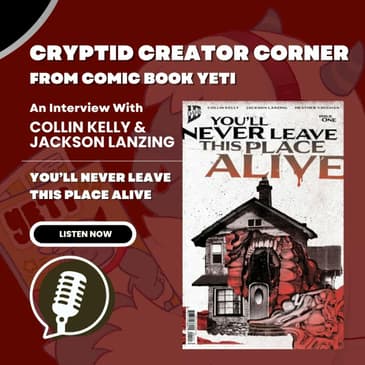

I feel like this episode has been a long time coming as I have been wanting to interview the Hivemind since Byron started the podcast. Collin Kelly and Jackson Lanzing make their Cryptid Creator Corner to discuss their new IDW Dark series You'll Never Leave This Place Alive. Collin and Jackson collaborate with Philly artist and friend of the podcast Heather Vaughan for this horror series that sees a group of teens raised in an isolated community to be better than their counterparts in the outside world, but find that the parents that raised them may be hiding some very dark secrets. Collin and Jackson discuss the origins of the series, why they wanted to write horror and what gave them the confidence to tackle this. They also sing the praises of Heather Vaughan (as we all should). We also get to chat about Star Trek: The Last Starship and get a taste of the new Dark Horse Comics Dungeons & Dragons series they will be writing. You'll Never Leave This Place Alive is out October 14th.
"The whole book is a comment on whether that hopeful, youthful sense of community and purpose can survive intense tragedy." — Jackson Lanzing On You'll Never Leave This Place Alive
WATCH THE VIDEO VERSION OF OUR CHAT ON YOUTUBE!
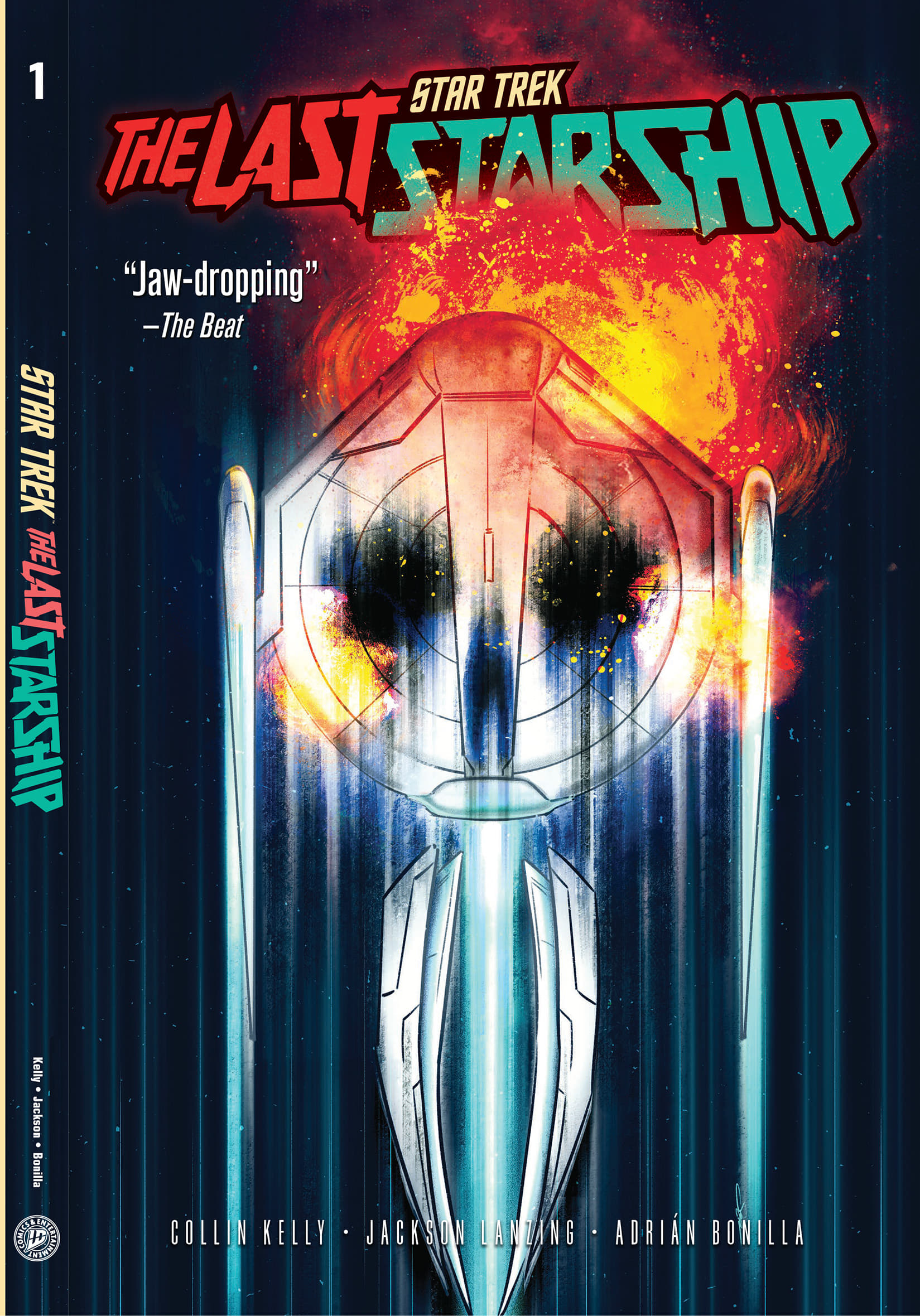
Star Trek: The Last Starship Volume 1
From the publisher
A Galaxy Shattered. A Legend Reborn. A New Frontier Begins. After the cataclysmic Burn brings warp travel to a standstill and shatters centuries of unity, the dream of the United Federation of Planets collapses almost overnight. Worlds are cut off. Civilizations tumble. Chaos fills the void where hope once thrived.
Out of this cosmic wreckage rises an unlikely beacon: the U.S.S. Omega a lone vessel crewed by survivors navigating a lawless, uncharted Galaxy nearly 300 years after the fall. With no Federation to guide them, they must carve out a path through the ruins—facing warlords, scavengers, and the raw unknown.
But they are not alone.
In a desperate act, the remnants of Starfleet strike a dangerous bargain with one of their oldest enemies…in order to resurrect Captain James T. Kirk . Thrust into a future where everything he fought for has crumbled, Kirk must confront a Galaxy in twilight—and decide whether he can become the symbol it needs one last time.
A sweeping epic of legacy, identity, and frontier survival, Star Trek: The Last Starship Vol. 1 launches a bold new era of Trek storytelling—where the final frontier is wilder, stranger, and more perilous than ever before. The mission isn’t over. It’s just beginning. Collects the first six issues of the series.
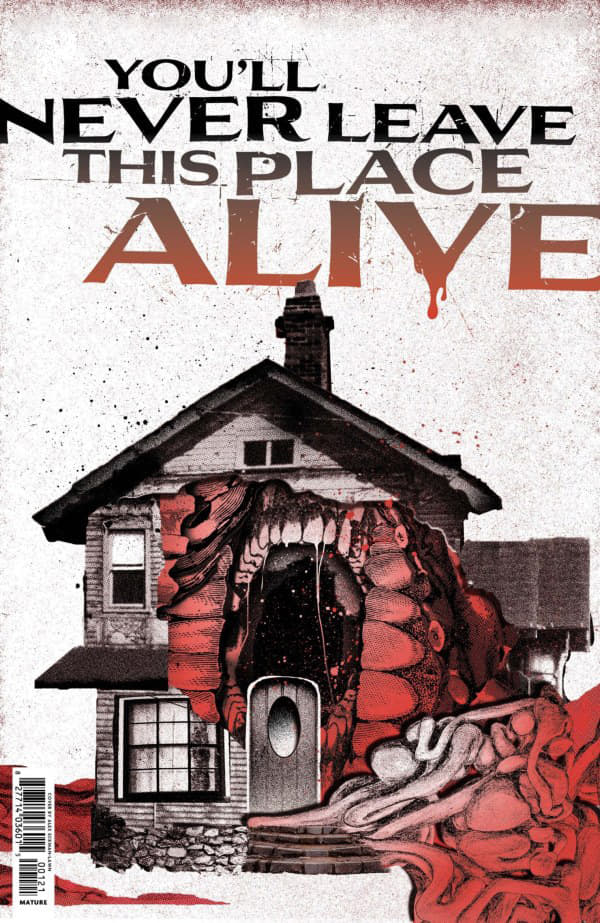
You'll Never Leave This Place Alive
From the publisher
Five friends. Four houses. One perfect life. Phoebe Joplin has never questioned the world her parents built: a secluded community where she and her friends were raised to be smarter, stronger, and better than anyone else. No distractions. No dangers. No secrets.Until the night of their graduation.When one of them dies under impossible circumstances, Phee starts to pull at the edges of her perfect life and finds something far more terrifying than she ever imagined.Because this place is a sanctuary. It's a cage. And no one who discovers the truth ever leaves it alive. From Eisner-nominated writers Jackson Lanzing and Collin Kelly and rising horror artist Heather Vaughan, this paranoia-laced, socially conscious horror mystery will leave you questioning reality and reveal that this crafted world is more of a nightmare than the idealistic dream its residents were expecting.
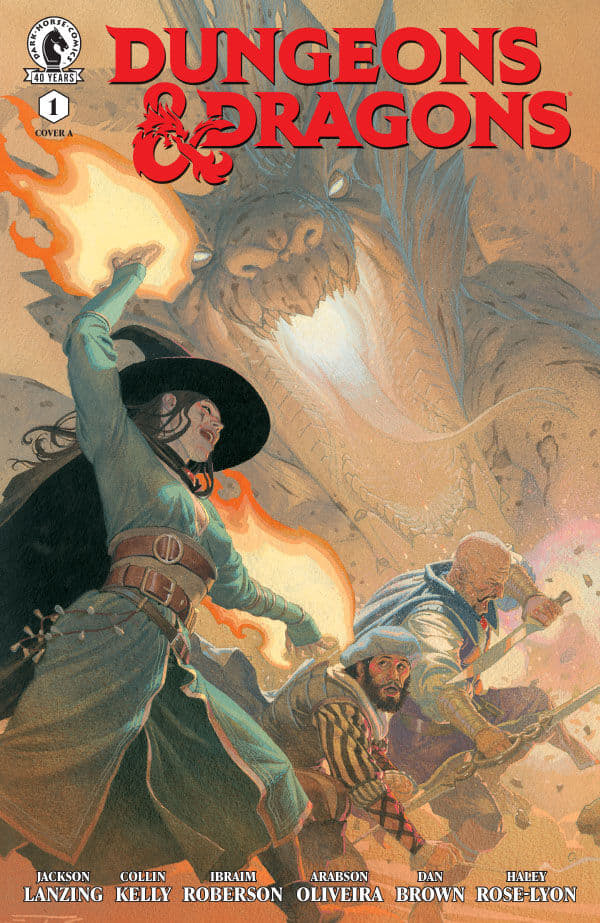
Dungeons & Dragons
From the publisher
A draconic apocalypse approaches the Forgotten Realms, and it has one name on its lips: MORDENKAINEN. Now, stripped of his magic but never out of the fight, the most powerful wizard in all reality will need the help of Faerûn’s most legendary heroes to restore the balance.
Creative hivemind Jackson Lanzing & Collin Kelly team with artist Ibraim Roberson for a brand-new ongoing epic that will shake the world(s) of Dungeons & Dragons!
Follow Comic Book Yeti
🔗 Comic Book Yeti LinkTree: https://linktr.ee/ComicBookYeti
For partnership and ad inquiries, please contact: thecomicsyeti@gmailcom
Follow your hosts
ARKENFORGE
Play TTRPG games? Make sure to check out our partner Arkenforge. Use the discount code YETI5 to get $5 off your order.
Make sure to check out our sponsor 2000AD.

[00:00:00] Your ears do not deceive you. You have just entered the Cryptid Creator Corner, brought to you by your friends at Comic Book Yeti. So without further ado, let's get on to the interview. The future is calling! 2000AD is the galaxy's greatest comic with new issues published every single week. Every 32-page issue of 2000AD brings you the best in sci-fi and horror featuring characters like Judge Dredd, Rogue Trooper, and more.
[00:00:28] Get a print subscription to 2000AD and it'll arrive to your mailbox every week. And your first issue is free. Or, subscribe digitally and you can download DRM-free copies of each issue for only $9 a month. That's 128 pages of incredible comics every month for less than $10. Head to 2000AD and click on subscribe now. Or download the 2000AD app and start reading today.
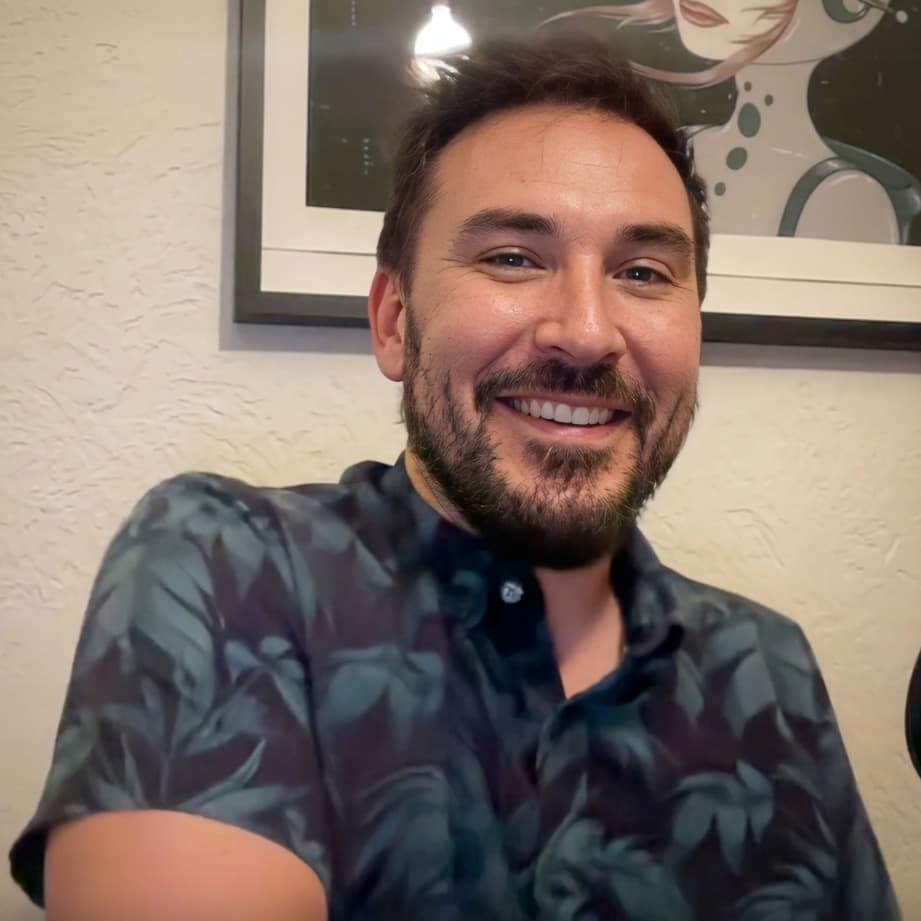
[00:00:54] Hello and welcome to Comic Book Yetis Cryptid Creator Corner. I am one of your hosts, Jimmy Gasparo, and I have two creators on the podcast today that I have been wanting to talk to for a very long time. Before we even started the podcast, I don't even know if they'll remember this, but I had gotten to talk to them and Dale and Ogden about a book that they had done many years ago. I think, though, this is their first official appearance on the Cryptid Creator Corner podcast.
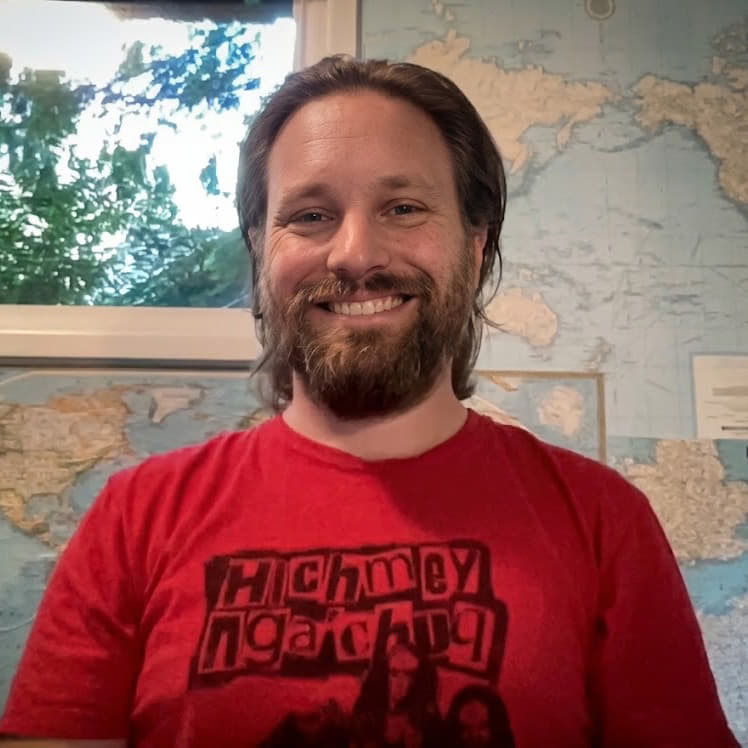
[00:01:22] We have so much to talk about. Please, we're just going to get right into it. Welcome to the podcast, Collin Kelly and Jackson Lanzing. Colin, Jackson, how are the two of you doing tonight? We are probably each of us doing pretty good. You're catching the hive mind at a rare moment where we are not only not in the same city, but we are in different cities entirely. So you're catching me in the Pacific Northwest. And I'm up here in Montreal.
[00:01:51] So you're you're also catching Colin in vacation vibes and you're catching me in like work mode. So it's been where we're like this is a rare time when the hive mind is like properly out of sync. It's cool. We're going to have a blast. Yeah, fully scheduled out of sync. Yeah, exactly. I love it. I really like Colin's like background in terms of the vibe. You know, I know this is an audio medium, but we do sometimes put these up on YouTube.
[00:02:18] Colin is like surrounded by maps like he is maybe in the bunker of lost a little bit like. Yeah, as I was saying off mic, this is my childhood bedroom to all of you in audio land. The walls are covered in decoupage maps that I rated from National Geographics. And it's actually going to become a little bit relevant when we step forward a little bit more into talking about you'll never leave this place alive.
[00:02:43] Because what you find on my walls here is the effect of manifestation of the dream of a teenager who wanted to get the hell out of the small town that he was growing up in. So, well, yes, so let's let's get right into it. Well, we have plenty to talk about. Now, let's start with you'll never leave this place alive. It's your new comic with artist and friend of the podcast, Heather Vaughn.
[00:03:08] And it is coming out through the IDW dark final water cutoff, I believe, is September 7th. Issue one will be out and on sale in your local comic book shop October 14th. I've I've been lucky enough to read the first issue. I was fascinated by it. I thought Heather's artwork is incredible. I loved how this story played out, even with the kind of like the cold open start.
[00:03:38] And as it went through, I still had no idea where it was going. And but I love where it took me. And I've read a ton of the stuff that the two of you have created a huge fan. And I kind of I mean, you've you've worked on Star Trek for so long and you've done a bunch of different things. But one of the things I really love that you did was the because Clay, I'm a huge Clayface fan. So you guys did you guys did Clayface one bad day.
[00:04:07] And I felt like this was almost kind of like a strange extension of that. I just love the places this story went. But if you could please, you know, whoever wants to start, just kind of tell listeners what can they expect from you'll never leave this place alive? Yeah, sure. Never leave this place alive is a I mean, you you said it pretty accurately. It is a spiritual successor in many ways to what we did on Clayface one bad day.
[00:04:35] That was in large part what opened up our minds to the idea that we could write horror at all. That was not really where we sat. We mostly thought of ourselves as science fiction writers who really like to write about youth and write about like what it is like to be young. And these are complicated, messy feelings and hopes and desires that come out of that.
[00:04:54] And Clayface was the first time that we had combined that with our own lived experience in Hollywood and the sort of pain and trauma that comes from being working screenwriters in a town that doesn't really care about you. And so can can can really grind you into dust. And so that so what we did with with Clayface really talk about that directly.
[00:05:13] Never leave this place alive is us taking a lot of other feelings, especially that we're having about the world today, feelings of anger and frustration at the fact that the world is not letting itself like the gerontocracy is not letting go. The olds are not giving way to the young. The world is kind of stuck inside of this paradigm that feels like it can never move from where we were in like the 1980s.
[00:05:38] And that's starting to feel really, really bad to us, especially as creators who are trying to push things forward, constantly hitting those walls can be really, really tough. And so as these guys who love writing about youth are turning a little bit older and starting to look at the world a little bit through the lens of our parents or of being parents ourselves in the case of Column.
[00:05:59] I think what we've really tried to do here is channel that into something like Clayface that lives very much from our own lived experience and our own intense kind of anger and frustration and terror at the world around us. So in terms of plot, though, Colin, do you want to maybe actually pick the book? Absolutely. You'll Never Leave This Place Alive is the story of five teenagers who grow up in this intentional community, you know, like a cult.
[00:06:29] Yeah, a reed cult. Like not a cult. Like they're not like doing like religious ceremonies or anything, but they're being raised very uniquely. Yes. And they're being raised by their by their families. They have four houses within their little community, red, blue, black and gold, which is the kind of community center where they're all able to gather. And these kids have been learning to be their best selves from their parents. They are each of them little geniuses, artists, perhaps an Olympic athlete, amazing in their own rights.
[00:06:57] And soon when they turn 18, they will go through the ascendance trial and their parents will finally allow them to see the outside world, embrace everything that has been what is been promised to them, the potential of their futures. And on that very day, that birthday, that ascendance trial, they are going to learn that you'll never leave this place alive.
[00:07:18] I thought when it one of the things that was really smartly done with it is when you're introducing the characters as they go through, there is just so much hope in the early part of the book. Like you kind of give you name each character, you give them like a little nickname, the bold or the scion. And Heather's artwork, it's all and the color work in it. It's all it's all very bright. Oh, yeah, very.
[00:07:47] It's very utopia. It's very we are being raised on, you know, we're isolated, but we're being raised under the best of conditions. It is it is just what you want for like humanity. Yeah. The the gut punch of the rest of the story is fucking devastating. Oh, yes. Good. Good. Hooray. I mean, truthfully, that is that's what that's the point.
[00:08:17] And that is why to sort of pivot almost immediately to Heather Vaughn. That's why Heather Vaughn. Right. Right. Because what we wanted to do with this book was really, as we said, we love writing about youth and we love writing about those those sort of messy feelings. And one of the biggest, messiest feelings of youth is that feeling that the whole world is ahead of you. And it's a very hard thing to recognize when you are young.
[00:08:40] I think that's one of the reasons I like writing about it is it reconnects me to that feeling in my own mind of what it was like for just infinite potential to be out there in the world for you. And with these kids, you have this like concentrated potential. They've been raised to be such like change agents in the world around them. And they're all excited to be those change agents. But there's something in the back of their mind. There's some little thing. And you start to really see it in Peter, who's one of our one of our five kids. Yeah.
[00:09:08] You start to really get the sense that, like, there is a there is a dread at place here. There is a feeling that that promise isn't really isn't real. And what does it mean if it's not? And what does that mean for their entire lives if it's not? And again, I think that's something that I think is very relatable just to children, right? To teenagers. You don't know that you can trust adults and you certainly don't know that you can trust the systems that raised you, even if you have no choice but to have been raised in them.
[00:09:33] And I think what's so cool about Heather's art is it accesses that same surreal summer sweetness that you want out of the world, that that that like beauty of potential. And then because Heather is a not just an accomplished kind of like autobiographical sort of Raina Talgemeier kind of artist, but is a accomplished horror artist.
[00:09:58] She then can turn that around and watch it delve and slowly morph the book into the vibe that it's going to be in for the rest of the book, which is going to be that same flavor struggling to survive against enormous horror. And that I think that to me is the is the core of this book. It's it's this isn't a book about sending a bunch of kids you like through a cavalcade of horrors.
[00:10:24] The book is about whether or not that hopeful, youthful sense of community and purpose that you find with your friends can survive intense tragedy. And I think she just does such an incredible job of essaying it. The the one of the greatest things about her, you know, we were really kind of Jack and I had a specific vision of what we thought the book was going to look like. Our incredible editor, Heather Antos, rolls in and is like, I think, have you met Heather Vaughn?
[00:10:49] And I think one of the things that absolutely clicked for us is her ability to make you fall in love. Right. That exact statement that you made is a utopia. You're immediately you love these kids. You want them to succeed. And we don't have that many pages, though. Admittedly, the first issue was a whopping 40 pages. My God, what a savings. But you needed to fall in love fast. And I think that's what Heather does for us.
[00:11:16] Yeah. The other part of it, like I think about other things where we see young people like raised in a cult like society, something like or something like the village, you know, the M. Night Shyamalan village where it's like it's set. It's supposed to be set in like the 1700s or whatever it is. And we have an isolated community. But the interesting thing, like your characters know about the outside world. They just haven't really been exposed to it.
[00:11:45] And so we we we get to see them interacting as any other young people would like any other 18 year olds. They're they're sitting around. They're talking. They're hanging out. They're sneaking away because they've been raised to say they might have to whatever it is, save the world or do something great. They're they're familiar with the outside world. So it's even more, you know, heartbreaking because you have that connection. These aren't kids that you're like, oh, these are separate.
[00:12:15] This is a story about something different that I don't know about. Yep. Yeah. Just really bright kids doing kid shit. Yeah. I think there's something really cool that you key into there is like and it's a it's the idea that even without the societal norms that we all kind of experience as we grow up, like. Like teenagers are still going to teenager, right?
[00:12:38] Like no matter the situation you put them together, like teenagers will find a place the parents don't know about and they will hang out and they will talk shit. That's just being a teen. And it doesn't matter where you are. It doesn't matter if you're stealing a spaceship and going off to space like that's universal teen experience, regardless of where you grow up. I think it's also like such a it's a there's a fun little like inside anecdote about this, which is that this is the stuff that we really wanted to write.
[00:13:06] We were so engaged with this part of the book that the horror kind of snuck up on us. By the time you get into issue two and especially as you get an issue three, the horror is so overwhelming and so kind of attached at the hip to the emotions of the book that while I think it stays as emotionally relevant as this is, it's much darker, obviously.
[00:13:27] Um, and so the original 40 pages of this book that we wrote, the original first draft script of this book spent like 25 pages in that scene with the kids, like in the treehouse. Like we were, we spent way more of the book than is reasonable. Yes. Living, just living, just living with these kids because we loved them so much.
[00:13:55] And we found that they were like, well, just writing them and keeping that authentic and making the audience care because we care and really expressing all the details and hopes and desires of these kids. Like we have this whole sequence that is no longer in the book at all where each kid goes around and talks about what they're going to do with their lives. And we had full pages dedicated to like, here's how Fee sees her future and here's how Sarah sees her future and here's how Sasha sees her future. And you could like go through all that.
[00:14:25] And when we got our first notes back from Heather, her notes, I think very accurately, um, but very hard to hear was, Hey guys, this is a horror book. You gotta get to the horror books. Yeah. Like you're, you're, you're spending so much time in the not horror part. And as lovely as that is, if you can compress that and, and, and make that, you know, don't luxuriate in it, but like really like press that into gold so that you can sort of by page 20, we're in the trial.
[00:14:54] And we're deep into the book. And now you can open that stuff up and you can let that, it won't feel, uh, any different to the reader, except that it'll feel maybe less like a gut punch, which is kind of what we're looking for. We're not looking to like get you to the end of a nice drama and then be like, surprise. It's a horror, right? That wasn't really the goal, but we were luxuriating in that character because we just love them so much. Yeah. I mean, our, our Brian Michael Bendis was showing, right?
[00:15:20] We just want to keep with these characters as they chat and as they like experience the subtle emotional tics of their lives. Yeah. And I do think Heather kind of, we, we have been body checked by Heather Antos many times. It's one of the most incredible things about her. Like the only person who can tell me that my target is not correct is Jackson. Anyone else can just eat a, eat a brick. Right. But Heather Antos rolls in and says, guys, this is beautiful. It's not very scary.
[00:15:49] We're like, right, right. This is a horror book for IDW dark. So it's like said with love, but from there we retuned it to really bring out the nightmare. And, and I think it's important to know that like, that doesn't just mean like we added more knives. Right. It's really just about compressing that horror to bring us to the, to the point. Right. Like that's the, that's, that's the key. And I, and I think it's, it's really genuinely, it means a lot to me that you just in talking
[00:16:19] about this book, that's your primary reaction is like, oh, well, I loved meeting these kids and I love seeing their, their, the understanding of their future and getting that. Cause I'm like, great. Then that's still in the book. Right. Cause from my big nervousness was, well, if we cut the 20 pages of it, is anyone still going to like these kids? Are these kids still going to hit? And so it really matters to me that that works. So I'm glad that it worked. Cause they, they really, they feel like friends of ours at this point. Like the, we've really gotten to know and love these kids and now we've put them through hell. So.
[00:16:49] Well, I mean, it's, it's one of the great things about, you know, comics and kind of that economy of storytelling. Like you had to cut all this stuff that I'm sure was like wonderful and very, you know, character building and Eisner winning. Eisner. Absolutely. Eisner winning, uh, uh, writing. Um, but you have the characters in it and that, and that the early part of it kind of play a game where one of the characters gives out things to all of them.
[00:17:18] And you learn a lot about all of the characters, not just little things about them and what they like, but we also see how each of the characters deal with each other and the, the warmth and friendship they feel for one another. And you kind of get, you, you don't spend a lot of panels on that scene, but it really helps to build the reader's relationship with each one of those characters.
[00:17:46] And I mean, the other thing is like, once you have the reader feeling for those kids, you're as a reader still living in the uncertainty of what like the, the trials are because they don't know either. And I still did not quite, you know, anticipate what it would be. And like I said, it, the horror of it is. Yeah. I mean, it, people are, I think are going to go nuts for this.
[00:18:16] And I think once again, that magic trick is Heather Vaughn, right? Like he, you know, it's funny that scene that exists. Now that scene always effectively existed. We were just then expounding on it. But the point is, once you see Heather's art coming through, you're like, oh, nah, dog, we don't need more of this scene. Like that panel says an entire page. And as right, there's nothing more glorious than being able to remove your words from page because it means the artist is absolutely conveyed everything you need to say.
[00:18:44] Genuinely, um, I, I would bet that the version of the book that you have read has more words than the version of the book that gets published. We did a, we did a very last minute pullout of some of our dialogue, especially in the road game scene, because as much as we liked it, the art was doing all the work we needed. It, we were slowing you down in a way that we didn't need to. And we found ourselves being like, okay, like last minute being like that line doesn't need to be here.
[00:19:12] That line doesn't need to be here because the more that we sat with Heather's work, the more we were able to realize like this is doing it. And that is, I think the best feeling a comic book writer can have is I can take everything that I wrote out of it and it's still great. Wonderful. That's, that's because the art is, because the art is the medium, you know what I mean? Like the art defines the medium. It, it, it so clearly becomes like what it is you're actually doing is so defined by artists.
[00:19:41] I heard you talking the other day. Um, I listened to your interview with Chris Cantwell. Oh yeah. Okay. About, uh, about Star Trek number one. Cause I just, I love Chris and I, I'll, I'll listen to him talk about Star Trek any day. And, uh, and I, you know, the way that he's talking about Dennis Behear, like that Dennis so fundamentally creates a vibe in that book. So immediately that's like, this ain't the Star Trek you've been reading. This is new. And I think that that's exactly what Heather does. It's like, you get these artists where they just come in and they're going to immediately make this thing singular.
[00:20:11] And, um, there's just nothing better. Like for me as a, as a writer than working with an artist that makes your work singular. I feel the same way about Adrian Bonilla on last starship. Like I just, uh, I'm all in my feels about Adrian today. Cause today he drew, he turned in the very last page of last starship. Um, so I'm like, I'm really like, I got to see the end of the book today and it's, it's so good. Call it. I haven't talked about this yet, but like we haven't, but it's dude, that last page. Oh my God. I know, buddy.
[00:20:40] Uh, so I was like, so like getting, getting the, um, getting that out and sort of seeing that, you know, you just, one of the best, I was talking about this with somebody over dinner. Cause I was trying to describe this job. And I really do think that the, the, the thing that makes being a comics writer better than any other job in the world is that your, your, your core job is to just inspire an incredible artist to do great work. There's no, like, I can't draw. I will never be able to draw. It is not a thing I can do. I've tried my whole life.
[00:21:10] It's just not in me, but I can describe something in a way that inspires an artist to do work that I would spend my hard earned dollars on. Right. And that to me is like, what, what a beautiful way to live a life. Like just be surrounded with all these incredible artists who you've gotten to inspire to do work over the years. It's, um, it's a really beautiful thing. Hey, I'm one of those. I'm one of those inspired my friend. Oh, buddy.
[00:21:37] Oh, that, that being said, wait, quick tangent. Uh, for those of you listening to us, uh, if this is before dragon con, you'll find us at dragon con and we have signed up. I don't know if Jack knows this, but we have signed up to do kids sketch cards. Yeah, I saw. Oh dude. I'm psyched. Let's go. Let's go. Jackson, Colin can go out. Collaborations remark cards. If you're a dragon con, come get some real janky art.
[00:22:02] Colin, Colin is a fairly good cartoonist and I am absolute garbage. So what's fun is he will draw you an enterprise and I will draw a planet in the background and perfect. Yeah, perfect. Perfect. Well, uh, perfect segue though, to turn to and talk about the last starship. Cause I, I wanted to talk about the, I wanted to talk about it. It is, I think if I'm not mistaken, I think issue 10 just came out.
[00:22:32] It's you mentioned the last issue. It's would be issue 12. I think it's a 12 issue series. Um, for listeners who, who don't know, or for some reason, haven't stumbled across it yet or have not started reading it. It is absolutely phenomenal. It is. I'll, I'll just set it up a bit and I I'll let you, the two of you talk about it because I'm just fascinated with it as a Star Trek fan. And well, uh, Jackson, if you listened to my episode with Chris, like I've, I've loved
[00:22:58] Star Trek since I can remember, uh, was a huge next generation fan. Uh, but essentially in the, the world of the last starship, there is a problem with, uh, dilithium and anything with a warp core just blows up, destroys all the ships, trillions of people gone. There is one old starship, the last starship, they call it the USS Omega.
[00:23:24] And, uh, it involves the last ship of the Federation. It involves the Borg. It involves Captain Kirk and probably, and, uh, and, and planet earth withdrawing from the Federation and the, the, the Omega. It has a fantastic crew. They are basically the last ship out there trying to keep the peace. It is, I mean, just a phenomenal series. It is everything that is amazing about Star Trek.
[00:23:54] It is everything incredible about the, the hive mind, the two of you with your exceptional character work and, and the artwork is absolutely amazing. I just love it. And I don't really have like a question about it. Just, I would just love to hear the two of you talk about it for a bit. So that's the setup. I think we talked about how kind of like exhausted both Jack and I are. And we're just like, now we're super in our feels like, Hey audio, my face is like bright
[00:24:24] red from blushing. That was a really nice compliment. That was very nice. Uh, last starship is the book. So we've been on Star Trek for like seven years. Right. And we are also lifelong Star Trek fans. So like, let's get that out of the way first. Star Trek is the only job. Colin and Colin, I've worked on a lot of great stuff. We've worked on dream books, Batman Beyond, Captain America, Guardians of the Galaxy, like books that just like, if you told us that we got to write when we were kids, we would be like, Oh my God.
[00:24:51] Well, um, but truthfully, the only job we've ever chased where we like really like for years asked anybody who had power, please let us do this was Star Trek. Like for years and years and years before we got to do Star Trek, Colin, I ran or I ran a 30 person Star Trek role-playing game. Like I designed a role-playing game and then ran it because Star Trek Adventures didn't exist. And then ran it for 30 people for several years.
[00:25:20] We did over a hundred missions, bunch of parties, all this intergalactic politics. Colin played a Klingon character who built a religion called the Red Path. Whoa, that sounds interesting. That sounds really interesting. That became this working, that became this like working religion that people in my, in our, in our game would join. And like, it was this, we really like built something kind of incredible and, and, and it was just for us. And we used to say that like maybe someday when Star Trek needs it, we'll have all these new ideas for them.
[00:25:49] And then maybe we could adapt these, you know, someday here or there in some ways. And when Star Trek year five finally came, came our way, which was, which was a, you know, last second thing. Like we were supposed to do a much, a bigger, crazier, something much closer to what we did with ongoing Star Trek. And then the TV stuff picked up back again and Picard happened. And suddenly all that time period was off limits. You couldn't do what Chris is doing now doing for so long. Yeah. And so they were like, we can't do that. We're like, okay, then I don't know what we're going to do.
[00:26:17] So we did this little eight page story about Data and his cat called A Human Is Not, My Human Is Not A Story by Spot. That was just this little, it was a Star Trek story from the perspective of Spot. And it, we got it, we got Sonny Liu to draw it and it went super viral on the internet. Like you can find it on Imgur. If you're listening to this right now, look up. People like cats. The internet like cool. Look that up. It still goes viral like once a year.
[00:26:45] And that, that story, probably more people have read that story than have read anything else we've ever done. Yeah. That story got us another Trek. They were like, okay, this really hit. Do you guys want to pitch on year five? You want to do the original series? So we came into the original series for two years with a bunch of our friends in comics, ran out like a TV room. Then we got to do the original like Star Trek ongoing run where we brought in Chris and did Defiant with him.
[00:27:10] And that book became, those books became this just incredible ongoing. I think what Chris tends to say, and I really agree with him, is like, it's what I thought writing comics was supposed to be. Like, just creating with other creators, sky's the limit, make incredible stuff, move at warp speed and just like make, make, make, make, make, make. And I just loved it. And over the course of all that time, we got to really know the people at Star Trek. We got to know the people at CBS. They got to know us. They got to learn to trust us, understand that even though we were going to come at
[00:27:39] them with crazy ideas, like a Klingon cult or whatever, that we were not going to let them down. We weren't going to just like break their heart and walk away. As Colin likes to say, like we were going to make sure that everything like worked and we put it all back together and that it was like good for the next guy and that we could hand it to people like Chris and Charlie when we were done. And so just as we ended that book, we, you know, Star Trek kind of came to us and they were like, we're open to anything you got. If you want to do another Star Trek book, there's sort of a year of gap before Chris
[00:28:08] is going to start Star Trek one, which we had all agreed on years before. Like that was, we were in the conversation about, is Chris going to take over this book from us? Like that was a, he is the, like, not like we chose him, but he is the chosen successor. Yeah, he is. Like he's the guy that we all supported. Like it was decided the year in 23, when we were up for the icebergs, it was decided that night that this is what, how it was going to work. That we were going to do the book for several years. And then while we were off, he was going to come on.
[00:28:37] And so for years, we knew this end was coming. And then about a year before we were done, Star Trek came at us and said, you know, do you want to do something else? Do you want to maybe push this further? We've always thought it would be fun to do something really dark and weird and interesting with Star Trek. And now we trust you guys to do it. What do you got? And last Starship was our, for lack of a better word, it was kind of our dare. You know, it's like, we want to do a Star Trek book where everyone dies. We want to do a Star Trek book where hope is fleeting.
[00:29:06] We want to do a Star Trek book where the art looks like a noir or worse, like a Junji Ito comic. Like we want to do a Star Trek book that lurches between violence, despair and horror. And we want to do that while still maintaining the core aspects of Star Trek. So that one, so the, so that a Star Trek fan who loves the hopefulness and, and, um, the,
[00:29:32] the utopian vibe of Star Trek is it's completely turned off by that hopelessness that would by its very nature sustain this book. And, uh, to Star Trek's enormous credit, they let us, oh, they let us run. They didn't stop us when we said we want to bring Kirk back. They didn't stop us when we said we don't just want to bring Kirk back, but we want to turn him into a new character. We want to like uncover the guy underneath the guy. They didn't stop us when we said we wanted to bring in Alison Pills character from Picard
[00:30:01] season two. Like anybody who was looking to bring that character back anytime soon, but we had a great idea for her and knew where we wanted to go. They didn't stop us when we said we wanted to create a brand new ship or a brand new crew or a brand new captain. Like every step of the way, there were so many times where Star Trek could have come back and said, guys, this is too much. Like, can you do something more familiar that we know we can sell? And that, that wouldn't be unfamiliar for a license to do. That's the kind of move you hear from licensors all the time.
[00:30:31] And, um, it just never happened with last starship. Like last starship was everybody on the team top to bottom, trying to do something new and really pushing not just Star Trek, but the comics medium as far as we, as we could. Um, and I'm just so proud of the whole team for what they've accomplished. I, I, you know, I, I, sometimes I feel like I'm looking at it from the outside, which of course is not true, but that is, it's such an incredible team. Everyone on the team is doing such brilliant work.
[00:31:00] And, uh, I've just been so thankful to be, um, to be in the captain's chair with my best friend, you know, it's crazy. Yeah. I didn't leave you much to talk about. Sorry, bud. Oh, it's okay. I just, there's the one thing that I think is really interesting because when the original pitch kind of kicks in of like hopeless Star Trek, I think both of our reactions was actually like, no, no, I don't want to do that. That's not the Star Trek that I want to tell.
[00:31:26] And then like all things where our first reaction might be a little like, sour taste, we start to poke at it and be like, okay, well, is there, is there? And the magic trick was discovering that there actually was baked into the Star Trek canon, which is, as you mentioned, the burn. When everything falls apart, everything, the entire Federation collapses. Um, and that was the perfect place to tell this story.
[00:31:51] So once we were like, wait, so you can tell a story of hopelessness and yet know, thank you, Discovery season three, that the Federation will survive. Okay. That means we can brutalize this section of space. This is a time period where we can really explore those things that are hopeless, that are painful. That is the world outside our door falling apart and still know that while we do need to land this in a place where the Federation's hope survives.
[00:32:19] I think that is the magic trick because as at the end of the day, we're not breaking the Federation. We're stretching it to its furthest limit and showing in that its strength. And I mean, look, big shout out to Discovery three. They also solve the other big problem for us, which is that if we had made up the burn, if we had decided that the burn happened, then it would be in endemic on us, but that's not the word. Um, it would be our responsibility to tell you why.
[00:32:49] Yep. But because Discovery spends an entire season doing that, right? They show up a hundred years after the burn and everything's gone bad and Discovery has to figure out what happened and they get to solve that problem. It means that we never had to. We were fully, the gift that Discovery gave us by covering that in season three meant that our book could be about the real thing, which is not understanding why this happened and having to live through it anyway.
[00:33:18] We have that there not being an easy answer and having to sustain that even without knowing what happened, um, you have to maintain your hope. And that's like, like arc three of the last starship. It's called the, called the hope is specifically about the station. That's whole responsibility was to figure out what happened to the burn and they fail. And what that failure feels like to a bunch of Vulcans, like how hopeless failure of logic can become to those people.
[00:33:44] What a gift to be given that, uh, that territory and that openness to tell all the story we want there, but none of the responsibility to answer the big question of why. Um, as a plot, never like plot, never overcomes character in the book as a result. Like the book is always oriented for not at all. And you have just some amazing characters that are not, not only on the Omega, but I mean,
[00:34:10] just throughout the, the series, like, uh, there are just incredible characters. And you had mentioned to talk about Adrian, uh, Bonilla's work. I mean, absolutely the whole team, Lee Lowridge, Clayton Cowles, like it absolutely incredible. I mean, this, this might sound like a strange thing to say for, you know, no, no pun intended because it's a Star Trek comic, but Adrian Bonilla's like use of space, like, like panel space is incredible.
[00:34:38] It just, I mean, he like focuses on such interesting things in terms of closeups and especially when there is like a, a, a battle scene or we're looking at a new world. It is just, it is, it really is incredible is the only thing that I can, I is the only word that keeps just coming back to me. I don't have a better word for it.
[00:35:02] I just absolutely kind of like rebel in the, the, the acting and the panel designs. It just, it just really feels amazing. Yeah. Us too. Yeah. He's one of the few artists that we work with who will insert not just one panel, but maybe like four or five. Um, you know, every artist is like, please, please four to five panels a page. And Adrian is like, I did 12. Man. Right.
[00:35:30] And I think that's because to me, um, the artist that really starts to, he's starting to mirror a lot is Mignola. Right. When you look at early Hellboy, there are panels that are just lingering shots of birds tweeting or flowers in the grass and they don't move the story forward, but they do set the tone and they build the mood and they set the pace of the read. And I think that's one of Adrian's magic tricks is knowing when to slow down and when to speed
[00:35:59] up and understanding the storytelling momentum of his actual panel choices. Bunil is also like, like he's an incredible director of acting. He really knows how to, like, he inserts these panels for hesitation and for consideration, which are things that we do a lot. Like it's actually a big part of our writing is if you look at our work, like we're really big fans of the like quiet panel where the character's thinking about the issue.
[00:36:29] And Adrian just inserts those all over the place. He's really interested in showing motivation and showing how much a decision weighs on somebody versus how much a decision doesn't by how much time they take to do it. And he uses comics panels to extend time and to really like give you that sense of timing in the middle of like very frayed circumstances. And so like we will sometimes give him more than we think he can chew and then he'll add to it and you'll be like, how, like why, but then you see it on the page and you see what
[00:36:59] he's actually done and you realize it like with Heather Vaughn, he's opening territory for you to cut words. He's showing the acting so that you don't need to do it in dialogue. And that is the best. That's like what you always want. I think the other really incredible thing that I think most people don't know about Adrian. I didn't know about Adrian until he sent it to us is that he's a really accomplished musician. Adrian, like Adrian is an extreme, like he plays a bunch of instruments and is very good at them.
[00:37:29] So he has written a full soundtrack to The Last Starship. No one's heard it but us. But there is a, like I'm trying to figure out how to get it to you right now. We are uncertain how to make it happen to people and listen so that Star Trek doesn't sue the ever loving shit out of us. Yeah, we're trying to figure this out in a way that where there is enough plausible deniability that Star Trek doesn't get mad at us but where everybody can hear this super
[00:37:58] awesome Star Trek theme because he's written up. That's incredible. He's written a perfect theme for The Last Starship. Like I listen, like normally we listen to like specific music when we write Star Trek or like when we write any book, right? We have playlists for everything. If you go to my Spotify, you'll see all my playlists. And The Last Starship primarily was written to the soundtrack of The Brutalist. It was the movie. That soundtrack, the Daniel Bloomberg soundtrack, mostly the book was written to that.
[00:38:28] But ever since we got his score now, a lot of the time, I just listen to his score. And that's the book to me. He's a really thoughtful composer of music and a really thoughtful composer of space. And I think that like, I got to imagine that those are connected somewhere in his brain because he's really exceptional at both. Yeah. Wow. Pacing and momentum. Yeah. In particular, for listeners, if you've read The Last Starship, you'll know what I'm talking about.
[00:38:57] But if you haven't, this is worth the price of admission to pick up the issues. It's really the whole issue. But in particular, the second half of issue six, I feel is just absolutely incredible. The scene in particular from about the moment where Kirk has to infiltrate, what is it like? The Emerald flagship or the Emerald chainship. Yeah. Yeah.
[00:39:27] That's what it is. From that sequence to the end, I mean, 10 out of 10. Like it is incredible. Can I tell you, that was the one part of the book that I was super worried wasn't going to work. Like I read it. I called Colin and there were like three pages where I was like, I want to rewrite this. This doesn't work. No, it's terrible. The day before it was like the final script. Like I was throwing myself in front of that book trying to not get it published. And so to hear you be like, that is good. Yeah. Lovely. Fantastic.
[00:39:58] Excellent. I think that's my favorite sequence out of the whole 10 issues so far. That makes me very happy. It's so, I just thought it was incredible. I thought it looks great. Yeah. I mean, I just feel like that is very emblematic of what you're going to get through throughout the series. But in particular, there's just so many wonderful things working in that sequence. I'm so happy to hear that. It's a very important sequence. A lot like that, that sequence actually, like the reason why I was so nervous about it
[00:40:26] is everything, everything to the front of the book and to the back of the book from that sequence is about that sequence. Like it is in that sequence that, okay, spoilers for anybody who hasn't read Last Starship, but it's in that sequence where we are going to solidify that Wowie Carter can't stay on the ship. It's in that sequence where we're going to solidify that Captain Kirk has become suicidal and is no longer really himself.
[00:40:51] It's in that sequence where we're going to learn to care about Agnes Jurati and decide that Agnes Jurati is worth living. It's in that sequence where we're going to see Zed do his first bit of doctoring and start down a journey that will, I mean, now you've seen in issue 10, he's going to become the only one of them with his head on straight by the end of the book. Yeah. Which is amazing. Which is a remarkable, a remarkable character arc, by the way. Yeah. Thank you. Thank you. Yeah. Zed surprised even us.
[00:41:19] We're really, we're really proud of our, of our terrible drug addled Ferengi son. And that and the end of issue six will also be the end of the first trade, which is going to be available very soon now at the end of the month, I believe. Yeah. In order to pick up the first six issues. Wow. Well, good sell call. Wonderful segue. Well done. Love it. Nothing about that. Everything about that felt totally natural. Yeah. Yeah, it did. Definitely.
[00:41:47] Well, look, I, I really appreciate both of you coming on. And I, I know I said, I'd try and keep this to, you know, we usually do like 40 minutes and we're, we're going a little over, but I would love to have you back on because I know in addition to your work at IDW, also with Dark Horse, you have Dungeons and Dragons coming out, which I believe the first issue is dropping November 4th, I believe. Sounds right.
[00:42:13] Your first Dungeons and Dragons, your, well, Dungeons and Dragons number one, which looks D&D number one. Incredible. Yeah. New ongoing book covers by Esad Ribich, interiors by Ibram Roberson. This book is our, like, it's the, it's the legend, like the big, crazy War of the Rings style legend that your six, your like level six characters tell when they're at the campfires. Right.
[00:42:42] What we wanted to do is give like, D&D's had a lot of stories about like fun, fuck about parties, trying to have a good time. That like reflecting character play or kind of sitting in that, that, that critical role vibe. That there's a ton of great work in that vibe, both in critical role and outside of critical role. And we really think that that's fantastic. And like, we love reading those books. When we were approached to do this because we are us, we had to take it back to first principles and say, look, what's the kind of, what's the book that we've been waiting for forever.
[00:43:11] And we love more than anything, big, epic fantasy stories, the biggest of dragons, the craziest of dungeons, the most powerful of heroes and putting them up against the darkest of forces. Um, we want to give you that feeling that you got when you picked up Tolkien for the first time. Um, there's a, there's a real thread, I think in fantasy right now, trying to like turn the page from Tolkien and we are going to counterplay that song.
[00:43:37] Uh, we are big, we are big fans of the beauty and poetry and sort of, uh, austere nature, austere nature of Tolkien. Majesty. Yeah. The majesty therein. And we are trying to lean as hard into that as possible, uh, using as we do all of the big characters from the Dungeons and Dragons mythos. So like our Star Trek book, if you've read any D and D over the years, or you don't know
[00:44:03] anything about D and D, this book is going to have something for you because this is going to be your primer on all of the best characters from the very first player character, Morden Kanan, all the way through Tasha, who's going to be in this warlock game that's coming out to Volo, who you might've met in Baldur's Gate 3. Uh, and five other characters I can't tell you about, uh, but who are all going to be part of this thing. It's, this book's going to be crazy. Uh, so if you were a fan of like the Jason Aaron Thor run, if you're a big like Lord of
[00:44:30] the Rings guy, this book is for you. And if you've just played D and D and you want to know more about the forgotten realms and the heroes therein, this book is for you. Um, it's exactly for you. Can't wait for people to read it. Going to be a blast. Yep. That's awesome. That's fantastic. Well, I'm going to put links in the show notes to everything. I'd love to have the two of you come back to talk more comics. This has been a phenomenal. If you're not reading the last starship, yes, you should be able to pick up the trade, uh,
[00:44:57] with issues one through six, uh, issue 10 just came out, but you'll go to your, go to your local shop. Tell them you want copies of it. Uh, let your local shop know about you'll never leave this place alive. Issue one will drop October 14th. And then yes, uh, if you're a Dungeons and Dragons fan, if you like any type of fantasy, I think you're going to be in for a real treat. It's going to coming out through dark horse and that'll be November 4th.
[00:45:23] So, uh, plenty of stuff from the hive mind, all fantastic comics. Um, uh, Jackson, Colin, thank you so much for coming on the cryptic creator corner listeners. Thank you so much for listening. As always a shout out to my brother, Bobby, the cryptic creator corners, number one, most dedicated fan. Bobby listens to all my episodes. And as we record this, we're very excited because Saturday is the Delaware burger battle, which is our favorite event in Delaware. We go in and we eat burgers and drink beer for three and a half hours.
[00:45:52] So, um, we're on the flight next year. You're inviting us, right? Cause that sounds like absolutely I'll make, I'll make sure I get you, I get you tickets. So hopefully Bobby, by the time you're listening to this, when it comes out right after the burger battle, we, we survived and didn't have to go to the emergency room. Um, so listeners, thank you so much for listening. Make sure you pick up these books from Jackson and Colin. Uh, thank you so much for listening. I'll see you next time. Good night. Jimmy is too humble to do this.
[00:46:22] So as his stalwart writer, I, I wanted to tell you about his new graphic novel, Penny and the Yeti with artist Amber Aiken. What started as a comic short with his daughter that I've known about for ages now, and it's evolved and has become one of those annoying can't talk about it in comics things for too damn long. Yes, I'm predisposed to be supportive, but after reading an advanced copy of it, I have to admit it's way better than I anticipated. No shade, but it's really good. Remarkably so.
[00:46:51] Does it have a Yeti? Yeah. Is it cute and adorable? Yeah. But it straight flies in effectively tapping into the all too familiar family dynamics that we all are facing in 2026 and approaching it in a way that doesn't insult the book's target audience. Kids! They are way smarter and perceptive than we adults give them credit for. So I really appreciated Jimmy's narrative approach tapping into his own experiences as a dad and a spouse. I can hear his wife saying, get off your phone, Jimmy, through the pages.
[00:47:21] She's going to kill me for saying that. It's hitting shelves on April 21st and I dropped a link in the show notes where you can pre-order a copy today. Yeti or not, here we come with Penny, Perry, Fenton, Maxine, and the magical, mythical, magnificent Yeti. On behalf of us both, we appreciate your support. This is Byron O'Neill, one of your hosts of the Cryptid Creator Corner, brought to you by Comic Book Yeti.
[00:47:49] We hope you've enjoyed this episode of our podcast. Please rate, review, subscribe, all that good stuff. It lets us know how we're doing and more importantly, how we can improve. Thanks for listening. If you enjoyed this episode of the Cryptid Creator Corner, maybe you would enjoy our sister podcast, Into the Comics Cave. Listen and subscribe wherever you get your podcasts.