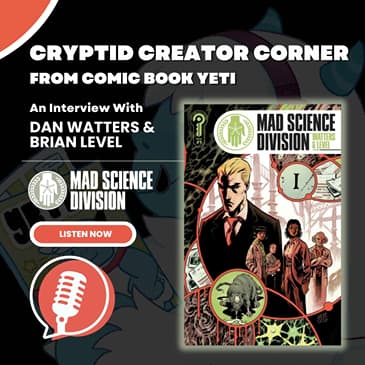

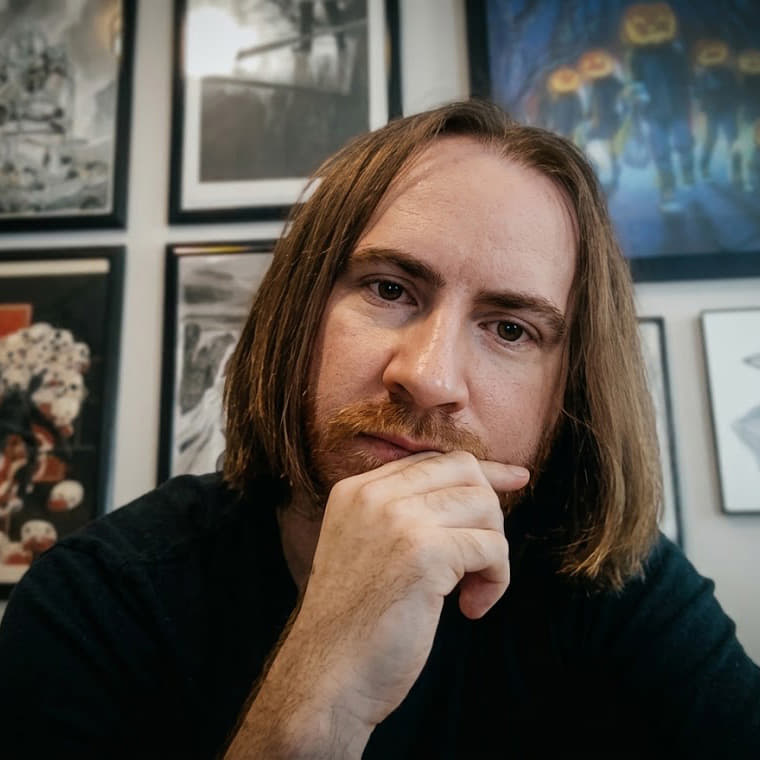
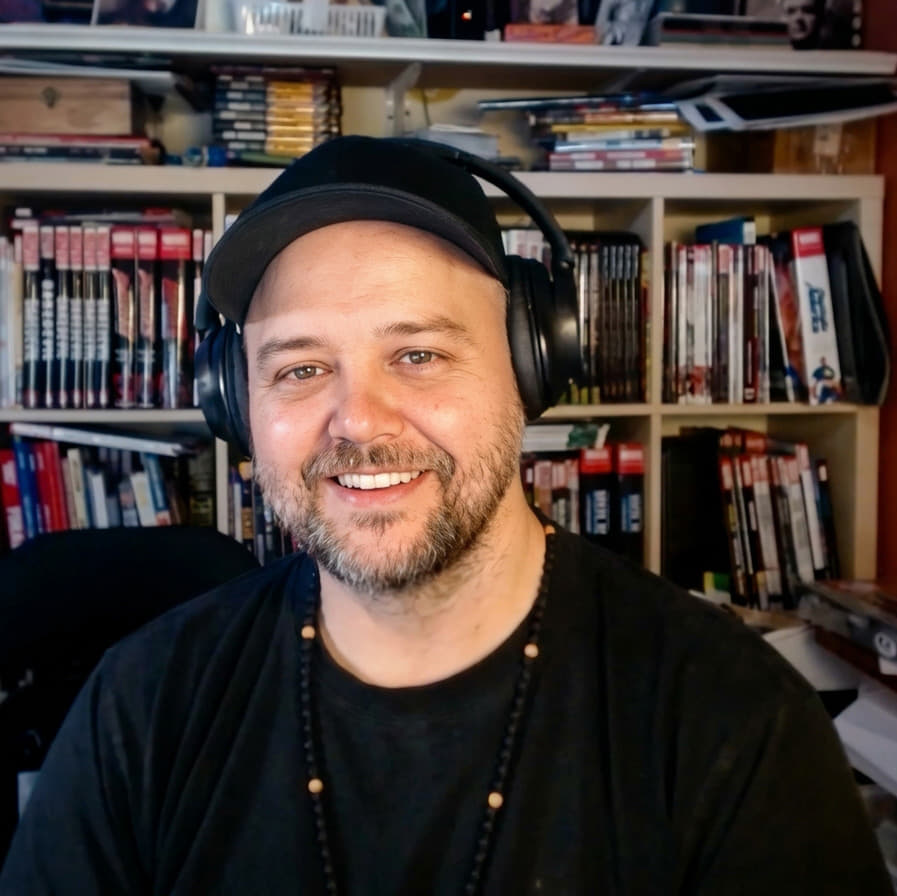
What if DOGE got its hands on a bioweapons lab? That's the premise of Mad Science Division, the new horror series from Ignition Press and today Byron is sitting down with co-creators Dan Watters (Nightwing, Batman: Dark Patterns) and Brian Level (Poison Ivy, The Unsleeping Eye) to get into it.
We cover the institutional/bureaucratic angle to using the mad science trope (think Hawkins Lab from Stranger Things or Resident Evil's Umbrella Corporation but with a nepo-baby executive running the show) and why they chose the unfit-son narrative thread running through Chief Coordinator Archimedes Anderson (who gives off immediately please punch me in the throat vibes.) We also get into why body horror is having such a massive moment in film and TV right now and why comedy and horror might be the tandem bicep of creative muscles (they work together, get with the metaphor.)
"Let's make a company that is absolutely impossible to align yourself with, and follow those guys around for a bit." — Dan Watters
WATCH THE VIDEO VERSION OF OUR CHAT ON YOUTUBE!
Mad Science Division
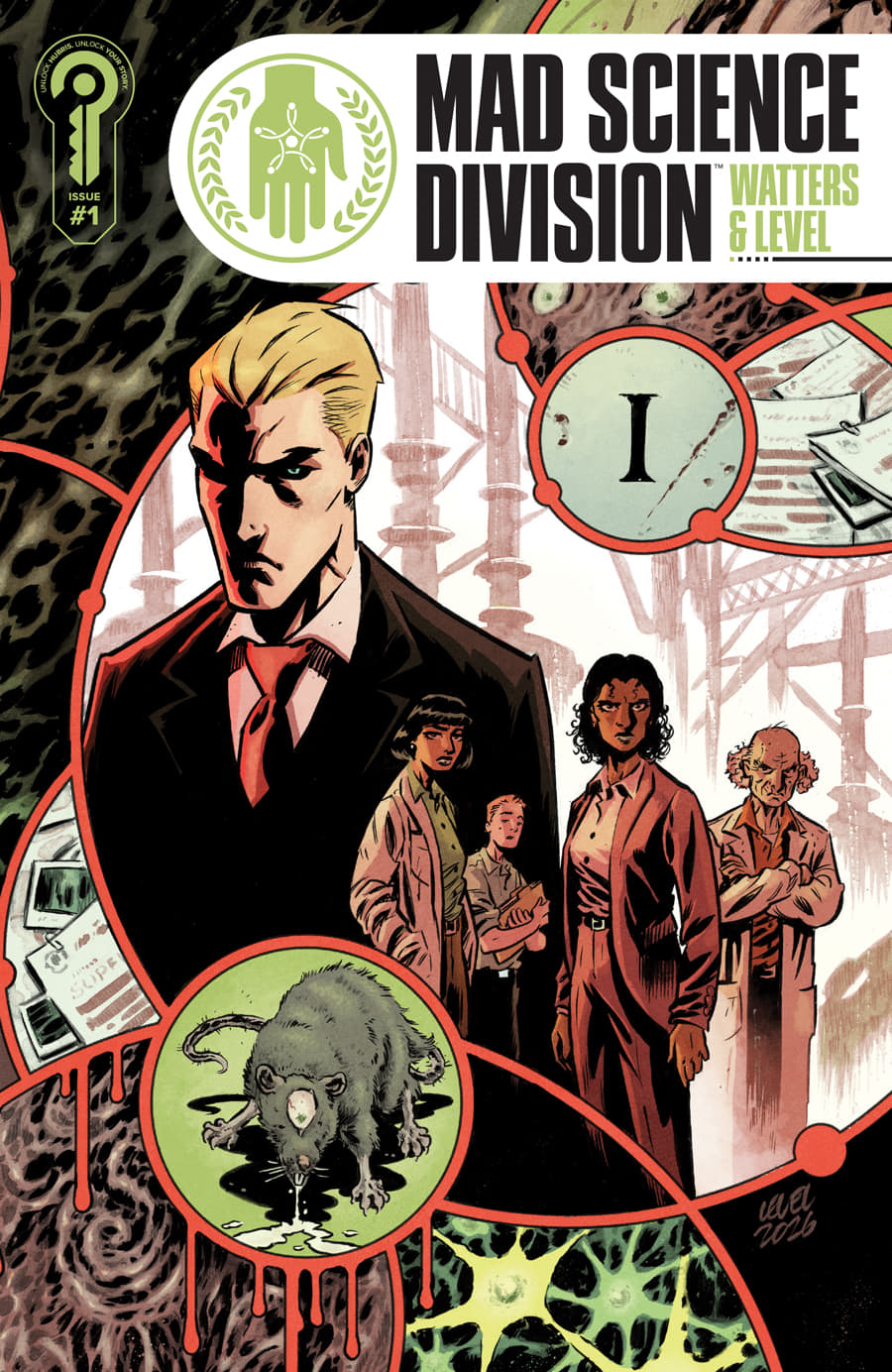
From the publisher
It’s no secret Archimedes Anderson is a nepo hire. Assigned chief-coordinator of R&D at the American arm of genetic engineering and bioweapons development company Miyashi-Smith, everyone knows he’s here for one purpose: to slash the budget and trim the fat. If he can cut 30% from the unaffectionately nicknamed “Mad Science Division” budget, he’ll earn a cushy, high-level job at HQ.
He goes in with a move-fast-and-break-stuff attitude, knowing absolutely nothing about the dangerous genetic experiments taking place in the division. When he upsets the delicate equilibrium of the department factions and removes guard rails which protect the workers and the public, he winds up exposing them to terrible, evil experiments.
Follow Comic Book Yeti
🔗 Comic Book Yeti LinkTree: https://linktr.ee/ComicBookYeti
For partnership and ad inquiries, please contact: thecomicsyeti@gmailcom
Follow your hosts
ARKENFORGE
Play TTRPG games? Make sure to check out our partner Arkenforge. Use the discount code YETI5 to get $5 off your order.
Make sure to check out our sponsor 2000AD.

[00:00:00] Your ears do not deceive you. You have just entered the Cryptid Creator Corner brought to you by your friends at Comic Book Yeti. So without further ado, let's get on to the interview. The future is calling! 2000AD is the galaxy's greatest comic with new issues published every single week. Every 32-page issue of 2000AD brings you the best in sci-fi and horror featuring characters like Judge Dredd, Rogue Trooper, and more.
[00:00:28] Get a print subscription to 2000AD and it'll arrive to your mailbox every week. And your first issue is free. Or subscribe digitally and you can download DRM-free copies of each issue for only $9 a month. That's 128 pages of incredible comics every month for less than $10. Head to 2000AD and click on subscribe now or download the 2000AD app and start reading today.
[00:00:54] Saying mad science conjures a wide spectrum of presentation across our pop culture landscape from classics like Frankenstein to afternoon cartoon favorites like Pinky and the Brain, one of my favorites. All tapping into the same anxieties. Uncheck human ambition. Something all of us are intimately familiar with in 2026. Joining me today are two gentlemen very comfortable exploring humanity's darker aspects.
[00:01:20] Co-creators of mad science division from Ignition Press, the reigning baron of Bloodhaven himself, Dan Waters, and everyone's favorite inking illustrator, Brian Level. Welcome. And I'll say now, with you two aboard, this isn't going to be as soft-handed as Dexter's Lab. I know that much for sure. So, Dexter's not growing up. Yeah, a little bit more. Nice! A little bit more primal than Dexter's Lab, maybe.
[00:01:47] Yeah, yeah. Well, I've seen the cold open issue, and thank you, Brian. I will never be able to look at a plate of spaghetti bolognese in quite the same way after that splash page, because some things went big splat in that. You're welcome. You always have these most haunting, haunting images that you leave me with. It was like the deer previously, and now it's the massive splash page of people who are disintegrating. So, thank you very much.
[00:02:17] Yeah, you know, we like to get to know how people work, not just, you know, the interior workings. Mm-hmm. I was going to say, I think the actual panel description for that splash page was very sort of sparse as well. It was just a little, they turn inside out. And that's what we got. Yeah, I can't quite remember what it said. I just kind of locked in. Well, you did your thing. That is for certain.
[00:02:48] Yeah, make it gross, right? Yes. That is the remit. Dan, you've been heads down on DC projects and the Energon universe lately, so it's been a minute since you've done Create Your Own Stuff. You said this gave you an opportunity to cut loose. Congrats. You're in America. Now you have to deal with this shit like the rest of us. So, it feels like Doge really pissed you off, man, because this book is a bit dark and unhinged.
[00:03:17] Yeah, I mean, to be fair, I think it would have pissed me off from anywhere. Fair. Yeah, it was just sort of things sort of clicking together in my head when Ignition asked me to pitch them something. And it was just sort of, it was like, well, Doge at the Umbrella Corporation was the sort of very quick thing that sort of popped into my head. Right.
[00:03:47] And, yeah, I mean, I think, you know, Beyond Doge is just sort of this era of sort of anti-intellectualism and sort of interpreter kowtowing. like the sort of weird internet bootlicking of corporations and how everyone now seems to care about box office receipts and company stocks and just this sort of weird
[00:04:18] sort of aligning oneself with these companies. So I thought, you know, let's make a company that is absolutely impossible to align yourself with and follow those guys around for a bit. Have you adjusted to kind of America's sort of cavalier cowboy attitude with that stuff? I mean, you had universal healthcare and now we might be, well, we're probably because of our attitude on funding medical research
[00:04:46] going to be kickstarting cancer cures soon enough. Yeah, I mean, you know, I think it's a sort of global problem because there's the sort of, there's been the, I think we've spent a good couple of decades with just letting America sort of take charge of things and then also being able to sort of sling mud at America for, you know, America's sort of like foreign policy, like the darker sides of foreign policy and stuff
[00:05:15] and then being able to go like, oh, well, you know, that's America for you. Even though, you know, we're like funding it and letting there be the world police and all this kind of, this kind of stuff. So it's kind of, you know, we get to act like our hands are clean and they're not. And that once America sort of turns around and decides, or, you know, at least the administration sort of decides, you know, we're not doing that anymore and you're all on your own, the sort of, the sort of outrage gasping doesn't,
[00:05:43] doesn't feel like it really lands for me. So, so yeah, I mean, I guess we should just say like, yeah, now I'm, now I'm in the thick of it and the eye of the storm, but, but I think these things matter kind of wherever you are just because like, yeah, they have long, they have long arms. Yeah. Well, how did you two connect on this? How did you recruit Brian? Well, so Brian and I did two issues of Lucifer together.
[00:06:12] Way back when it was like, what, 2020? 2019? Wasn't that, you're exactly correct. It was 2020 because it was funny, funny enough. I don't know if you ever knew this, Dan, but I reached out. So 2020 happened. I got back from California in January, did C2E2 at the beginning of February, right as COVID was rolling in. And no one really knew what it was or how bad it was going to be. And then by March, COVID was hitting hard.
[00:06:41] And I kind of could feel the writing on the wall, like at the end of February. So I reached out to, who was, who was editing? Was that Ariana? Who was it? Oh, it was Conroy. Okay. I think there was, okay. So I reached out then, or it might've been Andy Corey, actually. I have no idea who the assistant was. It was Andy and Chris on the book. Yeah. But I reached out to, I reached out to them and they were like, yeah, we've got two issues of Lucifer.
[00:07:09] And legitimately, like I got script the day before my shop shut down for COVID. And I got finished with my two issues three days before my shop reopened. So like, it was like very providential. Like, you know, you could say Lucifer saved the shop, like saved my life. But, you know, it was quite a, by chance or by providence, I was very, very fortunate to have that opportunity to work.
[00:07:36] And obviously like a great friendship that I think we've continued to develop since then. Yeah. Yeah. Because we got on the phone, like when, when we did that and talked about stuff. And I think, you know, particularly the sort of second issue we did there, we were really cooking with gas and, you know, it's one of the, one of the issues I think is a standout of, of the run. So ever since then, I've sort of always sort of thought, you know,
[00:08:02] I've kept Brian in mind for stuff and, and I'm wanting to, to work with him again. And, and knowing that Brian does more than just comics work and is like, and, and draws his own stuff and writes his own stuff and, and is discerning about the projects. I always wanted to make sure that when I came back to him with something, it was, it was for a, for a good reason. Yeah. So by the time when, when I came to do Mad Science or pitch Mad Science Division,
[00:08:31] and I hadn't spoken to him about it beforehand, but I kept, when I was formulating this pitch, I kept imagining it drawn by him and knowing that he'd knock up, not sure the, the, the gross upper level and, and sort of bring his own ideas in a way, in a way that it's, would sort of elevate the book. So his name was in the pitch. Like the only artist name in the pitch was, was Brian's, but, but I haven't actually like asked him yet.
[00:09:01] Well, you mentioned their umbrella corporation, you know, that's immediately kind of what I got from it. These things are popping up all the time now in, you know, pop culture. We've got like a Hawkins lab from stranger things, and you're leaning hard into that institutional bureaucratic angle. And you're mixing that with the nepotism angle and daddy issues. That's a big one in comics. So tell me about chief coordinator Archimedes Anderson. You named a guy after the father of mathematics,
[00:09:31] and he acts like a spoiled brat from the eighties. So it's, it's kind of a weird mix of name and, uh, and then the character. Yeah. I mean, I assume that was a sort of aspirational name on his, uh, on his parents, uh, uh, side. Um, but yeah, he's just, he's just kind of a bastard.
[00:09:54] Um, he's, he's Oxford educated, um, uh, and, and has never interrogated the idea that that makes him sort of, sort of more important and smarter than the people around him. Uh, and now he's literally in charge of a lab full of, or, or a department full of literal mad scientists, um, who are all smarter than him.
[00:10:18] Uh, but so his, his arrogance is kind of the one thing he has, he has over them that he can sort of, uh, sort of wield, uh, and wield that he will. But what do you both like about building in that legacy element? You know, the generational stake on top of a hubris theme and unfit son trying to find his place. I personally like building it out.
[00:10:40] I kind of, I feel like, uh, most of my energy in building it out is trying to navigate kind of like, how do I say this? I'm not building mad science division. I'm building fat five mad science divisions. Um, like, like each department that we kind of allude to, to me are like five different worlds, you know? And so like, I'm trying to like, kind of really just tie them together with frankly, like Archie,
[00:11:09] you know, like he's like Archimedes. Uh, sorry, we call him Archie, but like, uh, Archimedes like is kind of the, the worst glue, you know what I mean? Which is why the thing falls apart, you know? And so like, it's like, so when I think about him, I kind of think about him as kind of like the sort of thing holding it all together, but he's completely, you know, he's like a, uh, he's like a stupid God, you know what I mean?
[00:11:35] Like, he's just like a total, like, like no strength, no brain, like no experience, but lots of ideas. Right. And lots of desire rather ideas, maybe it's the wrong way to put it, but lots, you know, he's, he's got a point of view, right. But it's, he's perpetually distracted by, uh, by Nepo baby shit. So, uh, you know, the whole thing starts to fall apart. Yeah. He's got like a, as Dan put it, the bastard. So he's got max John Constantine energy here. He's exactly the kind of cat you'd want to punch in the face.
[00:12:05] You know, he's pretty, he's all smiles, he's rich, you know, and he's got that whole confident yet fish out of water thing going on with the, the biotech overlay. It's like, what the hell are they actually doing here? So how do you synthesize these sort of worlds visually? I mean, I don't really know if I do. Like, I feel like, uh, the thing that synthesizes them is just like, I kind of just have one speed. Like when I work.
[00:12:33] And so I think that's, I just kind of rely on my own art style to be the glue. I don't really consciously try to, I mean, we use the mad science division, like, you know, like hand emblem motif through stuff. Um, and I definitely like the, the hallways, like there are these sort of like labyrinths of hallways in the space. I think like, like corridors, uh, and emblems, like it, I guess I like to think of it like mad science divisions, a church, you know? Okay.
[00:13:01] Um, and, and all the different departments serve different functions and are different sanctuaries for different religions, so to speak. But like, it's still the, the labyrinth is the thing that kind of holds it all together. Okay. Yeah. I have this thing with portals where like windows show up in my dreams a lot and it's never a good thing. So I locked on. Oh no. Yeah. Yeah. Uh, you've got hard with those five portals thing. Well, you've got four of them are doors and then you have the fifth, whatever that thing
[00:13:31] is, you know, they're representing those five divisions. Uh, so you've got bioengineering, non-lethal bioweaponry, cybernetics and neural engineering, lethal weaponry and classified. So what can you tell me about the potential significance of five here? What's going on? Or is that, is that, is that the mystery? I mean, it's definitely a mystery. It's, it's, it's also, it's, it's a fun one because it's sort of, it's classified and
[00:13:59] I think particularly it, it, it sort of ends up being this, um, so I'm trying to, trying to figure out how to say stuff without spoiling stuff before this book is even bloody out. Sorry. It becomes, it's, it's this, it's this, you know, it's, it's section five and it's classified and, and yeah, especially for like someone like Archimedes Anderson where he's told this is classified. He's like, but I'm the boss. And they're like, no, it doesn't matter. It's still classified.
[00:14:23] Um, and that to him is just this sort of splinter in his eye, um, the whole time where he just feels like his, his authority is, is being undermined. And, uh, you know, he's, he's very sure of his superiority, but he's, he's never quite confident in his authority. So section five becomes this sort of running thing through the book of just this, this thing of frustration for him where he cannot, uh, he cannot access it.
[00:14:52] And then, you know, each, each issue is, you know, it's, it's five issues. It's five, uh, five departments. So, so section five does, does get its moment in the sun. So that, that is not, it's not, uh, it's not, it's not a lost mystery box where, where we don't actually know what, what's there or anything like that. Yeah. I kept coming back to like Raiders of the Lost Ark with the kind of with it, you know, the,
[00:15:18] the classified thing looks like an Ark of the Covenant, maybe like the most elaborate vampire coffin ever built, but like it's a, it's a really cool visual hook that shifts this thing to a mystery. You know, it changes the horror register from body horror to something more cosmic, right? More from violation to incomprehensibility. So, you know, I could be way off, but you know, that shift, is that something you were
[00:15:45] both kind of consciously trying to build in the book to kind of just move it between something that's just, okay, this is sort of simple body horror expression. I mean, for me visually, uh, like when just drawing the door, Dan gave a pretty like straightforward description that the door was locked by multiple means. Um, and the thing that like you bring up the cosmic horror element to it, um, maybe not in like a Lovecraftian sense for me, but my first brain, like my, my brain went to Silent Hill, right? Okay.
[00:16:15] So like, so I even kind of like, was like, Oh, Silent Hill, the room was like kind of a, a touch point for some of the chains and stuff like that, like the locked door. Um, so I wanted to kind of like definitely like make it feel, uh, you know, uniquely forbidden. Um, not just, you know, on a, I guess I got a bureaucratic level, um, or a, or an office level, but like, uh, but something more damned or, uh, you know, poison. So the office meets Hellraiser. That's what you're going for.
[00:16:44] I mean, everything I do is meets Hellraiser. So, um, yeah, I wouldn't, I guess it's also, it's also sort of just on that, on that sort of front as well. I think in the original, I think it was issue one, like originally we had like almost a, a mapping of, of the, uh, the department itself and like where the doors were in relation to each other and which floor, which thing was on.
[00:17:15] And then I think it was actually during the rough stage, like the, the, the, the art stage sort of looked at it and was like, no, we shouldn't do this. We should rip this all out and lean more into. It never quite makes sense where each of these departments are in relation to each other. Um, and none of the sort of characters ever quite seem to register that or recognize it.
[00:17:45] And like, that was definitely a sort of the idea that things are sort of leaking, leaking out into this, into this sort of rather drab office space to begin with, um, was something, was something that I thought, what for the book? And I liked the idea of, um, things might sort of move around and sort of, uh, uh, not quite make sense in relation to each other. I think Dan and I both like, oh, sorry, sorry, Byron.
[00:18:13] I, uh, we got just enough, just enough lag to cut each other off every time. Um, the, I think there's like, for, for, for me, there's always an appeal, uh, when something is like, the rules are tight, but you don't know the rule. Like the audience doesn't always know the rules. And like, so we can kind of like, always kind of like shift, like whether it's the location of a thing or, you know, I can't remember if it was John Byrne or somebody always referred to comics as metaphorical time and metaphorical space.
[00:18:42] Um, and I think you can use that as a great way to keep like your pages interesting and fun and cool, but you can also use it to really like, uh, mess with your reader a little bit. So like, you know, flipping the one 80 or, you know, repeating like motifs for layouts and stuff like that. I think that, uh, five kind of embodies that as a story point, not a formal point. Um, so I kind of, you know, enjoy thinking about like, okay, these corridors, where's this at? Who cares? You know what I mean?
[00:19:11] Like they'll get there and we'll get there and it's okay if it's not always in the same spot. Like it's kind of an intentional, like sort of slipperiness to their reality, the deeper that they're in the mad science division. Yeah. It's, um, if they now call this liminal horror. Yeah. If it makes us more money, call it what you want. Okay. Well, like body horror seems to be the trend right now. Right.
[00:19:37] So the why of that I've been thinking a lot about recently, you know, critics are suggesting it's like a post COVID body fragility awareness thing. You know, we've got the substance and the beauty is like more mainstream genre hits. The weirdness, the looks maxing is, is a thing, which is super fucking strange. So what would you attribute that to? You know, I just been thinking a whole lot about like why we're in this body horror moment. You were talking about label it however you want, you know?
[00:20:06] Um, say we're also, we're also staring at ourselves and I'm pretty much like I can see myself right now while we're talking. Um, and the sort of, you know, the, the, the sort of omnipresence of the camera, I think, I think probably has a lot, especially if you're talking about that sort of the aspirational body. Cause all of those things, all of those body horror things you, you, you mentioned, I guess
[00:20:34] they are, they are body horror, but the beauty is about it's aspirational bodies. Uh, the substance is about aspirational bodies, uh, looks maxing as a, as a concept, which like, right. Like it's, it's all about the, the fear of your body's inferiority to others more than it's about necessary, like a Cronenbergian.
[00:21:00] Cause I, I've always read Cron, like a lot of Cronenberg's fear is like, it's like, it's the, it's the disintegration, the degradation of the body. Um, Alex Packard, they will probably tell me I'm wrong, but, um, uh, he, he, he is the, uh, he is the, the, the one true authority on the fly. Uh, but I do think, you know, I think, yeah, I think that might be the kind of thing we're looking at right now.
[00:21:30] Uh, in a lot. I don't know. I don't know. That's necessarily what we're doing, but, uh, yeah. Right. Yeah. I think the world also is kind of dealing with like, and this is maybe me being a little more abstract about it, but I think we're kind of dealing with a day to day disincarnate, like disincarnation. Um, our lives are increasingly digital in a, in a false space. And so even our relationship to our bodies are increasingly dysmorphic, like touching
[00:21:56] grass is seen as like a healthy thing when to touch anything is deeply important for a person, not just a glass rectangle, you know? Yeah. So I think that, I think that the body becomes repulsive the less time you spend in it, you know? Like when you're, when you're in anxiety, like when you, you just sit and breathe and feel your body, it's weirdly calming. Um, your body is kind of like a source of peace, but I think that we live in a state of
[00:22:20] constant rejection of the self, like rejection of others and rejection of our own bodies because we're kind of increasingly crushed into like a digital framework, which seems infinite, but like in, in our bodies are extremely finite. But I do think that that's a huge, or I think that's a huge reason that like bodies become increasingly repulsive. And, and oddly enough, the aspirational body is truly the repulsive one, you know? Um, like, because it's, because it's, because it's just not human, you know what I mean?
[00:22:49] Like it's, it's like hyper curated manicured, uh, like monstrosity. And I don't mean that to say people who change their bodies are evil or anything like that, but I just mean like the natural progression of filing down the nose. Like, you're kind of like, well, what is this? You know, like, go ahead and get your nose worked on. Like, I'm not saying like, but it's like, at what point do we reject the self so much to where we just see bodies as disgusting?
[00:23:15] Um, and it's instead of like kind of a beautiful, you know, gift to that we get to live in, you know? I think that might be, that's my opinion about the world right now is I think we just don't we're not in our bodies enough. And it's interesting because I think that's why I'm connecting to horror and even I'll get to the way I connected to it in this book in a sec, but as somebody who is coming from the other perspective here, right? As somebody who with a debilitating autoimmune condition, like I get trapped in my body.
[00:23:44] So I am internalizing those experiences in an entirely different way than most people, right? Because I am rooted in it every single minute. And, you know, one of the expressions for me is this, um, the lung tissue will actually get swollen for me, which makes every single breath excruciating. And I'm not trying to freak people out or get too dark or anything with the listeners and stuff.
[00:24:09] But it is, it definitely has informed and changed the way that I interact with any piece of horror. Like, and in this case with Archimedes, it just made me hate that bastard that much more because, you know, this is, this is the person who represents privilege. Um, and it's weird because in that way I hate him, but I also found myself sort of rooting for him, which I thought was strange.
[00:24:37] Well, I think he's weirdly likable on a surface level, you know, like, yeah, like he's like the guy who really wants to be a cool guy to party with. But then as soon as you do, you're like, holy shit, this sucks ass, you know, like he gives the illusion that there's something there to like until you dig in. Um, and also like, I guess to clarify my statement to like Byron, like I'm, I'm, I guess I'm kind of trying to paint a broader stroke about, you know, like when, when we talk about, when
[00:25:06] we talk about each other and we talk about our own bodies and we talk about like life in general, like less so about like, obviously you, and you made a distinction that it was an individual, but I don't want anyone to think that I'm attacking them because they want to change their face or change their hair. Like that's not what I'm talking about. Yeah. Oh, I know what that dude who's doing ball maxing though. I'm totally attacking that guy. Cause that is ridiculous. Right. Also like I'm kind of like the dude, have you seen that dude that just only does like trap lifts with like a, like he got kicked out of his house.
[00:25:35] So he's got one side of his body's real huge and the other side's real small. Like that dude from that M night Shyamalan picture. It's crazy. Like what the fuck is going on? So how does that stuff sort of inform you as creators? I mean, Dan, you were talking about there's the umbrella corporation, there's Doge, you know, there's all this stuff that's going on. So what part of these different aspects and threads are you both trying to kind of pull and inject into the book?
[00:26:03] I mean, it's a, it's a, it's a broad question. It is. It is. Yeah. Maybe it's too broad. Maybe I need to narrow it down for you. I mean, I mean, I guess, I guess like there's a lot of stuff I always go back to as well in terms of, um, as how far do we want to go with this? Cause in, in a way, a lot of this stuff goes back to, for me goes back to, I'm sort of fascinated
[00:26:29] by like MKUltra, um, and, and things like that. And, and these sort of moments where, because again, like with the mad science division, right? Pretty much most of what they're doing is for either, is it is for their own corporate interests, but like most of their contracts are military and government. And, and, and that's kind of, uh, uh, you know, what this corporation is.
[00:26:52] And, and I do think there's a sort of tendril there to sort of link to, to, to the OSS and to, and to the CIA experiments. And, and it's just kind of, these are things that have always happened and maybe we're just extrapling out into, into a slightly more, um, science fiction, um, side of things.
[00:27:14] But, you know, there have been real, uh, uh, fuck ups and, and sort of screw ups, uh, on American soil. Um, oh yeah, I have that have done a lot of harm to like American citizens. And that's the ones we know about. And, you know, it's these sort of things that are denied at the time. And then 50 years later, the documents get declassified and like, oh yeah, no, it turns out it was, it turns out they did, um, you know, spray particles out.
[00:27:43] I think we were in American city just to see how, uh, they would disperse, uh, and see, you know, who would end up with them in their bloodstream. And, uh, these sort of very, very sort of dark moments. Uh, and, you know, we, we allude to that in, in, in like the, the cold open with like the sort of broken arrow incidents, uh, you know, where, where there's been, I forget the numbers. It's, it's, it's a, it's 10 30 AM, which, uh, for, for a comic writer is equivalent
[00:28:13] about 6 30 AM. So I'm still sort of waking up, but, um, but the fact that, you know, there's, there's been about a dozen dropped or lost, uh, nuclear warheads over, um, since world war two is just, I, you know, these are the things that, that I think about too much, uh, and sort of end up and forming books like this. I tend to almost come at it from like, uh, uh, like the opposite end where I kind of
[00:28:42] like, I hear stuff and then it just makes my mad. Like, I kind of have like a stoner brain, you know, where someone will like, kind of be like, Hey, you know, like they'll start talking to you about something. And like a stoner will be like, like, what if, uh, you know, and they just make some shit up. Like, like, that's how my brain works. Like, uh, like, I mean, unless I'm actually researching something real heavy, like I was like, Dan could be like, you know, they lost things such and such. I'd be like, what the fuck? What if it did this? Like, you know, like I'm not even, I'm, I don't ever ask the follow-up question. Like what happened?
[00:29:11] You know, like a total buffoon. Um, like he said, you know, like there's been all these warheads that have been dropping. I'm like, yeah, it's like return of living dead or whatever. Like my dipshit brain is like, yeah, there's a, what trash do you know? Can you relate it to Brian? Um, and, and so, you know, for me, like, it's like, everything's a fantasy story to me, no matter what it is. Like, that's the only genre I think I, I think I work in. Um, and so then it's like, how do we establish the rules of the fantasy world? And so like Dan, and it's the thing I, it's funny.
[00:29:38] I texted Dan earlier this week, um, because I'll get a script from him and I start going on it right away. And, you know, as an artist, I'll send emails of the pages I get done and people like, looks great. Looks so cool. Love how you did this. And I never fucking compliment him on his scripts and they're so good, you know? And, and it's like, and I'm like, no, that's on me, dude. Like, I need to make sure I'm like sending you messages. Like, because like, he's the one doing a lot of that heavy, like lifting in terms of like,
[00:30:07] how are we relating this back to reality and the current state of affairs? But how are we not relating it to current state of affairs to say something that's a little bit more broad and timeless? Um, like, cause I think that, I think for, in my opinion, meant to think that mad science division is a product that could only come out now is false. Um, but I do think that, that it's definitely triggered by now, if that makes sense. Um, like, like, like, I think that like, it, it makes sense that it comes out now because
[00:30:35] of the situation of the world, but it's also like, they could have come out 10 years ago or 30 years ago or, you know, 50 years in the future. And I'm word willing, but the, the, that's kind of how I got my things. Yeah. I think Dan and I are definitely in like minds having grown up in the Oak Ridge, Tennessee, the city of the atom, where we had three nuclear power plants, that sort of constant existential, something is going to happen.
[00:31:02] That's really, really bad is something that was just conditioned into us as kids. Right. You know, normal kids, uh, elementary school, they have fire drills. You know, we have our bomb shelter drills because we had the same. Okay. Yeah. We had a, I was my, I'm a Northwest Ohio guy originally. And so Tiff, uh, or not Tiffin, but, uh, Oak Harbor was, uh, is a five miles, uh, no, 10 miles away from where I grew up. And so you would drive down the highway and see Davis Bessie, the nuclear power plant,
[00:31:31] like, uh, just driving to work, you know, all the time. So as a kid and also like we were, we're no stranger. This is like, no one knows this in comments. Uh, cause there's no reason for me to talk about it. But as a kid, I grew up, uh, in Vickery, Ohio, which was two miles from the town that I, that I went to school in. Um, we started having a bunch of children die of cancer. Um, and no one really knew what it was. And it turned out in Vickery, there was a company that was just disposing all their poison into the water table.
[00:31:58] Um, and so like my, my age group, like we had like what was called a cancer cluster. If you look up the Sedesky County cancer cluster, like that's what I grew up with was a bunch of children dying of cancer. So this is not alien to me either, you know? Yeah. I mean, yeah, it's funny. It's funny. Sorry. Just, just on that. Like, yeah, it was funny when we did, when we did the first arc of Batman patterns and and I was leaning on the sort of, um, love canal scandal, which happened in, um, in Niagara,
[00:32:27] um, which was, which was, uh, he dumped a load of toxic waste into landfill, uh, covered it up and then sold the land to the government that then sold it to, to developers for, for real cheap. And they built these sort of idyllic communities. And then, uh, and then, and then people just started dying and this toxic sludge started like seeping into their basements and the, and the, uh, swimming pools and stuff.
[00:32:52] Uh, but what was like striking to me is like once that, once those issues came out, um, all of these people from different places, um, started messaging me and asking me if it was sent, if it was, if it was based on what had happened in their town. Um, um, and none of them were from, you know, from the, like it was, it was all these different incidents. It's, it's, it's just crazy that these are, you know, repeated, uh, scandals.
[00:33:23] And it's, it's still going on because we, when we lived in Colorado, they had, there's a hilltop where they used to do copper strip mining and nothing would grow on it. But right before we left, they were developing that for lower income housing. And when you moved in, there were all these restrictions on what you could do. You know, you could not have a garden and I mean, it's, it's bananas. It's just absolutely insane. Yeah. Yeah. It's fucked up. It is.
[00:33:51] So how do you balance that? Because you've leaned into comedy as well with the series, or at least that's what I got out of it. I got some out of it, you know, that injection of levity. So things don't get too bleak. Right. Is that, was that to make things more palatable or is that just, you know, part of your, your style? Yeah. I think that's just life. Yeah. Um, and you know, I come from a, I come from a, you know, I think, I think both, both the
[00:34:20] I, I, I, I'm a, I'm a, I guess I'm, I don't know what, what generation immigrant I am now. Cause I'm, I'm in America, but, uh, but I was, uh, you know, I grew up a second generation, like Irish immigrant to, to, to, to, to England. Um, and I think in both of those cultures, like particularly on a, on a, on a more sort of working class level, there's, there's always been like this very, um, resolute, uh, mindset of using comedy to sort of get by.
[00:34:47] Um, uh, and I think, yeah, I think, I think it probably just comes from, from a similar place to that of these things. These things are so horrendous that if you don't laugh, you cry. Um, but then you do end up sort of just, just, just, it just, it just becomes a thing you naturally do rather than that. I, I think it was at one point that Maggie, um, uh, like I read it, uh, um, did sort of,
[00:35:16] uh, make a note sort of, I think she, I think she was just buttering me up, but, uh, but sort of saying, saying, you know, this is, this is like one of the funnier books on the slate. Uh, and I was kind of surprised and then I thought about a bit and I was like, I guess there is a fair bit of intentional fooling around in it. Yeah, it's hard cause funny conjures a certain like image of like playfulness.
[00:35:40] And I don't think we're, I think we're more surgical like with being funny and less and less playful. Um, but I do think it's extremely funny and to the point of like, I just kind of think all kinds of horrible shit is funny. Like it's not because like the, the effect is desirable or good, but like so, so much of comedy and horror are the same and the element of surprise is absolutely essential. And so like when you're, when you're articulating horror, you're articulating the same structural
[00:36:10] elements of comedy. So of course we're going to just kind of pop the beat depending on what the thing is. Um, right. And you know, I think repulsion, um, is like, like you get comedy from looking at things that you might even find repulsive. Like, it's just kind of like sometimes comedy comes from just not looking away, you know, and studying and kind of being, that's so strange. Like I'm going to say it in a funny way. There's a comedian that I show my kid. Sorry. Go out.
[00:36:38] But like, I just, there's a, there's a comedian that will come up sometimes on YouTube and my kids find him very funny cause he's such an astute observer. Um, but one of the things that he did, uh, I don't know the rest of his work, but he did a whole bit about the stock market and he's like, they turn it off every night and they turn it on every morning and they tell you all the time that the bubble's going to burst, the bubble's going to burst. And he's like, then leave it off. You idiots. You know? And I think that like, he's just kind of paying attention to how everybody talks and he's looking at the horror and anxiety of every day.
[00:37:08] And it's such a stupid joke. It's an unbelievably stupid joke, but it's still extremely funny because it's like, oh yeah, let's just look at it for how it feels, you know? Like, yeah, just examine the thing. It's, it's horrific, but it's also very, very funny. Yeah. I mean, I go back to the, I go back to like, I remember Rick Mayfield, um, used to talk about it, uh, you know, from the young ones and bottom and this very, this, this very sort
[00:37:32] of British sort of punk gross out, uh, gross out Connie. Is that drop dead Fred? Is that the dude? That guy rules. Yeah. Yeah. Yeah. Yeah. Oh, and I don't know, like, like, like the young ones and, and bottom, like the young ones was there sort of right out of college sort of crazy one, but like they would just stop the episode like halfway through and like motorhead would, would play, um, and stuff like that. Uh, it was really, really great.
[00:38:01] Real like captures of an era. And then bottom is basically it's, it's him and Adrian Edmondson basically doing, it's like waiting for Godot. They're just like living in a shit flat in Hammersmith and trying to get laid and failing. Like it's, it's incredible stuff. Uh, but he used to talk about, um, he used to talk about how, you know, he'd be asked, you know, why your characters are all so sort of irritating and, and, and, and sort of
[00:38:30] barely sort of loser guys and stuff. And he's like, well, because comedy is, it comes from this, this place of like, you know, when, when, before we, like, as we evolved, you know, if you were the sort of monkey that fell out of the tree, um, you'd get sort of rejected from, from the pack. Right. And so, so like laughter is like, when we laugh at something, we're burying our teeth. Um, so it's, it's, there's almost this like primal side of it where it's kind of, uh,
[00:38:58] it's sort of an acknowledgement that something is wrong or repulsive or grotesque. Uh, and that's what, you know, that's, that's where he theorized like laughing at something came through. Um, yeah, what, what was interesting about this for me and what really clicked is when I started thinking about mad science, sort of as this little sub genre, and I started
[00:39:24] thinking about just how many kids shows do that. You know, you grew up with, you were talking about Dan growing up with Dexter, you know, I had the pinky and the brain, you've got Sonic and Rick Sanchez from Rick and Morty and Dr. Claw from Inspector Gadget. It really doesn't matter what generation you're from. Powerpuff goes. It was always a mad science thing. Yeah. What's that? You know, saying that Powerpuff goes, right? That was, that was. Yeah, yeah. Powerpuff girl. Yeah. Yeah. Yeah.
[00:39:53] I mean, I think it's, it's, it's funny cause like, you know, even like, and we're not, we haven't even talked to our superheroes, right? Like, like we work on a comic book and like, like a solid half of it at least is predicated on, on sort of mad science, uh, science fiction. Um, you know, but yeah, you know, I think, I think, I think, I think comic, you know, superhero comics is also, is also frequently as, at least since silver age, um, predicated on, on a whole load of mad science.
[00:40:21] Um, and I've always connected to that stuff, um, a lot more than like, like some, like sometimes when you're just in the comic space and the sort of nerd space, you know, you'll, you'll get, I've had the amount of interviews that have asked me star Trek or star Wars. And I just have to be like, neither, like, I don't, I don't connect to, to, to that stuff, um, at all.
[00:40:48] Like once it's kind of just fantasy and space, I, I, I, I'm, I'm not very interested. Um, and you know, there's exceptions to that. It's not, it's not like a hard rule and it's not, it's not me turning my nose up. It's just what connects me or doesn't. Um, whereas the mad science stuff, it tends to be like, Hey, we've just like put a twist on the world as it is. Um, we've taken away something or we've added something, um, to, to a recognizable world.
[00:41:18] And that to me is always a lot easier to connect with. Yeah. And then I think back to like the bodies again, like, I think that for me, most science fiction has to involve bodies in some way for me to really connect, like, or involve the body in a consequential way beyond just like life and death or the eradication of a planet or like, it's, uh, like, I, like I'm a huge altered States fan. Um, I love that movie. Um, and obviously I love the fly, um, you know, like stuff that I, those things I think are
[00:41:48] extremely, uh, you know, I don't want to say grounded, but like, you can kind of get your, you can get your, your, your hands in it in a way. Yeah. But I can't like the, yeah, for me, invasion of the body snatchers, like the seventies ones, like, so my speed, even though it's very sci-fi, it's, you know, it's, I can get, I can get my head around it and feel it. Yeah. I mean, we all have our things.
[00:42:14] Like for me, it's death to smoochie, which I think is a movie of absolute just perfection is like such a fantastic dark comedy. And, you know, it taps into that, how we are all exposed to this shit as, as kids. And then how that sticks with you, you know, your, your entire life. Um, it just having that mix and injection of comedy into horror gives a story an opportunity
[00:42:44] to breathe in a very, very different way. Um, which I think is, it's a special combination for sure. I, I laugh when I draw horrible stuff too. It's like, you know, like, like I just, yeah. I mean, I guess, I think we're also similar in that, in that regard where I think, I think we both try and push the envelope to make each other laugh. Um, cause I know, I know I can't gross Brian out. Um, but I, I think I can make him laugh. Um, yeah, for sure.
[00:43:13] It's, it's such, I think, I think once you're, once you're sort of deep in the, in the trenches of being like a horror fan and like a horror movie fan and stuff like that becomes such a, such a big part of, uh, of, of the enjoyment of the, of the pleasure you take from it. Like, I remember going to see like, uh, in a violent nature, uh, in, in the theater. And just, there's that, the, the, the yoga kill, uh, which if, if you've seen it, you
[00:43:38] know, but just like, like it was sort of, it was one of those, one of those moments where there's sort of a theater of sort of sort of younger kids. Like we were out in Jersey and it was, it was these sort of, you know, younger, younger people in the theater and sort of gasping. And I'm just sort of busting a gut at the back of the room, like the weird old gross horror nerd that I am.
[00:44:04] There's a funny, there's a funny line that I don't think is very, it's extremely clear to me, but I can't delineate it with words is like, I can be grossed out, but it has to be married to making me feel bad morally. Um, like about, and I think that has to do with the intention of the creator, you know, like, uh, like I just had people over to my house, uh, to watch them. I have adults come over to watch movies. Like we have like adult movie night and I put everybody on till we last Wednesday, we watched
[00:44:34] reanimator. Okay. Um, and everybody is howling and it's so funny. Um, and it's so repulsive, but it's done with its tongue and its cheek. Right. But you could make reanimator in a way that's serious and it would be very upsetting and very like, like, I don't want to watch this. I'm grossed out. I feel bad. I feel it. And I think like mad science division kind of like, even though we're touching on really serious stuff, like what we're grossing you out about, I like, we're not like trying
[00:45:04] to make you feel bad. We're just trying to make you go, eh, you know? Yeah. Well, it's kind of, I can't explain that. No, that's okay. I don't think, I don't think you need to. I mean, people, I always have the, uh, the strange experience of watching something and doing that same thing and laughing at gross shit, but I'm coming at it from just a, an aesthetic perspective. So I, you know, it's like, how did they do that?
[00:45:33] And so I think there's just so much that is, it's been lost in a lot of modern cinema when we try to use too much CGI or we over slick it and it doesn't have the tactile. That older films used to, like you watch the thing, you watch the fly, like you, when you saw those, it is cemented in your brain, right? Whatever age you saw at, you know, those images, they're stuck in your head. They don't go anywhere, anywhere. And I don't know.
[00:46:01] I just dismiss so much in, in modern horror when, when you have the CGI, when things are really, really fast and they have those really quick, quick, quick, quick, quick cuts. Um, I just never connect to it in the same way. I just can't sit in it. I think there, I think that tactile element like is pretty important though. Like, cause like, if you look at, uh, even modern movies that I think did a great job of, like I loved 28 years later, Dan and I have talked about that.
[00:46:27] And I think 20 years, 20 years later has a texture and a, any feel and, and imagery that is beyond just like the bone temple itself, but like just images of the crawling zombies, like the, like the big bloated crawling, like things like that, that stick with us, you know, like the, the, the rail car and, you know, there's so many little parts that I won't forget those images. And it's not because they made me feel miserable.
[00:46:54] They just made me feel tense and reason like going back to like, say the nineties, I just watched here with a friend of mine last night. Um, and when you watch cure, like there's images there that are almost mundane that high, you know, um, there's something about like the, I don't know, you have to pack the thing. Like I kind of like, I will, I'll try to not go on a tangent. I'll give me like 60 seconds. Um, when I do, uh, stories, I feel like we get so hung up on doing stories and not doing the thing that we're doing. Right. Yeah.
[00:47:23] Like, it's kind of like, well, comics are just a medium for stories or movies are, and it's like, no man, it's not like stories. Like that's, that's like the data meeting the meaning, you know, like that's where we marry those things. Like that's what a story really is. It's like, we're, we're injecting meaning into the information. But like when we make a comic book, like it has to be a comic or else it feels like it's toothless. That's why I like so many, it's, it's, it's rare that a, that a comic that's just follows
[00:47:49] a widescreen, like cinematic form, like really has a genuine lasting effect on people because it doesn't feel like what it is. And the same way that a movie feels like hyper cut up, like a, like a, what do you call it? Like unscripted TV, like where everything's hyper edited. That doesn't really work either. Like you got to kind of figure out what the, what the medium abstractly is kind of demanding for it to stick. Like I say, and I think Med Science Division, we really play up the comic book medium quite, quite intensely.
[00:48:20] Well, with that ignition, I feel like is absolutely killing it. I haven't seen a single thing from them that I wouldn't rate as excellent. And they're covering a huge number of genres, like the, the dog sitter, which I read, which is something that I felt, okay, I'm going to give this a shot. I could probably give a shit about this, but everything else we're putting out is fantastic. So I read it and I loved it and like, it surprised me. So what are they doing and getting right that we're not seeing anywhere else?
[00:48:48] You know, what have they given you a platform, an opportunity to just run with it? Is there as simple as that? Yeah. I mean, I think for the most part, we're kind of just, you know, you know, not to, not to detract from them or anything, but we're just kind of making, making a book. And I know, I've known the sort of editorial team, the sort of senior editorial team, like Jamie Rich, who also wrote the dog sitter.
[00:49:15] He was the first, the first person to give, give my stuff a look when, when he was the senior editor of Vertigo. So he, he, he directly led to me writing Lucifer. Maggie was then the editor on the book, on the book Lucifer, like for the first like year.
[00:49:43] So they're people that I've known and worked with for, it's, it's horrifying to say close to a decade, but it is, it is close to a decade. Sure. I was, I was, I was sort of right out of college when I was doing Lucifer. So there's a sort of trust there that we know what we're doing and, and, and we do
[00:50:10] sort of, you know, we'll, we'll, we'll sidebar a lot just with each other and sort of come back as a sort of united front. And when, when, when it comes to like, what do we want to do with covers? What do we want to do with, with this page, with that, you know, be the other. So, yeah, I think, I think just having the sort of space to just, to just make a comic in its sort of purest form.
[00:50:38] You know, there's, there's, there's, there's a, there's a, there's a sort of joy to that and a, and a sort of, it lets you streamline the process of it. Yeah. And on my end, you know, I think the, the sort of, uh, the thing that people might like that everybody probably says about their publisher that they work with is like, well, everybody loves comics. Um, I believe that to be true about ignition. I think they love comic books.
[00:51:06] Um, but on a, on a specific personal and, you know, I never feel like any note I've been given there is an attempt to mitigate my voice as a creator. I think every note I've ever been given is an attempt to refine my voice based on, and, and, and, and one of the things that I think the reason I say that is because they understand my body of work, like, so like, it's not just like I'm getting hired for a job or they want a product.
[00:51:36] And so then they have to file off my edges, right? Like I'm hired for a product based on my body of work. And that's like the understanding of what that means. Like when they get me is like, well, we want that. We just want to make sure it's the best version of him based on what we know of his work. So, and that's, that's really encouraging. So I don't get notes where I expect them. I usually get notes, you know, where it's like, Hey, we can't really have that. We can't have that. And it's like, well, like if I've, if I get notes now, it's kind of like, Hey, can we clarify that?
[00:52:04] You know, let's do, you know, little things like that that are awesome. That's awesome. Well, in a crowded field of horror comics right now, Mad Science Division is a standout in my mind. Socially conscious commentary can get preachy, like really, really fast. I feel like we're all drowning in bad news online, but this day is thought provoking and entertaining and also very gross. Thank you, Brian. And it's also funny. So everybody, make sure to add that to your pull list. Yeah. I mean, you guys are a great combo.
[00:52:32] I really, really enjoy this, this mix of styles you've got going on. But I think we like it too. Yeah. Very clear. Well, Dan, I know you've got a big ongoing right now at DC and mask and Dr. Who, but the news broke that you're writing Spider-Woman for 50th anniversary. So what do you love about Jessica Drew as a character? What drew you to that? I mean, what drew it to me was that they asked me to write it.
[00:53:02] Money. But the thing I always remember, I remember having one of those big, like, Dorling Kinsley, like, Spider-Man encyclopedias as a kid. And I used to go through that. You know, I didn't have a ton of money for comic books because I was a child. But going through this, like, over and over again, and just, like, her entry being so weird and sticking out so much.
[00:53:31] Because it was like, oh, yeah, you know, when she was a girl, her father, like, swapped her blood with spider blood. And now she's, and it was like, this is unhinged and quite dark and quite gross, which, as we may have established, is sort of one of my penchants. So, yeah, like, you know, once I was sort of asked, you know, like, would you be interested? I went back to her original run.
[00:54:00] And it is, it's a lot of different creators, like, like, oh, you know, it's Mark Wolfman, it's Chris Claremont, it's Annie Necente. And they're all kind of throwing stuff at the wall because no one had quite locked in what a Spider-Woman book was yet. And there's these, all these incredible sort of horror themed villains. It's the hangman and the needle who looks kind of like Candlejack. He's like sewing people's mouths shut.
[00:54:30] And these are the sort of things she's facing. And then she's also sort of grown in the lab. So she doesn't really know who she is as a person or how to be a person. Which, you know, the more I'm talking about, the more I'm thinking about it, it does kind of go back to this mad science place. Yeah, it does. And so, and so sort of bringing or sort of, or sort of really sort of like bringing that side of it to the forefront was, you know, what I immediately came back to them with and they were very receptive to that and very into that idea.
[00:54:59] Her original sort of adjective, you know, where Spider-Man was spectacular and amazing and Peter Parker. She was the mysterious Spider-Woman. And so that was kind of, my pitch there was just kind of, hey, let's do the mysterious Spider-Woman and bring her back to where she started. So that's very much the book. It's very noir-y. It's very New York.
[00:55:27] It was also, for me, kind of an opportunity to write about New York and actual New York rather than Gotham being a sort of stand-in for New York, which is where I explored most of that stuff. But, you know, having moved there two years ago at this point and sort of explored it a lot more. Yeah, like getting to sort of get into that kind of stuff through the lens of this character
[00:55:57] and through the sort of mysteriousness. Yeah, it's a lot of fun. You got me excited about Spider-Woman. Like I liked Steve Fox's run recently, but it's not a character I've ever connected to honestly that much, but I am absolutely in. This sounds great. Yeah, I hope people get on board because I'm really enjoying writing. I'm writing issue five right now. So it's really harming it along. Nice.
[00:56:25] Well, Brian, as of recording, there's still a couple of days left on the Unsleeping Eye on Kickstarter, which I am yet again a backer of. This episode will drop after the campaign is over, but we're heading back to the strange little town of Mercurial, the Oddfellows, the Mayhem, everything they do. You know, issue one dropped in 2024 and was, in my mind, the strangest book of the year. So what have you... Hey, you did it. What have you and Kurt got in store for us for issue two?
[00:56:55] It's sad, man. It's sad. I don't say that to be discouraging, but I'm really proud of how we pay off that first story. It's tragic in the way that you kind of expect it, like you expect it to be tragic, but not in the way that we do it. Like, we show up with a completely, I think, a different angle. I think we get a little bit more of the eyes and kind of, like, what their motivations
[00:57:23] are and why they're committed to this newspaper, you know, like what they're trying to protect in Mercurial. And so I'm very excited to get this book in people's hands. We see it. We're still... I think we're, like, $1,200 away from funding. So I'm keeping my fingers crossed because I do think that, you know, Kurt and I would like to do, like, five, 600 pages of this book by the time all is said and done. Yeah. But, you know, right now we're at 80, you know? Yeah. So we've got the second issue. But, yeah, I'm excited about it.
[00:57:52] It's definitely a labor of love. I've got to find out what's going on. I need people to back it because I've got to find out what's going on with the lighthouse in the middle of nowhere. So that's my... Yeah, that's... We're not... Yeah, we don't touch too deep on that in this one. We're really spending time, like, in the people of Mercurial. We'll get more in the institutions of Mercurial as we go along. Nice. Well, around here we always wrap up with a shout-out. Gratitude. So that's something that inspired you recently.
[00:58:19] Whatever you've got, I'll go first and give you a second to think about it. As of recording, we have just dropped our 500th episode. I don't think Jimmy and I ever thought we would get this far. Very few shows ever do. So now that we're going anywhere, but, you know, we're just getting started. But I'm endlessly grateful to all the listeners and to the guests like you two who volunteer your time to come and chat with us. You know, as somebody with a disability, this show is my way of staying connected and building out the community.
[00:58:48] So, you know, we're fucking celebrating that. Yay. What have you guys got? Oh, yeah. I'll jump first. And I guess, like, maybe this is a little sentimental, but I always am so grateful for Yeti and you, Byron, like, kind of back in indie comics. And I know that maybe Ignition isn't like it's still a publisher, a mainstream publisher, so to speak.
[00:59:14] But the fact that you're willing to platform unusual comics instead of, not instead of, but in addition to, you know, kind of the mainstream. Like, because it's not often that I feel like someone sees me as a creator working with Dan. I think Dan sees me and appreciates what I bring to the table. You know, Ignition certainly does. And so do other publishers I work with. But I think you're kind of like, you get kind of more the whole package because you've read the more unusual stuff. And the fact that you're still in my corner means a lot to me. Oh, always be there, dude.
[00:59:44] No problem. Appreciate it. Dan? I'll throw it out left field and I'll just give gratitude for the body of work of Rick Mayle. Yeah, hell yeah. Having talked about it, I'm now going to go watch Bottom. So I think he was a comedic genius right up till the end. And we lost him way too, way too soon. Can we all collectively say that we're grateful for Halloween showing up soon too? Because my ass is fucking hyped.
[01:00:14] Here, here. Like, I've seen people buying the weirdest shit at the grocery store and I love it. Like, some lady just picked up a little ghost thing and just, that's all they bought. Like, I don't know why they were in the grocery store the other day. But, like, they walked out with this little, you know, candle ghost. And I was like, that's rad. Only Halloween can do. Well, okay, maybe Christmas does that too. But, like, I'm going to say Halloween does that.
[01:00:37] But, hey, I got to, I went to Spirit Halloween for the first time in my life last year because we don't have it in the UK. Oh, man, that's an experience. I was in my happy place. So, Dan, you probably aren't familiar with that. Brian, you might know this. I didn't realize until recently that Spencer's Gifts actually owns, owns Spirit Halloween. I didn't know that. That's wild. Yeah.
[01:01:05] For Dan, for you, I don't know if they had Spencer's in the UK or not. But, like, that was the weirdest staple of everybody's childhood who grew up in that era because they had just the smattering of the strangest shit from Halloween masks to, like, adult gag gifts. You know, whenever you needed a birthday card that, you know, was irreverent, that's where you went. So, yeah, it's a pretty weird connection. That's wild. I'm going to dig into that now.
[01:01:35] I never bothered to look. Yeah. All right, guys. Well, Dan and Brian, thanks for coming on. Always a pleasure. Thanks for giving me the time to hear about Mad Science Vision. I appreciate it. Thank you so much. It's a pleasure. Thanks for having us. Yeah. Of course. Well, this is Byron O'Neill, and on behalf of all of us at Comic Book Yeti, thanks for tuning in, and we will see you next time. Take care, everybody. Peace. This is Byron O'Neill, one of your hosts of the Cryptid Creator Corner, brought to you by Comic Book Yeti.
[01:02:02] We hope you've enjoyed this episode of our podcast. Please rate, review, subscribe, all that good stuff. It lets us know how we're doing, and more importantly, how we can improve. Thanks for listening. If you enjoyed this episode of the Cryptid Creator Corner, maybe you would enjoy our sister podcast, Into the Comics Cave. Listen and subscribe wherever you get your podcasts. to the radio, maybe And we'll see you next time. Yeah they'll gol flip. But meet about things too far. The percentage star Well, see I'll be worth receiving this episode of the enthusiasm.τηiff card, but write it back in 1828 then it will go back up there until the beginning of the pandemic. We have already read the date and know how much more and so it happens. Y'all, there. You still have half