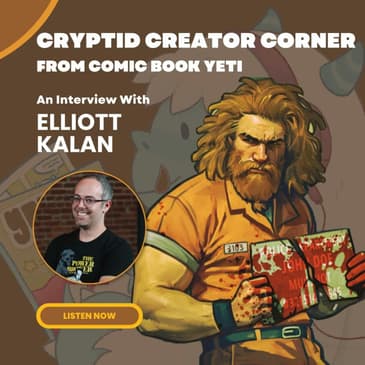

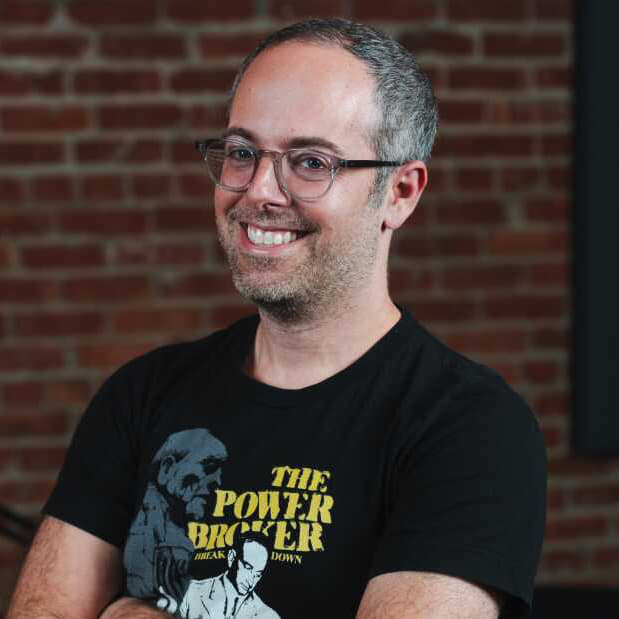
Elliott Kalan joins me (Jimmy) on the podcast to talk about Barbarian Behind Bars! The trade paperback just came out on August 25th and it's fantastic. Elliott teamed up with artist Andrea Mutti and letterer Taylor Esposito for this genre-defying mash-up. Elliott talks all about the series. We also discuss comedy writing and his book Joke Farming: How to Write Comedy and Other Nonsense. This was such a fun conversation about comics and comedy and writing. Check it out now!
WATCH THE VIDEO VERSION OF OUR CHAT ON YOUTUBE!
Barbarian Behind Bars
From the publisher
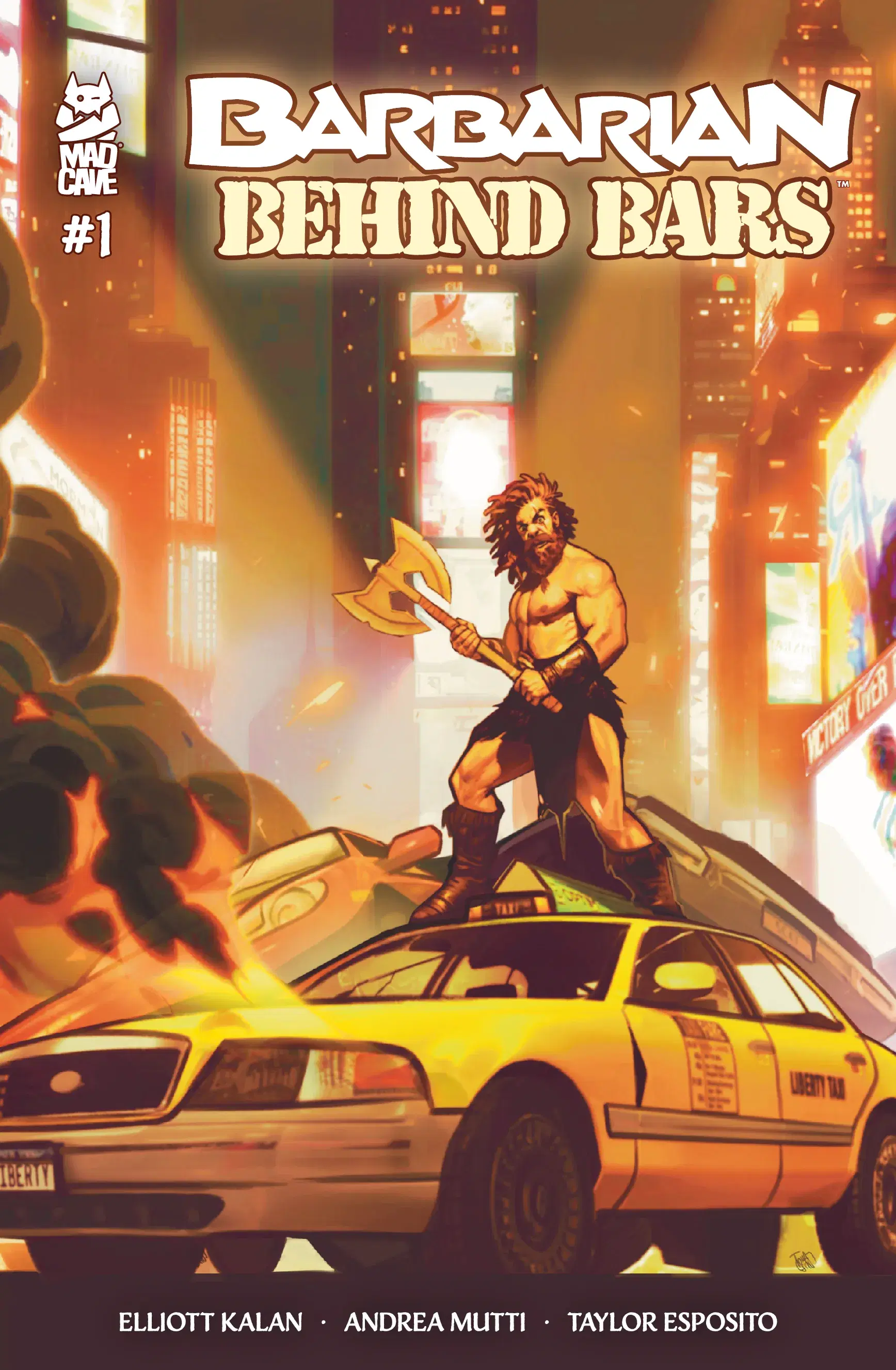
Who is the mysterious, musclebound warrior who came to our world in a storm of magic and violence?! That’s what public defender Irene Chang wants to know. This guy came out of nowhere, doesn’t speak English, and now she’s supposed to help him beat a murder charge after he chopped some other weird dude’s head off with a magic axe in broad daylight? Of course, he may not live to go to trial, with all the enemies he’s making in prison. Good thing his cellmate grills a mean cheese sandwich. BARBARIAN BEHIND BARS is the fight-packed fantasy prison thriller you didn’t know you always needed.
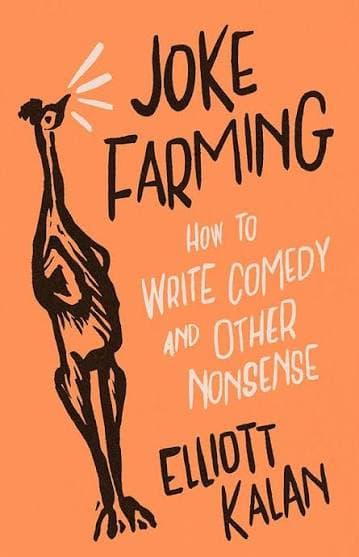
Joke Farming
From the publisher
The winner of four Emmys, a Peabody, and two Writers Guild Awards (all of which badly need dusting) explains his process for writing comedy without going insane.
Philosophers may debate the meaning of comedy (thankfully keeping them too busy to fall into a life of crime), but the rest of us are more likely to wonder how we can make an audience laugh—or at least, how to entertain our friends and followers. According to award-winning comedy writer Elliott Kalan, we need to stop staring out the window, waiting for hilarious bits to stroll into view, fully formed. What we need is a process to plant their premises, tend to their structure and wording, and ultimately harvest them as funny material. In short, a farm. But for jokes.
In Joke Farming, Kalan explains that it’s easier to write jokes when you have a dependable method for doing so. All jokes, he argues, are built from the same elements: structure, premise, voice, tone, wording, and audience—and these elements can be applied to any comedic genre, from stand-up to sitcoms to satire. Kalan analyzes examples from his own career—including jokes that he wrote (and rewrote and rewrote and rewrote . . . ) as head writer for The Daily Show with Jon Stewart—as well as material from a diverse array of comedians, writers, and filmmakers, highlighting the phrasing, rhythm, and precise details that make their work so dang funny.
Drawing on his experiences in professional writers’ rooms as well as episodes from everyday life, Kalan’s guide to jokes will appeal to aspiring writers, their mentors, comedy fans, and anyone who has to speak at a wedding. Joke Farming points the way toward a writing process that lessens stress and agony and yields more reliable rewards: a surprising tagline, a hilarious word choice, and—most importantly—a bigger laugh from the audience, whoever they may be.
Follow Comic Book Yeti
🔗 Comic Book Yeti LinkTree: https://linktr.ee/ComicBookYeti
For partnership and ad inquiries, please contact: thecomicsyeti@gmailcom
Follow your hosts
ARKENFORGE
Play TTRPG games? Make sure to check out our partner Arkenforge. Use the discount code YETI5 to get $5 off your order.
Make sure to check out our sponsor 2000AD.

[00:00:00] Your ears do not deceive you. You have just entered the Cryptid Creator Corner brought to you by your friends at Comic Book Yeti. So without further ado, let's get on to the interview. The future is calling! 2000AD is the galaxy's greatest comic with new issues published every single week. Every 32-page issue of 2000AD brings you the best in sci-fi and horror featuring characters like Judge Dredd, Rogue Trooper, and more.
[00:00:28] Get a print subscription to 2000AD and it'll arrive to your mailbox every week. And your first issue is free. Or subscribe digitally and you can download DRM-free copies of each issue for only $9 a month. That's 128 pages of incredible comics every month for less than $10. Head to 2000AD and click on subscribe now. Or download the 2000AD app and start reading today.
[00:00:55] Hello and welcome to Comic Book Yetis Cryptid Creator Corner. I'm one of your hosts, Jimmy Gasparro. And I'm really excited to talk to today's guest. It's his first time on the podcast. He is a comic book writer, a comedy writer, a writer, a former writer and head writer for The Daily Show.
[00:01:12] He is also the writer for Barbarian Behind Bars, which we're going to be talking about tonight, which as we're recording this, the trade paperback comes out tomorrow, Wednesday, August 25th from Mad Cave Studios. He's also the author of Joke Farming, How to Write Comedy and Other Nonsense. He's one of the hosts of the podcast, The Flophouse, which hopefully we'll be able to talk a little bit about that as well.
[00:01:40] But please, welcome to the podcast, Elliot Kalin. Elliot, how are you doing tonight? I'm all right. Thank you so much for having me. I'm excited to be here. I'm raring to go to talk about Barbarian. It's a it's a series I'm really happy with and I want people to read it. Oh, yeah, absolutely. That's the whole that's the reason I do this to try and get people to read comics that maybe especially ones that maybe flew under the radar or indie comics or, you know, I cover a ton of Mad Cave stuff.
[00:02:09] I really like what Mad Cave is doing. And so, yeah, they Frank said Frank Silva, who I he helped set up a lot of the podcast when I cover Mad Cave stuff sent over the trade. I got an early look at Barbarian behind Boris, so I was able to read it. And it's fantastic. Oh, yeah. I mean, I love the whole concept of it.
[00:02:30] But the cover itself and listeners, if you haven't seen one of the covers, I think, for issue one is just like a barbarian, like what you you think of with an axe. I think standing on top of, you know, a modern day. I think it's a taxi. Yeah, it's actually, you know, yeah, it just it just looks it. The image and the cab is on fire. The cab is on fire as well. And there's cars piled up behind him. He's caused some trouble.
[00:03:00] Already right there on the cover. A little bit. It's very it's very like an evocative cover. You're just like, oh, great. Barbarian behind Boris. OK, I get it. Barbarian out of time. He's in our world. He's caused a mischief and yet did not did not disappoint. I really loved I really loved it. I just wanted you to tell listeners, you know, more more about it, kind of how it came about. And I think you're working with Andrea Muti for it. And like the art's fantastic. And Taylor Esposito lettered it, I believe.
[00:03:30] Yes. Taylor Esposito did the letters and Andrea Muti did the art. And we're it's so I had done a book for Aftershock called Maniac of New York. And yes, Andrea and Taylor worked with me on that one. And so with this book, I was like, let's do it. Let's get let's get the band back together. Let's all get back together. I love working with those guys.
[00:03:48] And I really like taking like a genre type story and putting it into a setting or a or a like a slight twist on the premise that throws things into into into sharp relief or like like starts to create kind of funny combinations. And so with with the book with that book, Maniac of New York, it was about like, what if what if there was a slasher like Jason who was loose in New York and they couldn't stop him.
[00:04:16] So everyone just kind of got used to it. And now it's years later. And this is just a thing that happens in New York with this one. It was similarly there's a lot of I was thinking about like the old Masters of the Universe movie where there's these these, you know, he man and Skelter or whatever. They come to Earth and then they leave Earth again. And I started thinking about how many or like Beastmaster 2. There's so many fantasy movies where someone a warrior barbarian from another world shows up on Earth and they have an adventure and then they go back home again.
[00:04:45] And I started thinking about what if there was a a kind of Conan type warrior from another world where, you know, the only law is the strength of a man's sword arm, you know, and there's no that, you know, that's there's nothing. The weaker, the weaker, there's no mercy for the weak and things like that. And he is in a he's in a battle across time and space with an evil wizard of some kind.
[00:05:08] And he gets to Earth and he finishes the battle and he kills this wizard and then instantly is arrested for murder and thrown in jail. And I just started thinking about, well, if he doesn't, he's not going to speak the language. He's from another world. There's no records for this guy. There's no records for the person he killed. He is an unknown person who just murdered somebody right in the middle of the street. And if he's like one of these kind of brawlers, one of these very strong barbarians, they're not going to be able to keep him in like a regular jail.
[00:05:37] They're going to have to throw him in maximum security prison while they're dealing with them because it's the only place that's strong enough to hold him. And so now you have this character who is a like a high fantasy character who is in the book. He's got like a magic jewel on his head that gives him kind of certain powers and certain strength. And he has a relationship with it with a goddess named Selfir, the goddess of justice from his world. But he's in a he's in jail. He's in a prison. He has to deal with prison stuff.
[00:06:03] The there's he has to deal with a cellmate who talks too much like he has to deal with the right. The local kind of Aryan nation chapter really wants him to join and he does not want to join. And again, he doesn't speak the language. So he can only all he can try to do is try to get out and try to figure out what's happening to him. And I started thinking, well, if you're in that situation, if you're his cellmate, how do you relate to this strange guy who has ended up in your cell? And if you're his public defender who's been assigned to him, how do you handle the situation?
[00:06:30] Like, how do you how do you go about trying to create a case to defend somebody who, again, nobody knows who he is. You can't speak his language. And he in the in the comic, he chopped the guy's head off right in the middle of, you know, a public street. How do you how can you possibly deal with that? And so it was then just kind of following the story from there of what happens when you mash these kind of B movie prison kind of tropes. There's this movie called The Slams starring starring Jim Brown, I think it is.
[00:06:57] That is a 70s prison movie that I really love where it's like everything that could happen in a prison movie happens in that movie. What happens when you take that type of setting and story and then you put a character from like a sword and sorcery kind of fantasy world in there? And then just seeing how it how it matches together. And going into the book, I was like, I want this book to be like, really violent, like kind of like unapologetically violent. And so that's what I tried for. I think it's not as violent as some other stuff, because I'm unfortunately, I can't help it.
[00:07:27] I'm a decent human being. So there were limits to what I would do. But but there's still a lot of there's a lot of fighting. There's a lot of like bare knuckle fighting. There's a lot of people getting killed with axes with this with this, you know, battle axe. And I thought I had such a fun time writing it. And I hope that I'm glad you enjoyed it. I hope people enjoy it when they read it. It's the kind of story where there could be more of it.
[00:07:49] But if this is if this is all you read of it, then it's a it's just a slam bang kind of like contained action adventure story. That's partly prison drama, partly fantasy drama. And there's some comedy sprinkled into it. And like I said, violent. There's violence. There's lots of hitting. There's there is a lot. There's there's lots of hitting. There's an axe. There's there's axe wielding. There's all kinds of other weapons. The taser is employed several times. A lot of a lot of stun gun tasering.
[00:08:17] There's a there. The axe is alive. The axe is alive and drinks blood. And so there's a there's that there's that too. The axe is by the end of it. The axe is my favorite character. So, yeah, I mean, as an attorney, I, I, Irene Chang has a special place in my heart, like just how defeated she was from the very beginning, because she's like, how do I defend you? I can't find a translator. I have no idea what you're saying. Also, you don't exist.
[00:08:46] Also, the guy you killed doesn't exist. Like, I don't know what to do about any of this. My favorite part, I don't don't really usually like to spoil anything, but my favorite part is when she's talking to the warden and the warden says that she quit like in the middle of an arraignment.
[00:09:03] And so it's like, you know, I, I just thought it just all the tropes and all the things that people will sometimes put on like a poor suffering, like public defender. Yeah, I just thought was great. And I loved I loved her her whole arc. I mean, that was I thought she was tremendous. Oh, thanks. I mean, I love that character. She's I agree. She's other than the axe. She she's she's my favorite one. And I really I had so much fun writing.
[00:09:32] I love writing characters who are really on the on a certain level, not good at what they're doing and are flailing a little bit, but then find that they're actually they can solve this problem. There's not the way that they thought they were going to be able to solve it like her her arc over it, where she kind of finds this this kind of more brutal strength to herself. You know, I really I was really happy with she's she was inspired a lot by a college friend of mine who became a public defender and told me a story.
[00:10:00] He mostly worked with juvenile offenders and he told me a story once about it. And he was very good at his job. He was very dedicated to it. But he always he would tell the stories where he's like, oh, it's like these kids are trying to get thrown in jail. Like what did he was telling the story about a kid who got picked up for shoplifting and on the on the security camera video as he's trying to get out, the security guard comes over and you can see the kid immediately fall to his knees and start begging security guard not to not to not to get him in trouble.
[00:10:27] And I just remember him talking about talking to the kid going, what are you doing? Why would you do that? Like, I kid, how are you going to defend that? And so the like you just gave it up. And so it was yeah, that was kind of it was kind of loosely based on the stories that that he would tell me, although he was he was very dedicated to his job. But I I can't I just like I love to write characters who are in situations where they really are not quite sure how to handle it. And they can be very vocal about their disappointment that they have to be dealing with this situation.
[00:10:56] She has a line fairly early on rain. I remember she's like, she's like, I have to do this. And right now there's someone who's just like me, but much better at their job, who's trying to figure out how to convict you. Same thing. Just the I like I like to take character at a low self-esteem and and and and raise them up because by the end of it, not to spoil things real by the end of it, she is she is intensely engaged in in battle, you know, and is just like I think it's really it becomes really enthused by this situation.
[00:11:27] And the other and the other kind of like important character in it is Lanny, the barbarian. Yeah. He was a guy who has been in jail for years and years. He committed a crime as a young man and he has repented in his soul, but he hasn't gotten out of prison and has become a Buddhist and is always trying to convince the barbarian, this guy who never talks, that he should also be a Buddhist. And so I was trying to drop knowledge on him. But his other thing is that he's very good at making grilled cheese sandwiches on this kind of like homemade hot plate that he's turned his bunk into and his contraband hot plate.
[00:11:56] His contraband hot plate. And he's like he's just very proud of how he can grill cheese sandwiches. And that's his way of expressing love to people is making them cheese sandwiches. And I think he's such a he's such a he's such a sweet character. And I liked getting him in that kind of prison setting because I feel like there's I've never been in prison, but I've I've read up on it a lot. And I've listened to a lot of a lot of podcasts and watch a lot of shows about it.
[00:12:22] And I feel like in prison either hardens you or softens either it either hardens you so you can survive or it softens you by allowing you that the time and space to understand and kind of come to terms with things. And he is a character who he's a prison has has worked on him well enough that he should be out of prison. He shouldn't be there anymore. But unfortunately, he's trapped by the system and the decisions that he made as a younger man.
[00:12:49] And he's aware of that. So there's a he's like a very sweet character that has this kind of tragedy at the heart of him. And I don't know the three of those characters now. And now I think I'm almost in like sitcom terms. I'm like, what are those situations? Could I put the barbarian and Lanny and Irene in where they would get into trouble? You know, yeah, well, the character work is to run a pizza place. Oh, what are they going to do? Well, thank you. I there's there's a the best I love. I mean, I'm by a guy, a girl and a pizza, a guy, a girl, a barbarian, a barbarian and a pizza place. Yeah.
[00:13:19] Two guys, parentheses. One of them is a barbarian, a girl and a pizza place. Yeah. I you know, my my background is a comedy background. Comedy is what comes most naturally to me. But there's something really, really special about being able to write comedy at times that is what comes from comes out of the characters. It's where it's like this. This is funny because it's this person saying it at this time in this place, as opposed to like more quotable kind of one liner stuff. I like writing those, too.
[00:13:46] And some some people would say that I write too many of those still. But there's something really fun about getting into a character and finding what makes them either funny or relatable or sympathetic in this situation. What makes them tick? What what would they be doing if you throw more complications at them? And yeah, I'm glad you're doing. I really I love these characters. So I'd love to do more of it at some point. But that's in the reader's hands. Yeah, I mean, I would love, you know, people to find it.
[00:14:16] And, you know, I it was really enjoyable to read. And, you know, you talked about the idea behind it. And I definitely even though it's called Barbarian Behind Bars, I still think there could have been a version of this where it plays on that idea of the fantasy person coming to our world. They get locked up and like in the movie version or things that I've seen before.
[00:14:42] They're being locked up is like it's for comedy. It's a bit, you know, they get arrested and then they figure out how they get out and the rest of the story goes on. But I really loved how this like entire setting was like in the prison and really becomes about the characters, you know, that are that surround the barbarian, the warden, the guards.
[00:15:04] Like I, I liked how it stayed there and really focused on the characters in the situation that the barbarian was in and and still built up the the action and kind of the the fantasy, you know, of the story with him having to defeat Torv. And that stuff was just it was that was just so much fun.
[00:15:29] And it's surrounded by all this really interesting, you know, character work that we've been talking about with like Lanny and and Irene and even the warden and some of the guards. Like, yeah, I was hoping even they would have like personality. You know, I was I've been. Yeah, I may. I'm a sucker for a certain type of fantasy, which is the like if you have if you have a fantasy hero who just kind of rattles off different adventures on the slayer of Gorn Fenn. And also I defeated the Fells at Mugglethor.
[00:15:59] Like, I love that stuff. Look, I love I'll read a list the same way. There's two there's two things that are my guilty pleasures. Number one is any scene in a movie where it's a bunch of monsters or aliens hanging out like the cantina scene in Star Wars or the gremlins at the bar and gremlins or the scene in Dark Crystal where the Skeks either just eating. I love it. I love watching aliens or monsters hanging out and eating together or drinking together. And the other is someone rattling off a list of like made up fantasy nonsense. But at a certain point, you can only have so much of that.
[00:16:28] Like you want to have something kind of a little bit more real and something that I was digging in, digging into a little bit while I was writing this was the the Fafner and the Gray Mauser stories by Fritz Lieber, which are fantasy stories that are very much. Oh, we'll go to the we'll go to the city of the Isles ones and we have to steal the gem of Fuffera, you know, that kind of stuff. And like, oh, you know, we're two adventurers freebooting around the lands of of what's it called? Naewon, I think. And we go to the city of Langmar.
[00:16:57] But at the same time, the personalities, the characters are really sharply drawn and it makes their adventures that much more meaningful because it's not just, oh, there's this big, strong guy. He's got a sword and he goes and he fights a horde of, you know, lizard men or something. And then there's a sexy lady. He's like he saves and they have sex and they have treasure or something. Instead, it's like you have the dynamic between these two guys where they feel like they feel like two guys who are friends with each other. And when they have conversations, they have conversations that feel like two friends talking.
[00:17:27] And when they have adventures, they have a little bit of a like sarcastic edge to them. That's not quite it's not quite Hellboy going, oh, no, this crap. When like a crazy thing happens, but it still is a a little bit jauntist. And so it just shows it showed me how much more I enjoy that stuff when the characters are are strong. You know, when the character is strong, when it feels like there's there's a certain amount of reality to it.
[00:17:49] And so I felt like by I was really fascinated by seeing this character stuck in this prison setting and by treating him a little bit more like a real person, treating these characters a little more like real people. I felt like it earned me the point later on where he's like, oh, yeah, I slew this giant and I stole his axe chain breaker. And then I went to this dragon and I killed it and ripped a jewel out of its brain. I'm like, OK, I feel like I've earned that now that now that the characters feel like characters.
[00:18:13] But the next thing I write probably be like it'll be called like quest list and it'll just be a bunch of people in a tavern just kind of like going on and on about what what places they went, what monsters they killed and things like that. Because I'm a big as I used to do when I used to do stand up, I used to do a bit called fantasy where I say that I'm in bed with my wife. My wife asked me to tell her my biggest fantasy. I tell her, oh, no, I can't. She says, you must have had some fantasy that you thought was too weird, like you can't tell anybody else. You can tell me. You can trust me. And I go, all right. You really want to hear it? Yeah, yeah. Just tell me.
[00:18:43] Just tell me. I won't judge you. Just tell me. I go, OK. And then I'd pause and I'd go, a shadow hangs over the land of Calcazar from the from the Iron Mountains of North where rings eternal the sound of dwarven hammer on metal to the southern swamps of the lizard man. And it would go on like that for like two, two or three straight minutes. And I was just like, oh, man, I love. And usually when I when I deliver that routine, most of the audience would not have any idea what's going on. It would be so confused. And there'd be like two or three people in the audience laughing and then and really enjoying it.
[00:19:13] And then I would pause. It was always something I would try to remember the rest of it. Something about like there's a there's this evil sorcerer that's taking over things. But lo, there is a legend of a sword forged in the heart of a star and the young farm boy who shall someday wield it. And then I would pause and then I'd go chapter the first. And then I'd continue on with like with it, with this, with a scene. And then the rest of the audience would laugh. And so, like, I love that kind of stuff. And so it was like the with this, a lot of it was like, how do I do something like that?
[00:19:41] And like give it a give it a slightly different twist, you know, and that that prison setting and making it feel a little more real. It's still it's not the most realistic prison in the world. You make it a little more real kind of helped me with that and helped me feel like, OK, now I can earn again. Like having this character who can say things like, oh, I come from a land where the only law was strength, you know, that kind of thing. You know? Yeah. Yeah. I mean, I really I really enjoyed it. I love it. Like I said, I love the character work in it. I thought the action was fantastic.
[00:20:10] I'm a big fan of Andrea Moody's work. Oh, he's he's so. Taylor Esposito. It's just it's a gorgeous looking book as well. So I mean, they bring so much to it. I mean, Andrea, like he he is so his art is so beautiful. And I feel like the way he's his color, the way he the way he draws his figures, they look like real people, but there's still a little bit. There's such good like acting saturation on them. His character acting is really good. And I feel like his art always looks like it takes place in a real world.
[00:20:36] It's still got this like energy to it because the way he uses watercolor to color it and things like that. And Taylor's art like I mean, Taylor's lettering like he knows like it's I mean, but the most basic thing about lettering, which is it's super readable. Like it's super it's super clear and readable. But also every now and then, like he'll think of a way to to mess with the balloons or just or to kind of shape the lettering in a way that just adds so much intensity to it or add so much feeling to it. And they're both I love working with both of them.
[00:21:03] They're great guys that Taylor, especially there was a period where so are. So I was working with Christina Harrington at at cave. And as our editor and she originally I was like when the barbarian talks until our characters learn his language, I want it to be in some kind of like alien runic, like some some non non-existent language. And she's like, and you'll have translation boxes. No, no translation.
[00:21:30] It'll just be based on his at his fit, his poses and his facial expressions. And it was like, and she's like, all right, Taylor, can you invent like some kind of made up lettering? And we looked at a few different things. I was like, no, no, this one looks too much like an alien language. Oh, no, this one looks too much like a real language. And then finally came up with one. And then he lettered the book and we read it. And Christina was like, we can't do this. This is you just have a couple pages where the one of the characters are saying is incomprehensible. Like there's no it doesn't make any sense. I was like, yeah, I guess so. I guess we I guess we can't do that.
[00:21:59] So I appreciate that Taylor went down that road with me, you know, because I was like, I was like, no, no. Until the characters know what he's saying, the audience shouldn't know either. And Christina was like, no, we can't do it. That's not going to work. That's not a good idea. When that like runic language, it does look great. You know, it looks fantastic on the page. And even the and then there's kind of like, like kind of subtitling. Right. And even that looks really even that's evocative. Even that lettering is evocative. And so like the he just did a great job.
[00:22:26] I really appreciate that, that, that he was willing to, to play around and try to figure out that stuff. And, you know, it's a I think Mad Cave does. I mean, they were great to work with. They put out some fantastic books. And so working with them was just a really wonderful experience. So this was a the only thing that could make this not feel like a satisfying experience is if the collection doesn't sell. And I've got to just consider myself a failure in the market. So that's why I'm asking listeners and viewers, please, please buy the book.
[00:22:55] Pick it up. It's a great book. Support my self-esteem. It means it so badly. Yeah. Yeah. Oh, well, I loved it. There'll be a link in the show notes. I will. I will tell everyone to go and get it. But I also I wanted to pivot because I want to talk about, you know, away from comics a little bit. But I want to talk about joke farming, how to write comedy and other nonsense. You've done so many different things with comedy writing. And I haven't read joke farming yet. I want to and I'm going to.
[00:23:23] I'm I've always been fascinated with with comedy writing in particular. I mean, I was like a growing up huge fan of SNL, huge fan of like any type of sketch comedy, really. You know, kids in the hall. I absolutely loved. Yeah. Always. And, you know, whether or not it was sitcoms, like the Golden Girls or Cheers or comedy movies.
[00:23:50] And as I get, you know, you get older and you find out how those things are done, especially in television and the idea of like a writer's room and pitching jokes and, you know, how and listening about like SNL and writing comedy or then like the daily show and pitching like the jokes for the segments, but also the field pieces and how all of that works. And I've always been fascinated by it because I think I am. I'd like to think that I am like a funny person.
[00:24:18] I like I can make people laugh when I think so my friend and we're in a room. But I struggle to like sit and write like something funny, like if I'm writing a comic or writing a story, that process mystifies me a little bit. And I'm like, yeah, I'm really funny, like off the cuff, but like in a room of actual people.
[00:24:43] But I just really it just feels like some type of magic that I haven't figured out yet to just sit and like work on a joke over and over and over again or to write like, you know, a tight five minute stand up routine. You know, so is joke farming going to finally help me? So in my now that I'm 47, I will I will be able to write funnier comics. This is your year. This is your breakout year. I think so. I mean, that's exactly what joke farming is all about.
[00:25:12] So joke farming is it's a how to write comedy book that is for comedy professionals who want to up their game or or make things a little easier for themselves or for people who want to be comedy professionals. We're even comedy amateurs, because I'm a firm believer that like you don't have to get paid to be a writer. You don't have to be paid to be a comedian or a joke writer. If you're doing the work of writing, you're a writer. If you are making funny things, you're a comedy person.
[00:25:37] But the difference between someone who is kind of funny naturally and someone who is a comedy writer or joke writer to me is being able to do it reliable, being able to do it kind of on command the way you're talking about. And so what joke farming is about is how a joke works. What are the mechanics of a joke? And then also, how do you develop a writing process so that you can produce jokes? Because what this originally came out of was when I worked at The Daily Show, I had to write jokes really fast.
[00:26:07] You know, we didn't have a lot of time. If you had two hours to write your pass on the script for that day, that was amazing. You know, that was a lot of time. And when I was head writer, sometimes I would have 45, 50 minutes to rewrite a script. And it was always the same time that lunch arrived. So that would cut into my work time because I'm eating. Or often what happens, I'd run down and get lunch. And then I would set it aside and then work and realize that I didn't eat. You know, and it wouldn't be until after I had the script in, I'd be like, I'm really hungry. Oh, it's because my lunch is cold. It's just sitting here.
[00:26:35] And the way that I was able to make that functional for myself was to say, okay, I'm a funny person naturally. Jokes come into my head. How do I turn that from an unconscious thing that happens naturally to a conscious process that I can use like a set of instructions? You know, I used to call it my, before algorithms were like a big social media thing. I called it my joke algorithm. But now I call it a joke process because I don't want to be associated with algorithms.
[00:27:02] But it was basically saying like, let me try to reverse engineer what I must have been thinking in the back of my mind when these jokes popped into my head. And then turn that into steps I can work through deliberately. And so in joke farming, it starts out, I take you through my process for writing jokes. What are the steps that I go through when I need to write a joke?
[00:27:24] And then there's a section where I'm breaking down chapter I chapter with the different elements of a joke because every joke operates by the same mechanics, whether it's a one liner from a standup act or if it is a line of dialogue from a sitcom. If it's a visual joke, if it's a cartoon, if it's a comic strip, all jokes operate based on the same functional mechanics. And there's the thing that everybody brings up that Evie White said about explaining how a joke works is like dissecting a frog. And the frog's not any good for it.
[00:27:54] It's boring and the frog's no good afterwards or whatever he says. I think he's wrong. I think when I love a comedian's work or comedy writer's work, I want to look at their work and take it apart so I can see how it works. And I'm always amazed and more inspired after seeing how they put these things together, how they make it function. And so the first section is, here's my process. The second is, here are the mechanics of a joke. Here are all the different elements.
[00:28:20] Voice, tone, premise, and so forth. I don't remember. Forgetting some of them. Structure, audience, things like that. And then the last section is, how do jokes work in kind of a few different modes that I've worked in? How do they work in narrative comedy like sketch comedy or screenwriting or sitcom writing? How do they work in prose writing? How do they work in children's comedy? Because I've written a few picture books for children. How do they work in podcasting?
[00:28:49] How do you apply a joke to these different forms? And the whole point of it is to help someone like you who's like, I want to be able to write jokes, but I find that I'm stymied when I sit down to do it. To help you to understand the mechanics in a more scientific way almost so that you can then build that process for yourself that helps you to put the pieces together and write those jokes. And the way I'm describing it sounds very boring. But it's a very funny book. I wanted to write a lot of jokes in it.
[00:29:17] There's a lot of examples from different comedy people, but there's also just a lot of jokes in it. I like writing jokes. So I wanted to make an entertaining book to read. And while I was figuring this book out, I was writing it because an editor from the University of Chicago Press, David Olsen, he came to me and he said, hey, would you like to write a book about comedy writing? And I said, yeah, I would like to. I've been thinking about this for a long time. I think about comedy writing all the time. And to prep for it, I read about 20 to 25 other books about joke writing because there are a lot of them.
[00:29:47] And I found that I really didn't like any of them that much. Some were better than others. There's a book by Joe Randazzo that's good. There's a book by Scott Dickers that's pretty good. But otherwise, I read a lot where they were like, here's your surefire shortcut to writing guaranteed knee slapper jokes. And I'd be like, well, that's impossible. There's no, no, no, no. The best you can do, you have to produce a lot and then you pick the best. But there's no, it's not, there was a lot of like comedy case, hard, hard case sounds are funny. Here's a list of funny words, I guess.
[00:30:16] Or like you'd see like graphs about like when you get to this point in the joke, this is the maximum amount of laughter. We're like here, here's the, here's the wobble between reality and unreality. Don't go too far. And I'd be like, what this is, what is this? This is bonkers. Like this is not really how jokes were. And, and at the, at the, at this point, I mean, that took me a few years to write the book, but which is disappointing since it's such a, it's not that long a book. But it took me a few years to write it, but it's, but it's based on almost 20 years of being a professional comedy writer.
[00:30:45] I've been involved in comedy in some way or another for almost 25 years now. Actually, maybe a little more than that. I tried it because I really started, I've loved comedy ever since I was a kid. Like you were saying, like when I was growing up, I loved comedy. I talk about this in a book. Like I'm the guy who would like read joke books as if they were novels. Like I just read them cover to cover and would just, was just always absorbing so much comedy. And when I was young, there were so much, so many standup comedy shows on TV.
[00:31:12] There was so much comedy floating around less than there is now because of the internet, but it just felt like there was comedy everywhere. And I just loved it. I just, just really came into me. And when I was in college, I was part of a sketch comedy duo for, for quite a while. And I've done standup and, and other things like that. And so now I've been involved with comedy for, for many years. And so it was like, all right, let me, there's a lot of people writing these how to write jokes books. I don't know. I don't know if they're actually like comedy professionals.
[00:31:40] So I'll, I'll do this one and I'll talk about what it means from my point of view. And the, the biggest overriding lesson I have is, and it is all jokes function by the same mechanics, but your process for writing jokes does not have to be the same as my process. It just has to be one that fits your way of thinking and feels comfortable for you. So that when you sit down to write a joke, you can plug in the things you need to plug in and go through those steps in order to make it happen. You know, and that I say in the book, this is the way I do it.
[00:32:09] It's not the only way to do it, but hopefully it will help you find the way that feels natural. It's natural to you to do it. And so I want people to, I don't want to say like, you have to do it my way. I want people to use their brains to, to think of their own unique ways because then they'll think of their own unique jokes. And the great thing about jokes is that it's so based in your personal perspective. If you're writing it right or the perspective of the character that you can take the same subject matter and give it to 10 different comedy writers or comedians, and you're going to get totally different jokes.
[00:32:39] And they'll be, they'll reflect that person's point of view, their frame of reference, where they come from, what they want to say, how they want to say it, what their sensibility is. And the exciting thing is seeing, um, the, the exciting thing of any type of writing or any type of communicating is I'm going to take something from my brain and I'm going to put it out into the world. So it goes into your brain and I'm going to let you find meaning in it or react to it or be entertained by it.
[00:33:04] And then hopefully tell me in some way that you liked it, either in the form of laughter or applause or money. Money is the best of them, but you know, laughter and applause are also good. And the, and so you want to, you want to be on both ends of that spectrum. You want to be the one who is putting their ideas out in the world and getting reactions and connections to people. And you want to be the person who's receiving those ideas from other people.
[00:33:29] And so, I mean, I just, I hope that it's a book that, um, that inspires people to, to write comedy, even if that doesn't become their profession, but it inspires them to write it and put it out in the world because I want to hear it. I really like comedy. I want to see more of it, you know, there, and I want a comedy that is not the comedy I would write. I want to hear the stuff that I would never think of in a million years. You know, that's the exciting thing to me. Oh yeah. I, I a hundred percent agree.
[00:33:52] Like even stuff now, you know, because there are so many ways to get comedy, no longer just television, YouTube, even like Tik TOK. Like there's so many videos that I see that are hilarious that I just never anything in a million years that I would have come up with or thought to do. And just the inventiveness is, you know, remarkable. I mean, I also think I sense of humor generationally.
[00:34:19] I'm like fascinated by like how, what has been considered like funny has changed over 25 years, 50 years, a hundred years. But, um, except that even then like, but even that it changes, but like there's still like stuff can still be funny after a long, after hundreds of years. There's a, um, in my book, there's an example of a joke from the novel, Tristram Shandy, which is from the early 1800s. I think, uh, maybe I don't think it's a late 17th, but there's, there's some jokes in that book that I think are so funny.
[00:34:49] Like I'm laughing while I'm reading it, but there's, there's just like, you can still watch a Warner brothers cartoon and it's still hilarious. And then there's, there'll be a joke about rationing cards and you're like, I don't get that one.
[00:34:59] But the other jokes I got, but, and now the current comedy, cause now I'm a middle-aged man, you know, there's, there's the current comedy on TikTok is so based off and on kind of this almost nihilistic randomness and denial of meaning in a way that I find a little unsettling in terms of what is it saying about young people, you know, but which I also find very inspiring.
[00:35:21] And very, when people first started, um, putting jokes on Twitter and things like that, I found it very inspiring because it was like, oh, here's a way to do prose comedy, like written to be read comedy where you don't have to follow grammar rules. You don't have to worry about spelling. You can find new rhythms that are a little bit more like, um, speaking out loud and don't have to follow the rules that, you know, writing professor would tell you, you have to follow. And it's all just really, it was very exciting, you know?
[00:35:47] So that stuff, it's all, there's a, there's a, uh, there's a video that I mentioned in the book that is from, I don't know what year, but it's like a, it's like a very short video where you just see different young people being stopped on the street and they're asked, what do you do for a living? And they'll go, oh, I lay eggs. And then they, then they say, how's that? That's good. And you had the next person, what do you do for a living? Oh, I lay eggs. And the third person, what do you do? Oh, I lay eggs.
[00:36:17] Is going to say this thing and it doesn't build to anything. There's no like reveal at the end. Like there's no, there's no, and then like, here's the twist. Like the, the twist is, this is just what they're saying. They're just doing this one thing. And I find it so funny. It's such a, um, it's such a, there's so much going on in that bit, um, kind of conceptually and structurally, even though on the surface, there's very little going on in that bit. And I, and I find it really inspiring that one in particular. Yeah. Oh, that's awesome. Uh, I, there's, there's so many different things.
[00:36:46] I, I just discovered something new, like just yesterday on, on, on Tik TOK, like these, these folks doing like little sketches. This was a guy who's a very snobby wine person. It's kind of like a very traditional setup, but the characters that come into the wine shop are just like out of control and it just cracks me up. So it takes a very traditional setup, but it's very modern in terms of, um, what the people are, are, are going on and talking about. Um, yeah.
[00:37:15] But one of the things I was curious about, even if your process for joke writing is the same, because you've done so many different things in turn, like with the daily show or standup or with the podcast, like it is. If the process is the same, do you, do you find any one area, uh, either easier for you or, or more, or more difficult or challenging?
[00:37:39] Or does it not really, is there's no like ranking system in terms of what the medium is that you're writing jokes for? Not necessarily. Uh, I think I'm verbal jokes come to me more easily than visual jokes. You know, I'm just a verbal thinker and I can come up with visual jokes, but it doesn't, it doesn't come quite as naturally to me.
[00:38:00] But otherwise I, there's no, or at least I haven't yet found the form or the medium where I feel like, well, I don't even know. And I like, I just can't figure this one out. Like, I don't know how to do this. It's like I said, it always feels like it's the same sort of, it's the same basic process for me, no matter what it's identifying.
[00:38:22] What's absurd either in the moment with a piece of material that I'm, that I'm working off of, um, whether it is a something from the news or whether it is the situation that a character has found themselves in, or whether it's like I, I was challenging myself at one point. I was getting very tired with political standup and very personal standup. I was getting tired of standup that was less about jokes and more about here's how I'm feeling at the moment and here, I've got to tell you my truth and things like that. And there's a place for that in comedy, but I was just getting tired of it.
[00:38:51] So I said, I'm going to write a bunch of standup jokes about the natural world. I'm just going to write standup jokes about things that have been the same for millions of years. So I wrote a joke about the tides and I wrote a joke about how seeds are, are transported, you know, are spread. And I was just challenging myself to be like, what I want to, I'll write jokes about things that if you told this joke 10,000 years from now, you could probably still get this joke. I have a joke about horses being able to walk minutes after they're born and things like that.
[00:39:18] And even doing that stuff, it was like, it's the same process. What's absurd about this thing? How can I bring my perspective and my frame of reference to that? What's my sensibility? What kind of joke am I going to do? How mean is it going to be? How pointed? How filthy or whatever? How silly? How weird? And then what's the structure? What's the premise?
[00:39:41] How do I express that absurdity with that point of view in a, in a way that tells a little funny story that allows the audience to fill in some of the information so that they can kind of make that leap and get the joke? How do I structure it so that I'm giving the information in the right amount at the right time? So the audience isn't confused and is following along. How do I perfect those elements? How do I fine tune them? And then how do I deliver to an audience? It's all the same, it's all the same basic stuff, no matter what the medium, there are mediums that I've not gotten to have as much experience with.
[00:40:11] And I'm sure if I was writing like a Broadway play, I'd be like, oh boy, I got to learn the rules of Broadway play writing, but writing the jokes wouldn't be the hard part. Instead, it would be structuring a stage play, you know, which is something I haven't done in many years or mime is something I don't have much experience with. And so I think it would be, well, I got to communicate everything in movement. This is not something that I'm used to doing. Oh boy.
[00:40:34] But the great thing about writing is that unless you're doing improv, in which case people are a little more lenient and also you have other people you're working with often and you're working collaborating with them or like kind of conversational podcasts, which I do a lot of them. I've been doing for years and there's a chapter about that in the book. Unless it's one of those, you can write something as long as you need to. Like there's no reason that nobody has to watch you do it and you don't have to show them your first draft.
[00:41:03] And the secret of all writing from comedy to serious writing is they don't see it until you're ready to show it to them usually, unless they're on deadline, in which case you just try to make it as ready as you can. But like anytime I read a book that I'm really impressed by, I go, this person, they must've just sat down and they just started typing and this whole book came out of them. And then you find out where it's, oh no, of course, that took them 10 years to write it or something like that.
[00:41:26] I remember reading, I saw like a picture of a page from the manuscript for White Noise by Don DeLillo. And there's so many crossouts and things written in and things like that. Or in the Morgan Library once, I think it was, I saw the manuscripts for John Milton's Paradise Lost, you know, as he was dictating them to his daughters. He was blind and there were words crossed out and other words written in. And I was like, oh, even John Milton doesn't get it right the first time.
[00:41:51] And I can't be expected to, you know, or, or my, my, um, he's not a comedy writer, but my, one of my idols in writing is Robert Caro, the historian, the author of The Power Broker. Oh, The Power Broker. Yeah, sure. Of course. I'm just a, that's, it's, that's one of my favorite books. I've read it a bunch of times and I'm just really amazed by it. And he is the slowest writer because he takes so much time and he rewrites and he rewrites and he rewrites and he rewrites.
[00:42:15] But when the book comes out, no one is like, oh man, he did so much, he did too much rewriting. This is too much. Um, instead it's a, um, instead you just, you just have the book and you're like, this boy has a great writer. This is amazing. And I know it took him years to do it, but I'm not dinging him for that or anything like that. You know, it's the same with comedy writing. You get, you show it to them unless you're being paid to do it and you need to do it by a certain time. You take your time and then send it out.
[00:42:44] But at a certain point you do have to send it out. And I talk about this in the book that at a certain point, rewriting becomes procrastination and you just got to show it to an audience. But when the audience sees it, they're usually going to be like, wow, you wrote that? Like they're not going to, they have no idea how much work went into it. That's good. It doesn't matter. It's like a magic trick. You put a lot, a lot of work into figuring out how to move your fingers so they can't see the coin held in the back of your hand. And then when you show it to people, they go, it looks like you just did that thing. And you don't have to be like, yeah, I spent 40 hours practicing just this one twitch of my finger, you know? Right.
[00:43:14] Oh, I should mention if any listeners are more interested in Robert Caro's The Power Broker, Elliot did a whole, I guess, radio show or podcast series, 99% Invisible, where you took the listeners through The Power Broker. That was one of the most satisfying creative experiences I've ever had in my life. And I've had some great ones, was Roman Mars, the host of 99% Invisible.
[00:43:37] He asked me, he goes, do you want to co-host this Power Broker series where we're going to go through month by month and every month we're going to cover 100 pages of The Power Broker and interview people about it? And I was like, yeah, of course, it's my favorite book. And so it's a book that I read it when I was 20 years old because I was interning at The Daily Show when I read it for the first time. And it just lived in my head for years and years. I'm one of those guys that everybody hates who was like, let me tell you about Robert Moses.
[00:44:04] Anyway, so what Robert Caro says is, you know, you see that bridge? Robert Moses built that. Because that's Robert Caro says that. And it was just to be able to take the time to engage so deeply with that text, to really dig into it. And we got to talk to Robert Caro a few times. And we had this event where we got to interview him on stage at the New York Historical Society. It was just a dream country. It was really amazing. It was just like to have this book that I love and to be able to like live in it for like a year and just spend all this time going through it.
[00:44:32] And Roman's an amazing guy and I love podcasting with him. So to be able to do the show where it's just like, yeah, I read through this book and took a lot of notes, then I'm going to talk to Roman about it. And then we're going to interview, you know, AOC and see what she has to say about it, you know, or and it was just a it was devastating. I highly recommend those podcasts to anybody. I'll probably they're long, but not as long as reading the books. So I'll give you that which you should do. You should read the book. There are people I know who are like, I listen to podcasts pretty good. I think I might read the book now. I'm like the podcast is no soaps due for reading a book. You got to read it. You know, you have to.
[00:45:03] And I mean, didn't to take it back to Barbarian Behind Bars, isn't the prison the Robert Moses Correctional Institute? I think it is the Robert Moses Correctional Institute. Because I've just, you know, it's just in my brain all the time. There is a there's something I'm working on recently on. There's a thing I'm working on now where the characters go to a TV show. The characters go to you're supposed to go to to to Roosevelt Island. And because of the legal rights for a building, they're like, we can't call it Roosevelt Island.
[00:45:30] I'm like, Carroll Island, just call it Carroll Island. Can we do that? Great. Let's do it. Like, it's just, is it Robert Moses, Robert Carroll? They're like always in my head all the time, you know? So, oh, that's great. Elliot, I before I let you go, if you have one other minute there, it's just two other things I wanted to mention, if that's OK. One, just because we have a little bit of a connection. I'm in Delaware. I grew up in Delco right outside of Philly, but I went to school in Delaware. I was going to say I was wondering if you're in Philly because I can hear the I can hear the Philly in your voice.
[00:45:58] You know, yeah, I think I grew up in Delco, Delaware County, right outside of Philly. But I live in Delaware now and Delaware is so small. There's always like some type of Delaware connection. But I went to I went to high school with and was was friends with and actually was a guest on his podcast once. And we talked about a show we did a musical we did in high school. But Patrick Flynn, who. Oh, yeah. Sadie Mouse wrecks the house.
[00:46:27] I think they had a workshop at Adventure Theater, which Sadie Mouse wrecks the house is one of the children's books that you have written. So I just thought that was what a what an interesting connection. Patrick. I love it. Fantastic. Patrick's great. He's so Sadie Mouse wrecks the house is a picture book I wrote about a mouse. That's always always the good mouse. And so she always has to do all the chores and her brother never does. And so she decides the bad mouse and do all the chores wrong and wreck the house. She'll never have to do them again.
[00:46:54] And it was a Patrick reached out and was like, hey, I think there's a kid's musical in here. Would you be it would be OK with you if I start working on one? And. And he, you know, we did all the legal things that we have to do with with the with it, our reps and with the illustrator of the book, Tim Miller, who's worked with on a couple books and is a great children's with just a really great children's book illustrator and has some great children's books that he's authored as well. And he they did this workshop in D.C.
[00:47:24] And he sent me the video of it and it was really good. I mean, there's he's going to do some reworking on it. And I hope that that they'll be able to like really get it up and running for a run. And I wasn't able to go out to D.C. for the workshop, but I'm hoping to go out if they can do a real opening for it. But that's really funny. Yeah, he's great. He's great. Yeah. I'll tell him you said hello. Great guy. Oh, thank you. The other the only other thing I wanted to mention, just in case listeners didn't know, just because I've always been fascinated by this since I first saw it.
[00:47:54] But you were the writer of the Spider-Man comic with the that has become the Sauron meme. Yeah. So listeners, if you don't know, Elliot was the writer. It's fairly well known now where Spider-Man tells Sauron like you can rewrite DNA on the fly. You're using it to turn people into dinosaurs. But with tech like that, you could cure cancer. And Sauron's response, but I don't want to cure cancer. I want to turn people into dinosaurs.
[00:48:24] With all the different things you've done in your career, with something like that, like something that you've written kind of takes on another life of its own. I'm just kind of curious, what is that like? Does that do anything for you creatively? Is it just an interesting thing that has happened? It certainly does anything for me emotionally. I mean, I'm an egotist who really likes the spotlight and wants people to pay attention to him and wants people to know who I am. So like that it's very helpful.
[00:48:54] I'm not a my wife is always like my wife doesn't like the spotlight. She doesn't want to be recognized or anything like that. I'm like, I don't understand that. I don't I don't know how you could live life not wanting attention all the time. But I that was one. But that one in particular was pretty. So it was from a Spider-Man and the X-Men number two. I wrote this six issue series from Marvel called Spider-Man and the X-Men. And that one was particularly gratifying, though, because I remember super well writing that joke and being like, I think this is funny.
[00:49:21] Usually I can explain conceptually why a joke is funny, like what it's doing that makes funny. This one, I can't really explain to myself why I think it's funny. And I guess now I think it's just because he's so he's just being so honest. You know, he's just like he's not even trying to hide. He's like, I don't want to do that thing. I want to do this other thing. But I couldn't quite figure. And so I remember writing and being like, I don't know if anything else is going to find this funny. Like, I hope somebody does, you know, but I can't. I don't know.
[00:49:43] And so for that to be the joke that kind of like took off and which people found useful as a way to kind of like communicate thoughts about like you'll see online people like stick Jeff Bezos's head on there or something like that. It's like with money like that, you can feed people, but you're building a rocket ship. But I want to feed people. I want to build rocket ships. And I'm like, yeah, there's something really gratifying about a joke finding a second life like that as a as a communication tool, you know. And so I'm glad that people stuck with it at this.
[00:50:12] I mean, far more people have, I think, used it as a meme than bought that book. There's part of me that's like, oh, man, I wish I wish that book sold as well as I wish that we could have advertised that that joke was in it. But but like, like on the cover of the Starburst that like inside a joke you won't forget, you know, but the fact that it's like the only the only thing I feel bad about with it is that it's kind of Sauron, a character I love. I've loved that character as a kid. I was a big dinosaur kid. So I loved Andy's. I know pterosaurs are not dinosaurs.
[00:50:41] You know, they're prehistoric reptiles, but still. But that like the I always love that character. It does. Like, I love this guy who could turn into a to into a pterosaur. And when he turns into a pterosaur, he's just bad. Like, he's just me. Like, he's not he did anyone and he hates everybody. And the so I feel kind of bad that he's a his entire personality has now kind of been overshadowed by this one joke. And so you'll see like in other comics now, he's just the guy who wants to turn people into dinosaurs. And my son was very excited. My son plays Magic Gathering.
[00:51:10] And he was very excited when this new magic set was announced and they have a Sauron card in it. And it's entirely based on that panel. It's him and like the image is him and Stegron, who is his he's teamed up with in the comic. And the and the the the powers he has are like cure cancer or turn people into dinosaurs. And like that, like the whole thing is just about it's like so I was I need to copy that card. I got to find it.
[00:51:33] But there's something very there's always something gratifying when something you created or wrote has that connection with people where they respond to it. And it really sticks in their minds. And I just feel bad to I guess it was way I think Roy Thomas and and Neil Adams created Sauron. I feel bad that like now this character that they created is just like all about just turning people into dinosaurs, which was not always this thing. But I don't know. So it's so I'm very glad about it. There is part of me that's like when I die, that's going to be on my tombstone.
[00:52:03] It's going to just be that that panel carved into the into the rock, you know, but right. Yeah. But better to be. That'll be the picture. That'll it'll be your face. And then that'll be on the New York Times article. We'll just take those two pictures. Ellie Kalin, writer of Sauron's Spider-Man meme dies at, you know, whatever age it is, 103 year, hopefully. Yeah, that's but it's a it's always again. I like I like being I like having at least some notoriety. So so it's it's exciting to me that people know what that thing is, you know.
[00:52:32] And if I say to people that there have been times where people who know me from podcasting will find out that I wrote that one and I'll see online. They'll comment. They'll be like, he wrote that. I didn't realize it. You know, so it's a it has a life of its own, which is very exciting. You know, when you write stuff, it's just like having children. You know, you raise them as best you can. You release them into the world. You hope they make something of themselves. And every now and then I'm some dumb joke about Sauron Spider-Man makes into the world into the world and make something of itself.
[00:53:00] You know, I think it's also I should give credit also to Marco. I always feel bad. I never know. I'm going to say Marco file. Marco file that the artist on that series. He did a really great job with it. And the way he drew that panel. Sauron looks so gleeful with what he's saying. And it's just the back of Spider-Man's head as he's talking. But even you can still get the feeling of like how he's like, come on, man. What do you? I don't see. Why are you doing this? Like, why are you doing the right thing? It's just I think it helps so much.
[00:53:26] And I don't want to undersell that that the visual of it works so well with the writing of the joke. So he deserves the credit for that as well. Oh, absolutely. The panel looks great. And it is phenomenal how it has taken on a life of its own. But yeah. It's really bonkers. It's a funny thing. It's a funny thing when you're if it's like, well, that's not the thing I hoped or thought would be would be the big thing.
[00:53:51] But but it's like I read something once that like Mario Puzo with The Godfather. He was really surprised that I mean, I'll make him an offer. He can't refuse. It was like the big line that came out of the movie or came and that he was like, that was not the line. I thought was going to be the big line. I thought it was going to be this other line. But you can't something that type of joke farming is that like you don't decide what what your work means to people. You don't decide what it means. People interpret their own ways.
[00:54:17] And so, like I said, all you can do is just let it you just let push it off the branch into the world and hope it flies, you know, and doesn't plummet to the ground. And and the audience is as as responsible for that as you are. So. Awesome. Well, Elliot, thank you so much. I'll put links in the show notes so folks can check out and can pick up joke farming, how to write comedy and other nonsense. And also, by the time you hear this, you'll be able to get the trade of Barbarian.
[00:54:45] You can go to your local comic book store studios. Yeah, get Barbarian behind bars. If they don't have it, tell them they need to order it. And then they will. That's there's you don't have to do anything beyond that. They want to. You don't have to. You know, you go to your local comic shop, though, and let them know that you want Barbarian behind bars. And yeah, check out plenty of Elliot's other stuff. We didn't really get to talk about it. But if you're a big podcast listener, especially if you like bad movies like like I do, listen to the flop house.
[00:55:13] Yeah, which which you're one of the co-hosts of. Actually, I talked to Pat. I talked to Flynn a while ago. When I was trying to get you one and I had asked him like because I had listened to some episodes of the flop house, but not all of it. There's there's a ton of episodes. Yeah, we've been doing it. We just we just hit our 19th anniversary doing this. Yeah. So it's really it's unbelievable. Another thing where I'm like another thing where I'm like, what's the legacy I'm going to leave in entertainment comedy?
[00:55:40] Oh, it's just dumb podcast about bad movies that I've been doing for two decades. Like I thought I was going to write a novel that really they really touch people's hearts, you know, but I guess that's not it. You know, but I had I had asked Flynn. I was like, just yeah, I said, I want to listen to, you know, give me like your top, you know, 10 movie episodes. So he gave me he gave me a couple of good ones, which some of the movies are difficult to track down.
[00:56:05] But yes, thankfully, the local library does the library has has will sometimes have the ones that aren't streaming anywhere. So, yeah, I mean, I would never recommend anyone necessarily watch the movies. They don't have to like it's a lot of you don't need to do that to yourself. We're doing that. So you don't have to, you know. Yeah, that's true. And the hope is the hope is we have enough nonsense comedy on those episodes that even if you don't know the movie and still we did a I just recorded something with those guys on Saturday.
[00:56:34] That was an episode where I was like, this episode doesn't really justify its existence. Like I didn't do enough work planning this. And then we stumbled into a bit about how about the band Chumba Wumba. And we're like, please, too many Chumbas are being lumbered right now. This is this is a serious problem. If you if you if you know a Chumba being lumbered, like, please reach out. You know, we have to stop this one being of Chumbas. And I was like, oh, thank goodness. This episode is now justified its existence. We have this dumb bit. Well, that's the amazing thing.
[00:57:04] Like you do something for that long, you know, 19 years and the camaraderie that you build up with the other hosts, like the recurring bits, like things that you revisit. And it's just amazing that, you know, and it's really funny. Every episode I listened to was fantastic. Well, thank you very much. I'm glad you enjoyed it. Thank you. Well, thanks so much for having me on. I appreciate it. This has been great. No, thank you. So listeners, check out Barbarian Behind Bars. Let your local comic shop know you want it. Elliot Kalin, thank you so much for coming on the podcast.
[00:57:34] Shout out, as always, to my brother Bobby, the cryptid creator corner's number one most dedicated fan. Bobby listens to all my episodes. Don't worry, Bob, I'll put a copy of the trade of barbarians behind Barbarian Behind Bars on the pull list for you. And yeah, so Elliot, thank you so much. Listeners, thank you for listening. Good night, and I'll see you next time. Jimmy is too humble to do this. So as his stalwart, Ride or Die, I wanted to tell you about his new graphic novel, Penny and the Yeti with artist Amber Aiken.
[00:58:03] What started as a comic short with his daughter that I've known about for ages now, and it's evolved and has become one of those annoying can't talk about it in comics things for too damn long. Yes, I'm predisposed to be supportive, but after reading an advanced copy of it, I have to admit it's way better than I anticipated. No shade, but it's really good. Remarkably so. Does it have a Yeti? Yeah. Is it cute and adorable? Yeah.
[00:58:29] But it straight flies in effectively tapping into the all-too-familiar family dynamics that we all are facing in 2026 and approaching it in a way that doesn't insult the book's target audience. Kids! They are way smarter and perceptive than we adults give them credit for, so I really appreciated Jimmy's narrative approach tapping into his own experiences as a dad and a spouse. I can hear his wife saying, Get off your phone, Jimmy, through the pages! She's gonna kill me for saying that.
[00:58:57] It's hitting shelves on April 21st, and I dropped a link in the show notes where you can pre-order a copy today. Yeti or not, here we come with Penny, Perry, Fenton, Maxine, and the magical, mythical, magnificent, Yeti! On behalf of us both, we appreciate your support. Woohoo! Yo-ho-ho-ho! This is Byron O'Neill, one of your hosts of the Cryptid Creator Corner, brought to you by Comic Book Yeti. We hope you've enjoyed this episode of our podcast.
[00:59:27] Please rate, review, subscribe, all that good stuff. It lets us know how we're doing, and more importantly, how we can improve. Thanks for listening. If you enjoyed this episode of the Cryptid Creator Corner, maybe you would enjoy our sister podcast, Into the Comics Cave. Listen and subscribe wherever you get your podcasts.