
Dan Watters returns to the podcast to chat with Jimmy about Batman: Dark Patterns, Nightwing, Shredder, and M.A.S.K. Dan talks about writing Batman and how that impacted the direction he took Dick Grayson in Nightwing. Dan also discusses the added pressure of working with Denys Cowan, why he likes writing the bad guys, and the cultural adjustment of living in the U.S. Jimmy and Dan also discuss the eagerly anticipated M.A.S.K., the kinetic energy of the first issue, joining the Energon Universe, and what fans of the cartoon and new readers can expect!
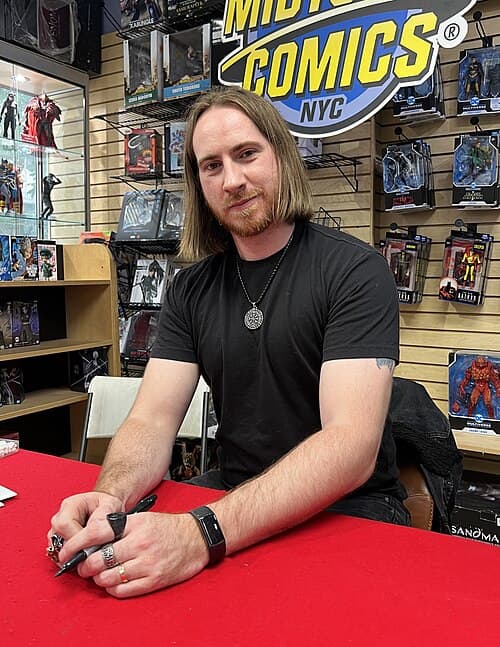
"The fact that he can do everything Batman can do, but he isn't burdened the same way. He grew up with people. He grew up knowing he was loved. That's what Batman gave him that Batman didn't have." - Dan Watters on Nightwing vs Batman
WATCH THE VIDEO VERSION OF OUR INTERVIEW ON YOUTUBE!
M.A.S.K. or Mobile Armored Strike Kommand
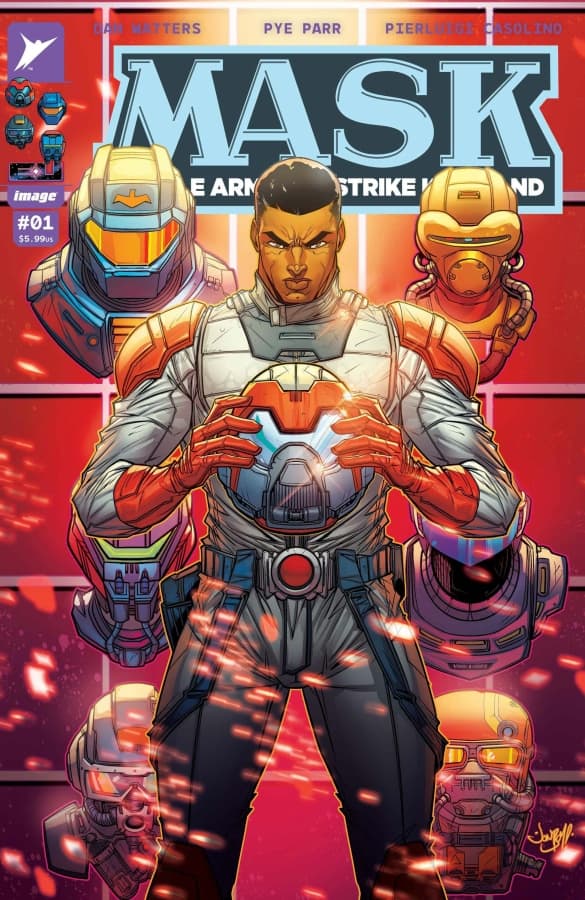
From the publisher
NEW SERIES THE NEXT PHASE OF THE ENERGON UNIVERSE STARTS HERE! The world is becoming a terrifying place. Matt Trakker needs your help saving it. Enter M.A.S.K. -- a network of specialists recruited to respond to the next global emergency. At a moment’s notice, Trakker and his agents can deploy bleeding-edge technology that converts their vehicles--and their drivers--into the ultimate weapon. But Miles Mayhem and V.E.N.O.M. are one step ahead in a secret arms race, scouring the globe for deadly weapons from this planet and beyond, ready to sell out the entire human race. Only M.A.S.K. can stop them… but will Trakker’s own secrets jeopardize their entire mission? Powerhouse creators DAN WATTERS and PYE PARR launch the most anticipated new series of the year, where anyone--and everyone--in the Energon Universe must join the fight for humanity’s survival. This is the first-ever Energon Universe blind?bag?program. The blind?bags will include a chance to get ANY of the solicited M.A.S.K. #1 covers, A-K, intermixed at varying degrees of rarity. However, there are rare SURPRISE variant covers related to the Energon Universe that can be found in these blind?bags. Those SURPRISE covers will not be announced publicly in advance of the M.A.S.K. #1 release.
Batman: Dark Patterns at DC
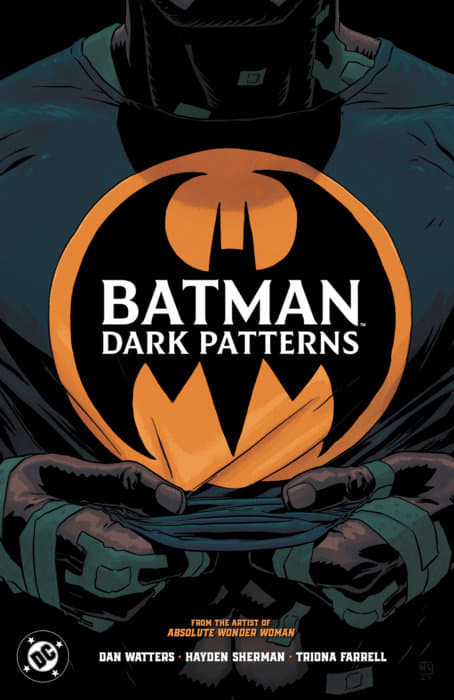
From DC Comics
A series of four self-contained, street -level, evergreen Batman mysteries exploring the early days of Batman’s place within Gotham City and his healing presence within its streets.
Batman: Dark Patterns is a grounded, mystery-driven series set in the early days of Batman’s career, echoing the tone and style of classics such as The Long Halloween, Dark Victory, and Hush. Written by Dan Watters, with art by Hayden Sherman, each three-part story is a self-contained detective case rooted in the trauma and transformation of Gotham’s people and cityscape. Emphasizing Batman’s role as a methodical sleuth and shadowy symbol of hope, the series avoids cosmic or supernatural elements in favor of lo-fi, solvable mysteries that showcase the Dark Knight as a healer cloaked in darkness.
Nightwing
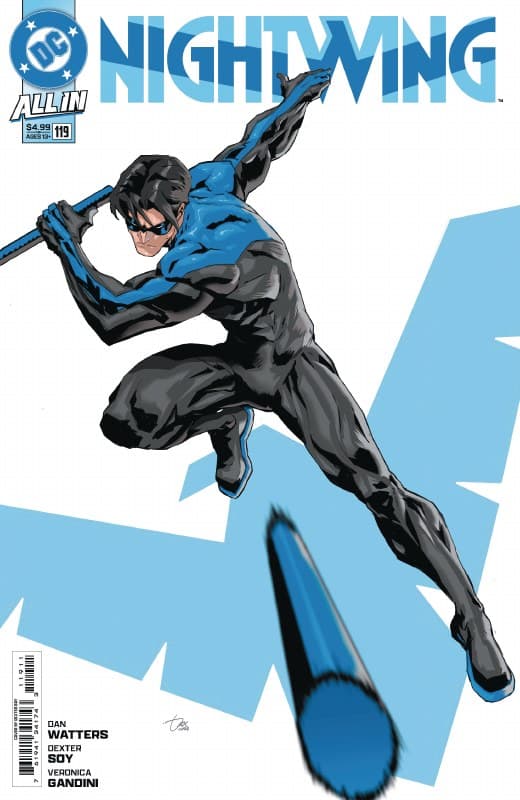
From the publisher
A BRAND-NEW NIGHTWING ARC STARTS HERE* WITH AN ALL-NEW CREATIVE TEAM!
Bludhaven has erupted in violence as rival gangs vie to fill the power vacuum left by Nightwing's cleanup of corrupt officials. But is an outside force turning the gangs against each other* escalating the violence in Bludhaven toward even more sinister ends? To find out* Nightwing must do the unthinkable--no matter the cost. Don't miss the start of this groundbreaking new arc that will redefine what it means to be a hero.
Listen to Dan talking about Destro in his first CCC appearance
Follow Comic Book Yeti
🔗 Comic Book Yeti LinkTree: https://linktr.ee/ComicBookYeti
For partnership and ad inquiries, please contact: thecomicsyeti@gmailcom
Follow your hosts
ARKENFORGE
Play TTRPG games? Make sure to check out our partner Arkenforge. Use the discount code YETI5 to get $5 off your order.
Buy a shirt and support the show. Our new Brendan Albetski Artist Series design just dropped in the THREADLESS SHOP!
Make sure to check out our sponsor 2000AD.

[00:00:00] Your ears do not deceive you. You have just entered the Cryptid Creator Corner brought to you by your friends at Comic Book Yeti. So without further ado, let's get on to the interview. The future is calling! 2000AD is the galaxy's greatest comic with new issues published every single week. Every 32-page issue of 2000AD brings you the best in sci-fi and horror featuring characters like Judge Dredd, Rogue Trooper, and more.
[00:00:28] Get a print subscription to 2000AD and it'll arrive to your mailbox every week. And your first issue is free. Or subscribe digitally and you can download DRM-free copies of each issue for only $9 a month. That's 128 pages of incredible comics every month for less than $10. Head to 2000AD and click on subscribe now or download the 2000AD app and start reading today.
[00:00:54] Hello and welcome to Comic Book Yetis Cryptid Creator Corner. I am one of your hosts, Jimmy Gasparo. And I'm very excited. This is this young man's second time on the podcast, but the first time he was with Byron. So this is the first time that I get a chance to chat with him. Although I did get a couple of things signed by him in the fall when he was at Baltimore Comic Con. But he is the writer of some of my favorite... Weird is the word I want to use because I think my first exposure to him was Coffinbound.
[00:01:25] And I was so enraptured by it. Absolutely loved it. And... But we have so much to talk about. Right now he's writing Shredder and Nightwing. He just did Dark Patterns, the Batman story with Hayden Sherman. And as we record this, we're about two months away from Mask, number one coming out.
[00:01:49] Mask, the cartoon from the 80s, is joining the Energon universe in comic book form. Please, welcome to the podcast, Dan Waters. Dan, how are you doing today? I'm good. Thank you for having me. It's a very nice intro. Well, thank you. Yeah, I think my... But like I said in the intro, I think my first exposure to your work... I think Coffinbound was the very first thing I had ever read.
[00:02:16] And I have read it several times since then. But it's one of the first comics in a long while where as soon as I was done reading it, I instantly wanted to find friends. Either make somebody in real life read it or somebody online that was talking about it.
[00:02:40] Like it just... It was something I wish I had... I wish I was back in school and like I was going to class to like talk about a book. There were just so many interesting things that I found in Coffinbound. But since then, you've done so many things that I loved.
[00:02:56] I was a huge fan of Homesick Pilots. I really love the work that you did with Rom V, both in The Creature from the Black Lagoon Lives and The One Hand and The Six Fingers. Yeah. And now you have... I mean, Dark Patterns was amazing. I think the trade of that just came out.
[00:03:17] And I instantly though, definitely out of all of these things though, was so excited for Mask because I remember like loving that as a kid, the cartoon. My brother and I had a bunch of the toys, which for any listeners who aren't familiar, Mask was one of those cartoons that they basically made the cartoon to sell toys. It was like 70 some episodes. It was on in 1985, 1986. My brother and I had a bunch of them.
[00:03:44] But shout out to my brother, Bobby, the Crypty Creator Corner's number one most dedicated fan. As listeners know, I say that every episode because Bobby listens to all my episodes. But I texted him that I was going to be talking to you today and sent a picture of the cover for Mask number one. And Bobby instantly responded with, I want it. I need it. Don't forget me. So, so it's already added to our pull list, Bob. Don't worry. Yeah. We're, we're getting it. We're getting it. So, thank you, Bobby.
[00:04:15] So, so Dan, for any listeners who might not, you know, be familiar. I wanted to ask you in turn, before we get into talking about your comics work. What was kind of your journey to writing comics? Is it something you had always wanted to do or how did you first get into this?
[00:04:36] Yeah, not specifically. Um, I think I always wanted to write or at least I always had notions of, uh, one thing to write. Cause it always, uh, I was always a avid reader of, um, honestly anything I could, I could get my hands on. You know, my, my, my mom used to complain that all her friends had to try and get their kids to read.
[00:05:03] And she was the only one trying to get me to stop because we had to do other things sometimes, which I resented. And do to this day, to be fair. So, you know, I kind of read everything. And then, and then the fact that being a writer was something that people actually did as a job looked so much better than having a real job. And then, you know, I just, I initially thought I could do film. Uh, I started kind of going to school for that, but I didn't, I didn't love it.
[00:05:30] And I sort of, it was too slow for me. Um, and I sort of was reading a lot of comics and also like, wait, this is a, a far more sort of rapid medium and you can tell a lot of stories and, and so, you know, the sort of ideas that could get thrown at you on a comics page. Uh, you know, I was very much reading all the sort of late eighties, um, and nineties for a go. So it was, you know, sort of ideas, a million ideas a minute.
[00:06:00] Uh, and that was just very exciting for me. And comics was the place I saw that happening the most. And, you know, that's still something, an element of, of what I like about the medium. There's, there's so much, you know, my, my, my, my tasers and interests have evolved, uh, since then, but that's kind of what put me, put me here, I guess. Uh, yeah. And one of the things, I mean, I, I, I don't want to turn this into like a, cause we have so many other things that we're going to talk about.
[00:06:29] I don't want to turn this into like a coffin bound retrospective, but I, I can't express to you enough how much I do love that series, but coffin bound is one of those series that I don't, I don't know if it could exist in any other medium. Like maybe, maybe it could, I think, but I think it would be very difficult to adapt. It seems like that's the type of story. And it really does seem to have, uh, some of that like early nineties vertigo influence, but I don't know if it's a series that could really exist out outside of comics.
[00:06:57] Um, it just seems like the kind of, that's the perfect medium for that type of story. Apologies if you hope for it to be a TV show, but, uh, yeah, no, I think we shot ourselves in the movie.
[00:07:09] I'm on foot with that one. Um, uh, yeah, I mean, I guess, I guess part of the, the sort of conception of it was wondering if I could sort of marry a, uh, a certain theatrical aesthetic to, uh, like mainstream comics. So sort of taking, you know, I'm, I'm, I'm, I'm huge Samuel Beckett fat, and that's kind of where I was coming from. And I was still, I was still, you know, I think it's still something where I was kind of,
[00:07:39] growing as a, as a writer, you know, hopefully I'm still growing as a writer, but, um, you know, I was getting so sort of fascinated with, with dialogue and sort of rhythms and things like that. And so, you know, looking at sort of these slightly less naturalistic writers, like Beckett, like Pinter, um, I really kind of wanted to see if I could take that and apply that to comic books.
[00:08:05] And, um, how much success we had is, is, you know, it's for, for other people to say, uh, but we have a lot of fun doing it. And I, yes, I, so I think it was a uniquely comics thing. It just in its conception.
[00:08:17] Yeah. And you've done so many, you know, different series since then, both in terms of creator owned and working, you know, on, on other projects. Uh, you know, um, for example, the, the dark patterns, um, with Hayden Sherman, getting a chance to write not only a Batman story, but, you know, something, you know, of that length. Um, kind of what was that experience like for you?
[00:08:43] You know, as a writer, I mean, I know you worked a little bit on some of the other, um, like I think the main, the main Batman line, I guess I'll call it before, I think before dark patterns, but what was that experience like coming, you know, coming into that series with your sensibility and how you write? And, you know, some of, there's been some like really amazing creators that have worked on Batman. Um, how do you kind of carve out your niche?
[00:09:11] Yeah. I mean, yeah. The funny thing about doing Batman is if you're at DC, you know, Batman's obviously he's the big get, but if you're at that publisher, there's a good chance you'll write him in some capacity because he also is the thing that sells. So he's gonna, he's like, you can crop up. Um, so, so, you know, everyone sort of think of like, Oh, it's Batman, but yeah, he's, he's, he's quite often about in, in this and that and the other.
[00:09:38] So I'd written the character a good amount of times by the time we started that just in terms of either in shorts or just him cropping up in scenes in other Gotham centric work. But this was very much the opportunity to kind of do my Batman, I guess, as it were, which, you know, eventually became very much mine, mine and Hayden's Batman.
[00:10:03] But, but we started that project without an artist task. So the first couple of scripts, which I then did go back and rejig. But it was very much me just going, okay, here's, here's what I think of this character. Who's kind of been knocking around in my head since I was four years old, um, in, in various iterations and incarnations.
[00:10:25] So, yeah, it was, it was definitely a sort of cool opportunity to, to put all those thoughts down on paper and kind of utilize everything that I learned as a creator to, to try and just make the best and sort of purest, uh, Batman book.
[00:10:43] Yeah, I think it's interesting when different creators approach, you know, or writers in particular approach Batman and, you know, to try and find a focus, whether or not it's, it's, you know, Batman as the, the vengeful vigilante or, or Batman as the world's greatest detective or, or Batman, you know, using all of his different, uh, gadgets, uh, whatever it, it might be. Um, I always prefer Batman stories where it, it, it really is focused on the mystery.
[00:11:12] Like I, I love the Batman that is the world's greatest detective kind of like first and foremost. Um, I really liked about, uh, dark patterns, uh, that it's especially, especially the first issue I think really focuses on, on the mystery of it. I also like, there's always the scene in Batman where like Gordon turns around and Batman's just like gone. I do, I do like in the first issue where like Gordon sees him leaving and it's like, Hey, where are you going?
[00:11:41] Then he's, he's off. Um, I, I will say though, there was, there was one thing I did think was funny knowing that you are from, from, from London. There's, there was a line of dialogue, which I thought was odd just cause I always think of Batman, you know, as set in the U S but, um, there, there was a reference to people as pensioners. And I was like, Oh, you can definitely, you can definitely tell somebody from, from the UK wrote this. Yeah. It's, it's, it's funny.
[00:12:10] Like you're the first one who's mentioned that one, but yeah, no, you say I, it is funny. Like having moved from the UK to the U S uh, and having, having married an American, you do realize that there are far more linguistic differences than you kind of expect. Going in. There are, there are, um, there's quite a lot, quite a lot of cultural differences, more than I think people from the UK often appreciate.
[00:12:39] But, um, yeah, when those things sit through, sit through in, uh, in any comics, uh, that I've written, I can always count on being told. Oh, look, I, I didn't mean it as a, as, as a criticism or to make you feel bad. I thought it was, I, I like those things. I just thought it's like, you, you know? Yeah. And don't, and don't get me wrong. The Brits are very, uh, we very happy to tell Americans where they get stuff from. Oh, sure.
[00:13:07] Um, I, I, I, I, I, I saw one time, one time in a comic by an American and it was like someone, someone in England and they were talking about their money. And they're like, I've got all my sterling and no one's ever, no one's ever said that, uh, in the history of, uh, British currency. I do watch a fair amount of, a fair amount of, of, of British TV.
[00:13:26] And I, I, I'm fascinated by that in, in terms of how, you know, the same thing, like kind of develop slang or different terms like that in terms of, you know, somebody who's a retiree or somebody who's on social security here or a pensioner in the, in the UK. I just heard one the other day that I was thinking of because, you know, we have daycares here and babysitters.
[00:13:49] Um, but I heard somebody on a British television show refer to him as a child minder, which I'm assuming is a babysitter, but we don't, you know, it's just different way of saying it. Yeah. Yeah. And we don't say, we don't say like kindergarten. We don't say daycare. Like those were, you know, there's loads, loads of words that are just toned in it. Well, hopefully you're, you're adapting, you're adapting well to being here in the U S uh, doing my best, but yeah, I really, I really love dark patterns.
[00:14:18] Uh, I mean, I'm a huge fan of Hayden as well. And I really liked, um, I just, I just think it's a really great self-contained series, uh, you know, and collected as a trade. I think it reads beautifully. Um, you know, yeah, it was a, it was a real like sort of dream project and, um, um, over the moon that like particularly in the trade, people seem to have really found it and responded to it. Yeah.
[00:14:43] I mean, I think it, there were quite a few podcasts, uh, like other podcasts that I listened to that do kind of like year end comic lists. It was consistently mentioned, uh, amongst a lot of the folks who's, you know, thoughts and opinions I respect and appreciate in terms of comics. But yeah, it was really well done.
[00:15:02] And, you know, now speaking of DC, you know, now with the, the, the Nightwing series with Dexter Soy, how has that been going from writing, like writing Batman being immersed in dark patterns and then, you know, taking over, not only taking over Nightwing, you know, but being the creative team that kind of takes it over from Tom Taylor and Bruto Redondo, which was a pretty celebrated run. Yeah.
[00:15:31] I mean, that was definitely interesting, um, in terms of how doing dark patterns kind of, cause I was still writing dark patterns when, when we started doing nightly, but night, but there were very different beasts in terms of dark patterns was on the back burner for as long as we want that to until it was ready. Um, and then, you know, once we were sort of, we're happy to, to pull out, we pull it out. It was no one, no one was like, there needs to be an issue of dark patterns in the world by this date.
[00:16:00] Um, whereas Nightwing is an ongoing book. So even though it came out, it came out a few months before dark patterns, my first issue with Nightwing, it was, um, it was a far shorter runway. It was, you know, we sort of started it in the summer and then it was out by the, by the full being another word we don't say in the UK. It also, also in terms of what I was doing with our patterns meant that I didn't want to be kind of writing the same book twice at the same time.
[00:16:27] So we kind of went a lot bigger with Nightwing and a lot more sort of Max and Dexter has a sort of wonderful sort of, uh, manga influence style. It kind of let us do that and sort of lean into the sort of more superhero side, the more sort of Superman start side of that character. Uh, and we did that for like 15 issues and an annual. So, so that was, you know, a, a quite, uh, a hefty chunk of that book.
[00:16:55] But now that, uh, Dexter's moved on to other things, we have Dennis Cowan drawing, uh, during the current Harkin Nightwing. And because I was kind of having withdrawals from, from missing dark patterns, because that is my favorite sort of mode to write in. Um, I'll probably say, um, was like, okay, let's, let's switch the book.
[00:17:15] More into that kind of, you know, let's kind of switch the, switch the lights off and, and let this be a little more street level, a little, a little, uh, darker and a little more forensic. So, yeah, you know, I guess sort of doing those two books have kind of informed each other, like very much like from the beginning. How do you kind of adapt your writing or maybe the, the focus maybe adapts the wrong word, maybe in terms of like focus your, your script writing, knowing the artists that you're going to be working with.
[00:17:45] I mean, you've worked with Casper twice now with Limbo and Home Sick Pilots, you know, and you, you just mentioned you, you, you go from working with, with Hayden on dark patterns to Dexter, Dexter Soy who has, you know, more of a, like a manga influence style. And now, and now, yeah, with the, you know, then Dennis Cowan taking over who Dennis, who's, you know, um, living legend in the business who has done so many different things.
[00:18:11] Um, and has, you know, and, and, and done a lot of like street level type stuff, like the question with, uh, you know, the question run that he did or, um, you know, with the milestone line doing hardware. Um, so did you do anything to kind of like change or adapt or like focus your writing style?
[00:18:35] Know that you were writing to that or was it more in terms of, you know, the plot and the type of story you were constructing? I mean, a bit of all of it, I'd say, uh, it's part of the job for sure. It's, it's the sort of like, as, as a comics writer, you know, your sort of job is, is to be a collaborator. Um, I think first and foremost, well, not necessarily first and foremost, but it's, it's, it's, it's just integral, um, to, to try and to make good comics.
[00:19:03] I always sort of think of a script as, you know, it's, it's less of sort of, it's less a blueprint than it is like a, like a letter to the artist to try and like, you know, tell them what's in your head and, and to, to give them the sort of like hope, you know? Sorry. I'm sort of cringing at myself cause I was about to say inspire, uh, but, uh, but trying to like give them the tools to, to be able to sort of deal with your, your script.
[00:19:33] To sort of, you know, I, I try not to go overly sort of proscriptive and be like, you know, this is in this corner and this is in this corner. And then with this zoomed in with that zoomed out, because generally speaking, the people I'm, I'm working with, you know, they, they, they know how to do all that stuff. They know how to frame a page. They know how to frame the story. So it's, it's about communicating as, as cleanly as possible, the actual like intent of the page.
[00:20:00] So that never, that, that doesn't change too much from, from script to script. Like that's the important thing. But every time you're talking to someone different, you know, you're sort of, your, your relationships with different people, you have different shorthands and those kinds of things. And you have to develop those as well. When you, when you, when you start working with someone new, so it's kind of, it's a new dance part each time.
[00:20:26] And, and figuring out those, those shared languages, I guess. Yeah. No, I mean that, yeah, that makes a lot of sense. What was your reaction to find that you're going to, you know, want to be working with like somebody like Dennis Cowan was, was there added pressure or were you already like, look, I'm already doing Nightwing. It's, but I don't know for me, for me, if I'm like, oh, you know, now it's somebody like Dennis, I'd be like, oh, okay.
[00:20:54] Now I, yeah. I mean, I mean, I guess there's, there's the sort of, there's the sort of fear of, I've also got another, there's another artist coming on who they haven't announced yet. But he's coming onto one of the books who's similarly to Dennis or so, not just an artist, but an artist writer who is, you know, in this case, drawing someone else's script, but doesn't always.
[00:21:21] And there I, there I, there I definitely feel, you know, it's like, okay. And, and it's the same with Dennis, you know, he's a, he's a, he's a, he's a fully rounded creator in his own right. He doesn't need to be drawn by scripts.
[00:21:33] So I guess it's just, it's just the thing is, it's, you know, not trying to sort of be, uh, self deprecating or trying to be an arrogant knob, but it's kind of just the thing of like, okay, I'm really going to need to justify my presence there to justify, you know, why make it, make it worth their time. Uh, or hopefully, you know, do my best endeavor as best I can to make it worth their time to be drawing my scripts rather than, you know, just doing their own thing.
[00:22:01] Um, but you know, yeah, it was, it was, it was so exciting was the main thing. Just having that come onto the book, the question, I kind of discovered the question and like the library when I was like 16 or 17 and it just blew me away. Um, yeah. Then your Neil stories and those kind of things.
[00:22:21] I knew that was the kind of mode and tone that I would like love to capture with this, this current sort of era of the night we rub were in. And so, so when he said yes to coming on board, I knew we were, I knew we were going to, we were going to make something cool. That's awesome. Jimmy is too humble to do this.
[00:22:47] So as his stalwart writer, I, I wanted to tell you about his new graphic novel, Penny and the Yeti with artist Amber Aiken. What started as a comic short with his daughter that I've known about for ages now, and it's evolved and has become one of those annoying can't talk about it in comics things for too damn long. Yes, I'm predisposed to be supportive, but after reading an advanced copy of it, I have to admit it's way better than I anticipated. No shade, but it's really good. Remarkably so.
[00:23:16] Does it have a Yeti? Yeah. Is it cute and adorable? Yeah. But it's strength lies in effectively tapping into the all too familiar family dynamics that we all are facing in 2026 and approaching it in a way that doesn't insult the book's target audience. Kids! They are way smarter and perceptive than we adults give them credit for. So I really appreciated Jimmy's narrative approach tapping into his own experiences as a dad and a spouse. I can hear his wife saying, get off your phone, Jimmy, through the pages.
[00:23:46] She's going to kill me for saying that. It's hitting shelves on April 21st, and I dropped a link in the show notes where you can preorder a copy today. Yeti or not, here we come with Penny, Perry, Fenton, Maxine, and the magical, mythical, magnificent Yeti. On behalf of us both, we appreciate your support. Woohoo! Yahoo! Well, let's turn now to talk a little bit about Mask. I'm very excited for, like I mentioned earlier.
[00:24:15] So Mask is now joining the Image Comics, Energon and Skybound, Energon Universe, Mask Mobile Armored Strike Command. Come on with a K. Before we get into this, I wanted to ask you, did you have any experience with the cartoon? Like, were you familiar with the cartoon before?
[00:24:42] Because you're young, you're, I believe, a fair bit younger than me, because I'm old. And I was a kid when the cartoon was on. But I didn't, did you have any of the cartoon? I did, more than I ever did with G.I. Joe. Because when I got asked to do Destro, my, you know, I was sort of asked, you know, are you interested? And I was like, I'm definitely interested, but I don't know a single thing about G.I. Joe. Just so you know, you know, like our front. And they were like, no, that's fine.
[00:25:12] You know, this is a whole new universe. And, you know, we want your voice, which is, you know, very, very kind and very flattering. And I'm very, very proud of that book. It was a lot of fun. Mask was a little bit of a relief when it was, you know, they came to me with another book. Because I was like, oh, that one, that one I know a little better because it actually was, it actually existed in the UK.
[00:25:38] Whereas G.I. Joe kind of didn't because Act and Force and Action Man were in its place. Because a real American hero didn't translate as a concept. So, you know, they reskinned it all. So we had a totally different thing. And it had morphed into something totally different again by the time I was a kid. But Mask had sort of come over in its original form far more so.
[00:26:05] And, yes, I was young for it. It was sort of still peripherally around. But it was also something that I could immediately see the potential as an Energon universe story. So that was the sort of thing of Ben Nabanathi from Skyvan had called me up and sort of gone like, hey, you know, we have this other project. And I was like, please let it be Mask. And he was like, get to Mask.
[00:26:34] So that was the kind of, we were off to the races at that point. Oh, that's awesome. Yeah. So I got a chance to read the first issue. I loved it. Oh, thank you. You know, it's a very good issue. But it also works, you know, for someone my age who's familiar with it, it works on another level because you instantly tie into that kind of like nostalgia of the toys and the cartoon.
[00:27:00] But, yeah, but it's a really exciting first issue. It's Pi Par. I think it's colored by Pierluigi Castellino. So, but it's, it's like very kind of action centric. It's, it's a very exciting first issue to kind of introduce the team. And yeah.
[00:27:29] What was it like, you know, trying to figure out how you would fit, you know, tell the first issue. So it's exciting and you want folks to come back for issue two and then find little ways to tie it into the, the Energon universe. Oh, I mean, I mean, yeah. I mean, I mean, I guess, you know, those are all kind of, again, all kind of the job. It's, it's, it's, you know, fitting all those, all those puzzle pieces together is, is the sort of challenge, particularly of an issue one.
[00:27:59] I just, I just knew I wanted this book to be like kinetic as hell. And, and, you know, having Pi during it makes that very easy. But I also, I gravitate quite often towards slightly sort of smaller, tighter stories. And here was a sort of place to go like, okay, this is, this is going to be big and it's going to be explosive. And, you know, there are cars turning into planes, turning into boats, turning into motorbikes. Motorbikes and all of them are shooting rockets at each other.
[00:28:27] So that's, you know, that's sort of our starting point. So, so sort of, we're probably not going to have very many bottle episodes, you know, it's, it's going to be a lot sort of more high, high octane than that. And that's been a really fun sort of muscle to stretch. And, and I just think every kind of issue, yeah, I just, I think every issue kind of has no dead air.
[00:28:53] It's, it's really sort of nonstop and we drop it into different, different scenarios, you know, sort of the master network being this sort of global entity. These, these, these people who are, who are sort of chosen by Matt Tracker around the world to risk as sort of a response team to, to whatever nefarious stuff.
[00:29:16] Miles Mayhem is this up to, um, sort of lets us do stories kind of everywhere and, and, and about kind of anything. Um, which I just thought was a really sort of exciting thing to be able to do in the Energon universe with it being a sort of new sci-fi universe that hasn't necessarily been like too deeply explored yet. But it has all of this canon we could pull from, from all of these, all these different properties.
[00:29:44] You know, there's all this sort of deep cut Transformers stuff that we should get into or GI Joe or, you know, these, these cannons that has been around for, for, for decades. Did you revisit the cartoon at all? Like, did you try and track any of it down? Yeah, of course. Before you started writing? I was wondering, and if it's a spoiler, obviously you don't have to say, I'm just curious.
[00:30:06] Was there, um, was there anything that, uh, after revisiting that or thinking about mask, uh, that you thought you, you'd have to have in it? Or at least in the, the, like the first issue? Cause there was something that, that I thought, uh, that I loved as a kid and I was so excited. It was in the first issue. So it's, it's not really a spoiler. Um, but it's, it's when, when trackers car, when, when the, when the doors go up, I was just really hoping.
[00:30:36] Yeah. Yeah. There was a panel of that, like in the actual comic. And I was listeners, I'm happy to report there is, and it's, it's wonderful. It's instantly, I was instantly like an eight year old kid again. We, I, you transported me back, uh, 40 years guys. Oh, I'm glad. Um, yeah.
[00:30:58] I mean, I mean, yeah, there's definitely sort of things that we wanted to make, you know, cause there's a sort of side to it where, where, where what we are doing is, is inevitably a bit of a, it's a little bit of a great reboot. Because that's what these books kind of are. Um, right. Not, you know, not, not, not to a sense, not, doesn't need to be a level where it's all jaded and, you know, you're just watching the worst possible stuff happen to, to your, to your childhood favorites.
[00:31:24] Uh, which I, which I, I know it can be a trend, but you know, we are, we are, but we are writing for a different audience. We aren't writing for, you know, we're writing for a more sophisticated audience that, that the sort of, uh, the cartoon was made for. Like, you know, if you go back to that cartoon, like miles mayhem and Bennett, the villains, they don't, they don't want anything other than to be bad guys.
[00:31:46] Like there is, there's literally no, um, there's no deeper, uh, motivation, but it's money somewhere, but there are definitely quicker ways to make money than, um. Um, yeah. My recollection was, it was money. Like every, every issue is like, they're going to kidnap somebody or extort somebody or hold somebody hostage. Like it was always about how to make money.
[00:32:09] I mean, I'm pretty, I'm pretty sure if they just, if they just sold their, their transforming vehicles and magic helmets, they'd probably make enough to, uh, make more than they would by, by, by stealing most of the things they're trying to steal. Um, you know, um, whereas, uh, yeah.
[00:32:30] So, so, you know, we, we, we, we definitely need to need to, we're writing for, for either an audience who, who grew up with the, with this show or people who are, who are discovering it fresh. And, you know, I consider myself a little more in the, in the, in the latter camp in terms of, uh, age group and audience for, for the End of John universe. I'd never really engaged with Transformers or GI Joe massively as a kid. So this was a sort of opportunity to be like, Hey, what's this about?
[00:33:00] So, so with mask, it was, you know, very much a thing of looking at it with those kind of fresh eyes. And that's something I try and do anyway, but there are definitely things that it's like, you need to, like, we need to, we need to, whether they're going to be in the ways that you expect or the ways that you, you know, them, you know, this, this, you're going to have to see T-Bob at some point. You're going to have to see Scott, you know, this, it's all coming. Okay. Yeah.
[00:33:26] I, I just thought it was, um, I just thought it was very exciting. Uh, that's what I loved about it. I mean, it'll, I think it'll appeal to people who are familiar with mask and who know it, who are older, like, but I mean, even, even, you know, younger kids who were getting into comics. I think it's, it's, it, you, you can do, and you said this, you, you can do something and revisit it.
[00:33:51] And I think there for a while was a response, like, let's take this thing that was a cartoon and let's redo it and let's modernize it. And that modernization just made it gritty or just made it dark. And, and for some things it works, but it doesn't have to be, you know, for everything we can modernize it and modernize the look of it or the dialogue or the characters intentions.
[00:34:16] Um, and yeah, I just think you've created a really fast pace and ultimately a very fun, uh, a very fun series. I mean, the first issue flew and I really liked it. I, I, I loved Matt tracker. Um, I just, it just seemed so cool. And so much. I know it's so much. I can't, I can't believe how much fun he's, he's turned out to be to write.
[00:34:46] Um, he, he, he is my absolute, my absolute favorite. He's just, yeah, he does, he does all the wrong things and sort of gets away with it. And he sort of, uh, he's, he's, he's always the smartest guy in the room, but God, does he know it? Yeah. And I also, I really love the, um, we, we meet another character throughout it. Um, is it Vanessa? Um, Vanessa Warfield. I'm not sure. Isn't that? Maybe. Yeah.
[00:35:14] But there, yeah, we meet another character, uh, and there's kind of like a reveal as to what it is Venom's trying to do. I thought those pages were so good. And it's really just two people talking in a room and it just, it looks great. Pi does a fantastic job. It's colored wonderfully. Um, it, yeah, just another. Like fun character, total bad-ass.
[00:35:41] Uh, just love the attitude that's captured in the dialogue and her look. So yeah, it's, it's a fantastic first issue. It's like, it, it, it's one of the things I love about this, the Energon universe stuff. It, it, it is very like, we're going to make really fun, good comics. We can still tell stories with depth and, and heart.
[00:36:07] Um, yeah, it's just, it's, it's really been a joy to kind of read and follow along. Oh, thank you. Yeah. I mean, you know, I've loved all the, you know, I've been, I've been following all the other stuff as a, just as a reader and up to this point, uh, I just sort of bowled over by what they've been doing with it. So to sort of be able to come in twice now, uh, and, and sort of, you know, add my puzzle
[00:36:33] pieces to that overall sort of landscape has been, has been, uh, something I don't, I don't take for granted. You, you said that I, something you said I was just thinking of in terms of like GI Joe as kind of a uniquely American product didn't really translate over to where you were in, in England and in, in London. And I know you said you did transformers. I know you said you, it wasn't really something you were into, but aren't there any British transformers?
[00:37:01] I don't know if there's British transformers that I don't think they needed to be because they're not sort of, you know, emblazoned with American flags. Um, and I also, to be honest, I don't, I don't know that there would have been any problem with just letting GI Joe come over as, as it was, um, you know, the captain America films did very well in, in the rest of the world. Sure. I think some, some marketing department somewhere in the eighties decided that it wasn't going to translate.
[00:37:30] And so we just, we just didn't get it, you know? Oh, okay. I just was trying to think, I didn't know if there were, uh, you know, I mean, um, yeah, there isn't anything necessarily uniquely like American in terms of American flags. Uh, with the transformers or anything, but they all, I mean, there are, there are a lot of them are, I guess, either American or, or Japanese cars. I just didn't know if there were any like British cars that were, uh, were transformers.
[00:37:58] Um, so mini Cooper. Well, I just Googled it and apparently, yeah, I just Googled it. And apparently there was a transformer that was based off of an Austin mini. So there you go. Uh, it also looks like there might've been one that was a land Rover, but, uh, yeah, I, I mean, I mean, if any franchises around for long enough, it's it, they'll get there, you know, someone's going to come up with it.
[00:38:27] Well, before I let you go, uh, you know, not as, as, as if you don't have enough going on and, and enough comics coming out, but you also, um, for IDW have been writing Shredder and said, uh, another iconic character in another, you know, kind of iconic franchise. Um, and you know, you mentioned the, the Destro mini series that, that, that you wrote, what's
[00:38:55] kind of the, you, what did you find in terms of both of those characters and what strengths of yours did you, you pull on to write to, I mean, very classic kind of complex, I think, you know, villains in both of those Destro and, and Shredder. I don't worry. I'm not going to ask you who would win in a fight or anything, but I'm kind of curious your, your approach to writing both of them. Cause there are some similarities, but some different, definite, definite differences. And Destro was a mini series.
[00:39:23] You now just had issue seven of Shredder come out. So kind of curious. Yeah. I don't know. I like, I like doing, I like doing the bad guys and I get asked to do them. So, you know, I'm, I'm always very happy to, I wrote, I wrote a super villain comic before I ever wrote a superhero comic. Like my first superhero work I ever did was an ocean master year of the villains, uh, uh, one shot.
[00:39:50] And honestly, like there's something to those kind of quite arch princely, you know, figures. And I kind of think Destro and, and Shredder are definitely similar in that way. And in the same way that ocean master is. And I also did, you know, I did, I did, um, I did two years of the Sandman universe, uh, Lucifer book. Yeah. He did. So again, it's another, another sort of, you know, he's, he's on a different sort of power scale, but, but as he sort of the way he navigates the world isn't, isn't massively
[00:40:19] similar to, to any of those characters. There's something I, something I think I just really enjoy about, about writing sort of someone who's really pretty horrible and then not necessary. I think you, you, you only need to justify them as far as we understand why they're doing what they're doing. We don't, you don't have to justify their actual actions. Um, and I think that's just those, those things are just fun to write.
[00:40:45] It's just, it's, it's, it's, it's, it's fun to be the bad guy, you know, um, uh, at least in this context. So, yeah, I don't know. It's just, it's just something, something I enjoy, something I think I, I have a handle on. Yeah. We, we, in terms of like influences, did you ever have a particular, you know, villain that you felt like when you were younger or something you read or watched or saw, was
[00:41:11] there any, you know, villain that first attracted you to that kind of character? Oh, I don't know. I mean, I'm, I'm a big horror movie nut. But so, you know, I, I was always sort of, you know, I liked all of the, all the sort of slashers. I thought, yeah, Freddie's up there in terms of, you know, sort of very, very evil characters who became far more like, likeable than they had any rights.
[00:41:35] I mean, it is still very weird that, that Freddie Kruger became a, you know, both a household name and a sort of, um, uh, sort of cuddly figure. When you go back to that first movie, it's like, oh wait, maybe. Yeah. That's, that's weird. Yeah. Uh, it is weird that it is weird that children dress up as him for Halloween. Um, yes.
[00:42:00] Uh, I, I, I think, I think it would, it would be a sort of hodgepodge of the, of the sort of the very classic ones in, in the genre, you know, Joker, like Mark Hamill's Joker. Yeah. They're just, they're just always so much fun to watch. Yeah. I mean, they are, they are, uh, absolutely. And you have certainly left your mark on, on several of them in terms of the, you know, the comics that you've, you've written.
[00:42:28] Uh, so yeah, I haven't checked out Shredder yet, but I definitely, uh, want to. And I, I just, even some of the villains, you're some of the, the, you know, that you created with dark patterns are very interesting. Um, you know, for listeners who have read dark patterns or if we haven't go, go do it. It's, it's tremendous. Um, but yeah, I, well, Dan, I'm so thankful that you, uh, had some time to sit down and talk to me.
[00:42:58] Like I said, I'm one of the best things about doing this podcast is just getting to pick the brain of folks that I really love their work. And I've been a fan of yours since, since Coffinbound. Um, I've, I've, I've tried to read, um, as much as I, I, I possibly could get my hands on the terms of the work that you've done since. And I'm sick pilots was another one. Um, you see, yeah, listeners, if you haven't read either of those, uh, please, please do so. You will not be disappointed.
[00:43:27] Um, and Danny's work on Coffinbound and Casper's work on I'm sick pilots are, are, are tremendous. It does. And yeah, uh, go get shredder, uh, pick up dark patterns. The trade is out and mask, uh, will be out June 10th and I'll have a link in the show notes. You can check it out. You can let your local comic book shop know that you want it. There's like a bunch of different covers, which are awesome.
[00:43:52] Um, yeah, I think I'm getting the a wraparound cover and, and the B cover, uh, for Bobby and I. So we, we have our orders in there. It's on our pull list. Yeah. And, uh, if you haven't yet, I, I really like also, I also like the universal monster stuff that, that they've been doing and you and your Ram V's the creature from the black lagoon is one of my favorites and your creature from the black lagoon lives. I thought, I thought was awesome. So, uh, says, yeah, thank you very much, Dan. I really, I really appreciate it.
[00:44:22] This has been awesome. No, thank you. Thank you so much for having me on. It's a, it's a, you know, I'm always touched to people, uh, take the time and want to hear anything I have to say. So really appreciate it. Uh, listeners, uh, you know what to do rate reviewers, do all the stuff they tell you to do about podcasts. It really helps. Thank you so much for listening and, um, yeah, you can find me on blue sky and Tik TOK. Uh, let me know what you're reading, especially if you're reading any of Dan's work.
[00:44:50] Uh, I'd love to talk to you about it and yeah. Thank you so much for listening. I will see you next time. This is Byron O'Neill, one of your hosts of the cryptic creator corner brought to you by comic book Yeti. We hope you've enjoyed this episode of our podcast. Please rate review, subscribe all that good stuff. It lets us know how we're doing and more importantly, how we can improve. Thanks for listening. If you enjoyed this episode of the cryptic creator corner, maybe you would enjoy our sister
[00:45:20] podcast into the comics cave. Listen and subscribe wherever you get your podcasts.