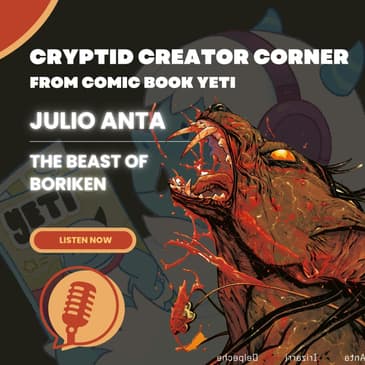

Comics writer Julio Anta joins Byron on the show to explore his new Dark Horse Comics project, The Beast of Boriken. Part of Tiny Onion's True Weird series, this tropical horror story uses the legend of the Chupacabra to address the complex history of colonization, activism, and trauma in Puerto Rico. Julio breaks down his collaboration with artist and Puerto Rica native Daniel Irizarri, and how they blended indigenous Taino culture weaving it with the legend of El Chupacabra and applying that formula to highlight modern-day political struggles. We also discuss his extensive background in the YA and middle-grade graphic novel markets including the June release of his second Hillside Valley graphic novel, Sol Goes For Goal!, and why he believes comics are a unique medium for what he calls Revolutionary Optimism.
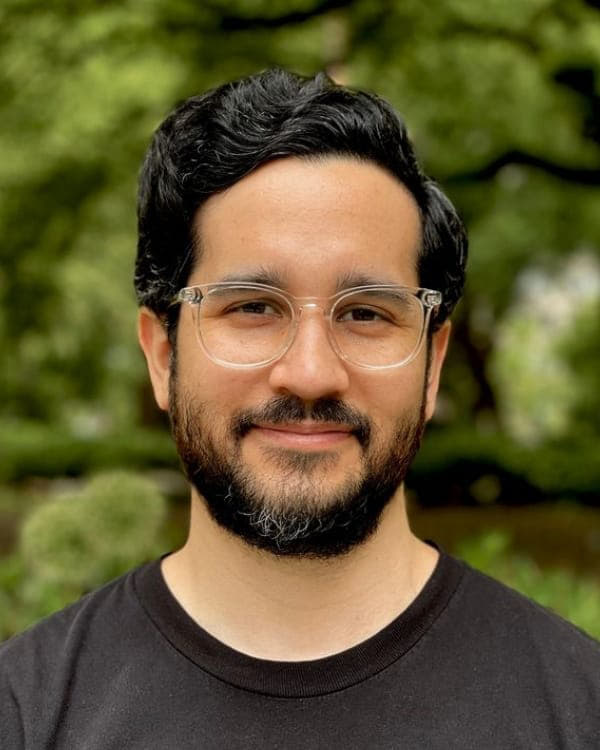
"The Chupacabra is a sort of manifestation of the anger and the trauma that the people of this island, from the time of the indigenous, have all felt."
WATCH THE VIDEO VERSION OF OUR INTERVIEW ON YOUTUBE!
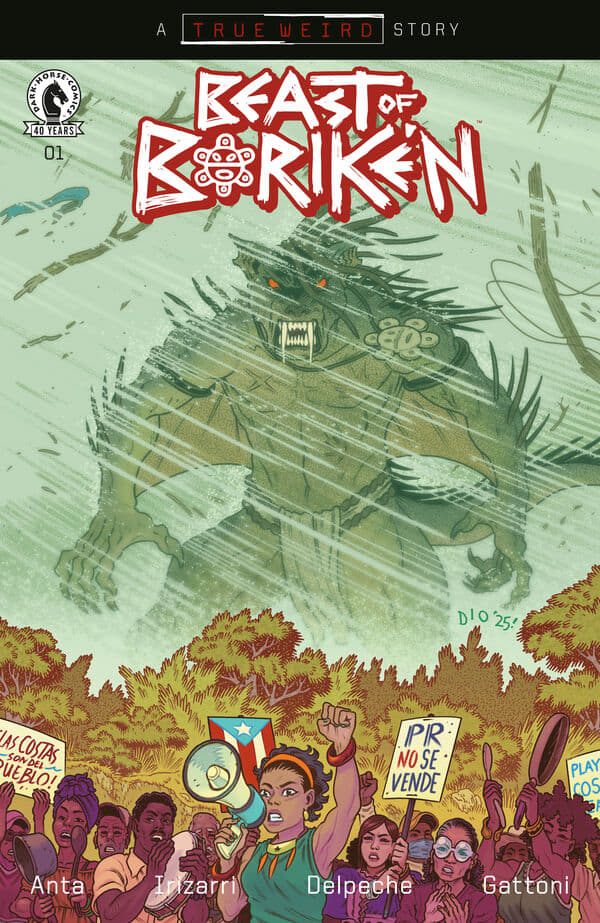
The Beast of Boriken from Dark Horse Comics
From the publisher
A thrilling new True Weird series from Tiny Onion by co-creators Julio Anta (Frontera; Sí, Se Puede) and Daniel Irizarri (Xino, Cementary Kids Don't Die) bringing el Chupacabra to life!
In contemporary Puerto Rico, Loli Flores is a fierce activist fighting the overdevelopment of the island by outside investors. When a ground-breaking ceremony is violently interrupted by a supernatural force, Loli discovers that the stories of el Chupacabra are not just echoes from the past, but a brutal protector of generations extending back to the indigenous people of the island. As Loli uncovers the horrors firstand, el Chupacabra is on a parallel path with elemental destruction left in his wake.
Follow Comic Book Yeti
🔗 Comic Book Yeti LinkTree: https://linktr.ee/ComicBookYeti
For partnership and ad inquiries, please contact: thecomicsyeti@gmailcom
Follow your hosts
ARKENFORGE
Play TTRPG games? Make sure to check out our partner Arkenforge. Use the discount code YETI5 to get $5 off your order.
Make sure to check out our sponsor 2000AD.

[00:00:00] - [Speaker 0]
Your ears do not deceive you. You have just entered the cryptid creator corner brought to you by your friends at Comic Book Yeti. So without further ado, let's get on to the interview.
[00:00:11] - [Speaker 1]
The future is calling. 2,000 AD is the galaxy's greatest comic with new issues published every single week. Every 32 page issue of 2,000 AD brings you the best in sci fi and horror featuring characters like judge dread, rogue trooper, and more. Get a print subscription in 2,000 AD, and it'll arrive to your mailbox every week. And your first issue is free.
[00:00:35] - [Speaker 1]
Or subscribe digitally, and you can download DRM free copies of each issue for only $9 a month. That's 128 pages of incredible comics every month for less than $10. Head to 2,000 AD and click on subscribe now or download the 2,000 AD app and start reading today.
[00:00:54] - [Speaker 2]
Hello, everybody, and welcome to today's episode of the Cryptic Creator Corner. I'm Byron O'Neill, your host for our comics creator chat. We're covering something near and dear to our hearts today with a cryptid focused book. It's quite exciting. So it is my pleasure to introduce first time guest Julio Anta on with me to talk about his new five issue Dark Horse comics projects, The Beast of Voriquin, a tiny onion studios joint that's part of their ongoing True Weird series, co created with artist Daniel Irizarry.
[00:01:23] - [Speaker 2]
So, Julio, welcome. How are you?
[00:01:25] - [Speaker 3]
I'm doing good. Thank you so much for having me. I'm excited to be here.
[00:01:28] - [Speaker 2]
Absolutely. Great to have you on. Well, last Saturday was that most, halo days of in the comic book calendars, free comic book day or, I guess, comics giveaway day to include PRH because it's 2026, so everything needs to be complicated. But anyway, did you get a chance to get out and about for it?
[00:01:45] - [Speaker 3]
Yeah, did actually. I was in where was I? It was Bucks County Book Festival in Doylestown, Pennsylvania, so I was there for a book festival, for my graphic novels, and it was a small little PA town, and they had a really cool comic shop there, I forget the name of it now, but it was right next to a vintage video game store, and I went in there and picked up a few things. I actually have one of them here because I was just reading through it, the blue lock color ish. Oh nice.
[00:02:19] - [Speaker 3]
I think it's like half a chapter or something. Yeah, so I got to pick up a few things. I also got, I say it for my son, but it's for both of us. Guess IDW is doing these compact comics as well. They did a Godzilla one that has 25 issues for $14.
[00:02:38] - [Speaker 3]
So it was like this Yeah. It was it's awesome.
[00:02:41] - [Speaker 2]
I can't usually do I don't like the trades, really even the omnibuses that are like super, super thick, I don't know. They seem clunky to me, but that's awesome, like, 25 issues, super affordable.
[00:02:53] - [Speaker 3]
Yeah. Yeah, really good value. So that was was cool. I haven't read it yet, but I have a long TBR, but I'll get to it eventually.
[00:03:02] - [Speaker 2]
Don't we all? Yeah. I, I'm looking forward to getting into Seisberger's, Minotaur. I think it's an Ignition Press book. So Okay.
[00:03:09] - [Speaker 2]
Cool. Yeah. That was a free comic book day one. Well, last year, interviewed Steve Fox about his true weird project, Let This One Be a Devil, whose focus was the Jersey Devil. And I've been anticipating which cryptid might be next.
[00:03:22] - [Speaker 2]
I was thinking it it was likely gonna be Bigfoot, but I was happily wrong about that as you're focusing on one of my favorites, El Chupacara. So what was your personal endpoint with America's most infamous goat sucker?
[00:03:34] - [Speaker 3]
Yeah. Alright. So, you know, I grew up, watching this, this, like, tabloid TV program called Primerimbakto, with my grandma. So this was, I think Univision, if not Univision Telemundo, but this was like, you know, they had witch doctors and fortune tellers, and sort of like X Files reporting, and it felt like every week they had a segment on another sighting of the Chupacabra, and it was originally in Puerto Rico, where 1995 is where the first sighting of the Chupacabra, or the first time that they name it the Chupacabra, because you can go further back to like '75, when it was called El Vampiro De Mocha. Mocha is a town in Puerto Rico, and it was just like the vampire of Mocha.
[00:04:28] - [Speaker 3]
Yeah, growing up, it felt like every week there was a new recording, you would hear about it, it felt like a big part of growing up in the 90s. So that was kind of my entry point, and as I became an adult, you know, kind of fell off, stopped watching Prima Rinpakte with my grandmother. But, you know, eventually, without skipping too far ahead, eventually I thought the Chupacao would be a really good entry point to talk about some bigger issues, that plague Puerto Rico in a in a comic book.
[00:05:04] - [Speaker 2]
Yeah. Well, I mean, I've classically thought of, Chupacabra as more of a Southwestern cryptid. Mhmm. But, I mean, after I got into reading this and, you know, doing research and stuff, as as you mentioned, the, the origins are in Puerto Rico, and it's, it's, it's a different interpretation, right? It's bipedal, it's much larger than the four legged, more dog like manifestation we typically think about.
[00:05:25] - [Speaker 2]
And there's this clear connection with the title Boricane to looking at this cultural link with the indigenous Taino. I think I'm hopefully pronouncing
[00:05:35] - [Speaker 3]
that Yeah.
[00:05:37] - [Speaker 2]
So Boricane being their term to denote the spiritual heart of the island. So you have these two primary kind of narrative threads going on, the island and the creature as sort of the nucleus. So how did this all come together in your head?
[00:05:49] - [Speaker 3]
Yeah. You know, I will say that, it may sound it may sound kind of silly to say I took liberties with my cryptid, but I did take some liberties, the connection to the Taino culture was something that I sort of invented for this book. It's something that, know, the Chupacaua is a very young cryptid, right, so like I mentioned before, 1995 is the first time it's named that, and 'seventy five is the first time that, you know, it's reported as something that sounds like the Chupac Ara, So it's not, you know, it's not that old compared to other cryptids. It's pretty young, and like you said, very quickly spread to other parts of The Americas, particularly Mexico is where, you know, when most people talk about the Chubacabra, most people think about Mexico, and they think that that's where it originated, the Southwest, and then there's sightings all over Latin America, but it originates in Puerto Rico, in Mocha, in the mountainous areas where the givados, the farmers, are working, you know, it sucks the blood out of their livestock, and you know, it's funny, I've been making TikToks trying to, you know, I got bullied into finally making TikToks to promote my books.
[00:07:08] - [Speaker 3]
Good luck. And, yeah, And the first one I made actually did pretty well. It was about this book. And it led to somebody, you can actually, if you go, you'll see in the comments, someone was like, can I DM you? I have information about the Chupa Cabra that you might be interested in.
[00:07:25] - [Speaker 3]
And then she DM'd me, and she was telling me that, I forget, some a relative of hers, was told by this guy that wrote, like, the first book about the Chupacabra, that it was wholly invented by him, supposedly, with the idea to sell books about this creature. So that was kind of like a cool little, maybe an insight that I got from you know, posting a TikTok about this book. But to answer your question, you know, it's, Puerto Rico is obviously an island that has experienced colonization, you know, ever since the invasion of the Spaniards in 1492, right? Believe they landed in Puerto Rico in 'ninety three on the second voyage. And so, you know, there's the Taino people, which are the indigenous people of that island, they obviously, you know, come face to face with the Spanish invasion, hundreds of years later, The United States invades during the Spanish American War, and now continues to hold this island as a sort of colonial treasure, right, where Puerto Ricans on the island have less rights than Americans, than mainland Americans, and even Americans who move to Puerto Rico have more rights than Puerto Ricans on the island.
[00:08:45] - [Speaker 3]
And as time has gone on, we've seen the colonialism of The United States and Puerto Rico take different shapes. At first, it was plundering of natural resources, and now it's really taken the shape of land grabs, of these big, sometimes multinational corporations buying up land, building hotels, building luxury housing, that prices out Puerto Ricans, promises some sort of jobs, but really just prices people out, and pushes Puerto Ricans to the mainland of The US. So right now, we're in a place where there are more Puerto Ricans in Mainland United States than actually on the island. So right now, there's a huge movement on the island to fight back against these luxury developments, and that's really what the human story of this book is about. It's about an activist named Loli, who is someone who lived through Hurricane Maria, survived Hurricane Maria with, you know, I don't want to spoil, anything about the book, but, you know, everyone in her family didn't make it through the hurricane.
[00:09:52] - [Speaker 3]
She had huge losses, huge personal losses. And Hurricane Maria was sort of a radicalizing moment for her, as like, a 17 year old who now we are eight years into the future, she's 26 in this book, and she's an activist, and she's fighting against these companies that are coming in and trying to take away her homeland from her and her community. And at the start of the book there's this luxury development, luxury hotel development that's being built in Aguadilla in her hometown, and, she's like a leading activist that's protesting it, but at the same time, it turns out that when they break ground, it awakens the Chupacabra, which is centuries old, back from the time of the Taino, which we will go on to explore it in future issues, explore what it's like to be this centuries old creature that has experienced so much loss, so much devastation at the hands of Spanish and US colonialism, and how the struggles of the Chupacabra and Loli sort of intersect. So, yeah, it's a book that takes an issue that's sort of near to my heart. I'm not Puerto Rican, I'm Cuban, but there's a famous quote from a Puerto Rican poet that says that Cubans and Puerto Ricans are wings of the same bird, our struggles are interconnected, not just because we're so close, we're two island Caribbean nations, but because we both experience Spanish and US colonialism, and imperialism.
[00:11:21] - [Speaker 3]
So, you know, it's a book that obviously has a lot of, there's a large political angle to the book, but it's also a tropical horror story that is inspired by all the universal monster movies that I grew up, all the creature features, you know, Creature from the Black Lagoon is a huge sort of touchstone in this book and huge inspiration for this. Okay.
[00:11:46] - [Speaker 2]
You
[00:11:47] - [Speaker 3]
know, sort of like, what happens when an inhuman creature encounters humanity for the first time. So, that's the long answer to your question.
[00:11:58] - [Speaker 2]
Yeah, I mean, prior to reading this, I honestly never would have considered the Chupacabra as a symbol for revolution. I mean, it Mhmm. It's I loved it. It's the the way it was connected in this. It was very educational for me, because I had never really gotten into the meat of act 60, formerly act twenty and twenty two, which gives those outside businesses, investors, those huge tax breaks and capital gains incentives to, to relocate to Puerto Rico.
[00:12:30] - [Speaker 2]
So, you know, and that was all post Maria legislation. Connecting all these, these threads was, was really, really well done. Really
[00:12:39] - [Speaker 3]
enjoyed I the first appreciate that.
[00:12:43] - [Speaker 2]
Absolutely. Well, Loli is, as you mentioned there, she's the primary protagonist here. And the the blueprint for Let This One Be a Devil was bouncing back and forth between time periods. Is that a true weird remit, or was that you just like the blueprint? Or how does that work?
[00:13:01] - [Speaker 3]
Yeah. I, you know, I read Let I read Let This One Be a Devil, and I really enjoyed that book. Our book is very different than the style of that book, but we do jump back and forth between timelines. So in issue one, we start with Hurricane Maria, and it is Loli's experience during Hurricane Maria. We flash forward into the present day, and we, a couple more times, we go back to Hurricane Maria.
[00:13:29] - [Speaker 3]
But in future issues, we sort of go back to the history of the Chupacabra, and we explore, you know, its history throughout all those time periods that I mentioned before, right? So, during the Spanish invasion, during, you know, US military exercises, where they are just bombing the island to test weapons, especially during the Korean War. So we go back to these key moments in Puerto Rican history and see how this mythical, cryptid creature experiences them, how it shapes its future, and its sort of orientation towards this developer when the Chupacao does eventually come face to face with this developer that is, sort of destroying its homeland, and destroying its peace, because all, you know, what we sort of set up is that he's tired, he's experienced so much loss, he's experienced so much trauma over the centuries, he just wants the rest, but the specter of, you know, the colonialism on this island just won't let him.
[00:14:37] - [Speaker 2]
Okay. So it's as much about we're going to unfold throughout the five issues, it's as much about trauma as anything else because Maria was this huge inflection point in 2017 where, you know, Puerto Rico's, the complicated cultural landscape and all these economic ties with America to going on back to colonialism became national news in a way most of white America hadn't been exposed to before. Yeah. So kinda walk walk me through wanting to use Maria as that as the the pivot, I guess, for for all of that.
[00:15:14] - [Speaker 3]
Yeah. Well, you know, I knew that I wanted to to have a, a young protagonist. You know, I, most of what most of the work that I've done in the last, you know, I first started publishing five years ago. I had a book called Home at Image Comics. Home had a you.
[00:15:34] - [Speaker 3]
It had a 12 year old protagonist, and that sort of even though it was published in single issues in the direct market, it sort of introduced me to the world of young adult graphic novels. So I've sort of spent the last five years making middle grading young adult graphic novels for the traditional book market. I've had books like Frontera, Harper Collins, I did a Blue Beetle graphic novel called This Line is Our Land at DC, that was part of the young adult line, a middle grade graphic novel called Speak of Santiago, a few others, but, the point is that I've sort of had, like, young young adult and middle grade protagonists have been sort of the work that I've been doing, over the last five So I knew that I wanted to to age up with a, you know, a horror book that is written for adults. But it felt like, you know, mid twenties would be the right age range for that. And very quickly, I just started realizing that, you know, this person would have been a teenager during Hurricane Maria, which is this, like you said, huge inflection point, huge life changing moment for most Puerto Ricans.
[00:16:42] - [Speaker 3]
And not just because of the attention that was brought to it, because this was a larger than life hurricane. You know, I grew up in Miami, and you know, we had hurricanes every year, right? There's a few that I remember that were like, the big ones. And those are moments that you never forget, like, the moments where you're like, in the bathtub, which is a scene in in this book, you know, because that's, you know, I don't know if it's actually the safest place. I've always been I grew up with that being the safest place in a hurricane, to be in your bathtub.
[00:17:13] - [Speaker 2]
Don't know. We we evacuated from Ian, actually, a couple years ago, so. Yeah, so I get it.
[00:17:19] - [Speaker 3]
Yeah. So, you know, like, those are moments that I'll never forget. Right? Yeah. And, you know, that was a moment like that for Puerto Rico, not just because of how devastating it was, but because of how The United States, which is supposed to be, you know, you are a colonial subject of this country, which, you know, means that they're also supposed to take care of you, you know, Puerto Rico was totally abandoned by The United States.
[00:17:44] - [Speaker 3]
And not just in, like, the really silly ways that we saw Trump throwing, paper towels, the really egregiously offensive ways, from an image standpoint. But just from the fact that people didn't have electricity, some of them for months and months, just had no access to electricity, and a lot of that has to do with seeds that have been planted over a long period of time, right, with things like the privatization of Puerto Rico's electric grid, with just very little tax dollars going to actually support the island. One of the key tenants of a colony is that the money is always sent to the colonizer, and that's very much what the colonial situation is like in Puerto Rico, whether it's through the federal government, or through all these corporations that use Puerto Rico to strip the resources out and take it elsewhere. So, you know, it's something that I felt like was a moment that if I did use a mid twenties character, this would be a radicalizing moment for that person. You know, for a politically active person who's 25, 26 years old.
[00:19:02] - [Speaker 3]
So that very quickly kind of fell together. But I think also, you know, I was doing a lot of reading at the time. There's a there's a great non fiction book called War Against All Puerto Ricans, which is about the nineteen fifty revolution, the failed revolution against the US government in Puerto Rico, and, you know, reading that, I started seeing so many of the parallels between, you know, the revolution in the nineteen fifties, and the colonial situation in the nineteen fifties, to what it's like there today, you know, and the time that I've spent there, and, you know, the friends that I have, that are from Puerto Rico, you know, like, the I have a non fiction graphic novel called Si Se Puede. It's, it's about important Latinos throughout US history, and the artist of that book is Yasmeen Flores Montanez, and she's Puerto Rican, And, you know, the conversations that I've had with her about why she can't live on the island, she can't know, from a financial perspective, she has to go first to The US and now to Spain. And that's the story of so many people, you know, who are native born Puerto Ricans, or their families left Puerto Rico.
[00:20:12] - [Speaker 3]
And that sort of brought me into contact also with all of these activists that are doing the work to try to keep Puerto Rico for Puerto Ricans. And sort of, all those threads sort of came together when I started having this idea. But originally, this idea didn't, wasn't a cryptid book, you know, it was just a story about, you know, what is it like to be an activist in a world where if you go looking for it, you can find things to be outraged about all day long, right, and you can just be consumed with this anger, that sort of turns into this tunnel vision, and isn't really that good for actually being a successful activist, you know, when you lose the optimism behind what you're doing. And then eventually, you know, I started thinking about, you know, I've been wanting to do a cryptid book for a really long time. You know, I mentioned, like, I love the Universal Monster movies, Creature from the Black Lagoon is one of my favorite movies of all time, and something just triggered inside me of like, oh, these two ideas can come together.
[00:21:20] - [Speaker 3]
You know, this idea of a Latin American cryptid, and this story of an activist that's just so angry, can come together into, you know, a story where, both of these ideas come together, and, you know, sort of work.
[00:21:38] - [Speaker 2]
Jimmy is too humble to do this, so as his stower ride or die, I wanted to tell you about his new graphic novel, Penny and the Yeti with artist Amber Aiken. What started as a comic short with his daughter that I've known about for ages now and it's evolved and has become one of those annoying can't talk about it in comic things for too damn long. Yes, I'm predisposed to be supportive but after reading an advanced copy of it, I have to admit it's way better than I anticipated. No shade but it's really good, remarkably so. Does it have a yeti?
[00:22:10] - [Speaker 2]
Yeah. Is it cute and adorable? Yeah. But it streak lies in effectively tapping into the all too familiar family dynamics that we all are facing in 2026 and approaching it in a way that doesn't insult the book's target audience. Kids.
[00:22:26] - [Speaker 2]
They are way smarter and perceptive than we adults give them credit for. So I really appreciated Jimmy's narrative approach tapping into his own experiences as a dad and a spouse. I can hear his wife saying, get off your phone, Jimmy, through the pages. She's gonna kill me for saying that. It's hitting shelves on April 21, and I dropped the link in the show notes where you can preorder a copy today.
[00:22:46] - [Speaker 2]
Getty or not, here we come with Penny, Perry, Fenton, Maxine, and the magical, mythical, magnificent, Yeti. On behalf of us both, we appreciate your support. YOLOWA. Well, Daniel, your cocreator, the artist, is Puerto Rican if I'm Yeah. Not mistaken.
[00:23:08] - [Speaker 2]
Yeah. Yeah. Yeah. And I was reading a a quote from Daniel about the story focusing on the resistance in Puerto Rico, making him feel seen. So I'd imagine being able to channel all of those complex emotions that you've just been talking about, about your home as an artist has been healing, or at least I I hope so for him anyway.
[00:23:28] - [Speaker 3]
Yeah. I mean, he's been super passionate about this book from the beginning. You know, I, I sort of came in contact with his work when he did, Cemetery Kids Don't Die with Zach Thompson. I think at Oni, but yeah, I loved his work from the beginning, I think he's such an interesting cartoonist, and like a real cartoonist, you know, like, there's something about facial expressions, I don't know, didn't mean that to sound, you know, derogatory towards any other, but like, it's, you know, it just, it's like a classic cartooning, you know, that I really love, and I love his use of screen tones and the manga influence that he brings into it as well. And we had Patricio coloring it, who just like, what an amazing team.
[00:24:18] - [Speaker 3]
Daniela spent his career coloring himself, this is his first time on a long project working within outside colors, and I think they're amazing, like I really hope that not only that Daniel and I get to keep working together, but that Daniel and Patricio stay together as a team, because the pages are just incredible, like the pages are coming in. And yeah, this is a book that he's super passionate about, we've had a lot of conversations about his experience during Maria, and also how that sort of comes onto the page, also comes into the coloring, where he can speak to his specific experience. Maria hit at like 6AM, five or 6AM, I believe. So, you know, it's not a dark, you know, thunderous hurricane, you know, it was light out. And that's a very unique sort of thing to put on the page, and it's important to represent it in that way.
[00:25:19] - [Speaker 3]
So working with someone like Danielle, who has that personal experience, but also is really passionate about the issues that I'm also passionate about, and that I started writing before he was even involved in is just been like an amazing match and amazing collaboration.
[00:25:38] - [Speaker 2]
Yeah. Yeah. I really love the Binde style shading dots of of that first issue. It's fantastic. It is such a throwback style.
[00:25:46] - [Speaker 2]
It's so much fun.
[00:25:47] - [Speaker 3]
Mhmm.
[00:25:49] - [Speaker 2]
Yeah. Well, you a lot of your work focuses on that that healing journey. It's very common in your stories. You're you give your characters agency to push back against narratives of victimhood, powerlessness. So what have you found particularly rewarding or challenging about trying to channel that through a mythological creature?
[00:26:10] - [Speaker 2]
Yeah.
[00:26:12] - [Speaker 3]
That's a good question. And that's a good observation about my books. You know, I don't know what it says about me that a lot of my characters are angry, angry kids too. It says
[00:26:22] - [Speaker 2]
honest is what it is. I mean and that's okay. It's a good thing.
[00:26:26] - [Speaker 3]
Yeah. You know, I think the cryptid I think when the cryptid is used the best in media is when it is a sort of, like, totem for, whatever the real human story is, right? You know, I with this book, you know, the Chupacabra is a sort of manifestation of the anger, the trauma that the people of this island from the time of the indigenous have all felt, and I think his righteous anger is also part of that, right? And his resistance and his resiliency, and his sort of refusal to die, even if he maybe wishes that there could be an end to this pain. But, you know, I think when he and Loli encounter each other, it's this match where they sort of, quite literally, when you read the book, see each other in each other's eyes.
[00:27:27] - [Speaker 3]
So for me, it was really, you know, I'm someone who, outside of my work in comics, I'm also an organizer, and I'm, you know, very involved in, like, here I live in New York City, in, like, political organizing here in the city. And it's very easy to fall into the attitude that Loli hasn't been in the book, right, that I mentioned, which is very, very angry, you know, there's any, you know, hundreds of things to be angry about every single day. But if you want to make real change, require a sort of like revolutionary optimism, where you can believe that things can change, that not only can you change people's minds and sort of open up their consciousness, but that you can also change material conditions that you are struggling against, right? So that's the place that, you know, we hope to get Loli to by the end of the book, where she realizes that, you know, she can't just be angry, she also has to be hopeful, she also has to take time to heal from her trauma as well. Yeah.
[00:28:37] - [Speaker 3]
But first, they, you know, she needs to stop this development, and luckily she has, you know, this mythological creature that is capable of much more violence than she is, to help her along the way.
[00:28:53] - [Speaker 2]
So the creature is embodying the empowerment that she's looking for?
[00:28:58] - [Speaker 3]
Yeah. Definitely.
[00:29:00] - [Speaker 2]
Okay. Yeah. I find the the different interpretations of of the creature just culturally sort of fascinating myself. Mhmm. I'd I I have an anthropology degree.
[00:29:09] - [Speaker 2]
My focus was on the, native American mythology. Cool. It is kind of near and dear to my heart. So the the symbolism between the Chupacabra stays largely the same, whether you're talking about, south of the border or or in The States. So it's like an invasion invasive threat to to life and livelihood either way.
[00:29:28] - [Speaker 2]
But I was thinking about the Continental US version. It's a it's more diminutive. It's animalistic. You know? I I and I can't help looking at the at comparison, you know, it being reductive away from the more cognitive, bipedal version in in Puerto Rico where its roots are.
[00:29:47] - [Speaker 2]
Mhmm. Not unlike sort of the reductive way the current administration views all immigration, frankly,
[00:29:53] - [Speaker 3]
right now. Yeah. You can draw a lot of comparisons from that.
[00:29:57] - [Speaker 2]
Yeah. Yeah. Well, your work focuses on the Latinos diaspora, often looking at people's lived experience as immigrants, which involves human migration. Again, something I study and fascinated by with anthropology. So this is kind of a new lens, though, because you're also analyzing it through immigration by, like, rich foreigners, essentially, who are who are coming into the island and that impact.
[00:30:25] - [Speaker 2]
So so talk to me about using that and kind of flipping the script of of your your normal narrative style.
[00:30:33] - [Speaker 3]
Yeah. I mean I mean, this is, you know, this is yeah. This is a super a very different book than what I've done before. And I think part of that is because of the form. You know, there's a five issue miniseries.
[00:30:45] - [Speaker 3]
My first book was a five issue miniseries, but, again, like I said, I've spent the last five years doing graphic novels. So this was a new challenge, where, you know, I had become very used to having two fifty pages of a continuous story that I can tell. And obviously this this book is, is five twenty four page issues. You know, the difference between a graphic novel and serialized storytelling is so different, not just because I have like half the amount of pages, but because we want to end on a cliffhanger, to me, this is TV, graphic novels is film, So it's very different kind of storytelling for me. So it's different in a lot of ways, but like you mentioned, a lot of what this book is about is the rich American, European coming to Puerto Rico to take advantage of tax loopholes, to take advantage of not just loopholes, but cheaper land, that they can buy corrupt politicians that, you know, will take money from corporations, from real estate developers, who have spent, you know, a century, more than a century, being bought off by, you know, US corporate interests.
[00:32:09] - [Speaker 3]
So, you know, it's the developer in this story, he's sort of a stand in for a lot of these American developers that are coming into Puerto Rico right now. A lot of them who really sort of try to take on the culture of Puerto Rico, right? We learned that he's been in Puerto Rico for, I think, seven years, and he's someone that feels like he is a Puerto Rican, you know, like, you know, like, you have I always confuse the brothers. I think it's Logan Paul who's the boxer. You know, he when he boxes, they say he's from Puerto Rico.
[00:32:46] - [Speaker 3]
He fights under the Puerto Rican flag, you know, and this is It's weird. Yeah. It's it's weird. Right? Like, It's weird.
[00:32:54] - [Speaker 3]
Remove the political aspects of it, which is, you know, obviously very difficult. But it's weird that he would fight under the Puerto Rican flag even though he is, you know, a white guy from I don't know where he is in The US, but, you know, he fights under the Puerto Rican flag, so this is a thing where a lot of these guys try to take on the culture of Puerto Rico, and try to take on, you know, the idea that they are Puerto Ricans, just like everyone else. When the truth is that they have more rights, just by the way of their tax dollars going further, of them not having to pay taxes because they're living in this island, you know, it's a really complicated situation, and we tried to sort of put all of that into this real estate developer character. And, yeah, you know, I think when you do something like that, it allows you to sort of look at things from a different perspective than from my other books, where the immigrant is normally someone who is like a traditional immigrant to The United States. But yeah, it's a book that we're both super proud of.
[00:34:03] - [Speaker 3]
Yeah.
[00:34:06] - [Speaker 2]
Well, for anybody who's not been exposed to this yet, and this was an exposure for me, and I just went down a rabbit hole and read all about this stuff. You've got the FTC the FTZs are the foreign trade zone designations, which are these are designated as outside customs territory, which allows businesses to defer, reduce, or outright eliminate foreign goods, duties, which and other incentives, which basically gives people who are rich a complete and total capital safe haven.
[00:34:32] - [Speaker 3]
Mhmm. You know?
[00:34:33] - [Speaker 2]
And and then connecting that, I thought it was interesting too, doing a little research there in Aguadilla is that that is an area of the country that that highlights this income equality that has directly resulted from all this foreign investment. Mhmm.
[00:34:49] - [Speaker 3]
Yeah. It's, you know, like I said, it came from a lot of research. You know, the I think the first thing that I so there right now, there's a project called Ascencia in Puerto Rico that has sort of become a flashpoint over the last maybe five years, of showcasing just the corruption of a corporation being able to pay off local politicians to get permits to build on what should be protected land. And in Puerto Rico, there's a law that says that all of the beaches should be public, so the beaches belong to the people. But what we see happen a lot of times with these sort of private resorts, is that they eliminate all access to the beach from the outside, unless you're a guest of this resort, or this luxury complex.
[00:35:36] - [Speaker 3]
And Essencia is set to be one of the largest, if not the largest, of these developments, and it continues to go through the process of being approved. And I saw a video about this a couple of years ago, there's a really great Puerto Rican journalist named Bianca Grau, who I really recommend anybody check out her video, she has a really great long video about the Ascencia project, is sort of the inspiration for the project that we have in this book, that is the flashpoint for Awaken the Chu Book Aot and for lowly protesting. But yeah, a lot of this just books come from, you know, my own curiosity, right, like my book C Sip Boy, then my non fiction, that just came from, you know, going down Wikipedia black holes. Know, my, Blue Beetle graphic novel, This Land is Our Land, which is truly, it's about radicalization of young men, came from really doing a lot of research into like, how do these, like, 15, 16 year old kids fall down these white supremacist rabbit holes, what is the algorithm doing to them that get them from watching a non fiction video about a war, to then watching replacement theory propaganda, you know?
[00:36:55] - [Speaker 3]
And how are they recruited by these neo Nazi groups? And that's where a blubitle graphic novel came from, just like these curiosities and these, sort of like black holes that I go down. And again, that's that's where this came from. And not just that, but also, you know, a big part of what has in recent years influenced my writing has been interviewing people. So with this book, you know, I had so many conversations with people, not just friends, but people that they would put me in contact with.
[00:37:27] - [Speaker 3]
In issue two there is, a big scene that I'm really proud of that takes place in a botanica. A botanica is like a spiritual store, you know, like with Santeria, and all of these sort of, you know, branches, like Afro Caribbean branches of Catholicism. And that whole scene, you know, I was talking to a friend of mine, Darren, who practices spiritualism, and literally taking notes of how every single thing is done, and that just went straight into the book, know, into all of my panel descriptions for Danielle, and now as the pages have come in, it looks incredible, it's also accurate, and that stuff that's just super important to us, not just because the research is my favorite part of writing a book, but because I want, you know, I think the majority of the people that read this book are not gonna be people who are Puerto Rican, are not gonna be people who, you know, you know, practice spiritualism, or whatever, but to the people that are, I want them to read it and see themselves and feel like we got everything right, and that's a big part of making sure that, I can do all the research in the world, but also making sure that I worked with a Puerto Rican artist, and not just a Puerto Rican artist, but a Puerto Rican artist that is really passionate about these issues, which is what I found in Daniel, which is really just taking the book to new heights, and makes the research more than just an academic sort of thing, but, you know, like, a really great tropical horror book that is also accurate.
[00:39:18] - [Speaker 2]
Yeah. It portrays a lived in experience. Yeah. Yeah. Well, okay.
[00:39:22] - [Speaker 2]
I gotta ask you. This is just casual gringo interest. Like, a Botanica versus a Yerbaadria. What because I've I've been in quite a few of the latter, and that in the Southwest and stuff. What's the difference?
[00:39:35] - [Speaker 2]
Do
[00:39:35] - [Speaker 3]
you know? That's a good question. I don't know. So in Miami and in in, you know, parts of the Caribbean, you know, it's you see botanicas everywhere, right? And there were places that I, as someone who was raised as an evangelical Christian, going to Spanish church, was warned not to go into one of them.
[00:39:54] - [Speaker 3]
The Spanish church that I went to when I was a kid, was actually in a strip mall that also had a botanica, and literally we were not allowed to walk in front, like past the door of the botanica. Know, there's so much paranoia, I guess, of witchcraft and, know, santeria, and you learn that one of your neighbors was a santero, and you'd, like, just all these rumors would form, like, but but, yeah, I I don't know the answer to your question. But my my experience has always been with with, Botanicas.
[00:40:31] - [Speaker 2]
Okay. Okay. Well, looking back at your work and one of the things I absolutely love about it is the the positivity of it, and there are lots of eat the rich narratives that are dropping right now in comics. You know, it makes perfect sense, right? Comics have always been a a culturally responsive medium in terms of being able to get it out there fast.
[00:40:50] - [Speaker 2]
Yeah. Know, pros and films, there's this tendency to get really dark. You know, you've talked about activism. The book is focusing on trauma and on vulnerability. You know?
[00:41:00] - [Speaker 2]
So when prose, when film tries to tackle it, I guess it's cathartic, but it's very rarely uplifting. So for you as a writer, what makes comics kind of this unique pocket to promote that sense of positivity?
[00:41:16] - [Speaker 3]
Yeah. You know, I talked a little bit before about the idea of revolutionary optimism, right? Which is the idea that even when things are just getting worse and worse every day, which I think is the reality that a lot of us are seeing, it's the idea that if we believe in making change, if we believe in struggling against, you know, the things that we oppose, the things that we see, we to have some optimism, otherwise there's no point, right? What we doing any of this for? If it's all just fatalism, and it's all just, you know, it's not going to lead us to anywhere.
[00:41:56] - [Speaker 3]
So that, I think, because that is my orientation, my political orientation, or my mental orientation, And it doesn't come naturally to me, I tend to be a very pessimistic person sometimes, but it's something that I try to remind myself of. I think that because of that, it comes through in the work. I think there are a lot of cathartic moments in this book, right, where you see the Chupacabra violently taking revenge on people that deserve it, right? But the work that we do before that, after that, sort of, I would like to think, is more than just revenge fantasy, and makes it feel much more earned, makes it feel much more real and grounded in the actual issues. Yeah.
[00:42:52] - [Speaker 3]
But to your point, you know, my first book Home, which is, for those of you who don't know, it's the story, it takes place during the 2018 family separation crisis at the border, and it's the story of a young boy who is torn away from his mom when he arrives at at The US border in McAllen, Texas. But unlike all the other kids, he has superpowers, so he's able to break out and go on a journey to try to reunite with his mom. That is a book that was, it felt extremely urgent at the time, and unfortunately it still feels super relevant. It's still the book that when I'm doing a convention, the most people come up to me, ask me when there's gonna be more, we still sell, like that book still sells a lot of copies for a book that is five years old, which I think is very unfortunate, I wish that it was a book that was in line with what a book of five years should be selling, because it wasn't relevant anymore. But that book was made with a lot of urgency.
[00:43:58] - [Speaker 3]
And because it was my first book, I had to learn how the industry worked, I had to learn how to write comics before I can make that and make a bunch of mini comics first. So even though it takes place in 2018, it came out in 2021, And if I was, you know, if I was trying to react to that moment today, could probably do it a lot faster, because I'm already involved in the industry, I know artists, I didn't know any artists back then. I met Anna, the artist of that book, on Reddit. But, yeah, I think the nature of comics allows you, of direct market comics, because it's very different in graphic, in the graphic novel book market, allows you to have much more urgency, and with this book, you know, again, it is about something that is still taking place, and it does feel urgent, but it's something that's been happening for a long time, you know, this is not something that is just happening for the first time, like family separation was. It's something that's been going on for a long time, and that's been getting a lot more attention recently, mostly because of the Ascencia project being such a huge, large, and so obviously corrupt project.
[00:45:15] - [Speaker 3]
And I think the work that, you know, it might sound silly to someone who isn't aware, but, you know, Bad Bunny has been such a huge part of raising the consciousness, the political consciousness about Puerto Rico, and the political situation in Puerto Rico. So, you know, I think we're at a moment where, that the book is hitting at a time where there is a lot of, know, people are, there's a lot more awareness. But, you know, I also do, sort of shy away from books that are about, know, I'm not going to name any names, but like, I think it's a little weird to have a book that has a January 6 moment, six months after January 6, you know? But I think that is the benefit of, if you are making comics in a responsible way about, urgent political moments, I think it's a great medium for that, you know, because we can do it quickly. And it is a sort of, you know, we can all complain about how difficult it is to pre order comics and to get single issue comics, but, at its heart, comics is a populous medium, you know, and it's something that becomes a more popular everyday comics in general, maybe not like Yeah.
[00:46:35] - [Speaker 3]
Single issue direct market comics. But but yeah. So I, you know, I think that's a that's a huge positive that I sort of really missed when I was making, you know, or I I still am making, but when I was exclusively making, young adult and middle grade graphic novels.
[00:46:53] - [Speaker 2]
So is that why you focused more on the the young adult market? I mean, because there there it's there's a way to make an impact there that you can't with, you know, just mature like, okay, if the if the readership in general is aging in in the floppies direct market comment, that I would represent more as, like, the the 50 year old white guy, you know, and the the younger the younger generation is the is the manga generation. You know, it it feels like focusing in that that area, it's it's easier to make an impact. It's easier easier to to shape people who are more malleable, I guess.
[00:47:33] - [Speaker 3]
Yeah, definitely. And I think also with, I you mentioned my Blue Beetle graphic novel, it was part of DC's You line. I don't think that I could've made that book as a single issue series in the direct market. I don't think that I could've made a book about the radicalization of young white men, and how that intersects with the radicalization of the scarab that it does on Jaime, and have this book that is just really just about neo Nazi radicalization as a single issue, direct market, DC mainline book. But in the You graphic novel market and the middle grade graphic novel market, there is a much more openness to talking about these hard issues, which is kind of ironic because you would think that you're working with younger kids, right, that you need to be more age appropriate, but there is so much more openness to these topics in that market, which is something that I'm super grateful for, and I think that's probably why I've spent so much time in that space, and that has become such an important space in my writing.
[00:48:47] - [Speaker 3]
But I started off in comics trying to make single issue comics, you know, so that's still a huge part of the work that I want to do. And with this, you know, this was, I could have made a You version of this story, but I don't think that I would've been able to hit as hard some of the themes that I wanted to, and make it as gory and violent the way that I felt like a monster horror book should be. So this felt like the right thing to come to the direct market with again, and be able to tell a story for adults, which I love telling stories for adults. And I actually have, in September, I'll have another series coming out with Boom, a five issue miniseries, and then I'll have my first DC series starting sometime next year. Nice.
[00:49:39] - [Speaker 3]
So I'll I'll be sticking around the direct market from now on.
[00:49:43] - [Speaker 2]
Good. I'm glad to hear it. Well, this this particular, Bourdieuken is I thought it was a absolute gripping first issue. It's very cohesive. Pulling pulling all these threads together and weaving them together in a way that makes sense is no easy task, and props for never shying away from harsh realities.
[00:49:59] - [Speaker 2]
And there's something poetic about this dropping right before the fourth of July, in in my opinion. I I have no idea if that's coincidence, but when is final order cut off, just to remind people so they can make sure to get preorders in?
[00:50:11] - [Speaker 3]
Yeah. It's May 25.
[00:50:14] - [Speaker 2]
May 25. Okay. Yeah. I'll make sure to put that in the show notes for everybody. And speaking of opportune timing release, this is your middle grade Hillside Valley graphic novel.
[00:50:23] - [Speaker 2]
Soul Goes for Gold drops right before the World Cup starts.
[00:50:26] - [Speaker 3]
Yeah.
[00:50:27] - [Speaker 2]
So I know you you have a lifelong love of the beautiful game as I do, so what do you think of Columbia's prospects this year?
[00:50:33] - [Speaker 3]
I feel pretty good. I, I'm really excited. I just started, my Panini World Cup album, which is something that I've done my sticker album since the France ninety eight World Cup.
[00:50:48] - [Speaker 2]
Okay.
[00:50:49] - [Speaker 3]
I just I'm actually in the middle right now of sticking my I opened my first box. I
[00:50:58] - [Speaker 2]
Is there a lucho in there?
[00:50:59] - [Speaker 3]
Not yet. Do have I do have Jammes, who I got already. Okay. Which I'm trying to find him real quick. There we go.
[00:51:10] - [Speaker 3]
I gotta stick all these, and I got the I got the Colombian team photo. Nice. But, yeah, so I'm excited. I feel good about Colombia. I really like their new away jersey, so I want to get that one.
[00:51:25] - [Speaker 3]
Yeah, Soul Goes for Goal, this is the advanced reader copy. So this is book two in my Hillside Valley series. Book one was this bilingual graphic novel called Speak Up Santiago. Middle grade, for those of you know, I know that most of your listeners are probably direct market readers, middle grade is like third to seventh grade readers. And with Speak Up Santiago, it's the story of this Colombian American kid named Santiago, who really struggles to speak Spanish.
[00:51:59] - [Speaker 3]
Even though his family intended to raise him bilingual, he had an issue with speech when he was younger, so they focused only on English, now he's 12, and he's really passionate about learning how to speak Spanish, so he spends the month with his grandmother, who only speaks Spanish. He spends the summer, with in her small town called Hillside Valley, and along the way, he meets all these kids, including Sol, and they start a soccer team. And then in book two, when Sol goes for goal, Sol joins we sort of the idea with this series is that, every book shifts POV to another character, in the friend group, but continues the story, so all the characters are still involved. But Soul starts, starts seventh grade, joins her middle school soccer team, and is a kid kinda like me that is sort of has a lot of perfectionism issues. It's something that I dealt with a lot as a kid and as an adult.
[00:52:58] - [Speaker 3]
And so she wants to be the best soccer player, she wants to be the friend, she wants to be the best student. But she's also in seventh grade, and she's getting her first crush, and it happens to be on one of her teammates. So she, you know, is distracted, she's not playing as well as she can. And it also leads to issues within her friend group, where she's not really being a great friend either. So this is book two, it's a sort of standalone sequel.
[00:53:24] - [Speaker 3]
You don't need to read book one, but if you do, you know, you'll get a lot more Easter eggs in context. But yeah, I'm really excited about it. Speak Up Santiago has been my best selling book of all of my books, it's only been out for about a year, and it's just been embraced by schools and libraries. I've really spent the last year traveling around the country doing school author visits, which is when you go to a school and you present about the book, you talk to students about it, you answer questions about what it's like to be an author, and, you know, it's just been amazing, like, meeting, you know, these readers that I write these books for, you know, which is so different than, you know, the comics market, where sometimes it might feel like it's a market of collectors at times, you know, it's a very, you know, it's just very different. So to meet these kids who bring you their beat and battered copies of your graphic novel because they've read it so many times, is just a really a really special experience.
[00:54:31] - [Speaker 2]
Well, you have these comprehensive teacher guides as well. So Yeah. I can't recall ever having seen that before, at least this comprehensively. So was that something you always wanted to do starting out as a writer? Or how'd that come about?
[00:54:42] - [Speaker 3]
It's not. It came about because of home. So okay, sometime after the first issue came out, this group called Reimagining Migration reached out to me. And they sort of educated me on educator guides, and they told me that this is something that they do, and they actually offered to do it for free, to just, you know, they were, they're a nonprofit and I think maybe they were like starting out with educator guides, so they offered to do it for free, it was super comprehensive. If you have the trade for home, it's like 24 pages at the back of it, just filled with, contextualizing information, historical information, and discussion questions and activities that teachers can just put into their curriculum.
[00:55:28] - [Speaker 3]
So it sort of serves two functions. One, sort of makes a graphic novel, you know, I think things have changed a lot, but there's still a lot of negative perceptions around graphic novels amongst like the old guard of teachers and educators, sometimes like administration.
[00:55:50] - [Speaker 2]
It's not literature.
[00:55:51] - [Speaker 3]
Yeah, exactly. Yeah. That's one of the things that a lot of them say. But things have changed a lot, you know, graphic novels have become so popular with kids. And now with these teacher's guides, it serves the function of sort of showing administration and showing the gatekeepers that there is educational value in these books, but also it makes life easier for the teachers who already have to wrestle with all this curriculum that they can choose a book that they enjoy and they think will be good for their students, and they already have activities, they already have discussion questions.
[00:56:28] - [Speaker 3]
So that was my introduction to it, and then ever since then, I've made it, because of the impact that that book made in classrooms, I've really just had all of my publishers create teacher's guides for the books. My Blue Beetle graphic novel, DC, it's the first time DC ever made a teacher's guide, so I was really happy that we got to, you know, they didn't say yes right away, had to bully them a little bit, Good but for you. It's a, you know, a lot of people are using it, it's a great guide, it's actually made by the same person that made, the one for home. And, and yeah, now every single one of my books has had one. I'm actually, even though, Bis de Boricane is an adult comic, you know, I'm trying to get a tiny union to make a teacher's guide for it, so it can be used in like, a high school context, you know, I think that would still be appropriate to to, you know, talk about, like, this could very easily be used in a social studies or civics class, to talk about Puerto Rico or, you know, or even in a history class.
[00:57:38] - [Speaker 3]
But, but, yeah, so those are some of the things that I think about now as a comic book creator that makes graphic novels, and that is so entrenched in the school and library space. I think it's just a great way to keep your books in people's hands, and keep it relevant, and you know, it's been a great thing, like I, you know, I'd love to, I wish I could know how many copies of Home ended up in people's hands because of the educator guide, because when I'm at conventions, you know, there'll be people flipping through it, they'll see the educator guide, and then they'll pick it up because of that, you know, so, yeah, it's been it's been an amazing tool.
[00:58:19] - [Speaker 2]
Yeah, it's really, really cool. Like when my son was in elementary school, I volunteered in the classroom with the Scholastic Book Fairs, you know, I wish there were more resources like this. Yeah. Both my parents were public school teachers. You know, I think now more than ever, having a simple, readily available resource to support early childhood learning is is it's such a gift.
[00:58:38] - [Speaker 2]
That's really, really cool that you're doing
[00:58:40] - [Speaker 3]
Yeah. Thank you.
[00:58:41] - [Speaker 2]
That's awesome. Well, as is my custom, I like to end things on a positive note, and we do that with a shout out. So this could be someone doing something nice for you recently that you'd like to mention or something that inspired you. And I'll go first, just give you a moment to think about it. And I just wanted to say a quick thanks to everybody who stepped out and volunteered to help out with free comic book day, you know, make that a resounding success this year.
[00:59:05] - [Speaker 2]
Having been involved in event production myself, it takes a village, and there was so much positivity online on social media, which is usually not positive, you know, with people talking about their experiences, getting their kids involved, how great the the experiences were for their kids, how long the lines were. So it makes me feel good about where things are going and about the medium, so yeah, I was happy about that.
[00:59:27] - [Speaker 3]
What do you got? Awesome. Know, going off of the school and library bit, I was just recently at TLA, the Texas Library Association Conference, and that was, it was an amazing space. It was an amazing convention, very different than comic book conventions. But I met so many amazing librarians.
[00:59:47] - [Speaker 3]
So shout out, thank you to all the librarians, especially in a state like Texas, they're doing such important work to make sure that they still get fighting through the censors, fighting through the book bans, to still get into kids' hands books that are important and that'll, you know, make them feel seen, and that will also teach them about people that are not like themselves. So, yeah, shout out to all librarians, but, you know, Texas librarians are doing really good work right
[01:00:18] - [Speaker 2]
now, really hard work. Absolutely. God, Yes. Absolutely. We need them so desperately.
[01:00:25] - [Speaker 2]
All right, Julio. Thanks for joining and joining me today on the show and hanging out, giving me a bit of an education with your book. I really appreciated that. I'm sure it will inspire more more Google diving, as I I hope to to be more wounded and education educated person just about all of the all of the plight that that Puerto Rico has has faced over the years. And, you know, I'm simultaneously grateful for being educated and embarrassed about my lack of knowledge.
[01:00:53] - [Speaker 3]
That's a good place to be because, you know, we're learning new things every day. That's how I feel all the time. Yeah, thank
[01:00:59] - [Speaker 2]
you so much for having me. Absolutely. Well, this is Byron O'Neil on behalf of all of us at Comic Book Yeti. Thanks for tuning in, we will see you next time. Take care, everybody.
[01:01:09] - [Speaker 2]
Peace. This is Byron O'Neil, one of your hosts of the Cryptic Creator Corner brought to you by Comic Book Yeti. We hope you've enjoyed this episode of our podcast. Please rate, review, subscribe, all that good stuff. It lets us know how we're doing and more importantly, how we can improve.
[01:01:27] - [Speaker 2]
Thanks for listening.
[01:01:30] - [Speaker 0]
If you enjoyed this episode of the Cryptid Creator Corner, maybe you would enjoy our sister podcast, Into the Comics Cave. Listen and subscribe wherever you get your podcasts.