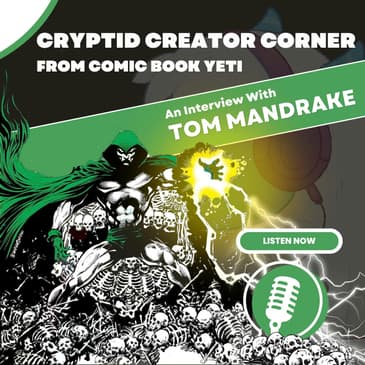

Legendary comics artist Tom Mandrake joins Byron to discuss the release of one of the most iconic, atmospheric, and terrifying runs in DC Comics history, The Spectre (now collected in two Omnibus Editions,) and his new work as series artist finishing up Rick Veitch's run on the Swamp Thing from 1989, a project that has been shelved for decades due to controversy.
We kick things off by celebrating the long-awaited hardcover treatment of Tom's masterpiece: The Spectre (with writer John Ostrander). Spanning 62 issues of unmatched supernatural horror, Tom shares behind-the-scenes stories, pushing the boundaries of mainstream DC editorial in the 90s, and utilizing the incredible visual malleability of The Spectre in the book.
We also go back to the future to discuss Tom's return to the Swamp Thing. Learn what it was like to step back into his 80s artistic style; help finish Rick Veitch's legendary, once-cancelled run; and collaborate with creators to complete a historic piece of comic book legacy.

🎶 - Show notes
The Heartland Series on YouTube - https://www.youtube.com/playlist?list=PL9_j-6Ab6evTS6TbRqXtAyKaJgkPtXpsd
The Devil and Daisy Dirt Play - http://thedevilanddaisydirt.blogspot.com
WATCH THE VIDEO VERSION OF OUR CHAT ON YOUTUBE!
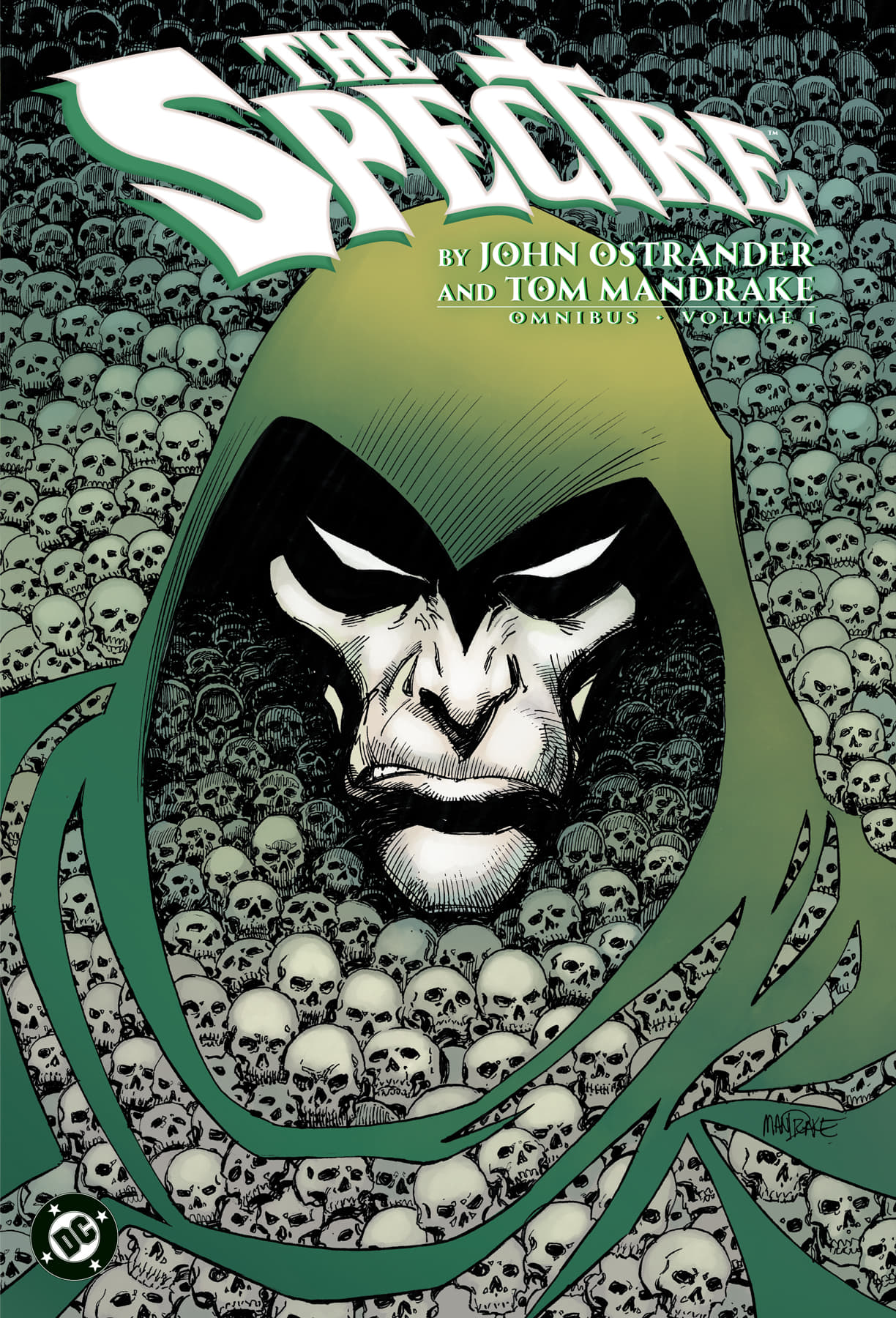
The Spectre Omnibus Volume 1
From the publisher
The Spectre stars in thought-provoking, character-defining stories from comics legends John Ostrander and Tom Mandrake, now presented in their first omnibus collection!
Writer John Ostrander and artist Tom Mandrake were already well-established in the comics world by 1992, following acclaimed and influential runs on Suicide Squad and Batman, respectively. For their next move, they teamed together and took on The Spectre: slain cop Jim Corrigan, who returned from the afterlife as a nearly all-powerful divine agent of vengeance.
Drawing upon his theology studies, Ostrander brought new dimension to the character, placing the Spectre and his frequently brutal brand of justice in ethically nuanced situations.
In these tales from the 1990s, police detective Jim Corrigan tries to end his mission as the Spectre. But the grisly crimes of a serial killer pulls him back into the battle for justice—and sends him on a trip to hell itself. And the enigmatic mystic known as Madame Xanadu tries to help Corrigan and his friends—but her help may lead one of them to commit suicide.
And when the Spectre decides to wipe out the human race, it’s up to DC’s mystic heroes including John Constantine, Etrigan the Demon, the Phantom Stranger, Doctor Fate, Zatanna and more to try and stop him.
This omnibus collects the first half of Ostrander and Mandrake’s run: The Spectre #1-31 and #0, and material from Who’s Who: The Definitive Directory of the DC Universe #21.
📚 The Spectre Omnibus Volume Two hits shelves on October 13th
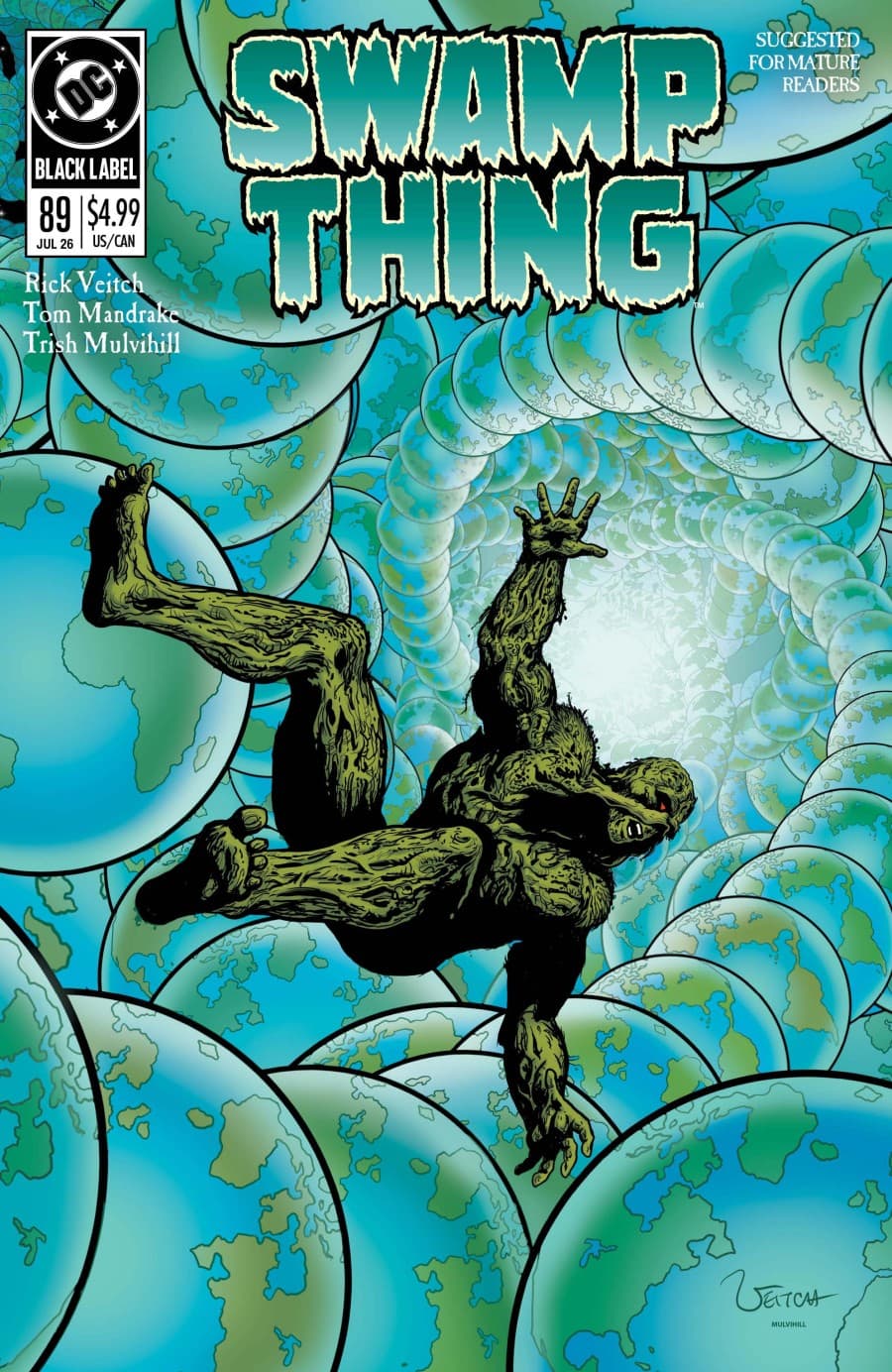
Swamp Thing 1989
From the publisher
ONE OF THE GREATEST STORIES NEVER TOLD. THE MOST FAMOUS UNPUBLISHED DC COMICS STORY CONTINUES!
As Swamp Thing is flung backwards through time, his true destination is revealed! While John Constantine works a world of connections to locate the lost elemental, Abby prepares to give birth to their child of three worlds. Witness the epic odyssey that could not see print until now! Over three decades in the making, welcome to the grand finale of Swamp Thing!
Follow Comic Book Yeti
🔗 Comic Book Yeti LinkTree: https://linktr.ee/ComicBookYeti
For partnership and ad inquiries, please contact: thecomicsyeti@gmailcom
Follow your hosts
🔗 Jimmy Gaspero: https://bsky.app/profile/jimmygaspero.bsky.social
🔗 Byron O’Neal: https://bsky.app/profile/byrononeal.com
CRYPTID CREATOR CORNER PATREON
Support the show on Patreon for as little as $1 per month as a Squatch Supporter and enjoy exclusive benefits like What's Your Favorite Cryptid ™ with some of our favorite comics creators and Byron's comic book reviews.

ARKENFORGE
Play TTRPG games? Make sure to check out our partner Arkenforge. Use the discount code YETI5 to get $5 off your order.
Make sure to check out our sponsor 2000AD.

[00:00:00] - [Speaker 0]
Your ears do not deceive you. You have just entered the cryptid creator corner brought to you by your friends at Comic Book Yeti. So without further ado, let's get on to the interview.
[00:00:11] - [Speaker 1]
The future is calling. 2,000 AD is the galaxy's greatest comic with new issues published every single week. Every 32 page issue of 2,000 AD brings you the best in sci fi and horror featuring characters like judge dread, rogue trooper, and more. Get a print subscription in 2,000 AD, and it'll arrive to your mailbox every week. And your first issue is free.
[00:00:35] - [Speaker 1]
Or subscribe digitally, and you can download DRM free copies of each issue for only 9 a month. That's 128 pages of incredible comics every month for less than $10. Head to 2,000 AD and click on subscribe now or download the 2,000 AD app and start reading today.
[00:00:55] - [Speaker 2]
Hello, everybody, and welcome to the Cryptid Creator Corner. I'm Byron O'Neil, your host for our comics creator chat. Today is a special one for me. As regular listeners know, in my late teens and early twenties, I worked in comic book shops, three of them, in fact. That was in the early to mid nineties, a truly peak period for our four color realm.
[00:01:14] - [Speaker 2]
And amidst the backdrop of all that and all the incredible books that were hitting at the shelves at that time, it was not a book that I look forward to more than the supernatural horror masterpiece, The Spectre. Spanning from 1992 to 1998, this was 62 issues of comics brilliance. And comics art fans, you are in for a treat as we okay. I hate the term deep dive. So let's say we'll take a sequential sojourn, a panel plunge, or a floppy foray.
[00:01:42] - [Speaker 2]
You decide with today's guests who help bring life into the Mean Green Vengeance Machine, Tom Mandrake. Tom, really appreciate you joining me on the show today.
[00:01:51] - [Speaker 3]
Thank you so much for having me.
[00:01:53] - [Speaker 2]
Yeah, absolutely. It's a treat to have you. So the Spectre, the first volume of the Ominous edition was late last year. I got mine
[00:02:02] - [Speaker 3]
right here. That's a of big chunk of material there, isn't it?
[00:02:08] - [Speaker 2]
It really is. And it's got the glow in the dark treatment, which I absolutely love. I've still got the poster from, from that era upstairs. The glow in the dark doesn't work anymore, sadly. But, the volume two is set to drop this October.
[00:02:21] - [Speaker 2]
Fans like myself have had to wait a long time to get our hands on the hardcover treatment. Decades, people, and not years. So it it what's it feel like to finally see the culmination of your longest comics run, finally getting the just attention that it deserves in hardcover format?
[00:02:40] - [Speaker 3]
Very, very satisfying because as you know, I think DC had two sort of false starts. Yep. Years and years ago, I think they, they published the first four issues and I thought, okay, now they're going to start putting trades out and then nothing happened. And then, and then they started again in that sort of soft cover format, not ideal as a trade, but you know, still they were starting to redo it. And then they stopped partway through the run again.
[00:03:09] - [Speaker 3]
So now, as you say, jumping forward, how many years later, thirty, thirty ish, I guess. Finally I got contacted, by DC and not only were they going to publish the whole run, but they were doing such a beautiful job on it. And I got to do these new covers for it and they're glow in the dark covers. So it all came together beautifully. And I couldn't be happier finally.
[00:03:32] - [Speaker 2]
Well, to my delight in the forward, it was really cool to see, your time working on the book with John. I had no idea about this, but you were both homebrewing, which is kind of wild. Like I've done, done a fair bit of that myself. I even helped at a commercial brewery a few times. So are you still making your own today?
[00:03:51] - [Speaker 3]
No, I stopped doing that quite a few years ago, you know, back when John and I were homebrewing access to different types of beer, it's pretty limited around here. And we sort of got interested in that because we, we belonged to a, beer club down in Dover, Dover, New Jersey, where they would bring in, you know, unusual beers. We thought we should try this ourselves. And we both sort of just got into it. But then within the space of about ten years there, while we're doing that, all of a sudden the beer market exploded and, and beers became available from everywhere.
[00:04:31] - [Speaker 3]
You know, it was a great, fun hobby. But then after a while I was like, okay, I think I've had enough of this.
[00:04:38] - [Speaker 2]
Yeah. Yeah. Mean, it can get expensive too, the, all that stuff. But yeah, I miss it. I used to do it all the time with with one of my good friends when we lived in Washington state.
[00:04:47] - [Speaker 2]
Then, of course, as those things go, he got designs on opening up his own brewery and this thing got way bigger than than than just making a little bit for people to to share at church. But yeah, it's fun.
[00:04:59] - [Speaker 3]
We, and John, moved away too. He doesn't live in the area anymore. So I didn't have a brewing buddy to hang out with. So, there was, you know, for a lot of reasons you come and go out of these sort of hobbies.
[00:05:13] - [Speaker 2]
Sure. Yeah. Well, no respect, disrespect to John here, but the nuance notes of Comics Brew, if you'll excuse, okay. That was my lead in. I was trying to use the brewery to get into this, but you know, anyway, it comes from the art.
[00:05:26] - [Speaker 2]
And so I want to get into some process stuff that I've been curious about all this time. You know, something I I never appreciated as much when I was younger is just how visually flexible the Spectre is as a character. You know, he's got a defined silhouette, but I have trouble thinking of another superhero type that is as malleable for an artist. So have you ever worked on one that you could do this much with? Well,
[00:05:53] - [Speaker 3]
because he's, he's literally just ectoplasm, including his cape. He's, he can become anything he wants to be. And the only thing that holds him back, the only, the only thing that keeps him visually cohesive is Jim Corrigan's vision of himself. So that means, you know, visually you can stretch him, you can pull him. He, the fact that he appears to be a muscular man in a suit, that's only Corrigan's brain holding it together or Corrigan's spirit brain, I guess you would say.
[00:06:27] - [Speaker 3]
But that was our take on the Spectre was always that he has unlimited power only held back, only held in check by Corrigan's perception of what he can and can't do. And always trying to keep that in mind. I love stretching the character, the character, pulling him in or stretching him out or the mouth flying wide open. Another character that is as visually malleable as him. No, I don't think so.
[00:06:55] - [Speaker 3]
Even though
[00:06:55] - [Speaker 2]
the Martian
[00:06:56] - [Speaker 3]
Manhunter is a, he can morph into other characters. And we played with that somewhat in our run with him. Yeah. The Spectre is unique in that regard, I think.
[00:07:06] - [Speaker 2]
So from the perspective of an artist, what is your favorite thing about working with the Spectre?
[00:07:12] - [Speaker 3]
Well, that, that is without doubt, one of them that I had this ability to play with him, not just as a character, but I tried to, use storytelling that reflected that too. So a lot of the storytelling in the Spectre is very extreme, lots of panels flying every which way and layering of panels and, and, different types of borders and things. I know people, and I love this, that they associate me in terms of storytelling with that particular style of storytelling, but I don't do that with every project that I work on. Each time I do a job, I think a lot about how I'm going to tell the story. And some stories are telling a very stick, straightforward fashion.
[00:07:55] - [Speaker 3]
An example of that would be the two pun, the short punisher runs I did, which are very straightforward in the panel breakdown. A lot of times almost just straightforward six panel, grids. So I try to make sure as best I can that the storytelling reflects the characters that are within the stories.
[00:08:16] - [Speaker 2]
Yeah. That biggest appeal, I guess, me has always been that duality, you know, between Corrigan and the Spectre. I love characters who have alter egos that are vastly different. It's why I adore the demon so much, you know? And and the trick the trick is that switch, Back and forth between street level, heaven, hell, God knows what else y'all cooked up in that that series of where it where it came from.
[00:08:40] - [Speaker 2]
But it it makes a horror book like this so much more, I guess, the the horror elements of it more pronounced as you kind of peel back the shards between normalcy and wherever else you're going really, really quickly. So how did you handle that abruptness as, as an artist so that it doesn't end up feeling quite so jarring? And I guess at some point jarring is the point.
[00:09:03] - [Speaker 3]
I don't think that our intent was ever to hold back. I think with that particular series, we were, we were always trying to dance on the edge of the fact that we were working in mainstream DC. That wasn't a Vertigo book. Course, we were, we were in mainstream DC. There were always going to be limitations to what we could get away with.
[00:09:24] - [Speaker 3]
And what we were trying to do was to see how far we could push that whole thing while telling a great story. And we were lucky in that we had an attitude that was 100% behind us all the way. Dan Rasler was always like, I was always like, Dan, can I, you know, I'm going to do this? Can we do this? And I would show him the pages and very, very rarely would he say, no, Tom, you better pull back on that.
[00:09:50] - [Speaker 3]
That's not going to fly. And on those rare cases he did, he would still take them and see if he could get it past the, the head office and ultimately a few times where like, yeah, that's it. You can't do that. That was not the kind of job where I thought, we need to, we need to stop or we need, we can't make this abrupt storytelling turn. So those stories were, I think, as challenging, or we tried to make it as challenging as possible.
[00:10:20] - [Speaker 3]
And the readers went right along with this.
[00:10:23] - [Speaker 2]
On that editorial front, and my cohost was talking with Gabriel Hartman recently, and he was lamenting about needing to include a main DC character pull, you know, when when he was pitching a detective chimp story. So Batman, Superman, Wonder Woman. Right? So that the run didn't have that much influence, know, especially early on. So did you get much pressure from editorial to include one or they just kind of let you run with it?
[00:10:51] - [Speaker 3]
So John and I, one of the things that we thought about when we were coming up with this proposal for the Spectre, they didn't ask us to do it. We, we presented a proposal to DC to do the Spectre and nobody was interested in the Spectre at the time. He was just a character that had a few runs before that that didn't sell particularly well. And we thought, all right, nobody really is interested in this, but we're very much interested in it. And we felt that that would give us the opportunity to do a book.
[00:11:22] - [Speaker 3]
That would be sort of hands off. They'd be like, yeah, you know, do whatever you want. And we turned it a pretty solid proposal. And Dan again was 100 behind us. And the response from DC was, yeah, sure.
[00:11:36] - [Speaker 3]
You can do that. So there was no, there were no expectations. It wasn't, they didn't really think it was going to be like a blockbuster or anything. So when we did include DC character, it wasn't because they were saying, oh, you need to throw Batman in here or put the Joker or Superman or any of the other characters that we ended up including in our storylines, because that's what we wanted to do without really any, we never had any pressure from DC about what we should put in the book.
[00:12:04] - [Speaker 2]
So how many did you start with in terms of script? Did you have this moment where it was just like, well, they're just going to keep letting us do this.
[00:12:12] - [Speaker 3]
We, in the, in the proposal and in our discussions, John and I knew where the story was going to go, which is great. It's a rare opportunity to start an ongoing series where we already knew what the end goal was. Now we gave ourselves a lot of flexibility within that storyline. We had certain key points we wanted to hit throughout. But when we got to that point where the word was going to be sort of passed down, we feel like you guys need to wrap this up.
[00:12:44] - [Speaker 3]
We knew where we were going to go. So we didn't have to have some weird, abrupt, oh, story's got to end. Boom, done out of here. Which is I think why that story wraps up so well because we actually knew what our end game was. And when we knew it was going to be that time, were, John was able to write comfortably to a good ending.
[00:13:06] - [Speaker 3]
That's a, that's a rarity, I think.
[00:13:09] - [Speaker 2]
Oh, absolutely.
[00:13:10] - [Speaker 3]
I actually forgot what your question was at that point. I think I went off on my own rift there.
[00:13:15] - [Speaker 2]
No, no, it's quite all right. It's just like the, it's always interesting to me because the nineties are to me very, very special. I hear, I talk to a lot of creators and the constant, you know, lament is I would love to take this character because it's, you know, it's, it's their baby that, you know, they just want to run with it, and they have these fantastic ideas, but they're limited to five issues or what have you. And that's just the reality in which the the medium is operating today. But runs like this are super special.
[00:13:44] - [Speaker 2]
And I think back with, you know, Ennis McCray's run on the demon or something like that. And it's just sort of sad that the the legs just aren't there, today as as they used to be. So yeah. That was just my question is, you know, did editorial ever come in and be like, okay guys. Yeah.
[00:14:02] - [Speaker 2]
Are you just, are you just sort of constantly amazed that you kept getting the, yeah, let's run with it. Keep going.
[00:14:09] - [Speaker 3]
You know, at the time it's, it did surprise me because I kept thinking we were going to get more, more trouble than we did. And we never got any hassle, nothing to speak of really. And actually I just was catching up with Dan Rasper the other day and he reread the run recently and he, and he, his first thing he said to me was, I can't believe what we got away with.
[00:14:36] - [Speaker 2]
Yeah. It's really, that's a long run. It's, it's really special though. But, and it's, there's another thing I was thinking about, you know, you and John worked together over a lot of years on various projects, you know, which undoubtedly leads to a bit of a creative shorthand, you know, a relationship we talked about the homebrew. It seems to, you know, transcended just, just the comics realm.
[00:14:57] - [Speaker 2]
You know, it's actually actually the real world, you know? And I was just chatting with Jude Doyle about his new Clayface project. He mentioned not having come into contact with the artist, you know, Fran Galan working on it yet. And the book was coming out at that point in just a few days. You know, it's not a criticism of that, but it seems like those close relationships also had more of a chance to grow, you know, just that were outside of comics in the nineties kind of creating a special, you know, collaboration that, that we miss in our modern comics world.
[00:15:26] - [Speaker 2]
So how did that, that connection outside enable you to tell a better story as a team with comic book?
[00:15:33] - [Speaker 3]
I think it was a huge advantage, honestly. I, I got to know John well before he lived near us. We were working on Grimjack and we had a, you know, a lot of back and forth, discussions before we live near each other. You know, the more that, you know, somebody personally, the more that magic bounces back and forth, I think the energy. And then when we were living, you know, just a few minutes away from each other, meant that we would just get together, sit down together and talk the story out together.
[00:16:10] - [Speaker 3]
So our process during the specter was to just physically sit down, discuss where we wanted to go with the story. And then John would write a plot. Then I would pencil it. Then, you know, just classic, you know, what the people call Marvel style, plot style, then he would script it. So we had this great back and forth.
[00:16:31] - [Speaker 3]
And if there, you know, if I did something in the, in the pencils, which rarely came up because again, our relationship was very energetic and tight at that point, I could always re pencil a page or something if it didn't work. And that did happen a few times. And to the point that you're making about making comics in the nineties till now. Yes. I do think that the ease that we have in communication and you can do everything by email, is, I don't want to say a negative because what it does is open up the world to you being able to work with people you might never, never meet or have the opportunity to meet, and yet you can still produce comics with them.
[00:17:09] - [Speaker 3]
That's, that's great in one way. But it is weird sometimes that you can do entire books and never meet anybody on the team at the same time. So it's, it's a very mixed blessing. And I do miss that feeling, especially when Marvel and DC were both in New York and most of our publishing people, most of the creators were in the New York area. So, you know, walking into the office, bringing the work into the office, having all those interactions, something that I do miss.
[00:17:40] - [Speaker 2]
Yeah. I mean, I think it's something the industry as a whole just kind of misses.
[00:17:43] - [Speaker 3]
Yeah. I I'd have to agree with that.
[00:17:46] - [Speaker 2]
Well, with a historically long run like this and drawing a character thousands of times, this fatigue set in from a storytelling perspective. I mean, certainly a physical one does because, you know, the dreaded carpal tunnel monster will inevitably make it rear its head. But
[00:18:03] - [Speaker 3]
I've, I really enjoyed, doing those long runs. I, I, I spent quite a while on Grinjak and, so it was five years on the Spectre and I did, I think a three year run on the Martian Manhunter. So throughout the late eighties, all throughout the nineties, was doing long runs on books and really enjoying that process. So after, after fifteen or twenty years of long runs, then I was starting to not, not particularly fatigued by any one of those, but then I was getting more interested in doing some shorter things, doing some graphic novels and stuff, and really enjoying that. So at this point, people will ask me, know, would you like to do another really long run?
[00:18:53] - [Speaker 3]
And I'm like, I'm not so sure that I want to do five years in anything again. I've been there. I've done that, you know? So I don't think there was ever a time where I was like, Oh my God, I can't, I can't stand working on this book anymore. Cause I'm sure that if DC had let us, hadn't dropped the hammer after five years and said, well, you guys could do another year.
[00:19:13] - [Speaker 3]
We would've done it. It's hard to imagine getting tired of that character because he's, there's so much you can do with him.
[00:19:20] - [Speaker 2]
It's hard for me to imagine how you redlined just working on a book like that with the grind of putting it out over that amount of time. I mean, that that's Herculean right there. You know, I hear people who are they need a break now on the modern books. And again, this is not a the older guard where, you know, the real warriors. I'm not saying anything like that or disrespecting modern artists.
[00:19:45] - [Speaker 2]
It's just a different world. But, yeah, it's crazy to think about that grind consistently for that long.
[00:19:54] - [Speaker 3]
Yeah. Doing monthlies is a serious work and you really have to put yourself into a position where you, you sit at the board a lot. You, you don't take a lot of time off. That's for sure.
[00:20:07] - [Speaker 2]
Yeah. Yeah, absolutely. Well, what did working on this series teach you as an artist in terms of craft?
[00:20:13] - [Speaker 3]
With each project that I do, I try to, utilize particular tools to get particular looks. I don't, I don't think that the readers necessarily see this. Although some do there are some people are very, aware of minor artistic changes. So when I was working on the Spectre, I was very heavily into working with brush and, traditional pen points. And I, to some extent, I carried that over to the Martian Manhunter, but I switched tools when I got to the Martian Manhunter, that was much more tech pen heavy because I wanted a more science fictiony look to it.
[00:20:53] - [Speaker 3]
So there's, there's a difference in, in the tools that I use from, project to project. So I was working hard on being very, traditional in my illustration styles. And that's what I was dealing with mentally in terms of technique, working on ink techniques, old school ink techniques all throughout the spectre. And as I say, then when I, when I switched projects, when I went onto the Martian Manhunter, I, there was, there was less, old school pens and more tech pens. So while it doesn't mean a lot to people who aren't really schooled in art, it can mean a lot in the way you approach your artwork.
[00:21:36] - [Speaker 3]
And I think the way it ultimately looks.
[00:21:38] - [Speaker 2]
So getting into that, know, I was thinking about other, when I was doing a re reread here, you know, other people I would kind of put in that masters of the macabre, right. Who work in comics, Wrightson, Kelly Jones, Gene Colan, who's a personal favorite, Magnolia. Right? When I was first reading this, I was at the, you know, tail end of my teens, you know, having grown up in a religious household amidst the satanic panic of the eighties. You know?
[00:22:01] - [Speaker 2]
Your hell felt real, you know, and it had that ability to, you know, manifest tension and anxiety to, to me as a reader, or yeah, it felt that way anyway. So, you know, your own relationship with manipulating that contrast, you talked about the tools there between shadows and highlights on a page. So how do you approach that between different books to create an emotive weight with your characters? Because that's, that's a real necessary aspect of horror, right? That transition with Corrigan and the Spectre.
[00:22:32] - [Speaker 3]
It is. And, the, the images of, of hell, whatever that is, first, it's, it's an interesting thing to have to try to visually show something that is, so it's visceral and it means something different to everybody. You know, souls burning in, in, in hell is a weird fabrication. And my approach to that for the book was just to be as over the top and utilize as many of the, much of the old school imagery, you know, going right back to the medieval times as possible And, and, and make sure that everybody who is in that situation, except sometimes the demons who are controlling it, which is flailing around and there's fire and there's smoke and there's brimstone and it's all going every which way. Hope that then we could counterbalance that with some, more sort of film noir quieter moments.
[00:23:34] - [Speaker 3]
So, know, the first, I think it's the first 12 issues. I think the Danny Geller story takes place in. I don't remember if it takes place for the entire 12 issues or not, but that's, that's like real horror. That's, that's basically a serial killer slasher kind of thing.
[00:23:51] - [Speaker 2]
Right.
[00:23:52] - [Speaker 3]
That I think balances well off of that really over the top demons and people burning that we were balancing out off. And then we had what was going on. Oh geez. I can't, I can't believe I just forgot the character's name that the Spectre was, what's her name?
[00:24:10] - [Speaker 2]
Amy?
[00:24:11] - [Speaker 3]
Yeah. Amy. Her, her health issues were she was dying basically. Sometimes I feel like I'm spoiling something. I'm spoiling it, Amy.
[00:24:21] - [Speaker 3]
A thirty year old comic.
[00:24:22] - [Speaker 2]
It's all out there.
[00:24:23] - [Speaker 3]
It's all out there. Yeah. So we were intentionally trying to balance off what was happening with her and Dani Geller in that sort of very planted in the real world kind of horror against this really over the top kind of horror. And I think that's a great balancing act if you can make it happen. And that's definitely what we were going for.
[00:24:43] - [Speaker 2]
Yeah. With Corrigan then. You have that back and forth, right? So body language, facial structure, other cues to act as the human anchor that are, that's carrying the burden of the spirit of vengeance, right? So you've got hell, fire, brimstone, all this stuff that you just talked about.
[00:25:01] - [Speaker 2]
Then, but you have to actually also tell a very human story. So what was, what was key to that?
[00:25:06] - [Speaker 3]
Well, Corrigan's story is in a way very straightforward. You know, Corrigan without the specter is just kind of a sad story about a man, a very lost man, a person who's suffering because of his past, his relationships, his past relationships, his, with his father, with his, his lost love. And then somehow he finds himself with this unbelievable power of God. And I mean, that's, can't, you can't ask for a better starting point, you know, which is one of the things that John and I were like, you, this is awesome. You've got such a human level of just this poor sad sack of a man who's even out of his own time.
[00:25:57] - [Speaker 3]
You know, there's nothing right for him here. And he has all this tremendous power that he doesn't really even know how to use after he's been there since like 1940, but he still doesn't know what he's got in his hands. He's still struggling with it. That's, that's an amazing place to start a story. It's Yeah.
[00:26:14] - [Speaker 3]
Got everything you
[00:26:16] - [Speaker 2]
Yeah. That was, I think why I connected with the story so much first was, you know, my own, probably my first exposure, you know, I raised in a religious household, you know, and the AIDS crisis in the eighties was, wasn't very real to me. Like this was kind of my first true exposure to it and getting an understanding, which, which led me to ask questions. And I think that's one of the things that was so, you know, people talk about the, their comics DNA or, you know, this is the identity of myself in comics. Like that, that is what the Spectre was for me because I was finding myself as a, as a person, you know?
[00:27:01] - [Speaker 2]
And it wasn't just the AIDS story, but I was, I have an environmental science degree. And there was this story about the goddess and water, you know, and water resources just happened to be the thing that I focused on with my environmental resource, science degree. So there were so many things in that that felt so contemporary, and it was really fascinating to go back, maybe sad, to go back on the reread and just to think, wow, we're, we're still here struggling with grappling with the same stuff, you know, thirty years later. So yeah, kind of bananas. Yeah.
[00:27:38] - [Speaker 2]
Well, I come from a background as a theatrical lighting designer. And to me, in this book, your line work kind of functions as a director level sort of thing. Right? It visually sets up a proper angle and the colorist kind of does the heavy lifting with accent lighting. That was that was Carla Feeney and Digital Chameleon was working on the project at well as well.
[00:28:01] - [Speaker 2]
And it it was at a groundbreaking juncture in the medium where we were transitioning to digital coloring, you know, that gave the book a, you know, a groundbreaking, truly distinctive look. So did that affect your approach to conceptualizing layouts and with the drawing at all?
[00:28:17] - [Speaker 3]
Well, Carla was a great colorist and she never worked digitally. Carla was always old school color. And in fact, when, when it hit the point where, everybody had to work digitally, she just said no, and that was it. She let, she walked.
[00:28:39] - [Speaker 2]
Okay.
[00:28:40] - [Speaker 3]
And I worked with Carla starting on Firestorm. Then, so that was, I think we did one year there and then the entire Spectre run, the entire Martian Manhunter run and possibly some other small jobs in between. So we worked together for a long time and Carla really understood, what my work needed. We were a great team. She, she understood exactly what was needed there.
[00:29:08] - [Speaker 3]
Great. I think we had a great balance going on. And there's a lot to be said in my mind for, old school, old school coloring, because if you're, I'm just going say sort of like a busy inker, like I am, I do a lot of work in the and to a great extent, you could publish that stuff in black and white and it's going to be fine. It's going to work as is. So sure.
[00:29:38] - [Speaker 3]
It's a color comic, but you don't need to render everything. Everything doesn't have to be rounded out. There was a period of time there where, then some other colors would come on top of my stuff and they were like, oh, now we can, we can color everything where everything gets its own color and everything gets rounded and we can make muscles more rounded. And it's like, back off. You know, I already did that.
[00:30:01] - [Speaker 3]
You don't have to, you don't have to repeat my process. Just lay some colors down. Look what Carla did. This is perfect. And you know, once everybody's settled down, now we've got lots of great colorists again, who understand the process.
[00:30:16] - [Speaker 3]
But those, for me, that was a painful period of time there where everybody just wanted to render the hell out of the colors and not recognize that each artist has got a certain amount of work that they either need or, or you can back off on some people. My stuff needs to be backed off on in order to make, in order to make it work.
[00:30:34] - [Speaker 2]
Well, I was talking to a friend, the other night on Discord about the interview and I'm going throw this out there for him because he was curious when you were working on this stuff. He's getting into inking himself. And so he was telling me about talking with somebody else and all these, these other things, you know, people who have forgotten more about inking than he will ever know, you know? So he wanted me to ask, did you actually end up using Windex to, to thin out your ink back in the day on this?
[00:31:04] - [Speaker 3]
No. I've always been in, I just use a little bit of water personally. So, and back in the nineties, my favorite ink was Pelican ink. They used to make a great ink. Pelican ink is not the same quality it used to be.
[00:31:21] - [Speaker 3]
I'm sure people now I'm going to do some old man complaining here. I find that the quality of ink is not the same. And I can, I can say that legitimately because I can pull out old pages from the Spectre and look at the way the ink is laying on the page and it's solid black and beautiful? I have a hard time finding inks that will do that now. So always with Pelican ink, I could just use it straight from the bottle.
[00:31:46] - [Speaker 3]
Or if it's been open a little while, I drop just a little bit of water in it. I mean, lots of people have all these interesting things that they would do with ink, you know, adding a little bit of Windex mixing this kind of ink with that kind of ink. I never did that. I would just open it up and go.
[00:32:01] - [Speaker 2]
So are you still working in a traditional sense? Like everything has to start from the page you're drawing it.
[00:32:09] - [Speaker 3]
So I still work mostly traditional. Occasionally, there are some jobs that I, I ink digitally if, if need be, but it's rare. So I figured, you know, having the skill set is good. So, just as a, instance, I've done a couple of like martial, martial art, how to, how to books. And I thought, well, this is a good opportunity to do some digital inking.
[00:32:35] - [Speaker 3]
So I did it so I know how to do it, you know, but I'm still a traditional artist and I can't see any reason to change that.
[00:32:44] - [Speaker 2]
So are you a practitioner? I had, I've asked because I have been myself for a very long time, Qigong and, you know, Jeet Kune Do, and I've, I've got background in several forms, but
[00:32:55] - [Speaker 3]
you know. So over the years, I've studied a lot of martial arts, yai do, Tai Chi, Taekwondo, Hae Dan Gang Do. Yeah, the years, lots of stuff.
[00:33:09] - [Speaker 2]
So how did, now the curiosity is now peaked here. So in terms of sequencing action, do you feel like that's changed how you're able to do that as an artist as you evolved and kind of understand how form function works together, movement, you know, on a page?
[00:33:25] - [Speaker 3]
I think that anytime that you, for, for, for an artist, anything that you do physically, you know, it's an, it's an advantage to know how the body works. Although I try not to, inhibit the way I utilize action based on like martial arts styles, unless that particular character is in fact a martial artist, then I can bring that in. So I find myself balanced somewhere between what Joe Hubert used to say to me. That was that every physical movement that your character made should be stretched to the ultimate and, and the knowledge that I've gotten from martial arts about how there's actually form and function to these things and how people react to, either hitting, being hit, locking, that kind of thing. So I like, I try to live somewhere in the middle of that.
[00:34:19] - [Speaker 2]
Okay. That's fascinating. Well, we've been talking a whole lot about the specter in the early nineties. My brain is a bit blown that we're now coming full circle and revisiting a character in the present with Swamp Thing nineteen eighty nine, feeling back to the future moment here myself. But, you know, after three decades, you're a part of the team finally completing Brick Beach's run on the series.
[00:34:43] - [Speaker 2]
For people that don't know, this revolves around a controversy with issue 88 in which Swamp Thing is flung back in time and encounters presumably Jesus. The story goes that, and maybe you have more insight in this, but somewhere up the food chain, somebody got cold feet about creating the potential controversy there. And the book was pulled right before going to print. Then Rick stepped away. Is that fairly accurate?
[00:35:06] - [Speaker 3]
That's basically, yeah, in a nutshell, that's what happened. They, the issue had been penciled by Mike Zuli, just before it was going to be inked, which obviously means that they were, it had been approved. The story had been approved. Somebody right at the top said, we can't do this. And, and yeah, Rick walked away at that point.
[00:35:29] - [Speaker 2]
Oh, so what's it been like flexing the superhero muscles again, you know, finally getting to work on completing it?
[00:35:36] - [Speaker 3]
To say that it was a huge surprise when, Alex Galler contacted me by email and he said, I've got something really interesting for you. You have to sign, you know, a contract to guarantee not to say anything about it. I'm like, sure. Cause I've worked with Alex before. Anytime he contacts me, it's going to be something really interesting.
[00:35:59] - [Speaker 2]
Okay.
[00:35:59] - [Speaker 3]
But I had no idea then when he told me, oh, we're going to, we're going to bring back this story. We're going to finish it. And I was like, why me? Because I just assumed that first I had no idea that there was any story beyond the issues that Mike had already penciled. I thought that was the end of the story because I'd never actually read it.
[00:36:23] - [Speaker 3]
I'd seen the pages floating around, never really talked to Rick much about it. And then I find out that Rick's got this whole story to be told. Mike is only going to do the one issue and they want to be the other three. And, you know, over the years I'd done never a long run of Swamp Thing, but certainly issues, you know, my, I think my first issue of Swamp Thing was like 1981. And then I've worked with lots of different writers fill in, you know, a couple of, short stories in those Walmart books that came out relatively recently, but I was, I was thrilled to get the job.
[00:36:57] - [Speaker 3]
Then, you know, then Mike Zooley passes, just before he got a chance to dive back in. I guess he did some reworking of the pencils and then they got Vince Locke to come in and finish it, which was, that was great. He did a tremendous job on that. So the whole thing just, it just worked out beautifully. And I don't know if you've seen the issues yet.
[00:37:18] - [Speaker 3]
Yeah. I love every, that's great. Every step of the way, Alex just went out of his way to make it work, you know, from, to giving Trish the extra time and the work that she did to make it, you know, sing true to the original colors, Todd designing a lettering font that looked like John Costanza. The fact that, I mean, the paper they picked, the fact that we've got the old ads in it, everything about it, it's just like one of those projects that became so satisfying when I finally saw the issue is like, I can't believe this worked. I can't believe that they made this package come together so completely.
[00:38:00] - [Speaker 3]
It's just a great project to have been involved with.
[00:38:04] - [Speaker 2]
Walk me through the process of kind of finding your footing again in DC, right? You wrote in the afterword about being a little anxious about the process.
[00:38:12] - [Speaker 3]
Well, yeah, because, I mean, it's, I'm, it's never like I haven't been working with DC because I'm always doing a little something for them now and then. But for this project, and I had done some Swamp Thing stories, I think, seven years ago, but that was sort of modern Swamp Thing. Now we're talking about trying to spin right off of 1980s Swamp Thing, 1980s Tom Swamp Thing. And I had some reservations about being able to sort of dive in and be, be that old guy again, from the late eighties because Swamp Thing has got a different look. So Alex got me every single issue of Rick's run and sent it to me.
[00:39:05] - [Speaker 3]
So I sat down and I read the entire run, which was great. That's the kind of homework you want to have right there. Well, got to sit down and read 30 comic books. Okay. I can live with that.
[00:39:17] - [Speaker 3]
And then I started just like get some sketches in and of remold the way I was drawing Swamp Thing now and get him, get him back to that Swamp Thing. And, and of course the look of the day was, we always, we always had, I don't know what's wrong with me today. I can't think of everybody's name. The, the anchor who was always working on it, Alfredo Alcala. He was, he ain't all the issues that I drew.
[00:39:44] - [Speaker 3]
And I think if not every issue other than that, then he must've done 90% of that run. Okay. So I wanted to try and get some of that Alfredo Alcala look going, but I, but I told Alec, I'm not Alfredo Alcala. I can, I can riff off him a little bit? So it's going to be just that, that effort of penciling more like I penciled then and giving the inks a little bit of Alfredo alcala, but not diving in too deep.
[00:40:12] - [Speaker 3]
So yeah, especially that first issue. Oh, I agonized over that tremendously. I don't anymore. I don't usually have that much of an issue about turning stuff in, but I turned that first one in like, oh God, hope this is working. And I wasn't, I didn't feel comfortable really until the first one hit the stands and thank God everybody, the response from the fans was really positive.
[00:40:34] - [Speaker 3]
And then I was like, okay, we did, we did all right on this.
[00:40:38] - [Speaker 2]
So is it the same feeling of being able to pick a book up on stands that you had, you know, 1989, early nineties, you know, so that same kind of feeling?
[00:40:47] - [Speaker 3]
It's always fun to have a new project come out. It's always exciting. And I don't, I don't think I got a hope that never goes away. You know, the idea of you, you get your box of conf and you crack it open and you, and the smell of fresh print comes out of there, which I still love. You get to look through it and you don't always love your stuff.
[00:41:12] - [Speaker 3]
And in fact, I don't, the first thing I do is I'm looking through it and I'm okay. I could have done that better. This works. Thing. That's normal.
[00:41:20] - [Speaker 3]
But the, but the whole process is something that I do love, but then you're hoping that somebody is going to respond positively to it too. And you expect somebody to have some negative reactions. In fact, I enjoy the negative reviews as much as I do the positive ones because that means that they reacted to it. So if somebody has a negative reaction to your work, they reacted to it. And that's better than somebody picking it up and going and tossing it.
[00:41:43] - [Speaker 3]
That's, that's the worst as far as I'm concerned.
[00:41:48] - [Speaker 2]
Yeah. It's, it's just a fascinating project. There's so much legacy that's, and that's why I asked, you know, you, you see on the stanzas that capture that same kind of old feeling, because I don't know what your relationship of course was to Michael, but you know, there, there's a lot in this project that just makes it unique and special.
[00:42:06] - [Speaker 3]
Yeah. I didn't, I didn't really know Michael. Certainly loved his work. And I just wish that, you know, as we all do, that he had been able to, see this come to its fruition.
[00:42:20] - [Speaker 2]
Yeah. Well, you talk about this being a bit of a hybrid approach. It's for me, it's less visually dense version of your work that, that I'm accustomed to seeing certainly from having recently gone back and, you know, rereading the Spectre, right? There's less hatching, fewer deep shadows. There's a lightness to it.
[00:42:37] - [Speaker 2]
You know, I picked up the 2024 Jimi Hendrix Purple Haze book and I can sort of see some similarities there. So I was just kind of curious if is, is this the modern version of you or is it just, changing sort of to fit that particular project?
[00:42:53] - [Speaker 3]
It was definitely a style choice for the project.
[00:42:57] - [Speaker 2]
Okay.
[00:42:57] - [Speaker 3]
So if you, if you see, if you picked up that Jimi Hendrix book that has got a lot of other things going on it that's very suited toward that particular book that I would never do in other projects. There's a lot of, linear flowing lines that are, that are very specific to a project where you want to express music being told or music being played. And that, and speaking of tools, I keep going back to this, but it's something that I'm fascinated with. That is that project was all done with what are essentially throwaway tools. That's all gel pens and markers.
[00:43:38] - [Speaker 3]
Okay. Because I was looking for a way to make it feel frenetic and, a little more modern in its approach. Of course that's supposed to have feelings of the 1960s, but it's still science fiction. So I was trying to find ways to loosen up the approach that would feel different than other books. And I had, you know, I, I know that the colorist Justin really well.
[00:44:01] - [Speaker 3]
And we were able to sit and talk about making the colors have a particular look too. So that very 1960s feel to the colors too. So that book has its own look. When I got to Swamp Thing, I had to think a lot about how I wanted to handle, the backgrounds in it. And yes, without a doubt, there are, there are places where I really laid back on the background details, hoping that that would give it some of the feel of, of the books that I was looking at or the way I should say that I handled the 1980s swamp things that I looked at.
[00:44:39] - [Speaker 3]
It seemed to work, but again, that's, that was why I was like, oh God, am I doing this right or not? And, and, and apparently I did because everybody was happy with it. But, yeah, yeah. I wasn't sure when I, while I was doing it. I'm very rarely anymore that unsure about what I do.
[00:44:59] - [Speaker 2]
Yeah. Oh, it's fascinating to kind of hear you say that because, you know, as an artist who's been doing this for decades and decades now, you know, I imagine it's, it is a rare occurrence for you to feel really, it feels like intimidated. Maybe that's not the right word, but you know, there was a little bit of, you know, apprehension for sure about it.
[00:45:18] - [Speaker 3]
It's well, it's nice to have, and I think it's important too, to have, sometimes you have to create your own challenges. Well, I think you always do honestly. And that's part of the process of taking on projects that are different, you know, like Jimmy Hendrix project or, a couple of years ago, Alex, again, here's Alex Galler throwing me weird projects. He, he contacted me and asked me to do a, a short comic book based on, this, rock star Ashneko's story that she was writing. It was like, well, that sounds great.
[00:45:54] - [Speaker 3]
I didn't know who she was, but then I just took a deep dive into her, music, which is great. And I did this comic book with Ash Nico. It was, that was wonderful. I had no idea what I was getting into. It's like, I'm just going to dive into that water and see what happens.
[00:46:09] - [Speaker 3]
So, it's, it's if every comic book was just, okay, well, here's another issue of a superhero and just do the same thing over and over again. And then I could see, you know, that this would not be something that I would want to do forever, but I find this business that can be very fascinating just by changing up your approaches or grabbing projects that are different. And then once in a while you go back and follow some familiar ground just, you know, because it's a great place to be. It's nice to be home sometimes, you know?
[00:46:43] - [Speaker 2]
Sure. Yeah. I mean, everybody loves money, but you know, at this point in your career, are you just finding that you are more attracted to the projects that, that are, you know, there, it's a challenge. It's not so much about the paycheck, although the paycheck's always nice.
[00:46:59] - [Speaker 3]
Yeah. Well, I try, I try to balance those things out. So, I just took a project done recently. I can't tell you what it is because they haven't announced it yet. And I like to work with the publishers, you know, and make sure that everybody's happy in that regard.
[00:47:14] - [Speaker 3]
But when they contacted me about it, I was like, well, that sounds kind of interesting because it's in my wheelhouse. But then when I read the script, it was like, this is a great script. So I'm going to do this because it has all the right elements. It's, it's a kind of material that everybody's familiar with for me. I don't think it hurts anything for you, for me to say that it is horror related.
[00:47:37] - [Speaker 3]
But the script has more going for it. It's more, there's an element of social commentary that appeals to me right now because of where the world is.
[00:47:46] - [Speaker 2]
Sure.
[00:47:47] - [Speaker 3]
At the same time, I'm working on a graphic novel of my own, called Demon 71 that I'm this very traditional, how would I phrase this traditional Tom Mandrake in that visually it's very much like the Spectre in the way I'm telling the story. And I'm using the same
[00:48:05] - [Speaker 2]
kind of tools for it.
[00:48:06] - [Speaker 3]
So between those two things, I'm really excited about both projects for different reasons.
[00:48:13] - [Speaker 2]
So I'm hearing maybe down the line that, there's a romance in your future that will be yeah, like horror seems to be, your comfort zone, your wheelhouse. So I would say the, the romance might be the thing that, that really pushes you beyond your normal boundaries.
[00:48:30] - [Speaker 3]
The, the one, I think that's the one genre I've never hit is romance comics.
[00:48:34] - [Speaker 2]
That's why I said it. I was like, I don't, I can't recall seeing that. So
[00:48:38] - [Speaker 3]
Yeah. I missed that, that wagon by romance comics were pretty much dead and or dying by the time I got into the business in 1980. I don't think there was one on the sands in '80. I could be wrong. Yeah, but they, it's never, it's never passed my way yet.
[00:48:57] - [Speaker 3]
I can't imagine somebody saying, you know, who'd be great for a romance? Tom, let's get him.
[00:49:03] - [Speaker 2]
Well, I tell you one thing. Horror is always in vogue when the world goes to shit. So I don't think you're going to be hurting anytime.
[00:49:10] - [Speaker 3]
Yeah, you're right about that.
[00:49:14] - [Speaker 2]
All right. Well, issues one through three of Swamp Thing 1989 are on shelves now and issue four, I think is hitting July 22 or thereabouts. Does that sound
[00:49:23] - [Speaker 3]
about Yeah. Should be out with his thirteenth in two weeks, right? Or next week. Yeah.
[00:49:29] - [Speaker 2]
Yeah. The sure.
[00:49:32] - [Speaker 3]
Soon. It's going to be out soon.
[00:49:35] - [Speaker 2]
Yeah. And I think it's going to be collected, as a, I don't know if it's a hardcover or not, but it's Swamp Thing by Rick Meetsch book three, in October. I think I saw something that it was going be in October.
[00:49:46] - [Speaker 3]
Yeah. There's going be a collection and I believe you're right. I believe it's October.
[00:49:50] - [Speaker 2]
Okay. Well, listeners make sure to check that out. We've got the Spectre Omnibus of course, coming up in October as well. So October's a big month for the collective trades for you, Tom. Anything else you got cooking that you want to mention or hitting any cons soon that people could catch you at?
[00:50:05] - [Speaker 3]
So I'm, I'm not doing many cons actually this year at all, except for a small con locally. It's called the, QB con. And that's going to be at the county college at Morris, this, this weekend. Wow. Okay.
[00:50:22] - [Speaker 3]
Other than that, I have nothing lined up this year.
[00:50:26] - [Speaker 2]
All right. Well, before I let you go, I always like to end on a positive note. So we do a shout out. So this could be someone you'd like to thank for doing something nice for you or something that was inspirational that just hit your radar recently. I'll go first to give you a minute to think about it.
[00:50:42] - [Speaker 2]
When I was a kid, we watched a local show called the Heartland series, which ran for nearly twenty five years and highlighted aspects of vanishing cultural traditions in Southern Appalachia where I grew up. It was started to commemorate the fiftieth anniversary of the Great Smoky Mountains National Park, And it came on, on after the news on the weekends. So weekends were usually spending time with my grandparents so my parents could go out on a date for date night, you know, and it popped in my head the other night. I have no idea why it turns out they're all on YouTube. YouTube is amazing for this kind of thing.
[00:51:15] - [Speaker 2]
So it's been bringing back a concentrated dose of East Tennessee heritage for me and kind of, you know, the, the memories of getting to spend some time with my grandparents too. So as a fan of history, it's absolutely worth checking out. And I'll put a link in the shout outs for anybody who might be interested in checking it out. So what you got?
[00:51:34] - [Speaker 3]
Well, I'll I'll shout out, The Devil and Daisy Dirt, which is a play that it's, I don't think they're there. It's playing right now, but keep your eye out if you're in the New Jersey area for that play. It's, it's horror, folklore, musical. It's, it's awesome. It's, and there's a good chance that I may end up doing a comic book version of it for them.
[00:52:04] - [Speaker 3]
I talked to the creators about it. They, and the pretty good chance that we're going to get together and bring this into this other media. But in the meanwhile, if you get a chance to see The Devil in Daisy Dirt, I highly recommend that play.
[00:52:22] - [Speaker 2]
Okay. I'll have to keep that on my radar. I'm assuming this has at least some reference to Jersey Devil.
[00:52:27] - [Speaker 3]
You're absolutely right.
[00:52:29] - [Speaker 2]
Okay.
[00:52:31] - [Speaker 3]
And if you go to, well, they have, they have a YouTube channel, I believe, but they have a website, you can always check out the Devil and Daisy Dirt website. Or if you happen to read weird New Jersey magazine, they had an article about it in their last issue.
[00:52:47] - [Speaker 2]
Okay. Well, I'll track it down and put a link in the show notes to make it easy for listeners to track that down and find it. Hopefully catch the play if they happen to be in the area.
[00:52:55] - [Speaker 3]
Yeah.
[00:52:55] - [Speaker 2]
All right. Cool. Well, Tom, it's been a pleasure having you on today. Thanks for coming on and chatting with me. It's been fun.
[00:53:01] - [Speaker 3]
Well, thanks so much. A great time.
[00:53:03] - [Speaker 2]
Of course. This is Byron O'Neil. And on behalf of all of us at Comic Book Eddy, thanks for tuning in and we will see you next time. Take care everybody. Peace.
[00:53:10] - [Speaker 3]
Bye bye.
[00:53:12] - [Speaker 2]
This is Byron O'Neil, one of your hosts of the Cryptic Creator Corner brought to you by Comic Book Yeti. We hope you've enjoyed this episode of our podcast. Please rate, review, subscribe, all that good stuff. It lets us know how we're doing and more importantly, how we can improve. Thanks for listening.
[00:53:32] - [Speaker 0]
If you enjoyed this episode of the Cryptid Creator Corner, maybe you would enjoy our sister podcast, Into the Comics Cave. Listen and subscribe wherever you get your podcasts.