
Comics writer Darcy Van Poelgeest joins Byron to discuss his new DC Comics project Doom Patrol, his Image Comics series The Karman Blade, and his new graphic novel The Cutting Garden.
Darcy shares his take on Doom Patrol as the world's strangest heroes and as the brokest team in comics; why he embraced a heroes-for-hire concept instead of the usual unlimited-mansion-budget superhero fantasy; and how the disability community shaped his approach to writing Cliff, Rita, and Larry. Then, we get into the Larry and Miss Green scene that hit me harder than almost anything else as someone from that community. Finally some disability representation done well.
Then we pivot to The Karman Blade, his reunion project with longtime collaborator Ian Bertram, a dark fantasy that strips the agency out of the hero protagonist, Anatta, that Darcy deliberately built to be hard to love but oddly that I immediately connected with.
And we close on The Cutting Garden with artist Erin Connally; a watercolor graphic novel about loss, motherhood, and gardens that is one of the most touching love stories of 2026 in the medium.
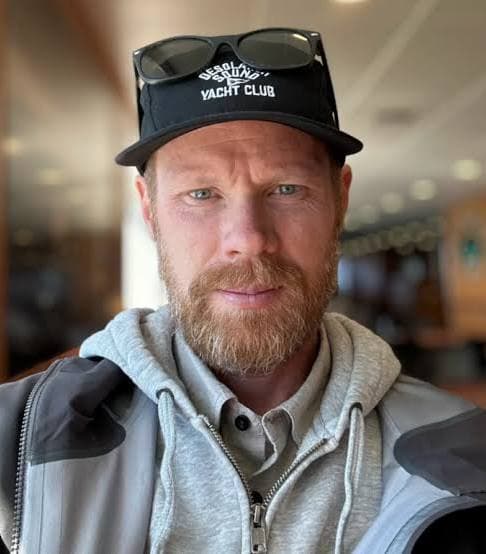
🔗 Darcy's newsletter, The Vanishing Word: https://darcyvanpoelgeest.substack.com/
🔗 Darcy on Instagram: https://www.instagram.com/dvpdirect/
WATCH THE VIDEO VERSION OF OUR CHAT ON YOUTUBE!
The Doom Patrol
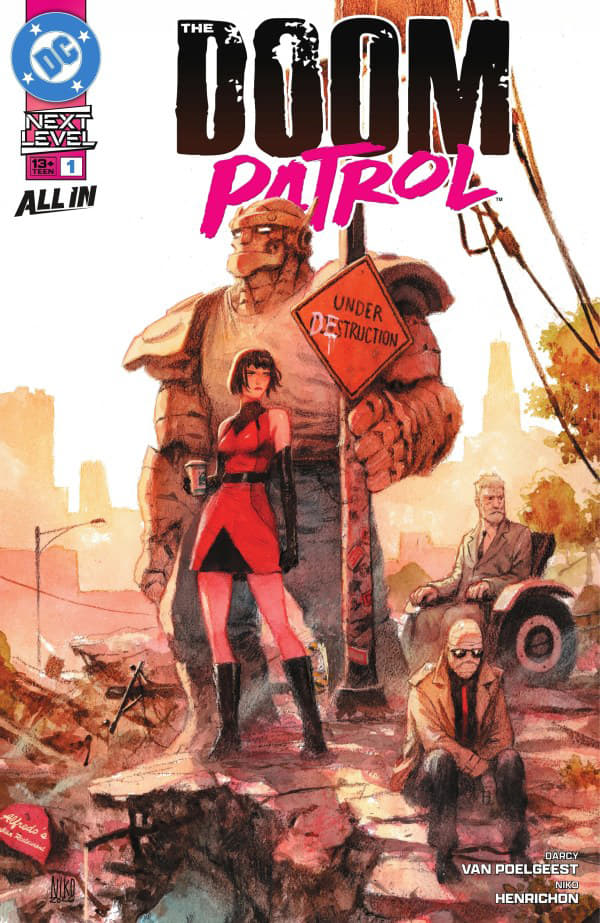
From the publisher
The Doom Patrol is broke. Adopting a heroes-for-hire business model to stave off financial and emotional ruin, the team finds itself responding to a simple case — a missing cat. But when this case proves to be far from simple, the world's strangest heroes find themselves pulled into a truly out-of-this-world situation! And elsewhere, beyond the view of Robotman, Elasti -Girl, and Negative Man — and perhaps even beyond the veil of our reality — a ghost of the team's past is preparing to cross into their world.
The visionary team of Eisner Award-winning writer Darcy Van Poelgeest (Little Bird) and legendary artist Niko Henrichon (Spectators, Pride of Baghdad) ushers the Doom Patrol into a new age for DC Next Level.
The Karman Blade
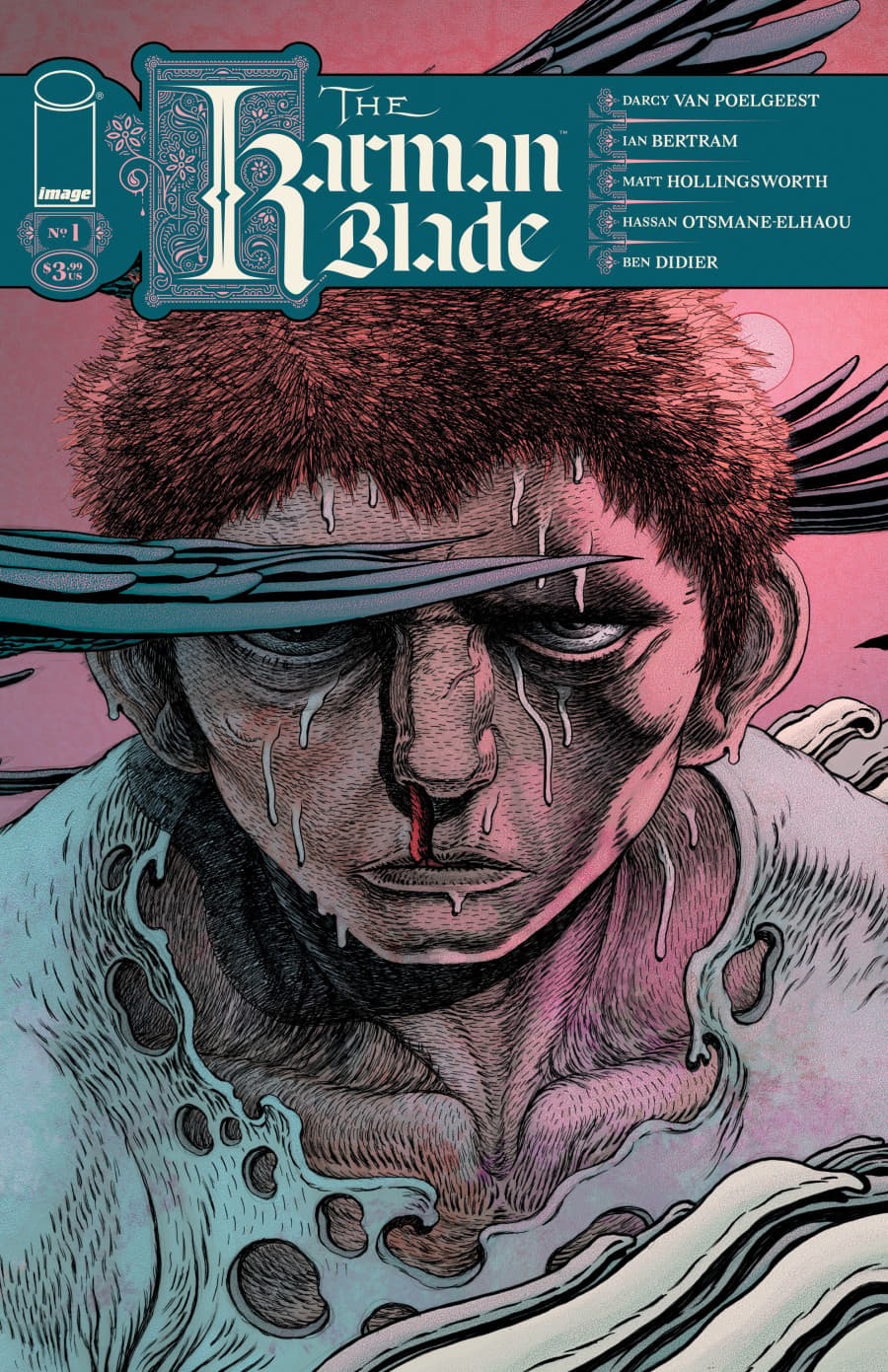
From the publisher
From the Eisner Award winning team behind LITTLE BIRD and PRECIOUS METAL comes the new dark fantasy phenomenon of 2026, THE KARMAN BLADE.
A DYING WORLD UNDER A TYRANT GOD! A BLADE TO FREE THEM ALL!
A young man on the outskirts of a dying world is chosen by a blade forged of stars to slay the despotic deity, Kalu, and free the water he hoards in his Kingdom. Yet before the boy can begin his journey, he must first face the demons in his own life, and answer the Karman Blade’s call — “Are thou he, who taketh me in hand? Are thou he... who shall slay a God?”
Follow Comic Book Yeti
🔗 Comic Book Yeti LinkTree: https://linktr.ee/ComicBookYeti
For partnership and ad inquiries, please contact: thecomicsyeti@gmailcom
Follow your hosts
ARKENFORGE
Play TTRPG games? Make sure to check out our partner Arkenforge. Use the discount code YETI5 to get $5 off your order.
Make sure to check out our sponsor 2000AD.

[00:00:00] - [Speaker 0]
Your ears do not deceive you. You have just entered the cryptid creator corner brought to you by your friends at Comic Book Yeti. So without further ado, let's get on to the interview.
[00:00:11] - [Speaker 1]
The future is calling. 2,000 AD is the galaxy's greatest comic with new issues published every single week. Every 32 page issue of 2,000 AD brings you the best in sci fi and horror featuring characters like judge dread, rogue trooper, and more. Get a print subscription in 2,000 AD, and it'll arrive to your mailbox every week. And your first issue is free.
[00:00:35] - [Speaker 1]
Or subscribe digitally, and you can download DRM free copies of each issue for only 9 a month. That's 128 pages of incredible comics every month for less than $10. Head to 2,000 AD and click on subscribe now or download the 2,000 AD app and start reading today.
[00:00:55] - [Speaker 2]
Hello, everybody, and welcome to the Cryptid Creator Corner. I'm Byron O'Neill. Comics are weird, man. You can work on a book for years and then through some, like, weird quirk of publication schedules, everything seems to drop at once. That's been a blessing for me this time around getting to digest three projects from one guest at the same time really gives you a real window and the kind of the intricacies of their creative process.
[00:01:19] - [Speaker 2]
So I'm delighted to introduce the comics visionary voice from Vancouver, bringing the delivering the domestic drama to the Doom Patrol. That is Darcy Van Poggies. Darcy, you've been busy, for sure.
[00:01:31] - [Speaker 3]
Yes. I've been super busy. It's a little It's been pretty overwhelming, to be honest. But no, I'm just super thankful that they've all, you know Sometimes I think of writing or comic publishing as the turtle that gives birth on the beach to a bunch of little ones, but only some of them actually make it to the water before the birds and the various predators get to them. But yeah, know to have like three little baby turtles get in the water at the same time is pretty, it's pretty great.
[00:02:12] - [Speaker 2]
That's probably one of the most accurate illustrations I've ever heard of the process. So I'm gonna have to log that in the brain, and I'll steal it. But that will credit you.
[00:02:21] - [Speaker 3]
Absolutely. I've just just coming to me now.
[00:02:25] - [Speaker 2]
Well, we've got a lot to get through today, so let's start with Doom Patrol. A true cult classic can always be kind of dangerous waters to navigate. I don't envy that, but, you know, my own love of the series started in a pretty nontraditional way, I'd say, with the Simon Beasley covers. You know, I was working in a comic book shop at the time, huge fan of Simon's, and I just started buying everything I could find of his, Doom Control included. So those covers kind of only amplify what I call the, like, absurdist Trauma Gremlins run of Morrison Case, you know, which also just so happens to be the most beloved run on the series.
[00:03:01] - [Speaker 2]
So, what's your Doom Patrol origin story?
[00:03:04] - [Speaker 3]
Probably not unsimilar, you know, I think we're probably close to the same age. And, yeah, no, I remember just And don't remember what it was. Picked up something from Doom Patrol, probably in the vertigo era of it, which I can't remember exactly when that started. Didn't at that time, like, it's not like I fell in love with the team, I think I fell in love with the sort of absurdness of it all, you know, because it was so different than anything else outside RED. So that would have been my introduction.
[00:03:50] - [Speaker 3]
Sort of like, bought bits and pieces of that over time, and you know, sort of really grew to really like it, and then eventually, you know, got the whole series and went back and read the Kupperberg stuff. And then eventually I guess I just worked backwards, found the Silver Age stuff and really loved that. So yeah, I guess I discovered it probably the way a lot of people did, the same way a lot of people did our age. Yeah. It's got
[00:04:25] - [Speaker 2]
a really long history. I don't think most people even realize that like the Doom Patrol was actually founded before the X Men. So you, and you've got all these weird kind of like touchstones are really fascinating to me because, you know, we may have picked up Batman on the spinner rack, but for many people I talked to, it was the animated series. For a whole generation of Doom Patrol fans, it's the HBO series. And that was, like, sex ghosts and talking where butts somehow sort of mingling with, like, real emotional stakes.
[00:04:58] - [Speaker 2]
So how much when you were kinda pitching this did the whole, you know, fan service trying to integrate a whole continuum of age ranges in terms of fans? How much does that enter into your head when you're trying to script things?
[00:05:12] - [Speaker 3]
Not a lot, to be honest. I think mean, yes, in the sense that I don't think of it as fanservice, but I guess I do in the sense of me being a fan. I just thought it would be like, Okay, this would be it's pretty overwhelming, the amount of material that already exists. And my thinking was, I can't pick and choose. So it's either going to be, for the sake of my own brain, it's either going to be, this is a fresh start, and it's like nothing ever happened, which I don't think DC would particularly want, or it all happened, everything happened.
[00:05:55] - [Speaker 3]
And so that's the way I decided to go, because I think that's more interesting. For me, it's like, everything that's happened has happened. I might not be able to explain it all, and I doubt that I'll slow down long enough to explain it all. But I do make sense of it in my own mind, as though this is this massive universe with all these iterations, sort of being, living, breathing things that have, in one way or another, collided with the next. And so that was sort of my approach.
[00:06:32] - [Speaker 3]
Beyond that, I think there's a handful of teams like the Doom Patrol, or characters like the Doom Patrol, where there's just been a historic run on it that people, including myself, love. And I just had to ignore that. It's like, who cares? I talked to another creator, anyone watching this will know and love, who's like, Yeah, know. I could never do a DOOM Patrol book.
[00:07:09] - [Speaker 3]
That would just be only because they hold the Morrison run-in such high regard, which I do But I also just think you can't just bury the team because someone did some great work, you know?
[00:07:23] - [Speaker 2]
Yeah, people wouldn't say that about No, Batman.
[00:07:26] - [Speaker 3]
I mean, it's like, man, we've had so many insanely good, you know, Batman runs, so I just I'll just do my own thing, people will either like it or they won't. Know? That's, Yeah.
[00:07:42] - [Speaker 2]
I mean, if you're trying to condense it, we're kind of embracing that hero for hire concept. Me, that means you're poor. I'll speak from experience Yeah.
[00:07:52] - [Speaker 3]
Was the idea. I had to find a window. I was describing to someone as like, every time I have a new project, I look at it as like a house. Oddly enough, it's always the same house. It's like a farmhouse.
[00:08:07] - [Speaker 3]
And I'm looking around it, trying to find a window into it. Where do I see myself inside this place? How do I get into the story in a personal way? And if I can't find it, I won't do it. But for the Doom Troll, it was really easy.
[00:08:26] - [Speaker 3]
Could totally see all these ideas and things that I wanted to explore personally, sitting there with the team, looking back at me. But one of them was just struggling to make ends meet. It was just that simple. I was like, I don't want to write the X Men series where there are unlimited funds living in a mansion. I'm not interested.
[00:08:56] - [Speaker 3]
So this was much more interesting to me, and much more, I think, relatable to me, but also probably relatable to a lot of other people out there, where you're not doing the ideal thing, you're doing the thing that you have to do to get by on that day, week, month, or year. And then, you know, you're you're you're trying to work past that, obviously.
[00:09:21] - [Speaker 2]
Yeah. Yeah. Well, you've got an a team band in there. So, like, the heroes from there definitely resonates with somebody from from my, my vintage. We'll We'll leave that.
[00:09:29] - [Speaker 2]
We'll leave my age out, but vintage, we'll go with that.
[00:09:31] - [Speaker 3]
Yeah, yeah. Vintage is a nice vintage. Yeah. That was Nico's design. I just thought it was perfect.
[00:09:37] - [Speaker 3]
I was like,
[00:09:37] - [Speaker 1]
yeah, that works for sure.
[00:09:40] - [Speaker 2]
Yeah. Yeah. Well, I'm part of the disability community myself. And going back when I like, I first read the series, I wasn't in the same place. My illness came later in life.
[00:09:49] - [Speaker 2]
Know? I knew intellectually that the founding principle of the series rested in, like, disfigurement and impairment, But I didn't really understand that until I lived in it. You know? So my lens for Cliff and Elastigirl and Negative Man is is different now than it used to be. You know?
[00:10:04] - [Speaker 2]
You've gone out of your way, thank you, to embrace that directly. And there's a scene that really resonated with me with Larry and Mrs. Green, Ms. Green, who is partially blind, you know, where he asked her, can, can you see the real me? So walk me through your approach to handling that side of the characters and their legacy with care.
[00:10:22] - [Speaker 3]
Yeah. I mean, we're a neurodivergent family in this house. With the exception of one, we're all neuro spicy. And so, I guess that's, you know, I guess I haven't overtly I don't think that necessarily gives me a special set of tools to do this, or anything like that. I think that there's just a personal connection there, where if you grew up like that, and you grew up not really understanding, feeling like you don't really understand yourself, or how you fit in, or any of those things, you immediately sort of, I think, probably connect with the Doom Patrol on a different level.
[00:11:12] - [Speaker 3]
I had that experience, and I think a lot of the fans do too. And so, that was just another sort of interesting thing in it, you know, that attracted me to do that, this book, instead of a different one. Because when DC approached, they were pretty open to I was going to, pitch. I sort of lost track of the rest of your question. Sorry about it.
[00:11:40] - [Speaker 2]
No, no, you're good. I mean, there's a, there's like an extra added layer of fragility when you're exploring characters, you know, with the disability, you know, and this is fascinating to me specifically because, you know, it happens to them as adults rather than, you know, something being present at birth or early on, you know, which echoes my own, you know. And when when people come to me and they're candid, truly candid about it, it terrifies them. You know, there's that there, but for the grace of God go I kind of feeling, and you kind of got to balance that fear with the reader to, against this like nucleus of care, you know, in this case, it's that weird found family, you know, else everybody gets freaked out.
[00:12:26] - [Speaker 3]
Yeah. It's, I think to me, I don't really think about it much more than trying to really I really identify with each of those characters. And that was another reason to sort of like strip the team down to its most basic, because if I kick the book off with nine members, or whatever, it's like, how much can I really know, understand, or care about these individuals? And I want to know them. That was something I want to know them intimately, to the point where I feel like I can respond honestly as those characters in the book.
[00:13:12] - [Speaker 3]
And with that scene you're talking about, which is my favorite scene in the book, and I say this to the credit of the editors, they were like, We're not really sure what this is. Way that Ms. Green and Larry speak to each other, it seems a little off. Was literally like, You just have to trust me with this one. I didn't plan for it to happen that way.
[00:13:43] - [Speaker 3]
Just that when I was writing it, this is what Larry just suddenly said, and then this is how she responded. And so I just put it in the script like that. And then, it was almost after the fact of reading it that I was like, Oh, this makes so much sense. Is feeling very he's experiencing a kind of disassociation, and he takes this moment to try to connect. It's really hard to know how much it does for him, but for her, for Ms.
[00:14:21] - [Speaker 3]
Green, it does. But anyways, that's sort of how that came about, just trying to really put myself in each character's head when I'm focused on them, and let them lead the way.
[00:14:39] - [Speaker 2]
And I think that encapsulates sort of tonally what I got from the first issue, and I'm hoping the rest of the series is. Because so often with the big two, you see stuff in, I'll say it, a lot of times it just feels forced. You're trying to cram a whole bunch of narrative into a certain amount of pages. You gotta you gotta have a hook, you know, that's gonna pull people into the next issue and stuff. And I thought this was very thoughtfully planned.
[00:15:08] - [Speaker 2]
You know, it gave it gave you a lot of space to reintroduce the characters. You know, we go ahead and we touch on how each of their conditions came about. And just like that with Larry, you had a moment to really understand them and understand what your vision for them would be, you know, kind of how you're exploring that.
[00:15:32] - [Speaker 3]
You Yeah, where exactly I'm going with that. Know you risk there's a risk to not doing a series, the first issue, that is already action packed, because there's a certain amount of comic readers that just have that expectation. A large portion of the reason they're picking up the book or a series to begin with is because they love action. That's not my favorite part. So, again, it's a bit of a risk, but I felt quite strongly in full support of the DC editors that if we can't have people connect with Cliff, Larry, Rita, and Niles on some personal level to start, then how can we expect people to care and to come along for the ride?
[00:16:29] - [Speaker 3]
We still got some fun, strange action stuff in there, but yeah, it was really important to just without delving into the entire backstory of each character, that comes with time too in the series. But yeah.
[00:16:50] - [Speaker 2]
Yeah. It was fascinating to me because it was very I it's gonna sound like not the best adjective, but it was mundane, to me, until it very much was not.
[00:17:04] - [Speaker 3]
Right. Yeah. Yes. Yeah. That's the you know, it's tightrope, you know, for mundane to not become boring, you know?
[00:17:14] - [Speaker 3]
But at the same time, I think, yeah, I I think I'm I'm proud of how it all worked out. So it's good.
[00:17:19] - [Speaker 2]
Yeah. Well, whenever people ask me about the book, I think the strength lies in that emotional intimacy that you're you're creating with the characters. I I think issue one was a resounding success in my book. And credit where credit is due to your collaborators, you've said Nico Henrico, was the first person who came to mind when the Doom Patrol offer came in. So why them specifically?
[00:17:44] - [Speaker 3]
I think I it just whenever I'm writing something, I have, like, a style of art in mind. You know? Not even if I'm not thinking of a specific artist, and it just And Nico, that was what I had in mind. He does such great character work on top of the world building stuff, and I think those make the very best comic artists, even though, you know, and I would say that's true of Ian Bertram as well, who's a regular collaborator of mine. Yeah.
[00:18:25] - [Speaker 3]
And the styles of someone who can bridge those two incredibly important elements can vary widely. But it is sort of the key making my scripts work, the performance stuff and the world building stuff on unequal ground, I guess. Yeah, I just I just love I just love his work. The whole idea that, like, it would have this sort of painterly feel and stuff is just so different too than what what we're currently seeing. Not necessarily for covers, but for interior work.
[00:19:14] - [Speaker 3]
Know, I find that with covers, artists get to be a little more experimental. I'd love to see more of that you know, inside books, to be honest. But, like, I do realize that, like, that is can at times be very time consuming too. And, you know, there's realistic schedules that have to be met and all that.
[00:19:40] - [Speaker 2]
Yeah. Well, you want the emotional gut punch there, just get the Pride of Baghdad guy. That'll do it.
[00:19:46] - [Speaker 3]
Yeah, exactly. And I've just been a fan of Nico's for a long time, and I sort of got to know Brian a bit, Brian K. Vaughan, who is a regular collaborator of Nico's, and just really appreciate their relationship and their connection, because they do just amazing work together, Spectators being their most recent book. Nico and I had sort of messaged on and off through the years, just being, Yeah, we'd love to work with you at some point if that ever happened, kind of thing. And so as soon as it came up, I was like, Oh man, I think I know it.
[00:20:34] - [Speaker 3]
And then he was available, which is just unbelievable because Synchronicity. Yeah. And no one's ever available. That's not a thing.
[00:20:44] - [Speaker 2]
Not when you want them to be. Well, let's pivot on that. You know, that's a brand new collaborative relationship on Doom Patrol. And then you have a returning one that you just mentioned with, on your Image Comics project, Carmen Blade. Ian stands alone as an artist.
[00:21:00] - [Speaker 2]
I'm still trying to wrap my head around you. I've I've taught composition myself as a professional photographer. It's like my strongest suit in the craft. Eileen, very minimalist, but Ian's work just it makes my head hurt, like, in the best way. Right?
[00:21:16] - [Speaker 2]
So visually dense. It feels like it shouldn't work, but it does. And I kept returning to this idea when I was reading the preview that you sent over of being shredded. Like, whatever it is that makes you you being slowly peeled savagely away that's exposing this rawness that makes you confront a version of yourself you weren't aware of. Yeah.
[00:21:40] - [Speaker 2]
Dead on?
[00:21:42] - [Speaker 3]
Yeah. Yeah. Pretty much. I mean Okay. Yeah.
[00:21:45] - [Speaker 3]
That's wait. You just wait. Are you describing Ian's art or the or the or the book? I well, yeah. Well, both both, actually.
[00:21:53] - [Speaker 3]
Because I thought for a second you were talking about the story, I'm like, Wow, that's great. But yeah, I think, yes, both those things. Yeah, Ian's stuff is totally However you imagine it on the page, you can never see it the way that he does it, you know? Sure. Or at least for a lot of it.
[00:22:23] - [Speaker 3]
I think there's no one like him. He's just an incredible artist, great person, wonderful collaborator. We're very close, even outside of work at this point, because we've just been working together for so long, so we're brothers at this point. Yeah, And it never gets old, you know? I think we have a really great I think we push and pull each other a lot, and that keeps it fresh Sometimes for it can get a bit heated, and sometimes it's just like walking hand in hand through a field of flowers.
[00:23:16] - [Speaker 2]
You said brother, so
[00:23:17] - [Speaker 3]
yeah. Exactly. But no, he's amazing, and I think the Caramblade is, I mean, easily his best work yet, you know, like I think just on a per page sort of I think that's an easy thing to say. Precious Metal was already an incredible piece of work, and then to see what he's done on this is just like I don't know how it's ever going get better than this. And we sort of designed the book to allow him for that, you know, because it's a four issue series, 24 pages each, so much smaller than our previous collaborations together.
[00:24:11] - [Speaker 3]
And that was in part so that he could maximize each page, as a thing to do, you know? So how is something this, know, my read bold, visceral, cerebral, in ways expansive?
[00:24:29] - [Speaker 2]
How does that fit in four issues?
[00:24:33] - [Speaker 3]
Well, keep in mind, we could fail. That's one option.
[00:24:38] - [Speaker 2]
I don't think so.
[00:24:40] - [Speaker 3]
No, no, no. Well, I mean, I had to sort of do a little narrative, footwork here to sort of do this, which is just try a completely new but I think we both wanted to do something completely new. And so, version of that, knowing that we were going do a 100 page book, was to, like, Okay, I'm going to change the way I tell the story. And so, it's third person narration. So, there's a kind of voice of God in the narration that can just tell you what you need to know when you need to know it.
[00:25:27] - [Speaker 3]
And of course, it doesn't tell you too much. We've talked a lot about The Carmen Blade being a series where the readers have to bring their imagination along for the ride and fill in some gaps because we're not stopping to explain everything. But I think that it should still be a satisfying read. And so, telling an epic I guess the easiest way to describe it is it's more like an epic poem than an epic novel, you know, or something like that. So it sort of reads like that intentionally, that it takes you through leaps of time,
[00:26:19] - [Speaker 2]
and
[00:26:19] - [Speaker 3]
hopefully just keeps you, keeps you there.
[00:26:23] - [Speaker 2]
Well, as I said at the beginning, it's really interesting to, there's these three projects that I sort of digested all at once. So by comparison, there's a, I mean, the way it feels by comparison is frivolity was the the word that I kind of landed on with Doom Patrol, you know, and whereas you're doing something entirely different with the Carmen Blanc. You're leaning into word patterns like death, fate, seas, and I just finished a reread of an old DC vertical title called Dogmoon from Grateful Dead's Robert Hunter, and Tim Truman was the artist on that. And he built a book off of a dream, and the language he chose was deliberately monosyllabic. And he talked about finding a technique to inject cadence into it, what he called like a shaman's drum.
[00:27:10] - [Speaker 2]
I didn't catch quite the same rhythm here, but I could tell you were trying to intentionally build one. So, what were you trying to channel specifically, verbally, through the language in this book?
[00:27:25] - [Speaker 3]
Well, I it's that was another element of it that I wanted to play with, just trying to it's essentially a if you imagine a triangle with modern English, Shakespeare and Victorian on each corner, it's like there's a triangle of language and it sort of slides around in it, depending on the character and how old the character is, and where they sort of stand in the overall mythology of the place. So that was one thing I set out to do, and had an absolute blast doing it. And that is sort of Yeah, and then it's that layered on to a kind of dreamlike approach in the sense that I sort of let my subconscious take the wheel more in this. So it was like, pulling these ideas more from my subconscious, not overthinking them, and then and then sort of, like, doing the work of making sure they're still grounded in, the narrative of the thing. And that was really the formula.
[00:29:04] - [Speaker 3]
Ian had the same sort of freedom on his end, to sort of then take what I did and run it through his filters and do what he does. So that was you know, I I don't know if that really answers your question, but that no. No. Yeah. Yeah.
[00:29:22] - [Speaker 2]
It does. You know, it's like I keep coming back to, like, how do you make room in in such a bold swing for each other, what you so that both of you have that space to allow each other to shine and do what you wanna do experimentally with something like this, you know, given how strong a sense of individual storytelling purpose, you know, you both are very clearly trying to bring to it. So is it as simple as kind of, hey, we'll just hire the best letterer in the business and let them sort it out?
[00:29:55] - [Speaker 3]
Mean, kind of. Okay. No. I mean, no, it's I think with a lot of the stuff that Ian and I have done, and this one maybe sort of on a different level or a new level, but it is like a bouncing process, you know? Mean, with CARMEN BLADE, as I said, it was more like letting the dream mind drive the bus on this one.
[00:30:27] - [Speaker 3]
That goes to him. He does a similar sort of thing on his end. You know, which is like if my draft that goes to him was art, it would be like layouts and pencils, you know, because it's the real sort of inner work. And then you do the inking, which is a little bit more mechanical in the sense that, Okay, I've done this, he's done that. I know the story in a broader sense that Ian might not be aware of, so my job is to take this and ground it, you know?
[00:31:12] - [Speaker 3]
And use that narrative tool help do that. That's where Hassan comes in. Direction is always the same for the letter, regardless of how much they follow it, which is try and make it feel like the artist lettered the book as much as possible. Try and I like to have it feel like the artist wrote the book. That's partly my goal going into it.
[00:31:52] - [Speaker 3]
What I mean is just that the story and the aesthetic are just completely married, and so it feels like it's coming from a singular person as much as possible.
[00:32:04] - [Speaker 2]
Sure.
[00:32:04] - [Speaker 3]
Yeah. And that's Doom Patrol or Karman Blade or anything really.
[00:32:09] - [Speaker 2]
Yeah, with Karman Blade, we have a Discord community and I kind of post everything that I'm reading every night in there. And people were asking me, Hey, what is, what is your impression of this? And my answer was free jazz. What you it's kind of like, my brain didn't quite know how to process it the first time I heard it, but I liked being confronted with something that you knew from the jump was different. And that's resonated with a lot of people.
[00:32:37] - [Speaker 2]
They're like, Oh, okay, that's fascinating. I'm going pick this up.
[00:32:41] - [Speaker 3]
I mean, we got our pre order numbers and it exceeded our expectations. I sort of It's outsold precious metal by double, or more than double, which I was not I mean, part of that was just where the market was in 2024, when Precious Smell came out compared to now, what I understand, know, like, and day. But also, it's just sort of funny and ironic because, Ian and I were like, once we finished PRECIOUS MELOW with KARENBLAY, and we're like, Okay, this one's just for us. No one's gonna want to read this, but we're just gonna do the craziest thing imaginable and have fun with it. But I shouldn't be surprised because it's so often that you just do something for yourself, and that ends up resonating.
[00:33:42] - [Speaker 2]
I think there was a strong Sorry,
[00:33:44] - [Speaker 3]
back to your jazz reference. I'm a bebop fan. Love that stuff. That's great way to look at the Karman Blade. Not that there wasn't a lot of thought and specifics in structure that went into it, but I was really working hard to not let that be the defining voice of the thing, you know, and and to let sort of the let the instincts take the reins a little bit more.
[00:34:22] - [Speaker 2]
Well, kind of getting into the the character in it. I feel like I understand Anatta as a character very well as somebody who's from the South and contending with this legacy of regional violence in The US. I don't know, it just connected with me in that way. But what were you looking to explore specifically with him?
[00:34:47] - [Speaker 3]
I don't even What was I looking to explore? That's so messy and complicated. I'm not sure I can really answer it. Think from that first issue, you feel like, Oh, okay, this is a hero's journey. And it is, but I also thought, Okay, this can be an interesting exploration of what heroes can look like.
[00:35:26] - [Speaker 3]
And that, like, he feels quite distant from you, I think, in the first issue, Anata. And that's intentional. And I think that we tend to sort of like, when we write a hero's journey, we have this hero, we're in a rush to make a deep connection between him and the readers. I mean, that's what you want, you know, so that they can identify and feel what he's feeling see themselves, I think, in the character, right? That's a big thing.
[00:36:09] - [Speaker 3]
And I'm sort of not really playing into that as much here, but that was part of the interest for me was like, wow, he's not good. Think a lot of people can identify with his circumstances, but he's a hard character to identify with himself. And there's a scene in there where he does something that is pretty not typical of hero character, And I you'll sort of see how that plays out. But yeah, I'm just trying to push back a little bit on this idea of the pure hearted hero. Because I think so many times, the reality is that we like to do that we have this sort of fantasy about who these people are, that go do the hard things in society for others.
[00:37:24] - [Speaker 3]
And there's a purification that happens afterwards, and then the statues get built and whatever. But as we so often find, it's like, Oh, when you really get to know these people that we put up on pedestals, achieving either great things for themselves or even great things for society as a whole, the person behind that is not always the person you want them to be. And I think a lot of times, you simply imagine the mindset that someone has to have to just simply go out and do the things that they do, it doesn't really work. I think I'm a very nice person. I'm definitely a very sensitive person.
[00:38:30] - [Speaker 3]
It's like I couldn't go do the thing I'm not cut out mentally to do the things that would be necessary to do, to in this case, kill a god and destroy a kingdom to bring back water to the land. So anyways, just as a kind of experiment, I was like, well, what does this person really look like? And how can I, as a writer, still try and make myself and or readers care about a character that is not really designed to be cared about? I'm I'm yammering, but I I guess you you get the point.
[00:39:27] - [Speaker 2]
No. I do. And it's you might be surprised by this. But ironically, what you set out to do didn't work for me because I immediately had empathy with Anatta as a character. Right?
[00:39:40] - [Speaker 2]
And this is as a disabled person, I feel seen in a way that despite what you did at Doom Patrol and how well I think it was I feel more seen here than there. And that may seem really odd,
[00:39:54] - [Speaker 3]
That's really cool.
[00:39:55] - [Speaker 2]
But the harshness to the realities of daily existence when you are disabled, this encapsulates that so well, because your choice currency becomes rationed and that's, you can't understand that unless you live it. And you're kind of forced to confront this darker version of yourself. By necessity, you have to make decisions that are uncomfortable. You have to get comfortable with being uncomfortable with those aspects of yourself, sometimes you don't want to even admit are there.
[00:40:28] - [Speaker 3]
Know? Get it a thousand percent. Explain it better than I ever can. It's not that I don't want people to connect with the character, but you're going to have to go through walls of discomfort to do it. I'm guessing that if you live with a disability, then you probably, in many ways, already had to confront those ideas.
[00:40:55] - [Speaker 3]
And so you can access the character quicker. Think for other people, it's just going to be a turnoff, and they're going to just be like, Yeah, I don't get this character. And that's fine. Not every story is for every person. But thank you.
[00:41:14] - [Speaker 3]
That means a lot to hear that.
[00:41:17] - [Speaker 2]
No, thank you. Here you talk about I can't remember exactly what you said, but challenging, confronting, you know, the reader in a different way. You know, putting down dogma the other night, I found myself thinking how special that era of vertigo was because it was fearless, it was provocative, and it wasn't afraid to take those risks. And I was just wondering, like, your newsletter is called The Vanishing Word. Do you think comics as a medium is playing it too safe these days?
[00:41:46] - [Speaker 2]
You know, as if some of that edge is lost.
[00:41:49] - [Speaker 3]
Oh, a 100%. Okay. And I say that I'll say that I think that some of the best comics are being written right now. Yeah, I agree. I mean, incredible amount of talent, written and illustrated, told, created, I suppose.
[00:42:14] - [Speaker 3]
But a lot of it is operating within this really safe place. It's like this incredible work within this really safe place. And I do think it's a bit of a shame. I think I kind of understand why we're here, and I don't really have Well, we should be doing this, so we should be doing this. Because I think that a lot of the reasons that it's ended up here are are good reasons we've ended up here.
[00:42:48] - [Speaker 3]
And then there's also reasons that are just corporate, in the sense that broad appeal is sort of the name of the game these days. So it's kind of a shame. I do wish that publishers and I'm not gonna put all on them, creators would take more risks. But I don't know. I don't have the answer.
[00:43:25] - [Speaker 3]
But I see it. I recognize it. Comics used to be more dangerous. But you had to take the bad with the good in that, and it's hard to weed one out from the other. I think that's the thing, right?
[00:43:47] - [Speaker 3]
Okay, well, there's because also you look back at those vertigo days and stuff like that, and it's like, there's some pretty cringey stuff in there, you know, when it comes to race, and that kind of stuff. And so, you can't say, Well, we should be doing that again. I mean, that's the last thing anybody wants. I also think that creators including myself it's tough to tease those things out sometimes, in a way that's like, know, how do I it's like, well, I'm going to do this really provocative thing, but then the question becomes, how do they survive it, too? So, yeah, it's interesting.
[00:44:47] - [Speaker 3]
As I said, I feel like in some ways comics have never been better, in other ways I feel like it's all become a little too sanitized. Going And back to DOOM Patrol, you look at those DOOM Patrol comics from the 80s or early 90s that you love, there's no way for those to be made. In many ways, it's not even so when people say, Oh man, do this, it's like that, it's never going be possible again. It just isn't. Not in that way.
[00:45:32] - [Speaker 3]
Mean, just for one thing, I think the average comic was like 28 pages, something like that, and now it's 20. It completely changes the structure of a story, completely. You think, Wow, it's eight pages. No, it's completely different. So that is one thing that I think comics could do and should do with Marvel and DC, is they should increase the page count of stories.
[00:46:08] - [Speaker 3]
And I say that knowing that that's more work for the artist, who's probably already overworked on a tight schedule, so there's that to be considered. I think that page count really changes the structure of a story in a big way, even two, three, four pages. Anyways, I just sort of went on fake rant there, but,
[00:46:38] - [Speaker 2]
I've been thinking about it a lot because I recently talked to Philip Kennedy Johnson about Midnight Spider Man. And so I think this is a great snapshot of kind of where the industry is and even where fans are with their relationship to the medium, because I've seen a lot of comments there, and they're, it's very polarized. You know, there's the people who are really hype. Hey, we're taking a swing. We're doing something really interesting.
[00:47:05] - [Speaker 2]
He's talking about billionaires and how much that's absolutely screwing up everything in 2026 and how we can respond to it. And then the cost of that, you know, and a lot of people are really into it. And then you have the other people on the other side who are like, Oh man, we're doing this again. Why does it have to I want my escapism back. Right?
[00:47:25] - [Speaker 2]
I want the era of Stan Lee kind of stuff. And yeah, it's just a weird time, you know, and I get the escapism thing to And both
[00:47:35] - [Speaker 3]
are totally valid, I think that's, you know, and you can do both, you know, like I think I'd like to think that what I'm doing and planning on doing with Doom Patrol speaks to some really specific issues that we're dealing with in society today. But I also think it's just really fun escapism at times, too. So it's a balance. I mean, yeah, it's comics, so there's a there's room room for it all, ideally.
[00:48:18] - [Speaker 2]
You know? Yeah. That's what I keep telling people. Maybe they'll listen someday. Well, I don't wanna keep you all day, but I wanna touch briefly on The Cutting Garden.
[00:48:27] - [Speaker 2]
And I generally absolutely detest the word triumph. It feels lazy to me, but we're short on time. So I'm gonna use
[00:48:34] - [Speaker 3]
it. It's
[00:48:36] - [Speaker 2]
absolutely stunning visually. I love a good watercolor comic, and I just finished rereading Moonshadow. Actually, huge John J. Muth fan.
[00:48:45] - [Speaker 3]
Yeah. Know?
[00:48:46] - [Speaker 2]
So it's gotta be a pleasure to work with Erin Connolly on this.
[00:48:51] - [Speaker 3]
Oh, yeah. It was incredible. Her it was just fun to have a front seat to her I think she maybe did a short story, is really her first published work. Just to see it took I mean, we did it over a five year period or something like that, or five and a half years. Just watch her growth from the beginning of the book to the end of the book is really amazing.
[00:49:27] - [Speaker 3]
And, yeah, she's she's a wonderful person and an incredible artist, and, I'm just so, so pleased and and proud of what we managed to do.
[00:49:38] - [Speaker 2]
Yeah, it's beautiful. Like, I'm a gardener myself, or I was before the illness kind of took that away from me, and the garden is often used as a metaphor, but this one is so well executed. You know, my son recently left for college and I connected instantly with the emotion in the book. You know, there's a suspension of time that is tied to the garden in this, and that brought me to my grandmother who had the botanical drawings that were very similar to the ones in the book, you know, and in her back bathroom, of of all places. So I had this real full circle moment, the way that love gets expressed across generations in a family.
[00:50:19] - [Speaker 2]
So well done. You made me cry.
[00:50:22] - [Speaker 3]
Yeah. Well, I I cried, many times while working on it. And I dedicated the book to my mom who passed passed away a couple years ago. And she was a big gardener as her grandparents before me. Live in a townhouse without a garden now, but I absolutely love being in the garden when I've had chances to have one.
[00:50:51] - [Speaker 3]
But yeah, I'm really proud of it. I think, again, it's like something completely different from anything I've done before or the other two things that I have coming out this month. Wanted to do something that I love, love, love writing the interpersonal relationships of characters. For me, that's like, yes, I have the big, strange ideas, but it's really what I get excited about when I wake up in the morning and I've been sleeping on it and I sort of like, Oh, this is what this person says to that person. That's what gets me running to the keyboard, And I wanted to do a book that was mostly just not, and that just really focused on the intimate relationship of these two characters.
[00:52:05] - [Speaker 3]
A mother who lost her daughter and is wanting to replace her in a certain way, and a daughter who lost her mother and is wanting to replace her in a certain way, and they find each other. And of course, it's a very imperfect fit for many reasons, mainly one. And then just using this idea of cutting flowers to separate them from their environment and what becomes them, drawing the connection between that and how we so often, have relationships like that. You know? Yeah.
[00:52:56] - [Speaker 3]
And, yeah, just just a total highlight of my career to have done that with Aaron. And you don't have to worry so
[00:53:05] - [Speaker 2]
much about page count there.
[00:53:08] - [Speaker 3]
No, we didn't. I wouldn't have liked it to have been a little longer, but I think that the timing was right. You know, six years is enough. We needed to finish. It's great.
[00:53:24] - [Speaker 2]
Well, being from the South, I definitely appreciate a good Gothic family centered drama. So who knew that a good Gothic centered Southern drama would come from the Canadian?
[00:53:35] - [Speaker 3]
Well, and Erin's from the South. She lives in
[00:53:37] - [Speaker 2]
the area. Okay. Okay.
[00:53:38] - [Speaker 3]
Okay. Grew up in the South, and I very much wanted to write it for her, or something that I felt like she really knew and would resonate with her. So the whole book is kind of like a love letter to her art in a way. It really is tailor made for her.
[00:54:00] - [Speaker 2]
Yeah. She really shines. Like, I'm looking forward to seeing where her career goes in the future, because Same. It's made me
[00:54:08] - [Speaker 3]
a mean, you know, it's quite likely we'll work together again, but she's a great writer herself, so whether she writes it or illustrates it, I'm excited to see what happens next. Yeah. Well, we always like
[00:54:25] - [Speaker 2]
to end on a positive note around here. So we do a shout out. This can be something that inspired you recently, an expression of gratitude, or just a thanks to someone who gave you a hand with something. So I'll go first to give you a moment to think about it. One of my daily pleasures is getting to watch the hummingbirds outside our dining room nook, and there are two ladies who have recently taken to fighting over the feeder.
[00:54:48] - [Speaker 2]
And there's something about these diminutive little birds and their aerial duels at 70 wing flaps a second, fighting over a resource that they could easily share. It feels so tragically human. And it's like a reminder to me that we're not alone in our fight to somehow peacefully navigate this world as a species. And maybe that doesn't feel positive to a lot of people, but hey, it makes me smile and I'm a little bent. So that's mine.
[00:55:18] - [Speaker 3]
What you got? I'm gonna just I'm sort of gonna copy you and jump off of that because I the you know, this is the first time we've ever spoken, but I feel like we have so much in common just based on this this one conversation. It's kinda funny because I also have a hummingbird feeder that sits right outside our dining room
[00:55:37] - [Speaker 2]
Oh, okay.
[00:55:38] - [Speaker 3]
Window. And and every dinner I face the window during dinner, and I'm watching the hummingbirds, like, out there. Also love to have my first cup of coffee right there Yeah. To watch them. So, yeah, I I mean, I'm just so thankful to live in a place where there is a lot of nature, not everybody because I consider it a privilege, you know, and it's a privilege that not everyone has.
[00:56:10] - [Speaker 3]
And I find that when the world gets hard, which there seems to be a lot of those days in recent years, just going out for a walk and seeing the birds and the animals that are around. Particularly if you just stay in one place and stay quiet, and it comes to life around you, like you don't see it unless you stay still. Yep. And you're just looking at all and and you're think I'm I think, anyway, you know, looking at the the little birds and activity, you're just thinking, they don't know about any of this stuff. You know?
[00:56:55] - [Speaker 3]
They don't know about all this bullshit with Trump and all the racism and all the cultural wars and bullshit that trans people have to put up with. They don't know about any of it, and they're just carrying on. And it's a weird thing, it makes me just feel the same. Like, I can carry on too. And to just make sure that I get a piece of that.
[00:57:25] - [Speaker 3]
I can't live that way and I wouldn't want to, but make time to just lose yourself in this whole other world that cares nothing about what's going on, just for the sake of your own sanity so that you can come back to it, you know? Yeah. That's, I'm grateful, very grateful for that.
[00:57:48] - [Speaker 2]
Yeah. That's what photography really did for me that nothing else could. And I really miss it just because I have a very active brain. It's very difficult to, to shut down the inputs. And I'm like a squirrel.
[00:58:00] - [Speaker 2]
It's like, woah, okay. That's new. That's interesting. That sucks me in. But it was my way of just, it forced me to connect with everything that was around me and be in the moment in a way that there really nothing else I don't think has.
[00:58:14] - [Speaker 2]
So, yeah, I get exactly what
[00:58:15] - [Speaker 3]
I'm do. To duplicate that feeling, I find. And the and the older I get, the more I want it. More I, Eventually, I will just live alone in the woods somewhere, I'm sure. But I'm still here right now.
[00:58:32] - [Speaker 3]
I'm glad. With my family, if they'll come.
[00:58:34] - [Speaker 2]
Yeah. I've enjoyed the books you're putting out. And let's let's pitch things real quick here to just kinda put a a pin in it. You know, Darcy has all these books that deserve a spot on your pull list. Doom Patrol, where the world's strangest heroes are also its brokest in this iteration.
[00:58:50] - [Speaker 2]
The Carmen Blade, your reunion with Ian Bertram, a dark fantasy that's going to demand something from you as a reader and reward you for being part of that process. And The Cutting Garden with Erin Connolly, which I promise will get you right in the chest, whether or not you have a garden or not, you know, make sure to check them out at your local comment shop or online. At least one of them will be on my best of list at the end of the year. I promise that. Which one?
[00:59:17] - [Speaker 2]
You'll have to tune in to find out.
[00:59:19] - [Speaker 3]
So,
[00:59:21] - [Speaker 2]
Darcy, we've referenced the newsletter. I'll make sure to put a link in the show notes so that people can find that. Anywhere else you'd like listeners to check out your stuff?
[00:59:29] - [Speaker 3]
For me personally, I'm really just on Instagram, and my newsletter is the best way to keep up with things that are happening. Yeah, that's it. Cool.
[00:59:43] - [Speaker 2]
I'll put a link then, for Instagram there, and, appreciate you hanging out with me today. It's been a pleasure to get to know you a little bit, and you made me cry.
[00:59:51] - [Speaker 3]
I'm so sorry. Also No, you're not. Not sorry. Not at all. It's a good thing.
[00:59:56] - [Speaker 3]
You have to share my share my pain. Yeah. Well, I mean,
[00:59:59] - [Speaker 2]
if you connect to something that that I think that's beautiful. That's what all forms of art, literature, you know, painting, no matter what. Like, I think that's the coolest expression is if somebody can, can challenge you, can pull something from you, you know, so that you connect with what they're, they're vibing with, what they've put out there. I mean, that, that's, that's being alive. That's
[01:00:20] - [Speaker 3]
humanity. I'm never looking to make anybody or myself cry, but I think, like, you know, if you go about the work honestly, you know, kind of end up there sometimes. So, yeah, I I appreciate that it that it came through for you. Yeah.
[01:00:37] - [Speaker 2]
Thank you. Well, this is Byron O'Neil. And on behalf of all of us at Comic Book Yeti, thanks for tuning in, and we'll see you next time. Take care, everybody. Peace.
[01:00:46] - [Speaker 2]
This is Byron O'Neil, one of your hosts of the Cryptid Creator Corner brought to you by Comic Book Yeti. We hope you've enjoyed this episode of our podcast. Please rate, review, subscribe, all that good stuff. It lets us know how we're doing and more importantly, how we can improve. Thanks for listening.
[01:01:05] - [Speaker 0]
If you enjoyed this episode of the Cryptid Creator Corner, maybe you would enjoy our sister podcast, Into the Comics Cave. Listen and subscribe wherever you get your podcasts.