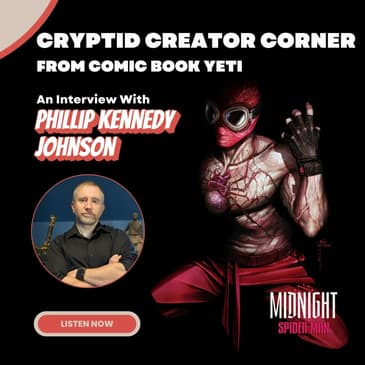

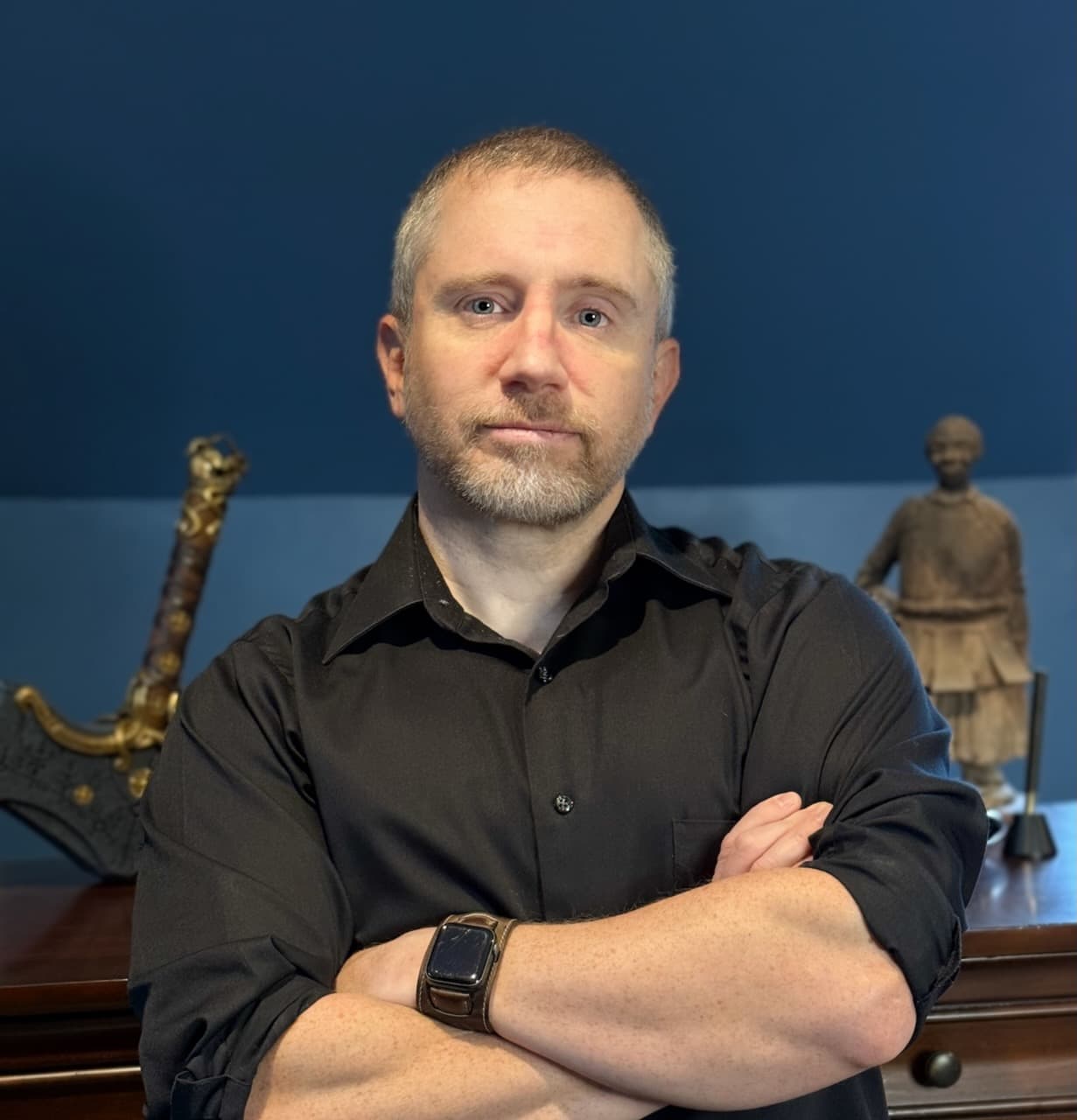
Comics writer Philip Kennedy Johnson (The Infernal Hulk, Superman) breaks down his new project Midnight Spider-Man, one of the flagship titles launching Marvel's brand-new Midnight Universe this fall.
In this panel plunge, Philip shares how the project came together, why Spider-Man was the perfect character for a full-fledged body horror reimagining, and the surprising influences behind the series including David Cronenberg, John Carpenter, Junji Ito, manga storytelling, and the corporate paranoia of Alien.
He goes on to explain how Marvel challenged him to take creative risks, how artist Scie Tronc brings an entirely new visual language to the character, and why this version of Spider-Man may be the boldest reinvention of the character ever. We also explores the larger themes driving the book, including power, responsibility, corporate corruption, and how modern anxieties shape today's superhero stories.
Beyond Midnight Spider-Man, we dive into Philip's Incredible Hulk run, exploring his love of Appalachian folk horror, Southern Gothic storytelling, and the inspirations behind my favorite character in the book, Charlie Tidwell, and tease about the upcoming Hulk War crossover.
"What the world has actually shown us is that power makes monsters almost invariably. Peter exists in a world in which power makes monsters every time, but he’s the one who sets out to prove that it’s not true even while it’s physically, visibly changing him into a monster." — Philip Kennedy Johnson
WATCH THE VIDEO VERSION OF OUR CHAT ON YOUTUBE!
Midnight Spider-Man
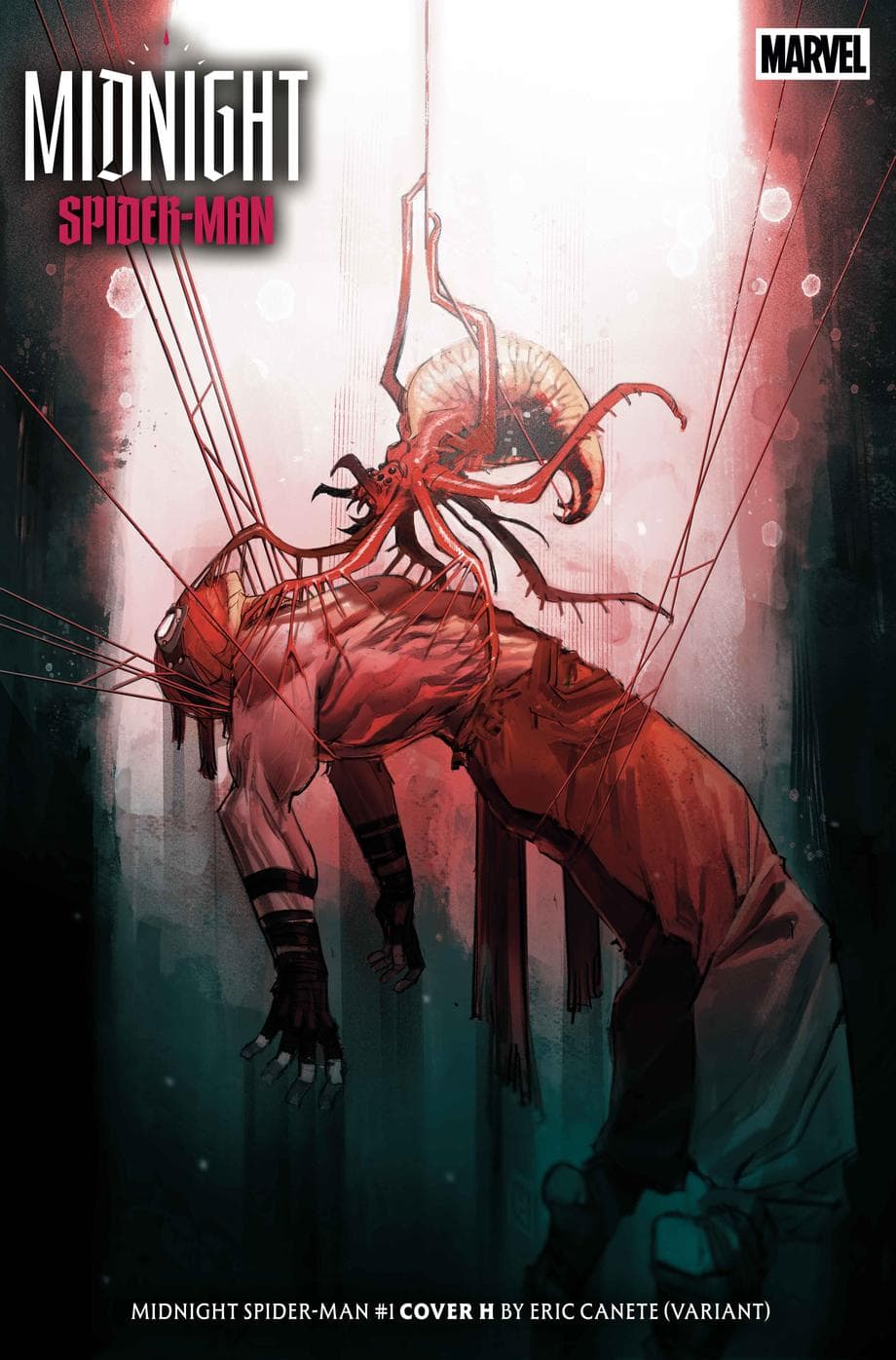
Midnight Spider-Man from the publisher
A young Peter Parker is transformed into a hideous spider hybrid by the ruthless Oscorp Corporation in their pursuit for eternal life. When Oscorp begins to use the secrets unlocked by his mutation to create more human-animal hybrids, Peter embraces his grotesque new form to stop them.
Follow Comic Book Yeti
🔗 Comic Book Yeti LinkTree: https://linktr.ee/ComicBookYeti
For partnership and ad inquiries, please contact: thecomicsyeti@gmailcom
Follow your hosts
ARKENFORGE
Play TTRPG games? Make sure to check out our partner Arkenforge. Use the discount code YETI5 to get $5 off your order.
Make sure to check out our sponsor 2000AD.

[00:00:00] - [Speaker 0]
Your ears do not deceive you. You have just entered the cryptid creator corner brought to you by your friends at Comic Book Yeti. So without further ado, let's get on to the interview.
[00:00:11] - [Speaker 1]
The future is calling. 2,000 AD is the galaxy's greatest comic with new issues published every single week. Every 32 page issue of 2,000 AD brings you the best in sci fi and horror featuring characters like judge dread, rogue trooper, and more. Get a print subscription in 2,000 AD, and it'll arrive to your mailbox every week. And your first issue is free.
[00:00:35] - [Speaker 1]
Or subscribe digitally, and you can download DRM free copies of each issue for only 9 a month. That's 128 pages of incredible comics every month for less than $10. Head to 2,000 AD and click on subscribe now, or download the 2,000 AD app and start reading today.
[00:00:55] - [Speaker 2]
Hello, everybody, and welcome to today's episode of the Cryptic Creator Corner. I'm Byron O'Neill, your host for our comics creator chat. Growing up a Marvel spinner rat kid, my first introduction to comics was in the pages of Amazing Spider Man in the early nineteen eighties. The Roger Stern and John Romita Jr. Run defined our friendly neighborhood web head for me.
[00:01:14] - [Speaker 2]
The recent Ultimate Spider Man run scratched the itch of what the risk the publisher is willing to take to adapt the franchise, but nothing has made me quite as excited in quite some time as seeing what I hope is a truly bold and creative swing at redefining him for a new generation of readers. So it's my pleasure to introduce today's guest, Philip Kennedy Johnson, one of the architects of Marvel's new Midnight Universe and the writer of one of its three flagship launches, Midnight Spider Man. Boca, man, you are straight off the back of San Diego Comic Con. Have you recovered yet?
[00:01:47] - [Speaker 3]
Hey, man. No. Not yet, clearly. For those for those not caught up, I was a little late tonight. So thank you for your patience and no, I'm not caught up.
[00:01:55] - [Speaker 3]
Just got back late last night and right back in turning in scripts and trying to hit deadlines and you know, the usual grind. But San Diego was awesome and met a ton of fans, a lot of new friends, a lot of old friends, been talking Midnight and Hulk and the Spider Man Bringing Your Day premiere and all kinds of stuff. It's been a whirlwind, but it's been super good.
[00:02:18] - [Speaker 2]
So is that your first red carpet event? I know you attended the brand new day premiere, so.
[00:02:24] - [Speaker 3]
Yeah, that was my first one. Yeah, the carpet was actually blue this time, that was my first time. Yeah. Sony and Marble were very, very kind and brought me up for this. Yeah, it was awesome.
[00:02:37] - [Speaker 2]
Awesome. Well, I want to start with your own progression as a writer. Your Hulk run now 40 or so issues in, you know, it gave you this incredible runway to reimagine one of Marvel Universe's most recognizable heroes, importantly, through the lens of body horror, while crafting kind of a unique pocket earlier on the run within the larger six one six with world building that kind of operated without the pressure of the overarching continuum, although now that's gonna change. But Midnight Spider Man feels like a natural next step in that progression. So how did we land on Spider Man?
[00:03:14] - [Speaker 3]
Man, well, was a, there's actually a discussion between Jonathan Hickman and some of the kind of high ups at Marvel, CB Zubowski and Dan Buckley, it's like, you know, just ideas for events that we might do or directions we might go and it was all very half formed. But they were like, what if we did like another imprint? People have been making comparisons to the ultimate line and the absolute line. I see why they would, but actually the touchstones that they were actually bringing up in the first place were things like Marble Knights and Max and other like imprints that Marble had in the past. Yeah.
[00:03:52] - [Speaker 3]
And that was kind of the beginning of the conversation and Midnight, although we were calling it that in the beginning, was like we didn't have a name for it first. Was just like, what if we did it like this? And Jonathan had a clear idea for what he wanted to do with X Men. He still got X Men on the brain and there was a very specific X Men story he wanted to tell that puts all of his amazing world building and lore and all this kind of stuff. The way does he tell stories, He had a thing he wanted to do with X Men and Vampires in that way that he was really excited about.
[00:04:27] - [Speaker 3]
And we talked about other books that we might do. And my mind just immediately went to Spider Man. Yeah. I mean, they they came to myself and Ben Percy, who are the two resident psychos on staff over there. Like we just we love horror stuff.
[00:04:42] - [Speaker 3]
I definitely do. But Ben has an amazing knowledge of horror prose, but also horror films. And that's just where our head goes. So they came to us, we just recently done Dungeons of Doom and they're like, let's get these guys, you know, these tools to use. And yeah, my head just immediately went to Spider Man.
[00:05:04] - [Speaker 3]
That book should have been a Cronenberg movie in the first place. Know, when you take the idea of like, you know, the brilliant, clumsy kid that then gets transformed and gets a spider powers, what would that actually look like? Like if you let go of the old familiar elements of like the polite little spider on the hand that kind of gets smacked and like the kid who gets powers but still looks the same. Like what was somebody like Cronenberg or John Carpenter do, you know, or Del Toro or like these filming or Juji Ito, the great, you know, manga you know. So those are the kind of the things I started thinking about.
[00:05:46] - [Speaker 3]
I was like, we should do Spider Man this way. And that's what we're doing. It's going to be sick as hell. I cannot wait for everyone to see. And we found the perfect artist for it.
[00:05:56] - [Speaker 3]
He's a guy that actually has a lot of mommy influence in his own style. Yeah. It's man, that's gonna be cool. I I cannot wait for you to see.
[00:06:04] - [Speaker 2]
Well, we've seen, like, transformative body horror takes on Spider Man before, like the Six Arms saga in in the think that was the seventies, an animated series in the nineties, Joe Kelly's Savage Spider Man, the other. So we've seen some stuff before, and you've been doing these teaser videos on TikTok walking around, ironically, maybe not, in the middle of the night, you know Yeah. Kind of promoting this series, you know, and and doing that typical deep dive of continuity that everybody has to do. But one of the things you mentioned there that I thought was really fascinating was that manga root, and you talked about C Trunk, who's the artist on the series there. So what are you seeing in manga that there was an absence of in Western comics that you wanted to kind of pull from?
[00:06:50] - [Speaker 3]
Man, I don't even it's hard for me to even quantify it. I'll say this, I've read a lot of Western comics over my lifetime. It's not that I mean, people are doing amazing, super creative things, but I've been in that pool for a long time and I think I understand most of influences that are influencing others. Whereas manga is an entirely different ecosystem of storytelling. And I just don't know it as well.
[00:07:25] - [Speaker 3]
So for me personally, I've like manga in the past with the exception of Ito, I've always been aware not always, but like I've been familiar with Jujito's work more so than most other big manga people. I find it's harder to surprise me with Western comics than it is with manga. Like 's just some differences in the storytelling that I as hard for me to put my finger on. But also just the horror imagery is it's just it's very patient in a way that I really admire. But then when it cuts loose, like just the some of the the visuals in that in that I see in manga comics are so, like, over the top and upsetting in a way that that really does like, really just serves horror comics so well.
[00:08:18] - [Speaker 3]
It's not like nobody's drawing gross shit in Western horror comics, but something about manga just really hits hard. I don't know. I just really admire it. So, yeah, I'm just drawing on that for for influence. And, you know, part of it, I don't even remember what originally so the style, the visual style of Midnight Spider Man is very East meets West.
[00:08:40] - [Speaker 3]
Yeah. There are, it's not just straight up manga, but you'll see influence on the page. There's much more detail and gore and like horror nuance in it that you don't necessarily see in in the usual manga. But but you will see the influence in the art style for sure. I don't remember like what the first thing that steers that way was because the big like one big visual element of Spider Man that I thought really had to be there was the eyes.
[00:09:13] - [Speaker 3]
Like it's not a it's not a costumed superhero kind of book at all. Like it's this is not a spandex book. This is this is a create your own horror book is what I want more about how I wanted it to feel. Obviously, it's not create your own, but I wanted to have that create your own sensibility.
[00:09:26] - [Speaker 2]
Sure.
[00:09:28] - [Speaker 3]
Like how do we get Spider Man that the iconic eye shape without it being like a tailored mask that he makes himself? And I kind of looked around and like different kinds different kinds of masks or eyewear or, you know, spider eye shape or different kinds of like, I just kind of went down a rabbit hole of different possibilities. And then I found one that was perfect. And it is the eyes, the eye lens is the lenses from the Imperial Air Force from World War two, Japanese aviators from World War two. Like the lenses and those masks look awfully Spider Man like.
[00:10:12] - [Speaker 2]
Okay.
[00:10:13] - [Speaker 3]
And I was like, how do we get here in a story kind of way? And the more I kicked that around and then we started talking about Steve Tronck as a possible art choice, I was like, yeah, what if he's a manga kid? What if this is a I know I got friends and my son's friends also who are just really into Japanese stuff, not just manga but like Japanese culture, you know?
[00:10:35] - [Speaker 2]
Sure. Yeah.
[00:10:36] - [Speaker 3]
Like what Peter's one of those kids? And I just kind of started to kind of help me figure out Peter's character in a way that makes the visuals make sense, that makes Sithonk's art style make sense. There are other things in the comic that like a I made up a manga series that Peter follows in World that also ends up playing an important element in the story.
[00:11:01] - [Speaker 2]
That's cool.
[00:11:01] - [Speaker 3]
Yeah, the way it's all signed together is actually really fun. It's it all feels very organic and it's it's been really fun to bring together like this.
[00:11:09] - [Speaker 2]
Yeah. I wasn't super familiar with Sea Trunks' work previously. I think the only thing they've done for Marvel was like Godzilla destroys the Marvel Universe. But, you know, their background isn't doing I I think it's like French, more noir, more manga influenced stuff.
[00:11:25] - [Speaker 3]
Yeah. Each one of his books looked really different. Like, it's he did a few, like, fill in pages for Marvel, and that was basically it. But when he did them, we really took note. And before that, he did this fantasy book that seems based in European history and lore.
[00:11:45] - [Speaker 3]
He did a book on Ted Bundy, I believe, or illustrated a graphic novel on Ted Bundy. Interesting. I'm trying to think what else. But the art style is nothing like what you're seeing here. Like it's all very, each one of those books is very different.
[00:11:59] - [Speaker 3]
So yeah, he's done some really eclectic, cool, diverse stuff, but, he's never done anything that looks like this. It's very different. I'm really excited for everyone to see.
[00:12:08] - [Speaker 2]
Well, of the things that I'm kind of curious about where this is going, right? We have the lens of OsCorp, who's creating monstrous animal hybrids and scientific hubris mixed with capitalistic corporate culture run amok. Feels very contemporary right now. And I think that's one of the things that, like, people have gravitated towards absolute green arrows specifically for. And that's why it's connected with with so many people.
[00:12:33] - [Speaker 2]
Right? And MAGA historically has that history of being associated with nuclear anxiety, you know, and like a metaphor for radiation sickness, you know, physical agency during the nuclear age, all those kinds of things. So I'm seeing kind of that corporate culture expression in our own country as being a parallel that I think it feels like you're probably interested in and kind of scratching and exploring with the series. Am I am I off?
[00:13:00] - [Speaker 3]
Oh man, like this is Okay. It's meant to be like all my work is in some way a reflection of the times. Like whether it be my own personal experience, my life with my own son or my job or whatever, or whether we're talking about a larger picture of just society right now. I can't remember. I mean, I'm only halfway through one person's life, but in my limited time on this earth, I don't remember a time when, you know, billionaires were more reviled than now, like, or there was a time when there was less trust in the, you know, the levers of power.
[00:13:44] - [Speaker 3]
Yeah. Know, mean, what's the mission statement of Spider Man? I mean, it's everyone they say Spider Man, everyone's like, With great power comes great responsibility. And of late, that has just been revealed as the biggest lie. You know, like it's just not true.
[00:14:02] - [Speaker 3]
It should be true. And Peter Parker is the guy who believes it. Peter Parker is the guy for whom he, you know, he just needs it to be true. There are character reasons in the story like why he feels so strongly about it that way, like why he wants to believe that power can be wielded responsibly, but he kind of has this need to show the world like, you you can do it. We can do it.
[00:14:28] - [Speaker 3]
I can be great and wield greatness with responsibility and compassion and morality and honor, you know? He sets out to kind of prove that to be true. And when he gets his shot, that power transforms him, you know? So, the world has actually shown us, in my opinion, is that power makes monsters. Oh, for sure.
[00:14:56] - [Speaker 3]
Invariably. Yeah. And this is that book. This is the Peter exists in a world in which power makes monsters, you know, every time. But he's the one who sets out to prove that it's not true.
[00:15:10] - [Speaker 3]
Even while it is changing him, you know, like it physically, visibly changes him into a monster and he's the whole time he's fighting it was like, No, I be good. I will prove this is true. Even as he fails, you know, he said he he really wants to wants to prove that it can be done. So that's what this book is about.
[00:15:31] - [Speaker 2]
Well, you also talked about how movies are influencing the project. You've already referenced Cronenberg there. You know, we've seen the cover for issue one. Everybody's seen that. I can't help but make a connection there to the Alien franchise and, you know, Peter Whalen, who is also one of those weird, like, longevity evangelists.
[00:15:48] - [Speaker 2]
You know? So Right. Yeah. What threads are what threads are you pulling from there?
[00:15:52] - [Speaker 3]
Yeah. The Alien movies are a huge influence on this on this book too. I I love the work of HR Giger. I love those alien movies specifically. Like, I had the honor of getting to write the alien comics for Marvel for several years.
[00:16:04] - [Speaker 3]
That was super fun and rewarding. And I love the visuals of it and the gross life cycle of of the xenomorph and everything. But really the important thing was that, you know, like all great horror. Has like this socially conscious message underneath it. Shouldn't say all, but like all this all my favorite stuff, like there's a message underneath that matters, you know.
[00:16:29] - [Speaker 3]
And like a theme that kind of ties the whole thing together and. In Alien, it's I mean, it's there are several elements, but the the the corporation being the actual monster is the big thing. Like, it's the the actual physical monster in the xenomorph. They just do what they do. The the actual bad guy is us.
[00:16:49] - [Speaker 3]
You know, like, we're we're the monster. We actually take the thing and steer it around and try it's it's doing our bidding. Know, the the Well, you Tony is is really the the monster that they're fighting the whole time. And yeah, that just couldn't be more timely. Like, even if we were talking about alien, like it's the corporation as the the thing that that kills us is just that's the world we live in.
[00:17:12] - [Speaker 3]
I, know, I don't want to make it sound like Midnight Spider Man is a work of propaganda. It's not. But I do think that great you're making art, it should reflect the times in some kind of way. I I come from music. I was a musician before I was a writer and Nina Simone said something like that.
[00:17:36] - [Speaker 3]
She said something like, I believe it's the responsibility of every artist to reflect the times. And I don't think that needs to be a hard, fast rule. Mean, it's art. We can do whatever we want with it. But I do think that that's a noble cause.
[00:17:48] - [Speaker 3]
And I think it's very commonly what happens and that's what I set out to do in my own work. So this is like without even really trying to, I do think this book has kind of turned into my anti Epstein class kind of thing where the monster, you know, the monster is creepy billionaire. It's just a scary concept right now. The degree of power that the wealthiest among us has is a scary thing. And not use that in some kind of way when you're telling a story about power and responsibility, like, I just don't see how you can tell a story now and not touch on that in some way.
[00:18:28] - [Speaker 2]
Yeah. I mean, we we live in the era of literal, rich, supervillains. Like, the the stories of our childhood that we gravitated to, and that's why we love heroes so much. And, like, these people are living large. Right?
[00:18:40] - [Speaker 2]
Like, Brian Johnson with the the project, with a blueprint. He created clones of himself to harvest organs for, you know, when his organs actually fail and these are replacements. I mean, this is science fiction that's come come to realize.
[00:18:55] - [Speaker 3]
Yeah. Like, I saw that movie. You know? Like, it's this yeah. Exactly.
[00:18:58] - [Speaker 3]
Like, it's this just unbridled power, you know, like people who can just, you know, like the Epstein thing, just be able to rape whoever, do whatever to whomever and everyone knows it and yet remain untouchable somehow for generations and all their friends. I guess just crazy. That whole system is just crying out for revolution. That's kind of what this book is about. I guess this book is about this kid who is just desperate for personal transformation that wants to be great, that wants to be great and powerful, but also ethical and good and to show us that it can be done.
[00:19:43] - [Speaker 3]
And when he gets his taste of power, it it changes him in ways that are super like, he the cost of that power is his humanity, you know? Yeah. So, yeah, that's what the book is about. And the the art just matches that idea so so effectively. I can't wait for you to see it.
[00:19:59] - [Speaker 2]
I'm, I'm stoked about it, right? And, and I know y'all are going very hard with this, right? More blood and all that. As a Marvel kid, I'm frankly tired of DC raining the sales charts, you know, And and let's let's not make it about dollars here, but there is something there that they're tapping into that we're not seeing right now at Marvel for whatever reason, you know? Stick with me on the metaphor.
[00:20:20] - [Speaker 2]
You just got punched in the face, if you will. Right? So how is this new Midnight Universe going to change the paradigm of what we know about Marvel as a comics publisher? Right? Sell me.
[00:20:33] - [Speaker 2]
I wanna believe Philip. I want to see Marvel reign supreme again. I just can't. I mean, Okay. The danger of of Big Two comics is that it's the it's the the monthly periodical that just
[00:20:50] - [Speaker 3]
goes on forever. Right? And the danger is that you just sell the same comics over and over again forever. So sometimes there has to be a big shakeup. There has to be some kind of a big change to make the comics look more like the world people live in or to change the status quo drastically.
[00:21:09] - [Speaker 3]
And I I can say as a reader, I've never seen Marvel change the status quo more in a book than we're doing here. I mean, this what we're doing here makes ultimate and honestly absolute to look pretty polite. Like just about every script I turn in so far, there's a meeting after that. Like people are talking like, wow, what can we get away with? Like we do this.
[00:21:36] - [Speaker 3]
I don't know if we can. And I'm pushing pretty hard. I'm using every bit of juice that I've earned at Marvel to to get away with stuff like we're pushing hard. Nice. I I've there's been several there's several things about the book that I was told no to initially and that I just pushed harder than I was comfortable with, And then it then it turned into yeses.
[00:22:02] - [Speaker 3]
So we're taking chances. We're definitely not telling the same story here. So yeah, I mean, when people are making comparisons to absolute and all that, but it's really, I'm trying to think of a more apt comparison. I mean, the only similarity really to Absolute is that it is a reimagine. It's like a rebirth kind of a thing.
[00:22:25] - [Speaker 3]
And that way that it's similar in that we're completely burning the script and starting over. But we're what we're replacing it with is super different. God, I mean, I what else can I tell you? I think there I've never seen I've never seen the sales and marketing people at at Marvel so get so excited and creative. They like, they're talking like, when I talk to those guys, they're talking like creators themselves.
[00:22:53] - [Speaker 3]
Like, you know what we could do? And, like, they're coming out with all these ideas. Like, here's how we should get these in front of people. Like everyone's creative juices are kind of flowing in a way I haven't seen in a long time, which is really cool.
[00:23:02] - [Speaker 2]
That's awesome.
[00:23:03] - [Speaker 3]
I mean, I will say when I first got the art, it looks so different from everything else on the shelves at Marvel. I did and DC. I got nervous. I was like, is this too different? Is this too far?
[00:23:13] - [Speaker 3]
Are people going to be able to respond to this? I think we're going to suck in a lot of new readers, but are we going to push away the old school Spider Man fans? I still don't know the answer to that. It looks so different from anything you've ever seen from a Spider Man book. But again, the people want risks, man.
[00:23:30] - [Speaker 3]
We're doing it. Like, I've never seen risks like this. And love it or hate it, this is real different. And it's also the place where I wanna put everything that I've ever learned about comics to bear. Okay.
[00:23:44] - [Speaker 3]
Like I've in the past, I've tried to be the good soldier and take every note and and just kind of stay in my lane and all that. The like, I've been I've been more involved in the whole creative process in the book than I've ever been before. Like I'm taking much more ownership over this the way that one would have created her own book, think. As far as like DC versus Marvel, that's just a false comparison that I just kind of don't believe in. Like, I was, you know, was at DC before during the big, you know, the big purge when like a ton of people got laid off, like the DO got fired, a lot of people got fired, like a lot of editors lost their gigs.
[00:24:25] - [Speaker 3]
They were raining in page rates and cutting down on book count and it just seemed like the world was ending over there. It was a scary time over there. And DC was kind of getting their head kicked in at that time. And everyone kind of talked about it. Like at Marvel, having been in the summit, I was also in Marvel summits when I was going on and people in Marvel kind of talked like, is just the way it is.
[00:24:47] - [Speaker 3]
Like we're always going to be in the lead. But this there's this back and forth that I've seen happen since I started paying attention. People have this weird lack of object, have lost their object permanence. Like they've forgotten that it hasn't always been this way. Like whenever one side is in the lead, they act like they've always been in the lead.
[00:25:12] - [Speaker 3]
So it becomes kind of in vogue to dunk on one side or the other for a couple of years or a few years or whatever and then it changes and act like the other way has always been the way. So I don't know, I'm not as wrapped up in that. Plus if you look at the market share, it's like they're neck and neck, they were always close. Think, I don't remember what numbers were, but it's like, I don't know, 32 to 29 or something. And you know, it's close.
[00:25:38] - [Speaker 3]
So it's to talk like one side is just like completely dominant. The other side has lost everything. Just silly.
[00:25:46] - [Speaker 2]
I'll spare my last question here, before you get annoyed with me for probing too much on Midnight Spider Man here. No, go ahead.
[00:25:53] - [Speaker 3]
Mean, don't have to answer. I probably do I probably spoil too much sometimes, but I'llif I can'tif you're asking something I can't answer, I'll just lead a fifth.
[00:26:01] - [Speaker 2]
No, no, this is just leading. This is just my own prognostication here. Taking from Cronenberg, right? Quote, I'm an insect who dreamt he was a man and loved it, but the dream is over, and the insect is awake. That's Seth Brundle in The Fly, right?
[00:26:16] - [Speaker 3]
Uh-huh.
[00:26:16] - [Speaker 2]
Your, your current feature in Marble Floppies talks about your affection for the lizard as a character.
[00:26:21] - [Speaker 3]
Yes.
[00:26:22] - [Speaker 2]
And if Brundle existed in the 06/16, he'd be Kurt Connors. So anyway, my prognostication is that the Lizard will play a huge role at the beginning of this. And now we can talk about the Hulk, so you can not
[00:26:34] - [Speaker 3]
worry All about I'll that at I love that character. I love Curt Connors. I love that he's he's when he's human, he's so easy to root for. Like, he's just such a you know, it's so under his position is so understandable. And yeah, I don't know.
[00:26:56] - [Speaker 3]
I love that character. I think he's great. I love that he's he fits the whole, like, animal theme of the Spider Man villains, but he also fits the science theme. He himself is not a bad guy, but he was trans like, he just he wanted transformation and sought it out and was transformed. And he just fits.
[00:27:13] - [Speaker 3]
He just fits the Spider Man theme. And I love that character. I think he's one of the cooler ones. And he was never like the cackling one dimensional guy that just wanted to burn it all down for no reason. So I love Curt Connors, and I will say Curt Connors plays an important role in the book.
[00:27:31] - [Speaker 3]
You know, in this book though, this has also taught me, like, well, actually, day life, twenty first century life has showed me that cackling villains also exist. And Exactly. So there's they have their place as well. Yeah. Anyway, I'm really the villains are really exciting in this book.
[00:27:54] - [Speaker 3]
And I will say that is one thing about the absolute universe I admire very much. I really admire how they and the ways in which Scott and Nick have reimagined a lot of the villains. I think it's really cool.
[00:28:09] - [Speaker 2]
Killer Croc is so good. He's Yeah. Probably my favorite of Batman, you know, in terms of the Rogue and Spiegallery, and I love the absolute version of Killer
[00:28:17] - [Speaker 3]
Yeah. He's totally cool. And it you know, he's probably my probably my favorite character in the first issue too, like, before all that happens. Like, it's that's really anyway. So Yeah.
[00:28:27] - [Speaker 3]
You know, Scott's a Scott's Scott's been a friend for a long time. I've admired Nick Drogada forever. Like, East of West is probably my favorite graphic novel ever.
[00:28:36] - [Speaker 2]
So good.
[00:28:36] - [Speaker 3]
Yeah. And, like, so much of that is wrapped up in Nick. I mean, obviously, it's obviously, it's Jonathan, but, like, but Nick's art like, I just can't imagine that series without Nick's art, Nick and Frank. So, anyway, yeah, it's there are lessons to take from Absolute as well, but like Nick the way that Nick has transformed some of those characters is really fun.
[00:28:58] - [Speaker 2]
Jimmy is too humble to do this. So as his stalwart ride or die, I wanted to tell you about his new graphic novel, Penny and the Yeti with artist Amber Aiken. What started as a comic short with his daughter that I've known about for ages now, and it's evolved and has become one of those annoying can't talk about it in comics things for too damn long. Yes, I'm predisposed to be supportive but after reading an advanced copy of it, I have to admit it's way better than I anticipated. No shade, but it's really good, remarkably so.
[00:29:30] - [Speaker 2]
Does it have a yeti? Yeah. Is it cute and adorable? Yeah. But it streak lies in effectively tapping into the all too familiar family dynamics that we all are facing in 2026 and approaching it in a way that doesn't insult the book's target audience.
[00:29:45] - [Speaker 2]
Kids. They are way smarter and perceptive than we adults give them credit for. So I really appreciated Jimmy's narrative approach tapping into his own experiences as a dad and a spouse. I can hear his wife saying, get off your phone, Jimmy, through the pages. She's gonna kill me for saying that.
[00:30:01] - [Speaker 2]
It's hitting shelves on April 21 and I dropped the link in the show notes where you can preorder a copy today. Getty or not, here we come with Penny, Perry, Fenton, Maxine and the magical, mythical, magnificent, Yeti. On behalf of us both, we appreciate your support.
[00:30:18] - [Speaker 3]
Yoo Yoo hoo.
[00:30:22] - [Speaker 2]
Well, let's get to another transformation here. Let's get to the Hulk. Yeah. You know, I spent I spent more than a decade working with bands myself, one road dog to another. I did not foresee the Hulk as a pickeresque Cormet McCarthy inspired Appalachian folk horror, but I'm absolutely here for it.
[00:30:40] - [Speaker 2]
Like, I loved it. And, you know, the Immortal Hulk redefined character the character for, you know, Marvel, again, as this horror icon. And then we got a gap, which is whatever Donnie Cates was doing, and I won't go into that. It was not my thing, we can leave it there. You know?
[00:30:55] - [Speaker 2]
But I'm from the the South. I live in the South again. Rarely do we actually see it done well. So why the South? What, you know, what made you wanna, you know, center it right there?
[00:31:07] - [Speaker 3]
Well, first, where are you from roughly?
[00:31:10] - [Speaker 2]
I am from well, do you know where Oak Ridge, Tennessee is? Hell Knoxville is close. That's
[00:31:14] - [Speaker 3]
Yeah, of course.
[00:31:15] - [Speaker 2]
Oh, you know where Oak Ridge is? Yeah. Wow. Okay. Cool.
[00:31:18] - [Speaker 3]
Yeah. Yeah. Nice. That's awesome. Okay.
[00:31:20] - [Speaker 3]
So Tennessee. Yeah, I, well, went to school in Eastern Kentucky University and I was in high school in Kentucky before that. Yeah, so, but you know, since then, as you say, a road dog, I've been, I've traveled a lot and I know the South extremely well. And it's just got this gothic beauty to it that like this almost like a creepy beauty that I really love. It's just got this look to it that just makes sense.
[00:31:48] - [Speaker 3]
Have you read Hellboy, The Crooked Man? Oh yeah. God, I love that book. And it just it looks like the South. Right?
[00:31:54] - [Speaker 3]
Like, it's just the way that Corbin drew that book, like the like that witchy story, it's just oh, man. I just love it.
[00:32:02] - [Speaker 2]
So I gotta ask, are you familiar with Manly Wade Wellman then?
[00:32:08] - [Speaker 3]
I guess not. What is that?
[00:32:10] - [Speaker 2]
Ah, okay. So an author, here's your homework. Check out Manly Wade Wellman's John Silver. So the John Silver novels that he's written, there's, I think, maybe five, maybe six of these things, But centers around a Korean war vet who travels around collecting rural folk songs before they're forgotten, who ends up defending the communities that he finds himself in from cosmic malevolent forces. I think this is totally Oh,
[00:32:35] - [Speaker 3]
shit, dude. That sound what a pitch. That guy you need to be on payroll and say give the name of Manly Wade Wellman. Is that what you said? Yep.
[00:32:44] - [Speaker 3]
Okay. Alright. I'll look for that.
[00:32:46] - [Speaker 2]
I'll email it to
[00:32:46] - [Speaker 3]
you. Yeah. You get it. I'm about
[00:32:48] - [Speaker 2]
to do too. They're, out of print, but, like, totally worth find it. Anyway, I love Appalachian horror. I don't know if you're a fan of Old Gods of Appalachia, but, like, there's Yeah. Yeah.
[00:32:57] - [Speaker 2]
Anyway, there's so much in this Hulk run that totally speaks to me.
[00:33:02] - [Speaker 3]
Oh, man. I'm so glad. I'm really glad to hear that. No. I I, As you say, I loved Immortal Hulk and Katz run was different, but there were some things there that we could use as far as well, basically where they left it, just where victimizes Hulk the whole way and uses him like a power source and they're just completely at odds.
[00:33:30] - [Speaker 3]
And it just set us up to return to the horror story where Hulk is just the monster of the movie, you know, in the way in the way that the girl from The Ring is or the thing from Smile or It Follows, those kind of thing. Like, the the thing like, the the evil entity in the movie, that's what Hulk is when we start. And Banner's just terrified of him. I think that sets it up in a really fun way. In a way, honestly, that is more in keeping with the original vision for what the Hulk is.
[00:34:01] - [Speaker 3]
Stan and Jack always said in the beginning that it was supposed to be like a Jekyll and HydeFrankenstein kind of thing where the monster is the character. So I wanted to get back to that the way that Al did. One of the hardest elements was not to just ape what Al and Joe did because it was so good. Just want to
[00:34:19] - [Speaker 2]
remember It such a great series.
[00:34:20] - [Speaker 3]
It was great. Yeah. But it was very much a Cronenberg Black Science kind of horror take where I saw an opening to kind of join that idea with the Bill Bixby, like man walking the American roads kind of take. And selfishly, I wanted to see that in the American South because I think the South is just super creepy in a really beautiful mythological kind of way. Like the folk horror is such a cool thing.
[00:34:50] - [Speaker 3]
There's a space in like Gothic folk horror, the kind of thing that you might see in the South, there's a space for things like potter's fields and hangman's trees and things like that that would be harder to come by in places like in the Northwest or it just suits the American South very well in my opinion. So I got to tell those really fun stories like issues two and three in that coal mining town or like the the Everglades in Florida. Get to bring out Man Thing and stuff like that. Like, was just yeah. It just made sense.
[00:35:24] - [Speaker 3]
This is what as as you say, just spoke to me, you know?
[00:35:28] - [Speaker 2]
Yeah. Well, what I gravitated to, and I I found this kind of interesting, was the character that I empathized with the most was Charlie Tidwell. And I think it's easier in ways to empathize with, you know, kind of the emotional weight of trauma and duty with, you know, a secondary character than maybe an established one. You know, coming from your military background, you often throw characters into a crucible of these, like, high stakes environments where they're forced to make choices with heavy moral consequence. So tell me more about the background of Charlie.
[00:35:59] - [Speaker 2]
Like, where did Charlie come from?
[00:36:00] - [Speaker 3]
Well, she's just me, straight up. I mean, she was Okay. You know, she's, this this girl growing up in Kentucky just anxious to get out of there. Not that I don't don't love Kentucky. I do.
[00:36:10] - [Speaker 3]
But this girl, hey, I shouldn't say she's just me. That's not true. I don't want people to look at my family and think, oh, he was abused. I think it's different. But she is this like you know, bright but flawed kid kind of out in the sticks just looking to looking to escape and without really the means to do so.
[00:36:34] - [Speaker 3]
And, you know, she's got she's got all the same pieces to her that Banner has. And she kind of, you know, she takes care of her little brother and she just dreams of she loves the Avengers. She loves Captain America. She dreams of Captain America arriving in town on some kind of awesome mission and needing a sidekick. And she would just get, you know, he'd take her as his new Bucky and they'd go off and have adventures together and she'd be a hero someday.
[00:37:04] - [Speaker 3]
She just idolizes Cap. And then the Avenger does show up in town, but it's not Cap, it's Hulk. And he is so powerful and she just becomes completely enamored with it. Like, she can't stop looking at you like, oh my God, this is the most powerful thing I've ever seen. And she's so frustrated with her own weakness, her own inability to protect her little brother and, you know, inability to stand up for herself against her her dad and inability to get to even to get out, you know, like she just feels so fucking weak all the time.
[00:37:40] - [Speaker 3]
And she has such such disdain for the for the bookish nerd because that's what she is. And then when she sees Hulk, she is just in awe of it and just follows him. Then when Banner comes back, she just has such a different relationship with Banner than she does with Hulk. That's what I wanted really. I wanted somebody who could have to help explore the characters of Hulk and Banner.
[00:38:04] - [Speaker 3]
We had to have another characters that somebody could have a different relationship with both because Hulk and Banner are almost never in the same place. Bringing in another person was just really important and somebody that idolized Hulk but looked down on Banner just made a lot of sense to me. So, I love that character. And I love that. I love the way their whole art goes, you know, like she's, You know, Banner is constantly trying to get her to leave them alone.
[00:38:32] - [Speaker 3]
She he knows how dangerous it is for her. So he's trying to push her away all the time to protect her. And Hulk doesn't give a fuck about that. He's like, come on, let's go. And it's he likes seeing her rage out and, in the end, Banner's right.
[00:38:47] - [Speaker 3]
When they leave her, she's worse off than she was. She's become a monster too. She's killed people. She's done horrible things. And she's literally a monster herself.
[00:38:55] - [Speaker 3]
Banner was right the whole time. She just becomes this additional wedge between him and Banner that eventually results in them losing the body completely. So it's, know, Charlie's just a really important part of the story.
[00:39:07] - [Speaker 2]
Yeah. Well, as the series progressed, we transitioned into kind of more of this Lovecraftian inspired epic that eventually pulled in the rest of the six one six, you know, and and Hulk is now, you know, making his own infernal Avengers. So moving towards the one shots and ultimately the Hulk War crossover event next year, we've got the March 4 shots. They're next on the plate, just in time for spooky season for everybody to get into. So what can we expect from those aside from a whole lot of slobber knocking?
[00:39:41] - [Speaker 2]
Because we know that's happening. It starts with Hulk and Wolverine. So
[00:39:44] - [Speaker 3]
Yeah. It's intensely violent. It's that's Okay. The big one. That's that's that was another meeting script where I I turned in the script for the script for the Hulk versus Wolverine.
[00:39:58] - [Speaker 3]
I wanted to I mean, we've established the new Hulk. The Infernal Hulk is like a basically an old God in this body, like just unthinkably powerful and going up against Wolverine who was super tough, but still a mortal man basically. And I wanted to establish that that Wolverine could hang with him. And so it's crazy violent. And but in a way that I am super proud of it.
[00:40:22] - [Speaker 3]
Jonas Scharf crushes the art on this. Like he's just born to draw Wolverine. And then each issue just kind of ramps it up. We start to see the extent to what extent Hulk is so powerful. It's not just strength the way that he used to be.
[00:40:40] - [Speaker 3]
One side of him has got that corruptive arm. He's got he's basically the father of horrors now. Like he's got the corruptive seed of the mother of horrors in him and he can that one arm beside us all scabbed up, he can like just touch things and corrupt people or the dead, like raise the dead or corrupt the living or corrupt environments like raise living cities. We start to see that come into play in the Fantastic Four issue. And then there's a Hulk versus Spider Man issue, which is really fun.
[00:41:08] - [Speaker 3]
And, you know, Spider Man is woefully underpowered for a fight like that, but it's the the circumstances in which he gets into the fight, I think is interesting. He's he doesn't yeah. I shouldn't spoil it. I spoil too much. No.
[00:41:21] - [Speaker 3]
Don't spoil Hulk's gathering his infernal Avengers and Spider Man gets involved in that fight. And that leads up that leads directly into the Hulk versus Avengers fight at the end of it. And and then his infernal Avengers are complete and we get into Hulk War. So it's it's really fun, man. I I'm really excited about the whole series.
[00:41:41] - [Speaker 2]
I am. And I'm even more curious now about Midnight Spider Man because you're talking about this book being the one you needed approval for and and elevating the violence. I'm like, what in the fuck are we about to witness this fall? So, yeah,
[00:41:56] - [Speaker 3]
it's gonna be good. Yeah. I, yeah. It's well, like I say, like Hulk War is intensely violent and super scary and we see terrible things happen to establish characters, but it's still a six sixteen book. And the Midnight books feel like create our own horror to me.
[00:42:13] - [Speaker 3]
Like, these are more like things, things that you would see, like in the creepy eerie kind of line. Like Spider Man is the John Carpenter, Cronenberg body horror book. Fantastic Four is the cosmic horror Lovecraftian book. And it's also got some kind of like it's got a novelist sensibility that I really admire. Like Ben is writing it like a novelist.
[00:42:38] - [Speaker 3]
Like there's a real the way that the I can't describe what makes it feel that way, but the way that it progresses really feels like you're you're reading a a prose book. And I just I really admire the way that he's laying it out. And Hickman doing his vampire epic. Like, they all they all feel very, very different.
[00:43:00] - [Speaker 2]
But
[00:43:00] - [Speaker 3]
they all feel like creator owned stories in a way that Hulk Hulk horror is still like in its at its core as a horror slash action six one six book. Know?
[00:43:11] - [Speaker 2]
Are the Midnight Ones then designed to kind of fit a horror niche, or is that just sort of a byproduct of what you guys wanted to do with it? What do you mean? Sorry. So like a genre piece. You know?
[00:43:22] - [Speaker 2]
So body horror, Lovecraftian horror, you know, those kinds of things. Like they each sort of feel like there's a pocket. Maybe that's just the way you market it and, you know,
[00:43:31] - [Speaker 3]
it's kind of it's it's how we're it's how we're helping people to understand what they're getting from it. But it's not we didn't we didn't set out like there wasn't like a mandate. There wasn't a mandate. Like you do the Cronenberg one. That's just kind of, that's where my sensibilities went.
[00:43:45] - [Speaker 3]
It's hard to describe exactly what's coming in my book, but I just kind of try to help people understand what it is by telling them Junji Ito, Cronenberg, Carpenter, this is what you're getting. But each one is very much its own thing and they all look so different. Like they exist in the same universe in theory, but they don't look anything like each other. So it's, I'm really excited about it. But yeah, that's they're much, they're much less, much less, reined in and pigeonholed than any six sixteen book.
[00:44:16] - [Speaker 3]
Like there's like a, there's a kind of a color palette you expect to see in a six sixteen book and it's, it's all very different here.
[00:44:23] - [Speaker 2]
Okay. Well, I certainly hope we've continued to hype train about both of these projects. You know, please everybody get your pre orders in. I know people are predisposed to already do that. So I'm going to throw this out there.
[00:44:34] - [Speaker 2]
Do me a favor and order one for a friend because the easiest way to convert people is to just put it in their face, you know? So buy that extra copy, give it to a friend. Just okay. Maybe from what I'm hearing, not one too young.
[00:44:48] - [Speaker 3]
Yeah. It's I'll say this. If you're a if you're a manga fan, check out check out Midnight Spider Man. Because I I do think you're I think the art is gonna really speak to a lot of people. And there's actually a a manga comic within the comic that also plays out over the course of the series.
[00:45:03] - [Speaker 3]
That is fun. So if you're a manga fan, check out Midnight Spider Man. Think I'll dig it.
[00:45:08] - [Speaker 2]
Way cool. Alright, Phil. Well, before I let you go, I always wrap things up with a shout out. So this could be something that inspired you recently or someone that you just like to say thanks to. So I'll go first, kinda give you a minute to think about it.
[00:45:19] - [Speaker 2]
Mine today is just I've got warm fuzzy about where comics is going as a medium. I've been in this. I worked in three shops in the early nineties. I saw what, you know, everybody considers the peak, you know, but it feels like there's this groundswell of enthusiasm that I haven't seen for a long time. And it's been happening prior to SDCC, but, you know, San Diego, definitely, was a lot of people, a lot of projects, a lot of excitement.
[00:45:43] - [Speaker 2]
So, you know, this is just my way of saying thanks to the creators that are out there working hard and trying to make some kick ass books because, I don't know, I feel really good about where it's going right now.
[00:45:54] - [Speaker 3]
That's kind of you say, man. I'm really glad you feel that way. I feel the same. I I just got back from San Diego, and I'm just feel so energized from the people that I hung out with. And, like, some of them are, like, my heroes, like whose work I was reading when I first got back into comics.
[00:46:10] - [Speaker 3]
So to see them there and hang out with them, introduce Frank Miller to my son and get to hang out with Oh, wow. To get to hang out with Ben at the Spider Man premiere and stuff like that. Like, it's it was just such an honor. But also people whose names I didn't know before who are like just starting to make their bones. You know, like you're just, are doing work that seems very solid and I'm gonna set out to keep reading what they're doing and people that I think could be changing the game in this next few years.
[00:46:39] - [Speaker 3]
So it's just a really exciting time in the medium. And I love what a wild west kind of feeling comics has compared to other mediums. I'm gonna say thanks to Tom Taylor as well. Like hopefully a lot of your viewers and listeners know Tom's work, but they might not know he's a legitimately really good dude. He lives in Australia.
[00:47:01] - [Speaker 3]
He doesn't come over to The States that much. And whenever you go to these conventions, there's not enough time to see everyone. There's just not like if I had a ton of friends in that room and I had so little time, but I saw everyone that I could and it's always very brief and that sucks, but it's good to see them at least for a minute. And Tom reached out via phone and was like, hey, man, We've gotta find time to hang out. And he the fact that he cared enough to do that when he had so little time overseas and it was so many people to see really meant a lot to me.
[00:47:29] - [Speaker 3]
So it was awesome to see my friend, Tom. So I wanted to give him a shout out for making time to do that and for, yeah, that was just meant a lot to me.
[00:47:38] - [Speaker 2]
Yeah. He genuinely seems like such a nice dude. I've never met him, but, like, his online presence is always just overwhelmingly positive, and he's he's patting everybody on the back, you know?
[00:47:47] - [Speaker 3]
Really good guy. He he he the assignment. We're in the business of telling stories about heroes. And he gets that, and I love that. Not everyone does.
[00:47:58] - [Speaker 3]
Sometimes we hear stories about somebody who wrote stories that we really loved and admired from generations ago, like an older book you go to a convention to meet them and sometimes they're having a bad day and they're sticking you super shitty. Now again, not all, just sometimes there's the offhand story. Tom is like the opposite of that. Tom understands that we're telling stories about heroes and aspires to live up to it. And I really admire that.
[00:48:25] - [Speaker 3]
Admire him as a writer and as a dad, it was good to see him. And I appreciated him reaching out like he did.
[00:48:30] - [Speaker 2]
Awesome. I love that. Well, Philip, thanks for hanging out with me today as a fan of your work. I've really enjoyed this.
[00:48:36] - [Speaker 3]
I appreciate It's a pleasure, man. Thanks for making the time.
[00:48:39] - [Speaker 2]
Yeah. Absolutely. Well, this is Byron O'Neil, and on behalf of all of us at Comic Book Eddy, thanks for tuning in, and we will see you next time. Take care, everybody. Peace.
[00:48:47] - [Speaker 2]
This is Byron O'Neil, one of your hosts of the Cryptid Creator Corner brought to you by Comic Book Yeti. We hope you've enjoyed this episode of our podcast. Please rate, review, subscribe, all that good stuff. It lets us know how we're doing and more importantly, how we can improve. Thanks for listening.
[00:49:07] - [Speaker 0]
If you enjoyed this episode of the Cryptid Creator Corner, maybe you would enjoy our sister podcast, Into the Comics Cave. Listen and subscribe wherever you get your podcasts.