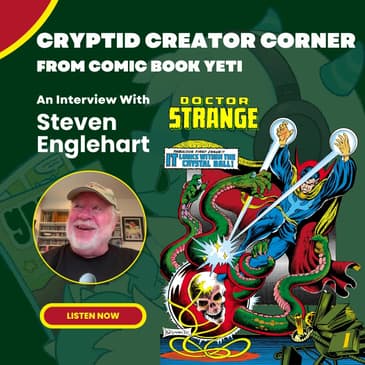

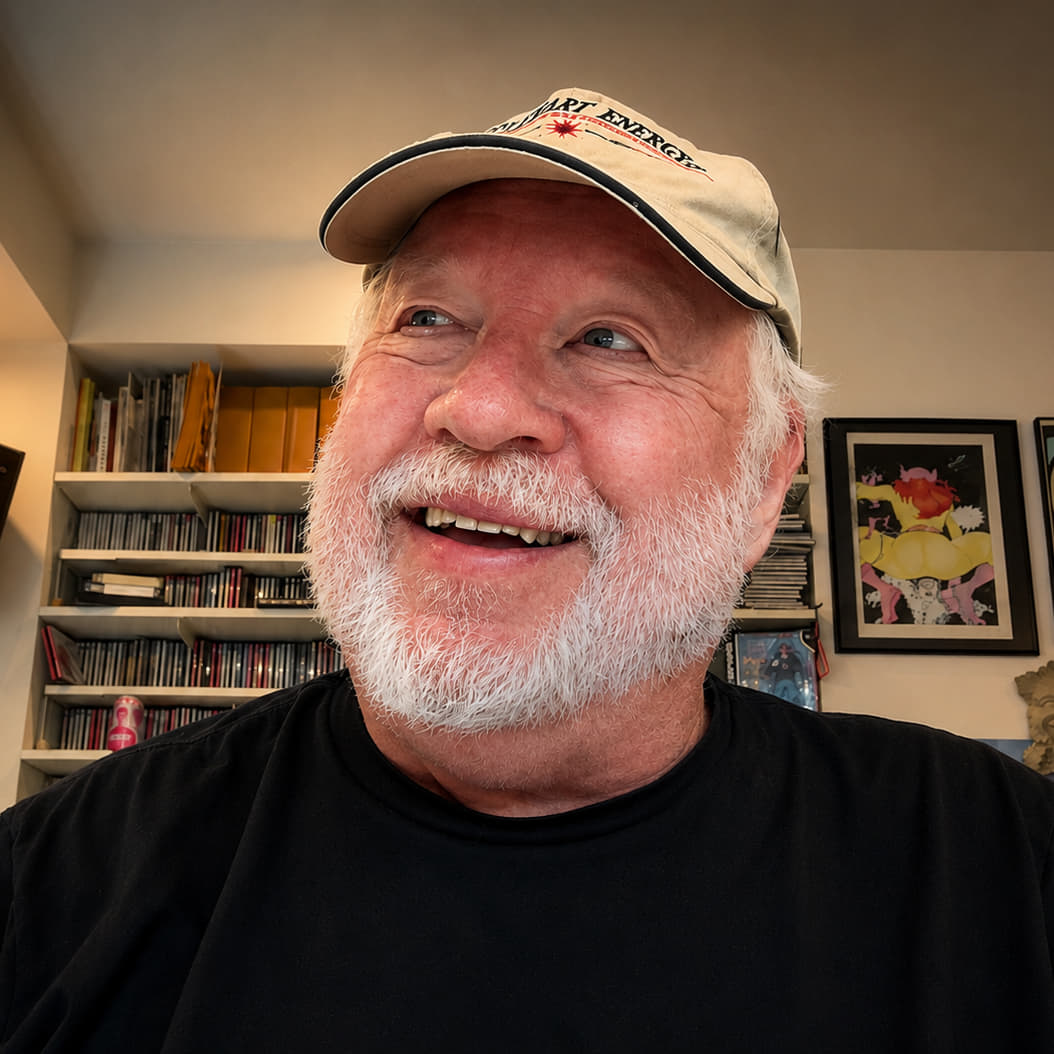
Legendary comic book writer Steve Englehart sits down with Byron to discuss his ground-breaking 1970s Marvel Comics run on Doctor Strange and the creative freedom that defined the Bronze Age era at the company.
Steve reflects on taking over Doctor Strange after Steve Ditko and Gardner Fox, detailing how he pushed the boundaries of cosmic storytelling under the strict rules of the Comics Code Authority at the time, and he opens up about how 1970s counter-culture, personal experimentation with psychedelics like LSD, and real-world occult research directly influenced his mind-expanding Doctor Strange storylines.
Throughout the conversation, Steve shares fascinating behind-the-scenes stories from Marvel’s golden era in New York City, a true step back in comics history.
Highlights include his legendary collaboration with artist Frank Brunner on Doctor Strange, how late-night walks through NYC inspired Master of Kung Fu and ultimately the creation of Shang-Chi, and the infamous fake minister letter that tricked Stan Lee into letting a controversial Doctor Strange storyline go to print.
"At the end of the day, I like the fast-action punchiness, all-dialogue kind of approach to stories because that’s what brought me in when I was doing it." - Steven Englehart
WATCH THE VIDEO VERSION OF OUR CHAT ON YOUTUBE!
Follow Comic Book Yeti
🔗 Comic Book Yeti LinkTree: https://linktr.ee/ComicBookYeti
For partnership and ad inquiries, please contact: thecomicsyeti@gmailcom
Follow your hosts
ARKENFORGE
Play TTRPG games? Make sure to check out our partner Arkenforge. Use the discount code YETI5 to get $5 off your order.
Make sure to check out our sponsor 2000AD.

[00:00:00] - [Speaker 0]
Your ears do not deceive you. You have just entered the cryptid creator corner brought to you by your friends at Comic Book Yeti. So without further ado, let's get on to the interview.
[00:00:11] - [Speaker 1]
The future is calling. 2,000 AD is the galaxy's greatest comic with new issues published every single week. Every 32 page issue of 2,000 AD brings you the best in sci fi and horror featuring characters like judge dread, rogue trooper, and more. Get a print subscription in 2,000 AD, and it'll arrive to your mailbox every week. And your first issue is free.
[00:00:35] - [Speaker 1]
Or subscribe digitally, and you can download DRM free copies of each issue for only 9 a month. That's 128 pages of incredible comics every month for less than $10. Head to 2,000 AD and click on subscribe now or download the 2,000 AD app and start reading today.
[00:00:55] - [Speaker 2]
Hello, everybody. This is Byron O'Neil, welcome back to the Cryptid Creator Corner. As our regular listeners will know, I'm a huge Doctor Strange fan. For the podcast folks, have behind me my custom skateboard deck featuring the good doctor that covers all of his different comics eras, including the prominent cover from the month I was born. So it is my pleasure to introduce the man who wrote that issue, legendary comics writer Steve Engelhardt, on with me today.
[00:01:23] - [Speaker 2]
Steve, thanks for coming on the show. Apologies for punctuating age there. Are you doing? It's alright.
[00:01:29] - [Speaker 3]
It's alright. I'm doing fine.
[00:01:31] - [Speaker 2]
Good. Good. Glad to hear it. Well, I wanted to have you on to touch on some of the more unique inspirations behind your run of the series, which were kindly brought to my attention by Devin in our Discord community. And I hadn't been previously aware of those.
[00:01:44] - [Speaker 2]
So that was you using psychedelics at the time you were working on it. You know, your long term relationship with Steven started in Marvel Premiere, and exploring consciousness expansion certainly fits the character. So did you end up like, did you influence Strange or did Strange influence you? You know, how did, how did all this come about?
[00:02:08] - [Speaker 3]
I would say that I influenced Strange. I would, you know, I mean, this was 1972, I think, or '73, one of those, in New York City. There were a bunch of us who were in our early twenties. It was a very the seventies, I'm sure people know one way or another. Great time for movies, great time for music, great time for comic books, actually.
[00:02:37] - [Speaker 3]
A lot of creativity floating around, and mind expansion was a thing. I say that as if it was a textbook course somewhere. But no, I, you know, I have never been shy about the fact that I did do mind altering substances back in the day. And to me, that was always a positive. And I hesitate or do not hesitate to jump in and say, may not be true for everybody.
[00:03:11] - [Speaker 3]
Your mileage may vary, etcetera, etcetera. But
[00:03:14] - [Speaker 2]
Sure.
[00:03:16] - [Speaker 3]
I, you know, what I was told to do, so I'm trying to, I'm trying to pull this all into some coherent
[00:03:25] - [Speaker 2]
idea. It is, it is a challenge. Sure.
[00:03:27] - [Speaker 3]
Well, when I started doing comics, very famously, Roy Thomas, who was the editor in chief at the time, said, there are only two things you have to do. You have to turn it in on time every month, and it has to sell. And if you could do if you can do both of those things, then you can do anything you wanna do in comics. And if you can't do one or the other of those things or both, then we'll fire you and we'll get somebody who can do those things. So, my entry into Marvel comic superheroes was I can do anything that I want to do.
[00:04:07] - [Speaker 3]
And over time, I did do many things that I wanted to do. And there was never that was Roy's editorial position. And so there was never any pushback. There was never anybody saying, well, you can't do that thing, or why don't you move this over here or any. So my job was to be as creative as possible.
[00:04:31] - [Speaker 3]
And I found that drugs helped me with that. I mean, just opened up more possibilities. That was true for everything. I mean, you know, you don't see a lot of psychedelia in Captain America, the, know, but I mean, it's the same guy who's doing this stuff, but I'm I'm writing appropriate material for the appropriate characters. But what's strange, you know, Ditko had done fabulous stuff back in the day and it was sixties and it was, you know, Ditko and, you know, wasn't psychedelic, but it was kind of psychedelic.
[00:05:14] - [Speaker 3]
I mean, you can, you know. And Ditko, I think Ditko was known for never having done any drugs. I, you know, that's something I think I know, but I wouldn't swear to it. But you know, he had a weird, he liked to draw weird stuff and that's, you know, so he did Doctor Strange. And then everybody afterwards sort of did their version of Ditko, right?
[00:05:39] - [Speaker 3]
Marie Severin, Gene Colan, I mean, was living in that universe But when they did it still, you know, it wasit kind of plateaued in a sense. I mean, there was like, he did mystical things and he did, you know, and mystical things happen and all this. But when they brought him back in their latest incarnation in Marvel, whatever it was, they had, Gardner Fox. Well, there was the first issue by Stan Lee and Barry Windsor Smith. And then Gardner Fox and Frank Brunner took over.
[00:06:18] - [Speaker 3]
Frank was a young guy just getting his shot, you know, blah, blah, blah. Gardner was an old guy who had, you know, had done a bunch of stuff, obviously. I mean, anybody who doesn't know who Gardner Fox is, I don't know if I need to explain that. But in any event, Gardner, it was a mismatch. I'll put it that way because Gardner was sort of doing the same thing that that everybody had been doing.
[00:06:44] - [Speaker 3]
Whereas Frank really wanted to get farther out there. Frank was another young guy in the seventies in New York, and he wanted to do more cosmic stuff for, for want of a better word at this point. Yeah. And so after several issues okay, comics was done in those days. You were assigned stuff.
[00:07:09] - [Speaker 3]
I mean, was not really very it happened every once in a while, but basically you didn't get your best buddy and go in and say, we want to do a book. Because it was basically Marvel said, you're gonna do this book. You know? You're gonna write Captain America. You're gonna write The Avengers.
[00:07:26] - [Speaker 3]
It's like, okay, fine. Good. I like that. So Frank, though, went to Roy and said, you know, I would like to get Steve to write this because he knew I was another young guy. We knew each other.
[00:07:42] - [Speaker 3]
I mean, we were all in those days you had you had to physically be in New York, to do comics, because there was no FedEx. There was no Internet. You had to hand things to people. So we all knew each other. Everybody in comics knew each other, which I may say was pretty cool because I also knew Wally Wood and Bill Everett.
[00:08:02] - [Speaker 3]
You know? I mean, anybody who was in comics, whether they were old guys, new guys, whatever, you were on the team. So they came to me and they said, Frank wants you to write Doctor Strange because he wants to do more cosmic stuff. And I was down for that. And so he and I set out together to do a more cosmic Doctor Strange.
[00:08:28] - [Speaker 3]
What that meant in the seventies was drugs. I mean, not that Strange was going to do drugs necessarily, but the audience, as we knew, let me, let me explain that. We were still under the comics code. And so you had to write comics that anybody could read, you know? I mean, little kids were gonna read these books and they needed to be you didn't you weren't didn't wanna scare little kids.
[00:08:56] - [Speaker 3]
On the other hand, the bulk of the audience was college age boys, men, whatever. And college age boys slash men were, you know, experimenting with all sorts of drugs at that point. This is the seventies, sixties, seventies. So it all came together in that, you know, I have always been clear that I did. I'm gonna intimate that Frank might have done some too, but I'm not gonna speak for Frank.
[00:09:24] - [Speaker 3]
Sure. But, you know, basically we would get together, Frank and I would get together every two months because it was a bimonthly book. And he would say, I've got some things that I want to do in this book. And I would say, I've got some things that I want to do in this book. And then it was my job as the writer to mesh those things.
[00:09:47] - [Speaker 3]
How, what kind of, what can we do that's bigger than the sum of those parts that will, you know, that will cover everything that he and I both wanna cover. And so all of that led to the fact that, I was and also, I will say Strange is supposed to know stuff that you and I don't know. Right? I mean, Strange is supposed to be the Sorcerer Supreme. I was not the Sorcerer Supreme.
[00:10:14] - [Speaker 3]
And, and on a, and I'm like, and so on a secondary level, as a writer, as a, as a guy who took his job seriously, Despite all this talk about drugs and the rest of it, I mean, I wanted to do a good job writing stuff. So when that happened, when Frank said, I want Steve to write it, Steve went down to the major occult book store in New York, Wiser's. I don't think it exists anymore. And I just went in and I said, load me up. I want, want, you know, give me some books on Western magic, right?
[00:10:51] - [Speaker 3]
Yeah. Tarot, astrology, Kabbalah, you know, whatever. So I, to write the Sorcerer Supreme, I figured I needed to know at least enough so that I sounded like I was in the right ballpark, you know, that I, that, that I wasn't just doing generic stuff. I was actually trying to write a magician. I.
[00:11:18] - [Speaker 3]
That's just me. I mean, I I want every character I write to be the best version of that character that I can do. Right? I didn't have to do a lot of research to write Batman, you know? And I have yet to soar the space ways when I'm writing The Silver Surfer.
[00:11:37] - [Speaker 3]
But I mean, this was something that I could that I could read up on and and learn something about. So all that together, Frank wanting to get more cosmic, me figuring I needed to learn how to do cosmic, and then the fact that, you know, it was a time of drugs. Right. And I would say there's probably no time in human history when it wasn't a time of drugs. But this is you know, this was more out in the open.
[00:12:07] - [Speaker 3]
And so along those lines, I never was coy about it. You know, I never said, oh, you know, so I know I did the drugs and I thought that they helped me write the comics. So, you know, that's the case. I will say that my youngest son, came upon my Wikipedia page one day where it said that when he was like in high school and he was a little taken aback, but you know, never, we, we didn't in the same vein, we never said to them, oh, you know, we said, you know, don't go crazy, but what, but we didn't demonize all that stuff with our kids. And one of them is a lawyer and one of them is a geophysicist.
[00:12:50] - [Speaker 3]
So I think they did okay. Anyway, I hope that all of that sort of answers your question one way or another. I mean, I just I've, you know, I mean, I keep going sideways here, but Jimmy Carter famously said that he took all the ideas that were given to him and he put them through the cuisine art in his head. And that's really what writers do. Right?
[00:13:16] - [Speaker 3]
I mean, you just you're aware of things. Everything is going into your brain. And when it comes time to write a story, you pull out the parts that make sense in the story you're telling. And so, you know, if I hadn't been doing drugs, the stories probably would have been different, but, you know, maybe not amazingly different. I mean, I don't know.
[00:13:43] - [Speaker 3]
But I mean, we just the whole mind expansion thing was just seemed perfect for Doctor Strange. And so we, you know, we did I mean, during our run, we tied up the Shuma Gorath thing that Gardner Fox had been doing stories that said, Oh, Shumagoras is a big scary guy, he's going to come someday. And that had been going on for a while. So that was the first thing we did was tie that up. Then we did the thing with cyst and egg genesis, where they meet God, in effect.
[00:14:15] - [Speaker 3]
And then we did a thing about death. And then Frankthen the book became so popular that they made it monthly. And Frank is a painstaking artist, and he couldn't keep up with a monthly schedule. So he dropped off and Gene Colan came on. Then we did Life and then we did, you know, I mean, it was just, I was looking for the big, those big concepts that, you know, people grapple with, whether they're doing drugs or not.
[00:14:44] - [Speaker 3]
But I mean, when you're in your twenties, you're starting to grapple with larger concepts than you used to. And so that was the point of Doctor. Strange was to make him as cosmic, as larger than life as possible. I mean, you know, cause he's the sorcerer supreme. He ought to be doing stuff like that, you know?
[00:15:08] - [Speaker 2]
So Yeah. Yeah. You've, you've followed the remit, you know, basically for the character there. And, you know, we often, you know, we're always on the show talking about inspirations, right? For stories.
[00:15:19] - [Speaker 2]
And that's typically, you know, looking outwardly, being exposed to external stimuli. This is a very different thing, either turning the lens inward, you know, for in light and enlightenment that way kind of within your own mind. So how do you feel like that did it fundamentally change you? You know, the experience with LSD as a writer? You know, do you feel Well, like as a
[00:15:43] - [Speaker 3]
it just, you know, it's it's I go back to the fact that I could do anything I wanted to do. And I've and I've said in in another context, I was very lucky that I had Sal Bussema as the artist on both Captain America and The Defenders when I was doing those books, and then when I worked with Sal on other things over time, they threw me, you know, they threw me into the pool. They said, you can swim anywhere you want to swim. If I'd been if I'd had an artist who, like, couldn't draw anything that I came up with, it would have been like I had an anchor around my foot while I was trying to swim. Right.
[00:16:19] - [Speaker 3]
But I could, know, I could come up with an idea. I could say anything and Sal would draw it, right? Without saying, oh, I don't know, can I you know, it's just because there are some artists who are not very good on horses or can't draw hands very well or whatever? Could do anything. So the idea that I mean, conspired to say, let your mind be as large as possible, you know?
[00:16:49] - [Speaker 3]
Do get as much behind these stories as you possibly can. And so, yeah, I mean, I. I had now, I have not done acid in a long time because I basically sort of got to the point where I said, you know, I don't need to do this anymore. Yeah. But in doing it, in the times that I did do it, you know, it does expand your mind.
[00:17:19] - [Speaker 3]
And, and, you know, by all accounts, there are some people when their minds get expanded, they don't like what they see and it freaks them out. Whereas I, you know, to me, was always like, well, here's a new frontier. Here's another thing. And, and, and I will say there were times when things popped into my brain that I didn't like, but I am the kind of person who kind of said, yeah, but that's all true. I mean, yeah, yeah, you, you know, that's something you're doing.
[00:17:47] - [Speaker 3]
Maybe you should fix that up, you know, that kind of thing. So it never freaked me out. It was more always kind of like, oh, well, there's something I hadn't considered yet, and maybe I should consider that. So all of that led to making my mind larger than it would have been otherwise. And again, going back to Sal, I mean, you know, the fact I wasn't you know, psychedelics did not play into the defenders, shall we say.
[00:18:14] - [Speaker 3]
But, you know, just everything about it was do as much as you possibly can do. And that's what I, you know, if I, you know, if I'd done the drugs and they'd, and they'd freaked me out and I thought it was hurting my ability to do the job, I would have stopped doing them because I liked the job better than I liked the drugs. But I mean, you know, but I mean, everything came together, everything worked together. So, you know, here I am the remnant of that, you know?
[00:18:51] - [Speaker 2]
Yeah. I mean, I totally get, you know, what you're saying. I, I think you had said in the, the psychedelics.com article that, that you never had a bad trip. I, I certainly had. And at the time, I thought, I'm never And gonna do this of course, you know, in your twenties, you're gonna you're gonna keep doing things.
[00:19:10] - [Speaker 2]
I mean, the, Sonoran Desert toad ritual that I went through many, many, many moons ago, let's say at the time was horrible. Like, I'm like, I'm never going to do this stuff again ever.
[00:19:22] - [Speaker 3]
This And then was licking, this was licking the toad?
[00:19:25] - [Speaker 2]
This was actually in the smoke. So they would take the, I don't, I don't know exactly what it is, but the, the goo, let's just, let's just say off of off of the toads. And it was, I mean, I had somebody who was conducting the ritual properly. It was a friend of mine on, on the res, that was, was out there in the desert. And so it was, you know, a purification ceremony as well.
[00:19:47] - [Speaker 2]
So there's a whole other element that was going along with it. At the time I thought, Oh, this is terrible trip or anything like that. But, know, years later, looking back at the experience, if you try to analyze it, I was like, okay, so this actually was teaching me something. I just didn't see it in the moment.
[00:20:04] - [Speaker 3]
Yeah. That's sort of what I was saying a minute ago, you know? Yeah. It shows you things and, and I said, Oh, I looked at them and saw the point. I may not have seen the point immediately, but I do think that that's, you know, if you're honest with yourself, I mean, it's like, Okay, that's actually a thing.
[00:20:27] - [Speaker 3]
I should do something about that. I have never licked a toad or smoked or breathed the smoke from a toad. Yeah. But all that stuff, that just touches on the magic of magic. Know?
[00:20:41] - [Speaker 3]
I mean, the stuff that it's just, it's just cool to do that sort of thing. Again, I say maybe not for everybody hearing this, you know? Mean, it's like, you know, you should know yourself well enough to know whether you, this is going to do you much good. And if it doesn't, then don't do it anymore. I mean, you know, it's like, I can't be more you know, I don't want to advocate anybody ruins himself.
[00:21:09] - [Speaker 3]
So it's really it's kind of up to the individual. But if you feel like that's something you want to do, anyway, nevermind.
[00:21:18] - [Speaker 2]
Yeah. No, I mean, thinking about sort of the, my own experience there, what came to mind with the sort of the mentorship kind of thing with me having a bad experience. Right? So in the story, it's not just Strange who's undergoing this transformation, you know, but also the silver dagger as the antagonist. And I I can't I cannot believe fifty years on how much the silver dagger reminds me of so many modern far right incels, you know, right down to the women hating and calling a black a black homeless man filth.
[00:21:50] - [Speaker 2]
Right? So walk me through using him as a foil for Steven in the story.
[00:21:57] - [Speaker 3]
Well, we were, you know, again, dealing with the sort of big ticket items that a magician might get into. And the Vatican with its famous library that's theoretically got all the occult books in it and all Right. And probably everything else. I don't know. But I mean, that was something that we were aware of.
[00:22:18] - [Speaker 3]
And, we had just done God, at that point, respectfully, if I may say. I mean, you know, we weren't trying to yank anybody's chain, but we, you know, we had, Strange had met all power at the beginning of time. I mean, so there you go. But, so the idea of the Vatican made sense. And, I think Silver Dagger was a name that Frank came up with.
[00:22:54] - [Speaker 3]
And, and, you know, I mean, so we're just sort of like, okay. And, and the idea was to do death. I mean, let's kill Strange and then see, you know, let him deal with that. You know, I mean, that's the kind of stuff that he should be dealing with, you know, the larger than life, so to speak, things. So we did, you know, that's what we did.
[00:23:20] - [Speaker 3]
Mean, we just sort ofthat's another thing where it's just like, I've got some ideas. Frank's got some ideas. How are we going to put this together? So, I mean, I don't have a better explanation as to how we sort of put those things together and came up with that. And we, in the second issue, they go to the Mad Hatters, you know, they're in Alice in Wonderlandville.
[00:23:47] - [Speaker 3]
And, and in 1973, there was no Disney plus. There was no streaming services. If you wanted to see Alice in Wonderland, Disney's Alice in Wonderland, you had to sort of wait seven years between release times. I mean, that's how Disney would do it. These things would come back, but they wouldn't come back very often.
[00:24:09] - [Speaker 3]
Well, part of that putting all that stuff together was the fact that Alice was gonna be released at that point. And so we Frank, his wife, Jan, and I went to a drive in theater here in the Bay Area. Doesn't exist anymore.
[00:24:34] - [Speaker 2]
And
[00:24:37] - [Speaker 3]
so we wanted to see Alice in Wonderland. It was playing. And so we sat through it, in the car, watched it. And then they had, I think it was Son of Flubber as the the counter, you know, the counter programming. Then were going to show Alice again.
[00:24:55] - [Speaker 3]
It was, you know, and so we stuck around. We wanted to see Alice for the second time. And we're watching it and all of a sudden it jumped from the second time around, it jumped from the first reel of film to the last reel of film. The whole middle of the movie disappeared. So I went to the projection booth and I said, what the heck?
[00:25:20] - [Speaker 3]
And he said, we all want to go home. So we took out the middle of the movie. It's like we had no and Frank and Jan and I had no control over that. So it's like, oh, okay. So we saw Al we saw one and a half versions of Alice in Wonderland, but that refreshed our childhood memories, you know, of, you know, twenty one or fourteen years earlier when we had last seen it.
[00:25:46] - [Speaker 3]
Or maybe it had been on Disney used to have a Sunday night show or something like that. I mean, you know, so we might have seen it there. But I love that movie. I think that movie's great. And and Yeah.
[00:25:57] - [Speaker 3]
And so, I mean, that was, but if they'd been showing nothing but son of flubber, I doubt we would have put son of flubber into the, into Doctor Strange. We just happened to have doc or Alice in Wonderland available, to throw into the cuisine art while we're, you know, while we're doing that.
[00:26:17] - [Speaker 2]
Yeah.
[00:26:19] - [Speaker 3]
So that's, you know, I don't, I don't know anything else to say about it. Okay.
[00:26:27] - [Speaker 2]
Well, those kind of landmark drug references, like if you will, right? Cause you've got geometric patterns, there's Pegasus, there's Alice in Wonderland, which you just referenced. You know, there's the hookah smoking caterpillar that shows up very, like loads of things, you know? Drugs were, were a part of the culture at the time, but as you mentioned, so was the comics code. You're also writing this for kids.
[00:26:49] - [Speaker 2]
So how have how did you get away with it? Like, it just seems like somebody at some point would have been like, okay, guys.
[00:26:57] - [Speaker 3]
No, because we didn't rub it in your face. I mean, you know, it was part of Strange's life. And, you know, the the flow of the comic was about Strange, he was supposed to do bizarre things. And so, excuse me. So he did.
[00:27:13] - [Speaker 3]
You know, when I did Silver Saint Cloud in Batman, that was still under the code. And so I really wanted that. I wanted Bruce Wayne to have sex, to be an adult person, but it was under the code. So all the sex is implied, right? I mean, you don't see You any just see Silver lying around in bed and, you know, Bruce Robin being taken aback by this.
[00:27:45] - [Speaker 3]
So you you just had to do things that won't revert, I guess. I mean, Strange never said, let's do drugs, kids. Know? Mean, he just lived in a sort of psychedelic world. So that's,
[00:28:02] - [Speaker 2]
that was
[00:28:03] - [Speaker 3]
perfectly acceptable. No, I'll tell you just, I mean, since this is sort of a weird topic and I'm just free associating on it. But when I was had just started working at Marvel, I was the low man on the editorial totem pole. And they had Marvel had done, in the Conan black and white book, Roy and and Barry Windsor Smith had done the Frost Giant's Daughter, where she's pretty naked a lot of the time. And then they wanted to reprint it in the color book, in the regular book.
[00:28:37] - [Speaker 3]
And so that brought the Comics Code into it. And I'm just this young guy just getting my feet wet, really, at at in the world of big time comics. And they, and the comics code sent over this four page thing where they broke it down panel by panel about how much of her breast was, had to be covered up and how much, you know, all this kind of stuff. So, I mean, I never, I never had to worry about breasts, in, in Batman, but I was aware of what the code worried about, you know? Yeah, sure.
[00:29:12] - [Speaker 3]
And, and I didn't have to worry about breasts and Doctor Strange either. But I mean, that's something, again, if you were a comic book writer in those days, you could do anything you wanted to do, but you had to make sure that it didn't set off a red flag for the comics code. And so, you know, I mean, all everything that I wrote in those days perfectly acceptable for children to read. Yeah. Even though I wanted to do sex or I wanted to do drugs or I wanted to do whatever, you know?
[00:29:48] - [Speaker 3]
I mean, I just had to be subtle about it, to, you know, not be blatant about it.
[00:29:55] - [Speaker 2]
Yeah. In many ways, that period feels like a bit of a golden era, and I'm trying to kind of put my finger It's
[00:30:02] - [Speaker 3]
definitely a golden era. Definitely. Mean, seventies yeah. Go ahead.
[00:30:08] - [Speaker 2]
I was just going to say, cause there were, there were a lot of shakeups that were happening at Marvel. And I wonder how much of that plays into some of that experimentation getting away with it. Right? You had Stan moving from day to day editorial to becoming publisher, restructuring. You had books like Tomb of Dracula, you know, where genre expansion was happening.
[00:30:29] - [Speaker 2]
And, you had martial arts that was happening. You had Master of Kung Fu, Iron Fist. You talked about Savage Sword of Conan. You know, there were paper shortages and, like, the direct market was happening. So that was a lot.
[00:30:42] - [Speaker 3]
It was a lot. Well, it was just, you know, it was a very ferment is the is the word, I think. Marvel I mean, Marvel's particular thing was, for years, they had been distributed by Independent News, was owned by DC. And DC put a limit on how many Marvel books there could be, which was why you had those split books, you know, Doctor Strange and the Hulk, you know, Iron Man and Captain America, because they couldn't have more books. And then in '69, I think it was, they could.
[00:31:19] - [Speaker 3]
I mean, they got the distribution got changed, possibly because of the direct market. That I don't know. But, so now you could put Captain America and Iron Man in their own separate books. Now you could, you know, do monster books too, if you wanted to. Now you could do, you know, this and that and the other thing.
[00:31:39] - [Speaker 3]
So there was that going on that Marvel was able to expand finally. You know, they were able to take everything they were doing and then do more. And again, I've heard this story from Roy. When he and Denny O'Neil were hired by Stan to be the assistant editors, Stan told them they had to when they wrote, they had to sound exactly like him because it was, you know, it was his it had been his voice for everything, and he didn't wanna have new voices coming in in the midst of all this. It should all sound like a Marvel comic, which was him.
[00:32:24] - [Speaker 3]
But Roy, when Roy took over, for whatever reason, you should get Roy on and ask him. He decided, I mean, what he said to me was there's so many books now that I cannot micromanage them, and I'm not going to make you guys all try to fit into a mold. So me and Steve Gerber and Don McGregor, you know, we all were told we can do anything we want to do. And that, I think, was a product, again, of there being so many books all of a sudden, that suddenly Roy was supposed to edit twice as many books as Stan had ever edited. And so, you know, I think that all came together.
[00:33:16] - [Speaker 3]
But again, the seventies, you know, I'm aware now that I'm old that, you know, I was around in the seventies. Many people hearing this were not around in the seventies. It's a little hard to say, you know, that was such a great time. Sorry, you missed it.
[00:33:38] - [Speaker 2]
Right.
[00:33:39] - [Speaker 3]
You know, but that's kind of what it was. I mean, it was a great time. It was everybody was like I mean, the Beatles were big. You know, all those seventies movies with Jack Nicholson and Dennis Hopper and Martin Scorsese and all those guys. Motown was doing their thing.
[00:33:59] - [Speaker 3]
I mean, was it was, it was just a time when everybody was sort of freed up. And looking back on it, you know, in my opinion, when Reagan came along in 1980, he said, you guys can go back to sleep now. And that's kind of the story thereafter. Then it was disco and stuff. But the seventies was just everybody was free and that led to the Manson murders and that led to, you know, I mean, there's no golden age that's totally golden, whatever.
[00:34:38] - [Speaker 3]
But in terms of being able to make movies that were unlike anything that had been done before, comics that were unlike anything, music, you know, it was just it was a it was a golden age. The golden age of comics is supposed to be the forties, and we're supposed to be the bronze age. But, you know, nobody says, oh, that was the bronze age of of time. It was the Golden Age of time. It was the Bronze Age of comics.
[00:35:09] - [Speaker 3]
We just, you know, there were no limits. Know? Yeah. There there I mean, there was the Comics Code. There but there were limits.
[00:35:19] - [Speaker 3]
But nobody was saying don't go there. Well, that's not even true. I mean, you know, some people were saying don't do drugs, don't do whatever. But right? But anyway, to be young and creative in the seventies was a good thing.
[00:35:37] - [Speaker 3]
That's all I can tell you.
[00:35:39] - [Speaker 2]
Yeah. I mean, it sounds like you had a cohort of 20 year old men who do what 20 year old men are going to do in arguably at that time, the best city in the world. And, you know, it led to all kinds of things. Like there was that, that bit with a late night LSD fueled romp around New York, which became the basis for master of kung fu stories and shang chi, you know? So all kinds of opportunity, you know?
[00:36:13] - [Speaker 2]
You just ran, sounds like.
[00:36:15] - [Speaker 3]
Yeah. I mean, yeah. So there was me Gerber and MacGregor who were the writers. Glenn Wein and Marv Wolfman had come in six months or a year before we got there. But there was this whole influx of people in like 1971, '72.
[00:36:33] - [Speaker 3]
We'd been college students or whatever. I'd been in the army. Starlin had been in the army, but, you know, because we did that in those days too. But just a whole bunch of people who had loved Marvel Comics in the sixties and were now getting their chance to go to New York and and do Marvel Comics. And so there was this whole cohort of of young guys And a few young girls, there were, you know, it was not, I mean, it was 95% young guys, right?
[00:37:11] - [Speaker 3]
There were a couple of young girls. There was an older girl, Marie Severin, you know, I mean, she was working there. As I recall, yes, it was young guys. And New York, you say the best city in the world, which may or may not be true, But it was definitely a little more dangerous in the seventies. It was, you know, it was a little sharper edged.
[00:37:36] - [Speaker 3]
And so, you know, you're young in your twenties and you go to New York and that's the New York you get. So that's what you adapt to. But there was, you know, there was a little bit of danger in the air in New York, and and and that certainly added to to what we did. You mentioned the the trip downtown. I mean, me and Starlin, a couple other guys, Alan Weiss, and Al Milgram.
[00:38:08] - [Speaker 3]
I don't know if it's worth mentioning the names, but I just did. Uh-huh.
[00:38:13] - [Speaker 2]
They're out.
[00:38:14] - [Speaker 1]
We, we went to see, we went
[00:38:16] - [Speaker 3]
to see some movie. I don't know what movie, but we came out of the movie and it was 11:00 at night, which was meant the night was just getting started. Exactly. And, and we were, you know, we were somewhere in Midtown and said, well, let's take a walk down to South Ferry. I'd never been down there.
[00:38:38] - [Speaker 3]
And in those days, when you went south, you eventually got to Greenwich Village. And then beyond below Greenwich Village, it was warehouses. It was big old warehouse area. And if you went far enough, you did end up on the south point of the island, South Ferry. And we said, let's do that.
[00:38:58] - [Speaker 3]
So we did that. And because it was the seventies and all that stuff, we said, let's do some drugs while we do that. And so, you know, we took a walk down
[00:39:10] - [Speaker 2]
As one does?
[00:39:11] - [Speaker 3]
Yeah, as one does. We walked down to South Ferry. We got down to South Ferry at dawn, you know. But on the way, we went through the warehouse district and there was things to see whether you were on drugs or not. But I mean, was some guy there was some guy who was welding or something or whatever in like a manhole in the street, except the light was throwing this huge shadow on the warehouse wall behind him, which of course, any comic book guy is going to love that visual.
[00:39:48] - [Speaker 3]
Right? And we, and we, and we got to a big construction site where there were, you know, big hole in the ground and cranes and stuff. And that did become the basis for this, our second issue of Master of Kung Fu. You know, Starlin and I are sitting there just, you know, doing the same thing as Frank and I did. I mean, I, I didn't you know, many of the artists I worked with, over the years, we only, you know, connected through the mail or through telephone or whatever.
[00:40:19] - [Speaker 3]
But, you know, these other young guys, the young artists, Starlin and and and and Weiss and and Brunner and, you know, all these guys, we were all there together. And so, I mean, so Starlin and I are sitting there doing pretty much what Brunner and I did when we did Doctor Strange. We're, you know, Starlin and I are going, well, this would be cool. What if we did this? And what, you know, look, we could do this vision, You know?
[00:40:46] - [Speaker 3]
So he's seeing visuals and and Starlin in both cases. I mean, and Starlin would see the visuals and see story. Right? Because he writes too. I would see visuals in stories, but I I wasn't going to draw them.
[00:41:02] - [Speaker 3]
But I might mention for people who don't know, I wanted to be an artist, and I and I got into comics as an artist and then got turned sideways and found out I liked writing a lot and they liked what I wrote. And so they gave me more and more writing and all of a sudden I had no time for art anymore. But I think I've got an artistic eye and that's been helpful in writing comics because, you know, I can see how what I'm asking for could be drawn. Not that I expect it to look like that when I get it back, right? Because it's going to go to an artist who's going to have his own vision of it.
[00:41:44] - [Speaker 3]
But I don't ask for stuff that can't be drawn or, you know, there are are many well known mistakes that writers, comic writers make who don't understand comics. And and so, you know, I mean, when I'm thinking of a comic book story, I'm thinking of the visuals as well as the words. Sure. And and, you know, Starlin doing the same from his own vantage point. So, I mean, you know, so that became Master of Kung Fu number two or Special Marvel edition number 17 or whatever, whatever it was called.
[00:42:24] - [Speaker 3]
And then we got, we all got to the South Ferry at, Dawn. And Alan Weiss, who, you know, didn't do a whole lot of stuff, but has, you know, done some memorable stuff in comics. He was with us. He was a good friend. And, we started talking about doing a fill in Defenders that he could draw, another book that I was involved with at the time.
[00:43:00] - [Speaker 3]
And so I said to him, I said, you know, I've got this idea. I can see this thing where like there's dozens of people running through the streets because there's this cosmic thing coming out of the sky and the defenders are flying in and, and Weiss looks at me and he goes, easy for you to say. I'm going, Yeah, there's a thousand people. It'll be great. Yeah.
[00:43:25] - [Speaker 3]
So we never actually did that book, but that was part of, you know, being there that like, we could have done that book. And and so we were just throwing ideas around, just, you know, doing ideas.
[00:43:40] - [Speaker 2]
That's it's fascinating. Something I think about quite a lot, actually. And and and this is not to be disparaging of modern comics in any way. It just is what it is. But, you know, oftentimes with the big two, you might have an artist, you might have a writer and they, they never meet each other.
[00:43:58] - [Speaker 2]
They might even not even speak the same language, you know, given how, you know, worldwide everything is gone. And I was talking to Tom Mandrake recently about his Spectre run with John Ostrander and how them being able to connect regularly. They lived near each other while they were working on it. They were able to bounce those ideas off each other. It's just a it's a special kind of connection and a chemistry that I feel like modern comics just doesn't possess in the same way.
[00:44:26] - [Speaker 2]
It makes it Yeah.
[00:44:26] - [Speaker 3]
Special. Well, mean, people as you're seeing right now, I mean, people can get on Zoom or something and see each other and talk to each other, but it's not the same as, as, you know, walking 10 miles through New York together. Right. Yeah. Well, I mean, there's a lot of differences between modern comics and those comics.
[00:44:53] - [Speaker 3]
But the fact that we were all together and we could just, you know, at any point in time, any one of us could say, I got this idea. You know? What do you think? And then, you know, and go from there. Again, part of what made that era so fabulous.
[00:45:11] - [Speaker 3]
Yeah.
[00:45:11] - [Speaker 2]
Yeah. Well, with okay. I'm getting a little bit of this, you being either the troublemaker or the unintentional troublemaker here, because going back to the and I I don't know, so please enlighten me on the exact, tidbits of this particular story, but with the creation thing with with Strange that that you and Frank had come up with. You know, as I understand it, Stan wanted a retraction about it because of the representation of God and creation, you know, and it was supposed to be God's more plural than God's more capitalized. And your response was to create a fake letter posing as a minister that praised the story that Marble then printed that resulted in the retraction request being dropped.
[00:45:56] - [Speaker 2]
Is that accurate?
[00:45:58] - [Speaker 3]
Yeah. Well, that's you know? So we were told we could do anything we wanted to do. And and for the only time, really, the word came down that Stan was not happy about using God in comics, which I can I can see his point of view? Right?
[00:46:17] - [Speaker 3]
I mean Sure. But we did not want to be told rein it in, particularly with Doctor Strange. And so, I wrote a letter pretending to be a minister in Dallas saying, I, you know, I love this comic, you know, bringing God into comics. What a great thing. I don't, you know, I don't remember exactly what I said.
[00:46:45] - [Speaker 3]
Positive praise for this book. And this was happening right at Christmas, and I live on California, but I'm from Indiana. And I was flying home for Christmas by way of Dallas, which is why I chose to set this letter in Dallas. Because I thought, you know, when Stan's crack team of investigators checks into this guy, you know, I really did sort of I mean, I knew Stan didn't have a crack team of investigators, but I didn't want it, you know, I didn't want a letter from Dallas to be postmarked from California. You know, I, you know, if in case he noticed that or whatever.
[00:47:24] - [Speaker 3]
Anyway, so I dropped this letter in the mailbox in Dallas and by the time Christmas vacation was over, I got the word that Stan had gotten this letter from this guy who really liked the book. And so there was no problem and, you know, and we could go forward. I talked to Stan about that later. I mean, he, you know, did not hold it against me. He understood what I was doing.
[00:47:47] - [Speaker 2]
Sure.
[00:47:47] - [Speaker 3]
I've I think, you know, he didn't Stan was Stan was pretty cool. I mean, you know, if if you look at the history of Stan, there was a period in the late sixties when he started saying, I'm entirely responsible for Marvel Comics, which pissed off Jack Kirby and Steve Ditko and everybody else. And he got that point. You know? I mean, his ego went off, and then he was able to dial it back and understand that, you know, no.
[00:48:19] - [Speaker 3]
These other guys were involved too. So he was the kind of guy who he was a showman, you know. He was, you know, he was that guy who was in all those movies. That's exactly who he was. But he was not stupid.
[00:48:34] - [Speaker 3]
He, you know, he could, you know, roll with with things. And so, you know, when he and I talked about it, he was like, yeah, I get I understand what you were doing. He didn't hold it against me. So but yeah, that was the one time because the other the other thing that people ask about a lot is in Captain America, when I had the the resident of the Oval Office blow his brains out, and they said, did, you know, did editorial stop you from saying anything? And like, no, that was my decision to present it exactly that way.
[00:49:14] - [Speaker 3]
So this thing with with God and Doctor Strange was like the only time in that era when there was even a hint of anybody trying to, to rein us in, you know?
[00:49:27] - [Speaker 2]
Did the direct market as it is an entity at that time, did that change the goalposts of what you were editorial? I mean, I guess editorial really didn't give you that much shit at all, but
[00:49:38] - [Speaker 3]
No, didn't, no. It didn't affect me one way or the other, as far as I know. I mean, was pursuing my vision of comics from the start, and and nobody you know, I mean, as long as Roy was in charge, there was no change in the working conditions. And then Marv became editor, and then Len became editor, and then Archie became editor, and they just continued that. I mean, so there was no that external stuff didn't affect the comics as far as I know.
[00:50:17] - [Speaker 3]
I mean, you just Okay. They got, they got to the fans through a different channel, but they didn't, didn't change what the comics were.
[00:50:27] - [Speaker 2]
Looking at the kind of the modern landscape, the opportunities that are present with creator owned books now, you know, through various indie publishers and crowdfunding. Do you think your comics career would have taken a different path if you had had that avenue available?
[00:50:43] - [Speaker 3]
Yeah. Probably. I mean, again, the the system that I walked into that I've been extolling and happily extolling, but I mean, the system was, you know, the editor decided who was going to write the book, who was going to draw the book. And you just did your part of it, right? You wrote the book.
[00:51:05] - [Speaker 3]
It was sent off to somebody who was going to draw it. It was sent off to somebody who was going to letter it, who was going to ink it, who was going to color it, who was going to publish it, you know? And I didn't have to do anything other than write the book, right? In, you know, in these later years, you know, I've done some things and thought, well, maybe I should do a Kickstarter. But I don't know how to do a Kickstarter, so I'd have to find somebody who knew how to do a Kickstarter.
[00:51:35] - [Speaker 3]
I'd have to figure out how to pay the artist, and I'd have to figure out all these things that I never had to deal with, which has sort of led to the fact that I don't do that stuff. You mentioned before we started that you were going ask me what I was doing these days. And what I do these days is I write stories that interest me, but I don't have any driving need to have them published. Right?
[00:51:59] - [Speaker 2]
Okay.
[00:52:00] - [Speaker 3]
Because because the publishing part of it is is I don't I don't grok it. Right? I could learn it. I could learn it, but you know, it's like many people have. But it's, I, it's just easier for me to find ideas that I want to pursue and then pursue them without having to worry about, you know, who's going to draw this.
[00:52:26] - [Speaker 3]
And that's because, during the pandemic, there was an idea that I'd wanna pursue for a long time, and all of a sudden, I had lots and lots of time to pursue it. So I wanted to do a series called Secret Identities. And basically, it's like a small town in California that has like 20 ongoing stories. And each one of those people has a story, a beginning, a middle, and an end. Could be a crime story, could be a love story, could be a, you know, espionage story, could be, you know, whatever, but they're all going about their business.
[00:53:07] - [Speaker 3]
And then all of a sudden, two of them become superheroes. But I don't tell you which two. Okay. So you're following these 20 people, Right? 10 men, 10 women.
[00:53:20] - [Speaker 3]
There's one of each who are superheroes, but which of the 10 men is the hero? Which of the 10 women is the heroine? I wanted to do that, and I did do that. I mean, it it seemed like, you know, being able to do 20 ongoing stories without having all the climaxes come in the last issue, or, you know, the two stories sounding too much the same or any of that kind of stuff. That was a challenge as a writer, and that's what I took advantage of during the pandemic, to write that.
[00:53:48] - [Speaker 3]
It was only when I got done with it, and it had become seven sixty page graphic albums that I said, nobody's ever going to draw this. I had not thought about that at all to that point. But at that point, I said, you know, George Perez on his best day probably doesn't want to draw a thing with, you know, 25 ongoing characters over four twenty pages. So at that point, I mean, I'm really happy with those scripts. I love those scripts.
[00:54:18] - [Speaker 3]
I love the way that story came out. But it'll probably never be a comic. And I say probably because there might be some proto George Perez out there who really wants to draw that kind of stuff. But, you know, at that point, I said, why worry? You know, I mean, I'm fortunate enough to have, you know, created enough things for Marvel back in the day and now for DC with Guy Gardner.
[00:54:48] - [Speaker 3]
You know, that every once in a while, somebody will send me a little money for, you know, for having done that stuff. So I'm not in a position where I have to publish in order to, you know, pay the bills. And so, you know, all the stuff I'm doing now does is just writing. It's just writing, and it doesn't have anything to do with the rest of it. The other factor is because, you know, Marvel and DC have both, you know, talked about, well, why don't you come back and do something, you know, whatever.
[00:55:26] - [Speaker 3]
And if I did do that, I wouldn't have complete creative freedom. I would have two or three levels of editorial. I'd have Disney or Warner's vice presidents and marketing people, and all these people would want to, you know, it has to go through all these different levels of acceptance, which would, that wouldn't be much fun for me. So, you know, so I say thank you very much, but no, I'm not doing that. So, Mike, but that's because I came in in the seventies when things were the way they were.
[00:56:05] - [Speaker 3]
I'd come in in the eighties, you know, I could have worked for first or Pacific or, you know, Eclipse, whatever. If I came in in the nineties, I mean, you know, the guys who were doing it today are doing it are having to deal with a very different landscape from the from the from the landscape that I dealt with. And, you know, I don't to me, it would be onerous to have to do that. So I don't do that. You know?
[00:56:36] - [Speaker 3]
But, yes, my career would my career is definitely based on the fact that I was in the right place at the right time to do what I did in the seventies and eighties and nineties and a little bit in the hundreds. And then I, you know, and then I wrote I wrote novels after that, which again, I had all I had to do was write, and they would publish it. But, anyway, it's a different business now.
[00:57:06] - [Speaker 2]
Do you it's something I've been thinking lot about recently. You know? After you've been there and done that as a comics writer, you know, you captain America and you've done Batman and you can check the boxes. Is there a natural ceiling that you hit as a, as a writer, you know, where other things start to interest you more, you know, you got into novels for, for instance.
[00:57:29] - [Speaker 3]
Well, when I when I was just getting started, Neil Adams and Dick Giordano were my mentors. Right? And I was over at Dick's house one day, and he was inking something with the TV on, even though he was he might have been still the editor at Charlton, or he might have been an editor at DC by that time. I think he must have been an editor at DC at that time. But he was an editor, but he was also an inker.
[00:57:57] - [Speaker 3]
And he was also an artist. I mean, he could draw. He could pencil too. But he was sitting there inking in front of the TV, and he said something that caught my attention because I was just getting into writing. He said, I'm glad I'm not a writer because every comic book writer I've ever known burns out.
[00:58:18] - [Speaker 3]
At which point I said, I'm not going to do that. And so the great thing about writing comics to me was coming up with a new story every week. And the terrible thing about writing comics for me was coming up with a new story every week. You know, when it got to that point, I would happily write a book a week until all of a sudden I'd go, beginning to get to be, you know, more of a strain to keep, you know, to keep on this schedule. And so, you know, I quit comics at one point, went to Europe and wrote a novel, came back, went to work for Atari doing the game design, sort of wasn't planning to come back to comics.
[00:59:13] - [Speaker 3]
And then I did, when Atari got sold and we all got fired. You know, I called up Jim Shooter and Dick Giordano and said, you know, oh, I think I would like to do this again. And so I did that until I got tired of that again. And then I went off and did young adult novels. And, you know, I mean, it was just so it was palate cleansing for me.
[00:59:38] - [Speaker 3]
It was like there I mean, there are certainly guys, and I admire them, who started when I did and are still doing it you know, and never stopped in the process. To me, maybe, you know, I'm not trying to make a comparison at all, but I mean, I put, you know, everything that my Cuisinart would provide me with into every story that I did. And so at some point it just becomes like burnout time, you know, for me. And so I would go do something else because writing is portable, right? You can go design video games.
[01:00:19] - [Speaker 3]
You can write young adult novels. You can do that stuff. Again, all you had to do was write. Other people would take care of the other factors. So that's why I did different things.
[01:00:36] - [Speaker 3]
Mean, and that's why I'm comfortable now just writing for the sake of writing and not, you know, not
[01:00:45] - [Speaker 2]
Yeah. I
[01:00:48] - [Speaker 3]
never devote in the times I was doing comics, I devoted my entire life to them, but I didn't devote my entire life to comics. Right? And I did other things, and I think that's been helpful. I mean, that's obviously, you know, when I came back, I'd come back fresh and ready to write a book a week again, you know, that kind of thing. But by going into different fields, working in different I always said, know, writing is like, you know, playing baseball.
[01:01:21] - [Speaker 3]
Every time you go to a new park, the fences are a little different and the carol off the left field wall is a little different, but it's still baseball, right? You just learn. When I did when they made Nightman, I created a character called Nightman for Malibu, and then they made a TV series out of it. And I was asked to write, you know, for the TV series. And so I did a scene in which, Nightman and his buddy came out of a building, and there was a crowd of people out there waiting to leap upon them, whatever.
[01:01:56] - [Speaker 3]
And the showrunner said, this is television. You got to pay anybody who shows up on screen. Therefore, there are two people outside the building waiting for them. You know? I mean, oh, okay.
[01:02:07] - [Speaker 3]
Well, all right. Then I understand that concept now. Right? I mean, so you learn stuff like that, but it doesn't it doesn't affect, you know, I like to write, so I just write in things that that interest me. And I would say comics, you know, more than anything else, comics do interest me.
[01:02:31] - [Speaker 3]
I mean, at the end of the day, if you wanted to say I was a comic book writer, that's pretty much true. I mean, I wrote all these other things, I, you know, I did my best, and things happened and all that. But but, at the end of the day, I like the the fast action punchiness, all dialogue kind of approach to stories because that's, I mean, that's what interested me, brought me in, when I was doing it. And and that's what I've done most of. But I'm glad that I did the other stuff because it just kind of like kept things fresh, kept them balanced.
[01:03:12] - [Speaker 2]
Sure. Yeah. Mean, you need different kinds of creative inspiration just to stay inspired. Mean, total sense. Yeah.
[01:03:18] - [Speaker 3]
Yeah. I mean, you know, I were still writing Captain America today and had written it for the last fifty years, you know, I mean, I can't imagine what I would be writing about at this point. Well, I can with Captain America, but, uh- Yeah. You know, but as a general concept, you know, I wrote either in, well, I think Captain America is like the only one that I ever like said, I've come to the end of what I need to say here. I just did the whole Watergate nomad thing.
[01:03:55] - [Speaker 3]
I don't need to go back to writing just superheroes. I think that's the only one that I ever sort of pulled the plug on on my own. Pretty much every other series that I stopped doing was because I left the company for whatever reason, you know?
[01:04:08] - [Speaker 2]
Yeah. Yeah. Well, normally I have some sort of call to action for people to buy whatever book, because that's the grind of like monthly comics now. So is there anything you are working on, outside of the pitch that sounds great, that's on the shelf that you want to promote?
[01:04:27] - [Speaker 3]
Not really. No. I mean, you know, I, I, you know, I mean, I did a movie script that got picked up as an option, but never went anywhere the way those things do. I mean, I, I'm just writing, as I say, challenges. I mean, so I've written a whole bunch of stuff in my time.
[01:04:47] - [Speaker 3]
So, you know, I look for things that I haven't done yet. You know, how would that, how would I pull that off? You know, same thing I was talking about with secret identities. It's like, that's a challenge to do that. How can you do that?
[01:05:01] - [Speaker 3]
Can you do that? You know? That was what the pandemic was good for, for me, was I'm not going to run out of time here, so I got time to like really work this through and make this happen. So no, I go to random conventions. You know, come see me at the conventions and I'll talk to you about anything you want to talk about.
[01:05:28] - [Speaker 3]
But I'm not really pushing, you know, any printed material anymore.
[01:05:34] - [Speaker 2]
Yeah. It's interesting with, all the COVID stuff that's coming out because everybody had that time to well, not everybody, but many people had the opportunity to kind of explore their ideas, and they actually had the room to work on things. And now they have to do the dirty work of modern comics, which is, okay, now these stories are out a couple years later. Now they have to promote it, which is Right. The absolute dirge of of of trying to get anything out there in the world today because publishers just are not I mean, and that's not disparaging of publishers.
[01:06:07] - [Speaker 2]
It's just, it is what it is. You know, the, the really successful people are hustling really hard on the marketing end of things, and that's not natural to most folks.
[01:06:16] - [Speaker 3]
No, not natural to me. Again, I never had to do that. You will not find me. I am on Instagram because DC insisted that I be on Instagram. Really?
[01:06:29] - [Speaker 3]
Yeah. Well, Guy Gardner
[01:06:33] - [Speaker 2]
of Okay. Okay.
[01:06:36] - [Speaker 3]
I mean, so I'm, I'm part of the DC, publicity machine now. A very, very, very minor part of it. But so I'm on Instagram, but I never post anything because I, you know, I just that's not my nature to be doing that. I'm on Blue Sky, which is just a place for people to talk about stuff. But, I'm not on Facebook or, you know, TikTok or any of that kind of stuff.
[01:07:13] - [Speaker 3]
Just that's just not again, that's that's a product of just a different generation. I just, you know, I don't care.
[01:07:23] - [Speaker 2]
I
[01:07:23] - [Speaker 3]
don't. So the idea, as you say, first you have to get it drawn and published and then promote it. It's like, nah, other people can do that. That's not, not what I signed up for.
[01:07:37] - [Speaker 2]
I'm a 50 year old man trying to bang my head against the wall because I get the joy and the opportunity to talk to people like you. But then I have to actually have to promote what we're doing here. Part of the remit for me. And I'm like, I hate TikTok. It's awful.
[01:07:53] - [Speaker 2]
But yeah, that's the world in which we live. So I will do it. I will soldier on.
[01:07:59] - [Speaker 3]
Yeah. Well, yeah, that's what you do. I mean, what it's the world you're living in, right? Yeah. I'm, I don't have, I don't have to live in that world.
[01:08:08] - [Speaker 3]
I'm not living in that world, but that's not, it doesn't, I don't affect that world and it doesn't affect me.
[01:08:14] - [Speaker 2]
Yeah. I envy that world that you live in. Well, I always like to wrap things up with a shout out. So this could be something that inspired you recently or someone you'd just like to thank who did you a solid. So I'll go first to give you a second to kind of think about it.
[01:08:29] - [Speaker 2]
You know, we were talking before my son just got dropped off at college this past week and the day he left was absolutely one of the most difficult days of my entire life. And I've had some doozies on that level. So I'm thanking all the numerous friends and family who checked in on me and my wife as we kind of go through this transition. So that that's my shout out. Thanks to all, all the people who, who care enough to, to just reach out to somebody and say, Hey, I see you're going through it and just be there.
[01:08:58] - [Speaker 2]
And that's always a good thing.
[01:09:00] - [Speaker 3]
Yeah, I think I would probably echo that. I mean, there are a lot of people who are involved in the world today. And, you know, this is a world that's very involving that we're in. So the people who are dealing with that, who are working for a better world, that's I would just say thank you for that, you know?
[01:09:25] - [Speaker 2]
Yeah. Yeah. Well, Steven, thanks for hanging out with me today and being open about, about your journey. Not all people would, and I think hearing about it and how I'm, you know, informed you and your work has been really fascinating. So I appreciate it.
[01:09:38] - [Speaker 3]
Well, you're welcome.
[01:09:40] - [Speaker 2]
All right. Well, this is Byron O'Neil. And on behalf of all of us at Comic Book Yeti, thanks for tuning in, and we will see you next time. Take care, everybody. Peace.
[01:09:49] - [Speaker 2]
Bye. This is Byron O'Neil, one of your hosts of the Cryptid Creator Corner brought to you by Comic Book Yeti. We hope you've enjoyed this episode of our podcast. Please rate, review, subscribe, all that good stuff. It lets us know how we're doing and more importantly, how we can improve.
[01:10:07] - [Speaker 2]
Thanks for listening.
[01:10:09] - [Speaker 0]
If you enjoyed this episode of the Cryptid Creator Corner, maybe you would enjoy our sister podcast, Into the Comics Cave. Listen and subscribe wherever you get your podcasts.