
Byron sits down with comics writer and journalist Zack Quaintance to talk about Death of the Comics Bookcase Volume 2: Reign of the Comics Bookcase, his crowdfunding anthology series where a sentient bookcase narrates a growing shared universe of oddball indie superhero stories. Avatars assemble!
Zack breaks down how the bookcase evolved from a branding joke into a full framing device (at some point you just own it), why Volume 2 is more thematically coherent than the anthology style Volume 1, and how stories like Randy Ryder Buff Guy, Comics Pro (inspired by real chaos at San Diego Comic-Con panel Q&As) and a wrestling-influenced saga rooted in his love of Sting and 90s pro wrestling fit into the larger Comics Bookcase universe he's developing. (Oh, Yeah, can ya dig it?)
We also get real (like really real) about the comics journalism industry, the pivot from running a comics news site to being taken seriously as a writer, the burnout of managing an outlet run by one-person, and share an honest take on whether short-form video is helping or hurting the next generation of comics journalists.
"Comics is the last truly bespoke entertainment medium... people are making art and delivering it to you. There's no in between." - Zack Quaintance
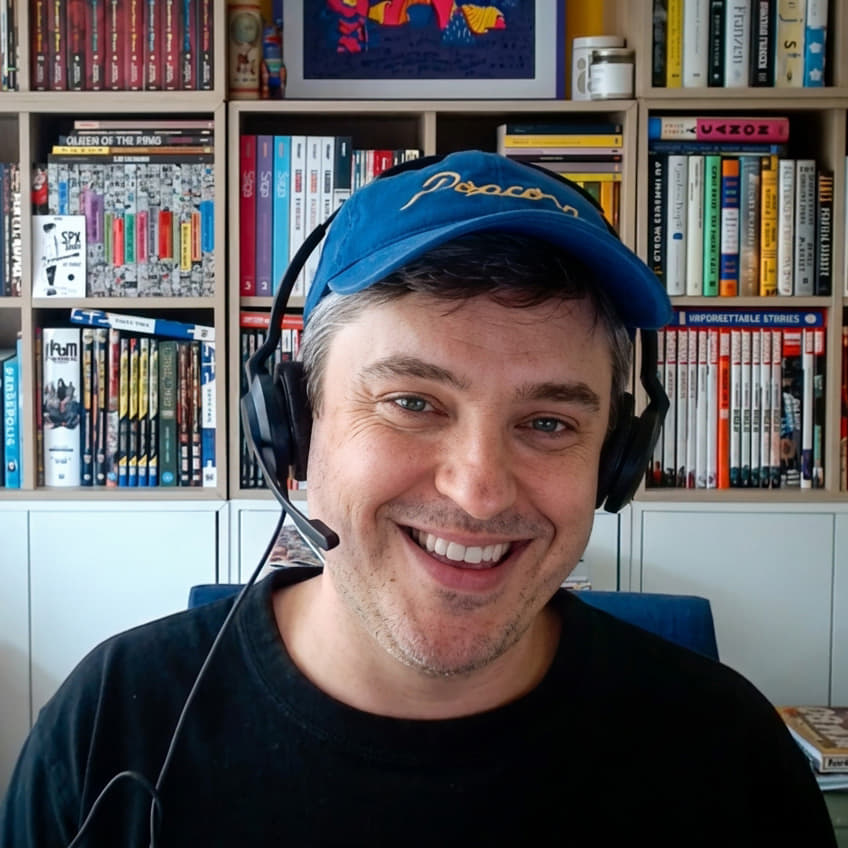
Follow Zack On Bluesky
📖 Back Death of the Comics Bookcase Volume 2 on Kickstarter
WATCH THE VIDEO VERSION OF OUR CHAT ON YOUTUBE!
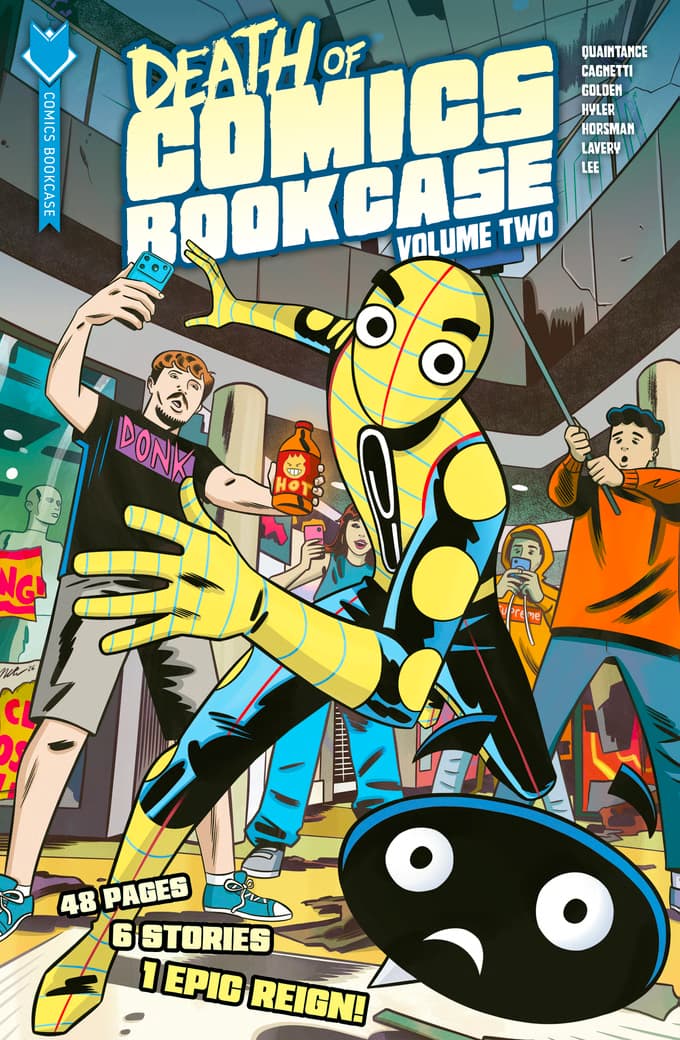
Death of the Comics Bookcase Volume 2: Reign of the Comics Bookcase
From the Kickstarter
Death of Comics Bookcase, Vol. 2 - Reign of the Comics Bookcases is a follow-up to the 2024 smash-hit comic, Death of Comics, Vol. 1, which raised $12K from 320+ backers. While each book stands alone, several characters who debuted in Vol. 1 are returning for new adventures in Vol. 2!
This issue features an oddball superhero lost in a dead mall, comics pros running amok at Comic-Con, mankind fighting to survive the slop-pocalypse, a space war between apes and sharks, and much more!
Follow Comic Book Yeti
🔗 Comic Book Yeti LinkTree: https://linktr.ee/ComicBookYeti
For partnership and ad inquiries, please contact: thecomicsyeti@gmailcom
Follow your hosts
ARKENFORGE
Play TTRPG games? Make sure to check out our partner Arkenforge. Use the discount code YETI5 to get $5 off your order.
Make sure to check out our sponsor 2000AD.

[00:00:00] - [Speaker 0]
Your ears do not deceive you. You have just entered the cryptid creator corner brought to you by your friends at Comic Book Yeti. So without further ado, let's get on to the interview.
[00:00:11] - [Speaker 1]
The future is calling. 2,000 AD is the galaxy's greatest comic with new issues published every single week. Every 32 page issue of 2,000 AD brings you the best in sci fi and horror featuring characters like judge dread, rogue trooper, and more. Get a print subscription in 2,000 AD, and it'll arrive to your mailbox every week. And your first issue is free.
[00:00:35] - [Speaker 1]
Or subscribe digitally, and you can download DRM free copies of each issue for only 9 a month. That's 128 pages of incredible comics every month for less than $10. Head to 2,000 AD and click on subscribe now or download the 2,000 AD app and start reading today.
[00:00:55] - [Speaker 2]
Hello, everybody, and welcome to the Crypto Creator Corner. I'm Byron O'Neil, your host. Today is a first for the show, at least I think it is. Two comic book nerds crazy enough to run their own comics journalism outlets sitting down together on the show. I promise we'll do our best not to devolve into one long bitch session because this man's got a campaign to run people.
[00:01:18] - [Speaker 2]
Please welcome the professor of panel pageantry, the regulator of run on reviews at the beat, the bookcase broker himself. Zach Quintance, welcome to the show, man. It's nice to
[00:01:28] - [Speaker 3]
see you. Yeah. Thanks for having me, Byron. I really appreciate it. Excited to be here and talk, my new book, comics journalism, comics bookcases in general, you know, whatever we want.
[00:01:38] - [Speaker 2]
Well, for for listeners who are on the audio, Zach has a a very nice like, I have some some envy right now. Like, my backdrop is nowhere near as nice as yours. Yours is is gorgeous. It's, like, linear and frames your head really nice. I mean, like, okay, you're giving me all kinds of envy.
[00:01:54] - [Speaker 3]
Yeah. Yeah. Yeah. You know, I saw this at IKEA, like, kinda fully shaped, not no comics on it, but they had it at an IKEA display, I was like, I must replicate that and fill it with comics. That's how this sort of came to be.
[00:02:09] - [Speaker 2]
Nice. It looks great.
[00:02:10] - [Speaker 3]
Yeah. Thank you.
[00:02:11] - [Speaker 2]
Well, the 48 page volume two of Death of Comics bookcase is launching soon, and we'll get into that in a minute. But first, I want to talk about the sort of the uniqueness of the avatar. Right? Something we both can relate to. And honestly, it might be unique among comics journalism sites to kind of embrace an avatar as heavily as both of us have.
[00:02:31] - [Speaker 2]
In my case, I inherited mine, but like these things do, it's kind of become more than just simply branding. It's kind of grown into its own identity. So tell me about the bookcase. You shut down the site as a news outlet, but the bookcase carries on. So why'd you do that to yourself?
[00:02:49] - [Speaker 3]
Yeah. Well, didn't want to lose the archives of all the work that was on the site, so I wanted to preserve it in some way. And at the same time, I was kind of moving away from doing my own outlet as sort of a one man show kind of outlet with a few contributors into investing some of that time into writing comics. And I always had a thing on social media where my social media accounts were branded comics bookcase, but I would use them sort of personally, like, just to share about the comics I was reading. It wasn't super, like, all marketing.
[00:03:28] - [Speaker 3]
So people started would call me like, hey, mister bookcase, or like, talk to me like like, yeah. You you must know being a sentient piece of furniture. And so when I when I went to do the first comics bookcase book, I I wanted to do a take on, like, the crypt keeper. And so that's how the bookcase came into being as our sort of narrator for this series.
[00:03:52] - [Speaker 2]
Okay. I'd that was exactly my read on it without even knowing that. I had the crypt keeper reference in my head. I'm not sure what the pronouns are exactly. You'll have to help me out if that's a he or a they or a she.
[00:04:05] - [Speaker 3]
But Call him he. Okay.
[00:04:08] - [Speaker 2]
He. As a as a framing device that stitches continuity across, you know, these individual stories in the project? Did you start out trying to build this as a sort of single narrative with the bookcase as the protagonist or, you know and then land on anthology shorts somewhere along the way? Like, how did this come about?
[00:04:25] - [Speaker 3]
Yeah. The first one was very much I was doing the shorts as pitches, like, to try to pitch longer series of publishers. I had the first two or three shorts that way. And then as I was working on those, I I wanted to get them into the world, like, kinda separate from publisher conversations. And so that's when the the idea of the framing vice came about for the first book.
[00:04:54] - [Speaker 3]
For the second book, it's entirely conceptualized as, like, the bookcase is now on a journey, and things are happening to him specifically. Yeah. And and there's more sort of a I think the second book is, like, less of an anthology and more of it's, like, thematically coherent with part of the idea behind it. And it's all proposed as, like, it's going to become a trilogy where the bookcase has kind of an a very ridiculous arc. Like, he's not, like, a at the center of things is a serious character.
[00:05:26] - [Speaker 3]
But, yeah, it started as a way to deliver this set of shorts that I had been working on for a couple years to people and now has become part of the whole the story, the bookcase kind of being the thing at the center that ties all this stuff together.
[00:05:40] - [Speaker 2]
Well, someone who's trying to break into the industry as a writer, how did that structure, if at all, do you feel like helped you along that journey?
[00:05:50] - [Speaker 3]
Well, the bookcase was a useful sort of avatar for myself to some extent. Like, there's there's a few jokes in the second one about it, but in the first one as well, there's kinda like a the bookcase is having a dilemma where he wonders what he should do. Like, if he should continue running a comics journalism website, if he should become a YouTuber, no. I think I'm too old for that. Or if he should should give the world new comics whether or not they they ask for them, which is sort of how I felt at that time.
[00:06:23] - [Speaker 3]
Like, should I keep running my website? Should I try this pivot into video that a lot of people are doing, or should I just do what I've always kinda deep down wanted to do and, like, create comics despite the road being hard and a lot of things being stacked against doing that.
[00:06:39] - [Speaker 2]
So as you're pitching this, because you you were talking about pitching the individual stories, I think there's a, maybe a misconception out there that, okay, I've got this comics journalism site. I know all these people. Certainly this will lead to a writing gig, But what's your experience been like? It's complicated, is how I would put it.
[00:07:05] - [Speaker 3]
Like that it's a complicated It is. It's a complicated pivot to make. Because there is that comics is small. It's a small ecosystem. If you do journalism for even a brief time within it, you will have pros and editors and publicists contacting you almost immediately as soon as you kind of get going with your show, your site, often more than you can handle.
[00:07:28] - [Speaker 3]
But to kind of pivot from that into being taken seriously as a creator is not a total restart, but it's also not it's not an easy pivot necessarily to make because people are contacting you for one reason, and it's very different trying to kinda reframe yourself as a comic book writer versus, like, you know, someone who can interview someone else about their new project. So it's taken a little work to kinda reframe myself that way. And I think the most important thing in that pivot is longevity. Like, they don't like, people want to be sure that you're kind of committed to doing this. So, like, the the when you start to do like, you I I did a 30 page one shot in 2000, and that was kinda like received, think almost as a novelty, because I was still doing my website at the time and stuff.
[00:08:27] - [Speaker 3]
But now that I'm on my third book, I think a lot of a lot of people, creators, editors, whoever, when they contact me, will frame it as like, I I wanna reach out to you with this because I know you do interviews and you also understand the creative process. And so that's been kind of a nice step forward for me to be seen that way and taken seriously that way. And tabling at conventions, I think, has also helped a lot for that, like, to be because when when you're doing that, when you're tabling at a con, like, you're you're there a 100% in the capacity as a creator in the trenches with the other creators at the tables beside you. And so I think that's been more than anything to make this kind of switch has really helped establish me more as a creator than just a comics journalist.
[00:09:14] - [Speaker 2]
Do you feel like between volume one and volume two, there's a significant difference in tone? I kind of picked up on it, but I'm I'm just curious what your your own is because I can imagine I know what Matt went through when he passed on comic book Getty to me, and everybody's going to have different emotions with those kinds of things. I think his ended up being, hopefully, I'm not speaking out of turn or anything like that for him on his behalf, but it you know, a little bit bitter, you know, just like I I thought there would be more support there, and I'm just kinda done, you know, Which is sad.
[00:09:51] - [Speaker 3]
Yeah. I've definitely had feelings like that. Like, especially when you're doing your own site because I don't think people understand the amount of I know you understand, but like, people who haven't done it themselves can't understand the amount of time and attention that doing your own fight takes, because you're not just like, a writer doing interviews or reviews, you're also a manager sort of hurting hurting the people who contribute, keeping everything on time, often making hard decisions around even if you're just doing reviews and interviews, you're still kind of forced to face some of the more complicated and toxic elements of the comics industry. Like, it's up to you do and you do a great job of handling that and and being very straightforward about what you will and won't cover and where you stand on things. But that that that's work.
[00:10:38] - [Speaker 3]
Like, that's work to decide, to process those difficult things, and decide where your sight's gonna come down on them, and how to move forward with them. And then, on top of that, you're also a marketing department. You're also trying to like, direct more people to your podcasts and your website and all this, and it's like, it's a quick education in, and I think this is true a lot in comics, in you're not you're not gonna you're gonna feel like you're putting more in a lot of times than you're getting back. And I think also not to speak for Matt, who I who I knew a little bit, but not super well. I think you also feel a pressure to cover as much as you can when you're running a site.
[00:11:18] - [Speaker 3]
Yeah. And the requests are just so constant. And even even if people are understanding about it or you don't have time to respond, like, feel bad for not being able to cover more. And I think those the combination of the amount of work you do and the stuff you can't get to that people are asking you for can really can really weigh on you after a while, which is kinda why I went to the beat. And, like, I was like, let someone else be at the top.
[00:11:43] - [Speaker 3]
Heidi McDonald, that's been her website for twenty years. And so I'm I'm able to kinda then just focus on the review section and not have to worry about marketing and some of the other other requests that come into the beat. So that's been that's helped me keep going. I don't know if I'd still be able to do contribute to comics website the way I am right now if I was still having to run my own. It's like a tour of service.
[00:12:08] - [Speaker 3]
I think you can do three to four years, and then it's time to kinda bash it on to someone else, maybe. That was my that's
[00:12:13] - [Speaker 2]
how I thought about it. I I get it. And and hearing you talk about the marketing, I mean, that is that is the challenge right now. And that's actually what I locked into with the second volume and reading the preview. The Strange Space comic sort of occupies right now, because you have some scathing commentary in here about social media culture, and you'll get zero argument from me there.
[00:12:35] - [Speaker 2]
But we're we're stuck in this ecosystem where promotion runs through, by necessity, those exact same channels that we've also grown to hate. And that burden is now falling on creators way more than it ever has, you know, as publishers are cutting back on their staff and that sort of thing. It's it's a really hard thing to reconcile in my brain, and something you've clearly been thinking about a lot.
[00:12:58] - [Speaker 3]
Yeah. Well, that that's the thing too is like, so the marketing comics landscape, it's like building a house on quicksand, right? Like, what you you can get a handle on it for a minute, and then next week, something totally new has become way more effective than the thing it took you months to learn. And so and, like, yeah, we are in a space now, I feel like, where there there is people like, I saw a post the other day that was, like, five indie comics you might not have heard of, and the first one was Spawn, and it had, like, 20,000 views. And I was just like, what are we doing here?
[00:13:29] - [Speaker 3]
Like, the stuff that feeds the algorithms isn't necessarily insightful or helpful to to most people who are deep into comics. It's like Yeah. Using the Spawn example, I mean, it if you haven't heard of Spawn, like, it's I don't know how you got into indie comics, you know? Right. But that stuff works on the algorithm, and that's and they gets a lot of eyeballs on it.
[00:13:53] - [Speaker 3]
And I think we don't know, like, maybe in other industries, they have teams to study this and do surveys and things to see, like, where their point of sales is working. But comics doesn't, by and large, have that. So we don't know if 20,000 views for an influencer's post is selling any comics. But we know a lot of we can see the numbers, and we know a lot of people are looking at it. Yeah.
[00:14:17] - [Speaker 3]
So that that, as both a creator and a journalist, is very, very tough. But I always come back to like, focus on what you can control. Make the comic you're making as good as you can. Work with the artist you love. Make the pieces you're you're publishing worthwhile, and comics has a good way of word-of-mouth supporting things that a lot of thought and care go into and more relationship based.
[00:14:43] - [Speaker 3]
So, yeah, I'm not I'm not making TikTok videos being like, here's my and and I don't I don't fault anyone for doing this, but, like, here here's my five under the radar comics of the of the month, and it's me holding them up in my office. Like, I'm putting that time into, like, reading more comics, writing more reviews, and trying to make my scripts as good as I can. And we'll see what happens with it. I could be totally wrong. That'll be the way to go.
[00:15:07] - [Speaker 2]
I don't know that there is a right or wrong. I mean, I'm I'm struggling with that myself and looking at how short form video is sort of taking over, and I'm embracing it and I'm actually kind of having more fun with it. So that's where my attention is more focused lately. And I think as, as journalists, we sort of have to follow our passion because otherwise you're just guaranteed to burn out, you know, and it's, I'm sure that'll shift and that'll change, you know, again, because that's just the nature of my own personality. I, I'm like, Oh, this is great.
[00:15:39] - [Speaker 2]
You know, and I really, I'm a learner. So I really like to focus on this, this new shiny thing and to try to really understand it. But as you say, you know, the ball is always shifting. It's really fascinating because I've talked to a lot of people recently and blue sky feels like a haven for professionals. And I get it.
[00:15:58] - [Speaker 2]
And I respect that. And as a creator, you have to set the boundaries of what you're comfortable with as a platform and, you know, in terms of your own personal access. Sure. No problem. At the same time, that's not where the fans are.
[00:16:12] - [Speaker 2]
The fans are on the breads. And so it's this constant, you know, we're having to make so many decisions.
[00:16:22] - [Speaker 3]
I know. Time is so limited too. It's like to get to get really good at to learn all these all these websites are their own ecosystems. Threads is a totally different thing than Blue Sky. And it's like you said, like, Blue Sky is the industry social media Thread is the reader, is arguably the reader's social media network.
[00:16:42] - [Speaker 3]
But they function on a different set of kind of social rules, and what people might look at on one looks at the other, and it takes a lot of time to figure those out and to build relationships on these sites. You just
[00:16:54] - [Speaker 2]
And can't do it then we have the cautionary tale in in our social media landscape of MrBeast, who okay, you may or may not have have a relationship with in the second volume, you know, like, he's such a Oh, it's weird, because he's such a willing sacrifice kind of on the social media altar, you know, but there's that cautionary tale in there for all of us about selling pieces of our souls, you know, for likes and that parasocial attention, which, okay, how much does that really amount to in reality? Nobody really knows, you know, because the lines have become so blurry.
[00:17:30] - [Speaker 3]
It's Yeah. Crazy. Yeah. The thing I'm like the thing I'm obsessed with is sort of artistic tradition to an extent. Like, don't think and this kind of shows up in the book a little bit in the story with that I worked on Nick Cagnetti, the responsibility in story, but I love Nick.
[00:17:46] - [Speaker 3]
Nick's work's fantastic. Yeah, yeah. I'm so great. This is we've the second story we've done and we're working on more and I'm really grateful to be doing a goofy superhero with Nick. But, yeah, it's kind of based on this idea that like, at the if you break if you continue breaking down all of this, threads, TikTok, whatever, the core of it is a corporate algorithm doing nothing but getting you to see to continue to view more content like there's not it's not you're and so like the thing I'm obsessed with is where how do you get that to serve you without without you becoming sort of a tool of the corporate algorithm ultimately?
[00:18:28] - [Speaker 3]
Like and it's really hard to tell. It's really hard to tell what you're getting out of it and how you're being manipulated and you know what works and like what what your posts kinda do in terms of audience but you don't know why you don't know if it's because the the algorithm is allowing it or because people actually like it and so yeah that that shaped one of the stories in the book significantly and it's something I think about a lot too and it's it's such human nature to be like to get 10,000 views on a thing and like it just feels good and like it can't fault anybody for that. But yeah, but then you start to think about, what what really happened there and who benefited from it and it gets a little more complicated.
[00:19:10] - [Speaker 2]
Oh, yeah. And you just want to bang your head against the wall. Like Threads is Threads is this I'm still trying to crack it. This is a weird animal and it is so hot take based. You know, I just threw something out there about Dungeon Crawler Carl and it happened to just, you know, that was one of the viral things.
[00:19:28] - [Speaker 2]
Yet I do this thing with the Ink Alliance, which is something that is so important. And I love Don't You Call A Carl. Don't get me wrong. But like the Ink Alliance interview is like, that's what I really want to promote. I want more people to pay attention to this because what they're doing is so cool and unique.
[00:19:42] - [Speaker 2]
And it gets like 11 and Dungeon Koller Carl gets like 1,300, you know. I was like, what are we even doing here? It's
[00:19:50] - [Speaker 3]
Yeah. Well, I, yeah, I had, I mean, I had a poor experience with this on old comics Twitter years ago when they Nicolas Scott did that Nightwing piece with all the different Nightwing's and the Nightwing in front is where he's like, you know, posing, looking over his shoulder and you can see his butt. And so like, I had that in a press release and posted it first, like, with the other pieces she did, and it got 50,000 likes and was share like, it was my biggest Twitter post ever. It went super viral. And at the same time, I'm, like, putting out these reviews that I've spent in other pieces on my website.
[00:20:24] - [Speaker 3]
I've put a ton of time out writing, and I'm raking in followers based on this Nightwing thing, and it just doesn't connect with the thing I'm actually on there to do, you know? So Right. Yeah.
[00:20:35] - [Speaker 2]
Yeah. The absurdity of it, you just sort of have to laugh at. I mean, that's the industry sometimes in a nutshell. Like, we exist in that really tiny bubble relative to the wider world, and, you know, most people that I know in real life aren't comic book fans, you know? I get a lot of those, you know, very nice pats on the head, and it's like, oh, you have a podcast that's about comic books.
[00:20:55] - [Speaker 2]
That's you're 50 years old. What do you do? You know? So I find myself connecting with their kids who are still reading comics, sometimes more than them, you know? And and you kind of have a story about the industry in in volume two as much as you can without spoilers inviting lawsuits or wounding egos.
[00:21:16] - [Speaker 2]
So what what exactly happened there San Diego that prompted that? So, yeah, I have
[00:21:22] - [Speaker 3]
a story in this book. It's kinda like it's almost if you've seen the movie Fargo and it says inspired by true stories, there's a little bit of Fargo to the way this is inspired by a true story. But it's two comics pros kinda get in a confrontation at a panel at San Diego Comic Con, and it becomes like a wild wrestling comic and goes off the rails from there. That that was just inspired by the amount of panels I've been to because writing for the beat and my own side, I've been to so many comics panels, and I think there's like a there's a there's a unique energy inside those panels. They're not supervised by anyone officially, and there there comes a point where the microphone at these panels goes to the audience and anything could happen with no one supervising it and no one no one to keep it on the rails and and it's it's a it's a really unique energy, I think, that you find at these comics panels.
[00:22:22] - [Speaker 3]
It's kind of exciting. Like like, when someone step steps up to dig the mic, there's like everyone quiets and looks and kinda like, what's gonna happen? And so the basis for this story is like, what if another pro showed up to sort of takes a piss, as they say, out of the the spotlight pro? And yeah. And and there's all these classic stories, like, about pros crashing other pros panels that you hear about from years back.
[00:22:53] - [Speaker 3]
And so, yeah, this was just kind of my ode to that energy and volatility that you only find during the q and a section section of a comics panel.
[00:23:02] - [Speaker 2]
Okay. Okay.
[00:23:03] - [Speaker 3]
Yeah. And the title of it is, Randy Ryder, Buff Guy, Comics Pro, and I that title just came to me one day. I was like, I have to do I have to do something with Randy Ryder, Buff Guy, Comics Pro.
[00:23:14] - [Speaker 2]
I mean, it's such a strange microenvironment, right? It's it's all foam swords and bizarre, pop culture references that are all of a sudden cool and have some weird sense of currency, you know, but it also has its own rules that, you know, intrinsically everybody sort of knows, like, where else can you say cosplay does not equal consent in any other context, and that makes any sort of sense.
[00:23:40] - [Speaker 3]
Yeah. You know?
[00:23:41] - [Speaker 2]
So it's, it's a cool environment that requires zero world building really, because as a reader, you already know the context of it, you know, or at least even if you haven't been there, you've seen it and you've wanted to be that person in the room. So it's a cheat code, Zach.
[00:23:59] - [Speaker 3]
Yeah. It did it did require less world building, and it's like anyone who's who's followed comics for a while knows the outside of the San Diego Convention Center without even being there. Like, it's an easy an easy setting to do, and I feel like I was ready to make some inside jokes about the industry and the amount of time I'd spent covering it. So the nice canvas for that.
[00:24:22] - [Speaker 2]
Yeah. I always go through the FOMO during convention season just because of my illness and because I I can't be there, you know, for con cred, that's a thing.
[00:24:30] - [Speaker 3]
I get it. Yeah. I've I've get very sick often at those things. But also, like, yeah. I don't know peep people love cons I I've had good cons and bad cons but it's not it's an intense environment it's not afterwards it's easy the social media is very effusive like what a special experience this was amazing But also it costs a ton of money to go to those things and it's like exhausting and you might get sick.
[00:24:57] - [Speaker 3]
Like they're not it's kind of a double edged sword to be able to have to go to those things often.
[00:25:04] - [Speaker 2]
I have a very complicated relationship as well with, with Comic Con. I mean, sometimes I wonder if I'm better off honestly just not being there and embedded in it, you know, as, I guess, the avatar of an outlet. Certainly I would get a chance to hang out with people, see some people that I consider parasocial friends, you know, that I've never actually met in person. But at the same time, it's kind of what we were talking about earlier. It's just going to lead to yet more guilt because the more you know some person when they come knocking at your door via the email box, then you're going to be like, Ugh, I really don't have time to do this, but Yeah.
[00:25:46] - [Speaker 2]
Now I got it.
[00:25:48] - [Speaker 3]
Yeah yeah yeah. No, there is some of that to it. I I am a bigger fan of sort of like the local shop signing. So like someone comes to do a signing at a local shop, you can hang out with them a bit. Like that's that's a little more my speed than the MegaCon.
[00:26:04] - [Speaker 3]
But Gotcha. And but you you the way you have, like, this show and everything, like, you still get to spend face to face time with people and get to know them and and chat and that kind of thing. And that's really the the best part of those shows every time. It's not it's not the, like, free Ashcan you get before the Marvel panel. Like, it's not much more about, like, who you get to say hi to, and you can you can do that over the Internet, like, you know, these kind of things.
[00:26:29] - [Speaker 2]
Yeah. Yeah. Absolutely. Well, you seem to also have an affection there for wrestling, which shares some of the same dopamine channels for most of us anyway as as comic books do for obvious reasons. I was a a production assistant for WCW writing during the Attitude Era.
[00:26:47] - [Speaker 2]
Yeah. So who's your favorite wrestler? You gotta spill that.
[00:26:53] - [Speaker 3]
From that era or just generally?
[00:26:55] - [Speaker 2]
Oh, from any era. That's just my curiosity.
[00:26:58] - [Speaker 3]
I've always liked Sting. I was always a huge Sting fan as a kid, even though they got became the crow later. But, yeah, I was always a big fan of Sting. The this comic was specifically inspired by that era. Like, it was I'd seen that Netflix doc about Vince McMahon that came out, like, I think I was saying 2024 or whatever.
[00:27:18] - [Speaker 3]
And so then yeah. Then I went back and rewatched a bunch of the, like, starkade and all these pay per views I remembered from being a kid because you can stream them now pretty easily. Like, and so I had, like, a a winter of watching nineties wrestling. That's, like, what inspired a lot of this. Who's your favorite?
[00:27:36] - [Speaker 3]
You you now you have to tell me who your favorite wrestler is.
[00:27:39] - [Speaker 2]
Oh, absolutely. Mine was Jimmy Superfly Snuka. That was as I was a kid, absolutely loved him. Yeah. But I don't know.
[00:27:48] - [Speaker 2]
Again, just like the the shared sort of envelope universes. Right? So given his third degree murder charge, it seems like wrestling and comics unfortunately share this, like, fallen hero trope. And I'm thinking of the Ed Brubaker news that hit other day, which was an absolute gut punch. And I was like, why can't these these people just be decent, normal human beings?
[00:28:12] - [Speaker 3]
Yeah. Well, fun fun fact, like, not to transition from that to a fun fact, but let's be but there are some. Like, I went to the same college as Randy Savage or Randy Pulfill or however you say his name, and I think he's a pretty good guy. And I as a as an actual person, and I think he's one of my favorite wrestling figures of all time, I was kinda thought he was a good good guy. And his legacy has aged really well for that kind of thing.
[00:28:37] - [Speaker 3]
Some of the interviews he did in that. Yeah. Yeah.
[00:28:39] - [Speaker 2]
I mean, it's having been around and involved in it during the attitude area, which I don't even think there's an argument to say was the most unhinged and crazy and pushing it. And Machismo and Roy's I mean, I can keep going here. But, like, it was Yeah. It was extreme. And to to actually live that, I mean, it was the wrestlers coming in from everywhere, and, you know, there was the drugs, and there was the, you know, after hours.
[00:29:07] - [Speaker 2]
I didn't I can't even tell you how many times I was taking people to strip clubs.
[00:29:11] - [Speaker 3]
Yeah. Yeah.
[00:29:11] - [Speaker 2]
At at two in the morning and other stuff.
[00:29:15] - [Speaker 3]
Yeah. I was sure you have a lot of and the money coming into the industry at that time too was pretty, you know, everyone was riding high, it seemed like. But they didn't see it.
[00:29:25] - [Speaker 2]
That was the crazy thing. I mean, you had some wrestlers who were who were doing okay, you know, but you you still didn't have the protections there. And, I mean, Vince was a significant part of that, you know, just ensuring that they didn't. Know, was like almost an indentured servitude. I mean, like, didn't own, you know, in most cases, the rights to, you know, your own image.
[00:29:47] - [Speaker 2]
You know? T shirts are selling out like candy. I remember Diamond Dallas Page going through this. It was, you know, half the stadium at one point was wearing his T shirts, and he's just, you know, trying to make it scrubbing pennies by to make it to the next gig. Man, that's
[00:30:03] - [Speaker 3]
that's another parallel with comics too, you know, like, it's a yeah. I don't think never thought of it that way with the exploitation sort of of contract labor of people who love the medium of what they're doing more than looking out for their own interests and also kind of only having a few big options for employment, know? Yeah, there's a lot of parallels into how they work as businesses.
[00:30:26] - [Speaker 2]
Yeah. Well, let's shift it before we get too dark.
[00:30:30] - [Speaker 3]
I know. Too depressed about things we love.
[00:30:35] - [Speaker 2]
Mean, comics journalism has always been a unique pathway. Feel like for, especially up and coming writers into the medium. I've talked to Steve Fox and David Pepos, you know, who cut their teeth doing it and have attributed their time doing it to definitely making them a better writer and preparing them for understanding and navigating the intricacies of this sort of weird medium that we're in. Do you feel like that shift towards short form video is going to kind of slow that pipeline or, or change it? Know, are we going to have as many developmental opportunities for people who are trying to break in?
[00:31:13] - [Speaker 3]
That's a great question. Yeah. I hadn't even considered that. I don't know. Like, I I don't think it on the networking side, I actually think doing short form video will help you network better and meet more people than you did sort of doing print journalism, your your face and personality are so forward in that in those videos.
[00:31:40] - [Speaker 3]
So people know you as a figure more, but in terms of learning the industry and just honing the craft, probably not as helpful. I mean, I don't think there's as much to be learned from like I was saying earlier with the gaming the algorithms is not gonna teach you as much as you used to learn from having to conceptualize a really good set of interview questions or write a really thoughtful review and present it in a way that will get your review read and also represent the comic well. I think those were those were beneficial to me personally. And I don't know that I would have learned as much from holding up comic pages and being like, look at this cool thing or whatever you do that works on short form video. Like, I'm exposing my how bad I am at it here a little bit.
[00:32:35] - [Speaker 3]
But but that yeah. So I think in terms of preparing you to actually write, probably not as helpful, but in terms of getting you yourself out there as a personality, which is a big part of making comics, like, especially as a writer, like, who you are and your personality and who you know really helps you build an audience and kind of make the connections you need to make your books. So you benefit that way, but probably not be as well prepared to like learn the industry or, you know, write the actual scripts, which is very important. The most important thing.
[00:33:11] - [Speaker 2]
Yeah. And it's something I've been giving a lot of thought to recently is just the with a written form journalism, your I don't feel like there's as much personality injected to it. And I think that's actually a good thing because the focus is on the answers. Like it's who you're actually interviewing. Whereas now I think it's just muddy waters because, yes, you know, I look at what my son watches all the time and me getting into this short form platform, like, I I can't do this.
[00:33:46] - [Speaker 2]
Like, I well, maybe I could, but I'm not because it doesn't, in any way, feel genuine.
[00:33:50] - [Speaker 3]
Exactly. It's just
[00:33:51] - [Speaker 2]
so amplified, and the personality is the that is the projection, you know? And it's like, though, it's almost like wrestling. It's like, oh, you know? Everybody's gotta be Ric Flair on here. And at some point, you're you're not really talking about the book anymore.
[00:34:11] - [Speaker 2]
You're almost acting?
[00:34:14] - [Speaker 3]
If it you you're definitely acting. Yeah. There's there's an acting side to the whole thing and you're yeah. It's like K fab, right? Like you're you have a you're not, talking to your video account the way you talk to your partner or your family.
[00:34:27] - [Speaker 3]
Like, it's not who you are necessarily as a person that's that's gonna work on those videos. Yeah. I don't know. Probably, I'd love to I'd love to ask, like, a really successful influencer their experience. That'd be a good interview to do for a website, to interview a comics influencer, kinda
[00:34:50] - [Speaker 2]
And to to do it on You can do it. Well, I I said I almost said on paper, but like
[00:34:55] - [Speaker 3]
It's not paper
[00:34:56] - [Speaker 2]
anymore, I that shows my age.
[00:34:59] - [Speaker 3]
Guess it could be. Well, mean, have Comics in Magazine, you know? Comics Tiffany Babb has the Comics Courier and the Comics Stable, which just came out this month's first issue in September. So print print is is making a brief resurgence with that with those three, the Comics in Magazine and those Tiffany's projects, yeah.
[00:35:21] - [Speaker 2]
I'm still waiting on those to hit in in my mail. I saw, that comic book couples got theirs the other day and I was like, Ah, where's mine?
[00:35:29] - [Speaker 3]
Yeah. I'm a contributor. I should say, I'm a contributor to the comic staple. Got my contributor copy earlier this week, and it was pretty it's a cool it's a cool little I have it back here. It's a cool little zine kind of thing, and we're already working on the next one.
[00:35:44] - [Speaker 3]
So it's been really fun to be part of those. It's just always like seeing your name byline in print, nothing like it. You know? Like, that's it's always more fun.
[00:35:53] - [Speaker 2]
Yeah. That's that's another thing with the short form versus the, like, print. And I know I say I say print, but I think that larger is also to include podcasts because it's you know, we we talk about, you know, comic book couples, you know, or we talk about Sketch, you know, and it kinda include them in in that sphere. I'm with you. Certainly with Sketch, he David's doing so much more writing now.
[00:36:18] - [Speaker 2]
But that community, everybody is is so kind, you know, and I feel, I mean, this has been my impression anyway, from, from that network and sphere of people that I've interacted with, everybody's really supportive of each other. Yeah. There's not a, you know, the staple comes out and it's not like, I'm feeling like, Oh man, you know, I'm missing out or why didn't I do that? You know, I want to applaud it and like lift that up and support it, you know, and I have, you know? And, the, more of the influencer sphere is not like that.
[00:36:54] - [Speaker 2]
You know, you're seeing, it's like yesterday, and I did not have the energy to like track it down or figure out what the hell was going on, but it was some kind of beef going on with somebody saying something and all the other influencer, And I'm not I'm not bad mouthing anybody. I don't know the context, but it just it doesn't have that same doesn't feel like it has that same level anyway of mutual respect and support. Maybe I'm wrong.
[00:37:17] - [Speaker 3]
I, yeah, I can I can speak more to how supportive like, I don't think my experience has not been competitive at all with comics journalism? Like, I don't feel in competition with anyone else who does it. I think part of that gets back to what we were talking about earlier with the sheer volume of requests for things to write about. Is it feels like we're all sort of holding a dam up as a flood as a flood of coverage comes in. We're all side by side there, and it's like, if you can help me plug a hole here and cover this.
[00:37:47] - [Speaker 3]
Like, I I just don't feel competitive about it. And I always say, like, comics journalism is a compulsion to some extent. Like, it's not a rational thing to be doing. If you're Absolutely. You have
[00:38:02] - [Speaker 1]
to have a you have
[00:38:03] - [Speaker 3]
to be compulsive about wanting to cover the things you like, wanting to help independent creators, wanting to keep big publishers accountable. Like, these are all compulsive things that probably aren't ever gonna benefit you in any way that makes sense with the amount of time you have to put into it. I would imagine that in the influencer sphere, they're making money maybe? Like, and that's part of why Some of them are. Some of them There's money to be had, perhaps, with the size of the followings they get, and maybe that's why it's a bit more tense.
[00:38:35] - [Speaker 3]
But that's just an assumption. You know, money competing for money complicates things. It it has a way of turning people against each other, which we're not really subject to in the in the in the podcast and print side of things too much. So I think that might
[00:38:54] - [Speaker 2]
be part of it. Somebody about a year ago now, who had reached out to me and was looking for advice. And I'm like, look, whatever I'm dispensing, if you want to call it advice, fine. I can only probably, you know, speak to the mistakes that I have made and hopefully having learned from them. But anyway, that's where we were at.
[00:39:15] - [Speaker 2]
And they're now since gone. And it was that, that cautionary tale about what I'm trying to monetize the YouTube channel. I'm like, okay, if you really want to monetize the YouTube channel, if that is really what you're about, then you don't need to be doing comics interviews. You need to be focusing on the latest Superman movie and a and a response to that. You need to be talking every single week about lanterns.
[00:39:41] - [Speaker 2]
Yep. You know, that is the only way you are going to get enough followers to actually put yourself in a position to make any money to get even close to a livable wage, like in comics journalism. And I'd you know?
[00:39:53] - [Speaker 3]
Oh, yeah. Yeah. Yeah. I mean, I'm really up whenever I talk to anybody about it, I'm really upfront. Like, if you wanna write about comics, you need to love writing about comics.
[00:40:01] - [Speaker 3]
Like, there's you're not it promises you nothing else but enjoying the practice of doing it. Like like so that you really have to love doing that and feel like it's a valuable use of your time, which I would argue for me it is. I think if there's certain personality types that just gravitate towards it and do it really well and and kinda love the process, and that's why you have to do it. But, yeah, like, making any kinda business sense out of it, like, do something else, essentially, is my advice. Yeah.
[00:40:32] - [Speaker 2]
Yeah. Well, let's wrangle it back. So hopefully we'll get some, some listeners to actually back the campaign.
[00:40:39] - [Speaker 3]
Which I would. Yeah. Yeah. There is a financial component to the campaign.
[00:40:44] - [Speaker 2]
So you're working again with some indie artist darlings here for volume two. We talked about Nick Cagnetti, huge fan. You know, are you scripting first and casting the artist later? Or do you have a wish list of people that you just built up over the years that you build concepts around?
[00:41:02] - [Speaker 3]
Yeah. I I've never scripted with the exception of maybe one story, I've never scripted a comic without knowing who I would who my dream artist to draw it would be. And in this volume in particular so three of the artists are returning from the first volume. Nick Cagnetti, who we talked about, Ryan Lee, who draws the framing sequence with the bookcase narrator, and he's done comics with John Lees and draws some of the best monsters in all the comics. And Luke Horseman, who's a two thousand eighty artist.
[00:41:34] - [Speaker 3]
He's worked on judge dread and some other strips for them. He does my fantasy character Goldmith. So, like, I have preexisting relationship with them. We're continuing the same story we started. A lot of this comic was born out of HeroesCon in Charlotte.
[00:41:48] - [Speaker 3]
Like, I I'm a big fan of HeroesCon, and that's how I met John Golden, who draws the the San Diego Comic Con wrestling comic we discussed, as well as Jeremy Hyler, who kinda, he and I worked on a riff about Terminator together that's in this book. And he like, it's as simple as, like, I walk by their tables, really like their stuff. We start chatting, and then I think, I I should write something first, make sure it's good, and then see if they wanna work on it. So that's kinda kind of a I meet the artists, we get along, I like their work, and then I I write with them in mind. Okay.
[00:42:24] - [Speaker 3]
And then I I bring the script to them, and, like, we can collaborate on it and change it from there. But I always wanna bring them something that's gonna seem fun so they know it's a serious and a and payment offer upfront so they know the whole thing's kinda serious and can envision what working with me would be like. Yes. That's how that's how the artist roster sort of came together for this.
[00:42:47] - [Speaker 2]
Okay. Is volume two already a 100 completed at this point?
[00:42:51] - [Speaker 3]
100% complete. Yeah. Yeah. Volume two. I I've done four Kickstarter campaigns now.
[00:42:58] - [Speaker 3]
In the very first one, I did 10 pages, and then we had to do the other 20, and the artist on that project in the intermittent time, his house burned down in a wildfire. And so, like, it was a very stressful experience, and I kind of vowed at that point I wasn't gonna do another crowdfunder again without paying for it first and then trying to recoup the money just because it was so hard to get
[00:43:20] - [Speaker 1]
that book done. And so I took
[00:43:22] - [Speaker 3]
three years between that comic and the first that the comics bookcase to save money to pay the artist and get it all done. And now now I'm in a position where the last two have funded last two books I've done have funded, so I've been able to roll over the funds and invest ahead of time and that's how this one will work too. If it funds and does well, that money will go to doing the next comic ahead of the Kickstarter and we just keep going from there. Yeah.
[00:43:45] - [Speaker 2]
That makes a lot of sense. That's a lot less stress on your shoulders for sure.
[00:43:48] - [Speaker 3]
So much. And I think it's like, I want people to have a really good experience on Kickstarter, right? Like I don't want them to, a, have to worry, like, is it gonna get done? And then b, also, I think excitement for Kickstarter campaigns peaks during the campaign. And so I try to print and deliver the book while they still remember what it is and are still excited about it ideally.
[00:44:12] - [Speaker 3]
So it's kind of a two two pronged thing to why I take the risk upfront with the financial side of things, then run the Kickstarter to fund the print run and get some of my production costs back for the next one.
[00:44:27] - [Speaker 2]
Well, you've been on this longer than me, so what's your take on kick starting, crowdfunding, comics in terms of that ecosystem? Do you feel like it's growing? I I certainly feel like it is, you know? Yeah. I always have this this lingering thing in the back of my head.
[00:44:45] - [Speaker 2]
It's like how much budget do people have to stretch every month? And maybe, you know, that's just my own personal experience. I have a monthly comics budget. And I look at stuff, I'm like, I'd really like to back that, but I can't because this is the finite amount I got.
[00:45:00] - [Speaker 3]
Yeah. Yeah. I do think it's growing, and I think it's refining itself. I think four or five years ago, people would there were a lot more Kickstarters people would kinda go into recklessly. And not recklessly, but just kinda without understanding what was gonna be required to them to make and deliver it.
[00:45:21] - [Speaker 3]
And I think now, not only are there more creators on Kickstarter, but you can find a lot more comics that are pretty refined, that are pretty, like, in line with what you get from a direct market comic from people who know what they're doing making comics. Like, it's become a more mature platform for the people who are are running repeat campaigns, and it's just like it's been around longer as a mechanism for doing it. So people have more experience and are getting better at it. And it it is like you said, like, you can't back every campaign. I've backed almost 500 myself.
[00:46:00] - [Speaker 3]
So it's like I'm a bad person to talk about. But, like, I don't my comics budget is entirely collections and Kickstarters because I review so much for the beat. Like, get single issues I read digitally. I get in advance, so I don't buy single issues. I Yeah.
[00:46:16] - [Speaker 3]
Buy, as you can see from the bookshelf, plenty of collections of the stuff I like, and then I invest most of my money into Kickstarter comics. But I think, like, yeah, you just have to kind of pick your spots. There's and you have to enjoy the feeling of being more connected with your with creators. Like, that that's part of what you're buying for, like, a comic on kickstarter might with shipping might cost you $15, whereas you can get the same length comic at your local shop for 5. But Right.
[00:46:46] - [Speaker 3]
Ideally, like, way I try to do my last campaign had a had an option where you got a postcard that appeared in the book, and I wrote in I wrote personalized notes on all those thanking people. Like, I took it three days and ruined my hand, like writing handwriting notes to everybody just because I I try to respect that, that part of what you're spending the money on is having a little more intimate feeling with the book and the creator. But, yeah, I think it's a force for good, and I've had some of my most rewarding experiences supporting comics through crowdfunding, and I'm happy to be on that platform, despite how much work it takes to to do it and and to market it and kinda get these campaigns over the line every time.
[00:47:38] - [Speaker 2]
Yeah. As somebody who grew up getting comics in the mail, there's something very, very satisfying about getting it in the mail and even not knowing it initially. Okay. What exactly is this? You know, you don't maybe you can look at the the address and you'd be like, okay.
[00:47:52] - [Speaker 2]
I'll associate that. But there's I don't know. There's something special about just opening a package that came for you in the mail. Yeah. Getting comics in
[00:48:00] - [Speaker 3]
the mail is awesome. It's super fun. Like, like, it's you know? Yeah. I grew up with that too.
[00:48:04] - [Speaker 3]
Like, had a subscription to Uncanny Axe Man as a kid, and it would come once a month in the mail unexpectedly. Yeah. And Kickstarter does that a little bit. Like, you get these, like, rectangular cardboard boxes with indie comics. And, like, somebody was talking about this the other day.
[00:48:20] - [Speaker 3]
Was an article or something calling comics the last truly bespoke entertainment medium, and I think there's a lot of truth to that. Yeah. Yeah, for sure. There's not a lot of over like Kickstarter, it's just people are making art and delivering it to you. Like, there's no in between there.
[00:48:38] - [Speaker 2]
I was my brain went to, Oh, it's the Medicis all over again. Like, holy we're we're all part of the Medicis. Yeah. You've got recurring characters like the Responsibilitine, carrying into volume two, and now we have volume three. But as you build this thing out, how much is designed as a shared universe versus these standalone stories?
[00:49:03] - [Speaker 3]
Part of the idea is it's sort of like a skunk works. So like, the the hope is that some of this stuff will spin off. Like, the first one, we spun off my my last comic was called Macabre Valley. It was a horror comic with a Yeah. It spun out of eight pages in the first one.
[00:49:20] - [Speaker 3]
And then the hope is that so when you pick up the second one, one of your favorite stories next year might be hitting Kickstarter as a one shot or picked up by a publisher down the road as a miniseries. So that's kind of the idea behind it. Like, some of them are just built to only be like, Randy Ryder, Buff Guy Comics Pro will only ever appear in well, I don't wanna say ever beyond a shadow of doubt, but will probably only ever appear in the com death comics bookcase world. Whereas some of them else, some of the other ideas are built to spin off into bigger stories and become their own thing.
[00:49:53] - [Speaker 2]
Okay. Well, you officially leveled up because some of your characters have beef now. There's a rivalry that exists. Know, what started up as a like a team up with Joey Esposito and Sean Van Gorman's The Pedestrian at Baltimore Comic Con has apparently escalated into a rivalry between the Responsibility teen and The Pedestrian. So, you know
[00:50:14] - [Speaker 3]
It's like Sonic and Knuckles. It's kind of a the the way Sean framed it, who's much better at marketing this kind of stuff than I am. But yeah. Yeah. I remember he came up to me in Baltimore and told me, like, when we were doing the pedestrian, your character was the only one we were worried about.
[00:50:31] - [Speaker 3]
So it's kinda sparked the weirdo, oddball superhero rivalry the two characters now have.
[00:50:40] - [Speaker 2]
That's hilarious. Yeah. Sean, if anybody is gonna be the hype man, that would be Sean. He's got that energy. He could be an influencer.
[00:50:48] - [Speaker 2]
He should do more of that stuff anyway because Oh, totally. It's just natural personality, know? He's just that built that way. He's a fantastic comic artist, but
[00:50:56] - [Speaker 3]
he's also low key the best marketer in comics. Like no one no one promotes their own work and other he's very kind about promoting me and Nick's character every chance he gets and is very generous about that. But, he's just good at it. Yeah. I I ask him for marketing advice, and he's very nice about making time to kinda advise me on that kind of stuff.
[00:51:20] - [Speaker 2]
Yeah. I love Sean. Well, Death of the Comics Bookcase volume two reign of the comics bookcases hits Kickstarters in September? So we're looking at, like, about a week ish?
[00:51:31] - [Speaker 3]
September 15. Yeah. That's the plan. My launch day. Yeah.
[00:51:36] - [Speaker 2]
Well, six new worlds, same unhinged energy, and a killer artist lineup, including Nick Cagnetti, John p Golden, and more. If you back volume one, you already know what you're in for here. If you didn't, it's your time to get in on Zach before Zach blows up, and you can no longer say that you knew him when and pull out that quote post that you made from years ago that you actually said he's gonna be the next big thing. So make sure make sure to back the campaign. I'll put links in the show notes so it's easy for listeners to find.
[00:52:05] - [Speaker 2]
Before I let you go, we do a shout out around here to keep things positive before wrapping up. I think we've given people enough of a dose of reality in this episode, so let's let's let's stay positive here at the end. It can be something that inspired you recently, someone who helped you out you'd just like to thank or an expression of gratitude. I'll go first to give you a minute to think about this. Mine is Pokemon GO, and that may be a weird one, but my son left for college a few weeks ago.
[00:52:30] - [Speaker 2]
And even on his busier days, I usually get a text from him about him playing at school. You know, we started playing together when it first came out, which was ten years ago, I think now, you know, and if there are any kid or any parents with younger kids who are listening, like those established habits, you know, and being involved with whatever your kids are into, not as an observer, but as like an active participant. You never know what will be that thing that sticks with them. And it'll be the shared experience when they're actually, I hate saying this, an adult as mine is. So when they're out of there on their own, they might actually communicate with you in a weird way like Pokemon.
[00:53:11] - [Speaker 2]
That's mine.
[00:53:12] - [Speaker 3]
That's really nice. You got? That's really nice.
[00:53:14] - [Speaker 2]
Yeah. I mean, it's pretty cool. I mean, he's biomedical, engineering is his major, and I get, you know, he's like, Hey, dad, do you know that the armored Mewtwo raid is going on this weekend? Like, yeah. You know, I also that's also advice to parents with younger kids that might be listening.
[00:53:31] - [Speaker 2]
Play dumb like you don't actually know more than they do.
[00:53:34] - [Speaker 1]
Yeah.
[00:53:36] - [Speaker 3]
That's really nice too though because, you know, kids go away to college and parents are like, haven't heard from her in a while, but you guys are talking about Pokemon. It's like, you know, a good way to keep them Yeah.
[00:53:45] - [Speaker 2]
Way better than the text my wife gets, which is, where's the toothbrush charger? So Which did happen. That indeed happened. The kid did not know where his toothbrush charger was, so
[00:53:57] - [Speaker 3]
Well, you're it's a time of learning, right?
[00:54:01] - [Speaker 2]
Boy is it ever. Boy is it ever.
[00:54:05] - [Speaker 3]
Cool. That's a great one. I'm gonna shout out another comic if that's cool. Is it is it Yeah.
[00:54:10] - [Speaker 2]
Yeah. Whatever. Yeah. Last week,
[00:54:13] - [Speaker 3]
I was I was lucky enough to my my good friend, and I'd say almost he doesn't probably think of himself this way, but he's been a great mentor to me. Oliver Mertz, he's a writer, colorist in comics, and he's got a new book out called The Ghost Arm Made of Angry Ghosts.
[00:54:27] - [Speaker 2]
That's a great book. That's so it's a wild book, but it's good. It's so good. It's one of my favorite I read a lot of comics.
[00:54:34] - [Speaker 3]
It's one of my favorite comics of the year. I think I would recommend it to everybody. It's a it's an oddball, and it's also right in keeping with our character in the pedestrian, like, the kind of oddball approach to superheroes, but it's like a superhero murder mystery set in D C, and he was and it's got punk rock elements to it too. Was having a book release party, and he invited me to moderate the a discussion with him about the book. And I was so honored to have anything to do with this book to get to feel the community because it was in DC, and they had a punk rock show after and a dance performance before.
[00:55:08] - [Speaker 3]
It was like really a different sort of a very different sort of comic relief party than I've ever been to where it's usually just kind of a signing. And I left like just feeling like very happy for my friend and also just kinda rejuvenized by the community and, like, the packed room that came out to appreciate his good book, his personal perspective on it, and the sort of culture in the DC punk rock scene, which is also very inclusive. Yeah, I did that last week, and it's given me it's given me a great dose of inspiration for continuing to be part of the comics community, so really grateful for that.
[00:55:47] - [Speaker 2]
That's awesome. I, you know, honestly, lately, I think I've had more FOMO for not being in New York for some of the cool stuff that seems like it's going on with comics there than any con, because they've had the community action. I don't think political action is accurate. But Greg Pach and Julio Anta and Dimitrios, from anyone, you know Yeah. Getting together and and just doing some cool stuff, you know, just civic responsibility kinds of things.
[00:56:18] - [Speaker 3]
Anyone comics is so awesome about that. Like, Demetrius over there, it's more of a community space almost than a retail front. Like, it feels like that. Like, they have so much they're so great with their community and with great causes and supporting local creators. Yeah.
[00:56:36] - [Speaker 3]
I'm lucky enough that's the closest shop to me. I go there, stop in whenever I can. I've got my books there. So yeah.
[00:56:42] - [Speaker 2]
Nice. Yeah. Yeah. It's a great shop. Yeah.
[00:56:44] - [Speaker 2]
I was lucky enough to just get a chance to talk with them on the show and just it was sort of random. I can't even recall exactly who recommended it as a shop, but when I do the let's talk shop segment, it's always, I'll interview somebody who's like, hey, who's your local shop? And then I'll reach out to them and just interview a shop owner. And he was one of the people that came in through that channel, and we've stayed connected and just amazing, dude.
[00:57:08] - [Speaker 3]
He's doing a print publication about comics too that's specific to I forget what it's called. It's like a little newspaper that's specific to the shop, but it's got cartoons and news writing about comics and other community stuff in it. So yeah, it's part of that.
[00:57:20] - [Speaker 2]
I haven't seen that. Okay.
[00:57:21] - [Speaker 3]
2026, the year of comics print. Comics journalism print. Well, bring it
[00:57:28] - [Speaker 2]
back, despite the inertia against it.
[00:57:31] - [Speaker 3]
I don't know.
[00:57:32] - [Speaker 2]
Think people want it. Was talking with somebody the other day, and we were talking about how print media, not just print media, but physical media, is desired, you know, amongst the younger generation because they're just sort of and I think it's a natural rebellion, but they're just rebelling against the corporatization of all their communication structures. So they wanna be able to have a physical book. They wanna talk to friends about the physical book. You know, they don't they don't necessarily wanna do it online.
[00:58:02] - [Speaker 2]
You know, they want records. They're getting into knitting and, you know, making quilts and stuff. It's it's wild, but hey, I'm
[00:58:09] - [Speaker 1]
I all think it's a a
[00:58:12] - [Speaker 3]
long, long held truth that people enjoy having stuff. They don't just want it as a little icon on a screen, they want actual stuff. It feels more meaningful.
[00:58:24] - [Speaker 2]
Yeah. Yeah. Well, I mean, I was an anthropology major, so I'm obsessed with physical culture and and people's manipulation of it and obsession over it and everything anyway. So, yeah.
[00:58:36] - [Speaker 3]
Yeah. I'd like, as someone who's never stopped buying too many records and movies and comic books and collections, like, it's really nice now that collecting that stuff is like an act of resistance and also hip with young people because it's like, I've been here forever and now it's come around back in vogue and it's a way to like sort of fight some of these forces that make us feel less than human sometimes.
[00:59:01] - [Speaker 2]
Yeah. Well, Zach, thanks for coming on and hanging out with me today, talking about the bookcase and about journalism, and hopefully we didn't absolutely scare anybody away who is thinking about getting into commerce journalism because there's still so many opportunities for it and it's, it's really fun and it's really cool to do. And I think even if people get their feet wet and you, you don't have to do it all the time. That's what I just keep telling people. It's only cover, cover the thing you're passionate about.
[00:59:29] - [Speaker 2]
Know, there are plenty of different outlets, including us, you know, who are, are here for that. You know, like you don't, you don't have to commit to to doing something every single week. Yeah. That's so true. Like, yeah, we should we should close with something like that.
[00:59:43] - [Speaker 2]
And what besides all the doom and gloom is like,
[00:59:46] - [Speaker 3]
it it allows you to do what you think is cool, and that's it. Like, you like, have I have reviewers who only review every month or two. They they reach out and they're like, I read this book. I love it. I wanna write about it.
[00:59:57] - [Speaker 3]
And comics journals will let you do that. It gives you a forum for that, and you'll people in the industry will read it and pay attention and be grateful for it. So, yeah, it's a it it's a nice way to share some of the things that you love passionately and find other people and make friends who also enjoy those things.
[01:00:16] - [Speaker 2]
Well, I follow your newsletter on that front. Is is that the easiest way to kinda keep in touch of with what you're up to, what you're doing, including the work at the Beat?
[01:00:24] - [Speaker 3]
Yeah, absolutely. I'm also pretty active on Blue Sky if you're on there. Less so on Threads, but yeah, all my work at the beat. You can you can follow my newsletter through comicsbookcase.com. There's a newsletter tab on there and just click there.
[01:00:37] - [Speaker 3]
It's once a month, maybe twice a month during Kickstarter campaigns, and it's I usually link the work I'm doing at the Beat. I've been writing features for Publishers Weekly lately. I've been sharing those through there, and that's a good centralized spot to keep up with my both my creative comics and my comics journalism.
[01:00:56] - [Speaker 2]
Who are you using for the newsletter hosting, if you don't mind me asking?
[01:00:59] - [Speaker 3]
So I'm stuck with Squarespace long term, because I had them always for they were my host for my original archive for comic bookcase, which I don't want to die. Like, too many people contributed to it, so I don't want their work to go away. So I'm just using Squarespace host, and it it the email service comes with the money I spend maintaining my archive. It's easy for me to do that way. That's cool.
[01:01:24] - [Speaker 2]
I just always have people who are asking me constantly, what is a good alternative to Substack? And I've tried a couple of different things out and I will admit I am the world's worst at trying to actually get any kind of newsletter out on time it's always the thing. That's the thing that it gets sacrificed the quickest every single month. I'm like, I need to do this, and then something comes up and I can't.
[01:01:47] - [Speaker 3]
I get yeah. I know. I I have the same like, you can see my newsletter archive on my site. There's a few months missing. Just put it that way.
[01:01:54] - [Speaker 3]
Or the the newsletter didn't get out that month. So
[01:01:57] - [Speaker 2]
That's just life.
[01:01:58] - [Speaker 3]
Well Yep.
[01:01:59] - [Speaker 2]
This is Byron O'Neil. And on behalf of all of us at Comic Book Yeti, thanks for tuning in, and we will see you next time. Take care, everybody. Peace. This is Byron O'Neil, one of your hosts of the Cryptid Creator Corner brought to you by Comic Book Yeti.
[01:02:12] - [Speaker 2]
We hope you've enjoyed this episode of our podcast. Please rate, review, subscribe, all that good stuff. It lets us know how we're doing and more importantly, how we can improve. Thanks for listening.
[01:02:26] - [Speaker 0]
If you enjoyed this episode of the Cryptid Creator Corner, maybe you would enjoy our sister podcast, Into the Comics Cave. Listen and subscribe wherever you get your podcasts.