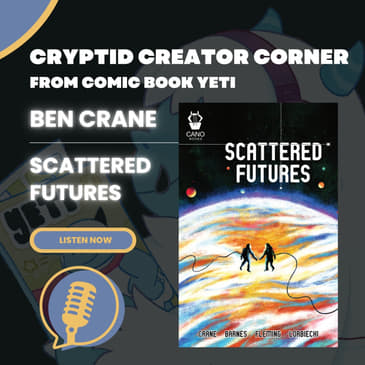

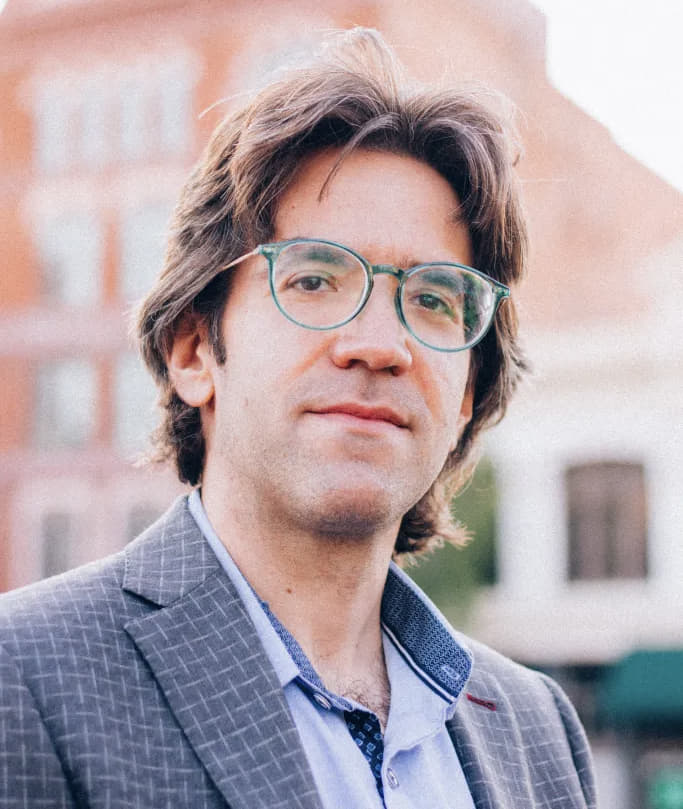
It's a special Wednesday episode of the Cryptid Creator Corner as Jimmy chats with Ben Crane about his anthology of hopeful science fiction stories called Scattered Futures. The anthology is on Kickstarter right now and Ben also provided a link with a special reward tier for Cryptid Creator Corner listeners. Listeners can get a signed and personalized copy of the book at a discount. Ben discusses what compelled him to write these stories, as well as working with some of the Yeti's favorite artists like Sierra Barnes, Jenny Fleming, and Martyn Lorbiecki (MERTYN). Ben also discusses his years working in film for Mace Neufeld (who produced the original Jack Ryan movies) and the challenges in transitioning from film scripts to comic scripts. This is a wonderful conversation about writing, making comics, and, really, making anything to combat the darkness of the outside World.
WATCH THE VIDEO VERSION OF OUR INTERVIEW ON YOUTUBE!
Special Reward Tier Discount of Scattered Futures for CCC Listeners
About the project
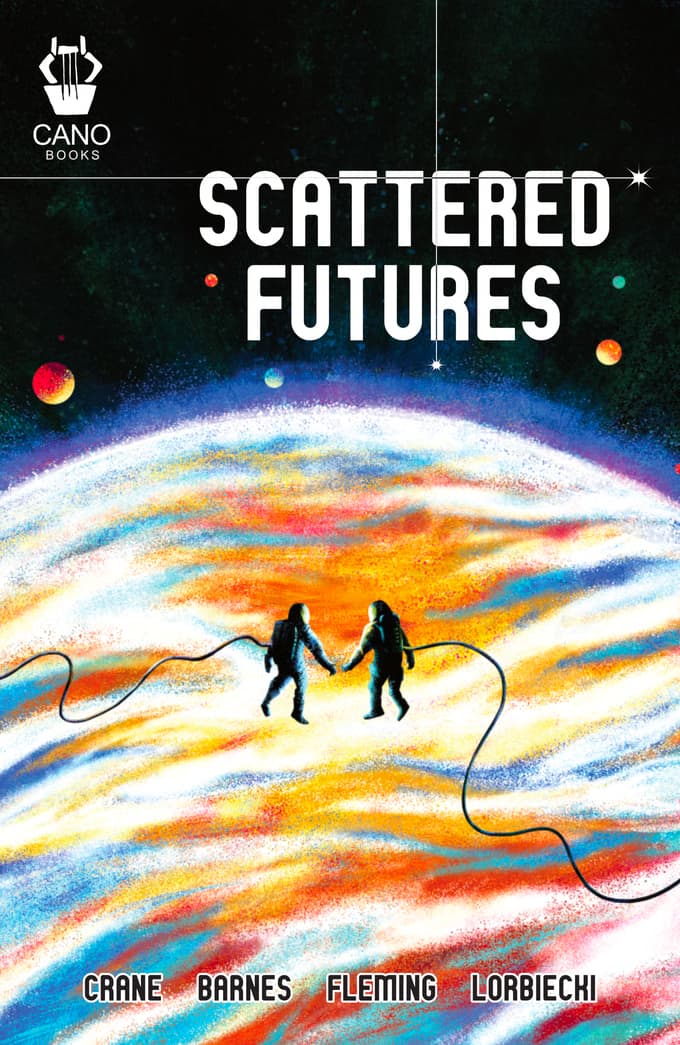
This sci-fi collection gathers stories of human connection in a harsh and fractured galaxy. In a universe of dehumanizing systems, uncaring corporations, and ceaseless, unrewarded labor, these are tales of hope, found family, and shared humanity. The only better future is the one we build for ourselves.
Follow Comic Book Yeti
🔗 Comic Book Yeti LinkTree: https://linktr.ee/ComicBookYeti
For partnership and ad inquiries, please contact: thecomicsyeti@gmailcom
Follow your hosts
🔗 Jimmy Gaspero: https://bsky.app/profile/jimmygaspero.bsky.social
🔗 Byron O’Neal: https://bsky.app/profile/byrononeal.com
Buy a shirt. Our new Matthew Dow Smith Artist Series design just dropped in the Threadless shop!
Make sure to check out our sponsor 2000AD.

[00:00:00] Your ears do not deceive you. You have just entered the Cryptid Creator Corner brought to you by your friends at Comic Book Yeti. So without further ado, let's get on to the interview. The future is calling! 2000AD is the galaxy's greatest comic with new issues published every single week. Every 32-page issue of 2000AD brings you the best in sci-fi and horror featuring characters like Judge Dredd, Rogue Trooper, and more.
[00:00:28] Get a print subscription to 2000AD and it'll arrive to your mailbox every week. And your first issue is free. Or subscribe digitally and you can download DRM-free copies of each issue for only $9 a month. That's 128 pages of incredible comics every month for less than $10. Head to 2000AD and click on subscribe now or download the 2000AD app and start reading today.
[00:00:55] Hello and welcome to Comic Book Yeti's Cryptid Creator Corner. I am one of your hosts, Jimmy Gasparo, and I'm very excited about the guest I have on today. It's his first time on the podcast and we're going to talk about the current Kickstarter campaign for Scattered Futures. We're probably going to talk about some other stuff as well, but please, welcome to the podcast, Ben Crane. Ben, how are you doing today? I'm good. Thank you so much for having me on.
[00:01:19] No, I really appreciate it. I know you started doing some stuff with Comic Book Yeti and you had reached out to me. And you have Scattered Futures, which is on Kickstarter right now. It's a sci-fi anthology. The stories you've written, you've worked with three different artists on these three stories. I really enjoyed all of them. I really kind of like the take. I love anthologies. I'm a huge fan.
[00:01:45] Like I like getting to see like a little bit of a mix of everything. I like the different art styles. And plus, like some of the artists that you've worked with, I'm I mean, I'm familiar with like Sierra Barnes. Hans Vogel is dead. It's fantastic. It's great. And yeah, you the the second the I just said I had it up so I wouldn't not forget anybody's name. Yeah. The second one delivery was illustrated and lettered by Jenny Fleming.
[00:02:14] Yeah. And Martin Lorviecki is the third. Yeah. Folks might know him, I guess, online as Merton, M-E-R-T-Y-N. But yeah, cycles. And I really liked it. And so we have three different stories all in the realm of sci-fi and all very much with kind of I'll say like a hopeful bent. Yeah. In terms of what Scattered Futures is.
[00:02:41] So why don't you just tell listeners, you know, we don't have to get into the the details of the story, but I'd like to just start with what what was the impetus to kind of write like these three stories in in particular? I so I wrote all three of these over the summer this past summer.
[00:03:04] And I live in Los Angeles and this summer in Los Angeles was a kind of terrifying time. We had ice deployed here very, very heavily. They're still here now. But the National Guard was called out. We had troops in our streets.
[00:03:33] And it was a very, very hard time just to kind of be a person in this city and to try to maintain hope that this would end and that there was something better coming.
[00:03:52] And that the the work of of trying to build that something better was valuable, was worthwhile, that it would actually lead to improvements. And I was feeling incredibly depressed, incredibly pessimistic and really struggling to to do anything.
[00:04:20] And what I realized was that's that's the point. That's the goal of of action like that is is to inspire that pessimism, to inspire that nihilism, that nihilism is an inherently conservative, inherently regressive impulse.
[00:04:43] It's this voice that tells you don't bother fighting because nothing can get better. And I was falling victim to that and I was losing my motivation.
[00:04:57] And I needed something to to remind me that kindness is possible, that hope is possible, that it's not going to be a singular action that changes everything and makes the world better. It's going to be this slow accumulation of a thousand small acts of grace and acts of empathy.
[00:05:24] And I wanted to write a I wanted to write something that expressed that that found the beauty in the quiet and everyday and ordinary acts of compassion that can build towards something larger. And that started with cycles was the first of the three stories in scattered futures that I wrote.
[00:05:53] And I wrote that with Martin in mind for the art. I knew his art already. I'm a huge, huge fan of his. He has this beautiful like French cartoon and and anime inspired style that I absolutely love. And I wrote that story for him.
[00:06:17] And then I had this nine page comic and I had this idea I wanted to explore of small acts of kindness in a world that doesn't really give space for kindness. I put nine pages is not enough to do anything with. But that story was was finished. I had done everything I wanted to do with those characters and with that space.
[00:06:46] And I didn't want to try and stretch it out into something that it didn't that would have been inappropriate for it. I didn't want to just add 12 pages of filler. And so I I sat down and I wrote two more nine page stories that were related only in that theme of kindness and community and optimism in a harsh world.
[00:07:15] And I have been a fan of both Sierra's and Jenny's for a long time. And I did not write those stories with them in mind. But as I was looking at artists for each of them, as soon as the idea of those two popped into my head, I just knew like, oh, yes, obviously it has to be it has to be them.
[00:07:43] And they both responded really positively to the idea. And now we have this book that honestly, as I was putting it together, I had no idea if anybody was going to be interested in this. It's it's just three quiet stories where nothing really dramatic happens. There's no huge crises that need to be solved.
[00:08:13] And I can't go to a publisher and say, hey, do you want to buy these three short stories? The pitch is sometimes people are nice and that can be a good thing. Yes, it's it's our it's it's our future. But what if everyone was kind? Yeah. Yeah. Like the the world is still awful.
[00:08:38] These people are still living underneath systems that are built from the ground up to grind them down and make connection impossible, make support impossible. But they find a way to connect anyways. And but yeah, that that pitch is not thrilling. No one's going to be knocking down my door to throw a huge advance at me. So it's on Kickstarter because that's what you do with books that you're not quite sure what else to do with.
[00:09:07] And I I've been absolutely blown away by by the response to this. We funded in our first 24 hours. I now need to come up with stretch goals. I had none in mind because I did not think we were ever going to get close to that.
[00:09:26] And yeah, I just I've been overwhelmingly delighted by how many people have reached out just seeing the Kickstarter page and said, yeah, this is something that I need in my life right now. And that's it's been really, really wonderful to to see that and to see other people getting out of these stories the same thing that I did. Yeah, I mean, that is awesome.
[00:09:56] I mean, you make a good point. You you talk about what things were like this summer in Los Angeles. And we've seen it played out since the summer in other places across the country.
[00:10:06] And yeah, the the point of any government that turns towards authoritarianism or even fascism is to put down any type of resistance and to make the population feel like it's not worth it. It's not possible. I mean, authoritarianism, you know, is a system of government. They just want everyone to do, you know, what it is they say.
[00:10:36] They want to have like their sway of things. Fascism. They want everyone to not not just do what they say, but also to be converted, to to think like that. They want, you know, so it's a little when I use those two terms, I think they are different.
[00:10:50] But but regardless, the the the the use of things that we haven't seen in this country in quite some time, you know, like not just government agents, but, you know, National Guard soldiers like in the streets, like using the soldiers to police, whether or not it was in Minneapolis or Los Angeles or Washington, D.C.
[00:11:13] And yeah, the point of that is to inspire people to not put up any type of resistance to what is taking place. And that constant stream of news can can be wearing and taxing and depressing and inspire feelings of hopelessness, you know, feeling like that and wanting to create something from it and then finding the kind of strength and the ability to do it. And you really you're you're you're right what you said.
[00:11:41] You have created three kind of science fiction based, you know, it's there. There's still those elements of science fiction, but it's you've created three quiet stories about deeply moving, empathetic moments. And I don't know, like I read I read the advance that you sent me and I felt I felt good. I felt like, you know, that's I want to see more of that. I want to see more of that in the world.
[00:12:09] I want to see more of that in the things that I read and and consume. And, yeah, you work with three like wonderful artists and creative teams. You know, well, I also do think, though, that, you know, in terms of like a shared world, like this is something that the things that you've created here that you could,
[00:12:31] you know, expand upon or do another scattered futures and see other systems and tackle other issues and show other other other other moments of of kindness and folks overcoming it. I really enjoyed it. I really thought these were three really well told, well put together, visually interesting stories. Well, thank you so much. It's really meaningful to hear. I truly appreciate it.
[00:13:00] And yeah, I if there's the opportunity to tell more of these these short little tales of people finding each other in in this awful future, then. Yeah, I'm not opposed to that. Well, we'll see how this one goes first, though. So, yeah. So I want to talk a little bit about in terms of your, you know, overall career. Yeah.
[00:13:27] So because you at least what I read, you were you've you've worked in, I think, the film and or TV industry. Yes. So did you do that and then come to comics or were you working in like film and TV and doing comics at the same time? Like, I'm kind of curious, like what brought you to comics? Yeah.
[00:13:49] So it was there was a tiny period of overlap, but for the most part, it's two distinct periods in my life. I I will fully admit I came late in life to even reading comics. Look, you don't have to feel bad about that. Like on this show, we don't just so you know, and listeners, I've said it before. I haven't said it in a while, though, so I'll say it again. We don't we don't we don't gatekeep.
[00:14:17] You could have you could have read from the time you were like first knew how to read. You could have picked up your first comic yesterday, Ben. And we're just happy to have you. So I appreciate that. Don't don't feel bad about it. Go ahead. Go ahead. You continue. No, I I just want to like flag that comics is the most supportive and friendly community I have ever had the joy of being a part of. Everyone is here because we truly love the art form.
[00:14:47] And it's it's just been really, really wonderful to to get to know this world. I so I didn't really start reading comics seriously until college. Um, I've never been a big superhero fan. I appreciate what the genre can do. I appreciate that genre. It probably doesn't encompass the the scope of it at this point.
[00:15:16] It's like comics are not a genre. Comics are a medium. Yeah. I mean, superhero stories can do so many things. Um, but the basic superhero character is not the most compelling to me. And so I always just thought, oh, comics are superhero stories. I'm not terribly interested in superhero stories, so I'm not really going to pay attention to comics.
[00:15:39] And then in college, I, I started reading, um, Greg Rucka's, uh, for Queen and Country series. And, um, it's like, oh, oh, wow. I've been just dismissing all of this out of hand for no reason.
[00:16:05] And, um, is that I, I started reading every comic I could, I could get my hands on. Uh, but I never, I never pursued it creatively. Uh, I studied film and literature in college with the intention of, of going into film and writing for film. And then after college, I wound up, uh, on a producer development track in the film industry.
[00:16:33] And I ran development for a producer by the name of Mace Neufeld for about a dozen years. And, and, oh, okay. The Mace, just so listeners know, Mace Neufeld produced a lot of the Tom Clancy, Jack Ryan films, right? Yeah. Yeah. So I started working for him while he was working on the Chris Pine, uh, Jack Ryan shadow recruit movie. Okay.
[00:17:01] And, uh, so I did a tiny bit of work on that. I did a little bit of work on the Jack Ryan TV show that, um, that Amazon does. And John Krasinski led one. Yeah. Yeah. And I also got to work on the, um, Denzel Washington, the equalizer series. And, uh, those are, I, on a side note, I, I hadn't gotten to see them when they came
[00:17:28] out, but I, I watched them on a plane going to Ireland and, uh, they were, they were, they were fantastic. I had, I, I wished when I got done, I wished I'd seen them in the theater. They were, they're fun. Really great. They're fun movies. Uh, yeah, I'm glad that people enjoyed them. Um, and I, I love development. It turns out I really, really liked that, that job, which was essentially I would,
[00:17:58] find scripts or books or stories that were interesting, that could be a really great movie, but that weren't quite there yet. And then I would work with the people who made them to sort of get them that last, that last little bit to something, which is really special and really fantastic.
[00:18:20] Uh, and then I would hand it off to, to Mace who was, um, just a, a genius at putting things together and finding exactly the right people for everything. And he, he went and did his magic. So I worked for him for about a dozen years. And then in, uh, 20, around 2018, my partner and I started talking about maybe doing something
[00:18:50] together. Uh, my partner is an illustrator and they had a, uh, a quiet period in their work schedule. And I had recently met someone at skybound who was very encouraging and sort of showed me how to put, uh, a comic pitch together. And I met the two guys who created the kill Shakespeare comic book series.
[00:19:18] That's, uh, IDW way, way back in the day. Um, and they sort of were very, very helpful and, and sent me a bunch of sample pitches and a bunch of, a bunch of scripts and just through, talk me through how you do a comic. And, um, I thought, you know, I've worked in film for 12 years. I know visual storytelling. This is going to be really simple. It's the same thing.
[00:19:45] It's not, they are wildly different media. And, um, so I was, uh, I had a, uh, very, very steep learning curve to figure out how comics work and to sort of unlearn all the things about film that I had learned and relearn how comics work. But I, I did, and I wrote some stuff, which was terrible and we'll never see the light of day. And then eventually I put together something which I thought was kind of decent.
[00:20:15] And, uh, my partner did the, the illustrations for it. And that wound up being, uh, cosmic cadets, which is, uh, a middle grade graphic novel that we sold to, um, to top shelf. Awesome. And, uh, we just had book two in that series come out in December.
[00:20:36] And, uh, so I sold that and in the middle of that whole process was COVID and the film industry shut down. And so I had no, no film work and I decided to write a novel because I wasn't doing enough things.
[00:20:56] And, uh, I, I sold that novel and, uh, the same day that I got an offer of representation for my writing, I got a call from Mace's wife to let me know that he had passed away. Oh, and sorry. I'm sorry. I appreciate it.
[00:21:23] It, it, it, it was not unexpected, but it's still, I'd, I'd worked for the man for 12 years. I, I knew him well. And, uh, it was a, a wild whiplash of a day when that happened, but I, the film industry was still shut down at that point. The idea of going out and trying to find another development job when nobody is working and
[00:21:51] I had just lost this man who had been my, my mentor who had taught me how to put a movie together. Uh, that was more than I was emotionally ready to handle at that time. Um, and, uh, we had sold cosmic cadets. I had representation for my novel. Um, and I decided to sort of take that as a sign from the universe to, to pivot.
[00:22:20] And so I've been working in comics and prose since then and just genuinely loving it. I, I, as I said, comics is the, the friendliest community I've ever been a part of. Uh, it's just been a delight every day to get to, to tell stories with people. Well, I'm, I'm glad to hear that, that it's been the, the, the most welcoming of places.
[00:22:47] You know, I'm curious, um, in terms of going from film development and knowing visual storytelling and then going to comics and you said it was like a steep learning curve. What do I'm curious? Like, what do you think was, what was the steepest part of that curve that you had to learn? Was it, I mean, I, I, I, yeah, I'm just curious. Was it something in terms of like putting a comic together, like putting a pitch together? Was it something about the industry?
[00:23:17] Was it something just, you know, maybe something about the writing of it itself? What was, yeah. What, what was the part, the part that was the steepest? It's the fact that, so both comics and film are visual story, uh, visual storytelling media. They both, you know, you have an image that tells a story and it seems incredibly, uh, you're
[00:23:43] almost, almost pat and over simplistic to point this out, but movies, it turns out actually move and comics don't. And, uh, it's a pretty, it's a pretty big difference. Uh, the great German filmmaker Wim Wenders, uh, when someone asked him, you know, how, how do movies work? His response was motion is emotion.
[00:24:11] That it is the movement on the screen that conveys the emotion of what's, what's going on. And in film, there are things which are incredibly easy to convey with, you know, an eye movement, um, with just a quick cut, with a really simple gesture that in comics are impossible to,
[00:24:38] to show without devoting, you know, six panels to a whole sequence. Oh, sure. Yeah. Uh, but there are so many things that comics can do that film can't other than the fact that they both use pictures. There's, there's very, very little overlap in the actual tools that, that they use to convey
[00:25:05] story, to convey emotion and to, to bring the audience into the world that they're trying to build movies. The filmmaker has absolute control over the pacing of how the audience consumes the, the story and how the audience interacts with the story. Sure. You have sound, which can wildly influence our experience of, of a narrative. Yeah.
[00:25:34] You have control over where the audience's eyes move. Um, you have control over so many things and in comics, you can't keep the reader from looking to the next page. The reader's eyes are going to go where the reader's eyes are going to go. You can't control. And you have to figure all of that out with either, you know, through your, through your paneling.
[00:26:03] It's just a lot harder. It seems like pacing is tougher, like using special effects or sound effects in terms of on the page is tougher. Um, I think the biggest thing when I, I've never made a film. Um, I love film. I've never made one, but I, I always think when I first started to get into writing comics, it's like, man, it would be so much easier to convey emotion. If like there was a soundtrack, like there's so much, there's so much movies to with music
[00:26:32] and sound that we, you don't have in comics. Wait. So here's the thing that comics have. This was the greatest revelation to me when I realized page turns, which are such a simple thing, but there is no equivalent to the page turn in a film. A page turn is this moment when the reader has to pause where they have to reset.
[00:27:01] And you, you have this magical physical moment where they're, they're opening a treasure chest and finding, you know, what's, what's beyond the next page. What's, what's underneath this covering. I, where the page that they've just read turns from the piece of the story that they're reading right now to a shield, which is obscuring the next piece of the story that they want to
[00:27:30] read. And the power of that moment of, of anticipation and revelation is extraordinary. And you just can't do that in a movie that you can cut to black and then just have the screen be blank for three seconds and force the audience to sit there and be bored.
[00:27:53] But the page turn, the reader is an active participant in, in that revelation of the next page. And it's, it's wonderful. And it's, it is my favorite tool to use when I'm writing. If I'm not putting every page turn to use, then, then I go back and I redo the entire script until every page turn is, is a moment of anticipation.
[00:28:22] Yeah. Yeah. I mean, that, that, that is the thing, like writing towards the page turn. I actually heard someone talking the other day about like not writing to the page turn. And I'm like, I understand there's certain times to, to maybe to not, not do it. But yeah, that, that tool to be able to do that. And it is a little bit of a different skill because you, you know, you almost have to work backwards. I think like you, you figure the moment where the panel that you want to be right before the next one,
[00:28:52] the page turn is going to connect the two. And then you have to kind of work it out in terms of the pacing. And then sometimes once the artist gets ahold of it, that, you know, it, it changes if they add a panel or take one away. Like that's also what I love though. The collaboration between, you know, writer and artist. Cause I am not an artist. Oh, me neither. That, that, that, that collaboration. I, I, um, I love. Jimmy is too humble to do this.
[00:29:21] So as his stalwart writer, I, I wanted to tell you about his new graphic novel, Penny and the Yeti with artist Amber Akin. What started as a comic short with his daughter that I've known about for ages now. And it's evolved and has become one of those annoying can't talk about it in comics things for too damn long. Yes, I'm predisposed to be supportive, but after reading an advanced copy of it, I have to admit it's way better than I anticipated. No shade, but it's really good. Remarkably so.
[00:29:50] Does it have a Yeti? Yeah. Is it cute and adorable? Yeah. But it's straight flies in effectively tapping into the all too familiar family dynamics that we all are facing in 2026 and approaching it in a way that doesn't insult the book's target audience. Kids! They are way smarter and perceptive than we adults give them credit for. So I really appreciated Jimmy's narrative approach tapping into his own experiences as a dad and a spouse. I can hear his wife saying, get off your phone, Jimmy, through the pages.
[00:30:20] She's going to kill me for saying that. It's hitting shelves on April 21st and I dropped a link in the show notes where you can preorder a copy today. Yeti or not, here we come with Penny, Perry, Fenton, Maxine and the magical, mythical, magnificent Yeti. On behalf of us both, we appreciate your support.
[00:30:41] One of the things, the other things I wanted to ask you, because when you talk about the film development work that you did and at least the films that, you know, you had mentioned are all, you know, they're good films, action films, you know, but with cosmic cadets and scattered futures, you know, and you have another anthology systemic.
[00:31:07] It's all seems, you know, science fiction, like those types of stories. So what does that influence, you know, for you in terms of, you know, because if you're telling quiet stories about empathy, about kindness, about human connection in a terrible world, you could, you could do that in any genre. You could, you could do that in horror. You could do it in fantasy. You could, you know, why science fiction? Yeah.
[00:31:33] Uh, science fiction was my first love. I, I, I started reading, um, Anne McCaffrey's Dragon Riders of Pern and, uh, Isaac Asimov's Foundation series when I was in middle school. Oh, middle school? Probably too young to really understand either of them.
[00:32:00] Reading Asimov in middle school will do it. But, uh, I, I, I love science fiction for its ability to just come right out and say, this is a metaphor for our world. To just, to just put it right on the face. There's no subtlety. There's no dancing around the fact.
[00:32:29] It's, we're talking about now. And we're going to talk about now with symbols. Because that's a, a simpler way of understanding it. And it's a way to hone in on something specific. But it's very, very direct about the fact that if you're writing science fiction about the future, you're, you're, I, I don't want to say you're doing something wrong.
[00:32:58] Everyone finds their own way to art. You're doing science fiction in a way that isn't interesting to me. Uh, it might be interesting to you. Okay. But, um, science fiction for me is a genre about examining now by heightening and amplifying the things that we want to examine. Um, and I just constantly find myself drawn back to, to, to speculative fiction of, of all kinds, right?
[00:33:28] Science fiction or, or fantasy or science fantasy. Um, I love, I love speculative fiction. I love genre fiction in general. Uh, my prose work is mostly in the, like, crime noir thriller space. Uh, but, but even that, like you said, you can tell stories about hope in any genre.
[00:33:53] Um, the crime thrillers that I write, they're stories where people punch each other and shoot each other and people die and, and it's rough and, and, uh, hard to live in that world. But ultimately they're stories still about empathy. They're stories about people finding each other and lifting each other up because those are, those are the stories that I want to have more of in my life.
[00:34:22] And, and, and so they're the stories that I tell. And my comics work happens to have mostly been science fiction. Um, because I love science fiction. My film work was in, you know, big budget spy thrillers. Uh, because that's what Mace did. Um, yeah, that's, that's what he was known for. To kind of turn back a little bit to scattered futures. And I, I don't want to like, you know, give anything away.
[00:34:50] I, I find it interesting in terms of the order you wrote them that you had written, you know, well cycles, uh, first. And it's, it kind of, at least in the lineup in terms of how, you know, it's put together in the PDF you sent me cycles is last. It kind of angers everything. Um, yeah, I, when I got into it and the first one, like legitimate salvage, there's a ton of things that are done in legitimate salvage.
[00:35:14] That, that I really like, um, cause there's, there's some darker things that are hinted at in what's going on in legitimate salvage. And it's, it's, it's, it's, it's never fully shown. Um, which I think is kind of more of like a, a powerful moment that we see this thing experienced between these two characters, like communicating to each other.
[00:35:40] Um, as the main one goes through the, the, the, the ship that they're salvaging, which we, we find out in the beginning. Um, I, I thought like that first story and leading with it, it was, uh, I was surprised at how emotional I was reading it. It just seemed like, um, like what happens in the story and listeners, when you back scattered futures, you'll find out.
[00:36:08] Um, there's a couple of things that, cause Sierra Barnes did that one. Um, yeah, there's a couple of things that Sierra does really well. Um, that are put on full effect here between the two of you. Cause, uh, when you, when you get to legitimate salvage, there's something happens in this ship that they're salvaging. And the, like the facial acting of the last, like, I think it's the last third panel, maybe before the end.
[00:36:37] I'll just say it that way. It, it, it conveys such a moment of apprehension and, and such a moment of what do I do next? Um, it, it just, it's one of the things that I just love about, about comics that there is, that you just have this, you know, moment frozen in time in this panel. And yeah, I was, I, I, I was really moved by that first story.
[00:37:06] And I was like, Oh, I, you know, Oh, it's three, three stories about hope. It's science fiction. This sounds nuts. I've read the story and I was like, Oh, this is, this is like on another level. This is way deeper than I thought it was going to be. And it was such a kind of such a sweet story. And then, um, the delivery, the second one was, uh, was just great. This idea of, of people in this situation and coming together.
[00:37:36] And there's, there's like delivery is another story that just has layers. Like you're talking about not just an act of kindness or a moment of empathy. Like there's elements of, you know, delivery, which are about, you know, what am I doing right now? And am I ever going to see the, you know, the results or the fruits of, of, of the work I'm doing? I mean, that story was wonderful. Thank you.
[00:38:05] Delivery for me is about the, the work of, of combating climate change. It's, which is going to be a generational effort. And the things that we do now, we're not gonna, we're not gonna see the, the result of that. Whether, whether we solve it or not, um, you and I aren't gonna know. Well, uh, you're right.
[00:38:33] But we have to do the work anyways. Yeah. And, and that's a terrifying concept. Um, yeah. Yeah. It is. That was delivery. Yeah. But I didn't feel, you know, talking about some of those things, like the reality of it. And they're hard concepts sometimes to get, you know, cause we, we live on this planet and that's all we've ever known.
[00:38:57] And the idea of it might not be there one day or, uh, we need to do something now. And humans are, you know, all of us, every human most, or I mean, 99.99% of humans are really interested in like that animal instinct of what, what, you know, taking care of like right now. And the, the idea that we're going to do something and make major changes.
[00:39:24] And we're, we, one, we will never see the effects of it. One, we're not going to know whether or not it worked, but we have to do it to ensure the future, uh, of, you know, the human race. Like those are big things that are almost impossible to wrap your head around. And I just, I love the, um, attitude of, uh, is it Kana, the main, the main character of, of, of delivery.
[00:39:55] And, um, even though those are really heavy topics and can, you know, be a bit of a bummer to think about, uh, uh, you know, that's an understatement to think about the effects of climate change in the planet. I, I felt, I don't know. I, I felt really hopeful. I did like at the end of it, like it had the desired effect. I felt like, yeah, it's, it's, it's just, it's the, it's the, it's the better path, you know?
[00:40:23] And I really loved how this, it, it kind of told that story. And yeah, I hope listeners check it out and read it. And, um, you know, if they, even if they don't get the same thing I got out of it, that they get something out of it. There's, there's a couple of very sweet moments in it. Um, yeah, these are all very like three really well told, um, well drawn, well executed stories. And thank you so much.
[00:40:50] Uh, so what, uh, you know, so we have scattered futures now, which, um, we're going to get this out and listeners you'll have until I think April 4th or 5th. I believe. Yeah. It says like Sunday, April 5th at 12 a.m. So I'm not sure what that means. So we'll just, cause it, it, it, it's like right on the line. So we'll say April 4th. Yeah. April 4th.
[00:41:17] So right before Easter, if you celebrate Easter, um, cause I think April 5th is Easter. So, uh, you have right. You have until Saturday, April 4th to check out the Kickstarter to back the Kickstarter. And is there anything else you want listeners to know? Like I'll put links in the show notes to the Kickstarter. I'll put them there to your website. I'll put a link to cosmic cadets from top shelf. I love top shelf stuff.
[00:41:43] They've just have made some really great books, especially in the all ages and middle grade realm. And, um, so I'll put a link to that, but is there anything else that you want listeners to know about where they can find you or for, for them to check out? Uh, if you want to find me online, um, blue sky is where I'm most active of the social media sites. Uh, my blue sky handle is just my website, uh, Ben crane rights.com.
[00:42:11] Um, all of my other books are available as add ons in the, in the Kickstarter campaign. So if I mentioned anything that sounded interesting to people, they can get it all there. And, uh, I will get you a link with a secret reward tier for your listeners. Um, that will get them the, the, uh, copy of the book with a personal note from me at the early
[00:42:40] bird price, regardless of when they back. Fantastic. And, um, yeah, well, that's great. And then I know that you had mentioned before, I think coming out later in the year is, uh, you've edited systemic like volume one and that that's going to come out later. So systemic volume one is out now. Uh, Oh, okay. Yeah. And yeah, we, we, we released that, uh, in January.
[00:43:07] Um, if people like collections of short science fiction stories, um, that's my other collection of short science fiction stories. It's, uh, seven short comics about people trapped in the places where cultural economic and governmental forces meet and grind together. Uh, and is that still available for, for folks to get? Yeah. Yeah.
[00:43:34] So, um, that was published by studio 12 seven and people can get it directly from them. And I also have it as an available add on, on this campaign. Oh, fantastic. Yeah. I was looking at it on like the, the information about it on the website. Um, but yeah, uh, some of the folks that contributed to it, Stephanie Williams, uh, Norm Harper, Richard Fairgray, Simon Burks, Val Halverson, which are some of my favorite folks.
[00:44:04] Um, Norm Harper did, I think it was Norm. Norm Harper did a comic iron barge, which anthropomorphic animals. I loved iron barge. I mean, Stephanie Williams, who right now, um, is doing street sharks. Uh, Richard Fairgray has put out some like amazing stuff. Richard's like such a character. Uh, he, he is. I ran it. I ran into Richard. Richard. I, he absolutely. I ran into Richard at Baltimore comic con and he had like one of the most ridiculous shirts
[00:44:33] on I had ever seen. And, but it was just fantastic. And I've, I've read his stuff before. He's amazing. Simon Burks is great. Val Halverson. Um, I've had Val on the podcast before. I've had Val and, and Justin Richards to talk about finger guns and to talk about the slashers apprentice, which was their most recent cave series. So yeah, all those folks are tremendous. Um, just some of my, my, my favorite people that I've talked to or read their comics.
[00:45:02] So yeah. Um, that sounds amazing, but we'll put links to everything so folks can pick it up. And yeah, if it sounds interesting to you, um, you know, check it out. Like just click, click the link listeners, check out the Kickstarter, um, check out systemic check out cosmic cadets. And, uh, yeah. Um, Ben, thank you so much for coming on the podcast. I really appreciate you, uh, making some time on a Friday the 13th to chat with me.
[00:45:30] And, uh, if you, if I don't, I don't, if you, um, as we record this, yeah, this Friday the 13th, so I hope you have a great weekend. And, um, if you celebrate St. Patrick's day, I hope you enjoy that. I'm going to have a Guinness, which is my usual St. Patrick's day tradition. Um, so there you go. Thank you so much for having me on. Um, I, I have acid reflux, which flares up if I have anything carbonated and it is the
[00:45:57] great tragedy of my life that if I have a drop of carbonation, um, I will be unable to speak for two weeks afterwards as my body tries to digest my voice. vocal cords. That's no good. That's no good. Well, I'll have, I'll have a Guinness for you then. Thank you. I appreciate it. I don't, I don't think you're Irish. Uh, I actually, I have no idea. Um, but, uh. Mostly Eastern European Jewish, but, um. Okay.
[00:46:26] There could be some Irish in there. Who knows? Yeah. Who knows? I don't know. I, I, I've been told all my life that, that we are part Irish and I don't actually think it's, uh, true. I think it's just something that they, that my fam, my, my mom's side of the family said. So, I, I haven't, I haven't done the 23 and me and given them my DNA to find out exactly what parts of the world my ancestors come from. But. Well, I, I won't tell anyone if you don't. Thank you.
[00:46:56] Yeah. Thank you. I appreciate it. Uh, all right, listeners, um, the rate and review us and, and do all those things that they tell you to do about podcasts. You can find us on YouTube as well. We have a YouTube channel. We do put sometimes these, the videos on YouTube. So if you like to get your shows that way, you can check us out on YouTube and you can watch me stress blink through 45 minutes because, um, I don't know, it's just a tick that I've developed in, in, in the 20 years that I've been an attorney. It's a real bummer, but if you want to see it, you can on YouTube.
[00:47:27] And, um, yeah, you can find me on blue sky. Uh, I, I do have a tick tock. I sometimes post about the comics I'm reading and yeah. Uh, thank you so much for listening. Please check out scattered futures. The stories really are wonderful. I really think you're going to get something out of it and check out Ben's other work. Um, I think that's it. Thank you so much for listening. Uh, good night and I'll see you next time. This is Byron O'Neal. One of your hosts of the cryptic creator corner brought to you by comic book, Getty.
[00:47:56] We hope you've enjoyed this episode of our podcast. Please rate review, subscribe all that good stuff. It lets us know how we're doing and more importantly, how we can improve. Thanks for listening. If you enjoyed this episode of the cryptic creator corner, maybe you would enjoy our sister podcast Into the Comics Cave. Listen and subscribe wherever you get your podcasts. You drive in the car? We're here for you.
[00:48:27] With children? The on the back of the back hitziger debattier than in the police room? About what tablet is loud, what the cable is faster than it is? And why 100 times the same trick for the look is a reason? Yeah, our cars are absolutely growing. Because regardless of road trip or business, if you have a flight, your battery is on, your akku right off or you have to get your hunger to do what has open, yeah, then we're for you here. Enterprise. Here for you.