
Christopher Cantwell returns to the podcast to discuss his upcoming graphic novel: KID MAROON. Chris has teamed up with Victor Santos and Vault Comics to tell this story of a hard-boiled kid detective on the streets of Crimeville. Chris chats with Jimmy about the origins of this series, the incredible work of Victor Santos, and the hilarious "life" of Pep Shepard. Chris discusses the joy of collaboration, making sure the story works for the medium you're working in, and how KID MAROON could only work as a comic. Plus, Chris talks about the upcoming RED SHIRTS and the trade for OUT OF ALCATRAZ. There's so much great stuff coming out from Chris! KID MAROON comes out September 24th. Be sure to check out all the links below after listening to the episode.
🔗 Follow Christopher on Bluesky
WATCH ON YOUTUBE
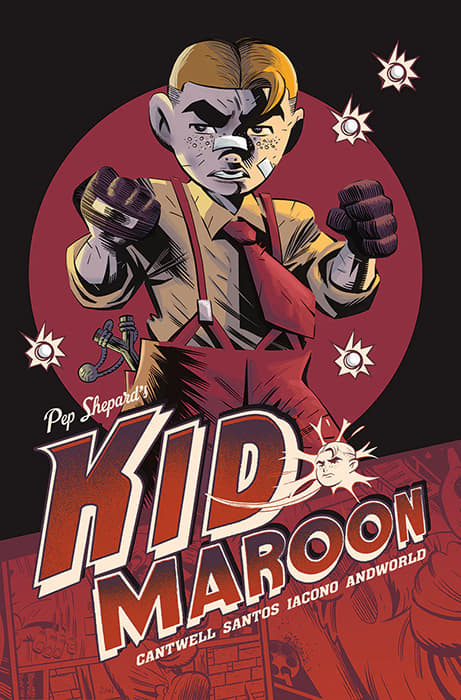
KID MAROON
From the publisher
Back in print for the first time in over 75 years... the world's only hard-boiled boy detective - KID MAROON. From the shared genius of Christopher Cantwell (Iron Man, Doctor Doom) and Victor Santos (Polar, Violent Love) comes an all-new Kid Maroon graphic novel, featuring the rich history of Pep Shepard's beloved boy detective, including strips long considered lost to time. Two years ago, Walden Maroon outgrew his small town, his loving parents, and the low stakes mysteries involving missing butterflies and stolen cookies. Since then, he's dwelled within the cesspit of Crimeville, where murders, vice, and corruption are the city's bread and butter. But at 12 years old, Kid is weary. When a string of horrific killings and arsons spring up in the streets, can he crack the case with his quick wits and slingshot? Or does Kid Maroon secretly yearn for what he's never gotten to be... a kid?
🔗 Vault's press release about KID MAROON
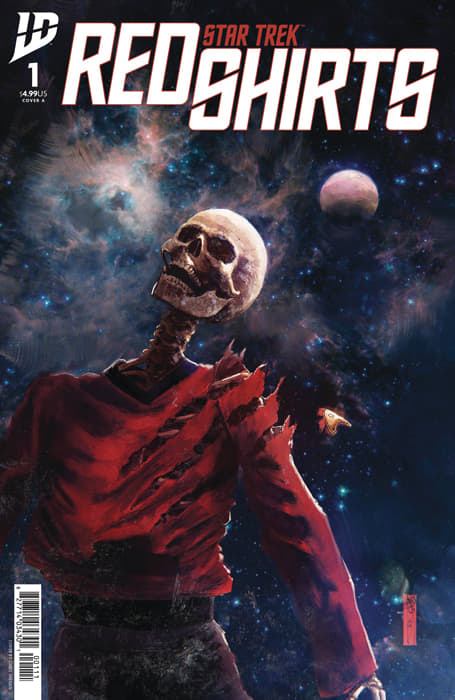
Star Trek RED SHIRTS
From the publisher
The start of an all-new heartrending Star Trek five-issue miniseries by writer Christopher Cantwell (Star Trek: Defiant) and artist Megan Levens (Star Trek), featuring Starfleet's most intrepid and doomed crewmembers: red shirts. Now, finally, they get their own story.Led by an experienced officer embedded on the snow-ridden planet Arkonia 89, the crew of the U.S.S. Warren has a small window in which to pin down spies seeking to steal classified secrets and keep Starfleet data out of their nefarious hands.
They face threats not only from their faceless enemies but from the brutalizing elements and wildlife of a planet far from home. The red shirts' lives and Starfleet's sanctity are on the line...and no one is safe.
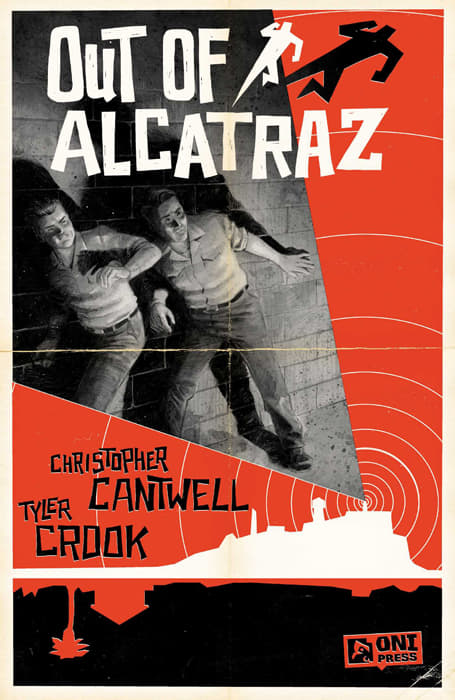
Out of Alcatraz
From the publisher
Born from one of the greatest unsolved mysteries of the 20th century, Eisner Award–nominated writer Christopher Cantwell (Plastic Man No More, Briar) and Eisner Award–nominated illustrator Tyler Crook (Harrow County, The Lonesome Hunters) present the year’s most taut and breathtaking graphic novel event . . .
Convicts Frank Morris and Clarence Anglin have washed ashore in San Francisco after surviving their infamous escape from Alcatraz Federal Penitentiary in June 1962. They soon meet their gruff and disappointed handler, a mysterious young woman who's also running from something, and hope to quickly get their way north to the border-if they can even make it out of Modesto alive. As a dogged federal manhunt and chance encounters threaten the desperate convicts, everyone involved is about to discover the same bloodstained truth: Life on the run is an even more hellish prison than Alcatraz could have ever been . . .
🔗 Check out OUT OF ALCATRAZ (the trade is out in October)
Follow Comic Book Yeti
🔗 Comic Book Yeti LinkTree: https://linktr.ee/ComicBookYeti
For partnership and ad inquiries, please contact: thecomicsyeti@gmailcom
Follow your hosts
🔗 Jimmy Gaspero: https://bsky.app/profile/jimmygaspero.bsky.social
🔗 Byron O’Neal: https://bsky.app/profile/byrononeal.com
PATREON
We have a new Patreon, CryptidCreatorCornerpod. If you like what we do, please consider supporting us. We got two simple tiers, $1 and $3. Want to know more, you know what to do.
MY NEIGHBOR NECROMANCER
Visit this month's feature crowdfunding campaign at 🔗 NECROCOMIC.COM
ARKENFORGE
Play TTRPG games? Make sure to check out our partner Arkenforge. Use the discount code YETI5 to get $5 off your order.
Make sure to check out our sponsor 2000AD.
[00:00:00] Your ears do not deceive you. You've just entered the Cryptid Creator Corner brought to you by your friends at Comic Book Yeti. So without further ado, let's get on to the interview. I don't know about you, but I've never considered a biting tarantula familiar a good thing? Then again, when it comes to necromancy, there's always a price for power, especially when raising the dead.
[00:00:23] Now you might be wondering why I'm thinking about that. Well, I just got a sneak peek at issue three of My Neighbor Necromancer, the witchy, wonderfully weird comic I've already been a backer of, and I've been eagerly awaiting more of our novice necromancer apprentice Jessie's adventures with her flying undead lizard, Bivitt. This story hits my sweet spot with this danger-just-be-on-your-doorstep kind of narrative. In this issue, Jessie continues her training with Sierra Reno and receives a mysterious invitation to the body farm.
[00:00:50] Now, I worked at the actual body farm in college, so when I heard that, I wonder what in the hell they were doing here. Will Jessie find friend or foe there? No spoilers here. I won't be accused of spilling the bones, so you just have to wait and see. This is Hands Down, one of my top crowdfunding comic picks of the last few years, brought to life by an absolutely stacked creative team.
[00:01:13] Yeti fam Jack Foster contributes an extra backstory rendered in jaw-dropping watercolor, and you'll find freaky familiars, undead mounts, a couple of new characters, one of mischievous creep who look like a harpy-cobold hybrid, and a mailman who hops bodies faster than the postal service changes shipping rates. If you like your magic a little messy and your monsters a little lovable, head to necrocomic.com or hit the link in the show notes,
[00:01:38] so you don't miss the comic that's redefining life on the bright side of death. Hello, and welcome to Comic Book Yeti's Cryptid Creator Corner. I'm one of your hosts, Jimmy Gasparo, and I'm really excited to talk to a returning guest. I've had a couple of returning guests on recently, so I guess we're doing something right that folks want to come back. But we're here to talk about a graphic novel that is coming out through Vault Comics in September,
[00:02:09] and it is Pep Shepard's Kid Maroon, and we are here today with Christopher Cantwell. Hello! Christopher, thank you so much for coming back on the podcast. Thanks for having me again. I'll always come back for you. Come on, man. Well, I really appreciate it. So, Kid Maroon, it's you, Victor Santos. I know that there was a preview of the first issue out, which I've looked at quite a bit of it.
[00:02:38] And Victor's work is absolutely incredible here. Yeah. I was just really kind of, like, blown away by the artwork, and I love this character who is a kid detective in, like, a setting that we don't really see kid detectives in. Like, this is some pretty hard-boiled kind of detective stuff.
[00:03:01] So, for any listeners who aren't familiar, why don't you, you know, take them through the character of Kid Maroon. Um, yeah, no, so this is something that, I mean, listen, it's, it's, it's had, it's kind of long evolution to get to where it's at, um, at Vault as this graphic novel with Victor, and then also presented as this long-lost character from the time period.
[00:03:25] And that's very much because, as I was working with Victor and we were building this, so much of his work is evocative of things like Will Eisner and Chester Gould and stuff we're reaching back into from The Spirit and Dick Tracy. And also, uh, on my end, and I was even talking to Adrian Wassel about this from Vault, like, there's a lot of, um, comics that are fine, it's, like, almost like, we, we got the rights to, you know, some, some character.
[00:03:53] And listen, I love those things, like, I love what they actually did with real Dick Tracy and Mad Cave, you know, and, and, uh, Michael Morici and, and Alex. And, uh, it's been really fun to see, but there's so many of them that we thought it'd be 22%. It's, like, Vault triumphantly got the rights to this character that's been missing for 70, however many years. Um, yeah.
[00:04:15] And so, we create, which was also fun, though, just having worked in comics for a few years now at this point, I think since 2017, like, and Victor even longer, it was like, let's create our own avatar for, like, the tortured artist. The creator who, who just destroys themselves making these things, which still is unfortunately quite relevant today.
[00:04:37] Um, but yeah, it was, the character of Kid Maroon is something that goes back about 20 years, where, um, I, what, I graduated from USC film school in 2004, and I was living in LA, and it was my fun, um, first year out of school.
[00:04:57] And, uh, I had hardly any money, and I, I, I, you know, I, I'd been an assistant for six months and just totally crapped out, and it'd been so tough, and, like, I still remember my first day as an assistant for this producer, manager. And the first day I came home, um, my girlfriend at the time, like, I was sitting on my bed, and she was like, you can quit. You don't have to stay. And it was the first day. Like, it was just terrible. It was one of those. Oh, no.
[00:05:24] And, um, and I ended up, like, leaving that job, and I, I was tutoring kids in the SAT, um, like, kids in Beverly Hills, and I lived off Melrose in LA, if you're familiar with it, like, near Pink's Hot Dogs. Okay. And, uh, I lived, like, behind Pink's, and there was a great video store across the street, across La Brea, called Rocket Video. There's over there. But I was just miserable, and I was tutoring kids, and I was looking for other work.
[00:05:53] And, um, I went to wash my clothes. And my building where I lived, it was this bungalow. You needed $2 to, like, I think, wash and dry your clothes. And I could only find $1.75 in quarters. And I just started, I started, like, weeping in my studio apartment. And I was like, God, I feel like a kid just thrust into adulthood too fast.
[00:06:19] And, and from there, I started playing with this idea of a, a kid detective, a child detective, very much in the vein of Encyclopedia Brown or the Hardy Boys or, you know, some of these characters. But putting them in a real situation where it was, was absolutely terrifying. It was everything that Raymond Chandler, you know, uh, had painted, you know, um, really rough.
[00:06:45] And so, the story of Kidd, even from the beginning, was he was brilliant and kind of a prodigy level kid. And grew up in a perfect, idyllic small town called Tiny Falls. And he's from Tiny Falls. And his dad is a professor, and his mom, I think, is a clockmaker, a watch repair person. And, um, he solves all these little cute crimes in Tiny Falls.
[00:07:15] And he kind of gets the taste of that. And he's like, I want to do more, right? And his parents are, and he's like, I want to move to the big city. That was always the idea. And in the book now, he moved, he wants to move to this city called Crimeville. And his parents are like, absolutely not. It's terrible. And he gets really mad. And he studies all these, um, legal books and figures out how to legally separate from his parents at 10 years old. And jumped through a bunch of loopholes. And so the story starts, he's two years into moving to Crimeville.
[00:07:44] And he's totally on his own. He's a 12-year-old. He lives in his office. He has a Murphy bed. And he's like old beyond his years, right? And he's freckle-faced and has the parted hair. And he carries a slingshot. And the world is just tremendously terrible all around him. And, um, he is in this kind of jaded place when we find him. And so that was the original idea for the character that I had, you know, way back in 2005.
[00:08:11] And I think it, I wrote it as a novel, I think. And by that point, I was like living on Venice Beach and sleeping on the floor of my apartment or whatever. But, um, you know, and then life takes you different places. And I ended up in comic books and Adrian came to me after I had done The Blue Flame with Adam Gorham and Kurt Michael Russell and Hassan. And he's like, do you want to do something else? There was a couple years, like, after, you know, we really finally wrapped up Blue Flame and the trade had come out. I said, I don't know. And I thought about it.
[00:08:41] I was like, you know, I have this one old idea. And I think it would be really interesting in comics because you couldn't, I was working in television at the time, right? I was already, I was working in TV and movies by that point. My life was very different. And I was like, this is something that you just, it wouldn't work as a TV show because, I mean, even when I wrote it as a book, I think I sent it to some agents in New York. And they were like, this would be great, but could you rewrite it as a YA novel, right? Because it has like a young protagonist. And I thought about it as a TV show.
[00:09:10] And it's like, man, you can't, even putting an actor who's 12, because I've worked with child actors in situations that are violent. It's not funny. It's not, you can't have the style and tone, right? So it was like, it just felt unique to comic books in a way. And so it's just, it feels like something that could only exist. You couldn't, I don't, it just feels like it's unadaptable, which is, I'm sure Vault loves hearing. But like, and so Adrian was like, but Adrian loves stuff like this, you know?
[00:09:40] And he was like, oh my God, like, this would be awesome. And so we started working on it. And then he brought in Victor and I was so excited to work with him because he just has that language of all of comic history in his pen. He loves Eisner. He loves Harvey Kurtzman. And he loves, you know, the Chester Gould stories. He loves so much of that stuff. And yet his work is so kind of groundbreaking and cutting edge. Nothing in the book is really paneled.
[00:10:10] I mean, there's panels, but it's so unconventional. A lot of it is kind of collage work and kaleidoscopic in a way that is really fantastic. And so, yeah, we built this whole kind of sprawling saga. And at the heart of it always was Kid Maroon, whose real name is Walden. The real thing he needs is to be a kid. He's missed his childhood, right? He's missed his childhood.
[00:10:32] And so the whole story is really geared towards him going through this really intense, violent mystery crucible in Crimeville. But rediscovering his childhood, the side of him that is still a child and allowing that to continue and not trying to grow up fast, which is something I still relate to. And I'm 20 years older and have three kids of my own, you know? Yeah. Yeah.
[00:10:59] I, speaking of Victor's art and, yeah, there aren't really, I mean, there's some pages that have like defined panel borders. But it really, there's such a sense of like flow and movement to it because of that. Like there's always kind of something happening somewhere on the page, which is, you know, I just absolutely love it.
[00:11:21] And it has this look to it where, you know, you could see something very similar existing in the 40s, right? It kind of has that feel to it a bit of, oh, yeah, I can see how this was the idea of something in, you know, a comic strip from, you know, the late 40s and adapted to now. Yeah, and those strips are so interesting, you know, and Victor really pulled so much reference from that.
[00:11:49] And that it ended up into the mythology of the book, right? That's, we created, we created that, we made it this story of this guy, Pep Shepard, created this character in 1947 or 8, you know? And it just felt right because it was, it just felt fun, you know? It was, it was just us having fun. It was, this book, Adrian and Victor and I would talk about how this book really feels like a, and I know a lot of people say this about most everything,
[00:12:15] but like, it feels like a, it's also a book about the love of comic books. I think it's, it's very much that, right? It's, it's very much like, this is what we love about these things, you know? Like, I think it's, it's Victor and I and Adrian putting that into it. And it's, it turned out so well and just the style of it is fantastic.
[00:12:39] And, and it's funny and we got to build a whole world for it, but at the same time, it still has a beating heart at its center, right? Which, which is kid, you know? But we got to do our own, you know, gallery of villains and give them awful, funny, stupid names and, but also make them terrifying, right? Like, cause I, listen, when I was a kid, like, you know, I didn't know what Dick Tracy was until the movie came out cause I was eight. But I loved that movie and I was, yeah, me too.
[00:13:08] Obsessed with the like retro future stuff, which I know they were kind of borrowing from Burden, but like, it was interesting, you know? And like, the watch, you know, I was crazed about it. I was like, Jesus, I need that, you know? Like I still would buy that, you know? And, but then that movie also is incredibly violent.
[00:13:28] I mean, in a way that I don't know is good, but I love, which is the third act of that or the end of the second act of that film is just him gunning down every villain in Dick Tracy gallery with a machine gun. And it, it's Warren, it's how Warren Beatty lost his hearing cause he blew up the car behind him too close. But like, he just machine guns every single character in the movie except for two. And like, it's amazing.
[00:13:55] And so from there, you know, I remember it was, I guess that was Touchstone or whatever. Disney, they tried to like, it was, you know, they had toys and this and that. They started re-releasing Dick Tracy comics. And my family went to the Wisconsin Dells for like a family trip, you know? And, and, you know, we drove up to the Wisconsin Dells and I was, I got an issue of Dick Tracy at the drugstore or whatever. And it was, and it had Mrs. Pruneface was the villain in it.
[00:14:25] I don't know if you know Mrs. Pruneface. Pruneface is in the movie. I mean, I know Pruneface. Yeah. Yeah. So Pruneface is Tommy gunned to death. But in the, in the, in the comic book, he had a wife named Mrs. Pruneface who was a nightmare character. I mean, just terrified. He scared the shit out of me. And I was eight years old in the Wisconsin Dells reading this thing. And then I'd have to share the bed with my German grandmother. And she would snore and keep me up.
[00:14:51] So I would just lay awake thinking about Mrs. Pruneface who was like sadistic. And she had a whip. And it was just like, there's such a darkness to some of that stuff. Like the Chester Gould stuff in particular has a kind of meanness to it. And that I think the movie glances off of. And then they're like, it's fun. He's a kid. You know, but I think that in our book, we were like, no, let's, especially, I mean, even some of those old crime stories, you know, EC comics.
[00:15:18] But even if you go back to like old Superman stuff, Superman's like, you know, he lets a guy blow up in one of the Fleischer cartoons. They're like, I killed these people. And they just didn't think about it in the same way. Anyway, so we brought that sensibility into it, too. So the readers can be like, oh, but you can you're seeing it through Kid Maroon's eyes, the protagonist. So he's he's watching all of this violence unfold. And he thinks he acts like he can handle it.
[00:15:43] But like they take him into the morgue and he sees this horrible desiccated corpse. But he's able to solve these crimes and and still have a sweetness to him that I think was was fun. So balancing that light and dark. And like even in one way where the bad guys and all the other characters are horribly profane in the book, like the language is like vault comics level language. Yeah. But Kid Maroon does not swear. He actually swears in his own ways that are not. But none of it is.
[00:16:13] None of it is actually. But it sounds bad. But if you if you read it, you're like, oh, he's actually never actually says the bad words. He even doesn't say there are certain bad guys who have profane names that he doesn't say out loud, which is yes. Yeah. I saw I saw some of that. I was reading about it. And I thought that was, you know, like a nice touch in terms of how he refers to some of them. Yes. Because I loved Encyclopedia. You mentioned like the Hardy Boys and Encyclopedia Brown.
[00:16:43] Like I loved Encyclopedia Brown. And, you know, and I graduated from that to the Hardy Boys, the case files, which there's probably 20 or 30 of them still behind me. Case here in my basement. But I love those. Because but even with I mean, the Hardy Boys case files, you know, some some of the crimes
[00:17:07] were more, you know, terrible or there was more threats of violence. And there's a murder. Frank and Joe. Yeah. Then Encyclopedia Brown. But there's there's a grittiness to like what you kind of put like Kid Maroon through. Yeah. Which I think is different. And I agree. I don't think you could. I don't think you. I just don't know.
[00:17:34] If you try to adapt it, I think something like this would be very difficult. I really think it does exist well in a comic book because you can kind of meld all these different things in terms of, you know, the time period, the type of character, the style. Yes. It's very much that. I have to imagine if you were like, you know, pitching this to a studio, they'd they'd they'd want it to be like what all all violent or they'd want it to be, you know, like a
[00:18:04] satire or something like that. Yeah. You'd have to pick a lane. Right. And I think that like this is comics is one of those great mediums where you you kind of straddle. I mean, obviously, like, listen, my 12 year old is not going to read this book, but like, I mean, he might be I'm actually he and I watched the untouchables. But like we some things we watch together. Right. Like, right. He would have to read this on his own. I don't think I would trust him.
[00:18:28] But like, you know, with something like this and in the comic medium, you can you can be a legitimate boy, you know, and I mean, I listen, I directed a movie a few years ago with Aaron Paul that was called The Parts You Lose. And the main character was a 12 year old deaf boy living on an abandoned dairy farm in North Dakota. And he finds Aaron shot and injured on a frozen river.
[00:18:57] Aaron's robbed a bank and killed some people. He's he's a killer. And the kid drags him back to his abandoned barn and kind of nurses him back to hell. So there's some great expectations element to it. But OK, it was it was tricky because I think it's a beautiful movie and the performances are great. But people seem adults, adults go, wait, the main character is a 12 year old.
[00:19:23] Like, and of course, I go, well, that I feel like that. So I'll watch that. But like and then 12 year old kids can't watch the movie. Right. So you the studios go like, what? You know, and so they I think especially now they would they would die. You know, they would be like, oh, thanks. You know, I think that. But that's what's nice about this is like, I mean, listen, listen, Adrian's the guy that put the with Post Malone that just put the big rig in the crusade or whatever. Right. That's what you can do in comic books, you know, like. Yeah.
[00:19:52] That's why it's great. Yeah. Yeah. I love it. All right, everybody. We're going to take a quick break. We'll be right back. Y'all, Jimmy, the Chaos Goblin strikes again. I should have known better than to mention I was working on my DC Universe meets Ravenloft hybrid D&D campaign on social media. My bad. He goes and tags a bunch of comics creators we know. And now I have to get it in gear and whip this campaign into shape so we could start playing. Another friend chimes in, are you going to make maps?
[00:20:21] It's fair to say it's been a while since I put something together. So I guess, question mark? It was then that I discovered Arkenforge. If you don't know who Arkenforge is, they have everything you need to make your TTRPG more fun and immersive. Allowing you to build, play and export animated maps, including in-person Fog of War capability that lets your players interact with maps as the adventure unfolds while you, the DM, get the full picture.
[00:20:48] Now I'm set to easily build high-res animated maps, saving myself precious time and significantly adding nuance to our campaign. That's a win every day in my book. Check them out at Arkenforge.com and use the discount code YETI5 to get $5 off. I'll drop a link in the show notes for you. And big thanks to Arkenforge for partnering with our show. I think I'm going to make Jimmy play a goblin warlock just to get even. Do you love sci-fi? Are you a horror fan?
[00:21:17] Maybe you prefer action or fantasy. 2000AD has it all and should be on your radar. With a whole universe of characters from Judge Dredd, Astronium Dog to Rogue Trooper, Shakara Halo Jones and many more, every weekly issue you get five action-packed thrills from incredible creators such as Garth Ennis, Rob Williams, Alex DeCampi, Dan Abnett, and so many others. Get a print subscription and it'll arrive to your door every week.
[00:21:45] And your first issue is free or subscribe digitally. Get free back issues and download DRM-free copies of every issue for just $9 a month. That's 128 pages of incredible comics every month for less than $10. That's like a whole graphic novel's worth. All subscribers get amazing offers like discount vouchers and exclusive product offers. Head to 2000AD.com and click on subscribe now or download the 2000AD app. And why wait? Start reading today.
[00:22:14] I'll put links in the show notes for you. Welcome back. On a slightly different aside, you mentioned the Wisconsin Dells. I have never heard of the Wisconsin Dells until yesterday. Whoa, that's weird. It is. I, um, just because I don't, I don't vacation out like in the Midwest. And I had just for whatever reason, never heard of it. And just yesterday I came across an article about the Wisconsin Dells and someone, um,
[00:22:41] the article was about, I guess it's the self-described water park capital of the world. And there's a 2024 documentary that somebody did about the Dells. Okay. And I was like, oh, that's, that sounds pretty interesting. My experience in the early nineties of the Dells was, I think, very different than like, or maybe that's what it always was. But there's another side of it of like, young people go and get like shit face on these pontoons. Right? Okay. They go just get hammered.
[00:23:09] And multiple pontoons like flip in the Dells. And apparently one of the most like thankless coast guard positions is, is the Great Lakes Dells patrol station where you like, you got, we got more teenagers or college kids fell in the water and you got to go get them out of the river. But like, but like when I went, it was me and my dad and my mom and then like my great uncle and my great aunt and my, my, my, my, my grandmother.
[00:23:34] Um, but yeah, there's a picture of me, um, in the Dells with my uncle and I'm, I'm in a Dick Tracy t-shirt. I'm super excited to be there. There you go. Yeah. Yeah. So a movie t-shirt, like a replacing it, like was the movie early in like 1990, 1991. I think it was clearly 1990. Right? Like I think that's exactly when I went and it was the summer that movie came out. I had the toy watch. I had the t-shirt. I had some of those action figures.
[00:24:03] I was crazy about it. Right? Like I was, I was nuts. I mean, you know, um, but some of those things like in, in the, but all of that ephemera is really fun. And we have things like that in kid where like, but we extrapolate it where like, we made up our own, um, like drug, like our own narcotic epidemic. Um, that's not real.
[00:24:28] Um, because it felt, it felt, this is where it would came to the, the, the, the atomic weight of it became difficult. Right? Because if you made it like heroin, it's a little less funny. You know what I mean? And you're like, Oh, but if you make it something called pie face, Ronnie, which seems to be like heroin, but it's glows in the dark and it's green. Yeah. You go, okay, but it still kills people.
[00:24:51] And they're still like, and they're one of the, one of the, one of the villains is kind of, uh, one of the villains is, um, is a, is like a heavy addict who is being, their strings are being pulled by the, the, the big bad of the book. Because of that. And so like, there are, there's ways that you can, the metaphor gets thinner and thinner. You just have to be careful where it, where it breaks and where it doesn't. And like, you know, Adrian was kind of helpful with that when it came to like kid maroon swearing. It was like, I just don't think kids should swear, you know? And it was like, that's absolutely right.
[00:25:21] And then you have infinitely more fun writing 12 year old fake swears that still offend adults, but you can see that he's been kind of tainted by the adult world. Right. And like his parents keep writing him and asking him to come home. And of course in the book, he eventually will have to wind his way back to tiny falls and really force a reckoning with his mom and dad in the midst of all this stuff. And that that's really the story, right? Right.
[00:25:49] I mean, underneath all of that and the pie face Ronnie of it all is a 12 year old who wants to be 30. And what they should do is, is hang out and play, you know? And that's, that's like a big deal. And there's a, like the character that's instrumental in that and that the reason for the story happening
[00:26:09] is in that first issue, kid rescues a orphan who is 10, I think 10 or eight named Billy Beans. And kid himself is a character that is evocative of the kid and Dick Tracy or Robin, right? Where you go, I'm just along for the ride and having a great time. And you're like, that would be really dangerous. And obviously they explored that later in DC when like, Jason Todd or like, you go, whoop, you know? Yeah.
[00:26:38] And I think that, yeah. And like, so, you know, kid is that, but then he gets his own sidekick who's a kid kid. And, but this kid is a kid and, and, and this kid also has no family, but not by choice. What kid has left his mom and dad and Billy has no mom and dad because they just didn't want him. And he's honest about this. And, and so he really looks up to kid as an adult and it, but also as a, a, somewhat a friend, like, and kids never had that.
[00:27:06] And so the two of them have this really important bond. Um, and, and Billy is the inflection point for why the book even is a book or a story, you know? And, and that, that's the relationship at the core of it. Yeah. Okay. Yeah. Yeah. Um, no, I, I like, I like that. And I think you kind of need that. It's just so interesting because you essentially have again, like, you know, two kid characters where one is kind of whether or not he's been thrust into more of an adult role or just cause
[00:27:36] that's where he seems to, to thrive and, you know, but has found himself in, in crimeville. And it's just so interesting thinking about how, you know, when we're, you know, when I was a kid, I'm sure when, when you were a kid, you just wanted to grow up and then when we're, then when we're adults, we just like yearn for it and to be, to have elements of, you know, being a kid again, or, you know, you'll see somebody post a video, like I'm, I'm done
[00:28:05] adulting for today. Yeah, exactly. Like you go made up these terms for it. Um, this is very interesting. Uh, and then to have a character like this, but thrust in, in such a, like, like a, a dark world and, and try to navigate. Yeah. It's what we all experienced, but, but as comic hyperbole. Right. And that's the idea. Cause I was that way as a kid. It's clearly, you know, when I was younger, I was born in Chicago and, and I, you know,
[00:28:34] but I grew up in Texas and, and I was like, I can't wait to leave and move back to the big city. I didn't know what I was talking about, you know, like, and, uh, you know, I did, I was, I, I applied to colleges only in the places I could that were farthest from my house. You know, I was just like, no. And, and it was Chicago, New York and LA. And I was fortunate enough to, to go to SC and, and, and then I'm in Los Angeles.
[00:29:02] And, but then you, I mean, you know, you just kind of plow forward and all of a sudden you go, whoa. I mean, I think it's probably around what the time my first kid was born. I was like, wait, what happened to my life? You know, you go like, Ooh. Um, and you start to look back and then, you know, there are times when I, I, I couldn't wait to get out of Texas, but I, I, I miss it a lot. I miss parts of it for sure. I miss the people there, you know, that I was connected. Yeah. Yeah. Oh, definitely. Yeah. Yeah. I just think about stories like this and then like comparing it to something like, you know,
[00:29:32] Peter Pan, like the kid who, you know, the, the boy who never grew up, you know, whereas is kind of far from what is, you know? Yeah. This is the kid that just like immediately went the opposite way of Peter Pan. Yeah. You know, like, yeah. Um, with some of the other work that you've done and like the blue flame, like when we talked last time when we were talking about challenges of the unknown and what a big fan of the blue flame, like I am.
[00:29:57] And I, I feel like, um, I mean, challenges on the, of the unknown DC comic, definitely that it lives in that comic book realm, blue flame, you know, all science fiction. It has a more realistic kind of bent at times. Um, kid Maroon seemed, I mean, it is, it is like, it is, it's well suited for a comic book because it is comic bookie.
[00:30:23] I mean, you know, as like an adjective, um, is that, is that more fun for you to write? Is that more restrictive? Like what, what do you feel in terms of as a writer when you approach it? I mean, I, I knowing like your other, your TV work, like all catch fire and some of the other things you've done, like this, this seems like this is as comic bookie as it gets really. Yeah, this is, it's weird, right? Because I think that this year I did challengers and that was really the, and I, I finished
[00:30:52] up star Trek, right? So, um, at, at, uh, at IDW and now I'm going to do, um, I'm doing the star Trek red shirt series, which is the kind of, there's these, these two mini series that are coming out of, um, the teams that did the, the three year runs on the other two books, um, defiant and the main books, star Trek. Um, so there's red shirts and then there's, uh, Jackson and Colin are doing, um, last starship.
[00:31:21] But like in terms of licensed work, I mean, that was, I knew what all of that was and it was all planned out and, and I was writing to it and obviously there's some discovery there, but you're finishing up. And challengers is plugging into main DC continuity. I'd always wanted to do a challengers book. Um, and it took us about a year to get that going at DC. And that was really fun to just do that. Um, and I was, I finished up plastic man, no more at black label, which was, you know,
[00:31:50] plastic man dies always taking the fun out of things. I'm sorry. Um, you know, like it was this book, so kid Maroon and then my, and then my book out of Alcatraz at ONI are the only two creator own things that I think are coming out this year. And what's funny is so out of Alcatraz is finishing up this month, which is July, even though people will hear it later, but, um, and it's very grounded.
[00:32:18] I mean, it's very, um, light on dialogue. It, the, it's Tyler Crook. So it's hand water colored and beautifully painted and, and rendered. Um, and it's, but it's a very kind of, it's an, it's funny cause it's an, it's a crime story as well. It's an adult kind of crime saga in California and I'm very proud of it. And it's one of the best books I feel like I've been a part of.
[00:32:44] Um, but it's, it's something that I adapted actually from something I wrote in screenplay form, which I've never done before. And, um, it feels very adult and very serious. And I like that about it. I, that's part of me too. Right. Um, yeah, it, it doesn't flinch and it, it, it feels like, like the way, like the, the way Tyler drew it, it feels like a, like a John Houston directed movie.
[00:33:11] You know, it's just like this great, gorgeous thing, you know, but it's, it's painted. So it's even better. Um, and then kid is this like chaos bomb, you know, that is dealing with similar themes. And I think the characters are, it's also kind of in that it's technically in the crime genre, but it is, it is so it's me pushing things to an extreme in a ways that I sometimes
[00:33:37] explore in like that I've done in she could fly or plastic man, no more. Um, some of my feature stuff is, is a little bit more out there. You know, like I, I've, we've been trying to adapt max headroom for years and the TV side and things like that. I can go more into the hyperbole and, and kid is very much that, but it's also counterbalanced by like the acumen that Victor has, but he also, I mean, he gets the sense of humor of
[00:34:03] it so well, but like, it's, it's a still a lot of work. So you're, you're putting in the, the time and the discipline to execute the story about the 12 year old dodging bullets from a character named shit cop, you know, like at the same time that you're writing really historically accurate stuff is taking place in 1962 Northern California dealing with race relations and Mexican American relations and recidivism and incarceration.
[00:34:33] Um, and so it's just different palates, you know? And so it is difficult sometimes to switch back and forth where if I'm too immersed in the stuff I'm doing that is like kid maroon, it's tough to pull out and go, okay, I got to go do the grownup shit. You know, that's what it almost feels like. And then sometimes I'm so immersed in that or like the serious work of this television show or this film or this or Alcatraz or something.
[00:35:01] And I go, and then I have to cut, you have to change gears so hard and go back to kid maroon and go, okay, wait a minute. Like, uh, he shoots an antacid into a tiger's mouth with a slingshot, you know, like you've got to like figure those things out, but it very much is the dichotomy of my life. And I think it's, that's why kid feels like, uh, a very, if any of my characters are, I don't know if they are really, but like it's, it's, it has some autobiography in it where that's what kid is.
[00:35:31] He's, he's, he's, he's, he is a child. And then he's also a, has to, he's treated like a grown ass man that has to get shit done for it by everybody else. And, um, I very much feel that way. And I feel the pull of both those things inside me, if that makes sense. Yeah. Yeah. No, it makes total sense. I, I, I also think like the, the practicalities of it, you know, because I don't, you know, I'm, I, I, I write legal briefs or, uh, you know, uh, and then do this.
[00:35:59] I, I don't have to like switch gears. I, I'm just trying to think of, you know, but you just, Jimmy, you just said the way you switched gears. That's exactly the same thing. It's exact, Jimmy, this is exact, you have a, you write legal briefs. Okay. Like, not, not well, I mean, I do it, but I'm not, I'm sure you do. But I also like you like, you write legal briefs. So that's like, that's a, so that means you I'm law school. Yes. Okay. Yeah. Okay. So that's intense. That's serious shit, right?
[00:36:29] You have a podcast called comic book Yeti. Yes. Okay. So like, you're doing the same thing that I'm doing. It's the same thing. It's everybody does this. This is the thing. Yeah. Yeah. I mean, I, I know I, I, I understand what you're saying. I, I've just, I guess I was just trying to think and like being, going from so many different things, whether or not you're doing like a screenplay or something for television or we're comic books, like you certainly, it feels like there's an added element to it.
[00:36:58] Like you certainly have to shift gears in terms of the story you're trying to tell what genre you're in. Like, but, but also isn't there an added element with when you're working with an artist or you're, you're, you have to figure out, can we actually physically shoot what it is? I'm, I'm writing. Is that a different muscle? Like practically speaking that you have to. Well, I think you're speaking to, I think you're speaking to in some ways collaboration, right?
[00:37:26] I mean like, and, and knowing your collaborator and being able to write to their strengths, whether that's a cinematographer or, or your pattern budget for the seasons of television you've got to produce, right? Like what can you, what can be physical? What can be practical? What can be visual effects? How, what, what effects and what things can you amortize over the pattern budget at several episodes versus what can you just sink a lot of costs into right now? You know, versus like, I want this one needle drop song and I don't care if it's this much money.
[00:37:56] So we're going to pay for it. Like, or like I'm going to write, I know how this actor portrays this character and it's different than what I had in my head, but now I'm watching that and I want to write to that. What can I do to best serve that actor? Right? Like I want to, you know, whether it's, we're working on the lines on the side of the set and we're, we're going through and cutting certain things or changing wordings or trying something different, or I'm just in my head going, well, that's what Dan Stevens
[00:38:25] sounds like or that's what Lee paid, you know, like, and that would be great to hear Lee say, as opposed to the character of Joe McMillan, but it'll be Lee as Joe, right? Like it's, you're doing those things. And then with this, it's always the artist. It's like, like as soon as pages start coming in, like, I think the worst thing that I think I could do as a writer of a comic book would be to write like a whole series and not know what the art looks like. And thankfully I've never had to do that.
[00:38:53] Like you're starting writing and usually they're bringing in the artist very quickly. So as soon as, and even then you can look and see what they've done before and go, okay. But like, as soon as Tyler starts painting out of Alcatraz, I go, oh my God. Okay. I'm going to give him these big vistas and this, and I want him to be able to do this, but I also love the way he does the acting on this character. And then Victor, it's like, oh man, I love the way he just crams so much detail in there.
[00:39:18] And you've got to really pay attention to the, the, the tapestry of his page to see all these things. And so I'm going to give them even more, you know, or like, or even sometimes you're like, I want to give them a break or like, I'm going to give them a splash. That's just this character solo with shadow and, and let them do that. And so it's really just knowing them. Right. And I think, um, letting, letting them, letting them do their thing that makes it a comic book in the first place. Otherwise it's just a word document on my computer.
[00:39:47] No one wants to read that, you know? And so, yeah, it's, it's the collaboration of it for sure. Okay. Yeah. Yeah. Oh, no, that's, um, no, I love that answer. I love, you know, like just all that work that has to be done, whether or not on the front end, you know, like you can start, you can have a lot of work that has to be done on the front end. You can have your outline, you can have your idea, but all the things, no matter what it is you're writing, the things you just talked about, if you're writing a screen player or something for television or a comic book and to start collaborating and working with your
[00:40:16] artists. Yeah. It's the, some of the things that you don't like instantly think about, like all that, that front end work that kind of has to be done. And it's really, yeah, it's listening and paying attention, you know, to the people. I think that's so important. And like, like, you know, we're shooting the third season of the terror. Last year in New York. And, you know, it'd be like, okay, well, can we put like two inches of flood water on the, on the ground? And, you know, the line producer would be like, no, that's insane. It's too expensive.
[00:40:46] But then you're walking the set on the tech scout and like your, your special effects guy who was this amazing guy named Roy. And it also was a great New York crew. Right. So there was like super New York and he'd be like, well, we can't do that. But he's like, he's like, we could blow these two cafeteria doors off. And I'm like, that sounds awesome. And I've already seen him blow some stuff up and try things. I'm like, I know Roy can do that. And it will look rad. Like Roy and his team will build it. And so you go great. And you just issue new pages and you figure it out. Right. Like, wow.
[00:41:16] Yeah. And you build it out that way. And I think the artists are the same way. You just got to pay attention to like, they're like, I like, I mean, I working with Sean on challengers is, I can't, I always mess up his last name and I apologize. It's like Izotsky or I think it's Izotsky. Yeah. And he, he wrote me and I, he was very open in a way that I appreciated where he was like, Hey, I actually prefer less panels.
[00:41:44] Like I can do what you're trying to do in five. I can do it in three. Um, and I, and so if you can think of it that way in writing the scripts, that would be awesome. And he's like, and I would really try to just because the schedule, let's try not to push it to six panels per page, which some artists are like, I can do six. And like Angel on Zaweda on Star Trek, I'd write six and he'd break it up into eight. Right. And it would be like, he'll do characters as panels.
[00:42:13] And, and Sean would say, let's, let's try to limit it to five, but see if we can get it done at times in three. And that really helped me go, Oh, and think about it in a different way. And I think ever since he said that, I think the, the number of six panel pages that I've written has dropped probably 70%. I mean, I'll probably top out at five now or try to really do it in four.
[00:42:36] Um, and just see, because it gives you more, there's more room to have a, a, a big kind of punctuated moment per panel. Right. So I really am appreciative of Sean for telling me that, you know? Oh yeah. Yeah. I mean, cause then it, it helps him and it helps you in terms of, you know, not only telling the story, but meeting your deadline. Exactly. That. And then, you know, and Tyler would do the same thing. He'd be like, I combined these two things and just made it this.
[00:43:05] And you know, this would actually be a great splash. And then it'd be like, well, let's figure that out. Yeah. Go back into the script and do it. Right. And that's, that's the best way to do it. Yeah. And Victor was the same way. I want to talk a little bit about like the, the, you know, when vault announced this and the solicit they put out and the, the pep shepherd of it all, because like reading through that solicit and reading about pep shepherd, um, what was wild.
[00:43:32] I mean, I really had fun doing that. It was something that, again, this is where I can get into that here that kid lives in of just pushing it in the absurd extreme. And it was really fun because I'm, I'm, you know, I'm just making myself laugh writing stuff. And as Victor and I were building the story out and building the world and like the idea of crime bill and all this stuff.
[00:43:58] And then just looking at the landscape of comics right now and everyone's like this Vanguard IP has been reclaimed, you know? Yeah. Yeah. And a lot of the times you're like, that's awesome. You know, like, uh, you know, some of these books that come back, you're like, how did they do that? That's really cool. Or like, like I love the Dick Tracy of it all. And, and this was one where I was like, it would be fun to announce something and no one knows what the fuck it is. I think that'd be hilarious to just, and we were also, you know, we were on a marketing
[00:44:27] call and it was like, there's so much stuff, right? There's so much stuff out there. There's so many shows, TV shows, comic books. Oh yeah. It's flood of content. You're competing with Tik TOK and shorter attention spans and social media and games and this. And so Adrian and I were like, what if we did this? This would be kind of awesome. And just put out this thing of like, we kind of, they wrote this little smug press release and, and they did that, which was great.
[00:44:55] They're like, we're proud to announce that it was so funny because you don't know what it is. And that it just felt, it felt like it was great. That vault was, they were going to like do a pratfall with the first mention of this book and it was going to be funny. And you know, some people like, they get all like crazy about it. And like, they're like, this isn't real. And it's like, no shit, Sherlock. This is just for fun.
[00:45:20] And it's written so stupid because Adrian was like, you know, like, it's like, this is clearly fake. And it's like, no, fuck him. Like, give me a break. Like, cause I wrote the biography of that. I wrote Matt Shepard's bio and it's, Adrian said he was like crying, laughing, reading it on his phone. Like, I, I, I just read it. And like, a lot of times I like to go into something cold and just say, all right, well, look, I'll, you know, I'll read as much as I can, but let's talk about it.
[00:45:48] And I, I think I'd seen, you know, some of the pages of the comic first. And then I read through the whole solicit. I was crying, laughing. And then I was like Googling because I'm like, is it, I I'm shocked. I've never heard of this guy. He just disappeared. It's like, you know, and it was like, it was a fun thing to do where it was, it was, it was like mild trolling, you know, it's like, of course, you know, it's like, you have a little, it's harmless trolling. It was fun.
[00:46:15] And like, but the thing with Pep was I wrote that and I was like, I am just going to try to make this as great, as crazy as possible. And I actually, the press release went out and I sent it to, I sent, I was like, man, have you heard about this? Like, cause it doesn't, the first announcement didn't even mention me or Victor. It just said they got the rights to Kid Maroon, which was great. They were like, and we're going to re-bring it back. Stay tuned for more. And then a few days later they announced the book, but I sent it to my editor at Boom
[00:46:44] at the time and my editor at Oni who edited Actra's Best Polaris. And I was like, man, have you guys heard of this? Just, and both of them, they were like, one of them was like, this is crazy. Like, is this real? Like, you know, like they were, it was kind of fun. And I was like, no, of course not. It's really funny. Now I, listeners, if you haven't read it, I'll put a link to the vault announcement that I, uh.
[00:47:14] It's funny cause I wrote it. I wrote it so funny. I feel like in the back of an Uber on my phone coming back from New York. And, um, I was crazed from shooting and like so delirious. And I just wrote that. And it, but what's nice is when the graphic novel comes out. So then what, what we extrapolated it to is then we did the one lost. Strip and Victor drew the one surviving strip that vault was able to cover and it, and they aged it and put like burn stains on it.
[00:47:44] And yeah. Cola stains. And, and, and we wrote it and, and Victor kind of aped his own style and went in reverse engineered it. And it's just, it's just fine. I'm like, and we, I, I actually just did a, cause we were putting together this stuff for the, the collected book coming out. And so all of this stuff is going to be in the back matter. And so there's like a, cause it will be called Pep Shepard and they, um, there will be like
[00:48:12] a forward from me, but it, it includes a letter from Pep Shepard to his wife and about how he's staying late to work on Kid Maroon. And he crashed his car into the pharmacy again. And like, it's just like, and then the whole bio will be in there. And I, I went through and copy edited it cause it was a mess. And I, and then I also just added a little bit more filigree just cause I couldn't help myself. Like, and so that'll all be in there, but it was fun to do that also because, you know,
[00:48:40] like one, this is, like I said, it's a book about it's booked for people who love comic books. And so I, everyone I know, including myself, and I'm sure you too, like you read about the people who made these things, right? You read about Bill Everett and you read about Maurice Everett and having to erase the nudity that Wally Wood would put into the, the, to the cat eggs, you know, like you read about like all that you read about the crazy house that was easy comics. You read about, I mean, even outside of comics, you read about the stuff at termite terrorists
[00:49:10] that they did, you know, making the Looney Tunes cartoons and how there was no air conditioning and they were miserable and Mel blanketed carrots and all of this stuff. Yeah. And there's so much lore that because we love it so much, you just eat up the lore too. And you're like, you know, like I, I, I just read Art Spiegelman's book about Jack Cole, which itself is this beautiful art artifact because it's Spiegelman. So he's building this thing and it, it really threads the needle between man and myth and artist and myth.
[00:49:39] And, and the, the wild things Jack Cole did and the, the, the, the, the naughtier parts, K N O T T, right. I E R like there where it's this difficult shit and there is some real dark side stuff to that. And so this was something where we were like, let's put out a, a, a, a poster boy that we can own of like, here is the, here is the, the, the perfect hyperbolic, uh, miserable comic
[00:50:07] creator who made something kind of lightning in a bottle, you know? And, and that's what we all aspire to. I mean, everybody, you know, down in San Diego next week, that's what they're all doing. You know, like big and small is like, they're killing themselves because they love it, you know? And, and that was the fun of it. Yeah. Absolutely. I, yeah. I mean, it, it is, it's, it's, it's, it's, it's, it's, it's just enough that I think like you're like, you question it.
[00:50:35] There are just too many like good details in it. I mean, what else? Just enough. You want to like, just tip it a little bit and be like, you know, like it's, you got to just be a little care, you know, because you can't have it be too dry. Cause then you're like, wait, but it's like things we go, what? You know, like, I, I tweaked some of those. Like, I think it, I think the first line of the, the bile is that in the one you read is, is like when his twin brother Alva died at the age of eight in avalanche. And like, that's the first thing.
[00:51:04] And I tweaked it in the, in the new edition that'll come out in the book. It says when his, when his twin brother Alva died at the age of eight from an avalanche because he yelled too loudly at the snowpack that winter. It's just like, just that, just to know where you go like, will you believe this? You know, like that's the fun of it. You know, yeah. So I, my, my, my favorite one is that when he worked in, uh, uh, I'm looking at it in
[00:51:31] 48 after he worked for Furcher and leave their partnership ended when Furcher shot leap in the face. And then a parentheses, it says by accident during a card game. Yeah. Yeah. They worked on so much stuff coming up with the fake strip names. Like one of them was called he, he like was a guest anchor on how, how about that? You know, like, and I went into detail of what, how about that is in the, like the bigger bio. It's just, you just, it's so much fun.
[00:51:59] It's just, and it's the medium is so much fun. It's full of so many characters like that. And that's the testament to this medium in the industry is that people can read something that is that insane and they'll go, wow. You know? Yeah. I mean, maybe, you know, like, cause there's some wild shit, you know? Like, yeah, it's crazy. Yeah. Anything's possible. Yeah. Why not? Especially in comics. Yeah. Especially, especially, yeah. In comics.
[00:52:28] But yeah, Christopher, this has been wonderful again. I'm really excited for, for, for Kid Maroon. I just, I just seeing, you know, knowing your work, seeing Victor's work on this. So the entire graphic novel is going to be out in September. Yes. So it's, and it's, it's big too. It's, it's, um, so we, we kind of initially conceived this as issues and that's how we started putting it together. And then vault looked and said, you know what? This would be awesome as a book.
[00:52:57] Um, especially with the pep shepherd stuff. So, um, that layered storytelling in there. So it was originally 44, four 44 page issues. So you're looking at, what is that? It's 88. It's like one, well, 88 plus 88. 176. 174. 176 pages. Just of art, just of art and story, which is great. So, um, it'll be a really nice, nice thing in September as things tilt into the fall. It'll be cool. That's awesome. Yeah. And yeah.
[00:53:24] And so as we record this in July, um, you, you mentioned red shirts is coming out, which, um, I love the Chris Sheehan cover I've seen. Oh man. Yeah. Yeah. He does. He has a series of them. So every issue it's five issues and every issue has there's a Chris Sheehan a cover and it's a skeletal red shirt in some situation, which great. Um, and yeah, so that'll, when this come, when this hits the second issue will be about
[00:53:53] to hit and, um, and then, and then, yeah, so red shirts and then there's some DC stuff that by the time this comes out will be, I think public knowledge and happening in the fall. Okay. And like just fun little grace note stuff. Um, nice. Cause the big thing is really, it's funny cause we were just talking about the disparate natures of these things, but like Kid Room comes out as a graphic novel in September and Out of Alcatraz comes out of the graphic novel in, um, in October.
[00:54:23] So it's a really funny parallel where it's like, you'll just get both sides of my brain, I guess. Um, and some great art. Yeah. Nice. Yeah. That's fantastic. Yeah. Out of Alcatraz. Great. Yeah. Um, but Tyler Crook, I'm a huge fan. His work with Cullen Vaughn on Howard County. It's insane. Yeah. Is unreal. And yeah, it's funny. You said that like, uh, about his, like some of his work and paneling because of the painting
[00:54:50] reminding you of like a John Huston, um, uh, film. But yeah, there's a lot of that, uh, especially, um, he just does these great closeup acting shots of folks faces, which they're just as, as acting goes really like, yeah, and it goes really wide. Like I just, I just watched the misfits for the first time, which was Clark Gable's last movie and Marilyn Monroe's last movie. Monroe's last movie. Yeah. Gable died like 12 years, 12 days after they wrapped.
[00:55:19] But like, Oh, it's black and white. And this kind of last Western 1961. And I was watching it and it's an amazing movie, but I was, I actually thought of Tyler and I was like, man, it's almost like Tyler painted this movie, even though it's black and white. I was thinking of the way Tyler, the way they do the, the salt flats in that movie and the badlands out in Nevada. That's really, it felt like, and then they come like right into the Cowboys face. You know, they come right into, um, what's his face?
[00:55:47] Uh, Montgomery Clift, you know? And it's like, it feels like a Montgomery Clift feels like a Tyler Crook character. It feels like it was. It's kind of funny. Yeah. Yeah. Um, well, all this stuff is great. Um, you know, I, I can't wait until Kid Maroon though. I just, I love the idea. I love the, the, the humor in it, but I also, you know, can, I definitely understand that kid
[00:56:15] who wanted to, to grow up way too fast. And, um, you know, I can't wait to see how this story plays out, especially with such and, and interesting world, uh, that Kid Maroon's in with like, with Crimeville. And he just seems like a fascinating character. And I love the, the, the bits of humor in it as well. Yeah. There's some good, there's some good laugh for it. It'll be awesome. Thanks so much for having me, man. Yeah, no. And I just, uh, it's lettered by Ann Worlds. I think DC Hopkins is doing and, uh, Mattia Iacono is doing the colors.
[00:56:45] Wait, that's right, Mattia. We should talk about Mattia. Yeah. Mattia, the colors work are insane. Some of the shadowing work because it's supposed to be gritty, but then you have this really bright haired, freckled face kid. Like it looks awesome. Mattia, like, and that's the funny thing is because I know Victor and it's a lot of artists, I think, and I hope I'm not portraying Victor here, but like he, he draws it and it's black and white and he loves Will Eisner and some of that stuff. Right. And some of that EC stuff and eerie stuff. And so he's like, oh, look at it. It looks so good.
[00:57:15] And then Mattia would come in and, and Victor would be like, okay, well, you know, like this, this, you know, and, and give him some, but Mattia would come in and it was just, he would just go in effortlessly and Victor would come out and be like, this looks incredible. Like it's like, and the kid's red hair and the freckles that appear even in the shadows and stuff. I mean like that, that's, that's Mattia just killed it. It's awesome. Yeah. Yeah. Yeah. And especially some of the, the, the, I don't know if it's, I don't know if it's just done
[00:57:44] for like, if it's a cover or it's actually in it, but like, there's some of the scenes where it is just kind of the one image in particular I'm thinking of where kid is just kind of like walking in the rain with like the neon signs behind him. Yeah. That page looks so good. It's great. It's like, it's very much like that kind of Damon Runyon, like New York, Broadway, New York feel, right? Like, you know, a bunch of wise guys around and everything. Oh yeah. Yeah. Yeah. Absolutely. I was, I was in guys and dolls. I get it. Were you in guys and dolls?
[00:58:14] Okay. So I just finished watching guys and dolls. I will see guys and dolls. Wait. Okay. Which character were you in guys and dolls? I was, uh, I was Harry the horse. I was the one who brings. You were Harry the horse? The guy who's. Yeah. I was the guy who brings big Julie to the game. Big Julie. Yeah. That guy that's. Listen, big Julie. I, I just watched it for the first time with my kids over the last couple of weeks. My, my middle kid is in, um, a tap thing that's from guys and dolls. So my wife's like, let's watch it.
[00:58:42] And for some reason I'd seen a lot of those technicolors, but I hadn't seen that one. And I was amazed. And I just, and then I read about Damon Runyon and I was like, oh my God. Like it's, uh, it's great. We were, my wife and I were joking. It's funny. I love technicolor, but it's, it's the opposite of what Mattia and Victor because, because the technicolor cameras were so big, everything looks like it's taking place at 1130 in the morning. You know, where it's like, it doesn't matter. Right. Like it's supposed to be like gritty New York gambling.
[00:59:09] It was like, they're in a sewer and it's like the house lights are on in the club. You're like, man, I can see everything. It's a while. Yeah. That's great. Well, yeah. And watching movies now and like going back and watching some of the older films like there. It's so like there, there's no hiding no matter what they did, that they are on a set, you know, like it's like, but it's also so cool. Like at the very end when they pull back and they're driving cars on the set where I'm like, and they're crossing, I'm like, that's a huge set. That's awesome.
[00:59:38] And like talking about painting, like the, the backdrops and stuff like that kind of lost art. It's almost like gold leafing, you know, it's this, oh, you know, that's like, and they, they never left, you know, they never left for Mosa and Santa Monica Boulevard. They shot that whole thing right there. And it's like, but it's, it's engrossing. You get sucked into it. You know, it's so, I love, I love the soundstage movie. Yeah. Yeah. No, I, I do too. I love, I love guys and dolls, especially the, you know, that, that, the, the, the film,
[01:00:06] the Frank Sinatra and Marlon Brando. And yeah. Yeah. Sister Sarah, when she sings, if I were a bell, I'd be ringing. That's that, that number. Yeah. That Havana sequence where they just, everything goes, it goes crazy. Yeah. It's so much fun. Yeah. Wonderful. It's controversial. What do you think before we finish though? What do you think about Frank Sinatra and that role as Nathan Detroit? The controversial casting appearance. Was it? Was it?
[01:00:33] Well, so I guess the guy in, will you tell me what your production was like, but like the guy in the Broadway show, it's much more like Nathan is like this kind of put out, like kind of sweating guy. Yeah. Always like everybody's always kind of crawling all over him, you know? And he's like constantly that. And Sinatra plays like. Blav cool can handle it. You know, Sinatra. Right.
[01:01:01] Stuff like I read a thing where like, I guess when he met Marlon Brando on set, the first thing he said to Marlon Brando was like, don't try any of that actor studio shit on me or something like that. Two of them were like immediate enemies. But it's like, you watch the movie and you go like, yeah, Sinatra's just kind of doing stuff. Anyway. Right. Yeah. No, no. I, I, I get that because like I've seen other productions and like the one we like did in college where, yeah, he is supposed to be like put upon. He's a degenerate gambler.
[01:01:30] Yeah, he's like hand wringing. He doesn't want to get married. Even at the end, he tries to run away. You know, like all that. Sinatra plays it like really cool. And like you're, you're trying, you're supposed to have these two different characters with Sky. Exactly. And you're like, well, they're not that different. Right. Exactly. Like Sky is unflappable. And then Sinatra is also kind of unflappable. And you're like, well, wait a minute. But like, I feel like. Yeah. Yeah.
[01:01:55] But I, you know, I like, I know, but Sinatra, I always watchable, you know? Yeah. Oh yeah. I like old movies. I like musical theater. Yes. You know, these are great things. And you write law briefs. See? Occasionally. I'm, I'm, I'm a personal injury attorney. So luckily I don't have to do it too much, but I've had to write three Delaware Supreme Court briefs in the past, like three months. And it's, it's been a little, a lot. And you have to know how to do it. So like, that's a learned discipline skill.
[01:02:24] That's rigor. I much rather write comic books. See, there are some days I'd probably rather write law briefs from the Delaware Supreme Court. I'd be like, I can't take this anymore. Yeah. Well, Christopher, thank you so much for coming on the podcast again. As always a shout out to my brother, Bobby, the Cryptid Creator Corner's number one most dedicated fan. Bobby listens to all my episodes. Thanks, Bobby.
[01:02:49] And yes, Kid Maroon, it's going to be out in September out of Alcatraz will be out in the trade will be out in October. And when you're listening to this, go and pick up red shirts if you haven't already. And as always, I'm going to plug the blue flame because I absolutely love it. And my dad is an HVAC mechanic. I said that last time to Christopher and we need, we need more superheroes who are also HVAC mechanics. So listeners, thank you so much for listening. You can find me on Blue Sky or TikTok.
[01:03:18] Let me know what it is you're reading and what you like. And yeah, Christopher, thanks so much for being on the podcast. I really appreciate it. Thanks a lot, Jimmy. All right. And listeners, thank you for listening. Have a good night. This is Byron O'Neill, one of your hosts of the Cryptid Creator Corner brought to you by Comic Book Yeti. We hope you've enjoyed this episode of our podcast. Please rate, review, subscribe, all that good stuff. It lets us know how we're doing and more importantly, how we can improve. Thanks for listening.