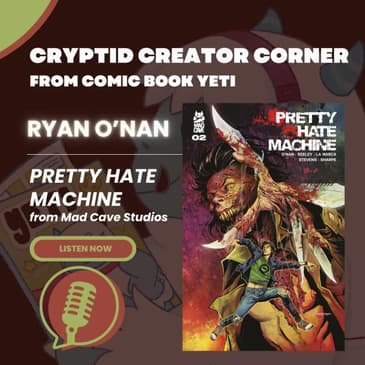

This episode was an absolute blast to record. Ryan has written for film, television, and even a novel (Winders), and so it was fascinating listening to him talk about how he approaches a project depending on the medium. Ryan is also an actor and director and I think has a unique approach to storytelling, especially when it comes to comics, and his love for this medium shines through. For television, Ryan has written for Marvel’s Legion, Skins, Queen of the South, and Wu-Tang: an American Saga. We talk about his early musical ambitions, his film Brooklyn Brothers Beat the Best, kids growing up now versus the 1990s, the importance of horror, and, of course, Tim Seeley. Ryan instantly attained the status of a guest I hope to have back on again soon. Issue 2 of Pretty Hate Machine will be out May 27, 2026 by Mad Cave Studios.
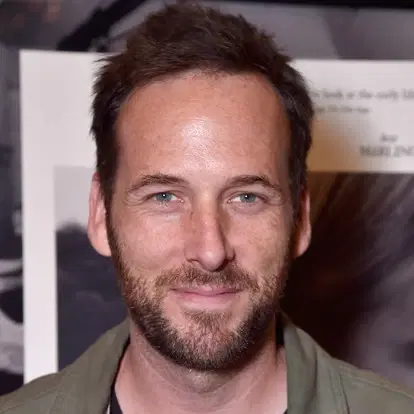
"In storytelling you're not just relating like a bunch of facts from point A to point B... you're unraveling this thing in a particular way because you want your audience to feel something." - Ryan O'Nan
WATCH THE VIDEO VERSION OF OUR INTERVIEW ON YOUTUBE!
Pretty Hate Machine
From the publisher
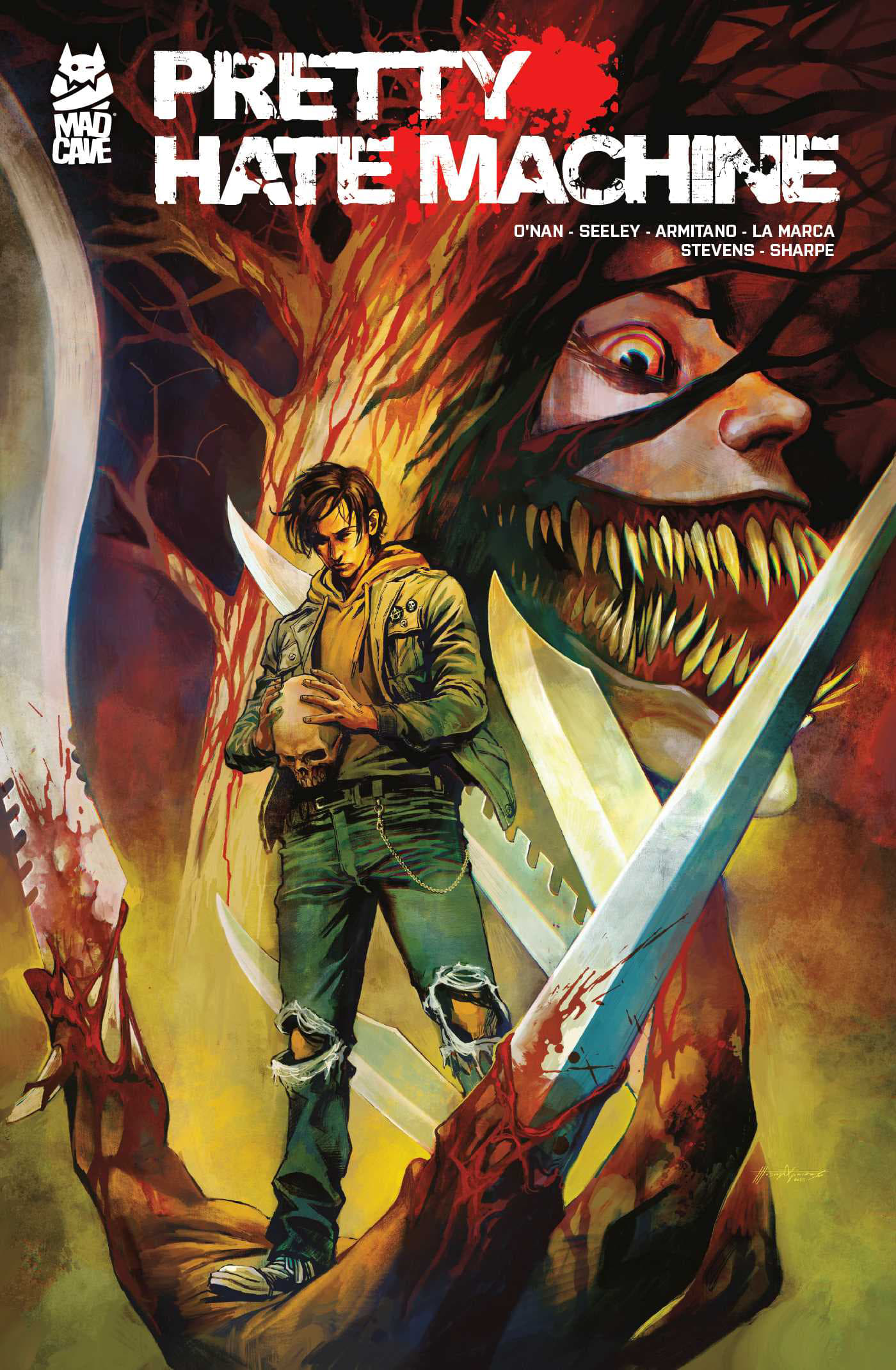
Thomas is in so much pain. As if high school wasn’t hard enough, when his father is killed in a freak accident, and his mother begins to take refuge in the company of his uncle, Thomas is visited by a ghoulish kid named Luther with knives for hands and rows of teeth like an ancient shark who tells Thomas his father was murdered and that anything his mother and uncle tell him is a lie. Thomas doesn’t know who or what to believe. Does he believe his friends, teachers, and mother, who tell him grief isn’t for the faint of heart, but it will pass? Or does he believe the demented Luther who pulls Thomas through a bloody whirlwind of conspiracies, vengeance, and slaughter, showing him the lies and corruption that surround him? Thomas must fight to discover the truth behind his father’s death, while struggling to keep his new friend from leaving a massacre in his wake. But that “truth” might be far more sinister than Thomas is prepared for…
Follow Comic Book Yeti
🔗 Comic Book Yeti LinkTree: https://linktr.ee/ComicBookYeti
For partnership and ad inquiries, please contact: thecomicsyeti@gmailcom
Follow your hosts
ARKENFORGE
Play TTRPG games? Make sure to check out our partner Arkenforge. Use the discount code YETI5 to get $5 off your order.
Make sure to check out our sponsor 2000AD.

[00:00:00] - [Speaker 0]
Your ears do not deceive you. You have just entered the cryptid creator corner brought to you by your friends at Comic Book Yeti. So without further ado, let's get on to the interview.
[00:00:11] - [Speaker 1]
The future is calling. 2,000 AD is the galaxy's greatest comic with new issues published every single week. Every 32 page issue of 2,000 AD brings you the best in sci fi and horror featuring characters like judge dread, rogue trooper, and more. Get a print subscription in 2,000 AD, and it'll arrive to your mailbox every week. And your first issue is free.
[00:00:35] - [Speaker 1]
Or subscribe digitally, and you can download DRM free copies of each issue for only 9 a month. That's 128 pages of incredible comics every month for less than $10. Head to 2,000 AD and click on subscribe now or download the 2,000 AD app and start reading today. Hello, and welcome to Comic Book Yeti's Cryptid Creator Corner Podcast. I'm one of your hosts, Jimmy Gasparo, and I'm very excited for today's episode because we have creator a on it.
[00:01:05] - [Speaker 1]
It's his first time being on the podcast. I'm very excited. His new comic book coming out through Mad Cave Studios is pretty hate machine. Issue one is already out as we record this. It was written with Tim Sealy.
[00:01:21] - [Speaker 1]
He's been on the podcast before. Looks like, I think, at least the first issue was illustrated by Paolo Armatano, colored by Roman Stevens, lettered by Dave Sharp. And, yeah, I'm really excited to to talk about this comic because it was gross at times. And more importantly, though, I think it has a very interesting story and, some of the things that were mentioned in the solicit to it to be a lot about a father and son relationship, some generational trauma, and, growing up in the nineties and exactly what that means. And so we're gonna have a lot of fun talking about this, but, please welcome to the podcast, Ryan O'Nan.
[00:02:05] - [Speaker 1]
Ryan, welcome. How are doing today?
[00:02:07] - [Speaker 2]
I'm good. Thanks for having me, Jimmy. I appreciate it. Sorry. I'm getting over a cold just a little bit if I sound vasily.
[00:02:15] - [Speaker 1]
You don't actually. You sound you sound just fine. So, yeah, so pretty hate machine. Issue one's already out, as as we're recording this. I I got a chance to to read issue one, and and we're gonna kinda kinda dive into it.
[00:02:31] - [Speaker 1]
But I just kinda wanted to get a little bit more knowledge about you for the listeners to kinda figure out where you're coming from. And we're gonna get into talking about, you know, writing it with Tim and and and how that came about. But so, so how did you kinda make your way to writing comics? Because I know you've done a lot of different things both in terms of screenwriting, acting, and with all of those things in your career, how did you make your way to to writing comic books? You know,
[00:02:59] - [Speaker 2]
I I mean, I've I've always loved comics. My my entire life since since I was a kid, it I've read comics even before I read novels. I mean, I I it's it's kind of like this the purest form of, like, you can just do anything in the comics, like growing up. And I and I always really loved that. I was really into the x men stuff.
[00:03:23] - [Speaker 2]
When I was a teenager, I was super into like the early image. I think I have like the first 20 of like all the beginning image stuff at it anywhere from like gen 13 and wildcats and, like, a backlash and spawn and all. I like I just like I think I and I really love spawn. Spawn was, like, gross. It's like, it can vary.
[00:03:44] - [Speaker 2]
And I think in some ways it it that McFarland stuff had, like, a big influence on the stuff I wanted to do. But I I just yeah. I've always loved comics. I love the stuff that's made from comics. Like, so many times when I've I feel sometimes stuff that's made from a comic is better than stuff that's made from a book.
[00:04:06] - [Speaker 2]
I'm almost always somewhat disappointed by something that's made from the book is the IP. You think, oh, the book is so much better, but like a oftentimes, comics can be such like a jumping off point, because they're so limited in how much you could write, which I really had to learn throughout this whole thing of, like, what how much you can keep on a page, how many words you can have. It's a the whole process has been fascinating.
[00:04:33] - [Speaker 1]
Yeah. Because, I mean, you've you've written up for you've I mean, you you've written films. You've written for television. You you've you've you know, some listeners might recognize you from from some of your acting roles as well. What was the biggest transition that you had to learn from from writing, like, for TV or a script for for film to, like, writing a comic book?
[00:05:01] - [Speaker 2]
I think I mean, they're so they're so different. I mean, as you know, they all have essentially similar things. But the the actual format of, like, of how you write them going from, like, movies that are very elastic. Well, I I write novels too, and novels are the most elastic thing. They can be however long you want them, however short you You want know, it's like, you can say whatever you want, which can be sometimes bad for me because I like to say a lot.
[00:05:29] - [Speaker 2]
And then movies are are like the next step down where they're still pretty elastic too. Anywhere from, you know, ninety minutes to you see these crazy long scripts if if, you know, you've earned that in the industry, I guess, to write a really long script. But then TV, which I really loved TV. I fell in love with TV because I grew up reading, you know, these book series, a fantasy series. And I just loved, like, long form storytelling in such a way.
[00:06:00] - [Speaker 2]
And comic series is the the best of all of that. You know, nothing does it like like comics where you can if you love something, you can watch more and more, and you can read more and more of it. But TV, when you write TV, is actually shockingly limited because it can only be this length, especially I mean, I've written for, you know, cable, basic cable, something like I wrote on the series called Legion. That's like a Marvel series that know how how it Or
[00:06:33] - [Speaker 1]
It's Dan Dan Stevens. Right?
[00:06:35] - [Speaker 2]
Dan Stevens. Yeah.
[00:06:36] - [Speaker 1]
Oh, that's fantastic. It's it's a great series. And and speaking, we were talking earlier about Delaware. Delaware's own Aubrey Plaza was in
[00:06:46] - [Speaker 2]
Aubrey. Aubrey's Aubrey's with Al. She's she's fan she's
[00:06:49] - [Speaker 1]
so good. And
[00:06:50] - [Speaker 2]
that part was originally
[00:06:51] - [Speaker 1]
So good.
[00:06:52] - [Speaker 2]
For a guy. Like, the the whole time we were we were working on it, that was a guy character.
[00:06:58] - [Speaker 1]
Really? Yeah.
[00:07:00] - [Speaker 2]
Like, even in the pilot script that Noah originally read I mean, wrote, that was a guy character that and she was just she was
[00:07:08] - [Speaker 1]
so perfect. She crushed it in that part. Lost it. It was amazing.
[00:07:13] - [Speaker 2]
Yeah. Oh, that's so funny that she's from Delaware. I didn't I didn't realize that. But yeah. So it it it's really you know, versus right now, I'm writing on the show called Tracker, and it's on CBS.
[00:07:24] - [Speaker 2]
And it is very much like you have you have to hit a certain length of time, you know, to a tee because there's commercial breaks, there's all that stuff. It's not like h b you know, HBO or or Netflix. I've I worked on Wu Tang and American Saga on Hulu, and it we could really build a little more elasticity because it was it was on streaming. But if you're doing something on network, it's like you have to hit these things. And comics are the ultimate version of that because it's like and Tim was like an amazing mentor.
[00:08:01] - [Speaker 2]
Like, far as he you know, he teaches it as well. He's a professor and and teaches in Chicago. But really learning how to, like, because each episode I mean, each sorry, Jesus. Each issue of oh, that's so stupid. Pretty Hate Machine is 20 pages long.
[00:08:22] - [Speaker 2]
Right? Yeah. 20 pages long. And even stuff like learning that the odd pages are where you would have like a little cliffhanger because you can turn the page and be surprised by by whatever. That whole process of learning that, and then learning it's only 20 pages long.
[00:08:38] - [Speaker 2]
You can only have a certain amount of panels per page to tell your story, and you can only have a certain amount of words per panel. And that can feel so limiting when you're not used to being able you know, you're being able to tell with like more, I don't know, meat, like like, you're you're able to use more tools, and comics are are a little more spare, but then it makes you, forces you to be more creative in how you do it, and what's left in the gutter. But also, can do anything in a comic. There's no you're not you're not thinking about cost. You're not thinking about budget.
[00:09:16] - [Speaker 2]
It's so awesome.
[00:09:17] - [Speaker 1]
Right. Yeah. You just you're you're just, you know, the the limit is the your other collaborators and, you know, the the artist's ability. And, you know
[00:09:27] - [Speaker 2]
That's really true.
[00:09:29] - [Speaker 1]
Man Cave uses
[00:09:30] - [Speaker 2]
the actor. He's the director. He's kinda the cinematographer. Your artist is kind of everything.
[00:09:35] - [Speaker 1]
And, you know, they I think that's the best part about, you know, about comics and and collaboration because you can you know, both writer and artist can work together to kind of, like, you know, push each other to make the story as as best as it can be. But, yeah, not having to worry about, you know, how much, hair and makeup would cost for Luther. Yes. 100%. You know?
[00:10:00] - [Speaker 1]
How
[00:10:03] - [Speaker 2]
much how much blood are we buying?
[00:10:06] - [Speaker 1]
Yeah. Yeah. Yeah. And so with being both a writer and, you know, and and doing the different things you've done and and acting as well, I and I I yeah. Yeah.
[00:10:20] - [Speaker 1]
You mentioned that you also have written, you know, written novels as well. And I I haven't had a chance to read Winders yet, but, like, my my favorite genre of storytelling is time travel. So I've I've added winders to to my list. I I have to get plus, I did see the the one character's name was Juniper Trask, which fantastic name. Thank you.
[00:10:43] - [Speaker 1]
Like, 10 out of ten ten out of 10 name. I did a I did a one page short comic with artist Marcus Jimenez, like a a little one page western. And my character's her name in it was Juniper Cain, and I've just been
[00:10:57] - [Speaker 2]
obsessed with him. Right? It is. That's an awesome name. I worked on those names forever.
[00:11:03] - [Speaker 2]
Right? You sit there. Yeah. You can spend days thinking about
[00:11:06] - [Speaker 1]
it just to tell you. So so I'm gonna add Winders to my list. I have I have to read that.
[00:11:13] - [Speaker 2]
Oh, I I I love yeah. Let me know what you think. I'm I'm I'm really proud of it. It you know, that's novels, I mean, it took me years. That's like, you know, it took Yeah.
[00:11:24] - [Speaker 2]
I'm sure. The long learning a new medium. Any learning any of these mediums of writing is so fun, but also just, like transcribing or, you know, translating what you what your imagination is is saying it wants to see versus how you put it on the page. Novels are definitely the purest form because it needs nothing else. Right?
[00:11:50] - [Speaker 2]
It's like direct to reader brain. Like, when you read it, you are the director and actor and cinematographer. Everybody has a different image. Yeah. But yeah.
[00:12:01] - [Speaker 2]
And then comics, you have the same amount of like freedom, but then you have this, like, truly connected relationship with your artist, which is, you know, kind of unparalleled. Like, what other medium do you have one other person that like really delivers everything that you're that you're doing? Yeah. And and the color and letterer is the letterer,
[00:12:24] - [Speaker 1]
but it's it's it's very few. It's it's a a limited pool. But I I sidetracked myself myself. I started to ask though, Like, when you were younger, did you was there one thing you you set out to do? Like, did you always wanna be a writer and found your way to acting, or did you always wanna be an actor and then found your way into writing, or did you not limit yourself and you said, I'm gonna do something creative.
[00:12:49] - [Speaker 1]
Whatever opportunities present themselves, I'm going to attack.
[00:12:53] - [Speaker 2]
Good question. I when I was really young, the we moved around so much as a kid, and like, I've felt like I've never fit in anywhere. And I was never good at anything. I was always really small. I was like a super small kid.
[00:13:12] - [Speaker 2]
I I had this crazy growth spurt in high school, but like, I felt I was really good at writing. It was like the one thing I was like, I had like this teacher that taught me, like, they kinda pushed me to write these short stories, and I wasn't gonna pass the sixth grade, and she really helped me by just giving me extra credit for writing short stories, and it completely changed my life. Like No way. Was the first time I ever felt like I was good at anything, missus Chick. Like, you're the best.
[00:13:40] - [Speaker 2]
But but, yeah, I I I went from that. And then I I actually the first really creative thing that I that I did was I played music. I was like a singer songwriter in, like, an indie rock punk band, and I toured around and, like, put out albums. Like, that was, like, my entire life. That's what I thought I was gonna do for my life.
[00:14:02] - [Speaker 2]
And then I I was on tour, and I I looked over at this other band, and they were in their, like, fifties. And I was
[00:14:08] - [Speaker 1]
like, I think it
[00:14:09] - [Speaker 2]
was, like, mid twenties right at the point. They looked so miserable. And I just thought,
[00:14:14] - [Speaker 1]
oh, no. Oh, shit.
[00:14:16] - [Speaker 2]
I don't I don't think I can do this. Like, I got because I didn't have that good of a voice. I had kind of a punk rock voice. Like, you know, I'd, 'd not even, you know, not even, like, Green Day good punk rock voice. Like, I just knew that I just knew that I didn't have whatever was could transcend the medium in some way.
[00:14:35] - [Speaker 1]
Right. So what you were? Were you the lead singer of the group?
[00:14:38] - [Speaker 2]
I was the I was a singer guitarist. Yeah. It was a Okay. Super fun. Like, very politically driven.
[00:14:45] - [Speaker 2]
Very, like it was just like a it was awesome. I one of the best times of my life. It was it was so fun.
[00:14:50] - [Speaker 1]
What what wait. What what was the name of the band?
[00:14:52] - [Speaker 2]
Oh, was a bunch of bands. The main one was called Against the Wall. I I twid around in that band and put out some albums by I was in another three piece with my brother called Jennifer's Tigers, and I was in this band called Dresden. And then and then I I ended up writing and directing a movie later on. And after I quit being in a band, after that moment, I literally quit, like, on tour.
[00:15:15] - [Speaker 2]
I came back, and I was like, I'm done. I have to, like, change my whole life and do something else. So I went back to school full
[00:15:20] - [Speaker 1]
time Wow.
[00:15:21] - [Speaker 2]
Thinking I was gonna be, like, the teacher or something, and then just randomly came across this theater company. And and, again, just total paradigm shift in my life. I was like, oh, okay. This is something. This this acting thing, there was great writing in it.
[00:15:36] - [Speaker 2]
There was great, like, just so much creativity. I had this amazing mentor called and his name was Juan Castro, and he ran this little this little, like, theater company at this junior college, like, not a not a prison, but, like, he, like, he was a total dictator, and you couldn't even audition for stuff. He'd, like, made everybody. You had to earn everything, anything you ever wanted to do. And it totally changed my life.
[00:16:08] - [Speaker 2]
But I so I stopped writing, like, as far as the music goes, I stopped being in a band, but I didn't stop writing songs. So years later, after I actually became you know, like an actor and was, like, working in the industry, I directed this movie. And I I wrote this little nothing, you know, low budget movie about a a band, a two man band. And one guy sings and plays guitar, and the other guy plays, like, reprogrammed, like, eighties children's instruments. But I used all these songs that I had written since then just with my headphones and my guitar, like, in my bedroom.
[00:16:46] - [Speaker 2]
And it and and I got signed to a major label off of that movie. Like so then I toured around with a friend of a friend of mine that that we were, like, named Michael Weston. We were in this band called the Brooklyn Brothers, and we toured around the country in, like, jets and played children's toys in front of people.
[00:17:03] - [Speaker 1]
The movie was, just so listeners know, the movie was the Brooklyn brothers, beat the best. That was, like, 2011, 2012?
[00:17:13] - [Speaker 2]
Yes. That's right. Yeah.
[00:17:15] - [Speaker 1]
And and folks, yeah, even if you don't recognize the the name, listeners will probably recognize Michael Weston, another actor for some amazing performances he did in, like, six feet under and Oh, stuffy other chips.
[00:17:29] - [Speaker 2]
We go for that. I bet. Yeah. He's the woman that makes McClesey Hall smoke crack. Yes.
[00:17:35] - [Speaker 2]
Condensed. Yeah. So good. He's an amazing man. He's one of my best friends.
[00:17:42] - [Speaker 1]
Oh, that's awesome. So so so after that movie, then you ended up touring around again back back into music because was
[00:17:52] - [Speaker 2]
really crazy. Oh, yeah. That is to sing these love songs and stuff like that. They were all kinda little synthy love songs, and the the beats were from, like, little Casio keyboard. They were like, it was like it was very fun, but it really did once again underline the fact that I did not have that go voice.
[00:18:10] - [Speaker 2]
Like like, I was like, this this is just for fun. It's sort of a miracle little thing, and we we did this tour, and then we were done, and we both went back to our lives and and just kept doing other stuff. I just, like, I just love the creative process so much, like, whether whether it's anything, anything that you can do, putting on a play with friends, trying to make a movie for nothing, you know, writing comic books, like, just writing anything. Like, making stuff is the, I think, the funnest thing that exists. It's my version of religion, I think.
[00:18:45] - [Speaker 2]
As close as I get at least.
[00:18:47] - [Speaker 1]
I I yeah. I agree. Making stuff is is the best. I mean, it's there's there's there's no you know? I'm hard pressed to think of, like, you know, a better feeling.
[00:18:58] - [Speaker 1]
Yeah. I I say that with the caveat that I do have two kids, and I really like my kids, and I hang out with my kids.
[00:19:03] - [Speaker 2]
I want kids. I'm I'm chasing that feeling. I I wanna be I wanna be where you're at, Jimmy. I like that.
[00:19:08] - [Speaker 1]
It is, it is really cool. I I am somebody that, you know, I I don't I don't know that it's for everybody. I'm not I'm not going around asking my recently married friends, like, you having kids yet? Like, you know, everyone has to live their own life. But, it was, it it it's been it's been good for me and my wife.
[00:19:26] - [Speaker 1]
I do like my kids. They are they are they are pretty funny.
[00:19:29] - [Speaker 2]
Sorry about the cough, buddy.
[00:19:32] - [Speaker 1]
Oh, it's alright. Well, I'm trying to cut it
[00:19:34] - [Speaker 2]
out. Kids. Oh my god, man. I it really is. It's it's I'm kinda, I'm just, I'm thinking about it all the time.
[00:19:40] - [Speaker 2]
Like,
[00:19:41] - [Speaker 1]
Really?
[00:19:41] - [Speaker 2]
Yeah. I'm getting older, and you know it, and it's it's interesting. It's like, as far as love goes, this is this is a story that makes me look kinda stupid. But like, when I was a little kid, my mom used to like, be like, I would die for you. I would walk through fire for you.
[00:19:59] - [Speaker 2]
And I used to feel so guilty as as a little kid because I would think, I don't know if I would if I don't know if I would die. Like, if it was, like, for you. And, like and that's and I and I felt like I'm a I'm an awful human being. Oh my god. Like, what a horrible person who won't die for their mother, but I was like, I wanna live.
[00:20:17] - [Speaker 2]
And, like, my mom said that, like, a few years ago. It's so horrible. I sound so shitty.
[00:20:22] - [Speaker 1]
I was a little kid. You were a little kid. I was a little kid, guys. It's hilarious, actually. So
[00:20:31] - [Speaker 2]
And I told my mom that, like, like, a few years ago. I was like, my mom said it again. She might die for you. I was like, mom, when I was a kid, used that used to make me feel so guilty. I'd I'd feel so horrible.
[00:20:40] - [Speaker 2]
I confessed this thing, and she just started laughing so hard. And I was like, why are you laughing at me? And she was like, Ryan, until you have kids, you don't even know what love is. Like, what actual real love is. And I'm like, I'm in.
[00:20:56] - [Speaker 2]
I wanna feel that. So so I'm I mean,
[00:21:01] - [Speaker 1]
well, it it is pretty cool. I I will I will say that. I do and I do enjoy it. My kids are pretty neat. They're 13 and eight.
[00:21:09] - [Speaker 1]
And, yeah. So, but creating things and it's particularly in comics, but you can have a collaborative process. I guess, if you are writing a novel and it's it's just you, I mean, you might have an editor, but television and movies, I have to imagine that collaborative process. It is kinda wonderful to create. I I did theater in high school and and college, and, I mean, I just I love that, the whole experience of just kind of putting on a show of of making stuff.
[00:21:41] - [Speaker 2]
Amazing. Yeah.
[00:21:42] - [Speaker 1]
Yeah. So, well, let's talk specifically about, pretty hate machine. So first issue's out. This is a story of Thomas recently lost his father, and, through the first issue, runs into, like, just a a terrifying demon, I guess, is is, I don't I don't know if that's explicit in the text of the first issue, but definitely seems like we're in demon territory. What was the process, you know, of kind of getting involved with this with with Tim and and Mad Cave?
[00:22:23] - [Speaker 1]
And then I and then I wanna talk about this story and some of your influences in it because in this the the press stuff that they send out when they're like a little bit about the creator. I thought what you wrote about it was amazing. And, I I I'm a little
[00:22:39] - [Speaker 2]
Don't remember.
[00:22:40] - [Speaker 1]
I go But I, yeah, I figured that's why I was gonna pull it up. Maybe somebody but your your quote about it is that you said, I you wanted to do a dark love letter to the scrappy young man who somehow survived the nineties, a time when a kid could truly get lost when you grew up in violent spurts while no one was watching, where the world felt cruel but honest. And you say some, you talk a little bit more about it. And then the last sentence or the last two sentences I loved. I couldn't feel more excited or honored to be creating this dark piss in love nineties pop song, with Tim, such a scary, fun dream.
[00:23:18] - [Speaker 1]
So, like, I mean, even if I knew nothing else about it, I'm like, oh, I gotta read whatever the hell this is. And I was not disappointed. So but but but you tell me how you kinda got involved with all of this and with Tim, and and
[00:23:32] - [Speaker 2]
I want let's talk
[00:23:33] - [Speaker 1]
about it.
[00:23:34] - [Speaker 2]
I'm a total I'm a total fan of Tim's. Tim's I I mean, he the man's so prolific. But Tim and I actually worked we had he has a comic series called Dark Red, which I love. It's a vampire story. There's two runs in it and then an extra fun little thing.
[00:23:53] - [Speaker 2]
Highly recommend it to anybody. It's very well written. And I Blumhouse owned it as a piece of IP. They brought me in for it, and I developed it, and we sold it to Amazon as a series. And so I was developing it.
[00:24:13] - [Speaker 2]
And Tim Tim, you know, and I were this was years in writing the pilot for it and all that stuff. And and Tim and I just ended up being kind of like quick buddies. Like, he's just such a wonderful guy, and just love talking creative process. And I'd always been fascinated by comics. I've, you know, I I inhale them.
[00:24:35] - [Speaker 2]
I I love them. And but I had always been pretty intimidated by how to enter into that world at all because it's, you know, you feel so far behind and everybody's, you know, done so much stuff. Every you know, it's just like anything. Like, I was talking to somebody last night who was trying wanting to be a writer, and they were like, a lot of competition, And I was like, like, and she's like, is it a good time to start? I was like, listen, it's not a good time to start any anything that is a dream job for somebody, it's, the competition's gonna be endless.
[00:25:09] - [Speaker 2]
And it's, you know, and it's gonna be so fucking hard and brutal and awful. Yeah. Amazing if you actually, you know, break through. I had this little leg up where I, know, Tim and I had this relationship, and I was like, hey, Tim, you know, like, when it ended up not moving forward at Amazon, after the pilot was written and everything, they kind of shifted their mandate to massive IP instead of like more grounded stuff that they had when when they bought it. I was like, would you ever be interested in writing a comic together?
[00:25:41] - [Speaker 2]
You know, I I and and he was like, yeah, dude. Well, you know, fuck yeah. Like, send me some ideas that you have. And so I I sent him basically like three ideas that he that I had kind of, like, been noodling around with. And one of them was this fucked up kind of Hamlet meets Edward Scissorhands with a little name
[00:26:03] - [Speaker 1]
or just
[00:26:04] - [Speaker 2]
like like, they're like, they're
[00:26:06] - [Speaker 1]
like Yeah.
[00:26:08] - [Speaker 2]
And he was like, that's the one. And and so and Pretty Hate Machine was my one of my favorite albums of all time. And I just like, I just thought I just I kept it was before I even knew exactly what it was gonna be, that was, like, the title of it. And thus began a mentorship from a guy who who couldn't be more generous and was, you know, walking me who was just stumbling towards this new medium of trying to do as good a job as I as I possibly could, but he really took me through every step of the process and let me just take as big a swings as as I could along the way and and came in and made things better and and, you know, shifted things and showed me where stuff would be too long or stuff wouldn't quite fit or, like, any of that stuff. But he was a great shepherd for the for for me through through this process.
[00:27:12] - [Speaker 2]
And I he
[00:27:13] - [Speaker 1]
Well, that's awesome.
[00:27:14] - [Speaker 3]
Yeah. Jimmy is too humble to do this. So as his stalwart ride or die, I wanted to tell you about his new graphic novel, Penny and the Yeti with artist Amber Aiken. What started as a comic short with his daughter that I've known about for ages now, and it's evolved and has become one of those annoying can't talk about it in comics things for too damn long. Yes.
[00:27:37] - [Speaker 3]
I'm predisposed to be supportive but after reading an advanced copy of it, I have to admit it's way better than I anticipated. No shade but it's really good, remarkably so. Does it have a yeti? Yeah. Is it cute and adorable?
[00:27:50] - [Speaker 3]
Yeah. But it streak lies in effectively tapping into the all too familiar family dynamics that we all are facing in 2026 and approaching it in a way that doesn't insult the book's target audience. Kids. They're way smarter and perceptive than we adults give them credit for. So I really appreciated Jimmy's narrative approach tapping into his own experiences as a dad and a spouse.
[00:28:13] - [Speaker 3]
I can hear his wife saying, get off your phone, Jimmy, through the pages. She's gonna kill me for saying that. It's hitting shelves on April 21, and I dropped the link in the show notes where you can preorder a copy today. Getty or not, here we come with Penny, Perry, Fenton, Maxine, and the magical, mythical, magnificent Yeti. On behalf of us both, we appreciate your support.
[00:28:37] - [Speaker 1]
YOLOLA. In terms of the the the story itself, fantastic opening, because I I I just I love the scene of the three kids on the bikes. I love how they talk to each other because it felt like a way that kids I mean, I I don't I'm I'm assuming kids still, like, talk to each other the same. The lingo maybe the lingo is just a little different or the slang. But, yeah, it felt like a way that kids definitely talk to each other when when I was that age, when I was you know?
[00:29:10] - [Speaker 1]
Because I'm 47 now. So when I was 13, like, it just it felt very realistic, and it's a it's just a fantastic opening. It just Oh, thank
[00:29:20] - [Speaker 2]
you so much, man.
[00:29:22] - [Speaker 1]
Quickly goes from three kids just shooting the shit, picking on each other, like, you know, a little bit to, like, absolute, like, blood soaked horror. I mean, it's like in, like, four pages. And there's, like, there's, like, there's there's no easing into it. It's it's just like it's just like, oh, holy shit. What the hell?
[00:29:51] - [Speaker 2]
Yeah. I wanted
[00:29:52] - [Speaker 1]
to I mean, some of
[00:29:54] - [Speaker 2]
that comes probably from my, like, movie and TV thing where you really do have to get something very quickly out there to, like, kind of, like, grab somebody. But that was my life in the nineties. Like, that was if you had a bike, you you had the you had the whole world at your hands. You had no supervision. You you went out there and you did stupid shit, you got in fights, and you and you ran from people that you were scared of, and you and you explored places you definitely shouldn't have, and and you had a little world that you had to grow up with these other kids.
[00:30:29] - [Speaker 2]
And and it's funny. I grew up in, like, North County San Diego. There's a lot of, like, a big Mormon community there too. So, like, like, the two kids that that are and my best friend is a Korean American. So, like, June, like, who's the best friend of he's, like, Korean American, and and definitely the coolest kid out of all of them just like Charles is.
[00:30:53] - [Speaker 1]
Yeah. Yeah. It's funny. And I I I thought about it, and I'm like, you know, is it how how different is, like, how I was raised in in terms of how I'm, like, raising, you know, my kids? And it made me think about that a lot, especially reading what you wrote about how things, like, were in the nineties.
[00:31:10] - [Speaker 1]
And, I mean, I so I'm I'm 47, so I grew up in the eighties, but I was you know, by 1990, I was 11 or 12, so similar to the little younger than these kids. So, you know, my early teens and teen years were the nineties. But then I was reminded of the fact that my my wife, Saris, has said to me on many occasions, we're not judging how we're raising our kids by how you were raised. Because sometimes
[00:31:37] - [Speaker 2]
I'm not do. I can't imagine that. How do kids grow up now? How do they how do they make mistakes? It's so hard to make mistakes when everything is public or your parents are always hovering around you.
[00:31:49] - [Speaker 2]
Like, I had so little supervision. And and I wouldn't necessarily recommend that, but it did make me who I who I am. And, you know, and I feel like I've survived so much and and Yeah. Embrace a lot of shit because of what I
[00:32:06] - [Speaker 1]
Now it's true. It it's definitely so hard to, like, want to, you know, recognize, like, the the dangers of the world and want to protect your kids, but also at the same time realize, like, okay. You have to give them some freedom. You have to allow them to make mistakes. Like, you have to prepare them for the world and not just protect it and shelter them, you
[00:32:29] - [Speaker 2]
know Yeah.
[00:32:30] - [Speaker 1]
From it.
[00:32:31] - [Speaker 2]
It There's there's extremes. I mean, my
[00:32:34] - [Speaker 1]
Oh, well, yeah. There
[00:32:34] - [Speaker 2]
are. Was telling the story, which I'm sure he would tell, like but he was like, he's such an early riser. He gets up at, 5AM every day. I'm like, no way. That's amazing.
[00:32:42] - [Speaker 2]
Like, how like, I'm not that like that. He was like, when I was a kid, if you weren't out of bed at 5AM, you were physically removed from your bed. Like like or like, you know, I think he was, like, taken into the woods and he had to find his way off with some it was like like, people were like it was just a different way of like a of having to be Yeah. Grow up quick. Right?
[00:33:09] - [Speaker 1]
Oh, yeah.
[00:33:10] - [Speaker 2]
But we don't completely grow up quick. Like, you know, you're like, there we only grow up I mean, part of us will grow up really fast and up the other part of us will probably be stunted because we were scared by how we grew up fast. So it's like, you can't completely win. Like, right now are maybe much more emotionally developed, like but then they don't have the skin to protect it. I don't know.
[00:33:33] - [Speaker 2]
Like
[00:33:34] - [Speaker 1]
Yeah. I mean, I I think about my with my kids at 13 and eight, and I I joke that, my my my wife does joke that I did everything for our daughter who's 13. And and she acts like because she was pregnant, I raised the 13 year old, and she raised the one who's now eight. And she's like and I but it is true that, like, if my two kids, if if they were lost in, let's say, New York City, They've they've only been there once or twice before. They were lost in New York.
[00:34:04] - [Speaker 1]
The eight year old is getting them home, not the 13 year old. I gotta be honest. Like The one that you re
[00:34:09] - [Speaker 2]
the one that you raised
[00:34:10] - [Speaker 1]
The one that I the the one that I raised is is not making it out of the city. So And do you think that's do
[00:34:17] - [Speaker 2]
you think that's genetics just came out of the box that way, or is it like you pampered the person the your your kid because you you had it harder growing up in the nineties? Like
[00:34:28] - [Speaker 1]
I I think it's a little bit of genetics because the 13 year old is much more like me, and that's how kinda I was. I was always very book smart, but it took me a while to develop common sense. My wife would say it's because that I did too much for the 13 year old, and and now and and and now she's not as self sufficient as the eight year old. So it's a, you know, it's it's it's a hard dance to dance sometimes.
[00:34:53] - [Speaker 2]
You know? Jerry's still out. They're only eight and 13. Yeah. I got guys the the building blocks.
[00:35:00] - [Speaker 2]
Like Let's see. Show me when they're Let's see how it thirties.
[00:35:04] - [Speaker 1]
Alright. So we have pretty hate machine. We have the the the the title and the nine inch nails influence. And, right, it's Nine Inch Nails. Right?
[00:35:15] - [Speaker 2]
Yes. Yes. It's there for Okay. It's I for the album, Richard Reyes, for the album. Like Yeah.
[00:35:21] - [Speaker 2]
Blew my mind. And it's it was the the feeling of of that album is, like, dark and sexy and and oddly important, and yet not important at all. Like, it it's like a it felt so quintessential nineties for me. And I yeah. Pretty Hate Machine, I think, is a bit of a love story to that feeling of feeling lost and feeling like, you know, what do I what do I do with all this me, you know, at the at the end of the day?
[00:35:58] - [Speaker 2]
And and in this particular instance, kid loses his dad in a tragic, like, car accident, and is kinda broken, but needs to move on, and needs to be strong for his mom, and and all this stuff. And and then this fucked up creature thing Yeah. Like, comes out and says everything you know is wrong. And let's, let's have a little fun figuring with a little slaughter, figuring out
[00:36:30] - [Speaker 1]
I mean, yeah. The the so so Luther is that is that character, which is the, you know, the Edward Scissorhands, Freddie Kruger type with just a a mouthful of teeth. And but the interesting thing about how Luther is first introduced because after you, you know, you you get through the open, and then we we go to see Thomas, and he's basically at his dad's wake. And we we learn about him. We start to get to know him a little bit when the three friends show up, and he's called out to the scene where, like, we meet Luther.
[00:37:09] - [Speaker 1]
But I found it fascinating, and I act I really liked how like, there's there's no real explanation yet in, like, the first issue. Like, there's no, like, deep dive lore into like, Luther hints at, like, where he's from, and it's absolutely terrifying in terms of him telling Thomas, you know, like, what what they saw, about his father. And, like, it it it just like yeah. I can't I can't tell if he's actually trying to give him information or if he's just, you know, messing with him at that point. But, like, Luther just comes on the scene, and it's just, like, instantly terrifying in terms of, like, who he is Right.
[00:37:54] - [Speaker 1]
And why he's there. Just that that that kind of feeling of there's no real explanation for it yet, and I I don't know if one's coming, but just he's there. He's on the scene, and you don't know what his motives are. The things he's telling Thomas are hard for Thomas to accept because that ties into the the Hamlet of it all. Yeah.
[00:38:21] - [Speaker 1]
I I just I I found it so interesting in terms of how he first arrived on the scene and kind of how the story then, you know, played out, you know, from there with Thomas. It it was a very, very, fascinating and, I thought, terrifying, introduction.
[00:38:44] - [Speaker 2]
Oh, that that makes me so happy, man. Yeah. I you know, you don't wanna give too much away, and and you don't wanna let like, you know, you're kind of a a first issue seems as I've read read them and read them and, you know, kind of adjusted so much is you want to it's all breadcrumbs at the end of the day. It's like like, you know, come on this go on this journey and all. You will learn stuff about this, you know, lore that I'm attempting to create or the you know, Tim has some really fun ideas throughout the the the whole thing and that we make this thing together of of how much you show at any particular time.
[00:39:25] - [Speaker 2]
How much how much information do you give people? Like, how much do you do people really want? And there's a difference between just in storytelling, I think there's a real difference between what you want and what you actually want. You know? Because you want to know everything.
[00:39:44] - [Speaker 2]
Like, when I'm when I'm reading something,
[00:39:45] - [Speaker 1]
I'm like, I wanna know everything. Like, I wanna know it now. But
[00:39:53] - [Speaker 2]
but as long as I think it's, you know, hopefully satisfying as you get little morsels along the way and and do a certain amount of your own work, you know, as a as a, you know, it's like you're you're a little detective too, and and so is Thomas, and he's trying to figure it out like what the fuck it is and what it was what Mina has. Then you're kinda doing the work with the character versus just here's all the lore, and then you're like, okay. Okay. Let me figure out what part of that lore I actually care about or
[00:40:25] - [Speaker 1]
like Right. Because it you know, it was in storytelling, you're not just you're not just relaying, like, a a bunch of facts from point a to, you know, point b. Like, you're unraveling this thing in a particular way because you you want your audience to to feel something, whether or not they feel like they're the detective with Thomas or they're getting a sense of, like, what Thomas is is going through, or you wanna scare them with how terrifying Luther is, or you want them to question the reality of the situation and what's really going on. Yeah. You know, that's
[00:40:56] - [Speaker 2]
And and actually with the you know, an indie or an an original, you come with nothing. Right? Like, so it's not like, if you're reading the new, Batman comic, there is a plethora of stuff that you already know given any particular new run. Sure. But there's like, I've just just got done reading the first two things of books of the absolute Superman.
[00:41:20] - [Speaker 2]
And I was like, oh my god. It's so good. Because they just every character that you know in Superman is doing something completely different. It's it's almost Yeah. It's like they got shuffled in a, you know, like a ensemble theater or something like that.
[00:41:34] - [Speaker 2]
And everybody played different roles. The essential roles are still the, you know, good guy, bad guys are are still the same. But part of that, because you know the original story of Superman, where it departs from it and where it doesn't, same thing with the absolute Batman, where it departs and and and where it reinvents things is part of the fun. And I guess the closest thing I have to a version of that or that we have for as a close version of that is that is Hamlet. You know, like people know the story of Hamlet.
[00:42:07] - [Speaker 2]
There's a lot of that in there, and and a lot of departure also. So like, you know, if I was reading, would you you know, it's like, what is what what is the Hamlet? They what do I think I know versus what I don't know? I you know, they hopefully, that'll be fun for people to
[00:42:26] - [Speaker 1]
Oh, yeah. What was the, I guess, inspiration or idea, like, behind, like, Luther? Like, what what where did Luther come from? Has he has has he haunted you for years? That's that's a good question.
[00:42:48] - [Speaker 2]
I what? You know, I no. None. No. No.
[00:42:53] - [Speaker 2]
It's not from my dreams or anything. Though though I I think it was an amalgamation of I mean, that's all creativity is at the end of the day. Right? Like, it's like, you take like two or three things that you fucking love that and you smash them Yeah. Into each other like atoms, hoping that they're gonna create some new molecule Yeah.
[00:43:14] - [Speaker 2]
In some way. And without a doubt, he's a combination of, for sure, Freddy Krueger because I I just loved those movies growing up. Like, I watched them too young for sure. And I was like, I was building, like, Freddie's house out of popsicle sticks and shit like that when I when I was little. But he was so he was so funny at the same time as he was so terrifying.
[00:43:42] - [Speaker 2]
I really loved the bizarre look of, like, Tim Burton's stuff. So, like, I mean, I just loved Edward Scissorhands so much. But I also I just I thought some crazy shark teeth would be fun. I I don't I don't know. Like like, Tim and I talked about a lot of stuff.
[00:44:00] - [Speaker 2]
And, like, the the quest and we went through a bunch of different versions of what he might look like with the original artist. Like, what's he wearing? And I think the the first pass and we've gone through several we went through a few things on the on the we had a different artist at the beginning, and then that didn't work out. And then we had another artist for the for the first issue, and that didn't fully, you know, work out. And then we have a, for the rest of the series, Henk LaMarca is incredible.
[00:44:32] - [Speaker 2]
Like, his stuff is, like Okay. Unbelievable. Paolo's stuff is amazing too. I mean, in that first issue, I'm a big fan of his of his artwork. And he's like around the same age, has the same influences.
[00:44:42] - [Speaker 2]
If you see him online, he's like this Italian, like, drummer and like a punk band. Like, he's but like, definitely first imagistic stuff looked a little bit like, you know, like, Edward Scissorhands, like, with, like, a leather suit and stuff like that. And I was like, oh, that's not quite what like, I wanted to feel more like like a little mix of of Trent Reznor in there too. Because I just thought Trent Reznor was this character that was so interesting and kind of dark and like but I also would would like push I had this imagistic thing of my favorite horror movie of all time is An American Werewolf in London.
[00:45:22] - [Speaker 1]
Okay.
[00:45:23] - [Speaker 2]
And Yeah. Jack in that, who is also super scary, but also his best friend and and kind of like really funny, is just torn the fuck apart. Because he's he's survived I mean, he's he's like, he comes back to the main character after he's been killed by this werewolf. And he's got like little pieces of flesh like hanging off of its face and like and so a little bit of that went into it. You know?
[00:45:50] - [Speaker 2]
Yeah. Just kind of all this stuff mixed mixed up.
[00:45:52] - [Speaker 1]
I real I really like his jacket. I really like Louie Cooper's jacket.
[00:45:56] - [Speaker 2]
Oh, good.
[00:45:57] - [Speaker 1]
It's just yeah. I just thought that was, like, a a nice design touch. Like, because, you know, in terms of, the character choice, it all you know, a lot of pockets. It looks like it could be something that was maybe, like, military issue. There's just it just calls up some interesting questions about about Luther.
[00:46:20] - [Speaker 1]
And I do also like that he has you know, when we first meet Luther, I I mean, I think maybe it's not his first or second his first or second line of dialogue, I also thought was he kinda had that Freddy Krueger touch, and he he's you know, I think one of the second things he says to Thomas is need a tissue? Watch the knives. They're annoying. And I just thought it just that was really good.
[00:46:46] - [Speaker 2]
Do you want a tissue as it's raining blood like that? Yeah.
[00:46:51] - [Speaker 1]
I you know what else I did like? Well, I go certain line, I really thought was very, very funny, actually, and it helped us set up the character of Thomas really well. When we first meet Thomas and he's at his father's wake and some woman comes up to him, and I think most people who have been to a funeral, especially if you've to a funeral of someone close to you, it it can just be the worst having to talk to people. I mean, you're there because someone close to you or someone you know has died. That's already absolutely awful.
[00:47:28] - [Speaker 1]
And if you're somebody who's even, like, a little bit introverted, then having to make conversation with somebody on top of it. And this woman comes up to him and says, oh, I heard you got into the Royal Art College in London. You this must be the time of your life. And then, the next panel just pulls back, and you see the coffin with his father's picture on. He goes, well and I'm like, no.
[00:47:50] - [Speaker 1]
This shit is awesome. Like, it's you know, I it's just all over the place in terms of, like, the emotional beats of it. I thought, this is great. This is my sensibility a 100%.
[00:48:03] - [Speaker 2]
Oh, man. And Tim Tim has that in spades. He's just like a like like, I think that's where we really connect is, and I will admit in my own stuff sometimes, when it's just me, that balance of like humor and and and horror or or pathos is like, is really fucking hard to find. Like, because one diminishes the other at the at the end of the day. And if it's and if it's really good, like, America, War off in London, you know, or something like Lost Boys.
[00:48:40] - [Speaker 2]
Like, there's some really funny shit in there. Right? Absolutely. Turtle brothers and all that stuff, like but it also the the emotional stuff hits. And so you're trying to do a version of that where, like, you there's funny stuff.
[00:48:54] - [Speaker 2]
The kids are saying funny stuff. They're try they're just being normal, you know, awkward things in life, and yet you still have to kind of keep the emotional ball in the air.
[00:49:07] - [Speaker 1]
Sure.
[00:49:08] - [Speaker 2]
It's a dance, and and, you know, I hope that we achieve it as much as we can along the way, but it's it's very fun. I mean, to to do both the the to do to try and do both things is is very fun and, like, it's fun to make yourself laugh with someone. And I'm so psyched that you dig it, man. Like, that's that's awesome.
[00:49:28] - [Speaker 1]
I did. Absolutely. I thought it was a fantastic first issue. Really loved it. And, yeah, really just from from from the opening jump, I I thought I get this, and I liked where it went.
[00:49:44] - [Speaker 1]
There's plenty of surprises in the first issue. I'm excited to see where it goes. So, yeah. Yeah. Thanks.
[00:49:51] - [Speaker 1]
Thanks so much, Ryan. Thanks so much for coming on the podcast. It's such a blast. I really appreciate it. Listeners, please rate and review us.
[00:49:59] - [Speaker 1]
Do all the stuff they tell you to do about podcasts. It really does help. Just leave, like, a little review. That would be nice. Shout out to my brother Bobby, the Creator Corner's number one most dedicated fan.
[00:50:10] - [Speaker 1]
Bobby listens to all my my episodes. Don't worry, Bob. I'll make sure you get a copy of this. I know you're gonna like it. And, yeah, pretty hate machine for Man Cave Studios is out now.
[00:50:23] - [Speaker 1]
You can get issue one. You can get it right from the Man Cave website. I will put links in the show notes so you can get it right from Man Cave. Let your local comic book shop know that you want it. I also have links so you could check out Ryan's website, check out some of the other stuff that he's done, whether or not it's directing or acting or writing.
[00:50:42] - [Speaker 1]
We'll put a link to Winders as well because I'm definitely, gonna order that as soon as we're done so I can read it because I'm a sucker for anything that even is remotely time. Yeah. So and issue two of pretty, hate machine will be out May 27. Okay? So, yeah, just get it.
[00:51:04] - [Speaker 1]
Read it. You're gonna love it, especially if, like, Ryan and I, you grew up, you know, mostly on your own in the nineties, getting into trouble and looking back now wondering how you made it through. So, but thank you very much to my guest today, Ryan O'Nan. And thank you so much for listening. I'll see you next time.
[00:51:25] - [Speaker 1]
Good night.
[00:51:26] - [Speaker 3]
This is Byron O'Neal, one of your hosts of the Cryptid Creator Corner brought to you by Comic Book Yeti. We hope you've enjoyed this episode of our podcast. Please rate, review, subscribe, all that good stuff. It lets us know how we're doing and more importantly, how we can improve. Thanks for listening.
[00:51:46] - [Speaker 0]
If you enjoyed this episode of the Cryptid Creator Corner, maybe you would enjoy our sister podcast, Into the Comics Cave. Listen and subscribe wherever you get your podcasts.