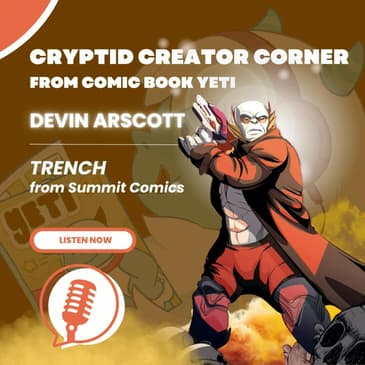

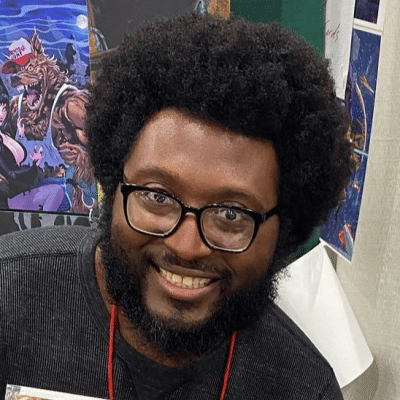
This episode has been a looooong time coming as I'm joined by Devin Arscott. Devin has been writing and editing comics for the past few years. Now his characters Noir and Trench are part of the Summit Comics Universe. Devin and I chat about his love of comics, what started him on the path of wanting to tell his own stories, and why he's excited to be part of the Summit Comics Universe. Trench: Hollywood Monsters is on Kickstarter right now and you can back it at the link below.
Trench: Hollywood Monsters on Kickstarter
From the Kickstarter page
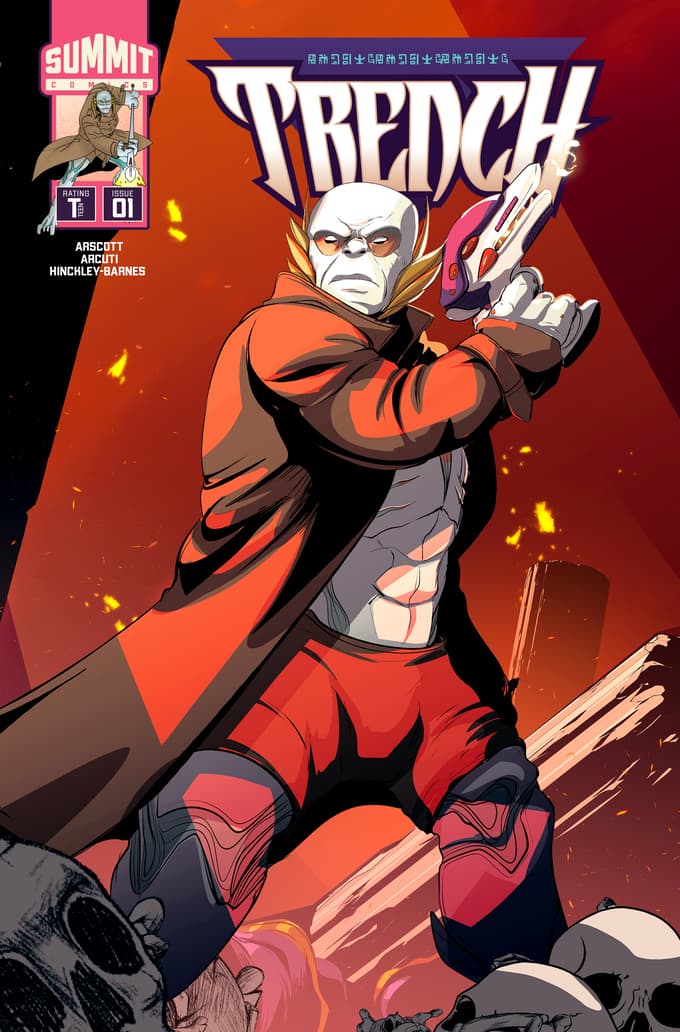
Trench, an Ultra-Terrestrial stranded on Earth, must protect the planet from forces far beyond our understanding. This comic is for readers who love heroes with a knack for mystery and sci-fi adventures.
Hollywood, the land of opportunity for those who want to become a star. Unbeknownst to the masses, The Cult of Dagon rules from the shadows corrupting the innocent for their lord. As seen in Pinnacle #1, Trench has been tracking down the cult to put an end to their treacherous existence by any means, and now comes closer to their goal of destroying them.
Trench is 24-page comic book written by Devin Arscott, Illustrated by Nicoló Arcuti, and lettered by Reed Hinckley-Barnes. Trench is inspired by comics such as Hellboy and Abe Sapien, fans of those series will enjoy this.
Follow Comic Book Yeti
🔗 Comic Book Yeti LinkTree: https://linktr.ee/ComicBookYeti
For partnership and ad inquiries, please contact: thecomicsyeti@gmailcom
Follow your hosts
ARKENFORGE
Play TTRPG games? Make sure to check out our partner Arkenforge. Use the discount code YETI5 to get $5 off your order.
Make sure to check out our sponsor 2000AD.

[00:00:00] Your ears do not deceive you. You have just entered the Cryptid Creator Corner, brought to you by your friends at Comic Book Yeti. So without further ado, let's get on to the interview. The future is calling! 2000AD is the galaxy's greatest comic with new issues published every single week. Every 32-page issue of 2000AD brings you the best in sci-fi and horror featuring characters like Judge Dredd, Rogue Trooper, and more.
[00:00:28] Get a print subscription to 2000AD and it'll arrive to your mailbox every week. And your first issue is free. Or, subscribe digitally and you can download DRM-free copies of each issue for only $9 a month. That's 128 pages of incredible comics every month for less than $10. Head to 2000AD and click on subscribe now. Or download the 2000AD app and start reading today.
[00:00:54] Hello and welcome to Comic Book Yetis Cryptid Creator Corner. I am one of your hosts, Jimmy Gasparro, and I feel like this guest today has been a long time coming. We've been in a lot of the same circles in indie comics the past few years. This is his first time on the podcast. And I am very excited because he is part of the Summit Comics universe, which is a brand new shared universe of indie comic creators.
[00:01:20] And this is one of the characters that I have been most excited about. It is Trench. And the issue Trench, Hollywood Monsters number one, is on Kickstarter right now. If you're listening to this episode when it first comes out, you're going to have plenty of time to go back to the campaign. We're going to talk all about it. You're going to hear some of the reasons why I'm so excited. But please welcome to the podcast, Devin R. Scott. Devin, how are you doing today?
[00:01:51] I'm doing fantastic. Thank you for having me, Jimmy. It's like I said, it's been a long time coming. I've always been a big supporter of Comic Book Yeti and everything that you guys have been doing. It's just been a lot of great things coming from your guys' side of the indie comic space. And I'm just really happy to be here today. Well, thank you very much. Thank you for supporting Comic Book Yeti and what we do here.
[00:02:17] But yeah, I mean, I feel like it has been a long time coming because I've been familiar with your work and some of the different things that you have done, whether or not it's some of the other indie comics that you've had out or your work editing. And I'm very excited about what's been going on with the Summit Comics universe. I mean, full and fair disclosure, I was one of the two writing winners for the Summit Comics search.
[00:02:48] So I did get to write a two-page story for one of the Summit Comics villains that Pete Collins beautifully brought to life. And so I have a bit of a vested interest in the success of Summit Comics. But it's really some of my favorite folks in indie comics. And I'm really loving all of the stuff that I have been seeing.
[00:03:13] And instantly when I heard of the character that you're doing or one of the ones that you're doing, Trench, I just thought it looked so cool. I love the idea of it. I've always kind of loved that Martian Manhunter, Jon Jones idea of it. I know you've talked before about kind of like the Hellboy Abe Sapien.
[00:03:41] But like Jon Jones is kind of where I went with it a little bit. And I just love the character design. But listeners, there'll be a link in the show notes so you can go check it out for yourselves. The preview pages look great. In particular, I really want to get the Marcus Jimenez cover C. I just think that looks so good. Crazy enough, it's right behind me. It is. It is.
[00:04:07] For anyone watching this on YouTube, you can kind of see the cover right behind Devin. Yeah. It just the design looks great. I really love it. So I want to talk about, you know, kind of how you got into comics and some of the stuff that you've been doing the past few years. But before we get there, I just want to jump right in and talk about Trench and talk about, you know, your role in Summit.
[00:04:34] So what can you tell listeners about what they can expect from the story of Trench, Hollywood monsters? For those of you listening and anyone who may have been invested in our first offering from Summit, which was Summit Pinnacle, number one, which was 160 page book that we did on Kickstarter at the beginning of the year. So Trench's story started off right after what we call A-Day.
[00:04:59] So when everyone else, you know, may have gotten abilities or what have you after the giant alien was blown up and all that cool stuff. Well, you know, this story picks up like right after.
[00:05:12] So, you know, he well, they actually say dealt with the cult of Dagon, which is a cult that worships an ultra terrestrial, which is like my fancy cool time that I kind of just workshopped for like aliens that were more alien than regular aliens that you're going to encounter throughout the summer universe, which crazy cool word. I love using it. I love using it when I write.
[00:05:36] But no, in Hollywood monsters, the name is kind of a twofold sort of situation. I come up with it just one day. I was just trying to figure out what do I want to do with Trench? What do I want to do with Trench? And obviously, you know, with my heavy consumption of comics throughout my entire life, I'm like, well, what do I like? I like Hellboy. I love Martian Manhunter, actually. And that was part of the inspiration.
[00:06:02] But there's going to be more of that as we continue Trench's journey beyond this. But Hollywood monsters, I'm like, well, what can I do that was easy enough to connect with the rest of the summer universe, but was not like super far removed from it? You know, so I was like, well, Trench is kind of stuck on Earth because of some stuff that you'll find out literally after the fifth page of the book.
[00:06:32] I literally don't know why Trench is stuck on an angel, essentially being where they are. So, you know, the whole cult of Dagon thing, Trench has been hunting them since Trench has basically been reawakened. And, you know, the cult says, hey, you know, our main boss is out in Hollywood. You know, Trench is like, Hollywood, what's that? So obviously, Trench has to go to Hollywood now.
[00:06:57] And what Trench finds out there will be, like I said, kind of a twofold meaning to me, at least for Hollywood monsters. It's not only just like, say, Trench and what monsters you may find in Hollywood, but just, you know, the whole thing about going to everyone goes to Hollywood to chase dreams and end up getting, you know,
[00:07:22] less than fortunate things within those aspirations, you know, that they might be chasing there. You know, you've heard all the stories with child actors and other things like that. So you can kind of see where I'm going with that as you read through the book and just kind of discover the process and just how it revolves around Trench and all that. Plus, there's a funny granite joke in the book. So I really want people to see that.
[00:07:48] And I've been waiting for it to come up. But I think it's tasteful. When you say, you mean Granite, the other Summit Universe character? Okay, just for listeners who don't know, Granite is another character in Summit Universe. For us, CJ Hudson is the writer or, you know, one of the creators of Granite.
[00:08:16] And well, yeah, I can't wait to see that. I'm familiar with that with that character. Yeah. So we'll we'll see. One of the things that I liked in terms of, you know, the preview pages and what I've seen so far of Trench, I really like Nico Arcudi's art style. Nico does a fantastic job.
[00:08:36] And also when we see Trench, you know, fighting, I think this is the actual sound effect that is used like a splorch, you know, which is which is a sound effect. I love. There's a lot of splorch in this. And that's that's the kind of thing that I like when that I think sometimes in the superhero comics miss.
[00:09:01] They either stay too true to like some of the big two stuff we see, or maybe they go too far to like dark and gritty. I like that a lot of the stuff I've seen from the summit comics universe, like it still has stakes, but it doesn't miss the the fun and isn't afraid to get, you know, a little splorchy at times.
[00:09:26] But what type of, you know, tone did you want to set for for Trench in their place in the summit universe? So for Trench, like it really does go back to, you know, my love, Hellboy, Ape, Sapien, Martian Manhunter stuff, because all those stories to me are like really fun, adventurous stories that still have like high stakes, especially Hellboy, Ape, Sapien stuff.
[00:09:54] Because when I was like really pushing myself to read comics all the time, like literally swimming in comics in my youth in the 2000s, going into high school, I was just like, man, I want more of that stuff because all that stuff was like it was diet. But there were a lot of like heartfelt moments or like really fun moments that were not like too dark.
[00:10:20] But at the same time, like you still you still could have fun with the story. So I kind of wanted to try to emulate some of that for my own stuff with Trench. And, you know, I think I have a good balance, at least so far from the six page pinnacle story that we introduced him, introduced Trench with. And then the current story here on Kickstarter, Hollywood Monsters number one. I think it's a proper balance just starting out.
[00:10:49] But as I continue writing the character, I would like to up the stakes a little bit. I'm playing around with the format. It's not a not what I consider conventional, at least as how I like to release books or like how I structure stories. It's very much reminiscent of, say, how Hellboy was published. Like you get some one shots, you get a two issue story, maybe a four issue story here.
[00:11:19] Something that wasn't just like a regular ongoing story, because I feel at least nowadays with how many new publishers there are, just publishers in general, having an ongoing book that is just like number one, two, three, four, five. That's that gets exhausting. It gets financially difficult for some people. You know, we live in a different era than, you know, the one that I grew up in buying books.
[00:11:48] It was OK to still, you know, have books set like that. So to keep the tone and the pacing, I want to ensure that every Trench story that releases is complete. I want everybody to be able to, you know, say, hey, I read it. What's next? Where's Trench going now?
[00:12:09] I'm trying, like I said, to experiment as far as how I write it and just I really do want to have that non that unconventional, you know, set up and keep it instead of, you know, being conventional. Like I would be with like war or any of my other series that might be ongoing. It just also helps me save money because I'm not rich yet. So, yeah.
[00:12:38] And comics can be expensive to make, you know, they take a lot of time and a lot of money. You mentioned Noir, which is one of the other characters that you created. Noir is also part of, you know, the Summit Comics universe.
[00:12:56] And what is it you think in terms of your characters, in terms of Trench and Noir that you bring to Summit that kind of sets your characters apart from what some of the other creators are doing? Wow, that's a tough question.
[00:13:13] Honestly, I think aside from the fact that we all bring an A-game or, you know, to our own characters that we brought, I feel that I'm just particularly just trying to show people that I can tell a good story. I can keep you invested in what I'm doing, you know, with something that might feel familiar but is actually vastly different.
[00:13:36] You know, Noir was inspired by, you know, my overwhelming frustration to have a Batwoman comic, which ironically, I just got one, the new series recently with Greg Rekka and Danny and the others that are on that series. But that took years for me to get another solo. And in that time, between her last one and this new one, I was able to make Noir.
[00:14:04] I made Trench, you know, and I've kind of filled voids for books that are missing, you know, in the typical superhero genre, this, you know, with the big two Marvel and DC. But also, I am doing something that I feel is quite cool. You know, Noir is not, you know, a billionaire. She's not super, you know, savvy as far as, like, technology and building all this cool stuff.
[00:14:32] Noir is literally the mayor of her city and she got a budget. Like, I guarantee, you know, she's not going to put her entire livelihood into, like, making gadgets. Like, if anything, okay, maybe she has to be mindful of where she puts her money because she's the mayor. So, she has to get kind of savvy to get gadgets without, oh, my goodness, you know, she's Mar. You're not supposed to know this.
[00:15:00] But, no, and then obviously with the Trench stuff, you know, I just want to get weird. I want to do weird comics. I want to let people realize that there's just more to, like, hero-centric books than, you know, the conventional, you know, hero. Oh, yeah, absolutely. I mean, that's, like, really the, you know, the fun of it. You've talked about your, you know, love of comics and reading a ton of comics.
[00:15:28] What do you think it was, you know, as a kid that first attracted you to comics? The trips to the comic book store with my dad and the fact that he had a closet full of long boxes and short boxes and all the action figures and all that stuff. That was really what attracted me. I was in the closet all the time. So, I'm like, hmm, what can I, what can I, like, grab out of here to piss my dad off? And I'm like, well, oh, he got comic books in here.
[00:15:57] And at that time, it was like, well, you know, I was young anyway, so obviously young folks, you know, don't have to learn to, like, really read eventually. So, every now and again, I'd pop in there, read a book I wasn't supposed to take out without his knowledge. And, you know, I know some of them end up getting ripped or, like, covers were detached. And I'm like, oh, no, and then just shoving back in the box, you know, frantically and pretending like I wasn't in the closet when really, like, I had been in there, like, reading stocks of books.
[00:16:26] And I think he eventually took notice after a while. One of the first stacks of books that I was given was the Frank Miller Daredevil books, which, hey, kind of strange to give a kid, but it was some good reading, you know. I can't complain. And then, obviously, it just kind of spiraled from there. My, you know, I would, we would go every Wednesday.
[00:16:54] And, you know, my shop has literally watched me grow up. And I spent a lot of money in there, like, especially when I was a teenager. I was getting 40 to 50 titles a month on a grass-cutting budget. And then, you know, my grandparents, my Jamaican grandparents on my mother's side used to get us all along with me and my younger brother. So I would take all that money and just go buy books.
[00:17:18] And so when, you know, during the school year, I'd be there every Wednesday or Thursday grabbing books. And then if I was bored, I'd be in there grabbing books. And I was really into books, just like I was in the library all the time. I'd read 10 novels a week at times. And eventually it'd be, you know, I'd get like 20 books in a trip. And it's like, all right, am I going to read all these? It sounded cool. Maybe I'll throw a couple back and then the rest I'll read.
[00:17:46] But I just, I've always been a very big reader. So just amplified all that. And I really did take something that my grandmother, my Jamaican grandmother, told me once. She was like, if you read an hour a day, you're a lot better for it. And I was like, okay. So I took, I took, I would time myself read about an hour a day at, at first it started with like long stretches.
[00:18:13] And then eventually I was like, nah, long stretches ain't probably what I want to do. Cause there's other things I might want to do or have to do during the day. So as I got older, it went from like one hour long to maybe 15 minutes here, 15 minutes there. You know, until my hour was up. So it's just all, all of this and, you know, really just stuck with me.
[00:18:38] So whenever I see a book that looks alluring and there, there are a lot, I think I've been getting a book in the mail like every month for the last like three years. And it's, it's, it's been insane. Um, because kicks after I discovered Kickstarter in my early, like I actually, the first year I started like really committing to doing comics, uh, back in 2019. I'm like, well, I heard about never used the back one book.
[00:19:06] And then I've never missed an issue of that first book, uh, which is called real nation from curious perspective comics. Uh, Ryan Biss, uh, Nicole DeAndrea, uh, all of them. It's what's one of my favorite books. Yeah. I love ruination. I've had Ryan, um, I've had Ryan, I think Nicole and one of the other members of the creative team whose name escapes me right now. I apologize, but yeah, I'm a big ruination fan.
[00:19:35] Um, as, as well. Uh, they've been on the podcast once and, um, yeah, great, great book. I've told the story before on the, on the podcast that like I first got into comics. Like my dad had had a bunch of comics and like, he didn't have a long box. He just had less like stacks of them in two big paper bags. And, um, he would take my brother and I like, you know, to the comic book shop.
[00:20:00] And I've, I've told you, I've, I've said it before, but he would, um, he would just go in and buy a bunch of number one issues. Like it was his retirement plan. Um, and so we, my brother and I have a weird hodgepodge of older comics from the, you know, eighties and into the early nineties. Um, but those are some of my like fondest, you know, memories of comics of going in and like seeing what my dad was.
[00:20:30] My dad would get and, you know, talk about some of the characters and who his favorites were. Um, when you're, when your dad discovered that you had been sneaking in and reading comics, um, was comics something, you know, you were able to bond over or was he like here kid go, go read born again. Oh no. Comics are a thing like that. That was, I, I, I come from an artistic.
[00:21:00] Family. So like, and a lot of pretty much any collect anybody that does the arts, I'm convinced collects or at least Forbes. One thing they really like. And, uh, my dad is a really good writer, a really great artist. Like he's, I wish I had pictures of this stuff, man. He actually did a recreation of, uh, it was a Hercules, uh, incredible Hercules book.
[00:21:25] When Hercules took over the incredible Hulk right after world war Hulk that happened. And it's, uh, you know, you know how, uh, you see like the Hulk holding up the title sign, you know, of his own comic. Like my dad did that freehand, just looking at the cover one day, you know, when we had come back from the shop. Uh, so it's like, okay, that's pretty cool.
[00:21:50] But no, uh, my dad and I, and my younger brother, that was our thing to do, you know, comic books. I don't think my brother is really invested in comics like that anymore. But, um, I, I have made it a big thing to, uh, keep it going with my own son. So he's not as invested yet, but, uh, he's, I know when we went last week, he did pick out a couple of books that he wanted to read. And, uh, I also got the first Miles Morales book as well.
[00:22:19] Uh, first appearance. So he, he should be more than content getting into the whole, I love comic books just like his dad, his granddad. So yeah, it's, this is a family bonding thing. I talk comic to my dad every time I talk to him. So, oh, that's awesome. I love it. Yeah. It's, it's, it's a special thing. You know, when the comics connect people connect generations.
[00:22:47] Um, I've talked, I've asked other.
[00:22:50] Creators, uh, when they're on here, you know, because everyone, I, I think everyone, I mean, I mean, I think most people have a story idea that maybe not a comic, but like plenty of folks talk about doing something, but there's something special about creators that, that take that idea or are a fan of something and have a story idea and take that leap to actually make it to become, you know, a creator.
[00:23:19] Um, what was that spark for you? That took you from a fan to, I want to tell my own stories. So I think I was in the sixth grade and like, I, I obviously, I, I was one of the biggest nerd. I'm always usually one of the biggest nerds, like anywhere I go. So that's usually not an issue, but, uh, in the sixth grade, I had this like really overwhelming desire to just, you know, write comic books.
[00:23:49] Really. I wanted to be a novelist crazy enough. Thankfully, I did not try to do that because I don't think that would have worked too well for me. I don't have the patience, but, um, for me, I, I had like, I, I was really enjoying like the books that were coming out at the time, which man, like, what was it? Uh, new, was a new X-Men still the new X-Men.
[00:24:13] Uh, I think the Messiah complex for the X-Men as an event had just finished off. It was just getting ready to start or something like that. Uh, Avengers was just going crazy in the Bendis era. I was loving all that stuff. I'm like, man, I want to write books like this. Um, so that was actually a quote that I put in my yearbook that year. Uh, there one day I'm going to write comics, like the new X-Men and Avengers and yada, yada, yada.
[00:24:41] And I don't know, something just, it just never, I never really tried to figure out how to do any of that until. Still, I think I got really excited. I had met Jerry Conway, um, 2017, I believe maybe 2016. And, you know, I complimented him on the fact that I really love his work. And I had met another local creator right after I talked to Jerry who encouraged me to, you know, you know, if you really want to try to make comics, you know, do it.
[00:25:09] There's nothing more fulfilling than doing something that you say you want to do. I was like, yeah, maybe I'll look into it one day. And then one day turned into a few years. And then, uh, right before new years, cause I was complaining to my wife and I was like, I want to make comics. I want to make comics. And she was like, well, I'm tired of you like saying that you either going to do it as a career or stop talking about it. So that was my new year's resolution going into 2019.
[00:25:37] So January 1st of 2019 was my first year of actually committing to the idea of learning how to make comics. And I did that. I actually, you know, I ran it. They say comics break your heart and all that, you know, lovely stuff. It did. I got had a lot, you know, people took work that I had done and, you know, for exposure and all this weird nonsense. And, you know, I don't do work for free people.
[00:26:07] Like don't, don't do work for free. If you're going to do it for free, just do it for yourself, which is still not free. But, um, no, I, I really did learn a lot in the first couple of years. I actually got my first, uh, comic writing gig during COVID, which was insane to think about. Made $400 to write a 20 page comic book, which has granted has never come out.
[00:26:30] Um, it's, it was still an opportunity though, but I also got to work with someone by the name of Jason Snyder. And he was my editor for three long months that it took me to write that book properly, make sure everything was, you know, properly structured. Dialogue was good. You know, I'm properly, you know, uh, using terms that I had never really used before.
[00:26:58] I'm just trying to describe how something looks in a panel. He, he got me right. And that put me into the editing field now, because I was like, wow, he helped me so much. I want to become an editor. So I took up another hat and decided to, you know, become an editor. I took some gigs right after that. Honestly, everything else is history. Like most people know me from one of two things, either my writing work, which is still nothing in comparison to all the books that I've edited.
[00:27:26] I've been on at least over 200 projects. If I had to guess, I know I tallied it up at one point, but I stopped counting because it was making my head hurt. So, and every time I turn around, there's another thing that I've done releasing. Uh, about a month and a half ago, someone reached out to me and said, Hey, uh, I don't know if you remember me, but you wrote these books for me. I'm like, Oh yeah, I remember you just wonder what, you know, you know, and the books look great. I forgot.
[00:27:56] I wrote it. It's like, cool. So it's, it's always cool to, you know, be surprised and just be, I'm thankful that people are giving me the opportunity to tell stories and just edit their own stories as well. Also, thank you very much for not killing the war. I think in your story for a summit, uh, I was real worried about where that was going. Uh, you're welcome. You're, you're welcome.
[00:28:24] Um, I know I really like, I really like the character, uh, of, of noir. Uh, I mean, I like a lot of the stuff. Um, I mean, really everything I've seen from the summit universe. I just, I think it's exciting to have a new like indie superhero universe. I think it's very interesting how it's, you know, working together at times, but everyone is kind of doing their own thing with, with their books.
[00:28:49] And, um, you know, just the support that I see in the, uh, in the community of, of everyone that wants, you know, summit to succeed. Yeah. I think, I just think it's really exciting. Well, thank you. You're welcome. You know, to get, to turn it back a little, you know, to talk more, uh, uh, about trench.
[00:29:09] And one, one of the things that I think is, is so much fun about comics and writing them is because, you know, the folks like, like us, like you and I, who grew up, you know, reading comics or whatever it might be like watching TV or reading a ton of books. Like you have all of these ideas from these things that you have read, but you see them all through the lens of how you grew up, how you were raised.
[00:29:38] And, you know, it's that one thing that's like uniquely you. And you kind of take all of those things that, that have influenced you, that you've liked, that you've loved, and even things that you haven't liked. Like if you read a story and you're like, wow, I really wish it, it would have zigged when it zagged. And then you can kind of do whatever you want when you're, you know, creating your own universe.
[00:30:01] I mean, it's just the, the, the most exciting and amazing thing about, you know, about, uh, about creating and, and especially in comics, this, the collaboration of it, working with, you know, an artist and a letterer working with, um, you know, an editor.
[00:30:18] And I do like a lot of the ideas that you have with trench, you know, as we talked about, you can see a lot of your, your influences, um, you know, in the character with a lot of the other summit characters being human or, you know, at least looking human.
[00:30:38] Did you have concerns having the one, like, uh, ultra terrestrial, uh, character and what things did, did you want to take other than like the, the, the hell boy or, or Martian manhunter influence? Like what other things did you want to take from the comics that you love to, to bring into the universe with trench? Oh man. Why? Honestly, I just, it, it really is all about, you know, all the weird things.
[00:31:06] Like I think every, every single book has just been more of the same, like there, there are not many books that feature just unconventional looking characters throughout, you know, their publication. So to kind of, you know, offset what we have, cause there's a lot of humans, humanoid aliens, you know, trench is better than wayfarer, but don't tell Nate I said that.
[00:31:34] Um, and you know, it's just, it's one of those things that I just, I, I like things that are not the norm. Um, you know, I, I grew up in a specific head space, you know, I, I struggle a lot with, uh, depression severely.
[00:31:53] Uh, so it, it makes things daunting, but you know, I, I am very keen on things that are just as unconventional as I, so it's just like, all right, well, how can I make something that's not just another regular human character or human looking character? Even if they were alien. So trench is kind of where I like stumbled upon, like what I really want to do.
[00:32:20] And for the longest of times, actually, uh, I know Marcus, I, men, as, and I, we had been talking prior to some, it's formation about doing a comic that was kind of reminiscent of actually being a demon or Martian Manhunter. And now that absolute Martian Manhunter is a thing, like I really been losing my mind as far as like conceptualizing, like what I can do in a comic book that, you know, they're doing it.
[00:32:50] I'm, I'm just, man, I'm just floored, which reminds me, I have to go back to my shop and grab another copy. So I could cut out the piece of the page that they told you to cut out, uh, for this last issue. And I'm, I'm very excited to do that because, you know, growing up with a certain mindset, oh, well, you don't want to damage your books. Even though I, you know, whatever, I buy books all the time.
[00:33:14] There's no big deal, but I've never gotten the experience, like something so interactive in a comic book, such as like holding up to the light and there's another image there or cutting out a piece or a panel out of a book and then putting it in sections to make the story more interaction. If you don't cut this out, this, these people will all die. You can save them.
[00:33:38] Like who doesn't think that's cool, you know, or just, I try to, like I said, do unconventional things and really experiment with the medium as it's supposed to be instead of just being, you know, someone who keeps their hands clean and just trying to tell these, you know, super clean, you know, cut dry. You know, you've seen it a billion times type of stories. I don't want to do that. Yeah.
[00:34:04] You mentioned Absolute Martian Manhunter, which I've read the first arc and I, I think it's great. You know, Dennis Camp, Javier Rodriguez. What else have you been reading that's, you know, really getting you excited to continue to create? Oh, wow. I've read a, I've read a crap ton of books last month, really last like two weeks.
[00:34:27] I just finished a book called Shin Zero, which I actually found on Kickstarter because I back a lot of books from Europe. Crazy enough because I like their tome style books. And quite frankly, it's much simpler reading, but it's a great super sentai Power Rangers, like Kamen Rider-esque story. Bunch of teenage losers, you know, just kind of doing the whole sentai thing.
[00:34:57] Sentais are went from being great heroes to, oh, he's somebody to stand outside the bar and take care of things. You know, people, you know, cause trouble. Oh, hey, let's, let's call a sentai sort of situation. That's, that's, it's, it's a crazy fun book. You know, uh, I encourage folks if they can find it on Magnetic, Magnetic Press's website. Uh, they should have pre-orders for it. If it hasn't, uh, gone up yet, then it'll be up there soon.
[00:35:27] But great story. I really enjoyed it. Uh, let's see what else. I just got a copy of Bad Ideas Megalith book. I know I read the first issue that recently released last week. Um, it's, it's a gorgeous book. I just so happened to get a copy secondhand of the Kickstarter edition so I can read it all in full. Um, probably do that this weekend. Uh, just reread Crisis on Infinite Earths.
[00:35:58] It took me like two weeks cause I forgot how long, when did the book can be? Because old tiny story writing. I love it, but I don't want to fall asleep when I'm reading it. And mind you, mind you, I, I read a whole, uh, what was it? I read the Justice League Bronze Age omnibuses in preparation for this because, uh, there's actually a lot of preck work for Crisis in the Justice League, uh, Bronze Age stories and
[00:36:27] a lot of other Bronze Age titles like Batman and, uh, Suicide Squad and some other stuff, um, as well. But that, that's neither here nor there. But there's just too many books that I could possibly name. Jimmy is too humble to do this. So as his stalwart writer die, I wanted to tell you about his new graphic novel, Penny and the Yeti with artist Amber Aiken. What started as a comic short with his daughter that I've known about for ages now, and it's
[00:36:55] evolved and has become one of those annoying can't talk about it in comics things for too damn long. Yes, I'm predisposed to be supportive, but after reading an advanced copy of it, I have to admit it's way better than I anticipated. No shade, but it's really good. Remarkably so. Does it have a Yeti? Yeah. Is it cute and adorable? Yeah. But it's strength lies in effectively tapping into the all-too-familiar family dynamics that
[00:37:21] we all are facing in 2026 and approaching it in a way that doesn't insult the book's target audience. Kids! They are way smarter and perceptive than we adults give them credit for, so I really appreciated Jimmy's narrative approach tapping into his own experiences as a dad and a spouse. And hear his wife saying, get off your phone, Jimmy, through the pages. She's going to kill me for saying that. It's hitting shelves on April 21st, and I dropped a link in the show notes where you can pre-order a copy today.
[00:37:49] Yeti or not, here we come with Penny, Perry, Fenton, Maxine, and the magical, mythical, magnificent Yeti. On behalf of us both, we appreciate your support. Yo-ho-ho-ho! Yeah. But- Crisis on Infinite Earths is an interesting one because it does something that I don't think at the time, now DC does a lot of events.
[00:38:18] Marvel does too. A lot of event books. But Crisis on Infinite Earths, I think, was one of the first things that really took in so much of the universe and had to make different Earths and these different characters and to try and fit them all into canon. Absolutely. I mean, it's such an ambitious project.
[00:38:44] It is interesting, though, reading it now, and I've taken a look at it fairly recently. I just can't imagine something like that being done now in terms of the event book. Dude. It's so wordy. And it's just funny how comic tastes have changed. If you look at a Bronze Age book or a Silver Age book, Silver Age especially, I tried to
[00:39:12] read some of the older, original Silver Age flash from Showcase Comics forward, and they are so wordy. And as much as I love Crisis on Infinite Earths, it's kind of the same. And I don't mind reading words. I read a ton of books. I don't mind reading words, but I just can't. It's just interesting how kind of tastes have changed because I just I couldn't see, you know, and even when we look at event books, they are they are done now.
[00:39:42] They are they are definitely not as wordy like they're they're they're dense visually. But yeah, it's still it's I find Crisis on Infinite Earths is something I return to because I do think it is quite a remarkable comics achievement to put all of the all of those moving parts into, you know, into that story.
[00:40:07] And and still, you know, I think the end I still think the ending, you know, pays off with. Absolutely. You could have ended everything there. DC could have moved on to tell him they could have literally stopped everything after that. And it's the fact that they did what they did because. Wow, it was just it was so ambitious of a project. And I actually was reading because I have the 35th anniversary edition of the book.
[00:40:35] So there's a lot of material that gives you background on to, you know, the conceptualization of all this stuff. So like people don't realize like this was like years in the making and it had been pitched really early on, like long before.
[00:40:56] It came out, you know, in 80s, it was actually pitched like early 70s, like some between 73 75, I want to believe. And then between like 76 through 80, there was just a lot of legwork, right? Yeah. Between all the titles, who can you kill, who can you not kill?
[00:41:22] Like the monitor had actually already shown up in the Brian's AIDS Justice League because he was supplying like ornaments to villains. He was doing this. He was doing that, you know, so it's a lot of moving parts to that. And then you got to coordinate efforts amongst everyone else that, you know, is doing something to make sure I don't scrub my stories. And then, you know, what people don't understand is like when people work for two companies, like
[00:41:50] you have people that are friends at Marvel and DC, even if the office was at the time across the hall, a lot of things bleed over. So if DC has one big event, then Marvel's going to want something. It's kind of why the Justice League or Justice League and Avengers had like similar stories in the late Silver Age, early Bronze Age eras.
[00:42:17] And then obviously they branched off into their own things because like you have folks that was friends or worked on an opposite side of the, you know, hallway just working. So it's just, it's all fun stuff. I really love comic history stuff and just, I just, I love comics. I'll buy them whenever I can. You know, if I, if I could scrape up a few dollars to get a book, I will. So there's nothing stopped me from grabbing a new book, whether it's here, you know, overseas,
[00:42:47] you know, traditional Western books, manga, European style books. I don't care. It's all great stuff. I agree. I'm a hundred percent, a hundred percent with you. One of the other things I wanted to ask you because, you know, working in indie comics and all of the things you've, you've written and, and edited. And this is kind of a big question, but how do you feel generally as an indie creator about the state of, of comics currently?
[00:43:16] So as, especially now, like I'm, I'm getting older. Granted, I'm not that old, but I sound a lot older when you hear me talk like outside of here, like just outside of anything. Uh, I, I really do sound like somebody that's lived through everything when it comes to the state of this, the world. But when it comes to comics, especially I, at one point I was fearful because I'm like,
[00:43:43] well, people are not really, there's not a lot of us into this niche, you know, reading material. But at the same time, more people were actually being exposed to it in just new ways, but it's not the way it's still very gatekept in a way. I can't, I can't even lie about that. It's very hard for a lot of people to get books. Uh, I hate digital reading. I can't, can't see, I got glasses.
[00:44:12] So in my eyesight is just not getting any better. Um, so, you know, I, I fear for people that want to get into this only because it's still very inaccessible, even from a digital standpoint. Um, timexology is pretty much nothing. Uh, and every replacement has not really gone anywhere and their physical books were fine in America.
[00:44:39] We have a overabundance, but not everyone where you live has a shop. So they got to order online and ordering online costs money because you got to pay for shipping and you know, all this stuff. It's just, it worries me sometimes, but at the same time, whenever I see, you know, new indie creators or people just interested in comic books, even when I'm at work, I've sold a bunch of books at my job and I work in a nuclear power plant.
[00:45:08] You know how many nerds work there? A lot. Too many at times. I've sold so many comic books at work. I will come to work with a book bag full of comics. All right, here's one for you. I'll sign there. Here's one for you. I'll sign that. Oh, you don't want to sign? Okay, here you go. Like it's, it's just insane. But like, I have hope for the new generation of just readers and creators because there's,
[00:45:34] there's an innumerable amount of just ways to, well, not just ways to read them, but just different formats that are accessible. So DC's compact format, while still there's some work that needs to be done as far as lettering some books, because if you're going to size something down, you also need to re-letter a book. That's very important from an editorial standpoint.
[00:45:59] If you're, if somebody from DC is watching this, hire me, I'll, I'll take care of you. But, uh, no, I, I think there's a lot still, you know, that could be done to make it even more accessible. Uh, creators, if you got an online shop or a place that you hoax your book, give them the first issue away and get booked for free. It ain't gonna kill nothing. No, you might not make any money from that. Like sure.
[00:46:26] But like, what's, what's the harm in giving away a digital copy of your book or a physical copy? I've given away plenty of copies of my book, physical and digital, the people who've asked or, you know, uh, at cons every now and again, somebody might not be able to afford something or might see something. I'll just give them a book. It's fine. It don't hurt my pockets any more than it would if you didn't have a book in your hand,
[00:46:51] uh, which is my philosophy, you know, to put at least a book into everyone's hand is a reason who can. So, uh, but no, I, I think, I think once we get over the speed bumps that we are currently dealing with, uh, accessibility wise. So, um, I think we can do a little bit more obviously, but until a viable digital source,
[00:47:18] uh, where we can all just put books for people to enjoy, uh, becomes, you know, comes into place. I should say, I don't really think, uh, it's gonna be too much better than it currently is. Like people can still buy books. Yes. Books get expensive. Some people can't buy books. No, the whole pirating comics thing. Like, all right, pirate a book. You gain a reader. That's fine.
[00:47:45] Uh, because a lot of people don't understand that people that pirate books, eventually they do. Once they find a way to get that book, they will buy it. It's not just a, Oh, I'm, I'm, I'm buying, I'm pirating this book just so I can read it and this be done and never think about it again. And so, but, uh, it's, it's all about accessibility and I want them to be as accessible as possible. So I think maybe another few years, something hopefully, uh, will come along to at least
[00:48:14] try to address this problem and worst case scenario. If it doesn't, as far as the big two and other major publishers are concerned, indies will do it. We always find a way. Yeah. Indie creators do always find a way. It's very true. Um, the best part of this that I learned that we'll know when you've really made it when I see, uh, when I see trench on the side of a cooling tower.
[00:48:40] You know, if, if I ever see trench on the side of a cooling tower, then clearly my life is real good because, uh, I, I got somebody to put it up there in the first place. It's like, Hey, you know, trench endorses nuclear power, which I hope so. Cause, uh, how, how, how tricks going to fly around in a spaceship? If we don't have nuclear power, you know, I want to need, I was, you know, one of my favorite things, uh, what was it from Harley Quinn?
[00:49:08] And, uh, the show was just something I've also enjoyed in the last few months because I had never watched it up until this point. Funny show. Oh yeah. The Joker pre-ordered a car from Wayne tech and he discovered that Batman was Bruce Wayne and he was up, he put down a deposit. He was like, where's my electric power, Bruce? I love saying that. That's one of my favorite jokes.
[00:49:31] So it was like, well, you know, I, I want, I want, you know, a nuclear power car kind of like Batman, you know, except I don't want to pay Batman prices for said car. So somebody is going to have to, you know, work something out, license deal, put my character on a cooling tower, give me a car that's like Batman's and I don't have to pay for gas or any other nuclear source, you know, to power it myself.
[00:50:00] That almost sounds like a, like an SNL like sketch for a used car dealership where they sell used Batmobiles. It's like, don't come on, come on down to Devin's used car lot. Don't pay Batman prices. See, see if somebody from SNL seeing it, sees this, please let me come down there and be a staff writer for two seconds. I have the perfect sketch. I honestly, I think you do. I think you, I think you just might.
[00:50:30] All right. Let me get Michael Keaton or even a Christian Bale to be a part of the joke. I'd be all set. Yep. Yeah. Yeah. That's that would, that would actually, that would actually be, be a pretty funny idea. See? Well, Devin, I really appreciate you coming on the podcast. I'm so excited for Trench. Um, I mean, I'm just so excited for the summit comics universe, but especially Trench.
[00:50:56] Let's just, it's something about the design, the character design, the idea of the character, the preview pages. Uh, it, it really spoke to me. I mean, I like the work that I've seen of yours that, that you've done stuff that I've backed on Kickstarter. The, the rest of the creative team as well. I mean, I've already mentioned, um, uh, Nico, uh, our coody and, Oh, Reed Hinckley Barnes letters it.
[00:51:21] And yeah, um, uh, a couple of really, uh, great covers. Nico does one, uh, Ivan Espinosa does one. The Marcus Jimenez one is, uh, I already mentioned, but, um, yeah, I'm really excited for it. And, um, listeners, there'll be a link in the show notes. You can go and back it to make sure you get a copy of Trench. And look, uh, listeners, you've heard me say it before, but if you want indie comics to survive,
[00:51:50] if you want these types of ideas and these types of comics to be available, the best way, uh, to do that is to back it and to, to buy an issue of it. You know, that until, until we figure out another way other than capitalism, we, we, we have to buy things to show that we like them. Um, I didn't make the rules. I didn't make the rules. I didn't start the fire. I'm, I'm just telling you how it is. So, but Devin, thank you so much for coming on the podcast.
[00:52:19] I really appreciate it. It was my pleasure. I really did enjoy this. And, you know, for a first time, I don't want it to be the last time. So once we get this whole show wrapped up and everyone's back book, you know, help the indie, you know, creator, uh, really thrive out here. I would love to come back. Just, you know, really chop it up and have some more fun. Oh, absolutely. Absolutely. You are, you are definitely welcome back.
[00:52:48] Um, uh, shout out to my brother, Bobby, the cryptic creator corners, number one, most dedicated fan. Uh, Bobby listens to all my episodes and, uh, Oh, I, I, you know, I forget because of what my brother's job is and has been for the past 20 years, but my brother's, uh, of my brother's degree is in power plant technology. So I think that means he has to back trench. Um, now he's obligated. He has to, he has to back at the second highest tier, whatever that is. I think, I think so. I think you do, Bobby. I think Devin's right.
[00:53:18] Listeners. Uh, thank you so much for listening. Rate review us, do all the stuff they tell you to do about podcasts, just wherever you listen, if you can drop a rating or review, it really does help the show. And if you know, friends that are into comics and these types of interview shows, let them know. I really appreciate it. But, uh, yeah, thank you so much for listening. Um, I'll see you next time. Good night. This is Byron O'Neill. One of your hosts of the cryptic creator corner brought to you by comic book yeti.
[00:53:45] We hope you've enjoyed this episode of our podcast. Please rate, review, subscribe, all that good stuff. It lets us know how we're doing and more importantly, how we can improve. Thanks for listening. If you enjoyed this episode of the cryptic creator corner, maybe you would enjoy our sister podcast into the comics page. Listen and subscribe wherever you get your podcasts.