
Comics writer Joey Esposito returns to the show to talk with Byron about his big projects dropping in July, Killer Influences from IDW's Crime Imprint and Power Rangers Unlimited from Boom Studios.
We discuss the value of making things by hand then jump into the dark world of his new satirical, true crime project Killer Influences and how the book Murderland inspired Joey to want to examine modern clout chasing and content culture in a comic book.
Then we flip the script and jump into the kinetic universe of Power Rangers Unlimited and Byron gets the full download from a dedicated superfan and how Joey and co-writing partner Kenny Porter are condensing 30 years of canon into this exciting new book; Byron discovers his favorite new character, Captain Mutiny; and Joey talks about the new ranger, Striking Tiger Unlimited Ranger.
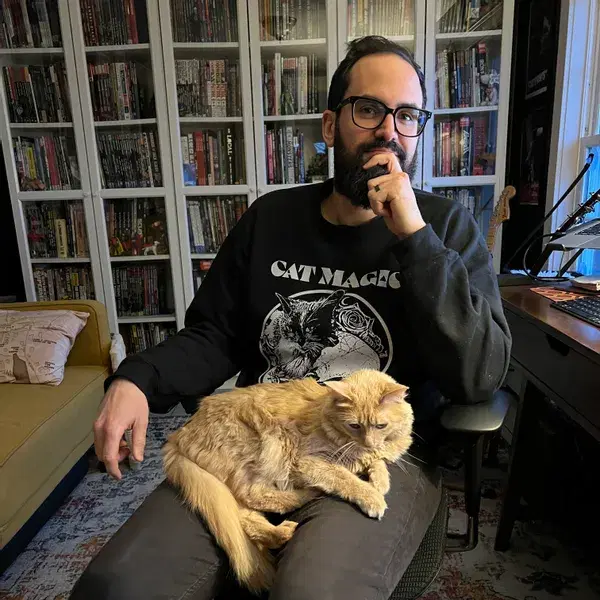
"These notorious killers who are objectively terrible people are getting more attention and notoriety than the victims and the families that they’ve completely destroyed... It’s people treating these horrible things as like a slasher movie when in fact these are real lives." - Joey Esposito
WATCH THE VIDEO VERSION OF OUR INTERVIEW ON YOUTUBE!
Killer Influences from IDW Crime
From the publisher
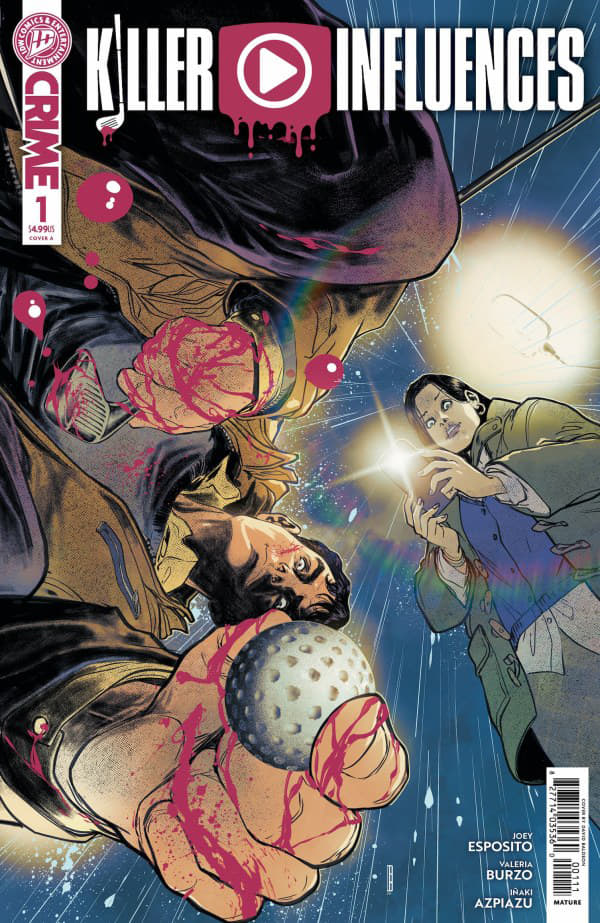
Killer Influences follows Melvin, a serial killer who is aspiring to be one of the most infamous to ever do it, a true American nightmare. His problem? He’s so efficient and methodical that he doesn’t have a brand. No one has connected his crimes—except for Kylie, an aspiring true crime influencer who is flailing at a small-town newspaper. When she comes across Melvin’s crimes and reaches out to him… she figures out how she’s going to become a star. She will give Melvin the identity he needs to be the iconic serial killer he wants to be, while she follows his exploits on her channel and becomes famous. Kylie and Melvin make a pact that will make their dreams come true and destroy their lives in the process.
Eisner Award nominee Joey Esposito (The Pedestrian, Batman: Urban Legends) and rising-star artist Valeria Burzo (Castle Full of Blackbirds, EC Comics) deliver a scathing and thrilling true crime serial killer saga with Killer Influences!
Power Rangers Unlimited from Boom Studios
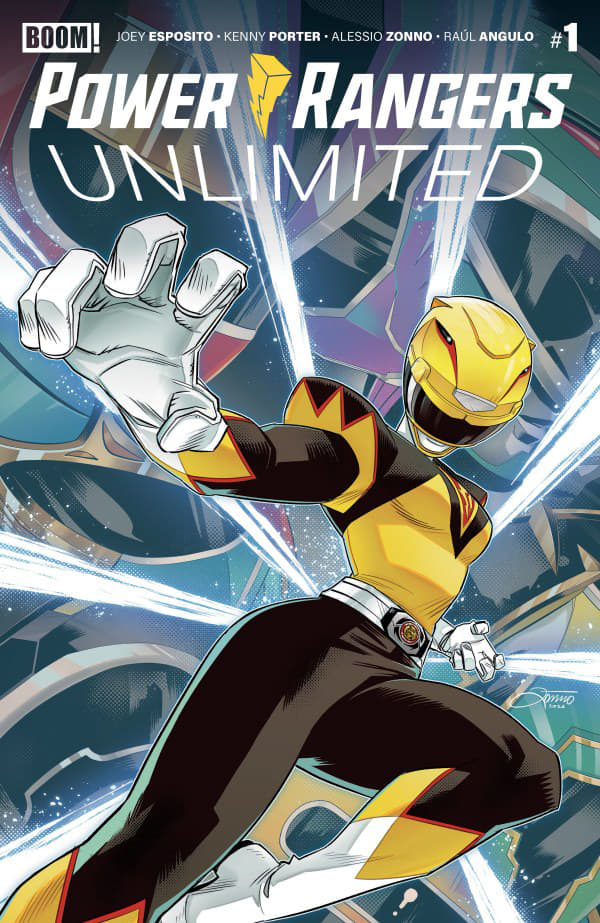
From the publisher
Get ready for a groundbreaking new series featuring all your favorite Rangers across time and space!
This is it, Power Rangers fans! All of your favorite Rangers from every season and every series of the long-running television and comic series will finally be united in ways you’ve never even dreamed!
At a mysterious base on the planet Aquitar, a morphinomenal program is taking shape… Under the guidance of the eccentric Operator, the Striking Tiger Unlimited Ranger calls upon Power Rangers from across time and space to form elite teams and battle a rising evil!
In the first issue of this all-new ongoing series, get ready as Power Rangers superfans Joey Esposito (Batman: Urban Legends) and Kenny Porter (The Flash: The Fastest Man Alive, Fearless) alongside superstar artist Alessio Zonno (Mighty Morphin Power Rangers/Teenage Mutant Ninja Turtles III) draw from across thirty years of canon to bring together unlimited dream teams of your favorite Rangers.
Follow Comic Book Yeti
🔗 Comic Book Yeti LinkTree: https://linktr.ee/ComicBookYeti
For partnership and ad inquiries, please contact: thecomicsyeti@gmailcom
Follow your hosts
ARKENFORGE
Play TTRPG games? Make sure to check out our partner Arkenforge. Use the discount code YETI5 to get $5 off your order.
Make sure to check out our sponsor 2000AD.

[00:00:00] - [Speaker 0]
Your ears do not deceive you. You have just entered the cryptid creator corner brought to you by your friends at Comic Book Yeti. So without further ado, let's get on to the interview.
[00:00:11] - [Speaker 1]
The future is calling. 2,000 AD is the galaxy's greatest comic with new issues published every single week. Every 32 page issue of 2,000 AD brings you the best in sci fi and horror featuring characters like judge dread, rogue trooper, and more. Get a print subscription in 2,000 AD, and it'll arrive to your mailbox every week. And your first issue is free.
[00:00:35] - [Speaker 1]
Or subscribe digitally, and you can download DRM free copies of each issue for only $9 a month. That's 128 pages of incredible comics every month for less than $10. Head to 2,000 AD and click on subscribe now or download the 2,000 AD app and start reading today.
[00:00:54] - [Speaker 2]
Hello, everybody, and welcome to today's episode of the Cryptic Creator Corner. I'm Byron O'Neil, your host for our comics creator chat. Today, I've got a returning guest whose work I am a longtime admirer of, who's got a new book coming out on IDW's exciting new crime imprint called Killer Influences. That is anything but what I expect it to be, but that but I loved it. Please welcome the main man, Joey Espacido, back on the show.
[00:01:20] - [Speaker 2]
Joey, I'm not naive enough to ask how you are doing because it's 2026. So going a different direction. How did the tie bomber LEGO build work out the other night?
[00:01:32] - [Speaker 3]
Oh, man. Thanks for thank you for asking. It is in progress. My my wife was out of town for one night, so of course, I spiraled and was like, I
[00:01:41] - [Speaker 2]
don't know what I'm gonna do. What do I do?
[00:01:42] - [Speaker 3]
Right. Yeah. Like, just completely aimless, unmoored. So my solution was to put on Back to the Future and build this LEGO set that my sister-in-law had got me for Christmas that I hadn't gotten to yet. So I'm having a great time, but it's still still on the first I just finished the first bag, and then, it was like 2AM, and I went to bed.
[00:02:02] - [Speaker 3]
But to be continued.
[00:02:05] - [Speaker 2]
Nice. Well, I'll admit, I'm more a fan of, like, the the figures than doing any kind of significant build work, although that may change in the fall. My son's in high school, he's senior in high school. He's going off to college, so my whole I don't know what I'm gonna do with my time, right? It's just gonna drastically change, so I'm gonna need another hobby.
[00:02:21] - [Speaker 2]
And I was thinking about getting into cross stitch and getting my cottage core on, so
[00:02:25] - [Speaker 3]
There you go. I I gotta say, living in Maine, I've really come to appreciate cottagecore and just, like, how many friends are into knitting and quilting and and all that stuff. And it's just, I don't know, I support it, man. I did a cross stitch recently. I'm still working on that too.
[00:02:46] - [Speaker 3]
I'm very slow with these projects, but it's very it's meditative, you know?
[00:02:51] - [Speaker 2]
Yeah. What are you making? Like, is it a comic thing or something else?
[00:02:56] - [Speaker 3]
No. It's so my wife works at a maritime museum, so we have and, you know, we live in Maine, next to a shipyard, so it's a lot of nautical themed items around here. So this is like a ship being attacked by a Kraken.
[00:03:11] - [Speaker 2]
Oh, that's rad. That's a big piece. Don't know if I have the commitment level to do that yet.
[00:03:16] - [Speaker 3]
Yeah. I think that's why it's taken me so long. It's pretty simple. It's mostly just lines. You know?
[00:03:22] - [Speaker 3]
There's nothing, like, crazy complicated, but it is a lot, and it is very meticulous. I I should get back to that, so that's a good reminder. Thank you.
[00:03:32] - [Speaker 2]
Oh, yeah. Well, my master plan is to get some some commissions done by some comics artists of different superhero characters that are matrushkas. So like the matrushka version of that superhero, and then put that on a, a cross stitch pattern and like get to work. Cause I think those are really cool
[00:03:50] - [Speaker 3]
on the wall. Yeah. Yeah. That sounds awesome.
[00:03:53] - [Speaker 2]
Yeah. Well, I'll get to it, I'm sure, in the fall, but
[00:03:58] - [Speaker 3]
Oh, man. I can't imagine, just having you know, I'm not a parent, so, but I have to imagine like your kid going off to school is just like a world changing, like complete upheaval of your routine, you know? I can't, I can't even conceive honestly of what this
[00:04:19] - [Speaker 2]
is going to be like because your identity has become so wrapped up in being dad, you know, in my case and, yeah, it's going to be really fucking strange. So yeah. Well, I hope that So I'll be posting I
[00:04:33] - [Speaker 3]
was gonna say, hope that you find some new hobbies, whether it's cross And, stitch or something yeah, you know, maybe you'll generate some new some new interests, some new pathways to, to revenue, perhaps.
[00:04:47] - [Speaker 2]
I just hope that, I'll post all this shit online, and my hope is that more people will be like it'll spark this interest in people just making shit with their hands again. Because like Yeah. I am so a proponent of that in in the the AI era. Was like, can we all just move back to just making shit with our hands and sharing that and, like, make that my social feed, and I will be a happy human.
[00:05:12] - [Speaker 3]
Yeah, dude. It's a real thing. Recently, I took, a drawing, like, a drawing fundamentals class at, the local adult art learning center here in Maine. And, you know, it was just like two hours a week going to the class, working with charcoal or pencil or or whatever it was that week and just doing that. And it's just so relaxing.
[00:05:39] - [Speaker 3]
You know? I'm not sure that I got any better, but I drew a lighthouse that I really like in charcoal, you know? And it's just it feels good to know that there's a direct connection from my brain and my heart to this thing that's on the page. And I did that and got dirty doing it, and that's just really satisfying. So I I'm with you on that.
[00:06:01] - [Speaker 3]
Yeah.
[00:06:02] - [Speaker 2]
Well, let's jump into killer influences because I was just thinking about this. This book is sort of it's not the antithesis of that, but it's very much an online oriented book. And it's it's part of IDW's new crime imprint. There are three books announced right now, Seven Wives, which just dropped this week, Yours, and Fixation, which is coming out in September. So all three issue all three series are limited edition series, three issues, and they're at a whopping 40 pages.
[00:06:31] - [Speaker 2]
So you get a lot of meat on the I I absolutely love that. So how did you get involved with all this to start off with?
[00:06:39] - [Speaker 3]
So it was sometime after Comic Con last year, the editor Dave Voges, who I had worked with previously at DC on Batman, Urban Legends. He's been, you know, doing writing in his own right, and he's a great writer, but he's also doing some editing IDW. And so he brought killer influences to me. And basically, how it worked was IDW had a premise that was essentially a true crime influencer teams up with a serial killer. Okay.
[00:07:05] - [Speaker 3]
Brought that to me, and then I was able to develop that from there. So I, you know, worked out the the world and the characters and the plot and all that stuff. And it was kind of like an unexpected project that came my way. But I'm a big reader of true crime. I love the crime genre.
[00:07:24] - [Speaker 3]
And at the time, I was reading a happened to be reading a book called Murderland by Caroline Fraser. And a lot of what I was reading at the time was sort of like percolating, made its way into this book. So it kind of worked out in terms of coincidental timing that it was just kind of already circulating in my brain, and then this project came along that gave me an avenue to sort of funnel it into something.
[00:07:50] - [Speaker 2]
Well, what would somebody who's not into true crime like myself, for instance, you know, check out? Because, like, aside from, like, Only Murders in the Building, this that's I know it's a whole thing, and it is
[00:08:02] - [Speaker 3]
huge right now. So Yeah. It's funny that you mentioned Only Murders because that's a show that I love, but I I often think about it in terms of killer influences, which is about this sort of more exploitative side of true crime, specifically, true crime podcasts or or people who fancy themselves influencers or citizen sleuths, but who are doomstone in way that is, like, unethical or irresponsible, speculating about suspects or, you know, fixating on grisly details of murder scenes and things. And Only Murders is so fun, but it drives me crazy because they're openly, like, recording episodes and speculating about their suspects and then posting those episodes, like, immediately. And which is hugely problematic, obviously.
[00:08:52] - [Speaker 3]
It makes for great comedy, but, there's stuff like that in real life that does happen, and that's sort of what killer influences is satirizing.
[00:09:02] - [Speaker 2]
Okay. Yeah. As I mentioned, it was not at all what I expected because I went in cold. I had not read the solicits at all, but I I'm actually really glad that that was my approach because it was a complete curveball from what I had in my brain. Did you have
[00:09:16] - [Speaker 3]
in your brain? Out of curiosity.
[00:09:19] - [Speaker 2]
Well, I had nothing. I had the cover, so it was okay. Why is there a golf ball here? Like this doesn't Yeah. Like what does this have to do with serial killers?
[00:09:30] - [Speaker 2]
Cause my, my view, you know, my my experience, I mean, I we're all exposed to it. You know the big names. You know, I had, when I was in high school, when you do dumb shit when you're in high school, we had a indoor soccer team, and we were the warlords of death, and we all had serial killer names on the back of our jerseys, and mine happened to be dumber. Uh-huh. So, you know, in retrospect, like, that was insanely, evil and mean.
[00:09:56] - [Speaker 2]
But I was in high school, so so we did what it did, and mom said she was gonna burn the shirt, and I have no idea what happened
[00:10:03] - [Speaker 3]
to it. Probably probably
[00:10:04] - [Speaker 2]
what happened to it. So yeah.
[00:10:07] - [Speaker 3]
You know, I think that's it's I I feel like we're all assholes in some way when we're Oh, sure. Teenagers, you know. But I do think that is that is sort of, like, symptomatic of the larger thing that I think we're talking about here where it's like these notorious killers who are objectively terrible people are getting more attention and notoriety than the victims and the families that they've, like, completely destroyed. You know? Right.
[00:10:36] - [Speaker 3]
It's people treating these horrible things as, like, a slasher movie or some sort of, like, fictional horror thing when in fact these are, like, real lives and real families that were completely destroyed by, these monsters. You know? And I do think there's value in understanding serial killers and psychology, or at least trying to the best that, you know, a a non, a non serial killer can. But it's it's troubling to me when that is the focus rather than, like, the systemic issues that put them in this position to be able to do what they're doing or, you know, that's something that that book I I talked about called Murderland is it's crime, but it it's true crime, but it's also a memoir, and it's essentially presents this theory that a lot of the notable serial killers in the post World War two era all have connections to this Pacific Northwest region, that was heavily polluted from lead smelting and just how, like, these toxins and air pollution, you know, could have had an impact on these people who would later do these atrocious things. You know?
[00:11:51] - [Speaker 3]
And it's some of the biggest names in inter you know, Ted Bundy, Richard Ramirez. These are the kinds of people that she mentions in her book. And I wouldn't say it's, like, conclusive evidence or anything, but it definitely gets you start thinking about the environmental factors that America itself is, like, putting into the atmosphere that results in these awful atrocities, you know? And so that's That's fascinating. It's really, really interesting.
[00:12:24] - [Speaker 3]
It's very dark and grim, but it's it's kind of interesting to tie serial killers essentially to the industrial revolution, capitalism, and all this stuff. It's it's really just like you sort of just sort of see like the web of how everything is connected in that way. And it's very, very troubling.
[00:12:43] - [Speaker 2]
Well, that was the success to me of that first issue because the creative team does a really good job of creating Eden as a character. This is the town that, Kylie and, Melvin are both from. You You know, you got that post industrial strip of nowhere between Seattle and Portland in this case that apparently smells like Tacoma. As a former Tacoma resident, I can attest to how bad, paper mills and, dog food
[00:13:08] - [Speaker 3]
manufacturing can be. So that's that's, Tacoma is a huge center of Murderland, because that's where the author spent a lot of her time. So it talks a lot about, you know, the crazy the highway situation of, I guess there was like a bridge that was very dangerous that there was always accidents on, and that was also tied to all this stuff. So you should definitely check it out. It's it's pretty interesting.
[00:13:30] - [Speaker 3]
And I and and gives the victims of these crimes, like, a real front of mind kind of attention. But it's, it's funny that you mentioned Tacoma because that's like a specific location that all of us was very inspired by. So I'm glad that
[00:13:45] - [Speaker 2]
you Yeah. Picked up on I'll have to check it out because it, it, I obviously having lived close by, I was in Gig Harbor, which is right over the bridge. So the wind rarely blew that direction, thankfully. But, but it is oppressive when it's a bad day for sure. And you're, just trying to get to Seattle or you're running around in Tacoma or it's a shame because there's such a cool, vibrant art community downtown in Tacoma.
[00:14:11] - [Speaker 2]
Tacoma's a really, really cool city, but yeah, I just didn't know that it had that connection to serial killers. So that's that both explains it in the book and why there was so much time devoted to that development. And it's, it's really cool.
[00:14:25] - [Speaker 3]
Yeah. Thank you.
[00:14:27] - [Speaker 2]
Yeah, absolutely. Well, I'm, I was fascinated by the development of Kylie as a character. Anyone with a YouTube or a TikTok channel can relate to the frustration that is trying to cut through the noise to garner some attention. And in that way, she's kind of painfully relatable. You almost want to give her a pass, although you absolutely know that you should not.
[00:14:45] - [Speaker 2]
And this speaks to that modern desperation that that many people feel to get noticed as well as, in in this case, also trying to look for an angle to just get out of the situation, of the town, of the whatever that they find themselves in. So tell me about developing her as a character.
[00:15:02] - [Speaker 3]
Yeah. I think you you nailed it when you said, like, she's relatable, but you know that she's making poor choices and doing things that are not morally upstanding. And that was the yeah. That was that was the, I would say, the main challenge, but also the appeal of doing something like this is, you know, your lead characters are not necessarily good, objectively good humans, but they still need to be relatable and interesting in some way, or at least you understand their perspective of why they're doing what they're doing. So I'm glad that that came off like that to you.
[00:15:43] - [Speaker 3]
And I think Kylie is someone who genuinely has an interest in journalism and reporting and, you know, a fascination with her favorite her favorite writers and is, like, at her core interested in the larger aspects of true crime, but is so focused on her own success in getting out of town and just being able to, like, disconnect from her her family that is just constantly causing her problems. And so as a result, she takes some shortcuts, and that is sort of how she winds up in the situation that she's in. Know, she's so blinded by her desire and her wants that she just kind of discards everything else, including ethics, which is a huge, huge problem.
[00:16:31] - [Speaker 2]
Well, I think there's a danger of online now just kind of to to put a big that's a big umbrella. But that scene where she was recording after becoming successful, cracked me up because, you know, having gone through this recent lupus flare and I'm all my, my stuff is upstairs, like my normal fanciness. So I have background energy for those that are listening on audio right now. Joey has this really cool backdrop that's really dark, and there's, like, lots of great negative space, and there's the thing poster, and I'm like and so I I try to zhuzh up behind me as much as I can while I'm not as mobile as I normally would be. Anyway, But, you know, that that pressure that we all feel to just when you look online and everything is presented in in such a way that everything is pristine and everything is is, you know, cultivated and crafted and perfect.
[00:17:22] - [Speaker 2]
Yeah. You know? Totally.
[00:17:24] - [Speaker 3]
Yeah. And I think what we wanted to do here was, you know, you don't we don't see a lot of Kylie's actual content. We don't see a lot of the facade. We see Yeah. Everything in between, which, you know, of course, every streamer, YouTubers, whoever have real lives, they have problems, they have stuff going on, but because their, livelihood is tied to their personality and what they present as their real life, It has to appear as though everything is cool and everyone's having fun and everything's great.
[00:17:56] - [Speaker 3]
But oftentimes, that is not the case. You know, a lot of the really I don't know. I think about mister beast a lot, and I think he sucks, but, like, also, his life must be terrible. You know? Like, he does he suck because he's miserable all the time, or is he just does he just suck?
[00:18:18] - [Speaker 3]
But, like, either way, I think his life is probably not what he thought that success would look like. You know?
[00:18:26] - [Speaker 2]
Yeah.
[00:18:26] - [Speaker 3]
And despite appearances, I think you can see it in his dead eyes and his dead smile. You know? And I think it's important to investigate the stuff behind the scenes that's happening.
[00:18:38] - [Speaker 2]
Yeah. And so that's the angle
[00:18:40] - [Speaker 3]
we wanted to take with with Kylie for sure.
[00:18:43] - [Speaker 2]
I mean, he's clearly become a slave to content because you only have to look at the desperation on how many shows he's got out now. And he's just cranking out on Amazon that look like slop. They've just been cobbled together and just thrown out there for the for the sake really of just content, you know, rather than inequal inequality. So
[00:19:05] - [Speaker 3]
Exactly. And I think, you know, the larger aspect to all of this sort of goes before we were recording talking about AI and stuff, but just this the word content in general
[00:19:18] - [Speaker 2]
has I hate it.
[00:19:19] - [Speaker 3]
It's just yeah. It's so offensive to the creative process. And, like, anyone who's viewing their work as content, I think, needs to reevaluate. But that is kind of where all all a lot of these influencers are coming from is they just need to keep the algorithm in their favor. They need to stay in the feed because their livelihood is tied to it, and that's a really dangerous trap, I think.
[00:19:47] - [Speaker 2]
Yeah. Well, that's Kylie. And now we
[00:19:49] - [Speaker 3]
need
[00:19:49] - [Speaker 2]
to look at Melvin. So Melvin is the actual serial killer. He's very efficient, but not very interesting, which which was a fascinating angle to kind of take with that. You know, his weapon of choice feels very clue coded to me. You don't seem like a golfer.
[00:20:04] - [Speaker 2]
Forgive me if I'm wrong on that. I've never played a
[00:20:06] - [Speaker 3]
play But, my
[00:20:08] - [Speaker 2]
you know, it was really a hoot to see a golf club. And that that's the real hook of that book because it's such a weird, being having a background in anthropology. I'm I always thought gone to material culture and comics. So just seeing that cover and was like, why the fuck is there a golf ball on the cover? And I would not have needed any more than that than to see that.
[00:20:27] - [Speaker 2]
And I'd pick it up in a store just because to me, was so weird. So talk to me about using golf as the MacGuffin, if you will, in the story, since you don't have a background. I don't have
[00:20:40] - [Speaker 3]
a background other than mini golf. And in fact, the one time I I was a teenager, and my dad and I also my dad, also not a golfer, we went to a golf place and I wound up, like, getting asked to leave because we just were not playing fast enough. We were not dressed properly. You know? It was just it's like a very Yeah.
[00:21:00] - [Speaker 3]
Elitist sport, I find. You know? That being said, I love the TV show Stick. I love Happy Gilmore. I love things about golf, but golf itself, not for me.
[00:21:12] - [Speaker 3]
But I think inherently, it's it's positioned in culture as, like, this high society sport almost like I don't know. I look at it like polo in some ways. You know? It's Sure. A lot of, like, affluent people play golf, just how it is.
[00:21:31] - [Speaker 3]
And taking that and debasing it as, like, a theme for a serial killer, I thought was fun, but also knowing that this had to be satirical, it needed to feel so outrageous that it hit that, like, American Psycho level of, like, commentary and not like, oh, this is something that I could see happening in my town. You know? I wanted it to be a little bit a little bit out there. So it it gave it a little sense of unreality, I guess. And also the visuals of of putting golf balls in someone's eye sockets, can't beat it.
[00:22:09] - [Speaker 3]
You know? Valid.
[00:22:12] - [Speaker 2]
Valid. Like, my my only experience really with golf courses was a buddy of mine convinced me for a couple weeks to I was living in Tennessee at the time, and he's like, come down with me. I'm making a shit ton of money on the golf course. Okay. What are you doing?
[00:22:27] - [Speaker 2]
Oh, I'm diving for golf balls. I'm just like, you're diving for golf balls? Yeah. We go in the water. And so there's this tiny skiff of a boat that has an air, you know, apparatus.
[00:22:39] - [Speaker 3]
Make sure
[00:22:40] - [Speaker 2]
to you you just dive down. It's not like regular scuba or anything, so you're attached to this air hose. And you just pick up golf balls, and they pay you a quarter for every golf ball you grab. And there are thousands of them. So I did this for a couple weeks, and it was great until I realized there are alligators in in that that pond.
[00:22:58] - [Speaker 2]
And then I was like, no, fuck this. I'm I'm I'm done.
[00:23:01] - [Speaker 3]
What a job. That's really funny. The the alligator is going eat your hand like, like Tubbs,
[00:23:10] - [Speaker 2]
You know? You gotta be careful. Oh, absolutely. Well, that was why Happy Gilmore resonated so much with me and forever, like, live rent free in my brain is that one scene where he's got the the fake hand. And I was like, that could have been me.
[00:23:21] - [Speaker 2]
No. But, I was chatting with Joshua Williamson recently about, like, how many comics writers avoid a modern setting, you know? And this you don't have to navigate any technology. And here, it's absolutely essential, which I found really, really interesting because there are moments in the comment section that stung that we all see sort of every day, you know, that from that that position of security of being an externalized person able to say any awful thing you want, you know, from the safety of behind the screen, Like these ghouls and trolls that are doing that. And then there's that juxtaposition of that true crime scenario with a serial killer.
[00:24:00] - [Speaker 2]
And I was kind of left wondering who exactly is the awful person, you know? And maybe we all are. Is that essentially your thesis
[00:24:08] - [Speaker 3]
Yeah. I mean, I think that's kind of, a lot of what intrigues me about not just true crime, but crime fiction. Like, it makes you investigate yourself in terms of lengths that you would go to for people that you love or things that you would go to to protect a secret or how you would react if your best friend was a serial killer. You know, like, you start thinking about how this would impact you as a person and ethically and morally, whether you have the metal to sort of, like, navigate it. Yeah.
[00:24:40] - [Speaker 3]
So that's that's really interesting to me about this genre specifically. I definitely wanted to play with that a little bit here and just, you know, make you question your own willingness to do bad things, if it meant you might get a little further ahead in this sort of shitty society that's stacked against you. You know? It's a it's I don't think it's as black and white as we might think. You know?
[00:25:08] - [Speaker 3]
I think that's a lot of successful I love Breaking Bad, for example. And I think that's a great example of, like, a a story about object like, a a relatively average person who just goes to, like, incredible lengths because, you know, he uses an excuse that it's for his family, but it's really about, like, exercising all these other things that he's kept bottled up for so long, you know, whether it's being told that you're not smart enough or you're not manly enough or anything like that. I think that's an interesting route to see those things come out. And I think in color influences, we're seeing a little bit of that with, with Kylie, in particular.
[00:25:56] - [Speaker 2]
Well, issue one is may way more about Kylie than Melvin. You know, he's somewhat boilerplate. So Right. As the series progresses, will that change?
[00:26:06] - [Speaker 3]
Yes. I think you'll you'll learn more about Melvin and sort of his relationship with his father and where maybe not where he's coming from. I think, you know, inherently with a a killer like this, I think there's I kind of look at it like Michael Myers. You know? Like, there's just an inherent evil inside that is very hard to fathom as, like, a person with a soul.
[00:26:33] - [Speaker 3]
And so I think we'll learn more about his circumstances, but I think I wanna make sure that his sort of internal thought process is a little bit more murky, if that makes sense.
[00:26:46] - [Speaker 2]
It does. Yeah. And I I love this exploration really of the gray area of humanity. You know? Yeah.
[00:26:53] - [Speaker 2]
Because I I'm left with that curiosity. Are we gonna see anybody in this series that has an ounce of a redeeming quality? But I'm I find myself rooting for Melvin, and I'm not sure what that says about me, but I just think it's interesting as a society how we we normalize. When I think about Friday the thirteenth, and I'll see a kid at Halloween, and he's got his Freddy Krueger stuff on. And we all think it's cute and it's cool while inherently there's also it's really awful, really, when you
[00:27:23] - [Speaker 3]
start thinking about these things.
[00:27:24] - [Speaker 2]
Life just sort of exists in that gray area and people, especially now, it's so binary, you know, everything is one thing or the other.
[00:27:33] - [Speaker 3]
And Yeah. That's not reality. That's not how things work. And I think in terms of I think Halloween costumes is a really fun example. I was definitely Jason for Halloween when I was a kid, you know?
[00:27:44] - [Speaker 2]
And I
[00:27:44] - [Speaker 3]
don't think it's you're not, like, at that age in particular. And I think in general, people who are cosplaying as as these characters, it's not I love that they kill people. You know? It's it's it's they're connecting with it on a different level. And I think it's all about sort of how you synthesize these things that you watch and read and play.
[00:28:08] - [Speaker 3]
Yeah. Ultimately, you know, it's not the responsibility of the thing itself to, like, be ingested in the correct way. You know? It's I I guess it comes back to media literacy, ultimately, as most things do, you know, and just being able to, like, understand what a piece of work is trying to say about the thing that they're they're commenting on. Sometimes it's just gratuitous violence, and that's its own thing.
[00:28:36] - [Speaker 3]
But I find that all very interesting where, in a lot of ways, I guess it goes back to just like a classic nature versus nurture thing. Like, you know, Melvin's situation, for example, millions of people have a very similar upbringing, a similar socioeconomic situation, and they are not killing dozens of people. You know? So, like, why what makes him do that? And I think there's something there's just, like, an x factor that we can't account for, in sort of, like, the darkest depths of of humanity.
[00:29:12] - [Speaker 3]
You know? And that's really fascinating to me. Yeah.
[00:29:17] - [Speaker 2]
I think it's something it's important to to have that struggle too. I mean, I think about recently, you know, as a family, we'll watch stuff at night. And, of course, the new Daredevil season is out. So in the absence of anything else, my wife is she's totally content the other night to be on her phone and let my son and I watch Daredevil. And both of them at the end of it were just like, I don't understand how why do you want to watch this?
[00:29:44] - [Speaker 2]
It's so hyper violent and we're just so exposed all the time to atrocity and, you know, all these things. And I don't, you know, and I find myself sort of shrugging, but I shouldn't do that, I guess. And and so there's, like, internal conflict,
[00:30:01] - [Speaker 3]
you know? There's conflict, but I also think that when something like that is good I haven't seen Daredevil, but I do think I understand what you're saying, but I do think also, like, watching these sort of things help us process real world events. You know? Yeah. But it is true.
[00:30:21] - [Speaker 3]
Like, I was writing, killer influences number three in January, you know, when ice in Minneapolis started happening and Renee Goode and and all that stuff. And I just I couldn't. I was, like, writing, like, a you know, supposed to be a a fun kind of, like, violent sequence, and I just couldn't do it. And I'd emailed the editor, and I was just like, I can't. I need to, like, step away for a little bit.
[00:30:45] - [Speaker 3]
It's totally understanding, totally cool. I mean, I think all of us were pretty, you know, just numb Yeah. In a lot of ways. So I had to step away because it just didn't feel fun to be working on that at that time. So there's definitely those sort of elements where you contend with real life for real world events, but hopefully it's all able to be filtered into a thing that is, you know, speaking out against the feelings that you're feeling or or the the things that
[00:31:19] - [Speaker 2]
are happening. Jimmy is too humble to do this. So as his stalwart ride or die, I wanted to tell you about his new graphic novel, Penny and the Yeti with artist Amber Aiken. What started as a comic short with his daughter that I've known about for ages now, and it's evolved and has become one of those annoying can't talk about it in comics things for too damn long. Yes, I'm predisposed to be supportive but after reading an advanced copy of it, I have to admit it's way better than I anticipated.
[00:31:49] - [Speaker 2]
No shade, but it's really good, remarkably so. Does it have a yeti? Yeah. Is it cute and adorable? Yeah.
[00:31:56] - [Speaker 2]
But it's strength lies in effectively tapping into the all too familiar family dynamics that we all are facing in 2026 and approaching it in a way that doesn't insult the book's target audience. Kids. They're way smarter and perceptive than we adults give them credit for. So I really appreciated Jimmy's narrative approach tapping into his own experiences as a dad and a spouse. I can hear his wife saying, get off your phone, Jimmy, through the pages.
[00:32:22] - [Speaker 2]
She's gonna kill me for saying that. It's hitting shelves on April 21, and I dropped the link in the show notes where you can preorder a copy today. Getty or not, here we come with Penny, Perry, Fenton, Maxine, and the magical, mythical, magnificent, Yeti. On behalf of us both, we appreciate your support.
[00:32:41] - [Speaker 3]
Let's
[00:32:45] - [Speaker 2]
switch gears because there's a duality in what you're able to work on right now. We'll talk about something that is just kind of hyper bright and just fun, Power Rangers Unlimited. And that's coming out in July with Boom. I'm going to come clean here. I've never been a Power Rangers fan myself, but I think that makes me more objective.
[00:33:05] - [Speaker 2]
Right?
[00:33:06] - [Speaker 3]
I think so. And you know what? Like, this is this is a book that we're trying to walk this line of this is def like, I'm writing it with Kenny Porter. We're both huge fans, like, lifelong fans of power rangers, big nerds, deep lore, but consciously making sure that it's fun for the people like us who are gonna, like, freak out about a cameo of of Captain Mutiny, but also accessible to readers who just want, like, a cool action heavy sci fi story. And, hopefully, we can we can accomplish both, as the run goes on.
[00:33:44] - [Speaker 3]
But, so I really am interested to hear your take, as a non Rangers non Ranger head, you know, because I think that's just as important as feeling like we we delivered on the on the sort of the fandom aspect of it.
[00:34:02] - [Speaker 2]
I mean, my first impression is this covers every season and series if the Solicits are to be believed. This is thirty years of canon. This is like writing and working on essentially a big two project with in a, in essence, just as many, not exactly, but a whole shit ton of characters. So, so how do you go about synthesizing what exactly you want to put in this? Do you start with your favorite characters and then craft a story, or
[00:34:35] - [Speaker 3]
do you have a story and then you've shoehorned them in? It's you know, working with Kenny has been great because we are disabled, like, just this is, like, how we talk, you know? Like, do we do we start with our who are our favorite characters? What are the kinds of things that we would we haven't seen in comics that we would love to see? What do we what would we do with Power Rangers if we were just, like, given unlimited budget and told to make it a show?
[00:34:59] - [Speaker 3]
And so this book is is essentially that. Like, this is the thing that we would do if we were able to just be in charge. So it is taking all thirty years of history, and, you know, the pitch is just dumping it out on the table. Like, when you were a kid and you had a thing of action figures, you'd you'd mix and match, and Robocop is fighting Skywalker and all that kind of stuff. Yeah.
[00:35:22] - [Speaker 3]
So this is this is that in comic book form, but done in a an intentional way and a deliberate way that puts characters first. There is, like, an emotional through line and an overarching story throughout this. So the the Power Rangers Unlimited organization is a new a new organization in the Power Rangers world. It can pull in rangers from time and space, to go on missions throughout time and space in new combinations, you know, putting characters together who have never met before and may not like each other very much or may be surprise best friends, but also putting them into genres we haven't seen. You know, some of my favorite old Power Rangers episodes are like, go to the Old West or whatever, and it's just like this wild Power Rangers western.
[00:36:16] - [Speaker 3]
So doing things like that, you know, issue one is very much martial arts action heavy. We talked about the raid a lot during issue one. And then issue two is more like a a horror slasher story. And then we have a heist story. We have a Mad Max style, like, post apocalypse story.
[00:36:36] - [Speaker 2]
Okay. And
[00:36:36] - [Speaker 3]
so it's just, like, really just go balls to the wall, but without losing the focus on our our central characters and also, you know, being able to play with characters who haven't been in the comics that much, from shows. So it's that's truly just been a blast, and we're really proud of it. And we can't wait for people to read it.
[00:36:57] - [Speaker 2]
Yeah. It was I picked up the free comic book day thing and was really overwhelmed of just how many rangers were on the page because I'm kind of a silhouette junkie. I I don't know. I just lock on to, you know, character silhouettes, and and I I love just kind of analyzing them. So I was immediately like, who's the guy with the the white and black almost zebra esque sort of zaggy stripes?
[00:37:21] - [Speaker 2]
Mhmm. Who is that guy?
[00:37:23] - [Speaker 3]
I think you're talking about, Trent, who is the white Dino Ranger. That could be we're we're talking about, but, I'll have to take a look and and make sure I'm correct. But, yeah, you know, it's it's it's wild because there's a 100 and something canon rangers from the show itself plus, you know, expanded lore from from comics. And there's such it's almost like working with Legion of Superheroes in some way. You know what I mean?
[00:37:52] - [Speaker 3]
It's like so many characters, but you have to find a way You have to find an in for readers who don't have that familiarity, which is Yeah. Usually the emotional core of whatever they're dealing with. And I think something that we utilize because we're pulling from time and space is sometimes you'll see characters at different points in their ranger careers. So, you know, there are some characters who are on multiple teams. For example, TJ from Power Rangers Turbo is also in Power Rangers in space.
[00:38:26] - [Speaker 3]
But, like, what happens when you meet him as the Red Ranger in in Turbo and then as the Blue Ranger in space, like, later in his career? And I think, like, mining that sort of stuff for an emotional story within the context of the thing that we're doing is has been really fun for us to do.
[00:38:46] - [Speaker 2]
So who is your favorite?
[00:38:48] - [Speaker 3]
Oh, man. My all time favorite ranger is Billy, the original Mighty Morphin Blue Ranger, primarily because I mean, he's great, and he's he's the the heart of the the original team for sure. But Mighty Morphin Power Rangers came out when I was in third grade. And in third grade, I had to get glasses, and Billy had glasses. And so that was that was enough for me at that age to be like,
[00:39:12] - [Speaker 2]
this guy.
[00:39:12] - [Speaker 3]
My guy. Yeah. But there's there's so many great characters throughout thirty years. Another favorite is the wild forest yellow ranger, Taylor. She's a lot of fun.
[00:39:23] - [Speaker 3]
So there's just there's such a wide variety of characters that you can really almost tell any sort of story within power rangers. And I think that's kind of our what we're challenging ourselves to do, I think, is Yeah. Kind of take take things in in new directions while honoring the thirty years of history that we've got.
[00:39:46] - [Speaker 2]
Well, you got to introduce a new character here too, the Striking Tiger Unlimited Ranger, which has a very memorable helmet silhouette as the silhouette junkie in the room. So why introduce a new character? Was was was there a need? What role is she gonna play?
[00:40:01] - [Speaker 3]
So Striking Tiger Unlimited Ranger, revealed in our free comic book day issue is an aged up Trini Kwan, who is the original Mighty Morphin yellow rager. So she's come back twenty five years in her futures, you know, late thirties, early forties, and she's leading this new team along with this mysterious sort of leader called the operator. But Trini, you know, is one of my favorite characters because she's so I I go back to, you know, in day of the dumpster, the very first Mighty Morphin episode, when Zordon, their leader, is, like, giving them their their power coins and explaining, like, you're gonna have this Zord because you're powerful and whatever. Trini's is that she's fearless and agile. And that always stuck with me as, you know, she's if Billie is the heart of that team, Trini was, like, the sturdy heel planted in the dirt.
[00:41:00] - [Speaker 3]
Like, she was the the spine. She's like the the the support. You know? She's holding she's the glue holding it all together. And Okay.
[00:41:09] - [Speaker 3]
Taking that character and developing her into a future leader was really appealing and I think was a good angle or a good way in for you know, if a reader is familiar with Mighty Morphin but maybe not the expanded Power Rangers lore, I think she's a good entry point to be introduced to the rest of that world. But it just made it made sense, but it made sense to do to give her a new costume, a new title, you know, as this sort of unlimited operation gets underway. Maybe we'll expand with other unlimited rangers, you know? So we were just really excited to to play with the the lore and the history and do it in a way that might be a little unexpected. And I would say in issue one, you'll learn a little bit more specifically about what this trainee has gone through and where she comes from.
[00:42:04] - [Speaker 2]
Okay. I don't think you have to be to to clarify for people who also may not be Power Rangers fans going in because I certainly
[00:42:13] - [Speaker 3]
wasn't. And
[00:42:14] - [Speaker 2]
and I really, really dug it. Like, you've already let it go, so I don't have to worry about a spoiler here with Captain Ute. And because we were talking before it started and we started the recording, and he is just so damn cool looking. Yeah. And I think, is it Alessio Zano?
[00:42:31] - [Speaker 2]
Is am I pronouncing the artist Yeah. Correctly there?
[00:42:34] - [Speaker 3]
So Alessio Zano is is is one of our main artists along with Federico Suresa. They're trading off, on issues. Alessio did the zero issue and issue one, and then from there, they'll be alternating. But they're they both work in the same studio, and they're collaborating pretty closely. And the book is gorgeous.
[00:42:56] - [Speaker 3]
It is. It really is. Keep saying it in interviews, but this is one of the most beautiful books you'll find on the shelf. And I would say that if I wasn't working on it, they're just they've they both have been doing Power Rangers stuff previously at Boone. But I think, like, unlimited is just them totally unleashed.
[00:43:15] - [Speaker 3]
And, you know, our whole mission statement, Kenny and I, is just to, like, give them the raddest shit to draw. And I think they're delivering more than expected. And, you know, once you you get a glimpse of him in issue one, but once you once you see the silhouette of our sort of, like, the big bad of this of this series, I think you'll you'll be pretty stoked because he's got a great silhouette.
[00:43:42] - [Speaker 2]
Well, reading it, I thought this is the anti Chris Claremont for fans of group comic books, where Claremont was known for exposition and just so many words. This is kinetic. And it was like, in in a way watching a Dragon Ball Z cartoon, that's the closest thing I can kind of kind of come up with. And Alessio's artwork style reminded me a whole lot of Sean Gordon Murphy. And and so which is a I I love his work, and and that footprint is is fantastic for this book.
[00:44:17] - [Speaker 2]
It feels to me and reading it as a newbie, what a Power Rangers book should be, you know, just kinetic and vibrant and all kinds of shit going on and fun and teamwork and rah rah. You know, that's how
[00:44:31] - [Speaker 3]
it struck me. That's awesome. I'm so glad to hear that because we're you know, sometimes when you take on a property that you love dearly, it's it can be really easy to, like, be too in the weeds and Yeah. Like, really, you know, just lean too hard in the direction of, like, deep cuts and lore that, like, a regular person probably doesn't know about or care about. Yeah.
[00:44:58] - [Speaker 3]
And I think trying to find a way to balance those things and and satisfy both our like, the super fan side of ourselves, but also understanding, like, our job as creators to introduce people to these worlds and and bring them in and welcome them, that was definitely something that's we talk about a lot and is at the forefront of what we're trying to do. So I'm so glad to hear you say that. You know, another another friend of mine that I let read issue one, also not a Power Rangers person, but just said, I felt like a a rad new image number one from the nineties. You know? Just like Yeah.
[00:45:36] - [Speaker 3]
Big action bombastic, and that was, like, one of the greatest compliments I could imagine. You know? So I I I hope that readers who are just looking for beautiful art and big, like, bombastic storytelling, but without losing focus on on character centric dynamics, I think we'll really enjoy power rangers unlimited whether they are power rangers fans or are totally new to the franchise.
[00:46:04] - [Speaker 2]
Yeah. I'm sucked in. So tell me about captain Mutiny. What's his backstory? What's that guy's deal?
[00:46:10] - [Speaker 2]
Because in the book, he looked like this coolest hybrid between Jack Sparrow and, like, all kinds of, like, TikTok clockwork man kind of thing going on, and it was beautiful. I was like, this guy is so insane. And I think your nineties image is actually spot on in terms of comparison for something like this because it's just, it doesn't need to make sense. It doesn't, it just looks cool.
[00:46:38] - [Speaker 3]
Yeah. So I think that's a lot of power rangers, honestly, especially when you're a kid. Most of what you're drawn to is just design aesthetic.
[00:46:47] - [Speaker 2]
And Yeah.
[00:46:48] - [Speaker 3]
You know, like, the helmets and the the zords and the monsters, they're just all so wild. And I think part of it, especially when you're a kid and, you know, I'm sure that you know that Power Rangers, a lot of, like, the the footage is from the Japanese Super Sentai series that they sort of, like Yeah. Bought bought the rights to and then and then built a story around the footage that they had, which is one of the things, you know, as a story I was just gonna call myself a storyteller, and I I don't wanna do that. That's so pretentious. But as a person who tells stories for a living, I'm so in love with especially the original Mighty Morphin series because it's janky.
[00:47:34] - [Speaker 3]
You know? It's very low budget. And as the series as the franchise goes, like, it gets more sophisticated, and there's, like, season long arcs. It's more like a doctor who kind of situation. Okay.
[00:47:46] - [Speaker 3]
But those original episodes in Mighty Morphin are, like, very stapled together. And that's one of my favorite things about it is, like, okay. They have footage, but the blue ranger and the red ranger are not in the morphed battle sequence. So, like, the American footage has to come up with a story as to why those characters are not present. And sometimes the stuff they come up with is just, like, just wild.
[00:48:10] - [Speaker 3]
Yeah. As far as captain mutiny in particular, I don't know that we know a lot about his, like, background. A lot of again, a a lot of the stuff in the show is just very visual based. But basically, he's a space pirate. He's a he's a one of the main bad guys in Power Rangers Lost Galaxy.
[00:48:30] - [Speaker 3]
And, yeah, he's just he looks like a ship, but is also a pirate. And he's got some really crazy boots, and he talks like a pirate. And that's, you know, his little, I think his little, like, minions are called swabbies. It's just it's incredible. And there's so many characters like that in Power Rangers.
[00:48:53] - [Speaker 3]
There's a character called Eye Guy that I love who's made up of eyeballs, and you'll see him at some point in the series. So, you know, just Rad. Really cool design choices that we then try to make work within this, like, wild logic of Power Rangers.
[00:49:08] - [Speaker 2]
Yeah. The aesthetic makes a lot of sense to me because I grew up watching Space Giants on WGN. So Mhmm. Yeah.
[00:49:15] - [Speaker 3]
I love it.
[00:49:17] - [Speaker 2]
That that makes zero sense logically. I mean, like the the whole vol I don't remember a whole lot about it. And now I'm I'm wanting to go back and watch those just You should. And maybe put my son through it, you know, and just see what he says. Yeah.
[00:49:31] - [Speaker 3]
But I think what's cool about shows like that, especially when you're watching them as a kid, is it makes you think about it on your own and come up with your own explanations or your own lore. And I'm lucky enough to be able to utilize some of that in in a book that I'm working on now, you know. Like, I was at my folks place over Christmas and found some old notebooks from, like, 1996 that have essentially Power Rangers characters that I drew back then, that I would love to, like, work in to something that we're doing someday. You know? And so it feels like I've been building to this for literally my entire life.
[00:50:14] - [Speaker 3]
And I it's not lost on me that it's like a very exciting and unique opportunity that I can actually, like, utilize some of these thoughts I had back then, in my professional work these days. So that's awesome.
[00:50:27] - [Speaker 2]
Yeah. It's neat you get to share that with another super fan with Kenny too, because that's just, that just makes it all that much more special because it doubles the experience. I can picture both of you going into the comic book shop and, you know, reliving your childhood memory of picking that that book up and just joy. Just pure Yeah. Joy.
[00:50:45] - [Speaker 2]
And that's really cool.
[00:50:46] - [Speaker 3]
You know, I think that's what comics should be about for at least for me. And, you know, always say it's about making cool shit with your friends. And whether that's a creator owned book or working on something like Power Rangers, you know, Kenny and I I, you know, fan of his work, knew him on the Internet and stuff, but we had never met or talked before. And boom, paired us up. But our first phone conversation, it was just like immediate immediate buds and just like it was similar to connecting with someone on the playground in third grade because they also love Power Rangers.
[00:51:21] - [Speaker 3]
It was the same except, like, we're in our forties. You know? Yeah. And and now we're friends, and it's the process of working together was really organic, and we've we've found a a groove that really works for us, and we're having a blast. So I That's cool.
[00:51:37] - [Speaker 2]
I'm very lucky. I am hearing another creative endeavor down the line between you two. I'm pro prognosticating.
[00:51:46] - [Speaker 3]
I'm open. I mean, that being said, we do have, like, five years of of Power Rangers that we could do, you know?
[00:51:54] - [Speaker 2]
Like Yeah. Every Yeah.
[00:51:55] - [Speaker 3]
We definitely have 12 issues, and hopefully, it sells well enough that we can keep going. But if we do, we're prepared, for sure.
[00:52:04] - [Speaker 2]
Way cool. Well, as is my custom, we're going to end on a positive note with a shout out, and this could be somebody you want to mention that did something nice for you or something that just recently inspired you that you'd like to share with people who are listening? I'll go first to give you a minute to think about it. Mine is just a thank you to whatever deities are out there looking down to, to help protect my mom. My mom is okay.
[00:52:28] - [Speaker 2]
She had an accident last week where she fell and broke three, three ribs and the fracture was enough that it was scraping against her lung and they were having trouble stopping the bleeding. But happy to report that she's recovering now and stable, which is a huge relief to us all, especially since next week is my son's high school graduation. And although she can't make it, not having that distraction is a blessing for everybody. So yeah, just happy my mom's okay. I don't know how that woman is still alive.
[00:52:56] - [Speaker 2]
She's the most accident person I've ever met. And clearly that's in my DNA because I'm the same way and my son is the same way, which, okay, aging is gonna be murder on me quite literally, but anyway. How about you?
[00:53:08] - [Speaker 3]
Well, I'm I'm sorry to hear that. I'm glad I'm glad she's doing okay. Thanks. I promise I'm not just sucking up, and I mentioned this when we started, but I'm thankful for your campaign about the Eisner AI stuff that was going on. I'm I'm I was so glad to see you just take the initiative and just get people talking about it, you know.
[00:53:29] - [Speaker 3]
And the the response that we got so quickly from San Diego Comic Con was great. And the whole situation, very unfortunate. It sucks. I have friends in that book that I was genuinely stoked for them to have that recognition and only to have it ruined by, one page of AI slop is very unfortunate, but I think ultimately was the right call. But, yeah, I I think it's important for us to to call out that kind of stuff.
[00:53:59] - [Speaker 3]
As you said, like, this is this is the moment to do it. You know? Like, it has to happen now. Otherwise, we're, like, going down a path that we can't come back from. So I was really glad to see that.
[00:54:11] - [Speaker 3]
I was glad to see the community rally around it. Glad to see action being taken. So I'm thankful for that. So thank you.
[00:54:18] - [Speaker 2]
I appreciate it. Yeah. It is not without a lot of trepidation that I stepped into those waters. I understand. I mean, I had, I have friends in it as well, you know, James Asmus, who I will, I will shout out.
[00:54:30] - [Speaker 2]
And he had put his contribution in there was with his kids. And I can only imagine, you know, being James, I know James and I having gone through that, being able to create something with your kids and then having it nominated for an award like that, truly special. And then also being an advocate that he was and he signed and he's like, yeah, we, we need to, this is important. We all need to collectively come together as a community to do something about this now. And so many people have reached out to me with DMs and gratitude and everything, which, which I'm grateful for, but truly my intent is that that whole thing was very much a we and not a me.
[00:55:13] - [Speaker 2]
So I'm really glad to see the community jumping behind it and everyone kind of agreeing that AI has no place in in comic books and and the Eisners. So, yeah, makes me happy. Thanks. I appreciate it.
[00:55:27] - [Speaker 3]
Yeah. Of course. I and, you know, I think it's important for all of us just to call out bullshit when we see it, even if it's potentially harmful to our own egos or careers or whatever. Think making sure everything is better for the people who are following us is not something that has always been done in the past. And not just in comics, just in the world in general, as we can all see outside of our window.
[00:55:54] - [Speaker 3]
So the you know, at this point, I feel like the only thing we can really do is just lead by example as best as we can and, you know, make sure that it's not just like, my success is what's important. It's, like, the health of everyone that's doing this thing that we all love so much. You know? Yeah. So and I'm gonna step down off of my soapbox right now, and I'm back.
[00:56:22] - [Speaker 2]
No. No. The the community is really, really cool. Like, I've been in Yeah. I came in music.
[00:56:27] - [Speaker 2]
You know, I spent fifteen years in the music business, and I can tell you from firsthand experience and then working with two d artists for another decade, being one myself. And comics as a medium is is on its own, like, in terms of the mutual respect, the mutual, know, support. And it was really cool even when the Eisner announcements came out to just see how many people who did not get nominated who were so happy about their friends and cool books and people they knew that did. And we need, we got to preserve that because it's special.
[00:57:02] - [Speaker 3]
I agree. So yeah, for sure.
[00:57:06] - [Speaker 2]
So Killer Influences, remind everybody when that's dropping.
[00:57:10] - [Speaker 3]
Killer Influences number one and Power Rangers Unlimited number one come out on July 1. Wow. Don't know when these episodes going out, but FoC
[00:57:18] - [Speaker 2]
Next Monday. We'll get it.
[00:57:20] - [Speaker 3]
Okay. So today, if you're watching this today, on the day this drops, today is FoC four killer influence number one. So make sure you tell your local combo shop that you're a sicko and you wanna read this book. But then also as, like, a really nice palate cleanser while you're there picking up killer influences on July 1, you grab Power Rangers number one, and it's, it's a great one two punch, and you'll you'll feel great. Get some ice cream after.
[00:57:45] - [Speaker 3]
Great day.
[00:57:46] - [Speaker 2]
Nice. Well, make sure to pick them up, everybody. I I really enjoyed both of these. They are definitely polarity happening here. But but I absolutely love that.
[00:57:55] - [Speaker 2]
That's what made comics special. So
[00:57:56] - [Speaker 3]
yeah. Thank you.
[00:57:58] - [Speaker 2]
Yeah. Well, Joey, thanks for coming on the show and hanging out with me today. Again, it's it's been a blast. It's always a lot of fun.
[00:58:04] - [Speaker 3]
Anytime. Always happy to be here. Thank you so much.
[00:58:07] - [Speaker 2]
Well, this is Byron O'Neil, and on behalf of all of us at Comic Book Yeti, thanks for tuning in, and we will see you next time. Take care, everybody. Peace. This is Byron O'Neil, one of your hosts of the Cryptid Creator Corner brought to you by Comic Book Yeti. We hope you've enjoyed this episode of our podcast.
[00:58:24] - [Speaker 2]
Please rate, review, subscribe, all that good stuff. It lets us know how we're doing, and more importantly, how we can improve. Thanks for listening.
[00:58:35] - [Speaker 0]
If you enjoyed this episode of the Cryptid Creator Corner, maybe you would enjoy our sister podcast, Into the Comics Cave. Listen and subscribe wherever you get your podcasts.