
Comic book writer Jude Doyle returns to the show to discuss his brilliant new DC Comics six-issue miniseries, Clayface: Celebrity Dirt.
We take a deep dive into this dark, tragic, and refreshingly main-character energy take on Basil Carlo, the Clayface featured in the book; discuss how the iconic 90s Batman: The Animated Series inspires Jude and shaped the character's lore; why Clayface is the ultimate mirror for Hollywood celebrity culture, and how according to Jude the character draws striking parallels to BoJack Horseman and classic 1980s body horror films like The Thing and The Fly.
Jude also opens up about using monsters and shape-shifting as a powerful metaphor for identity, gender fluidity, disability, and personal trauma.
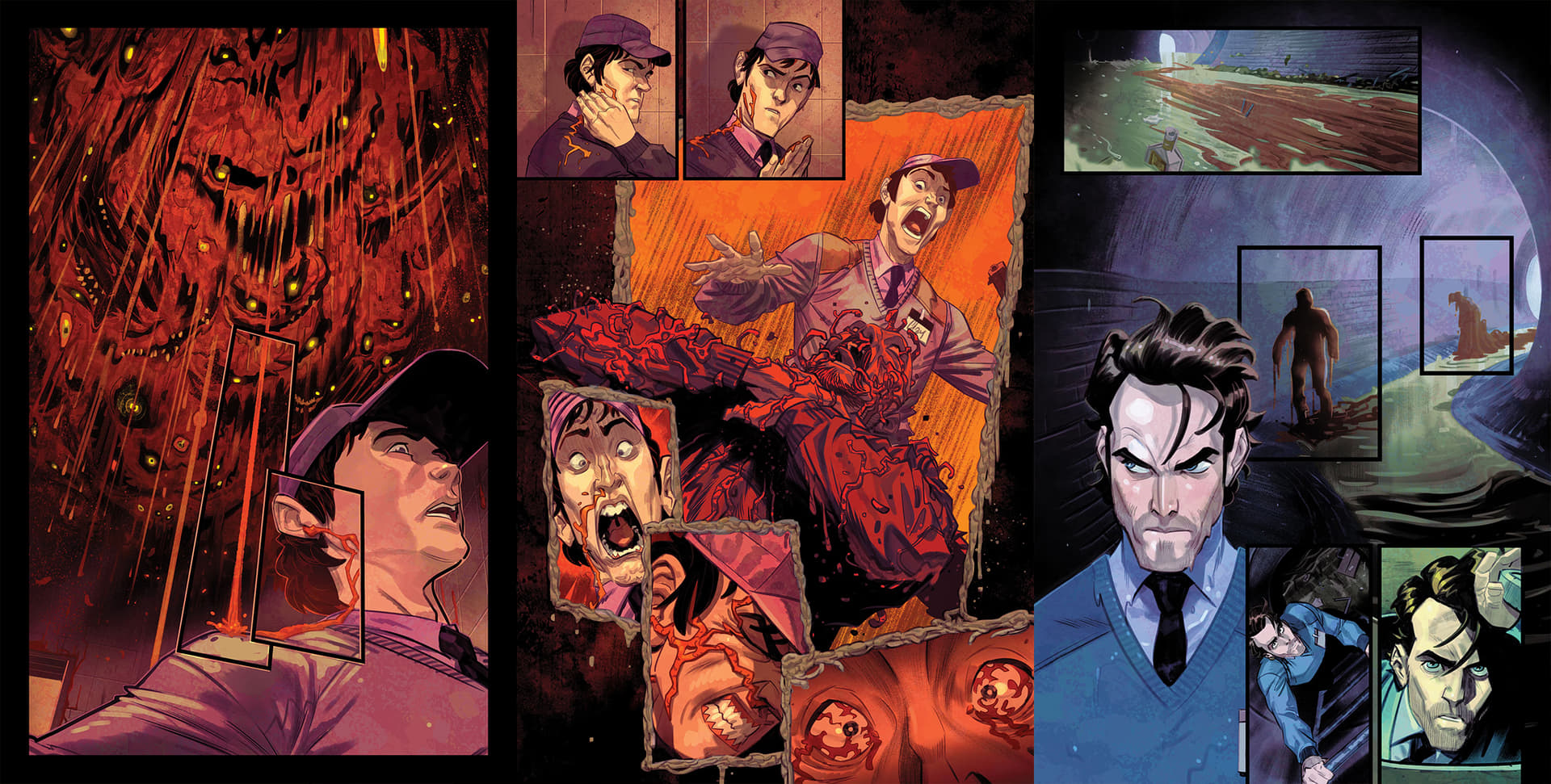
Series artist: Fran Galán
Colorist: Patricio Delpeche
Letterer: Tom Napolitano
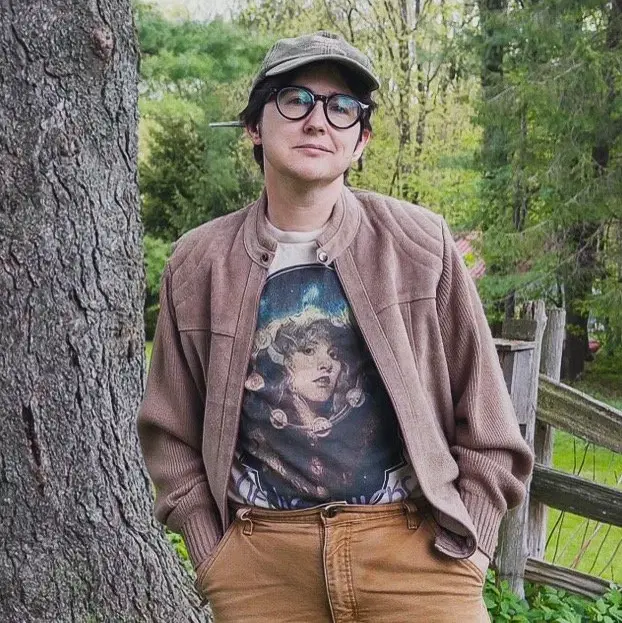
"It's about the internal experience of living while feeling completely consumed by your own secrets, watching your self-image literally dissolve." - Jude Doyle on Clayface: Celebrity Dirt
🎵 SHOW NOTES Check out Jude Doyle's custom curated playlist for the comic on his blog.
WATCH THE VIDEO VERSION OF OUR CHAT ON YOUTUBE!
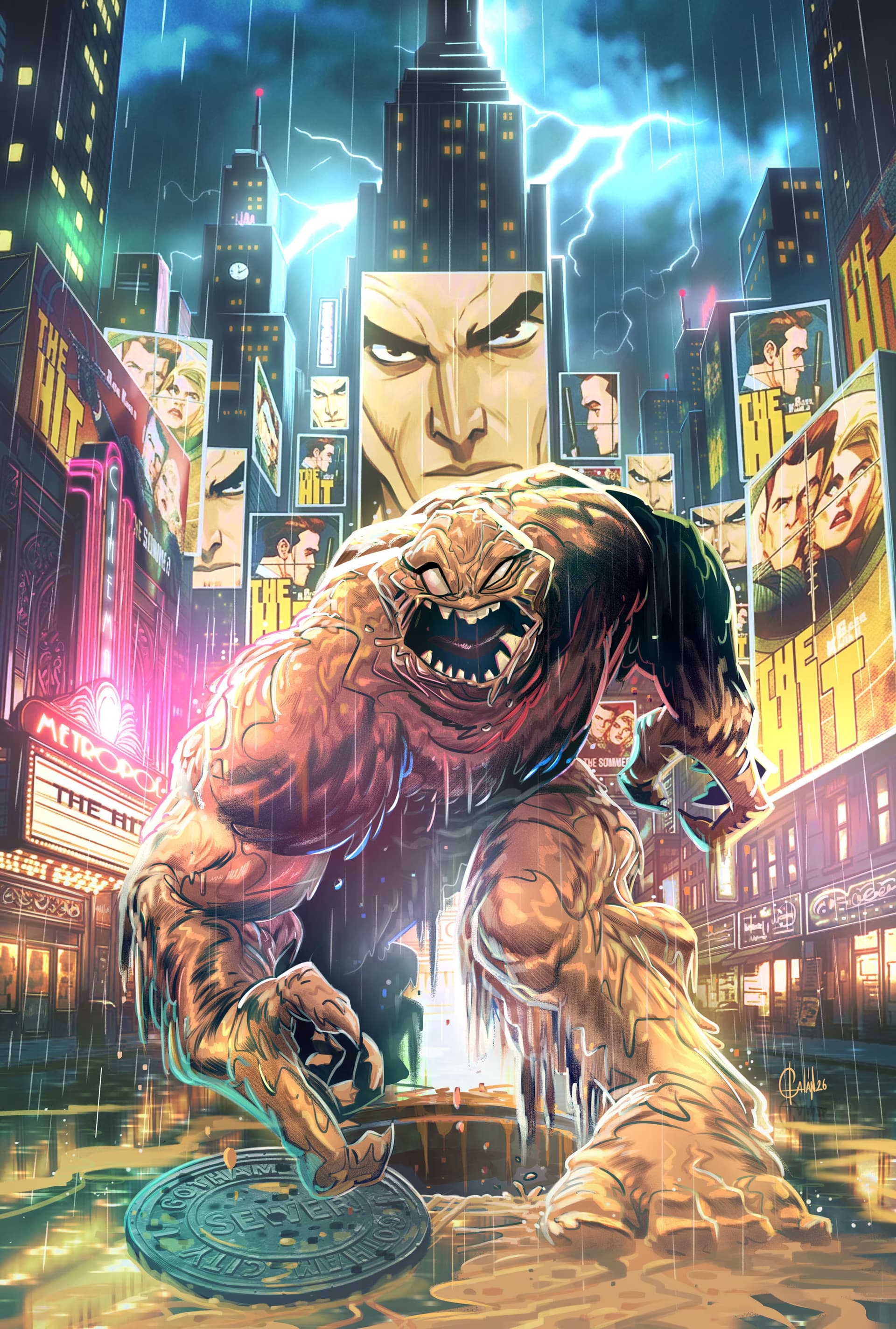
Clayface: Celebrity Dirt
From the publisher
AHEAD OF DC STUDIOS' CLAYFACE MOVIE, WITNESS BASIL KARLO BRING THE MUD AND THE PAIN BACK TO DC COMICS!
Before he was Clayface, Basil Karlo was one of the hottest stars in Hollywood. As he breaks out of Arkham once again, he's ready to stage his comeback, but there's just one problem: Someone already beat him to it, and Basil Karlo is already a massive star. But if that's true, what's next for the real Basil? And what does his predicament have to do with young women disappearing in Los Angeles and a new supplement causing hideous transformations in its users? Acclaimed horror writer Jude Ellison S. Doyle and rising star artist Fran Galán join forces for a bold new miniseries that's equal parts body horror and Hollywood glamour.
Preview Pages
Follow Comic Book Yeti
🔗 Comic Book Yeti LinkTree: https://www.comicbookyeti.com/links
For partnership and ad inquiries, please contact: thecomicsyeti@gmailcom
Follow your hosts
CRYPTID CREATOR CORNER PATREON
Support the show on Patreon for as little as $1 per month as a Squatch Supporter and enjoy exclusive benefits like What's Your Favorite Cryptid ™ with some of our favorite comics creators and Byron's comic book reviews.
ARKENFORGE
Play TTRPG games? Make sure to check out our partner Arkenforge. Use the discount code YETI5 to get $5 off your order.
Make sure to check out our sponsor 2000AD.

[00:00:00] - [Speaker 0]
Your ears do not deceive you. You have just entered the cryptid creator corner brought to you by your friends at Comic Book Yeti. So without further ado, let's get on to the interview.
[00:00:11] - [Speaker 1]
The future is calling. 2,000 AD is the galaxy's greatest comic with new issues published every single week. Every 32 page issue of 2,000 AD brings you the best in sci fi and horror featuring characters like judge dread, rogue trooper, and more. Get a print subscription in 2,000 AD, and it'll arrive to your mailbox every week. And your first issue is free.
[00:00:35] - [Speaker 1]
Or subscribe digitally, and you can download DRM free copies of each issue for only 9 a month. That's 128 pages of incredible comics every month for less than $10. Head to 2,000 AD and click on subscribe now or download the 2,000 AD app and start reading today.
[00:00:55] - [Speaker 2]
Hello everybody, and welcome to the Cryptid Creator Corner. I'm Byron O'Neill, your host for our Comics Creators Chat. I was thinking a lot actually about the Supergirl movie over the weekend. And no, full disclosure, I have not seen it yet, but there was like a ton of online discourse about it. I feel like numbingly so, which is kind of normal with all those, you know, superhero drops lately.
[00:01:15] - [Speaker 2]
But what struck me the most about it was how compulsory it is in 2026 to have to share an opinion about it online and how weird that is as a Gen Xer myself. Cause my first superhero movie was Superman two when I was six years old. And aside from, you know, at that time, the local print newspaper review columns, you might share your thoughts with a few friends, but that's really about it. And we were allowed to digest things without the overlay of social media and sort of the, that crushing weight of it that everybody seems to have now. So no branding, no online persona.
[00:01:50] - [Speaker 2]
You could just be, Which got me thinking a lot about the intersection of who we are versus who we're projecting to the world that we are. And I think that's a great lead in, and I can finally shut up from this very long monologue to introduce my guest, Jude Doyle, who has a thought provoking new take on DC's most conformable criminal chameleon, Clayface. That's a six issue miniseries entitled Celebrity Dirt that's coming out in July. Jude, welcome back. I had to surrender you to Jimmy last time, and I see you survived it, so not too bad.
[00:02:22] - [Speaker 3]
Yeah, I love talking to Jimmy. He was a great guy, and he was very patient with me, so that's how I rate people. He really exceeded the Jude tolerance scale. You did well on it.
[00:02:35] - [Speaker 2]
Good. I'm glad to hear it. Maybe I'll give you back next time. We'll see.
[00:02:40] - [Speaker 3]
We'll see.
[00:02:42] - [Speaker 2]
Well, when the solicits for this dropped, I saw you were writing it, I thought, Wow, there could not be a more perfect pair of person to take this on. And at the risk of, you know, kicking in what must be the inevitable nerves, this is your first big superhero universe book. And with a headliner film dropping this fall, how are you feeling?
[00:03:02] - [Speaker 3]
I mean, it's wild. It's really exciting. I don't think like, I was on DC Pride last year, and I got to talk to people who are working on all these very famous characters. I picked Blue Snowman because I didn't anybody cared about Blue Snowman.
[00:03:19] - [Speaker 2]
I did.
[00:03:20] - [Speaker 3]
Yeah, and I'm glad you did. But yeah, it's wild, but I was really lucky that they wanted me for Clayface because I didn't know the character that well, but the second I got into the lore, I just kind of fell in love with him, I was like, oh, this is easy. This is like me just spending time with someone I really like. I know how to do this. Sure.
[00:03:41] - [Speaker 3]
So just being able to work in a vein and with a character that I really loved, like, it was more just like getting new toys to play with. I'm sure it'll be like, it'll hit stands and I'll have like, way more attention on me than I normally do. And I'll be like, oh, no, why did I do this? But it was, it was a great experience to actually make the comic, you know?
[00:04:01] - [Speaker 2]
Yeah. Yeah. I read over the advance that you sent over the first issue several times now. It's a dark, tragic take, which, okay, it's Clayface, so that's, that's sort of expected at least, but it infused some much needed, I feel like main energy character, you know, main energy into that character, which we wanted for some time. And they've been around for eighty years now.
[00:04:23] - [Speaker 2]
So, which actually seems absolutely wild when I say that. So let's start though with your personal history with with the characters. So I think that was The Animated Series, is that right?
[00:04:33] - [Speaker 3]
Yeah. That was when I said Clayface, my first instinct was, oh, yeah, I know him. He's, you know, kinda spooky. And I had not actually seen the Clayface episodes of The Animated Series since I was, like, a kid watching them on Saturday morning cartoons, so I went back and watched them and I was so blown away by how there was this really sophisticated plotline about putting together a public persona in the face of painkiller addiction, and someone who feels like his body is slipping away from him and he can't control it, and corporate malfeasance, and like, there's so much there. And I think that The Animated Series take was so good that it's kind of like this happens a lot with the animated series, like, was so good that it changes how the actual comics get written from that point forward.
[00:05:25] - [Speaker 2]
Sure. So,
[00:05:26] - [Speaker 3]
yeah, that was the the first touchstone for me, and I think it's probably the first touchstone for a lot of people. But after that, went through and I just tried to read as many stories about as many versions of Clayface as I could. I really wanted to like because I was working in a universe where, like, I always get attached to minor, so called minor comic characters, like nobody likes them, and I'm just like, what's he doing now? I bet he's on cool adventures. You know, I never want to come at a character like this that's so well established in a way that isn't totally respectful.
[00:06:01] - [Speaker 3]
Like, I wanna care about them as much as the really intense Clayface fan cares about them. So that was sort of my priority, to get in there and try to have a true fan perspective.
[00:06:11] - [Speaker 2]
Yeah. I feel like I missed so much because I talked to a lot of creators who will cite Batman the animated series as this that was their end. It was it was pivotal. And I come from probably the the generation right before that, you know, we were the the spinner rack kids. So it's just a, it's a weird thing.
[00:06:31] - [Speaker 2]
And I feel like I was, I don't remember when that exactly hit, but I think I was probably on the road working with bands at that time. And that's just why I had just sort of escaped my radar.
[00:06:42] - [Speaker 3]
Yeah, definitely. I think I was like an older kid, but I definitely was watching it, and I do remember dorky boys in high school with their sexy Harley Quinn posters on the wall. That was, I think, you know, the number of cute ladies in Batman kind of broadened the appeal of that series a bit age wise. But yeah.
[00:07:05] - [Speaker 2]
Well, I was reading on your blog, you compared Clayface as this mixture of The Thing and BoJack Horseman. So I have to admit, I don't have a lot of familiarity with BoJack. I can't use the being on the road as my excuse for missing out on that animated series. I think it was that I had a toddler. But, but what similarities are you seeing with with those two characters?
[00:07:30] - [Speaker 3]
Well, BoJack Horseman is this sort of very sympathetic, but also very damning portrait of a washed up TV star. He was really famous in the nineties. He has, like, heavy situational acquired narcissism. He's an addict to a bunch of different things. He's also a talking horse, but, like, you start to watch the talking horse show, and then you get drawn into this very dark thing of, like, he's continually trying to get past the mess he's made of his life and get his career back and be less of an absolute asshole, and sometimes he almost succeeds, but like, that's the brief run of episodes before the really bad backslide or the really bad relapse.
[00:08:13] - [Speaker 3]
And I think that Basil has that quality where he had fame. He was, you know, in talks to get an Oscar. He was a real star at one point in his life, and I don't think he's ever gotten his head around, like, what happens if Basil Karlo isn't famous anymore? What am I if I'm not this movie star persona that I've worked so hard create? I think that his most desperate and violent acts have always been about, like, trying to desperately clutch back that persona, that face, literally the face he used to have, and get himself back into the limelight.
[00:08:49] - [Speaker 3]
So he's got that BoJack quality, where like, we really do root for him. If you've ever read the James Tynan run, he's absolutely sympathetic. It's an incredibly beautiful portrait of a guy wrestling with addiction, wrestling with, you know, having messed up his own life and trying to be accountable. But we also know that this being, you know, the universe it is, when he backslides, it's going to get really bloody, and it's going to be really bad, and tends to happen, you know, for every two steps forward, there's one step back.
[00:09:21] - [Speaker 2]
Sure. Well, how did you land on Carlo? Because there are, I think, eight different versions of Clayface?
[00:09:28] - [Speaker 3]
Yes. There are so many Clayfaces. We call out, like, eight of them in the first issue, I'm not trying to wreck anything, but I kind of want that number to slowly expand over the course of the series. But, Carlo has been carrying the main storyline in the comics, the same way Matt Haagen has in the movie that's coming out, and in the animated series. There's always been just that one guy who's like a BoJack Horseman style washed up star who's become criminal.
[00:10:00] - [Speaker 3]
And because Basil has the most character development, because he's been, you know, in the Batman family briefly, and because he's had a long run where he had time to grow as a person, he's the easiest person to make your protagonist. This is not to say that I don't want to get tons of different Clayfaces in, or that I don't like lots of Clayfaces. You know, there are so many versions of him that I love. I love Preston Paine, who's like a weird 80s Clayface that's basically the blob and is out there like melting people. I love Preston's wife, Sandra Fuller.
[00:10:38] - [Speaker 3]
I love Lady Clayface, you know, give me a lady anything, and I love that she had body dysmorphia and just like, clay faced herself in order to get past it. I even love Todd Russell, who was like a villain in a Catwoman arc. The very first Ed Brubaker Catwoman arc had Todd Russell in it as the Clayface. Face. You know, I really want to just get as much, as many versions of Clayface as possible into this story, whether it's as cameos or as easter eggs I think there's even like a reference to like the Harley Quinn animated series Clayface at one point, who isn't even technically a part of this universe, but you know, it's popular, so I put him in there.
[00:11:23] - [Speaker 3]
You know, so I wanted Basil to be the main character because I love him, because he's so compelling and sympathetic, and because we understand so fully why he does the things he does. There's so many of us that have been in that situation, where just like your body comes out from under you and you do anything to get it back. But I love all the clay faces. Clayface is not really a person. Clayface is a condition, and so I want to fold in as many different mirrors and versions of that condition as I can.
[00:11:54] - [Speaker 2]
I'm processing that. That's I've never thought about encapsulating clay face as a condition, and I think that is absolutely a fantastic way to kind of illustrate it. Yeah. Yeah. Yeah.
[00:12:07] - [Speaker 2]
Well, I've been thinking a whole lot too about celebrity culture and both the good and the bad of it. I think most of it, we can all agree is pretty bad. It's not a uniquely American thing at all to ascribe status in that way, but we certainly worship at the altar way more than anybody else does. So Hollywood. So what made that aside from, okay, it being the washed up actor and that kind of thing, but you're using Hollywood in this story, you could have gone in a different direction.
[00:12:36] - [Speaker 2]
So why? Why why the actor version?
[00:12:40] - [Speaker 3]
Yeah. Well, I mean, I think that Clayface is if you want to talk about, like, the binaries that these characters span, or the the duality, it's always about what do you show in public? What do you show other people? And what are you in private, and how far different are they? And Hollywood is a really good vehicle for exploring that, because you literally are putting on a version of yourself to market as a commodity, as a good.
[00:13:11] - [Speaker 3]
Fame blinds people, fame makes people into exaggerated sort of branded versions of themselves, and what they bring home can be very different. So that's what I wanted. I wanted to be in a situation where, like, somebody was using fame, and using the glamour, and the attention, and the blank check that celebrity gives to conceal a different facet of the self.
[00:13:39] - [Speaker 2]
Okay. It's I've always thought it's really interesting when you put Clayface and Batman, and, you know, Clayface being part of the Rose gallery there. They work as this delightful foil, and you took just talk there about the the duality and that that fame. And that's something that, obviously, Bruce Wayne has to deal with as well. Right?
[00:13:59] - [Speaker 2]
He shifts between the billionaire playboy and the world's most famous, you know, Kate vigilante. But he doesn't struggle with the self. He's supremely confident in who he is, and and I just find that really, really fascinating as an element to to play with and and pivot, in the story. So, are we going to I I don't want you to give anything away here, but, you know, is this it's obviously Clayface focused, but that that the relationship with Batman, is it really all that important, I guess?
[00:14:34] - [Speaker 3]
Well, because he has fought Batman a lot, including recently. Batman just put him in Arkham Towers, and that's where he is when we start. He's also been with Batman, and he's worked for Batman. I kind of wanted him to get into a situation where Batman couldn't solve his problems. Because feel like that's a problem for anybody who's friends with Batman.
[00:14:56] - [Speaker 3]
Like, honestly, you know, if I was having a problem on my taxes, I'd call Batman. If I had a problem with my neighbor, I'd call Batman. There's no end to the number of times I would call Batman to solve my petty problems. But I think I needed, in order for him to step into his own, I needed him to step away from Gotham. He ends up in Los Angeles.
[00:15:17] - [Speaker 3]
That's like a minor spoiler, I guess, but not really. And he ends up in a situation where only being Clayface is going to solve Clayface's problems, if that makes sense. So there's a cast that comes over from, you know, his time in the main series. Like, Victoria October is definitely part of it. I wasn't gonna leave her out, you know?
[00:15:37] - [Speaker 3]
But this is he kind of has to learn how to stand on his own two mud blobs, as it were, you know?
[00:15:47] - [Speaker 2]
I like that. Well, what I found was one of the most compelling elements of this was your face he's forced to face a version of himself that is successful, which is interestingly, I think one of the most dark ways to, to approach it because like I take myself, right? Somebody who suffers with an autoimmune condition, you know, the, the recent flare that I had, have had two major flares in the past. And in both cases, I've lost at least 35 pounds. And I worked years to put, you know, the muscle back on.
[00:16:25] - [Speaker 2]
You look at yourself in the mirror, okay, this isn't me. I, I don't look like this. And we all struggle, you know, with that, that little bit of, you know, dysmorphism, of course, you know, we all have a little bit of that going on. But being forced to confront the better version of you, why was that compelling to you?
[00:16:47] - [Speaker 3]
Well, I think it's because, you know, and I'm again, I have to credit Rob Levin with this, because I had a notion that was almost this, and he was like, well, what if somebody just went ahead and and got to be Clayface? And that immediately made so much sense, because there are so many men, specifically in Hollywood, who have done just horrible things, and they're like, They're still there? Like, Roman Polanski got a standing ovation at the Oscars. Why can't we let Clayface be famous again? Like, it makes less sense that he hasn't been able to get his career back.
[00:17:17] - [Speaker 3]
I think people would find a way to be like, well, yeah, but I liked him in that one movie. He did turn into a kaiju and destroy Gotham, but did you see that one from like 1992? It was really good. So it made sense to like, just talk about like the incredible amount of absolution we're willing to give someone when they're famous. Through giving someone the life that Basil says he wants.
[00:17:42] - [Speaker 3]
But I also think that Basil has never really Basil Carlo is at this point, it's less him than it is like sort of a human trophy, where it's proof that he's okay, it's proof that the disease didn't get him, it's proof that he's still who he always wanted to be, it's proof that he didn't lose, that he's not a monster. If he can just get back to being Basil Carlo, everything will be fine. But it was needing to be famous. It was needing to be loved. It was needing to not admit vulnerability and not admit the source of his disfigurement, which was that he was in a car accident and he started using this dangerous, clay face y substance to cover it up and look normal, he's never really dealt with the fact that it was needing to be famous that gave him the problem to begin with.
[00:18:27] - [Speaker 3]
Like, fame is as much his root addiction as renew is. It's what took him to this place. So I think that by giving him a counterpart, a foil, who actually is just like, fully, full on famous again, did like the John Travolta Pulp Fiction role, and now everybody loves him again, it forces him to reckon with what that would actually look like in practice. Like, is it a good idea to take Basil Karlo, Mud Monster, who recently killed nine people for a minor part in a movie, and make him the next big thing? Is that really what he wants, or is that just something he's been going for for a long time because he doesn't know what else to want?
[00:19:10] - [Speaker 2]
So how did you pitch this to begin with? I'm curious about this. How did this all happen?
[00:19:16] - [Speaker 3]
I knew that Clayface was one of the characters they were looking for after DC Pride, because they'd been doing miniseries around Batman villains. Like, they had the Two Face miniseries that was really cool.
[00:19:26] - [Speaker 2]
Right.
[00:19:27] - [Speaker 3]
And I started with it was almost like I wanted to explore the different versions of people who wanted to be clay faced, like, because I, you know, as a trans person, I deal with, like, deep insecurities around my body every day. I deal with feeling that I don't look how I need to look, or that I don't look like me. And if you could give me a dangerous substance that had a 1% chance of turning me into a mud monster, but could also just make me look the way I need to look, I can't tell you that I'd say no to it. I know a lot of people who wouldn't say no to it. Think everybody has that, I think.
[00:20:06] - [Speaker 3]
People are dealing with disabilities that they wish they could heal or compensate for in some new way. I think people struggle with aging, they struggle with gender, they struggle with just about, I can't think of a single person I've ever met that didn't have something about their body that they were just like, they felt a deep pain around it, and they would do anything to change it. I wanted to go worldwide. I wanted to have Clayface Inc. To just be like, No, we're gonna be able to actually market the stuff that made him Clayface, you know, in defiance of all FDA regulations.
[00:20:40] - [Speaker 3]
That was my first idea. And then as I got more into the character, pushing back on the idea of like, yes, crisis on infinite clay faces I hope I'm not spoiling too much here but maybe hang it around Basil and what he wants, and what these other clay faces reflect back to about his personality and his story is the better choice there.
[00:21:02] - [Speaker 2]
Okay. Well, getting into the trauma. You can't escape trauma with Clayface. You can't escape tragedy with Clayface. And for me and my read, circle back.
[00:21:15] - [Speaker 2]
You know, it seems like the ultra masculine era of my childhood is rearing its ugly head again. Like, we're we're all seeing how prevalent the manosphere seems to be becoming. I don't know if that's just because we can't help ourselves and we're spreading it on social media and it's not as big as it is, but that's inherently part of it, you know, to begin with. Why do we keep, you know, clicking on things that, that don't, that aren't healthy for us? In that way, think we're all a little bit of clay face, but you know, Basil has that, a little bit of abuser energy.
[00:21:51] - [Speaker 2]
So I'm curious how you're, you're kind of balancing out that expression of trauma over the course of the project. I guess my question really is, do you have to hurt to heal? Because that's, that's what we want to see with Clayface. We want to see this human who's being drugged through it feel better, you know, whatever that is.
[00:22:11] - [Speaker 3]
Yeah. I mean, I think you nailed it, that I kind of started writing this before the clavicular Luxemaxer stories were coming out, but like that's the whole MRA thing now that like, the world hates me because I'm not tall, or it hates me because I don't have a strong enough jawline, and the boys are like doing weird clay facey things to themselves. They're changing everything about their body, but they're not changing anything about the way they view the world or view women. So it's like Yeah. Making them angrier.
[00:22:42] - [Speaker 3]
And I think that that's definitely, like that's a very clay face thing. It's a very clay face story. That if you can change your face, if you can look exactly the way you want to look and you're still a rotten asshole, then you're just going to be a rotten asshole with a strong jawline, you know? That's it's not going to help. So I do have there is a lot of that in the story, and this is, you know, just about like reading the character.
[00:23:06] - [Speaker 3]
Like, there have been versions of Clayface, like Todd Russell killed sex workers, I think at least one other Clayface killed sex workers. It was just like a thing people had him do for awhile. There have been versions of the character that are deeply misogynistic and troubling and have done awful things to women. Even though I love R. Basil, like R.
[00:23:29] - [Speaker 3]
Basil has like, his best friend and possible girlfriend is a trans lady, and he's never been uncool to her about it. And he had this, like, great father son dynamic or father daughter dynamic, rather, with Cassandra Cain. Like, I think our main character Basil is actually remarkably chill about gender. Like, it's implied that his dad was blacklisted from Hollywood for being gay, and like, Basil doesn't seem to bear any grudge or weirdness about that either. Like, he seems pretty calm.
[00:23:56] - [Speaker 3]
But there are definitely versions of Clayface throughout the canon that are significantly less calm about gender and less calm about women specifically. And yeah, that gets picked up and becomes a major thread in the series.
[00:24:10] - [Speaker 2]
Will you often write about queer culture and that exploration of identity? You know, you just kind of just referenced Clayface and at least this version of them and how they are responding to different identities. So Clayface can literally be anyone or anything. Has working on with this character changed your perception of what superhero comics can be? You know, the stories you, as as a writer, can tell within it?
[00:24:38] - [Speaker 3]
Yeah. Well, I think that that's it's always been important for me as a writer to have everything I do have its own, like, really distinct vibe and aesthetic and tone, and I don't think that that's me boasting about my abilities. That's like, if I don't have a vision board or an idea in my head of like the tone I'm working for, it's like not knowing what key a song is in. You can't get it right unless you have a vibe. So working within the superhero playhouse was really cool, but I do think that these are inherently really flexible characters, you know, 10 writers can write them, and 10 different artists can draw them, and it's going to be different every time, but there's going to be a thread that unites them.
[00:25:20] - [Speaker 3]
That's kind of what you're coming for, is you're coming for like, okay, well what's this person's version of like Catwoman is somebody I've been reading a lot recently, like Ram V Catwoman, and Torin Grondback Catwoman, and Ed Brubaker Catwoman, and Mindy Newell Catwoman, are all different characters, but they weave in and out of each other. It's just, I think the reason I actually got the job, which I was pretty sure I was not going to get, but they gave it to me because I can do, like, gross outs and body horror, because I've mostly written horror comics. And I just it was really a chance for me to explore horror in a new way, where it's almost more akin to '80s horror, where because it's a superhero thing, you've got to have a little bit of hope at the end, and you've got to have a plot and a bounce, you've got to have banter. But I was also just able to design disgusting things to do with the human body, like a guy who's waving by while half of his head is melted off. It's like, I wouldn't get to do that if this were not a Clayface book.
[00:26:23] - [Speaker 3]
So yeah, I came at it first and foremost as like, okay, this is a horror book, it just happens to exist in this wider noir universe, So I have to, like, have keys and tones and touchstones, but I'm allowed to kind of do my own thing and have my own vibe going into it.
[00:26:37] - [Speaker 2]
Well, let's get into that. You know, we're in a golden era of exploring, I think horror in general, but like body horror seems to be sort of the in thing. I mean, generational trauma, body horror, those two things together are the flavor of the month to some degree. And you've talked about your own affection for it. And we've seen that, as you alluded to, it's been much of the focus of a lot of your other work, like the neighbors or mall.
[00:27:03] - [Speaker 2]
So, what makes that your safe space to kind of explore identity?
[00:27:08] - [Speaker 3]
Yeah, I mean, I think that it's odd because I didn't think of myself as being really great at body horror, because my great, you know, the greats are like David Cronenberg or something.
[00:27:18] - [Speaker 2]
Right.
[00:27:18] - [Speaker 3]
But I think that horror allows you to explore things that would feel unsafe to explore in any other context, and so for me, so much of my work has been about and this is kind of why I really got heavy into Clayface it's been not even so much about the body, it's about identity, identity, how much of your physical form you can change, how much of your inner being you can change, and still be you. So the idea of bodies melting or being ripped apart or being transformed or being filled with things that are not them, the idea of impostors and doubles, like, I think you're right, that tends to show up in so many things that I write, and it's just about horror being like superhero comics, a place where you can use really big, bold metaphors for things. So with Ma, which is straightforwardly a comic about sexual assault and the anger that many of us feel after being sexually assaulted, I don't have to do a realistic even though that could be a great comic, even though there have been realistic comics about surviving sexual assault, I was able to do I feel like my body is full of monsters and they're going to erupt out of my skin at any second.
[00:28:40] - [Speaker 3]
And that's just like, it's a really literal way of talking about what it feels like to be consumed with rage, but because it's a visual format, you're allowed to do it in a visual way that's very literal. With Clayface, I think the underlying metaphor is everybody else can look at me and see a person, but when I go and look in the mirror, all I see is a giant pile of shit. All I see is all the awful things I am and all the awful things I've done. And that's very literal. When you are out in public, you look like a movie star, and when you go home, you look like a big pile of dirt, you know?
[00:29:17] - [Speaker 3]
So, yeah, it's just the literalness of the metaphor and being able to stretch and distort and make the visceral experience of being alive look as visceral as it feels, I think, that I really like.
[00:29:29] - [Speaker 2]
Yeah. I've th- hearing you articulate that, I think now it makes a lot of sense why I'm such a fan of your work, because it's something that I have struggled with through over the course of my own disease. It's why I gravitate to stories about werewolves, because, you know, you, you lose that sense of self and especially as somebody with, you know, I don't have a visible disability, you know, people will be like, you look, people will just assume I look fine, you know, like, he's okay. You know? And that internal struggle, that internal turmoil, that feeling of loss that you're sort of constantly not just going through, but, you know, scared is, is going to sort of happen to you at any time.
[00:30:13] - [Speaker 2]
And it resonates so well with me anyway, I'm off on a tangent here and probably just kind of this, but it, it, it occurs to me, you know, oh, this is why I like Jude's work. Jimmy is too humble to do this. So as his stalwart ride or die, I wanted to tell you about his new graphic novel, Penny and the Yeti with artist Amber Aiken. What started as a comic short with his daughter that I've known about for ages now and it's evolved and has become one of those annoying can't talk about it in comics things for too damn long. Yes.
[00:30:46] - [Speaker 2]
I'm predisposed to be supportive but after reading an advanced copy of it, I have to admit it's way better than I anticipated. No shade but it's really good, remarkably so. Does it have a yeti? Yeah. Is it cute and adorable?
[00:31:00] - [Speaker 2]
Yeah. But it streak flies in effectively tapping into the all too familiar family dynamics that we all are facing in 2026 and approaching it in a way that doesn't insult the book's target audience. Kids. They are way smarter and perceptive than we adults give them credit for. So I really appreciated Jimmy's narrative approach tapping into his own experiences as a dad and a spouse.
[00:31:22] - [Speaker 2]
I can hear his wife saying, get off your phone, Jimmy, through the pages. She's gonna kill me for saying that. It's hitting shelves on April 21, and I dropped a link in the show notes where you can preorder a copy today. Getty or not, here we come with Penny, Perry, Fenton, Maxine, and the magical, mythical, magnificent YETI. On behalf of us both, we appreciate your support.
[00:31:45] - [Speaker 2]
Well, as somebody who's at the forefront of identity dialogue, how do you, how do you balance the story you want to tell with delivering the fan service that diehard Clayface people who are familiar with the the character for maybe forty years Well, will come to
[00:32:06] - [Speaker 3]
that's the thing is that, like, I find and this is something where, like, horror really prepped it for me, because horror fans are very serious about the things they love, and they show up to them and they support them, but they expect you to take those things seriously because they've been sort of marginalized dismissed. And, you know, I think that that's something where you find it in a lot of really intense fan cultures, that people get drawn into fan culture, and they are used to having to be on the defensive about the things they love. So like, I wanted to come at this recognizing that this is a character that has a long and storied history. He's gonna be somebody's favorite, and I want to write him the way I would want my favorite character written. You want to come at it with respect and with the knowledge that like, when I do a creator owned comic, maybe you're coming at it because my name is on it, but when you're picking up a Clayface comic, you're picking it up because Clayface's name is on it.
[00:33:00] - [Speaker 3]
So for me, I mean, was in this case, and I hope I wouldn't just say yes to any job even if I didn't like the character. With this, I really immediately just sort of bonded with Basil. I love him to death. I care about him. I think he deserves his own series.
[00:33:17] - [Speaker 3]
It was just about trying to spend time with the character and trying to respect him and trying to listen to fans talk about him and understand what they liked about him, so that even if I don't come at it from exactly the same angle you do, even if I don't see things exactly the same way you do, hopefully you feel it when somebody is passionate about what they're working on, right? Feel it if somebody actually cares about what they're doing, communicates. And so even if, like, you have a different Clayface or a different take on Clayface or a different writer that you like better, you can see that this is like legitimately just like engaging with the lore and trying to push it forward and trying to be part of the thing you love. Doesn't have to be your favorite part, but, you know, I'd like it to be part of it.
[00:33:59] - [Speaker 2]
Yeah. Well, think we'd be remiss. I don't want to let you go before we actually give some praise and flowers to Fran Galan. I'm hope hopefully I'm pronouncing the last name correctly.
[00:34:09] - [Speaker 3]
Yeah. Fran and I have not spoken on the phone, so I actually haven't heard his last name, but I believe you're getting it.
[00:34:13] - [Speaker 2]
Okay. Yeah. Okay. But, like, just the body horror element of of the way he's presenting it is is fantastic, but you're people people are going to be grossed out, but like it gets balanced out, which is a really deft trick with the subtleties and nuance of facial acting, which is absolutely necessary to wrangle the, you know, that back and forth, you know, between a human and a sometimes malevolent pile of goo, especially in Hollywood, right? Because everything's the face.
[00:34:44] - [Speaker 3]
Yeah. What I love about this is that, like, a Clayface comic can have so much tonal variation, and again, you're hinging it on the character. There's absolutely a part of his life that's glamorous and Hollywood, and I've never been to LA for more than a couple hours when I was stuck in the airport, But the myth of LA, where there's just the scent of jasmine in the air and all these beautiful, glassy, modernist buildings, I want that glamour to be part of a Glaifei story. It can be really goofy, it can be slapstick, because he is just kind of like, God bless him, he's kind of an idiot, you know? That's just part of his character, that he's not book smart in any way.
[00:35:23] - [Speaker 3]
So you can do visual comedy with Clayface, you can do gross out, you can do body horror, and what you need, unfortunately, is an artist who's going to be comfortable with all of that. And Fran got so much thrown at him over the course of this script, and every single time he came back with something that was better than what I'd asked for. Like, he just, he can nail any tone you ask him to do, and yet, when he comes back with it, like, the paneling choices are so sharp and so smart, the ways in which he's able to I think there's a panel just in issue three, I'm going to say no, it's issue two, where Basil is pulling himself back together from a mud puddle into a man, and we've done that where it looks gross a lot, but this is just like tendrils of mud swirling around him up into the light, and it looks so beautiful. I've never seen Clayface look just beautiful before, it was lovely. So, yeah, Fran is amazing.
[00:36:30] - [Speaker 3]
Just anything you throw at him, he'll be able to do it, but he will always bring his own really strong, specific vision, and he'll always argue really strongly for making the choices he makes. He comes at it with all of himself, and I love that.
[00:36:46] - [Speaker 2]
But have you asked him to yet draw a centaur? Because you recently referenced on your blog, I think it was from Detective February. Clayface humorously becoming a centaur. So is there a challenge, you know, The first to time writing want
[00:37:04] - [Speaker 3]
long story where, like, there's no plot. He's just turning himself into stuff. And at one point, he's just like, I've done it. I've become a centaur. There's no understanding of how this helps him commit a crime.
[00:37:12] - [Speaker 2]
Yeah.
[00:37:13] - [Speaker 3]
I I would like to bring Matt Haugen and his beautiful rainbow goo and his centaur powers into this story somehow. I don't know. I feel like if I spoil the centaur, then we're not gonna, you know, you'll never forget. If you're getting to the centaur, it has to be a surprise.
[00:37:34] - [Speaker 2]
Okay. No, I'm good with the surprises.
[00:37:36] - [Speaker 3]
They're magnificent creatures.
[00:37:40] - [Speaker 2]
So I was I was recently rereading the the Spectre omnibus because I'm a huge Tom Mandrake fan.
[00:37:46] - [Speaker 3]
Mhmm.
[00:37:46] - [Speaker 2]
And the the character can embody so much. It's just it's kind of amazing when when you have these characters that don't have a limited silhouette, if you will. You know? Because Batman has to look like Batman, you know, like, has to look a certain way. If it doesn't have the silhouette, it ain't gonna sell.
[00:38:07] - [Speaker 2]
You know, the Spectre, not that way. Clayface, not that way. Is there a challenge to writing a character who can embody anything? You know, like, how do you stay? Do you just have to bite into your true north, if you will, and then everything sort of works around that?
[00:38:23] - [Speaker 3]
No, it's absolutely like, for me, it's definitely unfortunately, it's just about like what makes the grossest visual.
[00:38:31] - [Speaker 2]
Okay.
[00:38:31] - [Speaker 3]
We had to go back and forth so much with standards and practices on it, because I was just like, this is, I've never really done like a splatter comic before, and for some reason this 13 plus superhero comic is where I'm gonna do it. Wanna do some really gross stuff. Eventually what they came back to us with was like, as long as you don't show organs, as long as it's not red, as long as it's just goo, you can do it. I'm like, I do anything with goo. So it's great.
[00:38:59] - [Speaker 3]
Like, that's kind of why Clayface is so cool and why he ought to be used more. Like, he can be tiny, he can be huge. He can be like a Tom Ripley thing where he's manipulating people and he's very street smart and conning people, or he can just be like a big chunk who overwhelms you with physical force. There's no end to the number of things you can do with him, it's just whatever looks cool, and that's very freeing. As somebody who's never written superheroes before, I'm just like, I'm just going to do what looks cool, bet he could do it.
[00:39:33] - [Speaker 2]
For sure. Yeah. But I'm curious there, because you've cited the thing as as a big influence in in terms of body horror landmark for you personally. So, you know, people who grew up in the eighties, we had some absolutely fantastic ones. We had the fly and Hellraiser and, you know, Videodrome.
[00:39:49] - [Speaker 2]
So what hurdles or advantages do you think comics as a medium provides over trying to do the same sorts of things that you were just talking about with film or prose?
[00:40:01] - [Speaker 3]
Yeah. Well, this is something that I've been thinking about, because I, too, like, when I think about body horror, I go back to a lot of movies specifically, and a lot of eighties movies specifically. Yeah. With even with this, like, I was drawing a lot of visual inspiration from the fly or from the blob, and what's hard is that what makes the thing and the fly and the blob so gross and so overwhelming as movies is that they're done with really practical effects. Like, they're done in this sculptural way where you're looking at a real heap of rubber that somebody has just coated in, like, dripping glycerin, you know?
[00:40:40] - [Speaker 3]
It's textural, and it has physicality, and it has weight, And that's what makes it gross, is that you know you could touch that thing, and you really don't want to, because it'd be slimy, or sticky, or whatever. And with comics, you're not able to play in that same way with just, like, having a physically disgusting, slimy object, and like, letting that do the scares. You have to do a lot more with your framing, you have to do a lot more your paneling. This is where I just, I kept saying when we were looking for an artist, I kept saying the two word phrase fluid dynamics. Give me someone who can draw liquid, draw fluids, you know, but Fran absolutely has them, like, he can make dripping goo and slime look like themselves, but also look very expressive and like part of a composition.
[00:41:33] - [Speaker 3]
And so with comics, again, it's a still medium, so it's about finding a singular haunting image rather than the way something moves or something. And it's about finding something that you can convey in three d expressively in a way that's not totally realist. And again, I think it's just like, this is why Fran was so clearly right for this, is that he can do exactly that.
[00:41:57] - [Speaker 2]
Yeah. I have that moment that is crystallized in my head that I've referenced before. My Clayface moment is in James' run, there was a that image of Clayface with two mouths, and I don't know why. That sticks with me so much. But now they've they've used that with Rascal Randy as well in the Exquisite Corpses franchise.
[00:42:18] - [Speaker 2]
And I was like, that's where that came from because James did that. I don't know if he wrote it that way or if that was the artist, you know, just interpreting it that way, but so good. So good. So that Yeah. All the little fluid dynamics.
[00:42:32] - [Speaker 3]
Part of his body. Yeah. The Alvaro Martinez Bueno clay face is like perfect for that, because it does have that like, 80s, like almost like a metal cover where it's like hyper detailed and there's all these little gross things happening. Feels like a Freddy Krueger effect or like a screaming Mad George thing. And yeah, there have been some really great Clayfaces.
[00:42:52] - [Speaker 3]
I love I love Franz Clayface. I hope you I hope people love it. But yeah, it's there's so many ways you can draw him. That's the thing is that like, he's he's kind of an an artist's character because there's like no end to the number of things you can do, you know?
[00:43:08] - [Speaker 2]
Absolutely. Yeah. Yeah. Well, the movie's coming out this fall. There will be inevitable newbies who have never been exposed to Clayface before, believe it or not.
[00:43:16] - [Speaker 2]
They're going to find their way to celebrity dirt. So what would you like to leave them with?
[00:43:22] - [Speaker 3]
Want them to, I'm definitely reaching out to the other Clayface newbies for me. Hope they all become rabid Clayface fans, but it's one version of the comic is just explaining to people who just saw the movie, like, what Clayface actually is. No, there's actually eight of him. I have to explain to you why this is so radically different than the movie you just saw, even though I haven't seen the movie. I saw the trailer and it looked great.
[00:43:53] - [Speaker 3]
But like, yeah, I want them to know that the condition of being a formerly handsome man who now feels like a giant pile of goo that no one likes is really it's universal. So many of us are goo piles on the inside, and in my case, somewhat on the outside, and, you know, I want them to see the humanity in this character. I have no doubt that it's in the movie, but the movie is an origin story. The movie is somebody finding out that he's a Goo Pile. I think Celebrity Dirt is like, Well, I'm a Goo Pile, what next?
[00:44:30] - [Speaker 3]
What can I do with my life once I've accepted my goo pile status? You know?
[00:44:35] - [Speaker 2]
I don't think I have ever struggled as much kind of trying to put together my questions for an interview in terms of proper pronouning a character as Clayface. And it is really weird. I don't know why I just really struggle. And obviously with Carlo, it's easy that to him, but I don't know. It was just something I kept thinking about while I was doing this, I was rereading and stuff as just how flexible that is and how beautiful that is, you know, because it's not necessary even.
[00:45:10] - [Speaker 2]
I don't know. It's just something I was thinking about.
[00:45:13] - [Speaker 3]
No, I mean, I think that, you know, gender always comes up when you're talking about, like, characters that can mold and reshape their body. And I mean, I think that, you know, there are probably Clayfaces who have just a really solid I think Saundra Fuller's always Lady Clayface. I don't think you ever see her, you know, like, be like, Well, sometimes I'm Mr. Clayface. You know, like, she just she has a pretty solid, stable internal identity as a woman, and she shape shifts into whatever she needs to.
[00:45:43] - [Speaker 3]
And I think Basil, to some extent, is the same way. I don't think he really, like, spends a lot of time thinking about proper gender roles. Like, he's a lady, like, half the time he shape shifts, he's calm about that. But, you know, definitely I did want to, once again, not to make this like Jude Doyle's personal trauma hour, but like, I wanted to talk about the nature of fluidity, and what does it mean, like, changing your body doesn't necessarily change who you are inside. But if you cling to a role, and if you cling to a persona, and if you confuse that persona with yourself, that I think makes you a lot more toxic than if you just are able to roll with the changes life brings your way, because everybody's body changes, you know, like the disability community talks about this a lot.
[00:46:31] - [Speaker 3]
Are disabled people, and there are people who are temporarily not disabled. We all will be eventually, it's just a matter of when, you know? It's about accepting fluidity and not getting too hooked into any one concept of who you are, who you have to be in order to be okay with yourself, I think crops up in the story quite a bit.
[00:46:52] - [Speaker 2]
So I'm curious, as somebody who writes a lot about gender fluidity, one of the things I was thinking about with the Supergirl movie and one of the things that I saw quite a bit were people saying, just stop. Just go ahead and write for the Gen Xers. Or sorry, not the Gen Alpha, Gen Alpha, you know, sorry. But, but we have sort of, we think of those things still in context of Gen Xers in terms of comics and sort of where it stuck and sort of engaging that new generation. And that's something that the absolute universe has done very, very well.
[00:47:29] - [Speaker 2]
Feel like it's bringing that, that an infusion of new blood into the medium, which I think is fantastic. And I've been preaching, we need to do as long as I've been doing this. But as somebody who writes in that space, how do you deal with that? You know, is it something you think about regularly, you know, just because there's a vast difference between somebody who's me in my early fifties, you know, and how in general we're making broad generalizations, but you know, how my generation is going to look at gender versus how my son's generation, you know, who's just going to college, he's 18. Right?
[00:48:06] - [Speaker 2]
And they, they look at it entirely different. So is that something that you, you're constantly aware of when you're writing something, especially a superhero book like this?
[00:48:16] - [Speaker 3]
Well, I mean, I'm definitely aware of the fact that, like, people did, when I was coming up, perceive superheroes as, like, this very protected, traditionally masculine space, where being woke could incite a lot of blowback and a lot of hatred, and it may well still be that way. I think I'm not necessarily I'm between the Gen Xers and the Gen Elfas. My kid is Gen Alpha. I'm a millennial, you know? For me, like, I just wrote a comic book called Dead Teenagers that's very much sort of about coming to terms with your identity and coming to terms with who you are as you grow up, and there's, you know, gay characters and trans characters in that.
[00:48:59] - [Speaker 3]
I try not to come at things like, I'm gonna solve gender with a comic book. You know, I think The Neighbors was definitely my big throat clearing, like, Hey y'all, I just came out, here's what being a trans man is, and it's not my favorite book I've ever written for that reason, because I think it's like trying to assume total authority over an experience. Think it's a lot more useful to just tell stories that happen to have queer and trans people in them, because that's the real marker of difference for a lot of these younger kids, is not that they're gender radical in ways we weren't, you know, like John Cameron Mitchell and Matilda Bernstein Sycamore and Justin Vivian Bond, those people are all older than me, you know? There are plenty of people who have been out as trans for a lot longer than me. There's plenty of gay people, and there always have been.
[00:49:47] - [Speaker 3]
But these younger kids are more likely to talk about it earlier, they're more likely to have gay and trans friends, they're more likely to think of it as just a fact of life, rather than something that's siloed off from life. So for me, like, yeah, Clayface is a vehicle to explore the fluidity of identity, but also in a very literal way, he's got like a Mulder and Scully unrequited romance situation with a lady who happens to be trans. Like, you can absolutely talk about trans stuff just by having his girlfriend in there, you know? And it, to me, makes more sense to just like, approach this in a cool way, where you're writing characters that happen to be gay, happen to be trans, happen to be people of color, happen to be women, because that's just life, and that's primarily if you're not trans, you don't need to understand why I'm trans. I don't need to have a theory of it.
[00:50:37] - [Speaker 3]
I've tried in the past because I have written feminist journalism or whatever, but what you need to understand is that queer and trans people are part of your world, and they always will be, and they're just people doing their own damn thing, you know? Yeah.
[00:50:51] - [Speaker 2]
So it's something that I have, over the years, seen a shift in change. Because I think when Five years ago, I think it was very different in comics, where it was a little more, maybe not the right word, but, you know, it's, it's proselytizing, right? Where, you know, we're gay, you know? And when that character would show up, you know, all of a sudden it was, really need to draw attention to this. And what I'm getting from what you're saying is now presence is enough, to some extent.
[00:51:26] - [Speaker 2]
Is
[00:51:26] - [Speaker 3]
that Well, I mean, I don't know enough. Like, you do want to tell stories that honor people's humanity and that honor the amount of bigotry that there is in the world, right? Like, you don't want to from it and just present like this, like, United Colors of Benetton vision, where it's just like, everybody's hanging out together, everything's fine. You know? I think, you know, it is definitely- it's luxury for me to just be able to sit here promoting a big old mainstream comic book and like, have half the interview be about Okay I Am, you know?
[00:51:58] - [Speaker 3]
You know, because I love talking about that, I love talking about how gay I am. But it means more to me to look at what comics looks like right now, where I'm definitely not the only trans comic writer right now. I'm definitely like, I have had, you know, other trans collaborators on other work. I'm definitely not the only trans comic artist. I'm not an artist, but there is, you know, like, there are if I look at what the inside of DC Comics looks like right now, it looks a lot more friendly to people like me than it did when I was in my 20s, and I just would wander around looking for anything that could reflect me back to myself, and I just, sad to say, really didn't see it, except in very rare instances.
[00:52:49] - [Speaker 3]
I think by the time I was maybe 21, I had convinced myself I could never be comic book writer because people like me didn't get to do that. And the fact that I got this relatively late in my career offer, where like in 2021 someone was like, Have you ever thought about this? That was only possible because the industry had changed. And I think the change and the shift you see in stories, the change and the shift you see in just the level of detail and dignity and thoughtfulness and humanity with which characters are written, or they don't have to be written as just like, Hi, my name's Greg, I'm gay, it's important to be nice to gay people, and I will be dead by the end of this issue. To make Sure.
[00:53:34] - [Speaker 3]
You know, like, that's the result of a tidal wave. It's the result of a deep, deep shift in how the comic industry moves and how it values people and how it values people's voices. And I'm just very lucky to be living, you know, in this instant, in this moment where it's happening.
[00:53:51] - [Speaker 2]
So how much do you think comics has played a role in that? Because you have you for instance, you put this playlist together on your blog, you know, I'll I'll put a link in the show notes so everybody can check it out because I I love it when people put a playlist together to to go along with their book. Think it's fantastic. And I love listening to those, then rereading stuff. So please check that out.
[00:54:14] - [Speaker 2]
But, you know, and I'm curious how those things are different forms of media. How much is comics moving the needle? How much is like you see it Game of Thrones. Right? And that I think changed, kicked open the door.
[00:54:30] - [Speaker 2]
I think my perception of it, you know, in just making identity more widely something we could all collectively as a society discuss in ways that hadn't before, you know? So how much is comics moving the needle? All these things are kind of clearly influencing your own creative process, so I'm just kind of curious of your thoughts.
[00:54:53] - [Speaker 3]
Well, I mean, I think for me, I can see a lot more like, if I pick up a random X Men book and it has a plot about prison abolitionism in it, that feels to me like it's a more direct and more current reflection of what's going on around maybe, say, social media. I think it's because comics, even though they are a for profit industry and even though they have money riding on them, it's a lot easier to get a radical plotline greenlit in a comic or a novel than it is in, like, a blockbuster. Blockbuster. Like, it's Sure. Gonna be harder, even though it's not impossible, even though, you know, there have been I love the Birds of Prey movie, I thought that was just so great, and it was so gay, and it was so feminist, and it was so open about being all those things, you know?
[00:55:44] - [Speaker 3]
So you can get that greenlit, even within a superhero movie context, but it's harder because you have to prove it'll earn more money. There's always been a really direct line I'm stealing a line from Roz Cabney on this, but there's always been just such a direct line between queer culture and nerd culture, like they've always been, you know, joined at the hip, so to speak. So you see the shifts in queer culture and the willingness to include more gay and trans characters just come up from within, from who the editors are, who the writers are, who the artists are, you know? And we're able to get more in there. So I like the fact that comics is, to me, sort of pushing the window for what these really big mythic IP franchises can hold.
[00:56:34] - [Speaker 3]
We're the ones who are kind of pushing it further out there, and then eventually, you know, that makes it into the movie, or it makes it into the TV adaptation or whatever. But I don't know. I mean, I don't think you can change the culture one industry at a time. I think these things tend to be very gradual. They tend to be evolutions in how people think, and that's going to show up slowly then all at once, you know, in one place and then everywhere you look.
[00:57:01] - [Speaker 3]
Does
[00:57:01] - [Speaker 2]
that Oh, make absolutely. And it also, you know, I was just thinking about the, the Republicans trying to put out a house fire, you know, with, I don't know, squirt gun is kind of the, the illustration that came to mind for me because you do it. There's a pervasiveness, guess, you know, with, especially ironically with these, these corporate entities that are largely conservative, but they want to make money. So they're going to green light this because, because it sells and, you know, and, and then in turn how they're trying to ban, you know, kids from having access to it at libraries. Yeah.
[00:57:41] - [Speaker 2]
Which is my squirt gun illustration. You know, it's like you're, you're trying to stop a tidal wave here in, in essence. Yeah. Which is nice to hear, you know, because I've been asking sort of these questions as the cis white man in the room for years now, you know? And it feel to me, it feels good, you know, at least within, within comics.
[00:58:03] - [Speaker 2]
I'm not going talk about society as a whole, because we all know what's going on there and what they're trying to do. But I, I really like hearing your take of, of things, because it feels like we're moving in the right direction, and I, know, I want that.
[00:58:18] - [Speaker 3]
Yeah. I mean, I think the thing to remember is that there are a lot of people who are very passionate about I'll stick to specifically trans rights, even though, you know, queer rights of all kinds are pretty imperiled right now, and rights for any sort of gender marginalized person, women's rights are really imperiled right now, but there are, for trans people, a lot of people who are passionate about trans rights because they are or their kid is. Don't underestimate the moms who want to get their kid through school day safe they're going to come through and they're going to get behind what they care about in a pretty big way. But the most important thing we have going for us is that a lot of people just don't give a shit and don't see why they should give a shit. There's a tiny little minority of outsized, overfunded organizations and influencers who are astroturfing things and who are working harder than hell to make everybody think that accepting trans people is ruining their lives, but the person does not spend all their day thinking about inspecting kids genital before they go into the school restroom.
[00:59:35] - [Speaker 3]
That's not a normal thing to care about. Nobody in their right mind cares about that. And so even though the bullies and the bigots are very loud, they aren't most people, and they aren't representing a reasonable perspective. And as long as we stay visible and don't let them push the Overton window all the way over to the right, the way we did with abortion, you know, there is a track record for letting people make something into a culture war and slowly, gradually giving away our rights by inches until we have none at all. But as long as we don't let them own the conversation, they won't, because there are more of us than there are of them.
[01:00:16] - [Speaker 2]
Yeah. Amen. Yeah. I'll leave it at that. So anything else you're up to this summer?
[01:00:22] - [Speaker 2]
You touched on Dead Teenagers, which issue five, I think, is slated to hit shelves in late July to wrap up the series. That's been a wild ride, which kind of allows you to explore a lot of these different nuances of horror genres, almost at twice speed. I don't think I've ever seen anything quite like that. But yeah, that's wrapping up soon, right?
[01:00:42] - [Speaker 3]
Yeah. Dead Teenagers is going to end on July 15, and then Clayface will come out the week before that, July 8, and then it'll just be Clayface for the rest of the year. I did a very unwise thing where I agreed to write like four books at once in twenty twenty four. So now we're just like coming to the end of my four books that I wrote. So, yeah, this is, it's really nice for me to just be like not writing four books at once anymore.
[01:01:08] - [Speaker 2]
Yes, but Jude, what did we learn about spacing out our career?
[01:01:13] - [Speaker 3]
But it's bad, actually. You should just you should take those jobs while they're giving them to you, because sooner or later they won't. Yeah. You know? Yeah.
[01:01:21] - [Speaker 2]
But Absolutely. Well, as this customary, I like to end each episode on a positive note. I can't remember if we were doing that last summer or not, but it's something I've instituted and something I like. So this could be a shout out to someone who did something nice for you, gratitude that you didn't blow your hand off with fireworks for the fourth of July, or something that just inspired you recently. And I'll go first to give you a moment to think about it.
[01:01:44] - [Speaker 2]
You know, I think it's somewhat relevant to today's discussion anyway. I recently discovered this podcast, Wrong Term with Jamila Jamil. Don't have you ever heard of it?
[01:01:53] - [Speaker 3]
I don't think so.
[01:01:54] - [Speaker 2]
No. Okay. So basically, she gets the guests on, and they're reliving their most humiliating or otherwise embarrassing life moments, which I feel like is super refreshing because it's very genuine, it's very real, you know, and we've been talking a whole lot about, you know, the masks we wear in Hollywood and social media and online presence and all, yeah, all this stuff, you know, and it's, it's none of that. It's the most grounded perspective that I've heard in in a in a long time. It's which I found very, very refreshing, you know, like, let's just not take ourselves that seriously.
[01:02:30] - [Speaker 2]
And it brought to mind one of my own, while I was listening to it, which I'll share because it did come to mind. I was in junior high school at a state band recital. Yes. I was I was a band kid, not in high school, but in junior high, I definitely was. Back row, trombone player.
[01:02:44] - [Speaker 2]
I fell off the riser, which is about a five foot drop to the floor, took down some stage curtains, and mister Reeve, who was our conductor, he's like, it looks like we just lost, you know, some of our trombone section. Luckily for me, it was only my pride that that was hurt, but, you know, full house of people, massively embarrassing. But I highly recommend any anyone check out the podcast because it's it's good for a laugh. It'll make you laugh at yourself. It'll bring to mind those memories of yourself.
[01:03:15] - [Speaker 2]
And I thought it's just absolutely fantastic. But I won't ask you to to relive your own, you know, most embarrassing moment, but -Everyone will you
[01:03:25] - [Speaker 3]
be the most embarrassing moment. But, okay, something that really made me grateful recently: I am gonna give you the most pretentious answer in the world,
[01:03:38] - [Speaker 2]
is that
[01:03:39] - [Speaker 3]
I finally, finally reread all the volumes of Proust's In Search of Lost Time. I read them when I was in college, and I loved them, and they were my favorite book, and it's also just like thousands and thousands and thousands of pages, so I didn't reread it again until I was in my forties. And then I discovered that college me had been so pretentious, because I had actually, in each book, had not only underlined passages, I had written down the exact date on which I underlined them, and it felt so much fun, because it's a book about revisiting your own memory and revisiting your own youth and finding out that things look different when you're older. But I could now just go through and see everything that 22 year old me thought was important, and I would just underline different things and write the date there. Was like I was having a conversation with Past Jude.
[01:04:29] - [Speaker 3]
It was very nice. It was very, like, all of the things about, like, pointless crushes that were nothing but pain, Jude had underlined, and all of the things about, like, getting over things because you're older, were the things that adult Jude underlined, you know?
[01:04:43] - [Speaker 2]
Oh, I love that. I mean, I had the same sort of experience going back and reading the the Spectre omnibus because it was so formative for me as a comic book, it was it got me to call into question all these things. And then I got I went back and, you know, on that reread, I was like, wow, this actually was more. It had more of my DNA to it than I realized. And, you know, I really could appreciate what was going on in my head, the young version of me and how stupid that I was.
[01:05:14] - [Speaker 3]
Yeah, no, I love that because it's like you're rereading it with your younger self. I'll find things that like, were clearly so formative to me or to my writing that I'd completely forgotten were in there, and it's just like, it's yeah, it is. It's a little time tunnel. It's a way to find out who you used to be and find out how you became who you are. I love that.
[01:05:34] - [Speaker 2]
Well, visit the time tunnel, folks. That's that's your takeaway for today. Well, Clayface, hitting shelves July in the beginning of July. You also alluded to dead teenagers hitting also the second week in July. So yeah, I don't, please don't do that
[01:05:48] - [Speaker 3]
Has to yourself the collected edition coming out July 7. It's going be a big July. Jude, July. That's what they're calling it now.
[01:05:56] - [Speaker 2]
Jude July. Okay. Make your investments now, folks, because Jude's going to be poor by the end of twenty twenty six. That's what I'm hearing. But Clayface is such a good book, and I'm delighted to see your star rising for both your career, and please write more.
[01:06:11] - [Speaker 2]
But, I can say that that yet again, I possess an incredible eye for talent because I've been pushing your work now for a couple years, you know? So And I'm very Clearly, know what I'm talking about. I've worked with artists for thirty years, so either I'm really bad at it and I'm just persistent, or I know what I'm doing. So please support Jude's work. Dear listener, pick up the books.
[01:06:32] - [Speaker 2]
Jude, it's always a pleasure having you on. It's it's nice to get a chance to catch up again.
[01:06:36] - [Speaker 3]
It's been wonderful. Thank you so much for having appreciate it. Of course.
[01:06:40] - [Speaker 2]
Alright. Well, is Byron O'Neil, and on behalf of all of us at Comic Book Eddy, thanks for tuning in, and we'll see you next time. Take care, everybody. Peace. This is Byron O'Neil, one of your hosts of the Cryptic Creator Corner brought to you by Comic Book Eddy.
[01:06:53] - [Speaker 2]
We hope you've enjoyed this episode of our podcast. Please rate, review, subscribe, all that good stuff. It lets us know how we're doing and more importantly, how we can improve. Thanks for listening.
[01:07:07] - [Speaker 0]
If you enjoyed this episode of the Cryptid Creator Corner, maybe you would enjoy our sister podcast, Into the Comics Cave. Listen and subscribe wherever you get your podcasts.