
I'm joined by both Tilly Bridges and Susan Bridges to discuss their upcoming graphic novel from Maverick: Just Another Summer. It's a beautiful story of TV star sisters sent to a Montana dairy farm, which was an absolute joy to read. We discuss how they nailed the comedy part of this "romcom", the importance of trans representation, getting the details of the dairy farm correct, why acting as a career is less glamorous than it seems, and, of course, the value of Star Trek, in all its many iterations. Just Another Summer is out August 4th, but you can pre-order it now at the link below.
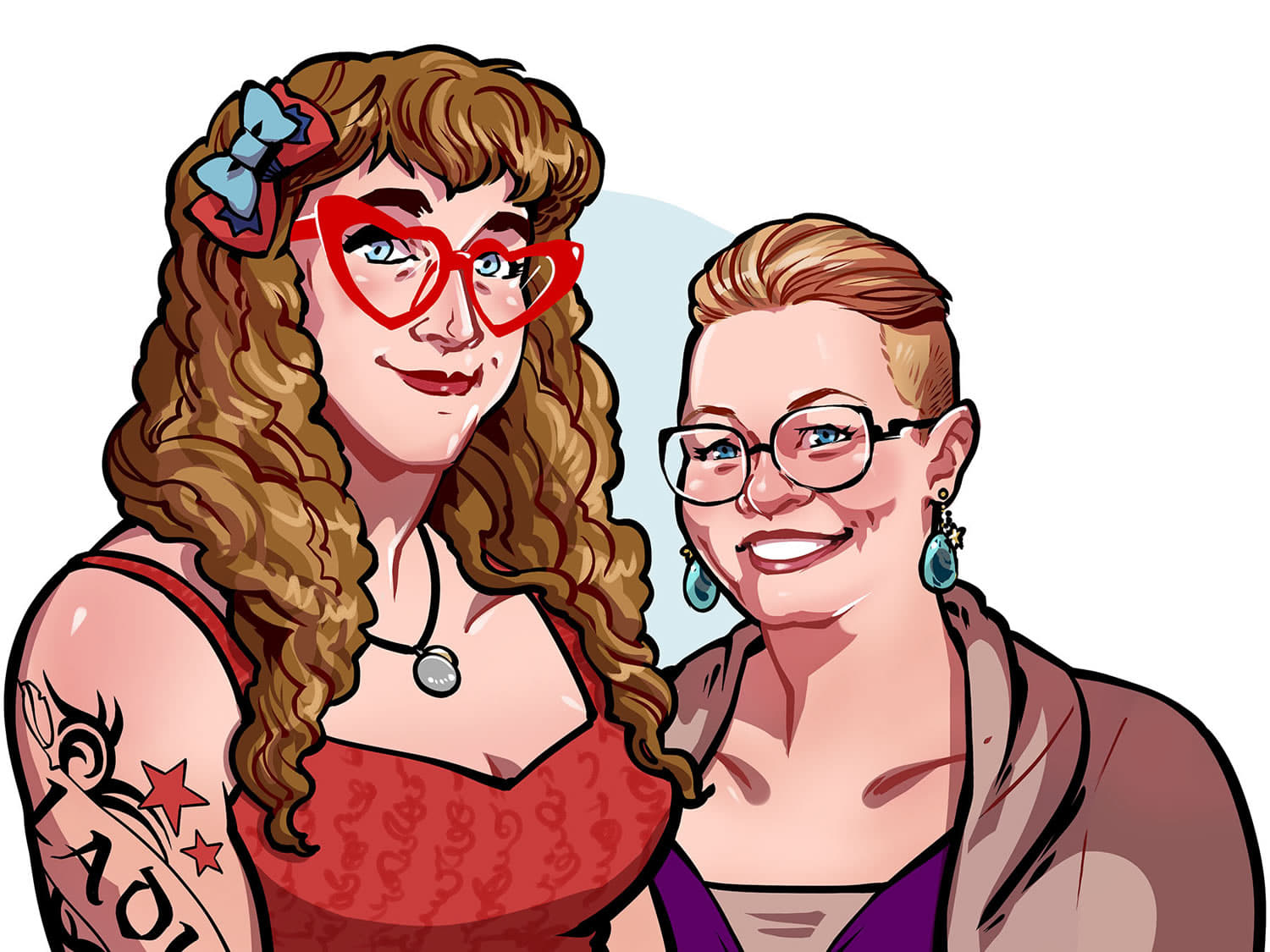
"The whole like idea of the book was that we all have more in common than we think, and we all have a lot of misconceptions about people who are different from us... It's something that's very important to us is celebrating differences and being inclusive in our storytelling." - Tilly Bridges
Go to Tilly's and Susan's website
WATCH THE VIDEO VERSION OF OUR INTERVIEW ON YOUTUBE!
Just Another Summer
From the Publisher
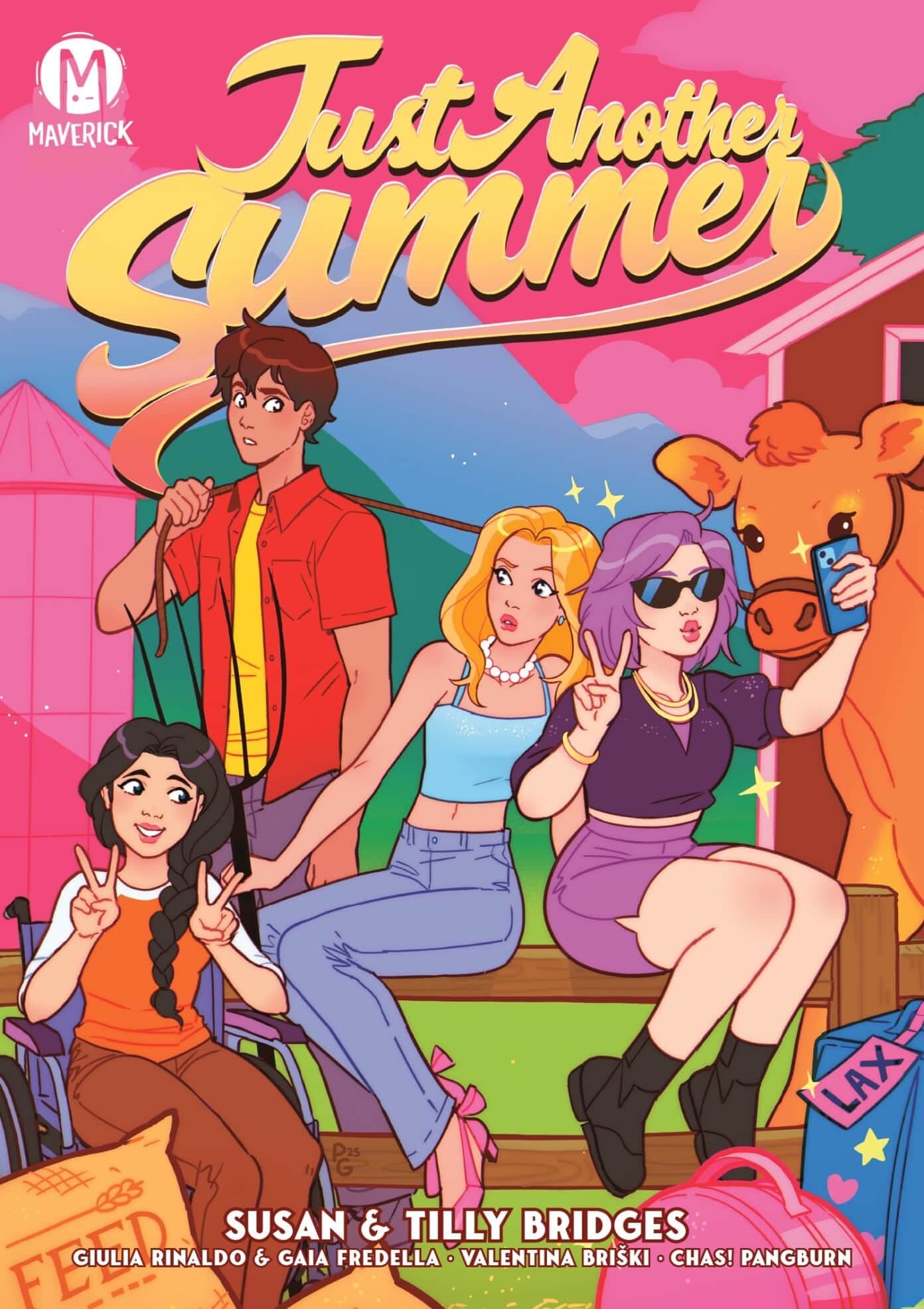
Just Another Summer is a sharp, big-hearted YA about two teen TV stars exiled to a Montana dairy farm after a tabloid blow-up—and the summer that remakes them. Between 4 a.m. milkings, fence mending, and a no-nonsense great-uncle, Hayley and Becky discover who they are without cameras: one sister falls for the girl who runs the town diner, the other for a trans farmhand whose quiet resilience shatters her Hollywood preconceptions. It’s funny, queer, tender, and unflinchingly real—about work that matters, love that surprises you, and the cost of chasing a dream when it might mean leaving a new life behind.
Follow Comic Book Yeti
🔗 Comic Book Yeti LinkTree: https://linktr.ee/ComicBookYeti
For partnership and ad inquiries, please contact: thecomicsyeti@gmailcom
Follow your hosts
CRYPTID CREATOR CORNER PATREON
Support the show on Patreon for as little as $1 per month as a Squatch Supporter and enjoy exclusive benefits like What's Your Favorite Cryptid ™ with some of our favorite comics creators and Byron's comic book reviews.
ARKENFORGE
Play TTRPG games? Make sure to check out our partner Arkenforge. Use the discount code YETI5 to get $5 off your order.
Make sure to check out our sponsor 2000AD.

[00:00:00] Your ears do not deceive you. You have just entered the Cryptid Creator Corner brought to you by your friends at Comic Book Yeti. So without further ado, let's get on to the interview. The future is calling! 2000AD is the galaxy's greatest comic with new issues published every single week. Every 32-page issue of 2000AD brings you the best in sci-fi and horror featuring characters like Judge Dredd, Rogue Trooper, and more.
[00:00:28] Get a print subscription to 2000AD and it'll arrive to your mailbox every week. And your first issue is free. Or subscribe digitally and you can download DRM-free copies of each issue for only $9 a month. That's 128 pages of incredible comics every month for less than $10. Head to 2000AD and click on subscribe now. Or download the 2000AD app and start reading today.
[00:00:55] Hello and welcome to Comic Book Yeti's Cryptid Creator Corner Podcast. I am one of your hosts, Jimmy Gasparo. And I am really excited for the two guests that we have on the podcast today because I just got finished reading the graphic novel that they have coming out this summer, August 4th, through Maverick, which is, listeners, I know you know is an imprint of Mad Cave Studios.
[00:01:18] This is fantastic. It's called Just Another Summer. We're going to talk all about it. I loved it. And you're going to find out why. But please, welcome to the podcast, Tilly Bridges and Susan Bridges. Tilly, Susan, how are the two of you doing tonight? We are doing as well as can be, given the world that we are in. How are you? Yeah, I feel that sentiment. Yeah.
[00:01:47] And yeah, it is. We talk about that a lot in my house, especially, you know, I have two kids that are like 13 and 8 and we try not to make things too heavy. But, you know, I'm always surprised by how perceptive kids are. Oh, yeah. And how much, you know, they can pick up what's going on in the world around them.
[00:02:09] Although we're not like a real, we try not, I mean, my wife and I are like, you know, we're always looking at the news on the phone and always stressed out or upset, you know. Yeah. And we try not, we try not to, we try to, we try to walk the line between, you know, not dumping that on the kids.
[00:02:30] But we also don't want them to be oblivious to some of the things that are going on around them because we don't want them to grow up and, and be, you know, privileged jerks. You know, it's hard to find that balance. It is a hard balance. But we're here to talk about, I mean, whatever you want, we can, we can talk about whatever you'd like, but just another summer.
[00:02:51] I loved it. I think we need more romance in comics, whether or not it's YA or whether or not it's, you know, comics that are more for, you know, adult, not like adult. We keep it behind a beaded curtain at the local video store, but you know, like mature, that probably isn't a better way to describe it either. I think, you know what I mean though? I, more romance comics. I love the romance of this, but what I really loved about just another summer was how funny it was.
[00:03:20] It really had a fantastic sense of humor. Bex seems like she is going to grow into the type of person that I would like want to be friends with. She was great. And so, yeah, I really loved it. Do one of you want to start and like just give listeners an idea, you know, from your perspective, what is just another summer about?
[00:03:44] Yeah, it's about these two kind of spoiled L.A. teen actors who get caught underage drinking. And so their mother sends them to the family farm in Montana to teach them some humility. And, you know, she's kind of a stage mom, so they haven't had the greatest upbringing. Yeah, kind of going into the details of how it's actually tough to be an actor in L.A. as a kid. Especially at that age, yeah. Yeah.
[00:04:10] And, but it also, you know, their relationship with their mom is complicated. And then going to this farm and not really knowing what to expect and having paparazzi following them around. And like they have a kind of complicated existence. And Montana kind of, you know, strips things away and simplifies things a lot, I think, for them and gives them a little room to figure out who they are as people too.
[00:04:39] Yeah, and part of what we wanted to do with it was, I mean, there's a couple of things. And one is that we kind of want to turn the rom-com tropes on its head where the successful city lady leaves her fabulous job for the country boy back home or whatever, you know. So we play with that a little bit. That's not exactly what happens. We're not going to spoil it for you. But, so we wanted to kind of play with the form of that and the tropes of the genre.
[00:05:06] But also the whole like idea of the book was that we all have more in common than we think. And we all have a lot of misconceptions about people who are different from us, right? Like people in L.A. have really weird ideas about what life is like for people in the middle of the country. And the people there have really weird ideas about what people who live in L.A. are like. You know, we live in L.A. and it's our home and we love it here. And it always drives us batty when people are like, oh, L.A. is so fake. And I'm like, not the right L.A. You're just you. That's not how L.A. is. So it.
[00:05:36] No, they are originally from the Midwest. We are from the Midwest. Not Montana. But yeah. Montana's not the Midwest. Yeah. So we wanted to sort of play with that and show, you know, also like Haley is cis and the guy she falls for, Jake, is trans. And so they have more in common even than they thought they did, even though they're worlds apart in their lived experiences. And so that was all part of it that we wanted to sort of explore that.
[00:06:02] And it's something that's very important to us is is celebrating differences and being inclusive in our storytelling. So. But we also wanted to have fun and tell something really positive. Yeah. And I'm so glad that you said that it was really funny because one of our big complaints about a lot of rom coms is that they're so focused on the rom. They sometimes forget the com and they're not that funny. So we tried really hard for me. Like, I'd be fun here. Yeah. Let's punch us up. Oh, I. Yeah.
[00:06:31] I totally agree. And I really thought you struck a nice balance. You know, even with just some of the the the sillier things that were in it, like Dimitri in the diner, who's just always hollering for soup. And there's a great moment when they're there at the state fair and they have a soup stand at the state fair. Like, it's just in the background. Like you. Yeah. Your eye is focused, I think, on Bex and and Annie at that point.
[00:07:00] But you just see Dimitri yelling soup in the background of the panel, like little things like that, like little touches. And the images are were really, you know, just just tickled me reading it. I thought I thought that there were so many like little little things added, little flourishes that just added so much background and atmosphere to the story. And yeah, made it really made it really funny. It was just it's a really enjoyable. It's a really enjoyable read.
[00:07:25] And when you talk about and I think I don't know, Tilly, if it was you. I thought one of you had said this in another interview I had read about the importance or that, you know, we're all kind of in this together. Yeah. Whether or not we're in this town or this state or on this planet. And you really see that because there's a lot of layers when Haley and Jake, you know, first meet.
[00:07:53] And in terms of as their relationship or friendship develops, it's not just that Haley's from the city and Jake's, you know, from Montana and city and farm. There's all these other layers to their preconceived notions about each other, like you said. And it all that onion kind of unravels throughout the story in a lot of different ways.
[00:08:16] And I really appreciated, you know, just how complex it was at times and how emotionally mature. It's a it's a really well-developed relationship between the two of them that we get to kind of see the ups and downs of it. Could you just talk like a little bit more, you know, both of you about that, about what was the important thing about how you wanted that relationship to develop between Jake and Haley? You start this time.
[00:08:45] I think it's interesting because when the editor at Mad Cape brought this this book idea and everything to us about doing a rom-com like we didn't have any experience doing it. And this was our first rom-com. But I had read rom-com like type books and I've watched rom-com. And we've watched them, right.
[00:09:11] But like I read a whole bunch of books like previous to this and kind of understood like the format and how it's supposed to go. And so I didn't realize I had like these strong opinions about how it should go. But like there's plenty of them where it feels like, you know, they have a fight but someone kind of out of character or they're doing something really like you're like they would never do that. Why did they do that?
[00:09:38] Like and it was like just to make there be some kind of situation, you know. To make drama. To make drama. Yeah. And so I felt like it was really important to have it be real and also like people who aren't trying to hurt each other and they're frustrated with each other. But they don't go down to like name calling or, you know, weirdly hurtful behaviors.
[00:10:01] And I think probably that's important to me because like I felt like as a child I didn't have very good role models like of adults behavior around me. And I got into Star Trek The Next Generation because like there were adults dealing with each other respectfully. And that was like how I learned that this is how people should talk. Even when they disagreed. Even when they disagree. Yeah, Star Trek is very important to us, which I think shows even in this book.
[00:10:30] But we worked it in there. We did. Yes, you did. Yes, we did. Well, like especially for YA, like it's I think it's good to like model good relationships because a lot of people might not have that. Yeah. And also, you know, at that age when you're just like swimming in emotions and everything feels every feeling you have feels like the most important feeling you've ever had. And they're so hard to make sense of.
[00:10:57] And when you layer on top of that, that they don't really understand the lives each other have led or what their existence is like. They had so much to learn about each other. And one of the my favorite parts about it is when Haley is teaching Jake about acting, which, by the way, was a very hard thing to do in a comic book.
[00:11:16] But I love that because it got to open her up a little bit and see why it was important to her, because so many people, again, especially about L.A., about actors, about people who live and work in the entertainment industry have these notions about what it is, what it means to be us, who we are, that it's just frivolous. And they don't understand, you know, what goes into it all and what's behind it, what it can mean to people. So getting to weave that through. And now that we know actors, too.
[00:11:45] And we're friends with actors and kind of like they just love to do it. They love to be on stage. And we've worked with actors in like our short film and on our live show. And so we've seen all the work that they put into it and what it means to them and how they can get to the heart of a character in a way that like even we as writers can't always do. And so we just wanted to, you know, reflect that and also bring in from the other side of it, you know, Jake's whole life on the dairy farm, which was all her because.
[00:12:15] Her early pandemic lockdown hobby was dairy cows. Dairy cows. I guarantee the dairy cows. One of the things I was going to ask, because it seemed, you know, that somebody either had experience or or the two of you did a lot of research. And, you know, and I always love that. I always love when when a writer, when a creator like really gets into the topic, because this isn't something that's glossed over. It's like, all right, we're on a farm. We got to go milk the cows.
[00:12:44] Like Jake is laying down some. This is really how it's done. Kind of knowledge. And I thought, yeah, well, well done. That was all her. I would. When I was working on parts of the script that had dairy cow stuff, I'd be like, and cow stuff here. Season. Fix this. Cow facts. Cow facts. We need cow facts. So, yeah, you like you like every day you were showing me new cow videos. Like, you've got to see this dairy farm. This cow. Look how cute this cow is. Look what they're doing. I was like, OK, it's a lot of cows. Jersey cows are the cutest cows. That's why they're Jersey.
[00:13:14] This is not my story to tell. But this happened to a friend of mine. And I've never gotten to tell it on the podcast before. And I don't think there's a more appropriate podcast in terms of because they are dairy cows and it's a dairy cow situation. But my friend Lynn. It's OK that I tell this. She doesn't listen to the podcast. But my friend Lynn grew up in in Delaware, where I'm based now, and moved to Ireland.
[00:13:42] And she she met a guy. They were married and they had a dairy farm in Ireland. It was eventually converted to like an organic beef farm. Totally different. But one of one of the first times Lynn had to help, you know, set up those like the milking machines to to all the different cows. It short circuited and all the cows shit on her at the same time.
[00:14:11] Oh, my God. Oh, no. I haven't thought about that story. And I remember Lynn telling it and just we were in hysterics when Lynn told us what had happened. And just the heavy duty dairy cow knowledge made me made me think of that fondly. I just want to share that with you. It's funny to us. I'm sure it was horrifying to her when it happened. Oh, oh, yeah. It had to be horrific. You know, this had to be terrible.
[00:14:39] So one of the other things I wanted to talk about in terms of, you know, Jake's character. And you mentioned that Jake is trans. And I really thought the way it was handled and how it came up in the story was so well done because it happens when they're at a swimming hole. And, you know, Jake doesn't want to go swimming.
[00:15:02] And I think I remember being a teenager or a young adult and even somebody who isn't trans, who does, you know, maybe doesn't have body dysmorphia or, you know, is just uncomfortable in their own body for whatever reason. There's like a lot of stress and anxiety. And I thought it was so smartly done. And I thought the discussion between Jake and Haley was just was very well done.
[00:15:29] And, yeah, I just I really love that. It really is a reader, especially if you're reading it coming in from an angle of somebody who maybe doesn't know anyone who's like trans in their life or have that experience. It's really one of these types of stories that art and reading in particular can really, I think, help with with empathy for characters that can bleed into the real life.
[00:15:56] And I just thought it was so well done, like, you know, in that moment was was there ever was that always the direction to kind of go, you know, with with Jake and how that's kind of revealed to Haley and Bex in the book? Yeah, I think so. We didn't ever want it to it's hard when you're talking about getting trans representation into any kind of media, because if you're not very blatant and upfront about it, people will miss it or they'll pretend it wasn't there, actively try to hide it.
[00:16:25] And, you know, a lot of times you'll even get told you can't put a trans character in this. You can't even make a trans allegory in a story. And so the fact that we got to have a surface level trans character and obviously trans character in Jake and then have him actually talk about what life is like for him living in Montana was just huge. That's like an opportunity that we don't get in most of the stories that we get to tell.
[00:16:49] So we wanted to be sure that we handled it right and sort of like authentic to them and very organically where would come up in their conversations. And it was also important to us that Haley wasn't like surprised or weirded out or because, you know, especially teens, especially here in California, like you are taught about trans people as part of health class in schools. And so, you know, there's trans people all over L.A., lots of queer people.
[00:17:17] And so she's very familiar with them. And so we wanted to also give Jake that experience of having somebody who he wasn't a mystery to, who he wasn't this brand new, strange kind of person that they needed to learn about. She's like, yeah, that's cool. I know that's fine with me. I don't care. You know, I know lots of trans people. So I think it was important to for for Haley to to say that and be like. Yeah, of course.
[00:17:43] I've met trans people because I feel like there's there's still a fairly vocal parent contingent who thinks it's not appropriate to teach children about the existence of the LGBTQ people. And then it's like they've probably already come in contact with them and it probably wasn't a big deal. And the fact that you haven't said anything is making it a big deal now. And they're wondering why you're so weird about it. And some of those kids are queer or trans and don't know it yet or are trying to figure it out.
[00:18:12] But it's like I'm sure your sixth grader has someone in their class with two moms. It happens. Yeah. They just exist and talk about their family because they're kids. Yeah. It's it's not that hard of a concept. Kids can understand it. It's like a very easy thing to explain. It's like, OK. Yeah. They they they all will. They adapt. They understand that people are different and that's OK. And yeah. So it was just, you know, it was really important to us to be able to do that. Yeah. Yeah.
[00:18:43] Kids do. Kids accept things so much easier, you know, than adults do. So it's I remember when when my kids were little and they had these little, you know, D.C. superhero characters that we would we would play with. And Charlotte, who's my oldest, like always wanted them to get married. And it was always Wonder Woman was marrying whomever. Like one time I'm like, OK, we're here at the wedding because I was a very let's get on the ground and play type of. Right.
[00:19:11] And I'm like, all right, well, Superman and Green Lantern, they're getting married. And I remember like because when you're when you're a kid and all you see are, you know, typical cisgender couples married man and woman, you think that's the quote unquote, you know, norm. But yeah, I remember Charlotte was like, no, Batman and Superman and Green Lantern can't get married. I'm like, no, they totally can. It's fine. And she was just like, oh, OK. There was a discussion. Question was like, no questions.
[00:19:41] It was just like, all right. Yeah. There's no like earth shattering existential crisis. It was just really. And I'm like, oh, no, yeah. You just don't know anybody because, you know, we we it was the pandemic. We haven't gotten together with those friends in a while, but it's fine. And it's like, oh, well, OK, then I guess I guess we're doing this. Yeah. So kids are much more accepting than adults give them credit for because they don't I mean, kids don't care. They just they want they want to play. They they want a snack.
[00:20:10] You know, for the most part, they want people to be nice to them. They don't they don't care about any of that stuff. And it's yeah, right. It drives me drives me bonkers when when adults are like that. And we just you know, there's a lot of been a lot of a lot of a lot of being driven bonkers the past couple of years. Yes. Yeah. Yeah. You can relate. Absolutely. Absolutely. And, you know, they'll say like, you know, oh, kids can't can't handle like a gay romance
[00:20:37] when you look at like every Disney movie has a heterosexual romance. They're like, it's not explicit. They're just a couple of kisses and they're in love. You can do that with two men or two women or some non-binary people. And like kids can understand trans people. It's not that hard because some kids are trans. I was a trans kid who didn't know it and didn't understand why I felt this way. And I had nobody in the world to talk to about it or who understood me. And it was so isolating and awful.
[00:21:04] And it's it's like I we were at a friend's house once and one of her kids came over and said, are you a man or a woman? And, you know, you would think, OK, that's not great. But from a little kid who just didn't know and didn't really have experience with trans people, it was fine. And I said, I am a woman. But, you know, when I was born, everyone thought I was a boy, but I'm not. And so, you know, this is who I am now. And they were like, oh, that's cool. And that was it. You know, like it's that easy to explain it. It is not that hard.
[00:21:34] So it's yeah. So it's representation in the work that we do is really important to us for queer representation, trans representation, any kind of representation. You know, we were so happy to with Anne to get a disabled character in one of the major roles of the book and talk about a little bit what it's like for them when you have a wheelchair and how awful airlines are to wheelchairs, especially. Yeah, that's a big problem. It really is. So, yeah, it's just something we're always approaching our art with and seeing what who
[00:22:04] else can we include in this that doesn't normally get to be part of these stories that we see because that's that's important. Oh, absolutely. Absolutely. I thought, you know, in terms of the the differences, but also the similarities and another I really well done with with Haley and Jake was, you know, it seemed the one thing they they had in common, you know, even with Haley having Bex, the one thing that Jake and Haley really seemed to have in common was their their loneliness, whether it was not whether it was because Haley
[00:22:32] felt isolated by everyone around her because of paparazzi and because of her fame or Jake because he felt like he was like the only queer kid in Montana. That threw. I'm sure Uncle Moses is not a great conversationalist. Oh, look, he's doing his best, but he's doing his best. You know, we're real proud of Uncle Moses. But yeah, it doesn't seem like much of a talker. Jimmy is too humble to do this.
[00:23:00] So as his stalwart writer and I, I wanted to tell you about his new graphic novel, Penny and the Yeti with artist Amber Aiken, what started as a comic short with his daughter that I've known about for ages now. And it's evolved and has become one of those annoying can't talk about it in comics things for too damn long. Yes, I'm predisposed to be supportive. But after reading an advanced copy of it, I have to admit, it's way better than I anticipated. No shade, but it's really good. Remarkably so.
[00:23:29] Does it have a Yeti? Yeah. Is it cute and adorable? Yeah. But it straight flies in effectively tapping into the all too familiar family dynamics that we all are facing in 2026 and approaching it in a way that doesn't insult the book's target audience. Kids! They are way smarter and perceptive than we adults give them credit for. So I really appreciated Jimmy's narrative approach tapping into his own experiences as a dad and a spouse. I can hear his wife saying, get off your phone, Jimmy, through the pages.
[00:23:59] She's going to kill me for saying that. It's hitting shelves on April 21st and I dropped a link in the show notes where you can preorder a copy today. Yeti or not, here we come with Penny, Perry, Fenton, Maxine, and the magical, mythical, magnificent Yeti. On behalf of us both, we appreciate your support. Woo hoo hoo! Yahoo! Wah wah!
[00:24:21] I wanted to talk to you about the Star Trek of it all because I know you've both done stuff with Star Trek. I believe you were both consultants on the second season of Prodigy, which my younger daughter and I, or no, it was Charlotte. Yeah. Charlotte and I watched both seasons of Prodigy. It's the only Star Trek I could get her to watch. So I felt like that was like a, for this nerd dad was like a really big win, but we love Prodigy.
[00:24:50] And whether or not it's the name of the cow or the other stuff that Jake talks about with Star Trek. I mean, Susan, you mentioned it a little bit, but why was Star Trek, you know, could you just talk a little bit more about that? Why was Star Trek so important to you, you know, kind of growing up or when you found it? Yeah. When I found it, I think, you know, I was in my teenage years and, you know, there was
[00:25:19] not much rebellion in my household, I'll say. I was raised in a very conservative environment and I was in private school until eighth grade. Which I did not want. I tried to get into public school before then because I was like, I'm going to get to high school and I'm not going to know anyone. And that's exactly what happened because everyone else already knew each other from the other public schools.
[00:25:47] So it was kind of a little bit of a lonely time, but also, yeah, like I did not have much experience with even like choosing my home clothing and things like that. So it was amazing to watch like Star Trek The Next Generation and see this future where, you know, everyone took care of each other and were respectful to each other.
[00:26:13] And they can do a great, like they have meetings and things get done. It's really cool. The competence porn of it all. Yes. I mean, it was credit for me too because like I had a really difficult relationship with my mother and I did not have a great home life. And, you know, when you say that you didn't even get to choose your clothes, I didn't either because I was forced into boy clothes really, you know, and I was always ridiculed by my own
[00:26:39] family and made fun of for any hint of femininity that I ever displayed. And so Star Trek, I feel like especially like Next Gen was the one I found first. And I feel like that one taught me how to be a good person. It taught me how to care about others. It taught me the importance of the differences in each other. Respecting differences. And celebrating them. Yeah. And then especially for me when we got to when I got to Deep Space Nine and I saw Jed Zia Dax, right?
[00:27:08] Which is the closest at the time that Star Trek had ever gotten to having a kind of trans character. Yeah. And I still at the time I had no words for who I was or what I was feeling. But there was something in her that just it like saved me. I lived through her every week in those episodes because I could see somebody like myself, even though I didn't understand how I was like her, but I was being part of this group, being part of this found family, being valued, you know, and she could be sexy and she could
[00:27:37] be so brilliant and she could kick your ass. And she was just so important to me. She was like a lifeline that got me through. So I think all of that wrapped together has made Star Trek super important for us. And we even met writing Star Trek fanfic back in the day. So, yeah. So it's always been a huge part of our life. A few years ago, we redid our wedding on a big anniversary and we did a whole Star Trek theme. We had Star Trek vows. We had Star Trek centerpieces.
[00:28:07] We had Star Trek guest book, Star Trek guest bags with little goodies. So it's super. Yeah. And so getting to work that in a little bit and use it as sort of this this bridge between Jake and Haley, because, you know, she works in the industry that makes Star Trek and he loves Star Trek for some complicated reasons. And so that was like and it was to me that was kind of beautiful because Star Trek is
[00:28:37] about accepting people who are different from you, being inclusive of each other, celebrating your differences. And so for it to be that bridge between the two of them was a really cool thing that we got to do. The only thing that I regret about it a little bit now is that I think we wrote it in 2024. And so now that it's coming out 2026, I'm like, oh, well, now Jake would have been watching Starfleet Academy, not Discovery. But at the time, Discovery was the new the newest one. And Discovery is the first and only one so far that's had true trans rep in it.
[00:29:07] So that's true. Yeah. So I still feel like Jake would have glommed on to that one. But, you know, the teens, what is it all about? Starfleet Academy. People watch Star Trek at different times. It's true. It's true. OK. I mean, there were there. I mean, look, in the six years since the you know, when the since the pandemic first started in 2020 and we see a lot of folks returning to, you know, quote unquote comfort shows or younger
[00:29:33] people discovering shows like the resurgence of things like Friends and The Office and Parks and Rec. But Star Trek The Next Generation and Star Trek Deep Space Nine has been another one that that there seems to be renewed interest in. So, yeah, I think Jake naming the cow Michael Burnham's fine. I think. I think that's OK.
[00:30:00] OK, although if we had flipped it to Starfleet Academy and then his favorite captain would have been Chancellor Ake, which is a great name for a cow. I'm just saying this is Chancellor Ake. OK, that's not bad. To talk about some of the other stuff you've done, because you now, you know, not just a consultant on Star Trek Prodigy, but you've written Star Trek comics with with Homecoming. Can you just talk a little bit about like what that was experience life like to get that
[00:30:27] opportunity to do something like writing fan fiction, consulting on a show and then, you know, getting to write a comic? How was that experience? It was kind of a dream come true. Kind of. It was one of those situations. Also intimidating. It was super intimidating. Well, especially because of the story itself. Right. Where we were the ones who were going to give Voyager that sort of second ending where they finally get home after seven years because the finale did not get them all the way home.
[00:30:56] And people felt a little like they didn't have closure because of that. So also that was intimidating. Yeah. Because like writing the comic, IDW wanted to be sure the comic was accessible to people who might not have seen Voyager for a really long time or who might not have seen it at all. So like in the very first issue, it was like, OK, we have to sum up the entire premise of Voyager. What happened through seven years?
[00:31:24] The end of Voyager and set up the story. And there's like eight characters. There's eight main characters. You only have 20 pages. And now there's a baby. And there's a baby. Oh, that baby was a nightmare. Yeah. Oh, they're almost a loss. And 20 pages. You have 20 pages. There were moments, though, where I was like, I cannot believe I'm making these characters say these things. I know. The coolest thing. Yeah. So I'm really hoping we get to do more. But it was. Yeah, it was an absolute dream.
[00:31:53] Like the characters came so easy to us. One of the things a lot of the reviews have said is that, oh, I could hear it in the actors voices from the shows because we nailed their voices so well. And so that makes me really feel really, really good. But that was actually because. Yeah. Because, yeah, they say a lot more words on TV than you can fit. Start for your first time. You show up. So like it felt like we were always cutting. Like we wrote too long all the time because like it was just impossible not to. And then you're like cutting back, cutting back.
[00:32:21] And especially the doctor, we had to cut so many funny jokes of things because it just wasn't room. He's very verbose and his lines were very long. We were having so much fun writing him. Ha ha. This is also funny. Yes. But it's now covering up all the art. So cut it back. Cut it back. Cut it back. Cut it back. Right. So, yeah, Star Trek is more talky than even a lot of shows. I think there's so many conversations happening. And so you do have to cut back on that for comics when their dialogue covers the art.
[00:32:51] So we had to be very ruthless in the lines that we cut. So, yeah, that was tough. But it was a it was a wonderful experience. The whole staff over there has been wonderful to work with. And we really hope we get to do more. It was an absolute joy. Oh, that's awesome. And yet so. But along those same lines, it's kind of, I guess, a nerdy, you know, comic book writer craft question.
[00:33:14] But when you're a couple of things, when you're taking something that is well known on TV, you're making it into a comic and trying to capture that character's voice. You're absolutely right. They're talking way more on TV than you will have in terms of the panel on the comic. So, you know, it's a couple of things. You have to figure out how to capture a character's voice in a very little bit of dialogue, you know, but also working with, you know, your collaborator and the artist.
[00:33:43] And then you do have to make those cuts. Like, what do you think is the the best way to kind of to do that? Or how did it work for you? Is it just I'm just going to watch as much Voyager as I possibly can? Or was it it's something else to kind of get into the character of it to make it sound authentic? And then how did you make those tough choices when it came down? Like, we really have to cut this down. How how how were you able to be so ruthless other than perhaps being a secret Klingon?
[00:34:13] We rewatched the episodes of Species 8472, but that was just as research for them. So we knew what was known about them, what wasn't, what we could reference and whatnot. But other than that, we didn't have to watch anything to get their voices. We've watched all of Star Trek multiple times. We've done multiple watch throughs of all 900 hours of Star Trek in release order. So we they what we did during the pandemic. That was one of our pandemic.
[00:34:41] So all of these characters, we've seen all the episodes of every show so many times. So they all just kind of live inside of us. And so we did not need to watch again to get their voices. They were just there, which was very nice. It was very, very nice. But I think that the trick and it's like I think this is true with any comic. Is that what you have to do with your dialogue is, you know, write out what you want to say and then cut it back to the heart of what you're trying to say and make that as brief as you can.
[00:35:09] And sometimes it can't be that brief because there might be a lot of plot you have to get out or exposition or something that you're working through. But always cut back and try to pare it back to just being the absolute core. Like, do we really need this half of a sentence? Because the whole idea is conveyed with the first half. Maybe we can just cut it back to that. So it's just approaching it from that angle.
[00:35:29] Like we do you we run into this a lot, like when you're writing for animation, because especially like when we worked on Monster High, those were 11 minute shorts and you have 14 pages. And that's it. And it's a hard cutoff because there is not time to go longer. And so for that dialogue, even though it's spoken and the words don't cover up the screen, you have a very limited amount of time to convey ideas, get them across and move on.
[00:35:57] And so that also teaches you to be as succinct as you can in what you're trying to say so that you have time to get your whole story out. And also you do another pass of the the comic dialogue, like after the art is done before the letter hits it. So you can be like, oh, I didn't have to explain this so much. The art is really telling me what's happening. Like, yeah, and you can pull some out or the reverse happens.
[00:36:26] You're like, oh, you can't tell what he is doing at all. OK, we need to add an eye. So like you're always adjusting, adjusting, adjusting until pretty much the very last minute, like I think. Well, that was especially the case with the Voyager book, because Paramount came to IDW and told them they wanted the book to celebrate Voyager's 30th anniversary. But they did that in I think it was March of last year.
[00:36:51] And I guess, you know, the people at Paramount who wanted this don't realize how long comics take to make and release. And so it was a mad dash to get that book out. The first three issues of it released in 2025. And the last two came out this year, 2026, in January and February. So we really had to just hit the ground running and chug through those scripts, chug through the lettering passes, the colors, the art, everything. Everybody was working so hard. Yeah. To get that book done.
[00:37:21] You get a lot of feedback from, you know, the editors for Paramount. Paramount gives notes on the art and on the scripts and the outlines and everything. So that was always how. Yeah. Yeah. Because like the deadline, we got to get this book to print and we're waiting on notes from Paramount. And as soon as Paramount sends the notes, we've got to do the revision really fast because they're going to print tomorrow. And so it was. Yeah. There was a lot of that because, again, Paramount did not necessarily notify IDW. They wanted the book as early as they could have. So, okay. Yeah.
[00:37:50] But, but it, I mean, great comic. And ultimately, though it does sound like a very, you know, rewarding kind of dream come true experience. But I'm just always fascinated when you, you have to do those things and to hear that it had to be turned around so fast. It's just remarkable. Yeah. We did one script a month and burned through it. And then it was just after that, it was revisions on the dialogue as the art was coming in and they were putting it all together.
[00:38:18] So, yeah, we got new pages from the artist in our inbox like every single day for like six months as he was, was just mowing him down. And he really liked drawing 8472. Thank God. He didn't look what else to do. So, yeah. We're like, whew. On hell. Thank you, on hell. Just to turn it back to, to just another summer, a couple of things I wanted to mention and just talk about a little bit. Some of the things I like and thought you mentioned it.
[00:38:46] I think Susan, you had mentioned a little bit about how hard it was to the scene with Haley and Jake when they're talking about acting. But a couple of things through that I thought were fantastic. Because Haley makes acting seem like it is not appealing at all. It is work. And you think about the glamorous things of acting.
[00:39:06] And if anyone listening now, any of the listeners have ever done anything, whether you are a background actor or you've been in something, it is so much standing around. It is like you get there, you check in. They, you know, if you're like a background actor, they send you the costumes. And then you're just waiting. And, and like for hours sometimes, depending on whether or not it's a commercial or a TV show or, or a movie.
[00:39:32] And it's really, unless you're a major star, it's like not that different. Like major stars have like stand in or doubles who are then like, they're just standing around waiting until they get the lighting right until like the moment is called. But Haley does such a good job. Like she really makes it sound like it's not appealing at all.
[00:39:53] But also the acting scene, the acting scene between Haley and Jake, I thought was so good in terms of, and the artists on Just Another Summer did fantastic as well. I think it's AOIG and Julia Ronaldo did a fantastic job, like to get Jake to that point where he's like, you know, keying him in on a situation that he's had before and using that frustration. Like it's, it's kind of tough to explain like in a, an acting class.
[00:40:21] It's seems near impossible to do in a comic book, but I really thought the whole teamwork that scene worked, you know, worked really well between the two of them. I'm so glad to say kudos on that. It's always hard to depict one medium in a different medium, you know, because it's like the mediums don't overlap. Like you can't show a TV show in a comic. You could show one screen of a TV show and you know, you can't.
[00:40:45] And so conveying like all, it's still probably, I mean, I'm so glad that you felt that it worked, but it's like all the nuances that we have seen actors do with just facial expressions and body movements can convey so much about character and emotion. So it was really, really hard to translate that over to still images in a comic. I mean, we've always said like, I would never want to be an actor. I'm really glad they do it because that is not for me. It's a really hard gig. Yeah.
[00:41:14] But I know like, I remember like a while ago, I saw some behind the scenes of some movie or something and it's like shows this shot and this actor is giving like this beautiful emotive performance and the camera is four inches from her face. Yeah. And you're just like, how do you do that? Like that's bonkers. You have to, you just, yeah, you're ignoring it. It's not there. You're working, you're in the zone. Yeah.
[00:41:38] Like there, and I felt like it was hitting the parallels between writing, like excited about a new project, finding something that makes you excited, that makes you feel like, oh, this is going to be so cool. I'm going to be able to bring something to this. Right. I can tell something that's important to me through this art I'm making. Yeah. Yeah. Oh, absolutely. The other thing I wanted to ask, so who was, I know they get a bad rap, but I like puns.
[00:42:07] So who, who was responsible for the butter puns? The David Lynch butter puns. Yeah. That was my view. 10 out of 10. 10 out of 10. There you go. Thank you. One of my, one of my favorite scenes, Beck's making butter puns, carrying David Lynch in the shape of butter. Just, I mean, the comic, the comic is worth it, whatever price they're, they're charging for it. It's worth it just to have that, that, that scene was, I just thought I, again, absolutely tickled.
[00:42:37] Um, just thought it was so cute and so funny. Uh, yeah, just a little touch that I thought was great. So I wanted to. I'm very glad and gratified. Thank you. I get a lot of grief sometimes for my puns. Oh, yes. But also our rap on Monster High was very pun. Monster High is a very pun forward. And that just kind of gets lost in your place. That's true. So that sticks with you after that. It does. The show is all about monster puns for everything. Yes.
[00:43:07] Uh, that's true. Oh, I've, I've, I've watched quite a bit of that. It's, it's, it's been on in my house and I, that is true. It is very, it is very pun heavy. Um, is there anything else that you have coming out that you wanted to talk about or you can tease? I know you have a couple of things because I did go to your wonderfully named, uh, website bird guest, uh, which tremendous. I did see the story of that.
[00:43:35] I don't know how they, I don't know how they got there either, but no, it was a hilarious mystery. Uh, well in August also like two weeks after just another server comes out is the trade paperback of, uh, star Trek Voyager homecoming. So that will be out that same time. And we have, those are both available for pre-order now. They are. And then we have another graphic novel that should be out next year in the first quarter
[00:44:03] that we keep being told will be announced very soon. So we're excited about that one, but we're not allowed to say anything about it yet. But what is interesting about it is that we got the contract for the one that hasn't been announced yet. The same week that we got the contract for just another summer. And so we had to write them with the same deadlines. So for like six months over the course of the summer of 2024, we were writing two books back to back to back to back to back to back. So we would write one chapter. I sent it to her and she'd work on that chapter and I'd write another chapter.
[00:44:32] And then we would just flip back and forth, back and forth, back and forth, all summer long. So yeah, that's one of the times being a team is very helpful. Yes. Yes, indeed. I wanted to ask that too. Is that how the two of you work? So it's, it's like one chapter, one chapter, like, do you do passes on each other's work? Usually I'll do like the first draft and then send it to her and she will do a major revision on it and then send it back. And then I'll do a revision and we'll just keep going back and forth until we're both happy with it. Yep. Yeah.
[00:44:59] So whenever she's working on a revision of one thing, I'm doing a first draft or a revision on another thing and we just keep. And then we fight over single lines. So you put that line out and you put it back. All right. What? That line is important. That's my subtext. So these are the discussions that go on. Well, I, I think it is a wonderful graphic novel. I know a couple of, of my, my friends who, who have teenagers who I think would love a copy of this book.
[00:45:29] I'm going to make sure that it, it, it gets in their hands. Yeah. I, I think I thought it was tremendous. I absolutely loved it. And I, I did think it was, I think you balanced the ROM and Macam, uh, very well. Thank you. But listen, you're welcome. Uh, listeners just another summer. It's coming out through Maverick, uh, which is a Mad Cave studios imprint. It'll be out August 4th. There'll be links in the show notes. You can pre-order it now.
[00:45:55] Also with Star Trek Voyager Homecoming, you can pre-order that now as well. And I'll put a link to, uh, to bird guest and you can check, uh, Tilly and Susan's other works. They have, they've both done a lot of stuff, whether or not it's animation or audio dramas, so much to choose from. Um, and, um, you should definitely check it all out. Uh, but, but just another summer.
[00:46:22] I, I just thought was, was a really beautiful story and really funny. And yeah, uh, Tilly and, and Susan, thank you so much for coming on the podcast today. I, I really appreciate it. This is, it's been a real treat for me to talk to both of you. Oh, thank you so much. It's been a lovely talk. All right. And as I always do a shout out to my brother, Bobby, the cryptid creator corners, number one, most dedicated fan. Bobby listens to all my episodes. Hey, Bob, I hope you're doing well. And, uh, listeners, thank you so much for listening.
[00:46:52] Uh, be sure to rate and review us and do all the stuff they tell you to do for podcasts. It really does help. Let me know what it is you're reading. Uh, especially if you're reading anything that, uh, Tilly and Susan have written. I'd like to hear about it. And if you get just another summer, please let me know. I, I really would love to talk to you about it. I think it's true. And read that. That's true too. Yes. Let Tilly and Susan know as well. It's always important. Tell creators. Don't, don't get on the internet and yell at them.
[00:47:20] Tell them that their work means something to you. Say nice things. We, uh, nice things are nice. Yeah. Nice things are nice. Uh, I agree. Thank you so much for listening. Um, I'll see you next time and good night. This is Byron O'Neill. One of your hosts of the cryptid creator corner brought to you by comic book Yeti. We hope you've enjoyed this episode of our podcast. Please rate, review, subscribe, all that good stuff.
[00:47:47] It lets us know how we're doing and more importantly, how we can improve. Thanks for listening. If you enjoyed this episode of the cryptid creator corner, maybe you would enjoy our sister podcast into the comics, Kate, listen and subscribe wherever you get your podcasts.