
Acclaimed indie comics writer and artist Tyler Boss (What's the Furthest Place From Here?, Dead Dog's Bite) joins Byron to dive deep into his dark, twisted new Exquisite Corpses spin-off series from Tiny Onion Rascal Randy.
Tyler reveals how a seemingly innocent bunny suit mascot morphed into an iconic figure of small-town terror, how he balances true crime mystery elements with slasher horror, and what it's like breaking a comic narrative inside a collaborative TV style writers room with James Tynion IV and the Tiny Onion crew.
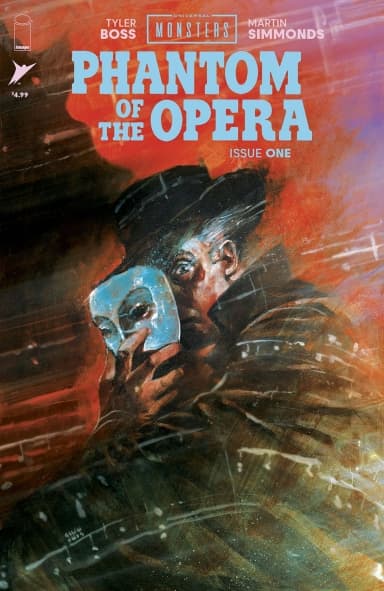
Then we switch gears to discuss his work on Skybound’s Universal Monsters: Phantom of the Opera series with artist Martin Simmonds. Tyler discusses pulling inspiration from Gaston Leroux's original 1910 novel, flipping the script to center the story on Christine's ambitions, and making classic horror genuinely scary again.
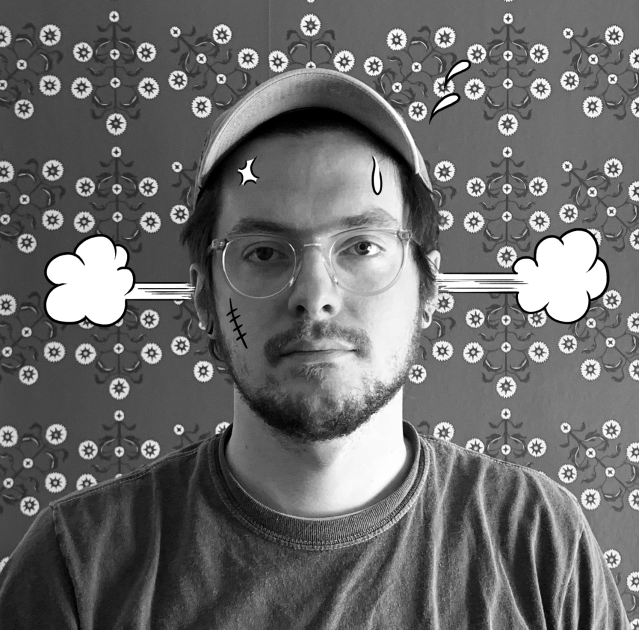
"I loved that just the idea of a man in a bunny suit could not only match up against these people but actually be there better... you juxtapose the weird thing against these other things and I always think that's visually fun." - Tyler Boss
WATCH THE VIDEO VERSION OF OUR CHAT ON YOUTUBE!
Rascal Randy
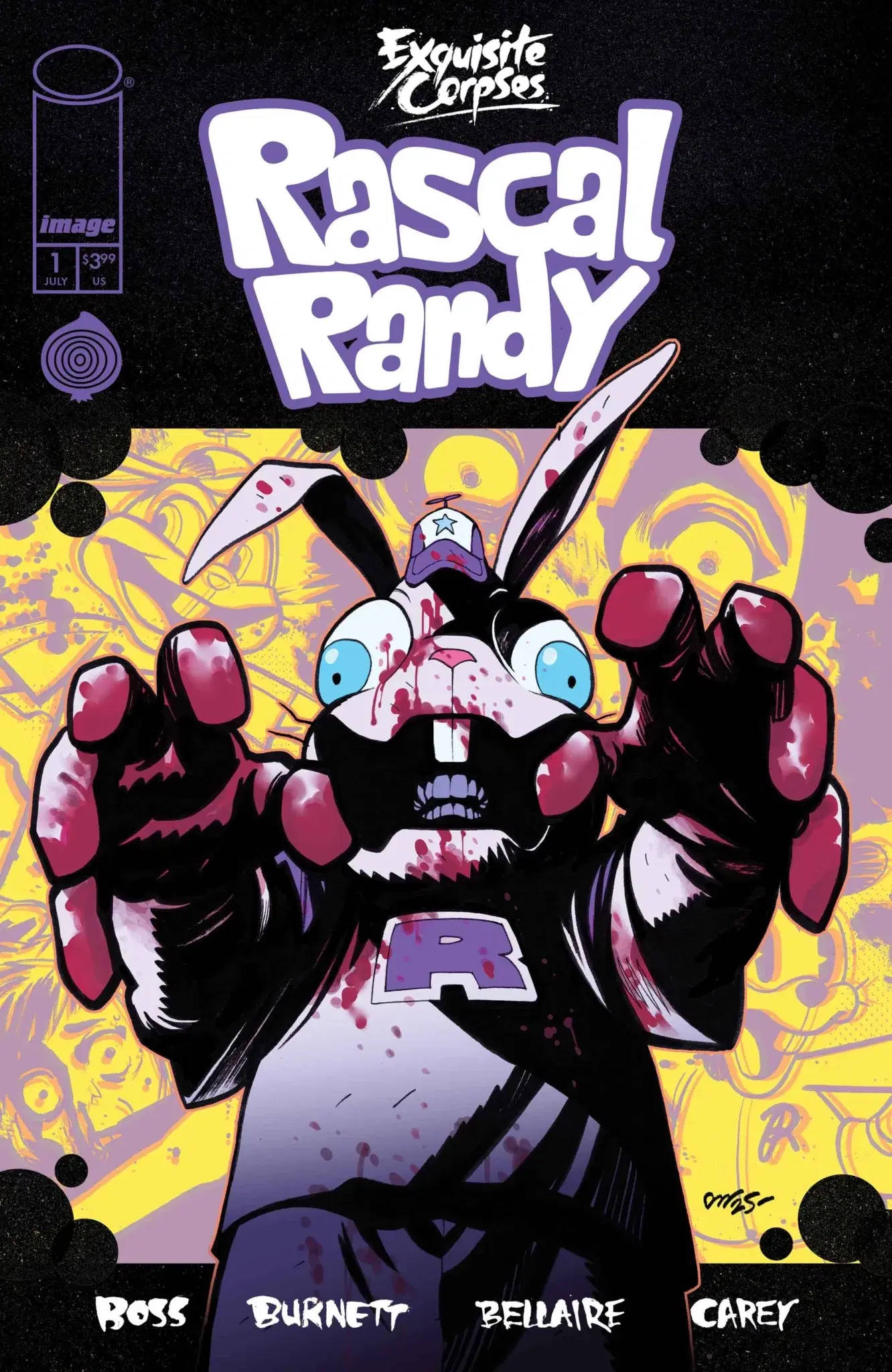
From the publisher
The sleepy little town of Aurora Springs, NY, has exactly one claim to fame: it’s the birthplace of Rascal Randy. Not the man in the suit—the man has never mattered. He was no one until he put the mascot head on for the first time, until he felt the life leave someone’s body through the thickly furred gloves of the suit.
No, Aurora Springs is the birthplace of Rascal Randy the rabbit, who, once upon a time, was poised to become the greatest animated character this country had ever seen—until greed and tragedy changed his trajectory forever.
Now, before the events of EXQUISITE CORPSES SEASON 1, witness the final murder spree of this iconic killer, as chaos hops into town with buckteeth bared and ears flopping…and the secret, sordid history of Rascal Randy is finally revealed.
Universal Monsters: Phantom of the Opera
From the publisher
Eisner Award-nominated author Tyler Boss and acclaimed artist MARTIN SIMMONDS unmask the iconic monster with their haunting take on THE PHANTOM OF THE OPERA.
THE HORRIFYING NEW VISION OF THE STORY YOU ONLY THINK YOU KNOW!
After a series of violent crimes wracks the Paris Opera House, Christine Daaé’s career is in chaos. But the show must go on, and Christine will discover that no one—especially the mysterious voice whispering from the eaves—is what they seem. As an old friend returns to investigate these surprising attacks, Christine will find out there's no escaping... THE PHANTOM OF THE OPERA.
The superstar team of TYLER BOSS (YOU’LL DO BAD THINGS) and MARTIN SIMMONDS (THE DEPARTMENT OF TRUTH) presents the shocking new horror series of 2026 that will thrill Phantom of the Opera fans new and old with a twist no one will see coming!
Follow Comic Book Yeti
🔗 Comic Book Yeti LinkTree: https://linktr.ee/ComicBookYeti
For partnership and ad inquiries, please contact: thecomicsyeti@gmailcom
Follow your hosts
CRYPTID CREATOR CORNER PATREON
Support the show on Patreon for as little as $1 per month as a Squatch Supporter and enjoy exclusive benefits like What's Your Favorite Cryptid ™ with some of our favorite comics creators and Byron's comic book reviews.
ARKENFORGE
Play TTRPG games? Make sure to check out our partner Arkenforge. Use the discount code YETI5 to get $5 off your order.
Make sure to check out our sponsor 2000AD.

[00:00:00] - [Speaker 0]
Your ears do not deceive you. You have just entered the cryptid creator corner brought to you by your friends at Comic Book Yeti. So without further ado, let's get on to the interview.
[00:00:11] - [Speaker 1]
The future is calling. 2,000 AD is the galaxy's greatest comic with new issues published every single week. Every 32 page issue of 2,000 AD brings you the best in sci fi and horror featuring characters like judge dread, rogue trooper, and more. Get a print subscription in 2,000 AD, and it'll arrive to your mailbox every week. And your first issue is free.
[00:00:35] - [Speaker 1]
Or subscribe digitally, and you can download DRM free copies of each issue for only 9 a month. That's 128 pages of incredible comics every month for less than $10. Head to 2,000 AD and click on subscribe now or download the 2,000 AD app and start reading today.
[00:00:55] - [Speaker 2]
Hello, everybody, and welcome to the Cryptic Creator Corner. I'm Byron O'Neil, your host for our comics creator chat. Today, I'm welcoming a true boss on the show with me today. Not Bruce Springsteen, not Hugo Boss, and not Tony Danza, if you're old enough to remember who's the boss. No.
[00:01:12] - [Speaker 2]
I've got first time guest Tyler Boss. He's hanging out with me to discuss his five issue spin off series from the Exquisite Corpses universe, detailing the nefarious exploits of New York's own vicinerous furry Rascal Randy. Tyler, how you doing?
[00:01:27] - [Speaker 3]
I'm good, Brian. That was an amazing intro. Thank you.
[00:01:30] - [Speaker 2]
Thank you. Well, vicinerous is such a great word. Was like, Oh, I've got to use this somehow. I've to work this in. Yeah.
[00:01:37] - [Speaker 2]
Great. You're super good. Before we dive into thank you. Well, before we dive into Rascal Randy, I wanted to tee on your friend's journey out to Roswell. I was scrolling through Instagram over the weekend, came across a video of you doodling aliens on the tiny Onion office doors.
[00:01:51] - [Speaker 2]
So what's he up to out in the desert?
[00:01:54] - [Speaker 3]
Yeah. So he's my friend, he's a he's a middle school math teacher. And he Okay. So, yeah, he drove out to Roswell with a gang of his other fellow school teachers, and they yeah. He lives in Colorado, so I I don't think it was too brutal a drive, maybe, like, ten hours.
[00:02:09] - [Speaker 3]
Okay. Yeah. Check checking out, trying to find the aliens, trying to get into Area 51. Went to I still haven't I can't remember the name of the cave, but there's a cave there. They said it's amazing.
[00:02:20] - [Speaker 2]
Okay.
[00:02:20] - [Speaker 3]
I'm hoping that he doesn't get into, cave diving. I don't wanna get one of those text messages from him that he's stuck. So Yeah.
[00:02:28] - [Speaker 2]
Yeah. I have done that myself. Like, I when I was younger, we mapped out some caves, and it was I was done at this point, but the the Lost Sea, which is in East Tennessee where I was living, where I grew up and everything, as you the name implies, there's an underground lake. And we had gotten into this situation where we were crawling with no room to basically turn around for about two hours. And we unfortunately had a novice with us and they, we basically got to water.
[00:02:58] - [Speaker 2]
So it was going to be a elbows and knees and, you know, backwards crawl out for, for hours. And that person freaked out. So I I was like
[00:03:09] - [Speaker 3]
mean, I, I would say I can't blame them because I'm freaked out hearing this story, but could oh my so you do this. You, you Used to. Used to. Okay. Used to.
[00:03:19] - [Speaker 2]
Yeah. Yeah. Yeah. The cave stuff was a lot of fun. We did, I did rescue certification because my roommates were actually both firefighters and EMTs.
[00:03:27] - [Speaker 2]
So I just tagged along on all these extra things. So I had weird certifications for wildland firefighting and cave rescue and mountain rescue. And it was just because on the weekends, I was bored and I could just hang out and do it with them.
[00:03:40] - [Speaker 3]
So That's amazing. Yeah. Yeah. I just feel like you should be the subject of the podcast, not me. That's way more interesting than anything I'm known to say.
[00:03:48] - [Speaker 2]
Well, if if your friend is from Colorado, I'm I'm very curious there if, you know, if they've gotten down to the San Luis Valley because we lived in Colorado for three years when my wife was in grad school. And there's a UFO watchtower there and these reports of strange lights that date back, like, hundreds of years in that valley, and other weird things like livestock mutilations and Native American folklore about ant people. So there's all kinds of cool stuff. He been down there?
[00:04:13] - [Speaker 3]
Do you know? I see. This is relatively new for him, sort of getting interested in extraterrestrials. But my wife is a well, she's I I like to say she's just shy of a Mufon card carrying member. Just the handbook is a little too expensive for my for my blood.
[00:04:29] - [Speaker 3]
But no. She's Understood. She's a true fanatic for it. And, you know, osmosis through there, my friends started getting into it. And so he's, you know, coming at her from just normal Colorado outdoors guy.
[00:04:41] - [Speaker 2]
But Okay.
[00:04:42] - [Speaker 3]
You know, he's I think he's interested in, yeah, learning, about disclosure.
[00:04:49] - [Speaker 2]
Nice. Well, I mean, I guess there's a lot of stuff coming out right now. But Yeah.
[00:04:52] - [Speaker 3]
I mean, some of the that last that dump sorry. Just not the the a a graphic designer's gold mine. That last disclosure dump. You go through the sort of released photos and things, there's beautiful sort of, like there's some natural compositions and different things you can find in there that, you know, texture packs and things from, I don't know, that last huge dump that was, like, a month ago.
[00:05:16] - [Speaker 2]
Okay. I'll have to check that out. Like, I'm not, like, a an Art Bell, you know, coast to coast AM through you know, died in the wool believer here myself. Are aliens out there? Yeah.
[00:05:28] - [Speaker 2]
I totally believe they are. I mean, like, look, the the universe is a big, big place. So, like, yeah, of course. But, yeah. But, anyway, before we get too in the weeds here, let's get into Rascal Randy.
[00:05:40] - [Speaker 2]
Read the advance issue of, of number one, and it did not go as I expected it. And that's a good thing. But I want to step back a second here because there are three spin offs of the Exquisite Corpses from the season one. We have Rascal Randy, Fox Mass Killer, and The Lone Gunman. Mhmm.
[00:05:56] - [Speaker 2]
So how do we settle on those three specifically amongst the group of 12? Because it's it's not quite as linear as last three standing.
[00:06:03] - [Speaker 3]
Yeah. No. For sure. I think, you know, I there's there's some happy accident in the sense where I think me, Shay Grayson, and Pornsec, Finch and Shod, who are all writing the spin offs, sort of gravitated towards those characters. And Okay.
[00:06:18] - [Speaker 3]
Those characters also sort of seem to hit with fans of the series and and readers. And so there was a great sort of kismet that was met where it was like, you know, from day one when we started the way we started the writers room was by playing the game. And I think I chose Randy, Pornstack chose Lone Gunman, and Jake chose Fox Mask, and it just so you know, it's just sort of this weird natural progression of this thing. Okay. And so that's and then, yeah, I connect with Sans.
[00:06:44] - [Speaker 3]
I also think it helps that all three of those killers are have very iconic looks, And then they also Yeah. End up sort of stacking up on the trades. I think volume one's Fox Mask, volume two's Randy, and then volume three's gonna be Long Gunman. So it's one of those things where it's like, it wasn't planned this way, and it but it sort of ended up becoming the plan just through, you know, I think natural creative inclination.
[00:07:07] - [Speaker 2]
Okay. That's cool. Synchronicity. Yeah. Yeah.
[00:07:09] - [Speaker 2]
It just worked out that way. Nice. Well, spoiler here for people who haven't read the original series, but the lone gunman that started was not the lone gunman that finished. And I was chatting with Michael Walsh before all this started, and we were discussing that one of the strength of the series wasn't going to be necessarily the identity of the killers as people, but with the interchangeability of their props and how that created could create a sense of, like, down, if you will, legacy that allowed the seasons to kind of go in different directions. I don't know, obviously, what's in store for season two, but he had sort of hinted that we could go to the past and that sort of thing, or the future, a hundred years, whatever.
[00:07:49] - [Speaker 2]
But some that's kind of something that legacy element that you're also exploring with Randy in this. So what differentiates him from everyone else? You said you naturally gravitated to it. So
[00:08:00] - [Speaker 3]
Yeah. I mean, there was something about you know, you look at all the other killers and, you know, Fox Mask, she's, like, sexy and cool design, and then Lone Gunman sort of has this ruthless efficiency to him. Even nurse Pete, there's sort of this, like, chilling fan of, you know, like, the the, you know, doctor debt sort of idea. And Right. Loved that just the idea of a man in a bunny suit could not only match up against these people, but actually be their better in this game.
[00:08:28] - [Speaker 3]
And something about that sort of cognitive dissonance, I don't know. I always like that. Like, something like that where they sort of you juxtapose the weird thing against these other things, and I always think that's them visually fun. It's story wise fun. And also too, I think I'm such a cartoon head, just in the sense where it's like I love cartooning.
[00:08:47] - [Speaker 3]
I love comics and and, you know, the idea of, like, funny funny animal characters, you know, be it the black and white boon in the eighties of comics or even, you know, going back to strip comics when it's, you know, Mickey and whatever. And so, I don't know. Digging into that felt, like, super fun territory. I'm a big Al Columbia fan, if you're familiar with that cartoonist. And Sure.
[00:09:12] - [Speaker 3]
He's very much in his recent work has sort of been tapping into that idea of, like, a fake history of animation
[00:09:20] - [Speaker 2]
Yeah. And
[00:09:21] - [Speaker 3]
and and sort of, like, treating it almost like, Stanley Kubrick's, like, Eyes Wide Shut cabal sort of thing. And I I I think that's a really fun fertile ground of of horror.
[00:09:32] - [Speaker 2]
Yeah. Absolutely. I think Randy has, for me anyway, the best silhouette out of, out of the 12. I don't know. It just resonates for me.
[00:09:40] - [Speaker 2]
And I finally made the connection to where the bloody double teeth thing that he's got going on because it's such an iconic kind of visual element. I and it plagued me. And then I finally connected it with James's Batman run-in Clayface. So I think that was like detective nine seventy two or something like that, but it's this really creepy and great visual gag, and it displayed this really interesting level of, like, gestation with sort of the the silhouette over time with James at the helm. Is that how he sort of de facto became the Tiny Onion mascot?
[00:10:13] - [Speaker 2]
Like, how did that end up happening? Because he's everywhere now.
[00:10:16] - [Speaker 3]
Yeah. No. I think, I think it that that's sort of fan born. I think people really just it's one of those things where, like, you make something and then, you know, at a certain point, it it's not fully yours anymore. Right?
[00:10:27] - [Speaker 3]
Like, you put it out into the public conscience, and people sort of responded to Randy, you know, be it at corp store signings or just, like, people, sending in fan mail and stuff. And so that became yeah. It was funny. We all I mean, I think for a large part too, think that you're kind of either a Fox Mask or a Randy person. And and I think, you know, I thought Fox Mask would would obviously be the mascot, and then it's very funny now that it does sort of feel like it's Randy.
[00:10:53] - [Speaker 3]
Just Yeah. Yeah.
[00:10:54] - [Speaker 2]
Yeah. Well, in the story itself, the kind of, as I alluded to, the big deviation for me from what I expected was that it's more of a mystery, you know, that leans into, I guess, true crime, which is very big right now. It felt a little more Scooby Doo and a little less Michael Myers. And I guess I was expecting the Michael Myers. So what was compelling for you in taking it in that direction?
[00:11:17] - [Speaker 3]
So I I think with this being the first spin off series, there was a level of you know, when we in the writer's room, we had a sort of rule where it was our story you used brought this up at the beginning, was always more focused on our civilian characters than on our killer characters. And there is a thing with Randy where it's like, what makes him so compelling is sort of the, like, just the design and the mystery of it. And so there's a there's a, there's a worry in overexplaining him. There's a worry in spending too much time with him. And so my way into that was thinking, like, you know, we did this sort of, like, big Halloween sort of slasher battle royale thing.
[00:11:55] - [Speaker 3]
Let's strip that back. Let's take it to, you know, a summertime slasher. But let's quiet down even more where it's like, okay. We're dealing with teenagers. We're dealing with them with, you know, the boring summer malaise of it's, you know, New York summers in a small town and take it back to the core of corpses, what readers enjoyed so much off the rip, and then, you know, bringing this new cast of characters that then they get to relate to Randy.
[00:12:19] - [Speaker 3]
But then we're also, you don't see it a lot in issue one, but issue two opens with it. We're kinda jumping around in time. You know, issue two, we opened when we're in 1920. Later issues will be in 1930. It will be in 2009, and and there's this sort of recursive logic, where things that are happening in our present day of the book are in being informed and informing things that are happening in the past and vice versa.
[00:12:44] - [Speaker 3]
And so these scenes sort of weave in and out of each other to try and tell maybe not necessarily what people would think as the story of the person in the suit, but the story of Rascal Randy. And so that was an angle where I thought, here's how we can learn and and and find out these different horrors that come from this character that isn't necessarily, okay, here's a guy for five issues. We're gonna watch him walk around and kill people.
[00:13:10] - [Speaker 2]
Sure. Yeah. That just gets yeah. That that was my next question. It was really fascinating because that that typical slasher vehicle it's always the question of how far the reader is willing to go with you on the journey before it just becomes sort of a celebration of of violence, which, you know, right, I don't find that really all that personally compelling.
[00:13:32] - [Speaker 2]
So
[00:13:32] - [Speaker 3]
Yeah. I mean, it's the thing where it's love b horror movies and even c horror movies. Yeah. Read poem. And, you know, some of that is, like, if it is just brutal violence, it's it you're getting into a different thing where it oh, I'm enjoying the the craft of how they did the practical effects or how they did these thing, where it's it's not so much.
[00:13:49] - [Speaker 3]
But where but this one, yeah, it is a thing where we really wanted you to we really wanted you to like our new cast of characters. Lily and Eli are are sort of the the our two mains and the town that we're in. You know, I a lot of my books, for whatever reason, I maybe it's just the thing I'm interested in. They all sort of take place in these small town mysteries and the and the things that can happen within those. And, I just think that's such fertile ground.
[00:14:17] - [Speaker 3]
And then bringing in a slasher character kind of with it with Randy, but he's more complicated than that. Hopefully, he's kind of textured based upon the the history that we're gonna show, be it from his original creator to, you know, some of the other peoples who have tried to shape his story. And, yeah. So I think, yeah, really was just, our biggest thing was trying to hopefully make sure that people like and bought in on our our new character, Lily and Eli, because I think that's really what's gonna make or break the book for people is if you wanna spend time with them.
[00:14:52] - [Speaker 2]
Yeah. Absolutely. And and it you just alluded to that. You do often focus on small towns. And the other thing that you focus on a lot of times is just that that window of adolescence.
[00:15:03] - [Speaker 2]
So those two things as a narrative combo, it seems like you're, I don't know, your safe space to some degree. So what what's, what's comfortable about writing those two things kind of in combination? You know, what do you love about that mixture?
[00:15:16] - [Speaker 3]
I think I think that's a thing where I'm always wrestling with that, like, sort of looking back on my own life or whatever. You you I think every person sort of goes through it. That age is so interesting because you're in this weird stage where you're exiting childhood, and you still maybe have some of the interests you've had from there, but you've graduated now to, like, okay. I there's this whole new world of different things that I can get interested in. Is it music?
[00:15:41] - [Speaker 3]
Is it sports? Is it, comics? Art? Is it corporate finance? You know, like, whatever people get into you know, they start to find these different things to try out, but it doesn't feel like it has to define you yet.
[00:15:56] - [Speaker 3]
And so I, you know, you're it's it's a hard age. You're you're kinda you're you're going zero to 60 as far as, yeah, childhood into this sort of pre full adult space. And so I think, in some ways, everything feels more immediate and tactile than as we get older, maybe things don't feel as as prescient or as or as, all encompassing. And so there's a there's an urgency to that age too. And I think what's nice about pairing that against Randy, where it's like Randy kinda is that.
[00:16:26] - [Speaker 3]
Right? Like, he's this perversion of a thing where it's like, okay. This is the this is a funny furry animal character who, you know, we we when we look at him associate childhood probably with it, and then to twist it, and then have that face off against these characters felt like, the right way to explore them.
[00:16:47] - [Speaker 2]
Okay. Yeah. What I I found really compelling through that read through was visually, we're also getting a lot of branding, you know, with, with Randy. So you have just a Jessica Rabbit character. There's a, there's the bar, there's a notable tattoo.
[00:17:03] - [Speaker 2]
And if I'm not mistaken, there's even a Volkswagen rabbit car that's thrown in, in there. You know? And I don't know if we, we get bombarded with this on a nearly constant basis that you need to craft a quote brand, right? That you hear that all the time. And it makes me want to puke, but it's relevant to the story.
[00:17:21] - [Speaker 2]
And I did that's, I can't help but make a connection to that and that inherent duality of the human and that, that shift of identity that impart is imparted by just donning a costume.
[00:17:32] - [Speaker 3]
Yeah.
[00:17:33] - [Speaker 2]
You know? So I thought that was really fascinating.
[00:17:36] - [Speaker 3]
And you touch on it there. I mean, we have in the first issue, you see that there's a whole room, almost like a the, you know, a church dedicated to this character of of memorabilia and cups and things like that. And and what you said there, we we kinda touch on that immediately in issue two to like, not to get too ahead of myself, but there is a thing where, you know, we meet Randy's original creator in 1920, and we sort of see how he went from, you know, I was just trying to make this funny little cartoon to make my wife laugh. Like, that was the that was the height of my ambition with this thing. And then you'll watch that kind of get taken from him and morphed into something else.
[00:18:12] - [Speaker 3]
And yeah. No. It's it's a there is a interesting interplay between art and commerce that's sort of happening always, in our lives. But in the book, we're talking about it a little bit where it's just this, you know, these these things we create and how they get taken from us and and maybe manipulated and and sort of bastardized into, you know, not our intention or, you know, less the intentions of people we'd prefer prefer never had anything to do with it.
[00:18:43] - [Speaker 2]
Yeah. And you get the that sense of attachment too in a different way. You were talking about being an adolescent and that being the window for you creating some connectedness, you know, with with something else, whatever that is, you know, sports, comics, what have you. But it's fascinating to look at it through the lens of, especially a children's, you know, costume specifically, you know, Death to Smoochy Smoochy is one of my absolute favorite all time movies. Yeah.
[00:19:10] - [Speaker 2]
You know? So, you know, so I I like the dark comedy aspect twist of those kinds of things, but it also lends him an aura of of tragedy, you know, to him, to Randy as a character. And I I did not expect that.
[00:19:24] - [Speaker 3]
Yeah. I the book is the book is fucking sad sometimes. Like, there's there's some stuff in it that I, Dylan Burnett, who's the artist on the book, who is I'm so grateful to be working with Dylan. He's he's one of my favorite cartoonists working in the medium today. But what he he he turned in a page yesterday at the three page sequence at the end of issue three, and it and it's it works so well, and it's one of those things that you write, and you're you're you can't wait to get the pages back because you're like, I know he's gonna kill these things.
[00:19:51] - [Speaker 3]
And he added so much little set piece or little set dressing things. I wish I could say more about it, but it is this sort of tragic thing of what you're talking about there where it's it's there is, yeah. He's not just it's it's that. We're it's we're we are it's funny because we're trying to fully form this mascot character. And it's not like, you know, some people might be, negative and be like, oh, it's a lore dump or something, and it's that's really not the intent with it.
[00:20:16] - [Speaker 3]
It's it is to sort of, you know, talk about the birthing of a creative, yeah, creative thing and how that can be really sad.
[00:20:30] - [Speaker 2]
Yeah. And, well, there's some generational like, at least an an a nod to saying, okay. We may delve into some generational trauma moving forward.
[00:20:38] - [Speaker 3]
Yeah. Yeah. It's it's it's yeah. Not to to hit, elevated horror buzzwords, but it is a it is a theme in the book.
[00:20:46] - [Speaker 2]
Well, with Dylan, I was familiar with his work from Weavers that he did with Cy Spurrier. So did and and you guys have worked, I think, together on What's the Furthest Place from Here before.
[00:20:56] - [Speaker 3]
Yeah. We did an
[00:20:57] - [Speaker 2]
issue with How did he get pulled in?
[00:20:58] - [Speaker 3]
Yeah. I I I met Dylan, probably in, like, 2019. He lives in Toronto. I live in Buffalo. We have very similar sort of, like, upbringings that, you know, like skateboarding and playing in punk bands and and DIY stuff.
[00:21:16] - [Speaker 3]
So we met, and we we sorta hit it off. And then when me and Matt were doing, we had sort of mapped out for this place where he wanted to do these sort of side stories or prequel stories, and I always wanted to grab Dylan, but Dylan was doing arcade kings, which was, his skybound series that was sort of about, like, fighting games. Very cool book. But he had an opening of schedule, and so we did that. And then when it came time for Randy, man, I think it was actually I think offhandedly, I was sort of just raving about Dylan to Eric Harbourn at at Tiny Onion, who's the editor in chief there.
[00:21:53] - [Speaker 3]
And I guess he just filed that away in his brain. And then, you know, when it came time for Randy, what about Dylan? I would be like that would if he would say yes, that would be awesome. That's that would be my dream person to do this with. And and Dylan was into it.
[00:22:06] - [Speaker 3]
So, yeah, it's been it's been awesome. He's, I can't say enough kind words about his work. And and, yeah, he's, I'm really excited for people to see what he's doing on it.
[00:22:16] - [Speaker 2]
Yeah. I think it's absolutely gorgeous. And I won't give anything away here, but thank you for the subtle Freddy Krueger nod. We can we can leave it at there. Okay.
[00:22:24] - [Speaker 2]
You know? And let readers discover that on their own. But I was like, oh, that's so good. That's so good. So, and I got into the true crime thing.
[00:22:33] - [Speaker 2]
I kind of want to delve into that, you know? I was really surprised. I'm not a true crime head, but apparently over half of Americans regularly consume true crime content and demographically, this is dominated by women. So among other things, when we're in this era of the erosion of institutional trust, and I'm just curious about sort of that inclusion in the book and going that direction. You know, do you find that, do you think it's as simple as that fascination that everybody has being that binary moral framework that's just easy to understand, right?
[00:23:07] - [Speaker 2]
Good versus evil. Because with the, with the Exquisite Corpses season one, I started just full disclosure, like kind of in the middle, was like, okay, we are veering more into horror territory, but the true strength of that of that series was when it kind of really dug into the people of the town. Mhmm. You know? So so there was that shift.
[00:23:32] - [Speaker 2]
So, you know, maybe I'm just reading more into your intent than is actually there.
[00:23:36] - [Speaker 3]
No. No. It's it's so it's, I mean, my previous book before this one was sort of a a little bit talking about true crime. My book, You'll Do Bad Things, it was a, it's about a former true crime writer who no longer wants to do it anymore, and it's this idea of, you know, he wrote this book and it brought him money and wealth and success and the career that he wanted, or he thought he wanted. But you're sort of standing on the shoulders of these people who are six feet under.
[00:24:04] - [Speaker 3]
Right? Like, they've they've these are real people who have who have had their lives taken from them by some kind of malice maleficent force. And, you know, it's a complicated moral question. You know, you go to why the demographics say why women mostly listen or there's a higher percentage of women who listen to true crime stuff and say men. And I think that you know, we we deal with that with Lily a bit in our book, but the idea behind that or or or where that comes from is is because women are demographically the victims of violence Right.
[00:24:38] - [Speaker 3]
More than men. And so there's there's an inherent fascination with, I think, your own safety. You know? It's almost like I'm terrified of snakes, and so I watch all snake content at all time because I gotta know where they're coming from, where it's
[00:24:49] - [Speaker 2]
the same I get that.
[00:24:50] - [Speaker 3]
Yeah. And I think it's a similar thing where, you know, when you're the victim of, you know, these crimes disproportionately to other people, I think that inherently, then you become interested in educating yourself about it and and and and sort of, you know, and start to become fascinated by it. And I think with Lily, you know, there's there's more to her sort of true crime fascination than maybe seems on the surface at first. She, you know, we open with her. Yeah.
[00:25:22] - [Speaker 3]
She's she's into true crime, and that's sort of what how what connects her to the Randy bit of this. But you'll see that grow and change throughout the course of the book, and, you'll even figure out where that thing comes from in her, and and and why she's she's sort of on that path.
[00:25:39] - [Speaker 2]
So are you a fan of Snake City before I move on? I'm just curious.
[00:25:42] - [Speaker 3]
Wait. What's Snake City?
[00:25:44] - [Speaker 2]
Doctor. Snake City is fantastic. If you watch stuff about snakes because you're scared of snakes, you should definitely invest in Snake City. So this is this is a couple and they they're in South Africa. So in in, Durban, predominantly.
[00:26:00] - [Speaker 2]
But it's on Animal Planet, I think, question mark now. But we've we've watched the series as a family, and they'll do things like pull black mambas out of, you know, people's basements all the time.
[00:26:12] - [Speaker 3]
I may have to watch that. My, childhood best friend is a environmental scientist who his job is basically to, track and ship rattlesnakes. And so he's always telling me stories about how, like, when they give him anesthesia or or I guess it's anesthesia, whatever it is to, like, sort of calm the rattlesnake down, they lose the ability to breathe on their own. So he's doing as he's chipping the the rattlesnakes so they can track them and they're nesting to make sure they don't get disturbed or anything, he has to take a little pipette and do little snake CPR the whole time to make What? So he's doing to rattlesnakes, snake CPR while he's chipping them, and then he's taking them back out into the deserts of, Salt Lake City or, you know, Utah to, you know, make sure they can nest freely.
[00:27:00] - [Speaker 3]
He's also getting into bats, but I'm not scared of bats. So
[00:27:03] - [Speaker 2]
Oh, bats are incredible. Yeah. Yeah. I spent in in college, I worked in Gary McCracken's bat lab at the University of Tennessee. Never got to do anything quite so fun as the field work.
[00:27:14] - [Speaker 2]
I just wasn't around long enough to do it, but they would do all kinds of we were sequencing, the internationally fruit bat DNA that are in zoos, and, and in private collections. That sounds terrible coming out of my mouth. I hate that private collection. Zoo's bad enough. Anyway, we, we were sequencing all that stuff to, to make sure, that the the population was was breeding, diversely enough.
[00:27:40] - [Speaker 2]
Yeah. So, yeah. Yeah. That's pretty
[00:27:42] - [Speaker 3]
cool stuff. Yeah. It's I always feel like such a dope when I'm talking to him where he's like, what are you up to? I was like, I wrote a weird story about a bunny. He's like, I was in the Galapagos working on turtles.
[00:27:51] - [Speaker 3]
Makes sense.
[00:27:52] - [Speaker 2]
Man, I've got an environmental degree. Why isn't my life that interesting?
[00:27:56] - [Speaker 3]
I think you just yeah. You gotta get out there.
[00:28:00] - [Speaker 2]
Yeah. That was the plan. And then I met my wife and everything changed, but that was the right choice. There's, there's no regret on that front. So, but anyway, circling back, you know, I'm a big horror fan myself.
[00:28:11] - [Speaker 2]
I always have been, but my relationship to it changed dramatically when, when I had a kid and for years I just couldn't stomach watching horror movies. Like I could read books and that was fine. You know, I could read comic books. That was also fine. Movies.
[00:28:23] - [Speaker 2]
I don't know. They were just a step too far. You know, the thought of something happening to him and just being able to visualize it in that way was traumatizing. Right? Anyway, that has since softened, but it got me thinking a lot about because I've just been thinking a whole lot about horror and comics.
[00:28:38] - [Speaker 2]
I was talking to Cy Spurrier last week about Minotaur, and, you know, I'm wondering, you know, do comics play a role in commodifying real world trauma, like, now? You know, we talk about generational trauma is is basically a trope now. Right?
[00:28:53] - [Speaker 3]
Yeah. Yeah. Yeah. Mean, so yeah. Body keeps the score.
[00:28:57] - [Speaker 3]
The yeah. I think, you know, it's funny. So I my son's five months old, and I remember for the first, like, month or whatever, so much of it, me and my wife sort of split shifts. So I would stay up really late with them so that she could get some rest, and then we'd swap. But it'd be like these five hour windows where it's like, don't know if he's gonna be up or down, so we'll just watch movies.
[00:29:18] - [Speaker 3]
And I kept going to watch a bunch of the 2025 releases that were supposed to be great, but I knew they all featured deaths of children or somewhere. It's train dreams or hamnet or, if I had legs, would kick you. And I kept having to turn it off because I couldn't deal with it, just thinking about my little boy. And it used to be the thing too where before I had one, I sort of was like, oh, yeah. You know, it's we these are good for getting a rise out of people.
[00:29:48] - [Speaker 3]
Now it's, like, it's definitely recontextualized for me where it's like cry every time there's something happens to a kid. Yeah. You know? But it's, I think as far as the commodification in these these different things, I I'm curious. I I horror I mean, you know this.
[00:30:05] - [Speaker 3]
Like, horror spent so long as sort of, like, a subgenre of film that people made fun of. It was whatever. It was like, if you're into horror, you're kind of a weirdo. And now it's become especially even this past month, right, with Backrooms and Obsession and the and the the the box office successes, those have been. You kinda wonder in five years from now when we look back where it's like, okay.
[00:30:25] - [Speaker 3]
Starting with what was it? Was it I guess we'll go with the witch. I feel like that was kind of the first one that sort of brought horror into a main oh, this is respectable. Like, we can now, you know, wear a 24 t shirts with, you know, Midsummer on it, and and everybody thinks it's cool as opposed to I can't wear my Baskethead shirt out, because people don't think it's too weird.
[00:30:46] - [Speaker 2]
We can celebrate Academy Awards now that are horror movies. Yeah. Right? Like, it's it's it's definitely changed.
[00:30:51] - [Speaker 3]
Yeah. And so I'm really curious what it's gonna look like five years from now, what horror looks like. I don't know what the answer where it's, you know, it's if is it how does that shift and change? You know? Like, okay.
[00:31:01] - [Speaker 3]
So, obviously, there's gonna be a bunch of liminal horror things coming up. Then you figure if generational trauma was the sort of you know, you go from hereditary, these buzzwords down the line where it's, okay. Now we're gonna be doing spaces and what the so I think it's interesting. It's it's something that I don't track, in my own work. Like, it's it but it is something that is sort of the that, you know, you work in the field, you sort of, oh, that's interesting.
[00:31:25] - [Speaker 3]
This is kind of what audiences are, really vibing with right now. But, yeah, I don't know. It's I think in some ways horror, though, is really good for people. My wife used to hate watching horror movies. She used to get so scared, did not like the sensation of being scared.
[00:31:43] - [Speaker 3]
And I always was like, I I think they're fun. Like, I you know, it's not about someone being scared, but it's sort of the the the cat and mouse game we're doing of we're creating tension, and we know that they're gonna pull it at some point. You know, it it the practical effects and these different things, and, you know, it's all not real. So there's no I mean, you just get, like, really it's not like we're watching a documentary. Like, if anything, I have a harder time watching those.
[00:32:06] - [Speaker 3]
Right? Like, the Night Stalker documentary, have a really hard time getting through. Just because, again, it's it's hard with real people. But now she loves it. Yeah.
[00:32:15] - [Speaker 3]
So it's it's we took our four month old to a horror convention, like, two weeks ago. We're pushing him around the stroller, like, and he doesn't care. He's a little boy. He's sort of looking around. But we're, like, at the vinegar vinegar syndrome table picking up DVDs with the worst names imaginable being like, do we need this?
[00:32:30] - [Speaker 3]
Well, we got our little boy sort of sucking on his hand.
[00:32:34] - [Speaker 2]
That's funny. I really enjoy hearing that, that experience too of you being a dad and like your go to as kind of watching horror movies, because mine changed. So my son did not sleep through the night for five years. So hopefully, your child is way better than that, but I did the lion's share. Sorry.
[00:32:55] - [Speaker 2]
Truly am.
[00:32:57] - [Speaker 3]
Sweet boy.
[00:32:57] - [Speaker 2]
But yeah, I, I ended up watching Spartacus. I think that was the one that I remember. You know, he's he's asleep. I'm trying to keep him asleep, and I've got Spartacus on an iPad. Anyway, just
[00:33:08] - [Speaker 3]
I mean, that's that's the fun thing, those early times with I mean, you know, this is only for the maybe the parents in the group, but it was like we read, I called it Spider Man hours too, because I never read Ultimate Spider Man. So we just read the entirety of Ultimate Spider Man, which was like 300 issues or whatever. But yeah. Pretty good time.
[00:33:27] - [Speaker 2]
Nice. Well, I wanna get into the corpscrew element of this Yeah. Because I think it's kind of fascinating. You know, in in terms of an indie comics exercise, I think this has been certainly one of the more interesting franchises I can remember with this diverse group of writers and and other collaborators who have kind of gotten into to making this world, to crafting it much more like a TV writing room than anything else. So what's your experience been like with that?
[00:33:53] - [Speaker 3]
So this was my first experience ever being in a writer's room or any context like this. Okay. And it was you know, I I I work with Matthew Rosenberg on a lot of books, and the way we work is similar to those things where it's a lot of conversation back and forth before we even put anything down. Yep. So he's used to that sort of, like, riffing.
[00:34:14] - [Speaker 3]
Right? Where you you sit with somebody and you kinda go, okay. What about this? And they go, and and you pitch back and forth these different ideas. And with me and Matt, there's never any ego involved.
[00:34:22] - [Speaker 3]
It's always just best idea wins. And I gotta give so much credit to James and the team at Tiny Onion for the room they put together because there it was the same thing there, whereas there was truly no ego involved from anyone. It was just it's kind of amazing that it works out. You know? I was hearing stories of other writers' rooms where it's, you know, Che and Hornsack both work in TV writers' rooms, and James was at DC forever, and so obviously in a bunch of different summits, rooms there.
[00:34:47] - [Speaker 3]
And, you know, it doesn't always not that it's bad, but it doesn't always go apparently as as great as it went with us, where it really was like, you know, the full 13 issues, we broke down in two days. So it was like we did Wow. Six issues. Or or I guess James had the first issue written, and then it was Michael up to pitch. And then we got up to issue six on day one where it was like, yep.
[00:35:10] - [Speaker 3]
That feels good. Came back on day two, and we did seven through 12 and then 13. Well, twelve and thirteen were one, but then the the story got so big, it made sense to split it. But it really was I mean, I think for season two, when we do it, I think we're gonna add one more day because we were all pretty fried by the end of day two. But it was hard because you're you're so exhausted because you're you know, it's that mental text.
[00:35:38] - [Speaker 3]
You're tossing all these ideas back and forth and and keeping the energy up. But the, I don't know. I'll spoil some things a little just lightly about the season one, of course. But it was like when we had the turn where where I I don't remember who said it exactly, but it was like, well, I understand this killer is dead, but their weapon's still in play. What happens if the weapon goes to this person, a civilian?
[00:36:00] - [Speaker 3]
Can they then win it? And it was this thing where I was like, oh, and and it sort of so it's this real thing where we were turning you know, I think there was a bunch of killers who made it towards the end of that. Michael and James, when they came up with them, thought, like, this might be early spotter. Like, they didn't think they would make it as far, and then they ended up being some of the ones who lasted the longest in the game. And so that was the other fun of it too where it was just like, there was never each one of us has a very different sensibility.
[00:36:28] - [Speaker 3]
You know? What I liked so much about, seeing the issues and reading them as not a person who wrote it, but was like, you know, I knew the beats for Porn Sax issue and issue three, but I didn't know that he was gonna write it the way he was gonna write it. And so he, in that issue, really focuses on pairs and twos, and you can kinda see how he's turning that constantly. And I was I thought that was so fun and really exciting. And then he came back and was like, man, the dialogue and the way you're riffing and your issue with gamer kid and sort of the nastiness of it, like how mean you are.
[00:37:01] - [Speaker 3]
He's like, wish I was that mean in my issue. And I was like, I killed a lot of babies. But so it was it was really great. It was fun. You know?
[00:37:10] - [Speaker 3]
And and Che has this, like, very theatrical, style to their, like, sort of, you know, people give speeches, and it and it feels almost more like theater where it's, you know, Geordie Geordie's issues are so mean too, but, like, kind of cute, with how mean some of the killers so it was just fun to see how everybody sort of could approach the same material, that we all broke together, but then each script would surprise us readers even though it's like, well, we know each beat. But I don't know. It was it was really cool. I'm really excited that we're doing it again, in September. We're we're gonna start working on season two.
[00:37:47] - [Speaker 3]
And, yeah, it's it's gonna be fun.
[00:37:52] - [Speaker 2]
Brad, did that did that whole experience change the way you think about writing? Just the collaborative element of it and
[00:38:00] - [Speaker 3]
100%. I'd it's I was so nervous going into it because it's know, I've only ever worked with Matt, in this context. And so there was a little bit of, like, well, I don't wanna I'll I'll be quiet off rip. Like, I don't wanna, you know, come in and and make be too loud in a room. But, really, it was just so comfortable that it was you sort of, like you know, somebody would try and be like, oh, well, what about this?
[00:38:23] - [Speaker 3]
And it's even in the way I approach writing scripts now has changed just from the process of doing it. You know, I write really pretty detailed page breakdowns before I even go to scripts now, where what I used to do is I would sort of have, like, okay. I know what the five scenes in this issue are gonna be, and I'd have a note card, and then I wouldn't have an exact idea of how many pages they would take. You'd kinda start to parse it out and form it. And now I have these you know, by the time I go to scripts, with the exception of, like, dialogue, I have everything there.
[00:38:55] - [Speaker 3]
And, you know, that came from being in the room and seeing how, Pornsack was doing his stuff. And I was like, I think that's gonna work for me. I think that's actually how I would feel better. And so there was a lot of learning in that. You know, I me and Michael being artists, I think we bring, sort of a visual not a visual first, but we're we're sort of sometimes thinking, like, well, we need the cool image for the for the issue.
[00:39:19] - [Speaker 3]
Like, what's, you know, what's the cool image that, like, you post on Instagram or whatever Yeah. People are like, this is the the hit. And, you know, some not that you form a story around it, but you do try to make sure that, like, okay, we need to make sure a page isn't so dense that we can't have a cool drawing for the artist to, like, really captivate the reader with. And then Jordy, I think, with her colors and everything, and and she is, she's really fun in the room. She's somebody who I think pushed everything to be meaner and meaner and meaner, that, was really fun to watch her get so, like, revved up and excited about, well, what if he killed him like this?
[00:39:56] - [Speaker 3]
What if we blew it? And I was like, okay. Yeah. That yeah. We can do that.
[00:40:00] - [Speaker 3]
So yeah.
[00:40:02] - [Speaker 2]
So with Randy, did you have a lot more, I guess, it's weird to say it, freedom? You know? It was just kind of yours your baby, yours to kinda run with.
[00:40:09] - [Speaker 3]
Yeah. I I mean, you know, the good the awesome thing about Tiny Onion is was reining me in when I'd get to Looney Tunes. I have a tendency to where I I started to get a little too crazy, on certain things. Like, I wrote an entire animated feature where I was like, here's the like, we could do an issue that's just the Randy movie that they and, like, here's the thing where they're like, that's great. I was like, I don't they're like, that's amazing that you made that.
[00:40:35] - [Speaker 3]
Maybe it's a one shot. Maybe it's they're like, you don't have the space to do this here where it's you know, I would get a little over my skis with all my, ideas for what Randy could be because, you know, when Michael made this beautiful, awesome design that immediately connected with people. But the only text we had for him was, you know, the only thing that ever the the man under the mask never mattered. It was always just the suit. And then it was sort of, okay.
[00:40:59] - [Speaker 3]
So what do we do with this character? And I at the time, I was reading books on, you know, on Fleischer Studios and on early animation days in Disneyland and and these different things and the sort of, like, corporate infighting that happens in these things. And I Right. Something about that clicked and the Al Columbia stuff. And so it would it's been I've pretty much had full freedom to tell what Randy's story is.
[00:41:26] - [Speaker 3]
I think the great thing about tiny onion is they've reeled me in on some of my more avant garde intentions for like, the book would have been I don't know that any it would have been so much weirder had it had it been not for them. It would have been, yeah, a pretty avant garde book. And so now it's
[00:41:46] - [Speaker 2]
more Fascinating.
[00:41:47] - [Speaker 3]
Yeah. It's it's more in a space that I think I think fits both Exquisite Corpses, the the, worlds and, like, the series, while also being its own thing. What I what I really think is great about this book is you can just read it. Like, say you're just like a Dylan Burnett fan, and you wanna it's like, oh, you don't have to read Exquisite Corpses. You can just come and read this.
[00:42:10] - [Speaker 3]
If you like it, cool. There's Exquisite Corpses. Or if you're a big corpse head, like, this is, you know, to hold you over until there's the next big thing, season two or, you know, fox mask killer. But, you know, it's fun to be able to be like, okay. I can put rascal Randy, like, next to Dead Dogs Bite and feel like, yeah, these are both my books.
[00:42:30] - [Speaker 2]
Okay. Okay. I'm processing that. I'm trying to see both of those together. Like, obviously, I don't know where, Randy has gone yet, but I'm looking forward to actually kind of being able to see both of those in in continuity and and and and drawing some comparisons there.
[00:42:46] - [Speaker 3]
It should
[00:42:46] - [Speaker 2]
be fascinating. Alright. Well, switching gears. I don't wanna keep you all day, but I've been keeping up with your, Skybound series, Universal Monsters fan of the opera. I spent years in theater on the tech side of things and have worked more than one Andrew Lloyd Webber musical, much to my chagrin.
[00:43:04] - [Speaker 2]
This take bridges the gap between LaRue's novel and that. Mhmm. So, you know, what what fascinated you about getting involved with that that property, the Phantom of the Opera property?
[00:43:14] - [Speaker 3]
Yes. I was so I when they announced the Universal Line, I was like, man, it would be awesome to write one of those. And I never thought I'd get to write one, let alone Phantom. But the, I had done another book called You'll Do Bad Things at Image, and the editor at Skybound Alex Hansen reached out and asked if he could read it. And I sent it to him.
[00:43:34] - [Speaker 3]
And then he was like, you know, we have Phantom that we're trying to cast, writers for. Like, do you have any interest? And I was like, I love Phantom. Love the every almost every iteration of it, I feel like I've seen, and there's so many. And what I really you know, we specifically are jumping off of the 1943 version, which, is the only one to win an Academy Award of the Universal Monsters, for a set design, and that it's shot in Technicolor, which is super fun.
[00:44:03] - [Speaker 3]
But it it felt like such a great you know, what I like so much about Phantom is the sort of, like, who doesn't love a girl gets promotion at work, but the guy who lives in the basement keeps stalking her? Like, it's a very simple story. And then I feel like with the exception of maybe the 20 version, the Lon Chaney version, none of them really lean into the horror aspect of it. And so it felt like Mhmm. To bring in this sort of fun mystery that is, you know, is he a ghost?
[00:44:34] - [Speaker 3]
Where is he living? Is this really happening? But then to really try and make it a horror story and then to have Martin Simmons, be the artist for it, really, made it a dream project. Martin is a beast on it, and, it's really fun too while you're writing it. You're just imagining what he's you know, leaving him space for things that people know that haven't you know, the chandelier or, you know, what's what's the underground catacombs look like?
[00:44:58] - [Speaker 3]
What's what's our phantom look like? And then also to, like, trying to do not just the horror tape, but what's you know, my big thing was I wanted to make it Christine's story. I feel like in so many of the Phantom's stories, he's sort of the focus or he's kind of the thing. And it's like, well, it's better if he's born in the shadows and you're unclear about what his wants and intentions are. And Christine always feels like she's sort of just being torn in whatever direction.
[00:45:30] - [Speaker 3]
You know? Is she gonna be go with Raul, or is she gonna go with the fan? And it's about what their wants and needs are and never about hers, and sort of refocus it and make it more about what Christine's wants and needs are and what she's looking for felt different enough. And then I don't It felt like we were it's I feel like it is a very straight retelling of Phantom of the Opera. Like, it is very pretty close to Rue's book with, like you said, Lloyd Leber's musical.
[00:45:58] - [Speaker 3]
But I think the big change is in how we frame it. So horror, it's about Christine, and it's about, yeah, the the sort of the idea of what it means to be great.
[00:46:12] - [Speaker 2]
Yeah. Martin's work, stellar. Like, that that visual heavy lifting of what you're trying to convey is so eloquently done there. That romantic aesthetic just gets of of the musical anyway, more than more than, like, the novel or the movie. You know, that it just strips that away.
[00:46:30] - [Speaker 2]
And it was visually reminiscent of one of my favorites, John J. Muth. And he did I don't know if you're familiar with the Dracula book that he did, of course, another Universal Monsters, you know, so it was some some kind of hybrid between Muth and Kent Williams to me. Yeah. You know?
[00:46:45] - [Speaker 2]
And it it created this prevalent overlay of tension and even, like, madness. Like, the characters just definitely felt like it it felt like the the theater itself was starting to cause people to go a little bit crazy. Yeah.
[00:47:00] - [Speaker 3]
Yeah. That's a good way to put it. But, yeah, it's, I don't know. And that stuff's so fun too. Right?
[00:47:06] - [Speaker 3]
Like, the universal monsters, like, frank all of them, they're pretty malleable characters. They sort of have their core themes, and then but there's and and their core themes, not that they're so broad, but they're so, I feel like, universal and sort of test of time true through time, that to get to play with it in the context and when you're making them, feels like, oh, that's why we keep retelling these stories.
[00:47:29] - [Speaker 2]
Absolutely. Well, and thank you for having for putting a haunted theater. We need more haunted theaters. I worked in myself in more than one haunted theater, and, you know, the Palais Garnier should absolutely be considered a haunted venue. And I've I've worked in that, previously, I think twice over over the course of my tenure doing shows.
[00:47:50] - [Speaker 2]
Yeah. Yeah.
[00:47:50] - [Speaker 3]
And, Did they let you get to go down to the basement? Yeah. I had to go
[00:47:54] - [Speaker 2]
with the stagehands because we started talking about, like, the haunted nature of different theaters. So I told him about one that I worked in. So I was the assistant technical director of the Bees Youth Theater in Knoxville, Tennessee.
[00:48:05] - [Speaker 3]
Okay.
[00:48:06] - [Speaker 2]
And not not unlike, you know, the the Palais, it's, which had the the basement, you know, was used as a prison. It was used for executions. So the, the Bijou Theatre was formerly a brothel. It was a civil war hospital.
[00:48:23] - [Speaker 3]
So So it's got
[00:48:24] - [Speaker 2]
ghosts. Kinds of weird Oh, yeah. Yeah. Absolutely. Some just absolutely weird stuff happened.
[00:48:31] - [Speaker 2]
I'll tell you the the quick version of this story one time. We were and people on the podcast, you gotta hear it again because I've told this story before. But, I was on stage with the the technical director and, a friend who had helped, you know, load out the show. So there's the three of us standing on stage. The whole building was locked up.
[00:48:48] - [Speaker 2]
This is about an 800 seat venue. And the sound booth was on the mezzanine level. And so we're talking and just kind of joking around about the haunted nature of the theater and the glass for the sound booth pops out, just shatters. And we know nobody else is in the building. It's completely locked up.
[00:49:11] - [Speaker 2]
And so we're like, what the fuck is going on? So we go up there, check it out. And the sound board sits on a table, you know, like a six foot folding table and for it to have risen up and knocked out the glass, because that's where the soundboard is at that point is right there enough to have bumped it, shattered outward. So it would have had to raise up four plus inches. There was no earthquake.
[00:49:36] - [Speaker 2]
There was there is no Yeah. Reasonable explanation for how or why this happened. So anyway, I was explaining that story to them, to the stagehand, and that's that's how I got the full tour.
[00:49:48] - [Speaker 3]
Awesome. Great. I mean, that's Yeah. So how many was is how many haunt you said it was about a handful. How many would is this one your favorite?
[00:49:58] - [Speaker 3]
The what the last story? Or
[00:50:01] - [Speaker 2]
Probably. Well, I have so many good stories with that venue because I got to stay in that venue.
[00:50:05] - [Speaker 3]
You know, you were a tech there
[00:50:08] - [Speaker 2]
Yeah. It's ingrained. So that had, you know, it had the the fly rail, had all these actual vaudeville, like, wheat paste, you know, the old posters that are like, maybe six feet wide and, you know, 10 feet in in vertical dimension. So they're all crusted and sort of falling off, and it's an old, you know, actual, bag, fly rail system, you know, so it's not the counterweights are done, and you're having to add sand into the bag. Like that's it is old school hemp rope theater.
[00:50:41] - [Speaker 2]
But the boiler was I never ever felt comfortable going down into the boiler room. Like that was super, super creepy. The basement of that place was just not safe. Put it that way. You never I mean, everybody would get the hair on the back of their neck.
[00:50:56] - [Speaker 2]
Yeah. Would stand up there, and it just had so much history and so many weird things that that would happen. We had WIVK, which is, the radio station, or it's a country music radio station. They were doing a remote for Halloween because they had heard the reputation of it, of it being haunted. And it was going through renovation at that time.
[00:51:18] - [Speaker 2]
And the theaters, like a $10,000,000 renovation in the mid nineties. And the radio hosts were going to do on the hour, every hour, a live remote. So they had been doing this since like 07:00 or something like that. It's coming up on midnight. And because they're doing and doing this renovation, we set all the power tools off to basically on timers so that they would trigger and go off at midnight when they did their live remote.
[00:51:46] - [Speaker 2]
So all, you know, saws start going off and we had it of course set up. So it's actually catching some wood and, you know, throwing some sawdust around and everything like that. So we got in a bit of trouble for that one because the radio announcers ended up swearing on, you know, live. It's like, holy shit. What's going on?
[00:52:04] - [Speaker 2]
Yeah. Yeah. So anyway but, yeah, that theater was a lot of fun.
[00:52:07] - [Speaker 3]
Awesome. I that's it's not a haunting, but there's, like, in the talk about the research on that thing where it's like you're, you know, finding out about, oh, there was, you know, it it was a brothel. It was a civil war hospital. It was I was, when I was researching for Phantom, I guess, in 1900, the way they set up morgues was almost like, you know, most of the population couldn't afford to go to the theater unless you're part of the bourgeois. But, the way people would do is they'd go down to the morgue where it was basically just a big window where they would line up bodies because that's how people would come to identify who they were.
[00:52:45] - [Speaker 3]
And so it just became this weird community theater. Right? Where it was just everyone's like, oh, let's go down and see who the new bodies are today. And so there's where it's everybody would come up and there was just the undertaker would display and they put their clothes above them on a hanger line. And there's a bit in the Phantom book that we do in the first issue with that, but it was just like, oh, man.
[00:53:03] - [Speaker 3]
The, so many crazy things we used
[00:53:06] - [Speaker 2]
to do
[00:53:07] - [Speaker 3]
as a society. Mhmm.
[00:53:09] - [Speaker 2]
I know. And everybody's so boring now. They just wanna stay inside. I don't get it.
[00:53:12] - [Speaker 3]
It's strange.
[00:53:14] - [Speaker 2]
Yeah. My, my son is, 18, and he's going to college in the falls, and it seems like that entire generation is just I don't know. They're they're just happier to to stay home. It's strange.
[00:53:24] - [Speaker 3]
Yeah. It's almost like there was a global thing that made a small yeah. That made a small stand sign for a while.
[00:53:33] - [Speaker 2]
Well, issue for go ahead.
[00:53:35] - [Speaker 3]
No. No. No. Congrats to your son going to college. That's exciting.
[00:53:39] - [Speaker 2]
Thank you. Yep. He's going into, biomedical engineering. Yeah. Yeah.
[00:53:46] - [Speaker 2]
We're very proud. I won't I won't wax on and on about
[00:53:48] - [Speaker 3]
my kids,
[00:53:49] - [Speaker 2]
but I'm I'm very proud
[00:53:50] - [Speaker 3]
of it.
[00:53:51] - [Speaker 2]
But anyway, so woah. I don't know what happened there. It blipped out. So issue four of Phantom dropped at the end of May, and I've absolutely enjoyed all those Universal Monster adaptations. They all have that twisted and pushed the source material in such fascinating ways.
[00:54:09] - [Speaker 2]
So make sure to check that out. When's the trade gonna drop at
[00:54:12] - [Speaker 3]
September. So they it's got a pretty long tail from when the singles finish, and then when the so, yeah, hardcovers, I think, is end of September, so just before Halloween month.
[00:54:22] - [Speaker 2]
Okay. Cool. And then Rascal Randy is July July 8?
[00:54:27] - [Speaker 3]
Yeah. So I I thought it was gonna be later in July. I like, I it the book just FOC'd yesterday. I was like, oh, it'll be late. And, nope, it's I guess that's what three weeks, four weeks.
[00:54:37] - [Speaker 3]
Yeah. So July 8 and then every month after that for four months and then yeah.
[00:54:45] - [Speaker 2]
Awesome. Well, I'll make sure to put links in the show notes so everybody can find that. And links for you for socials and stuff. Is there one that you prefer over the other?
[00:54:53] - [Speaker 3]
I mostly just use Instagram. That's the only one I really interact with, begrudgingly. I'm not a not a huge social media lover.
[00:55:02] - [Speaker 2]
I I get it. I I completely understand. It's a necessary evil, but yeah. Whatever. Well, I always like to finish on a positive note.
[00:55:10] - [Speaker 2]
So around here, we do a shout out. So this can be someone who recently did something nice for you. You just would like to acknowledge them or something that inspired you, you'd just like to share. And I'll go first to to give you a minute to think about it. My son showed me this absolutely incredible snap video the other night, and I cannot get the song out of my head.
[00:55:27] - [Speaker 2]
It's a teacher who came up with this little sort of pseudo rap that he's talking about, basically how to understand wavelengths in physics. It was absolutely amazing. It just gave me a little hope that with just smidge of introduced human creativity, that it's easy to capture people's attention and actually impart some knowledge. And we don't need to do that with AI, right? Simple, basic, fun, and the more importantly, it's, it's memorable science.
[00:55:55] - [Speaker 2]
So shout out to the teachers that are putting in the work because I know it's hard out there. Both my parents were were teachers. So yeah. Yeah. Teacher shout out today for me.
[00:56:03] - [Speaker 2]
So what you got?
[00:56:05] - [Speaker 3]
I I will do so I just, we took our son on his first plane ride and trip already. We took him to New York City this past week, which was where me and my wife live for ten years. And not a basketball guy, but it was pretty cool to be there to see the Knicks Not finish it out. They they had one more game to go. But, you know, my my wife was working the whole week, so it's just me and my son, you know, traversing the city we I used to live in.
[00:56:34] - [Speaker 3]
And where I live now, while I love it, I do gotta always double check before I cross the street because people just be blowing through stop signs. Know? People be honking at you if if you're taking too long with a baby. New York City, you know what? They may not always be nice, but everybody's kind.
[00:56:51] - [Speaker 3]
Anytime you're going to up the stairs at the subway with a baby, every single person, you need help, you need help, you need help, go into these things. Shout out New Yorkers, some of the most, kindest people in the world. Yeah. Go New York.
[00:57:05] - [Speaker 2]
Nice. That's a great one. You don't often hear the the New York is kind shout out, so that's good. Alright. Well, Tyler, thanks for coming on and hanging out with me today.
[00:57:14] - [Speaker 2]
It's been a lot of fun.
[00:57:15] - [Speaker 3]
Yeah. Thank you so much, Brad. I appreciate your time.
[00:57:17] - [Speaker 2]
Of course. Of course. Anytime. Well, this is Byron O'Neil, and on behalf of all of us at Comic Book Yeti, thanks for tuning in, and we will see you next time. Take care, everybody.
[00:57:25] - [Speaker 2]
Peace. This is Byron O'Neil, one of your hosts of the Cryptic Creator Corner brought to you by Comic Book Yeti. We hope you've enjoyed this episode of our podcast. Please rate, review, subscribe, all that good stuff. It lets us know how we're doing and more importantly, how we can improve.
[00:57:44] - [Speaker 2]
Thanks for listening.
[00:57:46] - [Speaker 0]
If you enjoyed this episode of the Cryptid Creator Corner, maybe you would enjoy our sister podcast, Into the Comics Cave. Listen and subscribe wherever you get your podcasts.