
I don't normally cover a project twice but this one is pretty special as it extends beyond the medium of comics. Don't worry, it was a comic first. We're revisiting the Mad Cave Studios project The Last Wardens with writers Amit Tishler and Elliot Sperl. They have been busy expanding the scope of their IP and developing a TTRPG as well as an audio drama based upon the world created in the comic. Pretty amazing right? We touch on the principle theme of failure which drives the characters in the story, especially the main protagonist Dani, and how an open mind towards collaboration has opened doors to new possibilities for their world. Amit discusses his philosophy with embracing failure as a learning tooland how it can be applied to all creative endeavors. And, we carve out some time to discuss one of my favorite topics, the built in challenges navigating the direct market environment and how implementing innovative strategies can help to build a multimedia franchise that sustains an IP.
Make sure to sign up for Amit's newsletter MINDSPLATTER, and definitely check out his blog. Here's the link for the pufferfish analogy we discuss in the show.
Download the digital basic set of the game here. This 42-page digital basic set includes a fully playable game, character creation essentials, and (of course) over 40 gore-drenched Grievous Wounds.
The Last Wardens trade paperback will be released on March 12th
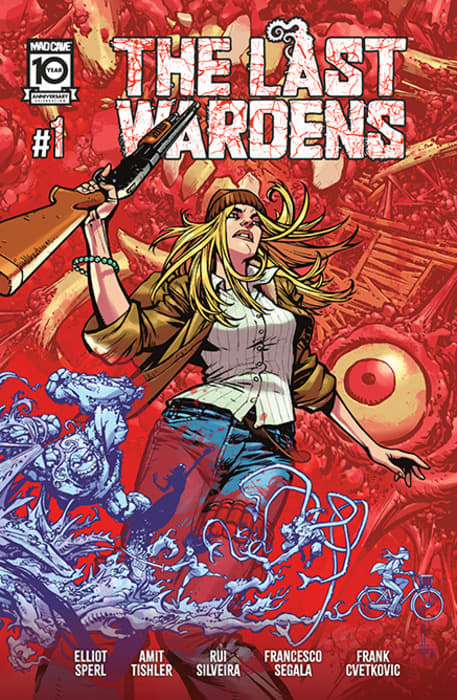
With an alcoholic father and a hole in her wallet, Danielle Pryer’s life in the rustic town of Bleakwood goes from bad to worse when her long-lost brother, Bruce, returns from the Vietnam War. While Bruce is being plagued by a mysterious and monstrous mutation, he is also being hunted by an incompetent team of paranormal misfits, which leads to Bleakwood quickly becoming ground zero of a supernatural battle that forces Danielle to choose between everything she holds dear and the fate of the world as a whole.
PATREON
We have a new Patreon, CryptidCreatorCornerpod. If you like what we do, please consider supporting us. We got two simple tiers, $1 and $3. I’ll be uploading a story every Sunday about some of the crazy things I’ve gotten into over the years. The first one dropped last week about me relocating a drug lord’s sharks. Yes, it did happen, and the alligators didn’t even get in the way. Want to know more, you know what to do.
Arkenforge
Play TTRPG games? Make sure to check out our partner Arkenforge. They have everything you need to make your TTRPG more fun and immersive, allowing you to build, play, and export animated maps including in person fog of war capability that let’s your players interact with maps as the adventure unfolds while you, the DM get the full picture. Use the discount code YETI5 to get $5 off your order.
Global Comix
Save on a subscription to GlobalComix with us. Visit the link below and use the discount code COMICBOOKYETI.
[00:00:00] Your ears do not deceive you. You've just entered the Cryptid Creator Corner brought to you by your friends at Comic Book Yeti. So without further ado, let's get on to the interview.
[00:00:10] Hey everyone, this is...
[00:00:13] Hi Byron.
[00:00:14] Who is this?
[00:00:15] I'm your fairy godmother.
[00:00:17] I have a fairy godmother?
[00:00:18] Of course you do.
[00:00:20] I'm 50 years old, why haven't you shown up before?
[00:00:22] I appear when I'm needed.
[00:00:24] And I didn't need you in all these years?
[00:00:27] Do you want my help or not?
[00:00:29] Um...
[00:00:30] Sure.
[00:00:31] Exactly.
[00:00:32] I was just about to pitch our Patreon.
[00:00:34] Why would I need help with that?
[00:00:36] Because you're an idiot sometimes.
[00:00:38] That's hurtful.
[00:00:40] What were you going to put on there?
[00:00:42] We do comic stuff?
[00:00:43] So something along those lines?
[00:00:45] And this is why I'm here.
[00:00:48] You do know what people put on Patreon most of the time, right?
[00:00:52] Honestly, no.
[00:00:54] People need something a little bit spicy to entice them to support you.
[00:00:59] Nobody wants to see me shirtless.
[00:01:01] I doubt that's true.
[00:01:03] You are in pretty good shape considering your age.
[00:01:06] Thank you.
[00:01:06] Let's see.
[00:01:07] A little spicy.
[00:01:08] I've been bugging Jimmy to figure out what he's going to do.
[00:01:12] I know lately he's been playing around with his **** all the time.
[00:01:16] He loves to take it out and show it off.
[00:01:18] There's even a specific TikTok channel now.
[00:01:20] How's that sound?
[00:01:21] Not a bad start.
[00:01:22] People like Jimmy.
[00:01:23] What else you got?
[00:01:24] I told a story recently about being in a strip club with some of the four horsemen when I was working for WCW back in the day.
[00:01:30] I picked up an infection on my-
[00:01:32] Woo!
[00:01:33] From the experience, I hate strip clubs.
[00:01:35] Is that better?
[00:01:37] Getting there?
[00:01:38] But maybe spicy shouldn't include infections you get in strip clubs.
[00:01:42] That's not sexy.
[00:01:44] We'll workshop it.
[00:01:46] Like I need more meating.
[00:01:47] At least tell them where to find it while we figure this out.
[00:01:51] Mother goddess, help this poor man.
[00:01:52] You can find us on Patreon at cryptidcreatorcornerpod.
[00:01:56] I'll put it in the show notes.
[00:01:58] Anything else you'd like to remind me that I'm bad at?
[00:02:01] How much time do you have?
[00:02:03] Why do you look like Rosario Dawson anyway?
[00:02:05] I appear the way you want me to look.
[00:02:07] Okay, that's disturbing.
[00:02:09] Wait, have you been showing up in my dreams?
[00:02:12] I'll never tell.
[00:02:14] And we're done here.
[00:02:16] Y'all, Jimmy, the Chaos Goblin strikes again.
[00:02:20] I should have known better than to mention I was working on my DC Universe meets Ravenloft hybrid D&D campaign on social media.
[00:02:27] My bad.
[00:02:28] He goes and tags a bunch of comics creators we know.
[00:02:30] And now I have to get it in gear and whip this campaign into shape so we could start playing.
[00:02:34] Another friend chimes in, are you going to make maps?
[00:02:38] It's fair to say it's been a while since I put something together so I guess, question mark?
[00:02:43] It was then that I discovered Arkhamforge.
[00:02:45] If you don't know who Arkhamforge is, they have everything you need to make your TTRPG more fun and immersive.
[00:02:52] Allowing you to build, play, and export animated maps including in-person Fog of War capability that lets your players interact with maps as the adventure unfolds while you, the DM, get the full picture.
[00:03:04] Now I'm set to easily build high-res animated maps saving myself precious time and significantly adding nuance to our campaign.
[00:03:12] That's a win every day in my book.
[00:03:14] Check them out at arkhamforge.com and use the discount code YETI5 to get $5 off.
[00:03:20] I'll drop a link in the show notes for you.
[00:03:22] And big thanks to Arkhamforge for partnering with our show.
[00:03:24] I think I'm going to make Jimmy play a goblin warlock just to get even.
[00:03:29] Hello everybody and welcome to today's episode of the Cryptid Creator Corner.
[00:03:33] I'm Byron O'Neill, your host for today's Comics Creator Chat.
[00:03:36] These two gentlemen hanging out with me have been up to way more though than just comics in terms of development.
[00:03:42] We'll get to all that in a minute, but please welcome returning guest Amit Tischler,
[00:03:45] the man with better hair than Rom V, and Elliot Spurl who's never met a Halloween decoration he didn't like.
[00:03:52] That's true.
[00:03:52] So how are you both?
[00:03:53] Hi.
[00:03:54] How's it going?
[00:03:54] Good, good.
[00:03:55] That is a very oddly accurate description of both of us.
[00:04:00] Well done.
[00:04:02] As if you've been on before or something.
[00:04:04] I know.
[00:04:05] Amazing.
[00:04:07] Well, Amit, when I last checked in with you, you were handed out the door on vacation.
[00:04:12] Do you feel recharged and rejuvenated from the travels?
[00:04:15] Absolutely not.
[00:04:17] Honestly, like it was like half of it was vacation, half of it was business.
[00:04:22] Some of it we were together like we had a whole tour to get through because we went to New York Comic Con.
[00:04:28] We had a big signing for the last wardens for Mad Cave title and a whole bunch of just like meetings around that franchise as a whole.
[00:04:38] And then I flew out to MIPCOM.
[00:04:40] I was in Cannes and that was also, you know, a lot of us representing our ongoing series to different like buyers around the world and different partners because we're doing a lot of cross media initiatives right now.
[00:04:55] And then I got a little bit of vacation time only to come back here and then fly immediately back out to the East Coast because for, you know, our first episode was about Eden Frost.
[00:05:07] So this is a good way to bring all of that back.
[00:05:09] I was in the Jewish comics experience in New York and I did a panel there and, you know, manned a table.
[00:05:17] But I also I was nominated for four awards and won two of them, including writer of the year and best Jewish tradition and folklore narrative.
[00:05:28] So that was pretty awesome. But, you know, it's also work.
[00:05:30] That's amazing.
[00:05:30] It was a lot of just back and forth and back and forth.
[00:05:35] So rejuvenated, not quite, but that's OK.
[00:05:38] There's a holiday season ahead.
[00:05:40] Yeah. Well, you both were together, as you mentioned, at New York Comic Con.
[00:05:44] And there was some interesting launch news there associated with the last wardens, your book from Mad Cave Studios that we talked about last time.
[00:05:50] So it's being developed into a TTRPG adventure.
[00:05:53] And there's also an audio drama in development, which which is huge.
[00:05:57] There's a lot to unpack. But let's let's start with the show itself.
[00:06:01] So how was everything received?
[00:06:03] How's everybody responding to the news?
[00:06:05] Really positively. It was kind of amazing.
[00:06:07] This is the second con.
[00:06:09] I mean, Amit has gone to New York Comic Con before for Eden Frost, but this is my first time going there.
[00:06:15] And I got to tell you, a lot less sweaty than San Diego.
[00:06:18] So 10 out of 10 would go again.
[00:06:20] But it was very positive.
[00:06:22] We ended up selling, I think, all of our stock, essentially.
[00:06:27] Right? Yeah.
[00:06:28] Either all of it or most of it.
[00:06:30] Yeah, that was really incredible.
[00:06:31] And the signing was great.
[00:06:33] And we were able to hand out basically cards and pamphlets talking about the tabletop RPG, which was really fun.
[00:06:39] And yes, it's very exciting.
[00:06:42] You know, it's crazy.
[00:06:44] Yeah, absolutely.
[00:06:45] Well, before we get into all that other stuff, let's return to the last wardens book itself.
[00:06:49] Sure.
[00:06:49] So as of recording, the fifth issue of the six issue series is on shelves.
[00:06:54] All hell is breaking loose for Danny and the wardens.
[00:06:56] I got a chance to read the advance of the collected trade.
[00:06:59] So I know how all this wraps up.
[00:07:01] Sort of.
[00:07:02] We'll leave it there.
[00:07:03] I don't want to retread what we talked about last time.
[00:07:05] I'll drop a link in the show notes for anybody who wants to catch up on that.
[00:07:08] A couple of things though, for were unexpected for me in the read.
[00:07:11] One big thing was Danny as a character and her development as a character and holding on to eternal hope, which I guess needs to happen with maybe a group when everything's falling apart.
[00:07:24] But why was this essential to her when you were developing her as a character?
[00:07:28] Because she has a lot of agency, I guess, for somebody in a grindhouse horror take.
[00:07:32] So it was surprising.
[00:07:34] Yeah.
[00:07:34] It's a really good question.
[00:07:35] I think, you know, this actually ties nicely to our previous conversation.
[00:07:39] And I think we mentioned that, that, you know, there are two big pillars.
[00:07:43] I'll let Elliot cover the second one about like the theme of last wardens as a whole.
[00:07:47] But for Danny in particular, she was built to be a very stubborn character.
[00:07:54] Somebody who doesn't know when to let go.
[00:07:57] And a big thing that we're seeing with readers of this, and we kind of consider that a big win, is that they end up going on a very kind of like cool emotional journey.
[00:08:09] Where in the beginning, her persistence, her unwillingness to let go was just like, no, I'm going to solve this.
[00:08:15] And it's not naive hopefulness.
[00:08:17] It's very like just tenacious, like, no, I'm doing this thing.
[00:08:21] And unless you give me all the parameters, there's no reason for me to let go.
[00:08:26] She's very bullheaded in that way.
[00:08:28] So that's what makes her very, very compelling right off the bat.
[00:08:34] But halfway through this adventure, that same trait also starts making her a very frustrating character.
[00:08:42] Right?
[00:08:42] And that is 100% intentional.
[00:08:45] Because at some point you just go like, lady, read the room.
[00:08:48] Right?
[00:08:49] Or listen to these people.
[00:08:50] Or, you know, have some humility.
[00:08:52] But she is bullheaded and she gets blindsided.
[00:08:55] And you read all the traits, so you kind of know where this arc ends.
[00:08:59] Because that's also a big kind of like swing back.
[00:09:03] Knowing when to let go.
[00:09:07] Knowing when to admit defeat, in a sense.
[00:09:10] And that's the big journey and the big arc that we have her go through.
[00:09:15] Which ties to the very theme that we wrapped all of Last Wardens as a franchise around.
[00:09:22] And Elliot.
[00:09:23] Failure!
[00:09:23] Sorry, I wish I had like rainbow graphics for that one.
[00:09:27] Um...
[00:09:28] So yeah, our central theme is failure.
[00:09:31] Uh, famously said by, quoted by, how to chew it up, spit it out and ask for seconds.
[00:09:36] Which I love.
[00:09:37] And I think Dani is an embodiment of that.
[00:09:40] Just like all of our characters.
[00:09:41] Um, they all kind of revolve around that theme.
[00:09:43] Um, you see it the most with Dani because she's our, you know, fish out of water character.
[00:09:48] Who's being sucked into this role for the first time.
[00:09:50] But, I mean, you see it.
[00:09:52] I think in hints and drafts is what the other characters as well.
[00:09:55] It's definitely hinted at.
[00:09:57] Um...
[00:09:57] Yeah.
[00:09:58] It's learning how to deal with failure is the big thing that truly anchors this.
[00:10:02] And because of her inherent personality, this is how her journey ends up unraveling throughout the entire, the entire adventure.
[00:10:13] Yeah, I mean, the other thing that stood out to me was her relationship with Worm.
[00:10:17] Yes.
[00:10:17] And I didn't expect Worm to play such a pivotal role there.
[00:10:21] I guess frenemies might be too kind a description for their relationship as the story unfolds.
[00:10:26] But, but it is a pivotal narrative point.
[00:10:29] You know, he's more what you might normally expect as a character in something like this.
[00:10:33] I think resigned might be the right way to put it.
[00:10:36] You know, still up for the fight.
[00:10:38] Not sort of unlike Wolverine.
[00:10:40] Yeah.
[00:10:40] That's the thing that I kept coming back to as sort of a reference point.
[00:10:43] And his relationship in almost a, a mentor kind of role.
[00:10:49] Not your traditional mentor at all.
[00:10:51] Um, but like, hey, this, this is the ropes.
[00:10:54] This is what we're doing here.
[00:10:56] Trying to usher her through all of the craziness that's happening.
[00:11:00] And she's just absolutely resistant for, to it.
[00:11:03] And, and he's like, ah, and that's it.
[00:11:04] I just kept saying, ah, that that's, that's, that's Worm in a nutshell to me, right?
[00:11:08] It really is.
[00:11:09] So, and he reinforces her strength as a character and is the kind of the normie, if you will.
[00:11:15] And all of this, almost as a, a surrogate brother for everything that's going on with her brother.
[00:11:22] So here is an interesting fun fact.
[00:11:26] Um, I love the fact that you picked up on this, by the way.
[00:11:28] Yes, the relationship between them is something that long term, we want to continue developing, um, as a relationship of, like you said, it starts as weird, not frenemies, but they are a foil to each other.
[00:11:40] But it's also clear to you, even though he's very aggressive towards her and goes like, get out of the way floppy.
[00:11:45] Um, he also consistently saves her and he's frustrated when she gets in the way and puts herself at risk.
[00:11:53] So even though he is violent, he has a short fuse, he has all of these things.
[00:11:56] He hates the team leader.
[00:11:58] Um, part of him really respects her tenacity.
[00:12:03] And we see that at the very end, at the wrap up where he's very resentfully or reluctantly admits it.
[00:12:10] You know, like he does tell her, like, you know, you know, for what it's worth, you did good.
[00:12:14] Like respect.
[00:12:15] Um, and that really does summarize him in a nutshell.
[00:12:19] But here is a fun fact about Worm or like the history of Last Wardens as a franchise.
[00:12:25] Uh, so you mentioned that it feels like he would be usually traditionally the kind of character we have in this type of story.
[00:12:33] That is true because originally he was.
[00:12:36] Um, in our old iterations, because Last Wardens went through a lot of iterations before we got to this version that just kind of exploded.
[00:12:43] Right, Night Legion, all that.
[00:12:44] Exactly.
[00:12:45] In Night Legion, Worm was the protagonist or the main character and the de facto leader of the Wardens, which he kind of is in a sense.
[00:12:54] Um, and then Danny spawned and became, you know, our essentially guide through this world.
[00:13:00] So that relationship, once we created her, we went like, okay, we're also going to do a weird, um, almost like handoff.
[00:13:08] Right?
[00:13:09] There has to be some acknowledgement because before she stepped in, not just in the progression of our own development of the story, but in the story itself.
[00:13:19] Up until that moment, he's the mature guy on the team.
[00:13:21] Right?
[00:13:22] For what?
[00:13:22] For all intents and purposes.
[00:13:24] That is no longer the case by the end of that.
[00:13:27] Right?
[00:13:28] She kind of becomes, we see that in the last chapter.
[00:13:31] She starts becoming, she's a more competent leader.
[00:13:34] They do listen to her.
[00:13:36] She does, when she kind of like sits down and accepts everything and actually collaborates, she's very, she's very observant and able to put plans together that everybody can go, fine, this is worth a shot.
[00:13:47] For this kind of group, saying, okay, let's try it is kind of a big deal given how we're seeing them interact with their actual leader, which they do not listen to ever.
[00:13:59] And probably for good reason.
[00:14:01] Okay.
[00:14:02] Okay.
[00:14:02] Well, getting into the rest of the creative team, because I want to shed a light on, on their work because the visuals are just outstanding.
[00:14:09] Like artists, it's really so Silviera.
[00:14:12] Am I getting there?
[00:14:13] Yeah.
[00:14:13] Okay.
[00:14:15] So it's a trick to be able to find balance in all this chaos.
[00:14:19] So the gutters are full of organic matter, for lack of a better way of putting it, that kind of heightens the sense of enclosure.
[00:14:26] So you keep getting, you know, pushed in, I guess, from the edges and it makes it really, really visually dense.
[00:14:35] And that would seem like it's overwhelming, but I think it's the strength of the character designs that help anchor your eye.
[00:14:41] Because they take up space in a different way.
[00:14:44] At least Worm and Bricks, I kind of, I think, carry the lion's share of that role.
[00:14:49] I know you had a lot of them kind of hashed out, as you just mentioned earlier in these other iterations.
[00:14:55] Did you have how they would take up space on a page in mind originally?
[00:15:01] Or is that something sort of, you know, really brought to the equation?
[00:15:05] It's funny because, like, I think we kind of handled it sort of like X-Men, where they all also come in many shapes, different sizes.
[00:15:12] But once, I think the turning point for us for what you were talking about is actually the panels.
[00:15:18] The panel, we had them as modes, essentially.
[00:15:25] So we had, you know, we had Danny's, which is balanced.
[00:15:28] We had the Wardens, which are chaotic, which still grant a lot of space.
[00:15:32] And then what you're talking about is the disrupted panels whenever the drifter is, you know, triggered, essentially.
[00:15:38] And that's when things start to close in, get very wild, and then you have to be very economic with your space.
[00:15:44] It's one of those things where I think it works beautifully.
[00:15:50] Because, like, you see the panels, you see it digitally, and then you open the book and actually see it, like, fully on paper.
[00:15:57] And it works beautifully.
[00:15:58] Like, it just, it looks great.
[00:16:01] But it was all calculated to, like, follow that, you know, beats in the story of, like, hey, when is Danny feeling balanced?
[00:16:11] When is she, like, calming things down?
[00:16:13] When are the Wardens wrapping things up to make things chaotic again?
[00:16:16] And then when does one or the other do something, intentional or not, to trigger the drifter?
[00:16:21] And then all chaos, like, unfolds and kind of closes in on you.
[00:16:26] Yeah, and I think the character designs, even in their original iterations that you did, you know, just if you're thinking about them as the lineup of all of the characters, their designs are very distinct in terms of silhouettes.
[00:16:39] Like, you literally can instantly distinguish who is who.
[00:16:43] And that becomes really important when you think about what you're talking about, the compositions.
[00:16:47] They are chaotic.
[00:16:49] And we're actually, like, not only by name, but the action scenes are very supposed to, like, project this lack of coordination, right?
[00:16:59] That we're seeing balance out differently in the very end.
[00:17:01] And that was intentional where, like, everybody does their thing and it all kind of works together.
[00:17:06] That was the buildup.
[00:17:07] But when it starts, every time they come in, you're chaos.
[00:17:11] But you can distinguish them from each other because they are very distinct in both how they handle a situation, how they navigate the space, and how they just fit in it.
[00:17:22] And that just creates a lot of, like, visual clarity right off the bat, but also some narrative clarity about, like, well, these creatures are so weirdly different from each other.
[00:17:31] How would you get this kind of team to work together?
[00:17:35] It's not just powers.
[00:17:36] It's literally their physique.
[00:17:38] The first time we see bricks, he breaks through a wall and knocks Syrah and Lila off, right?
[00:17:45] But in, you know, literally, like, the issue that's out today, we actually have a moment of, let's call it, like, the closest that we get to Danny versus the Wardens.
[00:17:56] You know, Worm is chasing her away.
[00:17:58] And she's using their physique against them.
[00:18:00] Because that's the thing that she's been observing this whole time.
[00:18:03] So she is managing to essentially, like, even though they are so much more powerful than her and capable, she's using a lot of their abilities against them to buy herself time to navigate the situation as Worm is chasing her around.
[00:18:15] That same ability to kind of understand their physique is what leads to that plan in the end.
[00:18:22] For her to go, like, I understand how each of you operates.
[00:18:25] I noticed how this monster operates.
[00:18:29] I can see those two things and form a plan together.
[00:18:32] So this really is the relationship between, like, narrative and design.
[00:18:36] And it ended up just working really beautifully.
[00:18:39] And I think part of it came prior to this project.
[00:18:42] And part of it coming from literally Rui understanding what we're going for and going, I know what to do and putting it into action.
[00:18:50] Yeah, it feels like a cheat code in a way for writers, both of you having an animation background and kind of understanding character design.
[00:18:59] So, Elliot, I guess you came up with the original designs.
[00:19:02] Is that right?
[00:19:03] I did.
[00:19:03] Granted, Rui did them way better.
[00:19:05] But there was way better.
[00:19:08] But it came in stages.
[00:19:10] The first iteration was very cartoony because, obviously, it came from animation.
[00:19:15] So, big eyes, you know, very cartoony.
[00:19:21] Then, as the tone shifted in development, obviously, we went a little bit more adult, made it a bit more realistic.
[00:19:26] So, that was my, the additional designs that we handed off to Rui.
[00:19:29] And he just elevated them because, of course, he did.
[00:19:34] And, yeah.
[00:19:36] Also, I think added to them, too.
[00:19:41] Like, we saw a couple iterations early on of Wyrm where he took mine and kind of went into a different direction.
[00:19:46] And then we kind of steered him.
[00:19:48] He was a little BDSM in the first iteration.
[00:19:49] Sorry?
[00:19:51] He was a little BDSM-y in the first iteration.
[00:19:53] Yeah, he was.
[00:19:54] He was.
[00:19:55] We had just like, I'm not sure that's the tone.
[00:19:58] Yes.
[00:20:00] But, yeah.
[00:20:01] It works out on the page with both him and Rix.
[00:20:03] Oh, sorry.
[00:20:04] Go ahead.
[00:20:04] I said with both him and Rix, we went through a few rounds.
[00:20:08] Yeah, we did.
[00:20:08] But I think they're the best versions.
[00:20:11] Definitely.
[00:20:11] Yeah.
[00:20:12] Especially Rix's, like, circular body, which I think really stands out on the page.
[00:20:17] Yeah.
[00:20:18] I mean, again, the last show, it just reads concrete to me.
[00:20:22] So it's, you know, the Paul Chadwick designs.
[00:20:24] Yep.
[00:20:24] Yeah.
[00:20:25] Or Juggernaut if people need another landmark and don't know who concrete happens to be.
[00:20:29] And the color chemistry is very much there as well.
[00:20:33] And it's this weird sort of inversion from what we typically see.
[00:20:37] So that's Francesco Segala, the colorist on the project.
[00:20:41] And normally you would see red as an accent color, right?
[00:20:45] It's going to define a sequence or a moment.
[00:20:48] But in this case, it's often white.
[00:20:50] You know, you've got so much red already filling up the page and stuff.
[00:20:55] And that was really beautifully done.
[00:20:57] I really enjoyed that.
[00:20:58] It was really cool.
[00:20:59] Yeah.
[00:20:59] I love that.
[00:21:01] It started off, like, I love in book one, for example,
[00:21:05] it starts off kind of subtle where the red's kind of leaking into the black page.
[00:21:09] And then when things kind of blow up, obviously it starts going, you know, full white as well.
[00:21:14] Like, and you see that in the most recent book.
[00:21:18] Density was a big theme for even how he handled colors.
[00:21:22] And we did go back and forth on that as well.
[00:21:24] But one of the things that he intuitively does extremely well is that he makes very bold color choices, right?
[00:21:32] When you go into a new sequence, when you go into a new scene,
[00:21:36] almost instantly he defines it with a dominant color, right?
[00:21:40] You go to issue two.
[00:21:42] You start from, like, you're inside the house.
[00:21:44] Red screams at you, right?
[00:21:46] And everything else pops within it.
[00:21:47] Then you get out of it.
[00:21:49] Purple is, like, just, you know, squashing everything and holding everything together.
[00:21:53] You go into the police station, green.
[00:21:55] So there is this very defined visual clarity that also helps.
[00:22:00] It really leverages how the script is constructed, which is, you know, like, based on location.
[00:22:06] Location has this kind of sequence.
[00:22:08] Other location, this kind of sequence.
[00:22:09] And that's something that he managed to just do throughout the entire book.
[00:22:14] And it just comes out beautifully.
[00:22:17] I mean, again, that is the animation cheat code.
[00:22:20] You guys have such an advantage here that a normal comics writer doesn't.
[00:22:25] It's kind of crazy.
[00:22:26] But there's lots of DNA, both visually and from the characters, that's being transitioned into the TTRPG as well.
[00:22:34] Now, you're working with veteran Bart Vickers and John Barry of Forge Gaming,
[00:22:38] who especially is kind of developing gaming accessories.
[00:22:40] So at what point did you both say, hey, Last Wardens, this will make a great game?
[00:22:47] Wow.
[00:22:47] I think that was a conversation on the back porch per usual.
[00:22:50] It was.
[00:22:51] Okay.
[00:22:52] I mean, the weird thing is it was we rolled.
[00:22:56] I wouldn't say we rolled into it, but I'll put it this way.
[00:23:00] When we started in, as far as I'm concerned, we started very late in the process to look into this
[00:23:06] because I was so, like, consumer, like, ah, got to get Eden Frost out the door and then move on to this
[00:23:11] because it was just, like, two, three months between, I think, like, Eden Frost trade paperback
[00:23:15] to the release of Last Wardens, number one.
[00:23:18] But we started talking about, okay, how do we, now that we know that we have a product coming out
[00:23:23] and we have this whole series lined up all the way to next year,
[00:23:26] how do we leverage our background and our knowledge and our passion towards all of these mediums
[00:23:31] to try and see if we can take Wardens there as well and tell stories in different ways.
[00:23:36] And the first iteration, and we can get back to it afterwards,
[00:23:39] but the audio drama was actually the first to go
[00:23:43] because Mark Allen Miller gave us one of the pull quotes for The Last Wardens.
[00:23:49] And, you know, he used to be Clive Barker's, you know, like, right-hand van,
[00:23:53] wrote a lot of the Hillraiser comics, produced Nightbreed.
[00:23:56] So he's a big horror guy.
[00:23:57] So he gave us the pull quote, and he's an old friend, and he runs Encyclopocalypse Publications.
[00:24:02] So he was already a fan of Last Wardens.
[00:24:04] And a conversation with him about it led to literally them wanting to do,
[00:24:09] produce an entire audio drama based on it to coincide with the trade paperback.
[00:24:15] After we had that and we're like, oh my god, this just happened,
[00:24:18] and I guess we're going into production on this,
[00:24:21] we started thinking, okay, with the timeline that we have,
[00:24:24] knowing that March 11th is the big date that we have a product coming out to market,
[00:24:30] that's the most appealing that we can be to any external partners,
[00:24:34] what else are we viable for considering what we can contribute?
[00:24:39] And all the credit to Elliot on this one,
[00:24:42] because the tabletop gaming world, that's his world.
[00:24:45] It is.
[00:24:46] I love tabletop RPGs.
[00:24:49] I think our campaign's been going on for nearly a decade at this point.
[00:24:54] Oh man, that's crazy.
[00:24:56] It's a really long time.
[00:24:57] And yeah, I devoured 2014 Dungeons & Dragons, the new D&D 2024 version.
[00:25:07] I've devoured those books.
[00:25:10] I've always been a big fan, but looking at The Last Wardens,
[00:25:13] we realized quickly, like, hey, we have the art assets.
[00:25:17] This world is filled with mystery and intrigue,
[00:25:20] and there's so many openings for it.
[00:25:22] And it just makes sense to expand the world
[00:25:26] and kind of give people the opportunity to make their own warden,
[00:25:30] essentially, and go on their own adventures.
[00:25:32] Because, I mean, even from the get-go,
[00:25:34] we have these Bibles of lore, essentially,
[00:25:37] in our development process anyway,
[00:25:39] so why not utilize them?
[00:25:40] Like, the work's there.
[00:25:43] Yeah.
[00:25:44] And it just, yeah, opened it up.
[00:25:46] And he basically could...
[00:25:47] Well, I downloaded...
[00:25:48] Go ahead.
[00:25:49] I was going to say, like,
[00:25:50] he basically convinced me of this viability,
[00:25:54] and, you know, initially,
[00:25:56] my initial thought was like,
[00:25:58] yeah, you know what, you're right.
[00:25:59] All of, in terms of the materials we can provide,
[00:26:01] even in terms of what MadCave will give us,
[00:26:04] in order to use or give away,
[00:26:06] this sounds great.
[00:26:07] The only downside is that I didn't think
[00:26:10] I had anybody in my network that I can...
[00:26:13] How do I even start this conversation and with who?
[00:26:17] I didn't realize that my previous life
[00:26:20] running a tech company
[00:26:23] actually put me in touch with a lot of,
[00:26:25] you know, people from consumer products and licensing.
[00:26:28] Some of them were even, like,
[00:26:29] our advisors on the company board.
[00:26:34] And once I just...
[00:26:35] I put a shout out out there,
[00:26:37] you know, like, said, like,
[00:26:37] hey, we have this kind of franchise.
[00:26:39] It already has multiple adaptations going on,
[00:26:41] and we are looking specifically for this market.
[00:26:43] And that ended up getting just reshared on LinkedIn,
[00:26:46] and that's what brought Bart and John to us,
[00:26:50] because they were just starting their own company,
[00:26:52] Studio Far Horizons,
[00:26:53] and they were looking for a go-to-market product.
[00:26:56] So they had the engine,
[00:26:57] they had the ideas of what they wanted to implement,
[00:26:59] but the appeal of,
[00:27:01] hey, this is a new series,
[00:27:03] this is a new franchise,
[00:27:04] it's cool,
[00:27:05] it's different from anything else on the market,
[00:27:07] that read to them as an opportunity.
[00:27:09] And they were not the only ones.
[00:27:10] We had, like,
[00:27:11] we were really surprised by how much traction we got
[00:27:14] for that proposal specifically.
[00:27:17] So from there,
[00:27:19] it was a literal rush,
[00:27:21] because we had, like,
[00:27:22] such a crunched timeline
[00:27:23] to be able to say,
[00:27:25] deal is closed,
[00:27:25] and now we have enough time for them to produce the whole thing.
[00:27:29] But we ended up pulling it through,
[00:27:31] so...
[00:27:32] All right, let's take a quick break.
[00:27:44] After a string of unexplained disappearances
[00:27:46] in the southern parts of the United States,
[00:27:48] retired Detective Clint searches for his white trash brother.
[00:27:51] While searching for him,
[00:27:53] he ends up being abducted by aliens.
[00:27:55] He is now in the arena for Big Gun's Stupid Rednecks,
[00:27:59] an intergalactic cable's newest hit show,
[00:28:02] which puts him and other humans
[00:28:04] in laser gun gladiatorial combat.
[00:28:06] And his brother is the reigning champion
[00:28:09] with 27 kills.
[00:28:11] That's the premise for a new book
[00:28:13] from Band of Bards,
[00:28:14] Big Gun's Stupid Rednecks.
[00:28:16] I got a chance to see an advanced preview of this book,
[00:28:19] and being from the South,
[00:28:20] honestly,
[00:28:20] I was a bit skeptical going in.
[00:28:22] But they won me over,
[00:28:23] and nothing is more powerful
[00:28:24] than an initially skeptic convert in my book.
[00:28:27] In Jimmy's words,
[00:28:28] Big Gun's Stupid Rednecks is many things,
[00:28:31] but it isn't subtle.
[00:28:32] It tells you exactly what it is up front,
[00:28:34] then it delivers with a great premise,
[00:28:36] fantastic art,
[00:28:36] and a whole mess of fun.
[00:28:38] I had a great time reading
[00:28:39] Big Gun's Stupid Rednecks,
[00:28:41] and what I thought was going to be
[00:28:42] an indictment of redneck culture
[00:28:44] quickly showed it was actually a love letter.
[00:28:46] A family mystery,
[00:28:47] brother pitted against brother,
[00:28:49] aliens,
[00:28:50] fighting for profit in a big arena,
[00:28:51] this truly has it all.
[00:28:53] Issue 1 is out already,
[00:28:54] but you can still pick up a copy
[00:28:56] on the Band of Bards website,
[00:28:57] and current issues are available
[00:28:59] via your previews or lunar order form,
[00:29:01] or just ask your LCS.
[00:29:02] Don't miss it.
[00:29:03] Let's get back to the show.
[00:29:05] Folks, Elliot had to step away.
[00:29:07] He had something pop up,
[00:29:08] so Amit is kind enough
[00:29:10] to keep going with me here.
[00:29:11] So I downloaded the free basic set,
[00:29:14] free now anyway,
[00:29:15] I don't know if it will stay that way,
[00:29:17] and look through the materials.
[00:29:18] There's some D&D,
[00:29:19] perhaps a little bit of rifts
[00:29:21] for people who might be familiar with that.
[00:29:23] Definitely some Call of Cthulhu
[00:29:25] role-playing game as well.
[00:29:27] You know, you create in the game
[00:29:30] a party designed to fight
[00:29:31] the incursion of the Great Drift,
[00:29:33] these kind of otherworldly pockets
[00:29:35] that we get to see in The Last Wardens
[00:29:37] that pop up and do all the bad things
[00:29:39] you might expect them to do.
[00:29:41] Two big features of the game that I love,
[00:29:43] the chaos dice
[00:29:44] and the ability to assist other players.
[00:29:47] So one introduces a strong randomness to it all,
[00:29:50] while the other helps kind of encourage
[00:29:51] group cohesion
[00:29:53] and balances out a little bit
[00:29:55] of that madness that's introduced
[00:29:57] from the chaos element.
[00:29:59] So talk to me about kind of that balance
[00:30:02] and putting these different mechanisms in play.
[00:30:05] Like what did you see
[00:30:06] that you really wanted in this game
[00:30:08] that was absent in some of these others?
[00:30:11] Well, I will have to first posit that two things.
[00:30:15] A, I would say that the person
[00:30:17] with a lot more experience
[00:30:18] with tabletop gaming is Elliot.
[00:30:21] So unfortunately,
[00:30:22] Sure.
[00:30:23] But also, to give all the credit,
[00:30:25] we're not the ones designing the game, right?
[00:30:27] Okay.
[00:30:28] Our role, essentially like Studio Far Horizons
[00:30:30] does all the game design.
[00:30:32] This product is their brainchild
[00:30:35] based on all the materials
[00:30:36] that we're giving them
[00:30:37] and the guidance we're giving them.
[00:30:38] Our role is essentially
[00:30:40] as a creative consultant,
[00:30:41] we have to write all of the lore
[00:30:43] to give them the tools to work with
[00:30:45] and to explain to them
[00:30:46] what we want to convey with the series,
[00:30:49] what are the pillars of it.
[00:30:50] So that actually goes back to this idea
[00:30:52] of chaos, of failure,
[00:30:54] of dealing with failure.
[00:30:56] We wrote a massive lore document.
[00:30:59] Some of it we had like in our own materials.
[00:31:01] Some of it we had to generate
[00:31:03] because as you're seeing now,
[00:31:06] essentially like every product
[00:31:08] in Last Worden's franchise as a whole
[00:31:10] has to stand on its own.
[00:31:12] Like people don't need to read the comic
[00:31:13] in order to get into the tabletop RPG
[00:31:16] or the audio drama.
[00:31:18] But we want people that do end up
[00:31:21] jumping between mediums,
[00:31:23] if they're fans of the franchise itself,
[00:31:24] to get a lot from it.
[00:31:26] So the fact that all of the lore
[00:31:30] is in the tabletop RPG
[00:31:32] means that if you just read the comic,
[00:31:34] which you did,
[00:31:35] you actually get a lot of answers
[00:31:36] that you know are intentionally
[00:31:38] not in the comic
[00:31:39] because it's built for longevity
[00:31:40] as this ongoing mystery.
[00:31:42] But a lot of the answers
[00:31:43] that Danny is seeking
[00:31:44] are actually all there
[00:31:46] because we are focusing more
[00:31:48] on the world
[00:31:49] and the general themes of it.
[00:31:51] So as we provided
[00:31:53] all these materials
[00:31:54] to Studio Far Horizons,
[00:31:56] we knew that they were like,
[00:31:57] hey, we're going to use
[00:31:58] the Year Zero engine,
[00:31:59] but we want to break some shit, right?
[00:32:00] We want to add some things
[00:32:02] that are different.
[00:32:03] We want to do something
[00:32:04] that feels true
[00:32:05] to this franchise in particular.
[00:32:09] And those were just some
[00:32:11] of the things that they managed
[00:32:12] to implement
[00:32:12] that feel very much in line
[00:32:14] with the thematic narrative statements
[00:32:17] that we're making.
[00:32:19] So the idea of collaboration
[00:32:22] is a big theme
[00:32:23] in Last Wordens as well.
[00:32:25] The idea of bouncing off of failure
[00:32:27] despite the chaos of it
[00:32:30] is also a big thing.
[00:32:32] And they found mechanical ways
[00:32:34] to put that into the gameplay,
[00:32:36] which is just awesome
[00:32:37] because it feels like
[00:32:39] the types of stories
[00:32:40] that that forces you to write
[00:32:42] or encourages you
[00:32:44] to create
[00:32:45] as you venture through this world
[00:32:46] feel like Last Wordens stories.
[00:32:50] You know,
[00:32:51] it's a restriction-based design
[00:32:53] in a sense,
[00:32:53] but it just motivates you
[00:32:54] to take risks.
[00:32:56] That's the big thing
[00:32:58] that they put through
[00:32:58] the entire design.
[00:33:00] It doesn't punish you as much.
[00:33:02] It more motivates you
[00:33:03] to take risks
[00:33:04] because maybe,
[00:33:05] just maybe,
[00:33:06] taking that chance
[00:33:07] that one time
[00:33:08] is actually going to pay off.
[00:33:10] And you're going to have
[00:33:10] the chance to do it,
[00:33:12] which is something
[00:33:13] that we see in the story as well.
[00:33:14] So that's where a lot
[00:33:15] of the philosophies
[00:33:16] turned into mechanics.
[00:33:18] Okay.
[00:33:19] Yeah, it makes a lot of sense.
[00:33:21] So for me as a DM,
[00:33:23] when I've been running campaigns,
[00:33:25] I have a set of,
[00:33:27] as not a gamer,
[00:33:28] you probably don't have
[00:33:29] these landmarks,
[00:33:30] but Pathfinder's
[00:33:31] kind of another derivative
[00:33:32] sort of D&D spinoff
[00:33:34] that's been very popular.
[00:33:34] And they made a set
[00:33:36] of critical hit
[00:33:37] and critical failure rolls.
[00:33:39] Yeah.
[00:33:39] So you roll a 20,
[00:33:40] you roll a one,
[00:33:41] you pull out a card
[00:33:42] for either of those
[00:33:42] with different things
[00:33:44] that happen.
[00:33:45] So in this case,
[00:33:47] in the game,
[00:33:49] you can have something
[00:33:50] as mild as blood
[00:33:52] in your eye
[00:33:52] to being cut in half.
[00:33:54] And what I love
[00:33:55] is the number
[00:33:56] of non-fatal options
[00:33:57] have timing-related
[00:33:58] recovery baked in.
[00:34:00] And in more serious cases,
[00:34:01] you get kind of a counter
[00:34:03] of how long you have
[00:34:04] before your impending demise.
[00:34:06] And that's, I guess,
[00:34:07] where the Call of Cthulhu
[00:34:08] reference kind of came in to me.
[00:34:10] This heightened sense
[00:34:11] of tension,
[00:34:12] of dread,
[00:34:13] of peril for players,
[00:34:14] which fits very,
[00:34:15] very well with the book.
[00:34:17] Yeah.
[00:34:18] And so this is all about failure.
[00:34:22] And I think,
[00:34:24] big picture,
[00:34:26] this feels like
[00:34:27] a messaging to me.
[00:34:28] And I guess this is something,
[00:34:29] maybe it's just
[00:34:30] what I'm thinking about.
[00:34:31] Somebody who has a teen
[00:34:32] that we talked about
[00:34:33] a little bit before
[00:34:35] we started
[00:34:37] and conveying this idea,
[00:34:38] especially to younger people,
[00:34:40] that failure
[00:34:41] is an essential part
[00:34:42] of the process.
[00:34:44] You know,
[00:34:44] it's part of learning.
[00:34:46] And my son will come home
[00:34:48] and he said,
[00:34:48] oh, I'll never get into
[00:34:49] this school or that school.
[00:34:51] These people are so far ahead of me.
[00:34:53] And I was like,
[00:34:53] yes, but my experience
[00:34:54] has been
[00:34:55] that the people
[00:34:56] who are perfect
[00:34:58] don't know how
[00:34:59] to deal with adversity.
[00:35:00] Yes.
[00:35:01] And so it feels like
[00:35:03] a lot of
[00:35:04] all of these things
[00:35:05] that I'm talking about,
[00:35:06] how did failure
[00:35:08] become the nucleus
[00:35:10] of this whole thing
[00:35:12] for you?
[00:35:14] Yeah.
[00:35:14] Yeah.
[00:35:15] You know,
[00:35:16] like with every project
[00:35:17] that we take on,
[00:35:18] every single one,
[00:35:20] and that's just
[00:35:21] a general development philosophy
[00:35:22] that I've done
[00:35:23] with Eden Frost
[00:35:24] where, you know,
[00:35:24] the theme was identity,
[00:35:26] right?
[00:35:26] Identity as a construct
[00:35:27] and everything around it.
[00:35:29] The same thing
[00:35:30] we applied here
[00:35:31] and in any other project
[00:35:32] including Postmortal
[00:35:33] and everything that we do
[00:35:34] following through.
[00:35:35] So failure was the thing
[00:35:37] that we picked here
[00:35:38] because,
[00:35:38] like you said,
[00:35:40] and you're not,
[00:35:41] this is not just you,
[00:35:42] this was literally
[00:35:43] the intent,
[00:35:44] right?
[00:35:44] Yeah.
[00:35:45] And I think we talked about it
[00:35:46] throughout different,
[00:35:46] like,
[00:35:47] interviews
[00:35:47] and press talks.
[00:35:49] It's to encourage people
[00:35:51] to take risks
[00:35:51] because it's really
[00:35:52] the only
[00:35:53] or the best way
[00:35:54] to learn.
[00:35:55] It is the best way
[00:35:56] to learn.
[00:35:57] And it really mimics
[00:35:59] also our own journey
[00:36:00] into being more successful
[00:36:02] in what we do.
[00:36:03] You have to take the chance
[00:36:04] and you have to be able
[00:36:05] to deal with rejection.
[00:36:07] You also have to know
[00:36:08] when one thing
[00:36:09] doesn't work
[00:36:10] and you need to let it go
[00:36:11] and try something else.
[00:36:13] But now,
[00:36:14] when you're trying
[00:36:14] something else,
[00:36:15] it's not just
[00:36:16] because you're like,
[00:36:18] ah,
[00:36:18] I was defeated.
[00:36:18] I'm just gonna,
[00:36:19] you know,
[00:36:20] let everything go
[00:36:21] and drop everything.
[00:36:22] It's because you've
[00:36:23] learned something,
[00:36:24] you're smarter,
[00:36:25] and you'll be able
[00:36:25] to take all of that knowledge
[00:36:27] and navigate
[00:36:27] what comes next better.
[00:36:30] Which is literally
[00:36:30] what we're seeing
[00:36:31] in Danny's arc.
[00:36:32] Right?
[00:36:33] It's this like,
[00:36:34] you try,
[00:36:34] you try,
[00:36:35] you try,
[00:36:35] you really believe
[00:36:36] strongly in what you're doing
[00:36:37] because you know
[00:36:37] that there's some truth to it
[00:36:39] and you get slammed.
[00:36:40] You just get knocked down.
[00:36:42] But afterwards,
[00:36:43] you don't just go ahead
[00:36:45] and do the exact same thing.
[00:36:46] You actually take stock
[00:36:48] of where you are,
[00:36:49] which is very much issue five.
[00:36:51] Right?
[00:36:51] Of what you learn
[00:36:52] and you apply that
[00:36:54] in order to be smarter
[00:36:55] and better next time.
[00:36:57] And that,
[00:36:58] that just makes you better
[00:36:59] in whatever you do.
[00:37:01] Last Wardens as a franchise
[00:37:02] went through so many iterations
[00:37:04] and so many different name changes
[00:37:07] and we have pitched it around
[00:37:08] in a lot of different mediums
[00:37:10] and a lot of different forms
[00:37:11] before we all of a sudden,
[00:37:12] you know,
[00:37:13] got this like ultimate version
[00:37:15] of it that ended up
[00:37:16] just flying.
[00:37:17] Um,
[00:37:18] but that also takes
[00:37:19] just failures.
[00:37:20] It takes rejection,
[00:37:21] right?
[00:37:22] But after rejection,
[00:37:22] you're not like,
[00:37:23] no,
[00:37:24] this is just perfect
[00:37:25] and one day
[00:37:25] it's going to work as is.
[00:37:27] It forces you
[00:37:28] to do some post-mortem
[00:37:29] and go,
[00:37:30] okay,
[00:37:30] what worked well about this
[00:37:32] and what could be better?
[00:37:33] What's missing?
[00:37:34] What are people not seeing?
[00:37:36] What are,
[00:37:36] so to us,
[00:37:37] it was important
[00:37:38] to do this
[00:37:39] as just a story
[00:37:40] because I don't think
[00:37:41] we actually see it
[00:37:44] this explicitly,
[00:37:46] uh,
[00:37:47] conveyed in comic books
[00:37:49] and in media
[00:37:50] in general.
[00:37:52] Uh,
[00:37:52] we tend to,
[00:37:53] I think Western storytelling
[00:37:54] does tend to romanticize
[00:37:56] the double down
[00:37:57] on your calf
[00:37:59] and eventually
[00:38:00] it'll pull through
[00:38:01] and I think,
[00:38:03] I think it's more important
[00:38:04] to see the benefits
[00:38:06] of having the courage
[00:38:07] to fail
[00:38:08] and to admit failure
[00:38:10] and to know
[00:38:11] how to deal with it
[00:38:12] and how to apply
[00:38:13] the knowledge later.
[00:38:14] So that's kind of,
[00:38:15] that's what led everything
[00:38:16] and it,
[00:38:17] because it became
[00:38:18] such an anchor,
[00:38:19] every time we came
[00:38:20] to talk to a partner
[00:38:21] or a licensor,
[00:38:22] it's one of the first things
[00:38:23] that we say
[00:38:24] and it sticks
[00:38:25] and I know that
[00:38:26] for Studio Fire Horizons,
[00:38:28] they got it
[00:38:28] like,
[00:38:29] and they were like,
[00:38:29] we're just gonna
[00:38:30] build everything
[00:38:31] around that idea
[00:38:32] and find different
[00:38:33] mechanical ways
[00:38:34] to convey it
[00:38:34] and that just makes
[00:38:36] the product authentic
[00:38:37] to the franchise
[00:38:38] in every sense of the word.
[00:38:40] Yeah,
[00:38:41] well,
[00:38:42] getting into
[00:38:43] preparation for
[00:38:45] the interview,
[00:38:46] I read some of the stuff
[00:38:47] on your blog
[00:38:47] and this is something
[00:38:48] that you and I
[00:38:49] have talked about before
[00:38:50] and I think this
[00:38:51] is very material
[00:38:53] to,
[00:38:53] to the Last Wardens
[00:38:55] and its development.
[00:38:56] So,
[00:38:56] that's the entrenched nature
[00:38:58] of the direct market
[00:38:59] which has been a very
[00:39:00] hot button topic
[00:39:01] in the comics community
[00:39:02] recently
[00:39:03] and its impediment
[00:39:04] the way it's designed
[00:39:05] to,
[00:39:06] to growth.
[00:39:07] Yeah.
[00:39:07] And you have
[00:39:08] a really fantastic
[00:39:09] breakdown about
[00:39:10] audience targeting
[00:39:11] and in the ecosystem
[00:39:12] and you've compared
[00:39:14] it to a pufferfish
[00:39:15] which I absolutely love.
[00:39:17] Thank you.
[00:39:17] And,
[00:39:18] the Last Wardens
[00:39:19] is a great example
[00:39:20] of taking an idea
[00:39:22] and being able
[00:39:23] to scale it
[00:39:24] as an IP
[00:39:25] across a bunch
[00:39:26] of different mediums
[00:39:28] to encompass
[00:39:28] a bigger market share
[00:39:29] than just trying
[00:39:30] to hit the traditional
[00:39:31] brick and mortar
[00:39:32] comic bound buyer
[00:39:33] Yeah.
[00:39:34] in that system.
[00:39:35] And,
[00:39:36] I know this is,
[00:39:37] you know,
[00:39:37] probably a topic
[00:39:38] that can cover
[00:39:39] an entire podcast
[00:39:40] episode itself
[00:39:41] but,
[00:39:42] could you kind of
[00:39:43] condense that
[00:39:44] pufferfish notion
[00:39:45] analogy here
[00:39:46] and how,
[00:39:46] how the Last Wardens
[00:39:48] leverages it?
[00:39:50] Um,
[00:39:50] man,
[00:39:51] yeah,
[00:39:51] I could,
[00:39:52] I could talk about
[00:39:52] that forever
[00:39:53] because it's a,
[00:39:54] yeah,
[00:39:54] yeah.
[00:39:55] It's a point
[00:39:55] of fascination
[00:39:56] for me
[00:39:56] as somebody
[00:39:57] who's also run
[00:39:58] businesses before
[00:39:59] and was very
[00:40:00] interested
[00:40:00] and experienced
[00:40:01] in product design
[00:40:02] and distribution
[00:40:03] pipelines
[00:40:04] and it's,
[00:40:04] it's something
[00:40:05] that Elliot
[00:40:06] hears me ramble
[00:40:07] on about
[00:40:07] and he's a really
[00:40:08] good sport about it.
[00:40:09] Um,
[00:40:09] but it does,
[00:40:11] it does dictate
[00:40:12] a lot of our
[00:40:13] strategy
[00:40:14] when we're
[00:40:15] working on anything.
[00:40:17] Um,
[00:40:18] the way I see
[00:40:20] the current
[00:40:21] state of the
[00:40:22] direct market
[00:40:22] as a whole,
[00:40:23] it,
[00:40:24] it's weird
[00:40:25] because I think,
[00:40:26] um,
[00:40:27] I think comic book
[00:40:28] industry
[00:40:29] in general
[00:40:30] is really
[00:40:31] suffering from,
[00:40:33] there's no way,
[00:40:34] there's no gentle
[00:40:35] way of saying
[00:40:35] it's a very bad
[00:40:36] content strategy.
[00:40:38] Um,
[00:40:38] and what I mean
[00:40:39] by that is that
[00:40:40] the tendency
[00:40:41] right now,
[00:40:42] because for anybody
[00:40:44] listening who isn't
[00:40:45] like aware of this,
[00:40:46] the,
[00:40:46] the sales curb
[00:40:47] for comics
[00:40:48] in general
[00:40:49] is usually
[00:40:49] put out issue
[00:40:51] one into the
[00:40:51] direct market.
[00:40:52] There is a massive
[00:40:53] spike in sales.
[00:40:54] Then all of a sudden
[00:40:56] issue two,
[00:40:57] you just plateau.
[00:40:58] You just drop
[00:40:59] and it flatlines
[00:41:01] for a really
[00:41:02] long time.
[00:41:03] Now,
[00:41:04] most comic book
[00:41:05] publishers,
[00:41:06] especially the
[00:41:06] indies,
[00:41:07] um,
[00:41:08] they freak out
[00:41:09] about this.
[00:41:10] And for good
[00:41:10] reason,
[00:41:11] their margins
[00:41:11] aren't that high.
[00:41:13] Comic books
[00:41:13] isn't this like
[00:41:14] extremely,
[00:41:14] it's not TV
[00:41:15] where they have
[00:41:15] just like millions
[00:41:16] to flush into
[00:41:17] everything.
[00:41:17] So when they
[00:41:18] look at that,
[00:41:19] they re-optimize
[00:41:20] their model
[00:41:21] and go,
[00:41:21] okay,
[00:41:22] um,
[00:41:23] if we can't
[00:41:23] get people
[00:41:24] to,
[00:41:25] you know,
[00:41:25] like stick
[00:41:26] with something
[00:41:27] for too long
[00:41:28] because,
[00:41:28] hey,
[00:41:29] they'll just
[00:41:29] buy number
[00:41:29] one and then,
[00:41:31] you know,
[00:41:31] like they'll
[00:41:31] wait for the
[00:41:32] next trade
[00:41:32] and hopefully
[00:41:33] we'll be able
[00:41:34] to break even
[00:41:34] from that.
[00:41:35] What are the odds
[00:41:35] that they're
[00:41:36] going to buy
[00:41:36] volume two?
[00:41:37] Pretty low,
[00:41:38] so we're not
[00:41:38] going to take
[00:41:39] the risk,
[00:41:39] so we're
[00:41:40] going to make
[00:41:40] everything
[00:41:40] very self-contained.
[00:41:42] Now,
[00:41:43] if people
[00:41:44] look at the
[00:41:45] streaming platforms,
[00:41:46] they've done
[00:41:47] a lot of mistakes
[00:41:47] with the
[00:41:48] streaming platforms
[00:41:48] from both
[00:41:49] a business
[00:41:49] and content
[00:41:50] perspective,
[00:41:50] but one of
[00:41:51] the biggest
[00:41:52] complaints
[00:41:52] and downfalls
[00:41:53] of the Netflix
[00:41:54] content strategy
[00:41:55] is literally
[00:41:56] that.
[00:41:56] Let's flood
[00:41:57] the market
[00:41:57] with as many
[00:41:58] new things
[00:41:59] as possible,
[00:42:00] one season
[00:42:01] of each
[00:42:02] and then
[00:42:02] drop it.
[00:42:03] The,
[00:42:04] what you're
[00:42:04] going to get
[00:42:05] is a lot
[00:42:05] of like
[00:42:06] little things
[00:42:07] that end up
[00:42:07] maybe breaking
[00:42:08] even at the
[00:42:09] most and
[00:42:10] you're just
[00:42:10] hoping that one
[00:42:11] of them
[00:42:11] is going to do
[00:42:12] more than
[00:42:12] that.
[00:42:14] But what
[00:42:15] you're actually
[00:42:15] going to get
[00:42:15] is brand
[00:42:16] dilution,
[00:42:17] which means
[00:42:17] that when
[00:42:18] you think
[00:42:18] of a publisher,
[00:42:20] it's very
[00:42:21] hard to
[00:42:21] define a lot
[00:42:22] of them.
[00:42:22] Like,
[00:42:23] from a
[00:42:24] purely just
[00:42:25] generalized
[00:42:25] product
[00:42:26] perspective,
[00:42:27] when you
[00:42:27] think of
[00:42:28] a brand,
[00:42:29] and we've
[00:42:29] definitely
[00:42:30] seen Marvel
[00:42:30] and DC
[00:42:31] do that,
[00:42:31] right?
[00:42:32] Like,
[00:42:32] when you
[00:42:33] think Marvel,
[00:42:33] what do
[00:42:34] you think?
[00:42:35] Superheroes.
[00:42:35] What kind
[00:42:36] of superheroes?
[00:42:37] It's very
[00:42:37] actually easy
[00:42:38] to define
[00:42:38] their philosophy,
[00:42:39] even though
[00:42:40] if you actually
[00:42:40] read all
[00:42:41] the body
[00:42:41] of work,
[00:42:42] it really
[00:42:42] gets diverse,
[00:42:43] but it doesn't
[00:42:44] matter.
[00:42:44] They manage
[00:42:45] to define
[00:42:45] themselves
[00:42:46] different from
[00:42:48] DC's superhero
[00:42:49] brand very,
[00:42:51] very explicitly.
[00:42:52] Most indies
[00:42:53] do not have
[00:42:55] a clear identity,
[00:42:56] and a big
[00:42:57] part of it
[00:42:58] is because
[00:42:59] they are not
[00:42:59] trying to build
[00:43:00] brands.
[00:43:01] They're just
[00:43:02] trying to
[00:43:03] survive,
[00:43:04] not really
[00:43:05] through,
[00:43:06] let's say,
[00:43:07] growth.
[00:43:07] So,
[00:43:07] if you're
[00:43:08] inflating
[00:43:08] yourself
[00:43:09] as much
[00:43:09] as possible,
[00:43:10] but nothing
[00:43:10] is really
[00:43:10] solid and
[00:43:11] ongoing.
[00:43:12] And I
[00:43:13] can also
[00:43:13] tell you
[00:43:14] from a
[00:43:14] larger media
[00:43:15] perspective,
[00:43:16] when you
[00:43:16] think about
[00:43:17] bigger media
[00:43:19] buyers,
[00:43:19] whether it's
[00:43:20] toy manufacturers
[00:43:21] to TV
[00:43:23] networks,
[00:43:24] to film,
[00:43:25] they don't
[00:43:26] care about
[00:43:27] small things
[00:43:28] that had a
[00:43:29] small burst
[00:43:29] unless they
[00:43:30] are massive.
[00:43:31] They do
[00:43:31] care about
[00:43:32] growing an
[00:43:32] audience
[00:43:33] over time.
[00:43:34] So,
[00:43:34] the minute
[00:43:35] you are
[00:43:35] employing that
[00:43:36] strategy,
[00:43:36] you are
[00:43:37] essentially
[00:43:37] killing every
[00:43:38] single IP
[00:43:39] you have
[00:43:40] invested in,
[00:43:41] killed the
[00:43:42] option of
[00:43:42] them ever
[00:43:43] becoming more
[00:43:44] than this.
[00:43:45] And that's
[00:43:45] something that
[00:43:46] they haven't
[00:43:46] realized yet.
[00:43:47] Now,
[00:43:48] on the
[00:43:48] counter,
[00:43:48] because I've
[00:43:49] been having
[00:43:49] a lot of
[00:43:49] these talks
[00:43:50] just in
[00:43:51] Comic-Cons
[00:43:51] with different
[00:43:52] people,
[00:43:54] people who
[00:43:55] have been
[00:43:55] in the
[00:43:55] business
[00:43:55] for long
[00:43:56] enough,
[00:43:56] or other
[00:43:57] businesses
[00:43:58] as well,
[00:43:59] have realized
[00:44:00] that,
[00:44:01] hey,
[00:44:02] what you
[00:44:02] actually need
[00:44:03] to do,
[00:44:03] do less,
[00:44:05] take the
[00:44:06] same money
[00:44:07] that you're
[00:44:07] using on
[00:44:08] blasting your
[00:44:09] stuff everywhere
[00:44:09] and,
[00:44:10] you know,
[00:44:10] just keeping
[00:44:11] stuff on
[00:44:11] the shelf,
[00:44:12] and at
[00:44:13] every round,
[00:44:14] at every
[00:44:15] quarter,
[00:44:15] at every
[00:44:15] cycle,
[00:44:16] you need to
[00:44:17] at least
[00:44:17] invest in
[00:44:18] a few
[00:44:18] things that
[00:44:19] you're just
[00:44:19] willing to
[00:44:20] double down
[00:44:21] and see if
[00:44:22] they're gonna
[00:44:22] go.
[00:44:22] And you're
[00:44:23] gonna have
[00:44:23] to wait for
[00:44:23] like 30
[00:44:25] issues,
[00:44:25] 50 issues
[00:44:26] before that
[00:44:27] starts building
[00:44:28] back up.
[00:44:28] Because what
[00:44:29] audiences,
[00:44:30] what product
[00:44:31] buyers usually
[00:44:32] want,
[00:44:33] they do want
[00:44:34] longevity,
[00:44:34] they do want
[00:44:35] an investment.
[00:44:36] In the end,
[00:44:37] we think about
[00:44:37] how we got
[00:44:38] into all the
[00:44:39] stories that
[00:44:39] we love,
[00:44:40] we got into
[00:44:41] them because
[00:44:41] they had a
[00:44:42] lot of legacy,
[00:44:43] right?
[00:44:44] It's the idea
[00:44:45] of like,
[00:44:45] well,
[00:44:45] everybody's been
[00:44:46] talking about
[00:44:46] Spider-Man,
[00:44:47] it's been around
[00:44:47] for like 20
[00:44:48] years,
[00:44:48] I better check
[00:44:49] it out,
[00:44:49] I feel
[00:44:49] out of the
[00:44:50] loop,
[00:44:50] right?
[00:44:51] And if a
[00:44:52] company is
[00:44:53] willing to do
[00:44:53] more of the
[00:44:54] same thing,
[00:44:54] there must be
[00:44:55] something there,
[00:44:55] right?
[00:44:56] It's just,
[00:44:56] it's how people
[00:44:57] are wired to
[00:44:58] think.
[00:44:58] And if
[00:44:59] everything is
[00:44:59] so disposable,
[00:45:01] right,
[00:45:01] then nothing
[00:45:02] really matters
[00:45:03] that much
[00:45:03] and you can
[00:45:04] just wait,
[00:45:05] right?
[00:45:05] Ah,
[00:45:05] this is gonna
[00:45:06] be like six
[00:45:06] issues and
[00:45:07] then a book,
[00:45:07] I can read
[00:45:07] it whenever,
[00:45:08] right?
[00:45:08] Like,
[00:45:09] but if you
[00:45:09] know that
[00:45:09] three volumes
[00:45:10] are in,
[00:45:11] you start
[00:45:11] feeling the
[00:45:12] pressure if
[00:45:12] people are
[00:45:13] talking about
[00:45:13] it and
[00:45:14] three volumes
[00:45:14] are in,
[00:45:15] you're like,
[00:45:15] oh god,
[00:45:16] they just
[00:45:16] announced the
[00:45:16] fourth one,
[00:45:17] okay,
[00:45:17] I better catch
[00:45:18] up because
[00:45:18] I don't
[00:45:18] want to be
[00:45:19] in a one
[00:45:19] piece situation
[00:45:20] where it's
[00:45:21] like a million
[00:45:22] volumes out
[00:45:22] and I'll
[00:45:23] never catch
[00:45:23] up,
[00:45:24] right?
[00:45:25] You will
[00:45:26] never get
[00:45:26] there unless
[00:45:27] you take
[00:45:27] that risk
[00:45:28] as part
[00:45:28] of your
[00:45:29] content
[00:45:29] strategy.
[00:45:30] And the
[00:45:30] entirety of
[00:45:32] the industry
[00:45:32] is currently
[00:45:33] failing on
[00:45:34] that.
[00:45:35] Well,
[00:45:35] not the
[00:45:35] entire
[00:45:36] industry,
[00:45:37] but the
[00:45:37] majority
[00:45:38] of it.
[00:45:39] So,
[00:45:40] for us,
[00:45:41] realizing that
[00:45:42] that's,
[00:45:42] you can't
[00:45:43] change the
[00:45:43] industry
[00:45:44] patterns,
[00:45:45] right?
[00:45:45] But what
[00:45:46] you can
[00:45:47] do as
[00:45:48] an independent
[00:45:49] creator
[00:45:50] is think
[00:45:51] how you
[00:45:51] can operate
[00:45:52] outside of
[00:45:53] it.
[00:45:53] So,
[00:45:54] when we
[00:45:54] look at
[00:45:54] any
[00:45:54] franchise
[00:45:55] that we
[00:45:55] build,
[00:45:56] because we're
[00:45:57] multimedia
[00:45:58] workers,
[00:45:59] right?
[00:45:59] Like,
[00:45:59] we've
[00:46:00] touched
[00:46:00] every single
[00:46:01] medium
[00:46:02] professionally,
[00:46:02] we have
[00:46:03] the networks
[00:46:04] related to
[00:46:04] them,
[00:46:05] and we
[00:46:05] have the
[00:46:05] knowledge
[00:46:05] of how
[00:46:06] to produce
[00:46:06] them as
[00:46:07] well.
[00:46:07] So,
[00:46:08] we started
[00:46:09] thinking,
[00:46:09] okay,
[00:46:10] no product
[00:46:11] that we're
[00:46:11] doing is
[00:46:12] just a
[00:46:12] comic,
[00:46:13] or just
[00:46:13] for TV,
[00:46:14] or it's
[00:46:15] a story,
[00:46:16] and a good
[00:46:16] story can
[00:46:17] be in
[00:46:18] every
[00:46:18] medium.
[00:46:19] However,
[00:46:20] you need
[00:46:21] to treat
[00:46:21] every medium
[00:46:22] as,
[00:46:23] you need
[00:46:23] to have
[00:46:23] respect for
[00:46:24] it,
[00:46:24] you need
[00:46:24] to identify
[00:46:25] its strengths
[00:46:26] and weaknesses,
[00:46:27] you need
[00:46:27] to identify
[00:46:28] who's the
[00:46:28] target consumer,
[00:46:30] and how much
[00:46:30] it overlaps
[00:46:31] with your
[00:46:31] existing target
[00:46:32] consumer.
[00:46:33] So,
[00:46:34] when we
[00:46:35] thought about
[00:46:35] like,
[00:46:35] let's find
[00:46:36] adaptations,
[00:46:37] part of
[00:46:37] it was
[00:46:38] literally,
[00:46:39] hey,
[00:46:39] we want,
[00:46:39] Last Worden's
[00:46:40] is built
[00:46:40] as a
[00:46:41] franchise
[00:46:41] for longevity,
[00:46:43] right?
[00:46:43] Like,
[00:46:44] the story
[00:46:44] of Danny
[00:46:45] Pryor
[00:46:45] is an
[00:46:46] unraveling
[00:46:46] mystery
[00:46:47] that is going
[00:46:47] to take
[00:46:48] X amount
[00:46:49] of arcs
[00:46:49] to get
[00:46:49] to a
[00:46:50] certain
[00:46:50] point,
[00:46:50] but even
[00:46:51] there doesn't
[00:46:52] have to
[00:46:52] stop.
[00:46:54] To us,
[00:46:55] it doesn't
[00:46:55] matter where
[00:46:56] it succeeds
[00:46:57] in finding
[00:46:58] the biggest
[00:46:59] audience,
[00:47:00] that's what's
[00:47:00] going to
[00:47:01] guide us,
[00:47:01] whether it's
[00:47:02] a comic,
[00:47:03] whether it's
[00:47:03] an audio
[00:47:04] drama,
[00:47:04] whether it's
[00:47:05] a tabletop
[00:47:06] RPG.
[00:47:07] Once one
[00:47:08] of these
[00:47:08] things does
[00:47:10] better than
[00:47:10] the others,
[00:47:11] that ends
[00:47:11] up leading
[00:47:12] everything
[00:47:12] forward.
[00:47:13] So you're
[00:47:14] actually upping
[00:47:14] the chance
[00:47:15] that you will
[00:47:16] find an audience
[00:47:17] in places
[00:47:17] that you
[00:47:17] haven't
[00:47:18] necessarily
[00:47:19] thought about
[00:47:20] previously
[00:47:20] as your
[00:47:21] target
[00:47:21] audience.
[00:47:23] People don't
[00:47:24] realize this,
[00:47:24] but there
[00:47:24] isn't that
[00:47:25] much overlap
[00:47:26] between
[00:47:27] fandoms.
[00:47:28] We're not
[00:47:29] used to
[00:47:29] thinking about
[00:47:30] it because
[00:47:30] as fans
[00:47:31] of these
[00:47:31] mediums,
[00:47:32] we jump
[00:47:32] a lot
[00:47:32] between
[00:47:33] them.
[00:47:34] Most
[00:47:34] people
[00:47:34] actually
[00:47:35] don't.
[00:47:35] They kind
[00:47:36] of just
[00:47:36] stick to
[00:47:37] the one.
[00:47:38] So knowing
[00:47:39] that,
[00:47:40] if you're
[00:47:40] all of a
[00:47:41] sudden having
[00:47:41] a successful
[00:47:42] tabletop RPG
[00:47:43] community built
[00:47:44] around your
[00:47:45] thing,
[00:47:45] but let's
[00:47:46] say the
[00:47:46] audio drama
[00:47:47] or the
[00:47:47] comic,
[00:47:48] they don't
[00:47:48] find their
[00:47:49] audience.
[00:47:49] You just
[00:47:50] continue there
[00:47:50] and one
[00:47:51] day there
[00:47:52] might be
[00:47:52] demand for
[00:47:53] doing more
[00:47:53] of the
[00:47:54] other mediums
[00:47:55] or it's
[00:47:55] going to
[00:47:55] open up
[00:47:56] new doors.
[00:47:56] So that's
[00:47:57] how our
[00:47:58] philosophy has
[00:48:00] evolved because
[00:48:01] of that
[00:48:01] observation of
[00:48:02] how the
[00:48:03] market is
[00:48:03] currently
[00:48:04] trending.
[00:48:05] It's a way
[00:48:05] to counter
[00:48:06] it and it's
[00:48:06] a way to
[00:48:06] work around
[00:48:07] it in a
[00:48:07] way that I
[00:48:08] think is
[00:48:08] going to be
[00:48:09] a lot
[00:48:09] smarter for
[00:48:10] us as
[00:48:11] creators.
[00:48:12] And we're
[00:48:13] already managing
[00:48:14] to swing
[00:48:14] things that
[00:48:15] publishers will
[00:48:16] a lot more
[00:48:17] resources than
[00:48:18] us.
[00:48:18] And it's
[00:48:20] literally because
[00:48:21] of that
[00:48:21] content philosophy.
[00:48:23] So one of
[00:48:23] the things I
[00:48:24] hear that I
[00:48:24] really,
[00:48:25] really love
[00:48:26] is,
[00:48:27] and this
[00:48:27] was my
[00:48:28] philosophy
[00:48:28] back when I
[00:48:29] was stage
[00:48:30] manager and
[00:48:32] production manager
[00:48:32] for traveling
[00:48:33] shows,
[00:48:34] is put the
[00:48:35] people in
[00:48:36] the place
[00:48:37] that do
[00:48:38] what they
[00:48:38] do best
[00:48:39] and that
[00:48:41] will create
[00:48:42] a collective
[00:48:43] and that
[00:48:44] collective
[00:48:44] will succeed.
[00:48:45] Right?
[00:48:46] Yeah.
[00:48:46] So you've
[00:48:47] got John
[00:48:48] and Bart
[00:48:49] coming in
[00:48:50] on the
[00:48:50] gaming end
[00:48:51] of things.
[00:48:52] You have
[00:48:53] Encyclopocalypse
[00:48:53] on the
[00:48:54] audio drama
[00:48:55] sort of
[00:48:56] thing.
[00:48:57] What became,
[00:48:59] why comics
[00:49:00] as the first
[00:49:01] pillar?
[00:49:02] Or is that
[00:49:03] just happenstance
[00:49:04] to some extent?
[00:49:04] Like it's
[00:49:05] easier to
[00:49:05] produce a
[00:49:06] comic and
[00:49:06] get it out
[00:49:06] there than
[00:49:07] it is an
[00:49:08] animated series
[00:49:09] for instance.
[00:49:09] I think it
[00:49:10] was one
[00:49:12] thing rolled
[00:49:12] into another.
[00:49:14] In terms of
[00:49:14] anything like
[00:49:15] animated series
[00:49:16] films,
[00:49:18] unbelievably
[00:49:18] difficult.
[00:49:19] I've gotten
[00:49:20] shows optioned
[00:49:20] before and I
[00:49:21] can tell you
[00:49:22] already that
[00:49:22] doesn't mean
[00:49:23] anything.
[00:49:24] I mean,
[00:49:24] yes, it's
[00:49:25] very hard to
[00:49:26] get, it
[00:49:26] could be great,
[00:49:27] they can
[00:49:27] produce a
[00:49:28] pilot, you
[00:49:28] could have
[00:49:28] this whole
[00:49:29] experience.
[00:49:30] The percentage
[00:49:30] of shows
[00:49:32] that manage
[00:49:33] to get from
[00:49:34] an option
[00:49:35] deal into
[00:49:36] production and
[00:49:36] then into
[00:49:37] screen is so
[00:49:38] small.
[00:49:39] There are
[00:49:39] entire shows
[00:49:40] that I have
[00:49:41] a lot of
[00:49:41] friends that
[00:49:42] worked on
[00:49:43] for months
[00:49:44] and entire
[00:49:44] season produced
[00:49:45] and I can
[00:49:45] tell you
[00:49:45] they'll never
[00:49:46] see the light
[00:49:46] of day.
[00:49:47] They are
[00:49:47] sitting on
[00:49:48] the show
[00:49:48] and that is
[00:49:49] the majority.
[00:49:51] And we
[00:49:52] wanted as
[00:49:52] creators to
[00:49:53] just create.
[00:49:54] Comics as
[00:49:55] an industry
[00:49:56] had a craving
[00:49:57] for new
[00:49:58] stuff and
[00:50:00] we as
[00:50:01] 2D artists
[00:50:02] started from
[00:50:02] comics and
[00:50:03] we just went
[00:50:03] like, you
[00:50:04] know what,
[00:50:04] that is a
[00:50:05] cool outlet.
[00:50:05] We're fans
[00:50:06] of the medium,
[00:50:06] we know how
[00:50:07] to do this,
[00:50:08] let's start
[00:50:09] exploring this
[00:50:10] and it just
[00:50:10] ended up
[00:50:12] going really
[00:50:13] well and
[00:50:13] establishing us
[00:50:14] in this
[00:50:14] field.
[00:50:15] So that was
[00:50:16] happenstance.
[00:50:18] Everything else
[00:50:19] was much more
[00:50:20] of an active
[00:50:21] exploration but
[00:50:22] once you're
[00:50:22] established in
[00:50:24] a certain
[00:50:25] field or in
[00:50:26] a certain
[00:50:26] industry and
[00:50:27] you have that
[00:50:27] validation,
[00:50:28] it becomes a
[00:50:29] really good
[00:50:29] starting point and
[00:50:30] it becomes a
[00:50:31] really good
[00:50:31] platform.
[00:50:32] platform.
[00:50:33] The nice
[00:50:34] thing about
[00:50:35] comics is also
[00:50:35] it's a highly
[00:50:37] visual medium
[00:50:37] that's actually
[00:50:38] very close to
[00:50:39] what we're
[00:50:39] used to.
[00:50:40] It does go
[00:50:41] very cinematic,
[00:50:43] right?
[00:50:43] It is essentially,
[00:50:44] it's not a
[00:50:45] storyboard,
[00:50:46] that's a mistake
[00:50:46] that a lot of
[00:50:47] people do and
[00:50:47] I think like
[00:50:48] storyboard artists
[00:50:49] that don't study
[00:50:50] the medium of
[00:50:51] comics close
[00:50:51] enough make a
[00:50:52] lot of mistakes
[00:50:53] that just kind
[00:50:53] of turn their
[00:50:54] comics into
[00:50:55] very vanilla.
[00:50:56] But there is
[00:50:57] enough mechanical
[00:50:58] overlap for us
[00:51:00] to go, hey,
[00:51:01] we know how to
[00:51:02] kind of like spin
[00:51:02] this off into
[00:51:03] something a lot
[00:51:03] more interesting
[00:51:04] that's good for
[00:51:05] the medium itself.
[00:51:07] So it's a good
[00:51:08] starting point and
[00:51:09] there is a craving
[00:51:10] for it and our
[00:51:11] stories fit that.
[00:51:12] We understand the
[00:51:13] pipeline and we
[00:51:14] understand the
[00:51:14] craft and like you
[00:51:15] said, we have our
[00:51:16] secret superpowers
[00:51:17] and cheat codes that
[00:51:18] help us navigate it
[00:51:19] extra well.
[00:51:21] We actually don't
[00:51:22] have those cheat codes
[00:51:23] when it comes to
[00:51:25] tabletop games.
[00:51:25] gaming.
[00:51:26] Like I have
[00:51:27] worked as a game
[00:51:28] designer, right, on
[00:51:29] new media projects,
[00:51:30] on software projects.
[00:51:31] It's still very
[00:51:32] different from this
[00:51:33] kind of game.
[00:51:34] Like, you know,
[00:51:36] engineering in
[00:51:38] game engines is a
[00:51:39] very, very different
[00:51:41] working with
[00:51:42] engineers that use
[00:51:43] like, you know,
[00:51:43] Unreal or Unity.
[00:51:44] Very different
[00:51:45] ballpark from
[00:51:46] working with people
[00:51:48] who are designing
[00:51:48] tabletop gaming.
[00:51:50] So we also have
[00:51:51] to have the
[00:51:52] humility of this
[00:51:54] is not our
[00:51:54] domain.
[00:51:55] We might
[00:51:56] understand it
[00:51:57] because, you know,
[00:51:58] of like fandom
[00:51:59] and experience with
[00:52:01] it, but there are
[00:52:02] people who know how
[00:52:03] to do this better
[00:52:04] and that are trying
[00:52:05] to get out there
[00:52:06] in our franchise.
[00:52:08] Our IP could give
[00:52:09] them a little bit
[00:52:10] of an advantage
[00:52:10] and that's exactly
[00:52:11] what happened here.
[00:52:13] Audio drama is a
[00:52:14] lot closer to
[00:52:15] our...
[00:52:16] This is actually
[00:52:17] an interesting
[00:52:17] like, you know,
[00:52:19] like way of dividing
[00:52:19] between those two
[00:52:20] adaptations.
[00:52:21] In the tabletop RPG,
[00:52:23] we are the
[00:52:23] franchise
[00:52:26] representatives,
[00:52:27] right?
[00:52:27] So we write the
[00:52:28] lore and we
[00:52:29] essentially educate
[00:52:30] them and moderate
[00:52:31] how they apply
[00:52:32] the Last Warden's
[00:52:33] concepts and
[00:52:33] characters into
[00:52:34] their product.
[00:52:36] Sure.
[00:52:37] But they're the
[00:52:38] dominant force
[00:52:39] with that product.
[00:52:40] When it comes to
[00:52:42] the audio drama,
[00:52:43] that actually flips
[00:52:44] because we come
[00:52:46] from linear
[00:52:47] production and we
[00:52:48] come from film
[00:52:50] and TV production.
[00:52:51] Audio isn't that
[00:52:53] different.
[00:52:53] I've done a lot
[00:52:54] of independent
[00:52:55] films before so I
[00:52:56] actually know audio
[00:52:57] editing.
[00:52:57] It allows me to
[00:52:58] even like sometimes
[00:52:59] like for their
[00:53:00] audio designer just
[00:53:01] craft little demos
[00:53:02] of like this is the
[00:53:03] kind of effect that
[00:53:03] I want.
[00:53:04] Here you go.
[00:53:05] So we had that
[00:53:06] advantage and
[00:53:07] that's also why
[00:53:08] when it came to
[00:53:09] the script adaptation
[00:53:10] for the audio drama,
[00:53:11] we actually took it
[00:53:12] upon ourselves to
[00:53:12] write the whole
[00:53:13] thing.
[00:53:14] It was different.
[00:53:15] But it's a lot
[00:53:16] closer to a
[00:53:17] screenplay than
[00:53:18] to a comic script.
[00:53:20] So that's where
[00:53:21] all of a sudden
[00:53:21] knowing how to do
[00:53:23] both really paid
[00:53:24] off because comic
[00:53:25] scripts are formatted
[00:53:26] in a very specific
[00:53:27] way.
[00:53:28] You are a lot more
[00:53:29] of an art director
[00:53:30] in that.
[00:53:32] TV screenplays are
[00:53:33] a lot looser and
[00:53:35] they put the emphasis
[00:53:36] on very different
[00:53:38] things.
[00:53:39] And audio dramas
[00:53:40] have to take into
[00:53:42] account the fact
[00:53:43] that you do not
[00:53:43] have visuals to
[00:53:45] rely on.
[00:53:45] And that is
[00:53:46] inherently interesting
[00:53:47] as a practice.
[00:53:48] So in that one
[00:53:49] we are very
[00:53:51] very involved
[00:53:52] with the actual
[00:53:53] crafting of it
[00:53:53] because we rewrote
[00:53:55] or rewrote
[00:53:56] the adaptation
[00:53:56] specifically for
[00:53:58] the audio drama
[00:53:59] with...
[00:54:00] It has a lot
[00:54:01] of exclusive content
[00:54:01] if we just get
[00:54:02] into that for a
[00:54:03] second.
[00:54:03] The audio drama
[00:54:04] is an adaptation
[00:54:08] of Danny Pryor's
[00:54:09] story but we
[00:54:10] decided and
[00:54:12] Elliot was a good
[00:54:13] sport and not
[00:54:14] hating me for
[00:54:14] suggesting this.
[00:54:15] I wanted to
[00:54:16] challenge us a
[00:54:17] little bit and
[00:54:18] do something
[00:54:18] different like
[00:54:19] with everything
[00:54:19] that we do.
[00:54:20] Like hey we
[00:54:21] could just do
[00:54:21] this straightforward
[00:54:22] or we can
[00:54:23] suffer.
[00:54:24] So I picked the
[00:54:26] path of most
[00:54:27] resistance and I
[00:54:28] basically went you
[00:54:28] know what would
[00:54:29] be interesting?
[00:54:29] Like let's make
[00:54:30] this adaptation.
[00:54:31] A.
[00:54:32] Utilize the fact
[00:54:33] that this very
[00:54:34] visual story now
[00:54:36] needs to
[00:54:36] communicate all
[00:54:37] of both its
[00:54:38] emotions and the
[00:54:40] visual insanity
[00:54:41] that it has
[00:54:41] without that
[00:54:42] crutch.
[00:54:43] So that's
[00:54:44] first of all
[00:54:44] major challenge.
[00:54:45] The easiest way
[00:54:46] to do it is to
[00:54:48] have the narrator
[00:54:48] just be very
[00:54:49] descriptive and
[00:54:50] to have hindsight
[00:54:52] on your side
[00:54:54] meaning the
[00:54:55] character has
[00:54:55] already seen the
[00:54:56] things and now
[00:54:57] it's telling you
[00:54:58] what it has
[00:54:58] experienced.
[00:54:59] So I said
[00:55:00] let's not do
[00:55:01] that.
[00:55:02] And instead
[00:55:03] what we did
[00:55:04] is take the
[00:55:05] story and have
[00:55:07] it play from
[00:55:08] Danny's perspective
[00:55:09] but in present
[00:55:11] tense meaning
[00:55:13] we are with
[00:55:14] her at the
[00:55:15] moment experiencing
[00:55:16] these things in
[00:55:17] real time and
[00:55:19] that choice
[00:55:19] really distinguished
[00:55:21] the audio drama
[00:55:22] as its own
[00:55:23] thing because it
[00:55:25] forced us to
[00:55:25] make very
[00:55:26] different choices.
[00:55:26] First there's
[00:55:27] just a lot of
[00:55:29] completely original
[00:55:30] content because
[00:55:31] you are in her
[00:55:32] head while this
[00:55:33] is happening and
[00:55:34] she's processing
[00:55:35] everything in
[00:55:35] real time.
[00:55:36] B.
[00:55:36] We got to
[00:55:37] actually reveal
[00:55:38] more things that
[00:55:39] are hinted at
[00:55:40] during the
[00:55:41] comic series but
[00:55:43] we're not really
[00:55:44] diving too deeply
[00:55:45] into them because
[00:55:46] they're part of
[00:55:47] her memory.
[00:55:47] So if she's
[00:55:49] experiencing something
[00:55:49] in real time it
[00:55:50] might remind her or
[00:55:51] bring us a callback
[00:55:52] to something from
[00:55:53] the past and we
[00:55:54] wrote entirely new
[00:55:56] scenes just for
[00:55:56] that.
[00:55:57] In addition think
[00:55:59] about how the
[00:55:59] comic starts.
[00:56:00] The first two
[00:56:01] pages which are
[00:56:02] very significant
[00:56:03] to kind of the
[00:56:04] entire story
[00:56:05] don't have Danny
[00:56:07] at all.
[00:56:08] But we couldn't use
[00:56:09] them right?
[00:56:10] Because we put a
[00:56:11] rule right?
[00:56:12] So how do we
[00:56:13] convey the same
[00:56:14] information?
[00:56:15] These entities are
[00:56:16] coming, there's this
[00:56:17] music in the air like
[00:56:18] what are they?
[00:56:20] Like there's danger
[00:56:20] on the way.
[00:56:21] How do you convey
[00:56:22] that without playing
[00:56:23] that scene while
[00:56:24] you're with Danny?
[00:56:25] And I'm not going to
[00:56:26] spoil it.
[00:56:27] It's really cool and
[00:56:29] it ends up revealing
[00:56:30] even more about the
[00:56:32] story just through us
[00:56:34] having to do it.
[00:56:35] So I think people who
[00:56:37] jump between those two
[00:56:38] adaptations are going
[00:56:39] to get a lot from
[00:56:40] it.
[00:56:41] Like you can just
[00:56:41] listen to the audio
[00:56:42] drama as is and
[00:56:43] great.
[00:56:44] Like you're just
[00:56:45] going to enjoy it.
[00:56:45] But people who do
[00:56:47] end up checking out
[00:56:48] both will literally
[00:56:49] have scenes from
[00:56:50] the comic that
[00:56:51] made perfect sense
[00:56:52] in the context that
[00:56:53] we had them.
[00:56:54] And then when they
[00:56:56] actually read it,
[00:56:57] they actually listen
[00:56:58] to the audio drama
[00:56:59] all of a sudden it'll
[00:56:59] add an entirely new
[00:57:01] dimension to it that
[00:57:03] recontextualizes it
[00:57:04] in the way that makes
[00:57:05] people go, now that
[00:57:06] reaction means even
[00:57:07] more to me.
[00:57:08] I understand something
[00:57:09] extra that I didn't
[00:57:10] before and that I
[00:57:11] didn't know I wanted.
[00:57:13] So that to us was a
[00:57:15] fascinating transition
[00:57:17] and once again an
[00:57:17] experience that helps
[00:57:18] us.
[00:57:19] Now we know how to do
[00:57:20] this and we know how
[00:57:21] to do this well.
[00:57:22] So it's a fun practice
[00:57:25] for any artist of any
[00:57:26] kind to challenge
[00:57:28] themselves in this
[00:57:29] way.
[00:57:31] Yeah, audio dramas
[00:57:33] are difficult.
[00:57:34] I mean, I think about
[00:57:35] the ones that I feel
[00:57:38] like are really, really
[00:57:39] good quality, especially
[00:57:40] in the horror space
[00:57:41] and there are very few
[00:57:43] like Old Gods of
[00:57:44] Appalachie.
[00:57:44] I don't know if you've
[00:57:45] ever heard it, but
[00:57:45] that's kind of my go-to
[00:57:47] for it because
[00:57:49] atmospherically they do
[00:57:50] such a good job of
[00:57:51] creating an environment
[00:57:54] and with just audio
[00:57:56] and that's tricky.
[00:57:58] Yeah.
[00:57:58] So did you have any
[00:58:00] personal landmarks or
[00:58:01] anything?
[00:58:02] Do you listen to a
[00:58:03] lot of audio drama?
[00:58:04] Or did you just kind
[00:58:06] of, here's what we
[00:58:07] want to do?
[00:58:08] I listen to a lot of
[00:58:09] audio content in general
[00:58:10] just because I also do
[00:58:11] a lot of, you know,
[00:58:12] when I exercise I do
[00:58:13] like two hour daily
[00:58:15] power walks every day
[00:58:16] and you don't get to
[00:58:18] watch stuff so you get
[00:58:20] to listen to stuff
[00:58:20] whether it's podcasts
[00:58:21] or whether it's like
[00:58:22] so I end up listening
[00:58:24] to just a lot of
[00:58:26] stuff.
[00:58:28] And honestly it felt
[00:58:29] oddly close to
[00:58:31] things that we're
[00:58:33] used to because it
[00:58:34] does speak the
[00:58:35] language of film.
[00:58:36] I mean it's what
[00:58:36] eventually, you know,
[00:58:37] radio, old radio plays,
[00:58:39] that's essentially what
[00:58:40] this is.
[00:58:41] Right?
[00:58:41] It's not an audio book
[00:58:43] and it's not a podcast.
[00:58:45] It is a radio play.
[00:58:46] And it has a, it's
[00:58:50] almost like the
[00:58:50] prototype for what TV
[00:58:52] and film ended up
[00:58:53] becoming over time.
[00:58:55] It was a parallel but
[00:58:56] also a prototype because
[00:58:57] you could afford to do a
[00:58:58] lot more because you
[00:58:59] weren't having to deal
[00:59:00] with the visuals.
[00:59:03] So to us as visual
[00:59:05] artists it was a fun
[00:59:07] challenge to take on.
[00:59:09] And I think that also
[00:59:11] paid off because it
[00:59:13] doesn't matter what you
[00:59:15] consume.
[00:59:16] In the end you know
[00:59:17] the pillars of your
[00:59:18] own story better than
[00:59:20] anyone and the things
[00:59:21] that you want to
[00:59:22] convey.
[00:59:23] And it gives you the
[00:59:24] opportunity to
[00:59:25] implement things that
[00:59:27] the other mediums just
[00:59:28] didn't allow you to do.
[00:59:30] And I don't think you
[00:59:31] can actually plan for
[00:59:32] it as well as you
[00:59:33] imagine.
[00:59:34] You just have to
[00:59:35] start.
[00:59:36] Like we had our own
[00:59:37] ideas of how we're
[00:59:38] going to do it and I
[00:59:38] can tell you that some
[00:59:39] of the best solutions
[00:59:42] that we found and
[00:59:44] implemented into the
[00:59:45] audio dramas script
[00:59:47] literally came at the
[00:59:49] moment right of
[00:59:50] writing them because you
[00:59:51] see opportunities
[00:59:52] differently because now
[00:59:53] you're in it.
[00:59:55] I'm glad that that
[00:59:56] happened because it
[00:59:57] happened to both of us
[00:59:58] both individually and
[00:59:59] together and it was a
[01:00:00] really cool experience.
[01:00:03] Well as if you didn't
[01:00:04] have enough balls in
[01:00:05] the air I think we can
[01:00:06] finally talk about the
[01:00:08] the humanoids book
[01:00:09] post-mortal at least a
[01:00:10] little bit so is there
[01:00:11] an update on what's
[01:00:12] going on there?
[01:00:13] Yeah.
[01:00:14] Currently like
[01:00:15] humanoids finally
[01:00:17] announced it in New
[01:00:20] York Comic Con and
[01:00:21] yep I can I can talk
[01:00:23] a little bit about it
[01:00:24] at the very least to
[01:00:25] kind of like establish
[01:00:26] something.
[01:00:27] Yeah.
[01:00:27] Just yeah it's it's
[01:00:28] gonna come out in the
[01:00:29] end of 2025.
[01:00:31] It's going to be a
[01:00:33] let's call it it's a
[01:00:35] comedy drama.
[01:00:36] It's very different from
[01:00:37] the books that we've
[01:00:38] been doing with Mad
[01:00:39] Cave that I can already
[01:00:40] tell you just totally
[01:00:42] and structurally it is
[01:00:43] an OGN like a gonna
[01:00:45] be 140 pages and it
[01:00:49] does read a lot more
[01:00:51] like let's say a BoJack
[01:00:54] Horseman style dramedy
[01:00:56] where it's very over the
[01:00:57] top it's very emotional
[01:01:01] but it's not it doesn't
[01:01:03] have it's not an action
[01:01:04] piece right.
[01:01:05] It is a lot more chill
[01:01:07] and a lot more
[01:01:09] introspective a lot more
[01:01:10] optimistic less tense
[01:01:13] and it's something that
[01:01:14] we're also trying to do
[01:01:15] just with all of our work
[01:01:16] just we diversify a lot
[01:01:17] right now we're writing a
[01:01:19] new paper cuts book
[01:01:20] middle grade that is a
[01:01:22] completely different
[01:01:23] ballpark because we're
[01:01:23] basically just diversifying
[01:01:25] to do a little bit of
[01:01:26] everything and post-mortal
[01:01:28] I think for anybody
[01:01:29] familiar with Eden Frost
[01:01:30] or The Last Wordens
[01:01:31] and is used to like
[01:01:32] very intense work
[01:01:36] post-mortal is going to
[01:01:37] have a lot of the same
[01:01:38] elements of like very
[01:01:39] strong themes that
[01:01:41] really really anchor it
[01:01:42] and I'll get to that in
[01:01:42] a second and a lot of
[01:01:45] these like big emotional
[01:01:46] moments but it's sillier
[01:01:48] it's goofier it's more
[01:01:50] chatty it's more over the
[01:01:51] top like it's gonna feel
[01:01:53] like a very different
[01:01:54] piece I think if you're
[01:01:56] not familiar from my work
[01:01:57] and you go from one of
[01:01:58] these to another it
[01:02:01] could be baffling right
[01:02:02] okay so walking dead to
[01:02:04] Archer is what I'm
[01:02:06] hearing yeah I mean in
[01:02:07] a sense like in terms of
[01:02:08] the whiplash yeah it's
[01:02:10] very very different and
[01:02:13] we're proud of that right
[01:02:13] like to us it's great
[01:02:15] now the story itself it
[01:02:17] tells the story of a soul
[01:02:19] reaper called Bleak who
[01:02:21] decides one day to leave
[01:02:22] his job in the underworld
[01:02:24] and become a life coach
[01:02:27] for the living essentially
[01:02:28] his goal is to teach us
[01:02:30] mortals how to live life
[01:02:32] to its fullest and that
[01:02:36] already is a pretty goofy
[01:02:37] concept and then the
[01:02:40] initial the original like
[01:02:41] if we go into the
[01:02:42] backstory of where post
[01:02:43] mortals started it's
[01:02:45] actually one of the first
[01:02:46] ever scripts that I wrote
[01:02:48] solo years ago that script
[01:02:50] got me my first agent right
[01:02:52] but it was so premature to
[01:02:55] what the market was ready
[01:02:56] before at the time that it
[01:02:58] just ended up sitting there
[01:02:59] for a really long time and
[01:03:01] when me and Elliot started
[01:03:02] working together we were
[01:03:04] looking we were working
[01:03:05] with humanoids on stomping
[01:03:06] grounds on our first book
[01:03:07] with them and that's gonna
[01:03:08] end up coming after post
[01:03:09] mortal because that's
[01:03:10] publishing for you yeah
[01:03:12] yeah but but but essentially like I
[01:03:14] said hey this is a piece that I
[01:03:16] have here this feels like a
[01:03:17] better time to try to do
[01:03:19] something with it but I want to
[01:03:20] revitalize it I want to revisit
[01:03:21] it let's bring it back to life
[01:03:24] right and we did and it really a
[01:03:29] lot of the core like the log line
[01:03:30] is literally the same but a lot of
[01:03:32] the elements and it changed because
[01:03:34] so a few things that I can already
[01:03:36] throw out there it's not just bleak
[01:03:38] like he is our lead protagonist but
[01:03:40] there are two protagonists it's him
[01:03:42] and a disgruntled life insurance
[01:03:44] called Vicky Singh who essentially
[01:03:47] she's in the life insurance business
[01:03:49] and it's completely breaking her down
[01:03:51] because of how dire it is because of
[01:03:53] how helpless she is to actually try to
[01:03:56] assist people versus the corporation
[01:03:57] she's working for and they end up
[01:04:03] very reluctantly working together on
[01:04:06] essentially a first case that brings
[01:04:08] them together and that case and this
[01:04:13] was a really fun part for us is and
[01:04:15] you could see there's a backer kit
[01:04:19] link that humanoids has in so it has
[01:04:21] some of this information and they've
[01:04:23] already exposed it but where their
[01:04:25] first case is this film director and
[01:04:27] producer called Nicholas Don and he is
[01:04:30] the amalgamation of a lot of the let's
[01:04:33] say Hollywood types we have
[01:04:35] encountered Hollywood stories that we
[01:04:37] have encountered while navigating
[01:04:38] entertainment business and because we
[01:04:42] picked that it also became we added we
[01:04:46] ended up adding another pillar to the book
[01:04:48] as a whole it became a love letter to
[01:04:50] Los Angeles which is when I say love
[01:04:52] letter it's we both have been living in
[01:04:55] Los Angeles for over a decade and like
[01:04:58] anybody that lives in LA you have a love
[01:05:05] very quintessentially LA we are using
[01:05:09] locations in LA to move certain plot
[01:05:13] points and we use a lot of our
[01:05:16] entertainment industry experience and
[01:05:18] opinions as big character drivers and
[01:05:21] it just ends up creating a really really
[01:05:24] fun very diverse very unique book and we
[01:05:28] are we can't wait for people to actually
[01:05:30] check it out because it's I think it's
[01:05:33] so different from anything else out in
[01:05:35] the market right now I think human
[01:05:37] always needs to get on that I mean you
[01:05:39] have somebody in the health insurance
[01:05:41] industry with a conscience I mean how
[01:05:43] much more topical could you be than
[01:05:45] releasing that right absolutely yeah and
[01:05:49] yeah you know like wellness in general
[01:05:51] and mental wellness is a big theme in this
[01:05:53] but also from the start dealing with
[01:05:58] regret was a big theme in in post-mortal
[01:06:01] and the very first scene in the book is
[01:06:04] actually almost one-to-one with how the
[01:06:08] original pilot that I wrote actually
[01:06:11] played out and it very much illustrates
[01:06:14] the it illustrates that theme I think
[01:06:19] very very well the idea of regret and
[01:06:23] living with regret and getting ahead of
[01:06:26] regret so that's why the the you know
[01:06:30] like the setting of mortality the grim
[01:06:34] reapers like all of that is is very very
[01:06:36] intentional like it's not random and
[01:06:40] it's it is another thing that's worth
[01:06:42] talking about just like the human
[01:06:46] conditions spoken through this very weird
[01:06:49] vehicle when you think of Vicky Singh as
[01:06:51] a character yes she's in the health
[01:06:53] industry but context matters right so you
[01:06:55] see in the story that she is you know
[01:06:59] she comes from immigrant family and there
[01:07:02] is a lot of pressure from her parents
[01:07:04] they got her this job and she should you
[01:07:06] know it's a good job and it just brings
[01:07:08] the money oh yeah and you should you should
[01:07:10] stick with it it's like they don't think
[01:07:13] about the mental toll it's taking on her
[01:07:15] or or why but it is like hey we came to
[01:07:19] this country we built a life we gave you
[01:07:22] security and we set you up with this job
[01:07:24] like excel in it make us proud so and I
[01:07:29] think that's also really important for us
[01:07:31] as a society to remember and this has
[01:07:35] nothing to do with the CEO types mind you
[01:07:38] but people who are working in different
[01:07:40] fields even if those fields are alienating
[01:07:44] might be just as distressed as you are about
[01:07:48] the same things because the the circumstances
[01:07:52] that bring someone to where they are in
[01:07:54] life are always more complicated and I think
[01:07:56] that one definitely plays with that concept
[01:07:59] as well nice so end of 2025 on that to
[01:08:06] recap the rest of the expectation timeline
[01:08:08] here we have issue six so the last wardens
[01:08:10] looks like it drops in late January the
[01:08:13] trade follows in March when can we expect
[01:08:17] the game you could you can I did anyway
[01:08:19] the other day download the starter yes part
[01:08:22] of that so which you absolutely should it's
[01:08:25] on that the last wardens game dot com it's
[01:08:29] and it's a doorstopper already it's like 45
[01:08:32] pages so they put a lot into the free
[01:08:33] version so to answer your question
[01:08:36] everything is actually coming out in March
[01:08:38] 11 the audio drama okay trade paperback and
[01:08:41] the tabletop RPG that was why it was such a
[01:08:44] hard deal to swing to begin with because we
[01:08:47] wanted everything to come out at the same
[01:08:49] time and that's a whole production crunch
[01:08:52] that we had to get into I'll throw one more
[01:08:55] thing that I can't unfortunately until
[01:08:58] February talk about beyond what I'm about
[01:09:01] to say the audio drama has some very high
[01:09:05] profile casting and then some of the cast
[01:09:10] members are very specifically like there was a
[01:09:13] lot of collaboration between Encyclopocalypse
[01:09:15] and Studio Far Horizons on some of the cast
[01:09:17] members so some of them are very much you know
[01:09:19] like coming from both like this Venn diagram of
[01:09:24] geek culture tabletop gaming or that's all I can
[01:09:29] say for now we're gonna make a an announcement in
[01:09:32] February about who the cast is who plays who and
[01:09:36] that's gonna be very very cool nice so how do how
[01:09:40] will people get the audio drama is that something you
[01:09:43] can download on any platform you would traditionally
[01:09:46] yeah so it's going to be I mean first of all you'll be
[01:09:48] able to find it like on the apocalypse
[01:09:51] Encyclopocalypse already has like a page for it that
[01:09:53] you can kind of like sign up for notifications and you
[01:09:55] can either buy it directly from them or it's going to be
[01:09:59] on audible it's going to be on Spotify it's going to be on
[01:10:01] every single audio platform that they can usually get it on so
[01:10:07] it's going to be very very easy to access and we're going to
[01:10:11] leading up to all of these to all of these products our social
[01:10:15] media is gonna blast off we have a really cool like you've
[01:10:18] seen our marketing before we have a really cool marketing
[01:10:20] campaign specifically tailored for these things that's also
[01:10:23] going to have a lot of the information in it and we're also
[01:10:27] hoping we don't know yet we're hoping to do some cool extra
[01:10:31] things with the cast that's going to be fun for everybody so
[01:10:35] right put a lot of stuff together but it's it's going to be
[01:10:38] fun well I can't say y'all do anything by half measures that's
[01:10:43] just the way I'm what's the point if you're gonna if you're
[01:10:47] gonna take what's the point of doing it no I love it I mean as I
[01:10:51] said going back and being able to read the blog post was really
[01:10:54] refreshing I'll put a note in there if anybody else wants to go
[01:10:57] back and read it I highly encourage it because it's really
[01:11:00] informative I don't think enough people one are open enough to
[01:11:04] to be able to basically give away a lot of information but it's a
[01:11:09] great resource for anybody who's a comics creator who just wants
[01:11:13] to know a little bit more about hey why are we in this position
[01:11:17] with the direct market and what can we do about it and hey what we have talked
[01:11:21] about today is a blueprint for how you can take this IP this idea that you love
[01:11:27] and give it wings in other derivative mediums that you may not have thought
[01:11:32] of before so thank you thank you so much and yeah I put it out there because I do
[01:11:38] believe that transparency actually helps everybody I don't think holding back
[01:11:43] this kind of information helps neither the publishers nor the creators nor the
[01:11:49] consumers um the more people get to talk about the problems in the industry and
[01:11:55] actually breaking them down as proper analysis we may all find a lot of better
[01:12:01] opportunities and solutions so to me this was a no-brainer because it was very
[01:12:06] much tied to like the the whole puffer fish article was tied to how I came up with
[01:12:11] essentially a marketing strategy that now me and Elliot are implementing on
[01:12:15] everything that we do and that was the counter the fact that the market is kind
[01:12:20] of fragmented and weird and we essentially have to overcompensate in a lot of
[01:12:25] different ways as creators just to stand out um so that's where a lot of the drive
[01:12:31] came through and for me it's a good resource for just like anybody that this
[01:12:35] helps hell yeah it justifies me making it yeah well just to to give you a little
[01:12:41] props for marketing and I know it's always the topical thing is it's so
[01:12:45] expensive to make comic books how in the world can you make marketing and press
[01:12:50] materials on top of this how can I possibly do this in the budget so I'll
[01:12:53] give an example of how this actually pays off so me and Elliot were kind enough to
[01:12:58] send me some stuff so over my shoulder I had the the sign last wardens but they
[01:13:02] also sent me a tote bag now the other day in the grocery store a lady stopped me and
[01:13:08] said hey are you part of a prepper organization or something like that I I
[01:13:14] did I did used to be actually I was on the board of Pepsi which is the peninsular
[01:13:17] emergency preparedness coalition which is quite a mouthful but that was when we were
[01:13:22] in Gig Harbor Washington where the Cascadia event is is a real thing like that the
[01:13:27] catastrophic ramifications of this are immense so it's a good idea to to know your
[01:13:32] community to to be able to help people should something like that happen that's
[01:13:36] why I was involved anyway but it became a really nice chat about the book with her
[01:13:42] and she's gonna go pick up a copy for her son so you you never know how your
[01:13:47] marketing efforts yeah can pay off in the the strangest ways so marketing level up
[01:13:53] yeah yeah it's so true and by the way I had a very similar story even though I'm the
[01:13:59] creator I went to send some like the same package that I sent you we I ended up sending
[01:14:05] to like a few other like people who have given a lot of like you know just like love for last
[01:14:10] wardens like different podcasts and stuff like that and we had a lot of like you know leftover
[01:14:14] merch like this yeah so I sent a few and when I went to the UPS store there was just a random
[01:14:21] woman there looked at it and said last wardens what is that and I ended up telling her and
[01:14:27] she's like can I take a picture my son is a big fan of comics I want to that's it right like that's
[01:14:33] how this happens um it pays off and I also think like it's just fun for consumers we just do it as a
[01:14:39] policy for all of our shows whenever we do signings whenever we do shows we produce a set amount of
[01:14:45] you know like high quality merch that is just for shows so if you came in not only do you get a
[01:14:51] signed copy you get it in one of those cool tote bags and you get a bunch of like just collectibles
[01:14:56] that we've made specifically for that show and we refresh that every so often um that's just fun
[01:15:02] right but again it's using our ability as designers to go like hey we know how to produce stuff and we
[01:15:07] know how to produce merch and we have different tools let's do it let's let's go the extra mile
[01:15:13] publishers certainly appreciate that it helps everybody yes they don't have to spend their money
[01:15:18] absolutely right all right well march looks like it march 11th as we understand it um 2025 you're
[01:15:27] going to be able to look for last word and books on shows you're going to be able to put it on your
[01:15:32] table and you're going to be able to play a game you're going to be able to download it to your dome
[01:15:35] so it'll be everywhere so you will find it if if it's something that sounds interesting that you've
[01:15:41] heard about here today whatever these forms of geekdom you're in it's it's for you i mean it's
[01:15:48] always a pleasure to have you on thanks so much for stopping in and chatting about it always a pleasure
[01:15:52] byron thank you so so much of course this is byron o'neill on behalf of all of us at comic book yeti
[01:15:57] thanks for tuning in and we will see you next time take care everybody this is byron o'neill one of your
[01:16:03] hosts of the cryptic creator corner brought to you by comic book yeti we hope you've enjoyed
[01:16:08] this episode of our podcast please rate review subscribe all that good stuff it lets us know
[01:16:15] how we're doing and more importantly how we can improve thanks for listening if you enjoyed this
[01:16:22] episode of the cryptic creator corner maybe you would enjoy our sister podcast into the comics cave
[01:16:28] listen and subscribe wherever you get your podcasts