
Comics writer Joshua Williamson joins Byron on the show to talk about his new Skybound/Image Comics project Blood of the Wolf Man, adapting the classic Universal Monsters story.
Conversation highlights
* Influences - Joshua Williamson's personal connection to An American Werewolf In London and Wolf
* The connection to the original Wolfman film as a grounded sequel focused on humanity over the supernatural elements
* The book's exploration into family trauma
* Joshua's writing process of putting the characters on the couch
* The 1970s setting of the book
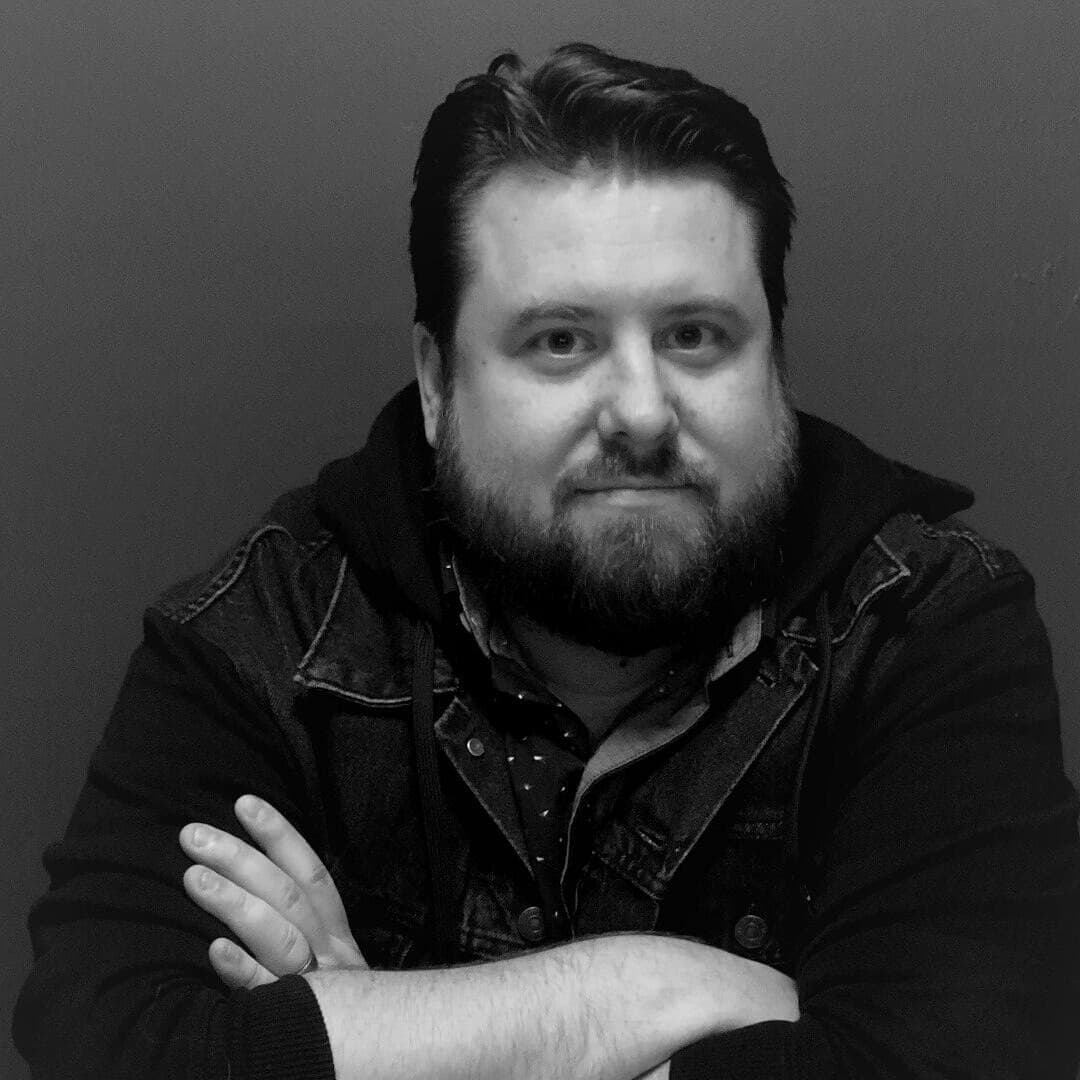
"That's always the best things of horror is when you're actually talking about something involving actual humanity. You're just putting that supernatural lens on it." - Joshua Williamson
WATCH THE VIDEO VERSION OF OUR INTERVIEW ON YOUTUBE!
Blood of the Wolf Man
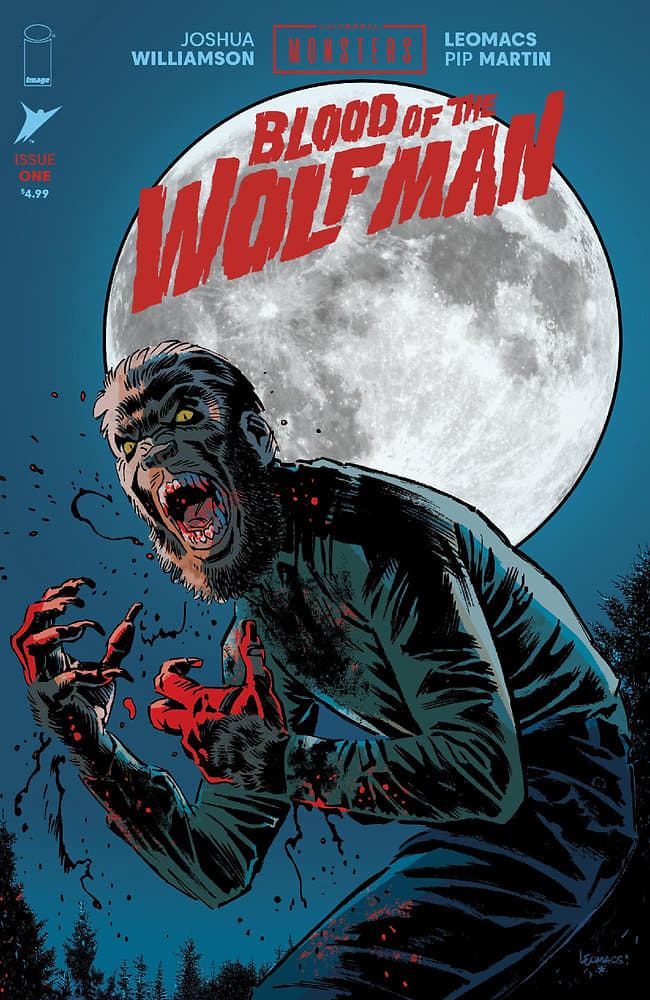
From the publisher
THE WOLF MAN REBORN FOR A NEW GENERATION Adam Jaeger thought he could become someone new at college... but not like this. One moment he was partying, the next he’s recovering from a massacre that left almost no survivors. The worst part? He might be responsible... As the monster within tries to claw loose, Adam will do anything he can to stop from becoming...THE WOLF MAN. The superstar team of JOSHUA WILLIAMSON (G.I. JOE, Superman) and LEOMACS (Basketful of Heads, Rogues) presents the next hit horror series of 2026!
Follow Comic Book Yeti
🔗 Comic Book Yeti LinkTree: https://linktr.ee/ComicBookYeti
For partnership and ad inquiries, please contact: thecomicsyeti@gmailcom
Follow your hosts
ARKENFORGE
Play TTRPG games? Make sure to check out our partner Arkenforge. Use the discount code YETI5 to get $5 off your order.
Make sure to check out our sponsor 2000AD.

[00:00:00] - [Speaker 0]
Your ears do not deceive you. You have just entered the cryptid creator corner brought to you by your friends at Comic Book Yeti. So without further ado, let's get on to the interview.
[00:00:11] - [Speaker 1]
The future is calling. 2,000 AD is the galaxy's greatest comic with new issues published every single week. Every 32 page issue of 2,000 AD brings you the best in sci fi and horror featuring characters like judge dread, rogue trooper, and more. Get a print subscription in 2,000 AD, and it'll arrive to your mailbox every week. And your first issue is free.
[00:00:35] - [Speaker 1]
Or subscribe digitally, and you can download DRM free copies of each issue for only $9 a month. That's 128 pages of incredible comics every month for less than $10. Head to 2,000 AD and click on subscribe now or download the 2,000 AD app and start reading today.
[00:00:54] - [Speaker 2]
Hello, everybody, and welcome to the Cryptic Creator Corner. I'm Byron O'Neil, your host for our comics creator chat. Today, I'm joined by one of the most prolific writers in the game. He's an Eisner and Ringo award winner, having written some of the biggest superhero properties you know and love. Iron Man, Superman, GI Joe, The Flash, Green Arrow, and creator owned hits like Nail Biter, which was the book that got me actually personally back in the comics after a significant time away.
[00:01:22] - [Speaker 2]
All that's great, but the reason I'm excited is I get to talk to him about one of my favorite things, Werewolf. He's got a four issue series building on Skybound's universal monsters line called Blood of the Wolfman with former Rose collaborative partner, Leo Max. It's my pleasure to introduce today's guest, Joshua Williamson. Joshua, are you ready to talk about werewolves?
[00:01:42] - [Speaker 3]
Yeah. Of course. Yeah. Dude, I love werewolves. That's part of why I'm doing this book.
[00:01:45] - [Speaker 3]
So I was really curious to hear your take on, on werewolves considering all this.
[00:01:49] - [Speaker 2]
Yeah. Well, my my own interest here, regular listeners will know about, you know, my affection for our most famous of of lycanthropes, you know, somebody with lupus that coincidentally shares the species moniker with the canines, you know, wilder forefather and is somebody whose body can get hijacked by a disease that will spiral out of control at any time. Have I an affinity for werewolf narratives, and I I think I saw, you know, Jonathan Landis' American Werewolf in London at far I too young was, like, seven years old. So so what's your history with the creature? What's the background here?
[00:02:20] - [Speaker 3]
Well, let me ask you for it. What's your favorite movie then? Which one is your favorite of the werewolf movie? Is it American Werewolf or is it something else?
[00:02:27] - [Speaker 2]
Actually, I really like Ginger Snaps. That's kind of I've I
[00:02:31] - [Speaker 3]
never I've only seen a little bit of the first one. I haven't seen, like, all of them. Because there's, three of them or something like that. Right? There's more than Right?
[00:02:37] - [Speaker 2]
I think so. I've only true. I've only seen the first one though.
[00:02:41] - [Speaker 3]
Like Oh, okay. Yeah. That's saying, okay. Right on. I wasn't sure if you ever had like a more, like you were saying, like, was it American Werewolf or, what are your thoughts on Wolf?
[00:02:52] - [Speaker 2]
On the movie Wolf? I I enjoyed it. It it wasn't a home run for me, if I'm gonna be honest. Like, I I out of the recent stuff, you know, Benicio Del Toro's take, thought, was was pretty solid. And Mhmm.
[00:03:06] - [Speaker 2]
I really, really dug that. Yeah. Out of out of the the more recent stuff, I'd have to say that. That'd be more more my favorite.
[00:03:12] - [Speaker 3]
Is that one? Yeah. I I, I'm trying to think of what was my first introduction to, like, werewolves in general. And, you know, I just like cartoons and and stuff when you're a kid, you know, I think that just werewolves was something that I always found really interesting. And did see American Werewolf when I was a kid as well, like, probably way too young, you know, and saw howling, like But even watching I think it's funny.
[00:03:37] - [Speaker 3]
I I think the thing that actually taught me some of the mythology of of werewolves was probably Monster Squad. Like, feel like Monster Squad is probably where some of that you know, I I definitely saw that when I was a little kid. And then, and, and then I saw Wolf. And I think Wolf is fascinating to me because Wolf is is not a Universal movie. Like, is not it is not a Wolfman movie.
[00:04:01] - [Speaker 3]
It is a werewolf movie, where it has I think it has a few light light touches to kinda connect things a little bit. But then, yeah, I saw, I saw Wolfman when I was a kid, like the original black and white one. And it's funny, like and I talked about a bit recently where it was like, saw the original, and then I saw some of the ones were after that, and, you know, some of the the, I'll say, funnier ones, you know, because they all kinda But, get rewatching that movie, once I knew I was gonna do this, like, once it was like, oh, yeah. I'm gonna I'm gonna do this. Because I I had the same thing.
[00:04:40] - [Speaker 3]
I thought the idea of being a werewolf, all that stuff seemed so cool when I was a kid. Like, the idea of transforming into something when a full moon hit. Like, all that stuff was really in my head. And my one of my, kids actually, this gets a bit into into the thoughts are one of my kids actually, one time on a weekend, was like, I I'm a werewolf. And I was like, it's not even a it wasn't even a full moon, but they were adamant they were a werewolf.
[00:05:06] - [Speaker 3]
But then by the time we got to this Sunday, they were mad. Because I was like, you you kinda play along a little bit. And then and by Sunday, they were kinda upset that my my wife had, like, really played along because they were like, I'm not a werewolf by the time we got to Sunday, you know? Like, it was a weekend of them pretending to be a be a werewolf, and they're upset they weren't actually a werewolf. And that was actually what triggered some of the the the plot of this, you know?
[00:05:28] - [Speaker 3]
And Okay. Can get it out a little bit, like, what what motivated the actual story, of this. Because there's actually a couple things that were in the news that really motivated it. My my take But, on yeah, even back in the eighties and early nineties, I just thought werewolves were cool. Like, August was a werewolf movie or a werewolf comic.
[00:05:46] - [Speaker 3]
Like, always thought they were really interesting. It was funny because when Kirkman did his Astonishing Wolfman comic, you know? Yeah. I was a really big fan of that one. Like that one, I I freaking love that comic.
[00:05:57] - [Speaker 3]
But anytime there was anything with werewolves in it And I actually, When I was doing Birthright, with Andre Brisson, he also loves werewolves. Werewolves is, like, his his favorite horror thing. I added werewolves to Birthright because Andre just really loved werewolves. And I was like, I can add a werewolf to this. I can there's
[00:06:14] - [Speaker 2]
Why not?
[00:06:15] - [Speaker 3]
Totally aware at it. Yeah. And I ended up adding a werewolf as, a major plot point of the the of the book that was not there originally in the outline. Like, we had a 50 issue plan, and werewolves were not a were not part of it until, like, around issue 30. There was, like, Andre and I just really love werewolves, and he was like, we fired a place for werewolf?
[00:06:30] - [Speaker 3]
Was like, hell, yeah. We could fire a place for a werewolf. And we changed a couple things around. But, yeah, I've just always really found you know, it's interesting because it's like, I think, as a kid, the idea of and this comes up in the book a little bit too. The idea of, like, you know, unleashing your inner beast, and there's some kind of there is a there is a freedom to it.
[00:06:50] - [Speaker 3]
Right? Sure. Now as an adult, I do look at being a werewolf a bit more because I could be a bit of a control freak, and that's like the top of of werewolves. You have to you have to not be a control freak. I I think it is Right.
[00:07:02] - [Speaker 3]
It's interesting because it's like and then this also goes into the book a bit because the dad is clearly a control freak. But the idea that, like, if you're a control freak, the worst thing is to not have control. You know? And I think that's something that I'm you know, when you're working on horror books, you have to look at things that are things that actually scare you. And I think as I've gotten older, the more I've thought about the idea of not being able to control myself or not be able to control yeah.
[00:07:25] - [Speaker 3]
What I mean by that is, like, as you're getting older, you know, there are certain parts, like, even your cognitive functions change. You know? So it's like all these elements are just pointing to my thoughts on on werewolves. I don't know. Sorry.
[00:07:35] - [Speaker 3]
It's a long that's a long answer to an easy question. So
[00:07:38] - [Speaker 2]
No. No. It it's all good. Like, because we have we have that group of of creatures, if you will, you know, from the Universal Muscles group. You have Dracula, who's kind of the aura farmer.
[00:07:48] - [Speaker 2]
Frankenstein is a tragedy merchant. Creature tells you to touch grass, and then Invisible Man is kind of like the chaos goblin of the group. Yeah. So so, I mean, characteristically, you know, there's there's the out of control nature of it, that sort of thing, man versus beast. But like more recently, a lot of werewolf stories are about being a victim.
[00:08:12] - [Speaker 2]
So kind of where did you wanna go with this?
[00:08:15] - [Speaker 3]
I think I do land on that. So so it ended up motivating me, and I don't know if I would call him a victim in this story necessarily. It's tough. It's difficult. I mean, he is the victim.
[00:08:25] - [Speaker 3]
You know? I mean, I I I do believe that it's sort of complicated, and I think you've already have you read issue one? Yes. Okay. Yep.
[00:08:34] - [Speaker 3]
So you know. Right? Yep. Like, you know, it's it's difficult because I was really inspired. I feel like inspired is the wrong word.
[00:08:43] - [Speaker 3]
But, you know, it's like when you're working on something involving horror, you have to think of something that's timely. You have think of something that's personal. You have to be grounded. You can't always be supernatural. I think when you get too supernatural, you lose it.
[00:08:53] - [Speaker 3]
Where's the humanity in that story? Right? Sure. And that's always the best things of of horror is when you're actually talking about something involving actual humanity. You know, you're just putting that supernatural lens on it.
[00:09:03] - [Speaker 3]
And with this, I was really inspired by the idea of, you know, the we've seen this a lot in the news where people are committing awful crimes, and then their families are finding ways to bury it. They're finding ways to hide it. And so I was really thinking about that a lot of of what do you do as a parent if you find out your kid is on something bad. Right? And and what do you do about it?
[00:09:26] - [Speaker 3]
And the trick with this one is a little different because it's like, obviously, Adam did something bad, but he didn't have control when he did it. And and there's all kinds of stuff you can look at where and and you'll see as the story goes and why it's called Blood of the Wolf Man and and what are the connective tissue to the original movie. But the idea that he it's funny. You have to question, was he responsible? He is ultimately responsible.
[00:09:46] - [Speaker 3]
He did kill
[00:09:46] - [Speaker 2]
them. Right? Sure.
[00:09:47] - [Speaker 3]
He did. But there's there are factors involved. And those factors build to they do create a conversation of, is he the victim as well in this story, because of what you're gonna learn over the course of the four issues. Right? That, like, was he predestined to do this?
[00:10:03] - [Speaker 3]
You know, was his family's lies? They're lying now, and were the lies before what ultimately led to this happening? You know? It's it's it's about, you know, his father is buried and done has their family has done bad things, and the father has a history of burying it. Right?
[00:10:18] - [Speaker 3]
Did them burying the truth about the past and then all these other elements, is that what led to Adam, you know, killing these people? Is he the victim then? Like, I think there is a bit of a conversation about that, and that is something we do talk about over the course of the of the four issues.
[00:10:32] - [Speaker 2]
Well, I'm really curious about developing Adam as a character because this was a different lens than than I've seen before in a werewolf story. Maybe I'm giving a little bit away, but as an as an artist. Because I immediately went to Joyce's The Portrait of the Artist of the Young Man and started seeing these comparisons with a coming of age story is focused on a metamorphosis, you know. Maybe I'm reading too much into it. No, you're not.
[00:10:55] - [Speaker 2]
What did you oh, okay. Okay. Well, elaborate on
[00:10:58] - [Speaker 3]
that I do think about that. No, I do think about that, that it is like this coming of age thing. Mean, that's what, you know, it's funny, because like, how do I put this? Where all stories can have many different avenues to take, and you could take that. Sure.
[00:11:09] - [Speaker 3]
When you look at something, you know, like Teen Wolf, you know, it's like, oh, now it's a metaphor for, you know, puberty, and it's a metaphor for, you know, your body going through changes. And then, you know, it's a metaphor for, like, you know, this kid is away from home for the first time, and he's at college for the first time, and he's there with his family, and life is weird, and he may not be who he thought he was. Like, there's those elements of it. You know, I did want to explore that stuff. I was with this with this book, and all books I work on, it's all about finding the character's voice.
[00:11:36] - [Speaker 3]
And, like, once I get I can't write it if I can't hear them. And and that was the big thing with this was I had to hear Adam's voice. But to hear their voices, and this sounds really and this is part of why the book is the way it is. You'll you'll see when we do issue two. One of the my my process, I guess, is is I, There's this phrase, but I basically put them on the couch.
[00:11:57] - [Speaker 3]
It's like, you get you get Adam on a couch, and then you play therapist. You literally ask, like, how are you doing? And you let them talk. Right? Now, I've heard this story from people.
[00:12:06] - [Speaker 3]
Like, I think even Bendis used to do this, where he would write conversations between characters just to get the rhythm, get the voices. And then those those those scripts would never come out. It was just get the rhythm. Just get the rhythm. And, that's what this was too.
[00:12:20] - [Speaker 3]
It was like, had to hear Adam and and I had to hear I had to hear Adam first, and then I had to hear his dad, and then hear them talking to each other. And then I was able to write. If I if I can't hear them talking, I can't I can't write. You know? Yeah.
[00:12:33] - [Speaker 3]
And that's what it was like with Adam, which is getting Adam on the couch and being like, how are you? How are you feeling? And you you don't even worry about the supernatural parts of it. You just just ask the character how they're doing. How are you feeling?
[00:12:45] - [Speaker 3]
And and that's what sort of my process with him and getting into his head and kinda what he's going through without all the supernatural elements. It's like it's just like, this is a kid who's who's bad things have happened in his past, which we've already sort of alluded to in the first issue. Like, it's already said, they've had a lot of tragedy in their past. Right? We issue two and three, you get to really see what that tragedy is.
[00:13:05] - [Speaker 3]
I mean, you can kinda guess as you're going through. You know? Like, he obviously had a mom who's gone. He had a brother who's gone. That's that's pretty much set up in the first issue.
[00:13:13] - [Speaker 3]
But, yeah, I was, like, hearing him talk about those things and sort of building out the idea of him going through this this change, you know? Like, he's going through, a stage of life that is a lot of ways, a lot about change, like going to college and everything. Like, all these things kind of went into him and his character.
[00:13:30] - [Speaker 2]
Yeah. Yeah. It resonated a lot with me because my son is actually leaving for college this fall and this whole it's not abandonment, obviously, but you have your whole world revolves around your kids for so long, and then you have to get to this point where you're like, maybe they don't really need me anymore. And it's a really, it's a challenging time, I I will say. Yeah.
[00:13:51] - [Speaker 2]
And so that that relationship, I guess, with he with Adam and his dad, connected with me. And you're no stranger to playing around with legacy in your work. You know, Flash is characterized by examining a cycle of inherited burdens, you know, and then Birthright is about one person's trauma chattering a whole family tree. So Yeah. Why why family trauma at the heart of this when the original film wasn't really about family
[00:14:19] - [Speaker 3]
trauma? Or was it? Okay. Because remember, that original film is, like, literally, his brother dies, and he goes home. Right.
[00:14:28] - [Speaker 3]
He hasn't spoke with his father in a long time. I mean, there's all kinds of that that so here's the thing with that movie. That movie is fascinating because it's it's a it's you know, I think it's ahead of its time in a lot of ways because it's like, it's also sort of this weird it's not a murder mystery because you know he did it, But, you know, which is similar here. It's like, he does something bad, and then it causes but what's funny with that movie is it's like, yes, there's the concerns of the murder and stuff like that, but it's also the idea that, like, oh, he might have had an affair with an engaged woman, and that's the thing that ostracizes them. Right?
[00:14:58] - [Speaker 3]
Like, it's there is and then the fact that, you know, I I do think that movie is a bit about that movie is interesting because it is a bit about family trauma. It is about coming home. You know? Yeah. For sure.
[00:15:09] - [Speaker 3]
Comes home, and it's like you know, but he's also sort of a jerk. It's it's funny. He's not a he's not like a good dude. Like, watching that movie again, we it's it's weird, you know, you watch something for fun, and then you have to watch it for work. You definitely it definitely triggers everything in your brain.
[00:15:24] - [Speaker 3]
You will you will catch things you did not catch before. And it's funny with that movie because it's like, he is aggressively a jerk without getting too deep into it. He he is a jerk through the course of that movie. And so it is like, it's tragedy, but when you watch it now, I would not call him a hero at all. Like, it's No.
[00:15:44] - [Speaker 3]
It's Yeah, at all. So, it's an interesting Wow, it's a really interesting, thing with that movie. But, yeah, I I think all of my work is ultimately about family in some form or another, about relationships between people. Like, I just it's just you can see it. You know?
[00:15:58] - [Speaker 3]
I think even you know, even Nailbar Nailbar is less about family, but there's the family element because of Alice and Crane and Warren. Like, there's definitely family pieces involved in it, but it wasn't really about that. Birthright's about that. Ghosted was not about that at all. But, Dark Ride is very much about family.
[00:16:15] - [Speaker 3]
It's almost like a dark west on Birthright. Like, it's very much about family. My work, I I think it's because that's something I can find my voice in, but also it's, you know, ultimately, I'm woman who work to be relatable. You want it to be grounded, and you want people to find their way through it. And the best way to find their way through it is these elements people have in common, and I think most people have, family in common.
[00:16:36] - [Speaker 3]
You know, it's like we all have family stories. I'm not gonna say we all have family trauma, but we all have family stories. You know? Sure. And I think that's a that's a way of making stories relatable.
[00:16:46] - [Speaker 3]
And it's just I don't know. I I definitely gravitate toward it. It's something I enjoy writing about are those relationships. You know, my definitely, my writing style definitely changed a little bit once I had the kids. I think once I had the kids, it became very focused on those ideas because I started thinking about family in a in a different way, my own past, my family and stuff.
[00:17:06] - [Speaker 3]
Like, you know, it's like you're saying, I have a lot of friends right now who are going through a similar thing where their kids are either just going to college or on their way. Like, I have two close friends who their sons went to college this last fall, and it's interesting. Like, everyone's reacting to it differently. Like, I know people who are like I have one friend who works in comics, and I guess there they are, who is one of the more, like, jokey, cold people, I think. Not cold.
[00:17:28] - [Speaker 3]
Cold is the wrong word. They are not a person I've ever could imagine being upset. Like, I don't really see them get upset very often. And when they were talking about their son going away to school, they were talking about how upset they were about it. It was like It was very human, but was surprising, because I never seen them act like that before.
[00:17:46] - [Speaker 3]
But that's what it does to you. I mean, I'm sure you've had a similar thing now, where it's like it it's like it does things to you that you are surprised by, you know? The idea of that and what that does to you. And I I think it's fascinating. It I was already writing this, so it didn't really impact it too much.
[00:18:01] - [Speaker 3]
And obviously, Henry is not like I I will say this. Ultimately, all the dads that I've seen have this experience. They're all good dads because they're just sad their kid isn't around is really what it comes down to. Right? Like, it's just they they you know, I think it was a lot of time with my kids.
[00:18:16] - [Speaker 3]
Like, I I see my kids every day. I talk to them every day. And, you know, it's like to suddenly not have that person who's, like, a piece of you around all the time, I imagine, is is incredibly difficult. Like, I have no idea what that's gonna be like, for myself. I'm sure I'm gonna have some weird reaction to it at some point.
[00:18:32] - [Speaker 3]
But with Henry, Henry's reaction because Henry is ultimately a selfish, controlling person. His reaction is not even it's not the it's he's worried about his son being gone because it's another piece of his life that he can't control. He wants to control everything. He wants to control his wife. He wants to control his kids.
[00:18:51] - [Speaker 3]
He wants to grow his business. He wants to control everything around him. And now all those things have gone. Right? Like, wife and his older son are gone.
[00:18:57] - [Speaker 3]
His business is failing. And now, this one last piece he thinks he can control, which is Adam, is also gone. And now, he's like, well, maybe there's an opportunity for me to have control again. And that's what he really sees Adam as in this story too, is that so it's a different twist, I think, on like, how you and I would react, because we're not awful like Henry is. Spoilers.
[00:19:18] - [Speaker 3]
Henry's a pretty bad person. Like, we're gonna show. You know? I mean, he's a bad dad. I'll also put he's a bad dad.
[00:19:26] - [Speaker 3]
But, yeah, anyway. Sorry.
[00:19:29] - [Speaker 2]
No. I mean, werewolves are rare rarely the hero of the story. So, you know, it's It's not surprising. Yeah.
[00:19:36] - [Speaker 3]
I wonder if there's an opportunity for a cool werewolf thing. I mean, I don't know. I I think this story is gonna end, You know, like, all werewolf stories end, I think. They end in fucking tragedy. Like, I mean, I'm trying to think of any time I've seen a werewolf story that did not end in, like, oh, that's a bummer.
[00:19:54] - [Speaker 3]
Like, you know what I mean? It's like, I mean, Werewolf of London ends that way. You know? For sure. Yeah.
[00:20:01] - [Speaker 3]
And then even, even when we were saying before Monster Squad, you know, they all end like that. Even I mean, Wolf is probably my favorite werewolf movie. That's why I brought it up. Was curious what your take on it is. Even though somebody pointed out to me recently that it's a superhero movie, I did not see it that way until they said it, and then I was like, Oh my God, you're totally right.
[00:20:17] - [Speaker 3]
That's a superhero movie.
[00:20:18] - [Speaker 2]
But I need to revisit that. Yeah. I've not thought of it that way.
[00:20:21] - [Speaker 3]
Well, because even, you know, James Spader's character ends up becoming his opposite. Right? Like, he becomes a werewolf, but is, like, evil with it. And that's ultimately, like, every freaking superhero movie. It's Iron Man, you know?
[00:20:31] - [Speaker 3]
It's like Okay. Oh, his dad. Yeah. You know what I mean? Becomes the Iron Monger, and You know what I mean?
[00:20:35] - [Speaker 3]
It's like, these things where the villain suddenly takes on the attributes of the hero, but then takes it to the evil version. That's basically what happened in Wolf. You know? So, anyway.
[00:20:44] - [Speaker 2]
Yeah. Well, was there a, any particular significance to it being set in the nineteen seventies aside from you don't have to deal with modern technology? Did somebody tell you that was
[00:20:55] - [Speaker 3]
the joke? That was part of it? Because that
[00:20:57] - [Speaker 2]
wasn't No. Part I've just I've I've talked to many a comics writer who's like, nah, I'm just setting stuff in the past because I don't have to deal with cell phones. I don't have to deal with Instagram, you know, blah blah blah.
[00:21:07] - [Speaker 3]
Yeah. No. That was definitely part of it. I'm not gonna lie. I was definitely part of it.
[00:21:10] - [Speaker 3]
I also I think that there is a ton this sounds silly. There is a legitimate timeline reason when you get into the third or fourth issue, you're gonna start it's funny, like, you as you're reading, you're gonna start realizing how connected it is to the original movie. You're gonna start seeing that it is a sequel to the original movie. And and there's a reason why it's called Blood of the Wolfman, not just because it's super bloody. There's another reason.
[00:21:40] - [Speaker 3]
But as you go and then that actually that timeline once you start seeing how the timeline falls, you're gonna say, oh, that's why it had to be the seventies. Like, there's a logistic there's, like, actual logistical timeline reasons why these things happened in the seventies. And then it was, so there was that. There was an actual timeline reason you'll see as it progresses. Then, it was I felt as though that would really work best with Leo Max.
[00:22:07] - [Speaker 3]
Because Leo Max's art, I think, lends itself in that direction anyway. And he is somebody, you know, I broke with him. I really like working with him then. I wanted to continue working with him. And so it was this thing of, like, you know yeah.
[00:22:20] - [Speaker 3]
It was it was all these factors. It was like, no cell phones. The technology being gone was really helpful. You know, I didn't wanna write a scene where instead of them going into a an old you know, when they go to the the specialists and they go to the old you know, they they go to the old, Supernatural bookstore, I didn't wanna be like, and they're just searching the Internet. You know, it was like, I wanted them to go to the bookstore, you know, to look for old books.
[00:22:46] - [Speaker 3]
And then it was like, yeah, no cell phones. Leo Max's art, I think, worked better with the seventies. And then it was I just didn't wanna have oh, no. There was a there's a legitimate timeline reason that you'll Okay. Yeah.
[00:22:58] - [Speaker 3]
As you go, you're gonna be like, oh, that's where this is coming from. That's the actual thing is happening. That's what the events are leading to. And and I you know, it'll be kind of part of the mystery until we get to four. And then four, we really establish the timeline.
[00:23:12] - [Speaker 3]
So, yeah. We will think you I think you are gonna figure it out by the time we get to the end of the second issue. Like, I think you will
[00:23:18] - [Speaker 2]
be like, oh, that's happening. But
[00:23:20] - [Speaker 3]
'll be spelled out by the time you get to the fourth issue.
[00:23:23] - [Speaker 2]
Okay. So werewolf fans will get it, the others. You're SOL to issue four.
[00:23:28] - [Speaker 3]
Yeah. Yeah. If you're what I I feel like I'll tell you this. So Skybound accidentally posted a massive spoiler by accident. And I was like, Oh, that's a huge spoiler.
[00:23:42] - [Speaker 3]
I wonder if everyone's gonna figure it out. And then one person figured it out. I saw, like, the one person was like, Oh, that means this. And I was like, I was like, Fuck. I was like, Well, how are you gonna do?
[00:23:54] - [Speaker 2]
It's out there in the world, you know? What are you gonna do?
[00:23:57] - [Speaker 3]
It's out there in the world. Yeah. Somebody figured it out. Like, there was a, there was a weird, like, I should have caught it, somebody should have caught it, but there was like a weird spoiler that like, unlocks everything that got posted, I was like, Oh, okay. Yeah.
[00:24:09] - [Speaker 2]
Yeah. Well, my only other deep cut question was the the family name, Jaeger, because I did I'm a fan of Sirius the Jaeger, which I don't know if you you're familiar with it. But the in in the anime, you know, you've got the Jaegers in the story. They're vampire hunters, and the main character is a werewolf, you know, or, you know, maybe you're just a fan of Jaeger Meister. I don't know.
[00:24:27] - [Speaker 3]
No. No. I was I was getting I was looking for names that that were sort of a bit more, Eastern European German, and then I literally was like, they have family it's much more basic than that. It was like, they are a family of hunters. Yeah.
[00:24:42] - [Speaker 3]
Like, that's that's the part of the story, is they're a family of hunters, and I was like, oh, Jaeger sounds like it. You know what I mean? It was like it worked, and I wanted to rearrange the spelling a little bit, and then they we just leave it as it is.
[00:24:53] - [Speaker 2]
Cool. Well, Blood of the Wolfman is dropping in late June. So everybody who's tuning in here, make sure to get your preorders in. You know, you have a bunch of other stuff hitting shelves as well right now. Anything else you specifically want to pitch?
[00:25:06] - [Speaker 3]
I mean, people yeah. I I hope you know, read Superman and Iron Man and G. I. Joe. But, you know, obviously, G.
[00:25:13] - [Speaker 3]
I. Joe and I got your stuff we're doing. I but, you know, with this one, you know, for somebody who is a fan of the creator owned where I've done it, if you're a fan of Birthright or Nail Biter, you know, or Ghosted or Darkrai, I do think this kind of fits into that same, like, area for me, you know, where it's a Okay. Sure. Not re hero.
[00:25:30] - [Speaker 3]
It's not capes. It's it's a slower burn, but it's more personal. So, yeah, I hope people will really pick this up and enjoy it, you know, and know it's something very, very different from me that I normally put out right now. So I hope you people
[00:25:43] - [Speaker 2]
will pick
[00:25:44] - [Speaker 3]
it up. Enjoy it, you know, and definitely preorder with your comic stores and make sure
[00:25:47] - [Speaker 2]
you pick up those preorders. Yeah. Awesome. Well, always like to wrap things up on a positive note. So we do something I call my shout out.
[00:25:55] - [Speaker 2]
It can be someone who did something nice, nice for you recently. You want to thank them or something that inspired you. You just wanted to share. And I'll go first to give you a moment to think about it. Mine is it looks like I will actually get to attend my son's graduation, which was initially kind of doubtful.
[00:26:10] - [Speaker 2]
I react to heat and I'm on immunosuppressants right now. So crowds are bad. But we found out there are office windows overlooking the gym where it's gonna be held. So I'm super excited because it looks like I'll be able to go. So
[00:26:22] - [Speaker 3]
That is awesome. Yes. Heck yeah. That is rad. Alright.
[00:26:25] - [Speaker 3]
I gotta think of, it's funny because they do this at my my kid's school. They do that at during they do shout outs. They do that with it. They do a similar thing. That's funny when you said that.
[00:26:34] - [Speaker 3]
I was like, oh, it's funny. They they do that at my my kids' school. God. I try to think of something recently that I would wanna shout out to. Well, you know, I'll I'll shout out to Ben Abernathy, who's executive editor of Skybound.
[00:26:48] - [Speaker 3]
He's been helping with a bunch of stuff this week on some projects and, was a really big help, doing some planning this week. So, you know, shout out to Ben Abernathy, executive editor of, Skybound. He's he's awesome dude, but he definitely helped me out with some things I needed this week.
[00:27:01] - [Speaker 2]
But never ever hurts to shout out your editors. That's always good good
[00:27:04] - [Speaker 3]
fun for Who's also one of my best friends, so it's a different you know, I can shout out my wife and kids all day cause they're freaking awesome. But I felt like, oh, maybe something that was a bit more work related. I don't know. You'll
[00:27:18] - [Speaker 2]
be surprised how many well, maybe not. Like, how many people do actually thank their editors. So Yeah. Yeah.
[00:27:23] - [Speaker 3]
I mean, they bail me out more than I wanna admit, I think. They're patient
[00:27:28] - [Speaker 2]
with me. Nature of the business. Well, Joshua, thanks for coming on, and it's always a treat to to talk about werewolves. I was gonna say, if you've never if you're a fan of werewolf fiction, a book I would highly recommend is James Inge. If you've never checked his stuff out, that that book is is absolutely, like, fantastic.
[00:27:47] - [Speaker 2]
Yeah. What is it called?
[00:27:49] - [Speaker 3]
It's called the wolf age.
[00:27:50] - [Speaker 2]
Okay. And it's one of those rare instances where you move away from more of the loner trope, and it looks at a societal structure for werewolves and what that might look like, and it's a lot of fun.
[00:28:02] - [Speaker 3]
That's cool. Did you watch that, There was a werewolf movie recently that was, like, big budget action, like, the world transformed into werewolves. Do you know I'm talking about?
[00:28:11] - [Speaker 2]
Mm-mm. I think it was literally
[00:28:12] - [Speaker 3]
called werewolves. I think it might have been called wolves. It was on it's on Disney plus now. I was just curious if you'd seen that one since you're, like, very much, like, love, werewolves. I was tempted to watch it, but it looks a bit more, b movie than I normally would watch, I think.
[00:28:27] - [Speaker 3]
And I actually really like b movie. I'm not gonna be I freaking love B movies. But it was one of those, like I wasn't sure. So I was curious about somebody if if anyone else had actually seen it, what they thought of it. Because it was a big, like it was one of the it's one of those movies that's, like, werewolves are taking over the world kind of thing, and we're, like, the last people trying to stop werewolves sort of movie.
[00:28:44] - [Speaker 2]
Sure.
[00:28:45] - [Speaker 3]
You know, kind of thing. So I was curious if you've seen it or not. Y'all check that out. That sounds cool. I like I like the idea of that more of a when you say it's more it's not as much of the loner trope.
[00:28:55] - [Speaker 3]
Is it because there's like
[00:28:56] - [Speaker 2]
a pack, Or is it more family? Yeah. Well, mean, it's a whole societal structure. So there's a city that that you have werewolves who are essentially protecting the people from this other creature that's sort of on the outside of the city. So it's like the big bad is not the werewolves.
[00:29:14] - [Speaker 2]
Is this thing that's out here. And, you know, human beings are basically they're not slaves, but they're second class citizens. That's really interesting. I I really like James' work. That sounds really cool.
[00:29:28] - [Speaker 3]
Alright. Cool. Alright. Yeah. We get in there.
[00:29:30] - [Speaker 3]
I know I just realized what time it was, and I'm, like, surprised nobody's yelling at me, telling me to go to the next interview.
[00:29:34] - [Speaker 2]
It's all good. Alright. Well, this is Byron O'Neil on behalf of all of at Comic Book Getty. Thanks for tuning in, and we will see you next time. Take care, everybody.
[00:29:41] - [Speaker 2]
Alright. Thank you.
[00:29:41] - [Speaker 3]
Peace. Thank you.
[00:29:43] - [Speaker 2]
This is Byron O'Neil, one of your hosts of the Cryptic Creator Corner brought to you by Comic Book Yeti. We hope you've enjoyed this episode of our podcast. Please rate, review, subscribe, all that good stuff. It lets us know how we're doing, and more importantly, how we can improve. Thanks for listening.
[00:30:02] - [Speaker 0]
If you enjoyed this episode of the Cryptid Creator Corner, maybe you would enjoy our sister podcast, Into the Comics Cave. Listen and subscribe wherever you get your podcasts.