Balazs Lorinczi returns to the podcast to talk about his newest graphic novel A Bite of Pepper. Balazs was last on the podcast to talk about Wolfpitch, which was a graphic novel I loved, so I was happy to have him back on to talk about A Bite of Pepper, which will be out on August 26th. Balazs and I chat about mixing vampires and skateboarding, the history of vampire lore, creating grounded characters, and pivoting during the editing process when you're faced with the possibility of having to rework completed pages. A Bite of Pepper is another fantastic graphic novel and it was a blast to chat with Balazs again. I love his approach to character and storytelling. Check out this episode and then go grab a copy of Wolfpitch and A Bite of Pepper.
🔗 - Check out Wolfpitch on the Top Shelf website
🔗 - Check out Balazs website here
WATCH ON YOUTUBE
BITE OF PEPPER
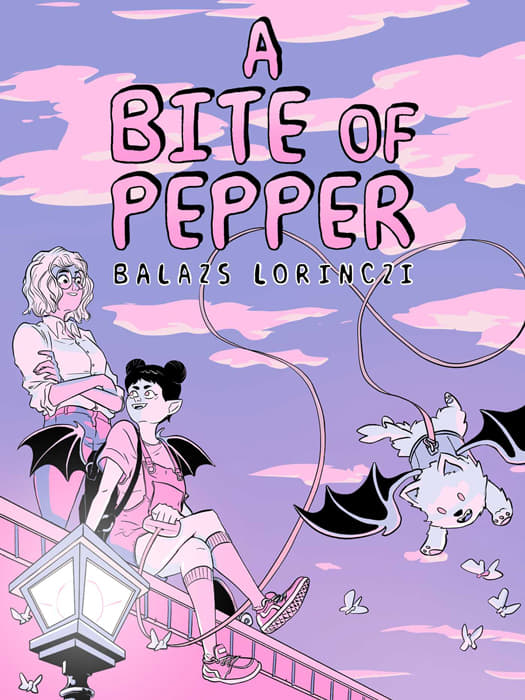
From the publisher
A skateboarding vampire falls for a human artist as they combine their talents to create a skating brand in this lightly paranormal coming-of-age young adult graphic novel romance for fans of Squad by Maggie Tokuda-Hall and The Girl from the Sea.
Pepper Mint might be born a vampire, but she’s pretty much your average teenager who loves skateboarding and her dog. What she doesn’t love is her mother’s continuous efforts to find her a vampire bride so that she can become fully immortal. Then Pepper meets Ana—she’s a charming art student, a part-time waitress…and interested in Pepper.
Ana’s presence changes everything, especially when she uses Pepper for the inspiration behind her art. But the two girls’ instant chemistry seems to provide the perfect opportunity for Pepper to finally commit to becoming the immortal creature of the night her mother desperately wants her to be.
Between the pressure from her mom and her inability to figure out whether Ana likes Pepper for herself or her aesthetic, it feels like everyone just wants a bite of Pepper. And with all these looming questions, will Pepper be ready to take the biggest bite of her life, committing to an unchanging immortality?
Follow Comic Book Yeti
🔗 Comic Book Yeti LinkTree: https://linktr.ee/ComicBookYeti
For partnership and ad inquiries, please contact: thecomicsyeti@gmailcom
Follow your hosts
🔗 Jimmy Gaspero: https://bsky.app/profile/jimmygaspero.bsky.social
🔗 Byron O’Neal: https://bsky.app/profile/byrononeal.com
PATREON
We have a new Patreon, CryptidCreatorCornerpod. If you like what we do, please consider supporting us. We got two simple tiers, $1 and $3. Want to know more, you know what to do.
MY NEIGHBOR NECROMANCER
Visit this month's feature crowdfunding campaign at 🔗 NECROCOMIC.COM
ARKENFORGE
Play TTRPG games? Make sure to check out our partner Arkenforge. Use the discount code YETI5 to get $5 off your order.
Make sure to check out our sponsor 2000AD.
[00:00:00] Your ears do not deceive you. You've just entered the Cryptid Creator Corner brought to you by your friends at Comic Book Yeti. So without further ado, let's get on to the interview. I don't know about you, but I've never considered a biting tarantula familiar a good thing? Then again, when it comes to necromancy, there's always a price for power, especially when raising the dead.
[00:00:23] Now you might be wondering why I'm thinking about that. Well, I just got a sneak peek at issue three of My Neighbor Necromancer, the witchy, wonderfully weird comic I've already been a backer of, and I've been eagerly awaiting more of our novice necromancer apprentice Jessie's adventures with her flying undead lizard, Bivitt. This story hits my sweet spot with this danger-just-be-on-your-doorstep kind of narrative. In this issue, Jessie continues her training with Sierra Reno and receives a mysterious invitation to the body farm.
[00:00:50] Now, I worked at the actual body farm in college, so when I heard that, I wonder what in the hell they were doing here. Will Jessie find friend or foe there? No spoilers here. I won't be accused of spilling the bones, so you just have to wait and see. This is Hands Down, one of my top crowdfunding comic picks of the last few years, brought to life by an absolutely stacked creative team.
[00:01:13] Yeti fam Jack Foster contributes an extra backstory rendered in jaw-dropping watercolor, and you'll find freaky familiars, undead mounts, a couple of new characters, one a mischievous group who look like a harpy-cobold hybrid, and a mailman who hops bodies faster than the postal service changes shipping rates. If you like your magic a little messy and your monsters a little lovable, head to necrocomic.com or hit the link in the show notes,
[00:01:38] so you don't miss the comic that's redefining life on the bright side of death. Hello, and welcome to Comic Book Yeti's Cryptid Creator Corner. I'm one of your hosts, Jimmy Gasparo, and I'm very excited. I have a returning guest, and I was very excited to talk about their book when they were on the podcast previously.
[00:02:03] It was Wolf Pitch, and it was fantastic. And so he's got another book coming out August 26th. It's called A Bite of Pepper, and I loved it. I can't wait to discuss it. We're going to talk all about it right now. But please, welcome back to the podcast, Balazs Lorenzi. Balazs, how are you doing today? I'm very good, Jimmy. Thank you for having me again. I very much appreciate it.
[00:02:28] And now I'm excited to have you back on and to talk about, you know, A Bite of Pepper. I was such a fan when, you know, you were on previously, and it was one of those wonderful discoveries for me that I love about the podcast. I mean, there's just, I've said it a million times, there are so many great writers and artists and cartoonists working right now.
[00:02:53] There's so many great comics and graphic novels, and it's almost impossible to kind of like, you know, to discover and to read everything and discover everybody. And I had not been familiar with your work before, and I think it might have been Holly Atchison that kind of connected us.
[00:03:14] And I just, I loved that comic so much. I had such a great time talking to you and was so glad when you reached out that you had another graphic novel coming out. And A Bite of Pepper, I thought was, it's such a fun with wonderful story.
[00:03:33] I love that you tell these really kind of like relationship, kind of coming into your own type of tales with this supernatural element that you don't really get bogged down into any like lore in terms of your world. There's probably a little more with A Bite of Pepper about how vampires work in the world.
[00:04:06] Yeah. So listeners, what is A Bite of Pepper all about? Well, first of all, thank you very much. I don't know if it's showing on the camera, but I'm pretty sure I'm blushing really hard.
[00:04:36] I'm really glad you liked it. I remember like you were very kind about Wolfpitch as well, and you named it on your like end of year list as well, which made you super happy. So when I sent you the PDF for this new one, I was like, if Jimmy doesn't like this, I did something wrong. And I was like, just, I really hope that you're going to enjoy this one as well. But yeah, as you mentioned, like the lore building, this one has a bit more to it.
[00:05:00] But basically the book is about Pepper, the titular character, who is a young vampire who was born a vampire. And in this book is part of like the lore building. Someone is born a vampire, they need to turn another person into a vampire so they can themselves become immortal. Otherwise, they just keep aging. And the whole book is about Pepper not wanting to do that because she's not sure about what she wants to do in the future.
[00:05:26] And at the start of the story, she meets Anna, who is an artist who is from a different social background than she is. And they together decide to start a business venture relating to skateboarding because that's Pepper's main thing. She's a young vampire girl who likes to skateboard. And the book explores basically Pepper's relationship with Anna, with her mom, her brother Jeb, and how they develop this business and how it keeps changing their life, basically.
[00:05:56] I call it, I'm pretty sure that made it into the copy as well, a coming of age, becoming a vampire story. Right. I mean, yeah, a couple of things I want to talk about. And I mentioned this to you before we started recording that I really thought when they were forming the business, and I said to you, I wonder how much of you kind of coming up with the idea and pitching it was then kind of recycled.
[00:06:22] Because when they're talking about combining skateboarding and vampirism, and they're like, oh, I don't know if I've ever seen this before. Because usually you think of the aesthetics of vampires from Bram Stoker's original novel, very gothic, or even some of the later heavy-duty vampire mythology, like Masquerade or things along those lines. Interview with Vampire.
[00:06:49] Interview with the vampire, it's all very, very different than kind of like, I mean, maybe outside a little bit of like the 1980s Lost Boys. Lost Boys and like Blade and John Carpenter's vampires, which are like kind of reactionary to the classic like Bram Stoker, like the Bail of the Gorses, the Hammer Horror one. And even like Anne Rice says, and like the movie interview with the vampire, kind of like, it's all leaning into that aesthetic.
[00:07:17] And then in the 90s and like the late 80s was Lost Boys, right? Like 87 or something like that? Yeah, it was mid to late 80s. Especially I feel like Blade and I don't know if you're familiar with John Carpenter's vampires, which is, I feel like I'm like the only fan of that movie sometimes. But that's very much like a reaction to the gothic vampire. Like this is not your granddaddy's vampires. It's not the dusty old crosses and garlics.
[00:07:42] It's more like a new modern like techno vampires in Blade and like the southern kind of like just B grindhouse type in John Carpenter. Like they were a conversation with each other. While what I was doing here, it was, but all those movies, they are all handling the vampires as monsters. It's all like against the vampires or like in an interview with the vampire, it's clear that they are evil.
[00:08:08] But obviously that story and that series explores different things compared to like Blade or Dracula or Lost Boys when a vampire is an opponent that we have to defeat. Personally, I was more about like the origin of it is more like an aesthetic thing. Like, oh, it's a vampire and like skateboarding is just a thing I'm interested in because I used to do it when I was a kid. And it was kind of like a marriage of the two that when I randomly put them together when I was doing a drawing once.
[00:08:37] Not even just like a comic, just like a drawing. I was like, oh, this is something. And also because Pepper is younger and the other folks that she, either the kids or younger people, that she skateboards with, like it's more geared towards that. It's almost like you have a very young, fresh skateboarding, like surfer, almost like aesthetic. Like that's who the brand is kind of like marketing towards. So everything is like the tricks, like the wings.
[00:09:07] It's just very interesting aesthetic that I, you know, haven't quite seen before. And also your vampires, like you said, with a lot of the movies, the vampires are the opponents. It almost seems like the vampires of your world have fairly integrated well with humans. And, you know, at least from the ball or the gala scenes we see, it almost seemed to be like a bit of, you know, their own class.
[00:09:39] It reminded me of very like aristocratic, although I don't know if that was like the case in practice because, you know, Piper's mom has like a used bookshop and, you know. It's like upper middle class at least. Yeah. None of the vampires, obviously not, there's not a ton of them. I mean, I don't really explore the whole like society of vampires in the story, but every time when we see other vampires, nobody is like, you know, hobo. And that's implied because the main vampires we see is Pepper and her family, her mom and her brother.
[00:10:07] And especially her brother is kind of like a grifter. We call him a grifter. He's like, they always have some like business plans. He's very important to like them actually starting this business. And I wanted that to contrast to Anna's character who clearly is coming from a different background who the whole vampire thing to her is more about like a social climbing thing. Right.
[00:10:29] Which is to be fair, it's a very common thing with vampires because like obviously with Dracula, who was like an aristocrat or Carmilla, Sheridan Lefranus Carmilla, that was all about like high society stuff as well. Sure. Interview with vampire, they, I think they work, if I remember correctly, it's been a while for that. So vampires and high society is, is a, I think it's a very common thing. Yeah.
[00:10:54] And, but mainly I like kind of leaned into that not to kind of suggest anything in this case, you know, like the vampire elite type of thing. Yeah, no, it does never, there's no indication in the story that it like, it gets, you know, to that, to that level. You're not implying that, but yeah, it does, you know, Pepper does seem like she's from like a comfortable background. Yes.
[00:11:18] Which really creates a nice contrast with Anna, who is like, doesn't seem to have her family around, kind of struggling as an artist, struggling to put herself through school, like working a bunch of different jobs. We see her first as a, as a waitress. Yeah. Her introduction is being a waitress. Why Pepper is attending the gala. Yeah. Being part of the, the, the, the higher society where Anna is being a server. Yeah. Yeah.
[00:11:44] Obviously there's that thing there, but I think because I don't handle vampires as a villains, it doesn't come off as they are. Um, they are the vampire elite. They are the one percent. It's, it's just more about like contrasting these two backgrounds and see how the characters kind of react to each other. Right. Um, that's, that mainly was important or cause I wanted Pepper to be someone who is upper middle class, has basically everything that she can ask for to do something with her life.
[00:12:13] Uh, she can do whatever she wants basically. And then she's still kind of just like feels like she doesn't know what she's doing. Again, of course, we're making bad decisions and just being grumpy about everything. Well, I really liked the explanation when the, the only really bit of like vampire lore or exposition is when Anna asks to find out more about vampires and the turning and Pepper kind of explains, you know what it is.
[00:12:40] Like you, like you already said, a vampire who is not already a human that becomes turned, but is born a vampire. They have to turn another vampire and then they're basically immortal from that period on.
[00:12:54] And you do such a wonderful job with Pepper kind of explaining her hesitancy, you know, that she, you basically like, uh, you do this kind of wonderful analogy about like, uh, about a crystal and you know how she doesn't feel like she's ready to be crystallized yet. Like she doesn't feel like she's fully formed, which I mean, it's not just something that a young person goes through.
[00:13:21] I mean, I, I know, I know fully formed adults who still kind of struggle with that. That is the genesis of the book. The genesis of the concept of a skateboarding vampire was me sketching and then listening to lo-fi music. And that's where the color comes from kind of lo-fi aesthetic. But I love the colors in this. I just, I love your color palette for it. Not, not to, not to, I apologize for interrupting, but I, I just loved it. I appreciate the positive comments. But go ahead.
[00:13:51] That's where the aesthetic comes from. But the narrative itself is when I was trying to basically like just thinking about like just my own life. And that's when, um, I was working on Wolf Pitch basically like drawing Wolf Pitch while I was developing the story for Pepper. Cause I felt like there is, I could do something with this concept of a skateboarding vampire. And I was thinking like vampires, immoral, like they tend to be mortal. They don't age. I'm like, wait a second.
[00:14:19] What does that mean if you're born a vampire? Um, you can make rules, I guess, if you make a vampire story that they are dead and they can't procreate. But, uh, I didn't want that. I felt that's too bleak. I wanted to be, you know, kind of cute, kind of something that, um, a warmer environment. So I was like, okay, what happens if you're born a vampire? When do you stop aging? That was like literally my first thought.
[00:14:43] I was like, that could be something like a point that in a, in a vampire's life, when their aging stops, that could be significant. And I was thinking, oh, it's kind of like when you decide what you want to be in life or any major life decision. So like you can be 20 years old and then you find yourself maybe very extreme example. Like if your woman finds yourself pregnant and then like, oh wow. Do I keep this baby?
[00:15:10] Obviously Pepper doesn't deal with these issues, but it's the same thought process. So I feel I'm very young and I need to make a very, very harsh decision or even just like what university do I go? That's a better example. What university do I go to? Or do I marry this person? Or do I take this job that, you know, going to be the next, I don't know how many years of my life could be the rest of my life. And, and, uh, I was 35 or something like that. I can't remember.
[00:15:39] Um, time, time is a weird thing. Um, roughly 35 ish. And I was thinking I did not get published until I was like 34. Didn't seriously start making comics until that point, like 33, when I started out, I was like, I'm going to do this. When I started to work on my first book, Donuts and Doom. And I thought, I think this should be a story about kind of like having to make this decision, but not wanting to.
[00:16:08] And exploring, do you have to? Basically. Right. And I didn't want it to be a certain, like a lecture. Is like, did Pepper make a mistake? Will Pepper make a mistake? Not making this decision or will not. What's going to happen? So that, that was like the genesis of like, when you come to this, like coming of age, having to make this decision and the turning becoming an immortal vampire. That's what it represents. And that's where the whole crystallization thing came from. Yeah.
[00:16:37] I mean, I think it's very effective. And I mean, there's also, there's other great elements that you've kind of like infused into the story. Like that informs, you know, Pepper's character because there's, she's dealing with misconceptions about being a vampire. Like she also is kind of hesitant for the turning because she likes to do all these tricks. And there's a certain element of, you know, danger or apprehension about skateboarding and landing a certain trick.
[00:17:07] And so she doesn't want to lose that. She doesn't want to lose kind of that fear, I think, because she thinks it'll make her, won't make it as exciting because then she, she can just do them. But she's dealing with like other people at the skate park in terms of her peer group who just think because she's a vampire, it's like not a big deal that she's landing all these tricks. Like they already think that she has some type of like ability or power.
[00:17:33] So you've, you've infused all of these other things into her character. That is something else that I thought, you know, the same thing with Wolf Pitch, like your characters are so, I feel like fully fleshed out. I mean, Anna going through her backstory and like some of the way her and Pepper's first meeting when they kind of have this like meet cute at the ball and end up on the roof.
[00:17:58] Like she feels already within a couple of pages, like a fully formed, you know, person, which I think is, is tremendous work. Not, not just in the writing, but like in the cartooning of it, you know, as well.
[00:18:15] Um, like I, I really feel like these are, I feel like after reading a 200 and some page graphic novel that I've, you know, it's the equivalent of having spent, you know, months getting to know these folks in, in, in just these pages. I, it's, it's very impressive. Um, even the way Anna like responds to Jeb and how Pepper responds to Jeb.
[00:18:37] There's so much in, in your interactions that you do with, you know, a couple of pages that I feel you really bring across these characters. Um, Oh, sorry. I just wanted, I don't know if I mentioned it. Jeb is, uh, I can't remember if you named him, but Jeb is Pepper's brother. Right. Yeah. Jeb is Pepper's brother. We see, we, we meet him, I think before we, we meet him early. Well, not before Pepper, but we meet him very early on. And just for the listeners, I don't know if I mentioned it earlier when I was talking about it, that's his name.
[00:19:08] Pepper's half brother. Jeb's Pepper's brother. He's the one that you referred to earlier as, uh, the grifter. Yeah. Yeah. I mean, he, he, he has a very interesting, um, not flattering introduction in the book, but I, I feel like his, his, his, his, his character has some, you know, some interesting, uh, turns in this as well.
[00:19:31] Especially when it, it comes to them trying to like, uh, uh, form this business that they decide to form this skateboarding, you know, brand. Um, yeah. The main goal with Jeb and, and Pepper's mom's pyramid was that they, they kind of like antagonistic characters from Pepper's perspective, especially Jeb. Cause they are, you know, siblings. So that's like a sibling thing of just slagging each other constantly. But I, I was hoping that they not going to come off either of them as villains.
[00:20:00] I was consciously making writing decisions of like, oh, I could easily turn this into like one of them being an actual antagonist in the story. But I didn't want to do that because I just wanted them to feel antagonistic from Pepper's point of view to give that, like, sometimes young people think everyone is against them. Wanting to force like them to do something they don't want to. But I wanted Jeb to be ultimately someone who like, oh yeah, he has good points. He's not a bad guy. He's just a bit of a, bit of a jerk. Sometimes.
[00:20:31] Right. A bit sleazy. Well, yeah, a little, certainly. Well, I mean, it's interesting. There really isn't like a villain per se. I mean, but so much of the conflict is like Pepper's internal, you know, conflict. Whether or not it's the pressure she feels from her mother, the pressure she feels from society, the pressure she's putting on herself, just trying to figure out like what it is she wants to do.
[00:20:57] You know, there's all of this like wonderful kind of internal conflict from Pepper trying to figure, you know, stuff out. And I like that you kind of let Pepper be, you know, messy. She's not somebody that is going to always get it right. Like that's part of the appeal, I think, of Pepper feeling like a real living and breathing character.
[00:21:24] Maybe not a thing to say about a vampire, but she's a little she's kind of she's kind of like, you know, messy. And I loved trying to like going on that journey with her as she at least tries to figure things out a little bit, you know. I don't know. I don't really have a question there. I just thought that was very well done. I'm really, really happy that you got all that out of it.
[00:21:52] And then you think that the characters work because that's kind of like the main thing with the book. It's not a book with a heavy plot. It's not really a book about like, you know, plot twists. It's just characters like interacting with each other. Like I really, really try to this out of like this is my third book, but I already have a fourth finished. I'm working on the pitch of the fifth one and the sixth at the same time. And this feels like the most slice of life out of all of them. Okay.
[00:22:20] Every time when I was writing it and I got to a point where I'm like, I know things have to happen here. I have to move forward, et cetera. The main thing wasn't like always like what the plot needs. It's always more what the characters need. And I was consciously trying to be like, that's why I was saying earlier, like no one is really a villain in it. Because if I had a villain, they could have easily been just like, oh, this character is scheming and everyone is reacting to the scheming. It's more just like everyone has to make their own decisions. How would that work out? Right.
[00:22:49] There is some physical action in a sense of skateboarding, for example. Like it's not just people sitting around the table eating noodles or stuff like that. No, I mean, your work in terms of that, because you're doing really like everything, you know, in terms of putting this book together. But no, there is like wonderful action in this. Like the skateboarding stuff is great. There's a wonderful scene where Pepper is flying with Anna.
[00:23:18] There's like Anna, for what some reason has to like Harry Pepper through the city. Like there's like there's a lot of fun stuff going on. One of the things I wanted to say is you're writing characters that are younger, which I mean, any any writer can kind of get into the head and take on. Characters of, you know, any age. I used to be the one myself. Sure. Right.
[00:23:46] But I know I do think I do think trying to write and capture like. Young people sometimes or when as you get older and kind of get, you know, further away from those things. Yeah, a little bit. Not that you're older or. No, I know what you mean. I'm an old man, but not, you know, not you're not old by any stretch of the imagination.
[00:24:09] But how you write Pepper and Anna and Jeb, I thought you do a really good job, especially with Pepper. I think capturing like some of the attitude and sass of like a particular age. I will say, though, that I think I think you're a little bit above maybe the the the target demographic with your Titanic reference. Oh, I thought it's universal.
[00:24:38] That became a meme. I tell me. That's one of the highest grossing movies of all time. It are. Yeah, you're you know, you're right. You're you're you're absolutely right. But I, I, I, I saw that and I was like, I mean, it's it's a great reference that I'm like in Wolfpitch. I referenced the 1999 mummy movie with Brandon Fraser. Like, I think that's a bit more obscure. Yeah, I think. Oh, my next book is just all like John Carpenter references.
[00:25:07] I just can't like literally the main thing is like just John. I can't escape that. Well, I felt like Titanic. Maybe they're going to get it. We'll see. I, I, I, I appreciated it. I thought it was it was it was perfectly placed. It was done very, very well. I'm just I'm just teasing you a little bit. But I like it. Anyone who's listening to this and happens to read the book and you're younger, just just write me on Instagram. Just like I got it. That's it.
[00:25:36] Just like I got it. If I get one, one message like that, I'm going to be happy. But valid point. I was hoping if maybe the editorial would point this out. But they said no. They pointed out a lot of other things. So, yeah. I was working on a different publisher on this book. Really. But nothing bad to say about Top Shelf, who I worked before and worked on the next book as well. But yeah, it was a unique experience working with McElderry books on this one.
[00:26:06] Uh-huh. I just thought I would shout, shout them out. Kate Prosima, my editor. And Michael, the graphic designer. And Andrina, the assistant editor. They were all like amazing. And my agent brand as well. So, yeah, I mean, yeah, credit to everybody. Again, I just absolutely loved it. We haven't talked about Shroom, who I thought, like, what a wonderful, perfect addition.
[00:26:31] Shroom is, I guess, the family or, you know, Pepper's pet kind of vampire dog, I guess. Vampire dog. Definitely a vampire. It's more important to the plot than you would think. Like, um, it's a certain aspect. Shroom was always there. Shroom was in the very, very first, um, drawing I did of Pepper with Shroom. She looks, uh, Shroom looks different on that drawing. More fluffy.
[00:26:58] But I had to scale him down so I can draw him on every single panel. Um, but originally he was a very fluffy dog. But that was the main concept of vampire girl who kind of has that, like, the original inspiration was that kind of like Tokyo fashion type thing. That's where the bonds come from. It's not like a Mickey Mouse reference or anything. Okay. And with the hoodie. And with the dog who has wings. And just being a little, just a little rascal. Oh, yeah.
[00:27:27] A little dog with bat wings. That was, like, the thing. Like, I think that's something. I think I should put that in the book. Oh, yeah. Like, from, I think we see Shroom earlier on. Yeah, but like, which one he's on? Yeah, in the very beginning. But, um, when he's introduced and he just, when Pepper, after she meets Anna, and then
[00:27:55] Pepper calls him and he just kind of, like, bursts from the window in the background. And, like, do you ever, um, are there things like that with Shroom where, you know, you want to include him in, like, having to draw him over and over again? Because, like, there's some times when Shroom is, like, not involved at all. And you just, you just have him there. He's, like, lying on the floor, like, sleeping or doing something else. Like, is it, are you ever, like, do I really need Shroom in this panel? Or did you just love having him there?
[00:28:24] The opposite. So, there were a few chapters of Shroom is missing from the action because maybe they are at a skate park and they're not going to take, I mean, they could have taken it, but I think the scene was busy enough not to having to have including Shroom there. Because in the skate park scenes, for example, or any skating scenes, if I would include Shroom just to chill out in the background, I think that would be distracting. Because, is that the Simpsons reference?
[00:28:49] It was, like, the, they're talking about a movie and, like, I always, like, if that character is not on the screen, I want the audience to ask, where is that character? Okay. Yeah. Is it the Simpsons reference? I was really paraphrasing here. No. I can't remember. I, it's like a very famous, like, bad writing, like, joke, basically.
[00:29:16] Like, if the movie is about main character, every time the main character is not on the screen, I want the audience to ask where is his main character. And I was kind of like that with Shroom. Every time he's not involved in something, I was asking, why is Shroom not involved? I like drawing. He was a cute old dog with bad wings. But I think he would be distracting if I put him everywhere. But there was, like, stretches in the book. I'm like, I will need to include him in the future because he does have a role in the narrative, basically.
[00:29:45] I don't want to spoil it. But there is a hint at it. But kind of, he was, he always had the role of, like, the little squirrel creature in Noshika. I don't know how to say it. You know the Ghibli movie? Noshika Valley of the Wind. Yeah. Yeah. And she just has, she finds this, like, squirrel creature early on. And she just keeps having it with her all throughout the movie. So that was kind of like, that's a role, Shroom, basically.
[00:30:15] It feels that. Just to have something there that is hopefully cute. Oh, no. Very, very. When you're doing something like this, a story like this where we talked about, there isn't, like, really a villain, you know, the conflict, a lot of it, you know, certainly there is a, you know, a climax because you're getting to this, this gala and the idea of, of the turning.
[00:30:43] Was there one part of the, the story that was more difficult for you to, to, to crack than any other? Like, when you're not, you don't have, like, a character facing off to resolve that conflict when it comes from more of, like, an internal struggle and, like, how is Pepper going to deal with some of these things? Not to give away any of the plot. Just, like, from you, from, like, like, putting the story together was, you know, did you,
[00:31:08] did you, like, work on this kind of chronologically or, like, from an outline, did you have the ending and work back? Like, I just, it was there a difficult, a part of it that was more difficult to crack? Yeah, the, the ending is definitely, like, not even the, the emotional ending, sort of. So, the previous two books I did, they both end in, like, a concert. Donuts and them and Wolfpitch. Their climactic scenes are both at, like, a live music performance.
[00:31:37] That's where the character arcs culminate. That's where, that's the main action of it. Even in Wolfpitch, they defeat the villain there, quote, unquote. In, in Byer of Pepper, we didn't have a villain. We didn't have that type of scene. So, the original idea was kind of like a more emotional catharsis between the two main characters, which was originally, in my head, played out as a conversation that kind of going to have an emotional weight enough so the, the reader going to feel satisfied with it.
[00:32:04] But as I was doing the paneling, because the way I write, I usually have an outline and then I start working on the actual page because I want to see how the dialogue flows on the page. And a lot of times when I start just roughly sketching out the characters on the page as I was writing on it, it's like a very, like, chaotic thing. Like, I put in dialogue and sometimes I sketch in stuff. Because if I see just in a couple lines, how the characters, what faces they make, body
[00:32:34] language, composition on the page, it kind of like changes sometimes how I do the story or like put gags in it that I didn't plan originally to put in there. Stuff like that. And when I was doing these rough outlines and writing the dialogue, I was like, I just have 15 pages, two people are yapping. They're just talking to each other. So, like, this is not working, basically. It doesn't feel satisfying to the story.
[00:32:58] And basically what I realized is we need physical action that kind of represents what they are going through. So, even though, and at that point, I actually had like 50 full pages at least done, like colors and everything. Because sometimes I work in blocks, do like 30 pages of just full finished pages and then get back into the writing. Especially when I know where the story is heading. I know exactly what plot beat is going to happen.
[00:33:26] I just need to flesh out those scenes, what the actual dialogue is, etc. And at that point, I was like, I know where this story is going. I can start drawing and coloring and everything else. And then I realized, oh no, I actually don't have the ending. I thought I had the ending. And then you have to go back and then you're like, is there anything that maybe I can reincorporate that I didn't think to reincorporate? The solution in this case was mainly to include some form of physical action.
[00:33:59] It's not just going to be two people talking, sitting down and talking. There's going to be something more interesting involved. And obviously physical action. When I say physical action, it can be anything. It can be, in this case, it's, I don't want to spoil it. Not like I could spoil it. But you know which scene I'm talking about on the rooftop? Yeah. Yeah. It could be, again, in an action movie, it could be a fight scene. It could be an action movie, a chase scene.
[00:34:25] In a sports movie, it's like the final game, basketball game or whatever. Or in my previous books, it's the final performance where things come to head. So I felt like this needed another something like that. And then after that, we had kind of like, not even an epilogue. It's more just like, let's kind of wrap things up character-wise. And I had the ending. But then when we got to the editing part of the book,
[00:34:55] my editor, Kate, kind of sent me an email with like an essay, basically analyzing my book, which great editor, because I was like, wow, she gets it. And she has really great points. And she said, I see what you're doing. It's not working the way you want to work. And she proposed a complete rewrite, which would have led me to discard like 50 pages of the book, fully finished pages.
[00:35:24] So I had a bit of a panic attack. And I got over that and I sat down and I said, what if I take all your points and see how I can make it work with the story I have? And basically, I only discarded a couple of pages that got replaced with something else that worked better and actually added like 15 extra pages and then rearranged some other stuff to kind of, because she said, yeah, you have,
[00:35:53] it's there what you want to say. It's just not rendered in the right way. It's not properly laid out. So kind of like expanded the ending. Okay. The more the emotional after that action scene, basically what happens. That's the main thing that I got expanded. So it was kind of like a choppy process. It wasn't as straightforward as I would prefer it to be. Right. Because I got a second pair of eyes on it with Kate
[00:36:22] and Michael and Andre kind of like agreeing with Kate and saying like, yes, this is what should happen. And then I had the opportunity to kind of brainstorm it with them. What we should do made it a better story, in my opinion, and a more full story. Okay. Wow. Yeah. Yeah. I can imagine getting like notes or getting an essay, getting an email and like the thought of, you know,
[00:36:50] having to redo or do something different or toss out like 50, you know, finished pages when you're doing everything. So, um, by the way, what they, what they proposed was great. Right. On the one side, I just got to panic at that. Cause some of those pages were like quite hard to draw. So, but you know, the same, like kill your darlings. And like, yeah, if you have to check out 50 pages to make the story better, but there was an element of the story that, that was about time passing.
[00:37:19] That was very important to me to have a bit in the, before the third act when the characters and the readers experience time passing, the whole story doesn't, doesn't just take place within like one week. Like I want it to be, that's an important element because there's coming of age. Time is involved with that. And the perspective that time gives you and what you go through when you think you only have a compressed amount of time
[00:37:46] to the short time to make a decision. And what happens if you go over that. Right. And that would have been eliminated with their proposed changes. It wasn't a bad, idea, but they proposed, but because it didn't involve time passing, I was like, let's come up with something else. And I really hope that when people read this book, they're going to feel like that, that's an important element of the story, that the characters go through this, this time skip. All right, everybody.
[00:38:15] We're going to take a quick break. We'll be right back. Y'all, Jimmy, the chaos goblin strikes again. I should have known better than to mention. I was working on my DC Universe meets Ravenloft hybrid D&D campaign on social media. My bad. He goes and tags a bunch of comics creators we know, and now I have to get it in gear and whip this campaign into shape so we could start playing. Another friend chimes in, are you going to make maps? It's fair to say it's been a while since I put something together, so I guess,
[00:38:45] question mark? It was then that I discovered Arkenforge. If you don't know who Arkenforge is, they have everything you need to make your TTRPG more fun and immersive, allowing you to build, play, and export animated maps, including in-person Fog of War capability that lets your players interact with maps as the adventure unfolds while you, the DM, get the full picture. Now I'm set to easily build high-res animated maps, saving myself precious time and significantly adding nuance to our campaign.
[00:39:15] That's a win every day in my book. Check them out at arkenforge.com and use the discount code YETI5 to get $5 off. I'll drop a link in the show notes for you and big thanks to Arkenforge for partnering with our show. I think I'm going to make Jimmy play a goblin warlock just to get even. Do you love sci-fi? Are you a horror fan? Maybe you prefer action or fantasy. 2000 AD has it all and should be on your radar with a whole universe of characters
[00:39:44] from Judge Dredd and Strontium Dog to Rogue Trooper, Shakara Halo Jones and many more. Every weekly issue you get five action-packed thrills from incredible creators such as Garth Ennis, Rob Williams, Alex DeCampi, Dan Abnett and so many others. Get a print subscription and it'll arrive to your door every week. And your first issue is free or subscribe digitally. Get free back issues and download DRM free copies of every issue for just $9 a month.
[00:40:13] That's 128 pages of incredible comics every month for less than $10. That's like a whole graphic novel's worth. All subscribers get amazing offers like discount vouchers and exclusive product offers. Head to 2000AD.com and click on subscribe now or download the 2000AD app and why wait? Start reading today. I'll put links in the show notes for you. Welcome back. I really loved, I mean, to kind of key into that, you, there's a,
[00:40:43] there's a say, you know, do not give away story elements, but there is a section where we're just focusing on Pepper and Shroom and it's towards the end of the book and, you know, Pepper's out taking a walk and you have this like, you know, at least when I was reading it, this really beautiful kind of transition where Pepper's looking at her phone and then it's
[00:41:13] like a look, like we're taking a long look at Pepper almost like walking away from the reader and there's no panel border, it's just all white and then you kind of have like a page, I think it's a page or two of just a couple of leaves as, you know, we're now transitioning through the season and, or at least through another season into fall and winter.
[00:41:43] But I, the use of those two pages with those like sparse leaves on it though, I just thought was like just a wonderful thing in comics comics to kind of like convey, you know, time is passing. Like everyone understands the seasons and I just thought, you know, when you're talking about like the economy of storytelling sometimes, which we talk about on this podcast and like you're trying to, you know, tell a story succinctly and you're trying to, you have, you know, only a certain number of pages,
[00:42:13] but to really have the monthly issues, monthly issues, yeah, when you do have the time and space to do something like that and just kind of like use those two pages to get the reader into a place where, oh, we're, we're taking a moment, we're taking a second, time is passing, things are happening like off the page. I just, I just thought that was such like a kind of like a lovely touch to get into the next section of the book. I'm glad you think that because I like to do
[00:42:42] that type of stuff and I think the graphic novel format is, when I say graphic novel format, I mean like a book that's meant to be one whole book, not like a six-issue collection. I don't like to call that a graphic novel because just, just to clearly delineate the difference between formats, nothing wrong with the six-issue collection. I have a lot of them in the background. I do too. I know it's a big debate like what's a graphic novel, why, why it's not comic. Every graphic novel is a comic. I just think graphic novel
[00:43:12] is like a format thing. So the graphic novel format, I think it allows the author to kind of do things like that which you don't necessarily have the opportunity to do when you do like a monthly issue thing. That's why I kind of never even considered trying to do monthly comics. I was thinking in graphic novel format because it allows me to do the type of pacing that I think would be best for the story. And in this one specifically,
[00:43:42] I think I do like a couple other, not like two pages when it just leaves, but there's a couple other when it's just like one image on one page to kind of signify that time is passing. We are transitioning to another scene. I always think like, I hope the reader is not going to think that they're just getting an empty page here. A filler page to pay their own time basically. I mean, I always appreciate it. I just, you know, you're, this is how this is needed. Yeah.
[00:44:12] And I mean, I, you know, I, I kind of, this is how the, the writer, the artist, the creators, like kind of want you to experience the story. Like, I definitely don't think anything is there for filler, but I think we have to have a, I don't know, sometimes there are fun, interesting ways to convey the passage of time that isn't just a narrative caption that, you know, there's nothing wrong with, whatever suits the story. Yeah, there isn't, there's nothing wrong with like three months later,
[00:44:42] but I, I mean, it's, it's nice sometimes to kind of do it in a different way or to kind of create some physical space and, and not just, uh, you know, a caption, but. And the law of comics is, um, basically like, because it's sequential art. So you're translating time into, to the art, into 2D space. Um, the size of the panels, your, your, uh, compositions, how, like,
[00:45:11] is it a close-up in a small panel? Is it like a larger panel with a lot of characters? They all, they can all signify time. They all dictate the pacing, how much dialogue you put into a page, how little dialogue you put into a page, do you, do you an empty page, et cetera, et cetera. A lot of making comics is, like, setting up how a page works, is about, kind of like, carving out time on that page. Same with, like, movies obviously have a similar thing, but because movies, we experience movies
[00:45:40] in time as the movie goes on, it's a bit different, but there is, I think there's a lot of, like, parallels there. I think maybe Tarkovsky said something about, like, carving out time, like, that's all he was doing. I might be, again, paraphrasing something, my references are horrible tonight. It's okay. But I was thinking a lot about that while I was doing this comic because it's not a plot-heavy book where I have to hit the plot beats to move the story forward. I think I had more opportunity to, like,
[00:46:10] just kind of play around with time, which I hope it translates to the readers as well. Because, for me, time is an important narrative part of this story, no, I, I, I agree. I mean, I, I think there are a lot of, because it isn't, you know, as you said, like, plot-heavy, I mean, I really think not only in terms of the idea of playing with time,
[00:46:39] but you, there's a lot, I, I don't know if I would love to go back and look at, like, something like Wolf Pitch and look at, like, this. I felt like, and maybe just because it was fresher in my mind, there's a lot more close-ups in this, you know, especially in terms of, um, scenes with Anna and, like, Pepper, um, on the roof where there's a great, like, one page where Anna is getting, like, ready for something and you kind of see her getting ready
[00:47:09] and it's a lot of close-up panels, um, but, especially with Anna. different details, you mean? Yeah. not just on Facebook, like, yeah, yeah, yeah, yeah, yeah, yeah, but I mean, with, like, there's a, there's one in particular that really stood out to me with Anna and Pepper on the roof where we kind of see them close together and then, you know, I think Anna starts to, like, move forward and we just kind of, like, see a little, the next panel is just a little bit of her and, like, some lines and maybe an effect,
[00:47:39] like, a whoosh or something along those lines, but there's, um, there's a, I felt like there was, like, a lot, allowed you to really focus a lot on, like, the detail, I mean, the, the facial expressions with Anna and especially Pepper are, like, tremendous. I mean, like, Pepper is so, like, animated, whether or not she's excited or whether or not she's, like, grumpy, like, I,
[00:48:08] I really felt like there's, there's just such, like, wonderful, like, cartooning, not cartoony, you know what I mean? Yeah, Wonderful, like, like, facial expression and facial acting with Pepper, like, in particular, but, you know, she's a little goblin. I like, I like, I mean, the person who's a little goblin. She, she absolutely is and, I mean, she just seems like she is, you know, that there's so much, like, over the top kind of stuff,
[00:48:39] like, not necessarily, like, her personality, but, like, her reactions to things, um, I felt, what were, were, like, like, exclamation sometimes. Oh, yeah, but even, like, when she, but even things that, like, when she is, like, like, some of the looks she gives Anna, where, like, it's just Pepper, and we know she's looking towards Anna, and she, like, gives her a bit of side eye, or there's one panel in particular, where I think she has, like, a soda,
[00:49:09] and you can clearly tell that, you know, she is rolling her eyes, you know, and it's just, it's done, like, so well, it's, like, that snapshot taken right at that perfect moment. I'm glad that that came through, because I, yeah, I really wanted the characters to, to feel like kind of alive, to, to be relatable, or just, like, people you want to spend time with. Like, ultimately, like, I was talking a lot, like, the last, like, 20 minutes about, like,
[00:49:39] carving out time, and whatever, banking, I'm thinking, but ultimately, this book is about just a vampire girl, who, like, have issues with growing up, basically, and her, family, and her new, person of interest, and a cute dog, and, like, lo-fi vibes, like, I kind of wanted to, one of the colors to be, like, you know, as, as if, like, you're listening to, like, lo-fi hip-hop music, while you're skateboarding at night, that type of,
[00:50:09] but just, I have that feel to it. That's the main thing. If, if I manage to communicate that, and you feel like the characters are, like, relatable, or alive, or you just want to hang out with them, for 220 pages, everything else is secondary. Well, I think, if that was the assignment, I mean, I think you nailed it. I, I thought it was, I loved it. I mean, secondary, I, if people get more out of it, and they think, oh, I like the aspect, I'm very, very happy. but my first,
[00:50:37] first mission with any book I do is, I want you to want to finish the book. I want you to be involved enough, invested enough in this, to get from the first page to the last page, and care enough about these characters, that, every single one I do. By the sound of it, at least with you, I manage, so I'm very, very happy about that. Yeah, you got, you got, you got me on board. No, I, I thought it was great, and I'm sure, um, I think it was,
[00:51:07] I had on the podcast, uh, and, and, I talked to sometimes, Amy, Amy Chase, and I know Amy had reached out, because she, Amy had read, um, Amy, who's going to, her, she has a podcast episode coming up too, because she has a book, uh, a graphic novel coming out, but, um, Amy had read Wolf Pitch, after I, I told her about it. yes, yes, yes, yes. Yeah, and she, so, I'm sure she'll be, I'm sure Amy will be picking up this one too,
[00:51:35] and I bet this is something Amy will love, so you'll have two. I'm sure you're going to have Amy, as well. I think she commented the other day on Blue Sky, or, or X, I can't remember, um, which I was happy about, um, yeah, mentioning you, that you recommended that, so I hope she will like it as well, and I hope other people will like it too. I, I, I think, I, I think so, um, I just thought, it's, it's just, it's a great story, I love the idea, of, of Pepper's hesitancy, as I said before,
[00:52:04] Pepper's hesitancy with the turning, her explanation, of not, not, feeling like she's, you know, ready to be crystallized, like she's fully formed yet, and you just, have created kind of like a wonderful dynamic, between her, and, and, and Anna, uh, who's, Anna's like, you know, a little, a little, a little fun, flirtsy with her a bit, but like, Anna is like, got a good head on her shoulders, she knows where she comes from, she knows how hard she's worked to kind of get there,
[00:52:33] it's like a real interesting dynamic, with, um, with the two of them, and, yeah, I just, I thought it was great, and your artwork, your coloring work, I mean, really, really, shines, in this story, um, like even if you're somebody who's like, yeah, coming of age vampire tale, is not, anything I'm interested in, um, if you're in any way, listening to this, and, you know, just, want, like, wonderful art,
[00:53:03] to kind of, go through 224 pages of, I mean, pick this up, it is, it is phenomenal, um, even after listening to me, just, babble about like, whatever nonsense, I was just saying the last, like 45 minutes, you still want to love the book, there, there are people, there are, there are a lot of folks, that I hear from, who listen to this podcast, who love that, like, love the process stuff, whether or not, it's breaking a story, to talk about storytelling, whether or not, it's your process,
[00:53:33] in terms of art, I, I think folks love, figuring out kind of the, not really the mystery of it, but, um, you know, that, that level of detail, I, I think kind of breaking that down, and being like, there's no one, one way to do it, some people outline, some people don't, some, you know, writers, work with, a certain artist, and they'll script, for a particular way, for that artist, someone like you, who's, you're doing all of it, I know,
[00:54:03] I know, you know, artists that, will do a, write a full script, and work off the script, or, you know, someone who, will just get in, and start kind of laying it out, and then once they lay the story out, then they go back in, and do the dialogue, and, there's no one, right way to do it, I think it's all kind of fascinating, and interesting, and you kind of see, I'm, I'm fascinated by it, I like to, like, I like to see how the problems, get worked out, like, what, what did you struggle with, and how did you figure it out,
[00:54:33] like, what did you do, I had an ending, that didn't quite work, this is what my editor said, I didn't want to get rid of these 50 pages, I had to figure out, like, what, what was key to this, what was the emotional key, what was the, set piece that I wanted to do, and I had to figure out, like, how to make it work, and I think we did it in the end, like, whatever that story is, I kind of like, digging, you know, into that, so, I'll let you ramble on for 20, 25, of the whole 45 minutes,
[00:55:02] because I think it's interesting, I just try to be like, not to, not to be too vague, because that's, that's just too abstract, to figure out, what the hell I'm talking about, but not to give away, the story beats, but the main thing was, there's a scene, when Anna runs out, runs out to the street, and it's like a crowded street, from a restaurant, and that page took me, like three days, and when, when it was to, that's the, like, the section that needs to be, like, chucked out, I just looked at it, and cried, I'm like, I don't want to get rid of this page, I worked so hard on this,
[00:55:33] but to be fair, that wasn't the main thing, it was more about the time, and the narrative thing, so I don't want to sound like, I'm like, I'm too precious about, what I did, well I don't, it's an emotional effect, I don't want to sound like that at all, but that's the, that's the practical aspect of it too, right, like, sometimes, you'll hear, you mentioned it earlier, the idea of like, you have to kill your darlings, like, just because you like something, doesn't mean it's like, right for the story, and you might have to get rid of it, but like, also there's the practical aspect of, I'm,
[00:56:03] I'm putting all this work into it, I've spent all this time on it, and now, you know, do I have to get rid of three, four, five, a week's worth of work, or longer, like, is there, is there something else that we can do, because you've already, you know, put all that time into it, and sometimes the answer is, yeah, we got to get rid of it, this, this story needs to go a certain way, and, you know. Just to make myself sound a bit more professional, well, I'm not sure if you're gonna, but I did kill one of my darlings, if someone goes through my social media,
[00:56:33] which I don't recommend, but, if they do, they're probably going to see sketches of, no, there's nothing there, just I don't like people looking at my art, that's like, I just, I just thought it was funny how you said it, but go ahead. So if we go through your social media. Nothing dodgy on my social media, but you can see early drawings, you can see the first one of Pepper, because it was like, an Instagram prompt thing, but there is one, where, I actually had another character in this book, who was completely cut, Jeb's father,
[00:57:03] who's supposed to be part of the, the whole picture, but, including that character, like, I was like 50 pages into it, and as I was working out the rest of the story, I was like, okay, this is the bit where he's supposed to come in, but if I include him, as I was planning to, in my, my draft, basically, where I laid out the story beats, when I was actually working out, how the scenes play out, I was like, this is going to be an extra hundred pages, that takes the narrative, to a completely different direction, that we are going now, as I'm like,
[00:57:33] realizing this is where we are going, as I'm fleshing out the characters, and like, for example, the skate park scene, where the, Pepper is talking to her friends, who are kind of not appreciating, who is a skateboarder, as I was working out that scene, I'm like, oh, this is adding something to the narrative, that I didn't necessarily realize, it was there, at the start, and I realized, oh, if I add, Jeb's father to the mix, as much as I, in my head, I like the character, and I actually have character drawings,
[00:58:02] of him on my social media, I post it, I'm like, oh, here's a character, I'm going to include in my next book, I can't put him in there, it would just, completely change the book, add, not even just more worth, but it would be, an unwieldier narrative, with that included. So, I had to get rid of him, even though, from the start, he was part of the mix, but I realized, no, as much as I like, to, would like to include this character, I can't. Right. Yeah. I was going to be professional,
[00:58:32] that one time, and cut someone out, and think ahead a bit, but I still have 50 pages done, thinking, this guy is going to come into the picture. Okay, yeah. Well, I think what you discovered, with Pepper at the Skate Park, that element, as I've been, I brought it up earlier, like, I think that's, a great, little piece of, like, you know, character for, for Pepper, in terms of how, like, her peers see her, how she reacts to it, like, what a wonderful little discovery about her. It's, yeah, it's a,
[00:59:01] I think there was a, I can't remember which review, we got advanced reviews, maybe Kirkus, that they, mentioned, that being like, a trans, allegory, Pepper just being, involved in a sport, where people think, she has an advantage of, because she's different, which was, not, planned from the start, but as I was writing it, realized, oh, it's that. Yeah. Obviously, because I am not, a trans person myself, it's like,
[00:59:30] I can't lean into this too heavily, because I'm not writing my own experience, but, but, as I was writing, it's like, no, but this has to be there, like, this is just a natural course, of how, this thing would happen, with everything else, that I, I wrote around it, two plus two equals five, kind of thing. I set these things up, and, the skateboard, and the vampire, and how the vampire lore, and mythology works, in my story, ended up, and the natural conclusion, was that, this,
[00:59:59] trans allegory, could be a trans allegory, some people might say, might not, recognize it as, if some people do, I'm happy for them, if, especially if they find it relatable. Yeah. Yeah, no, absolutely. I, I thought it was a wonderful element, in the story, um, and, like I had mentioned earlier, but, um, yeah, I, I, I just really find the whole, the whole story, I absolutely loved, I thought Pepper, and Anna were, great,
[01:00:29] I, I'd, I'd love to hang out with them, again, and then another, for another 224 pages, or whatever, uh, whatever, uh, it, it, it might be, but yeah, Balazs, I, I thought it was, I think it's fantastic. I mean, I'm a huge fan of Wolf Pitch, I'm now a huge fan of A Bite of Pepper, and I really, uh, I'm so glad you, you know, reached out, and were able to come back on the podcast, to, uh, talk about it, um, but it'll be out August 26th? 26th, uh, paperback and hardcover,
[01:00:59] very, very excited that I have a hardcover coming out as well. That's awesome. They sell it in the UK, but in America, definitely, both formats. Uh, I just always like hardcovers. I just like holding a hardcover book in my hand. I'm very happy that I have my own now. That's fantastic. Um, also listeners, paperback, especially the top shelf paperbacks, I think they're very, very good quality. Love them. Just, personally, childhood dream. Yeah, there is something nice about holding a, uh,
[01:01:29] a hard, like a hardback, like your book in your hands, you know? Fancy pens edition. Oh, yeah, yeah. Um, listeners, I'll put links in the show notes so you can follow, uh, Balazs on social media, but as he said, don't, don't go too far back into the, no, it's fine. It's fine. I barely post. I struggle. No one, no one pays attention. Um, but I'll put a link in the show notes for, the episodes.
[01:01:56] So you can pick up a copy of a bite of pepper. And yeah, if you haven't yet, please, I highly recommend pick up Wolf bit. It is awesome. Even if you think that this isn't going to be your type of book, chances are there is somebody in your life that loves comics, that love graphic novels, that this is going to be a story that they, um, they want to read, uh, whether or not it's a bite of pepper or wolf pitch, but yeah, a bite of pepper, August 26. Uh, I think it's absolutely fantastic. And, um, I loved it.
[01:02:27] So Blush, thank you so much for coming back on the podcast to talk about it. Thank you very much for having me. And thank you everyone who managed to get through this episode and just listening to all this nonsense. I was saying, um, a shout out to my brother, Bobby, the cryptic creator corners, number one, most dedicated fan. Bobby listens to all my episodes, Bobby. Uh, thanks for listening. Uh, listeners, thank you for listening. Um, and, uh, yeah, if you like the podcast rate, review us, do all the things they tell you to do for podcasts. Cause it does help. Uh,
[01:02:56] thank you so much for listening and I'll see you next time. This is Byron O'Neill. One of your hosts of the cryptic creator corner brought to you by comic book Yeti. We hope you've enjoyed this episode of our podcast, please rate review, subscribe, all that good stuff. It lets us know how we're doing and more importantly, how we can improve. Thanks for listening.