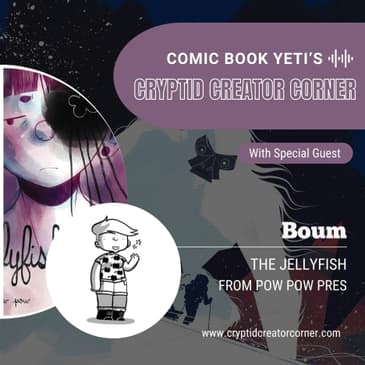

I'm chatting with comics creator Boum on the show today. She's a new guest with an amazing new graphic novel, The Jellyfish, dropping with Montreal based Pow Pow Press. As a disabled person myself, I'm trying to get more creators with disabilities on the show and this book absolutely blew me away. It was my first 10/10 reading experience in 2024. The story follows Odette, a young woman slowly loosing her sight which Boum was also dealing with over the course of working on the project. It's a very honest slice of life story that embraces the real joys and sadness in our lives. As you progress through the book, the ever increasing number of small jellyfish slowly begins to dominate the panels creating a sense of what it is like to loose your vision over time. It's a novel way of approaching the topic I've never seen before. I don't have enough glowing adjectives to portray my adoration of this project and it's why I love hosting creators on the show who may not get as much attention in mainstream outlets to give projects like this an opportunity to shine. Please consider asking your local comic shop or bookstore to order you a copy if they don't have it.
The Jellyfish from Pow Pow Press
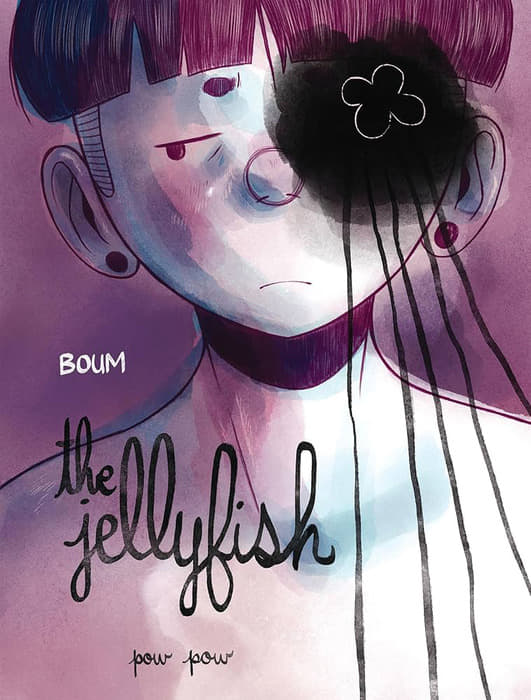
From the publisher
Odette is a twenty-something year old with their own place, a steady job at a local bookstore, an adorable pet rabbit, and a budding crush on one of their customers. But Odette is haunted by something only they can see: a jellyfish that’s floating in their eye, blocking their vision. It’s a seemingly minor annoyance…until the jellyfish starts multiplying.
Showcasing stunning and inventive artwork by Boum (Boumeries), The Jellyfish is a tour-de-force of graphic storytelling, a powerful, occasionally terrifying story of facing the thing that we fear the most and finding a light to guide us through the darkness.
PATREON
We have a new Patreon, CryptidCreatorCornerpod. If you like what we do, please consider supporting us. We got two simple tiers, $1 and $3. Want to know more, you know what to do.
ARKENFORGE
Play TTRPG games? Make sure to check out our partner Arkenforge. Use the discount code YETI5 to get $5 off your order.
THE LANTERN CATALOG
Created on the premise of creating light in the dark, this is the the go to resource to keep you up to date on the indy projects and the creators you love. You can find them at https://www.thelanterncatalog.com/.
Make sure to check out our sponsor 2000AD.
[00:00:00] Your ears do not deceive you. You've just entered the Cryptid Creator Corner brought to you by your friends at Comic Book Yeti.
[00:00:07] So without further ado, let's get on to the interview. Hello everyone and welcome to another episode of the Cryptid Creator Corner.
[00:00:14] I'm Byron O'Neill, your host for today's Comics Creator Chat,
[00:00:16] and we've got another special one today because I'm delighted to introduce Boom through the program today.
[00:00:22] She has a fantastic new graphic novel called The Jellyfish that's dropping soon from Pow Pow Press
[00:00:28] that we are going to dive in today and I will do my best not to endeavor to embarrass myself with my very poor French.
[00:00:34] So I keep telling myself that. But Boom, how's things going? How are you doing?
[00:00:38] Hi, I'm good. Thank you for having me.
[00:00:41] Yeah, absolutely. Welcome to the show. Well, I got a chance to read an advanced copy of The Jellyfish
[00:00:46] and kind of the basic storyline follows the young woman Odette who is slowly losing her vision.
[00:00:52] Wow. I first want to congratulate you on the courage to tackle such a personal topic,
[00:00:59] even if the main character Odette's experience isn't an exact mirror of your own with vision loss
[00:01:05] or at least I don't think it's an exact, we'll get into that in a minute. But this is my first
[00:01:11] no-have-probably-here out of 10 comics work for 2024. And I've been pushing reading 14,000
[00:01:17] I think or so comics pages so far this year and I'm not alone because the good reads reviews
[00:01:23] when I check them are overwhelmingly positive in a way I rarely see. So this is really amazing stuff.
[00:01:30] I wanted to start off with kind of what were you personally experiencing in terms of vision loss?
[00:01:37] Because as a disabled person myself with an autoimmune condition, they get triggered by
[00:01:42] some of the most random things at times and feeling like the medical system is failing me.
[00:01:49] This hit home really hard. So how did your own personal experience and
[00:01:56] condition dealing with this progressive vision loss manifest into The Jellyfish?
[00:02:02] It basically wrote itself. I've been having eye problems since probably 2007.
[00:02:11] I believe I don't have an exact date. It started kind of slowly and it didn't look like it was
[00:02:18] a big of a deal. I would get to see floaters, a bunch of people end up having them at some point
[00:02:25] in their life. So it's some dots, some great dots, transphobic dots that you see in your
[00:02:30] vision. What I understood from it is that they're kind of like cells that are in the
[00:02:38] gelatin of the eye and eventually you see them and they're kind of annoying.
[00:02:43] They're not dangerous, but at some point they float down to the bottom of the eye and then
[00:02:49] you're rid of them until a new one shows up. Most people get them, but I had like thousands
[00:02:55] of them at the same time in my right eye. So it was this huge blob blocking part of my vision.
[00:03:03] It was not like I could see through it, but I would draw. So whenever I would sit in front of a
[00:03:10] white sheet of paper, the contrast would make it so that I would see it quite often and it would
[00:03:15] be annoying and it moved like a jellyfish because it's inside the eye. And so let's say I would
[00:03:22] look to the right and then I would look right and then the blob would slowly float into place
[00:03:28] at the center of my vision with a delay. Then I would have like let's say I had something really
[00:03:33] tiny to draw and it was kind of in the way. I would look away, have it move out, draw the line
[00:03:38] and then slowly would move back in. And the doctors were kind of stumped. They didn't know what it
[00:03:44] had caused this. And so I didn't have a name. I didn't get a proper diagnosis for it at the
[00:03:48] time. And so because I didn't have a name for my disease, I made up one and I would say
[00:03:52] I have a jellyfish inside my eye. And I just ended up thinking it would probably be doable to write
[00:04:01] a story with a character who has a literal jellyfish inside of their eye. And I did, I almost made
[00:04:08] a short film all of this because I studied animation. I was in traditional animation and
[00:04:13] I worked in that field for some time. And in 2010 there was a call for submissions at the
[00:04:19] National Film Board of Canada for animated shorts. And I pitched one that was called a jellyfish,
[00:04:24] which was a five minute, very, very short film with the same kind of premise that the book has.
[00:04:31] I was one of three finalists. I didn't win. I was not selected, which is a good thing because
[00:04:35] the book I made more than 10 years later is much better than the film I would have made at the
[00:04:41] time and probably I guess that making the film would have, I would have been like,
[00:04:46] oh, okay. So that idea has been done and I wouldn't have made the comic afterwards.
[00:04:52] So because I didn't win, I put that idea into a drawer and I moved on. And I picked it up again
[00:05:00] nine years later because my eye kept worsening. I had more diseases in that same eye. So it's
[00:05:07] always the same eye. I guess I'm lucky that it's always, you know, the other one is Christine.
[00:05:12] Okay. So I wrote a script for 200 page and something graphic novel and I pitched it to
[00:05:20] Pow Pow Press and well, the French branch of Pow Pow. And I signed with them in 2021.
[00:05:27] And I had reworked the script with, you know, more insight that I had had
[00:05:32] through the years. But something like two weeks after I signed with them,
[00:05:37] I had an optic neuritis, which is an inflammation of the optic nerve in that same eye and I became
[00:05:42] blind in that eye. So now I am blind. I hide it. I'm in my emo phase and I'm almost 40 years old
[00:05:51] because it tends to get lazy and sometimes the droop, you know, goes on its own path.
[00:05:58] And I'm kind of, it's still new. It feels new. So after like the whole hospital or deal was over,
[00:06:05] they tried to save my eye and it didn't work. I went back into my script and into my storyboard
[00:06:11] and I changed a bunch of things. Most of it is the same, like the premise, the ending
[00:06:17] hasn't changed. The ending, I had like this course planned for this character,
[00:06:22] but I changed a lot of things, especially the appointment scenes where everything is
[00:06:28] pretty true to like my own life, most of them, not all of them, because I took some liberties
[00:06:36] to make, to write a better story out of my own eye problems. I didn't want to tell my own story
[00:06:43] because it was kind of just like, oh, well, you know, I have eye diseases and hospital
[00:06:48] appointments and then I get back home and I cook dinner for the kids. And I did so much
[00:06:56] so many journal comics before because I had a web comic called Boomeries, which was
[00:07:01] like four panel strips about slices of life of my own life. So they were all true stories and I
[00:07:06] felt I wanted to move on. So I didn't want to tell my own story in this book, but it's still, you know,
[00:07:13] it could be, it's part of my life still. It's probably my most personal book, even though it's
[00:07:18] fiction. Okay. Well, I think probably as a disabled person myself, it hits a little
[00:07:24] harder, it hits a little different than it may your average person. And I was curious, is it
[00:07:31] cathartic or is it something designed to help people or is it both? Or, you know...
[00:07:37] It's cathartic mostly. But I don't know if it's designed to help people, but it does.
[00:07:46] I don't know if I did it on purpose. The idea, well, some of the, some of me wanting
[00:07:53] to tell this story also came from the fact that people around me, like my husband,
[00:07:59] he would forget that I had eye problems. Like, every once in a while he'd be like,
[00:08:04] do you still have your jellyfish? And I'd be like, yes, it's not because I don't talk about it,
[00:08:10] that it's not there anymore. And it just hit me that for these people, even if they're in the
[00:08:14] know, they don't get to think about it like every waking hour, like I do or like anyone
[00:08:21] who has a chronic disease does. And so I wanted to write a story about a character in that kind of
[00:08:28] position, but I wanted the reader to feel the same way. And so that's why in my book,
[00:08:36] the character sees a jellyfish floating around, but the reader does as well. And so if the character
[00:08:41] loses their eyesight, the reader also loses their eyesight while reading the book. The book becomes
[00:08:48] harder and harder to read as you go on. It's very hard to speak of my book without
[00:08:53] spoiling some sort of, it's an experience. You have to read it.
[00:08:58] Yeah, it's very, very unique. Yeah. Yeah, I mean, what you're talking about there,
[00:09:04] you know, I can kind of speak from my own personal experience as a disabled person with no
[00:09:08] outward visible manifestation of, you know, the disability that they're going through is hard,
[00:09:14] right? It's isolating even from those we care about the most. And kind of what I loved about
[00:09:18] this story is the balance of portraying that very real struggle of loss with the joy that we can also
[00:09:24] find in the people that we love. And, you know, my own personal journey has been as much about
[00:09:29] me understanding how my illness affects my wife and my son as much as it does me and how I can
[00:09:36] lean on them for support and how that's okay because, you know, my nature is to try and
[00:09:41] spare everyone my own pain, which kind of I found makes it me even more withdrawn and then I feel
[00:09:47] even more alone. So it's just like vicious cycle. Now that I've made this completely about me,
[00:09:52] I don't want to dig too much into your own experiences. But, you know, kind of when you're
[00:09:56] scripting this thing out, how did you want to portray those emotional story beats that are
[00:10:01] so critical to this kind of story? How I wanted to portray, I'm, it came pretty naturally
[00:10:09] because this was built on my own fears from when I first started having eye problems. Like
[00:10:16] 10 years ago, I would walk on the street being like, this is probably going to happen at some
[00:10:19] point. And it's not so bad if I lose an eye, you know, I can I will be able to live an okay life
[00:10:26] with just one eye. And so it felt strange that it happened the way I had thought it would.
[00:10:32] Like, and so it I don't know. I would just write the story beats. And I wanted to incorporate some,
[00:10:41] you know, some characters forgetting that it that the main character has a disease or
[00:10:48] some other character not knowing because the main character wants to keep it a secret.
[00:10:53] And so I wanted to build tension on this. I don't know if I'm answering the question at all.
[00:11:00] Basically, I don't know what I'm doing. I think is what I'm trying to say.
[00:11:02] Okay, no, it's fine. Yeah, that that that ever increasing number of jellyfish that Odette sees,
[00:11:07] you know, ratchets up that tension that you just alluded to in the book, you know,
[00:11:11] as she she gradually moves through seasons, you know, in her life, you know, the medication
[00:11:16] I'm on for lupus can over time cause blindness for some people. So, you know, it caused a bit
[00:11:21] of anxiety, you know, while I was reading it. And I'm not going to give the ending way,
[00:11:26] but that was so perfect because it was so calming, you know, to kind of finish on that note. So
[00:11:33] when you're building this, yeah, when you're building that as a narrative element,
[00:11:37] you know, that that progress because I've never seen anything like this. And
[00:11:40] I don't think we're giving anything away in talking about, okay, yeah, there's more jellyfish
[00:11:46] like progressively, right? But as a narrative element, it's quite clever. So
[00:11:51] how did you come up with that and and haste that because it's, you know, you're drawing it out over
[00:11:57] 220 pages, you know, to some extent there. Yeah. Well, there were stories like, basically,
[00:12:05] every time something in Odette's life would be positive, there would be the disease trying to
[00:12:11] catch up to them. And I, I storyboarded the whole thing without really knowing if it would
[00:12:19] work, the jellyfish thing. And I explained it to my publisher at first. And he was kind of
[00:12:25] like, I am interested but also worried because I had to make sure that the comic would still be
[00:12:32] legible and that people would still want to look at it. Yeah. And so my goal was to make the
[00:12:40] jellyfish, like not even annoying at first, because you kind of forget it's there in
[00:12:45] the beginning, because it's so tiny and it becomes part of the of the comic. And then there's a point
[00:12:50] in the book where you can't not see it anymore. And I kind of went by trial and error. And every
[00:13:00] iteration of this book, even the storyboarding phase, which my storyboards are really,
[00:13:04] really crudely drawn, like ugly, the ugliest possible, even those they had jellyfish around
[00:13:11] and I think I wanted to make my point clear to my publisher. Like, I think I know what to do with
[00:13:17] this and you have to trust me that this will look good in the end. And I only had like basic
[00:13:25] cues like, okay, so the jellyfish will still be contained within the panels for this part because
[00:13:31] you know, it's not taking over Odess Life entirely. They still have, you know, they can still
[00:13:39] live and not think necessarily think about their disease all the time. But once the jellyfish pop
[00:13:45] outside of the of the panels, and they take over the rest of the page, I wanted to,
[00:13:52] like there's nothing not even there's a love story in there and not even this and not even
[00:13:59] Odess, Odette being happy will take the jellyfish away. It was just a matter of
[00:14:06] I would draw the whole page and then place a strategy strategically place the jellyfish around
[00:14:14] and I wanted to make sure because this can this is important action it needs to be legible.
[00:14:19] This is not important. I can put jellyfish all over them. So yeah, trial and error, I think
[00:14:26] there was a clear progression in the story. And how many jellyfish I put there was a bit of
[00:14:33] trial and error. Okay, okay. Yeah. It was my first time doing something like that,
[00:14:38] but I had this idea for a long time. So I think it's just matured in my brain for all these years.
[00:14:45] I think it's first thing, first time I've ever seen, like not not just jellyfish,
[00:14:50] but it used in this way, you know, and as as they increase as they become more common,
[00:14:56] it makes them so much more menacing. And you know, jellyfish makes for an interesting
[00:14:59] metaphor in my mind because they're they're these dangerous creatures, but only in their environment,
[00:15:05] right? And they still operate at the whim of the wave. But there's nothing sadder than a jellyfish,
[00:15:10] you know, sitting on the beach devoid of any agency, right? Like they can't do anything.
[00:15:15] And their addition pulls this very interesting almost horror element into the book, you know,
[00:15:22] for me, based on your reaction, you were a little bit surprised.
[00:15:26] That's the first time I get that, but I get it. Like when I would first post previews of the book,
[00:15:32] when I was working on the French version. So whenever I had a preview posted, it was in French.
[00:15:37] I would get English comments on, you know, Instagram or and the people because they couldn't
[00:15:43] read the French or I don't even know maybe I would post without any text, I would hide the text.
[00:15:48] So they didn't have the context and I would get people like, they were adorable being like,
[00:15:52] oh, those jellyfish are so cute. And I was like, oh, that's interesting that you think
[00:15:58] that they're cute. Some people thought like the jellyfish was, oh, that's familiar.
[00:16:02] Like here's some pet or like a wizard or something. Yeah. Yeah. And but yeah, I was like,
[00:16:08] no, and I wouldn't I wouldn't tell them like right away. They're actually not a good thing.
[00:16:13] Yeah. But I thought that was interesting. But then the horror is I think the horror
[00:16:17] comparison is closer to what they are, what they mean in the book then oh, they're just cute.
[00:16:26] Yeah, I mean, it's all about presentation because part of it is that slow burn that really sells it
[00:16:33] because there are these really nice grounding elements that make Odette feel like any of us,
[00:16:38] right? Beating the bunny or sitting on the toilet and being absorbed in clickbait,
[00:16:43] news cycles, all these seemingly mundane ways that a healthy person will spend their time and
[00:16:49] that ultimately this progression it will take her away resulting in vision loss.
[00:16:54] So sort of as a fledgling writer of comics who's trying to play with scripts now myself,
[00:16:59] God help me, I'm trying to understand pacing and kind of what elements should or should not
[00:17:04] be included. So here is that added element that you're personally battling similar
[00:17:10] circumstances to your protagonist, which isn't exactly the norm. So what made all those things
[00:17:17] worthy of inclusion, all those little things as you're trying to juggle trying to crank out 220
[00:17:23] pages of a graphic novel, right? Because clearly this is establishing her as a character but also
[00:17:31] helping to pace the jellyfish, right? And as they increase that tension just continues to ratchet.
[00:17:37] So it was important for me to have the reader get to know Odette and their environment and
[00:17:45] their job and then whatever they did when they were bored. So all the clickbait thing
[00:17:52] and you know, they go to the supermarket and they read the magazine headlines.
[00:17:59] And that's just this feels like something everyone does and it feels kind of ordinary.
[00:18:06] That's something that they won't be able to do if they lose their vision,
[00:18:10] or at least not in this exact way. And so I wanted to show things that they,
[00:18:19] you know, they're going to have to grieve this, the loss of all of this.
[00:18:24] And so that's also why they work in a bookstore. I don't show that reading a lot. They do
[00:18:31] read it in the book, but not a lot. But it's implied that they read. And there's a bunch of stuff like
[00:18:37] tiny, tiny things that I want to put here and there being like this will be gone. This will be
[00:18:43] gone or at least Odette thinks that it's going to be gone. There's some, there's ways to work
[00:18:48] around it. But you know, so it was important for me to set everything up to then I guess break
[00:18:57] everything. And I don't know, I wanted to, yeah, so work day, you know, colleagues, friends,
[00:19:08] the love story and everything, I wanted to make it feel, make the world seem alive.
[00:19:13] And so the people really, some people, I had like a few negative criticism for this book. It's
[00:19:21] got an overwhelmingly positive response, but some people like, oh, it's so boring. I thought it was
[00:19:28] boring when I was working on it after a while. Like when you've been working for three years on the
[00:19:33] same thing and you don't have a lot of outside opinions on this, I ended up thinking this is
[00:19:41] really, you know, mundane and boring and people will be bored to death. I thought the jellyfish
[00:19:47] thing was the good part. I'm like this, I believe in this. The rest of it, I'm not so sure. But then
[00:19:54] it came out and it had a lot of success. So I was like, okay, I have to trust myself more.
[00:20:02] So yeah, I just believe that it's more important, it's important to bring the character to life
[00:20:08] before you like throw bad things at them so that the reader can relate better and then
[00:20:14] understand their struggles. Does that answer your question?
[00:20:18] Yeah, it does. And I think...
[00:20:20] You have good questions. You're a big question.
[00:20:22] Well, thank you. I mean, I think the filter of being a disabled person and having gone through
[00:20:27] that relatively recently myself, it was like 2020 when everything really happened and hit,
[00:20:33] it is so life-altering and changing. And it is very difficult at times to articulate
[00:20:39] to people who haven't gone through something similarly. All those mundane things that we
[00:20:47] all take for granted, that all of a sudden can be gone in a flash. So for me, that slow burn was
[00:20:54] really powerful because I could see it immediately. I get into the pages, I'm like,
[00:20:58] I know exactly where this is going but I'm completely bought in and along for the ride
[00:21:03] because it's so well done. Thank you.
[00:21:07] Yeah, well, I should mention it's also a queer love story. For myself, I think I've finally
[00:21:13] entered into that delightful mental space where it's just a love story. It doesn't really require
[00:21:19] the designations. For me, it's finally like dreaming in a foreign language you're trying
[00:21:24] to learn. There's some subtle shift of the normalcy paradigm that makes... If that
[00:21:28] makes any sense, right? Yeah, it totally does. Well, to me, I don't know if I'm queer because
[00:21:37] sometimes I don't know anymore. I'm in a heteronormative relationship. I have a husband,
[00:21:42] I have children but I think representation is important. I don't think it's my role to tell
[00:21:52] stories about coming out or discrimination because I am not in that space and I think
[00:21:56] these people are better suited to write these stories. But queer people exist and they can
[00:22:02] have stories outside of that lens. I think that in The Jellyfish, any character could be interchangeable.
[00:22:12] You could put anyone in Odette's place and it would basically be the same story. It doesn't
[00:22:17] have... It can be a man or woman, a black, white, you know, it doesn't matter. And so
[00:22:23] it was just important to tell a story and I decided to make it queer because they exist. And I
[00:22:32] have a bunch of queer people in my life and I love them and I don't know. I guess it's...
[00:22:41] I have some sort of... I'm looking for my words in English. I get to do this and have
[00:22:48] a lot of people reading my work and so I think it's important to put these kinds of stories out
[00:22:54] there. These people exist and they have the right to exist. Yeah, of course. Losing my English.
[00:23:03] No, that's okay. Yeah, I mean there's so much representation actually in here and it's subtle.
[00:23:11] Right? Her partner, Nina, is a small girl. So we're also touching on body positivity
[00:23:16] representation in addition to disabled and queer. Odette is presenting as an androgynous but
[00:23:23] they're not done for show. It's not like you're beating a drum or waving a flag.
[00:23:28] But it is a bit of a kitchen sink on the sum, but if you pulled it off without it
[00:23:33] it feeling forced, which sometimes representation can't. I've seen that a lot in comics recently
[00:23:41] and I think that's the point to a lot of it. And that's good, we need that.
[00:23:48] But is there a secret sauce to the way you wanted to include all of these elements here
[00:23:55] in such a matter-of-fact way? Because that's really how it reads to me. It's just very
[00:24:00] matter of fact. It just is a teenage son and amongst younger people these things just are.
[00:24:07] People like yourself, close to 40, me pushing 50 and a little bit even a different.
[00:24:15] Pronouns, right? They're big deal to us. They're certainly a big deal to younger people but they're
[00:24:20] just so ingrained and embedded in the way you presented it. It definitely feels very embedded.
[00:24:27] It's younger and hip than I am. So I know that.
[00:24:30] I don't know if there's a secret sauce. I just decided to do it and not make it a big deal.
[00:24:41] There's going to be a lesbian couple in my next book and we just don't mention it. It just happens
[00:24:47] and no one speaks like, oh, they go two women together. It just happens. It's normal and
[00:24:54] I think that's what I intend to do with the rest of my future projects. Just make it normal.
[00:25:00] Make it like it's no big deal because it shouldn't be. It shouldn't be a big deal.
[00:25:07] Yeah, I think that's what I'm trying to say. It's a good thing that, oh, I wanted to say
[00:25:14] about the pronouns. In French we do have a neutral pronoun now but it's very new and it's not
[00:25:23] used widely yet. Also, French is a very gendered language. Everything has a masculine and a feminine.
[00:25:31] The chair is feminine for some reason and the door is feminine but the floor is masculine.
[00:25:38] So it was very hard for me to think about pronouns in French so I just went like, okay,
[00:25:43] Odette is going to be a she-her. But in the English version, I thought Odette was probably
[00:25:49] they-them. But because Odette is present at all times in the book, they're in every scene.
[00:25:57] There's only this scene where they're outside of a store and their friends are inside and that's
[00:26:03] the only moment where people speak of Odette. So that was the first time pronouns were needed
[00:26:10] and it was like page 142 I think. The translator was like, it's a bit late to
[00:26:16] introduce pronouns into the story so we just decided to not put any. And so inside the book,
[00:26:22] there are no pronouns being used for that at all. They are they-them in the blurbs and flaps or
[00:26:30] on the website or whatever but inside the book there's no pronouns. We just thought the reader
[00:26:35] can fill the blanks however they like. If they wanted it to be a she then she's a she.
[00:26:40] If they don't want to be there they-and I really like that idea that we don't really decide for the
[00:26:48] character. I really like that about English, the neutral thing that we don't have to-we
[00:26:53] start to have in French but it's still a work in progress. It certainly wasn't something
[00:26:59] I could work with when I wrote the script in 2019 so it's a new thing. Like it's-
[00:27:06] What is it? It's YELL. So he is YELL and she is EL and so it's a mix of both. It's YELL so that's IEL.
[00:27:17] Nice. But then it means that every adjective that we use has to be masculine and feminine
[00:27:23] so usually you have masculine dot and then the feminine ending. And so when you read something
[00:27:28] like a comic like in a text like an essay or that kind of thing that works but in a comic where
[00:27:36] everything is familiar and it's all mostly dialogue it's not very natural yet. I trust that we're
[00:27:44] probably gonna find a way to make it more neutral in the future. Young people are very
[00:27:50] creative and it's gonna work out. I'm probably part of the last generation who's gonna struggle
[00:27:55] with this but hopefully I will adapt. I won't do that. But yeah so I decided against it for this
[00:28:04] book because of the time frame we were in and because it was not quite there yet for the French.
[00:28:12] Yeah so that was like a real serious talk I had with the translators and we worked together to
[00:28:19] make it work for the English version of the book. Very cool. Thank you so much for the
[00:28:23] education like I had no idea that's really cool. All right let's take a quick break.
[00:28:29] Hey comics fam. Itty comic book publisher Banda Bar's just got a level up and announced it is now
[00:28:35] a cooperative. This heralds a new era for them including a partnership with Dallas Stories
[00:28:41] and they added several new members to the ownership group. Marcus Jimenez is now chief
[00:28:46] operating officer Brent Fisher takes on the role of chief diversity officer
[00:28:50] and Joey Galvez is introduced as head of Kickstarter ops and social media manager
[00:28:55] which is sure to increase their capabilities overall as a publisher
[00:28:59] and it further promotes their mission statement of advancing representation
[00:29:03] inclusion and diversity in the media. They also established a new board of directors to help
[00:29:08] chart the new path of their journey with new projects in the works like Alaska by dropping
[00:29:13] in June unbroken soon launching on Kickstarter and pollen coming up with Dauntless stay
[00:29:18] tuned to this space for more exciting news from the growing Bards family. Let's get back to the show.
[00:29:27] I'm always blown away for me you know the model undertaking that is
[00:29:31] the graphic novel monster right it's like so many pages and and this feels so divergent from your
[00:29:40] your more journalistic style of boomeries you know your webcomic that you're more known for
[00:29:46] so did you ever have that like oh shit moment when you're putting the graphic novel together
[00:29:51] like what have I done or are you just busy just cranking away. I had a lot of fun working on it
[00:29:58] it's probably the most fun I've ever had and so I would get up in the morning being like
[00:30:02] yeah yeah I get to work today like work on this towards the end maybe the last 50 pages or so
[00:30:12] I definitely felt like this is a marathon this is the longest thing I've ever worked on
[00:30:19] and it's not my first long form comic my first one was a small revolution but it was 80
[00:30:27] 89 pages I think and it was in 2012 published in 2012 and so it's been a while and I did a
[00:30:35] lot of shorter strips or one page two page gag comics thing in between so this was brand new for me
[00:30:45] to like go beyond 200 pages was unthinkable a few years ago but now I'm writing a book that's even
[00:30:52] longer than the jellyfish so I think I I think I enjoyed it but it's it's a process it's very long
[00:31:00] um we had a set date uh where like my deadline was to have the so we could print the book and have it
[00:31:07] available at a specific book fair in Montreal in November and so I remember like the September
[00:31:13] 7th it was my date so the whole summer I spent inside basically um my husband took all of his
[00:31:21] uh holidays off work uh so that he could be there for the kids and I wasn't there because I
[00:31:27] would work but that like long days and weekends too so the at the end of it was a bit of a
[00:31:34] bit of a rush a bit of um I don't think I'll do that again I think the next book if if I can
[00:31:41] my publisher is very uh mellow and loose like if I'm not done I'm not done yet so I'm probably
[00:31:47] not gonna set a specific date and I'm just gonna be done when I'm done because this was this
[00:31:54] was hard and then we missed the book fair because um there was a paper shortage and uh
[00:32:03] a shortage of workers worker shortage sure anyway um so we missed it by a week
[00:32:11] ah
[00:32:15] but you know it was out for Christmas in French it did okay but I had worked you know
[00:32:22] my butt off to make it for that specific date and it still didn't didn't work so there was a bit of a
[00:32:28] bummer um but yeah I don't I don't know I'm maybe because it's new to me I like doing longer work
[00:32:37] now um it's it's still feels uh fresh okay in some way yeah but it's it's long it takes a long
[00:32:44] time yeah yeah I don't think people really understand how long some of those things can
[00:32:49] take years and years yeah the jellyfish is three years but not full time but then the last year and a
[00:32:56] half more than full time uh so and but it was like I did only that I cleared my schedule out of
[00:33:05] anything else and I only worked on the book and um my next one I'm planning I'm starting now I'm
[00:33:13] doing working on the storyboard and I'm planning on planning on finishing in April of 2026 so I'm
[00:33:18] giving myself some time to uh work on it and people feel like oh it's two years like well yeah
[00:33:26] yeah I got kids and Mary yes life and yeah yeah yeah and summer and during summer the kids are off
[00:33:34] schools so I don't know how much I'll be able to work so I have to take that into account
[00:33:41] the summer is off or kind of yeah I know what that's like
[00:33:47] well you started boomeries in what 2011 I think is that that right okay and it seems like to
[00:33:54] to some extent diving into your own life and voicing like vulnerability and insecurities and
[00:34:00] like all these things and throwing them out in the world that maybe the jellyfish
[00:34:03] jellyfish wasn't as hard to do maybe in that way it may just my brain envisioning that way
[00:34:08] you know I've been trying to find my own comics voice um kind of through the expression
[00:34:14] of my own disability and I'm finding it's all very highbrow shit like it's allegories and metaphors
[00:34:19] aplenty you know in in my endeavor um just being an open book in this day and age of social media
[00:34:26] and everything else being what it is does that come easy to you like it does I guess I'm an extra
[00:34:32] extrovert and I like to talk and I'm probably annoying uh boomeries I just made fun of myself
[00:34:39] so many times and after a while it became second nature to just put myself out there I think
[00:34:45] that said I feel like the jellyfish is my most personal work uh it's quite different and
[00:34:52] it was not hard to do yeah well as I said it was um as I said it was cathartic so I
[00:34:59] felt good doing it and I feel I feel good when people read it because I worked hard on it um
[00:35:07] I'm probably I don't know uh I want to say suited for this I guess uh it comes natural to me um I'm
[00:35:17] also a natural uh going like going to conventions and seeing a bunch of people comic work is very
[00:35:22] solitary work yeah and so when I go to festivals and conventions I'm really happy to get to
[00:35:28] see a bunch of people so I'm very outgoing um I don't know I don't find it hard uh to speak
[00:35:36] about there's some personal stuff I'm still holding on to that I'm not sure I maybe I'll
[00:35:42] write something about it one day maybe I won't um so I'm you know I'm not like here's me with like
[00:35:50] all uh all my background all my backstory everything on a silver platter and choosing what to tell
[00:35:59] and what not to tell uh I don't know yeah feels I'm I'm it feels natural to me yeah I mean there's
[00:36:09] there's definitely a freedom in being an open book for sure like you can't hurt me it's all out
[00:36:13] there what are you gonna say yeah you know yeah right yeah well there's a contrast between the
[00:36:20] the boomeries and the jellyfish um which is sort of understandable given their structures but I
[00:36:24] wanted to dig into that difference uh a little bit for for you as a as a narrative storyteller
[00:36:30] you know because boomeries is by its nature it requires more exposition you know to get the
[00:36:35] message across in just a few panels right there's not that many um the jellyfish is very different
[00:36:41] we've talked about that these these quiet narrative moments with Odette where it's topographical
[00:36:50] you know to the scene uh where they're in a grocery store right and the announcement comes on for
[00:36:56] instance but otherwise there's not that exposition you know it's otherwise quiet except for them and
[00:37:03] the jellyfish you know always the jellyfish and and it's interesting because from her perspective
[00:37:10] they're they're not always within you know her natural visual periphery you know sometimes
[00:37:16] they're hind them or you know floating within the confines of a you know this panel environment
[00:37:21] like a companion like a familiar you know that we were talking about but these are two very
[00:37:27] different style approaches but they have that sort of same shared threading of you you know in them
[00:37:35] um with what you're trying to portray big picture thematically so is it was it difficult to
[00:37:40] make the switch you know between these two you know you've got three panels four panels that you're
[00:37:47] telling something very concise versus 220 page graphic novel right yeah um it was uh an interesting
[00:37:55] switch I think um what happened is that it's a mix of a lot of things when I was a teenager I would
[00:38:04] write like epic novels like I had this one novel I wrote uh that's like 450 pages long and like 8 by
[00:38:14] 11 like inch not just tiny pages like huge pages um and then when I went into traditional animation
[00:38:23] that's where I learned to be concise uh show not tell usually the strip thing is different but
[00:38:31] um animation you don't want to have talking other times so you show through movement and also I learned
[00:38:38] to synthesize my drawings and make them much simpler and I think what happened in that
[00:38:46] time span that you know trickled into boomeries and the few years I started working on comics is
[00:38:52] that I thought that I was a cartoony kind of uh artist that I worked with cartoons that I
[00:38:57] that humor was my thing and um I eventually started missing what I had been doing in the
[00:39:04] as a team and I feel like the jellyfish is kind of going back to who I was when I was a teenager
[00:39:11] so you know more serious story longer taking more time uh more introspective and so it kind of
[00:39:20] feels like I've touched this kind of subject matter when I was a teenager with you know I have
[00:39:26] much more experience now and I'm hopefully a much better writer and um cartoonist and story
[00:39:33] trailer than I was at 14 uh but it feels kind of true to myself as for the format um I think boomeries
[00:39:44] helped a great deal with my timing because I was constrained to four panels most of the time so I
[00:39:49] had to learn to like really make it work and now that I have like this blank canvas of
[00:39:55] you know infinite pages if I want to uh it's it's really interesting to put those this knowledge
[00:40:04] to work that that would um but I tend to still apply the show don't tell uh recently I was a
[00:40:13] mentor for another um young cartoonist and I kept telling him don't you don't need to write the character
[00:40:20] thinking she's looking at whatever like we understand that she's thinking that don't tell just use the
[00:40:28] drawings to show comics are a written language they're a language and we are lucky enough to
[00:40:34] have both you can have tax and you can have image and the image can tell things that the text
[00:40:39] can't so um I tried to do uh to do that in my work um as I was drawing it in the jellyfish I think
[00:40:48] there's a sequence of like 17 pages where there's no dialogue at all no text and as I was working on
[00:40:54] it I was like I am really really dumb like this is people are just gonna be like and read through
[00:41:01] the pages like really quickly but from what I understood it's a very very emotional
[00:41:06] slow paced scene and people tend to slow down when they read I I didn't know what to expect really so
[00:41:13] I was working on them and it seemed endless like oh my god this is such a long scene what what the
[00:41:18] fuck am I doing right but uh I then it ended up working in the end I think that's what
[00:41:25] we needed the book needed some sort of not a breather but a slowing down just to take
[00:41:32] in everything that's going on and then we can go towards the uh the ending better there's more than
[00:41:40] 17 pages of without dialogue but there's I think 17 consecutive pages without dialogues
[00:41:49] I don't know maybe I'm a fool I enjoy I enjoy showing without text there's a my next book has
[00:41:56] a lot of text in some instances because there's three very different characters and they're all
[00:42:01] main characters they're really important and one of them is not very talkative and whenever she's
[00:42:08] this spotlight it's very quiet around her so there's going to be a bunch of really really
[00:42:12] quiet pages it's just I don't know it's just a change and I think it's like you know comics
[00:42:19] look like you can look like movies sometimes better than pros can because we can show and not tell
[00:42:27] and I don't know there's an ambience and everything we can just set up with just drawings
[00:42:34] I think it can be very powerful and the strip didn't well no I did some strips that didn't need
[00:42:39] any language but there's text in pretty much every kind of like almost all the boom restricts
[00:42:47] I don't know it's a nice change of pace I'm enjoying it I'm gonna keep doing that kind
[00:42:51] of thing I don't know if I'm gonna ever go back to doing strips on a more regular base
[00:42:58] basis I'm I could maybe I'm not saying like no but nobody says no nobody says no no no I
[00:43:06] I just let me comics and whatever floats my boat at the moment I'm gonna I'm gonna do
[00:43:11] awesome well was the intent always for it to stay black and white throughout or at some
[00:43:16] point you were just working on you're like nah I'm not doing color because I've seen the
[00:43:20] some of the versions that are colored just certain panels on your insta and they look great so
[00:43:26] oh thank you I don't think color is my forte especially colored comics I think illustration
[00:43:32] is a whole other thing I am doing colored comics for children's magazine at the moment like it's
[00:43:42] series in a recurrent magazine I'm not really enjoying myself that much I don't think it's
[00:43:51] some people are awesome at this I think a comic you have to worry about the legibility and
[00:43:58] sometimes color can go against it it can be counterproductive because there's so much color
[00:44:04] that you're kind of like what am I looking at where's the character if you don't find
[00:44:09] like if you don't you can't guide the readers I to exactly where you want to like the course of
[00:44:16] action the speech bubbles in the right order you have to use the color to do that and and some full
[00:44:23] color comics don't do that for me and especially mine I don't think I am that good that's it
[00:44:29] my next one I wanted to have some color but I won like maybe two pantons two colors so it's
[00:44:36] not going to be like used like oh this dress is pink it's going to be used as a way to highlight
[00:44:42] some things I don't know maybe shadows or hello you know patterns but not this is blue this is pink
[00:44:50] like this this hair is pink because it's really pink but no she might be blonde but her hair is pink
[00:44:55] you understand what I'm trying to say yes um so that's going to be different working with
[00:45:01] two colors I've never done that really before I've done one black like black line art and
[00:45:07] colored shadow but I want to try something different I like to uh I like challenges every time I start
[00:45:16] a new project usually there's some sort of challenge involved something new that I'm
[00:45:20] trying to learn because otherwise I feel like I would um I have the French word in my head
[00:45:28] uh I feel it's my it's the only way I can learn I want my work to stay alive and not do the same
[00:45:36] thing over and over and over and I want to keep learning and I want to try new things and so
[00:45:41] my next one is uh it's going to be the color handling well I hope I do well I'm not there
[00:45:47] yet I'm not I'm just reporting no real pages until 2025 at least okay if the French word
[00:45:56] feels like the way you want to express it use the French word let people look it up and let them
[00:46:00] you know if they're interested drop it stagnate stagnate like say the same yes okay so it's the
[00:46:10] same stagnate it's felt the same but it's it's the ag and yeah okay well yeah that's pretty easy
[00:46:21] um who or what are some of your inspirations as an illustrator aside from battle angel Alita
[00:46:28] apparently oh that's that was my favorite manga when I was a teenager I kind of had a feeling
[00:46:32] because jellyfish really does have a I hate using it some extent but it does have a manga you know
[00:46:40] sensibility to it like it looks kind of like a manga you know I found that real interesting
[00:46:46] because um I I do read manga I don't read a lot of them now and it's not because I don't like them
[00:46:52] it's just because I have less time to read I probably and also I read a bunch of comics
[00:47:00] from Quebec where I'm from and there's so many of them now that's the new thing they didn't use
[00:47:05] to be uh we didn't have that many books when I started 12 12 years ago 13 13 years ago
[00:47:15] um and so whenever I read it's often something that my you know local peers have been doing
[00:47:20] so it's really great that I get to read that much um but as a teenager I would read manga but
[00:47:25] it was not that widely available like 30 years ago right so it was harder to find and so it was
[00:47:32] more limited and there were like my little dragon ball gun um I said gun them but that's the
[00:47:38] Japanese and French titles of Battle Angel Alita Kenshin and Evangelion and there was probably more
[00:47:45] but they were hard to find so I kind of stopped reading manga for a long time just because I didn't
[00:47:52] think they were so available not they are everywhere and it's great uh what what so
[00:47:58] whenever people compare my style to manga I find it interesting because I haven't read
[00:48:03] that many and I'm kind of like I see it why why does it look like manga that much
[00:48:10] I think it's because I like to vary the the the compositions and so sometimes the panels bleed
[00:48:17] outside of the page sometimes there's no panel at all and there's not a lot of panels per page
[00:48:22] maybe like six to eight I have it here it exists it's real yay I got it this weekend
[00:48:29] so it's still it smells good I've been like new books smell yeah yeah the ink the fresh ink um
[00:48:37] the gray tones definitely help uh but I um I play video games and I play Japanese video games
[00:48:44] and I think the the art style probably came from video games more than it did from manga
[00:48:51] when there was a teen and I don't know I think afterwards I kept incorporating things I liked
[00:48:58] in some other people's work into my own like making it my own just isn't it just like copying
[00:49:03] yeah um in terms of influences it's hard to say visually I enjoy a bunch of different
[00:49:11] styles I really enjoy the the autobiomemoir uh journal kind of a comic like I'm my own
[00:49:21] uh target audience I suppose I make the books I would want to read I follow
[00:49:28] people do I think I think most people do yeah uh making comics is kind of selfish when you think
[00:49:35] about it making books I guess it's selfish um but in a good way uh but um I have a bunch of friends
[00:49:44] also who are cartoonists and Montreal there's a pretty big comic scene and we meet up uh every
[00:49:50] other week or whatever to just draw together and so even if I'm like all alone working on a comic I know
[00:49:57] I can send a message to a friend being like hey I need try I need help with that scene can you
[00:50:03] help with the dialogue or can you help with that hand I've been trying to draw and I can't seem
[00:50:06] to draw especially a friend of mine whose name is cab and she's a cartoonist also now we were
[00:50:13] friends when we were 14 15 weird to see how far we've come and how we're both published authors
[00:50:21] she did utown which was published by only um last year last year okay yeah uh and so
[00:50:30] if you look at her her both our styles are different but you can definitely see some
[00:50:36] cab in my work and you can definitely think it's a boom in her work just because we've
[00:50:40] known each other for so long and we've worked together and uh we worked on our latest books at
[00:50:46] the same time and so we've kind of influenced mutually influenced each other uh for 25 years
[00:50:54] so it's so it's my comic buddy people mix and mix us up all the time we don't look alike at all
[00:51:02] but people mix us just because we always come as a team even if we worked independently from
[00:51:07] each other but we are always like we go to a festival together and also my name is the start
[00:51:13] of the b and her name starts with a c so we're all so always alphabetically uh you know one beside
[00:51:20] the other anyway um yeah so I read a bunch I like to be influenced by movies too I watch movies I
[00:51:29] not a lot of them I admit I'm not a tv person but uh or I read books or video games I get
[00:51:36] inspiration from everywhere around me and and life I tell things that you know are pretty true to life
[00:51:46] even if I go into my next one's gonna have some magic realism slash very very light sci-fi
[00:51:56] but it's still what's important in the story is their relationship between the characters and their
[00:52:02] uh I guess mental health and um relation to to uh their memories and everything so it's still very
[00:52:10] human and not very action oriented so I guess even if I improved something happening like in space
[00:52:17] with robots it would still be about people talking to each other and having relationships
[00:52:22] I don't I think I'm that kind of person yeah well tell me a little bit more about the
[00:52:28] the Montreal scene because I don't I don't feel like I know that much about it I've got a I understand
[00:52:34] as much as I can Toronto right and in that scene but you you know pow pow is based in in Montreal
[00:52:40] if I'm not sure yeah yeah yeah so you know how did you end up with them as a publisher or is that
[00:52:46] very much just a question because no it's not a dark question pop always a very very good publisher
[00:52:53] basically you could go through their catalog and not a single one is a miss I would say like every
[00:53:01] single book is great uh publisher um and they're they're very small teams so now there are three
[00:53:07] people three people but there have been three for like two months so it was two people and then
[00:53:12] just for a few years and for the first like 10 years papa was one person and um he's a he's
[00:53:20] a cartoonist that was actually his goal was to publish his own things first and then he became too
[00:53:24] busy being an editor publisher that he doesn't draw comics anymore but he works with comics all the
[00:53:31] time um but the Montreal scene what's special about it is that it's bilingual and because
[00:53:39] so there's you know English speaking people and French speaking people and as a French speaking
[00:53:44] I'm a friend good phone so I grew up in French um I was influenced like the comics we had access to
[00:53:51] we had a bunch of comics from the US so that's because we're you know a close neighbor uh
[00:53:57] but we also had a bunch of comics from France and Belgium so the Tain Tain, Asterix and then
[00:54:03] other ones because they were imported to Quebec and so we uh we had this and then Manga
[00:54:10] so because we had the French and the English influences it feels like comics from Quebec
[00:54:15] are their own thing they look like nothing else and uh I think it's it shows like I've been to
[00:54:22] France I've been to the Anglème comics festival which was in January which is one of the biggest
[00:54:28] comics festival in the world and the comics from Quebec don't look the same as they do in
[00:54:34] France even if they're in the same language it or same language it's not quite the same French
[00:54:40] but we understand them and they understand us but not as much as we do understand them
[00:54:47] we have a better understanding of their French um and so I guess it's just a mix of things we
[00:54:54] have been exposed to and because we're so close to the US we uh we have that baggage which is
[00:55:02] similar to yours but then we speak French and so we have some sort of different culture
[00:55:08] it's just so interesting and the Montreal comic scene Montreal is the second biggest city in Canada
[00:55:14] and so there's a lot of people living there it's uh the comic scene is very very live there's a
[00:55:21] great great comics festival in Quebec uh in Montreal there's one in Quebec City as well
[00:55:29] and so we have a bunch of festivals and it's really I don't know it's alive there's a
[00:55:33] whole bunch of opportunities to meet new people and meet other cartoonists and budding cartoonists
[00:55:38] and and established cartoonists and uh there's just a love for the comics uh in Quebec it's
[00:55:46] better than used to be uh it used to be seen as a children's literature okay on its way to
[00:55:54] being more accepted as like literature on its own terms and not just like a sub literature thing
[00:56:04] I recommend going to Montreal for the comic festival at least it's a good one okay nice really cool I
[00:56:11] always like hearing about scenes and these different little spots of the world and I'm also
[00:56:18] curious as a rabbit mom I think you have had rabbits there's a rabbit in the story yes I don't know
[00:56:24] if you still have a rabbit currently or not no I have two cats now but I've had two yeah
[00:56:30] not at the same time I had two rabbits uh like one rabbit at a time uh when I still
[00:56:35] live with my parents I would have rabbits I would take care of them okay yeah let's just
[00:56:40] purely my curiosity because my wife had one as a child really awful ending to that story which I
[00:56:44] won't go into unless you just really wanted to know um but they they seem like a finicky pet
[00:56:50] like based on my limited understanding right so I want you to be the ambassador for for rabbits
[00:56:56] here why should everyone have rabbit oh rabbits are basically cats that don't climb everywhere
[00:57:05] they could be really similar to cats uh because they want to be around you they follow you around
[00:57:14] when you when they're happy they kind of grind their teeth so it's kind of like they're purring
[00:57:19] uh they have they have a litter box uh they you've said the litter box where okay so their poop is
[00:57:25] could roll around in the house but it's um because they're her uh they eat uh plants their poop is
[00:57:32] kind of like dust so if you step on it it becomes poop dust oh great uh so it's not you know not that
[00:57:39] get yeah that's not so much of a selling point though like yeah but they do have litter boxes
[00:57:47] they can play uh they are really cuddly they're really soft they're really cute I really enjoy
[00:57:53] having rabbits and they they are not meant to be in a cage all day long and they can be very friendly
[00:58:01] like climb on the sofa and lie with you and sleep beside you and watch tv that kind of thing that
[00:58:06] cats do okay but they don't like climb on the shelves and knock things off so that's that's
[00:58:13] a better thing like it's easier managed than cats but if they're bored they will well cats do that too
[00:58:21] I was or dogs they do that too like they are gonna eat at your eat away at your furniture or your
[00:58:26] wires so you have to rabbit proof your home but cats do that and then they can climb and then
[00:58:32] eat stuff on top of shelves so it's it's really similar to cats I would say okay okay yeah
[00:58:40] chaos carbons so yeah it's like rabbits are not as much of uh chaos I really love cats uh but rabbits
[00:58:47] are not you know as bad uh they're not as well cats are not very expressive dogs are expressive
[00:58:56] cats not as much and bunnies not as much it's all in the ears mostly uh happy like
[00:59:03] happy rabbit will hop around and bounce around and they're called binkies I think they're gonna
[00:59:08] binky because they're pretty really cute and you're really soft I yeah I have friends that I have
[00:59:17] close friends that just swear by the rabbits um that are also comic artists it's there's something about
[00:59:24] comic artists and rabbits too I don't know it's because we are at home and you normally it's
[00:59:30] because we work from home and we're available like we can't take care of them at all times
[00:59:35] because if we're not home uh a rabbit is they could get in small spaces and be in danger so when
[00:59:42] you're not home usually you have them in a cage uh but then if you're not home all the time then the
[00:59:48] rabbit's in their cage all the time which is not ideal so usually uh a rabbit is not an ideal pet for
[00:59:54] someone who's not has no one at home most of the time unlike cats like cats are kind of like
[01:00:00] you know I do my own thing rabbits are not like that they're very social
[01:00:03] yeah cats don't need nobody well what else you got cookin I know you you've already alluded to the
[01:00:11] next project that you seem to be working on already so yeah so this uh for now it's called
[01:00:19] in transit the it's a working title but working titles are dangerous and it's probably gonna
[01:00:24] end up having that title anyway um it's set in the 90s and it's the it's a story where there's a health
[01:00:33] program a private health program that allows you to exchange bodies with somebody else so if you're
[01:00:39] unhappy with the life you're having at the moment you can take your conscience and exchange with
[01:00:45] somebody else maybe you'll be a better fit like your personality is going to be a better fit for
[01:00:49] that other body in that other life but because it's set in the 90s I want it to have a very tactile
[01:00:56] aspect so like you're you're shopping for a new life in a catalog like it's it's like a dating
[01:01:03] thing you read a small blurb with a photo and you're like maybe this one made me this one but
[01:01:09] of course it implies that uh your mental health not doing so well because you want to you know
[01:01:15] quit on your life but it's at the same time you there's uh it implies that the people around you
[01:01:23] won't know that you've made the switch because you'll you know your body will still be there
[01:01:28] and you know how some people change sometimes like they start new things only and it seems
[01:01:32] very very unlike them but that's because they they have made the switch so you know that's
[01:01:38] the premise I am not done yet I'm doing uh the storyboard uh I've designed uh the main characters
[01:01:46] which I'm okay with I'm not entirely uh convinced that I found their final final um design
[01:01:54] I still got a lot of thing time ahead of me to think about it uh I hope to be done with
[01:02:01] the storyboard soon probably in May at the latest okay and so it's going to be probably 240 pages
[01:02:10] so slightly longer than um the jellyfish and uh yeah so that's where I'm at nice but sounds great
[01:02:17] I'm looking forward to that one um I was digging around in your your patreon yesterday you're
[01:02:21] you're very active there like a lot of people I know have a patreon but like don't do all that much
[01:02:26] with it where would you like people to find you online patreon is the place to be I know there's a
[01:02:32] paywall there but I only ask for like one buck and then you have access to everything it's more like a
[01:02:36] tip jar it's a blog that's uh I use it just to talk about everything I'm working on at the moment
[01:02:43] um most of it behind the $1 paywall uh otherwise I'm very active on I'm active on facebook
[01:02:50] and instagram mostly um and yeah I have a portfolio which is the very official thing but I don't
[01:02:58] update it every day because I don't have a new illustri- like fancy illustration to put on
[01:03:02] there every day yeah but I think patreon is the best place because that's where I post the most
[01:03:07] and that's where I have the the most interesting uh things to talk about because I go into detail
[01:03:13] like this is how I work on the script this is how I do my storyboards people on my patreon
[01:03:18] have been here for a few years they have seen the and like me working on the jellyfish from start to
[01:03:23] finish working on the pitch until the end but I didn't show the actual pages and so the
[01:03:29] anglish-speaking patrons have been waiting for this codenbook for for a long time and uh they're
[01:03:35] really excited yeah I could see that for sure but they've seen like the the research I did for
[01:03:42] the characters and the the backgrounds and the outfits and the some scenes I rewrote I would post
[01:03:50] like old version new version of the scene I would I would talk about um you know the the festivals
[01:03:58] and I'm going to what happened there and that kind of uh you know I do a recap every month
[01:04:04] two of everything that's happened professionally speaking in the past month um yeah so it's um
[01:04:11] it's it's just a blog where I can rent but people can choose to read me or not I suppose
[01:04:19] but uh I think that's the place to be if they there's one place they could if not all then
[01:04:25] instagram is the second best one okay we'll put links to them in the show notes then
[01:04:30] awesome in summation you know my personal read of the jellyfish in one word brilliant
[01:04:36] like I love the hell out of it you know I think everyone should pick it up it's it's so honest and
[01:04:41] like grounded you know embracing the real joys and sadness in in our lives you know as a disabled
[01:04:47] person I just wanted to say how much it meant to me to see more representation in the medium
[01:04:53] and how much I appreciate it you know sometimes I feel very frustrated by healthy people and
[01:04:57] that's going to sound like terrible like and slanderous and I don't mean it in that way um
[01:05:02] I get it yeah I'm sure you do um and that's my point right they they don't always get it
[01:05:10] um but you put a book like this in front of their hands and maybe they will get it a little bit
[01:05:13] better right um and that's what we're all trying to do is make those connections and
[01:05:17] understand each other a little bit better um but don't buy it for that reason you know okay
[01:05:22] okay maybe partially but buy it because it's genuinely amazing I think it's fantastic
[01:05:26] it's out in what early May May I'm not sure if it's May 7th or May 8th because I've seen both
[01:05:33] wait I think it's I think it's May 8th but I've seen like bookstores like lunches May 7th so
[01:05:40] May 7th or 8th so soon very soon well call your your comic bookshops drop in the bookstore
[01:05:47] tell them you want to copy y'all um boom thanks so much for joining me on the show today it's
[01:05:51] been fun thank you so much for having me yeah this is Byron O'Neill on behalf of all of us at
[01:05:56] Comic Book Yeti thanks for tuning in and we will see you next time take care everybody
[01:06:01] this is Byron O'Neill one of your hosts of the Cryptic Creator Corner brought to you by
[01:06:05] Comic Book Yeti we hope you've enjoyed this episode of our podcast please rate review subscribe
[01:06:12] all that good stuff it lets us know how we're doing and more importantly how we can improve
[01:06:18] thanks for listening if you enjoyed this episode of the Cryptic Creator Corner maybe you would enjoy
[01:06:24] our sister podcast into the comics Kate listen and subscribe wherever you get your podcasts