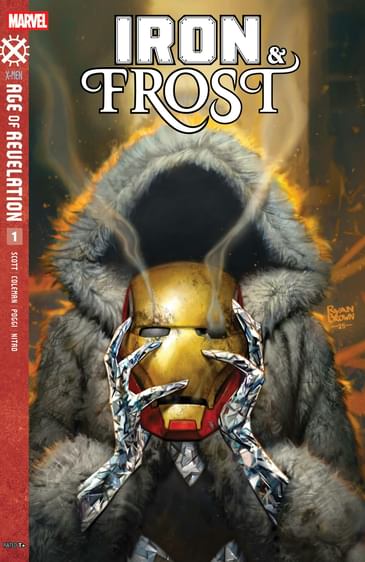

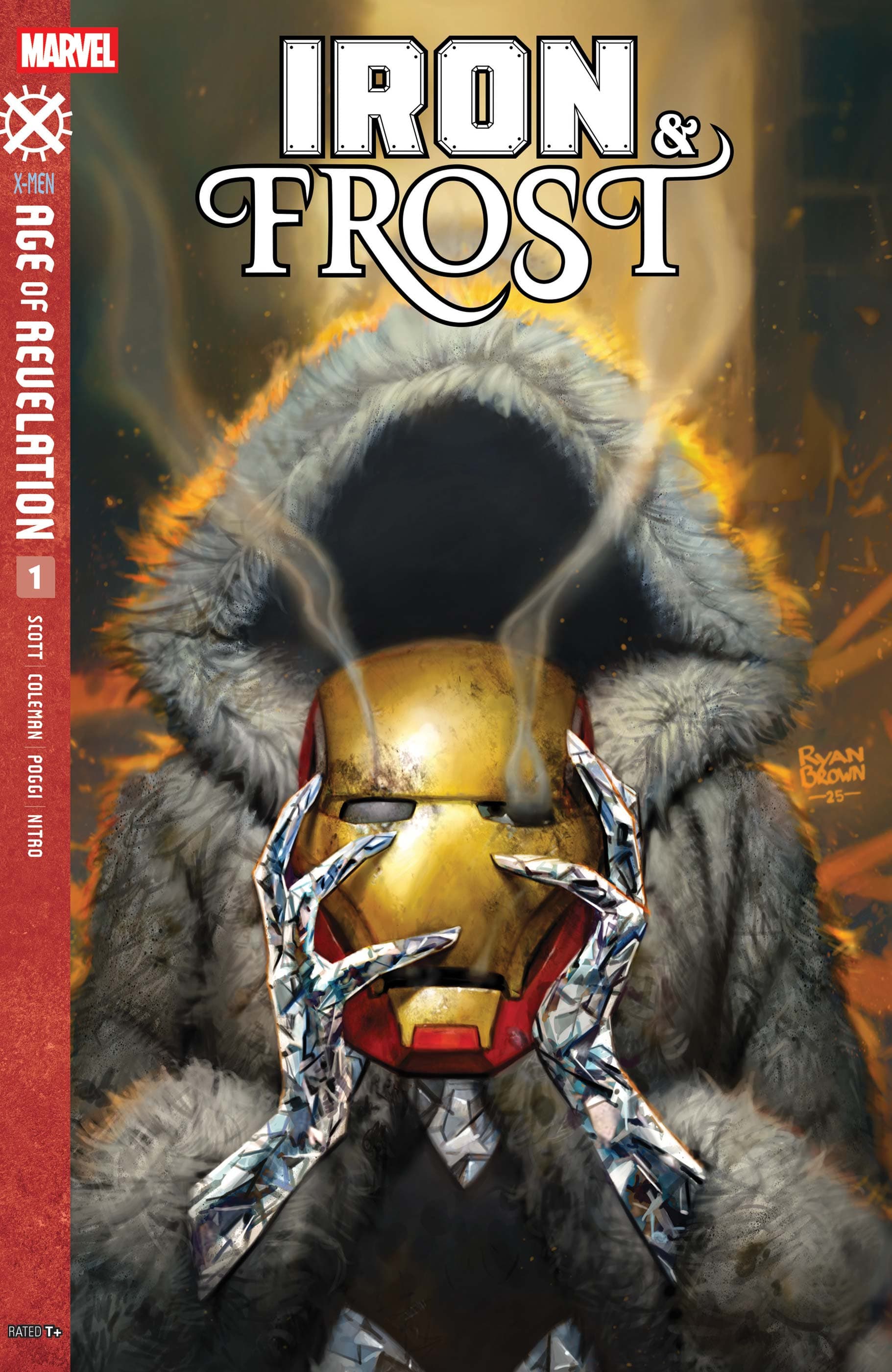
Cavan Scott joins Jimmy on the podcast today to discuss his start writing fan fiction to his newest Marvel Comics series Iron & Frost, part of the Age of Revelation event. Cavan discusses Doctor Who, Star Wars, telling a story within a larger event, how he wishes those years of reading Marvel comics could be a tax write-off, and the fun of continuity errors. Cavan has a ton of great stuff coming out this month and this is the place to hear all about it. Iron & Frost #1 is out October 15th.
From the Publisher:
COLD AS FROST, HARD AS IRON! X YEARS LATER, after 3K's devastating terrorist attack cost Tony Stark and Emma Frost everything, the Heartless Queen returns to what remains of her past. Secrets hide in the ruins of New York. The HELLFIRE CLUB has a dangerous new leader.

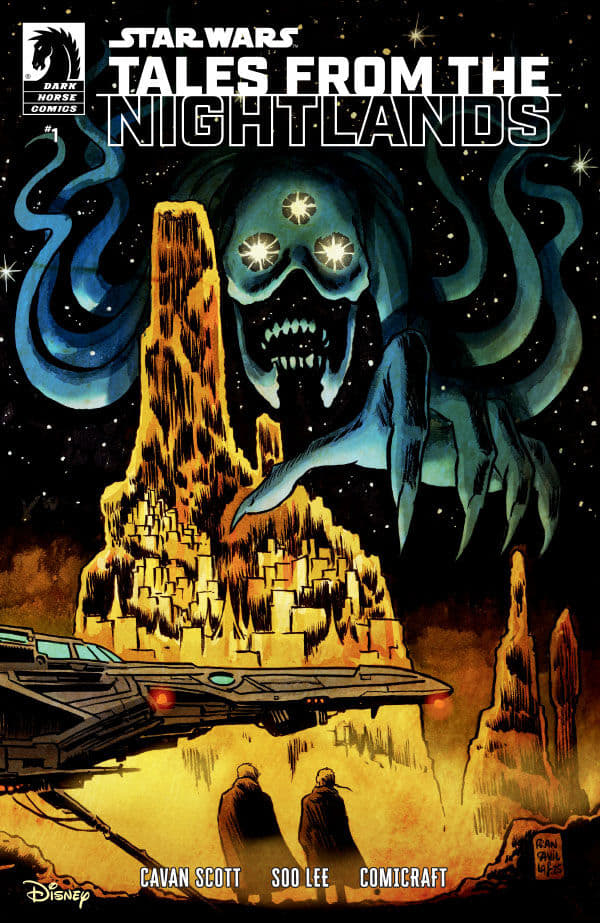
Check out Tales from the Nightlands
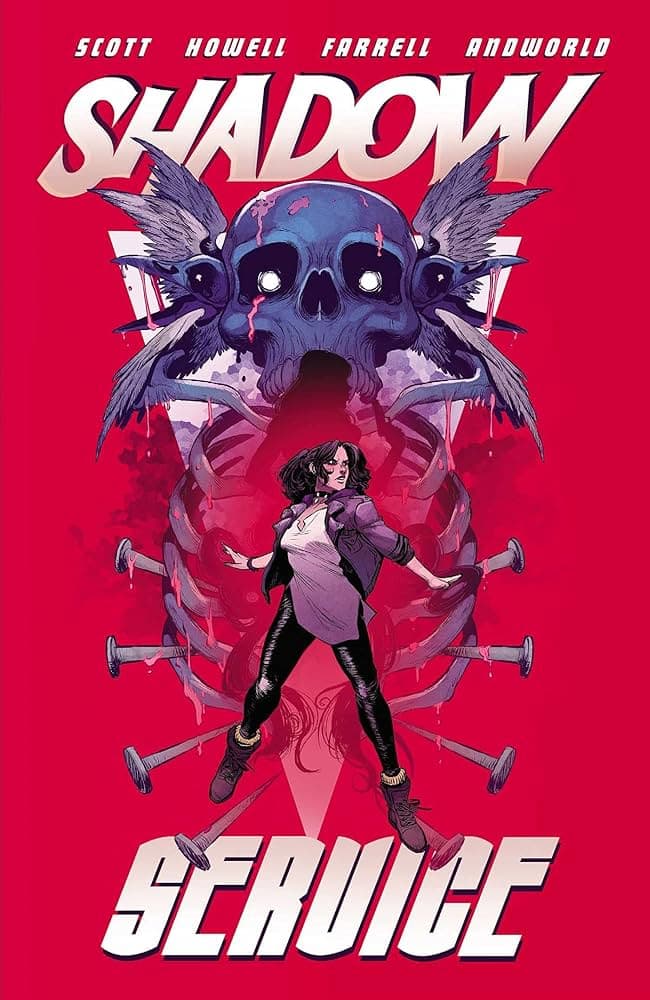
Check out Shadow Service vol. 1
Follow Comic Book Yeti
🔗 Comic Book Yeti LinkTree: https://linktr.ee/ComicBookYeti
For partnership and ad inquiries, please contact: thecomicsyeti@gmailcom
Follow your hosts
🔗 Jimmy Gaspero: https://bsky.app/profile/jimmygaspero.bsky.social
🔗 Byron O’Neal: https://bsky.app/profile/byrononeal.com
PATREON
We have a new Patreon, CryptidCreatorCornerpod. If you like what we do, please consider supporting us. We got two simple tiers, $1 and $3. Want to know more, you know what to do.
ARKENFORGE
Play TTRPG games? Make sure to check out our partner Arkenforge. Use the discount code YETI5 to get $5 off your order.
Make sure to check out our sponsor 2000AD.

[00:00:00] Your ears do not deceive you. You have just entered the Cryptid Creator Corner brought to you by your friends at Comic Book Yeti. So without further ado, let's get on to the interview. Do you love sci-fi? Are you a horror fan? Maybe you prefer action or fantasy? 2000AD has it all and should be on your radar. With a whole universe of characters from Judge Dredd, Astronium Dog to Rogue Trooper, Shakara Halo Jones and many more,
[00:00:28] every weekly issue you get five action-packed thrills from incredible creators such as Garth Ennis, Rob Williams, Alex DeCampi, Dan Abnett and so many others. Get a print subscription and it'll arrive to your door every week. And your first issue is free or subscribe digitally. Get free back issues and download DRM-free copies of every issue for just $9 a month.
[00:00:51] That's 128 pages of incredible comics every month for less than $10. That's like a whole graphic novel's worth. All subscribers get amazing offers like discount vouchers and exclusive product offers. Head to 2000AD.com and click on subscribe now or download the 2000AD app and why wait? Start reading today. I'll put links in the show notes for you. Hello and welcome to Comic Book Yeti's Cryptid Creator Corner. I'm one of your hosts, Jimmy Gasparo, and I am very excited for today's episode.
[00:01:20] This writer has, he has played in a lot of sandboxes, whether or not it's Doctor Who, Star Wars, Teen Titans, Black Adam, Transformers, and Back to the Future, Vikings, Pacific Rim, Sherlock Holmes. He's written several miniseries for Marvel and he has also had a bunch of creator-owned series like Shadow Service, Sleep Terrors, The Ward, and Dead Seas.
[00:01:46] We're going to talk about a lot of stuff today. First and foremost, though, his newest Marvel miniseries, Iron and Frost, issue number one, is coming out October 15th. Please, please, please welcome to the podcast, Kevin Scott. Kevin, how are you doing today? I'm doing good. I'm quite tired just hearing everything I've worked on. I might just have to go out and have a sit down. It's the weird thing is you work, I mean, I've been doing this a while and you do work on a lot of things and I've been very fortunate to work on a lot of things.
[00:02:13] It's only when you hear someone reeling them back, you go, oh, what happens? That's been a minute. But yeah, no, I've been, I basically say my to-do list has stayed the same as when I was 10 and it hasn't really changed ever since. So I'm all for that. For listeners who don't know, it's not just a lot of different things that you have done, but it's also not just comics, it's novels, it's audio plays.
[00:02:38] I know that you've, I think, have worked on stuff to try and pitch for television with George Mann and done screenwriting. So it's a whole host of things that you are involved in. Also, the fun of getting ready for an interview like this is I discover little things that I just had no idea. Having read some of the comics you've worked on before, I came across something that you had edited for Countryfile, which is a magazine that you had started.
[00:03:06] If listeners don't know, it's off of a popular, I think, BBC program. But I came across Great British Walks, 100 unique walks in Britain that you edited that. So I thought that was great. I mean, I need a map to, you know, I mean, things do actually link up if you take a step back and look at everything and it all makes sense.
[00:03:27] But, yeah, when you look, when you pull out individual things, it was earlier on, we were watching a natural history program on the telly. And it was about this bird called the bittern in the UK, which has this booming noise it makes. And just before they said it, I went, oh, the bittern makes this booming noise. And they said it. And my wife said, how do you know that? I was like, remember, I used to work in rural telly. It's like, so I've done all this stuff.
[00:03:53] And, yeah, it's like all these sort of past lives sometimes come crashing back together again. It's weird. It seems out of all the stuff that you have done, though, you have really been, I would say, fortunate enough to work in all of these things that you've talked about before that you loved growing up. I mean, I imagine I can kind of see, you know, where you're behind you. It looks like along the top of your. This is my brain on shelves, basically.
[00:04:17] My eyesight is not as good as it once was, but it looks like across the top of that bookshelf are like many different Daleks. I mean, Doctor Who was my, I mean, I'm British, as you can probably tell from the accent. So growing up in Britain in the 1970s, you had to like Doctor Who. It was part of the Constitution. We don't actually have a written Constitution other than the fact you had to watch Doctor Who in the 70s. It was huge. It was everywhere. And it was my gateway into so many things. It was my gateway into a lot of comics.
[00:04:46] It was my gateway into a lot of different genres and fiction and horror and science fiction, fantasy. And it's always been a massive part of who I am. You know, it's probably my first fandom. It was my first job working in creative writing was on Doctor Who, which I was very fortunate to do. In the period of time, for people that don't know, the TV show ran from 1963 to 1989.
[00:05:14] Then it had a wilderness year, as much like Star Wars, when nothing was really happening. But actually, everything was happening because there were books, there were comics, there were audio dramas. And the fans, basically, you know, the lunatics took over the asylum. The fans started producing stuff and getting licenses from the BBC because the BBC didn't think anyone would want to make Doctor Who again. So they were giving out licenses to people.
[00:05:36] And I had the chance, a group of people I knew were putting together an audio drama company to get all the original doctors back and all the original assistants and companions and do new stories. And so me and a friend who were working on a magazine at the time just pitched some stories because it was like, well, why not? You know, this is, it was, my first ever published work was fan fiction in a Doctor Who fanzine. So we didn't call it fan fiction in those days, but that's exactly what it was.
[00:06:04] And so that led me to sort of pitch one of those ideas, get it accepted in a way that probably could never happen anymore, which is, you know, being incredibly fortunate, being in that period of time. And find myself in my first professional creative writing job, writing for one of the actors I used to watch on Saturday evenings, sitting up, literally sitting at my grandma's feet, watching, you know, Doctor Who fight Daleks and Sidemen and all those kind of things.
[00:06:32] And that was my first gig was to write for that actor, Colin Baker, you know, fighting monsters, fighting vampires in that case. And so it was, yeah, it was an incredibly fortunate bit of timing that sort of led me to leap into this world from the sort of magazine world, which I'd started him. Colin Baker, is that, oh, look, I'm going to, I'm going to try and test my Doctor Who knowledge. I'm not, I'm not as, I'm not as good as you, Kevin, but is that the fifth Doctor? Sixth Doctor.
[00:06:59] So Colin Baker was the one with the dreadful taste in clothes. It was all sort of patchwork cloak of all different colors, big mop of curly hair, big booming voice. Yeah. So he was probably what, I mean, my Doctor was Tom Baker growing up, but, you know, by the time, by the time Colin was around, that's when I was getting into fandom. And that's when I was discovering that there were comics to do with Doctor Who and all these different kinds of things as well. And meeting other fans.
[00:07:25] And so Colin's era is very important to me because it's the, I sort of went from being someone who watched Doctor Who to someone realizing that fandom existed. And so started to, you know, I say write fan fiction, meet people, send stuff off to fanzines. I mean, back in the day of like people, you know, I think now actually podcasting and YouTube and everything is the modern day fanzine.
[00:07:48] It's like, you know, when I was growing up, a lot of the time you sent off an envelope with a stamp on it and you got back this photocopied fanzine that fans have put together of short stories and analyzing episodes and that kind of thing. And that was basically how I decided I wanted to get into publishing because I had some stuff printed in these fanzines. And I was like, oh, I like that. I like that feeling of opening up and seeing my name and seeing that I'd written something that someone was now going to read.
[00:08:14] So, yeah, it was Doctor Who is so much part of my DNA and where I came from. Yeah, it's hard to avoid. And I have a bunch of Daleks constantly watching what I'm doing. I'm familiar with, I've seen every episode, I think, of the when it came back. But I've only made my way through a handful of original run of Doctor Who. But yeah, I thought I would be just from what other folks have told me and talked about it,
[00:08:43] who were big into Doctor Who. I thought Tom Baker would be a favorite of mine. And I really do like Tom Baker. But there's something about the John Perkwee, you know, Doctor episodes that I really, really love those. The couple that I've seen and been fortunate enough to check out. So it is amazing. They're very up to time. Yes, they are.
[00:09:04] It is amazing to think like starting out with fan fiction and submitting to those types of things and where your career has gone since then. And not just the creator and stuff that you've done, but working in different areas, if it's Doctor Who or if it's Star Wars. Is there any trick or I guess skills or tactics that you've developed in terms of these things are science fiction,
[00:09:33] but they're very different, like in terms of horror or other elements. I think that some of the Doctor Who stuff tends to go a little bit into scary territory than, you know, Star Wars, which I want to talk about because I know Star Wars Tales from the Nightlands is coming out now too, which is, you know, kind of horror and Star Wars. But I guess to kind of get back to the question is, is it all just the same muscle when you're doing these types of things?
[00:09:58] Is there something that's quintessential like Doctor Who sci-fi or Star Wars sci-fi? Or is it something else when you approach this material that you focus on? I think it's the prism. It's the prism of how you see it through. The interesting about both Who and Star Wars is they're not, in my mind, technically science fiction. They are more fantasy. Doctor Who is basically a wizard in space or has a magic wand.
[00:10:25] You can do all kinds of things and fights monsters. Star Wars is full of wizards with magic wands who fight monsters. You know, it's both a lot more than that in so many ways. But actually what both have is that they're not about the monsters and they're not about the wizardry and they're not about the magic spaceships or the police boxes or the lightsabers. They're about the people who wield them. And that's the same across everything.
[00:10:52] That's whether you're on board the Enterprise or whether you're flying a DeLorean back through time. We love all the ships. We love the uniforms. We love the gadgets. We love the weapons. But actually what keeps us coming back is the characters. And I remember when seeing, I saw the trailer for The Force Awakens for the first one. And I don't know if you remember the first one. It was very much just based on vibe. You know, you saw the Falcon. You saw all these different bits and bobs.
[00:11:22] And I was like, okay, that's interesting. But it was the moment in the next trailer where you saw Han and Chewie go on aboard the Falcon and saying, Chewie, wow. That's Star Wars. Because again, you care about those characters. And I think no matter what you're working on, no matter what universe you're working in, and working in licensed material like this, there is a particular skill set. Not to sound too taken about it, but there is a particular skill set that you have to use to be able to work within a shared universe,
[00:11:51] especially a shared universe that is owned by someone else. But always it's the characters. You can have the trappings, but it always comes back to the characters. So again, you come up with the story. You see what kind of stories these universes tell. Well, again, the other great thing about both Who and Star Wars is that you can have, I mean, they've just announced a Star Wars romance novel. You know, there's been Doctor Who romance novels in the past. Both those universes, they can be taken everywhere. And we've seen it in Star Wars. You can have a Western. You can.
[00:12:20] I mean, I think there's a lot of horror in Star Wars. There's a lot of monster movies in Star Wars. And I think, again, that's showing a lot of what Lucas loved. You know, if you think back to the beginning of Empire Strikes Back, that's a horror film. You know, you've got Luke literally hung upside down in a cave by a monster. And I think the original cut of it is even more of a horror film than the one you see when you see the monster and you see the slag thing and all that kind of thing. You know, for me growing up, I was a monster kid. I mean, I'm sitting here wearing a, you know, a famous monster t-shirt.
[00:12:51] Monsters were everything to me because of things like Doctor Who, because actually that's also what you remember. You remember the monsters. You remember the Daleks. You remember the Sidemen. You remember the Sontarans and all these creatures. It was the same for me with Star Wars. It was seeing, I talk about, again, those periods when you move from one level of fandom to another. I was a little bit too young and nervous for Star Wars. I experienced Star Wars first in the comics, which is why I have an affinity for Jackson, the Big Green Rabbit, because he was literally the first thing I experienced in Star Wars
[00:13:20] long before Luke Skywalker. So I read the comics before I saw the film. I was old enough and capable enough to cope with Empire when I went to see Empire in the cinema. When it came out. But it was Return of the Jedi that made me a huge Star Wars fan, because Return of the Jedi had Jabba's Palace. Return of the Jedi had the Ewoks. Return of the Jedi had the Sarlacc pit. You know, and so suddenly monsters were there in a way that in Empire Strikes Back, they're just not there.
[00:13:48] You know, you get a few, but there's not so much, so many alien things in Empire. So yeah, for me, it was always monsters. So if you look at my take on a lot of these universes I work in, there is usually a monster involved in some way or another, because that's what resonates with me and always has. And it largely, again, comes from watching those things, going on to discover Hammer Horror Universal,
[00:14:15] and monster books of the 1970s and 80s. So yeah, I think I try and find those elements that I can tell stories within. And then your next job is to try and make it as authentically that thing as much as you can. You know, one of the things I try to do is make it feel like it could have stepped out. If it's an episode of Doctor Who from a certain era, it has to feel like for me that it could be done at that time.
[00:14:43] You know, it would have been done at that time. So yeah, I very much think about the era. Again, what the joy of these franchises are is that we now have franchises and stories that go over decades, so you can see where stories fit in and how the stories of that time would have been told. And I think that's when things like Andor are doing so well. It looks beautiful, but it could also have been filmed in the 70s in a lot of ways. So same with the new Alien show.
[00:15:11] It looks like something that came out in the 70s and 80s. Obviously, it looks something that's very modern at the same time, but it has that sensibility. So I'm trying to find ways to bring those sensibilities at the time. And what it's like to be a kid watching those things for the first time. You know, it's such a big part of who I am that I want to try and elicit that in other people as well. Well, you certainly must be, well, you are great at it because of all the things that you've done,
[00:15:36] and not just with making comics or writing novels that feel like they are, you know, part of whatever the original was that has, you know, captured your attention. You are also very good at getting to the heart of these characters, which is kind of a good segue into like Iron and Frost. I think it's your fourth miniseries with Marvel. It's part of, I think, the Age of Revelation storyline.
[00:16:04] How much work do you have to do on the front end to really figure out like who Frost and Stark are when you set about that this is what it is you're going to get? Like, have you done all that by the time you even like pitch an idea? Or is it like a long process? I mean, the good thing is I've been researching these characters since I was 10. So, you know, that's the joy of this.
[00:16:30] And I now want to go back and claim every comic I have ever bought as tax relief. But it was, yeah, I mean, I've grown up with Marvel comics. You know, my first real experience of Marvel was from TV shows. And again, in the 80s, the animated shows, reading Marvel UK comics, reading. Secret Wars was the thing that blew it all open. We had a Secret Wars weekly over here where they would release, you know, the Secret Wars story that was in the States, but as a weekly strip with backup strips.
[00:16:59] Alpha Fly in the background, weirdly in the backup story. And when it got to Secret Wars 2, they were very clever. And they went back and sort of did the, when they had the tie-in issues, they reprinted a couple of issues beforehand. So you got the full story. So that was like a primer for the Marvel universe. And I've been there ever since. So, and luckily, I mean, again, when Iron Man was, you know, Iron Man was one of those characters I've read pretty much consistently since the Silvia-Sanjurian days, you know.
[00:17:26] So it's a character I know and I love. Again, Emma Frost with the X-Men. My X-Men knowledge goes in and out, depending on what you're aware. You know, I mean, by the, in the early 90s, I was all in, you know, an X-Men fan all the way through the Claremonts and 90s. So I perhaps have to do a little bit more work with Emma. So yeah, but you do treat it like research, you know.
[00:17:47] So the good thing about when you're doing an event like Revelation, a lot of it is presented to you because, you know, they've worked out a general story. And, you know, you have a, it sounds derogatory to say it, but there's a shopping list of things the story has to do. You know, so you get, you get, this story has to do this, this, this, and this. And the challenge then is to make its own thing as well.
[00:18:13] So with Iron and Frost, it plays a big part in the overall arc and story of how that event plays out. So I knew going in where, where it had to hit. Then, then the task becomes, yeah, finding some character moments in those. And both, I mean, by, by the time this goes out, I don't know if it's going out. Some people might have read it by then because it comes out this week. Like, both Tony and Emma are not in the state we usually see them.
[00:18:42] I mean, that's part of the big event where it's all like X number of years in the future after a cataclysmic event. So all the characters have been changed slightly. So it adds an added complication that you have to make them recognizably those characters, but they have also changed slightly. And in there, so we also have War Machines in there, a major part in the story. And a new character as well. And we've got some side characters like Firestar and some of the, the, the villains with people we've seen before.
[00:19:12] So yeah, there's a lot to play with. But you have got such a rich universe that, you know, and, and also you've got people there who will guide you. You know, people like Tom know, know these characters backwards. So, you know, you put in some ideas and they go, yep, but that's fine. But what we need to do is do this. So they do guide you. So it's, it's a, it's a special kind of work when you're dealing with part as part of a big event.
[00:19:36] And the previous two I've done with Marvel were the zombie series and the blood, the blood hunt event. The first one. Union Jack. The Ripper. Union Jack, which again was very, I was, there was a lovely commission on that one. Because it was pretty much like, it hasn't really got to talk to the main story other than the fact that vampires have won. And so what's Union Jack doing in the UK? Which is the best thing you want to hear. Because actually you haven't got to worry so much about the bigger picture.
[00:20:04] You could just tell a really cool, small story within the area. Knowing Union Jack's history on fighting vampires. With Zombies, I was given the task of like, we need a book where the lore to the zombies. But it's about, you know, literally what kills and what doesn't kill them. How do they work? It's a story that could be used as a primer for that. So that's your go. And every other thing, part of that came from me. You know, it was, I, there was no idea what characters to use.
[00:20:33] There was no idea of like, I ended up using part of the Sinister Six and She-Hulk. And I would send something into the bar with no name. But none of that was in the brief. The only brief was this, you can have some Avengers. And this is the story you got to tell. You got to hit these points from a world building. So again, both of those had a great deal of freedom of what I actually did. And Zombies, I basically bit short of the dead, but sat in the bar with no name. With the Shocker, because I love the Shocker.
[00:21:02] With this one, with Iron and Frost, it was, there was a definitely a more of like, right. We're nearer the action in this. So we need to, these are, these are beats you need to hit. And they need to be really strong. So there was slightly less room to maneuver with this one. But at the same time, it already, I could already see where the story could be in this one. And you're working with Rory Coleman for this story. And I've seen some of the preview pages. I've seen some of the unlettered preview pages. They look amazing.
[00:21:31] He's incredible. He's so good. And he, it's been a real partnership, which I love. I love working with artists. And it was on some of the other, especially Union Jack, you know, Kevin, who was the artist and that brought so much sort of life to the world. And so a lot of the, the, the, the, um, the way the vampires work, a lot of that came from Kevin. With this one, um, as Rory was doing character, character takes and sketches, he was just, especially there's a new character we introduced.
[00:22:00] I think you see on the preview page is that, is a young girl who's just, just discovered. She's got mutant powers. Um, and we sort of see her development as being, you know, her becoming a mutant with a name and all that, all that good stuff. A lot of her relationships were there in the original idea, but then Rory said, but what if this, what if these two characters formed a relationship? And I was like, that's what it needed. And it was, so I love those moments because it, it was those moments when you, you, you,
[00:22:29] as all, you know, as everyone says, and they should say a script to a comic book, isn't a blueprint. It's, it's a guide. It's a map. You know, it's like, this is what's going on in my head. How do we make this work? And that's what it should be. And then the artist gets that. A script should never be for the final reader. A script is for the editor and the artist. And then you work from that point on, um, and the stuff Rory has come back throughout and said, well, why don't we do this? And why don't we do that?
[00:22:57] And I've just been saying, yes, yes, more, you know, let's, let's make this as, as much as our book as we can, because it always means that you get a better story and his storytelling. Um, instinct is so good and so strong. Um, but yeah, I'd love, I'd just love to keep working with him. I think this needs to be an ongoing and we need to make it happen, but, um, that might not be able to happen, but we'll see. Um, but it's, you know, I, I want to work with him again because he's just incredible. All righty, buddy, we're going to take a quick break.
[00:23:27] We'll be right back. Y'all, Jimmy, the chaos goblin strikes again. I should have known better than to mention I was working on my DC universe meets Ravenloft hybrid D and D campaign on social media. My bad. He goes and tags a bunch of comics creators we know. And now I have to get it in gear and whip this campaign into shape so we could start playing. Another friend chimes in, are you going to make maps? It's fair to say it's been a while since I put something together. So I guess question mark.
[00:23:56] It was then that I discovered Arkinforge. If you don't know who Arkinforge is, they have everything you need to make your TTRPG more fun and immersive, allowing you to build play and export animated maps, including in-person fog of war capability that lets your players interact with maps as the adventure unfolds while you, the DM, get the full picture. Now I'm set to easily build high-res animated maps, saving myself precious time and significantly adding nuance to our campaign.
[00:24:25] That's a win every day in my book. Check them out at Arkinforge.com and use the discount code YETI5 to get $5 off. I'll drop a link in the show notes for you. And big thanks to Arkinforge for partnering with our show. I think I'm going to make Jimmy play a Goblin Gorlock just to get even. Welcome back. I'm always kind of amazed at the amount of work that goes into any type of event, whether
[00:24:53] it's Marvel or DC. It is just unbelievable all the moving parts that have to come together to tell a story in the main title and then all of the other pieces and how all of that works. Like the inside baseball of it all as to how it all happens and all works together. It really is fascinating. And when you see it done very well, which, you know, Marvel, this Age of Revelation storyline seems to be another one that has a lot of moving parts to it.
[00:25:22] It looks like it's going to be a lot of fun. And even like the cover work for Iron and Frost, they all look great. So I'm very excited to see. It's been so one of the other projects I've worked on a lot over the last few years and people probably know me for is Star Wars The High Republic. And so I sort of see it, I saw it from the other side as well. I saw it from being part of the initial core group of people who came up with that idea and then seeing it. I mean, I think, I can't remember the exact figures, but we worked out that in four years
[00:25:51] we did 26 novels, 137 comics, you know, audio dramas, two TV shows. It's brilliant. To see the amount of work. I mean, that we had to do as sort of the core writing team to keep everything consistent, but just the wider, the editors and the continuity experts and all those things to keep everything together and keep everything moving on. And I think you look back at every big event like that and the stuff with High Republic
[00:26:18] and go, Oh, we, Oh, that's been, that didn't quite link up. But you go, actually, considering what we did, there was always going to be some things that like bump up against each other and that kind of thing. But the people who keep these, you know, these, these wagons on the road, um, when you've got all these different moving parts and all of these different creators, it's incredible. And, you know, hats off to them because I've been an editor. I know what it's like to be an editor to be an editor on part of a, an event. I don't, I don't even want to think about it. It's nice.
[00:26:47] You know, that's, um, that sounds like chaos to me and I'm very happy to be on the writing side of it. Yeah. It does sound like chaos. Um, I, I would, I would like to do something, you know, a trivia show maybe, uh, uh, uh, where we hit continuity experts against each other. That seems like, like a Herculean task. But then you get the fun stuff as well. Then you get the moments when you realize we made a mistake. And if you're still in the, in the event, like we were in the higher Republic, there
[00:27:14] are a couple of points when we went, Oh, Oh, Oh, one character is in two places. That can't happen. Can it? And then you go, well, actually you can because he's in a more, more first form of jelly that's forced himself into suits. So what he's done is split himself to do two things. And that's why he's on two different planets. And then you come up with great. And it literally, that's what happened in the higher Republic. We had one character appear in two comics and two battles that happened at the same time.
[00:27:40] And we just completely missed it because no matter how many times you try and catch everything, there's always going to be something to get through and fans immediately notice it. Obviously they immediately go. So, so we then had this entire thing that this character, Orbeleyn, who was this amorphous blob of, of green goo. We worked out where he can separate himself and he's doing an experiment and it became part of his story. So it's actually worked really well in the end. It worked.
[00:28:06] When we came to the final battle, he had been diminished by all these times that he split himself off and those other beings were getting killed. So he was getting smaller and smaller and literally. And so it really worked in our favor from a story point of view, because suddenly he, he was in a, in a risky situation. He wouldn't have been before because we'd made a mistake. And I think sometimes as writers, we want to appear. Oh yeah. We planned everything. And we do plan a lot, especially when you're working on the vent.
[00:28:36] A lot of stuff has to be planned. Otherwise the wheels are off the wagon, but there will always be those moments when you go, Oh no. Oh no. Okay. Then this is how we fix it. And those are the fund it's. And that's where I get my old editors head on when I go, okay, right. We've got a situation. We need to move quickly to work out how it works. And they're actually sometimes the most creative moments because you, you start putting things together that were never meant to be together in it. And somehow it works.
[00:29:04] How are you as a fan being a fan of all these things when it comes to continuity? Are you someone like as a kid and growing up where you were a stickler for continuity or I think I used to be, but the older I've gotten, the more. You know, I, I understand a little bit how the process works, you know, and I just care more for a good story. I try not to get bogged down, but I certainly understand folks that are, you know, that that's, that's the thing for them. So how about you?
[00:29:32] It's interesting because again, coming from where the fandom I originally came from with, with Dr. Who, there is no canon in Dr. Who. There can't be canon in Dr. Who. Um, I was part of a, me and George Mann, who was another, one of the writers in the Republic. We've been hired by the BBC to write the definitive in universe history of the Daleks, which sounds an amazing, you know, and someone who has all these up, it's an amazing thing to do. We worked out there are three origin stories for the Daleks and they all had to be true.
[00:30:00] Um, so thank God for time wars. That's all I'm going to say, but you know, Dr. Who in its nature, because the way it was developed, it didn't have an ongoing continuity. I mean, the doctor's background changed depending on what they needed him to do. And, and, you know, and it's continued to evolve and change. I think also it was created at a time where people could never watch these things again anyway. So they didn't think it would matter. You know, the fact that the Daleks are three, three origin stories. No, that was from like 10 years ago. No one would care about that.
[00:30:30] That's black and white. I think it's become more and more important to fans and it's become more and more important to shows as well. Um, but I'm sort of, I don't know. I'm, I, I love as much as anyone working out, you know, how things all work together. And I think that's actually probably why I like doing my job because I am one of those fans who would sit there and go, well, how can the enterprise be there if it's also over there? You know, so what, what, what, how can, you know, and trying to work out, there's a great,
[00:31:00] um, run that DC comics with, with Star Trek set between Star Trek three and four, which then they had to completely unwrite because they realized Star Trek four was taking place like five minutes after the end of Star Trek three. And they'd given Kirk a new ship and they'd got Spock back and they had the, he had the Excelsior and they suddenly had to get them back to Vulcan and give them another, um, bird of prey.
[00:31:27] And so I loved that because I loved seeing the convoluted leaps they had to then work out to get, to get Kirk and Spock back to, to, um, to Vulcan and wipe Spock's brain again because he'd been fine for the last year. Um, and that really tickles me. And I love those little moments. I love the working out and most of the fan fiction I read, I wrote when I was a kid and
[00:31:53] a fan was explaining things that happened in between episodes and why, you know, why a dialect suddenly changed to look like that dialect, you know, and that kind of thing. Um, so I, I have a, yeah, I have a, I'm a bit loosey goosey with Canon, but I still want it to be, I never want to pull someone out the story. So that's the reason why the Canon is not important. Um, but at the same point, yeah, I don't want it to be such a, you know, there's Terence Dix, who was one of these script editors and Robert Holmes, a script editor on, on Dr.
[00:32:22] used to say, don't let, you know, continuity get in the way of a good story. Um, and I think as long as you're respectful to the fact that people love continuity and they want it to all to work. I think if you do treat it well and treat it with respect, then people will go with it. Um, and sometimes there are those big catastrophic moments where Canon has to reboot again because someone else has bought the company and all those kinds of things. And I get why people are very invested for me.
[00:32:50] Um, I am very much of the mindset, well, that still exists in my head. There's part of the world where all of that still works. And I'm not just talking about star Wars cause this has happened on so many, so many different franchises. I mean, again, I'm a DC comics fan. How many times has the DC universe restarted? You know? Yeah. A lot. All those, all those super men literally assist somewhere. And so I think part of the fun is making everything mesh together. I understand why people get very angry, but at the same time I'm like, but that's where the fun is.
[00:33:21] It's like working out and reintroducing and like having those little nods and winks at the audience. Um, so yeah, so I love it, but also I will be the one who'll be watching something that well, we can't do that. No, no, no, no, no, no, no. But then I have to work it through my system because I realized what I sound like. And so in terms of iron and frost, you know, with the, the mini series and, and how it, it all fits in. Um, it's a three issues. Is that right? Yeah. Yeah.
[00:33:51] Majority of those, those tie-ins to events are now three issues, which actually works quite well from a traditional three app structure kind of thing. But it's, um, yeah, yeah. That seems to be the norm now with these big events that the, the event mini is three issues. Uh, when it comes time, you know, to get involved with something like that. And if it's like Tom Brevoort or whomever, you know, reaches out to you or you, you connect with them, do they give you like options of things you can, you can pitch on or does
[00:34:19] they, Tom come to you and say, Hey, I think you'll be good for, you know, iron and frost. Oh no. I mean, it's literally, you're invited to work on that title, um, or you invited to pitch on that title and depending on some of the, like some of the jobs I've done in the past transformers back to the future crossover. I was one of five, I think people pitching for it. Um, and we all had the same brief, um, and then they chose the one that they liked. Doesn't so much work with that with people who were at the big two, because they haven't
[00:34:47] got the time to necessarily do that. Um, so they will come to you and the recent Gwen Paul mini I did was a, a, a good sample of that, that came to me and it had a very strict brief. This is what is happening. How are you going to make it work? Um, so they didn't have the end that sort of, no, they didn't have the ending that we had, but they had, they knew at certain points, this is what needs to happen because it obviously has bearings on other things as well.
[00:35:14] Um, so a lot of the time it's, you don't often get a chance unless I think you're above my pay grade to go. I'm going to pitch for Superman now. Um, you know, because those plans are all in motion. Um, quite often the conversation you have is what characters do you like? What kinds of stories do you, you know, resonate with you? Um, and then they think, Oh, hang on. So, um, Iron and Frost came about because Danny Kazim, who's the sort of the editor of
[00:35:42] the book, we worked together on High Republic. We'd worked together on Union Jack. Um, and when he got the list of the stories that came through, he was like, Oh, I know that's a calf story. So, you know, he, he, he, he knew that it'd be the kind of story that I would like to them. So yeah, it, it usually happens. It's a, it's a weird thing to, you know, because obviously we talk about pitching things, but you're usually pitching to a brief.
[00:36:07] And so, um, it's that weird thing of like at times where readers, and I've done it as a reader, go, well, why did they put, why did they pitch that? It was like, well, there was no pitching involved in that part of the story. That part of the story was a given from me off because it was like, for example, I haven't, I never pitched Gwen Stacy coming back as a, as a Wolverine. Um, that was part of the, that was part of my brief for Gwen. Okay. Um, because that's what happens because again, you're, you're working a bigger universe.
[00:36:36] You're working in a bit, a universe where they have building blocks of what they're doing. They have an ongoing story. Like you may have no idea what that ongoing story then is, but you know, you're filling this part of that story. Um, so yeah, it's, um, it can be a dance sometimes to sort of like try and tell the story you're comfortable with, you want to tell. Um, and sometimes they can't tell you why. I mean, I had so many cases on star Wars where I pitched the beginning of rogue one without
[00:37:03] by accident once because I had a brief and I was like, oh, this happens. And there's this kid and she's on a planet where the Imperials come and then she's like, you can't do that. I was like, why not? Can't tell you. And then I literally went to see rogue one. Um, and I came out and texted the editors going, now I know why I couldn't do that entire first quarter of my book. Cause I've just watched it on screen and they were going, yeah, we just couldn't say why we just had to tell you, come up with a new front of the book.
[00:37:29] So, um, and it happens so many times because again, these universes are so big and there's so many moving parts for the people working on them from inside. They can't tell everyone everything what's happening because they haven't got time here. They haven't got the, and also as a writer, you don't necessarily need to know just like real life. We don't really need to know what's everything else is going on in the world. You just need to know what your story is. So, um, it could be frustrating at times. It can be really liberating at times.
[00:37:58] Again, it all depends on the project. Oh, no, I mean, it makes a lot of sense. Um, so I want to go through some of the other stuff that you have coming out. So listeners know, uh, Gwenpool number five just came out September 3rd. Star Wars tales from the nightlands. Number one is out, was out September 10th. You have a story in D, uh, I think it's a demon story in DC. Satanic panic out October 1st. Star Wars, the jaws of Jakku, which is an audio drama. That's right. October 9th.
[00:38:27] The high star Wars, the high Republic fear of the Jedi, uh, a trade paperbacks out October 14th, iron and frost number one and two out October 15th and then November 12th. And then star Wars tales from the nightlands number two out October 22nd. I want to, if we could, I just want to ask you a little bit in terms of tales from the nightlands. And I totally agree with what you were saying about star Wars. There are definitely some horror elements, you know, on Hoth with the wampa, which I think
[00:38:54] I have my wampa from when I was a kid right behind me in my, in my office is a horror story. And I mean, star Wars, such a big universe to play in whether or not it's the original trilogy or the sequels or the high Republic or high Republic era. But I'm more interested in terms of your influences in horror. Like you're wearing the classic, he said, you're wearing like a famous monster shirt. I know it's October right now as we record this. Yes.
[00:39:21] One wonderful Frankenstein on the, on the shirt or Frankenstein's monster. Um, so what are your influences in terms of horror that you then take into star Wars with you? So the tales from the nightlands is an interesting thing because I've been doing those books for nearly 10 years now with different titles. So these are anthology titles. What first working with IDW and now with dark horse, um, sort of all age Halloween, um, fright
[00:39:50] comics that all originated between me and Mike Siglain, who's the director, creative director of Lucasfilm. Um, we are both grew up on universal and hammer. Um, and so we were sitting at San Diego comic con say 2017. And we were like, Oh, wouldn't it be great to do a story where we could do Count Dooku as a vampire? You know, what could we do a story where Tarkin was creating a monster on the death star?
[00:40:18] And we sort of looked at each other and I went, well, you do rise. You're the creative director of Lucasfilm publishing. So could we make this happen? And so we looked at things like tree house of terror and all an EC comics and all those kinds of things. Um, we went, well, hang on. You could, cause the wonderful world of star Wars is that a lot of the time you have Canon getting back to that original conversation. Then you have legends, which are the stories that the people in Canon tell about the characters they know.
[00:40:47] So this original idea came up and we did tales from the latest castle. We did out three or four series of it. Um, where it was people having an adventure. And while they're having an adventure, they're relating as you do when you're being chased by Darth Vader, you relate that thing. You remember hearing about Count Dooku? Um, you know, it's that kind of thing telling stories around a fire. Um, so you could have all the, I mean, they let me do retail, the wicker man, but with Ewoks, I wanted to call it the wicked man, but it was too early in the work in the rocks life.
[00:41:16] It's very upsetting. Um, but you know, so we can have moments. So I know, I know I'm still wicked man is a great title, you know, Robert, Robert Hag did the art. If you've not seen it, Google Ewok wicker man. And it's amazing. It is just, it is literally what it sounds like. Do these stories, which are, you know, what, what the kind of nightmare story, what, what would Luke and Leia have heard, you know, being tucked up to bed on, on Alderaan or Tatooine?
[00:41:44] What kind of horror stories would they have been told by their uncles, aunties, parents, whatever. Um, and so that's what this became. It became this, this chance to tell Halloween type stories, featuring characters and do things, you know, we turned, we've turned, um, we've had weregamorians. We've turned, um, C3PO into a zombie droid. You know, we've, we've done lots of, of great fun things and it all comes from that sort of monster kid background of like loving, loving classic horror films.
[00:42:12] Um, seeing them as a little bit of sort of gateway, not just, uh, for younger fans. We try to make it that they, I mean, they are a bit scary at points. Um, we want to just be a book that people could read together as families, you know, so you could, you could show it to your kid. They could, cause their kids be like, like being scared. We all know this, we all try and protect them, but they love horror because that's all they've read pretty much all their life. It's just, it's just the nice things, you know, it's, um, look at stories about Roald Dahl, Goosebumps, all these kinds of things.
[00:42:40] I mean, they're just horror films, but just for good. It gave us a chance to do that. This is our latest version of it. So slightly different, we've changed the format, but we've got three sort of standalone horror movies, a trilogy of horror movies, one set in each of the trilogies. So you've got, you start with Anakin and, and, and Obi-Wan. The second issue is Luke and Leia. The third one is Leia and Rey and Finn. So, um, and we've created us all the bogeyman that they, they experience every 30 years, a bogeyman returns.
[00:43:09] So it just happens to work that every 30 years or whatever is pretty much where we are at this point. So, um, so yeah, it's, it's a chance to sort of say to kids, you love star Wars, you love monsters. Well, do you know what? In the same way for me, Doctor Who was my gateway to so many other universes and so many other genres. If you like, if you like scary things, then you might like these other things out there as well. So it's, um, it's definitely part of that tradition of going there as spooky season.
[00:43:37] Let's take a step into a larger and probably more terrifying world. Oh, I love that. And I, I saw some of the preview from, uh, issue one. Um, I think you're working with Sue Lee. So it's just amazing. She's been on the podcast before, uh, talking about a couple of things and just absolutely lovely and wonderful artists. So yeah, amazing. Just before I let you go, I just always just wanted to check in terms of you're involved in, you know, so many different things.
[00:44:04] You have a pretty packed October and other, you know, a bunch of stuff coming out. Yeah. What is it you do to kind of, you know, relax or recharge creatively? Do you have time where you're like, oh, I just need to sit and watch, you know, I haven't made time for it. So I've started to make time because the one thing the high Republic was amazing. It did nearly kill me and everyone else working on it because it was so intensive and in some
[00:44:28] ways it saved us because we had to launch in pandemic and so many reasons why that, that, that was a blessing in the end to work on something like that. Um, but it did take over our lives as well as them trying to do our own things as well on top of it. So yeah, I mean, I've, it's a really interesting question because it's something we don't talk about very much. That's all of like trying to find a creative venture because at the end of the day, we're all creators. That's what we do. It's what we get joy from. It's quite hard when I joke about my to-do list being the same now as when I was 10.
[00:44:58] Yes, it's funny. It's joke. It's actually really true, but the trouble is it's really hard to switch off. It's really hard to go and watch a horror film or a science fiction film. I mean, there's some franchises that I haven't worked on, but I still sit there and analyze everything they're doing, you know? Um, so I've, I've found in the last year I've been doing, um, lino printing when you carve lino and then you print it very old traditional printing. I found a place in Bristol here in the UK that teaches it every Wednesday.
[00:45:26] So for Wednesday for a couple of hours, I'm starting a studio with other people carving a piece of lino, which I will then do some printing from. And it's finding those moments. It's finding those moments where I've maintained to myself, I promised myself that is not there for, to make profits. It's not there to make content for anything. Sometimes I do take a picture of what I'm doing and get put it on Instagram weather, but that's not the reason I'm doing it. The reason I'm doing it is to just make something for me.
[00:45:54] Um, and so, yeah, that's, that's definitely finding that avenue. You can still be creative and also find other avenues when it's not related to your dog at all. I'm a football fan, a soccer fan. Um, like a lot of people in the UK, I have a local team. When I go and watch them lose on a weekend, they do win sometimes. Um, for those 90 minutes, I don't think about story arcs or where the spaceships work or all these kinds of things.
[00:46:23] For those 90 minutes, I'm there with my daughter and I'm yelling at, you know, 11 men on the pitch, kicking a football. So that is, again, it's those kinds of things when you ended up. And so many of us end up doing this job because we love these worlds and because we love being a fan and we love comics, but it does make it quite hard sometimes to switch off and it takes it. The boundaries become so blurred. So it is a case of finding, um, whether it's sport, whether it's a hobby, whether it's
[00:46:52] birdwatching, whether it's, you know, going for the big walks over, over the, the moors, you know, or doing something like liner printing or pottery or whatever. It's something again, that's just for the joy of doing that thing. That's the trick because otherwise your brain does explode after a while. And that's, that sounds bad. The brain, uh, the brain exploding thing. Uh, well, I did want to say as, as someone that gets your newsletter, I did see, I think
[00:47:17] you posted not that long ago, uh, one of your most recent lino printings. And, um, but it's, I'm not, it was wonderful. Thank you. And the thing is, it's, that's not so much me again, there's stuff there that I will put in just because I'm particularly proud of it or whatever, but it's, it's a, it's a different thing to pitching, to, to pitch it, to posting something about work. You know, it's, it's, it's more of me just going, here's something I made.
[00:47:44] Um, you know, and it's, it, but it's not part of my professional life. It's just something that I do. And if I'm proud of that, so there's loads of stuff I do in that. I will never show anyone maybe because it hasn't worked, but, um, you know, it's that it's again, it's that it's the, it's meditation, you know, for those two hours a week, there was a period of time over the summer where I couldn't do it. I, I missed the enrollment time on the class. Um, I got the days wrong. So by the time I went in to pay my money to sign up for the next six weeks, the place is all gone.
[00:48:15] And I was like, oh, I'll do it at home instead. I've got all the kit. I was on a Wednesday. I will find those two hours and I will sit there on those two hours. I never did it once because there's something about going to the place and going to the brilliant coffee shop and having a cake beforehand and sitting down and working with, it's a nice class made up of some people who go every time and some newcomers every year, just do it for one semester and then move on. Um, and there's something about that place is somewhere where I'm not, I'm not Kevin Scott writer.
[00:48:44] I'm not Kevin Scott who's worked on star Wars or Marvel. I'm Kevin Scott who's mucking up this print, you know, he's like, can't work out how to do the line round or is having to ask advice or helping someone else. And that, I think that's what you need to do. You need to find those moments where you don't have to be on and you don't have to be because you, when your job and your hobby become the same thing anyway, there are no boundaries. So you have to find something that you can then reinvent. I thought it was pretty interesting.
[00:49:13] I didn't really know about the lino printing, but, uh, no, it is, it's, it's important. It's a good way to put it. When your, your hobby kind of becomes your job, you have to, you have to figure out something. Um, well, typically all the lino prints I'm doing are monsters. I mean, I tried one that's a hair, um, which was great and it worked, but so far I've done Godzilla. I've done Nosferatu. Um, I'm doing one at the minute, which might be on this, this t-shirt.
[00:49:39] Um, so everything, everything I've done is pretty much crammed into my eyes just because everyone was going, I'm going to do these wonderful landscapes. I'm going to do these wonderful flowers. I'm going to do these animals. And I was going, I am going to do Godzilla. Um, so it's still there. It's still part, very much part of who I am. It's my, you know, um, and my teacher there is loving it because no one, she said, no one has ever come in and done a Godzilla print for the first one they've ever done. So, um, but again, it's like, it's, it's, it's, it's a way of keeping in touch with
[00:50:09] your interest in a different way. I mean, again, it's like, it's nothing. I wouldn't, it sends a different part of your brain off. Um, and so, yeah, it's great. If that's my advice to any creative is get a hobby that has nothing to do with your job because you need it. Awesome. Awesome. Well, Kevin, I thank you so much for coming on the podcast. I really appreciate it. Uh, listeners, iron and frost number one will be out October 15th, uh, star Wars tales from the nightlands is going to be out.
[00:50:38] The first one I think came out September 10th. The second one will be out October 22nd. And I think over in the UK, it seems like audio dramas are a lot bigger than in the U S although podcasts are certainly very popular, but you know, check out, uh, I think it's the jaws of Jaku. Yeah. Yeah. Uh, yeah. So Kevin, thank you. Thank you again. Thanks so much. I'm a huge fan and listeners. If you haven't read any of Kevin's work before, which I'm not sure how that's possible, but
[00:51:06] I just for my own, uh, I would recommend the transformers back to the future crossover. Uh, if you're, if you can find it these days, cause it's, it's not available anyway, but yeah, find one, please. If you can find it, uh, that's wonderful. Um, as well as the high Republic comics. And then my, I really loved shadow service that you did with corn, how at vault. Uh, I've had both of those volumes and it's, uh, that's a phenomenal series.
[00:51:32] I love that mix of kind of spy with supernatural stuff is great. So. Oh, thank you. I, I, that's a real, that's my baby shadow service. I mean, it's that thing of, you work on so many universes and then you do your own and it's a different kind of shadow service. People ask me all the time. It is coming back. We said at the last volume, shadow service will return, obviously ripping off James Bond. Um, but it will, it's just finding Corrine's really popular and really busy.
[00:51:59] So we're just trying to go in, Corrine, draw shadow service. Um, but she's off doing a list, which is amazing and loads of other things. So yeah, the, the plan is for us to, um, to finish off that saga soon, sooner rather than later, hopefully. So, um, shadow service will return. Good. Good. I'm glad I really love that. Uh, love that series. So, uh, yeah, listeners, thank you very much. Thank you for listening. Uh, shout out to my brother, Bobby, the cryptic creator corners, number one, most dedicated fan. Bobby listens to all my episodes.
[00:52:28] He's also a big fan of the star Wars, high Republic stuff. Um, so Hey Bob and yeah, Kevin, thank you so much. I really appreciate your time today. Listeners, uh, rate reviewers tell us to do all those things they tell you to do about podcasts. Thank you so much for listening and I'll, um, I'll see you next time. Good night. This is Byron O'Neill. One of your hosts of the cryptic creator corner brought to you by comic book Yeti. We hope you've enjoyed this episode of our podcast.
[00:52:57] Please rate review, subscribe all that good stuff. It lets us know how we're doing and more importantly, how we can improve. Thanks for listening. If you enjoyed this episode of the cryptic creator corner, maybe you would enjoy our sister podcast into the comics cave. Listen and subscribe wherever you get your podcasts.