
The last time Ringo Nominated comics writer Erica Schultz was on the show with me was to talk about her Marvel Comics project Hallow's Eve. That project made me a lifelong fan of her work and after that chat I knew I needed to reach out to her again for my Women In Comics Feature celebrating Women's History Month in March. Her recent Laura Kinney Wolverine book is one of my top favorites of the From The Ashes X-Office storylines and what better character to dive into the specifics of gender in comics on a podcast than X23 who's genesis is from a cloning experiment which finally met with success after twenty two failed attempts using a faulty Y chromosome to attempt to recreate Wolverine? Considering the archetype of the character, this is the most authentic Wolverine story I've read in years. Big fan.
We also discuss some of the narrative elements and the thought process behind them for the DaredeviI: Unleash Hell Red Band Edition. I was curious about the mentorship role Elektra has been playing in the last few issues of LKW and why that relationship is different and largely unexplored with female characters in comics and the impacts of all female creative teams is also examined.
Erica's website: https://www.ericaschultzwrites.com
WATCH ON YOUTUBE
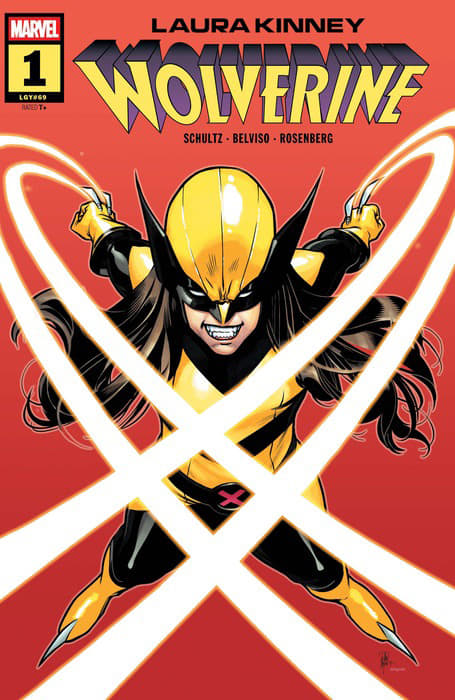
LAURA KINNEY WOLVERINE #1
From the publisher
THE ULTIMATE MUTANT DEFENSE! WOLVERINE takes the fight to those who stand as enemies of mutantkind! LAURA KINNEY was bred to be the ultimate assassin as X-23. She's long left that life behind, but as she encounters mutants being forced to use their powers against their will, WOLVERINE takes it upon herself to right these wrongs - no matter who stands in her way! Dynamic scripter Erica Schultz (HALLOWS' EVE, X-23: DEADLY REGENESIS) and rising-star artist Giada Belviso (BLOOD HUNTERS, MS. MARVEL ANNUAL) bring Wolverine on her first mission abroad in the From the Ashes era, as Laura takes the fight to mutant oppressors wherever they may hide!
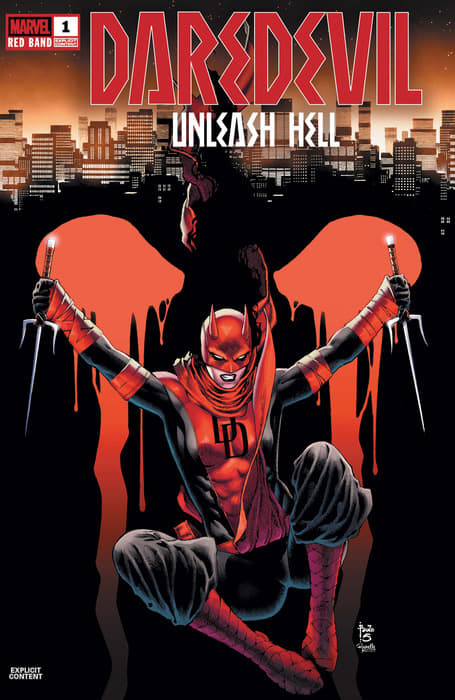
DAREDEVIL: UNLEASH HELL #1
From the publisher
MURDER IS AN ART! The violence and the occult swirling across the Marvel Universe find their way to Hell's Kitchen! As grisly crime scenes start manifesting across the city, all signs point to an impossible perpetrator! Estranged from Matt Murdock, it's up to Elektra to get to the grisly truth, if she can stomach it!
PATREON
We have a new Patreon, CryptidCreatorCornerpod. If you like what we do, please consider supporting us. We got two simple tiers, $1 and $3. I’ll be uploading a story every Sunday about some of the crazy things I’ve gotten into over the years. The first one dropped last week about me relocating a drug lord’s sharks. Yes, it did happen, and the alligators didn’t even get in the way. Want to know more, you know what to do.
ARKENFORGE
Play TTRPG games? Make sure to check out our partner Arkenforge. They have everything you need to make your TTRPG more fun and immersive, allowing you to build, play, and export animated maps including in person fog of war capability that let’s your players interact with maps as the adventure unfolds while you, the DM get the full picture. Use the discount code YETI5 to get $5 off your order.
THE LANTERN CATALOG
Created on the premise of creating light in the dark, this is the the go to resource to keep you up to date on the indy projects and the creators you love. You can find them at https://www.thelanterncatalog.com/.
[00:00:00] Your ears do not deceive you. You have just entered the Cryptid Creator Corner brought to you by your friends at Comic Book Yeti. So without further ado, let's get on to the interview.
[00:00:30] Show notes and thank you for your continued support. Thanks for your donation. Let's face it, the comics landscape is a mess right now. I'm the editor in chief of a comics journalism outlet and I can't even keep track of it all. If you are as passionate as I am about indie comics and its creators, you should check out the Lantern Guide. Created on the premise of creating light in the dark, it's going to be the go-to resource to keep you up to date on the projects and the creators that you love. Don't take my word for it. I reached out to my friend Brian Lovell, Poison Ivy R
[00:01:02] artist and indie comics creator to get his take. Brian, what does The Lantern Project fix? I'm a dude who loves indie comics and I know personally like I get very frustrated when something shows up in my social media timeline or something like that and I feel like I can't keep track of everything. So really The Lantern Project was born out of that. It was an opportunity for me as a reader to kind of like have a place to want to consolidate all the stuff that I wanted to read. All the cool projects,
[00:01:32] from cool creators that seemed interesting and kind of unique to like something that I would like, which is really not super represented everywhere else, but it's all over the indies. Having a spot to go to that felt like it consolidated a lot of those audiences and a lot of those places where I couldn't just get drowned out in the feed of social media was seemed really valuable to me. What's the ultimate goal? It's really our hope with this project that creators feel like they're able to get in front of readers and readers are able to get in front of readers.
[00:02:02] They're able to get books that they actually want to read with a much easier time of keeping track of them and accessing them. The catalog is scheduled for a quarterly release, so head over to thelanterncatalog.com to sign up now so you don't miss your next favorite thing. I'll put a link in the show notes for you. Hello, everybody, and welcome to today's episode of the Cryptic Creator Corner. I'm Byron O'Neill, your host for our Comics Creator Chat.
[00:02:26] As we continue to celebrate Women's History Month here in the show with my Women in Comics feature, it was an absolute no-brainer to reach out to returning guest Ringo-nominated Erica Schultz. Erica is taking over shelves lately, being the first woman to write Spawn and Rat City, reimagining Hell's Kitchen's own Mass Vigilante Daredevil with Woman Without Fear and Unleash Hell, the Red Band Edition, going all slash in the city with Laura Kenny Wolverine, and expanding the adventures of Hallow's Eve with Blood Hunters. Erica, it's always nice to catch up a bit. How you been?
[00:02:57] I've been okay. Thank you very much for having me. Yeah, absolutely. Thanks for coming on. Well, I want to start with reading the room in 2025. When I reached out about setting up a Women in Comics feature, what emotion did that elicit? You know, yay! Or, oh, depression. You know, where are we at representationally now in the media? I mean, there is a point at which I would love it that being a woman in comics isn't like a novelty.
[00:03:22] But at the same time, I will admit that being on the Women in Comics panel at San Diego and looking across at this, like, sea of people was a pretty nice ego boost. Yeah, I bet. I bet.
[00:03:43] But, you know, women have always been in comics from the beginning. It's just, you know, Ramona Fraden and, you know, Marie Severin and, you know, all these artists and editors and colorists, you know, Chrissy Sheagle. And I know I'm mispronouncing that. Sorry. It's just funny that it's one of these things where it's like, oh, women are only now in comics.
[00:04:09] It's like, no, they're not only now in comics. We've always been in comics. I think that's kind of what bothers me sometimes when people say, like, you know, there was no women in media in, you know, the 80s and 70s. I was like, we had Wonder Woman. We had the Bionic Woman. We had Princess Leia. We had Scarlet Lady J Cover Girl. We had the mom and the sister from Bionic Six.
[00:04:37] And I'm like, there were plenty. I mean, all of them were white, basically. But there were plenty of women on your television screen. It was just a matter of, you know, whether or not you sort of saw yourself in it. But I don't know. I don't know what I'm talking about. Well, I want to go back and actually watch Bewitched because that's more of a beloved childhood show for me.
[00:05:06] And in my brain, I'm thinking that there was a lot of subversive stuff going in there. But I don't I need to go back and watch it because I can't actually confirm that. I want to make it out to be OK. This was a woman in power. She had the magic, but she was forced to be kind of the domestic and, you know, the mom and everything and juggling all these different things. So I'm hoping it's as it was actually as powerful a statement as my brain makes it out to be. I mean, well, think of Mary Tyler Moore show. You know, you think about that.
[00:05:36] And it was just like, you know, you're going to make it after all, you know, kind of thing. And, you know, was she the feminist icon? Yeah. But what is it about being a headliner that made her the feminist icon? You know, look at Maude. I mean, there's there's been plenty of of women on our TV screens, you know, the film screens.
[00:06:06] It's just I think. I think everything. I think people want everything to be absolutely 100 percent checking all the boxes of their expectations for something, whether it's, you know, something feminist or something, whatever. You know, I mean, the Bechdel test is is something that is constantly, you know, used as a comparison and sort of every piece of media you hold up to that.
[00:06:32] But I think that there's I think the fact that these women were leading shows in terms of as characters and in Mary Tyler Moore show, I believe she was actually writing for the show as well. I'm not entirely sure. So please don't quote me on that. I'm going to have some like television historian jump on me for that.
[00:06:51] But in that in those cases, I mean, having a lead like Bionic Woman and things like that, that in and of itself, I think, is a step in the right direction. And that happened 40 years ago, almost 50 years ago. I mean, Bionic Woman came on in what, like 75, 76, you know, give or take. Wonder Woman. I mean, even even that one Wonder Woman where she was blonde and she ran around in a tracksuit.
[00:07:22] Well, I was doing a little research with comics specific media and the ratio of female representation at both Marvel and DC combined. We're looking at somewhere around 20, 27 percent in the characters looking at the creator specific lens. CBR had a fantastic piece recently. Comics are still failing their female creators. I'll put a link in the show notes for anyone that's interested. It's a great article.
[00:07:46] But it cited that in April 2024 among artists and writers that only 11 and a half percent were women, which seems kind of unfortunately plausibly accurate to extrapolate that kind of in general. So it's fair to say if that's fairly low and that the numbers are pretty grim. It seems like there's encouraging signs, though. I mean, you talked about, you know, being in San Diego and seeing this sea of people, which gave you some positive vibes.
[00:08:13] How do we create more opportunities for women and femme presenting creators? I think that we need to people who have half of the ear of an editor because, you know, edit to be perfectly honest, editors don't listen to you as much as you think that they they do.
[00:08:32] But I think that you should say to your editor, suggest female and femme presenting artists and collaborators and such, because that's important.
[00:08:47] I mean, the one reason why we have a we have Jadal Bialt-Vizo and Rochelle Rosenberg on art duties on Laura Kinney Wolverine is because when I spoke to the editor and they came to me and said, you know, we'd really love for you to do a Laura Kinney series because we we liked what you did with the X-23 flashback series. I said, I would like now it was not an edict.
[00:09:15] I know there's some rumors going around that I stomped my feet, had a tantrum, made some kicked up the fuss. That was not the case. But I said, if this is a story about a young 22 year old woman, give or take 22 in New York City. I want. I would love and I would really want to have.
[00:09:42] All female creators and or femme presenting creators on this book. Because there is something about a shared experience that women have. That will be imbued in this book that won't. It won't come through if you have a bunch of male creators on the book.
[00:10:08] And you could have the most feminist dude on the planet. But everything is still going to be skewed to that male gaze. And it's not. You know, and that's just that's science, you know. So we have Elena Casagrande doing a covers. We have. Chatea Belizo doing the line art and we have Raphael Rosenberg doing the colors.
[00:10:34] And I have an all male editorial team on this book. And there are times that I would write something in the script. And there would be confusion. And that the editors would say, oh, well, this character is coming off as very aggressive. And and I always have to take a step back before responding to those emails, because I'm like,
[00:11:02] well, in your perception, she is aggressive. However, due to the consequence, due to the circumstances of which she is in, she is actually reacting, you know, pretty calmly, all things considered. And so it's it's kind of difficult sometimes because, like we said before, that there are expectations that people have on women.
[00:11:32] We are as women are expected to be helpful. We are expected to be compliant. We are expected to be all of these things. And I think that if for whatever reason, we do not have that that attitude, then there's something wrong with us or we have an attitude. We have a you know, we're being bitchy, you know, bossy fill in, you know, whatever, you know, adjective you want to use.
[00:12:02] And I mean, this is things that I constantly talk with other creators about, you know, this idea of, you know, Laura specifically, you know, is she too aggressive? Is she to this? Is she to that? She is a woman who was born in a test tube in a lab and forced to have knives in her hands and her feet.
[00:12:29] I don't know about you, but I would have a chip on my shoulder, too. Oh, yeah. Well, I was I always thought it was wild that you had her very expression is in being a female is really the result of 22 lab tests that were unsuccessful. So that's where X23 even comes from. Yes.
[00:12:53] And the only and when you read her origins, 22 unsuccessful lab tests were all males. Right. And every embryo is a female until there's this boost of hormone that switches the X, the double X to an XY, which then turns the the embryo male. So Sarah Kinney, who was the geneticist who and Laura's last name comes from Sarah.
[00:13:24] She said. I'm going to try something. And guess what? It worked. And the other people that were in the in the lab were really, really pissed because they wanted Logan. They wanted a man. And I have to wonder. If two things, one, they wanted to, quote, punish Laura, Sarah, Dr. Sarah Kinney.
[00:13:52] So they made her take Laura and have Laura just state inside of her. And that was her punishment, which I thought was disgustingly cruel. But that's beside the point. But I think that they worked Laura even harder because deep down they were upset that it wasn't Logan. They were upset that they had a young girl instead of a young boy.
[00:14:18] And here's this girl and girls can't be aggressive and girls can't be this and girls can't be that. And that's why I think that she was probably tortured harder than if she had been a boy. Because it wasn't just we're putting you through your paces to make sure that you're hardened enough. It's we're putting you through your paces and we're punishing you for being who you are. She was seven when she went through the adamantium process.
[00:14:49] That's pretty crazy. Oh, absolutely. I mean, to me, first of all, I love this book. It's one of my favorite Marvel titles running right now. It feels like the perfect comic of the moment to me because you have a very strong, powerful woman drop smack dab in the middle of this culture conflict in America with the anti-mutant sentiment. Which in our real world, there's a backlash happening against all things deemed as other right now.
[00:15:16] So in terms of the guiding light with her, is that pain? Is that fear what you wanted to expand upon? What's what's the nucleus of the character to you? It's growing. It's growing up. Laura has never had a normal life. When people say, oh, she's just the female Logan. She's not. Logan had a normal childhood. Yeah.
[00:15:45] In the 1800s, Logan had a normal childhood. Logan is also well over 150 years old. And being over 150 years old means that he has had the actual time to reconcile his life, to reconcile who he is, where he's been, where he's going, who he wants to be, etc. Laura has not had that. And Laura did not have any foundation of caring.
[00:16:14] There was absolutely no foundation for any love, any caring, any sense of normalcy. Any sense of any type of way to have, to teach somebody to be a normal and productive member of society. All right.
[00:16:39] So not only does Laura have to learn how to control her anger and rage, her justifiable anger and rage, not only was Laura tortured by other women, Kamara specifically. All right. All right. All right. But Laura also is now has been othered in more ways than one. She's been othered as a woman. She's been othered as a mutant.
[00:17:05] And there are definitely some lessons that Laura will learn, especially about how not every mutant is, you know, rah-rah, chest-beating mutant and proud. And there are some people that, there are some allies that Laura does not recognize as allies because Laura herself has the blinders of othering other people.
[00:17:33] You know, so she's a little hypocritical. And I think that that makes her real. I think that makes her more relatable because, I mean, as much as people don't want to admit, we are all 100% hypocrites. There's plenty of things that we will say, I will die on this hill. And then, you know, the next day we do something that totally contradicts that statement. So I get it.
[00:18:01] And so when some people will say to me as a critique, well, Laura wouldn't do that. All right. Have you been a 22-year-old woman living in New York as a mutant? I haven't been a mutant, but I've been a 22-year-old woman living in New York City. And I can tell you right now, I would tell myself A in the morning and by the evening I would have gone through C, D, E, and F. Skipping B. Life is contradictory. Life will throw you crazy curves.
[00:18:32] And you have to, and like at Rat City, the tagline of Rat City is adapt or die. You know? So you have to find your way through. And being a young woman, she's finding her way through anyway. She's 22 years old. Technically, she is a legal adult. If I turned around and had a conversation with my 22-year-old self, I would turn around and say, you think you know everything.
[00:18:59] You know maybe 7% of what you're supposed to know. If that. Yep. And that's why the matchup with Elektra is so interesting because I wrote the matchup with the two of them as if me as a 48-year-old woman was having a conversation with my 22, 21-year-old self. Okay.
[00:19:26] And it is aggressive and angry. But it's also a way of Laura telling Elektra, I'm not as dumb as you think I am. And Elektra telling Laura, you're not as smart as you think you are. Right. You know? And this back and forth. And I think that that's important. Because we are constantly learning.
[00:19:53] I think that when you say, I know everything I need to know. No, you don't. Because especially in the current climate, something is going to happen that you could not have fathomed or expected. And you're going to have to learn how to navigate the world a whole new different way.
[00:20:45] Yeah. This is totally wildly off topic, but I promise you it'll come around. We took one of the cats to the veterinarian. And this was a new vet at the same place that we went to. But she was a new vet. Very, very young. Like straight out of college kind of thing. And we were discussing the type of food that we were feeding the cat.
[00:21:10] And she went on this diatribe about how this is the wrong food and the feminine acting and blah, blah, blah. And it's not that I disagree with her. She is the trained person. I am not. But when I had a conversation with one of the other vets, I had mentioned some of the suggestions that she had. And the other vet was like, well, I understand what she's saying, but it's not a monolith.
[00:21:40] You know, yes, certain cats shouldn't be on X. But there's never been in this cat's history anything to tell us that she shouldn't be on this. So, you know, whereas technically she's right, she doesn't have enough experience as a veterinarian.
[00:22:05] She hasn't had enough patients with a TS to be able to say this patient is not a candidate. That patient is. So when you're 22 years old, see, I told you I'd bring it back. You don't have enough experience to navigate situation.
[00:22:26] You don't have enough experience to say this is how I should react to this or this is why I'm reacting to it because you have nothing to compare it to. Right. You know, like he's saying, you know, telling your young self you don't know what strength is. You know, you don't know what true strength is because they don't have the they haven't been tested the way current you has been tested. Right.
[00:22:55] And that's I think that that's important. I think people need to remember that. I think people need to realize that for all the talk that people have about giving yourself grace and everything like you need to realize that you don't know everything. So. Well, that mentorship role between Elektra and Laura is about as an entrenched trope in comics as one can expect to see.
[00:23:22] Typically, though, we don't see that with two women, which I think what makes this special because it's flipping much of the script on its head. Usually we would see Logan and in that mentorship role, the old man. So what made the woman without fear the logical choice aside from, hey, I'm writing these two big Marvel properties with female leads. Let's smash them together. Well, I mean, there is a laziness to it.
[00:23:48] I mean, there is a lot of work that I'm writing about to make it easier that I wasn't going to start, you know, writing Laura like Elektra and Vipersa. So if I brought Elektra in, then I would be able to, you know, keep her voice consistent between Unleash Hell and Wolverine, but also continue to work with Laura.
[00:24:17] The other thing is that you're right. This idea of having a mentorship between two women is rarely seen because women are always shown that other women are going to be your competition for male attention, you know. And Elektra is probably one of the most confident people on the planet. And even she doubts herself.
[00:24:45] I mean, there's a conversation at the end of issue number three, which is, you know, Elektra has a two issue arc with Laura where, you know, Laura says, you know, I regret some of the things I've done. And Elektra said, we all do. Whether we admit it or not is a different story because we all have to put on this, you know, brave face. We're heroes. We have to put on this brave face. But it's natural to worry about your conscience.
[00:25:15] It's natural to worry about the things that you're doing and the things that you've done. But the idea is that you need to acknowledge what you did and just try and be better. And that's kind of Laura's thing here is to try and be better. And, you know, I know it's an odd matchup, Laura and Bucky. But there are definite similarities between the two of them.
[00:25:44] You know, Laura obviously, you know, trained in a lab, Bucky not. But Bucky then turned into this, you know, mindless soldier as Laura was. And, you know, Bucky in this role of winter soldier, well, now the revolution and him having to, you know, unfreeze, do your mission, come back.
[00:26:10] You know, Laura had nothing aside from the mission, especially when they used the trigger scent. And so she's she's seeing people who have been through similar stuff as she has. Right. And she's starting to slowly realize, one, she's not the only person in the world who's done this.
[00:26:34] And two, it is possible to get out of it, to to move on and to heal. And it takes a lot of time. But you have to be patient with yourself. And so these are the lessons that she's going to learn or that I hope she learned. It depends on what editorial says. Well, where I connected with it was specifically in issue two.
[00:27:02] And this is the thing that just solidified the strength of the series to me, which was no one deserves to be used as a weapon. And that's kind of what you're talking about with Laura and Bucky and that that through line of those people and how they've been abused in the past. And it's all kind of wrapped up in what I'm grappling with personally, as people are being weaponized in society and really they just want to go about their lives.
[00:27:30] They want to be left alone, but they don't have the opportunity to do it because there's a lens that's on top of them. You know, and an issue to spoiler alert. OK, the kid is an actual bomb. Yeah. But why was why was that something specific? Is that part of the growth that you're just trying to work through the character?
[00:27:51] The time constraint is what makes it feel like the crucible and that rage that I think is absolutely merited that I hope editorial lets you do. Feels like the center to me. Um, the I'm glad that you picked up on the analogy that I was trying to to put as, you know, using Anthony as a literal weapon.
[00:28:17] But this idea of there are people in this world, specifically queer people, trans people who are being their existence is being weaponized and being used for misinformation, et cetera. And and and like he said, they just they just want to live their lives. Um, so that, you know, statement of nobody should be used as a weapon is more than just nobody should be brainwashed and sent off, you know, to go kill a bunch of people.
[00:28:46] It's nobody nobody's existence should should should warrant being manipulated and misinformed and and turned into propaganda weaponization of culture war, all of that stuff. And that's kind of that was the statement that I was trying to make.
[00:29:11] But using Anthony, who his mutant ability is, he is a literal bomb. He explodes and then reconstitutes. Using that as sort of a, you know, superhero comic book comic book way of saying it, you know? Yeah, yeah, yeah. Yeah, as well, as an anthropologist, I'm always looking for interesting little pieces of material culture. And I actually locked on to the the letters left at the treehouse.
[00:29:41] These are these archaic pieces, really, of material culture right now in our world. And it was it was just an interesting choice to me. I've been actually thinking about getting a typewriter and reconnecting with people in a more personal way. Like letters are intimate and using that as a way of these people who are hurting. Trying to reach out. What was appealing about using that as a piece of connective tissue in the story specifically?
[00:30:09] I wanted it to be like kind of like the wailing wall where people put prayers in there. There was there was also a there was in a few episodes of a TV show called Longmire. I don't know if it's from the books, but people would go to this wall and they would put prayers in a jar and it would be sort of this avenging angel would go pull out.
[00:30:38] You know, my my husband is abusing me. My, you know, my brother in law's, you know, whatever. And this avenging angel would go and set things right. And it comes down to Laura's idea of justice. You know, like, where's the justice in this world? If these people, these mutants are not getting justice for a number of reasons, least of which because they no longer have a home like Krakoa. Yeah.
[00:31:07] Laura's going to try and she's going to try to give them some type of justice. And in the particular case of of Emery and Yvonne, it was finding Yvonne for Emery and reuniting them and making sure that they that that's one less thing they have to worry about. Worrying about where the other is, what's happening to them.
[00:31:36] That's one less thing they have to worry about because they have each other. And that that community, that being together takes one less thing, you know, gives you hopefully hope and solace that you can then start to work toward finding a solution. OK. Well, you're working with. Yeah, it actually makes sense. You're working with Giada Belviso on the project.
[00:32:04] Previously, you collaborated on Blood Hunters. So I'm sure you've got a pretty good creative rapport going right now. Italian artists are absolutely taking over the business. Her work is a bit has a bit of Jay Lee DNA in it to me. A little. Yeah. Sorry. I just want to correct real quick. Giada and I did not work together on Blood Hunters. Oh, I'm sorry. I thought you did. She she worked on Blood Hunters separately. I worked on Blood Hunters with Bernard Chang and then with Robert Gill.
[00:32:33] Giada and I actually worked together on Women of Marvel last year on a quick short with Natasha Romanoff. OK. OK. Yeah. Sorry about that. No, no, you're good. Thank you for correcting me. I had my information wrong. There are some really fantastic close up panels that kind of highlight Laura using her heightened senses that make it feel very tactile. You know, do you feel like you're hitting your stride together now three issues in?
[00:33:02] Oh, absolutely. I mean, Giada is is working is finishing the art on issue number seven right now. Oh, wow. OK. Yeah. And she is there's there's something really fun about her angles. There's something really cool about the way she sees things.
[00:33:26] She likes getting up close to characters because it's there's an intimacy in that that not everybody feels comfortable with. And sometimes a panel is uncomfortable and it's supposed to be uncomfortable. You know, it's supposed it would not it would not be doing the job that it's supposed to be doing if it didn't sort of, you know, make you shift in your seat a little bit.
[00:33:55] Somebody had mentioned that one of the panels in issue number three, which came out yesterday, made them very, very uncomfortable. And I didn't respond to the comment because my my initial response was going to be, well, then it did its job. But that to me is kind of the point is this idea of. Giada is.
[00:34:22] Close and intimate in these people's lives, in these people's physical space, in their personal space. And that brings us as an audience. So much closer to who they are. And and and I don't know if we've seen that a lot. In in comics in general, but then there's also some really I don't know how.
[00:34:51] There's some moments. That and I know one particular moment that I absolutely just adore, but I can't talk about it yet because the book hasn't come out yet. That particular issue hasn't come out yet. But there are these moments and sometimes they're just background moments. And sometimes they are, you know, close up that you look and you're like, did she guess? Yes, she did. You know, when you look at the facial expressions.
[00:35:21] Of Electra and how exasperated she looks sometimes when dealing with Laura, like this idea of like, oh, my God, I know that she's brilliant. I know that she isn't a Zappan. Oh, why is she being so dumb? Yeah. And she literally says in the opening of of issue two, like, why do teenagers think that they know everything? And Laura's like, I'm not a teenager. It's like, yeah, but you're still a baby. Let's be honest. Like, you're still young. You're still learning.
[00:35:49] And these just these beautiful images of Electra and her hair. Oh, my God. I love the way Jada draws both of their hair. I mean, it's like very like Silvia Menes draws great hair, but Alisa Martinez draws great hair. But I will say this. So the contrast between Electra's big, giant curls everywhere.
[00:36:19] And and Laura is just like straight hair down. That's like stringy, but also like thick and lush. Jada draws great hair. And I love the way it moves in fight scenes. And we made it a point in issue number two to talk about how Laura fights differently than Electra. And like how their body physically moves differently. But also when you look at how their hair moves.
[00:36:46] I mean, that in and of itself, like dealing with the physics of that is like, I mean, I do not have enough art talent to be able to navigate that. But Jada does it. And it's just and it's great. And I know when Marco Cicciato was originally drawing Electra as Daredevil, she has this giant mane of hair.
[00:37:08] And then when I was doing when I was writing Daredevil Gang War and Sergio Davia was drawing it, he drawed like there's a panel where she takes off her helmet. And the amount of hair behind her is impossible to fit in that helmet. But it is so lush and it is so beautiful. And it's like and I and I wrote the other day on social media and somebody was like, you're starting to fight. I was like, Electra has better hair than Medusa.
[00:37:37] Like, come at me for real. Like she does. So what? She can't grab the remote control and turn the change of the channel with her hair. But she has better hair than Medusa. So, yeah. Well, I haven't seen issue three yet. I haven't been by the LCS yet this week. So I don't know what it is that specifically would be making people uncomfortable.
[00:37:58] But is there a difference when you're working with the nucleus of a female creative team? I was thinking about. So you had a bit of a glass ceiling break there being the first woman to write Spawn, Rat City. And Spawn was a character that had the genesis in the male dominated fanboy culture of the early 90s where it was, you know, style, style over substance. Female characters were hyper sexualized eye candy. Right.
[00:38:27] Or or worse, abuse sponges like Harley Quinn was. Yes. So I'm glad you said Harley Quinn because I really dislike that character so, so much. Really? Yeah. I dislike Harley so much. I really do. For that reason? Just because I don't think that she's a character that should be aspired to. I mean, she has come leaps and bounds and I and I love that.
[00:38:50] But when people talk about like like how how like they want to be like Harley, it's like so you want to be a punching bag literally and metaphorically and emotionally. Like is that that's where you're going with this? You know, I and it's really very frustrating. And I know that she has evolved a great deal and everything.
[00:39:15] And I have a beautiful watercolor print from one of my favorite artists named Anika. She's a Spanish artist. We've worked together on My Lines and Blood. And she's like a good friend and just is such an incredible artist. And she gave me this beautiful Harley and Poison Ivy print. But my beef with Harley is this idea of, oh, she's so strong.
[00:39:38] Yeah, she's so strong because she was forced to be strong because her whole thing was her whole shtick was that she was a doormat for so long. You know, she could have been strong without being a doormat. You know, and so, yeah. But anyway, sorry, I digress. No, no, you're good. I'm not a huge Harley fan anyway, but it was perfect, I think, as an example to just encapsulate that era.
[00:40:07] So whatever it is that people are responding to, you're talking about hair. You know, is this just the nucleus of working with a female creative team, understanding how female bodies work? Is this a transition that we're seeing in comics when you have all women, except the editorial, you know, working on a book? I hope.
[00:40:30] I mean, I hope that it is that it shows that, you know, women tell stories differently, but they can still be mass appeal. They can still be well, well, I lost my words, sorry. They can still be well executed. One of the things that I remember when I first started writing comics, the first comic that I wrote was a character called M3.
[00:41:01] And I, the artist set on this comic was Vicente Alcazar. He's an older gentleman who's been in the comics business for a bajillion years. And, you know, and we're talking 15 years ago when this happened. And he was in an interview and they were asking him about, you know, coming back to comics and the next thing.
[00:41:25] And he said that Erica is the first female writer that I've worked with ever. And this is a guy who was working on Moon Knight in the 70s, you know? Okay. I'm working on Conan for Marvel when they had, you know, when they had the license back in the early 80s. And because this is the first woman I've ever worked with writing. And he's had, like, woman colorists or, you know, whatever.
[00:41:50] But the first woman that he picked the script up and he said, and there is a very big difference. And I never thought I would see it. There's a big difference between the way a woman writes a script and a man writes a script. And I think that there is a level of emotion that Erica writes with that I haven't seen in male scripts.
[00:42:18] And it's not just talking about writing female characters. It's just in general. And to be perfectly honest, I reread my scripts and I was like, I don't know what he's talking about.
[00:42:29] But in his estimation, the way I wrote scripts, the information that I gave him, that for some reason struck a chord with him in a different way than, you know, him picking up a, you know, a Jonah Hex script from whomever, you know? And I thought that that was very, very interesting.
[00:42:58] And I sort of held on to that. And whenever I work with male artists, like, it's fine. I mean, I worked with some incredibly talented and collaborative male artists, you know, Mike Dowling and Sergio DeVilla that I mentioned and Robert Gill and Edward Salazar. Like really great artists who are fantastic.
[00:43:22] But there's, I felt like with working with Jada and now, you know, I'm writing issue number nine and she's drawing issue number seven. Working with her, I kind of felt as if there was an automatic shorthand. Okay. You know, like I'll bring up Mike Dowling. Mike Dowling and I worked together on the Holos Eve miniseries. And then we worked together again, Daredevil Woman Without Fear.
[00:43:48] And by the time we got to Daredevil Woman Without Fear, I would say by the time we got to like issue four of Holos Eve, we had a shorthand. We had a rapport. So Daredevil Woman Without Fear was actually a quicker, easier to me because Mike knew how I wrote. I knew how Mike drew, et cetera. But I kind of felt like with Jada from the beginning, there was just like we were already starting on step three. And I don't know.
[00:44:18] It could have nothing to do with the fact that we're both women. It could have everything to do with the fact that I speak Italian and I, and I write, sometimes I write anecdotes in Italian in the script to help, to help her. Or it could have everything to do with that. I don't know. But I genuinely felt like we were already a couple of steps ahead working together.
[00:44:47] And I was even, she never won. So. Is there a danger in your mind as a writer who starts getting known for that, that Erica, okay, we've got a, we need a badass bitch. She's going to, you know, headline her own solo book. Oh, just give it to Erica. Right. Is there a danger in being typecast, you know, to some extent? Yes, no.
[00:45:15] I mean, to a certain extent, no, because it's, I would like some job security. I'm a freelancer. Sure. And if I'm doing well enough and the books are resonating well enough with the audience, then why shouldn't I? You know, why shouldn't I keep writing these ladies?
[00:45:38] I was referred to in a, in an article as writing the quote sister book. Okay. Saladin Ahmed is currently writing Daredevil and Logan's book. And then I'm writing, you know, Daredevil as Electra and, and Laura's book. And I was referred to as writing the sister book. And I took umbrage of that.
[00:46:05] I said, I was like, there's, these books can exist independently of each other. And I think that, you know, you kind of, I don't believe that they were playing, that they were really saying, I don't think that they were purposely saying, trying to downplay the book.
[00:46:27] But I think that they were trying to say, you know, when people go to the comic shop and they want Daredevil and they want Wolverine, they're looking for Matt and Logan, respectively. Sure.
[00:47:11] You know, you know, selling enough books. Then I don't see them bringing me back. You know, because that's something that a lot of fans talk about. Like fans think that the only metric is whether or not books sell. And that to a certain extent is true there. I mean, that is obviously a very important metric. However, there is a lot more going on internally that people are not privy to.
[00:47:43] In terms of, you know, there's politics in every office, every business. I don't care where you are. Oh, yeah. And in terms of, you know, what they think is going to sell versus what does sell versus who are we going to get to write this character? Because whether or not, you know, because maybe, you know, this particular writer on this character is going to sell more books than putting another writer on this character or whatever.
[00:48:14] If my job becomes, from here on out, Erica is just writing the badass bitches, as he said, then fine. I'll write badass bitches. The first book I ever wrote was M3. It was about a badass bitch. So if that's like, I've written plenty of other stuff. I've written Darth Maul. I've written, I wrote a horror book called Twelve Devils Dancing, where the lead was a queer man.
[00:48:38] And I've written, I mean, I wrote Deadliest Bouquet, a book for Image, which is about three sisters. And they're all badass, but they all are all ridiculously flawed. But I mean, what I'm technically known for is writing Rat City, a male character in, like you said, in a very 90s heavy, you know, universe.
[00:49:06] But I'm writing this male character. So if I'm just supposed to be writing badass bitches, then why is it that at least three issues of Rat City have gone to multiple printings? People are reading it. So I obviously can write male characters. Oh, yeah. But I don't know. I don't know. I'm just talking out my ass. Oh, no.
[00:49:35] I mean, I have put it out there on social media and I think there are a lot of people actually agree with me that the Laura Kinney series, to me, if you look at Wolverine, you know, big picture as more of a character archetype. I really do feel like this gets to the core of what Wolverine is than any Wolverine story that I've read in a long time. Well, I appreciate that. Yeah.
[00:50:03] You know, I do believe that, like you said, archetypes, these characters are all some form of archetype or another. And because of that, people will connect to them or disconnect from them. Some people will load these characters. Sorry, I just got the, your battery's going to die. Some people will load these characters and not even know why they're loathing the characters.
[00:50:29] Because we're pre-programmed, you know, you know, if you want to go like all Carl Jungian, who are pre-programmed to dislike or to like this type of character. Um, and I think that to a certain extent, we, as, you know, creators, writers, sometimes we want to lean into that. And sometimes we want to sort of deflect and try and change things up.
[00:50:58] But it has to all feel like it's, it's plausible. It has to all feel like it's connected to the character, but also to the world, you know. And with character, I mean, Bora is 25 years old in terms of a character, which is crazy.
[00:51:22] Because I remember sitting on the floor of my really terribly crappy Brooklyn apartment, watching Evolution and seeing her, X-Men Evolution and seeing her emerge and be created. So the fact that she's already 25 years old is just insane to me. Um, but I think it's just a matter of, you know, there are fans that are going to, that are going to love stuff. There are fans that are going to hate stuff.
[00:51:52] And I, the first person that I want to make happy with the stories that I tell is me. I want to make stories that I'm proud of. And I want to make stories that I'm not only proud of, but that Jada would want to draw. And I want to make stories that the powers that be, you know, will accept.
[00:52:18] And, you know, and let's be honest, and I can get paid for so I can continue making those stories. Sure. So it's funny because if you read Unleash Hell, I actually go on the character of Muse.
[00:52:33] I use him as an analog to sort of go on a diatribe about, um, the sort of not necessarily hypocrisy, but the complexity of trying to create art in such a capitalist society. Trying to create art and be true and be what you would consider a true artist, et cetera. Um, and I was genuinely, genuinely surprised that they let that diatribe through.
[00:53:04] I, I had a feeling that I was going to get pushback and I didn't. I think they may have pulled one thing out. Um, but the sentiment of trying to create art in a society that sees art as disposable, sees art as content, for lack of a better term, um, and sees the artist as interchangeable and disposable.
[00:53:32] The idea of trying to create art for the sake of art or art for the sake of art for the betterment of society, art for enriching people and enriching their lives, their experiences, et cetera. And, uh, I don't know if you've read Unleash Hell, but those, uh, the, the last five pages, that sort of epilogue slash prologue, um, sort of goes through that.
[00:53:59] And that, that sentiment continues throughout, um, you know, issue number two just came out and that sentiment with Muse still continues. Um, so I think it's, I think it's important that we challenge things. Um, obviously there's only so far that I can challenge being a freelancer. Um, but that's what my independent work is for.
[00:54:26] My independent work is for challenging things because there I have the freedom to say what I want or have my characters say what I want. And make the statements that I feel to make. Um, some people, like I said, we were all hypocrites. Some people would consider doing something for Marvel as hypocritical, you know, when my, my independent work might make different statements.
[00:54:54] But the working, doing work for Marvel and being allowed to even slightly make statements is what's, um, allowing me to then go full out with, with my indie work, if that makes sense. Oh yeah, it makes perfect sense.
[00:55:12] I mean, with, with unleash hell, I was sort of curious if the, the cinematic or the TV universe of daredevil even open the door sort of editorially to embrace something that is much darker as, as a tonal project to allow you to, to make a statement about artists and capitalism and that kind of thing. Because the TV series was dark and up until that point, daredevil didn't look like that.
[00:55:42] Yeah. And so I, the character of me is they, they, when they came to me to unleash hell and they said, we want you to do a red band. I had had multiple Electra stories that I had been sort of kicking around, uh, around editorial and some bits and pieces wound up in gang wars. Some bits and pieces wound up in woman without fear.
[00:56:06] And I said, like, I'd really like to do something where we can, you know, challenge, not just challenge Electra, but challenge this, uh, notion of, you know, what is proper and such. And they said, you know, like, well, we'd really like to use the character Muse. And I was like, that's interesting because Muse is dead. Uh, but okay.
[00:56:32] So that then opened up the possibility of bringing in hell and this sort of opening. I sort of have this opening monologue by Electra about like, where did the hell's kitchen get its name? Right. And I sort of go through this fun little historical moments of, you know, was it Dutch Fred? Was it the Irish cops? You know, was it this, was it that? Um, and I sort of play with that.
[00:57:02] But the idea of allowing Electra to be more brutal is pretty, you know, baked in to the other stories. You just didn't see it because, uh, wearing the daredevil, uh, outfit, Electra promised Matt that she would not kill. And for her, it's actually, it's like a little challenge for her. She, she actually welcomes that challenge. You know, she says, all right, fine. I won't kill.
[00:57:32] It'd be easy to just tear this guy's spine out. But you know what? I won't. But in Unleash Hell, it's almost like, you know, how you see how brutal Batman can be. And you're like, oh God, he might not have killed that guy, but he's going to be eaten through a straw for another seven years. And we decided that because he had the red band, uh, go ahead, that we could be more brutal. The irony of it is that we can show somebody being literally disemboweled or decapitated. And yet I can't say the word shit. That's weird.
[00:58:02] I admit it's a weird, I was reading a black label thing and Batman or whoever the villain was, somebody couldn't curse when Batman's walking through this grotto full of impaled corpses. And I'm just, yeah. Anyway. Yeah. Yeah. And I just think that that's, I think that that's like a really weird hill to die on, but. Yeah. Yeah. Whatever. Call it comics code, call it whatever. But yeah, I thought that that was a strange hill to die on.
[00:58:31] But I mean, I'm still able to have this diatribe. Of all people making this point, it's a villain, you know, and I don't want people to look at him and start sympathizing or empathizing with him. But this notion of art, commercial art versus high art, et cetera, is something that he dealt with in his previous iterations in the comics.
[00:59:01] So just taking that another step forward was what I was planning on doing. Because when you read, Charles Sewell was the writer with Muse, I want to say it was like 2015. When you read those, Muse definitely has this very, you know, anti-capitalist, you know, kind of rhetoric.
[00:59:29] So I just took it and pushed it to the nth degree. And it's when you think about it, like he's in hell, he would go a little, a little more mad than he already is. He'd get like a little, he'd go a little farther, you know, down the rabbit hole than, than he already is. Because, you know, when you're in hell, you have, it's like being in prison, you have nothing to do but time. And so, you know, he's ruminating on things, which is sort of what fueled this diatribe.
[01:00:00] Yeah, I don't have the familiarity background with the characters. I need to go back and fill in and do some reading there and make sure I have everything set in my head so we can move forward and I have a better understanding before he shows up in the TV show as well. So, yes, he's, as far as I can tell, he's alive in the TV show.
[01:00:19] But in Unleash Hell, he is a, he's a vengeful spirit that manipulates a young woman named Morgan who feels similar to how Muse feels in terms of art and ways of expressing herself through art. But Muse takes it to obviously a sort of grisly end point.
[01:00:47] Well, I don't want to keep you all day, but I want to ask you before we go and. It may be in print, I don't know, because I haven't picked up the third issue yet, as I said, but I've been looking for you to answer that question of which X character do you feel the strongest connection to that they have? They've included in all the issues right now. So either I get to break it or they have already printed it and I look like a dummy.
[01:01:17] I, I believe I said I was rogue that I felt the most connected to. Did I miss it? I didn't see it. I don't know if it was, I don't think it was in Laura or Daredevil. I think it was in somebody else's book. I want to say it was in Uncanny. Oh, okay. I'll have to go back and check. All right. But yeah, I, Rogue and Gambit are, you know, they're the power couple in this house.
[01:01:46] We had Rogue and Gambit action figures on our wedding cake. So, so we really, yeah, we really, we really love them. Um, um, and Rogue is, you know, Rogue again, it's another character who villain turned, Carowen turned, you know, but not just like, I'm a bad guy. I'm a good guy.
[01:02:05] Like there's been a lot of conflicting situations with her and just the, the fact that her own, um, her power, you know, the inability to get close to someone, you know, both emotionally, physically, et cetera. Um, I think that she's a really great character.
[01:02:24] And I love what Gail and Dave Marquez are doing on, uh, Uncanny right now where Rogue is basically like the leader of, um, of the New Orleans, you know, group of X-Men. And, uh, I think it's really great. And I, you know, I, Gail and Dave Marquez are really a fantastic, um, paired up on that book. I mean, really, I love that book. And I get to see a couple of issues ahead of time.
[01:02:51] So I can tell you right now, there's good stuff coming in that book. Nice. Yeah, it's really good. Rogue's another character that actually the, her roots feel kind of visually stuck in the nineties, you know, with, it's a TNA look for sure. Yeah, but she, I think she has a TNA look, but it's, I believe that it's to subvert the Southern Belle, like the proper Southern Belle.
[01:03:19] Um, and that's kind of where I think she's, she's trying to sort of break out of, uh, the expectation of that. And also it's not to, it's to show her confidence in it and not, for lack of a better term, not to be slut shamed, you know? Um, and especially in the current uncanny, you know, she and Remy are just very open. They are very affectionate physically toward each other.
[01:03:49] They don't care if anybody sees them kissing up on each other. Like they are proud of their relationship. They are proud of, you know, their sex lives. They are proud of all of that. And I think that that's sort of a, that's sort of a banner that not a lot of people, I think whenever anybody talks about a woman being, um, sexual, but on her own terms, it's never on her own terms.
[01:04:14] It's always like in comics, like she's being sexualized either by the male creator or by, uh, other characters. Whereas in this, Rogue is like, yeah, I'm hot. My husband's hot. We like each other. We have sex. Like, woo! You know, what a surprise, you know?
[01:04:33] And the fact that they are sort of out and loud and proud, I think is, is a departure from this idea of like feeling shame about, you know, having physical feelings for somebody and things like that. And, and even when, you know, in the past in Rogue and Remy's relationship, they would have this idea of like, oh, you know, Remy, our relationship can't be like this because I can't touch you.
[01:05:04] And, you know, yeah, some people would say, oh, well, you know, that doesn't matter. It's like, but to some people it does. And that, and it shouldn't be shamed for that. You know what I mean? Yeah. Yeah. Well, they feel like actually the, uh, the healthy couple. Yeah. Image in, in Marvel, because most of the ex relationships are just. Dumpster fire. Trash fire. Yeah. Yeah. Yeah. Well, anything else you got, uh, coming down the pipe that we should know about? You got cooking in 2025.
[01:05:33] Um, okay. So Laura number four comes out this month because this is going out in March, right? Yes. Yes. And that is the first issue of a two issue arc with, uh, Bucky Barnes. Um, we have rat city number 12, which is, uh, in March, which is a full year of working on spawn rat city, which is pretty cool milestone for me. Congrats. That's awesome. Thank you.
[01:06:03] And we also have daredevil unleash hell number three, which is the halfway point of this five issue mini. And, uh, yeah, I mean, it's, it's going to be a hell of a ride. That's all I can say. Well, I am here for it. Where can people find you online these days? Um, so on social media, I'm Erica Schultz 42 on everything, uh, except for Instagram. Uh, there I'm Erica Schultz writes W R I T E S.
[01:06:31] Um, my website is also Erica Schultz writes.com where you can pick up comics. I sign everything, um, and ship it to you. And, uh, yeah, I'm on pixel fed blue sky. I'm still on Twitter. I know I'm slowly migrating away. Um, and, uh, I'm on Instagram, which again, I'm also slowly migrating away from.
[01:06:53] Um, and with luck by, I don't know, maybe the fall, I should probably just be off all, uh, all meta things. So. It takes a while. It does. We're feeling that ourselves. Yeah. It does. I mean, everything's so connected on that. I had such a, I was shutting down my, my Facebook account, my personal Facebook account. And I was like, wait a minute, I'm connected to my neighborhood page on here. And this gardening thing that I do. Yeah.
[01:07:23] It's, it's tough. It is. It is. Um, I, and, and again, like we talked about, you know, being hypocrites. I mean, I'm so anti meta and yet I still have an Instagram, you know, so you can call me a hypocrite for that. And I will, I will admit it. So. I mean, you gotta pay the bills. I don't, I mean, anybody who really hates on that and doesn't understand that creatives have to be out there.
[01:07:52] Um, you have to, you have to make yourself available to be found these days. Yeah. You know. I know. It just, it's, it's sort of, is, I try and lessen the amount of hypocritical things that I do. But, you know, again, we're, we're humans. We are nothing if not walking contradiction. Yes. Well, I'll put a link in the show notes. Go check out Erica's website. Cause I think since the last time we talked, you got an upgrade there. There was a really nice splash video. That's really cool.
[01:08:20] My husband is a film intelligent editor and he put together a very cool, uh, EPK video for me. So it's, it's rocking. That's one of the best I've seen. Good job. All right. Well, Erica, it's always a pleasure having you on. I appreciate the education of the realities of the business. So thank you. Thank you. Yeah. Before we sign off, if you've enjoyed today's chat, uh, it's offering play time. We have a Patreon with some exclusive content.
[01:08:49] If you're interested in dropping in a little tithe, uh, starts at $1 a month. So I'll put a link in the show notes there. This is Byron O'Neill. And on behalf of all of us at Comic Book Yeti, thanks for tuning in and we will see you next time. Take care, everybody. This is Byron O'Neill. One of your hosts of the Cryptid Creator Corner brought to you by Comic Book Yeti. We hope you've enjoyed this episode of our podcast. Please rate, review, subscribe, all that good stuff. It lets us know how we're doing and more importantly, how we can improve.
[01:09:18] Thanks for listening. If you enjoyed this episode of the Cryptid Creator Corner, maybe you would enjoy our sister podcast, Into the Comics Cave. Listen and subscribe wherever you get your podcasts. Bye.