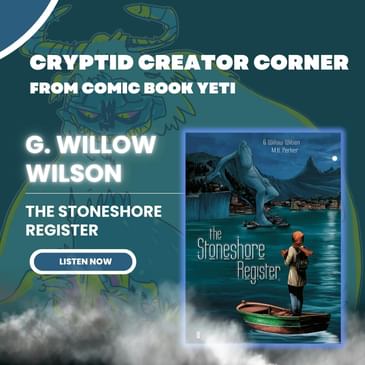

As regular listeners will know, I spent seven years living in the greater Puget Sound area and despite having lived in eight different states, it’s one of two places that will always be home to me. There’s something about small Washington State towns that can feel delightfully out of time and there’s no greater contrast to them than the technology centric hub that is Seattle crowned by its futuristic Space Needle. It elicits a range of complex emotions as a former local that the visitor will never understand primary among them is a clash between modern advancement and the struggle of smaller coastal communities to hold onto their ways of life and cultural identities. This was my personal filter going into reading The Stoneshore Register, a delightful new graphic novel from Dark Horse Comics and I have the perfect person to hang out to tell us all about it, first time guest G. Willow Wilson.
Yes, I do go off on a bit of a tangent about gardening but we'll call that a Poison Ivy interlude, and we wrap things up covering what we can expect to see in Marvel's new ongoing Black Cat series.
🔗 This Bee Is Worth Millions (And You've Never Heard Of It) - YouTube video referenced in the shout out
WATCH ON YOUTUBE
The Stoneshore Register
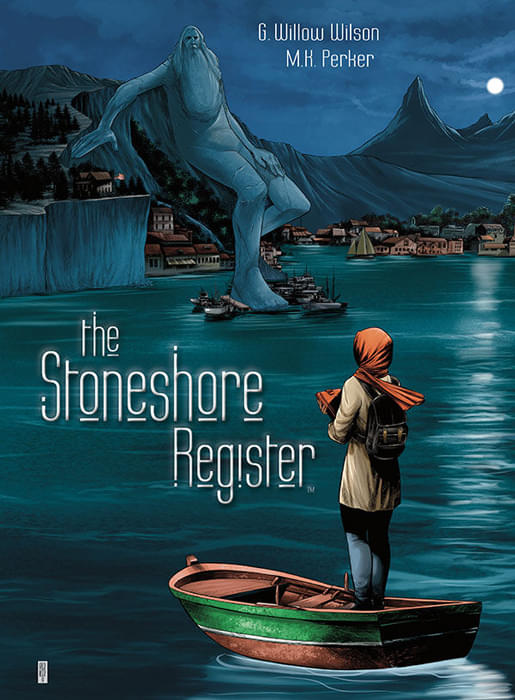
From the publisher
When refugee and aspiring journalist Fadumo arrives to work at the Stoneshore Register, she is entering a far stranger place than she realizes.
At first, the colossal stone giant overlooking the rundown, seemingly ordinary Pacific Northwest fishing town seems like the only remarkable element. But he is not the only strange surprise: changelings, selkies, cursed ships—the bizarre has a home in Stoneshore, yet no one gives it a second thought.
But Fadumo doesn't just want to cover these odd occurrences. She wants to dig deeper. And what she discovers is a land so steeped in mysterious history, it will change all who dare to explore it.
Black Cat
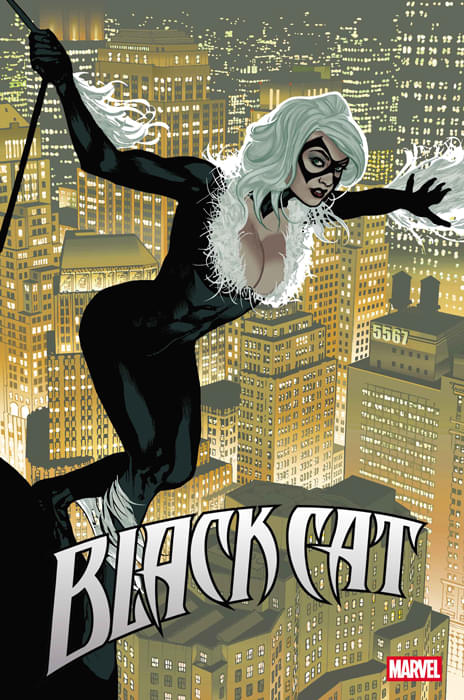
From the publisher
Super-thief, super... Hero?! Felicia Hardy is the Black Cat, the world's slyest and most skilled super-thief! She loves a good score. The longer the odds — the better! But her entire world turned upside down after the Amazing Spider-Man's battle with Hellgate, so Felicia is turning over a new leaf as New York City's newest... super hero?! The first super villain on her list — the Lizard! But will the Black Cat risk it all after her do-gooding moral high ground attracts dangerous attention from the lowest of the city's underworld? Easy, Kingpin of Crime, she's still skimming off the top — honest! Superstar G. Willow Wilson joins rising star Gleb Melnikov to chart the winding road of twists and turns, laughs and mind-bending action of Black Cat's next exciting chapter!
Poison Ivy #36
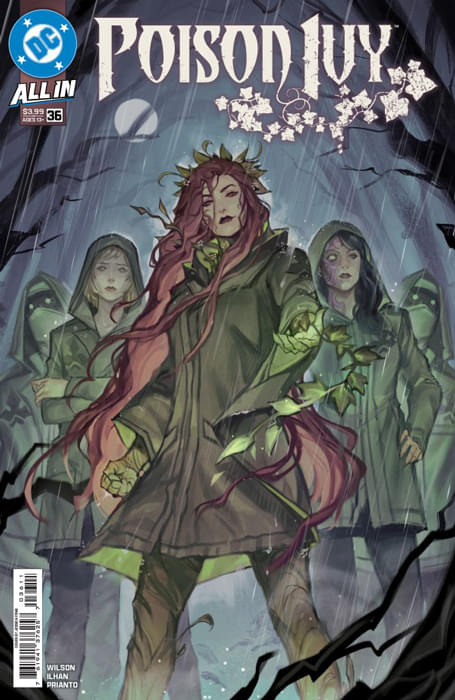
It's a beautiful new day in Seattle! The sun is out, the birds are chirping, and the Order of the Green Knight is at Poison Ivy's beck and call. As Ivy begins her reign as the new leader of the organization, she begins to reflect on the fight with the GCPD in Marshview and wonders how the police found her? Is it possible that there's a traitor in her midst? Tensions rise amongst the ranks, as Ivy hunts for the person who helped destroy her budding utopia in Slaughter Swamp. It's got Janet wondering... when the faithful turn their eyes upon her... what will they find?
Follow Comic Book Yeti
🔗 Comic Book Yeti LinkTree: https://linktr.ee/ComicBookYeti
For partnership and ad inquiries, please contact: thecomicsyeti@gmailcom
Follow your hosts
🔗 Jimmy Gaspero: https://bsky.app/profile/jimmygaspero.bsky.social
🔗 Byron O’Neal: https://bsky.app/profile/byrononeal.com
PATREON
We have a new Patreon, CryptidCreatorCornerpod. If you like what we do, please consider supporting us. We got two simple tiers, $1 and $3. Want to know more, you know what to do.
MY NEIGHBOR NECROMANCER
Visit this month's feature crowdfunding campaign at 🔗 NECROCOMIC.COM
ARKENFORGE
Play TTRPG games? Make sure to check out our partner Arkenforge. Use the discount code YETI5 to get $5 off your order.
Make sure to check out our sponsor 2000AD.
[00:00:00] Your ears do not deceive you. You have just entered the Cryptid Creator Corner brought to you by your friends at Comic Book Yeti. So without further ado, let's get on to the interview. I don't know about you, but I've never considered a biting tarantula familiar a good thing? Then again, when it comes to necromancy, there's always a price for power, especially when raising the dead.
[00:00:23] Now you might be wondering why I'm thinking about that. Well, I just got a sneak peek at issue three of My Neighbor Necromancer, the witchy, wonderfully weird comic I've already been a backer of, and I've been eagerly awaiting more of our novice necromancer apprentice Jessie's adventures with her flying undead lizard, Bivitt. This story hits my sweet spot with this danger-just-be-on-your-doorstep kind of narrative. In this issue, Jessie continues her training with Sierra Reno and receives a mysterious invitation to the body farm.
[00:00:50] Now, I worked at the actual body farm in college, so when I heard that, I wonder what in the hell they were doing here. Will Jessie find friend or foe there? No spoilers here. I won't be accused of spilling the bones, so you just have to wait and see. This is Hands Down, one of my top crowdfunding comic picks of the last few years, brought to life by an absolutely stacked creative team.
[00:01:13] Yeti fam Jack Foster contributes an extra backstory rendered in jaw-dropping watercolor, and you'll find freaky familiars, undead mounts, a couple of new characters, one of mischievous creep who look like a harpy-cobold hybrid, and a mailman who hops bodies faster than the postal service changes shipping rates. If you like your magic a little messy and your monsters a little lovable, head to necrocomic.com or hit the link in the show notes,
[00:01:38] so you don't miss the comic that's redefining life on the bright side of death. Hello, everybody, and welcome to today's episode of the Cryptid Creator Corner. I'm Byron O'Neill, your host for our Comics Creator Chat. As regular listeners will know, I spent seven years living in the greater Pugetstown area, and despite having lived in eight different states, it's one of the two places that will always be home to me.
[00:02:07] There's something about small Washington towns that can feel delightfully out of time, and there's no greater contrast to them than the technology-centric hub that is Seattle, which is crowned by its futuristic space needle. It elicits a range of complex emotions as a former local that the visitor will never completely understand. Primarily among those is this clash between modern advancement and the struggle of these smaller coastal communities
[00:02:32] to hold on to their old ways of life and their cultural identities. This is my personal filter going into reading The Stone Store Register, a delightful new graphic novel from Dark Horse Comics. I have the perfect person hanging out with me today to enlighten us all about it. She is a Hugo and an American Book Award winner, has won the World Fantasy Award, and in comics terms, she is the idealizer of Ivy, the flair behind the feline fatale Felicia, the maestro of Mrs. Marvel.
[00:03:02] It is my pleasure to introduce first-time guest G. Willow Wilson on the show. Willow, it's so nice to have you on. Thanks so much for having me. It's great to be here. Yeah, we're great. We're happy you're here. Before we jump into the book proper, I'll endeavor to not make this all about gardening, but I have seen some beautiful flower pics recently on your timeline. Have you always been a gardener, or is this an infection that resulted from just exposure to Pamela too long? You know, it's a couple of different things.
[00:03:31] I'm not going to lie, I think poison ivy is a factor. My parents are both avid gardeners, so I absorbed a lot through osmosis as a kid. You know, I was always being made to weed things and, you know, ride the mower around the field and mow in concentric circles and this kind of thing. So part of it is ingrained, but yeah, I think having poison ivy right around in my head for four years
[00:04:01] has definitely had an impact. And also the last couple of years, you know, with the world being what it is, I felt like I really needed an escape that was very tactile and had nothing to do with anything else. And that sort of allowed me to give back to the dirt, you know, in a really literal sense and sort of reconnect. And so, yeah, it's been very soothing.
[00:04:30] I have to say, I honestly think that in some weird way, poison ivy has kind of been watching over this garden. Because number one, you know, like, I wouldn't say that I have a super green thumb. You know, I know the basics of good gardening technique, but I'm no expert by any means. But for some reason with this garden, like, I put stuff in the ground, even if it's the wrong time of year and it just comes up. That's never happened to me before.
[00:05:00] And all the weeds that we have had this year are all sort of the interesting, super poisonous ones. We've got hemlock all over the place. Oh, my God. Yeah. I was hoping, you know, I was watching these little seedlings and I'm like, it could be anything in the carrot family. You know, it could be Queen Anne's Lace. It could be wild carrot of some variety. Or it could be hemlock. And I'm hoping it's a non-poisonous one. And it came up and it was hemlock. It had the, you know, telltale purple spots on the stem.
[00:05:29] And I was like, because it was all over. So I went through and tore that out. And then we got this interesting little weed that I'd never seen before that had these little flowers that are very nightshade family. Flowers, including tomatoes, have very distinct flower types. And I was like, oh, God, that almost looks like some sort of nightshade. And so, you know, like I dug it up and I looked it up and I was like, oh, it's ho nightshade. Fantastic. So we've got nightshade.
[00:05:59] We've got hemlock. You know, I'm just waiting for something else to get some kind of trifectant. So it's growing really well. Also full of really poisonous stuff. So, yeah, she's definitely watching over this garden. I forgot what it is specifically, but there is another very, very noxious weed that they have trouble with in Washington there. that if you get the sap on your hands and you're exposed to sunlight can burn you.
[00:06:28] Oh, you can get a horrible rash. Yeah, that's another one that's from the carrot family. And I'm forgetting what it is. I mean, you know, the hemlock will definitely also give you a rash. I don't know if it's a photosensitive one, but if you're really sensitive to the particular type of toxin that it contains, it can give you a surface level rash, even if you don't eat it. Um, but yeah, we have all kinds of really interesting weeds up here in Washington.
[00:06:57] It's a, it's a, it's a weird place. It's a weird place. It is a weird place. I think recently it was poppies that I saw on your, your timeline. Are you familiar with the Asian Pacific cultural center there in Tacoma? No, I've never been there. Okay. Do they have a lot of poppies? Well, my tangent to this is I had an art exhibit there. Many, many moons ago.
[00:07:21] And the founder, uh, Patsy Sir O'Connell, uh, her work, she's a painter and I met her at an event at the Harbor History Museum in Gig Harbor when I was on the, the arts commission there. But she's locally, she does poppy paintings in a, in a traditional Chinese rice paper. Oh, wow. Uh, they're, they're absolutely exquisite and she's just such a nice lady. So I, I didn't know if you might happen to have ever come across your work. Yeah. Oh, that's awesome. Yeah. No, I'll have to look her up. Um, yeah.
[00:07:51] The poppies were one of the ones that I was sure were not going to bloom. I planted, I sowed them super, super late. I had to pull all of these, um, Aspen runners and roots out that were coming in from my neighbor's yard, just hundreds of feet. And so I was really late planting stuff. And so I didn't sow the poppy seeds until the first week of May. And they like to go on the ground in the winter. So I was like, I'm not going to, I'm not expecting anything.
[00:08:18] Um, and then they sprouted and I was like, Oh, this is great. You know, maybe, maybe I'll get one or two, but you know, I was looking at the calendar and I was like, poppies really do not like heat. So they'll probably grow and they get really upset and then die back before they bloom. Um, so the fact that they are blooming in August is completely wild. I was, I was convinced that they were not going to bloom because they really do not like heat. Um, but yeah, no, they're blooming.
[00:08:46] So yeah, I, uh, that's, that's gotta be another, uh, you know, blessing of, of Pamela Isley right there. Well, let's jump into the stone short register. I don't want to keep you all day of just blathering on about plants, which I easily could. Um, but to give everyone a quick snapshot, you have refugee and aspiring journalist, Fadumo. She lands in the small Washington fishing town of stone shore where she gets a job as a newspaper reporter.
[00:09:16] The town's most favorite resident though is a seemingly inanimate colossal stone giant who is languidly reclining against the backdrop of the mountains there with a foot stretched just off the coast. And you dedicate this to your mom for hauling you around the Pacific Northwest. So beyond this beautiful shared memory, what makes these small towns so special to you that you wanted to make it the feature of a book?
[00:09:41] You know, I thought it was an interesting backdrop for a mystery that doesn't get solved. Um, you know, I, I think little Washington towns have obviously provided inspiration from everybody from, of course, famously David Lynch, um, and all kinds of other, uh, painters, writers, uh, movie makers, because they're often for large parts of the year shrouded in mist.
[00:10:12] Some of them are inaccessible except by boat. Um, so you could really, you could hide some things there, uh, and, and safely assume that they would never get found. Um, and you know, weirdly enough, aside from, uh, poison ivy side trips, poison ivy canonically, this was not me, but canonically, uh, studied at definitely not UW. We can't say UW because we'll get sued, but some sort of research university in the greater Seattle area.
[00:10:40] Uh, so, uh, poison ivy makes side trips to Seattle fairly frequently. But besides that, I've never set anything in the Pacific Northwest, despite the fact that I've lived here for a decade and a half now. Um, and this seemed like a good opportunity. MK Parker, who is the wonderful artist on the book, and I had wanted to work together again. We hadn't worked together, uh, except for one or two sort of one shots since we did air, uh, quite a long time ago.
[00:11:09] And, um, I was like, Hey, do you want to do like a little small town mystery with, with, with kind of, you know, creepy fun stuff in the background? He was like, yeah. And that giant was really his baby. I was thinking of something sort of primordial coming out of the cliff where you're sort of like, is this sort of a paleolithic type of a thing? Or is it a natural formation that just kind of looks like a giant? And he was like, no, no, no.
[00:11:36] If we do it this way, you know, from some points of view, he, he could look very ominous from other points of view. He can look very sort of stoic and like a protector. You never quite know what his motivation is. Um, so, you know, it was MK's idea to make him more like a colossus, you know, almost like a big piece of Roman statuary. So yeah, it, it was just sort of like your fun brainchild from, from myself and MK.
[00:12:05] Um, and believe it or not, the whole thing was written and almost entirely drawn before the election. You wouldn't know it. Yeah. Yeah. It was. So I thought you were going to tell me that the, uh, the giant was actually loosely based on Seattle's, well, infamous, probably not famous, but the, but the troll, the gotta be, you know, it's, they're probably cousins. Uh, you know, like they probably see each other at Christmas.
[00:12:33] Uh, they're definitely of, of the same ilk. Uh, the, the giant in our story is quite a bit bigger. Um, but with both of them, you know, it's interesting because I wasn't thinking consciously about the troll, but the stories surrounding them locally are quite similar. You know, like there's, there's sort of the, the facts, the half facts and the tall tales and they kind of get all mixed together. Um, and people have their own sort of little belief systems about what it means and who
[00:13:02] built it and why, et cetera, et cetera. And it's just kind of there. So yeah, there, there are definitely, uh, some rhyming elements to those two for sure. Well, doing a little bit of research, I can't help but think there's at least some act, uh, aspect of Fadumo's Germany that mirrors your own moving to Egypt to teach English after college, being the stranger and trying to find your place somewhere that is culturally foreign. So how much of Willow is in her?
[00:13:31] Um, I don't know that there is all that much. Okay. I mean, on a conscious level, uh, you know, because she's, you know, I hesitate to make her any kind of spokesperson for any particular group of people or any individual. Um, you know, what she really is, is, uh, a character who is very much on a symbolic level,
[00:13:58] a part of Washington's cultural heritage. You know, Washington has a very large Somali population. Um, and you know, each, you know, the U S being a nation of immigrants, each new wave kind of puts its own stamp on the places where they live in terms of food, celebrations, architecture, community building, uh, whatever it is. And that becomes part of that story.
[00:14:27] And so this is sort of the story of Washington writ small, uh, you know, instead of being about a community of people, we've, we've got one individual in a small town. Um, and so, you know, all of the different characters I think are in their own way, indicative of real people or real peoples, plural, who, who live in Washington state.
[00:14:51] We've just shrunk it down to its sort of smallest size to talk about community. You know, who gets to come in, uh, who's initiated into the mysteries? What does that mean? At what point do you belong? And what do we owe our neighbors when somebody starts to point fingers and say, you don't belong here? Yeah. I mean, despite the book having that supernatural overlay to it at its heart, it's about her fitting in.
[00:15:20] And that really resonated with me when we were in gig Harbor for several years, I, we were engaged in the, the, like the day-to-day rhythms, right? You're, you're not a local really. And then when Trump got elected in 2016, I decided that I needed to get off my ass and do something, which led to a bunch of civic engagement. And then everybody knew me, you know, across this political spectrum. You get to know people on a very, very different level than when you're, you, you can be in a place, but not of a place, I guess.
[00:15:50] Yeah. Places people, you know? So was the easiest way with Padumo as a character to make her a journalist and put her front and center in interacting with, with all the locals? Kind of. Yeah. I mean, I, I, I thought that what we needed was someone coming in who was inoculated against this idea that this is just the way things are and we don't question them. Okay. Sorry.
[00:16:19] You know, I, I think we needed somebody who could come in and say, isn't this place pretty weird? Like, you know, don't you guys wonder about why all this bizarre stuff goes on here and, and what's the deal with the giant? Like there must be somebody who has answers. Yeah. And that's a very journalistic way of thinking. And it was fun to sort of juxtapose her with Jonathan, who's been there forever. You know, who's been sort of the, the one town journalist keeping the tiny little paper
[00:16:48] alive for who knows how long and has stopped questioning those things. Because, you know, we're all a product of the places that we live in and the people that we're around. And so even though in theory, his job is to get to the truth of the things he's, uh, he's gotten so used to the way things are in stone shore that, that he almost doesn't see them anymore. Um, and it takes this newcomer coming in to say, you people are very strange.
[00:17:18] It's just sort of, uh, kind of wake him up again and start altering his perspective a little bit. So, you know, it was, she's sort of a unique outsider insider because I think in a small town, you become part of the fabric so quickly by necessity, uh, that, you know, you're, you're not on the fringes for very long.
[00:17:41] Um, and you know, the, the book really sort of focuses on, um, you know, how, how Fatuma gets drawn in to this small town, even though, uh, she's a relative stranger because everybody knows everybody. And so very quickly, everybody knows her and, uh, you know, that's sort of one of the, the, the nice things about a small town.
[00:18:05] So yeah, I, I think seeing that place through her eyes gives us a perspective, I think, uh, that we might not have otherwise, uh, you know, and, and sort of allows us to ask some questions that we maybe couldn't. Yeah. I kept seeing the, their relationship is very representational of the generational transition in America that's at play with Mr. Wright as her boss at the newspaper.
[00:18:34] He's an old white guy. He's cut kind of from the seventies, still wearing the tie to work. And even, even the haircut like felt it echoed a different time. And it's contrasted with her as a young Muslim woman of color. And so you definitely really enjoyed playing with these transitional opposites in the story. Yeah, for sure. Um, and you know, I think their relationship is so lovely because he knows he's sort of
[00:19:03] coming to the end of his, his career. Um, and he wants that paper to continue. He, he needs an air and she literally blows in on the wind. Um, so there's something really lovely, I think in that, even though they don't have a eye to eye necessarily on everything, but, uh, but they need each other. Um, and they're both invested in the idea of this tiny little local paper continuing to exist.
[00:19:32] Um, so they both want the same things, even though they might, you know, sort of work toward them in different ways. But yeah, that, uh, that relationship is, was really satisfying to write for sure. Yeah. Well, I'm curious about the newspaper itself. It's important enough to be the title of the book and it has been historically this point of connection in these small local communities of Washington. I've only ever had one mentor in my life.
[00:19:59] And he contributed a column highlighting, uh, the local schools in the peninsula region when we lived in the gig Harbor area. And while we were there, the gateway, which was the newspaper was in absorbed by the Tacoma news Tribune, which was owned by the Apache media company at that point in time, which was in California and has since been bought out by a shady hedge fund. Isn't that the way? Yep. It is, it is, you know, as, as we're increasingly as a society contracting into these partisan
[00:20:29] news spheres and local newspapers, they used to be that, that little bastion of local cohesion, you know, that gave us all a shared identity, you know? So what made you want to make that the, the anchor really of the story? Well, I think, I think you've encapsulated it nicely right there. Um, you know, these, these smaller papers, which used to be the way that everybody got their news are all but dead in many, many places. Um, yeah, I went to high school in Boulder, Colorado.
[00:20:59] And when we were living there, my parents subscribed, um, to the local paper. And it was, you know, it was, it was this thick, I'm, I'm holding up my hands for those of you listening to the audio and, you know, about two inches apart. Uh, so like literally every single day you'd get like this two inch thick newspaper that would have, of course, you know, some stuff off the wires of national significance, but then it would have local stories about, you know, there would be somebody sitting in on all the city council
[00:21:28] meetings. There would be somebody at the school board meetings. Um, you know, there would be local sports coverage. There would be, uh, you know, just all kinds of stuff, weather reports, uh, you know, lost and found stuff. There would be these completely wacky, you know, sort of guest columns with really questionable grammar, you know, from people sort of complaining about whatever was the, the, you know, issue of the day in their own little neighborhood.
[00:21:54] Uh, and the last time I went back, that same local newspaper was, I mean, you know, like it was basically, it was, it was the thickness of, of sort of the like coupon insert that you get in the mail. Uh, and it was incredibly sad called the daily camera, which is also a fascinating, uh, title for a newspaper. It sounds very sort of 18th century frontier, which is what it was.
[00:22:22] Um, so, you know, like that kind of inspired, uh, the stone shore register, you know, both as a title and as sort of like the central through line of the book, this, this paper, um, which, uh, is, is hanging on by a thread and, you know, the, the printer is ancient falling apart and it's down to an absolute skeleton crew.
[00:22:45] Um, but you know, both Fatuma and, uh, uh, and Jonathan desperately want to keep it alive because they know what's at stake. And it's never really stated that baldly. Like local news is important that it's the thing that ties us all together, but it's kind of understood that these, you know, like that this is the way that communities talk to each other. And as you say, when that's gone, the only places that people have to go to get their
[00:23:13] information are these siloed international, uh, billionaire run misinformation factories, essentially. Right. Um, where everybody gets the facts that they already want to be true. And, uh, you know, nobody's perspective is ever challenged. Nobody's ever forced to listen to their neighbors. Um, and, uh, so something really vital is lost.
[00:23:36] Uh, so, so yeah, that, uh, exactly what you said, you know, like we, we don't ever talk about these issues in the book in so many words. It's, it's a fantasy novel, you know, like there's shape-shifting and there's this mysterious giant and stuff. So this is all sort of a couple levels down and, you know, sort of the worst things get politically in this country, the deeper I bury things in my stories. You know, I'm like, it's a story about a stone giant. That's all you need to know. If you read it and you get something else out of it, awesome.
[00:24:06] Uh, but, uh, you know, like none of this stuff is really surface level. It's all kind of buried, buried in the, in the earth beneath the heel of the giant. Well, it didn't feel that buried because it was easy for me to grasp, but like, I do remember it's interesting to you talking about Colorado there because it wasn't just connecting everything that was going on locally in, in the positive sphere too.
[00:24:34] But we had an opportunity to, for people to also put criticism out there. I remember, I can't remember the name of the paper, but I remember when we lived in the Springs, uh, when my wife was in grad school and there was a local newspaper there and they had this column, obviously Colorado Springs, very conservative, uh, community, but they had this regular contributor who was the church kicker. And I don't know why I remember this, but that's what they would do.
[00:25:02] They would just take a snap picture of themselves. And this is of course, before everybody had camera phones and anything like this. So it was, I mean, it took some effort to go up and snap a picture of them just kicking this, this side of, of a church, you know? And I don't know why I locked onto that, but it was also a mechanism for critiquing the, the community in which you live too. And it feels like a lot of that is gone as well. It's all moved to the comment section.
[00:25:31] You know, it's all become super anonymous. Um, but yeah, I mean, those, those papers used to be the forum in which you discussed with people you knew, or at least knew of the issues that were affecting your hyper-local community, you know, bike lanes or, um, you know, parks and rec, or, you know, do we want to, you know, utility stuff, all just all the sorts of things that have direct impacts on people's day-to-day lives.
[00:26:00] Um, and we've lost that. We've lost that. It's all, yeah, it's, it's all sniping at people in comment sections from behind, you know, a screen name, um, or, you know, like vetching in various subreddit. Uh, you know, that, that also sort of filter themselves politically into different camps. Uh, you know, I mean, you know, this is a perfect example in Seattle, there are two big Seattle subreddits.
[00:26:27] There's, you know, r slash Seattle and there's r slash Seattle WA and one is conservative and one is liberal. And like, it's, it's so funny because I've ended up, I mean, you know, like the, the, the titles are so similar that I've ended up in one or the other and forgotten where I was and been like, what the hell is going on in here? And it's because I'm like, Oh, I'm in the libertarian one right now. And then I'll go over to the other one. And, uh, yeah, we're, we're living in parallel dimensions.
[00:26:57] So yeah, it's really sad that those, those, those sort of local papers are, are vanishing, especially in a town like, like Stone Shore, which is fictional obviously, but could be any number of small, uh, vanishing fishing villages in the North Sound, uh, you know, all the way up to British Columbia. So it's a plausible place. It's a plausible place.
[00:27:24] And, you know, the issues affecting the fictional storm shore are, uh, you know, very much mirrored by real issues that are affecting those real small towns. Oh, absolutely. You know, I was thinking about my own first striking experience of those two sides of the coin that are urban and rural Washington while I was reading this. For me, that was a family trip on an Alaskan cruise before we lived there with a side trip out to Rialto beach. Twilight was still a thing. And the whole town of Forks was transitioned into a pop culture tourist trap.
[00:27:54] I don't know if you recall that time. Oh yeah. Yeah. Prior to that, Forks was historically just a quiet little place to go fish for salmon and steelhead. And we hit the beach and as soon as, as we got there, a gaggle of goths followed us out. They trundled out of a mini tour bus and they had clearly never seen the sun, but that's that creep of the wider world's influence into those communities that,
[00:28:17] let's say is unwelcome, you know, at best, if not hostile, probably more accurately. But if anything, the message here is about acceptance of, of the outsider. And I associate that with Seattle as a region. So was that something you were interested in exploring specifically? Or is that just me being hopeful? We'll try to interpret these two very different worlds. I mean, I think it's a little bit aspirational. Okay.
[00:28:45] In the sense that, you know, is, is this really how it would go? But honestly, you know, like I've, I've been, if there's a silver line, I don't even want to call it a silver lining, but if, if there's something to hold onto in the sort of political impasse in which we find ourselves, it's that you do see examples of small towns and unexpected
[00:29:08] places rallying around community members who are now sort of getting randomly snatched by, by ice, for example. And this was written before ice was given these extraordinary overarching powers. So, I mean, I kind of felt like I was pushing the boat out a little bit. Now it feels very tame. You know, now it feels not aggressive enough.
[00:29:34] But, but, but yeah, you know, like I've, if, if there's one encouraging thing, it's been that school teachers, you know, Karen's who go to the nail salon, people you would not necessarily expect to stick their necks out for, you know, these families who are getting disappeared or sticking their necks out in places that you might not expect. Um, so the response of Stone Shore when Fatuma is threatened does feel plausible.
[00:30:04] It feels like it's something that should happen. You know, like you guys are not one of us. You don't know how this place works. You're just coming in from the outside with your fancy shoes. You're not even dressed for the weather. Uh, and you think you can tell us who belongs and who doesn't. Um, because I think, you know, like in the smaller places, the more interdependent people become like the loss of even one person becomes significant because everybody's doing a job and everybody knows what everybody else is, is responsible for.
[00:30:33] And everybody depends on everybody else. So there's, there's an interconnectedness that means nobody who goes missing in a place like that remains anonymous. Whereas in a bigger city, it's like, okay, you're one of however many hundred thousand, you know, like I, I, I might feel bad, but I don't know you as a person. Or as in a small town, it's like, well, everybody knows so-and-so who runs, you know, that restaurant or who's that guy's, you know, mom or who coaches softball or whatever it is.
[00:31:03] Um, and it makes it more immediate. So, so yeah, I think, you know, when I was writing it, it did feel slightly aspirational. Like, you know, what a small town really respond this way? If, uh, you know, someone from the community was, was snatched or was, was tried to be snatched. Um, and you know, I, I think the answer is often yes. So if, if there's one thing that we can sort of continue to cling to, it's that.
[00:31:31] All right, everybody, we're going to take a quick break. We'll be right back. Y'all, Jimmy, the chaos goblin strikes again. I should have known better than to mention I was working on my DC universe meets Ravenloft hybrid D and D campaign on social media. My bad. He goes and tags a bunch of comics creators we know. And now I have to get it in gear and whip this campaign into shape so we could start playing. Another friend chimes in. Are you going to make baps? It's fair to say it's been a while since I put something together.
[00:32:00] So I guess question mark. It was then that I discovered Arkham Forge. If you don't know who Arkham Forge is, they have everything you need to make your TTRPG more fun and immersive. Allowing you to build, play, and export animated maps, including in-person Fog of War capability that lets your players interact with maps as the adventure unfolds while you, the DM, get the full picture. Now I'm set to easily build high-res animated maps, saving myself precious time and significantly
[00:32:29] adding nuance to our campaign. That's a win every day in my book. Check them out at arkhamforge.com and use the discount code YETI5 to get $5 off. I'll drop a link in the show notes for you. And big thanks to Arkham Forge for partnering with our show. I think I'm going to make Jimmy play a goblin warlock just to get even. Do you love sci-fi? Are you a horror fan? Maybe you prefer action or fantasy.
[00:32:57] 2000 AD has it all and should be on your radar. With a whole universe of characters from Judge Dredd, Astronium Dog to Rogue Trooper, Shakara Halo Jones, and many more, every weekly issue you get five action-packed thrills from incredible creators such as Garth Ennis, Rob Williams, Alex DeCampi, Dan Abnett, and so many others. Get a print subscription and it'll arrive to your door every week. And your first issue is free or subscribe digitally.
[00:33:24] Get free back issues and download DRM-free copies of every issue for just $9 a month. That's 128 pages of incredible comics every month for less than $10. That's like a whole graphic novel's worth. All subscribers get amazing offers like discount vouchers and exclusive product offers. Head to 2000AD.com and click on subscribe now or download the 2000AD app. And why wait? Start reading today. I'll put links in the show notes for you. Welcome back.
[00:33:54] What I kept thinking about, and we talked a little about it before we officially started here, but the way I put it is once you get to know people and you engage with their tragedies, you engage with their triumphs, they become your own. And it resonates not just with you and with them, but becomes part of the place, part of the mythology of it. You know, I keep, you were talking about the ice raids. So LA, you know, the 92 riots.
[00:34:21] I think for people of my vintage, this is still something that feels very fresh. And we see these, the continuity, you know, that was 92. So we're, you know, decades, decades later, but it feels like yesterday. And that has, has now become the focal point yet again of the immigration conflict in America. You know, it's, it's something you're exploring. How do we protect the most vulnerable? I think is how you put it in, in the afterward.
[00:34:48] And it's something I've been struggling with as of, as of late, like how much of an impact can comics have on affecting cultural change as we all kind of grapple with these, these crazy things that we're hit with every day. And I watched your Ted talk. So you have a positive. Does telling stories help you channel hope? Um, yeah, I do my best. I do my best.
[00:35:14] Um, I think, you know, we can't really know for certain what impact fiction has on real life, especially the stuff that we do, because, you know, oftentimes you're, you're planning a seed that's not going to emerge till years later. So, you know, I don't want to sit here and say like, yes, I believe that, you know, I wrote XYZ and I made ABC difference. Uh, because you can't really know.
[00:35:37] I think what fiction is good at is giving vocabulary to things that people are thinking, feeling, uh, aspiring to, you know, like this is, this is obviously not from this book, but, um, in Ms. Marvel, obviously it was good is not a thing you are. It's a thing you do. Uh, does that prompt people to be better? I don't think so. Or maybe, but, you know, I don't want to say like, yes, absolutely.
[00:36:06] But for people who need something to give them courage, it gives them, uh, it gives them something to hold on to. Yeah. Um, something portable, you know, like it's the sort of thing that we can turn to, to comfort ourselves, to fortify ourselves for what's coming. Uh, I think that's what fiction does really well.
[00:36:30] You know, Lord of the Rings is another great example, um, of a book that, you know, was written at a very specific time from a very specific point of view. But, and, you know, by a man who had a very specific theology, but there was stuff in there that was portable. You know, anybody from any background could pick it up and let it fortify them in their own personal struggles. You know, like even the smallest person can change the world.
[00:37:00] I mean, this is, this is obviously not an actual line from the book, but, uh, you know, like that's the takeaway of, of, of the sort of the Hobbit experience. Is that, you know, like you might be a small little every man, but if you have courage and you stick to it, uh, you too can make a difference. And so I think these are sort of, in a weird way, you know, part of our modern secular theology.
[00:37:24] You know, like they're, they're what we turn to when the world is very dark to, uh, remind ourselves of what we're fighting for. So I don't know that it necessarily changes the world, but it, I hope, brings comfort to the people who do. Yeah. I, I'm curious about, cause you just said plant the seed yet again, which is, is distinctly your line from the Ted talk. And I'm going through this process.
[00:37:54] And it's in Poison Ivy also. Yeah. Yeah. So I, I, I'm going through this with my, my, my son, who's a senior, he's applying for college and he's, he's writing the personal essays they've been working on with my wife for the last couple of days. And when you, you start to coalesce your own personal narrative and condense this down to this is, this is me, this is my mission. This is who I am. Maybe it's not all those things and all encompassing, but plant the seed.
[00:38:21] It feels very much like this is you now. Yeah. I think that's fair. Um, and, you know, I keep, I keep thinking of, uh, of that very line, you know, kind of, as I putter around in the garden, um, you know, I've, I've sort of been thinking about, you know, what we're sort of instructed to do when times are very dark.
[00:38:48] So the, the plant the seedling line in the Ted talk, um, is from a hadith, a saying about the prophet Muhammad, uh, that goes, and it's translated in various different ways. But the gist is, uh, if, if the hour of reckoning falls upon you and you hold a seedling in your hand, plant the seed. And that's taken from an older Jewish text actually, which has a similar, it's worded slightly differently, but the idea is the same.
[00:39:14] Um, and so literally at the end of time and sort of Muslim theology, we are instructed to be gardeners. Uh, it doesn't matter. Like, you know, yes, maybe the world is ending tomorrow. That doesn't relieve you of the responsibilities that you have right now. Yeah. Maybe you're never going to see that tree come into leaf. Maybe you're going to never, you know, eat the fruit that you planted today, but it's still your responsibility to plant it.
[00:39:40] Um, and so that's been what I've been holding onto as a, you know, sort of on a personal level is it doesn't matter. You know, it might grow. It might not. You might see it flower. You might not. You've got to plant it anyway, because if we all stop planting, then we really are living in the end times because there's nothing for tomorrow. So that's been for me the driving force, you know, not just on a symbolic level, but on a very literal one as well.
[00:40:07] Um, you know, like I, I put stuff in the ground, uh, and bees show up and birds show up and, you know, that tiny, tiny little patch of dirt. The garden is not large. Um, because it's small. You live that close to the, to the stadium. It is definitely. It's definitely small. Yes. Yeah. Anything walking distance of the stadium is not large, but even in a patch that small, you become part of a, you become a link in a chain for wildlife.
[00:40:34] Um, that if everybody had that teeny little bit, you know, even a five gallon bucket with a flower growing out of it, you know, like that's enough. That's enough. Yeah. That becomes part of the chain. And you can see in a very immediate way that, uh, yeah, it, it doesn't matter. It doesn't matter if, if this provides any benefit to you or if long-term it makes any huge difference right now. It's your responsibility to just do that tiny thing.
[00:41:00] And you can see it very immediately providing that link in the chain that, uh, you know, at the very least keeps the birds and the bees and the wildlife going for another day, another two days, another season. So yeah, for me, that's, uh, I just, I just get up every morning. And I think that just, just plant the seed, whether it comes up or not is tomorrow's problem.
[00:41:22] So did that, did you, did you work that out as, as kind of your, your thing, I guess, for lack of a better way of putting it before or after you started writing poison ivy? Um, you know, I, I don't know which came for us, the chicken or the egg, obviously sort of the, the, the seed or the plant. Yeah. You know, obviously it's something that I've been thinking about as far back as that Ted talk, which is now, my gosh, it's gotta be almost 10 years old.
[00:41:51] Um, but I think getting the poison ivy gig gave it new urgency. Interestingly enough, um, there's more like the, the, you know, I just, I just was talking to a, uh, uh, a group about this a couple of months ago, a Muslim group during Ramadan. But, you know, the Quran and the Hadith actually have a lot to say about ecology, which I didn't realize.
[00:42:18] And so interestingly enough, I've quoted more bits of the Quran and the Hadith in poison ivy than I did in Ms. Marvel, which I did not expect because there is quite a bit of ecology in there. Yeah. Um, and so, you know, that, that phrase is never used at any point in Ms. Marvel, but it's a huge cornerstone of the poison ivy book. Um, because that's kind of what she does.
[00:42:43] You know, she seems like this fatalist, um, because, you know, she thinks humanity is a plague and if we don't rescue the earth, it's just going to become like a giant ball of Cheeto dust with no life on it floating through the atmosphere. Um, you know, it's a dark book. They're funny bits because otherwise it would just be relentless, but it's a very, you know, it's a very dark book, but she believes enough to keep growing things.
[00:43:12] And, you know, so in that sense, she is a, she's an apt symbol of this thing that I keep telling myself, which is, you know, just, just put the seed in the ground. Just put the seed in the ground. Um, and you know, what the harvest is, is what the harvest will be, but, but just keep planting. Uh, and that's very much what she does. And, you know, I think she resents having to be violent.
[00:43:38] She sees, you know, that, okay, we're at a point now where we have no choice but to use violence. And, you know, that's what makes her a supervillain as opposed to a superhero. But, um, you know, her motives are very pure. Like she, she would rather just be growing flowers. She doesn't want to be an eco-terrorist. She would love to be left alone with Harley Quinn, uh, and a nice little flower garden, uh, you know, somewhere quiet, but she can't have that. So eco-terrorism it is. Well, okay.
[00:44:08] So how do you take that, that ethos there, uh, you know, planting the seedling and now we're, we're working on Black Hat with, with Marvel. So you had a chance to kick her around in your head as a character with Spider-Man, Black Suit and Blood. And in a recent comicbook.com interview, you talked about changing her perception from bad guy to folk hero. Okay. So, so how does she, she blossom and change? Uh, I don't know that it's necessarily a change.
[00:44:36] You'll pick up the book and see how she gets into this scenario. Essentially, I don't want to spoil too much, especially for people who haven't been reading the Spider-Man books. Um, yeah. But something is up with Spider-Man. Uh, there have been some changes. Uh, you know, it's, the book starts out, you're going to find this out this week, so I'm not spoiling very much. Where she's like, this all started when that jerk Peter Parker stopped returning my calls. Um, essentially, you know, she's, she's having fun. She loves being a thief.
[00:45:06] Uh, you know, like she, she steals not because she grew up in poverty or, uh, you know, like has a certain ethical point of view, which is more like a cat woman. She, she steals because it's fun and she's good at it and she's kind of a party girl. Um, but with the changes going on in the Spider-Verse, it's harder and harder to sort of, for her to sort of freely rip off the people that she usually rips off. Um, and for that reason, she says to herself, you know, damn it, I have no choice but to fight crime.
[00:45:37] Because it's gotten so out of hand that, you know, like the marks are staying inside and, and, uh, you know, like I, it's not as easy for me to sort of lift things as it was before. Um, because we have all of these, you know, sort of upstart criminals who are kind of getting in my way and I've got to clear them out, clear out the competition. So, you know, like it's, it's not a, she's, you know, she's turning good and, uh, no, she's turning over a new leaf and she wants to be a better person.
[00:46:06] Um, it's a very lighthearted, fun book because it's me. There's, you know, stuff that's in there that will come up that is less lighthearted and fun. Um, you know, and more sort of interesting things to chew on after the book is finished. But, uh, you know, it's, it's a very fun, very funny book. Uh, you know, it's, it's satirical on some levels. If you liked Ms. Marvel, uh, you will like this one. It's, it's a little bit more, it's not YA, it's a little bit more grown up.
[00:46:34] Um, but it's that same kind of bouncy, funny, uh, you know, like we're, we're looking at all of this stuff through a slightly more satirical angle. So, yeah. Uh, yeah. So for everybody who was like, no, all the villains are becoming good guys. Like, don't worry. Okay. Uh, yeah. Don't worry. You know, we're, we're not, this is, this is not a serious sort of like I've seen the light. Uh, her motivations are a little bit more comfortable.
[00:47:02] Um, and you know, like it's, it's, she finds out that it's not as simple a prospect as maybe she thought it would be. So. Okay. I have to say that, uh, I writing this book, I have changed my mind about what the most OP superpower is. You know, it's, it's not super strength. It's not, uh, you know, time travel, which I used to think was probably the most overpowered one. It's none of those. It's a luck.
[00:47:32] Luck is an actual cheat code. It's an actual cheat code. I mean, at least from a narrative point of view, you know, she gets into trouble and I'm like, man, I could do literally anything. Um, you know, and, and the catch is, is that she doesn't really have any control over what her manipulation of luck is going to turn out like. Uh, you know, like she can't just sort of look at a bottle on a shelf and be like, you know, like this bottle is going to fall and a butterfly flaps its wings and all this stuff is going to happen.
[00:47:59] So when she sets sort of bad luck in motion, she can't control the outcome. Um, but I can because I'm writing the story. So, you know, oh my gosh, as a narrative trick, it is, it is absolutely elite. So yeah. Oh yeah. Anybody who's, anybody who's listening. Next time you're at a party and everybody's doing the party game, like if you had to choose a superpower, which one would it be? Choose luck. Oh my God. Absolute. I'm overpower.
[00:48:28] So glad to hear you say this because I have thought long shot has been completely undervalued for so long. Yeah. Oh my gosh. It's, you can literally do anything. And, you know, like it, it doesn't necessarily have to, and in fact, it shouldn't turn out the character, the way that the character wants. Uh, but it is, it is definitely a cheap and cheerful way to set things in motion.
[00:48:52] Well, this isn't the first time that you were shepherding a supportive female rogues gallery character out from under their male dominated shadow and into a leading role. So what are you most excited about kicking off the series? Well, you know, I have to say, uh, Black Cat has had a number of incredible writers over the years. Um, unlike Poison Ivy, this is not the first time that she'll have had a series. Uh, because, you know, she's, she's deeply beloved, not least because she's got an amazing costume. Holy crap.
[00:49:23] Um, so, you know, I, I feel like, uh, I'm trying to fill very big shoes of, of storytellers who have, uh, you know, picked this character. But I will say one thing that I have been having fun with is, is sort of, uh, telling stories about a character whose superpower almost isn't her power itself.
[00:49:52] It's her point of view. Um, I wouldn't call her happy-go-lucky. She's been through some things. Um, but I think she uses this kind of devil may care. I'll worry about that tomorrow type of attitude, um, to, to sort of protect herself from a lot of the crap that she's been through in the past. Um, and so in a weird way, even though, uh, she's been some very dark places, she's a very sunny character.
[00:50:17] And, and I think that sort of natural optimism is almost her real superpower. And that's been really, really fun to write. Um, and yeah, it's, it's, uh, it's fun to be playing around in the Marvel universe again, where things go a mile a minute at all times. Uh, always running. You are always sprinting to catch up. And, uh, you know, it's, it's always an extra cup of coffee day when I sit down to write Black Cat.
[00:50:43] Um, I mean, at least she's this, quote, street-level hero. I feel like those may be a little bit easier. Those are the most fun. Yeah. I think the great, uh, you know, the Achilles heel of, of all superhero stories is that the temptation is to keep upping the stakes. You know, in a world, in a time where, you know, like Galactus is coming or, you know, the Infinity Stones.
[00:51:11] And, you know, like the world is always coming. It's like the world is coming to an end. The galaxy is coming to an end. The universe is coming to an end. The timeline is coming to an end. Um, and eventually it just gets a little bit much. So, yeah, I have to say I do massively prefer the street-level characters because, you know, you can, you can tell more intricate stories. It's not just like, well, he punches, and he punches harder, and then this guy punches even harder, and who can punch the hardest? Yeah.
[00:51:41] Um, so, yeah, yeah, definitely. Uh, once a character can fly, you've ironically closed off a lot of storytelling possibilities for yourself because they can just escape. Okay. Um, a good, a meaty story is one in which the characters are trapped in the problem that you've created for them. And if they can just fly away or punch harder than the other guy, it's very difficult to create problems that they're going to struggle to solve.
[00:52:10] So, yeah, the street-level characters are the ones I like the most, for sure. And we've got the lizard who's up to bat first, if I'm understanding correctly. Yes. Yes. And that was a funny one because, you know, a lot of these characters who have been around for decades, um, have very complicated canon. Right. And no one is quite sure, okay, you know, like, did this happen in this timeline or did that get rebooted?
[00:52:39] And sometimes even the editors are not sure because the reboots have happened so many times. And so I was like, okay, right now, is he like the superstar smart scientist who accidentally or on purpose turned himself into a lizard? And so he's got a brain in there. Or is he just sort of like a, uh, you know, just a literal lizard brain, you know, just sort of atavistic creature who doesn't talk. And so we kind of split the baby.
[00:53:08] So he just sort of like talks and hisses and hits things a lot. But, you know, in captions, you can see what he's thinking. So. Okay. That was super fun. I like that. Yeah. Yeah. So, you know, when in doubt, use both has been my, my attitude towards complicated canonical situation. But yeah. He feels like a bit of a tortured soul. A tortured soul who speaks in hisses and grunts. So, yeah. Yeah. He's a fun one.
[00:53:39] Oh, my brain went. We've got enough of those on TV right now. We've got enough of those. Yeah. Here's what. Yeah. This one is shaped like a lizard. So, you know, that's fun. Well, I think this will be amazing as a fan of where you're taking poison ivy. So I'm looking forward to it. And it's hitting show next week. Right? That's right. Yeah. This coming. Is that right? This coming Wednesday. I want to say that's correct. Yeah. Yeah. So definitely pick one up from your local comic workshop. It's super fun.
[00:54:06] You do not need to know anything about the Spider-Verse going in. Okay. Yeah. We explain everything for you. So you are sort of getting dropped into the middle of the Spider-Verse. Nothing is getting rebooted. But this is sort of told in an almost fleabag type of way. So Felicia has a lot of asides to the audience. So you don't need to know anything. She will tell you everything you need to know. Cool. I like the fleabag. Cats, fleabags. That was good. Oh, yeah. Did you practice that?
[00:54:36] Cats, fleabag. Yeah. You're right. Yeah. I'm going to say I did that on purpose. Okay. We'll go with that. Well, it is 2025. And I always try to end my interviews on a positive note because everybody's struggling a little bit right now. And I know you never know who out there who might need a small dose of random positivity. So I do a shout out. And this can be someone who did something nice for you recently or something that inspired you. And no, the sounder still in League's Cup is off the table for you. Okay.
[00:55:05] But I'll go first to give you a moment to think of something. I watched a video on YouTube the other night, which are about these native bees that are in eastern Washington across the mountains that pollinate alfalfa crops. And how important that is to the production of our natural feed that we would give for animal stock. And these are these ground-dwelling bees. I've never heard of them before. But they ended up moving a highway. So they had the route proposed for the highway.
[00:55:33] And then the state entomologists came in with their researchers. And they did this really cool thing with a truck and a whole bunch of nets to catch the bees to see how low they were flying to check their flight patterns. And it was like, oh, okay. Real science here. We need to move the road so the bees can do their thing. So it was really cool because they could confirm the agricultural importance and science. You know, and it's nice to know that these little guys are playing a role.
[00:56:02] And as somebody who's a lover of bees, it put a smile on my face. That we're actually still doing meaningful scientific research these days in America. For now? Yep. Oh, that's awesome. Wow. Moving a highway to help the bees. That's incredible. Yeah. And it was really cool. I'll put a link in the show notes for anybody who's curious about watching it. Because the farmers actually have these plots that are, you know, maybe a quarter of an acre or something.
[00:56:30] Where the dirt is barren and they have an irrigation system set up in the ground to make sure that the mud is easy for them to make their burrows. And they don't live in a hive. They're solitary bees. So they just have their own little bitty hole. Like similar to mason bees, which I don't know if you know about. Yeah. Yeah. Yeah, for sure. Yeah, yeah. I mean, I think a lot of people don't know that most bees do not live in hives.
[00:56:56] They live in, you know, little mud, you know, homes that they make for themselves or just under leaves. Or like if you go out, if you have any kind of flower garden at night, you can go out in the summer and you can actually see bumblebees asleep in some of the bigger flowers, which is super cute. Yeah. Yeah. Amazing. Oh my gosh. I'll do another ecology one then.
[00:57:21] I think also sort of Washington specific since we're talking about stone shore register and or poison ivy. Uh, now that, um, a couple of the major rivers in Washington state and British Columbia and the greater Northwest have been undammed. Some, some of them for the first time in like 75 years. Um, the salmon are now running in, in places where they haven't been seen for like 50 years in some cases. Wow.
[00:57:51] And you can paddle now from the headlands of some of these rivers all the way to the sea, which you also haven't been able to do in 50 years. And so I just read a, an article about, um, a bunch of different canoe families from the various Pacific Northwestern tribes have for the first time in 50, 75 years, paddled these rivers from the source in the headlands to the Pacific ocean. Wow. You know, following the route of the, of the salmon.
[00:58:21] And you know, that, that really, that kept me going for like a solid 48 hours. I was like, Oh my gosh. Okay. So there's still, there's still good things going on. Um, yeah. Yeah. So yeah, that's, uh, so at least we know in the Pacific Northwest, the bees and the rivers are okay for now. For now, we'll see what happens tomorrow, but for now they're, uh, they're okay. I didn't know about that.
[00:58:47] Thank you for sharing that story because my, one of my degrees is in anthropology and my focus was in Native American culture. So that's really, really cool. I'm sure that was very special for those communities. If you plug it into Google, the articles will pop up and, uh, there's some very cool pictures, but yeah. Yeah. That was, uh, that was encouraging. That was encouraging in the midst of the mess. Yeah. Cool. Well, we've, we've covered some poison ivy, some black cats, don't sure register. Is there anything else you got going that you want to mention?
[00:59:16] You had talked about hunger in the dusk. Yeah. The hunger in the dusk. Yeah. Uh, the, so volume one, uh, won a Ringo award and is up for a Hugo award this week at, um, at Worldcon, which is here in Seattle this year. So I don't have to go anywhere. Oh, cool. I just roll down the street. Um, so yeah, if you are into high fantasy, Dungeons and Dragons, uh, uh, World of Warcraft, Elder Scrolls, any of those universes, the components of the book will be familiar to
[00:59:45] you, but they are put together in possibly new and I hope interesting ways. Um, and yeah, so volume one is out wherever you buy books. Volume two, uh, had to be put on hold slightly because my wonderful co-creator Chris Wild Goose had a baby. And, uh, so yes, I'm like, I'm like, I understand. Take all the time you need. I know how it is to try to be creative with babies around. It's not easy. Uh, but it's almost finished. So volume two will come out hopefully next year.
[01:00:15] Um, yeah, volume one is, is out wherever. Yeah. I love that book. It's, it's fantastic. It's that genre, you know, the whole sword and sorcery genre is probably up there in my top favorite. And yeah, it, it, it's always interesting to see how people take orcs and elves and do something fun and creative with it, but I've really enjoyed the series so far. Yeah. Thank you. Yeah. That was, that was very much my pandemic baby. And, uh, I love that world.
[01:00:43] Uh, you know, if, if, if people buy enough of those books, I will say I have two generations of story gamed out. So not just the characters that you see in the book, but their children. So, uh, yeah, there's, there's plenty more story where that came from. So yeah, definitely check out volume one if you haven't already. And, uh, yeah, yeah, I think that's it. Cool. All right. Well, all right there listener. I've had the pleasure of getting to read several outstanding comics recently.
[01:01:12] And the stone store register is definitely up there at the top of it. I highly recommend it. I have not unfortunately seen a ton of press about it. So hopefully I've done my job and you are sufficiently enticed. Please make sure to check it out. Where can people find you online? Uh, I am on Instagram and threads at this is GWW and on blue sky at g willow.me. All right. Well, I'll put links in the show notes to make it easy so everybody can find you then see what you're up to. Sign up for a newsletter. You do have a newsletter.
[01:01:42] I do have a newsletter. I don't send it out as often as I should, but that just means less spam in your inbox. No, nobody, nobody does. But I do think it is a great way for creators to stay connected with fans in an increasingly unstable social media environment where who the hell knows what's going on. Who knows what platform is going to be here or gone next year. The email is forever. Yes, that's very true. Exactly. All right. Well, Willow, thanks for coming on the show and hanging out with me.
[01:02:11] It's nice to get a chance to at least remotely meet you and thank you for all the wonderful stories that you've contributed to our medium. Well, thank you so much. This was delightful. Thank you for having me on. Absolutely. Anytime. Well, this is Byron O'Neill on behalf of all of us at Comic Book Yeti. Thanks for tuning in and we will see you next time. Take care, everybody. This is Byron O'Neill, one of your hosts of the Cryptid Creator Corner brought to you by Comic Book Yeti. We hope you've enjoyed this episode of our podcast. Please rate, review, subscribe, all that good stuff.
[01:02:41] It lets us know how we're doing and more importantly, how we can improve. Thanks for listening.