
This is a very special episode for a number of reasons. I'm a huge Greg Pak fan so it was wonderful to finally have him on the podcast, but my brother Bobby, the Cryptid Creator Corner's number one most dedicated fan, is a Greg Pak superfan and I start the episode by reading Greg a message from Bobby. Greg and I then get into discussing his new series from Boom Studios LAWFUL out June 12th. LAWFUL is about a world where every time you break the law, your physical appearance is slowly changed into something monstrous. The story centers on two friends: Sung and Eris.
Greg and I really dig into this story to discuss its themes and implications. Greg also gets to gush about working with his collaborators Diego Galindo, Irma Kniivila, and Simon Bowland. We chat about world-building, anxiety, and doing bad things to good characters.
We also get to chat about the Dynamite series LILO & STITCH. Issue #4 just dropped on June 5th. Greg is working with artist Giulia Giacomino. The series has been stellar so far, capturing well the voice & tone of both main characters. We chat a bit about how this opportunity came about and why Greg was excited to write this series. It's a really lovely conversation you do not want to miss.
From the publisher:
A brand new urban fantasy saga by Greg Pak for fans of Wynd and Monstress!
Magical meets modern in a walled city with strangely familiar architecture, where two small children with a sense of adventure get a grim reminder of reality….
Because every mistake one makes in this world will cause them to transform into a monster, bit by bit, and in the eyes of society, there’s no distinction between the rules and what’s right!
Imperfection breeds monstrous consequences in this urban fantasy adventure with deep social commentary from renowned and award-winning writer Greg Pak (Mech Cadets, Darth Vader, Planet Hulk) and acclaimed artist Diego Galindo (Stranger Things: The Voyage).
Preview pages:
Our episode sponsors:
Transphoria Kickstarter
Make sure to check out the Kickstarter campaign for Transphoria, a new new 90 page graphic novel that collects 19 new short storeis about trans and non-binary experiences of gender euphoria.
Arkenforge
Play TTRPG games? Make sure to check out our partner Arkenforge. They have everything you need to make your TTRPG more fun and immersive, allowing you to build, play, and export animated maps including in person fog of war capability that let’s your players interact with maps as the adventure unfolds while you, the DM get the full picture. Use the discount code YETI5 to get $5 off your order.
[00:00:00] Your ears do not deceive you. You have just entered the Cryptid Creator Corner brought to you by your friends at Comic Book Yeti. So without further ado, let's get on to the interview.
[00:00:11] Hey, comics fam! Whether you are a long-time listener or a veteran catching the show today, all are welcome here. When we started this podcast, inclusion and diversity were at the forefront of what we wanted to cover and promote with it.
[00:00:23] So in June, we'll be celebrating Pride Month for our second year in a row featuring an amazing group of queer creators and their projects. One of those projects is from our friends at Lifeline Comics. Following their success with By Visibility Still By, Herology, and Rainbow Canvas,
[00:00:39] Lifeline Comics is launching their newest queer anthology, Transphoria, a trans and non-binary anthology on May 30th. The 90-page graphic novel will contain 19 stories all about trans and non-binary experiences of gender euphoria, crossing all genres like slice of life, supernatural, romance, science fiction, anime, and beyond.
[00:01:01] Featuring a vibrant display of artistic styles and storytelling techniques, Transphoria is a testament to the creativity and talent of its contributors. From sci-fi striking stories to endearing romantic adventures, this graphic novel celebrates trans stories while delivering a powerful message of empowerment and affirmation.
[00:01:20] I'll put a link in the show notes so you can check it out. As always, thanks for listening and have a glorious Pride Month helping us celebrate! Y'all, Jimmy, the Chaos Goblin strikes again!
[00:01:34] I should have known better than to mention I was working on my DC Universe meets Ravenloft hybrid D&D campaign on social media. My bad. He goes and tags a bunch of comics creators we know,
[00:01:44] and now I have to get it in gear and whip this campaign into shape so we can start playing. Another friend chimes in, are you going to make maps? It's fair to say it's been a while since I put something together, so I guess? Question mark?
[00:01:57] It was then that I discovered Arc and Forge. If you don't know who Arc and Forge is, they have everything you need to make your TTRPG more fun and immersive, allowing you to build, play, and export animated maps, including in-person Fog of War capability
[00:02:12] that lets your players interact with maps as the adventure unfolds while you, the DM, get the full picture. Now I'm set to easily build high-res animated maps saving myself precious time and significantly adding nuance to our campaign. That's a win every day in my book.
[00:02:28] Check them out at arcandforge.com and use the discount code YETTIE5 to get $5 off. I'll drop a link in the show notes for you and big thanks to Arc and Forge for partnering with our show.
[00:02:39] I think I'm going to make Jimmy play a Goblin Warlock just to get even. Hello, and welcome to Comic Book Yeti's Cryptid Creator Corner. I am one of your hosts, Jimmy Gasparro, and boy do I have a treat for listeners today.
[00:02:53] I have a comic book creator today that I am a huge, huge fan of. Been nice enough and lucky enough to meet him a few times at Baltimore Comic Con,
[00:03:05] and he's also done some signings at the local comic book shop where I go to the comic book shop in Wilmington, Delaware, which is a fantastic shop. And we have a lot to talk about. He's got a new comic coming out.
[00:03:18] He always has a couple of irons in the fire. We're going to talk about all that. But please welcome to the podcast, Greg Pock. Greg, how are you doing? I'm doing well. Thank you so much for having me. I appreciate you.
[00:03:30] So there is one thing before we really get started, I want to do that every episode. I go to Baltimore Comic Con with my brother and we love a lot of comics together. So since Bobby, my brother, listens to every episode at the end of every episode,
[00:03:45] I usually give him a shout out and I call him the Cryptid Creator Corner's number one most dedicated fan because he does listen to all my episodes. And he you are his favorite writer. Oh, and I, I, he couldn't be here tonight because he's working.
[00:04:01] But I asked him to just I told him when he was like over the moon when I was finally going to be interviewing you for the podcast. And so he sent me something. And I if it's OK, if you'll indulge me, I wanted to read it to you.
[00:04:17] OK. So as listeners, you know, this is Bobby. This is my brother. I talk about him every episode. So he says, hey, Greg, my name's Bobby Jimmy's annoying brother that gets a shout out once a show. Feel free to count this. I'm going to count this, Bobby.
[00:04:34] We met at Baltimore Comic Con when I asked to get a picture with you while you were a Hulk hand. You enthusiastically accepted, which is why you were the coolest. I say this like my brother's young. He is 41 years old.
[00:04:50] Before that, you actually came to Jimmy's local comic shop. I was able to meet you for the first time. This was a big deal for me because there were things I wanted to tell you. My brother, I will interject and say my brother has four kids.
[00:05:03] He had his daughter is is well, and he has identical triplet boys. Wow. And one of the triplets, Cooper has cerebral palsy. He was almost cerebral palsy. He said, so I dropped off three of my four kids and I took Cooper, who's in a wheelchair to meet you.
[00:05:19] He's my triplet. And since my wife had them, my brother has come over for many years every Wednesday night and him and I still hang out. It wasn't until he showed up with a book from the library and said, hey, do you remember we used to read comics?
[00:05:31] Do you still love Hulk? You need to read this now. It was Planet Hulk. And I loved every page of it. I felt like a kid again.
[00:05:38] And even though it takes me longer to get through stuff with shift work and my busy home life, I cannot thank you enough, Greg, for getting me back into comics and helping me through trying to raise four kids. It's my only means of escape.
[00:05:50] And if it wasn't for you and my brother, I don't know how I would be where I am today. You are truly my favorite writer. And after meeting you and seeing how you treat fans, you're one of my favorite people. I wish you continued success and happiness.
[00:06:01] You're forever grateful fan, Bobby. Oh, my gosh, Bobby. Thank you so much. You know, it honestly makes my day in my week as a writer.
[00:06:11] As a writer, you know, I spent a lot of time, you know, holed up in my little dungeon just typing and and I don't get out enough.
[00:06:19] And so hearing from folks like yourself and meeting folks like yourself at cons and everything, it means the world and your kind words really, really mean a lot. Thank you. I'm actually really moved. Thank you.
[00:06:34] So I thought that'd be a good place to start for for the podcast tonight. But thank you for indulging me and Bobby. Greg, I know. Thank you. Thank you guys. I appreciate it.
[00:06:45] But to turn now to some of the stuff we're here to talk about today, you have a couple of things going on right now with Booms Studios. Lawful is coming out June 12th. Yes. Next week. Yes. Next week. And I just wanted to pull something up right here.
[00:07:05] It is you, Diego Galindo, Irma, Nivella and I think Simon Boland is lettering it. Yes. But yes, I the folks at Boom sent me over like an advanced reader copy of Lawful. I thought it was fantastic. Love the concept. Thank you.
[00:07:27] Just to give listeners like a little sneak peek. Essentially, it's this different world where if you commit a crime or do something unlawful, depending on what the rules are and from the first issue, it seems like things are pretty strict.
[00:07:44] Not not the penalty is that you change outwardly into like some type of monster. There's one character who ends up with like a lobster claw. Like like it just happens kind of suddenly. So you're really a great concept.
[00:08:01] Your main character, Sung, anxious young person who is kind of trying to land a particular job and still do everything that he's supposed to do. So you're really walking this fine line and you've kind of set up this first issue where you've created the world.
[00:08:24] You've put our folks in it, and it's really that type of do I do what is legal or do I do what is right? And just just a great take on terms of that being changed outwardly by the things you do.
[00:08:42] And also, it's interesting because I don't know if I've seen anything quite like this where it isn't necessarily you're being changed because you're acting like immorally. It's really by these laws that are set up and some of them might be just but some of them might not be.
[00:09:01] So why don't you tell us tell the listeners a little bit about where where lawful came from? Yeah, it's you know, I've said this a couple of times and it's true. I think it's one of the most personal things I've done.
[00:09:14] I mean, it's totally fantastical, but it's also really personal. I mean, we're so we just came out of May, which was Asian American, Asian Pacific American Heritage Month. And it was also mental health awareness month.
[00:09:27] And and I think those two things go hand in hand with this book in a lot of ways. I mean, it's I think I grew up with a very I was always had the sense that I had to follow the rules in order to be safe.
[00:09:47] You know, that if I ever broke any rules, I would be you know, I would I would be targeted. I would get in trouble more than anybody else in my largely white neighborhood. And I mean, I had a great childhood.
[00:10:00] But at the same time, I think I definitely, you know, carried some anxiety into adulthood. You know, like I have suffered from anxiety, worrying, always worrying that I'm going to screw something up. You know, it is and I mean, in therapy, they call it moral perfectionism.
[00:10:18] You know what I mean? This notion that you have to be perfect in every single way, which is impossible by definition. We're human and I mean, by we're human and by definition, that means we're imperfect because nobody's nobody's perfect.
[00:10:29] And so to hold yourself to that kind of standard is going to do a lot of damage to you in the long run. Also, a lot of the rules we hold ourselves to may not even be rational or moral or ethical or or or valid.
[00:10:48] Right. You know what I mean? And so I don't know. So this the story kind of came about as a way to create a world in which those greatest anxieties can really get pushed to the limit. You know what I mean?
[00:11:04] It's like it's like if everything you ever, you know, every everything you ever feel guilty about everything you ever thought you, you know, every time you ever bent rule, you would bear it physically on your body in some way for everyone to see.
[00:11:16] It's kind of like the scarlet letter writ large. You know what I mean? But but but so it was, you know, so it's a way to kind of confront that, you know, confront the extreme version of that of that anxiety and then also maybe expose it.
[00:11:32] You know what I mean? You know what I mean? Like, as you have intimated these rules may not may not be just because they're lawful or just because they're the law doesn't mean that they're right.
[00:11:44] And learning to distinguish that and learning to choose your path, make your, you know, make the choices you need to make even in an in an unjust society like that's those are big steps. And we're going to see how our characters manage that journey.
[00:12:02] You one of the I don't want to spoil anything in the book. I just want to talk about a couple of things, though, in particular that I thought were were really well done. And first, let me just say the artwork in the book is phenomenal.
[00:12:19] I just I just love it. It's so good. Yeah, yeah, Diego Galindo is the is the line artist. We work together on Stranger Things Tomb of Yibwen, which was a Stranger Things miniseries. And he just he did an amazing job on that.
[00:12:37] And I, you know, I just had him in my head and then he had he had emailed and said, hey, we should work on something together. And then we got to meet in person at the New York Comic Con. Finally, he lives his Spanish. She lives in Spain.
[00:12:53] And and and then this thing came together and it was like Diego would be perfect for it. And I just feel so lucky to have him on board.
[00:13:02] What I think is really special about Diego's art here is that Diego, he kind of comes out of that European tradition of sort of realistic proportions and drawing everyday people and making them compelling. You know what I mean? And and and he's like everything looks real, right?
[00:13:17] Like I mean, it's not photorealistic art, but it's but it has you know, it's very naturalistic and real, which I think works incredibly well with a fantastical story. You know what I mean? You got a story where people are turning into monsters.
[00:13:29] You know, if if everything, you know, if everything about the world feels organic and real and they're turning into monsters, then you believe it more. It doesn't become cartoony. You know what I mean? There's a certain weight to it.
[00:13:40] And so when you're telling a story like this, that is that is kind of centered in this idea of, you know, maybe what is lawful or what is right or those two things compatible or are they not?
[00:13:52] If the story in the world is too fantastical, it's easy as a reader to remove yourself and say, well, that's happening over there.
[00:14:00] But when it has kind of that realism to it, that weight to it, then you're kind of more like in the story and you're really starting to play this out in your own everyday life.
[00:14:12] And what the best example in the story, and it's it's such like a small moment, but I felt like it was really what hooked me is a song is so kind of.
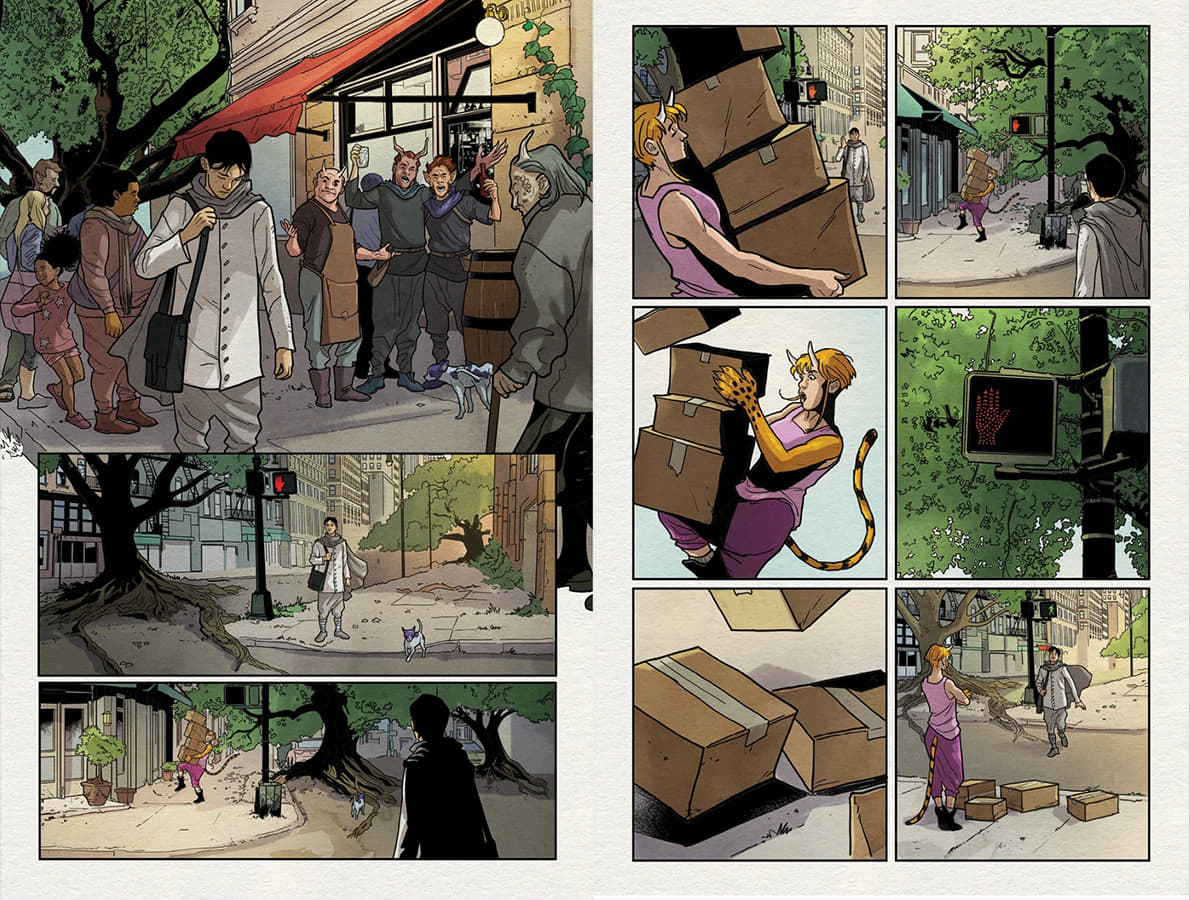
[00:14:25] You know, trying to toe the line in terms of what is right and his friend is Eris. Eris. Yeah. Eris. Yeah. And so so Eris is across the street, like struggling with some things and song won't even cross against the light.
[00:14:44] And it's this tiny little moment, you're like, what are things this like terrible in terms of the gravity of these these punishments that crossing against the light could could lead to some quote unquote, you know, monstrous results.
[00:15:06] You know, or is is sung this nervous and anxious or maybe is it a little of both. But it's such it's such a small little moment that really I feel sets up what you have throughout the rest of the issue.
[00:15:21] What I'm imagining will see some of in later issues. It just just a great little snapshot. And I thought it was very well done. Oh, I'm really glad you like that.
[00:15:32] I like that. That was one of my favorite things when I was writing that it was like, I don't know that that notion just came to mind of, you know, I live in New York, everybody jaywalks.
[00:15:41] But, you know, you go to some other cities and like, why is everybody what's going on here? Nobody's always walking. It's like there's nothing here. But um, but that's it. But that yeah, I mean, so I'm glad that resonated that.
[00:15:52] I really love that moment. And I think Diego, Diego killed it in drawing it. Oh, I also wanted to sing Irma's praises. You know, you said nevilla and I think that actually might be the correct pronunciation. I've been saying nevilla, but I actually think you're right.
[00:16:09] It's probably I have to I have to email her and ask her like the correct pronunciation. I wasn't I wasn't sure. I had 50 shot. Yeah, I know you got me wondering. But it was great.
[00:16:22] She is a colorist. She's also a cartoonist or, you know, and artist line artist as well. I got I was lucky enough to work with her on Ruin an Island, which is our previous boom book.
[00:16:37] And I just loved her. She had this kind of watercolor thing that she was doing with the with the colors that were just really organic and and sort of deceptively simple. And I brought on board to do some so to color another project,
[00:16:53] this Who Belongs book I did for the New York City Department of Education with Jeremy Arambulo. It's a Asian-American history comic book. And she she did it with that same kind of watercolor thing.
[00:17:08] And I was like, it's going to look so good with in this book. And she's she's just killing it. It works so well with with Diego's line art. And again, it gives the book this very sort of organic and textured feel.
[00:17:22] It just feels real. It's not it's not like, you know, shiny and slick. It's everything feels lived in and and and tactile. You know what I mean? It's analog. So so I think works. Yeah. So she but yeah, and I just love the way they did that moment.
[00:17:43] You know, and I think it's a nine panel page, which is unusual for me. And but, you know, like taking the time to feel each of those little moments and there's there's you know, there's some common I mean,
[00:17:54] there's definitely comedy in that kind of thing. But I like that in this book, we've got a little room for that kind of those kind of quiet moments and to tell the story just visually and letting letting these little moments play out to get to the subtle details.
[00:18:11] It's been it feels good. And it's a great team for it. Yeah. But talking about anxiety and as someone who most of my life, I you know, I lived with I was almost had struggled with,
[00:18:27] but I mean, lived with anxiety and just got to a point in my life where I felt this is it. You know, this is just how I am. It's how I'm built. It's it's how I'm wired.
[00:18:39] And I you know, from the time I was a kid, I always put a lot of pressure on myself to do well at school and to follow the rules and all those types of similar things.
[00:18:50] I will say, though, in honor of May being mental health awareness month at 45, I did recently two or three months ago start taking medication for anxiety. And it's been like honestly life changing. Good for you. Good for you.
[00:19:06] No, it's like we got to do these things. You know what I mean? Like I will say, though, is like I grew up in a household where.
[00:19:14] You know, I felt like. I'm not that they were anyone in my family was against modern medicine, but it was like like mental health was not necessarily like prioritized. And I must like I studied psychology in college.
[00:19:29] I was always the first person to say, look, hey, you treat a broken arm, right? So if something's going on with you mentally, you should treat that as well. But I was terrible at taking my own advice. It took like 10 years.
[00:19:40] I'm an attorney during the day and I personal injury attorney, so it's a stressful job. Yeah, it's like litigation and everything. You got to special breed man. That's not trial attorney.
[00:19:51] But it took like 10 years of my wife going, you really want to live like this for me to talk to the doctor about it. They're like, let's just try it. Like I've tried therapy and I've tried other things.
[00:20:01] And I had good what I thought were good coping mechanisms and coping skills. So I felt a lot in terms of I, you know, sung like reading that character.
[00:20:14] You know, a lot of that just from my own experience with anxiety, especially with school and especially with, you know, my my job as it is. Well, good for you. I mean, seriously, thanks for sharing that. And we've had very we've had similar similar journeys there.
[00:20:33] You know what I mean? Like I finally went to therapy for the first time. What like three years ago, like, like, you know, it was actually when during that during that big wave of anti Asian violence in the during the second year of the pandemic.
[00:20:48] And it was, you know, so I finally, you know, finally with therapy and it was great, you know, and and but I also at a certain point was like, OK, I've got new tools, but I'm still I'm still, you know, suffering.
[00:21:02] You know, like I'm I'm I'm I'm having I didn't have straight up panic attacks, but I definitely, you know, I would have these anxious episodes more than I wanted to. You know, and I would use my tools and it was good.
[00:21:14] But I also finally started medication and took a few different tests, you know. But no, it's a it's a big deal. And and you know why I was talking my doctor. I was like, yeah, why? Why be in pain if you don't have to be?
[00:21:30] I mean, I mean, not that not that, you know, not the drugs alone or, you know, like that's just, you know, like a switch you flip and suddenly it's but it, you know, it's one of those things.
[00:21:43] Yeah, I mean, I know people. I know folks that have, you know, have gone to talk therapy, have done a lot of different things. What what works for me won't work for somebody else.
[00:21:53] But, you know, I resisted it for a long time for really no good reason as somebody who would encourage anybody else who was dealing with someone to like try this. Talk to your doctor. Look, if they put you on a medication doesn't work for you.
[00:22:06] Sorry. Oh, you're fine. You don't have to take it forever, but it has worked for me. But I mean, I was curious, you know, because I I read booking will will break your heart.
[00:22:21] This kickstarted which if listeners is, you know, if they don't know about it's fantastic cookbook as well as a lot about your mother. It was written like after she had passed.
[00:22:35] And you know, you talk a lot about your life in that and I know you're raised mostly in Dallas. I was curious. There's kind of like a stereotype right in terms of like Asian parents and especially like Asian American kids.
[00:22:54] My friend Jeremy and I whose his father was Chinese and his mother was I think German. We talk a lot about that in terms of his growing up.
[00:23:04] I was curious in terms of like your household in Dallas, that anxiety that you felt with did it come from like an outside source like from your parents or was it a lot of internalized? Because I feel like I didn't have parents that put pressure on me.
[00:23:17] I was doing it myself and I'm right. I think it's you know, I think it's a combination of a bunch of things.
[00:23:22] I mean, I think definitely I mean both both, you know, both sides of my family, both my my my Korean dad and my white mom had very high expectations of us as kids. You know what I mean? Sure.
[00:23:36] You know, to do our best and all that kind of stuff. But but I think a lot of it also came from the fact that I was, you know, Asian kid growing up in in Dallas in the 70s and 80s.
[00:23:52] And I mean, I, you know, I think back on it, I had a great childhood. I'm still in touch with a lot of friends from that time and and and I have incredibly fond memories.
[00:24:02] But at the same time, I was always aware of I was always aware of race. You know what I mean? From the time I was really, really young, you know, I had, you know, encounters with racists usually, you know, kids I didn't know.
[00:24:15] And and I was conscious of I guess, you know, without even necessarily thinking it, you know, fully intellectualizing or whatever. But I I was definitely aware of not feeling safe. You know what I mean?
[00:24:32] And and that that in order to be safe, I needed to do the best I could at everything. You know what I mean? I mean, a lot of a lot of folks I've heard this. I've heard black families talking about this. I've heard Asian families talking about this.
[00:24:47] I've heard a lot of different folks saying like, oh, you know, like you got to be 10 times better than everybody else if you want to succeed. You know what I mean? Because there's stuff stacked up against you.
[00:24:57] And I definitely felt that whether or not I fully intellectualized that I definitely, you know, had this notion that I needed to do 110 percent with everything, you know. And, you know, so I think I carried that with me.
[00:25:14] I mean, as a kid, it didn't I don't, you know, I don't I don't have a lot of memories of feeling anxious as a kid.
[00:25:21] You know, and I think I think the real the kind of anxiety that I ended up going to therapy for really kicked in more as an adult, you know. But I think, you know, the groundwork was laid, you know, in my in my youth.
[00:25:35] But yeah, you know, so so yeah, I mean, I do think it's connected to, you know, growing up as a, you know, Asian American kid. And and, you know, so I think there's a cultural aspect to it.
[00:25:49] I mean, I think that's why, you know, that's why song in the book is Asian. And but yeah, so but I think that's also a very, you know, I mean, this kind of this kind of this kind of pressure is something people all the backgrounds feel.
[00:26:05] So I hope the book will resonate with everybody. But but yeah, it does come out of a specific experience.
[00:26:11] Yeah, no, I think it will resonate with with a lot of folks, not just any, you know, not just anyone of Asian descent or, you know, something along any minority. All right, let's take a quick break.
[00:26:25] Hey, comics fam, the comic book publisher Banda bars just got a level up and announced it is now a cooperative. This heralds a new era for them, including a partnership with Dallas stories. And they added several new members to the ownership group.
[00:26:40] Marcus Jimenez is now chief operating officer. Brent Fisher takes on the role of chief diversity officer. And Joey Galvez is introduced as head of Kickstarter, ops and social media manager, which is sure to increase their capabilities overall as a publisher.
[00:26:55] And it further promotes their mission statement of advancing representation, inclusion and diversity in the media. They also established a new board of directors to help chart the new path of their journey with new projects in the works like Alaska by dropping in June.
[00:27:10] I'm broken soon launching on Kickstarter and Paul and coming up with Dallas. Stay tuned to this space for more exciting news from the growing bars family. Let's get back to the show.
[00:27:23] I was just curious, though, when you write a character like that, it's not like he's, you know, as self insert. But when you are maybe channeling a particular feeling or something that you dealt with into a character like that, as you like.
[00:27:39] As you like, pray after the rest of the story, do you feel more like precious about the treatment of that character? Oh, well, I, you know, like we're going to we're putting this character through a lot of hell.
[00:27:52] So I'm not really I'm not really taking it easy on him. I mean, the whole point of the story is really to to look at the very worst case scenario. You know what I mean?
[00:28:00] You see, you know, like it's it's, you know, like all of these things that you imagine that are going to be so horrible. Let's see what actually happened. And so, no, we're not going to go easy on him. I mean, I yeah, it's interesting because I guess.
[00:28:19] You know, I back in the day, sometimes people would be like, oh, yeah, Greg Pock, he's Korean. He made Amadeus Joe Korean. He's just doing a self insert characters like now. Actually, Amadeus is very different from me.
[00:28:30] Amadeus is like Amadeus chose this this Marvel character, Korean American kid. Teamed up with the Hulk and Hercules and all of that. But but Amadeus is is very different for me in a lot of ways in the sense that Amadeus is like whatever he's thinking he's saying.
[00:28:47] And he has no fear of conflict. He is he's he's entirely he has he has no self-control at all. I mean, I think that. I can have a sort of public personality that's very open. You know what I mean?
[00:29:06] And and I'll talk your ear off, but I'm also, you know, by nature, I think I mean, and also like, I mean, I also cultivate a lot of the sense of like I'm a big risk taker because I'm a creative person.
[00:29:18] Right. You know, you know, like that's my job. So I'm taking all kinds of risks creatively. But in my personal life, I think I'm actually a very, you know, like I'm yeah. Well, we just talked about anxiety.
[00:29:28] You know, I mean, I tend to be a pretty careful person like and actually and I'm not always, you know, I'm trying to get better at it, but I'm not very comfortable with conflict and disagreements and stuff like that. You know what I mean?
[00:29:42] So so Amadeus is totally different in that regard. Song is, you know, and then song is sort of like an exaggeration of of of those tendencies of mine. You know what I mean? So I'm somewhere in the middle. So it's not exactly me. Right.
[00:29:58] And he's got a different different situations in many different ways. But oh yeah, but I just meant in terms of the you know, when you give a character something so particular like that there.
[00:30:10] I would think that there, you know, maybe there's there's some type of empathy that you feel because you've now created a character who's dealing with something that you at least can empathize with. You know, not that songs like like you in terms of personality or anything. Yeah.
[00:30:25] Well, you know, it is interesting because there's some characters, you know, like I've definitely written characters who are very different from me. I mean, the most extreme was when I was writing Red Skull incarnate, which was the origin story of the Red Skull.
[00:30:39] You know, so it's it's the kid is, you know, it's a street kid, an orphan who ends up becoming a Nazi and in fact, the worst Nazi ever. You know what I mean?
[00:30:51] Like he becomes the Red Skull and and that's a character who is, you know, like the level of just, you know, the impulse towards violence and the the kind of. The vicious survival instinct that he's he's developed is very alien to me.
[00:31:12] You know what I mean? So that was a that was a character I had to work at sort of stepping into. Batman was a little bit like that for me, too, when I was writing Superman, Batman Superman.
[00:31:22] I just got Clark Clark Kent. I just got just like that. You know what I mean? I knew exactly how to write this guy. And same with like, I mean, characters, characters been like that with me or like Amadeus Joe Clark Kent. Bruce Banner and they're all different.
[00:31:43] But for various reasons, like these are just characters that I just kind of and a dama when I wrote a dama in the Battlestar Galactica book. So it's like I just knew this guy. You know what I mean?
[00:31:51] So so there's certain and all these characters very different from each other even. But there's just you know, whatever kind of you know, there are things about them that just immediately resonated. Batman took me more time.
[00:32:03] You know what I mean? Like, you know, like he's like Bruce Wayne is like his mindset is, you know, he's so focused on he's so he's so into control and and vengeance or payback. You know what I mean? Like there's there's a different mentality there.
[00:32:19] And so when I'm writing him, it's harder for me to have to think more. You know what I mean? Like I have to really assure you know, like you eventually develop an instinct for every character.
[00:32:30] But I'm I'm I'm I'm sort of outside looking in with him a little bit more than I am with some other characters. And so I sung as a character where I'm inside, you know what I mean?
[00:32:42] So when I'm writing role, what I'm you know, like like, you know, like Clark and these other characters, lots of times, you know, like there'll be times when I'm writing, you know, some of these scenes with some of those characters where, you know, where you can go pretty deep and and you can, you know, I mean, they're there.
[00:32:57] This sounds like such a cliche, but there are definitely times, you know, have been times when I'm like typing and I'm getting teary. You know what I mean? Like it's like these are, you know, big moments that I'm trying. We're giving it everything. You know what I mean?
[00:33:08] There's no there's no detached irony with these books were like, you know, the heart is on the sleeve. And that's, you know, that's what we're doing here. You know what I mean? You know what I mean? So it's it's maximalist emotion.
[00:33:20] You know what I mean? Like it's so we're not we're not going to we're not going to we're not going to, you know, dodge dodge the emotional bullet with these things for going right for it. Oh, yeah. It's a fantastic first issue. No, thank you.
[00:33:36] Oh, I do want to say I really do did like your your Superman run. Oh, thank you. Yeah, I really enjoyed that.
[00:33:44] A lot of it. I not a lot of it. But part of it was I do like Clark and just and Superman and just the jeans and t shirt look. Your run had some of. Oh, yeah. Aaron Coutar was my big partner in crime on all of that.
[00:33:58] We ended up we you know, we started off with, you know, very, you know, with distinct roles as you know, the writer and the artist. But then eventually he he was co writing the book with me and it was amazing.
[00:34:09] He's just a fantastic storyteller and yeah, I think we both just love we freaking love that dude. We love Clark and and you know, and and and I love that that t shirt jeans look he developed for him.
[00:34:23] It was just it was a real pleasure working with him on that. Yeah, I that was that was that was fantastic. I really enjoyed that that as well. So when. You develop a story like lawful and I'm assuming you have that the main character you have sung first.
[00:34:43] So when you're creating his friend, when you're creating Eris and like the foil to him, like how do you do? Does that idea like just kind of like come to you? Do you do you figure what's going to service that character, that story?
[00:34:57] How do you flesh out that world because you're so good and the collaborators you work with are so good at world building and so many of the comics that you've made when I was a real big fan of I think was a four issue series Kingsway West,
[00:35:13] which I love that series. Oh, thank you. Or something like Mek cadet you another great great comic. But when you're building out that world and you're fleshing out these characters, I mean, like this is going to be the character's best friend.
[00:35:27] I'm just how do you build that character from the ground up a little bit? Yeah, I mean, I I I realized, you know, sometimes sometimes it's just instinct, right?
[00:35:37] You know what I mean? Like you're just like but but then, you know, I also do find myself intellectualizing it as well. You know what I mean? Like I knew he needed to have, you know, if you've got this straight laced character,
[00:35:49] you need to have somebody who's going to poke those buttons. You know what I mean? He's going to push him, you know, drive him a little little, you know, drive him up the wall a bit.
[00:35:59] You know, that kind of that kind of thing. And and that could be a villain. But it's also pretty cool if that's a friend. You know what I mean? Like like there's there's different ways to do that.
[00:36:11] I mean, we do. We definitely have a villain as you will see as the book progresses. But yeah, there's there's there's a kind of surprise heel turn coming up. I shouldn't I shouldn't spoil it. But yes, there's there's something just a little tease.
[00:36:27] Yes. But but the but with with Eris, I was like, I don't know. She just kind of came together bit by bit.
[00:36:38] I mean, I think in the original outline, I said like he's got a friend and his friend is like, you know, the the trouble maker who's like, come on song. You know, don't be such a stick in the mud and da da da da da.
[00:36:51] And that's that's a classic. You know, I mean, that's a classic thing. The friend who gets you into trouble. Right. You know what I mean? Like that's that's that's that's that's that's you know, you see that in every every Scorsese movie.
[00:37:03] There's somebody you know, like there's the there's the straight Lace dude. And then there's the friend who's like, you know, who's you know, it's it's what it's Joe Pesci and good fellas. It's it's is it that's that's De Niro and Mean Streets, right?
[00:37:18] Like De Niro is like the loose cannon to Harvey Keitel's Harvey Keitel. Yeah. So but but yeah, so that's kind of just like a classic, you know, a classic thing. They have the cut up friend. Yeah.
[00:37:30] But but also, you know, like and then as that character developed, it was I mean, there are a few things that I wanted to do there. I've I've had some interesting things going on in some of these boom books where which has been really cool, I think,
[00:37:52] where we've had male and female characters sort of as foils for each other. And they haven't been it hasn't been a romantic comedy, you know what I mean? Or like like they have been. I think that kind of normalizing normalizing both rivalries and friendships between people of different,
[00:38:11] you know, like boys and girls that doesn't have to be romantic. I think I think that's there's something cool about that, right? You know, like, yeah, I agree. So so so that's I mean, you know, we'll see.
[00:38:24] We'll see if that holds or we'll see if a spark happens here. But I but I do think there's something cool about showing, you know, a friendship between a boy and a girl. That's it's really a real friendship, you know.
[00:38:37] So that was kind of part of it, too. There's also a thing that will that you'll see more of later where where Song and Eris are. There's there's a class thing going on, like I mean, there is a white girl song as an Asian dude.
[00:38:52] And but there's also like so there's a there's a there's in this society, there's there's certain, you know, there's a certain amount of racism in the society and there's also certain class divisions.
[00:39:03] And so and it's subtle, but that's going to come out and that's going to play as the story goes on. So those are those are some of the things that came to mind while, you know, while we were putting this together.
[00:39:13] And then there's also that just that kind of vibe of like if you've got a character like like I think about the Darth Vader book, you know, I've been writing this Darth Vader book. Vader does not talk much. Vader is like the Hulk.
[00:39:24] You know what I mean? Like like the little the less they say, the better. It's that Clint Eastwood thing. You know what I mean? Like the less you speak, the more powerful you become on screen.
[00:39:37] And but, you know, but you need somebody you need somebody to be talking in order to like deliver some exposition and also just for like fun.
[00:39:46] And, you know, like who you need somebody who's going to say some jokes, you know, is going to deliver some jokes for you.
[00:39:51] And so in the Vader book, like I introduced both Zed, who's a robot named Zed, who talks all the time and is a little evil and is fun. And evil robots in store. And also and then Ochi, the assassin from the from the from the sequel trilogy.
[00:40:11] He we got to use him in a really cool way. And I basically got to give him a personality and we made him just sort of like a, you know, kind of a colossal cocky screw up who's, you know, who talks way too much
[00:40:23] and is always on the verge of getting killed by Vader basically. But but you know, but that is so sometimes it's like, OK, how am I going to what's the what's the dynamic here?
[00:40:33] You know what I mean? Like when you when you put these folks together, what's going to give us some juice? And so that that contributed to how we developed Aris. You know, like she could be, you know, she's she's literally more colorful.
[00:40:46] You know what I mean? Like she's she's got orange hair and she's wearing, you know, like big colorful clothes while Sung is in his, you know, the his clerks gray clothes and stuff.
[00:40:57] You know what I mean? So but, you know, so having that kind of contrast with the characters is always important.
[00:41:02] No, I get that. And one of the other things I wanted to mention that I thought Diego did very well was I felt there was a really difference in like the posture, like even in terms of how the characters held themselves.
[00:41:18] There's such a lightness and a freedom to to Aris. Yeah, you know, just how she poses, how how she's drawn.
[00:41:29] You know, it's static. We're not talking about a cartoon, but just how she's drawn to like deliver a line of dialogue or from panel to panel, how that's connected.
[00:41:38] There's, you know. Yeah, well, I mean, from the from the, you know, from the first character designs that he emailed us, you know, you could see that you could see those differences in the interesting.
[00:41:50] You know, he's drawing the characters in whatever costumes he had in mind, but just the way they're standing in this character designs like it's all there. You know, all that body language is just solid gold. Yeah, really good. Really good.
[00:42:02] Just to turn a little bit because I'll be talking all night if you let me. But I wanted to talk a little bit, if we could, about the dynamite book. Yes, yes, yes, yes. And Stitch. Yes.
[00:42:15] I know this is a this is a podcast, so listeners can't see. But I have my issues one through four right next to me here. Fantastic. We just recently took a family trip to Disney World. Oh, cool. Over Mother's Day weekend. My what I'm not.
[00:42:31] But a huge Disney like Park fan like it's great. It's just not my cup of tea. My wife loves it. So we went was her. We went over Mother's Day weekend. My kids are 11 and my youngest just turned seven a week or so ago.
[00:42:46] And my oldest Charlotte loves love Stitch. So and I had gotten her. I've gotten both of us like issue one and and and I think issue four is the one that just came out yesterday as we're recording this.
[00:43:02] Yeah. But so she's a big Stitch fan. The whole family loves the movie. I was so excited to hear that you were going to be writing. Thank you. Lilo and Stitch series. But yeah, I love it. It's so much fun.
[00:43:20] I feel like it really captures the spirit of all of those characters sending Stitch and Lilo and the rest of the crew, Nani and everybody else on a fun journey. Also, I wanted to say that it's Julia Giacomino doing the artwork.
[00:43:39] Yes. And also Dynamite has really lined up some like fantastic if you're a variant cover, if you're like a variant cover person who likes to collect those. Dynamite has done a you know, I get Dynamite job. My apologies.
[00:43:56] In in variant covers for these these like Lilo and Stitch books and a lot of their other ones. I think they're doing like a Cruella de Vil and there's like a Hercules one. Oh, they're doing a great job. Yeah. How did that come about?
[00:44:11] Well, I so I've worked with Nate Cosby, editor Nate Cosby on a ton of stuff over the years. I mean, back in the day we were working on the Hulk and Hercules books. He was the assistant editor on those books.
[00:44:22] And then and then when he went to Dynamite, he brought me over to do a number of books, including I did the Turok run. I did I did the James Bond book I did.
[00:44:31] And then and then he called me up and he was like, hey, do you have any? Yeah, he just asked, you know, like what I thought about Lilo and Stitch. I was like, Nate, Lilo and Stitch is basically my favorite of the modern Disney movies, literally.
[00:44:47] You know what I mean? Like I I freaking love it. I think it's it's gorgeous. And, you know, it's it's got that classic cell animation. But it's got this gorgeous like kind of watercolor like backgrounds. And and then and it's just so weird and quirky.
[00:45:07] And these characters are so lived in and real. And it was and as an Asian American person, it was, you know, when that came out, it was like, I mean, it said in Hawaii, the characters are Native Hawaiian. They're not Asian American.
[00:45:18] But then, you know, like Jason Scott Lee was voicing one of the characters. And and and it was like it felt like a real, you know, good representation.
[00:45:27] You know what I mean? And and and I and I and I also and I just freaking loved Lilo and Stitch because they are they're so screwed up. You know what I mean? Like like more than any other Disney characters that I had seen up to that point.
[00:45:42] Like, you know, like within a few minutes of the movie starting, Lilo was like biting another girl. You know what I mean? It's like, yeah. And and and Stitch is like, you know, I mean, they're both these incredibly chaotic and kind of messed up kids.
[00:45:58] And but they're they're incredibly fun and funny. And it's the movies got so much heart. And and anyway, I just love the movie. And so to have a chance to work on the comics, I was like, let's do this.
[00:46:13] But but my big thing was, you know, I'm Asian American. I'm not Native Hawaiian. And these are Native Hawaiian characters and Native Native Hawaiian identity is a big part of this.
[00:46:23] I mean, you know, like Ohana is a huge concept that's that, you know, that that's a big part of that movie and all of that. And and I wanted to, you know, like do this right. And also get a Native Hawaiian person on board and paid.
[00:46:37] And so but anyway, so so I was like, we got to get a cultural adviser and somebody to come on board. And when we found Moana McAdams, who is amazing, she actually grew up on the same island that Lilo is from.
[00:46:53] And and she's a she's a children's children's book author. And and it's just been so the whole thing has just been amazing. You know what I mean? It's been a tremendous opportunity to work with really cool people and to make it as fun.
[00:47:07] And also is, you know, deep as we could, you know, like, you know, if you know the movie Ohana means family. Right. And that's that's the huge theme of the movie.
[00:47:16] And then we kind of now they're there, you know, like now these characters, this takes place pretty much after that first movie right after. But but now they're learning another concept of cool. Liana, which is based with I mean, it's a it's it means a lot of things.
[00:47:33] But one of the basic translations is responsibility, you know, and for each other, for the land, for their community. And, you know, and so you've got these two cut ups and how they learn these concepts of responsibility is is there's a big journey there.
[00:47:57] But and, you know, and also I love the huge the ridiculous sci fi elements and just the design that kind of fun, bulbous.
[00:48:06] I don't even know what it is. It's like this kind of retro, almost fifties esque sci fi design, but it also feels really modern at the same time. Oh, yeah. All the ships. Yeah. Ray Gunn. Yeah. Everything.
[00:48:20] Even like the design of Stitch, you know, himself, like the shape of his head. And I feel like you really captured, you know, kind of like the essence of both stitch and Lilo because like you said, one of the things I love,
[00:48:34] I think Lilo and Stitch came out like 2002. Yeah. One of the things I loved about that movie, and I don't I don't know if it was just the first time I saw something like that or if there was another movie before.
[00:48:47] But in terms of Disney, you know, having a kid character who was so like just stubborn and and so like consistently, you know, herself. We've seen characters, you know, in terms of Disney, like Cinderella against like the evil stepsisters and all those types of things.
[00:49:09] But like Lilo was like a little kid being raised by her older sister and wasn't like a bad kid, not like a problem child. But she just had such a distinct, you know, personality and it was, you know, a creation who was designed to be destructive.
[00:49:30] Exactly. Two of them found each other. And it really is such a wonderful movie. It's a wacky cast. It's got a great message about family, about found family.
[00:49:43] And I really feel like you captured, you know, that essence of of that of those characters and getting to send Lila Stitch on on a little journey each each issue. Yeah, super fun. Thank you. Thank you very much.
[00:49:59] I just turned in issue the script for issue six and the next this next story arc. I think I actually think it's I mean, I loved our first story arc, but I think this one's we're kicking it up a notch.
[00:50:12] And with I can't spoil it yet, but it's it's it's a ton of fun. It's a ton of fun and Lilo's yeah with more Lilo's taking a little bit more of a center stage here. I mean, it is Lilo and Stitch. It's the two of them.
[00:50:28] But in the first one we were really following Stitch as he's, you know, kind of off going around the world and Lilo's chasing after him. Now Lilo sort of taking a little bit more of the lead here.
[00:50:39] And but it's it's got a lot of fun elements. I can't wait for you all to see it. Yeah. Yeah. Listeners, if you if you're not reading it, I mean, look, if you're a fan of Lilo and Stitch, get it.
[00:50:50] If you have any any perfect for kids, I mean, but I love it as well. It's a fantastic comic. So oh, and I should plug two things. There's I think the trade has come out for the first for the first four issues.
[00:51:05] There's they did a sort of a cool digest style size hardcover, which I think is in stores now or if it's not in stores now, it's going to be very soon. And then on 626, which is, you know, like Stitch's experiment 626. So so June 26th is Stitch Day.
[00:51:23] And I think that falls on a Wednesday and I think there's a big special Lilo and Stitch special that comes out on that day in comic shops. Keep your eye on that. Oh, that's awesome. Yeah, I love that. Well, I'll definitely have to check that out.
[00:51:37] Well, kids and I'll head to the comic book shop on 626. That's great. I love it. It's Stitch Day. Yeah, it's Stitch Day. Well, Greg, I mean, this has just been delightful.
[00:51:51] I really appreciate you coming on the podcast to talk about Lawful and Lilo and Stitch and indulging me and letting you letting me read Bobby's Oh, yeah. Give Bobby my very best once again.
[00:52:07] Oh, and before we sign off, let me let me plug the two letters of these books because letters don't get enough love. Simon Boland is the letterer of Lawful. Simon's lettered so many of these books that we've worked on together, including Meked at You and Ronan Island.
[00:52:23] He's just amazing. And Jeff Heckelberry is lettering Lilo and Stitch. And they're both doing stellar jobs. And I plug Nate, but Chantelle LaRock is the editor of Lawful. And I just want to again, editors often don't get enough love. Chantelle and I do a thing.
[00:52:46] And this sounds like such a thing everybody should be doing, but comics are so fast paced. We don't always get to do this, but we schedule a call.
[00:52:54] We have a call every Thursday and we just get on the phone and talk through, you know, talk to our schedule stuff with the book.
[00:53:01] But also we just we just talk about creative stuff like I was just going over the next issue with her and just talking out loud for 15 minutes is like the best with an editor. You know what I mean?
[00:53:14] Like and the sad thing in comics is sometimes we just do not have time for that. But but when we make time for that, it's just solid gold anyway. So Chantelle big thumbs up for Chantelle LaRock, editor of Lice. I love it.
[00:53:26] Yeah, no, I think that's usually important, you know, especially in any time anything creative and for any, you know, folks who want to think about making comics, making your own comics. I would say, you know, you think about I need an artist. I need a colorist.
[00:53:40] I need a letterer, but definitely an editor. You will be shocked if you've never worked with an editor before how much better they will work. Oh my gosh. Yes. Editors are your friend. Yes.
[00:53:55] I mean, I think I think there's often that kind of a thing is like, oh, the editor's the boss and I can't talk to my editor because I'm behind or I'm like having trouble. I don't want to.
[00:54:03] I just got to get this done and then impress my editor. No, your editor is there to help you. You know what I mean? Like if you're stuck, call your editor.
[00:54:11] I mean, half the time when I call an editor, when I'm when I'm stuck on something, they're just like, well, what are you thinking? And then I'll start talking and then they'll just say, uh huh, uh huh. And then they'll say, oh, well, that sounds interesting.
[00:54:23] And then and then I'll just talk it through. And then by the end of it, we fixed it. You know what I mean?
[00:54:28] Sometimes they're just like just like having having having a smart person just say a few monotone words here and there to kind of indicate whether you're on the right track or not. Just it's ridiculous how how how seemingly simple it is.
[00:54:46] But but to have that to have somebody who gets it just on the other end of that phone while you're talking stuff through. Amazing.
[00:54:53] And then and then and then and then and then folks who can also dig in deep when you're really struggling with stuff and bounce around ideas. Amazing. Yeah, I agree. It's it's the truth. And yeah, I'm glad you brought up the letters.
[00:55:10] I always try and shout out the letters on the letters on books. That's cool. You know, something I think is hugely important. So I'm glad you did not let me forget to mention. Thank you. Thank you. Greg, I again really appreciate it.
[00:55:31] Lawful from Booms Studios is going to be out June 12th and issues one through four of Lilo and Stitch are out now. But look for if there's a special on 626 Stitch Day and be sure and go and get these issues. Lilo and Stitch is fantastic.
[00:55:47] But I think you're really going to like Lawful. It is such a great concept. It's executed so well. I can't wait after the first issue ended to see where it goes from here. So I'm super excited.
[00:56:04] You're one of the I think you may be the first person who hasn't worked on the book who's read it now that I've heard feedback from. So I am loving all of this. I'm loving all. Thank you so much. It's you're making me feel good here, buddy.
[00:56:17] Well, good. It's great. And, you know, if you haven't read any of Greg's other work, go find go to your comic book shop, especially you heard what Bobby said to Greg.
[00:56:29] If you've never I've said before in this podcast, I have not read a lot of Marvel comics in my life because I was into comics when I was younger and then took a lot of time away from comics to do schoolwork.
[00:56:40] And when I got back into comics, I was playing a lot of catch up. And but one of the Marvel comics that I have read have read is is Planet Hall. And it is just one of my favorite comics of all time.
[00:56:52] It is it is, you know, Shakespearean. Oh, good. Although my brother will make fun of me because I kept calling the one character Shamed. And then he was like, You're the smart one. It's shame. And I'm like, Oh, you're right. I'm stupid. That's amazing. That's amazing.
[00:57:12] Heroine the shame. You look like I don't know. Oh, I love it. I love it. But that sounds cool. That sounds cool. Heroine the Shamed. I like it. I like it. All right.
[00:57:24] Well, listeners, please go get Greg's comics and let me know if you once lawful comes out. If you've read it, please. I love to talk about comics. Thank you very much for listening. Thank you to Greg and already shout out to Bobby. So we got that covered.
[00:57:42] I will see you next time, everybody. Good night. Thank you so much, Jimmy. This is Byron O'Neill, one of your hosts of the Cryptid Creator Corner brought to you by Comic Book Yeti. We hope you've enjoyed this episode of our podcast.
[00:57:57] Please rate, review, subscribe, all that good stuff. It lets us know how we're doing and more importantly, how we can improve. Thanks for listening. If you enjoyed this episode of the Cryptid Creator Corner, maybe you would enjoy our sister podcast, Into the Comics Cave.
[00:58:16] Listen and subscribe wherever you get your podcasts.