
It's a fantastic episode today as Jeremy Whitley returns to the podcast to chat about the current ZOOP campaign for SLAY! / The Girlfriend Survives. This is a double first issue flip book that includes a fantasy-horror-western and a unique superhero story told from a perspective you haven't seen before. With art by Alex Smith and Luc Nakashoji. Jeremy and Jimmy break down the different stories, discuss horror and comedy influences, debate whether things have changed since Gail Simone first coined the girlfriend in the refrigerator trope, and so much more. Plus the comics are great! Check out the links below to follow Jeremy on social media and to back the Zoop campaign.
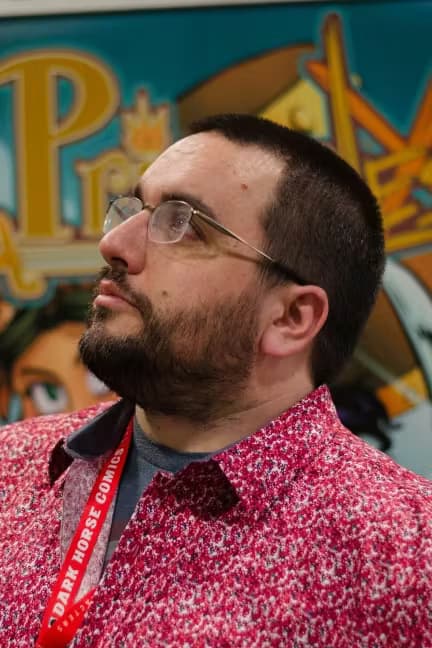
WATCH THE VIDEO VERSION ON YOUTUBE!
Follow Progressively Horrified on Bluesky
Back SLAY! / The Girlfriend Survives on ZOOP
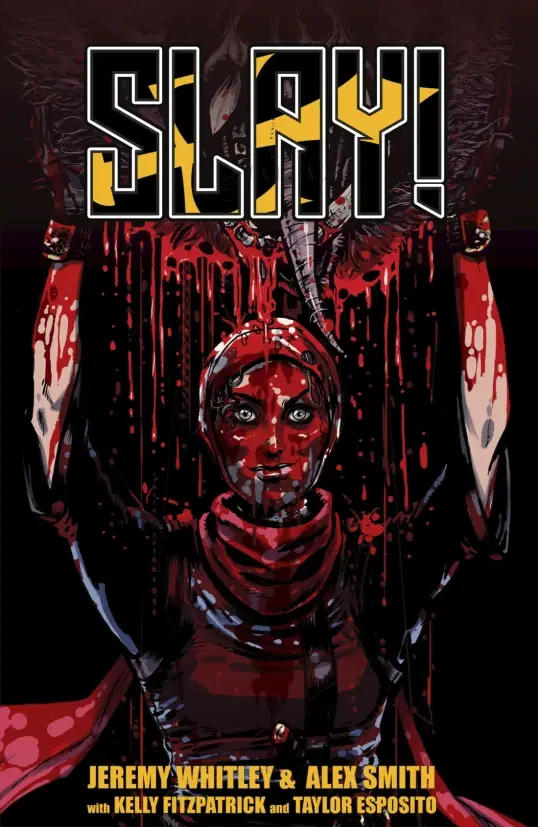
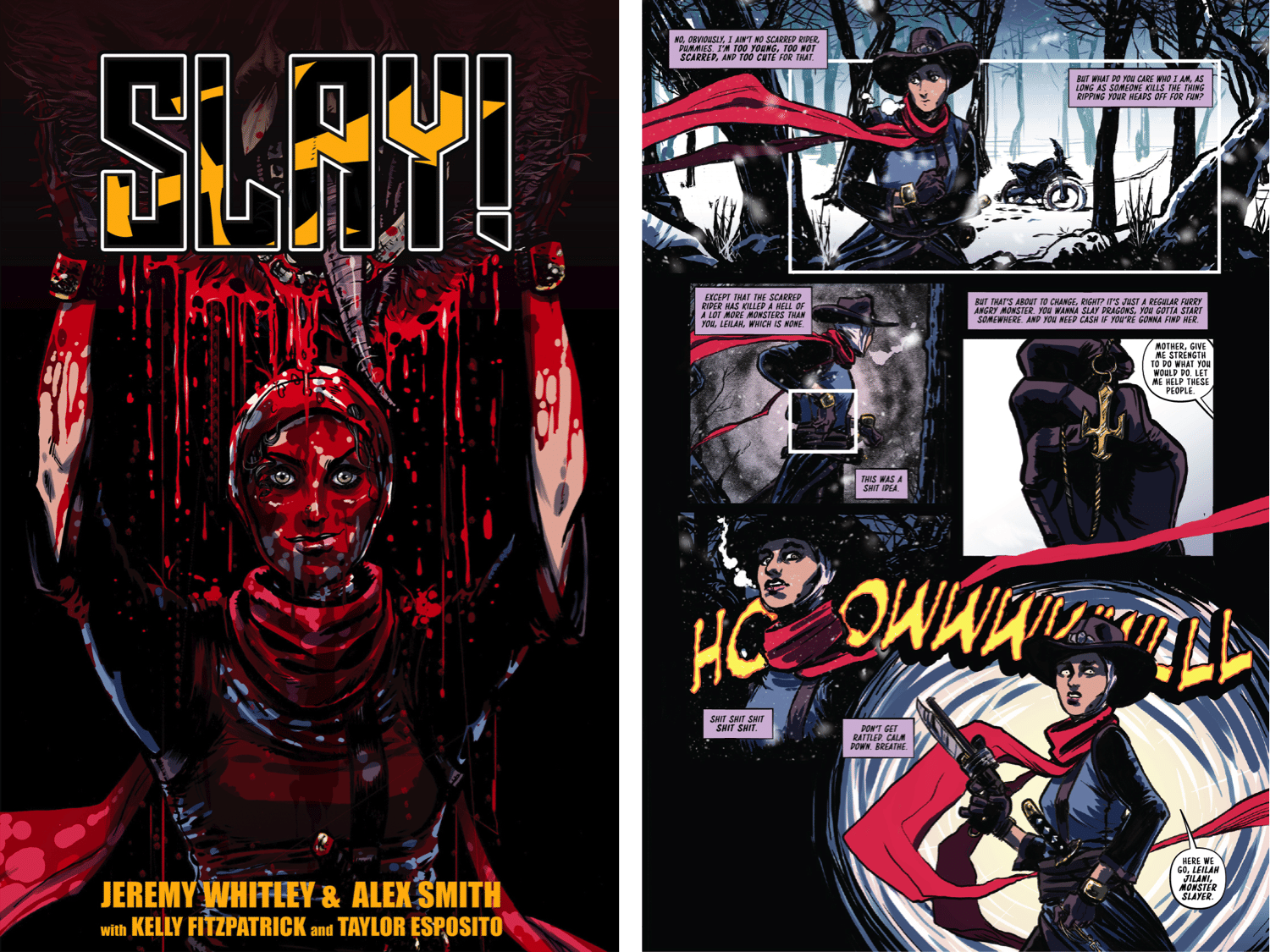
About SLAY!
On one side it's the first issue of fantasy-horror-western SLAY! by Writer Jeremy Whitley, Artist Alex Smith, Colorist Kelly Fitzpatrick and Letterer Taylor Esposito, and on the other-side the The Girlfriend Survives is the first issue of a superhero story told from a perspective you've never seen before, written by Jeremy Whitley, Illustrated by Luc Nakashoji and Colored by Jamie Noguchi.
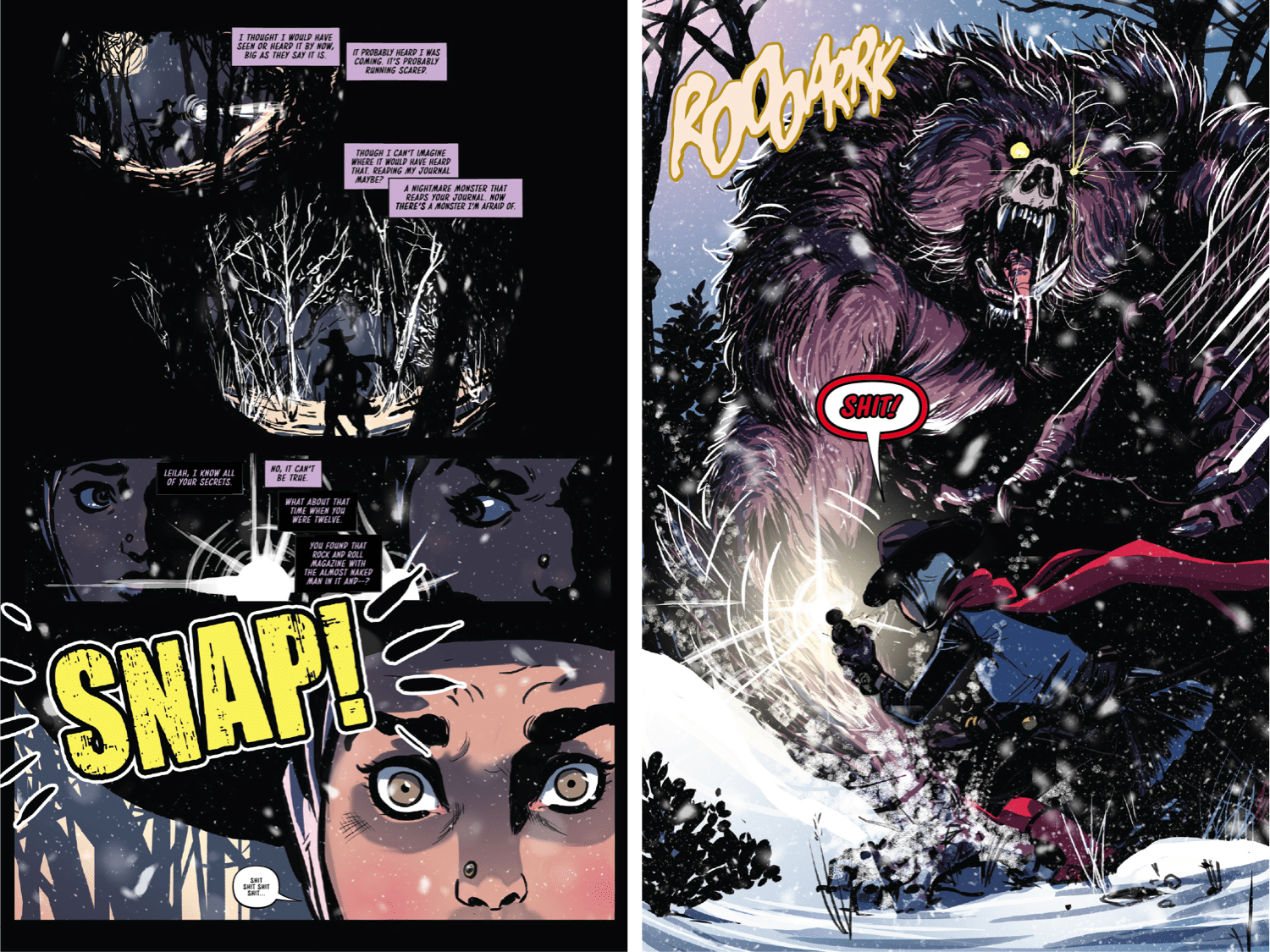
SLAY! preview pages
Follow Comic Book Yeti
🔗 Comic Book Yeti LinkTree: https://linktr.ee/ComicBookYeti
For partnership and ad inquiries, please contact: thecomicsyeti@gmailcom
Follow your hosts
🔗 Jimmy Gaspero: https://bsky.app/profile/jimmygaspero.bsky.social
🔗 Byron O’Neal: https://bsky.app/profile/byrononeal.com
ARKENFORGE
Play TTRPG games? Make sure to check out our partner Arkenforge. Use the discount code YETI5 to get $5 off your order.
Make sure to check out our sponsor 2000AD.

[00:00:00] - [Speaker 0]
Your ears do not deceive you. You have just entered the cryptid creator corner brought to you by your friends at Comic Book Yeti. So without further ado, let's get on to the interview.
[00:00:11] - [Speaker 1]
The future is calling. 2,000 AD is the galaxy's greatest comic with new issues published every single week. Every 32 page issue of 2,000 AD brings you the best in sci fi and horror featuring characters like judge dread, rogue trooper, and more. Get a print subscription in 2,000 AD, and it'll arrive to your mailbox every week. And your first issue is free.
[00:00:35] - [Speaker 1]
Or subscribe digitally, and you can download DRM free copies of each issue for only $9 a month. That's 128 pages of incredible comics every month for less than $10. Head to 2,000 AD and click on subscribe now or download the 2,000 AD app and start reading today. Hello, and welcome to Comic Book Yeti's Cryptid Creator Corner. I am one of your host Jimmy Gasparo, and I've had a run of really great luck recently with this, with these episodes because I have returning guests.
[00:01:05] - [Speaker 1]
And I love returning guests because it means that they had a decent enough time the first time to actually come back and talk to me again. And, this is an individual that I have had on the podcast before. I've met him in person at, Baltimore Comic Con, and we are here talking again about the most recent Zoop campaign as we record this. I think it was just launched today for Slay and the Girlfriend Survives. I got to read the Slay, and it is like a monster hunting western.
[00:01:36] - [Speaker 1]
Absolutely loved it. Can't wait to talk more about it. Please welcome to the podcast Jeremy Whitley. Jeremy, how are you doing today?
[00:01:43] - [Speaker 2]
Oh, I'm doing great. Thanks so much for having me.
[00:01:45] - [Speaker 1]
No. No. I really appreciate it. I'm I'm a big fan, of your work. I've told you that before, which is one of the really nice things about this podcast and, you know, going to Baltimore Comic Con as as press and getting to talk to people and say, like, whether, you know, be not not just some of the earlier work that you've done, but my both of my daughters, they're 13 and eight.
[00:02:07] - [Speaker 1]
But throughout the years, we've read a ton of my little pony comics. And I know your name has been on quite a few of them that we've read. And, not only do they love them, I I love them too. They're they're really great. They're fantastic comics.
[00:02:24] - [Speaker 1]
And so I
[00:02:26] - [Speaker 2]
mean, those are those are the things I love. Because, you know, I have two kids as well. So, like, having having shows and and comics and stuff that we can enjoy together, that's always, like, aspirational for me because I've gotta put up with the stuff I don't like as well. And I I think, interestingly, that's sort of how I got hooked up with My Little Pony is, you know, I had a a kid who was really into Dora the Explorer at that age. And if you've watched two episodes of Dora the Explorer, you've seen every episode of Dora the Explorer, and they'll hit you with the same songs over and over.
[00:02:59] - [Speaker 2]
So, like, My Little Pony popped up, and I was like, hey. This is actually, like, funny. Like, this this show is is good and enjoyable, and and I'm having a good time. And then, you know, I just happened to sort of stumble into knowing people that were that were working on the book, and, that, you know, they asked me, do you know anything about this? And I was like, oh, yeah.
[00:03:18] - [Speaker 2]
I've I've seen all the episodes. So it's nice.
[00:03:20] - [Speaker 1]
Yeah. That's great when that that can work out. You know, but I'm also I I was a huge, huge fan of navigating with you. I I just I thought it was one of the best, graphic novels that I've I've read in recent years, and I've told so so many people about it, whether or not adults or or young people. Just what a wonderful story it is, and I just thought it was incredible.
[00:03:48] - [Speaker 1]
But, yeah, now we're we're gonna talk about slay and the girlfriend survives, which is definitely a departure from my little pony. Sure. But, I I just really I mean, I know because of your podcast, I know your interest in horror, I really I thought Slay I mean, I I love a good western. I love a monster hunting story. I I really loved how this one kind of, played out.
[00:04:16] - [Speaker 1]
And, yes, I'm just kinda curious. Can you tell listeners what are Slay and the girlfriend survives about? And how long have you kind of been working on, you know, these these two comics?
[00:04:26] - [Speaker 2]
Yeah. Both of them are are sort of, I think, interesting, the genre mashups. They have, the sort of things that I think are are earmarks of a lot of my stuff, and that they include, you know, stories of of sort of queer characters, have strong female leads and stuff, and in particular, I think deal a lot with tropes that we see a lot in genre fiction that I I like to sort of take and turn on their head. And for me, with Slay started as this sort of combination of of things I wanted to do that, like, I love fantasy stuff, and I love sort of the feel of westerns even though, like, sometimes the the particular points of reference in in time and imperialism that mark westerns are are not always my thing, but, like, that feeling of being on the frontier and not knowing what's around the next corner, and the the feeling that there could be monsters out there. And this is, you know, a case where where that is literally true, because we're dealing with a post apocalypse where, like, we've lost all sort of telecommunication, all sort of, you know, Internet and and phone and everything, and there are these sort of magical monsters roaming the world that you could just run into at any time.
[00:05:44] - [Speaker 2]
And we're following in this story, Layla, who is a, you know, 19 year old girl who has just sort of discovered that her mom who she who died when she was young was a monster hunter, and she wants to be a monster hunter like her mom was. And so she's sort of, like, gone out looking for the scarred writer who is this legendary monster hunter, and in trying to find her has found that, you know, she she needs money, she needs food to get by, so she's pretending to be her to get a job slaying a monster, and immediately finds herself in over her head out here on the the edge of of civilization where there's nobody to to help her out, and finds herself between this monster and the person she's pretending to be, both of which are, I think, probably equally dangerous if if, you know, writer is not more dangerous maybe.
[00:06:43] - [Speaker 1]
I really liked in the story how I wasn't sure because I I I I tend to be a fast reader, and I've I've said this on the podcast before, and I usually have to read like, go back and read things two or three times to make sure that I'm paying attention to the art just because I'm such a fast reader. And and for on Slay, Alex Smith, I believe, you worked with as the artist, and the art is is great, especially the the monster and, your fight scenes. But but I liked I couldn't really tell when or where we were, and I I loved that that not being kind of, like, you know, writ large in terms of exposition. Like, I really enjoy stories that, like, trust the reader to kind of use the the context clues to figure out, like, what what is going on here, like, where are we set, like, what what has happened. And and, also, I think that kind of, added to the appeal of of westerns for me where, you know, I would I just remember watching my grandfather loved westerns, and every, like, weekend, if he was home and he wasn't at the track betting, he was watching a western.
[00:07:54] - [Speaker 1]
I'm like, I had no idea where they were, and it was always it's like, you know, trying to figure out, like, what what border town they were in where this western took place. But I really like that kind of aspect of it that they're that you just kinda let the story, you know, play out. I really enjoyed that about it.
[00:08:15] - [Speaker 2]
Yeah. I I really wanted to sort of give that feeling of, I mean, there's a a lot of fun westerns out there, but I particularly love the Sergio Leone stuff, the stuff that also takes a lot of influence from, you know, Kurosawa's films. Like, I I really love Yojimbo, and I really love Sanjuro, and sort of that feeling of being, again, sort of on the on the frontier, on the edge of, you know, civilization
[00:08:45] - [Speaker 1]
Yeah.
[00:08:45] - [Speaker 2]
Where, you know, any anything could happen when you're when you're out of eyesight of everybody else. So that was sort of the feeling I wanted to get of it. And I think the the postapocalyptic stuff that works best for me is stuff where they're not where it's far enough from whatever's happened that people aren't just standing around going, it used to be different. Like, you know, there's there's this horrible thing that happened, but, like, you know, they're they're carrying on with their lives and and dealing with, you know, these these new their new horrible realities such as they are.
[00:09:19] - [Speaker 1]
Yeah.
[00:09:20] - [Speaker 2]
And that's that's sort of the the feeling I wanted to to get of, like, yeah, this is of, you know, not an everyday thing, but a fairly normal thing for there to be monsters out here on the edge of town that are, you know, taking people and disappearing people.
[00:09:34] - [Speaker 1]
Yeah. Humans have an amazing ability to rationalize almost anything, like, over a certain period of time. And so, like, when you get past the point of everything is falling apart to it has fallen apart, and we've now settled into our new normal. Like, I I agree. I I sometimes find that to be more, you know, interesting storytelling in terms of where where do we go from here.
[00:09:57] - [Speaker 1]
And I I like how Layla's just kind of dropped, you know, right in the middle of it, and and her story kinda gets played out. But, yeah, the the actual fight scene and all the the the work that, you know, Alex put into it, I I thought was fantastic.
[00:10:16] - [Speaker 2]
Oh, yeah. I I love how all that came together. You know, Alex is is great, and Kelly who did the color on this, I think it really works, and that it it's not sort of oversaturated. There's not too much. You get sort of, you know, they're fighting in the snow and in the dark, so you're getting a lot of like, you know, trees, the white of the snow, and the red of the blood, like, it it gives a a cool mixture of of, you know, it feeling like, you know, really outside of any particular space and time, but, like, you know, you really get to concentrate on on this fight and on these you know, Leila is very much on the the back foot from the moment this fight starts and doesn't really know, has really overestimated how much she's capable of of fighting this thing.
[00:11:10] - [Speaker 1]
Yeah. And I really and once you know, I I really love the character of this the scarred rider, you know, as well. And I feel like that's, especially in westerns. When I think of, like like I mentioned, my grandfather watching westerns, like, those traditional westerns that were so huge in the fifties and sixties. Like, you don't see a female character like that in in Yeah.
[00:11:32] - [Speaker 1]
Any of those movies, like, at all. And I really I really love that about the scarred rider. I really loved, just the dialogue between her and Leila because it it is, you know, she's very Scarred Riders, like, comes across very no nonsense, but her dialogue is is biting as well to to Layla. And and I just I really enjoyed that. I thought that was really well done.
[00:12:00] - [Speaker 1]
Like, it's one of those things that there's just enough there that I'm like, man, I can't wait to see how the rest of this plays out. Yeah. I I really wanna give Ryder this feeling of, like,
[00:12:12] - [Speaker 2]
she's often on her own. She doesn't doesn't talk to people a lot, and when she does, she just doesn't have time for bullshit. Like, you know, she's from from the moment she, you know, meets Layla, she's like, yeah. You were stupid. Like, this whole thing was stupid.
[00:12:28] - [Speaker 2]
You don't know what you're doing. You're in way over your head. Here, hold this head. I gotta take this somewhere. Like, you know, whereas I think Leila is is very much you know, our our audience is lying into it, right, of, like, you know, she's she's had somewhat of a cushy life as much as you you can in the post apocalypse.
[00:12:48] - [Speaker 2]
She's had people looking out for her, and, you know, she has decided she's gonna, be a big hero, but she is in no way prepared for what that means.
[00:12:57] - [Speaker 1]
Right. So other than, you know, Kurosawa films and and some of those westerns and the Sergio Leone westerns that kinda have, you know, take some of that influence as well, where do you think in terms of your your horror influences, the the monster hunting, that idea of, you know, somebody traveling town to town to take on the the the town's monsters? Where do you find your your horror influences lie when you you wanna kind of draw from those and put into a comic?
[00:13:34] - [Speaker 2]
You know, I've I've always loved monster movies, and, you know, I love a good vampire or or werewolf movie. I love sort of I love especially when you get this this is I feel like very narrow group of of monster movies where it's just like, it's it's less special effects and more sort of just this physical brutality that you can really feel like how strong these monsters are, how dangerous they are. There's there's so few movies that sort of, I guess, really get that across. I think, like, for for all its many issues, I think the, you know, Guillermo del Toro Frankenstein has, like, really gives you this feeling of how big and strong and and scary this monster can be. I I like I like when movie when monster stories aren't afraid to make a monster who is, like, who is too strong.
[00:14:37] - [Speaker 2]
You know, I love a I love a good Castlevania, right, where, like, some of those whether it's the animated version or the games, just where, like, these things are smart, and they're strong, and they should be too much for you, and you have to, like, really figure out how to deal with them on the fly, and and while it's difficult. So I think, you know, that for me is I I wanna have things that feel that feel too big, and I love the sort of intersection of of fantasy and horror that monster movies often hit where, like, you know, when you're watching a fantasy movie and the dragon is is just too, like, it's too easily taken care of, or, it's it's, sort of this fun thing, fighting a dragon, whereas, like, I've I feel like if if that were in the real world, like, a dragon would not just be a monster that you'd have to fight, but it's it's basically a natural disaster at the same time.
[00:15:40] - [Speaker 1]
Yeah. Yeah. I I I I agree. That that that that will not that would not be a fun thing, to do by any stretch of the imagination. With your with your podcast, with progressively horrified where you, you know, you and your your other your cohost, Ben Kahn, I think, is one.
[00:16:01] - [Speaker 1]
Ben's been on the podcast, before as well. And Emily Martin. Emily Martin.
[00:16:09] - [Speaker 3]
Yeah.
[00:16:09] - [Speaker 2]
Yeah. My my cocreator on princeless. So
[00:16:12] - [Speaker 1]
With, you know, with your podcast and talking about horror movies, looking at, you know, whether through a progressive lens or, you know, some of the issues that you talk about, like feminism and horror, LGBTQ issues in horror, I'm just curious, like, what what has been the most surprising thing that you've kind of learned about horror and how fans approach horror, you know, through the discussions in your podcast?
[00:16:40] - [Speaker 2]
Yeah. I think I think what's surprising to a lot of people is people people tend to think of horror as a very, like, thin subgenre of things that are are largely, like, slasher films. And, you know, I think certainly in the eighties and early nineties, there were a lot of those, enough that it sort of became its own subgenre. But I think once you get outside of slasher films, there have always been queer people and queer, you know, metaphors for being queer, and then for for dealing with all of that sort of stuff in in film. I mean, you know, going back to James Whale, like, going back to Frankenstein, you know, there have always been queer people in film, and there have always been queer people in horror.
[00:17:32] - [Speaker 2]
Again, I guess, you know, to to keep the the Frankenstein going, you know, all the way back to, you know, several of the people who are sort of the founders of of horror are sort of notably queer even if they couldn't really do anything or talk about it at the time. You know, both Mary Shelley and Bram Stoker are people that people have researched heavily over time, and and I think has been shown to be both of them were were very openly queer, at least within their communities. And those people are, you know, the the founders of this stuff, and and queer folks have always been there, and there's always been there's always been these metaphors under the monsters of, like, who we are and and what it what it means to to us as as, you know, queer folks as as people who sometimes view ourselves as monsters and not just in stories, but in, you know, day to day life.
[00:18:35] - [Speaker 1]
Yeah. Yeah. That's I mean, that's that that's a good point. Like, you I think a lot of times it gets glossed over that the folks who were on the ground floor of some of these stories that have lasted literally over a hundred or or more years. Yeah.
[00:18:52] - [Speaker 1]
You know, even if they couldn't openly identify that way, you're right. There's been a ton of research about I mean, I I I'm pretty sure, you know, Mary Shelley and and the the group of folks she were she was hanging out with, weren't weren't really looked upon too kindly by, various sections of polite society.
[00:19:11] - [Speaker 2]
Yeah. Without a question.
[00:19:15] - [Speaker 1]
Well, so let's turn and talk about the other half of of this flipbook, the girlfriend survives, which, you know, especially fans of superhero comic books. I'm sure you're familiar with the term, you know, fridging, coined from, Kyle Rayner's, girlfriend, who ended up in, in the fridge. And so it sounds like you're running, like, headlong right right into that trope and just flipping it on its head. Am I right?
[00:19:50] - [Speaker 2]
Absolutely. I mean, I I think, you know, well before, you know, Gail Simone coined the term women in refrigerators, it was very much a a thing that happened where, you know, female characters in the story of male characters, where the male characters were the main characters, and especially in superhero stuff, those characters couldn't be vulnerable. You couldn't hurt them. They had to be able to take anything. So the real way that, like, villains would always get at them is through the people in their lives and especially through, you know, those those female characters who were their wives, girlfriends, aunts, sisters, whatever.
[00:20:33] - [Speaker 2]
But specifically, girlfriends. And, you know, the the case of of Kyle Rayner is a, I think, a well documented and sort of insane version of that, where, you know, they he for anybody who doesn't know where the term comes from, he, you know, comes home and finds that his his girlfriend has literally been dismembered and stuck in the refrigerator by, you know, one of his let's be honest, Kyle Rayner has a lot of very forgettable villains. You know? And people people remember the girlfriend being stuck in the refrigerator, and it there are lot less people who remember like who did it or what that story was. Yeah.
[00:21:12] - [Speaker 2]
Because, you know, that was sort of just this very extreme moment of of something that had been going on a lot, and and continues to go on, and sort of spread out more to movies and TV, I feel like, and comics has become, I think, very conscious of it. And in a lot of cases, the result has been there are fewer of those characters rather than that those characters are written better, which is probably the better solution to have, you know, well rounded female characters and and to have them have their own goals and stories and things like that. So the girlfriend survives was I think I've started off as a very sort of obvious take on this this phenomenon and sort of recentering it around this this girlfriend character who, is in the situation of of having, become the girlfriend of the secret identity of this superhero that she doesn't really know anything about his other life or anything like that. And so it's been sort of unknowingly put in the sights of this, you know, maniacal arch nemesis of his. And in, you know, in the first comic is sort of knows is sort of coming face to face with dealing with a supervillain who who should be well out of her league, but she is she has some secrets of her own up her sleeve.
[00:22:44] - [Speaker 2]
And, you know, I think by the end of this issue, people will have a little bit better idea of of, what that means and sort of, where we're going with it because it's, I think, it's a lot of fun. It is the it's gonna be a miniseries. I think we have five issues of it scripted out. Oh, wow. And, yeah, it's of, I think, plays very much with a thing I like to do and and have been doing since, you know, working on Princeless, which was like and when you're working in a genre that has a lot of tropes, like, getting to that trope and just making a hard left turn when you're there.
[00:23:21] - [Speaker 2]
Just, you know, what would be the decision that somebody normally makes at this point in the comic? Alright. We're going the other direction. Direction. We wanna, We you know, see what happens when we we mix it up and and give this character agency and and make this story about her rather than, you know, her being the victim of this story.
[00:23:39] - [Speaker 1]
So in terms of tone, I mean, it sounds like this is part superhero story, but I one of the things I think you do well in playing with those tropes and and making that hard left turn is, you know, playing playing up the the the comedic elements of these tropes. Like, you know, the is is that part of this as well? Like, are you leaning into the comedy of this type of situation?
[00:24:06] - [Speaker 2]
Oh, absolutely. I I think it is something where we lean into some of the comedy. I think there's certainly some mystery to it. There's you know, we wanted it to be sort of twisty and and fun to follow because I do think it's it's fun to sort of hang a lampshade on this stuff, but then if if you don't have any anything to follow that up with, anything interesting to do, then, you know, it's a good first issue, but you need to have the rest of a story if if you're gonna really go out of your way to to do that. Otherwise, you might as well write, you know, an eight page story in an anthology somewhere.
[00:24:41] - [Speaker 2]
Be much sharper that way. But, yeah, you know, I think it is it is funny, I think, and it is I I hope it's gonna be a fun read for you. It's certainly fun to write and think about the the ways that we can keep keep twisting this and keep turning it just a little bit to to keep people guessing and and to tell a a version of the story that hasn't been told when there have been a lot. Well, I guess, when the same sort of version of the story has been told a lot of times.
[00:25:13] - [Speaker 1]
Yeah. And this one's illustrated by Luke Nakashoji?
[00:25:16] - [Speaker 2]
Yes. Yep. Yeah.
[00:25:17] - [Speaker 1]
Oh, that's awesome.
[00:25:18] - [Speaker 2]
And he's they're really great. They've got a lot of they've done a lot of webcomics work, and it is being colored by my buddy, Jamie Noguchi, who's also my my illustrator on School for Extraterrestrial Girls, and both of those guys are are really wonderful. And if you haven't seen the the cover for this first one, I particularly love this one because we have our our main character, Delilah, standing on top of a a pile of broken refrigerators. You know, this sort of homage to this, you know, Punisher kills the Marvel universe style cover where there's a pile of, you know, heroes and villains beneath them. But it's, you know, a pile of of destroyed refrigerator she's standing on.
[00:26:02] - [Speaker 3]
Alright, everybody. We're gonna take a
[00:26:03] - [Speaker 2]
quick break. We'll be right back.
[00:26:07] - [Speaker 3]
Y'all, Jimmy, the chaos goblin strikes again. I should have known better than I mentioned I was working on my DC Universe meets Ravenloft hybrid D and D campaign on social media. My bad. He goes and tags a bunch of comics creators we know, and now I have to get it in gear and whip this campaign into shape so we could start playing. Another friend chimes in, are you gonna make maps?
[00:26:28] - [Speaker 3]
It's fair to say it's been a while since I put something together. So I guess, question mark? It was then that I discovered Arkham Forge. If you don't know who Arkham Forge is, they have everything you need to make your TTRPG more fun and immersive, allowing you to build, play, and export animated maps, including in person fog of war capability that lets your players interact with maps as the adventure unfolds while you, the DM, get the full picture. Now I'm set to easily build high res animated maps, saving myself precious time and significantly adding nuance to our campaign.
[00:27:02] - [Speaker 3]
That's a win every day in my book. Check them out at arkinforge.com and use the discount code yeti five to get $5 off. I'll drop a link in the show notes for you, and big thanks to arkin forge for partnering with our show. I think I'm gonna make Jimmy play a goblin warlock just to get even.
[00:27:21] - [Speaker 2]
Welcome back.
[00:27:22] - [Speaker 1]
I I will say for any listeners who, were yelling at their device that plays the podcast that Jeremy and I both know it was major force that killed Kyle Rayner's girlfriend. Like, we're that we didn't we didn't wanna show anybody up, but we know who it was, so don't be you know? We we we are we are those types of of nerds. Does it surprise you that, like I mean, Gail Simone, you mentioned, like, she coined that women in refrigerators, like, talking about that trope of, you know, killing the the male lead's love interest girlfriend or family member, whatever it was, to, you know, kind of show the character's growth, and, like, that's the only purpose really for the female character. I mean, she coined that.
[00:28:08] - [Speaker 1]
I had just looked it up to make sure I was right, but in 1999.
[00:28:12] - [Speaker 2]
Like, does it surprise you though after that initial conversation about it that it still seems so, like, prevalent for so many years that it Yeah. I you know, there are are cases, I think, where, you know, stories get to that point, and it's not that it's not that you can never kill a female character. It's that if I think, personally, if the most interesting thing you can do to a character is kill them, then they're not a very good character. You know? And it's not as if they can never die, but, you know, there needs to be, I think, more to it than that.
[00:28:54] - [Speaker 2]
But I I distinctly remember watching the beginning of Deadpool two in 2018 and them, like, the inciting incident being them killing off his girlfriend, and, you know, then he's gotta go on a quest for vengeance from there. I was like, how many years is like, it'd been almost twenty years at that point since Gaylord did coined that phrase that it'd become a, like, a popularly known trope, and they were just doing it in such a, like, straightforward, uninteresting, dumb way that I was just like, do we really do people really not even know this well enough to call themselves out doing it at this point? Like, you know, that they can see they're doing it. That somebody there wasn't somebody in the process of making this movie that was like, hey. Actually, this is bad.
[00:29:45] - [Speaker 2]
And, you know, it's it still happens, unfortunately. And, you know, sometimes it's it's to prove a point, and sometimes it's, just because they can't think of anything better to do. But, like, I I think it's one of those things that, you know, we we talk about the the Bechdel test being another one of these things that, like, not everything has to pass the Bechdel test, but you have to be able to explain why it doesn't and if it doesn't. Right? Like, if it's just a it's just a story about two guys, of course, it's not gonna pass the Bechdel test.
[00:30:18] - [Speaker 2]
But, like, you know, it it should be a thing you think about at some point while you're making it. So, you know, if you if you kill off this, you know, closest thing to a female lead that your series has had so far, like, why? What does it do? What do you accomplish?
[00:30:34] - [Speaker 1]
Yeah. No. I I I agree. My my when I first started, playing D and D in 2017 and we sat around before we started and we all read, like, our backstories, and I I think three of the five of us, like, our our formative our characters' formative backstory was that their, like, family had been killed. And I'm like, we're all just terrible storytellers.
[00:30:56] - [Speaker 1]
We gotta get better at this guys.
[00:30:58] - [Speaker 2]
Yeah. I mean I mean, on that note, like, isn't it a much isn't it a much rougher, like, origin story if, like, your, you know, if your wife was the murderer. Right? If, you know, she's she's gone off on a rampage somewhere or or, you know, she's been corrupted or, had her own story that has caused her to get to this point, rather than that just being, like, her being sacrificed for male pain.
[00:31:29] - [Speaker 1]
Yeah. Well, I've my my second character does have a family. I I learned my lesson the first time. Also, I thought it was you know, the only reason my first character got to go adventuring was because his whole family was dead. Right?
[00:31:42] - [Speaker 1]
So think it's much more interesting now with my character. He has to figure out how to go on an adventure and and and still manage his home life. I basically have now created my real life in into my D and D life, and so, that's another problem for for for another therapy session that I have to figure out how to deal with, but nobody's fridge in this second version.
[00:32:06] - [Speaker 2]
You know, I think it's it's interesting to me sort of, like, the time I was breaking into comics and and what was going on in comparison to this as well, because I think my first Marvel story, which is a a short story called Misty and Danny Forever, which is a story about a version of Danny Knight or Danny Ray and Misty Knight who are are married and have a kid and are trying to figure out, like, how to mix that and being superheroes. And it was very much a reaction to that being a time in comics where they just kept breaking up relationships because people at the top insisted that, like, you couldn't tell an interesting story with a married character. Right. I I think that is that shows an extreme lack of imagination, but also, like, I think is is indicative of maybe people's personal lives and how they feel about either their their personal life in a marriage or their personal life not being married and then what they can and can't do. But I I think if, you know, there there's an infinite number of interesting stories you can tell within a marriage and within a relationship.
[00:33:17] - [Speaker 2]
And I I think I'm glad that I I feel like we're finally opening that back up because I think that was, at the time, the the answer to a lot of people for that the question of women in refrigerators is like, well, if we can't just kill them off, then we have to break up the relationships because we can't tell interesting stories with married characters.
[00:33:40] - [Speaker 1]
Yeah. But I I agree. You can. I you know? And, I mean, we can still tell plenty there's plenty of stories being told about, you know, single superheroes, vigilantes, but yeah.
[00:33:52] - [Speaker 1]
You know? I I maybe it's just because I'm older now and and married, but I do think they are interesting, you know, interesting stories and that trying to to be a superhero and what that means and and and have a family. And there's been some creators that have done it very well in in recent years who have told those kinds of stories and made it really, you know, made it really interesting and and made it exciting and thought provoking. So yeah. Absolutely.
[00:34:23] - [Speaker 1]
I agree with that. With with the girlfriend survives and the comedy of it, I'm always interested in creators. Like, what are your comedic influence? Whether they've ended up, you know, in the comic or not, but what is the stuff that really, you know, makes you laugh?
[00:34:40] - [Speaker 2]
I think I think especially when I'm I'm writing a story that is, comical and and follows follows women sort of closely in this, I think, a lot about both, you know, my my colleagues who are in comics, people like Gail Simone and Kelly Sudokanik and Kelly Thompson who have told sort of these the stories, a lot of them with, you know, with comedy in there that sort of allow allow their female characters to be human in ways that are embarrassing and funny. And, you know, in a lot of cases, like, I feel like I feel like as a guy who grew up in a a small town with a lot of other very agro guys, that, like, if I had been exposed to more stories, I think, about women by women, that sort of allowed me to know that that girls are also gross, and weird, and horny, and dealing with all the the same shit that was going on in my head, I feel like that's a you can be much better adjusted that way. I feel like, you know, we're, especially in the South, I think there's a a desire and tendency to want to, I don't know, both both oppress women and put them on a pedestal at the same time so that, like, you know, they they can't have those same sort of, like, feelings and issues.
[00:36:14] - [Speaker 2]
But I I love, like, like a bridesmaids or, you know, stories like that that have, like, girls making the same sort of stupid mistakes and having the same sort of stupid issues that the guys do and disallowing them to be human, because I think there's there's a lot of comedy in being human, and I think comics sometimes in particular is is scared of comedy. Even though, like, our some of our favorite guys like Spider Man, like, so much of what makes people love him comes from the sort of comedy of him just being an absolute fucking doofus.
[00:36:51] - [Speaker 1]
Yeah. Yeah. And I I think there's a tendency to to go with the superhero side of comics, especially in, you know, we've seen it Mhmm. Like, kind definitely in, like, the Marvel Cinematic Universe, but take the the quips and, like, the quippiness and the one liners, you know, to almost to an extreme. But I that definitely, I you know, started with the comic books.
[00:37:18] - [Speaker 1]
But there's so there's so many other elements in in terms of comedy, so many different things you can do. And although I think it can be tougher, and I've said this before, you know, on the podcast, it can be tougher with a comic because there's a lot of comedy that has to do with timing and, you know, it it can be tough, but it can definitely be you know, it can be done, and it doesn't all have to just be quippy one liners to, you know, to to lean into the humor of certain things. And, yeah, there's certainly a ton of comedy to be mined from being a human. You know? Being Oh, yeah.
[00:37:55] - [Speaker 1]
Being human is like is is wonderful and terrible and gross and you know?
[00:38:02] - [Speaker 2]
Yeah. And I I think, like, you know, there I we we've lived through, I think, a really interesting time in comics where people like Matt Fraction and Chip Zdarsky, you know, were working on things that, like, just showed how funny you can be in a comic book, how much comedy you can pack in there. And, you know, Kieran Gillen, his his jokes are generally much more, I've I feel like highbrow and, you know, they're born out over the course of a lot of story, and sometimes they're still just a stupid pun. But, like, you know, they're they're folks who are really good at at writing comedy into stories that isn't always just sort of one liners. And, yeah, I I absolutely think there's there's a place for one liners, but I think if anything, like, I think the the success of things like the James Gunn Suicide Squad and the James Gunn Guardians of the Galaxy, I think, show that people are are very willing to invest in these what should be b level characters when they they just feel human.
[00:39:11] - [Speaker 2]
They feel like, you know, like people you could talk to and and hang out with, even if they would be just the absolute worst in some cases, like Star Lord. But, you know, you you get invested in those guys when like, they feel real. You know?
[00:39:30] - [Speaker 1]
Yeah. Oh, absolutely. I do like with the girlfriend survives that you continued the comic book tradition of making your characters names alliterative. I think I think that's very important.
[00:39:45] - [Speaker 2]
One of one of my favorite things. I I am a sucker for an alliterative comic book name. In fact, I don't I don't know if I remember this, but there's a bit in navigating with you where like, Nisha is is jealous at one point because Gabrielle has an alliterative, like, comic book name. She's like, oh, you sound like a superhero. Gabriela Graciana.
[00:40:12] - [Speaker 2]
Like, that
[00:40:13] - [Speaker 1]
Yeah.
[00:40:13] - [Speaker 2]
You know, that sounds like a superhero name.
[00:40:15] - [Speaker 1]
No. That's a that's a great bit. And, yeah, I I I love that too. So as soon as I was read it when I was reading, like, the press release, and I'm like, oh, Delilah Dillon? Yeah.
[00:40:24] - [Speaker 1]
Great. Perfect. No no no notes. Love love love that about it. You know, in terms of crowdfunding stuff, was there anything in particular for your decision to to use Zoop as a platform?
[00:40:39] - [Speaker 2]
Yeah. I've I've worked on crowdfunding before. I've had only any only one that I've ever run a long time ago, and the everything that comes after the funding is just an absolute nightmare for me. Because, like, I I got into writing comics because I love writing comics. You know, I love doing that part of it.
[00:41:01] - [Speaker 2]
I love working with the illustrator. When it comes to, like, printing and cost management and distribution and all of that, it's just a nightmare for me. And, you know, ZooP had an option where they're they'll take care of all that stuff for you. It's a slightly higher percentage of of the overall cost of the thing that they take, but that's so much more appealing to me and allows me to do the the thing that I love doing without having to pick up so much more of of the gig because that is, you know, if anything else, that's why I don't self publish stuff anymore. Why I do my best to, you know, work with publishers is because all of that other stuff is so much work that at a certain point, you find yourself, like, spent a whole week of working on comics, and you haven't written a single word.
[00:41:54] - [Speaker 2]
And I that's always a moment. That's always a moment in working on comics, regardless of why it is, if it's editing, or doing interviews, or whatever. When I get to like the end of the week and I'm like, I haven't written a single page. It's always like a depressing moment for me. And this, you know, really gave us the option of like, this is a funding platform that's specifically for comics.
[00:42:17] - [Speaker 2]
It's not everything, like, you know, the big one has become the funding for just about anything. You know, they know what they're doing, they know comics people, and they know how to like print and distribute this stuff at a reasonable price. And those, you know, those are the big things. I want people to feel like they're getting their money's worth out of the campaign, and I wanna feel like I don't hate making comics.
[00:42:47] - [Speaker 1]
No. That's fair. All all very fair. Yeah. Well, I will I'll have a link in the show notes so they listeners, you can just go to the show notes.
[00:42:55] - [Speaker 1]
You can click on. It'll take you to the right to the Zoop campaign so you can back Slay and the girlfriend survives. I'll have links also so you you can follow Jeremy on, social media, and so you'll know whatever he has coming out after this, other stuff he's working on. But, yeah, I I really love Slay. I'm very excited to back and check out, the girlfriend survives and the campaign.
[00:43:24] - [Speaker 1]
As we record this, the campaign will be live for about thirty days. So I'm gonna try and get this out the second week in February. So you'll if you're listening to this, like, right when the episode comes out, you'll have about three weeks. You can check out back the campaign. And, I mean, I I just I think Slay is great.
[00:43:40] - [Speaker 1]
I I love indie comics. I love this type of stuff. I love, you know, the idea of a flip book, two different comics, two different genres. I I think that that you don't see a lot of stuff like that. And, you know, as I've told listeners before, like, if you like this stuff, if you wanna see more of it, then you gotta you gotta back it.
[00:43:59] - [Speaker 1]
You gotta let folks know that, that it's the type of stuff you want. It's the only way we're gonna unfortunately, until we come up with a better system than capitalism, the the only way we're gonna let people know what it is we like is if we is if we buy it. And Jeremy, has my full trust and confidence. He has just made some amazing comics over the years. And a plug for navigating with you if you haven't checked it out yet.
[00:44:25] - [Speaker 1]
You you absolutely should. Even don't let the, you know, the maverick of it all, like, young adult scare you away if you're like somebody who's I'm not a young adult person. It is a phenomenal story, and the artwork, is is is tremendous as as well. Yeah. Thank you
[00:44:44] - [Speaker 2]
so much. Yeah. That's that's important to me. I always want people to, like, enjoy and get a chance to, you know, to to check out something new and to feel like I mean, with this in particular, with with the flipbook, wanted to make sure it was something that, like, people are only getting here. Because, obviously, these are both stories we're gonna we're gonna continue, but this is a one of a kind with this this flipbook where, you know, we wanted people to have a new new stories, but also a good value where, you know, wherever we pick these up later on, they're gonna be separate stories, but here's, you know, this chance to sort of both support and sample both here.
[00:45:24] - [Speaker 1]
Yep. Yeah. And so, folks will be able to do that. But, yeah, Jeremy, I also wanted to thank you for taking a look at Penny and the Eddie and the kind words that you said about it. It it means a lot to me.
[00:45:37] - [Speaker 1]
I I I reached out to a few people who, whose work really kind of inspired me and made me wanna start to to to not not just talk about comics, but to to also write them. And, I just I really appreciate that. It it means it means the world to me. So I want to thank you.
[00:45:55] - [Speaker 2]
Well, thanks. I I mean, I meant every word I said about it. It's a a lovely, little book, and I think it's something that, a lot of a lot of people will enjoy, and I think a lot of, kids can take something really good away from.
[00:46:09] - [Speaker 1]
Well, thank you. I I I appreciate that. But, yeah, Slay and the Girlfriend Survives. They're gonna be on zoo. A horror story, a horror western in one, and then, a kind of a superhero drama metacomedy.
[00:46:27] - [Speaker 1]
So, I mean, what more could you want? It's comics, folks, and we love them. But, yeah, thank you, Jeremy, so much for being on the podcast. Shout out to my brother Bobby, cryptic creator corner's number one most dedicated fan. Bobby listens to all my episodes.
[00:46:43] - [Speaker 1]
Thanks for listening, Bob. Listeners rate, review us, do all those things they tell you to do about podcasts. It really does help. You can find me on Blue Sky, and I'm sometimes on TikTok talking about comics or posting videos of my dog. So if that's your your kind of thing, you can follow me there.
[00:46:59] - [Speaker 1]
But but thank you so much for listening. Thank you to Jeremy for coming on the podcast and chatting with me again. I'll see you next time. Good night.
[00:47:07] - [Speaker 3]
This is Byron O'Neil, one of your hosts of the cryptic creator corner brought to you by Comic Book Yeti. We hope you've enjoyed this episode of our podcast. Please rate, review, subscribe, all that good stuff. It lets us know how we're doing and more importantly, how we can improve. Thanks for listening.
[00:47:27] - [Speaker 0]
If you enjoyed this episode of the Cryptid Creator Corner, maybe you would enjoy our sister podcast, Into the Comics Cave. Listen and subscribe wherever you get your podcasts.