
I don’t fanboy often, but I’m making an exception for today’s guest. When Jesse Lonergan was last on the show, he was talking about Man’s Best with co-creator Pornsak Pichetshote. Back then, I had no idea who he was. That changed instantly.
Jesse is back to talk about Drome, his new graphic novel and one of my favorite books of 2025. I can already guarantee it’ll land on my year-end awards list, I’m just not sure which category yet.
Drome is a singular reading experience, packed with some of the most innovative and intricate panel layouts I’ve ever seen. It even hijacked my dreams the night I read it. If you’re into ambitious, boundary-pushing comics, don’t miss this deep-dive conversation with one of the most creative storytellers in the medium. And be sure to grab a copy of Drome so you can say you loved it before the awards started rolling in.
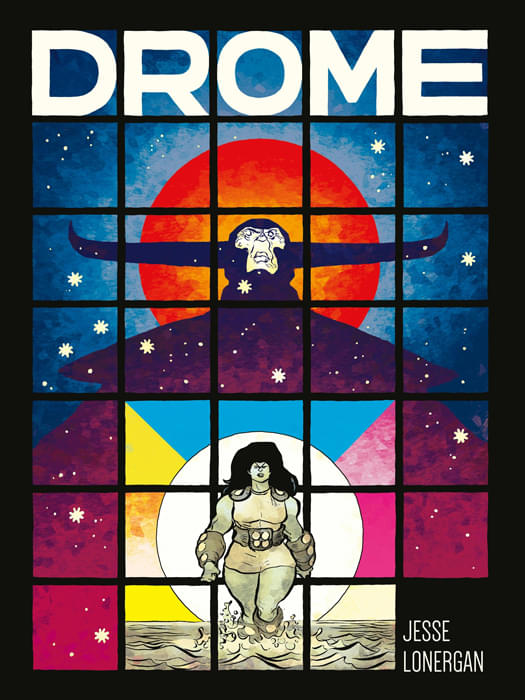
Drome
From the publisher
Jesse Lonergan rewrites the rules of graphic novels with Drome, a visually mind-blowing epic about war, love, and death in a fledgling world.
First, there was nothing. Then, humanity was born, and an endless cycle of violence began. From the depths of the ocean, a mighty demigoddess is called forth to rein in humankind’s destructive impulses, and teach a language of peace and harmony. Civilization quickly takes root, a great city rising from the desert. But the balance between chaos and order is a fragile one, and there are higher powers at work in this strange new world.
Creator Jesse Lonergan pushes the boundaries of the comics medium in this visually spectacular epic. In turns pulse-pounding and heart-wrenching, Drome is a creation myth for the modern age.
Follow Comic Book Yeti
🔗 Comic Book Yeti LinkTree: https://linktr.ee/ComicBookYeti
For partnership and ad inquiries, please contact: thecomicsyeti@gmailcom
Follow your hosts
🔗 Jimmy Gaspero: https://bsky.app/profile/jimmygaspero.bsky.social
🔗 Byron O’Neal: https://bsky.app/profile/byrononeal.com
PATREON
We have a new Patreon, CryptidCreatorCornerpod. If you like what we do, please consider supporting us. We got two simple tiers, $1 and $3. Want to know more, you know what to do.
ARKENFORGE
Play TTRPG games? Make sure to check out our partner Arkenforge. Use the discount code YETI5 to get $5 off your order.
Make sure to check out our sponsor 2000AD.

[00:00:00] Your ears do not deceive you. You have just entered the Cryptid Creator Corner brought to you by your friends at Comic Book Yeti. So without further ado, let's get on to the interview. Do you love sci-fi? Are you a horror fan? Maybe you prefer action or fantasy?
[00:00:18] 2000AD has it all and should be on your radar. With a whole universe of characters from Judge Dredd, Astronium Dog to Rogue Trooper, Shakara Halo Jones and many more, every weekly issue you get five action packed thrills from incredible creators such as Garth Ennis, Rob Williams, Alex DeCampi, Dan Abnett and so many others. Get a print subscription and it'll arrive to your door every week. And your first issue is free or subscribe digitally.
[00:00:45] Get free back issues and download DRM free copies of every issue for just $9 a month. That's 128 pages of incredible comics every month for less than $10. That's like a whole graphic novels worth. All subscribers get amazing offers like discount vouchers and exclusive product offers. Head to 2000AD.com and click on subscribe now or download the 2000AD app and why wait, start reading today. I'll put links in the show notes for you.
[00:01:12] Hello everybody and welcome to today's episode of the Cryptic Creator Corner. I'm Byron O'Neill, your host for our Comics Creator Chat. Today I'm delighted to welcome returning guest Jesse Lonergan on the show with me. Last time Jesse was on we were chatting about his Boom Studios project, Man's Best, with co-creator Porn Sack Bichette showed, which is my first introduction to his work. And I was an immediate fan. In fact, I have a signed copy of his book, Miss Truesdale and the Fall of Hyperborea on the wall behind me.
[00:01:40] Right? Yeah. Over the Doctor Strange skateboard. Yeah. Well, he's back on to chat about his most recent project, Drome, a big old hardcover project dropping in the middle of August with First Second, which I will say for the record is one of my three 10 out of 10 books, no notes that I've read this year. And is chiseled in stone to be one of my picks for our end of the year award show. Yes, I actually do believe it's that good. Jesse, now that I've properly buttered you up, it's nice to see you again.
[00:02:11] Yeah, nice to see you as well. Thanks. I'm glad you enjoyed the book. Yeah, I absolutely did. And it prompted some really interesting mental excursions for me. I'll share a personal story here before we get into the book. So after reading the review copy the other night and doing some research for the interview aspects of it actually showed up in my dreams, which was wild. I was on this Earthlake planet as a part of the rebellion fighting tyrannical somebody or other probably for obvious reasons.
[00:02:40] Rhaeggar from the Transformers with Weird Al's voice. Yes, for anybody who's curious, was our fearless leader. And our squad leader was ex-Liverpool Captain Jordan Henderson. These aspects have nothing to do with the book.
[00:02:53] Okay, but they are pretty cool. The squad was tasked with infiltrating an important mountainside base by hopping a bunch of trains. Okay, this is a dream. I can't explain all this stuff. There were no guns in the world. And the battles were fought mentally, or by using these tech weapons that were based on sacred geometry, which is where the book ties in.
[00:03:13] So the only one I can really remember was this landmine of sorts that when you step on it at the trap center, a bunch of lasers rise up from all the points of a Metatron cube, and they fly around slicing everything to meat salad in a very satisfyingly geometric way. So I thought you might enjoy my digesting of the book and how it invaded my dream. Yeah, it's a pretty geometric book. It is.
[00:03:43] But I sort of feel like with Hydra, which came out in 2020 from Image, that I sort of figured out my idiosyncrasies and how to put them on a page so that they would be appreciated by other people. And this sort of order-obsessed, these rules of grids and things.
[00:04:11] And drum sort of a visual continuation of that narratively in a different direction, pushing that sort of, I don't know, I think of it as like the music of the spheres sort of thing, where it's like there's all these mathematical gears in motion sort of throughout the book. Yeah, absolutely.
[00:04:36] To tell the truth, I'm a little bit hesitant to try to encapsulate what it's all about, because I don't think I'll do it justice. And it's not because it's challenging to follow, but there's so many layers to it. So, yeah, I kind of think of like when I'm, that makes me actually feel good.
[00:04:57] Like, I think of, well, I kind of think like as of stories as sort of being this very like delicate thing, like, and ideas are these, these, these delicate things like clouds almost. And, but you, you have to turn them into something that can be held onto. But like, you want to keep it still functioning as like a cloud. And so it's like, like, like, where can you put the handles?
[00:05:27] And I feel sort of like if you, if you do it too clumsily, like you, you lose the cloud as like just a box.
[00:05:36] Um, and so like very, like sort of delicately trying to hold all these pieces together so that it is clear and it is, can be followed, but it still has this sort of like dreamlike quality where it can sort of spread in your mind, where it has that openness without being vague or without being unclear without being. Maybe there's elements of mystery, but like in the core aspect, there's not much mystery.
[00:06:05] And so like with, with Drome, I was trying to have that quality there to like keep it from ever feeling like I was sort of crushing the idea and kind of letting the idea breathe, um, with the story and sort of getting into. And sort of with that sort of having a story that like, you know, is very mythologically based, very sort of fairy tale based.
[00:06:30] And so in a lot of ways, maybe it's familiar, but then twisted a bit so that it's familiar, but unfamiliar. Like maybe like there's, you have some expectations, but it won't meet them in the way that you expect them to be met or it will shift in another way. I don't know. Kind of like on an eel or something kind of like hard to hold onto and like kind of slithering, uh, around.
[00:06:56] Um, and yeah, that was sort of what, one of my, like, one of the things that I like with stories is, is like kind of like things not being held that tightly. Um, and I find like for me personally, creatively, if I, if I really write things out, if I really plan things out, it ends up very boring and it ends up very like, like it, it doesn't have good ideas. Yeah.
[00:07:26] In it. And if I leave things a little bit more loose, I might come up with something that I'm a little more uncomfortable with, or I'm like, I don't know if what is saying, what this is saying. Like, I feel like there's like a critic in your head and that critic is fine about like, okay, well, what will people think of this? What will blah, blah, blah, blah, blah. But it doesn't lead to good ideas worrying about what other people will think.
[00:07:55] And so I kind of like, so I don't have a creative process that turns that critic off until way later in the process. And I'm like looking at like, you know, a sequence of finished pages and, and then be like, okay, where is this line? But normally I find, I like, I like that sort of kind of abstract, but not really quality to stories. Yeah. Yeah.
[00:08:23] You're, you're slithering cloud work because of my dream. Oh yeah. Oh, that's good.
[00:08:56] Yeah. Uh, it, it started a lot of places. I don't know. It's hard to tell where it began. Like, um, I first started working on it, um, in June of 2020. Um, and, and it was the project I worked like on in the background of lots of projects. I think four other books, uh, where I did the art for while I was working on this. Um, I did.
[00:09:26] Yeah. Uh, ghost of science cast, uh, ARCA, uh, miss Truesdale and man's best. All of those were completed while I was also working on this in the background. And, and I think the idea is like, I like, I like these big mythological stories. I like fairy tales. I like folklore and, um, I like the, the quality they have.
[00:09:54] And I also like that sort of epic weight, uh, of, of like a, a big lawn book. And so I knew like this was going to be a longer book in 300 pages. Um, and so I wanted, I was interested in taking sort of narrative ideas and visual ideas and really like pushing them sort of as far as I, as I could, um, with, with this sort of
[00:10:22] big, big heavy book. Uh, and, and then sort of, yeah, I feel like there's always, uh, there's the story, which is these, you know, celestial beings and these demigods and battling sort of chaos and order, um, in this primordial world is sort of the main narrative.
[00:10:45] But then there's also, I think a meta narrative, like of, of the creative process of, of like, I think sort of like with, it's hard to hold like all ideas, but like, I think there is like this simplicity that at the beginning and like this sort of form that's very basic
[00:11:12] at the beginning that sort of like gets more and more complicated and sort of builds on itself as it goes, which I sort of feel is like how, how created it works as like, like if you're learning a musical instrument, you learn like a note, uh, or like a guitar, you learn a chord and then maybe you learn another chord and now you have two chords and that's enough for, you know, a very basic song.
[00:11:36] You get to three, you've got every Ramon song like, um, and sort of like, but then you sort of like, I think creatively you want to build on those things and add to those things. And sort of, I wanted the story to work in that sense as well as it like builds on things. And there were, there are elements in it where I was like, I'm not sure if I know how to do
[00:12:04] that when I started it, I was like, I don't know how to do, I'm going to do that yet. Like, I don't, I don't have the skills to do that yet. There's a, there's a character that's a prominent in like the third chapter who's really not defined by lines. Like there's no, he, he has a, there's a, there's a few like markings that I, that I inked, but otherwise it's all color. And that is defining the character and the shape of the character, this fire based form.
[00:12:32] And I was like, I don't know if I can do that. When I started, I was like, I don't think I can do that yet. But I think when I get there, I'll be able to do that. And then, you know, the, and later elements, there's like going beyond sort of this realm of existence. And it's like, I don't know how I'm going to do that yet. But I think when I get there, I'll, I'll know how to do it and how, how to push that thing.
[00:12:58] And sort of like trying to, to keep it at like the limit of my ability, like, you know, like never really like easing back. Um, and I think that comes, that desire at least partially comes from like reading graphic novels and this sort of frustration I would have with myself and how I would read them of, I would look at the art maybe for the first 50 pages or maybe for the 60 pages.
[00:13:28] Um, but then I would sort of disappear and I would stop paying attention, attention to it. All right, everybody. We're going to take a quick break. We'll be right back. Y'all, Jimmy, the chaos goblin strikes again. I should have known better than to mention I was working on my DC universe meets Ravenloft hybrid D and D campaign on social media. My bad. He goes and tags a bunch of comics creators we know. And now I have to get it in gear and whip this campaign into shape so we could start playing.
[00:13:58] Another friend chimes in. Are you going to make maps? It's fair to say it's been a while since I put something together. So I guess question mark. It was then that I discovered Arkinforge. If you don't know who Arkinforge is, they have everything you need to make your TTRPG more fun and immersive, allowing you to build, play, and export animated maps, including in-person fog of war capability that lets your players interact with maps as the adventure unfolds while you, the DM, get the full picture.
[00:14:28] Now I'm set to easily build high res animated maps, saving myself precious time and significantly adding nuance to our campaign. That's a win every day in my book. Check them out at Arkinforge.com and use the discount code Yeti5 to get $5 off. I'll drop a link in the show notes for you. And big thanks to Arkinforge for partnering with our show. I think I'm going to make Jimmy play a goblin warlock just to get even. Welcome back.
[00:14:55] The way you sort of exemplified that artist's journey that you were talking about, for me, were these infinity stone. I don't know how to describe them a different way, but you had time control and language and they bleed into each other. It takes time to exert control of your craft. Then you get a singular emergent personal voice. And then that becomes your language and your way of expressing that to the world that other people can understand.
[00:15:24] They understand your language and can communicate with it. Right. So was your intent to mirror the artistic journey in this or just take a different path with the monomyth, I guess? I think it was a little bit mirroring the artistic journey.
[00:15:45] And then also my take on the monomyth, the core elements of how narratives work, how stories work. But I remember creatively when I first started drawing comics, putting in a time cut was very hard for me.
[00:16:11] It was like all my first comics, I feel, were basically real-time comics. You need a gatefold cover and put them out on the wall? No, but just like, well, this happens and this happens and this happens and this happens and this happens and this happens. No jumps in time. It's like a really, really old movie where it's like, oh, you got to show the fire truck driving to the driving.
[00:16:43] I feel like movies are probably where you can see it the most. You watch an old movie and it's so slow because they're showing everything. And now it's like, oh, no, cut, cut, cut, cut, cut. And it's like we're shortening up that time and you don't need to see a person driving. They can just like, doorbell rings. They got there. You can cut that time.
[00:17:11] And sort of like, narratively, that was like sort of something I had to learn. Like, because everything would just be like, well, he gets in the car, he drives to the place, he opens the door. You know, all of that stuff. And sort of like building on that and sort of seeking of comets as a language that has to be sort of learned.
[00:17:37] Like, I feel like, sadly, in the U.S., I feel very few people read comics. Like, you know, a comic that sells 300,000 copies is like, whoa, that's huge. And it's like 300,000? Like, that is not huge. In any other media, like, you know, that's pretty tiny. But if you hand a comic to people who don't read comics, they don't even know what to do with it.
[00:18:07] They're like, I don't know how to read this. It's its own language. And sort of, I feel sometimes with my comics, because I feel sometimes I'm a little bit, like, comics obsessive. And, like, I think of it like inside baseball, like inside comics. Like, this, like, yeah, if you don't read comics, you really don't know how to read this. But I think you could follow it.
[00:18:34] Like, I think you could start, because it is its own language. And it starts sort of, like, building off, like, my weird idiosyncrasies of how things work. And then they start, like, informing. I think, I like to think that there's a bit of a back and forth between me and the reader, you know, at quite a distance. Since, you know, you're looking at something I drew three years ago, potentially.
[00:19:01] But, like, where it's, like, I'm setting up, like, a logical argument in the panel layoff. And that logical argument continues through. And I think with things, like, people talk about bead lines. Like, the way I'll use a motion line, but it also breaks the panel and becomes part of the panel and stuff. And it's something I don't think about anymore. Like, it's like, oh, yeah, yeah, I do that. Like, how does that work?
[00:19:31] It's like, oh, I don't know. How does the word work? You know, like, it's at once movement. It's at once a break. Like, it's both at the same time. And, like, I feel sometimes, like, it's my weird obsessions coming out. Because it does, it starts getting kind of mathematical.
[00:19:58] Like, it starts creating these rules and how can these rules work. Like, if you're, if you use a motion line and you break through a panel, okay, you have to have clear gutters. Like, you cannot have a splash bleed page because all of a sudden that's going to mess everything up. And it's sort of like setting up all these rules of how it can work that I will obsess about.
[00:20:24] And I will, like, get out compasses and be like, okay, if I break it here, but it's here, I don't know if anyone else will do that. You know, sometimes I feel like with the creative journey is, and in terms of finding your own voice, it's like, well, what are you willing to do that you find compelling enough to do that no one else will do?
[00:20:47] And I think the way I obsess about layouts and stuff, I don't think other people would do that. Like, I was on a panel and people were talking about, oh, I just do like one layout, two layouts. And it's like, oh, I'll draw every iteration I think possible.
[00:21:07] Like, you know, like if it's, you know, if I'm working within a grid of, like, Drome is on a grid that's seven tiers, five rows. And, you know, five columns. So it's like 35 panels, potentially every page. But it's like, if I'm going to draw a six panel page, I've probably diagrammed every possibility to have six panels within that layout.
[00:21:37] Because I think it matters. And I find it, I find it interesting. And there's like, oh, six. It's like, well, it can just be five little ones on the bottom and then a big one on top. Or it could be five little ones on top and then a big one. Or it could be like three in the middle. Like, you know, like all of these iterations you can do and how that will affect the reading.
[00:22:02] And sort of if the hierarchies that can be created within that just on panel size or panel placement. Like, well, if I do two little ones in the corner, that can read as like a period. Like on like, that's the denouement of this page. And I think that's like, that's something that I think other people can do. I just don't know if they're that interested in doing it.
[00:22:31] And like, I find it interesting, like to think about how many combinations can there be? What does, how does the combination affect the page? And sort of, yeah, leaning into that with Jerome a lot. And I think maybe even more so because while I was working on it, I was also working with writers on other books. Right.
[00:22:57] Like, it's the, when the way they think about the amount of information and what kind of information goes on page is very different from with Jerome. How I'm thinking about what information and how it goes on the page. And so the blending, like, like I think sometimes like I would be working on something that's like, okay, I have to do it this way.
[00:23:22] So the drone would push further into my weirdness because I was just doing it for myself. I didn't know if it would get published. It was just my thing. So, yeah. Yeah. Yeah. I mean, it is very much, I guess this is the two different journeys that you're taking us on in the book and probably why it resonates so much for me as somebody who very much thinks artistically and loves panel layouts.
[00:23:50] I obsess over stupid things like that. And it's just in my nature, I guess. But the last time you were on with PornSat, you were talking about Man's Best and talking about how the visual freedom, he's like, yeah, I just, Jesse does this cool stuff. I just let Jesse do what Jesse does, you know? Yeah. But even in that, it's not the same as being able to just enwrap yourself in a personal project like that, you know?
[00:24:19] And you have all these different sacred geometry forms that are at play. You have the shell and the vesica Pisces. You're playing with five platonic solids. You have the golden spiral. Yeah. Did you start with a list of these things you're wanting to throw into a wedge into a book or like, how does this work? I didn't start with a list. Although, I do write lists.
[00:24:43] That's another part of the idea is because it's like writing, I think, lists of things that I think are interesting or be good to include. But I think it was sort of... I think working with like a collaborator, like working with PornSec, it shouldn't be the same. You know, like it should be different. Yeah. Because it's a collaboration.
[00:25:10] And so, like, he's bringing, you know, his elements and in some regards, it's like, oh, you can chill out. You don't need to worry about the story. That's like he's going to take the lead on the sequencing and the overarching sort of thing. And your job is to like sort of focus and push these elements. And it's, that's what it should be.
[00:25:36] It's sort of like when like a band you like, if like a person does like a solo thing and it sounds exactly like the band. It's like, well, what's the point of... Right. It should be different because you're not playing with the same people. And so, like, yeah, like getting this sort of like geometric obsession. The platonic solids, I got really obsessed with on Hydra and sort of trying to...
[00:26:05] I guess it's sort of like a lot of maybe occult or paranormal stuff with like the platonic solids. I like the idea that it could work. That these structures are the shape of our universe.
[00:26:28] Because it's so mathematically beautiful that there are these five structures that are mathematically perfect in their way. And one of them is air. One of them is water. One of them, you know, like I love that idea. I don't, it's not true. It doesn't work, but it is so beautiful. And sort of like, I like a lot of those sort of alchemy sort of ideas because it sounds...
[00:26:57] It's so beautiful. It feels like it should be true. But it's like, yeah, but within my fiction, it gets to be true. And it's kind of like, like within the paranormal stuff, I guess it's sort of things like you want Xenar cards to work. You would like those tests to know that someone can do that.
[00:27:21] But then it's like, well, actually there's cues or they can see reflections in glasses and like all these sorts of things. But I think that's sort of with a lot of... There's a wonder with that sort of thing. Especially like when you're like, I don't know what kids are like now. Because I grew up in, for the most part, rural Vermont, you know, in the 80s and 90s.
[00:27:48] And I feel like the 80s and 90s are so different from today. But also once you get like rural Vermont, it's like, it's a lot more like a normal painting. Like sometimes it feels like I grew up more in the 70s or 60s. Just because you didn't have... Where I grew up, like Blockbuster? No, didn't have a Blockbuster. MTB, I got like mid-high school.
[00:28:16] You know, so like, you know, it was like there were free stations growing up. But so in that isolation, you would hear about an idea. And your brain might think, oh, maybe that's possible. Maybe that can be real. And there's sort of that wonder about those things. And I think with Drome, I try to have that like maybe...
[00:28:44] What, like, allow that like possibility and that wonder to sort of exist within the story. That like, yeah, platonic solids, you explain the universe. But also like, what is this person's power? Like, how... I think one of the cool things about... I'm just going all over. Unbreakable. No, you're good. Is you don't know how strong Bruce Willis' character is.
[00:29:12] Like, they show him lifting weights. They never get to how much weight he can lift. He gets this opportunity to play football against some big strong guy. You don't see it. And so you're not even really sure what his powers are. Like, he's unbreakable. It's like, can he... Maybe there are some specific things. But it's like, it's left sort of like the upper end is unknown.
[00:29:36] And I feel like with a kid, like the idea of Superman is this idea of like, well, how fast can he get? Like, that it isn't known. And I find it being known, it being canonical is boring. I'm like, no, that's not fun. And so I like leaving those possibilities open where you know that there is power, but you don't know how much.
[00:30:01] You know, like, you know there is a possibility, but you don't know where it ends. And sort of like, yeah, looking to have that sort of wonder present in the story as well. Huh. Well, to kind of unpack the two main characters here, we have form and spirit, which are kind of the puppet masters of humanity's fate. Right.
[00:30:27] They function as a yin and a yang, a black and a white, a male and a female. We're dealing with polar opposites. And they are also fallible, which is very, very common in most creation myths. You don't see it so much in the Judeo-Christian one. But what was appealing to you about using duality as the nucleus of your amorphous expanding and contracting cloud? Yeah.
[00:30:50] Um, I think, I think to some extent there, there was this, this idea. I mean, there, there is a history of duality and, you know, there is yin and yang and Taoism and all these beliefs, which I felt, you know, were things that I could sort of draw upon. But also I, I like the idea of the characters being based on ink.
[00:31:18] Like, so it's like, it's like black and paper, like, you know, and, and so it's, it's like the present and the not present and the negative space and demarcation lines. And then characters that are sort of filling in CMY, like that there is the, there is like a blue character. That's a red character.
[00:31:43] There's, there's a yellow, and these are these sort of core demigods that are primary colors and, and sort of having these sort of within these limited elements building out from it. And it's, it doesn't work perfectly.
[00:32:01] I didn't like if, I don't think I have like the, the discipline or fortitude to go through and tell a story where only those colors are present until a new color is introduced.
[00:32:15] Like, but yeah, like using those sorts of ideas as sort of the grounding or the structure for the world of like, you have these, these big powers that are, you know, the negative space and the lines. And then there are like these minor powers that are the colors and, and form.
[00:32:37] And then as it, as it goes along, you know, sort of breaks apart at some points where it's, it's all color or, and sort of pushing those ideas within sort of the median that it exists.
[00:32:54] And, um, uh, I thought was an, an interesting way of sort of approaching, like we talked about the platonic solids, like these sort of core elements and within comics, like those are core elements of these like four ink colors and paper.
[00:33:13] Um, and, and, and, and yeah, just using that as my, my guide, um, in some way, which, which I, it's a little bit like, I think I'm the only one who cares that like, no, I care. Like there are these platonic solids. And, and so there's, there's definitely a water character. There's definitely an earth character. There's definitely a fire character. There's not an air character.
[00:33:39] Um, maybe I'll be in the sequel where the, the air character makes the, or wind makes themselves known. Um, but that it, that, that character is sort of missing from the overall story, but I felt it's okay. Um, it's, it's, I feel like, uh, it's good to have rules. It's good to break them too.
[00:34:04] Like, or, uh, to not, not for yourself into them to the point where it's like, you're just, where you're not thinking anymore. I definitely got some of that air element from spirit is form is, is, is the bull, you know, very classically masculine across ancient cultures, Greece, Mesopotamia, you know, Minoan.
[00:34:28] Um, the female spirit though, she's got a, a Grace Jones sort of way to it, like storm. Sort of, yeah. Oh, hot thing gone. Yeah. I can see wind there. Yeah. Yeah. It, it, it can, it can work. Uh, it can be made to work. It's not explicit though. Yeah. The, yeah. Trying to, with the black and, and white spirit informed characters, like trying to have them be.
[00:34:59] The representative in profile, like, like that you, that they, they work in silhouette was sort of like the, a key idea. None of the other characters really work as much that way. And sort of because they're the most basic, like at a glance, you can recognize them and see them and know who they are within the world. Uh, and so that was sort of a part of the reason for this big Mohawk, um, is that it's very distinct and visible. Yeah.
[00:35:26] The, the thing that I really locked on was that, that CMYK, uh, crucible, which is the way I, I kind of envisioned it, uh, that it is a Simon game for, for people of my vintage. They will, they will understand the Simon game with the four memory buttons. You don't know about Simon. Oh, wait, the, we have to press the, you have to remember the pattern. Okay. I didn't realize it was called a Simon game. Um, uh, is that what it's called? The Simon game. Okay.
[00:35:55] Uh, yeah, that was, that was Simon. Okay. Um, yeah. Okay. I remember that now. I didn't have it though. Um, okay. Okay. So we're going to say that's circumstantial. And that's just, just my brain injecting that into the DNA of the story. Yeah. Yeah. There's, but there's, I feel, yeah, I, I think of it there, there's definitely like a game aspect. Um, I, I feel to, to the story and to, to the way it works.
[00:36:24] Um, puzzles maybe, uh, would be better than games. Well, those puzzle pieces, uh, digging into, to your, your personal, you know, visual DNA here. I saw the Instagram posts with some of your influences ranging from, you know, Scud, the disposable assassin, uh, tank girl and MC Escher. So, so how would you describe your, your visual DNA? It's made up out of all these little pieces. Yeah.
[00:36:52] I don't, I feel like I, I kind of try and take from everything or I just end up taking from everything. Like there, there were the comics that sort of like got me into comics, um, which would be like in the nineties, the image stuff, but then also things like the tank girl, which in, in the U S I came out to sort of three dark horse, that first dark horse mini series,
[00:37:19] uh, Scud, um, which was Rob Schrab, um, just, you know, you're like weird, you know? Um, but these like big, bold lines and, and definitely like in comparison to everything else, it like, uh, uh, not caring that much about like what was expected of how things can work and what this universe is.
[00:37:48] It's like, Oh, where he was going to go. You know, it felt like whatever Rob Schrab thought was cool was what it was going to do. And it wasn't going to be like, I think this is cool and I'm going to change it so that it can work within the context of my world. It's like, no, this, I think this is cool. And this is the context of my world. Like, um, yeah. And I just feel like there's a lot of things I draw on, like, you know, but the influences
[00:38:18] get very muddied quick. Like I, I love Chris Ware, especially like the, you know, the more early nineties stuff of his, which I felt had more of a sense of play than Jimmy Corrigan. And after the, the, it's still great. It's still, you know, this, these impressive achievements, but there's, there's this sort of sense of fun that I don't find anymore.
[00:38:45] Like, like where he, I'm, he portrays himself as, as quite a miserable person. I don't know how true that is. Um, but it, it feels like that's become more of the tone as he's gone on while his earlier stuff had plenty of like sadness and pain in it, but also had sort of like jokes and play
[00:39:09] and things where it felt like he was letting the art sort of lead wherever it would go. Um, so that, that was pretty, very influential. Mobius, um, big influence in terms of, I feel like I was very late in developing my like drawing ability.
[00:39:32] Like I was always making comics, but I almost feel like I had an anti ill view. Uh, very like that, that, that the comics, like the language of comics is the art. And if you're drawing like Jim Lee, that drawing draws too much attention to itself and you're not paying attention to real art, which is comics. And it's, it's distracting.
[00:40:02] This was my attitude. Maybe when I was like 23, 24. Um, okay. Like where, like that, this idea about like how the, the art should work is that it should almost become invisible and like, you know, you should just be in the story, in this feeling, in this, you know, reading where the art doesn't matter, which I think can be a valid idea.
[00:40:30] And I think maybe, maybe some artists work towards that, but I, I, I think it misses a lot. Um, and Mobius was sort of like the one to sort of like break me out of that of like, no, you can really let those drawings draw attention to themselves. You just need to let it work within the story. And like, like to, you're going to spend so much time drawing for people not to realize that you're drawing.
[00:40:59] Like it, it's okay. Yeah. It's okay to let people know you can draw like, and it's okay to like be flashy every now and then, and Mobius was sort of the one that like cracked that for me. Like, I don't know why, why it takes so long to get something sometimes. Like, I feel like there's things with music where like, people are like, this band's great. You listen to me, I don't get it.
[00:41:26] Like, I don't, I don't, I don't understand what people are hearing in this band. This band is not great. And like, there are things for me that maybe they'll never crack. Like the band, people talk about the band as this wonderful musical group. And it's like, I don't get it. Like these are long, boring songs. Like I don't hear what other people are hearing. Led Zeppelin also didn't get it. I was like, I don't get it. This is really dumb. Like, and now I get it. I'm like, oh, okay. I get it now.
[00:41:56] Like this is, this is a, don't pay that much attention to the lyrics because it's not about those lyrics. It's about when this is a band that can really play and they are like putting out some fireworks on every level. Like, like every, every member is launching fireworks at some point in an album or something and sort of like, okay, I can appreciate that. Like, and I, I, I like Led Zeppelin now, but it, it wasn't immediate.
[00:42:24] And I don't know why, why it takes some man has too many punk rock records and Led Zeppelin was like, you know, guitar leads, like who cares? Like I, I just want a loud distorted guitar. Um, but you know, it takes time to hear it and sort of like, so like Mobius sort of cracked that like artist thing where it's like, oh, like, like, like, like Jim Lee, like, yeah. Okay.
[00:42:51] Like, yeah, these, these like pullouts, like they're, they're pretty cool. Uh, I guess I, I still, you know, not, not a big fan of necessarily the stories of Wildcats. Um, I didn't think, but like appreciating that level and then sort of like feeling like my skills on that front were very underdeveloped, like that. I just couldn't draw things that well. Like I could draw very functional comics, but I couldn't draw things that well and sort
[00:43:21] of pushing myself to build, build those skills, which I, I feel is still going on. Um, still, still something I'm working on, um, is building skills. Cause I feel, I always feel I'm behind. Um, I think, uh, there's, I didn't go to art school. I didn't, didn't spend those hours, you know, like there's, you know, the people and everyone's like, oh, art school is not all it's cracked up to be.
[00:43:51] Um, but it's just like being self-taught and feeling like there is a better way to do this than I'm doing it. I don't know what it is because I didn't study. Um, uh, I always feel like I'm behind in sort of my ability to draw in terms of like the skills. Um, but like Mobius was the one. We saw about recognize the rules so you can break them. Yeah. That's art school. Yeah. Yeah.
[00:44:21] Yeah. And so, yeah, no, I mean, and it goes that, that, that, that feeling on my part goes back and forth because I feel like what I do now, you know, I'm old, but it's pretty, you're not that old. Well, but like, I think, but you know, I, I wasn't, I didn't have a commerce career in my twenties. I didn't have a commerce career in my thirties.
[00:44:51] I had a commerce career in my forties. Like that, that, that sense of, of being old of like, there are people who have careers in the twenties and thirties. Um, but on the other hand, I feel like I do have sort of a very personal view and a sort of idiosyncratic view that is distinct from if someone who maybe who worked within the
[00:45:16] industry for 15, 20 years where it's like, Oh, I, I kind of have like a little bit of a bonzie all thumbs approach, but it works. Like, like, you know, that's a, at least how I, I think of the way I draw. It's sort of like, I don't know, using a hammer to do what a screw should do. Uh, but, uh, but it, it's, it's lived in at least.
[00:45:46] Um, yeah, it makes a lot of sense to me. I mean, I, I am a constant tinkerer of my own work and it's the beauty of working in photography. And now that we have digital, I mean, even back when it wasn't in the dark room, you know, you, you're going to reinterpret, um, um, a negative even in the dark room in different ways. And, and depending on how you're the chemical composition or how long it's this or how long it's that, you know, you're going to get different results.
[00:46:11] And I think tinkering with your work to me is kind of the hallmark of a true artist. And I mean, maybe that's a bold statement, but it just, I think there are, there are artists who keep, there are the artists who sort of seem to stagnate. Um, and this is like, you know, across the board, I feel it, but you can also sort of see it with comic book artists where it's like, it seems like they hit their thing and they sort of stop and they don't really progress much.
[00:46:41] Um, but then there are people who, who seem like they're, they're always moving. Um, and I, I think my Mignola would be like probably the, the best example of that where like, I think he's in his sixties now and it feels like he's still growing and he's still like honing in on himself, you know, like this, this perfection of form where, you know,
[00:47:08] you look at, you know, uh, bowling with corches that came out this year. And to me, it's like artistically distinct from Hellboy and hell, which is 10, 15 years ago now, which is artistically distinct from like nineties hell, but like, which is in the Hellboy is distinct from like what he did at Marvel. Like there's this, this steady growth. And I, I feel there are other artists where you don't necessarily see that where it's
[00:47:36] like, well, it, it either looks the same, it just, it hasn't really changed that much or it starts to decline where like, it seems like they don't have the patience to do what they did before, maybe because they've done it too many times and haven't added in the elements. Um, and, uh, yeah.
[00:48:00] So I feel like there's always personally like boredom and, and repetition of the same thing just doesn't interest me. And I think maybe because how works wasn't a job for so long and I was, you know, at a day job, it's like, well, this is what I'm doing for fun. And, and I'm not just going to do the same thing and be bored.
[00:48:27] Like I'll, I'll, it'll change and I'll move in a different direction. And the sort of freedom of not having deadlines for, for all those years and not having, I feel like even now the way I, I work on drone was different from the way a lot of people work on books because I was like, I'm just going to draw it myself.
[00:48:50] And when it's done, I'll send it to a publisher, uh, which I feel, I guess to me, sort of, sometimes I feel this weird sort of attitude from people of like, well, I'm putting together a pitch. And if I get a deal, I'll make the book or, you know, if the Kickstarter is actually needs on my book, I don't understand that attitude because I'm going to make the book first.
[00:49:20] And if I can get a deal, if I could get a Kickstarter, great, but I'm going to make the book. Like, like, and I feel that's like maybe coming out of like mini comics, maybe just like, you know, I don't know, being in a band, it's like, I'm not going to like, I'll record the song. If you pay me, it's like, what? No, I got a four track. Like, well, we'll do it. You know, like I, that, that attitude just has a, there's a disconnect for me.
[00:49:49] And I understand like, you know, you know, I worked on drone for four years and that's a long, that's a long time. That's a long time. With no, no promise that it is going to come from it. But what? Like, like it's what I enjoy doing. Like it's, yeah, it's the most, you know, it's where my interest is and it's what I like doing.
[00:50:18] So I'm going to do it and, and it'd be great if someone pays me. It's great that people, they need to do this stuff, but, um, I like doing it. It's fascinating to hear you talk about it in that way, because one of the major thematic things from the book for me was free will. And it's, it's always that struggle with, with being an artist, commercial work, personal work. I made a really, really strong line and delineated those two things.
[00:50:48] This is, this is commercial work. I will shoot it. I don't care after you've bought it, if you wipe your ass with it. And I really, right. And then there's my personal work and that's me. That is absolutely sacred. And that is something I had to decide for myself at the very beginning of my career so that I could stay sane. Yeah. But I think that, that it's interesting to hear you talk about the drive, you know, I'm just going to make it.
[00:51:15] I'm just going to make it because when free will is a big component of the book. Those two things don't exactly marry. It's a weird marriage. I mean, it's, it is weird. I like, like it is, it is a weird thing. And like, I don't know, like free will is a hard one.
[00:51:35] Uh, but I, I feel, and, and I think the, the creative process is also a challenge. Like what, like, like I, I'm, I'm at this point where like, I'm asked what the next thing is and, and there's a good, there's a good chance. The next thing will get published.
[00:52:04] And what, like what I do will get published somewhere. And like, is, is the next thing that I create, should it be published? Like, like, like, because there are, there are things, ideas that I have that I'm like, I just need to, it doesn't count if it's just in my head. So it needs to be put down on paper. That doesn't mean it's for anybody else.
[00:52:29] Like, like, like it, it doesn't, it doesn't necessarily need to be published. I like it. It's like, and, but, but like there, there's like this hard pull in that, like it could be published. Like, like, will it damage my oeuvre if I publish this, this bad comic that doesn't have a point that that's point is creative process and not the resulting comic.
[00:52:59] And I don't know, it's this, this back and forth tug and pull between like, I just want to draw this right now, you know, like that's free will just draw whatever you want. And while you, you have a three-year-old like, you know, and like, you know, like there, there's, there's the taking a job, you know, like, Oh, like they'll, they'll pay me this much to draw a 10 page story in some anthology or whatever.
[00:53:28] Um, you know, and, or like something like that. But then there's even, even on a, on a personal level, I might just want to like work on my watercolor skills, but it's like, Hey, that's not gonna, there's no, there's no long-term like immediacy with that as opposed to working on the next real book, whatever that may be. And I don't know.
[00:53:52] And then there's, there's fighting your own idiosyncrasies and demons about how you work and how you think, which I find I'm constantly at odds with myself of like, I always want to do too many things. Like I, and like how to cut back on those things because you can't do them all, how
[00:54:17] to choose which of those things is, is the thing to progress with, you know, that it's, and are you doing that out of judging the actual quality? Is there some part of your personality that's ugly? That's coming into play of like, for me, like the contrarian in me, like, Oh, you like drum. You're not getting that again.
[00:54:46] You know, like, Oh, drum too. Would be successful. Maybe who knows? We don't know what, if drum will be successful, but like, you know, like there's, there's part of me, I know that's part of my personality, like of like, Oh, you want me to say this? I can tell that you are setting me up to say this. I am not going to say that. Like whatever it is, like, you know, um, and I, and that's not a great part of my personality.
[00:55:15] You know, like that's a prickly part of my personality and how much of that is guiding my decision-making on what I work on tomorrow morning. Uh, so it's, I don't know. It's like when you, um, feel your parents in you. Um, like, yeah, like my, my dad, like, I feel a response, a response to something come out of my mouth and it's my dad.
[00:55:45] 100%. It's just this like immediate sort of like the kids don't know what they're talking about sort of thing. Like, you know, like, and I can feel my parents in me and like, you know, it can even be like in like a facial expression. Sometimes you're like, Oh, that's my dad. That's my mom. Like, yeah. How much control do you have? Like what, what are, I don't know. Yeah. Yeah.
[00:56:14] It's all, it's all, it's all a mess. Um, I'm, I'm really enjoying this therapy session. Um, it's yours is young. Mine is 17. And I got a text a little while ago that said, I'm about to do something very you dad. And I was like, no, no, whatever it is. I don't care what it is. Don't don't. I am a, a very impulsive human being and you're not, you can't be me. Don't do it. You know, but yes, that is very terrifying when they get old enough, when you see yourself in them. Yeah.
[00:56:44] Uh, because my son has always been very much like my wife. You know, he's, although he's taller than her, he's the mini me. Um, so it's a, it's a very weird dynamic as he gets older to see the parts of myself that I have struggled with and no, you can't protect them from it. And they've just got to kind of fuck it up and figure it out. See what happens. Find their, find their way. Um, yeah, she's young.
[00:57:14] Yeah. We'll see. You got time. I got time. I got tired to become a better person. Um, more, more of a role model. No, we're, we're at the point with, with her. Whereas like, I think you'd have to start explaining what dad's job is and that most people do not have this job. Like he's like, I'm going to work. And she's like drawing with crayons. Yeah.
[00:57:40] Uh, that for, for most people, dad's job is really weird and also kind of a spoiled brat job. Uh, that he, he sits in a room and draws all day. Most people go to work. Well, despite working with and or being an artist for three decades now myself, when my son was like, I don't want to go in the artistic field at all. I want to go into biomedical engineering. I was very secretly clapping. Oh yeah.
[00:58:08] Because you can't make any money as an artist. There's, there's, uh, well, I'd like to think there's a security and biomedical engineering and those jobs and, and art. It's, I feel very lucky, um, uh, right now with art, um, but it's no guarantee and no promises. Um, right. Yeah.
[00:58:35] And also sometimes I'll always just wonder like what, what percentage of people appreciate it, you know, like, like what is, is the, the actual interest in something and comics especially, uh, brings that up where, you know, it's, it's such a, you know, I think in other
[00:58:59] places, Japan and maybe even Europe too, it's, it's a bigger media than it is here. But here I feel that the people who read comics is pretty small. Um, people are impressed if you tell them you do it. Um, but I don't know. I feel like, I feel like he could, uh, 90% of the population maybe has never read a college.
[00:59:27] I feel like younger generation is getting higher probably just with the rise of like this plastic books and those. Um, but I feel like my generation and older, like very possible 90%. And while they're like 90% of the population, not having seen a movie, um, is, is crazy. Like everybody's seen a movie. Well, it's weird with modern comics because you have these divergent streams that are dominating
[00:59:56] the direct market because you have people who will buy them because they've always bought them and then they will store them and they will slab them, which seems absolutely corrupt to me. Um, you know, I don't, I don't need anything encased in carbonite. Like the whole thing is I got into comics because my older cousin was like, Hey, this is Spider-Man. Yeah. Seems like you'd really dig this. Here you go.
[01:00:24] And it created a lifelong journey and love of the media, you know? Um, and I'm, I'm not dissing people who buy 50. Well, maybe I am dissing people who buy 50 variants, but you know, because it's probably up the market in, in a, in a, in to, to my mind, a bad way. Um, because they're not really appreciating the art and, and the expression that has gone into this. Well, there's collecting, I think is something different.
[01:00:53] Like, um, and, and I, I, I have it within me and it's a, it's a fight. Like I, I, I will not buy a record player because I, I cannot start buying records because I know how I am because like, if I used to love the clash, they're still great, but they're not like one of the bands I listened to all the time anymore.
[01:01:23] But if I bought a record player, I would definitely need to have the first class album and London calling. And at that point it's like, well, how do you not have give them enough wrote? And then it's like, well, you should probably also have Sandinista and combat rock. And I know myself cut the crap as well, which is not even good.
[01:01:47] Like it's, it's, it's maybe has some good songs, but like, and I just know that I have that like completest thing and it wouldn't be enough to have the white album. It would like, I would have to like, start filling that in and then it would continue to like, you know, the pixies. And then I'd be like, oh, you don't have a silver apples record. Like you gotta get like, you know, and like, I just know how I am.
[01:02:15] And I also know that it's not about the music at that point. Like, you know, like, like owning Sandinista on Vital wouldn't for me would never be about the music. It's about some weird other thing going on in my brain, whether it's good or bad. I don't know it, it's satisfies some happiness because I, I, but I, I think I know how I am
[01:02:44] and it's just like, I can't do it. And so like there, you know, people who slab their comics, that's not about reading them. Yeah, that's fine. You know, and it's like, oh, you gotta, you straight it up and you went from a, a seven five to an eight Oh, like, okay, that's, that's cool. You know, like that's, that makes you happy. I, I, I fiddle with pens. I will spend money on pens. It will spend money on, on these sorts of things.
[01:03:13] Uh, that is just not one of the things that I'll, that I'll do. Um, so yeah, it's, it's a, yeah, that, but the collectors dominate and then, then, so there's that whole market, but then there's like, I feel like sometimes are, it seems so disconnected like, like people, web tunes and online comics like that. I'm huge followings.
[01:03:43] I don't, they don't seem to know anything about this direct market scene at all. The direct market scene doesn't seem to know anything about them. There's this huge YA market that doesn't seem to know anything about those other two. There's the manga market, which is dominant, which doesn't seem to know anything about this. Like, it is just sort of like all, why, why are they so separate? Because I'm sure you can find people who will say, I read manga.
[01:04:12] I will not read it. I don't know. I don't know. Uh, and I'm sure there's, there's people who only read YA books, not, not just young, I think are adults who only reads or YA books. And then, you know, and why there is, there isn't this overlap. Um, I always find sort of weird. And it's also sort of weird to me that like Marvel and DC somehow missed, missed out on manga.
[01:04:43] Like there must've been an opportunity for them to be a manga publisher in the United States to do what this does. And they were like, right. No, like, but like, like, like those companies had to have come to them as like, who are the big publishers of comics in the United States? Marvel and DC and Marvel and DC at some point must've been like, nah, it doesn't work. Like, and then, and then this just came out or like over time built it up.
[01:05:12] But now it's just the powerhouse where like, you know, I would say if we're actually talking about the real big two, it's going to be scholastic. And it is, I think in terms of a book sales, um, it's washing Marvel and DC. Um, yeah, their marketing stuff is really strange. Cause I look at like Kodansha is my go-to example of this, where they're now a sponsor of Liverpool, which is the team I happen to follow in the premier league.
[01:05:41] But every weekend on the dashers, you get Kodansha ads. Oh really? You have to, it's like, why are Marvel and DC, at least for the movie even using that? Because those, you know, all these threads connect, you know, all these different streams. If you can figure out a way to hold them in your hand and then make a ball and tighten it together, you're, that's money. And that's presumably what corporate capitalism wants to do. Yeah. Yeah. Yeah.
[01:06:11] Yeah. It's, it's, it's a strange industry. Um, it is not really, really sure how it works. I feel like I should be more informed about it, but it seems beyond me. So I just, I just focus on just making comics. Um, well, well let's, let's help you sell some drone here. Okay. So, so, so, so, so dear listener by drum. Yeah.
[01:06:35] If you, if I, it's, it's right up there with Junie Baugh's, uh, boy wonder and Jeff Lemire's minor arcana is my favorite book 2025. Okay. I absolutely love it. I would continue to sing his praises for the bold and inventive storytelling. Uh, as you know, I, I really do believe this.
[01:07:05] This very much merits an award. And I tend to be right about my award projections. Okay. Anybody doubt me just look at boom's jellyfish was nobody had heard of last year. And I talked to boom about it. I sung the praises all year and now it is up for an Eisner nod coming up next week. Yeah. Next week. It's yeah. Yeah. Drone. It comes out August 19th, um, from 23rd street, uh, which is first seconds, um, more adult imprint
[01:07:33] that they're, that they're launching, uh, this year with, um, drone, uh, a bunch of other books I should have researched. All popes. THB is getting collected by them. Um, if, if you've ever tried to buy back issues of THB, uh, then you are fighting a collector's market, but, um, yeah, that's coming out through them as well. So it's coming out, uh, August 19th. The I'll be at shows this year too.
[01:08:01] I'll be at a small press expo, uh, in the FESDA. I'll be at New York comic con. Um, I'll be in France and St. Mallow at a comic book, uh, expo. Nice. And, uh, very cool. Yeah. Yeah. I did, um, angle on this year. It was a lot of fun. Um, and also be at mice, uh, Massachusetts independent comic expo, uh, in December. Okay. Um, up in Boston. Nice. I haven't even heard of that one.
[01:08:31] So, uh, it's, it's small. I was actually like, um, it was sort of founded by a lot of the, I lived in Boston for a long time. Uh, and it was founded by a lot of people I was friends with. I was actually at like the first one, which was like a super indie basement show. And now, now it's grown pretty big. I think, um, like Raina Telgemeier and Scott McLeod are guests this year. I think, um, I'm one of the guests as well this year. Very cool. So it's like a bigger, biggish indie show.
[01:09:00] It's not as big as SPX or TCA. Um, but freaking good size. Nice. Well, where can people find you online and try to keep up to date with all this stuff? Um, probably Instagram is the most consistent. Um, I'm at jesse.lonergan. Um, there, uh, there's also my website, which connects to everything, which is just www.jesselonergan.com.
[01:09:27] Uh, blue sky is jesselonergan. Blue sky. There's this too long. They got to make it simpler, but it's, it's just honor. Right now, I think I'm maybe the most famous jesselonergan for a long time. I wasn't, there was a, an Australian rules football player, um, who is be above me, but I think, I think he's retired. So I think, uh, I'm moving up the ranks of jesselonergan.
[01:09:55] Um, and basically everything's through my name. I'm not the, the era of having a clever handle. Uh, I, I sort of missed out on and it's just, that's jesselonergan everywhere. Um, smart. Yeah. Blue sky, you can anchor to your website. It is their version of verifying. I've done it. Okay. Okay. Maybe I should, maybe I should do that as well. Um, yeah, it sure. It shortens the, it just go on so long.
[01:10:24] Um, uh, yep. Yeah. But it's jesselonergan. Well, I'll put, I'll put, I'll put links to the show notes to make it easy for everybody to, to find that. And I always wrap up my interviews with a shout out now. So he's 2025, you know, let's, let's wrap things up on a positive note. It's new since you were last on, but it can be something that inspired you recently or someone doing something nice for you. And I'll give you a minute to think about it and go first. I got distracted the other night watching YouTube videos about drivers in the Andes.
[01:10:52] And I like to think of myself as this pretty steady off-road driver. We live in Colorado and used to love getting on these sketchy mountain roads for fun on my days off when I was working in a theater. I've done the whole black bear pass thing out of Telluride, which that's like a thousand foot drop on one. It's one track. It's rough, but nothing will clinch the butthole faster than watching these bus drivers in Peru.
[01:11:19] And it was a reminder both of the good times I had in Colorado and that we should be grateful that our commutes don't involve hanging off the side of the cliff every day in a very suspect bus. Okay. What do you got? I think in terms of like media, I've found, or Instagram found for me, the Avant-Guardi dance troupe, who I think they were on American Idol.
[01:11:48] I think they're, but they're, they all, it's this group of, I'm pretty sure Japanese people, they all dress exactly the same, wearing like these long dresses and white shirts and they all have the same hair, just doing these like very synchronized dances. And I, that I find it, I, I find just an enjoyment of watching like very synchronized dancing. And that's great.
[01:12:14] Um, I also just got back, uh, I went to Cape May in New Jersey and was at the beach. Um, and I was on like this there Monday through Thursday on this sort of empty beach and just like, I don't know, just being on the beach and just relaxing and no phone, no anything for, for as long stretches was sort of life affirming for me.
[01:12:40] Um, and so that like, I feel I get very stuck in sort of like these tight little loops, uh, of my routines and getting, getting a chance to break out of that. Um, and also feeling how easy it is to break out of it. Like it's not really that hard. Um, that was, that was pretty life affirming to me. That's awesome. Yeah. Everybody needs a good little short vacation every now and again. Especially for people.
[01:13:09] Especially, yeah, I was just a mess with comics folks. Too much down alone in wings. Um, all right. Well, Jesse, thanks for coming back on and chatting with me today. It's been a lot of fun. Yeah, it's been great. Thanks for having me. Absolutely. Well, this is Byron O'Neill and on behalf of all of us at Comic Book Yeti, thanks for tuning in and we will see you next time. Take care, everybody. This is Byron O'Neill, one of your hosts of the Cryptid Creator Corner brought to you by Comic Book Yeti. We hope you've enjoyed this episode of our podcast.
[01:13:37] Please rate, review, subscribe, all that good stuff. It lets us know how we're doing and more importantly, how we can improve. Thanks for listening.