
What do you get when you cross a beloved British baking competition show and an Agatha Christie-like mystery? The Great British Bump-Off! John Allison joins Jimmy to talk about the 4 issue series he wrote with artist Max Sarin. John talks about the development of the series, being a fan of The Great British Bake Off, and why after writing the series he doesn't think he can watch the show anymore. Jimmy and John discuss the things they do to replenish the well of creativity and John chats about his early exposure to US sitcoms. This all leads to talk about John and Max's follow-up The Great British Bump-Off: Kill or Be Quilt, out April 9th from Dark Horse Comics. The title was something John had on hand for some time until he realized it could be the perfect sequel for the further adventures of Shauna Wickle. Listen as Jimmy learns from John how the quilting and comic industry are fairly similar, including quilting conventions!
Follow John on Bluesky: https://bsky.app/profile/badmachinery.com
Check out Scary Go Round Comics: https://scarygoround.com/index.html
Check out Bad Machinery: https://badmachinery.com/
Buy The Great British Bump-Off: https://bookshop.org/p/books/the-great-british-bump-off-john-allison/bwvZbCCVN1aeiTx1
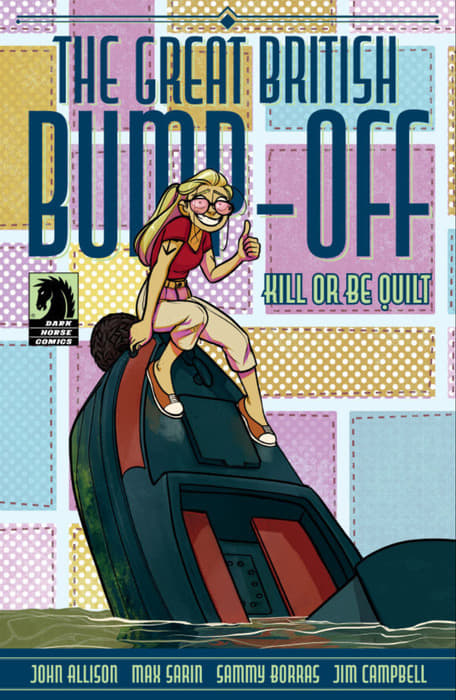
The Great British Bump-Off: Kill or Be Quilt
From the Publisher
A new cozy mystery from Giant Days’ John Allison and Max Sarin following up to their hit baking murder mystery The Great British Bump-Off.
Surely there is no vacation more drama-free than a boating holiday along the sleepy canals of Yorkshire? Oh, you’d think so. Sadly, for Shauna Wickle, it’s tough to escape poisonous small-town rivalries (and sultry romantic entanglements) when travelling at a steady two to three miles per hour. And to make things worse, she’s about to find out how ruinously expensive a hastily-tied knot can be...
Cryptid Creator Corner website
PATREON
We have a new Patreon, CryptidCreatorCornerpod. If you like what we do, please consider supporting us. We got two simple tiers, $1 and $3. Want to know more, you know what to do.
ARKENFORGE
Play TTRPG games? Make sure to check out our partner Arkenforge. Use the discount code YETI5 to get $5 off your order.
THE LANTERN CATALOG
Created on the premise of creating light in the dark, this is the the go to resource to keep you up to date on the indy projects and the creators you love. You can find them at https://www.thelanterncatalog.com/.
Make sure to check out our sponsor 2000AD.
[00:00:00] Your ears do not deceive you. You have just entered the Cryptid Creator Corner brought to you by your friends at Comic Book Yeti. So without further ado, let's get on to the interview.
[00:00:30] Show notes and thank you for your continued support. Thanks for your donation.
[00:01:02] Dan Abnett and so many others. Get a print subscription and it'll arrive to your door every week. And your first issue is free or subscribe digitally. Get free back issues and download DRM-free copies of every issue for just $9 a month. That's 128 pages of incredible comics every month for less than $10. That's like a whole graphic novels worth. All subscribers get amazing offers like discount vouchers and exclusive product offers.
[00:01:29] Head to 2000AD.com and click on subscribe now or download the 2000AD app and why wait? Start reading today. I'll put links in the show notes for you. Hello and welcome to Comic Book Yeti's Cryptid Creator Corner. I am one of your hosts, Jimmy Gasparro, and I am very excited to talk to today's guest. He is an artist and writer.
[00:01:51] You might recall when you hear his name that he is the writer behind the multiple Eisner award-winning Giant Days. Recently through Dark Horse Comics, him and Max Saron had the Great British Bump Off. They are back with the Great British Bump Off Kill or Be Quilt, which I believe is coming out April 9th.
[00:02:11] And I love the Great British Bump Off. I am a huge fan of baking shows in general, but I think I've seen almost every season that's available in the U.S. of the Great British Baking Show, as we call it here. And loved, loved, loved the Great British Bump Off. Excited they're back for another one. So please, welcome to the podcast, John Allison. John, how are you doing today? I'm very well, thank you, Jimmy. Thank you for having me on.
[00:02:38] Yeah, I'm glad you were able to do this. I, like I said, a huge fan of the Great British Bump Off. I thought initially that it really, it felt like you had to be a fan of that show or did a ton of research to kind of get the model of it right.
[00:02:58] I mean, it's a bit of a take on it and the personalities, I think, are, you know, a tad heightened for the world that you and Max Saron have created. But it felt like you really knew like the dynamics of what makes that show work. Oh, yeah, definitely. I'd watched every episode up until the point when I was working on that series and I've never watched it since. And I can't watch it anymore. So that was all. It completely burned me out on it.
[00:03:26] No, I'd watched it for years and years and years. And then I sat down to watch the new season. I was just like, I can't do this anymore. I can't. This is it. That was the end. That was that was the kiss off was writing a four issue series about it was like no more now. That's it. Enough. What do you think it was that kind of did it like ruin your enjoyment of it? Or did you feel like you had gotten too much inside it to view it as a fan?
[00:03:49] I think so. Yeah, I mean, I think that's it. I just I pulled it apart. You know, it's like if you know how something works and I really analyzed it. It's like, right, well, there's no magic anymore. You know, you shouldn't. What is it? Don't throw daylight upon magic. You know? Yeah. Yeah, I think it's like that. I'd thrown daylight upon magic. And it was like I had watched about 15 seasons of it. So let's let's face it. I'd had my my my money's worth out of the Great British Bake Off or baking show as it is in America.
[00:04:19] So I think it was time to move on. It was time to turn the channel, watch something different, not another however many hours. It is 12 hours of of baking competition. It's like, no, that's it now, John, you've you've done this. There's there's no more to be had. Yeah, I mean, it is funny how, you know, America has it. You know, with the Food Network, there's a ton of different food competition shows that have been on for for a number of years.
[00:04:49] I mean, I remember as a as a kid finding late night like Iron Chef competitions, which I was like a huge fan of. And I've watched plenty of food competition shows on Food Network. There is something about the Great British Bake Off that I I really do, you know, love the different personalities that they have on the show.
[00:05:11] And and it's it's funny when you really get into it and like sitting there as a fan watching it getting it's, you know, to take a step back. It feels a bit silly, but like, oh, I'm I'm like legitimately excited that somebody just got a handshake by Paul Hollywood. Well, there's something built into if you like baked into the show that is unusual in that the cast shrinks as the weeks go on. But the length of the show, apart from I think maybe the first week's a bit longer, the length of the show remains the same.
[00:05:39] So if you've sort of proved yourself as a personality on the show, you get a bigger and bigger showcase for your personality. And also people have been watching week in week out. So the people who are on the first week, there's always a few who when they bring everybody back for the big sort of finale and everyone claps when they hand out the little glass plate. Who's what? You see loads of people like, oh, yeah, they were in this show, weren't they? They're like somebody who was killed in a movie in the first minute. And you're like, oh, and then at the end that they are clapping.
[00:06:07] Oh, yeah, that that guy got blown up pretty quick, didn't he? But here he is, you know, so like the ones who seize the main chance, it's very carefully edited and produced so that the characters are kind of given their time to shine. And it's almost a meritocracy of personality as well as baking, if you like. But people who have a quite a bad personality in that show seem to get shown up quite quickly. And ejected.
[00:06:32] I mean, there haven't been many real baddens on the Great British Bake Off, but there's been one or two over the years and they almost seem to get their comeuppance almost through a trick of editing as much as anything else. I think it's a very cleverly put together program. Yeah, I know. I absolutely agree. And reading the Great British Bump Off, it it does. I was surprised that, you know, because the show itself has been on for a while. I was surprised that nobody had kind of done it before.
[00:07:01] And the way I thought... Me too, yeah, me too. Because I thought, I looked, I typed the name, the Great British Bump Off in, and there might have been something, like maybe someone had done a bit of dinner theater with it. I think maybe using that title, which I found out after I'd written the whole series was, was when I found this. You know, we look things up to make sure we're not breaking a trademark, for example. But I hadn't gone deep into the Google rankings to find, you know, into the world of dinner theater. And no disrespect to the people who made that. I'm sure it was very good.
[00:07:30] But, yeah, it did seem like an idea that was hanging there. But also, I can tell you from writing, it was incredibly complicated to try and wrangle that into something that was sort of digestible, where you were superimposing. You know, because the format is a thing that will fill an hour of television for 12 weeks. And then you've got to superimpose a whole other structure on top of that, and then fit it into 88 pages of a comic. I mean, it was a real kind of caught into a pint pot situation.
[00:08:00] One of the hardest writing jobs I've ever given myself, because it was my idea in the first place. Right. And, yeah, because, like, you know, to your point, they have all of those episodes. And even though the cast does get winnowed down one every week, they have a lot of time on TV to kind of showcase everyone.
[00:08:20] You know, in your first issue, you have 22 pages to kind of introduce your cast, set up your premise, and give the reader, like, a reason to kind of care. And that's... Oh, God, yeah, no, it was awful. That's so tough. Because I always think that, or just in writing, I always thought that if you weren't sort of hobbled by plot, 22 pages is a bit like 22 minutes of a TV show.
[00:08:49] 44, two issues, is like a drama show, you know, where you've got room to showcase character and plot. And this should have been like a sitcom, but I had to get the plot in as well. And partly I could lean on the structure of the TV show. That kind of took a little bit of the weight. But I was still trying to... I had to introduce so many characters. Like, you wouldn't have a sitcom that had whatever... I think it was 16 central characters in that book.
[00:09:17] Yeah, I mean, like, the Friends format of, like, six main characters is usually as big as it gets. Exactly. So it was... I tried it lots of different ways. Like, that had been in Gestation for a while. And I tried it and almost given up on it. You know, it had a shorter version where it leaned a little bit less on the format. And then... But I knew it had to happen in one... In effectively one episode as well. So you can't... It's not the end of the competition when there's four people left.
[00:09:45] Because then you've got to summarize what happened on the previous... You know, all the previous episodes, which I... Actually, maybe that would have been a better idea. Now I think about it. Oh, yeah. I could have just come in on, like, week 10. Yeah, that would have been really easy. Oh, thanks. Right, I'll go back and redo it now. Because I've got to have loads more space. Just, you know, really deep character work. Why didn't I think of that? Oh, gosh.
[00:10:12] Well, I thoroughly enjoyed what it was that is on the page. That might have allowed you... That idea might have allowed you some more space. I think it would have given me a lot of leeway. This is a real... Come to Jesus moment. Oh, my gosh. Oh, no. I blame my editors for not suggesting that. It's all their fault. I'm not taking the blame. Yeah, no. Don't take the blame.
[00:10:40] You had enough wrangling 16 characters, you know? I was very busy with those guys. Right. And Max, you know, did designing and coming up with their looks. Like, how did that work in terms of... Did Max have any, like, experience with the show? Like, a fan like you? Or are you, like... Well... You know, how much were you involved in the look of everybody? Because that's, you know... Everybody does kind of look... Bake Off has a pretty diverse cast, you know? Yeah, exactly. Yeah. So, Max did live in the UK.
[00:11:10] Max lives in Finland, but had lived in the UK for a bit when they were studying in Wales at university. But I don't think they'd seen Great British Bake Off. They were only tangentially sort of aware of it. But obviously, there are loads of videos on YouTube that you can watch. There was loads to go. And I built the tent as a 3D model in SketchUp. So, I gave Max the tent to work with. So, the set was kind of handed over. That's how good I am to work with, by the way. I hope that other artists are thinking,
[00:11:40] Oh, God, I wish I could work with John because he builds the 3D sets for you. He does all the work for you on the background. But yeah, so I'd done a rough version. As I write, I draw like thumbnails, really. I kind of write on the balloon. It just helps me write because I am a cartoonist first and foremost. Most of my writing, I draw myself. So, it's very hard for me to flip into a kind of,
[00:12:08] I'm Stephen Bochico typing on his typewriter mode, which is how I picture all writers, just typing and typing away. So, I'd kind of make a bad version of the comic with all the panels laid out. And I say to Max, you don't have to use any of this. And the characters all had a basic shape because they have to be consistent from panel to panel. So, I wrote the first two letters of their names on their apron. And then they had a, you know, how someone looks kind of reflects their personality. You know, you can't help it.
[00:12:35] So, I had an idea of what most of the characters were roughly. And I said, again, just take these sort of shapes and whatever those shapes are, you know, make what you want of them, of these sort of slightly abstract, very quick. They're cartoony. You can see expressions and movement and things, but they're not nailed down. Like Sunil. It's so long ago that I wrote this, I'm starting to forget the names of the characters. I think Sunil was the name of the kind of, the guy who helps out Shauna a lot.
[00:13:05] Shauna, yeah. Yeah. Yeah. And he has like a very sort of, sort of nerd hawk hair, the kind of pushed up bin of hair. And with a little kind of mullety bit at the back. And the drawing did sort of reflect that. And I just drew a big rectangle for his glasses with two dots for eyes in the middle, which I was quite pleased with. Quite a fun little graphic representation of him. And then if you look at Max's version, it kind of takes those very, you know, almost
[00:13:33] Dilbert-esque shapes and makes it into something amazing and really sort of visual and where you really, really know the character. So yeah, that's kind of how it works with designs. They all had a, they had a sort of floating, almost iconographic shape. And then Max turns it into someone that's a real person. Yeah. I mean, I love like all the characters, all their looks are fantastic. Um, I'm curious, just like with the show, when you're watching it and somebody you meet week one, you know, might not do anything for you, but turns out to be somebody you're
[00:14:03] rooting for when you're creating these characters. And then, you know, you're doing your, you're drawing your version of them. Max is then doing like, you know, what they will look like in the comic. Did you find that as you, as you wrote them and discovered who they were going to be, that you, your, your feelings about any of the characters like changed? Does that ever affect you? Or do you have more of a clinical approach when you're creating a story? Oh no, the more time I spend with the characters, the more I like them. That's been true on everything that I've ever done.
[00:14:33] I, I, you know, you, you spend time with them and you, you come to understand their flaws. Hopefully that is human existence. We learn to, by, by association with the other, we learn to see them as a person, you know, and it's kind of like that with characters. So there's a character who's the sort of, I can't, again, I'm struggling with the names of the old, the old lady character, the other one of Shauna's friends. Like she was a very abstract shape at the start, but I started to see her and I realized that I thought she was like Ruth Gordon. Have you ever, there's an episode of Columbo.
[00:15:02] I think it's a, it's a sort of a watering with, with Maud from Harold and Maud. And I don't know if you're familiar with the film, Harold and Maud. It's sort of seventies. Yeah, I am. Movie. Movie. Well, Ruth Gordon, the old lady in that was, she's very sort of fusty in Harold and Maud. You know, the color, the palettes are all muted. In the episode of Columbo, she wears like great seventies kind of tracksuit and she's a, she's a writer and Columbo loves her. He thinks she's brilliant. You know, at the end of it, he's really unhappy that he's got to put her away for doing the murder.
[00:15:31] So I watched this episode really early in the process of writing. I was like, this Ruth Gordon look, this is what we want. You know, this is, nobody's copied this. People don't, it's quite, it's sort of a late seventies episode and it's famous, but you know, these are shows that have been on in reruns for years. People don't re-notice them anymore. They're like wallpaper. I was like, no, this is something really strong. So, and then once I got that kind of Ruth Gordon feel for her, I was like, yeah, now I know who she is.
[00:15:58] She's a lot more, she became realer to me and her part grew in the writing. I was trying to share my screen to bring up, try and catch me. Yeah. That's it. So she's a writer. She's like a mystery writer. With Ruth Gordon? Yeah. So you see, initially she's sort of like in a kind of Agatha Christie mode, but then when they meet out on the pier, she's like in these incredible outfits. It's like, she's a brilliant actress. She's, I mean, she won an Oscar, didn't she, for Harold and Ward. She's, she's in, she's ace. I love her. There she is. Her look is so good.
[00:16:27] That coat and the headscarf and stuff. She's fantastic. And they play for her because it's two massive heavyweight actors on this kind of light show. But they've obviously got a lot of respect for each other and it just comes across so well. So that kind of energy, I'm always trying to find, I say, I've been right. I've written thousands of pages of comics and drawn thousands of pages of comics. I'm always trying to find the energy between characters. And you've got to find it anew sometimes because you, you know, some of your moves, people know your moves after 25 years, you've got to keep looking for new moves and you often
[00:16:56] find them. I remember reading a comedian saying that when I couldn't think of anything for like a sketch show, they'd come up with like random ideas. We'll just watch some videos of like the Yugoslavian parliament because you'd see someone there who didn't look like anyone you knew doing something that you couldn't even imagine. He didn't really even know what he was saying. Obviously it would be in Serbo Croat what he was saying, but there'd be the seed of an idea there because he'd have like a wild looking suit on or something like that.
[00:17:23] There'd be some kind of agitation and you'd be able to draw some kind of new dynamic that didn't come from within yourself. So anywhere, ideas are everywhere really. And if I stumble across them, I make sure old films are great just for behaviors, attitudes and interrelations that you don't see in contemporary programs. Like people also, people talk so fast in old movies that, you know, there's just loads of material there anyway. They're throwing it away. The scripts were like telephone books. Yeah.
[00:17:54] Speaking of Columbo that I had always, you know, I'd been aware of Columbo from when it was on, but I'd maybe seen some of it. But a few years ago, I started to get back into it. And I mean, they don't, I feel like they don't make TV shows like that anymore. That Columbo is so long. They, they, they, every episode begins with, you know, what happened. Columbo doesn't show up for like the first 25 minutes. Yeah, exactly. Yeah. Yeah. You have to wait. They don't do things like that anymore.
[00:18:23] And they're such good stories. And I was just eating it up and like all the different like actors that were in it, that there, it is true. Like when you go to something like that, or even like you said, like the, the, the idea of like, you know, uh, old Yugoslavian parliament, like there's just going to something that's not like you do all the time. You never know where an idea is going to, to come from. And that's kind of like the, I mean, that's like the really fun part of being, you know, creative.
[00:18:51] Like what's going to inspire you? What strange thing is going to spark that idea? Yeah. Well, everything's a decision when you're in, you know, when you're writing, everything's a decision. And when you're writing and drawing, everything's a decision. And it's so many decisions. You have to make constant choices. You know, like if you, if you write, draw and color, I've got to decide what color every wall is in every place that the characters go to. I have to think about why a room would be blue.
[00:19:19] You know, if you, if you're thinking literally, what color would this person have wood paneling in their house? You have to make every single decision. So you've got to feed that all the time. It can be quite exhausting sometimes because it's like, well, got to stay interested, got to stay interested in everything. It keeps your, it's your mind lively, but it's also quite tiring. All right, everybody. We're going to take a quick break. We'll be right back. Let's face it. The comics landscape is a mess right now. I'm the editor in chief of a comics journalism outlet, and I can't even keep track of it all.
[00:19:47] If you are as passionate as I am about indie comics and its creators, you should check out the Lantern Guide. Created on the premise of creating light in the dark, it's going to be the go-to resource to keep you up to date on the projects and the creators that you love. Don't take my word for it. I reached out to my friend, Brian Lovell, Poison Ivy artist and indie comics creator to get his take. Brian, what does the Lantern Project fix? I'm a dude who loves indie comics, and I know personally, like, I get very frustrated
[00:20:15] when something shows up in my social media timeline or something like that, and I feel like I can't keep track of everything. So really, the Lantern Project was born out of that. It was an opportunity for me as a reader to kind of like have a place to want to consolidate all the stuff that I wanted to read. All the cool projects from cool creators that seemed interesting and kind of unique to like something that I would like, which is really not super represented everywhere else, but it's all over the indies.
[00:20:44] Having a spot to go to that felt like it consolidated a lot of those audiences and a lot of those places where I couldn't just get drowned out in the feed of social media seemed really valuable to me. What's the ultimate goal? It's really our hope with this project that creators feel like they're able to get in front of readers, and readers are able to get books that they actually want to read with a much easier time of keeping track of them. And accessing them.
[00:21:11] The catalog is scheduled for a quarterly release, so head over to thelanterncatalog.com to sign up now so you don't miss your next favorite thing. I'll put a link in the show notes for you. Y'all, Jimmy, the Chaos Goblin strikes again. I should have known better than to mention I was working on my DC Universe meets Ravenloft hybrid D&D campaign on social media. My bad. He goes and tags a bunch of comics creators we know, and now I have to get it in gear
[00:21:39] and whip this campaign into shape so we can start playing. Another friend chimes in, are you going to make maps? It's fair to say it's been a while since I put something together, so I guess? Question mark? It was then that I discovered Arkenforge. If you don't know who Arkenforge is, they have everything you need to make your TTRP. PG more fun and immersive. Allowing you to build, play, and export animated maps, including in-person Fog of War capability
[00:22:05] that lets your players interact with maps as the adventure unfolds while you, the DM, get the full picture. Now I'm set to easily build high-res animated maps, saving myself precious time and significantly adding nuance to our campaign. That's a win every day in my book. Check them out at Arkenforge.com and use the discount code YETI5 to get $5 off. I'll drop a link in the show notes for you. And big thanks to Arkenforge for partnering with our show.
[00:22:32] I think I'm going to make Jimmy play a goblin warlock just to get even. Welcome back. So what else do you turn to other than, you know, old, old films? Is there anything else that is like you use to replenish that well? Well, obviously I just try and get out in the world as much as possible. You've just got to have your eyes open all the time. You've got to be constantly watching because there's always something. You know, like I'm interested in everything that can feed back into the work. I'm interested in interior design.
[00:23:02] I'm interested in things that are ugly as well. Like a lot of people just sort of turn their nose up at things that are kind of, you know, they look at sort of like concrete buildings from the 1970s, kind of public buildings that don't look particularly nice. But you're like, yeah, that's something. It exists in space in such a way that you can't ignore it. And that's useful. Everything's useful. You know, I've got books of sort of architectural primers that show you how like the edges of roofs go together. I can remember sitting down and going,
[00:23:30] I noticed the difference between how American houses were built and British houses were built. It's only because I've spent so much time looking at roof lines because I walk around the street. You know, I can't believe that so many people, you see them walking down the street now, kind of commuting, looking at their phone, kind of watching Netflix while they're walking because obviously you can on a 5G connection. I'm like, my God, guys, there's an awful lot of world to look at still. I can't be, I can't be watching, I can't be watching Netflix. I've just got to stare at roofs and kind of architraves and balustrades and things.
[00:24:00] There's a lot to take in. Yeah, that's awesome. I love that. I love that. I mean, I love that approach. I love that, you know, to think of, you know, there's a lot of world to look at. I love that idea. Every person tells a story. Like one of my favorite things, I would go and meet a friend and I'd go and meet him at one of the big stations in London when I lived near London. I would go and wait for him at kind of a terminus. He'd come in from like the counties and I'd come in from an opposite direction.
[00:24:27] And I'd just sit opposite where the subway feeds out into the station. And there's a constant stream of people. I'd sit on the benches. It was a great place to sit. I'd get loads of writing done while I was waiting for him. But you could sit and watch people arriving constantly. You'd see hundreds of faces in the course of 20 minutes. And every person told a story. And it was so rich. It was fantastic. It was, you know, I say, when you need kind of things to feed what you're making,
[00:24:56] you learn that there's so many sources of them. It's great. Yeah, I could think about that. And the idea of seeing somebody out in the world and kind of imagining what their story is, I always thought is like a fun kind of, I don't know, sitting at dinner and waiting for your food kind of game to play, you know? Oh, yeah. Again, I'm very conscious of that. I can sit and look at my phone. I can sit while I wait for someone
[00:25:25] and fill every second with kind of trivial entertainment. But at the same time, I feel like I got so much out of boredom in the past. I don't know how many ideas I had before I had a dishwasher just washing the dishes. I had a pad stuck by the window, which was waterproof, that someone gave me as a present so I could write ideas down. Because when my hands were wet and I couldn't do anything else, all I could do was stare out the window and wash the dishes, all sorts of kind of ideas would be resolved.
[00:25:55] Like my subconscious brain would suddenly click into action. So I try to set my phone aside because I know it's a bit of a, it's almost like a kind of a blockage in the system of inspiration really. So I try to stay true to how things were when I was younger, when I didn't have the option open to. Yeah. Yeah. Oh, I love that. Well, then kind of turning into the next thing after Great British Bump Off, which is coming out in April, Kill or Be Quilt,
[00:26:24] what made this, like, I guess the world of quilting or crafting, I mean, was that just a natural segue? Or why are you taking your protagonist, the great Shauna Wickle, into that direction? Well, I have a list of names of stories that don't really have any substance to them. So often it'll just be a good title. And I work backwards from the title because a lot of them don't work, obviously.
[00:26:54] I have one called The Green Fork. And I think it's been written on the, it's about, it's meant to be about a restaurant critic. And I do not know how, what this could ever be. But, you know, perhaps in, you know, 2031, with no other ideas, I'll finally have to do The Green Fork. But I don't know who The Green Fork is, what their issue is, but it's up there on the board. And so Kill or Be Quilt, which had two names, prior to being called Kill or Be Quilt, it was called Patch of the Day
[00:27:22] because the soccer highlights show that's on like your main TV channels and has been since, you know, the 60s, it's called Match of the Day. But that wasn't a very good international title. So, there are various people are now claiming that they led me towards Kill or Be Quilt. But I can't remember who it was exactly anymore. And I refuse not to take credit for it. My goodness, you know, I've spent enough time thinking about it. It's mine now. So, so this was like, this was just a title and then
[00:27:52] you kind of worked backwards into, oh, I could use Shauna from Great British Bump Off for this Kill or Be Quilt. Yeah, because it could, it could have gone either way. But I mean, it was a neat, it was a neat follow up because it was still kind of arts and crafts based. So it was a, it was a good follow up because, um, Dark Horse, initially Daniel at Dark Horse said, do you want to do another Great British Bump Off? You know, in the baking competition, I was like, no, no, I don't. No, there is no more mileage in this.
[00:28:21] I have no more cake joke. I don't just want to do the next week because eventually this would run to either 12 volumes of one season of a TV show. I'd still be working on the same season of a TV show at the rate these things come out in like 2037. I thought, that doesn't sound like a good recipe for sanity. But I did know a lot about quilting. My ex's mother owned a quilting shop and we were together for a decade. So, you know, I knew all about it and it's not that different
[00:28:50] an industry from comic. The, the, the sort of, the way the, your local comic shop is, is what your local quilting shop is, except it tends to be kind of middle-aged ladies. But everything else is the same, except instead of like your, you know, your Wednesday warrior releases, you've just got a wall of bolts of cloth, what are called fat quarters. But they cost them, you know, roughly the same as a single issue of, of, you know, the Batman who laughs or whatever. It's pretty much,
[00:29:20] it's pretty much the same deal. You know, the hot new, hot new cloth is in, the new designs, the new patterns are in for this month. And it would be funny, is there, is there also like struggles between the, you know, the, I guess, the direct market versus the indie market? Oh, that's a very interesting question. And I would imagine all the same. I mean, obviously the system of distribution is slightly different because, you know, it's not, it's not as monolithic
[00:29:49] with all, where all the supplies come from. But it's, it is, I mean, it's, it's a very similar industry as conventions. It has, um, wait, it has, wait, there's like quilting conventions. Of course there are. Yeah. Sort of, you know, convention room. I don't know how big the biggest one would be or in a church hall, like a small press fair would be. I'm going to spend my afternoon Googling quilting conventions now.
[00:30:19] I have to know more. Quilt fairs. Yeah. Cause there's one in the series and it's, they're, they're not, again, they're not that different. You know, the people who make quilts or sell the different sort of stuff stand behind tables. There's a lot, it's a lot more based around people will come and like hang up their quilts behind and it's more community based. It's like, it's like comic conventions where when they're in the more innocent time, when it was more about fans and creators coming together and talking rather than how it became a sort of bizarre where you just sell things. You know, it's more like San Diego Comic-Con in 1981
[00:30:47] than it is San Diego Comic-Con in 2025. But it's very much the same organization of a community around a certain sort of behavior. Definitely. Yeah. It's, I was surprised and it was a really good way to talk to my prospective mother-in-law. Um, because we, we have this understanding of two very parallel, similar existences. It was really funny how many things were the same. Wow. That's there.
[00:31:17] That's fascinating. Um, and so I guess, you know, not to get too much, you know, into the story itself, I don't want to spoil anything, but I am kind of curious, like, was it difficult to figure out how to get Shauna like into that world or, you know, to kind of do this, the setup of the premise, you know, now you have your title and you have what story will work with it? No, it, it wasn't because, um, again, the sort of, often the shops would have like, um,
[00:31:46] they'd get like a sort of an art student in to work at them. So, you know, someone whose, whose mom was involved in the scene or they'd done a bit of quilting as part of an arts degree and then in the summers and, and around Christmas and sort of busy times of year, they would come in and help in the shop and often there would be a sort of young woman in her twenties who was kind of, you know, they wouldn't hang around for that long because they'd go back to college or they'd go on to whatever they were doing. But it was a great job if you were that way inclined, if you had a bit of a grounding in it. It was a, and so Shauna was perfect for that role.
[00:32:16] She was just like, you know, the young women who would often, I say my, my sort of in-laws would get into the shop, you know, just to come in and they'd be there for about, you know, six months or something like that or a year. And they would always be very well thought of because they would be very go ahead and they'd add a note of youth to the shop, you know, they'd reinvigorate the scene. Right. And then, and then they would go on their way out into the world. So I could sort of see the shape of how she would fit into the shop from the young women who'd work
[00:32:45] in, in Laura's mom's shop. Yeah. So is the, but is this cast of characters going to be, I guess, more middle-aged or older British women, which in terms of like television shows and movies, I think is like my favorite, not necessarily caricature, but, you know, I think of like, what was the older, the older actress on Are You Being Served? Like, what? Not, not Mrs. Slocum. Mrs. Slocum.
[00:33:14] Mrs. Slocum. And her pussy. I don't think I quite get into the Mrs. Slocum area because I try again, I always try to be sympathetic and respectful of any archetype because, I mean, this is the weirdest direct market comic that I think has ever come out in terms of being, I, I think it's as good a comic as I've ever made and certainly Max helps with that, but my God, I've really not nailed down the demographic at all here. In fact, I think I've,
[00:33:43] I think I've kind of, kind of counter-programmed, but that's often the best thing to do. Don't, don't chase, don't chase. You've got to be coy and say, this is a comic where a lot of the characters are mums, middle-aged mums. That's, that's, that's more, and I'm, I'm just don't see any problem in, in leaning into that really. So, yeah, but no, it's, there's a lot of characters at all ages in that because there's a little romance subplot and, Oh, nice. Oh yeah, there's, oh, it's got everything.
[00:34:13] Oh, Jimmy, I give, I give and I give and I give. I mean, these comics are dense. This is, this is like reading a comic from, even if there aren't nine panels of actual panels on every page. It's like the 60s. You know, it's like Steve Ditko. I'm packing stuff in there. Oh, good. I'm packing almost too much stuff in there but I love it. I love a sort of, I love a really rich, dense story with lots of different levels where you can read.
[00:34:43] Because I, I'm, I'm sure you were probably the same when you were a kid. You'd read comics six times. You know, you'd get your, you probably had your allowance. You didn't get that. I, I didn't get that much allowance. So the comics, I knew every panel. I'd looked at every panel. I'd thought through it. It wasn't, you know, I read it. I had my big TBR pile and then that was it. I never looked at them again. I knew backwards and forwards and I try and make the sort of comics where you can read them four times and you'll keep finding things. Well, there's layers to the art and there's layers to the story because,
[00:35:14] you know, comics, although they are throwaway in the sense that they're floppy paper material and they're in a form, but they're expensive and more so now than they ever were. So I try and make them worth the money if that makes sense. No, that, that makes perfect sense. I mean, yeah, I've, um, I've gone through Great British Bump Off twice now. I plan on going through it a third time and actually one of my colleagues at work, one of the other, uh, my friend Rachel that I,
[00:35:43] I work with, um, we refer to each other as, uh, we're business husbands. We didn't like the term like work wife. So we're, so we're, we're business husbands, Rachel and I, and I was telling Rachel, I, she's, we were talking about the weekend. I said, Oh, I'm interviewing for the podcast. This writer and artist, John Allison. And I said, I think you'd actually like it. It's a great British. He has a new comic coming out, but the Great British Bump Off is, you know, like baking show versus like Agatha Christie. And then she, she pulled it up and she's like, Oh,
[00:36:13] and Rachel does not read comics, but like looking at it and hearing the premise, she was like, I'm going to get this. And I'm like, all right, I sold one. I sold one for John. Thank you, Jim. I gotta say, you'll get your commission. You'll get you, you'll get your 15%. But that's it. I'm, all I'm trying to do, like that's always been my purpose has been try and find the readers who don't read comics because everyone likes comics. Like we grew up reading newspaper comics. They were made for everybody. And, and you know, the sort of narrowing of the industry to being just for fans,
[00:36:43] I don't think really reflect what comics are and how powerful they are. They're the comic of reluctant readers as kids for a reason, because they're fun to read. They're enjoyable to read. And it's not like when you're an adult or if you don't fit into a certain sort of nerdy subgroup that you don't like jokes and fun. And yet comics so rarely seem to do humor, even though it's something that, you know, like I love like you, like funny books, funny novels and comics can do it
[00:37:12] just as well as they can do any other genre. But it seems rare these days that kind of light material gets done. And by light, I don't mean throw away again. I mean, light into it. It's hard to make people laugh. It's hard to find loads and there's a good joke. So yeah, that's, that's kind of what I'm trying to do. So when you say your friend who doesn't read comics or read it, I'm like, that's what I want them to see something in there that kind of reflects something in themselves that maybe they don't see in other comics. Yeah. And I, I can't wait to talk and have Rachel read it and talk to her about it
[00:37:42] and then, you know, we'll do the same thing for, for Kill or Be Quill. And I, I totally agree because I think, I mean, I read a ton of different comics and in terms of, you know, big two superhero comics, a lot of them, there are some that are funny, but a lot of them have one-liners kind of mimicking what we've seen, you know, from more so the Marvel movies than, than the DC movies. Like they're quippy. Yes. And then, then, then funny,
[00:38:12] which I think is a little different. But yeah, it is, it's very rare that, you know, comics have a lot of, you know, jokes, like actual, like set up punchline jokes. And with being a visual medium, there's a lot that you can do. So, you know, when you have something like the great British bump off that is, you know, everything from like setups and gags and telling visual jokes, but, you know, also doing puns and doing like,
[00:38:42] that kind of mimics the humor of the show. Like it's, it's very refreshing to kind of like see that. And also you have wonderful characters and you, the art is amazing. The colors are amazing. And you have this great mystery as well that kind of carries through and makes sense and has a wonderful payoff for anybody who hasn't read it. But yeah, I totally agree in terms of humor. I was curious, like, what do you think has developed
[00:39:10] your sense of humor the most over the years? And, you know, working in comics, being, you know, in the UK and, you know, having an American audience as well, have you found, what do you think are the biggest differences between humor with the UK and the US if you think there is one? Well, we're all raised on American sitcoms here. Like, you know, you turn on like network TV, you know, just the TV
[00:39:39] that comes to your aerial on the roof at kind of nine o'clock on a, on a Tuesday morning on Channel 4 and there'll be just endless reruns of Frasier and Will & Grace. So, you know, I grew up with Cheers, Seinfeld, and I think what the, the sort of real big guns at the time like the Larry Sanders show. I was formed by American sitcom. You know, these were the best written shows there were. You know, it didn't get any better than, like the British shows were good in their, you know, their own way but there were always
[00:40:09] less episodes that tended to be written by one or two people. The budgets weren't the same. There weren't 22 episodes of sort of boiler roomed merriment in the same way that you would get from the American sitcoms. So, those are the formative influence on my comic writing. Obviously, I enjoy the British stuff as well because the cultural sensibility is closer to me but there was a sort of great joy of the alien in watching a sitcom set in New York because it was a,
[00:40:38] it was an exotic world and the, and America is presented on like 80s and 90s sitcoms was aspirational and fun and colourful in a way that Britain was not. Britain was quite a run-down country at the time and so, you know, in the kind of, Britain was, was bankrupt in the 1970s and the standard of living took a long time to recover. So, when you would watch these really bright sort of aspirational, fun, silly shows, they didn't reflect the reality that we lived day to day. I'm not saying
[00:41:08] that we were, you know, digging coal out of the living earth to keep warm with our fingers. It wasn't like that, but it wasn't the same, you know, we didn't, you know, I remember the first time I went in an American supermarket and a good way to discover it is that you would have six brands of pasta sauce for every one that we have in the UK. You know, it was overwhelming. It was like a kaleidoscope of pasta sauce. I choose pasta sauce. I could have chosen any,
[00:41:37] cereal would be another one. The cereal aisle in America would, was, it was more, almost more than my, I'm fairly sure that digestively speaking, it was also more than my fragile British stomach could take. That's a lot of sugar. But, but it was, it was just, it was very rich and you know, like it's a shared language and so we had access to all your culture and I just drank it up as a kid because, again,
[00:42:05] it was very cheap for foreign countries to import already made TV shows because they haven't got to make them, you know, they've just got to pay the licensing fee. So there was always loads of American culture in the UK because, you know, it's English language entertainment and they, and they could get it in cheap if, Okay. Yeah. So, you know, we got everything or, yeah, or rather we got kind of like the, you know, a mountain has, there's the gray bit when you draw a mountain as a kid and there's the white bit on top. We got the whole of the white bit. They just cut that off, floated it over
[00:42:35] and that's what we got. So the gray bit, what, what went below? We didn't see those shows. We never saw Beverly Hills Bunt. You know, we didn't see these sort of the four spinoffs of Cheers. Right. The Tortellis. We never saw that, but we got, we got the, you know, the, the Primo stuff. Okay. Yeah. It's just interesting to hear because I, like growing up and having access to all of that here, you know, in the US, but when you could see, you know, before,
[00:43:05] before DVDs, before streaming, before all of that and things were much more readily available, like it, it, it felt in the US, at least amongst some of my friends who were fans of comedy, when you could find British shows, you know, that, the comedies in particular, it was like you were part of, of a, of a secret club, you know, that you had this special knowledge, like Monty Python, are you being served? There was another TV show, Keeping Up Appearances, like, you know,
[00:43:34] any of those types of, That's so funny because these are, these are, these are fascinating shows for anyone to have taken on as a sort of, I mean, Monty Python obviously is sort of a counterculture show, but, Keeping Up Appearances, I mean, it's a good, well, very well written program. That's quite a mainstream, you know, it's like me, it's very difficult for me to think of a cultural analog that kind of flipped on its head, you know, where I was like, yeah, Keeping Up Appearances, we weren't, you know, as teens, we weren't all gathered around to Hyacinth Buckei and to,
[00:44:04] and Onslow, although, as you can tell, I did watch it, but, it was just that we had, there was such limited access. Oh no, of course, of course, yeah, it worked, but it worked in exactly the same way, like, I remember that, UK TV, when I was a teen, until I was 13, UK TV went off the air at two o'clock in the afternoon, and then didn't come back on until about four o'clock, or maybe it was, you know, like, there were hours where it was just like, well, we're not going to broadcast anything now, and it went, and then there was no TV through the night,
[00:44:34] you know, they played the national anthem at the end of, like, the BBC, and then the screen just went to a picture of a clown and a little girl, and the little girl's like, is this, yes, this is true, it was called the test card, a little girl and a clown doing, playing tic-tac-toe on a chalkboard, and then it would just come back on, there wasn't breakfast television in the way that you understand in America until 1983, it was just nothing, there was just nothing, there was nothing, so there was great, great sweeps of nothing to fill, you know,
[00:45:04] so they, you know, when they decided they were going to have daytime TV, what did they fill it with? Australian soaps and American sitcoms. Okay. What an interesting mix, I'm not familiar with Australian soap, but. Oh, believe me, that's the other big strand, you know, I wouldn't dig into that particular mind today, because I think that's, that's perhaps one for your Australian sister podcast, I wouldn't, I don't think that's an area we should dig into, I think we'd get into some real sort of, um, apocrypha and obscure, uh,
[00:45:34] titles very quick. But yeah, so that's, that's sort of the landscape and that's, so that's sort of what my humor is, it is a hybrid of the two things that the sharpness of American sitcoms and sort of tight observation and need to do things in kind of six episodes of the, of the British ones. Right. Oh, that's, that's funny. Um, and so just to, you know, conclude with like Killer Bee Quilt, it's, it's another four issue series, uh, coming out through Dark Horse. Um, do you think,
[00:46:04] I mean, issue one isn't even out yet, but do you think this is still fertile ground for you to, to play in, in the future or you haven't gotten that far yet? Well, Shauna Wickle is a character who has been in a previous series. She's, this is kind of a spinoff of ideas. It's called Bad Machinery that ran from Oni Press to 10 volumes and it was about six child detectives. So in the first volume, they're 11 and it ends with them at 16. Right. They weren't really children anymore and the, the tone of the series, I was going to have to get
[00:46:33] into adult themes, but that wasn't really appropriate for a lot of the readers of the first book. So I kind of drew a line at the 10th, but the characters, they were too good not to continue using. There was lots of ground I hadn't covered. So Shauna's been kind of in, um, what's, what do they put Han Solo in? Carbonite. That's it. She'd been in, she'd been in Carbonite for a few years, but I was able to bring her out straight away. Her voice was easy for me to find. And again, with these, I mean, the nature of the comics industry now is that you can't
[00:47:03] kind of have an ongoing, but with Giant Days, I had an ongoing 60 issue virtually series. Right. Now the likelihood of a 60 issue indie book, monthly indie book, it doesn't happen. The, the, the industry is, the direct market doesn't really know how to support books like that. So I had to think differently about how I did it. And I thought in terms of the kind of Richard Osman kind of cozy mystery kind of thing where it was very much, each one was an island. And that's,
[00:47:32] and that was an easy way to do it. So there can always be more because Shauna can go and have another misadventure and her world can grow. The only problem is growing at a rate of four issues every two years. It isn't going to grow very fast. So I hope there will be more. I love working with Max. I mean, that is a treat and always fun. Max is such a nice person and just produces magic. You know, I say I send over a bad version of the comic, you know, scrawled out with a,
[00:48:01] with a pencil. Oh, there is a typed script. I don't want people to think I just send hieroglyphs and say, get on with this. There are instructions. But, you know, to see what I send over turned into something that looks, you know, I think Max is one of the, is one of the best. I don't have to think it. Max is one of the best working cartoonists today. And so, you know, who wouldn't want to do more of that sort of thing? Right. Yeah.
[00:48:33] Well, I'm really, I'm really excited for it. I cannot wait until it comes out. I'm going to add it to my pull list so that I have it waiting for me at my local comic shop. And I think the first issue is, as I said, April 9th. And yeah, for any listeners, any listeners, I think you can still get some of the, some of your earlier work. Like, you can still find, you know, the web comics, Bad Machinery, and Scary Go Round. Scary Go,
[00:49:03] just like you talked about Bad Machinery, kind of the character of Shawna Wickle. Scary Go Round kind of, led into Giant Days, right? Yes. So like, yeah, there were a lot, I mean, Gary Go Round is kind of the, it's the web comic I did in the golden age of web comics. Right. Like pre, you know, obviously the webtoon era, you might, you might call the modern golden age of web comics, but yeah, the kind of first wave, if you like, that's kind of my, my hit series from that era and it ran for seven years and yes, Giant Days emerged from that
[00:49:32] and Bad Machinery did as well. You know, these, these characters were kind of developed as kind of fringe characters and then, as would often happen, you know, they would, they would outgrow the series and it was as already overstuffed as it was. So when I finished Scary Go Round, I had a few ideas for series. Giant Days was one and Bad Machinery was another. So in the end, they both came out. But all these things are still out there. Bad Machinery is still in print from Oni and you can read it all online as well. It's sort of all hosted on Go Comics, the kind of, you know, the comic strip portal.
[00:50:02] It's all in there. Yeah, I'll put links in the show notes so anyone can, you know, find you on social media. I think you have a Patreon as well. I do, yeah, yes. It's patreon.com forward slash Scary Go Round. And, but I also, I do free, still do free web comics, like three days a week, Monday, Wednesday, Friday at badmachinery.com. So if you go to badmachinery.com, you can find all the things that I do. There's loads of, before you have to spend a thin dime, you can get, you can work out
[00:50:31] whether you like me or not. That's awesome. Yeah, I'll have links to everything for the show notes. But I highly recommend The Great British Bump Ball for any listeners who haven't checked it out. And also, I hadn't gotten a chance to read it yet, but I, I saw when I was, you know, doing a bit of research for this, Solver, and some of the, that looked awesome to me. So I want to check that out as well. Also, I think your main character is Charlotte, and that's my daughter's name.
[00:51:01] So I always like when, you know, there's a similarly named character. So that always does it. Well, Charlotte does briefly appear in Kill or Be Quilt because at the start, all the, from the, the, the, the, the, she wants friends from the other series will show up to see her off on her little kind of vacation that she, she heads off on. You know that they aren't going on the vacation with her, even though they were clearly very good friends because they don't believe she can go on vacation, which sort of speaks to the, they speak, speaks to the character and also how they don't want to be drawn into whatever's going to happen.
[00:51:32] Okay. Well, yeah, that, that makes sense. But that'll be, that'll be interesting to see, to see all of them. One thing I did want to ask you about when I was looking at, I don't know if it was the Patreon or, or the Bad Machinery website. It said you're not accepting commissions at this time except for a beer bottle or beer, beer can design. Yeah, because, you know, I don't know if you have this culture in America, but there's, there's a big culture of like craft breweries will kind of commission illustrators to, to do, you know,
[00:52:01] like can designs for, you know, whenever they've invented the new sort of hazy, you know, IPA and it'll have a great name and there's always a great illustration on the can and I, you only ever get paid in beer, but I drink so slowly. I can only really drink one beer a day and not every day. So if someone gives me two cases of beer, that's like a year of beer. Imagine a year of beer from one drawing. That's all I want. Well, that's, well, that's, that's great. I mean, I think I would, I,
[00:52:31] I would drink 24 beers faster than that. Um, that's fine. It's not a competition. No, I love, well, I, you know, there's a great liquor store not too far from me that has a great like single can selection so you can make your own six pack and like some of the designs on the can are incredible. There's one brewery, uh, KCBC. I'm not sure where they're out of, but their can designs are phenomenal. I'm not sure
[00:53:01] of the artist who they have do them, but yeah, it's just, there's some like incredible art going on. It's a great, it's a great kind. Yeah, like the illustration kind of got run down for a while, you know, like commercial illustration, you know, photographs took over everything. So it's really interesting how I think in the last 10 years, illustration has crept back into spaces like that in ways that, you know, it really sort of celebrates the fact that I think there's as many or more good illustrators as there have ever been and it's really nice to go into a supermarket
[00:53:30] and see great illustration. You know, after, you know, like it used to be you look at a cereal box and the Tony the Tiger on there would be an amazing sort of mid-century modern illustration and that kind of is it UPA studio kind of look. But now if you look, they're all kind of CGI'd and they've got the gradients on them, you know, they look like Shrek. They're all blown out. But then you can go into newer industries, smaller companies and they're paying for great work that you would, you know, you'd happily kind of have prints by those artists on your walls.
[00:54:00] So it's just evolved. You know, it's, it moves out. Things move outwards, don't they? They start in the corporate centers and then they lose interest or become too smoothed out and then you have to go out to the fringes again to find the interesting stuff. Yeah. Yeah, no, I, I, that makes a lot of sense. But I was just looking KCBC is out of Brooklyn, but they have some really cool can designs. But I thought that was pretty awesome that, that you're, you're doing that and for, for a year of beer. So that's great. A year, I just want a year of beer.
[00:54:29] It's still not happened though. Like I say, the flag will be raised over my house. The pirate flag will go up when the, when the year of beer begins, but as yet, no takers, but it's their loss as far as I'm concerned because it's a cheap deal. Again, they're going to get a good drawing for their year of beer. I'd say I'd talk to some of the breweries because I have quite, there's quite a few of them around me. We'll, we'll see how much it costs to ship a case of beer to over where you are.
[00:55:01] John, this is, this has been awesome. Thank you so much for, for coming on the podcast. I, I just love, as you, hopefully you can tell, love the Great British Bump Off. So excited for Killer Bee Quilt. And, this has just been an absolute pleasure for, what a wonderful way to spend a Saturday morning. So thank you very much. Thank you for having me on, Jimmy. I've had a great time. Really enjoyed it. All right. And, listeners, please check out the show notes. Check out John's work. Check out Giant Days, the Great British Bump Off.
[00:55:31] Tell your local shop you want Killer Bee Quilt when it comes out on April 9th. And as John said, you can check out the show notes. I'll put links in there. So if you want to check out his free web comics, you can absolutely do that. And if you're listening and you have a brewery and you need a beer can design, you've heard it from John. 24, 24 beers is all it'll take. It's cheap. Cheap as, cheap as chips. You ain't gonna get it any cheaper than that. Thank you very much for listening to the podcast. Let me know what it is.
[00:56:01] You can find me on Blue Sky or TikTok. Let me know what it is you're reading, what it is you're enjoying. Thanks for listening and I'll see you next time. This is Byron O'Neill, one of your hosts of the Cryptid Creator Corner brought to you by Comic Book Yeti. We hope you've enjoyed this episode of our podcast. Please rate, review, subscribe, all that good stuff. It lets us know how we're doing and more importantly, how we can improve. Thanks for listening.