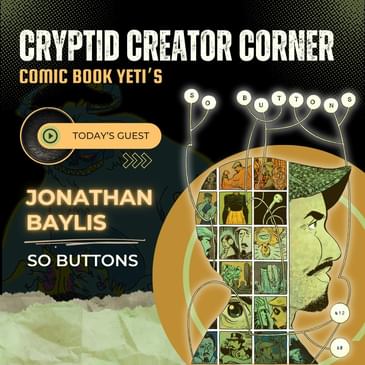

I immensely enjoy the serendipity that can happen on our show. Right after the 2025 Eisner Award nominations were released, I threw a post out on BlueSky highlighting the folks we'd talked to over the last year that had been selected for nomination. It was through that unlikely path that I met one of the unsung indy comics heroes who has been cranking out original autobiographical comics for two decades now, Jonathan Baylis.
From his early days interning at Marvel and Valiant to working with the Topps trading card company, through his book So Buttons Jonathan has chronicled his life through his comics for over 20 years. It is a humorous behind the scenes documentary of everyday life and it's one of the most interesting comics journey's I've ever heard on the show.
“So Buttons is who I am—on the page and in real life.”
We snuck this in right before San Diego Comic Con so fingers crossed he gets to bring an award home.
WATCH ON YOUTUBE
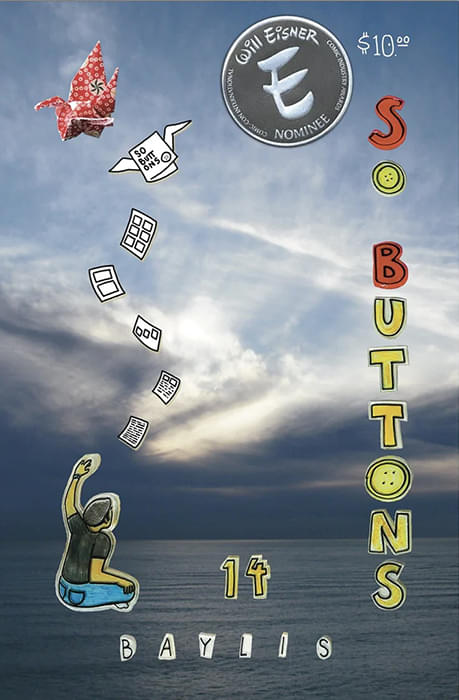
So Buttons #14 : Life and Death
In Jonathan's words
With my life, it’s full of coincidences and brushes with celebrities and comix folk since I’ve been in entertainment and comics for my whole career. But I was hoping for something a little more high stakes this issue.
Don’t ask for high stakes, because you just might get it. My comic book dealer of 40 years passed away. And then… my mom. That’s this comic.
In the tradition of Harvey Pekar's American Splendor, Baylis matches his stories with groundbreaking artists to capture down-to-earth slices of everyday life and pop culture.
Follow Comic Book Yeti
🔗 Comic Book Yeti LinkTree: https://linktr.ee/ComicBookYeti
For partnership and ad inquiries, please contact: thecomicsyeti@gmailcom
Follow your hosts
🔗 Jimmy Gaspero: https://bsky.app/profile/jimmygaspero.bsky.social
🔗 Byron O’Neal: https://bsky.app/profile/byrononeal.com
PATREON
We have a new Patreon, CryptidCreatorCornerpod. If you like what we do, please consider supporting us. We got two simple tiers, $1 and $3. Want to know more, you know what to do.
ARKENFORGE
Play TTRPG games? Make sure to check out our partner Arkenforge. Use the discount code YETI5 to get $5 off your order.
[00:00:00] Your ears do not deceive you. You have just entered the Cryptid Creator Corner brought to you by your friends at Comic Book Yeti. So without further ado, let's get on to the interview.
[00:00:30] Thanks for your donation.
[00:01:02] Dan Abnett and so many others. Get a print subscription and it'll arrive to your door every week. And your first issue is free or subscribe digitally. Get free back issues and download DRM free copies of every issue for just $9 a month. That's 128 pages of incredible comics every month for less than $10. That's like a whole graphic novels worth. All subscribers get amazing offers like discount vouchers and exclusive product offers.
[00:01:29] Head to 2000AD.com and click on subscribe now or download the 2000AD app and why wait? Start reading today. I'll put links in the show notes for you. Hello everybody and welcome to today's episode of the Cryptid Creator Corner. I'm Byron O'Neill, your host for our Comics Creator Chat. Today's episode is a bit of one of happenstance or perhaps maybe serendipity. I threw out a post on Blue Sky when the 2025 Eyser nominations were announced that included folks we've talked to over the past year on the show.
[00:01:59] That had been nominated and as all great fishermen do and well maybe apparently also me, I got a catch. So I invited him on. His project So Buttons is nominated in the best anthology category and I'm lucky enough to catch him pre-con.
[00:02:14] So I can say I knew him when and can add him to my Eisner Pokemon collection evidently that I have started. Please welcome the sage of self, the archivist of introspection, the dabster of documentation, Jonathan Bayless. Jonathan, welcome. It's very nice to have you on the show. Oh, thanks so much Byron. What a lovely intro. Happy to be here.
[00:02:34] I do practice these things. I was a production assistant for WCW. So everybody now must have a proper intro with distinct names that associate with what they're doing. So that's my model. I used to do promos for the WWE. Oh, okay. Okay. What was the period that you were doing that in?
[00:02:55] Well, I was at USA Network for a whole bunch of years between, what was it, 2007 to 2016, something like that. And throughout, you know, I've done all kinds of like marketing videos for the WWE, but also I've been a Make-A-Wish volunteer for like 25 years. And I've brought kids to meet a lot of the superstars and stuff.
[00:03:18] So, uh, yeah, I have a, I have a warm relation. It's funny. It's like, I'm not like the biggest fan ever, but, but, but it's like, I have such a warm relationship with those people just because like between volunteering and working at USA, like I've just been associated with them my, uh, my whole life. My, my dad was a big wrestling fan. So yeah, I like, I like those folks. Except for Vince. Vince is, he can go fuck with him.
[00:03:45] Yeah. Yeah, exactly. Yeah. I mean, I watched the documentary and I, it actually painted him in a rather kind light, I have to say. So. Well, he's one of the producers of it, right? Or, or his wife, you know, whatever. Yeah. Yeah. Yeah. Well, give me a good little short story there. Like I, I'm curious now, what, what's a really cool experience you had with somebody that, that made a kid's, you know, dream come true?
[00:04:08] Oh, I mean, absolutely. I mean, if we, if we keep on just the, just the wrestling, uh, line, I mean, what, what, what's, what's always good about visiting the WWE is, you know, the kid will like, he'll go, I want to meet this one wrestler. Like I want to meet triple H, you know? Right. And, um, you know, and sure enough, you know, we'll, we'll take, we'll take him to the garden and Paul, you know, Paul comes out, but these wrestlers, they know where their bread is buttered.
[00:04:34] And every wrestler comes out. They all want to meet the kid. They all, they all want to get, give this kid the best time ever. So, I mean, absolutely. Uh, you know, the wrestling wishes are, are great because, you know, these superstars are just, you know, treasures, you know?
[00:04:52] And I, I think, you know, I think when you're, when you're in that gig, I mean, you hear a lot of like, I don't know, bad things about, about, about certain people, but for the most part, it's like, these are guys that, you know, they're, they're, they're working like on the road more than 200 days a year. And, you know, these, these kids give them nothing but love, you know? So, you know, they, they, they give it right back to these kids. So that, you know, that's a good one. I did Lady Gaga's first wish. Oh, cool.
[00:05:22] That was at, I probably, I think it was at Radio City. It was, I don't think it was at the garden. I think it was like, it was probably for some Z100 thing. It was very early in her career. Clearly. I'm sure she's done a hundred wishes since then. She's a pretty giving kind of a person at Gaga.
[00:05:38] So, but yeah, that was, that, that was a really good one because the kid was, I think, you know, I want to say like a real fan of hers, you know, a little monster, you know, that's, that's, those are her fans. And her dad was just like super, the, the dad was just super straight, like football kind of guy. And, you know, and, and, and the son was this, you know, very gothy and makeup and all this stuff.
[00:06:06] But that dad, you know, you know, you would almost have expected him to be like jerky or not understand, not, not understanding, but was just the warmest guy. Happy to happy to have, you know, his, his son have this, you know, amazing experience, even if it wasn't like his thing.
[00:06:26] And yeah, there's a lot of good, so much good stuff comes out of Make-A-Wish. It's a, you know, it's very, very rarely anything bad have I experienced in my 25 years volunteering there. So. Wow. I mean, bless you for doing that. That's really, really special to, to be a part of that. And I'm sure it enriches your life too. I mean, it's always nice to have that. A hundred percent. Rounding him a lot. Yeah.
[00:06:49] Yeah. Yeah. I mean, it's, you know, I always, I always, the mantra for me is like, uh, is not, it's not about me, right? Like the Make-A-Wish, it's all, it's all for the kid. It's not about me. I mean, I benefit a little bit. It's certainly very, very nice that, you know, I got to bring a Monty Python fan to meet John Cleese. Wow. You know, but, you know, we, you know, and I was a crazy fan when I was that kid's age, when I was, when I was 13, but it wasn't, you know, like this wasn't for me. I just happened to be sitting there, you know?
[00:07:18] Yeah. Happened to be there. Happened to be there. Well, I can tell already that you are not a person who does anything by half measures. If you've done 25 years at Make-A-Wish and you've been working on Sew Buttons for well over a decade now, you know, that Isernomination. That's crazy. Like that, that Isernom is for issue 14. And I think you had been working on something sort of like a, a one comic a year or so strategy or although not totally
[00:07:46] rigid. So, so let's take a quick step back. So this is the first time we've met. So kind of what's your comics origin story look like? My comics origin story is, so I went to, I went to NYU film school and I was kind of sick of, I didn't, I didn't fully enjoy it or embrace it. And I really wanted a break. So I moved to England for a semester, you know, semester abroad in London and where I lived in Lewisham down the street was a shop. It was called Skinny Malinks.
[00:08:16] And it was run by, it was run by a guy from New York city. You know, I think, I think I wrote in the story about this guy that he was from Brooklyn, but I think he was, I think he reached out to me and he's like, no, I'm actually from Queens. And I'm like, well, in the comic, you're from Brooklyn.
[00:08:31] But, but, but he had a store, this New York guy. And so it became like a home away from home that I got to spend it in this comic book store all the time. And I, and that's when I really was starting to grow my interest in indie comics and small press comics.
[00:08:48] But I, you know, because I was like not super satisfied with film and, you know, wasn't sure that I wanted to do that, even though that's what I was getting my degree. And I was like, oh, maybe I could, maybe I could work in comics. Maybe I could become an editor of comics or something like that.
[00:09:04] And so when I got back to New York, one of the first things I did, I went to this convention in Philly and it, and it happened to be a convention that gets talked about because there was a big debate that happened with Todd McFarlane and Peter David. And that was a, that was a whole fun, fun thing. But I met editors at, at Marvel, at, at tops, you know, and at Marvel, I met Bob Harris, who was editing the X-Men at the time.
[00:09:30] And he set me up with this woman named Mary Mac. Mary Mac was Tom DeFalco's assistant. DeFalco was the editor in chief at the time. And Mary Mac, uh, was the intern coordinator. And then I met, uh, this guy, Ira Friedman and Greg Goldstein from tops. They were doing comics. They had just released Mike Mignola's, uh, Dracula, the Coppola's Dracula adaptation. And so I just kept in contact with those people.
[00:09:57] And sure enough, I got an internship at Marvel. Like it was like, nope, no problem. And, you know, in my interview, Mary asked me, he's like, Oh, do you want to, uh, you know, which, which, which comic would you like to work on? The only thing I can't offer you is, you know, like X-Men and Spider-Man kind of a thing. And I said, well, I, you know, I, I, I want to learn as much as I can about things. And she's like, Oh, maybe you want to work on Marvel age. Cause that guy doesn't even have an assistant editor.
[00:10:26] And that, and that Marvel age magazine like touches upon all the departments, marketing sales, editorial, the whole thing. So I basically became sort of as an intern, more like an assistant editor there. Whereas like, you know, the, the, the interns for X-Men really just hopping boards all day long, just, you know, and that's cool, you know? Right.
[00:10:50] But, um, but I actually got to learn just a little bit more about, about the business. And it was a kind of a tumultuous time. And, you know, this was like 1994, like my first week Kirby died. Uh, that was, that was an omen. And, and I went to, you know, I went to Joe, Joe Simon's apartment to get a, to get a photo of those guys. Cause this, this is like sort of like pre the ease of internet and all that kind of stuff.
[00:11:18] So that was really cool. I went to Joe Simon's apartment. I did a story about that, that got drawn by Fred Hembeck, uh, in an issue. Cause Hembeck used to do Marvel age, uh, strips. And I was like, Oh, you'd be the perfect person to do, you know, stories about my internship.
[00:11:34] And so Hembeck did a couple of stories, a couple of stories for me. Um, and so buttons. And then after when my internship ended at Marvel, you know, I was hoping like maybe some assistant editor job would open up, but things were, things were not great. Marvel wasn't doing so great.
[00:11:51] But one of the guys, a guy named Chris Cooper, who actually in recent years is has more fame because like some, some bitch, some really terrible Karen person, racist, horrible person was like, you know, did, you know, did some shit to him in central park. Cause he had a dog and she had a dog and he was like, Hey, I need to, need to keep the distance and whatever.
[00:12:18] But now, and now, you know, it became, and he was just, Oh no, he wasn't, he didn't even have a dog. He's just a birdwatcher. He's like a really cool birdwatcher. And, uh, and yeah, yeah. Christian Cooper. Yeah. They, uh, and I think national geographic even gave him a show cause he's like, he's like really good looking, well-spoken guy. Like, you know, and he had, had this bit of fame and yeah, they gave him a birdwatching show. He's like super cool. Anyway, so Christian Cooper, I saw him at, um, uh, that, you know, what is the last thing I did with Marvel?
[00:12:46] They sort of like gave us free passes. They were like, Oh, we can't give you a job, but here's a free pass to see, uh, Kenneth Branagh's Frankenstein, you know, with the Marvel crew. And I was behind Christian and I was like, Hey man, any, any opportunities opening up, assistant editor jobs, blah, blah, blah. And he's like, no. But then the guy next to me was a guy named Jeff Gomez from Valiant. And he's like, well, how about, how about you intern at Valiant? And I was like, sure. You know, why not? And this was like just post shooter.
[00:13:16] Rest in peace. If you like that guy. And, uh, that's controversial, that guy. Um, but yeah, but I was at the Bob Layton era of Valiant. And I, I, I interned there for a year and then, uh, something opened up at the tops company. And so then I interned at the tops company, uh, and that turned into an actual staff job.
[00:13:39] So I, I, you know, I was editing, uh, uh, the associate editing a book that was, everything was licensed with tops, right? Everything's licensed. So we were doing, uh, uh, failed Marines and space show that was on Fox called space above and beyond, but it featured the first mainstream work of Yannick Paquette. So we kind of like introduced Yannick to the world. And now that guy, like he's done wonder woman. He's worked with Grant Morrison. He's done the Avengers, you know, guys, guys, great. He's Canadian.
[00:14:10] Um, and, uh, and then like the comics division folded as the, as everything was folding. Like, right, you know, right now we're, you know, in this time of like, oh, the last diamond catalog just came out. Right. Like, right. I was, I was there to witness the utter consolidation of all the distributors where, you know, Marvel bought heroes world and completely fucked that up. And then, you know, but then DC went exclusive with, with diamond and other, you know, other people were going exclusive with capital.
[00:14:39] And then with the loss of Marvel and DC, every distributor died. So it was just capital and diamond and then diamond just won. And that's why we had diamond for these past 25 years. But, uh, uh, so the, the comics division kind of closed down and then they had me do, I was working in the trading card division. So I was working on like Star Wars cards and X-Files cards, but you know, because I was not working on any comics anymore.
[00:15:08] I was like, well, maybe this is a time I'll, I'll write my own comic. And I, you know, as I was coming across the work of like a guy named Harvey Picar and Picar, you know, is this guy out of Cleveland who wrote autobiographical stories, but he had different artists draw them. And I was like, that is the model that I can do. I was like, I've got a staff job. I'll, I'll, I'll take some of my money and pay artists. And that is what I've been doing for 20 years.
[00:15:36] That is, that is a wild journey. Let me tell you, because it's sort of like living the dream in many aspects. And I think people think that, Hey, I'm going to get into comics. I'm going to get this internship at one of the big two. And then my life is set. And rarely does it actually ever work out that way. No, the only other intern that I know of, I interned with a guy named David Bogart, just a real sweetheart of a guy. He, uh, after his internship, I think he,
[00:16:06] went to work for Harris who Harris did, had the Vampirella license and we did Vampirella cards, but they were doing, um, another comic that was like a minor hit for a little while was Ethan Van Skyver did something called cyber frog.
[00:16:22] Yeah. Yeah. Yeah. Yeah. Right. And now Ethan's brother, Noah is an, is a big indie darling. And he's one of my most consistent collaborators. Like I, you know, I've worked with Noah. He's, Noah's drawing for something for me right now. It might be his fifth story or, or, or six story, but one of the rare sort of like brother stories in, uh, in comics though. Though, though Ethan is, is certainly, uh, that guy's like a controversial figure.
[00:16:52] Yeah. Yeah. Yeah. Yeah. Just a little bit for a lot, for a lot, for a lot, for a lot of folks, but Noah, Noah is, you know, he's a, he's a, he's an indie darling and, uh, and a good friend. So, um, yeah, it's, it's, it's, it's, it's, oh, oh, but I was, I was talking about Bogart.
[00:17:08] So Bogart, I remember seeing him. He was like, I think he was asking us if he wanted to do cyber, cyber frog trading cards. I think we, we turned that down at tops, but then Bogart got his, uh, legal degree. Uh, but he brought, I betcha he did that because of the, um, just the industry imploding in the, in the, in the late nineties. And when he got his legal degree, Marvel gave him a job in the legal department and he's been there ever since.
[00:17:33] So that's, that's a good 20, 20 years or so as well. And I, I bump it to him every once in a while, but that's like the one Marvel internship I heard of where it's like, oh, he's working at Marvel still all these years later. But yeah, it's rare. It's rare. Yeah. Yeah. Coming up in that capes and cows environment, like what attracted you specifically to wanting to do autobiographical stuff? Cause that's a bit of a shift.
[00:17:57] It is. Uh, but I think, I, I think most likely an age kind of a thing. I think I was, I was also, I was also trying to, um, there were, there were more, there were more magazines like besides, like besides wizard, there was like comics scene and hero illustrated. And I was trying to see if I could write reviews. And so that led me to, to reading more indie, indie comics.
[00:18:21] And I found myself really gravitating towards, uh, like, you know, you, you would, you would call these guys like almost like a Canadian trio of like Chester Brown, Seth and Joe Matt.
[00:18:33] And they were all did these really kind of introspective, uh, autobiographical stuff. So that combined with Harvey P car. And then someone who really just really blew my mind. Uh, another Canadian, a woman named, uh, Julie, do say absolutely incredible cartoonist. Um, you know, I think it's just maturing, you know, like, like, you know, like I tried, I tried reading a Batman comic just, just the other day. Uh, there's an artist.
[00:19:03] I really like, and I'll read anything he does, even, even though it's superheroes, guy named Mark Marcos Martin. He's a, he's like, Oh, almost like a graphic designer in the way that he does, uh, does his work really good panel designs and page layouts. And I, and I like it, but I was trying to read absolute Batman. And I guess that's just sort of, uh, I don't know, they're calling it like, it's like the, uh, ultimates, but for, but for DC, you know, I mean, whatever, like, you know, DC has been doing elseworld stuff forever. And so I guess, and I guess this,
[00:19:32] Batman is, I don't know, he, he was friends with his rogues gallery. Like he, they were all went to school together or something like whatever. Yeah. Not your thing. It's just not my thing anymore. I can't, you know, you know, you just, yeah, you age out of it. But I mean, I'm, I'm sure I could read a good superhero book. If I came across, like, I really enjoyed reading invincible, that entire series. Um, you know, and that's, that's certainly superhero.
[00:19:59] But for the most part, I'm reading more graphic novels and, you know, small press, you know, I, that, that, that, that's more what I gravitate towards these days. Right now I'm going through a huge underground comics phase. Cause I met Dennis Kitchen. Do you know, do you know Dennis? Right. So, so, you know, like I, you know, I certainly read a bunch of kitchen sink press comics. Yeah.
[00:20:23] You know, growing up and certainly when I had that phase, like in England where I was like going through all this indie stuff and Dennis, I met Dennis at a small press convention called the small press expo. It's like, I consider it my home convention, even though it's in Bethesda, Maryland and I'm from Brooklyn. But, um, I met Dennis there and we trade it. Like I sent him some SoButtons and he sent me a bunch of kitchen sink. And I was like, Oh, I want to do a thing where I wanted, cause I, I would, I would say that SoButtons is, um, maybe to a lot of people,
[00:20:53] a little bit more than on the vanilla side. It's sort of like a feel good and humorous and, you know, heart, heartwarming. It's not edgy. Um, not edgy. And I was like, Oh, I would like to do one issue that is edgier, like underground. So because Dennis Kitchen gave me a few undergrounds, I was like, here's what I'm gonna do. I'm gonna get a hundred undergrounds. But then, you know, it's like this, whatever, whatever OCD thing I have, I'm like, I'm gonna get a hundred and then I'm gonna put them in chronological order.
[00:21:23] And I'm gonna read them so I could experience the underground as it unfolded in real time. Yeah, yeah. So like I had this idea of, you know, how I'll do an underground issue of SoButtons within the next year or two. And I already had one story drawn by Johnny Ryan. Do you know Johnny Ryan? You know that guy? I know of, yes.
[00:21:42] Yeah, he does a lot. He's like an underground cartoonist. But in modern times, it certainly plays around with a lot of scatological stuff and sex stuff. And so I had him write a story. Well, I wrote a story. He drew it about how my son was learning potty training.
[00:22:02] And so we went to our cartoonist house, Emily Flate, on Christmas. She's like, come over for Christmas. So we came over. And then, you know, my son like totally just did a deuce. Like, right? Because the training was he's naked. And so I say, we said like, Emily, we'll come over. But we're training him. And the training is he's naked. And that's how he'll learn. And so, yeah, he just took a dump right on her floor. And I was like, you know who'd be good for that?
[00:22:31] Yeah. You know who'd be good for that? Johnny Ryan. And Johnny Ryan was like, yes, I'll do that. So I've got my first underground story, you know, for that issue in a year or two. So when you're looking for collaborators, is it something that you typically style fits story? Are you a fan first, like you just mentioned there, based on availability?
[00:22:54] Oh, it's a hodgepodge. And I see an image. And it triggers something in me where I go, I have a story for this artist.
[00:23:17] You know? And so like, you know, like I have these strips where they're like one-pagers of people who share my birthday. Celebrities that share my birthday. Because, you know, that's how I like to find some artists is like test them out on one-pagers first. So like, if I had, so Johnny Rotten shares my birthday. So I was like, oh, I'll have a punk artist draw that one. So I had Josh Bayer draw that one.
[00:23:45] And that's like a perfect match because he loves punk music. And, but then, you know, let's say I have a story about, you know, getting my first dog and it should be cute. And so, you know, my friend Rachel Dukes, they did a manga style, you know, kind of art and make it cute. So a lot of times I am using the artist's talents to, for the style of story that I'm writing.
[00:24:14] I try to pair it like that. Like I think Harvey, you know, I think for him there was a lot of financial aspect to his thing. It was like whoever's cheapest, you know. Like I don't think he, I don't, I don't know if he really paired his artists with the stories. I think a lot of his stories have, you know, similar themes and whatever artist was just there and, and cheap.
[00:24:38] But I really, I, you know, I consider myself like an editor in that way where I really try to pair the artists very specifically or the style that I'm writing or the, the, the content of the story. So that's, that's always the goal. That's always the goal at least. Have you ever taken a stab at trying to draw them yourself? No. No. The, the artists that I work with most consistently, like in every single issue, there's an artist named TJ Kirsch.
[00:25:08] Like he was with me from the very beginning. Cause I didn't even think I was going to put out a comic. What happened was, um, there was like a local newspaper that was like, it was called like free comics, NYC. And they were, they were, you know, they were just putting random strips in there. And I was like, Oh, I'll, I'll, I'll have, you know, my friend at work drew a strip and like it got, it got in. But then that, that tabloid folded.
[00:25:34] And my wife is a standup comedian at this club that she was performing at. There was this thing called, uh, I think it was called the comical and it was a magazine about standup comedy. But in the back, he had a one page Harvey P car cartoon. And it was just a reprint. And, but I wrote, so I wrote this guy and I said, well, how would you like something brand new? That's about dating a comedian. And I'll, you know, and I'll, and I would do that for you.
[00:26:03] He's like, yeah, I would love that kind of a thing. And so I went to Craigslist and I put up an ad that was like guaranteed publishing and a couple of, couple of dollars. And I got two, two kids from the Joe Qbert school interested. And, and one of them was TJ Kirsch. And he's been in every, you know, every single issue that I've had. I forgot why I'm talking about TJ. Other than, other than to say he's been in every, every single issue of So Buttons.
[00:26:33] What was, what was your question? Do you remember what your question was? Yeah. I was actually talking about you illustrating something yourself. Oh, right. Cause I was going to say, cause right. Cause I've done so many strips with TJ. He was like, let's do a collection of, of, of just my strips. But to intro the intro, the book, you draw, I'll write it and you draw it. And I've had such a hard time trying to get, get it, get around it and do it. And, um, yeah.
[00:27:02] So yeah, the, the, just the idea of, I have so much respect for artists and their, and their craft. And, uh, I'm just like, I'm just, you know, I am not an artist, but I think I have to suck it up and finally do that for him at some point. But, um, yeah, I never want, I never wanted to really draw, draw my own comics. You know, I, I love the idea of working with so many. Uh, I think with this issue that I'm finishing up right now, uh, issue 15, that brings up
[00:27:30] the number to like 74 artists that I've hired for so buttons. That's incredible. That's been great. It's been great. All right, everybody. We're going to take a quick break. We'll be right back. Y'all, Jimmy, the chaos goblin strikes again. I should have known better than to mention I was working on my DC universe meets Ravenloft hybrid D and D campaign on social media. My bad. He goes and tags a bunch of comics creators we know.
[00:27:58] And now I have to get it in gear and whip this campaign into shape so we can start playing. Another friend chimes in, are you going to make maps? It's fair to say it's been a while since I put something together. So I guess question mark. It was then that I discovered Arkenforge. If you don't know who Arkenforge is, they have everything you need to make your TTRPG more fun and immersive, allowing you to build, play, and export animated maps, including in-person
[00:28:24] fog of war capability that lets your players interact with maps as the adventure unfolds while you, the DM, get the full picture. Now I'm set to easily build high-res animated maps, saving myself precious time and significantly adding nuance to our campaign. That's a win every day in my book. Check them out at arkenforge.com and use the discount code YETI5 to get $5 off. I'll drop a link in the show notes for you. And big thanks to Arkenforge for partnering with our show.
[00:28:53] I think I'm going to make Jimmy play a goblin warlock just to get even. Welcome back. I'm really curious because this kind of storytelling, you really have to put yourself out there. One of the things that I admire about your storytelling is this sense of self-deprecating humor and you live with a comedian. I've always thought it's a good way to disarm people with that self-awareness that society sort of tends to shy away from, you know, as a way of expressing yourself.
[00:29:23] So, cause we all have our insecurities, right? So it's this your natural way of interacting people or has it become kind of just a way to vent that part of your personality through? No, no, no. It's, I am, I, I, and it might be a flaw, uh, just because, uh, cause I'm the same way in the, in, in the workplace, a professional workplace. I'm just, I've just always been open. Like I don't, you know, like I've just always been open and this is, this is how I communicate.
[00:29:50] And, uh, like, I think it may be to a, to a, to a fault, right? Like I'm, like, I'm terrible. Like, don't tell me a secret. Don't, you know, like I just, you know, cause, cause I always, cause I forget, I forget to even, you know, remember that something is a secret. Um, yeah, I, I, I, I, I'm very open with myself cause I think that's, uh, I just think that's a good, good way to be. But you know, if I were to dig in psychologically, you know, I was like a, I was like a bullied kid. Right.
[00:30:19] So my whole childhood, and I think it's probably more like of, um, like, you know, I, I, I'm self-deprecating to myself, uh, before you can do it to me kind of a thing. There might be that going on psychologically, but, um, but, uh, as far as, you know, this, this is, yeah, this is who I am. So, so buttons is who I am in, in, on the page and, and, and in real life. Like I'll, I'll tell that, you know, like the story that, uh, I was telling you, you
[00:30:49] know, I think before we turned on the mic, you know, about, uh, you know, saving this kid's life. And then my mother having stroke the next day, um, uh, is, is the way I told it to you is almost exactly how it is on the page. Uh, in, in so buttons. So buttons is really this collection of just the stories that I tell in general to people about my, about my life.
[00:31:15] And, you know, for a while I would try to think like, well, like what, what is, what is so buttons? What is it about? Who is it for? Blah, blah, blah, blah. And I think now that I have a kid, you know, the, the entirety of so buttons will certainly serve as, um, my, my legacy in some way for, for him and maybe his family. Um, sure.
[00:31:40] You know, uh, if, uh, we don't get sent to the concentration camps in the next couple of years. So, you know, we'll, uh, we'll see. Yeah. We'll see. Yeah. Yeah. Well, have you, have you gotten comfortable with all of these different presentations of you? Cause I know I've got like a PFP commission done recently and I'm excited, but that's just like one thing. And, and a cartoonist is going to pull out whatever aspects of your, you know, silhouette
[00:32:08] that they feel like is going to best represent for what they're doing. So yeah, everybody has insecurities. So have you always been comfortable with that? I've been pretty comfortable. Um, you know, like, so I started my comics around the same time that I was dating my comedian wife. And so her name's, uh, Ophira Eisenberg and she, she told me on date two, she was like, here's the deal. You know, if we, if we keep dating, you're going to get in the act.
[00:32:37] And she goes, and if it's funny, it stays. Okay. I'm like, I'm like, that's, I'm like, that's fair. That's fine. I always loved, loved comedy. So, you know, like, I, like, I don't, I, you know, I don't care that, you know, the, the woman I love is teasing me on, on stage. That's, you know, uh, I think I've only vetoed one, one joke in, in, in 20 years. Um, and it was, it was, it was, she was like teasing something about make a wish. And I, and I, and I was like, nope, I was like, nope, okay, no, no, no make a wish jokes.
[00:33:08] Um, but, but, but otherwise, yeah, no, our marriage is fair game and all that. So, I mean, as for all the interpretations of, of my face, I mean, I, I have a spec sheet that I give artists and I go, do whatever you want to do. And I go, but here's what's consistent. The six panel duck bill cap and, uh, you know, mustache, you know, that now I'm a little unshaven, but like mustache, you know, chin patch and soul patch. Like that's, that's the sew buttons face.
[00:33:37] Anything else goes. So every once in a while, like I'll see, uh, you know, maybe, uh, a bigger nose, uh, that, that, that I have, or, you know, maybe like ears sticking out or whatever it is. And I, not, not once have I ever, I ever thought like, oh, I don't want to be, I don't want to look like that or what? I don't want to be portrayed by that. Like I, I love it all. Maybe my favorite image is, um, uh, I mentioned Josh Bayer earlier.
[00:34:06] Josh, Josh did some kind of super grotesque headshot. Uh, I call you, I call it a sew buttons headshot. Um, that I usually put them on the back of the books. It was so grotesque and it's my favorite. It's absolutely my, it's absolutely my favorite. Garbage pail kid. Is that, that the one? No. So the garbage, the garbage pail kid one, which I, I love, I, I, uh, so working at the
[00:34:30] tops company, um, you know, I met some of the creators of, of these cards, right? Like garbage pail kids. And when I was there, we were trying to do a new, I'm trying to do a new series that was called bathroom buddies that did not, did not go to press, I think in any kind of major, major way. And it was drawn by, um, Jay Lynch. Uh, and Jay is one of the, these underground legends, you know, it's like, if you're, if
[00:34:57] you're into the underground, you're going to know Robert Crumb, Art Spiegelman, Jay Lynch, Skip Williamson, you know, all these people, Trina Robbins. And Jay was one of, Jay was one of these people. And, you know, he, you know, and he, like, he was friends with Spiegelman, uh, when, since they were like in the fanzine days, uh, you know, they were like 16 years old or maybe even 13 year old man mailing each other stuff.
[00:35:22] But I met Jay, Jay through tops and, you know, he worked on the designs of so many of those garbage pail kids cards that other painters then like, you know, painted, you know, real versions. I think John Pound and Tom Bunk and those guys, but Jay did designs and, you know, we were, we were just becoming friendly just because we both were working with tops. And I said, Oh, you know, I'm doing this comic and I said, I want, you know, I want to do, um, a garbage pail kids cover.
[00:35:51] And he is, that was probably his most, most requested thing was for him to draw something garbage pail kids. And he was probably pretty sick of it. But it is. So I remember him saying like Bayless, this is going to be the last, last fucking garbage pail kids thing I ever do. Uh, which I didn't believe him cause he was, he was happy to take money for anything. Uh, but he did, he did do that cover of me and it's, um, it's like a garbage pail kid of Basquiat. We have the same initials, uh, Jean-Michel Basquiat. I'm Jonathan Michael Bayless.
[00:36:20] And so it's Basquiat holding a baby knee and it's like a, you know, I'm like a baby, but I've got the hat and the, and the facial hair. Um, and I have that original art in my bathroom where I see it every day. So, uh, and you know, Jay, Jay passed away a bunch of years ago now. I don't know if it's like 10 years, but somewhere between five, five and 10. But yeah, lucky to have that. And I was lucky to have him do that.
[00:36:47] When I go to conventions, people gravitate towards that cover all the time. You know, they're like, Hey, that looks like, and I'm like, yeah, it looks like a garbage pail kid. Cause I got one of the original artists to, to do it. So that's really cool. I've made, I've made stickers out of it. Yeah. Maybe someday you'll be shocked when your kid finally grows up and they're like, okay, dad, I want to be one of the artists in this. Cause kids have a way of doing things to the parents. Like I have the best kid in the world.
[00:37:16] He's, he's a teen. He's going to be a senior next year in high school. He's absolutely amazing, but he hates art. His, I have worked with artists or been one for 30 years. And his opinion of art is, it's completely worthless. So kids will break your heart. Maybe they'll draw you and you'll be like, Oh, that's painful. That's funny. He he's been, he's already been in a few issues.
[00:37:40] My, my, my kid, my kid is nine and a half and I've taken some of his drawings, uh, and, and, and put them into still buttons. There, there is this, there is this family element that developed in the past five years or so, probably because I grew my family. Um, so I will include him and my, my aunt, um, went to FIT and, and, and, and drew.
[00:38:04] Uh, and so I put one of her, uh, life drawings, uh, into so buttons, but he, but, uh, my son, he did his own, own version of this, of this cover. He like, he, you know, and, and made it as a father's day card for me. So I think, I think that's the piece of art I'm going to put into the next, uh, the next issue of his, but, uh, yeah, that kid, he's already, he's already doing it. He's already, he's, he's already in, uh, in the mix in, in so buttons.
[00:38:34] Well, uh, I don't know if you're comfortable with actually a full blown career in comics or not for them, but you know, yeah, no, well, yeah, there's, there's not, there's not much money, uh, in, in comics as, as, as most people know, which is why I'm super happy to, uh, I pay all of my artists, uh, you know, and, uh, I think, you know, for, and, and especially in this kind of like small press scene, some, some people like that I'm their first check
[00:39:03] ever paid check ever for drawing, drawing a comic. And that's, and that's really nice. So, um, yeah, I'm happy to, happy to do my part and contribute to, you know, the industry, whatever I can by putting money into the pockets of artists. That's always good these days, especially. Yeah. Yeah. But yeah, super, super hard to really make, make money in comics. And, and, and it's, it's, we're in an interesting time right now where we have this like, you know,
[00:39:34] a generation of kids and I, and I work with a lot of work with a lot of Gen Z people right now at my current job. Um, right now I'm working at a, like a toy and game company and you know, they, I don't want to use, I don't want to use the word entitled, but they, they are certain, they feel empowered to, to ask for things in a way that like Gen X was just sort of like, we were maybe more sheepish about like asking for things.
[00:40:01] And I think, you know, there's a, there's a generation of these kids who have gone to art schools and their parents, you know, maybe, you know, they've paid for most of the art school or all the art school. And they're all expecting real money, real jobs. And like, no one has told them along the way that like, there's really not, it's not money in comics. There's like five people who make money in comics.
[00:40:26] You know, it's really, it's not, you know, it's, uh, it's, it's not for that. And they're, and they're disappointed and they expect like, oh, well, when I get an agent, you know, I'm going to get like a hundred grand for my graphic novel. And it's just sort of like, it's just, it doesn't, doesn't work that way as far as, as far as I know. Yeah. Yeah. Well, those days are gone. And the days of even long serial runs at the big two are over too.
[00:40:52] I mean, you get a five, many series and if it hits, it hits and then you'll get more. But yeah. Yeah. I mean, well, those companies, they're, they're, they're no longer comics companies, right? They, you know, like I, I do the phrase that I use that Marvel and DC are new product development divisions of a larger corporate corporation.
[00:41:14] They, they exist to, you know, create more IP so that real money can be made, uh, in, in movies and licensing and whatever. But that, that, that comics business there, I mean, I, I can't imagine how little money that comics business is making. I mean, you know, when I was at tops 25 years ago, I think we were really hoping for sales
[00:41:39] of like, I don't know, like 30, 30,000 for, for an issue or something like that. And I, I, I feel like I bet you that 30,000 now, like, and, and, and like, we didn't hit that. We'd be like, nope, cancel it. Uh, I bet you 30, 30,000 now is probably considered a hit of some kind for, for, for some of these bugs. But yeah, I think all these, all these things, they're just new product development. And then, you know, not that we're going to have a diamond catalog to look at anymore,
[00:42:08] but you look at the diamond catalog and half those companies are companies that to me, to my eye only purely have been created to sell movies. So I just to sell IP, I can not see any reason why these companies exist. Just making these kind of genre books where I'm just sort of like, there's, there's, there's, there's no passion there.
[00:42:36] Like, like they're just, you know, they're just trying to create IP and hoping Netflix calls, calls them on their cell phone or something. Like it's, you know, I think, I think, I think the, the, the really good passion that you see is in, is in the smaller press. Well, kind of getting in the cross section, because, because this has been nominated for an Eisner. I got to chat with my friend, Ryan Claytor last year, who was a, he was an Eisner judge. And so he got to shed a little light on the process. Yeah. I've heard a little bit about it.
[00:43:06] Ryan's great, by the way, I highly recommend looking at his stuff, but you know, it's wild to me that these spheres exist somewhat independently in comics. And that's kind of what you were just talking about, but they're smashed together for these awards because you've got Ryan North nominated for fantastic four, which is now on the biggest stage in the world. Right. Yes. And that's right alongside PP poopoo, which is kind of wild. Yeah. It is totally wild.
[00:43:32] Like, so like my, you know, like my dream, if I had a dream of getting nominated for an award, my dreams only extended to the Ignatz awards, right? Like these are the awards for small press people. Like, like right now, um, you know, like every once in a while, like Chris Ware will come out with something new or Dan Clowes will come out with something new and like he'll get nominated for an Ignatz. And I'm like, that guy's too big now. Like Chris Ware is too big. Dan Clowes is too big for an Ignatz.
[00:44:02] Ignatz is for, you know, these smaller, smaller folks, uh, like Caroline Cash and, and, and PP poopoo, um, and publishers like Silver Sprocket. But, um, but yeah, the Eisners, I mean that, I mean, I, I mean, I, I'm really trying to wrap my head around how this happened. Now, surely I did submit, I submitted to the, I like I did, you know, and the, and the Eisners to me, I mean, when I, when I was working at Topps, I worked San Diego Comic-Con.
[00:44:31] Uh, I stayed at a hotel once and rode the elevator with Will Eisner and Mark Hamill. Like, you know, like, so, I mean, like, you know, I, I, I know San Diego, I've worked San Diego. Um, I exhibited a small press table at, at San Diego 15 years ago. Um, and you know, and you know, but I, I never in a million years did I expect to get a nomination for an Eisner. It was almost a, not a joke, but like a, like a lark or just, you know, just like, you
[00:45:01] know, like we're setting a, setting a clock, you know, like it's another year of just sending my book out there. Um, but, uh, you know, and my category is very weird, this anthology category. It's like, I'm up against, you know, sort of like kind of major indie publishers where Oni Press, they have, they revived the EC, uh, EC Comics and IDW. And actually my tops guy, Greg Goldstein, he, uh, he at one point was like president of,
[00:45:31] of, of IDW and IDW has Godzilla. It's 70th anniversary of Godzilla anthology. You know, like those, that's, those are two of the sort of beer competition. And then in the next level, you want to go pure indie. You've got Fantagraphics has an amazing anthology that comes out, I think once a year, twice a year called Now edited by this guy, I like, uh, Eric Reynolds. And that is as fantastic anthology in, indie anthology.
[00:46:00] And then this guy, comics creator, I like Sammy Harkam. He, um, uh, you know, he, he did a comic called Crickets and he had a big book called Blood of the Virgin that, that came out as a collected edition. But he also used to be the editor of this really cool anthology called Kramer's Urgot. Uh, and he created a new anthology this year called Peep. Um, and that might've been one of my favorite books of the year was his Peep anthology.
[00:46:28] So you've got like these, these kind of big indie publishers. And then you've got these like mid range, like classic pure indie publishers. And then like a guy that like has to staple his own book sometimes. That's me, you know, as many, many, many, many comic being nominated in the anthology category is, uh, is very bizarre, very bizarre. I don't know how it, I don't know how it happened.
[00:46:53] Um, uh, but you know, I, I know from the, you know, hearing about the judging, it's like, you know, let's say, let's say I had one friend, right? Like one friend was one of the, one of the judges. That's not, that's not enough, you know, cause you know, you have to get put up by, by, you know, a few people. So I don't know who these people are. I don't know how they know me. I don't know. I mean, I guess the word spoke for itself. You know, they felt bad because my mom died. I don't know.
[00:47:23] I don't know. But, uh, but yeah, the book got nominated. I mean, the nomination is as about a big as a win as I could ever expect in this small press kind of, kind of level, you know, like to, to be not like to be nominated for an Eisner to me is totally fucking insane. Like I just, I, I, I, I do not accept it, but you know, but I'm going to be
[00:47:46] going, I'm going, I'm going to the Eisners and, um, Scott Dunbeer, who is a fantastic editor. Uh, and he edits all these cool artist editions, you know, you know, all these huge over the original art. Yeah. Uh, and Dunbeer, and he used to be Alan Moore's editor. Dunbeer, uh, who I put him into an issue of so buttons because he, he, like me, he was sort of like this expat working for a British publisher called quality comics, which was also a storefront.
[00:48:15] Uh, there was like this combination of a storefront and also they published miracle man in, in warrior magazine magazine in England, uh, back in the day. And, um, and Scott worked there. I don't know if he was like an intern or if he was a staffer, but Scott worked there. And so, so when I talked about my time in England, I put Scott in the story, but Scott is getting a VIP table at the Eisners and he invited me to sit at the table, which is like unbelievably nice.
[00:48:45] I never even met, I never even met this guy in person. Uh, you know, he's just invited me so kindly. So, uh, I'm, yeah, I'm super excited to, to the, go, go to the Eisners and see people. I mean, at this point, when I go to San Diego, it's an even split of like comics people I've known for 30 years and media people I've known for 20 years. Oh, the lights just went out in my building, in my office. I don't know what happened there. Trump's taken over New York. That's what's going on. Oh, geez. Yeah.
[00:49:15] And then he is, uh, yeah. Go ahead. Go for it. You know, I, I know we don't need to, I don't need to say one thing about Trump. I don't. Yeah. I really don't. Yeah. Our listeners will be like, click. Okay. Cause we have enough of all that, but I'll assume that the Eisner experience is going to, going to be nailed down for inclusion in issue 15. Well, 15, 15 is a 15 is already done with, with, with the writing.
[00:49:39] So it'll, it'll, it'll, it'll be in, it'll be in 16 unless I can somehow, somehow squeeze like a, like a super quick one pager before I go to press in August. But the Eisners are like July 25th or something. And you know, right. My book is or, or, or already written and, and I think pretty, pretty, pretty cohesive. Uh, it's, it's weird. It's weirdly cohesive this next issue. So a lot of, uh, a lot of David, David Lynch and film industry stuff.
[00:50:09] So 14 was a lot about death. You talk, you, you're passing your mom. Yeah. Dealing with cancer, your comics mentor, and even you yourself basically saving a child from that experience. Right. So how do you go about picking what you want to kind of focus on, or do you have a specific focus or is that just something that happens? It's just something that happens. It like, you know, and, and only something that I've really thought about more the past
[00:50:39] two or three issues. Usually it's just like, I overwrite, like I'll write, let's say 40 pages and however many pages come in by the time I go to press, that's an issue. And I'm, you know, and again, I think, you know, I have a skill as a kind of editor, um, and I place it in a certain order, but the past couple of issues, like I, two issues ago, I think I called it Harvey's pals and mine.
[00:51:03] And, and basically I, you, half the issue is artists that worked with Harvey P car and then artists that are, that I'm have a more personal connection with or true friends with, as opposed to like, you know, like some artists I've never met before, never had another conversation. It's just someone, someone I, you know, met on Instagram and was just like, draw me a thing. And they drew me a thing. Um, and, uh, you know, this was way more about friends.
[00:51:32] And then I ordered it a certain way, but life and death, this issue. Yeah. It really, it's, it's just kind of the way it happened. I mean, even the fact that I wrote this story about how James Earl Jones did my college graduation. Um, I didn't expect that guy to die after I wrote that story, you know, uh, it's just what happened.
[00:51:57] But, you know, so, so the, the, the, the theme, you know, the theme presented itself, um, you know, as, as, as, as I started collecting the stories that, that came in, but, but it is true with this next issue. Like I was saying like, Oh, I find it to be, um, my most cohesive issue. I think I very specifically wrote stories this time and tried to connect certain, certain
[00:52:25] things as a, as an experiment is almost, almost, it's almost long form, right? Like it's like, it is almost one full thing, even though I've got a half a dozen artists on it. And, you know, it, it does tell a period of time of where I like interned for a film distributor and how I got there and how David Lynch almost got me. He kind of got me my job because of this thing, you know, and just how it all, how it all connects.
[00:52:50] And cause I have this idea for a long form memoir that I want to do. Um, you know, my, uh, about a year before my mom passed, we found out that she was adopted and she did not know it. Like I did ancestry and I came up 25% Japanese. Uh, and, uh, I was like, well, that's weird. And, you know, my, who knew? Who knew? And then, you know, my mom is always the, had always these kinds of exotic features.
[00:53:20] Um, and you know, you know, she, we thought she was Russian. She thought she was Russian. She's like, Oh, the kind of Russian that's like on the border of Mongolia. Right. You know, like that have more, more Asian features. Like Sarah Silverman has a whole set about that. And, um, uh, and you know, so yeah, she's half Japanese. And then I went on this whole journey of like figuring out, well, how did that happen? You know, and who, like, who is she and where'd she come from?
[00:53:48] I mean, so buttons is a lot of identity stuff. And now my mom presented me with, um, a new, a new mystery, even, you know, even after her passing. So, so, and I, I think I've got a whole, got a whole book in that one. Well, we, I think we're probably here of a similar vintage. It's interesting to hear you talk about this because it feels very much like the, the cliched maturation process of being an artist, right?
[00:54:16] You hit a certain age and you, you get that pocket of wisdom and experience and everything kind of coalescing into, I don't know, you've got an Eisner nom for it. So you're doing something right. So looking at the body of your work now, how has age noticeably impacted you aside from, okay, now you have a kid. So the kids in there too. Yeah. Yeah. I think, you know, what I was talking about earlier, I don't, I don't think I looked at this with legacy.
[00:54:44] And I think, I think in general, I don't, I don't think about like, I don't think about legacy. Like in my career, you know, like, Oh, what, what am I leaving behind? I think when I was younger, I probably didn't give a shit. I probably did not think about it or did not care about it. Like I'm not, not a big, uh, you know, I don't believe in the afterlife or any, any, any of that kind of stuff. That's not my bag. Um, but I think because I am, I am a dad, I think that, that does make me think of legacy
[00:55:13] and it's all, and I feel like the fact that I've been doing this so buttons for 20 years, it's sort of like, Oh, you know, like, you know, I didn't know what, I didn't know what I was doing, but now I do, I don't know, you know, like I am leaving a legacy. I am leaving, you know, something, even if it's, even if it's just for one reader, you know, and he, and, and Lucas, he's, he's, he's, he's read them all, you know, already. Like he, he loves reading them now.
[00:55:40] And, um, you know, like there's one, one strip where, um, uh, he was reading an issue, uh, and, and he saw the word shit in it. And yeah, so he starts just jumping up all around the apartment going shit, shit, shit, shit, shit, shit. Oh yeah, of course. You know, and, and I just thought that was hilarious. So then I turned that strip into a, and, and, you know, like that, that story into a strip where it's like, it was like, evergreen. Uh, yeah.
[00:56:08] So, um, uh, you know, like I am, I'm leaving, I'm, you know, I am, I'm leaving this for him and for, you know, anyone, uh, that, you know, in, in the family that goes, cause right now it's like, you know, like, you know, I was telling you, I think before you turn this on, like my dad's stay, you know, the house kind of exploded, the boiler exploded and all, all kinds of things are destroyed. But, you know, luckily because it wasn't flames, it's just soot, uh, like photo albums can be clean.
[00:56:37] And, you know, I had been going through all of these photos because of this, you know, my mom's ancestry and realizing that at like 16, she looked more Japanese than, uh, than I ever thought. Um, sure. Yeah. And, uh, so yeah. So, you know, I have these photos, but my, my son will have stories, a little more fleshed
[00:57:00] out stories about, you know, his dad, if he wants to remember things or, or know things or learn things. I mean, that's a really precious thing. It really is. Trying. Yeah. Trying. Well, you've successfully crowdfunded the last couple of issues on Kickstarter. How is the crowdfunding landscape as a sales tool helped you reach a wider audience? So I, I started with this thing called crowdfunder.
[00:57:28] And I think the reason why I started with crowdfunder is because I think they were, they were sponsoring SPX, uh, small press expo a couple of years ago. And I was like, well, I might, might as well give it a try. Cause I think they said they were going to do some like extra free marketing. And so, uh, so I was like, well, you know, if someone's going to give me an extra push, then I'll, I'll do that. I'll, you know, I'll give it a try.
[00:57:52] And, you know, I raised a couple of thousand bucks, which certainly like it cleared the printing, but not the, uh, not the artist costs, but like, that's fine. I mean, like I, the artist costs have always come out of my, you know, my day job, you know? Um, but, uh, you know, it built up like a mailing list and I, you know, I, I don't know if I got a ton of new readers, but maybe I got some, but then someone connected me with
[00:58:20] somebody, a Kickstarter, and they have a, they have a very established relationship with their, their comics fans. And there are more people there that go on, go on Kickstarter and try new things. So two issues ago, I, you know, I raised more money than I did the first year on crowdfunder. I raised more money on Kickstarter. And then last year was my third campaign and I raised even more money.
[00:58:48] And like sort of the combination of, um, you know, making money on Kickstarter and then you know, just selling, selling at conventions and stuff. I think I'm in profit for the first time ever. Uh, I think we, for my first printing, I have made, uh, $5 and 41 cents. I think that was only two decades. Yeah. Only two decades to make five bucks in comics.
[00:59:14] Uh, so, you know, take that to the bank kids, but, but, but no, but, but I did a second printing and now I have this Eisner nomination. So I'm getting, I'm getting all of these orders in. So it's actually getting to the point where I'm going to clear, since I don't have new artists costs, I'm going to clear my printing, uh, cost pretty quickly. And I'll have hundreds of dollars left over to share with the artists, which is not something
[00:59:41] they even expected, you know, like, you know, like, like I paid them all up front and you know, they figured probably figure that's, that's the last money I'll, I'll, I'll get from that. Um, you know, and like, I don't, you know, uh, but I'll, I'll have some money in me, you know, maybe, you know, maybe it's only like everyone gets an extra 20 bucks, but like free, free money. Exactly. So, you know, so, uh, I'm, I'm looking forward to that happening, uh, by the end of the year, which I'm, I know it will.
[01:00:09] So that'll, that'll be fun to do that. Well, hopefully you can tag the Eisner upcharge on there and you'll, you'll win. And cause I'm trying to, I'm trying to imagine the difference, right? Cause you now have this really cool tool in crowdfunding comics, whereas before you're, you're at a con and I'm imagining this pitch where it's like, Hey, you're going to absolutely love this. There was this one time that I nearly handed Pamela Anderson her trading cards. You want to buy it? Right.
[01:00:39] So, yeah, that's funny. Um, yeah, you know, yeah. Depending on whether, you know, if I win, I, you know, whether I, whether I win or not, I guess forever I will be the Eisner nominated author or the Eisner nominated series. Um, uh, you know, that, that will go on the next Kickstarter of which I, I, you know, it's like tick tock, you know, all the art coming in, I'm going to have to do it.
[01:01:06] In the next couple of months, which I can't even believe. I feel like I just finished the last Kickstarter, but this one will, this one will be interesting if there's any kind of a, a bump because of that, that, you know, uh, yeah. I mean, what I'm doing right now, the second is, you know, I was like, Oh, you know, I've never tried to seek any kind of like, um, uh, literary agent or anything like that.
[01:01:31] So I was like, Oh, why don't I send out the Eisner nominated book to as many literary agents as I can find that do graphic memoir or, you know, just graphic novels in, in general and just to get on a radar, see if, see if anything happens, pitch this longer form memoir about, you know, about my mom's adoption and all that stuff. So, you know, so yeah, that literally started this week where I was sending stuff out to literary agents.
[01:02:00] So I'm very interested to see if anything will happen with that. Well, let's hope so. I mean, Fante Graphics or Iron Circus, it sounds right up there, Ali's for sure. Yeah. Yeah. Yeah. I like, uh, I, I, I miss Spike, Spike of Iron Circus. She used to come to the, come to SPX every year. And I w I was like guaranteed a hug from Spike every year, but, uh, I don't think she loves the conventions and she's so big now that she could have, have her, her people work, work, work the convention.
[01:02:29] So I don't see her anymore, but I, uh, I, I do miss her. Uh, and I, yeah, I think it's cool how Iron Circus has become such a success. When I remember I did my first SPX and I was hanging out with her. She was complaining about how, you know, that web comics were kind of like put in a certain area of the convention. And they were seeing like, uh, as like a, like the bastard child of the, you know, and I'm like, I'm like, and those people are, they're the only ones making money at this,
[01:02:58] you know, you making a million dollars on a Kickstarter for doing like the sexiest Kickstarter anthology put out that year or something like that. You know, like, you know, like jokes, jokes on other people. Like they're, they're doing amazing. So it is, it's a, it's a weird world. It's not my kink. I mean, it's not something I'm into. I mean, I'm not judging, but it's just not my thing. Yeah. But no, good, good, good for them.
[01:03:24] And I think my friend John Allen, he's, he's had a book, uh, put out by Iron Circus. That's, you know, just straight graphic novel stuff. Really good, really good stuff. But, uh, yeah. Fanta, Iron Circus. I mean, but I mean, I've, I think for me, I think I always, I always feel a little out of place, even though I want to go, this is my, this small press is my place. I always feel a little out of place. And maybe that's just sort of how I walk through life in general.
[01:03:52] But I think I'm a little older than the average, um, you know, self-sustaining comics creator. I think because I'm, I'm just a writer and most other people are writer artists in, in, in that, in that community. Um, and, uh, like, you know, so like, I don't, it's like, I don't know that Fanta would, and I know Gary and, and, and, and Eric over, over Fanta. I don't know how interested they would be in, in So Buttons. But I think there, I think there's something literary there that's going on with So Buttons.
[01:04:21] And so that's why I'm like, let me, let me try the literary route and see that is something, uh, you know, that I could, that I, that I could try. But like, you know, like I'm friendly with the guy who runs the Silver Sprocket. I'm like, So Buttons is not a Silver Sprocket book, you know? So, but I, you know, and I love, you know, I love their books. I love Peep, Peep, Poop, Poop, and, and other books, uh, by Silver Sprocket. Uh, so yeah, you know, I will, we'll, we'll, we'll see where all this, all this leads.
[01:04:48] But, you know, but as far as just like me and me and myself, I, like, I just keep going. Like one book, one book a year, whether it's So Buttons or I do a special or, you know, for a convention or something. Uh, you know, it, it, it doesn't stop. I didn't, you know, I, when I put together the very first collection, I thought like, Oh, I'm done. But then, but I had a couple that didn't go in, that didn't make it in. I was like, well, let me just write another couple to fill out a second issue. And like, and then I'll be done.
[01:05:16] And after that, it was just, that's just, I'm just, I'm just doing this forever. So, uh, you know, and you know, I'm, I'm interested, I'm interested to see how, you know, if I'll be able to keep going forever, that would be, that would be amazing. If I'm like a John Porcellino who, you know, does King Cat, he's got his zines going forever. Um, yeah, I'd like to be like that guy. Just, just, just, just keep going. Just keep going. They're, they're much worse aspiration. I mean, totally. Yeah.
[01:05:45] Art, art and, you know, supporting artists and all this stuff. No, it's fantastic. I love it. Well, where can people go to support you? If they want to buy some of my work, uh, they can go to my website. So buttons.com S O buttons.com. And there's an ordering page and I think there's sample stories there. Uh, more likely people, people tend to find me or see me on Instagram. And in my Instagram is so buttons comics.
[01:06:14] And I think there's a shop there, you know, where they can, they could also buy books. So, you know, and on Instagram, I have been systematically uploading every single story since issue one as like swipe stories. So like every, a page, if it's six panels, they get six panels that they could swipe through. And then the next, you know, the next post is the next page of that story. So I've got, I think nine or 10 of my issues up on, on Instagram, one panel at a time.
[01:06:41] So if they just want to read stuff, you know, you know, some of the stuff that we talked about today, like my Marvel internship, I've, you know, I've got a John Romita story there. And, uh, it's a story about, you know, valiant as things were falling apart, uh, with the distributor wars, I've got all kinds of stuff up there to read for, for free on, on Instagram. And I totally invite anyone to look at that stuff. And if they want a hard copy, uh, I got, I got you covered. I got you covered. I'll put links in the show notes to make it easy.
[01:07:12] So everybody can find you. I always like to wrap these things up with the shout out. Cause I like positive notes here to, to wrap things up. So it can be someone who did something nice for you recently or something that inspired you. So I've got mine first to give you a minute to think, uh, my personal response to this inundation of AI being forced on all of us has been to embrace looking at videos of people actually making things with their hands.
[01:07:36] So this has been everything from crafting concrete orb planners or, uh, making, uh, kokodamas, which I wasn't familiar with previously, but these are these beautiful Japanese moss ball creations that you put plants in. And I've, yeah, they're really cool. I love organic forms and natural forms. Like a nicer chia pet. Pretty much. Yeah. Yeah, exactly. The moss. Yeah. Yeah. Yeah. It's clay in the center and then sphagnum moss.
[01:08:04] There's something inert and then live moss on the outside. And you just keep sort of spraying it periodically and they stay green and they're, they're beautiful. Just absolutely beautiful. So. Cool. Let me think. Let's, let's see. I, cause I just, I, oh, oh, okay. I'll tell you. I know exactly what I want to give a shout out. I want to give a shout out to a guy named Durf. Uh, Durf back Durf. Oh, this is great. Okay. Guy named Durf. I'm in. Yeah.
[01:08:32] Durf back Durf, uh, is a guy that he came up through, uh, independent newspaper, uh, comics like in New York. We, it was called the New York press and that was back when, you know, you had like Linda, Linda Barry would be in there and Kaz and Matt Groening and all kinds of good people. Um, and he, he's did that from Cleveland. You know, I think, I think he was born in Akron maybe, but, uh, he, he, he, he did that in
[01:09:02] the Cleveland papers as well as other independent papers in, in the U S and he built up from doing those strips. He started to do comics and I bought, and I, and I bought those comics. He did a comic that was about Jeffrey Dahmer, uh, who he went to school with. Oh, wow. And I think it was called like my friend Dahmer, uh, which he then turned later turned into like a much larger graphic novel and they made a movie about it.
[01:09:28] Um, and he also, you know, he also did this book called trash, which is really good. But because he's from that area, uh, in, in Ohio, he did a book a couple of years ago called and state. And the only thing I, you know, I really know about Ken state is like that photo that we saw as Gen Xers, you know, like you just see the photo of the girl screaming over the, you know, the guy who's dead on the ground cause the national guard shot him.
[01:09:57] And I feel like if this book came out today, it would like, it would win the Pulitzer prize. I mean, it is just, it could not be more relevant as you've got tanks going into Los Angeles, uh, a graphic novel about what went down, how it went down and just how insane it was, uh, to have the national guard shoot students who were protesting at a college.
[01:10:28] Uh, and that book is absolutely one of the best, you know, graphic, it's not a novel, right? And nor is it a memoir cause he was not there, but it is a, it is graphic journalism. That's what I'll say is a graphic journalism. Durf wrote this thing called Ken state. That is one of the best graphic journalistic books I have ever read. It is amazing. That's my shout out. Oh, wow. I mean, I'll have to check that out. I'm not familiar with that one. It's incredible. It is incredible.
[01:10:56] Cause like the way, cause the, the way that he cases it with the storytelling, it is a, it is just a treatise on, on tension and how to do that using the comics form while also being journalistic. It's it, it, it, it is incredible and it is terrifying and it is relevant. And, uh, it's, it, it's just an amazing work of art. Uh, you know, for this story, for this story to be in comics form. Yeah. It's amazing. I'll check that out.
[01:11:26] Cause I've been going back and picking up some stuff like that. I just finished ducks, Kate Beckton's ducks. Oh, sure. Yeah. Fantastic. I mean, not, not quite as, I mean, uh, actually sexual assault, very material to today, but Oh, yeah. Yeah. Not quite so in the news, I guess would be, but yeah, personal experience and, you know, an autobiographical sort of, well, not in their case with, with Kent state, but yeah, I love stuff like that. So I'll definitely check it out. Yeah. Kate, Kate Beaton's amazing.
[01:11:54] I, I, I was, uh, uh, I gave out, uh, an Ignatz award. I was a presenter at the Ignatz's a couple of years ago and I gave an award to ducks, uh, that, that, that year. And I'm, I'm married, I'm married, I'm married to a Canadian. So I'm happy to give awards to Canadians. Well, you just corrected me. I realized I pronounced that wrong. I'm sorry. Oh, yeah. Beaton. Yeah. Kate Beaton. Yeah. Okay. Well, Jonathan, I wish you nothing but the best of luck with the Eisner award show. Yeah.
[01:12:24] As a disabled, as a disabled person myself, I have a fair bit of FOMO for, for, for shows and cons. Cause I can't, can't make them. I don't travel all these days, but they ever make a vaccine for, for autoimmune conditions. Unlikely anytime soon, probably with RFK in charge. Yeah. But Kennedy does not have you back. Yeah. Yeah. But if they do, or if my body just decides to burn through lupus, man, I will, I will be hitting you up at a convention and buying you lunch. Cause it's been a pleasure to have you on the show. I really appreciate your time. Thanks so much.
[01:12:54] I really appreciate it. Absolutely. Well, this is Byron O'Neill and on behalf of all of us at Comic Book Yeti, thanks for tuning in and we will see you next time. Take care, everybody. This is Byron O'Neill, one of your hosts of the Cryptid Creator Corner brought to you by Comic Book Yeti. We hope you've enjoyed this episode of our podcast. Please rate, review, subscribe, all that good stuff. It lets us know how we're doing and more importantly, how we can improve. Thanks for listening. Bye. Bye.