
We have a big two crossover coming your way today, no, not the Deadpool and Batman one, comics writer Mat Groom (Radiant Black, Inferno Girl Red) returns to the show all the way from Australia to talk about his Tokusatsu inspired DC Comics project Immortal Legend Batman and his Marvel Comics project Spider-Verse vs. Venomverse.
I did my best to not dig too deeply into Immortal Legend Batman, one of the most anticipated events of the year for toku fans everywhere, so we don't give away any spoilers so we jump into what, for me, is one of the surprise Marvel books of 2025 in Spider-Verse vs. Venomverse with what I found to be a thoughtful approach to the relationships between Peter Parker and Eddie Brock wrapped in a slobberknocker of a throwdown between the multiverse representatives of the Web Heart and the Hive Mind. We also compare notes on the misconceptions about dangerous animals on our respective continents. It's alway a pleasure having Mat on the show.
Immortal Legend Batman #1
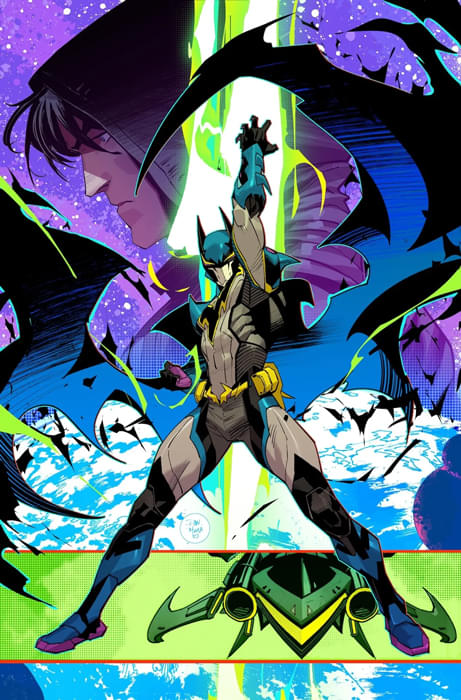
In shops August 27th
From the publisher
Humanity broke the barrier between our universe and our universe's shadow. From the void came horri?c apparitions that craved nothing but destruction. But from this terror...a legend was born. A warrior who found a way to access the energy that binds our universe and the shadow universe, transforming him into a cosmic dark knight. This immortal legend was named Batman. He fought to keep us safe but then one day abandoned the war. Though he didn't disappear entirely. Now they say he hunts a rouges gallery of monsters...born from the shadows!
Spider-Verse vs. Venomverse #3
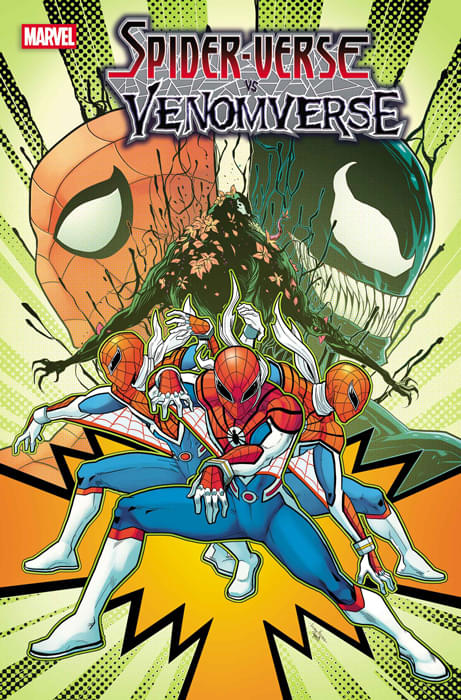
In shops July 23rd
From the publisher
Round two has begun! But who was able to make it? Now that blood has been spilled, the webs are off as Spider-Man and friends face off yet again against Venom and the symbiotes! But not before TWO new champions are added to the roster! Who could these warriors be? And will they add to the slaughter that has now unleashed among the competitors, or will they betray their own team to avoid the conflict?
Follow Comic Book Yeti
🔗 Comic Book Yeti LinkTree: https://linktr.ee/ComicBookYeti
For partnership and ad inquiries, please contact: thecomicsyeti@gmailcom
Follow your hosts
🔗 Jimmy Gaspero: https://bsky.app/profile/jimmygaspero.bsky.social
🔗 Byron O’Neal: https://bsky.app/profile/byrononeal.com
PATREON
We have a new Patreon, CryptidCreatorCornerpod. If you like what we do, please consider supporting us. We got two simple tiers, $1 and $3. Want to know more, you know what to do.
ARKENFORGE
Play TTRPG games? Make sure to check out our partner Arkenforge. Use the discount code YETI5 to get $5 off your order.
[00:00:00] Your ears do not deceive you. You've just entered the Cryptid Creator Corner brought to you by your friends at Comic Book Yeti. So without further ado, let's get on to the interview.
[00:00:30] Show notes and thank you for your continued support. Thanks for your donation.
[00:01:02] Dan Abnett and so many others. Get a print subscription and it'll arrive to your door every week. And your first issue is free or subscribe digitally. Get free back issues and download DRM free copies of every issue for just $9 a month. That's 128 pages of incredible comics every month for less than $10. That's like a whole graphic novels worth. All subscribers get amazing offers like discount vouchers and exclusive product offers.
[00:01:29] Head to 2000AD.com and click on subscribe now or download the 2000AD app and why wait? Start reading today. I'll put links in the show notes for you. Hello everybody and welcome to today's episode of the Cryptid Creator Corner. I'm Byron O'Neill, your host for our Comics Creator Chat. The word of the day is Tokusatsu, whose literal translation is special filming. But for our purposes, we'll be talking about a special comic book, a six issue DC Elseworlds miniseries dropping soon.
[00:01:59] called Immortal Legends Batman, brought to you by a gentleman who is intimately familiar with the genre. Having worked on developing a bunch of different comics, Radiant Black, The Massiverse, Ultraman and Avengers, Mighty Morphin, Inferno Girl Red. So please welcome back to the show, the manager of Morphin, the herald of Henshin, the superscribe of Sentai from Sydney, Matt Groom. It's nice to see you, Matt.
[00:02:25] Hey, thank you so much for having me. That was an epic introduction. I appreciate it. Yes! Nailed it. All right. Well, I think the only place to start with Immortal Legends of Batman is when are the action figures coming out? Because that's what everybody really wants to know.
[00:02:40] Oh, man, I can't wait. I have had no news on that front, I will say. But man, looking at those designs by Mr. Dan Mora, it's hard to not count down the seconds until that's available. So yeah, I'll be first in line as soon as those go out for sale.
[00:03:00] Yeah, I bet. Yeah, the designs are, they're just absolutely stunning. And you've gotten to play around with multiple iterations of Toku suits in comics. So what about these designs specifically do you love?
[00:03:13] Well, I mean, I can say that the designs of these suits are why this series exists at all. It's actually the origin of the series. Because the original designs for the suits were Dan Mora, probably about five years ago, just sketching them out as a hobby. Like he, there was no project, there was no anything. He just felt inspired, did the designs, chucked them up on Instagram just for fun.
[00:03:41] And it was at that point that Kyle and I saw those and were like, those are incredible. Those need to be a thing. We need to build a story around that. So he reached out to Dan and said, hey, can we do exactly that? Like we would love to pitch something with you as the artist. And he very generously said, sure, go ahead. And we did that. And we pitched it to DC Comics at the time, which might have been 2019, 2020, somewhere around there.
[00:04:08] A long time ago. And they said, yes, we love it. Let's do it. And then the big round of DC editorial layoffs hit and all of the editors that work on the project with were gone. And we had no more contacts at DC Comics and it died. So we had just kind of assumed that it was never going to happen. And then a few years later, we ended up, we happened to know Matt Levine started work at DC Comics and he hit us up and said, hey, do you guys have anything you want to work on at DC?
[00:04:37] And we said, well, there's this one thing. And unfortunately, as most people know, Dan Mora is now the busiest man in comics, despite also being the fastest working and hardest working man in comics. Absolutely. He's putting out so much stuff. It's crazy.
[00:04:50] It's wild. The speed and quality that he works at. So we knew we wouldn't be able to get him on all of the book, but we approached him again just to check if it was all right. And he said, yep, no problem. And he said that he's happy to update the designs. He was happy to do covers. And he insisted that he also did some backup stories. So he will have interior pages on every issue as well.
[00:05:13] But of course, we needed a main series artist. So we brought in Erica Durso from Inferno Go Red and indeed the whole Inferno Go Red team. So our colorist, Igor Monte and our letterer, Becca Carey, also as well joined us on the project. So yeah, it was five years in the making, but it all started with us looking at those designs of Dan's and being like, those are sick. We have to cycle that.
[00:05:37] Absolutely. Yeah. It's the double overlapping bat symbols. So good. Right. And I don't know what to call it. It's like a hybrid X-wing from Star Wars. I'm going to go with it. Bat ship. Like, I don't know how else to describe it. I'm not going to give away its name just yet, but yes, I know exactly what you're talking about. And it is very fun. Yeah. Yeah. Well, you've got the perfect team assembled there. Having Erica back on, having you guys already worked together on Inferno Go Red.
[00:06:06] I'm surprised Becca's on the project. I think Becca might be the only person who works harder than Dan in comics. She's on everything. She's on everything. And Becca also is so hardworking. Becca never takes the easy way out.
[00:06:23] And I'm someone who, like, I love an expressive letterer. And I think I've gotten very used to having Becca available in some ways because I know I can try big, strange things in terms of lettering and dialogue and she'll just nail it. So, yeah, we pleaded with Becca and thankfully she found the time in her schedule. In her eyes, a nominated schedule to join us again for this one.
[00:06:47] Yeah. Well, I'm looking forward to definitely some of the interpretations because this book begs it 100%. Just some very, very big, bold lettering. I'm anticipating that for sure. Absolutely. Yes. We will and I really mean Becca will deliver on that unquestionable. Well, getting into the characters, we know from the solicitations that the three heavily featured members of the Bat family in the book will be Batman, Nightwing and Robin.
[00:07:16] This is an Elseworlds book. So, continuity be damned. So, without giving anything away, are the relationships going to stay consistent with what we've come to expect from the characters or wildly divergent? Probably somewhere in the middle. Okay. I think one of the things I love about Elseworlds is that you get to completely redefine not both the characters but also just the history of the universe. Yes.
[00:07:43] And something that Kyle and I did a bit in our Ultraman run is like getting to sort of reconstruct a whole world history and we've done that here as well. And getting to do that for Batman, Nightwing and Robin was so exciting. And I think what I can say is that in this series, rather than Batman being the mentor, they really are a trio. They are sort of co-equal partners in this endeavor.
[00:08:08] So, they'll be working together as partners in their sort of overarching mission. But the story actually picks up with Batman walking away from his mission and in some ways abandoning the other two and they're not exactly sure why. And he's left on his own sort of, yeah, his own quest. He's got something he needs to resolve himself. And that'll be the main focus of the series.
[00:08:38] But we'll be seeing what's happening with Robin and Nightwing in the background as well. And then, you know, in what ways they might reconverge. Okay. That sounds rad. Like, as an old school Toku fan, it's hard not to draw some obvious comparisons between Skullman and Batman, if that one rings true. You know, for those not familiar, Skullman is a Japanese shonen manga series from the 70s where lots of parallels. So, the parents are murdered. It's part of a Yakuza clan, so he knows how to fight.
[00:09:07] He ends up partnering with a police chief to do some investigating. You get the idea. Are there any big Toku characters or series influencing your vision in Immortal Legend? Yeah, I think that probably as much as people have been drawing sort of like, you know, Power Rangers or Super Sentai comparisons, it's probably a little bit more Kamen Rider influenced. Okay. In that Batman is, especially as he operates in the series, kind of a lone hero,
[00:09:36] even though he has counterparts and partners that he works with from time to time. Um, and he has a very focused mission, I guess I'd say, in a way that a Kamen Rider might. Um, but I think what we're really trying to do with this one is take that Tokusatsu element and some of that, like, larger-than-life expressive and sort of, like, metaphors made real quality of Tokusatsu
[00:10:03] and then mix it with some, like, real bleeding edge sci-fi and then also a bit of Western. And I think you're going to see that as soon as we get that first issue, um, there is a big sort of, like, frontier Western energy. So, a bit of a, like, mashing of all of those genres. And in that way, it's going to feel a little indistinct with all of them. Like, it's not a perfect map for any one particular genre. Hopefully we're creating something that feels a little new.
[00:10:34] Okay. Yeah, I'm getting Firefly from that. Yeah, actually, that's a really interesting out-of-comparison. Yeah, I hadn't thought about that. But yeah, definitely Firefly. Okay. Only instead of, you know, Mandarin, it's Japanese, maybe? Exactly. Exactly. Well, the, the logline synopsis and from what you're describing it, I'm, I'm also thinking of, uh, Metal Hero, right? So that space angle where you have a space sheriff.
[00:11:00] I mean, it could just be a convenient, uh, kind of the whole mentorship and succession, you know, that makes sense in my head between, between those three different series that ran. But, and I have no idea the frame of reference for what you had or what you were exposed to growing up in Australia in terms of Toku. So what did you connect with growing up in comics, manga or media? Yeah. I mean, the interesting thing about Australia is we have historically been a pretty, uh, protected market.
[00:11:30] Uh, we haven't had access to a lot of things in the, in the pre-internet era. Um, so my connection to Toku is a very common one actually in the West and that's Power Rangers. I got into Power Rangers as a kid. I was like the target market for growing up. And then it's like found out the history of Power Rangers and how it was adapted from Super Sentai. And sort of that was my, um, way into it.
[00:11:55] And I had a, a weirdly sort of similar experience with comics in that my first, uh, exposure to superheroes was Batman the Animated Series, which I just adored. It was my whole world. And then I found out that there were comics and that's where it came from. And I, we fit my local, uh, news agents, we call them here in Australia, which is just like a magazine and newspaper store. Yeah.
[00:12:24] Um, we, they would have maybe two or three titles of comics. It would be the Phantom, maybe a Spider-Man, and then sometimes Batman. And they had Batman Hush when I was in high school. They didn't have every issue, but I was able to pick that up. And obviously like that Jim Lee art, it's so magnetic. So that, that pulled me in. And then from there I was like, okay, I definitely need to find more about this.
[00:12:52] So I went to the next city over, which was the closest thing to a comic book store that was available. They had a sort of a combined record and comic book store. And there I found my first trades. And from that, that point I was like, yes, absolutely. I got a, uh, Grant Morrison JLA trade. It was in the middle. It had like Big Barter and Plastic Man and, um, so many characters that I had no idea who they were. But my thinking was, this is the most value product I could get.
[00:13:21] Batman, Superman, and Wonder Woman for one, one price. I'm absolutely going to do that. Uh, then yeah, from there I was Hulk, line, sinker, absolutely in love. Yeah. Yeah. Yeah. For me, it was Doom Patrol in that era. I mean, it probably have a similar story to most kids growing up in America. You know, comics was the gas station and, you know, the vertical racks there. And that's what got me in. But, you know, the real gateway drug, I guess, was Doom Patrol. That'll do it.
[00:13:49] Broaden things out, you know, beyond just the, the, the childhood sphere of influence and stuff. So it's really, really interesting to hear you talk about how the animated series was like a major significant influence. Did, how would we see that potentially imprint on, because it's your first opportunity to work with the character, to work with Batman. So. Technically, I have written three panels, I think, of Batman before. I did a, um. Excuse me for missing that.
[00:14:19] Oh, no, no. I don't believe you at all. I did a slam Bradley short story in an anthology like six years ago, I think. And Batman had a small appearance in that. But yes, this is basically my, my first interaction with the character. And I think that there are a lot of, well, I don't know, I've said it. Some parallels of Batman, the animated series.
[00:14:44] For example, one thing that we're really keen on doing in Immortal Legend of Batman is have every issue feel like a whole piece and feel quite tonally distinct to the other issue. Like episodic. Yeah, episodic, but there is a serialized story throughout.
[00:15:06] But one of the things that the sci-fi setting allows us to do is go to a different planet every time and encounter whole different things every time. And I think that's one of the things I loved about Batman, the animated series was it was like short films every week. Yeah. And they often had quite different tones or explored very different ideas. So it is still a serialized story.
[00:15:29] This is one overarching quest that Batman is going on that will have a distinct sort of like start, middle and end. But every issue, a new location, a new vibe, a new idea that we're exploring. And yeah, I'm very excited about that. Yeah, I love that. So Kyle is your ride or die, Toku. So what made you all kind of connect those dots that Batman, the Bat family would make a great adaptation of it?
[00:15:59] It blows my mind that it's never been done before. Yeah, absolutely. Well, I mean, to be honest, again, it was just those designs by Dan. Okay. Dan shares. We all actually have a bit of a shared origin story in the Boone Studios Power Rangers comics. We've all worked on those in some capacity. And I think Dan really came up through Boom. I think they were the first people to really see his tremendous potential.
[00:16:26] And I think as much as like, yes, that was our sort of common vector. Really, I think we all grew up with Toku in our lives, whether we knew it or not, when we were coming of age through things like Power Rangers. I've never actually spoken to Dan about this specifically, but I strongly assume, given his affinity for it, that's true of him as well. Because he seems to have a desire to express himself in these forms, even when he's not being paid to do it, as we saw in his original designs.
[00:16:56] Yeah, absolutely. Well, what does it mean to you to connect these dots between the tokusatsu genre that you love so much and to leave your mark in one of the biggest superheroes of all time? Now, of course, you've done it. I'm going to give you credit for certainly writing Batman in the past. Very, very, very mild amount of credit. Yeah. I take it. If it were me, I would like shout from the rooftops, I wrote Batman. That's true.
[00:17:25] Yeah, that is true. Yeah, it's incredible. It definitely feels like a full circle for a moment, a full circle moment for me in some ways, because my childhood really was defined by Power Rangers and Batman the Animated Series, like together in my young childhood. Like those were my like leading lights. To the extent that I assumed when I went to America and went to New York for the first time that it would be like Gotham City and all sort of like Art Deco and Seed and Shadows.
[00:17:53] Because that was where they like real reference point for what America was like. And it's, I've been sort of thinking about this a lot lately about the idea of cultural exchange. Because obviously like given my affinity for the material, I'm always very wary of not straying over into cultural appropriation or not sort of like trying to tell like, you know, Japanese stories.
[00:18:22] And I think that's why I'm always very mindful to make sure that Toku is like an influence mixed with others. But it's interesting, the more you go back into the history of Toku, the more you see that cultural exchange layered into. Like the big mechas of Super Sentai started off in the Japanese Spider-Man series, which started with them seeing Spider-Man and thinking, that's cool. I think we could do something with that.
[00:18:51] Um, or you see a lot in when, uh, the Japanese are first working on Ultraman, which is a seminal Toku series. Over in the UK, Jerry Anderson was working on Thunderbirds and they were both doing really transformative, groundbreaking miniature work. And were very aware of what each other were doing to the point where they were traveling between countries to check out each other's work and be inspired by each other.
[00:19:19] Uh, and you can see that, that cross-pollination and that love between them. Um, so like, you know, I don't want to make too grand a comparison, but, uh, I do see the work we're doing here is, uh, following in that lineage of taking things that we love and inspired us. And also trying to bring something of ourselves and our own culture to it as well and seeing what happens when we sort of crash those things together.
[00:19:47] Um, and, and hopefully doing it with, well, I know doing it with tremendous respect, um, for the genre and hoping only to sort of build and create something new. Yeah. I mean, Toko and, and manga for that matter too. I remember some of the foundational stuff for me was Vampire Hunter D and that was a Western look. Absolutely. So yeah. Yeah.
[00:20:12] West, the Western influence is, is rife across, uh, all of the stuff that was coming out of Japan at that time. And well, even now. Yeah. A hundred percent. And that's, you know, it's, of course, it's not strange that creative people are influenced by each other. Right. And national, national boundaries are, uh, political constructs. They're not things that really should dictate art.
[00:20:35] Um, and yeah, as you say, I think there's just such a long history of people from different regions being incredibly inspired by each other and excited by each other's work in, and finding ways to integrate those ideas. Yeah. And it's the nut to crack right now for Western comics with trying to figure out how to capture the, the younger readers. Yeah. And they, who are distinctly into manga. So how do we, you know, bridge that divide? And they've tried it.
[00:21:05] And, um, what is it? Uh, Justice Buster, the, the Batman manga is actually quite good. I really, really enjoy that. But this feels like maybe the first big opportunity to really meld all that stuff together to me. Yeah. And I think there's an interesting question nested in there, right? About like, what is the nature of the appeal? Is it the content? Is it the form?
[00:21:33] Is it the, is it the accessibility? Is it, is it that price point even? Um, and yeah, you're, I think you only need to look at the relative sales figures between manga and, you know, what you'd call Western comics. Is to realize that if we are not trying to learn things, then we are being very ignorant of financial reality.
[00:21:55] Um, which, you know, I, I don't expect a model legend Batman necessarily be to, uh, save comics. Um, but I, I would like to think that it would very least, you know, ink, draw a few more people in and be in some way a contributing factor to expanding the pool of comic readers, which is always going to be a goal of mine going back to Inferno Go Red.
[00:22:23] But one of the things I was curious about when I was reading this list, it's, and the explanation of kind of what's happening with the story is humanity is accessing dark matter for technological purposes and creating. Okay. There's unintended consequences, let's say in the form of these shades, which to me, echo OG Toku themes with Godzilla and that existential terror that Japanese people were experiencing with nuclear war.
[00:22:47] So either a, I'm giving you and Kyle way too much credit for continuity threading here, or B you have really thought this thing out to make sure that, that it's echoing and paying tribute to everything that's come before. Yeah. I mean, in some ways that, that through line is kind of inevitable.
[00:23:09] If you are looking at Toku as an influence more than skin deep, more than just aesthetic. Um, because something that is a real through line in Toku is taking these bigger ideas and these sort of like philosophical battles. And then literalizing them.
[00:23:33] And the idea of negative energy or negative emotion or, um, you know, like dark forces, like hatred being literalized and giving monstrous form goes all the way back, uh, to, you know, Ultraman. And yeah, even like Godzilla.
[00:23:52] Um, but I think it probably is even a little bit more explicit in something like an Ultraman where it is like very much the dark, the dark emotions of people is given monstrous form in these Kaiju.
[00:24:05] And yeah, that's certainly something that we're playing with in this series is the idea of as humanity progresses, there's kind of a counterbalancing force that, um, is sort of all of our darkness and those, you know, those darker tributes that sort of come back to haunt us whenever we do try and reach for the stars. And Batman and the other Emerald Legends are there to try and protect us from that.
[00:24:33] And the varying levels of success. Okay. Yeah. The shadows kind of feel like, uh, introducing a cosmic horror element. I am getting Event Horizon vibes, which is up there amongst my top horror movies of all time. Is horror something that you'll be leaning into with the series? I would say a little bit.
[00:24:57] I think the shadows themselves are definitely, they definitely have a horror vibe to them because it is, in some ways, you know, when you're dealing with people as characters, there's always some sort of like mitigating factor. Like people are complex and multifaceted. Whereas when you're dealing with this more archetypal evil force, there's no real nuance to that.
[00:25:24] But I think that could bring nuanced stories in itself. And I think that is the sort of threat that the shadows pose here. They are just evil. Like they can't be talked around. They can't be redeemed. And that is naturally horrific, right? It's something that you can't compromise with. Something that you can't escape dealing with.
[00:25:49] And yeah, there absolutely is a horror element to that. And you'll definitely see that coming through in the designs as well as the consequences of the actions of some of these shadows, for sure. Yeah, I love that. And that's kind of a counter to what we think of as Batman and the nucleus of him as a character. Because he's always looking for a redemptive element in whoever the antagonist is. Yes, absolutely.
[00:26:21] Yeah, I'm going to stop by those. No, no, it's cool. There's something very interesting to that. Well, the only reason I have to stop myself is because I think that I can't say too much more without spoiling anything. It's one of the reveals. But yeah, I think you touched on something very interesting that maybe we'll chat about again next time we chat after everyone's read the book. Nice. Okay, cool. Yeah, I'd love to. Yeah, I'm personally waiting to see who pops up from the Rose Gallery, if indeed anybody. Because Killer Croc is one of my personal favorites.
[00:26:50] And he's sort of an obvious one to connect with Kaiju. And I know you can't say anything, but I'm just prognosticating. I think people will get some idea of what we're up to in the first issue. And then it will be a little easier for me to talk about things like the Rose Gallery or lack thereof. But it's so fun that I don't want to give anything away at this point. Totally understood. I wouldn't want you to.
[00:27:19] Let's not spoil it for anybody. But I am anticipating a bunch of Zinger Easter eggs in this. Like Ishinomori or Ishimori better show up somewhere as tribute. I'm just saying. All right, everybody. We're going to take a quick break. We'll be right back. Y'all, Jimmy, the Chaos Goblin strikes again. I should have known better than to mention I was working on my DC Universe meets Ravenloft hybrid D&D campaign on social media. My bad.
[00:27:47] He goes and tags a bunch of comics creators we know. And now I have to get it in gear and whip this campaign into shape so we can start playing. Another friend chimes in. Are you going to make maps? It's fair to say it's been a while since I put something together. So I guess? Question mark? It was then that I discovered Arkhamforge. If you don't know who Arkhamforge is, they have everything you need to make your TTRPG more fun and immersive. Allowing you to build, play, and export animated maps.
[00:28:15] Including in-person Fog of War capability that lets your players interact with maps as the adventure unfolds. While you, the DM, get the full picture. Now I'm set to easily build high-res animated maps, saving myself precious time and significantly adding nuance to our campaign. That's a win every day in my book. Check them out at arkhamforge.com and use the discount code YETI5 to get $5 off. I'll drop a link in the show notes for you. And big thanks to Arkhamforge for partnering with our show.
[00:28:44] I think I'm going to make Jimmy play a goblin warlock just to get even. Welcome back. Talking about influences, let's talk about Spider-Verse versus Venom-Verse, which is the other big book you're working on right now from Marvel. In issue three, we are teased with a new Toku-inspired Japanese Spider-Man. It's Takuya Yamashiro. Am I getting that down? I think that's correct. It's been a little bit. But yes, I think so.
[00:29:13] Yeah, but... Takuya is the Japanese Spider-Man of the Japanese Spider-Man TV series from the late 1970s. And he's appeared in bits and pieces of previous Spider-Verse events. But he has something of a bigger role, I think it's fair to say, in Spider-Verse versus Venom-Verse.
[00:29:37] And for reasons that will be clear in the story, he gets a costume redesign courtesy of Luciano, our series artist. And it was tremendous fun to work with Luciano on that. Specifically, we wanted it to be even more Sentai, but specifically Sentai of that late 70s, early 80s era. Scarves. We love the scarves.
[00:30:07] That one was a bit of a Kamen Rider pull as well, actually. But yeah, we went back and forth on all the different aesthetic choices. We had a lot of fun putting that together. Yeah, that's awesome. I've enjoyed the first two issues thus far. That growing relationship between Peter and Eddie, where Eddie's on a redemptive arc. And it's engaging because there's that, but there's the literal on-the-clock, if you will, action sequences that's happening.
[00:30:32] And their relationship is the wheel, but the road that they are responding to is in the hands of their teammates, right? So Weapon 8 is knitting this together as the morality plays. So talk to me about using everybody else to pull Peter and Eddie together into that tight orbit. Absolutely. I mean, the, this sort of stuff is only interesting to do for me if we can get some really interesting character actions out of it, interactions out of it. Yeah.
[00:31:01] And in some ways, this, the whole construct of the story really is a machine to put divergent perspectives together in the highest pressure situation to force interesting conflicts and interactions.
[00:31:18] And absolutely Peter and this alternate version of Eddie are the nexus point of that, but surrounding them with characters and who had experiences that are quite divergent that really test their intentions and their morality all along the whole path of the story.
[00:31:43] Even down to, we created a new version of Miles called the Spider-Prowler from a universe where most of humanity was wiped out by the Kree and he's the last, their sort of last line of defense. And taking that Miles, who's had a far more difficult and traumatizing experience of his life as compared to Peter.
[00:32:10] And of course is very much shaped by that experience and having him challenge Peter's morality in some way and sort of say, it's all well and good for you to hold these values and these like ideals when your world comparatively is pretty hunky dory. And you like, you haven't had to make any truly difficult choices. And like, absolutely Peter has, but not compared to this version of Miles. And is that morality still compatible?
[00:32:38] Can those two hold together as a unit with such like disparate viewpoint? Um, because that being an example and then sort of extrapolating that out over both of the teams and making sure it wasn't just one set of action figures clashing against a bunch of other action figures. All of the allegiances within the teams constantly shifting and changing. So you never quite know what solid ground is at any point.
[00:33:05] Yeah, I give you guys a lot of credit on this one because it's far more purposeful than other Spider-Verse versus Venomverse stuff that. I don't know. I really honestly haven't been super engaged, but I had faith. I was like, oh, Matt's writing this. So I'll check it out. And I think seriously, I've really enjoyed it because they normally there are these vehicles that are basically designed to throw up all these what if scenarios and we can do some cool character renditions. And, okay, that's great. That's fun to play with. Right.
[00:33:33] But there are there's no emotional core to it. And it really isn't all that engaging. And as you introduce other characters, I'm curious about how much of that is a mix of wedging people in. Right. Like the Takuya or for instance, or just vibes and aura essentially and balancing out that emotional development. Because I have no idea what they gave you in the remit when you started this thing. Yeah.
[00:33:59] I mean, I think I could say like there was very little mandated for us. Oh, okay. Um, it, it was just, I think they said Peter has to be in it, which I don't think there's any question in my mind anyway. It was like not going to not use Peter Parker. Right. And yeah, we were given very broad latitude to put together the team of characters that we wanted. Uh, cause sort of in the pitch when we went in, I was very firm about, I want it to be a small group.
[00:34:28] I don't want it to be 25 on each side because I can't, I don't have the ability to service that amount of characters. That's just within my talent range. Um, but a smaller group I can, I can just about handle, I think. Um, so I, you know, very, very specifically chose characters that I knew would be interesting foils for each other in this conflict.
[00:34:54] Um, and of course, like some of them will be a little bit more central than others, but nobody is there just as set dressing. Everyone has a moment. And I, I wanted to make sure we're treating everyone as a real character and always interrogating what are their choices? Where are they coming from? What is their meaning? Including Spider-Ham, which is like a character that I've really grown very fond of in the course of the series.
[00:35:18] Like he's very jokey, he's very silly, but he has a very defined moral position. And as, as a superhero is willing to go all the way to hold to that moral position in all circumstances. And if you put that in conflict with somebody else, with the, like the, you know, a conflicting moral position, there will be conflict. And he's going to have earnest, real feelings about that.
[00:35:45] Uh, so I, I think any character when handled right and with respect, you should be able to find that meaning. And I feel that way about stories too. For example, we have in the story, uh, Agent Venom, who is Anne Wayne from another universe.
[00:36:04] And she has in previous Venomverse events been through horrific experiences where she lost a lot of her family and all of the symbiotes she was fighting alongside were killed. And I think people had different reactions to that story. And, you know, some people liked it and some people didn't. But to me, that's just her life. And there was, that, that puts her in an interesting position coming into this situation.
[00:36:33] That's going to inform a lot of her decision. Uh, and you could only arrive at that understanding of the character through research and exploration. And having done that with Anne, whether or not sort of you like the story in question, she's a very rich character now. And I'm having a lot of fun sort of exploring that and testing her and finding ways to take that history and make it more meaningful.
[00:36:57] Yeah, I love the dynamics that you all have created because it's not just team versus team, but it's team within team. These interpersonal dynamics that are created. I mean, Spider-Ham is a great example of it. You have a diminutive, the smallest one on the playing field, and he's the one wagging the finger to weapon A and being like, hey man, why are you being so mean? Yeah, absolutely. Yeah, which is sometimes a good question. And I think in some ways, like the beauty of Spider-Ham is he's got the simplest perspective.
[00:37:26] But also arguably the right perspective, right? Sometimes people who have moral failings, it counts for them overcomplicating a situation and justifying things to themselves with these like complex webs of justifications. Whereas Ham comes in and he's just like, no, we don't kill people. It's very straightforward to him. And he's just going to hold to that no matter what. And I think in some ways that's admirable. Yeah, absolutely.
[00:37:54] Well, there's this cool battle thing that's going on too between the Webheart and the Hivemind with Peter and Eddie as their avatars, which I think is a really clever idea for anyone who hasn't seen it too. The really smartly done, the narrative unfolds in such a way when they're kind of going through that where they're mirroring each other. And you have these stunning kind of bifurcated horizontal layouts that give you both Peter and Eddie's perspectives. I don't think I've seen that before. Yeah, it was a lot of fun.
[00:38:24] Actually, that was when we put together the pitch document, that was the like cold open to the pitch was that whole sequence basically verbatim. I think we like tweaked some of the dialogue a little bit, but using like historical panel, comic panels that sort of I just went through and sourced. I just sort of laid out that whole thing to make the argument of like these two are incredibly similar in ways that sometimes I think people don't even appreciate.
[00:38:53] And they have such a common heart. And let's create a situation where we put them in conflict to see like what exactly are the differences because there are some differences and like what are like other differences going to tear them apart? Are they going to help them work together? And what is the meaning to this sort of parallel experience that they've been living? Like is it coincidence? Is there something a bit more meaningful to it?
[00:39:22] And that's something that we'll certainly be getting into more as we get towards the end of the series. Okay. And there are how many issues in that that are going? Six? Five. Is that right? Oh, five. Just five. Okay. Yeah. Okay. All right. So is there anything as you have developed this, you're clearly, you know, going through connecting, trying to thread things. Oh God, Spider-Man book and threads. That's a terrible illustration that just popped in my head.
[00:39:46] But anyway, when you're putting these groups together, is there anything that's been surprising for you that, okay, I connected to this character on this level. That's just why I put them in there. But as they've evolved and you've worked with them, they're like, oh, that did not go how I thought it would go at all. Yeah. I mean, I think that's true of me personally for the whole symbiote side of the equation. Okay. And I wasn't necessarily super connected to the symbiotes conceptually going in.
[00:40:15] Like I thought Venom was a fine foil for Spider-Man. But, you know, when the opportunity of this series came up, I was like, well, I really need to read up on a lot of stuff. So read a bunch of Venom, particularly all through the Donny Cates stuff and all of the recent Al Ewing and Ram stuff, which was absolutely fantastic. And then sort of went a little broader out into the other Venom stuff as well.
[00:40:42] And I've developed a real appreciation for the real beauty of the symbiote relationship. Okay. And I think that's something that you're going to see again come through more towards the end of the series is as much as Venom is, you know, was originally an antagonist and, you know, symbiotes often put in antagonistic roles.
[00:41:09] They are defined inherently by cooperation. These are two life forms that have decided that they can only exist as their best selves if they work together. And it's a really interesting foil for Spider-Man, who's so often been defined by his inability to work with others.
[00:41:34] Like, yes, he's been in the Fantastic Four and he's been in the Avengers, but by his own admission a lot of the time, that's not his natural state. And he's always had brought interpersonal relationships because he has these walls and he struggles to let people in. And it's very interesting to see something that we would consider to be normally the softer, sort of more empathetic side of things better represented in the antagonist than the traditional protagonist.
[00:42:04] Yeah, yeah. So I'd just be like so taken with that idea and the idea of symbiote as a concept. And especially sort of coming out of the tail end of Donnie's run and into the start of Al's run, extrapolating that idea out of like Eddie and his symbiote are this core team. But then Eddie taking on this responsibility, being the King in Black, the leader of the symbiotes, being connected to symbiotes all across the universe.
[00:42:35] That is a very communal idea, ultimately. And I don't want to sort of bring too long a bow here, but I feel like as people are slowly opening themselves up a little bit more to the idea of communal approaches to forming society and sort of helping each other out and organizing themselves,
[00:42:57] that maybe symbiotes are becoming increasingly relevant as sort of fictional tools for exploring these ideas. Yeah, I've been surprised at how much I've connected with Eddie as a character. He's by far my favorite in the entire series thus far. And I think it's the maturation that he's going through and a lot of the internal conflict.
[00:43:21] You know, we're seeing the evolution, and we have been for a while, of Venom, even though that's not, it's not 616 Venom. It's a feature of a different multiverse. But, you know, he's got a different level of guilt that he's coming in with in the story as well. And it's been really, really interesting and engaging just to kind of see how you're working with him as a character because he has those conflicts, not just, okay, well, I've got a goal. I'm a representative.
[00:43:50] I'm the team leader of the hive mind here. But also, I feel conflicted with what I have done in my past. But that's a whole different Peter. Yeah, and I think that that's part of why I've really come to love Eddie so much is he's such a fascinating and rich character.
[00:44:10] I think because he was humbled so profoundly in, like, as he sort of went through his early sort of, you know, super powered experiences. In a way that Peter had his humbling in the first issue of Amazing Fantasy, right? Like, he learned his lesson and then sort of, you know, moved on from there. And, of course, there's been trials and tribulations along the way, but he kind of got it.
[00:44:38] Whereas Eddie kind of, like, it's like, you know, a person falling down a series of steps and hitting every step along the way down. He had a very long and progressive and embarrassing fall from grace. And had to sort of like... It's probably why I connect with him. Yeah, that's why, like, it's why I connect with him too, right? He didn't just, like, learn the lesson at age 16. He was like, great, and now I'm a good person. He really messed up a lot and was humbled by that experience so thoroughly.
[00:45:08] But I think because of that, it has really maturity. And in some ways, someone who goes through that experience so thoroughly is probably going to be a little bit more empathetic in some ways than Peter is. Someone who, like, kind of just figured it out and then things, at least from a moral perspective, just kind of worked out for Peter from there on out. Whereas Eddie's been in the moral trenches for a long time. And there is some value in those experiences.
[00:45:37] Yeah, yeah, absolutely. Well, what you guys are putting down is absolutely great. I've been pleasantly surprised. Again, as I had said, I had some reservations just based on the concept from the jump. We're getting that a lot, to be honest. I think the thing I see most commonly is, oh, I'm really surprised. And listen, I'll take it. I totally get it. No judgment at all. It's been very funny to watch people be like, oh, this is good. That's really the best compliment you can get as a writer, though.
[00:46:06] Like, I had reservations and you won me over. I mean, that's the win right there. A hundred percent it is. And I definitely see it that way. Yeah. Well, issue three is coming out soon. So make sure everybody who's listening, check that out. Hopefully we've converted you. I definitely give it my seal of approval. Before I let you bounce, let's touch on some of your other stuff. There was the Bad Blood card game, which was something that you crowdfunded with designer Kelly McMahon, if I'm pronouncing that correctly. How did that all come about? How'd you get involved with that?
[00:46:36] Well, I know Kelly's worked on a bunch of covers and stuff for the Massiverse for us. And I sort of met Kelly through Kyle. And Kelly had this idea. She's done a set of playing cards before. And something I've learned through Kelly through this experience is the playing card community is very precise in what they love in terms of like quality and what they expect.
[00:47:00] So I had been through that a little bit before and wanted to take another swing at it and create some beautiful cards. But I think she had had some experience with one of those sort of like mystery books that have, you know, like hints and clues and like faux evidence in it as a child. And thought like, I'd love to bring a bit of that to the card game, but that requires narrative skills that aren't necessarily Kelly's forte.
[00:47:27] And, um, so Kelly was talking to Kyle about that idea and Kyle recommended me and we chatted and yeah, we're off to the races. It was a very fun experience of taking this, um, sort of like idealized noir world that Kelly had created through illustrations and then building out a murder mystery through that.
[00:47:46] That worked if you wanted to involve yourself in the murder mystery with the booklet and the cards, but also just meant that if you just wanted to play cards with the cards, there were interesting evocative characters that sort of hinted at a broader world beyond that as well. Um, yeah, so it was very fun. Yeah, I bet as a comics writer, it's a very interesting way to play with panels, I guess is the only way I can sort of think of this because each card is sort of fun.
[00:48:16] Functions as its own panel and then you're connecting them in a narrative way and each iteration of the game, I'm assuming, you know, it looks very, very different. Very much. Yeah. And it was also just in writing the, the company booklet is more strict pro stuff than I've done in a while. Okay. And we ended up also doing a mini comic to go along with it for some backers. It was, I think it was like an eight page short story.
[00:48:44] Um, that yeah, it was, you know, I can't help but do a little comics here and there. It's just everything I've involved with it seems like, but it was really fun to sort of stretch the, that sort of prose writing, um, those muscles. Because in some ways my instinct in writing comics is to let it all come out through character and action. I'm not a, a big, like extensive narrative caption guy necessarily.
[00:49:12] Um, so yeah, it was nice to be forced to sort of like try, try a different thing basically. I mean, you say that, but Spider-Verse versus Venom-Verse has a lot of exposition in it. That's not a bad thing. It does. It does have a lot. Yes. I'm very aware of that first issue. My feeling was just like, let's lay all the track for this complicated idea up front. And then we can sort of like set, set all the trains off and see how they collide from there.
[00:49:38] Uh, but yes, Spider-Verse versus Venom-Verse in a lot of ways has been a fantastic challenge as a writer because trying to get, you know, the teams are five on each side and then each team gets an extra, extra two people. As the series goes on. So that's a cast of 14 ultimately. And serving all of those characters meaningfully in five 20 page issues was a fantastic challenge. And it really, really pushed my limits.
[00:50:07] Um, but you know, in a good way, I think, I think it, I'm actually quite happy with how it turned out. I think we, we land the plane by the end of it, I think. Um, so yeah, it's, it's been, uh, hopefully a growing experience as a writer. So, so did you do that or bad blood first? Because I can see how sort of the chaos of putting together a card game and the randomness of kind of putting that together and working a narrative around it would as a nucleus would actually be applicable to that. Totally. Yeah.
[00:50:37] I did bad blood first, but I could definitely see what you mean because an additional element of bad blood was because it's a puzzle. It really means it's a game. So there was a lot of game design elements that, you know, you kind of have to lay out all of the functional sequences and connections and then sort of find the narrative around that and make sure that that's fulfilling as well. So it actually, yeah, it is quite similar to the process of Spider-Verse versus Venom-Verse.
[00:51:07] We have these characters and you have, you know, the only thing we really had in terms of what was given to us was the title. Like we knew these two things had to sort of go bang and crash together. Okay. So once we had, you know, that construct, it's like, okay, but what's the story in that? What's the meaning? How do we sort of build the flesh around those bones? It's a good, it's a good skill to have, I think, as a writer, particularly in B2 comic. Absolutely.
[00:51:33] Knowing how to bring the meaning to the form that you're given. I mean, kudos to the editorial team here for just giving and extending the trust. It's like, hey guys, run with this. We need this little nugget and then go. I can't be more complimentary of Jordan and Emerald, the editors on the book that have been profoundly trusting and have given us a lot of latitude.
[00:51:58] Uh, even just like working quite closely with Luciano who contributed a lot to different ideas and sort of visual executions of the story. Um, yeah. Being tremendously supportive in, I think sometimes you see on social media platforms, this idea that Marvel editors are very like, you know, they just lay everything out and you just have to execute on their ideas. And, you know, I'm not sure if that's true elsewhere, but that has not at all been my experience.
[00:52:28] And on this book, least of all, we were given tremendous freedom and they have been so supportive and very open to our, our pushbacks and our, you know, where we wanted to take it. Well, you've had a lot of freedom on both those projects, the Immortal Legends of Batman and, you know, the Spider-Verse vs. Ben-Verse. So that's, you're in a great pocket right now. Hopefully you'll continue to get jobs like that or you'll have that much of a leash. Listen, I would love that. Uh, I couldn't agree more.
[00:52:56] In Modern Legends of Batman, in some ways especially, uh, we have been given an amount of latitude that feels very much like our creator-owned massive-verse space. Yeah. Um, even just down to like, we'd be given more pages to sort of really make sure every issue feels, you know, bigger and more complete. But yeah, without saying too much, we have brought a lot of our experimental energy to the book.
[00:53:25] I think when people get to issue three of Immortal Legends of Batman, they'll see especially what we mean. I think we're doing some stuff that, you know, as far as I know, haven't, hasn't really been done in comics before, or at least not in this particular way. And it will make people go like, huh, I didn't know comics, you know, you could really handle it like that. So, um, yeah. I've been so thoroughly impressed with that, that latitude that we've been given. And again, we're just, we're creating a DC universe.
[00:53:55] You know, everything, um, every aspect of it has been at our control. And I think the results of that will be very exciting for people. Well, Matt, you just set the bar very high because absolute Martian Manhunter with some of the things they're doing there is blowing my mind. So. That's the lyric. Listen, I'm not going to put myself up on that pedestal willingly. Um, I think, you know, we're doing something different, but that is the highest, highest of bars to reach for.
[00:54:24] And I will strive towards it, but I'm not going to make any promises of clearing it because. Okay. We won't hold you to that. When there's like the best, you know, the best, if one of the best, if not the best comics on the sands at the moment, um, I'm not going to be like, yeah, I've got that. I'll beat that. No. Yeah. You have a little more humility than that. I can, I can see. Um. Yeah. Or, or, uh, like just, uh, you know, sense of reality.
[00:54:54] Well, back to bad blood. Is there a place that people can still order that? That's an excellent question. I think Kelly still has some on her website. So if you Google search Kelly McMahon, that's, uh, K E L L Y M C M A H O N, uh, check out her website. I think she still has some. Um, if not, I believe she has some at conventions all the time and Kelly's all over the place at U S conventions. So. So you can track her down and grab some in person.
[00:55:24] Yeah. I'll put a link in the show notes to her website. So people can check that out if they're interested. And what else you got cooking? What's on the horizon aside from tons of leeway at the big two? Yeah. I mean, uh, not a lot I can talk about right now. I will say that, uh, Ultraman Avengers has just hit trade paperback. So if you're interested in how we handle massive cast of characters, that is certainly an example.
[00:55:50] Um, and it was really cool to take this Ultraman universe that Kyle and I have been building for sort of five years now. Uh, and smash Ian, Spider-Man and Captain America and Iron Man and all the rest into it. Um, and you know, see what happens when Galactus turns up in Ultraman's universe. It was a total blast. I got to pick it up because I'm, I'm a trades guy as you can see behind me.
[00:56:16] I mean, that's, that's typically how I read, but it sounds like this, the Spider-Verse versus Viniverse was more of the, the X-Men, you know, your five aside sort of kind of deal. And this feels like your, uh, secret wars from what you're describing. Yeah. I mean, that is certainly a potentially a comparison. It's a very interesting difference in scope in some ways.
[00:56:37] Cause even though like, it feels a little more niche in the sense that our Ultraman run has been sort of like a little over to the side, a little smaller in, um, sort of perhaps public awareness. But, uh, it's also bigger in scope in that it doesn't have that super confined construct that we built with Spider-Verse versus Viniverse. It's much more freewheeling. Um, and yeah, we got to, we have to have some very fun character interactions, I think. Just like Spider-Verse versus Viniverse in a lot of ways.
[00:57:04] The joys in seeing interesting characters hit each other and bounce off each other. Yeah. Those are always fun to play with for sure. Well, I'll put a link in the show notes to, to make it easy to find you and your website. Where else are you active on socials? I know you're on Blue Sky. I am on Blue Sky. I'm at Matt Groom, I think Matt with one T. And I'm also on the app I will only ever call Twitter. Uh, unfortunately still.
[00:57:31] Um, that's Matthew with one T, Groom, all one word. I think that's it, to be honest. Uh, I do have a website, MattGroom.com. I don't update it very often, but there is a little message box on it. So if you want to reach out to me, you can hit me up that way. Way cool. Well, I always like to wrap things up on a positive note these days. I, I can't speak to how things are in Australia, but here in this day, 2025 has been rough. And as we deal with our own authoritarian version of Not So Slim Kim.
[00:57:59] So let's finish things with a shout out. This can be, uh, someone who did you a solid recently or just something that inspired you. And I'll go first to give you a sec to think about it. Lately, I've gotten into rope flow. I don't know if you've seen or heard anything about it, but I mean, it's pretty much a 12 foot rope that you tie to eight feet and you're doing intricate pattern work with it. I've been, I've done daily martial arts for longer than I can remember, but it's really
[00:58:25] fascinating to incorporate something like a rope and you'd think, well, that doesn't weigh much. That can't make much of an impact. It will kick your ass. Let me tell you. So I go to bed sore in all the right places and it's been pleasantly challenging to kind of embrace rope flow. So I highly recommend anybody who just wants to kind of introduce something else into their workout. Check out rope flow. It's cheap. All you need is a rope. That sounds so cool. Yeah. I love that. It's rad. Yeah. Okay.
[00:58:54] Well, I guess continue on that sort of vein. I semi recently moved out of Sydney, which is Australia's biggest Sydney city into the nearby mountains. And I've taken advantage of that situation to do a lot of bushwalk. Amazing. Cool. Trying once a week, get out and do a sort of like three or four hour bushwalk. And it's been tremendously beneficial for my mental health, particularly in these crying
[00:59:24] times, as they say. So yeah, I'm, I, over the course of my life, I've discovered that as much as it doesn't solve all problems, walking is a surprisingly beneficial thing to be doing for your body. Yeah. And if you can find a way to make that more joyous or get out into new environments with it, I think you will be surprised by how much is going on a regular walk and improve your perspective and your connection to your local community. As trite as that might sound.
[00:59:51] So yeah, I'm just going to plug walking as strange as that might be. No, that's great. I am curious. So in terms of wildlife, you, you know, you were in Sydney, you get out of Sydney, you know how, you know, we're Americans, right? We have our perspective of what Australia is like. So how quickly are you seeing wildlife? Very quickly seeing wildlife in the sense of like birds and stuff. Sure. Yeah.
[01:00:15] I'm always fascinated by this American perspective, which I've encountered a lot of Australia being a very dangerous place. Because you guys have like wolves and bears and shit, which are like, as far as I'm concerned, actual scary animal. Whereas we have like spiders. Yeah. But no one's died from a spider bite in Australia since like the eighties, I think.
[01:00:43] And we have snakes, but there again, like it's, you know, very, very rare that any killed by a snake. So yeah, it's Australia is far, far safer than the popular conception will lead you to believe. And my recent bushwalking experience has only backed that up. I've seen some beautiful birds. I've saw a wombat once, but that's about it. Nice. Thankfully. Okay. Yeah. I love that.
[01:01:10] Now that you kind of put it in and give me a little perspective on that. When we lived in Washington state, we would take the dogs to this. It was fenced, but it was still a very woodland dog park, which was about probably, I'm going to guess two, two and a half acres or something like that. And you always had to be somewhat cautious, make enough noise because there were bears that were around. There was a local bear that people would see every time at the dog park. So yeah. I guess it's just what you're accustomed to. Right.
[01:01:39] But I always think about like, you know, there's that Liam Neeson movie about how he, there was a plane crash and he was surrounded by wolves and, you know, it was really scary because there are hits of wolves. That could be a movie that is grounded in serious. If you make a movie about say spiders or they're that level of the physical threat, it is like a comedic heightening and exaggeration of the threat to get it to that level.
[01:02:08] Whereas wolves are just like, no, yeah, they, they may kill you. They, you just actually do that. That's a real threat as opposed to spiders, which are like a, Ooh, they're like, I don't like them having them crawl on me. Like I get that, but we're not talking about the same scale of threat here. Uh, yeah. Yeah. It's just, it's an interesting thing I've, I've come across a bunch in talking to a lot of Americans is that. So salties are not as bad as we are led to believe. Okay. Listen, crocodiles will absolutely kill you.
[01:02:37] So for sure. But crocodiles are quite contained to certain areas of Australia. Um, so like, and as long as you keep away from the water, you're okay. So yeah, for sure. Be careful around crocodiles, but also don't expect that when you go to 95% of Australia, you're going to interact with crocodiles. That's just not how it, how it is here. Thankfully, because they are, they are for real terrifying. You'd be legitimately afraid of crocodiles.
[01:03:07] Yeah. Yeah. Cool. Well, I'm glad you're getting out and getting some walking, getting some exercise in. That sounds really cool. And a great advice for everybody. Matt, thanks for carving out a little time to chat about your work today. I'm a big fan and we don't get to see these big entertainment genres collide in interesting and new ways and ways we haven't seen before very often. So thanks. I'm grateful for the work. Thank you. And I really appreciate you having me. It was great as always. Thank you. Yeah. Always welcome. So if you like what you've heard, make sure to get the pre-orders in for Mortal
[01:03:37] Legends Batman. It signals to the publishers that people are into it and it can help trigger second printings, third printings, all that kind of stuff. Which really helps the creators put food on the table and it also gives the series more legs. So make sure to get them in. There's some gorgeous variant covers on this too. I'm not normally a variant covers guy, but there's some cool stuff. We go very lucky on this one. So Dan's doing one, right? Yeah. Well, Dan's already main covers for the whole series. Oh, okay. Okay. Okay.
[01:04:07] Okay. Yeah. Nice. Yeah. Yeah. I'll have to check it out. Well, this is Byron Neal and on behalf of all of us at Comic Book Yeti, thanks for tuning in and we will see you next time. Take care, everybody. This is Byron O'Neill, one of your hosts of the Cryptid Creator Corner brought to you by Comic Book Yeti. We hope you've enjoyed this episode of our podcast. Please rate, review, subscribe, all that good stuff. It lets us know how we're doing and more importantly, how we can improve. Thanks for listening.