
We live in the era of AI. The technologies many of us saw for the first time in sci-fi movies are now the technological experiments that will define humanity for generations to come. In some ways, that’s an exciting concept. How does nature versus nurture apply to machine learning and what exactly are the boundaries we will set to protect us? Human beings are historically bad at implementing guard rails with our new toys. What happens when they are in the hands of a madman? It’s something that has been preoccupying my brain recently and was my own filter reading the aptly named We’re Taking Everyone Down With Us, a new six issue spy revenge thriller, sci-fi mystery mini-series from Image Comics and I’ve got just the person to help me digest its complexities first time show guest Matthew Rosenberg.
I've been meaning to catch up with Matthew for some time now as someone who's spent as much time in the music business as I have. We get into how he got GG Allin on the loudspeakers at Comics Pro (truly an amazing accomplishment,) take a moment to express a shared love of the 90s comics classic SCUD The Disposable Assassin, break down the trauma of growing up latchkey kids and how that experience shaped the story, and what's exactly with using Starfish as a term of endearment, that's a mad scientist for you. It's a fun chat.
Wu Tang is for the children!
We're Taking Everyone Down With Us hits shelves on March 25th.
From the publisher
MINISERIES PREMIERE
THE EXPLOSIVE DOUBLE-SIZED FIRST ISSUE!
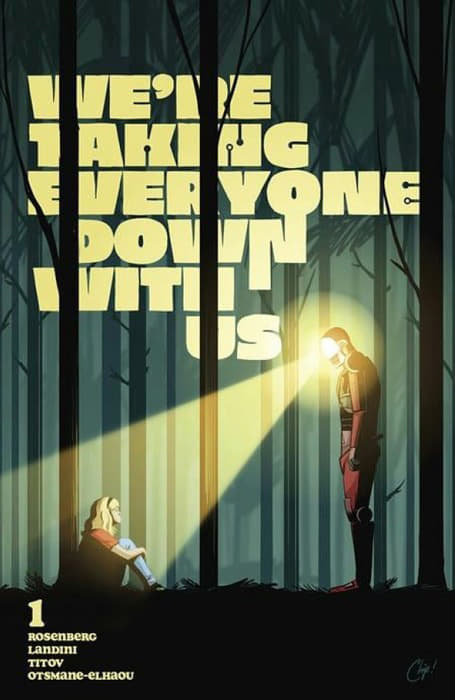
After her mad-scientist father is killed by the world’s greatest spy, 13-year-old Annalise is left all alone in the world. Sort of. Her dead dad’s robot bodyguard is following her around for some reason. Now Annalise has a choice: try to lead a normal life for the first time ever…or seek revenge and maybe overthrow the world order in the process.
Image Comics proudly presents a journey of regret and retribution, super spies and pseudoscience, growing up and global domination from brilliant artist STEFANO LANDINI (Prodigy, Hellblazer) and okay writer MATTHEW ROSENBERG (WHAT’S THE FURTHEST PLACE FROM HERE?, Uncanny X-Men).
PATREON
We have a new Patreon, CryptidCreatorCornerpod. If you like what we do, please consider supporting us. We got two simple tiers, $1 and $3. Want to know more, you know what to do.
ARKENFORGE
Play TTRPG games? Make sure to check out our partner Arkenforge. Use the discount code YETI5 to get $5 off your order.
THE LANTERN CATALOG
Created on the premise of creating light in the dark, this is the the go to resource to keep you up to date on the indy projects and the creators you love. You can find them at https://www.thelanterncatalog.com/.
Make sure to check out our sponsor 2000AD.
[00:00:00] Your ears do not deceive you. You have just entered the Cryptid Creator Corner brought to you by your friends at Comic Book Yeti. So without further ado, let's get on to the interview.
[00:00:30] Show Notes and thank you for your continued support. Thanks for your donation.
[00:01:02] Dan Abnett and so many others. Get a print subscription and it'll arrive to your door every week. And your first issue is free or subscribe digitally. Get free back issues and download DRM free copies of every issue for just $9 a month. That's 128 pages of incredible comics every month for less than $10. That's like a whole graphic novels worth. All subscribers get amazing offers like discount vouchers and exclusive product offers.
[00:01:29] Head to 2000AD.com and click on subscribe now or download the 2000AD app and why wait? Start reading today. I'll put links in the show notes for you. We live in the era of AI. The technologies many of us saw for the first time in sci-fi movies as kids are now the technological experiments that will define humanity for generations to come. In some ways, that's an exciting concept. How does nature versus nurture apply to machine learning and what exactly are the boundaries we will end up setting to protect it?
[00:01:58] Protect us all. Human beings are historically bad at implementing guardrails with our new toys. So what would happen if they are in the hands of a madman?
[00:02:07] It's something that has been preoccupying my brain recently a whole lot and with my own filter reading. The aptly named we're taking everyone down with us a new six issue spy revenge thriller sci-fi mystery. It's a lot of things. Miniseries from Image Comics. And I've got the perfect person to help me digest its complexities. First time show guest, Matthew Rosenberg. Matthew, welcome to the show. How are you, my friend? I'm good. Thank you for having me. I'm excited to be here finally.
[00:02:36] Yeah. Well, I see you're on the press trail for the project. I was chatting with Jerry Duggan a couple of days ago and he was talking about the Comics Pro retailer event and how it was like hosting a mini con of sorts. So pretty savvy marking idea you got going on there.
[00:02:50] Yeah, yeah. You know, Comics Pro is a cool organization and I think I go a lot and they have an annual meeting of retailers and the thing that I always sort of feel like is missing is it's such a good opportunity for retailers and comic creators to sort of talk without all the in-betweens and filters.
[00:03:16] And so, yeah, this year we went kind of hard to try and break down those walls a little more and get the people who make the books and the people who sell the books, you know, in the same room and hanging out. And I think it was fun. I think it was a good time. Yeah. Was it an officially sanctioned event or did you guys kind of crash the party? No, no, it was. We were worried we were going to crash the party and I reached out to them and said, you know, we want to throw a party.
[00:03:42] It was me and Jerry Duggan, Chip Zdarsky and James Tynan wanted to throw a like sort of real a party, a thank you party and for retailers and a chance to like buy a road dinner and hang out. And so, yeah, they sanctioned us. We were very glad they did because I got very terrified at a certain point that we were going to put a lot of money into buying mozzarella sticks and then have them be like, but we have another event that night. And they luckily held the date for us.
[00:04:10] And so it turned out well and free mozzarella sticks. Who's who's going to say none of that? Nobody complains about that. And your newsletter tells me that you ended up playing some Gigi Allen over the loudspeakers. So that blew my mind. How exactly did that happen? You know, we went there and, you know, we basically took over this bar in Atwater Village in L.A. And a couple of days before I was like, what is the music situation?
[00:04:40] And they were like, you play whatever you want. And I was like, OK. And I knew that everyone else was a little preoccupied. And I said, I'll take care of it. And so I just made a playlist and, you know, stuff I like and stuff I listen to. And then, yeah, I put on a Gigi Allen on the playlist as a joke and sort of forgot that I did that. And so, yeah, we were in the party at one point. And I was just talking to, I don't remember who I was talking to. There's a lot of people there.
[00:05:07] And suddenly I was just like, oh, yeah, we're playing Gigi Allen at a bar in L.A. And there's all these like, you know, comic creative luminaries from Los Angeles and all these retailers. And it's a good time. Gigi Allen's a great party soundtrack. I endorse it. So did you ever get a chance to actually see him? I did, yeah. I saw Gigi Allen when I was very little. I think I was, I went to one of his last shows when I was like literally maybe 13 or 14. Oh, wow.
[00:05:37] OK, now I'm old. OK. Yeah, yeah. And it, I mean, I'm old that I saw him. That's how I saw him. And yeah, I think I went out to the deepest, deepest recesses of Williamsburg, which was a very different Williamsburg at the time. And went to a warehouse and saw about three songs and fled in terror. And was just like, I can't. This is not for me.
[00:06:06] This is too scary. And I left. And then he died right after that. Yeah. Well, I mean, everybody had to expect that one way or another. He was, he was, he was destined. Yeah. I mean, after seeing three songs live, I was pretty. Yeah. It was not a shocker that he died within a year. I was like, yeah. Yeah. Like I was going to die. Yeah. Yeah. Yeah. Yeah.
[00:06:59] I saw him once. Very memorable. He hadn't spoken yet. He hadn't spoken yet. He squats down, inserts the microphone where the sun don't shine, starts screaming into the mic. Like it's, it doesn't work properly at that point. And he gets annoyed. So he starts swinging it in this big arc. And eventually it's hitting people in the crowd while he's screaming out his songs. It's not the wildest show I've ever seen.
[00:07:26] That was Wesley Willis when Wesley did not take his meds. Sure. But it was, it was enough like you for me to be like, yeah, I'm good. I've seen it. Yeah. I, all I remember, it was sort of all a blur for me, but I do remember that maybe 20 seconds into the first song, he just grabbed a random dude in the crowd and started hitting him with the fence. And I was just like, oh, he's really hitting that guy. Like there's a lot of blood coming and people are like trying to get him off him.
[00:07:55] And then like the second song started and he just grabbed a different guy and started hitting him with the face. And I was like, yeah, I'm going to go before I get punched in the face. I also, one of the craziest shows I also, I saw, I ever saw was also Wesley Willis, but there was a whole, it was a whole big thing. And it was like a bunch of hardcore bands and it was like Wesley Willis and Sublime and some rap groups. It was a crazy show, but there was a riot at the show and the club was like, everybody out.
[00:08:22] And there was this huge brawl and they cleared everyone out of the show. And as they were clearing everyone out, cops came tearing up onto the sidewalk and hit a bunch of people who had nothing to do with the riot with their car. And it was pretty like, not just like bumped, but like smashed front windshield, like hit, like hit hard enough to like, yeah, send people to hospital. And it was just totally like cops just driving up onto the sidewalk way too fast. And yeah.
[00:08:50] And Wesley Willis, I remember was just drawing like the entire time, like people were fighting and breaking shit and all this stuff. And he was just sitting on the floor drawing. It was pretty great. Yeah. Yeah. Dude has a chaos orbit. I got to say, I mean, there's just always some shit going on around him for sure. Yeah. Was. Yeah. Yeah. Yeah. Well, I want to pick your brain for a second about marketing and comics and I'll, I'll start with a music illustration since we're kind of on that. I was talking to a friend the past week.
[00:09:19] He used to be a stage manager for a bunch of household names. And my assertion was Tate McRae already has a bigger career than Madonna. He kind of took umbrage to that, but to me, it was all about scale and the number of years and eyeballs that Tate has in 2025 from all these different types of media. Right. It's just, we live in unprecedented times. This YouTube video has 197 million views on it already.
[00:09:43] So conversely, the heyday of comic sales was in the 1990s and no disrespect to that era, but we're in a renaissance. I feel like in the comics medium with quality and the breadth of what's on shelves today. And now we, we also have all these things at our disposal. So everything in my mind is kind of in place for success. Why aren't comics bigger than they are? Um, you know, it's a, it's a really good question.
[00:10:08] I think comics are, uh, I mean, going back to your, your previous analogy, uh, I think Tate McRae, I don't necessarily agree with your assertion that Tate McRae is, is bigger than Madonna, but certainly she sells less records. Um, so the comics is, you know, there's a lot of things that the nineties was a perfect storm of a lot of things.
[00:10:33] It was a perfect storm of accessibility and collectability and, uh, and culture coming together. And those are hard things to replicate. The culture has fractured, uh, a lot so that there's a lot of different tastes and a lot of different interests. I think, you know, this is before video games were so prevalent. This is before the internet was so prevalent. This is before home streaming was so prevalent.
[00:10:59] And it, it really is, you know, when you talk about kids in the night, every kid in the nineties read Jim Lee, Chris Claremont, X-Men, it's like, cool. Their TV had 12 channels and maybe they, one of them, one of every four of them had a Nintendo and they own three games for it. And the games, you know, did not have 800 hours of playability. It was super Mario brothers. You kind of beat it or you don't. Right. Um, so I think, I think there's that, excuse me.
[00:11:25] I think also, you know, we've, we, we've done a few things to the comics market that are both good and bad. The, the focus on longer form storytelling and trade paperbacks has made, uh, sort of dragged comics kicking and screaming into more of an adult hemisphere, which is nice in some ways, but not nice in others. And it means that the single issue feels less important.
[00:11:53] The single issue feels less relevant this, but also, you know, the, the, there's more and more messaging that these aren't for kids. There's more and more, it's not a dollar 50 investment anymore to go get a story and get entertainment. It's a $4, $5 investment. And that's only one fourth or fifth or sixth of the story. So, you know, it's a, it's a pretty hefty investment. And like, you know, I go back and forth.
[00:12:21] I think sometimes about how comics I'm like, yeah, it's four bucks for like all these people put hundreds of hours of work into this. It's pretty amazing that you can get that for four bucks. And then someone that always points out to me that, you know, a Netflix subscription is like 12 bucks and that's right. You know, 10,000 movies and, you know, a hundred million hours of TV. I have no idea what the numbers of what Netflix has are, but the, you know, it's, it's for cash value.
[00:12:48] We are now in a era of just a glut of content that is available so easily and so readily distractible. I mean, YouTube is free. Like Spotify is free. Like it's really hard to, to fight for that. But I also think, you know, um, the collectability was a double-edged sword in that, you know, everyone was buying Death of Superman and, and, you know, New Mutants 98 and all those things.
[00:13:16] And, and buying all these books and, and hoarding them. And what I think we lost is the idea that comics are supposed to be somewhat disposable. Comics are supposed to be something that you trade with your friends, that you, you, you lend, you, you buy and you read and you give to someone. And like, I, I'm a collector, so I'm, I'm guilty of it as much as anyone. But, uh, the, the idea that these things are supposed to appreciate in value means they don't trade hands as much.
[00:13:45] It means that people are not as willing to give them out. They're not as willing to be rough with them. There's not as willing to part with them. And, and that means they're just getting in less hands. Uh, all of that coupled with the fact that, you know, after the collapse, comics are no longer returnable, which kills you on newsstands. It kills you on supermarkets. And, and that, you know, shipping prices got astronomical. So you live in a small town, you can't get a subscription from Marvel. You can't get a subscription straight from DC.
[00:14:14] Um, you can get them from comic shops, but they're expensive. Like it's not, it's not nothing to get that subscription. It's not just cover price and, um, you know, it's just a perfect storm in the same way that the nineties is a perfect storm of, of readability. I think of, of access to comics, the 2020s is a perfect storm of inaccess to comics. It makes everything makes it sort of against comics. And, you know, I think that's how a lot of culture is now.
[00:14:42] I mean, we, we talk about the fracturization of, of culture and like one in every, it's something like one in every eight households in America watch the finale of mash, like one in every eight. And, and now like a, a well, a super hit TV show is one in every 400 households watches. Something is like an event of, of great note of like networks are scrambling to replicate that.
[00:15:11] And, and that's just how it is. I mean, the, the markets are just, you have your blockbusters, you have your Avengers that go make a billion dollars, but indie movies are struggling. Novels are struggling. You know, prose is struggling. Record sales are in the toilet. Even video games are having a rough go right now. And like there are breakout hits, but every medium is, is sort of fractured as there's just so much content. Yeah.
[00:15:36] And it feels like from what you're saying, maybe comics is even a little bit too sacred. Maybe, you know, the, the, the collector's market specifically, you know, we, we've just deified this system in a way. Yeah. I mean, I think, you know, I, I think it's, uh, and I'm guilty of it and I, you know, I bag and board my comics and I, I do all that and I, I'm guilty of it.
[00:16:03] But I'm also aware that like when I was a kid, it was super easy to go get access to a comic. And it's just not, not, it's just a, it's an item that you can't like free comic day is great. It's a great event. Um, we should figure out a way to do 10 more of them. We should figure out a way to, you know, do them in schools. We should figure out a way to do them, you know, like a scholastic book fair used to does or used to do. I guess they still do the scholastic book fairs.
[00:16:29] Uh, we should be figuring out ways to, to be like, you know, programs for, for kids to be like, you know, come into the shop and you'll get a starter pack of comic that's free or, you know, a dollar or whatever. Um, what those kids are going to do with that when the books are then four or five bucks after is, is hard to exactly chart. But it, you know, I think there is, there's a real accessibility problem and, um, and that comes from all of us being so protective of them.
[00:16:57] I don't, you know, I've never had, I don't think neighbors give out comics anymore and whatever. And I, you know, like I, I, that used to be a thing for me. Like my neighbor would be like, I read this kid here you go. Like, I don't know. I, I, I'm trying to break myself of that.
[00:17:12] I'm trying, I, all the single issues I get every year, I give out on Halloween and I don't, you know, I, I, now when I get a new book, when I, when I make a book, I'm, I'm very much like get some extra copies to like, just have to on me to be able to give out. And, you know, if, if someone's like, yeah, my, I mean, a lot of my stuff's not exactly kid appropriate, but if there's an appropriate venue where I, you know, people like, oh, donate to this thing that, that would needs comics.
[00:17:41] I'm, I have copies available for that reason. I just, I just think they need to be more accessible to people. Yeah. Yeah. I've, I've gotten in the habit actually of, of stuff that I really dig leaving it in doctor's offices that I happen to, to just be in and I'll take the extra copies and just leave them in the magazines. And yeah, yeah. Yeah. Whoever they find is, you know, hopefully they get into it. So it's amazing.
[00:18:04] When I, uh, when I first started my career, um, I started at black mask and, uh, they were a very scrappy small company, which they still are. But they, uh, uh, I've, I chose to forego getting paid a page rate. And I said, can you just pay me in comps and I'll make my money myself. Like I'll, I'll do what I chose and get them out. And my contract never changed. So by the time like one, we can never go home. I, I actually, you know, made my living off that book for a year.
[00:18:33] But by the time four kids walking real bank came out and did very well, you know, relatively, I was drowning in comps because I had a set. I got a percentage of the print run as comps and I spent quite a few years, you know, I would just go on the subway and every subway ride. I would leave one on a there. I'd leave an issue of a, a four kids walking real bank on a seat. I'd go into a coffee shop. There'd be, I'd leave one behind. And I, I, it was like a calling card.
[00:18:58] I'm sure that there are people who probably have a hundred copies of issue one of that book from just following me around the city and being on the same commuter trains as me. But you know, it's, it's, you have to get the books out somehow. Yeah. I mean, I know you've been doing a lot of ground pounding to try to do that with, with this title. And sometimes I get, I'm conflicted because there's such a hustle culture, you know, in comics, but it's also necessity. Sure. Yeah.
[00:19:27] And, you know, I, I love the hustle culture. Me too. I mean, I love it. Sure. Yeah. I, I, I feel bad for people who don't. Um, I think it is a huge barrier to entry in comic and it, it really is. There's not a good way for people who are kind of want to just stay home and do work and people who want to be quiet and don't want to network and don't want to, you know, do all that stuff.
[00:19:54] There's a huge, huge barrier for having a career, especially as a writer, like artists. I feel like there's a little bit more of an acceptance of letting the work speak for itself, but writers like have to get out there, have to do this stuff. And I, from years of working on music business, like sort of thrive in that environment and a kind of DIY space.
[00:20:15] So I, I like it, but I, I, I like it for me, but I sort of, it does make me sad for all the great talents who can't, either can't do it physically or, you know, it's, it's an economic burden to do it. It's time and time is money. And often it's not just time, but also money and money is definitely money. So it makes, yeah. I mean, it makes it hard. Yeah.
[00:20:38] And safety is a component to, you know, there's a lot of people who are the queer community or women or femme presenting folks, you know, that just it, that vulnerability feels very risky. Oh yeah. Yeah. And the internet, obviously I, you know, I, I don't, I, I have a lot of friends who, um, you know, are, are, are sort of more at risk. From harassment and, and things of that nature and, and the online community or whatever. I wouldn't call it a community.
[00:21:07] The online space, uh, definitely makes it clear that, that, uh, people need to be on their toes. I, I find that for the most part, cons are slightly a better experience than you're going to get on Twitter. Um, but you still are going to get weirdos and people making things difficult. And yeah, that's not a space people necessarily want to put themselves in. And I, I totally understand that. And it's a, it's a problem we have to deal with and, and confront.
[00:21:35] Otherwise we're going to have a very homogenous, uh, creative field, which is, you know, which we've had for a very long time. And it's very detrimental to the types of stories we get and the types of audiences we get. And, you know, just art in general, it's not, it's not healthy for art to only come from a certain place. Yeah. Yeah. That's historically speaking, pretty much exactly what happened. So yeah. Well, cool. Let's jump into the book itself.
[00:22:04] That's what you're here to do. You're talking about the book. So as I understand it, the genesis was from your old Punisher partner, Stefano Landini reaching out and saying he wanted to draw a robot. That about sum it up? Yeah. Yeah. Um, me and Stefano worked on Punisher. We did some other stuff. Um, we did a little bit of Star Wars together, very little. But, um, and then we were supposed to do another book together at Marvel, uh, right at the start of the pandemic.
[00:22:32] And it fell apart, um, on us and Stefano reached out and said, you know, we should do our own book, which is always a, if you're a writer, it's the most flattering thing you get as an artist reaching out. It's a, it's very much usually a one way street, the other way. Um, and then I said, yeah. And he said, I have an idea. And I said, even better. You're, you're doing my whole job for me. This is great. And then, and then he sent a drawing of a robot and I was like, that's not an idea. That's a drawing of a robot.
[00:23:00] And he was like, no, I want to do like a sexy spy robot thing. And I didn't know what that really was. And I was very confused by it. And he said, I think it's a fun design, a fun character. We should do it. And I took a bunch of, I took, you know, uh, two, three weeks to sort of come up with a story in a world for this robot that he'd sent me. I printed it out and pinned it on my, above my desk. And, you know, tried to figure out what it was. And I added all this other stuff that's very me, I think, to it.
[00:23:29] And, uh, it wasn't until working on issue three that I realized that Stefano, uh, that I was sort of pulling him in one direction and he was pulling me in another. And both of us were probably right that like, uh, I'm doing a, you know, uh, a certain type of story. But if Stefano, if I just follow Stefano's lead and we'd done this fun robot adventure book where he was just a sexy spy, but he's also a robot. I think it would be a really fun book.
[00:23:57] Um, but I also think I, at the same, I, I had a moment of realizing that and sort of feeling worried that I stepped on his idea a little bit. And, and was giving him something that he didn't bargain for. And we talked about it and he was like, no, I love the book and I'm very proud of the way it's going. And I am too.
[00:24:15] And I think what both of us realized is that the fact that we were pulling in different directions sort of made a better book because the influence, you know, it's, it's, it's, the influences are not just adding more spice to the mix, but also, uh, everything is sort of tested against the other.
[00:24:36] So like, I have to make sure that my drama about, you know, family and, and revenge and regret and the threshold of adulthood is still a fun spy adventure book. And he has to make sure that his robot who punches people's heads off book is still has emotional weight and has, has these, the, this character work that, that I'm trying to get into it.
[00:25:00] And so I think it's, it's, it's one of those things where, um, people not necessarily starting on the same page ends up in a much more exciting place for everyone involved. Have you ever worked on something kind of with this methodology before where you have a visual cue of a nucleus and then you just wrap everything else sort of around it? No, no, it's, it's new to me. And I, I really liked it. It felt for a long time.
[00:25:30] I wasn't ever sure that it was good for the first year that we worked on it because it felt like a writing experiment. It didn't feel like a book. Like it felt, it felt like a challenge. Like, and I was like, okay, am I making the challenge work? Is this successful? And it wasn't until I was in issue two that I was like, well, you know, I'd finished issue two that I was like, okay, wait, these are good characters. Like, this is a story that I like. It was engaging to me.
[00:25:56] And with that, I went back and we massively retooled issue one because there were still moments that I was like, I feel like I'm trying to hit a checklist rather than tell something that feels organically natural to what I would, the story I'd tell. And so it's been a lot of trial and error. There's actually, you know, there, there's probably, there's a definitely a PDF floating around of issue one on the internet that is wildly different than the final issue one. That is like characters have different names.
[00:26:25] The scenes are in different orders. Different scenes exist to like, and, and yeah, I mean, it's, it's been something we've wildly retooled. I mean, you know, cards on the table. There's a, we sent out a, a preview to retailers. We sent out a preview to press. That's the book, but it's actually not the book. Um, there's actually four, three pages that are not in any edition.
[00:26:48] So like the, the copies that people are getting that the retailers had and the, um, things like that are missing a scene. And there's actually a, a, a major page that's been completely redrawn, uh, to totally shift the mood. Um, and, and that's just like, you know, that's me and Stefano's madness of just like constantly, we've been slow baking it for so long that we've really have like tinkered with it as much as we could. Uh, until it just had to go out the door.
[00:27:16] And so that's, you know, there's definitely, it's definitely not a way that I would necessarily choose to work normally, but I'm very proud of where it got. But it was a lot of work to get there, to be something that we're both really, really, and it's, I'm more proud of it than almost anything I've ever done. But it is also been a true labor of love. I mean, the way you're, you're talking about it, it feels like gumbo, right?
[00:27:44] We obsess over influences in comics, but you really have all this assortment of ideas and stuff and these ingredients kind of like a recipe and you've sort of thrown it into the pot together and letting it simmer. And then whatever comes out is kind of something uniquely itself. Yeah. Yeah. I mean, I think that's something I always, you know, that for me, that part, at least for me is always somewhat in, in the mix.
[00:28:07] I think that, you know, I'm, I'm a big sort of sponge for, for not just art I consume, but also life experiences. And so there's a lot of, you know, it is funny because I think like, you know, people, people often like catch a, catch a reference to something or, or catch an homage to something or, or recognize an influence. And they think they've really unlocked something.
[00:28:33] And I'm like, yeah, it's all like influences and things that I, I, I wear my heart on my sleeve. And, and, and so I'm like, yeah, there's going to be some, you know, there's going to be some star Wars in there, but there's also going to be some, you know, Wong Kar-wai in there. There's going to be some, uh, you know, Caravaggio in there. There's going to be whatever, there's going to be some clash in there. It's all these things. And then if you know me and you're friends with me, I think people are often like, is that us?
[00:29:03] Or is that, is that me in the book? And I'm like, you know, that moment is like, there, there's a lot of that, that I think is, um, very much, uh, the gumbo, the gumbo way of making things that I, I sort of, I'm just, I, I, I spent a lot of time in my head. I spent a lot of time just sitting, staring and thinking and, or sitting in front of a computer or a notebook. And, and what comes out is just everything that's been thrown in my head and brought to a boil sort of spills out.
[00:29:33] Yeah. I mean, my own, uh, pull from it, uh, my, my, um, association was Scud the disposable assassin. I don't know if you remember Scud the disposable assassin from Rob Schrab back in the nineties. The omnibus is on my bookshelf right there. Yes. I love Scud. Scud. So people who don't know, Scud is basically a vending machine robot assassin that you pay to take out a specific target and then it self-destructs. There you go. That's Scud. Yeah. Super fun.
[00:30:02] Wild book of great humor and heart and energy and, and, and weirdness. Oh yeah. Yeah. I mean, Scud, I guess this is what was making me think about this stuff was Scud is kinetic and fluid, more like a ninja. And the robots in this book are very rigid. It's kind of a spooky design. It's a, the countenance of the jaw is insectoid.
[00:30:25] At least that was what I got out of it, which makes it sinister and totally the opposite of what we think of, of like a modern assistance robot, like the Neo beta, which they unveiled. And the internet went mad over recently. They had, you know, where the facial features are very round and softer so that it, it's not intimidating anyway. This was very much CP3 hell no is my take on that. Yeah. Yeah.
[00:30:51] It's, you know, it is, uh, the, the robot in our book is, um, a mad scientist's version of the perfect helper and that it's, it, it, it'll help you with chores that can answer questions. It can look after your kid, but it also, uh, can tear people apart and kill people if needed. It is, it is a, a utilitarian design for a very twisted mind.
[00:31:18] It is, it is, and it's not friendly or cuddly or supposed to be endearing. Um, and, and, and in that, you know, I, that, that sort of, as the book goes on, will become a theme of just like the, the robots are, are very much a, um, terrifying concept. They're a terrifying first foot for, for our, our main character, our protagonist, Annalise, it's her father who builds them. He's a, he's a sort of mad scientist.
[00:31:47] Um, uh, the more people think he's sort of been off the grid and, and been not a threat for a long time. He used to be a sort of global threat and he vanished a decade, more than a decade ago. But when people see that he's been building these robots, it sort of becomes this like much more terrifying thing that he's been doing that they weren't aware of. So yeah, the robots need needed to not be, they're not nanny robots as is the simple way of putting it. Yeah. Yeah.
[00:32:16] As, as somebody, um, with a disability in, in 2020, I went through a phase with, with my, my own personal illness stuff where I couldn't walk unassisted. So like I'm reading this and kind of absorbing, like, I, I do not want one of these fuckos around me to help me out with anything. Yeah. Yeah. Yeah. They're creepy. Yeah. They're creepy. And, and it is, um, yeah, they're, they're, they're supposed to be creepy. Stefan, it's funny.
[00:32:42] Cause actually we talk a lot about, uh, I've talked a lot about how Stefano had this idea for a robot and actually what ended up happening is that the design of our robot isn't the robot he sent me. Um, okay. The robot he sent me was much sort of cooler and sexier and, and kind of slick. And, um, it wasn't necessarily comforting, but it was not terrifying. Okay.
[00:33:08] And, and as, as I built the story up, he's like, I have a new idea for design. And, and it became a lot scarier. It became a lot more evil C-3PO than, than it was. Well, despite all the, the tech trappings of this, this ultimately a family revenge story about Annalise and her dad, who referenced the mad scientist and revenge fiction never gets old, especially when it's tied to family.
[00:33:35] Uh, my son and I have gone back and we're watching the John Wick movies together. Now tell me there, there are no dogs showing up though, right? Like that's not going to happen. No dogs, no dogs. Okay. Okay. Oh, that's good. That's good. Glad to hear that. Yeah. I, I think that revenge and, and is, you know, it's, it's one of the great motivators in all of fiction. And so it's, it's always a fun thing to tap into for me. Yeah. Well, the interplay between them is, I thought was really, really well handled, man.
[00:34:04] The leaks. It's very relatable. I have a teenager myself right now and, you know, Dr. Alderman sort of shifting back and forth with distraction, which we all experience in kind of from that and into dad mode. And how you, you're going to get pulled between those two. Granted, I'm not trying to do diabolical things and, you know, ruin the world. But, um, yeah, it was very, very relatable story. Yeah. Thank you. You know, I think some of that, I mean, some of that goes back to, um, personal experiences I've had.
[00:34:33] And, and, and, you know, it, I, I'd be lying if I didn't say that some of this is about, you know, my own family in some way. And, and my dad was a very, um, you know, was an amazing father and a very loving, attentive father, but also was a person who worked 80 hours a week, a lot of weeks. Right. Um, you know, I have a lot of memories of being like him being like, you can come in to my office and, and hang out. You just can't talk to me.
[00:35:00] And, and a thing that we did to bond was that I would, you know, take records from his record collection and play records. And I could sit there and listen to his records near him. And that was a very like formative thing for me while he was working. And, but I see it now in, in my family and, and, you know, my, my close family and in friends. And I see it growing up the, the, the, you know, I'm, I'm, I'm of a generation of latchkey kids.
[00:35:27] I'm a, I'm of a generation where we were, you know, coming home from school and, you know, there maybe wouldn't be a parent home and, you know, no one would know where you were until it was dinner time. And, and it was just your job to sort of take care of yourself. And, and I think that's, you know, uh, I'm very, I'm very romantic of that idea. I'm very, I, I, I romanticize that idea rather in my head, a lot of, of, of for me growing up in New York and, you know, learning my life on the streets.
[00:35:57] And with friends and, and just exploring and getting into trouble and having fun and all that stuff. But also, you know, I, I think about now as an adult, the, the converse of that, of like what it means to have not been there to, to raise me and, and to me be getting in trouble. And, you know, like, uh, you know, I was brought back to the house and by the cops a couple of times, not, not for anything serious, but like, you know, normal. And stuff, spray painting and skateboarding and whatnot.
[00:36:27] And, um, uh, and, and just how incredibly stressful that must've been for my parents and, and being torn between being a, uh, a parent who provides and a parent who's there is, is so hard and so difficult. And, uh, so I wanted to explore some of that from, from both sides, from sort of the, the parental side and the, the kid side. All right, everybody, we're going to take a quick break. We'll be right back. Let's face it. The comics landscape is a mess right now.
[00:36:56] I'm the editor in chief of a comics journalism outlet, and I can't even keep track of it all. If you are as passionate as I am about indie comics and its creators, you should check out the Lantern Guide. Created on the premise of creating light in the dark, it's going to be the go-to resource to keep you up to date on the projects and the creators that you love. Don't take my word for it. I reached out to my friend, Brian Lovell, Poison Ivy artist and indie comics creator, to get his take. Brian, what does the Lantern Project fix? I'm a dude who loves indie comics.
[00:37:25] And I know personally, like, I get very frustrated when something shows up in my social media timeline or something like that. And I feel like I can't keep track of everything. So really, the Lantern Project was born out of that. It was an opportunity for me as a reader to kind of, like, have a place to want to consolidate all the stuff that I wanted to read.
[00:37:47] All the cool projects from cool creators that seemed interesting and kind of unique to, like, something that I would like, which is really not super represented everywhere else, but it's all over the indies. Having a spot to go to that felt like it consolidated a lot of those audiences and a lot of those places where I couldn't just get drowned out in the feed of social media seemed really valuable to me. What's the ultimate goal?
[00:38:12] It's really our hope with this project that creators feel like they're able to get in front of readers and readers are able to get books that they actually want to read with a much easier time of keeping track of them. And accessing them. The catalog is scheduled for a quarterly release, so head over to thelanterncatalog.com to sign up now so you don't miss your next favorite thing. I'll put a link in the show notes for you. Y'all, Jimmy the Chaos Goblin strikes again.
[00:38:41] Ben, I should have known better than to mention I was working on my DC Universe meets Ravenloft hybrid D&D campaign on social media. My bad. He goes and tags a bunch of comics creators we know, and now I have to get it in gear and whip this campaign into shape so we can start playing. Another friend chimes in, are you going to make maps? It's fair to say it's been a while since I put something together, so I guess, question mark? It was then that I discovered Arkhamforge.
[00:39:06] If you don't know who Arkhamforge is, they have everything you need to make your TTRPG more fun and immersive. Allowing you to build, play, and export animated maps, including in-person Fog of War capability that lets your players interact with maps as the adventure unfolds while you, the DM, get the full picture. Now I'm set to easily build high-res animated maps, saving myself precious time and significantly adding nuance to our campaign. That's a win every day in my book.
[00:39:35] Check them out at arkhamforge.com and use the discount code YETI5 to get $5 off. I'll drop a link in the show notes for you, and big thanks to Arkhamforge for partnering with our show. I think I'm going to make Jimmy play a goblin warlock just to get even. Welcome back. I immediately logged on to Annalise as a character, as a fellow Gen Xer. I think a lot of us are going to just zero in on that element.
[00:40:01] The last key kid who were sort of, I'm going to say discarded, and that sounds awful, but in a lot of ways it was that way. And how well do we really know our parents? My mom, for the entirety of my childhood, was a smoker, and I had no idea. And I found out a couple years ago. I was like, how the hell did you keep that from us? So, yeah. It's definitely a theme that I kept coming back to. Yeah, I think the, you know, and I think it's, I'm very, it was very close to my parents and my mom.
[00:40:30] I'm still very close to my mom. She's still around. And it's, you know, I have a funny moment of that, which is less so. But me and my friends, when we were 14, were big, like, horror movie nerds. And we would go, and there was a video store where we rent movies from. And the guy who worked there had all this stuff that he definitely should not have been renting to 13 or 14-year-olds. And was like, you gotta see this. You gotta watch this. Faces of death. Exactly.
[00:41:00] Like, yeah, it was all that stuff. And I just had this moment, and I think about it all the time, of coming home and being like, oh, mom, this was crazy. We watched this really messed up movie at Dan's house. And the writer had your name. And my mom, my parents had to be like, okay, sit down. I had to be like, my mom had to be like, I wrote that. I wrote that before you were born. And that is, yeah, I wrote that horribly misogynistic slasher movie. And that for me was like. Wow, okay. Yeah, it was a real moment of like, oh, I don't.
[00:41:29] There's just like these lives of your parents that you don't know and don't. And you shouldn't know. I mean, it's fine to know that your mom wrote a movie or whatever. But you shouldn't. My mom wasn't proud of it. Didn't want us to know. And would have been happy if we never found out, I think. But the. Yeah, I think there's this idea of just like. The distance. There's something really tragic about the distance between parents and children.
[00:41:58] You know, especially after you've lost a parent. There's something about all the things that you're going to never have access to. Right. All the things you took for granted that you're always going to have to hear these boring stories. And then the first time you're like, I can't hear that boring story anymore. I don't remember how it went. It changes your whole perspective on everything. And so that's, you know, that's something that sort of is baked into this book in a lot of ways of just the regret of. Of.
[00:42:29] Troubled relationships and losing people and and all of those ideas. I promise the book has jokes in it, too. It's not just about revenge and regret and sadness and and fail failing familial relationships. There's jokes. That's my fault. I tend to lock on to more serious things. And I mean, but the book resonated with me in that way. You know, I'm having gone through what I did in 2020. And you hear you talk about it.
[00:42:55] You know, I I've been pretty open about it on the podcast, but I nearly died. And it gave me a fresh start. Not that my relationship with my son was bad. It was not by any stretch of the imagination. Sure. But it just changes your perspective. And you you learn to appreciate all the little things that you may not have noticed before. A hundred percent. And, you know, for me, a lot of this book is also built on the fact that, like, you know, I'm very close to my brother.
[00:43:22] And I don't I don't have any kids or anything, but he now has a son, my nephew, who's amazing. And I love so much. But watching my brother change, watching him become a different person because he has a kid and watching different aspects of his personality evolve and watching his interest change to me was fascinating. And like, obviously, I have friends who've had kids and I'm very close to a lot of people who had kids and had other family members who had kids.
[00:43:51] But my brother was such an interesting thing because it was like he was this person that I sort of defined myself in the context of in a lot of ways that grew up with him. Sure. And who he was. And then I was like, oh, for the first time in my life, like there are things that I'm not sure that I know about you. Like you're different in these fundamental ways that are really kind of beautiful and wonderful. And and and I never really talked to him about thinking about the person he was before.
[00:44:19] And I don't think he sees the delineation between the two people. But like I do clearly, like he's a different person in a lot of ways. I mean, it's something that I read into the book. And that's that's the counterpoint to Annalise is what does the parent? What is the good Dr. Alderman actually become in her absence? I mean, obviously, you know, he's a mad scientist.
[00:44:43] And I know my own dark tendencies are heavily moderated by my family whose presence the world is probably much better without because now everybody else gets the best version of me. So, yeah, yeah, I think, you know, I'm I it's funny. I haven't really talked about this very much, but I'm actually working on a different book that hopefully we're going to announce before too long that I've been working on. As long as I've been working on this book. So we have we actually have.
[00:45:12] 160 pages drawn of this other book, but but it's not announced. So it's you know, we're we're we're into the second volume of this book and it's sort of the companion piece to this book. It's completely unrelated. It's not in this shared universe at all. Like there's not there's not going to be a crossover. But in working on this book and picking a sort of perspective of this relationship and and really focusing on Annalise and her relationship with her father, I became very fascinated about these ideas that didn't make it into this book.
[00:45:42] That would be her father's sort of perspective more and his ideas and his perspective and his ideas are definitely in the book. But there was things that that had to be cut to sort of focus on her a little more. And that sort of took on a life of its own and became another book that I think when people see it, they're going to they're going to be like, it's weird that you have this other.
[00:46:04] Thing, but that's just how my brain works that I sort of I take an idea and I my brain goes crazy with it and run so wild that I it ends up becoming another thing. These ones are are maybe people are going to think they're closely connected. Maybe people are going to be like, there's no connection at all other than a couple pieces of set dressing.
[00:46:22] But but it is funny to me that like there's sort of two sides of this relationship and it sort of fractured into two different books that are completely different for each other, which is weird. I know, but no, it doesn't surprise me at all. I mean, the best art, even your own art is going to inspire you in different ways as you absorb it over time.
[00:46:45] I mean, that's I think that's the best compliment an artist or could ever get either reinterpreting their own work or hearing somebody else's interpretation of it, you know? Yeah, yeah. And I think a lot of it also is I, you know, I I write a lot of comics, but writing a big to like a corporate superhero book is is sort of a very different thing for me. Um, but writing a creator owned book, which I don't do that often. I really spend a lot of time.
[00:47:15] Laying groundwork and sort of building things in my head and. There just ends up with all so much on the cutting room floor that that at a certain point, I'm like, that's a whole other movie, like that's a whole I've cut out more footage than I than I keep. And so I end up, you know, I live in these spaces mentally and emotionally that that it sort of makes sense that when I'm like. Yeah, I just have a lot more to say on this than I can fit in five, six issues.
[00:47:41] And so that's sort of where some of the things on the next that I'm doing in the next few years are going to be coming from is like. Revisiting ideas and and going back to things that I thought were interesting, but didn't fit. Yeah, this is the prince methodology basically that you're describing here. Sure. Yeah, I'm yeah, I'm the prince of comics. I always like to say that. Yeah, we'll go with that. I like that. That's that's a great moniker. You should be friends. It's I definitely don't think that I'm the prince.
[00:48:11] But yeah, someone is and I'm happy for them. Well, I kept circling back because my son is 17 now and those terms of endearment sort of have to shift in chains, especially in social settings. You know, I can't call him sweetie anymore without sure him getting a little upset. So I got a bit obsessive about the starfish term of endearment that Alderman uses.
[00:48:35] You know, they're able to to regrow their limbs and I mentally applied that to the overlay to us as humanity, creating these machine learning models that are going to replace aspects of ourselves. Is that am I reading too much in? Is that to be yet to be revealed later kind of thing? You're not reading too much. It's funny because, you know, I don't know how many people have read the book now.
[00:48:58] I've sent it to a lot of friends and actually Jerry Duggan, who we spoke about, called me and asked me about it. It's like starfish. What's what's the deal? And I talked to him and he's like, OK. He was a little he was like weird nickname. And I was like, it's a weird nickname, but it is, you know, starfish are cute. And I don't think I don't think I don't think most people are going to stop on the street and be like if someone is like, hey, little starfish to their kid. I don't think most people are going to whatever.
[00:49:28] But there is more to it than then you'll see on the surface. And I won't say more than that, but it does mean something in the greater context of the book. And I. I'm always happy when people sort of pick up on that. So. Oh, well, I also swear you made up some of the drugs that Alderman ends up using because I was on the road working with rock and rap bands. For over a decade.
[00:49:58] And I have no fucking clue what Edgar Winner's earwax is. And when this drops on shelves, the Google searches for that term are going to skyrocket. Yeah. You know, the the the first time I wrote it, it was all real drugs. And it wasn't. It was funny. You know, there's a scene where he's listing drugs and the characters listing drugs. And it was funny. But I was like, they shouldn't all be real.
[00:50:22] And and then it was a long, long process of of creating fake 1960s, 70s drugs, which, you know, I will say that I think. You know, we really bottomed out with crack. I mean, culturally, we definitely bottomed out with crack. But also we we, you know, it feels like that was the last of of trying to have interesting or good drug names. I feel like drug names used to be really fun, which is part of the allure, probably. And I'm straight edge.
[00:50:52] So it doesn't have much allure for me at all. But, you know, you hear about 70s drugs and you're like, that sounds awesome. And and now it's just like, I don't know. Modern drugs don't sound fun. You know, if they're not branded. Yeah, they sound branded. It sounds like corporate. I mean, obviously, like MDMA is just like, well, that's not fun. But like even Molly, you're just like, that's not a fun. That's a boring thing. Like in the 70s, that would have lasted long.
[00:51:20] We would have gotten rid of Molly as a name. And then and then you had the drugs that didn't, you know, totally necessarily get nicknames that kept their monikers like Quaaludes and Quaaludes was just such an alluring, funny drug to me. I love that Quaaludes were like such this incredibly prevalent drug that they just stopped making. And people were like, yeah, we just don't do that anymore. They just stopped making it. No one bothered to recreate it. And and it's just not a drug that exists anymore.
[00:51:50] I think a drug going extinct is very funny. For some reason. So I think Quaaludes is in there still. I think maybe I took Quaaludes out. I think I left it in. I try and put Quaaludes into a lot of my books because I think they're funny. I mean, peyote is always, always a clincher because P words are just inherently naughty. Yeah. Yeah. Peyote is funny. Peyote sounds funny when you say it. And then it's so benign kind of that it makes it, you know, it's always scary.
[00:52:19] Like when there's a drug that has like a cute name and then you're like, oh, but it's terrifying. Like it makes you lose your mind and stab people. You're like, oh, that's not good. Like, that's not that's not what we want. But peyote feels like, yeah, that's the drug you get. That feels all right. Well, I didn't intentionally mean to tank sales for anybody who's listening and like, oh, not getting this for my kid now. Yeah. Don't get it. Don't get it for your kid. I mean, I don't know. If your kid's cool, you can have it. Read it with read it with your kid. That's that's my philosophy.
[00:52:49] Read it before you give it to your kid. They'll probably be OK. You can just, you know, bring a Sharpie and just black out a couple of things. That's fine. Don't be precious about your comic. You can cover a couple of lines of dialogue and maybe a couple of panels. I mean, our generation learned bad words on the end of Cal Ripken's baseball bat. So, you know, sure. Yeah. Yeah. That's an all time great card. So it's it's, you know, yeah, I do feel like they're like.
[00:53:17] I mean, I'm not telling anyone how to raise their kids, but, you know, fine. Your kid can read it. It's fine. Well, primarily because of this book, I went down a rabbit hole yesterday looking at nature versus nurture and machine learning models and exploring how this I didn't even know what this was, but K.A. And it sounds like a drug name itself. But knowledge acquisition frameworks will work its way, you know, in into the all these different things. It was really, really fascinating rabbit hole.
[00:53:46] But all of that is to say the best comics in my mind are those that make you think. And in that regard, I would definitely call this a resounding success if people haven't picked up on that so far. Well, thank you. Um, yeah, you know, I think that, uh, the book is funny because it did it did stem from a lot of research about AI and robots and robotics. And I did I did my due diligence.
[00:54:14] And then a lot of that sort of got thrown out the door because I was like, well, OK, I know what a lot of this is. But also I needed to work in a 1960s, 70s context of mad scientists and, um, you know, vampire gorillas and, and like, you know, secret armies and things like that that are also in the book. And so there's a whole, uh, there is the roots in, in actual knowledge, but then I throw a lot of it out.
[00:54:44] And so, yeah, if, if people are really going to, it's not going to be a textbook on, on AI at the end of the day. Um, but I think there are some interesting ideas in there about, about robotics and the way we interact with them. And, and I hope that stuff carries over because I did put a lot of work into it. I mean, I think that's the, the beauty of comics though, is you're, you're meshing this initial concept, Stefano. I really want to draw a robot.
[00:55:10] And then you get into it together, you figure it out, you hash it out, you revise it. It comes out to be a hybrid of, of a really quality book in so many ways that people can absorb whoever they are and wherever they're at, you know? And I think that's a testament to it. Yeah. Thank you. You know, I, I, the thing I, you know, I joked before when I was like, you know, it's about whatever I was saying about trauma and, and generational trauma and violence and revenge and all these things.
[00:55:38] But I was, and I said, there's also jokes in it, but I think that is, you know, something we did set out to do, which is have a book that works on a lot of levels. If you want a fun action adventure or buddy comedy, like the book is that, like it is a girl and a robot running around getting into trouble and that's fun. And like, there are jokes and there is funny stuff happens. If you want to like, you know, violent revenge thriller, like that's in there too.
[00:56:05] And if you want a family drama about, you know, the distance between generations and, and, and the regret we have at who our kids become and, and losing our parents and all of these things, like that's also in there. And I feel like my hope is that people who just want one of those things will read the book and be like, I enjoyed it. And I enjoyed the other parts too, that I didn't go for.
[00:56:29] And, you know, I, I compared it once to talking to someone as like, you know, it's like a, it's like a, a, a big buffet of ideas and like, you're going to go and everybody goes and they want the steak or they want the chicken or they want whatever the big thing is. But maybe the thing they end up liking most is the mashed potatoes or the thing, you know, the thing you just grabbed because you're like, well, I can't just fill my plate with steak. Uh, you know, I have to look like a normal person and I have to get some Brussels sprouts.
[00:56:59] And then you're like, actually the Brussels sprouts were the best part. Like that's sort of the idea of one of the ideas in this book is that we're trying to have it be multiple things and, and sort of have those things complement each other. But if you just want one of those things, I think there's enough of it in there that hopefully you, you walk away liking it. I hope. I did. I enjoyed it a lot. Well, thank you. Of course. When are we hitting stores? When's it dropping on shelves? March 26th is the first issue.
[00:57:28] So right around. Cool. What else you got cooking that you can talk about? I know there's a little DC versus vampire. That's still going, right? That is still going. Yes. I always buy trades. I'm a trade. You can see behind me. I'm a trade. I don't do so much. No, I, I, I, I a hundred percent get it. Um, yeah, we're DC versus vampires. Uh, me and Otto Schmidt and the team. Um, we took a little break last month to do a little side story about Wonder Woman and
[00:57:56] Alfred and their different paths in the world of heroes and villains. Um, and now we're back. Uh, new issue just dropped issue seven. And, uh, I think it just dropped. Yes, it did. I remember people telling me they liked it. Um, and someone asking me who all the robots were. The, uh, there's a lot of robots in that issue. Robots on the brain. On the brain. Yeah. Yeah. Uh, but that's really fun.
[00:58:22] And we, you know, I'm, I'm, I really like the, this will be my, I'm coming up on writing my 30th issue somewhere in there. Is that right? 29th, 30th issue of DC versus vampires. Um, which I, I feel like it's, it's the most fun it's been for me that like, which is exciting to just be going that long on a book and, um, you know, we're getting ready
[00:58:48] to wrap it, but it's, it's, uh, we still have a bunch to go. We have five issues to go. And, and I think it's the most fun we've had making it. So that's always a fun feeling. And, uh, I don't think it's too spoiler to say that the dark side has appeared and, and anytime dark side can show up, it's obviously going to be a lot of fun. He's a funny guy. We all love him. And, um, what else am I working on that I can talk about? Oh, uh, well, what's the first place from here is coming out still.
[00:59:17] Uh, issue 22 is running a little late, but it is coming out. Uh, myself and Tyler boss have been both a little preoccupied with both family stuff. And, uh, obviously I have this book going, uh, we're taking one down with us. Tyler is also writing another image booklet launches the same day, March 26th, uh, called you'll do bad things, which is a sort of giallo slasher horror book, which is maybe my favorite
[00:59:43] book of the year is, uh, really a brilliant, weird, beautiful, very unique book that, that I'm incredibly jealous of that Tyler made it. And, um, we're going on a, a sort of month long signing tour across the country to promote it. So we are, uh, very much in the depths of that, but also while we're there, you know, we want to sign what's the first place from here cause we make that together and that's a, a labor of love for both of us.
[01:00:11] So it is, uh, um, we're, we're hoping that it's not just people who show up to pick up the new books, but also people who, who love those books come out and we can thank them for reading them and shake their hands and give them some free stuff and all that fun stuff. And then we're just going to eat a lot of hamburgers and listen to a lot of hardcore in the car as we drive across state lines. What's it, what's in your playlist? What have you been listening to recently? Oh man, I, I, I jump all over the place.
[01:00:41] Uh, I do too. You know, no judgment here. You can say whatever and I'm not gonna, well, I'm not, I can't say that, but I think now I hope that I, I hope that I, I stumbled across something that gets, uh, you know, it's hard because a lot of the stuff I listen to when I write, I have to listen to stuff that doesn't have lyrics. Um, yeah. So, um, I listen to a lot of instrumental stuff. I usually listen to a lot of like sort of rock. And I mean, sometimes I listen to like classical or jazz, you know, I'm a big like Coltrane,
[01:01:12] uh, Mingus, Miles Davis kind of stuff. It depends on what I'm writing, but like those are sort of the, I'm not a huge jazz guy, but like I know the great, I appreciate the great. Oh, Miles is Miles. Like that's universally amazing. Yeah. A hundred percent. And, um, yeah, I think even if you don't like jazz, if you put on, you know, sketches of Spain, people are going to be like, Oh, I get this. Like I, I, I understand this. Um, the, and I listen to, you know, just some classical or whatever, but, uh, what are
[01:01:41] we supposed to do? I'm trying to think like, I mean, listen to a lot of like, just like hardcore and punk stuff. Um, I mean, there's a, the stuff I always listened to. I always, you know, end up going back to like wire and gang of four and the clash and mission of Burma and bands like that. But lately I've been listening to, um, there's a band called skinhead. And we're like a sort of super group of hardcore dudes.
[01:02:07] And it's like kind of a concept album about being a skinhead, um, uh, concept band. Although some of them are skinheads, but, uh, it's like this hyper violent, but very hilarious, weird narrative. And I, I, it's like one of my favorite records last year. Um, the new scowl record is great. The new gouge away record is great. Um, high viz. I, I, I love high viz.
[01:02:32] And, and, um, their new record is really, really good and, and sort of a go-to for me constantly. Um, I don't know. Uh, new Taylor Swift is really good. Uh, I'm still listening to the last Charlie XCX record a lot, which is very good. Um, yeah, I, uh, um, there's a new Julian Baker project that, that I really like. And he's a genius and amazing.
[01:03:01] So yeah, I don't know. I'm kind of all over the place. Yeah, me too. There's a, I think it's electric cowboy and I wasn't familiar with them before. Um, it is trying to exactly figure out how to describe it. It's like a pop ministry. Huh? I mean, ministry is the best grounding point, but it's also very pop and it fluctuates back and forth between the video is magic.
[01:03:28] Like I'm, I started watching more videos to try to expose myself to just different kinds of music. Cause I was, it was just getting stale. Sure. Um, and I really enjoyed just finding different stuff that I never would have been exposed to before. Yeah. Um, and that's definitely one it's, it's a really cool track, um, just for getting the vibes out, you know? Yeah. Um, and, and I'm a never go back guy, but the new Wu-Tang track pulled me back in. I was really impressed. Yeah.
[01:03:57] So yeah, I, you know, I, I have my, my tenuous Wu-Tang connection. So I always, I always root for them. Um, I've always been a fan and, and, oh, the new Kendrick record is great. Oh yeah. Um, that's sort of a no brainer. The, it's interesting. I think going on tour with Tyler is going to be fun because we, um, we have a lot of overlap in our musical taste, but then there's certain things he likes that I can't stand and certain things I like that he can't stand.
[01:04:27] And I think we, we, we tend to, when we do these road trips together, have a few days of sort of, you know, working at peace where we're like, I'm only going to play the other person's stuff they like or stuff they'll dig. And then at a certain point it becomes kind of like an endurance test of like how, how mopey and emo can Tyler make it? How intense of screaming can I make it? And, and it, and it, and it's fun and it's, it's, you know, it's a test of each other.
[01:04:54] And we, we fall out of the car at some comic shop, uh, thankful for silence for a little bit. It's a, it's a fun, fun dynamic. I can't do emo. I'm, I still feel sorry for the generation whose best rock bands that they can put up on the pedestal is fallout boy. And it just makes me cringe. Sure. I, you know, I, I, I, I'm old enough that I, when I, when people say emo, I still think of like, you know, the, the DC, like the, the post hardcore bands, like the, the food
[01:05:24] Aziz, I think embrace rights of spring. And then the generation of bands that come after that, like, you know, there's a lot of bands that I think of as emo that people are like, that's not really emo, but I always think of like, you know, like, you know, like Moss icon and, and angel hair and bands like that, where I'm like, those are emo bands. And people are like, not really. That's like emo bands are like my chemical romance. I'm like, Oh yeah, that's, that's a different thing for me. That's pop punk, but it would be fine, you know, and there's pop punk that I love.
[01:05:52] You know, I, I, I, I do, I do love some of those bands, but it's very different. You know, it's a co-opted term or whatever for me. Yeah. It's hard to genre is something I don't overly obsess with. Right. Sure. Yeah. I, I, I, I like that first fallout boy record a lot. Um, I went on, I went on, I went on a mini tour with them, not with them, but they were on the tour and I watched them every night. It was like pretty good. Nice guys.
[01:06:21] I'm a social distortion guy. So I don't know. There's something really corrupted about fallout boy. I just, I can't do it. I can't do it. I hate to rain on people's parade. I hate it when people do that, but it's just not my thing. Yeah. No, it's fine. I, you know, I think they, uh, the, I also like, you know, knew their hardcore bands before they were in, you know, fallout boy. Sure. Then I'm like, oh, you know, I, I really liked race trader. I really liked these bands that they were in that were, that were good bands. And so I'm like, oh yeah, cool.
[01:06:51] Good for them, I guess. I'm, I'm always happy when people make their money. Like good. Oh yeah. Yeah. You know, I mean, having worked in the industry for a decade and a half, like I hate the term sellout, like do it cash in when you're there, cash in and then do what you want for the rest of your life. I mean, I grew up very much like a, you know, like a, uh, very much a Ian McKay discord Bugazzi acolyte of being like, shows should only be five bucks and CDs should only be eight bucks.
[01:07:19] And you know, your record should be 10 bucks, you know, whatever it is. And just being like, music should be accessible and it should be cheap and it should be, um, you know, without the corporate interference and, you know, and there's bands I love that are obviously like major label bands and solid bands. And, you know, I like, I like Green Day as much as the next guy or whatever. And I like whoever, but I am also like, it is funny to be an adult and be like, yeah, I work for like Warner brothers and Walt Disney.
[01:07:49] And, you know, like I know people from the music scene who are like, yeah, it's so cool. That you're still doing like a, such a punk DIY thing. And I'm like, my checks say Warner brothers on them, man. I work for AT&T. Like it's not so DIY punk. I'm sorry. Like, and I, you know, I had to come to terms with it. I, it's not something that came easy to me for sure. I mean, we all did around 2000 was really when the industry from, well, the industry as I was in it just completely. Sure. That was the clear channel movement.
[01:08:19] They bought all the shed venues and then it got utterly corporatized. And I would say up until that point is a hell of a lot of fun. And then not so much. Yeah. Yeah. I mean, I, you know, I had the same experience a lot of like, you know, I was putting out records and, and we were putting out records and, uh, right in the, the rise of, of the Napsters and, and Lime wires and those things where it's just like, oh, you go to a town
[01:08:44] and you're like, we maybe sold three records in this town, but there's 80 kids in this town who know that every word, like, okay. Like, and you can kind of make peace with that. And then when it flipped to iTunes, I was like, no, this is a different thing. Like, this is not even like, you know, I could justify torrent sites and whatever, just being like, it's tape trading. And it's, it's, you know, I hope these kids show up to the show and buy a shirt and pay it, you know, and buy the record, buy the, buy it on vinyl. I hope they do.
[01:09:14] And then when I was like, oh, it's just iTunes and it's just like all the money's going to Apple and you know, your cover order is just a little thing. And now no one feels compelled to buy it. And it's just this whole other thing. Uh, and that was iTunes. That was pre Spotify. And I was just like, yeah, this is not the thing I liked. This isn't making, and you had to figure out different revenue streams. And I just, I was, I got completely burned out. And that's actually my origin story in comics is that like, I, I, I, I, I called a bunch
[01:09:43] of friends who had record labels and was like, you know, how do you stay in love with music? Because I'm starting to hate it. And people are like, oh, I don't love music. Like my friends who were on record labels were like, I don't listen to music in my spare time. I listen to music for work and then I don't listen to music. And I, that terrified me. Wow. Yeah. That's awful. And I had, I, the, the first time someone said that, I was like, oh, you should get a new job. And then the, by the third time, a different person who worked at a record label said that to me, I was like, oh, there's something really terrible going on here.
[01:10:10] Like people are in a relationship with this thing that they came to cause they loved and they've grown to hate it. And I didn't want to hate music, but also didn't want to do something that I didn't love. And so I was like, well, what is the only thing I like as much as music and it's comics? I've loved comics my whole life. And so I was like, well, I guess I'm going to figure out how to make comics. And, uh, you know, I'm, I feel very blessed because I love comics as much today as I did,
[01:10:37] you know, as a, as an eight year old, as much as I did when I first was like, I want to make comics for a living. Like I, I've never, and I see people get beaten down on it. I meet so many retailers and comics press and readers even, and definitely creators who are just like, yeah, I don't really read that many comics anymore. And I like, that's heartbreaking to me, but I, you know, I read comics every single night. I, I, I love comics so much and I find it very fulfilling.
[01:11:04] And so I, I, I'm happy that I made the right choice and didn't almost run my only other passion into the ground with me alongside music. But, uh, it's, it's tricky. It's tricky to, to stay in love with the stuff and be passionate when there's so many like sea changes for, for what the industry is and for what your relationship to that is. Yeah. I mean, I've, I always try to keep a true North with it because I of course grew up with comics.
[01:11:32] My first three jobs were in comic book shops, then, uh, dropped out of school, went on the road, did that whole thing, you know, then. Then became the parent and you know, I was out of it for a decade plus there. Sure. Um, and then it was just really the illness that got me back in it. And then coming out of that illness, it was the only thing that, well, there were a few things, but it was definitely one of the things that kept me alive because I was able to,
[01:11:59] I was trapped in this body that was absolutely failing me, but comics were the thing at the end of the day that every single day I could look forward to and I could get out. A hundred percent. So as long as I lock onto that and whatever I'm doing, I relate back to it. I'm good. Yeah. I feel like that. I feel, you know, a lot of people, and I, I, I don't, I don't say it, you know, I, I feel bad because I don't have this. It's not a prescription I can give people, but people, you know, I have a lot of friends
[01:12:26] who are like, yeah, even when things are really tough, you're like pretty even keeled guy. Like you're pretty like, and, and definitely like the things I care about and the things I love are the reason. Like they're, they keep, like you said, like a true, they're a true North for me that I'm just like, yeah, I, no matter how shitty the day is, like getting to at the end of the day, be like, Oh, I'm going to go grab a book off the shelf and, and read some comics is like, that's my piece.
[01:12:51] That's, that's, that to me, like, you know, a great comic makes a shitty day, a good day at the end of it for me. And I know it isn't that way for a lot of people. And I, I, I wish I could be like, this is the prescription to having a more, um, a better way to deal with, with your stresses and your, and your difficulties. And I, I don't have that prescription, but, but for me it works. Well, don't stop putting your recommendations, those threads that you put together out.
[01:13:21] Cause even though I'm the editor in chief of a comics journalism outfit now, like I miss things and I found self-help, um, through that mechanism of you just kind of posting what you were reading. It's a great book. So don't stop doing it. Oh, thank you. Yeah. It's a, it's a, I, I, I, you know, I feel like it's such a funny thing because I grew up, I grew up with a comic shop on my corner and I didn't have friends who read comics. It was just, I would go to the comic shop and get comics.
[01:13:51] And so it's always been a solitary thing. And I think that's one of the reasons that it's so like works for me is because it's always been like my solitary fallback position has been comics, but, uh, I, I didn't grow up with a, with any community of comics. And now I, I find, you know, I, I, but my career started in the heyday of Twitter and comics, Twitter, and that was really helpful. And people were talking about comics all the time and that's not what those spaces are for anymore. And people don't want to talk about that stuff in those spaces.
[01:14:21] And I think it's really damaging, not just comics, but anything you care about. Like the, we don't find these spaces to talk about the things we care about. We don't find these spaces to talk about, you know, the movies we love and, and the TV we love and the books we love and the records we love. And, uh, you know, I, I, I love to do that in, in, in a public forum because people are like it one. I hope it encourages other people to do it, but also like, yeah, it's a nice reminder
[01:14:48] that it like the comics are out there and that they're impacting people. And yeah, I don't know. It's, it's, I try and always just sort of broadcast stuff I've been enjoying. Yeah. Well, everyone knows the drill. Let's keep Matthew in the business and encouraged to keep putting out more stuff. So make sure you get the orders in, call your shops. We're taking everyone down with us. It's another promising debut.
[01:15:14] To me, it feels very topical of the moment in time in which we find ourselves, especially with AI. Plus it's real pretty. So it's really funny. Although I didn't do a great job of illustrating. No, no, it'd be great. I came in and said it has jokes in it. So that should be all anyone needs to know that it's funny. I mean, people who listen to me regularly, they, they know what they're in, they're in for. So yeah, it's, it's, well, Matthew, thanks for hanging out with me today on the show. It's been a lot of fun. Yeah. Thank you so much for having me. Of course.
[01:15:43] This is Byron O'Neill. And on behalf of all of us at Comic Book Yeti, thanks for tuning in and we will see you next time. Take care, everybody. This is Byron O'Neill, one of your hosts of the Cryptid Creator Corner brought to you by Comic Book Yeti. We hope you've enjoyed this episode of our podcast. Please rate, review, subscribe, all that good stuff. It lets us know how we're doing and more importantly, how we can improve. Thanks for listening.