
Today’s episode is a first for the show—we’re joined by an Oscar nominee! Michael Grover, also a Harvey and Eisner Award nominee, sits down to talk about his genre-defying webcomic Deeply Dave, which is being collected into a vertical format graphic novel with Henry Holt.
As a longtime fan, I was eager to learn how he’s adapting such a multimedia-rich experience—complete with GIFs, music, and animation—into print form. We also dive into his upcoming project Jake Spooky and the Wolves Within Him, where, you guessed it, werewolves take center stage. I can't help myself with the werewolf projects.
Michael’s work pushes the boundaries of what comics can be, and if you’re interested in the future of storytelling, you won’t want to miss this conversation.
🔗 - Mike's website
Deeply Dave
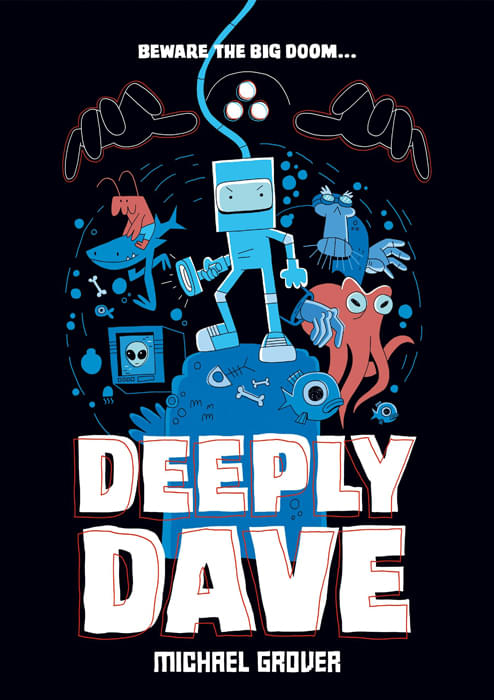
From the publisher
Immerse yourself in this unique reading experience, where you flip the pages up and read downward as you descend into the ocean's depths!
Dave's mom is missing…and he’s going after her.
She’s lost somewhere at the bottom of the ocean, stranded in the wreckage of her sunken spaceship. Only Dave can save her from the alien monsters and bizarre sea creatures that lurk in the depths.
So Dave is going deeper...
and deeper...
and deeper...
and deeper…
and deeper…
and deeper…
and deeper...
and deeper...
Jake Spooky and the Wolves Within Him
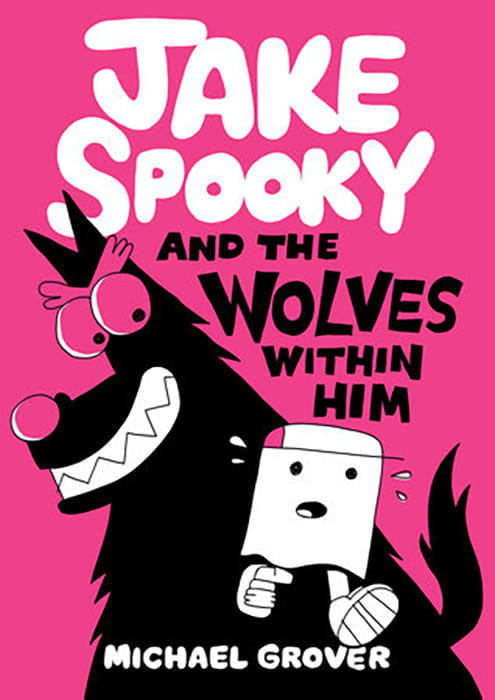
From the publisher
Jake Spooky keeps puking up wolves…and he has no idea why.
Meet Jake Spooky. He’s a shy, punk-rockin’ ghost who has some strange and mysterious powers bubbling just below the surface. Things can get a little bit…WEIRD in Jake’s world. Luckily, his roommates, the TV-headed Brand-o and Quincy the cat, help keep things under control—most of the time. One day, as a massive hurricane approaches, Jake can’t seem to stop puking up wolves, and their landlord has had enough! If any more wolves show up, the three friends are going to get kicked out of their house.
Jake just wants to chill out and have band practice. But first, he will need to look inside himself and unravel the mystery of the wolves within.
Follow Comic Book Yeti
🔗 Comic Book Yeti LinkTree: https://linktr.ee/ComicBookYeti
For partnership and ad inquiries, please contact: thecomicsyeti@gmailcom
Follow your hosts
🔗 Jimmy Gaspero: https://bsky.app/profile/jimmygaspero.bsky.social
🔗 Byron O’Neal: https://bsky.app/profile/byrononeal.com
PATREON
We have a new Patreon, CryptidCreatorCornerpod. If you like what we do, please consider supporting us. We got two simple tiers, $1 and $3. Want to know more, you know what to do.
ARKENFORGE
Play TTRPG games? Make sure to check out our partner Arkenforge. Use the discount code YETI5 to get $5 off your order.
Make sure to check out our sponsor 2000AD.
[00:00:00] Your ears do not deceive you. You have just entered the Cryptid Creator Corner brought to you by your friends at Comic Book Yeti. So without further ado, let's get on to the interview. Do you love sci-fi? Are you a horror fan? Maybe you prefer action or fantasy? 2000AD has it all and should be on your radar. With a whole universe of characters from Judge Dredd, Astronium Dog to Rogue Trooper, Shakara Halo Jones and many more,
[00:00:28] every weekly issue you get five action-packed thrills from incredible creators such as Garth Ennis, Rob Williams, Alex DeCampi, Dan Abnett and so many others. Get a print subscription and it'll arrive to your door every week. And your first issue is free or subscribe digitally. Get free back issues and download DRM-free copies of every issue for just $9 a month. That's 128 pages of incredible comics every month for less than $10.
[00:00:56] That's like a whole graphic novels worth. All subscribers get amazing offers like discount vouchers and exclusive product offers. Head to 2000AD.com and click on subscribe now or download the 2000AD app and why wait, start reading today. I'll put links in the show notes for you. Hello everybody and welcome to today's episode of the Cryptid Creator Corner. I'm Byron O'Neill, your host for our Comics Creator Chat.
[00:01:19] Today's guest is an Eisner, Harvey and Oscar nominee, which is very bougie. I don't think we've ever had an Oscar nominee on the show. But his hit animated middle grade webcomic Deeply Dave is a personal favorite because it's extremely weird. So inevitably I wanted to talk about it. It's just been released as a vertical format graphic novel from publisher Henry Holt. Michael Grover, welcome to the show. It's great to have you on. Thank you so much. Thanks for having me.
[00:01:46] Yeah, we'd love to have you. Well, I feel really lucky actually to have you join me as it seems like you've taken the Banksy approach to your art. You don't have much of an online footprint. Let's put it that way. So I feel like it's my journalistic duty on behalf of all of us to hear more about your background. So did you grow up with sort of the typical, I grew up with comics. I picked them up at the grocery store, the gas station. So it was inevitable that you ended up kind of doing this as a career.
[00:02:14] Yeah, I don't know about inevitable, but I definitely always wanted to do it. For me, newspaper comic strips were the gateway. It was a big part of my morning routine to go get the newspaper off the driveway, read the comics. So much so that I did it in my sleep once. I slept walked right out the front door at like 11 p.m. at night and freaked my parents out.
[00:02:40] Oh, wow. But yeah, I grew up loving comics, loving animation. And then I studied animation in college at BYU in Utah and thought maybe I was going to try to get into the animation industry, move to L.A., all that. But comics kept calling my name, kept working on comics on the side.
[00:03:04] Okay. Well, what made you decide that this medium is your artistic vehicle of choice? I think the accessibility and immediacy of comics was the big thing that I could do it on my own and kind of retain my own vision as opposed to needing to work with a full team for animated content.
[00:03:25] Okay. Yeah, that makes a lot of sense. So the animation angle of things. So you went to BYU for animation. When did you decide, I want to make this my career? Yeah, good question. I think all throughout college, I was kind of grappling with that and trying to figure out what I was going to do. And I thought maybe I would try to get into screenwriting or storyboarding or something like that.
[00:03:51] And I kept trying to shoehorn comics into the curriculum and like ask for permission to do comics projects for my animation classes. And so, you know, eventually I was like, all right, I think this is really what I want to do. Like maybe I'm kind of lying to myself here saying that I want to be a storyboard artist when really I love being able to make a finished product all on my own.
[00:04:13] So I guess I finished college and kind of fell into doing freelance motion graphics as a way to pay the bills. But then kept chipping away at comics on the side, hoping to eventually get a publishing deal. And it ended up taking years longer than I had hoped for that to happen. And but luckily it did. And here we are.
[00:04:38] Yeah. I mean, that that is that is the common refrain with with most comics creation, I'm afraid, from most of the people I talk to. BYU is interesting. I don't it doesn't strike me as the powerhouse animation school. Do they have a full comics program? I'm just not super familiar with their program.
[00:04:55] So they do have a great animation program, actually, and kind of their competitive advantage over some of the more well-known art schools is that they they do team projects and they structure it the same way an animation studio does. As far as like everybody having a specific role on these team projects, these short films they put out.
[00:05:21] So they kind of recreate like the Pixar pipeline, which makes makes it like attractive to recruiters from some of those big studios, because you can hire someone for a technical job, a lighter or a shader job. And they've kind of been doing it in school already as opposed to, you know, somebody graduating and they're used to kind of being the director of their own project. And that's not really how it works in a studio.
[00:05:51] So my struggle with that was it became increasingly clear that I didn't want to be a shader or a lighter kind of a cog in the machine, so to speak, which not not to denigrate that because there can be something cool about being part of something bigger than yourself. But but I always wanted to have, you know, a personal vision or control over what I was trying to do. Yeah, I mean, that makes a lot of sense. I'd be exactly the same way. Yeah.
[00:06:18] We're kind of getting into to your executed vision for those who are unfamiliar with Deeply Dave. It is a multimedia experience that transcends much of the standard boilerplate formatting of standard web comics. There's sometimes a spooky music track that's going well, it goes on the whole time. Sometimes it's definitively spooky and the panels are animated gifts. So walk me through your creative process pulling in all these different sensory forms.
[00:06:48] Yeah. So when I started working on Deeply Dave, I was hoping to get a publishing deal for it and make a printed graphic novel. And, you know, I shopped around like a pitch for it. And when it didn't immediately get attention, then I thought, well, maybe I'll just do it as a web comic because, again, immediacy. Right. I can I can put it online and people can see it right away. Yeah.
[00:07:15] And and I thought, well, if I'm going to do a web comic, let's go all in and try to make the best possible digital experience that I can make. Like, what are the ways that I can maximize what you can only do digitally? And then also try to leverage some of the skills I learned in animation school because I just spent a lot of time developing those and thought, well, if I shift to comics, I don't want to just throw all that away. Maybe there's something I can do here.
[00:07:42] So, yeah, I figured out a way to integrate animated gifts into the comic. I was really inspired by a web comic called Thunderpaw, if you're familiar with that one from a few years ago and a few others. Zach Gorman did some cool animated gifts in his comics. So I'd seen other people doing that and wanted to try it. And then, yeah, continued to experiment, figured out some ways to involve music.
[00:08:07] I had a good friend who created the soundtrack and then another friend who who wrote the code to kind of bring it all together and make it possible to have a soundtrack. Which changes as you scroll. That was kind of the important part that made it possible so the reader doesn't have to interrupt their experience and manually trigger each track. That can kind of happen in the background. Yeah, you mentioned Thunderpaw there.
[00:08:32] So this has more in common in my mind with Joseph Shields' Joe Cartoon and Rachel Smythe's Laura Olympus. When we start thinking about, you know, what a web comic is, this just the feel of it, the whole entire experience of it is very different. So where else were you pulling inspiration from? A good question. I think definitely from cartoons that I was watching at the time when I was in college.
[00:09:02] So like Adventure Time or Over the Garden Wall were both really formative for me. As far as earlier, like childhood influences, two that I invoke often are Homestar Runner. As far as creating like a really unique or pure digital experience, right? Like Homestar Runner is one that feels like a very singular world of its own, which I thought was cool.
[00:09:29] Or like Zelda Majora's Mask, the N64 game for having like this kind of spooky, creepy atmosphere. So yeah, those are a few of the influences that I was thinking about when making this. Okay. Now, my favorite character in the book is the crustacean Amos Bargan-Bargan and his worm juice. So I was sort of thinking that was a nod to E.C. Seeger's Popeye and his spinach sort of munching. Yes, yes, absolutely.
[00:09:58] Yeah, for him specifically, Popeye was definitely an influence, even down to the way he speaks. I was reading some of those old comic strips and yeah, Popeye's dialect is so unique and incredible. I was also thinking about Raoul Dahl's The BFG when developing the way that he talks. Nice. Yeah, I love him as a character. He is absolutely fabulous. Thank you.
[00:10:25] Where does his preoccupation with toilets come from though? Yeah, man, I don't remember exactly why I fell on that specifically. I knew that he needed to have some kind of very specific motivation for what he was looking for in the comic, right? So in the comic, Amos, he's an entrepreneur. He says he's a scavenger under the ocean, collects all sorts of eclectic things from the seafloor.
[00:10:54] And yeah, I just thought it would be funny if a toilet was one of the things that has eluded him. He's managed to find pretty much everything else on the bottom of the ocean, but he can't find that. So that becomes his drive. Yeah, I was trying to encapsulate what the reader experience like is in my head for this because it really does, I feel like, stand alone.
[00:11:17] And so what I landed on was neural, kind of encompassing all these different sensory experiences that you're incorporating into it. And because it's just so immersive and obviously there won't be a soundtrack with, you could play a soundtrack, I suppose, while reading the physical copy. But were there any challenges in kind of translating it onto the page from that formatting?
[00:11:43] Absolutely. Because like I said, I was kind of willfully ignoring print considerations when I made the webcomic and wanted to just focus purely on the digital experience. So yeah, I had all kinds of headaches translating it to print. For one thing, just the panels don't fit on the page well, because I've got these long, skinny, vertical panels.
[00:12:07] And even the ones that are normal sized are still a little bit longer and skinnier than your average comic panel, because I designed them to look good on a mobile device. And so yeah, I ended up redrawling lots of it. And some of that was okay, because if it's going to be in print, it feels so much more permanent than a webcomic. And so I wanted to redraw some of it anyway, to make it look as good as it could be.
[00:12:35] But yeah, pretty much every panel, I at least touched up a little bit or had to make some change to it to make it fit well on the page. And then colors as well. I have all these neon colors that don't translate to CMYK, so I had to adjust the color palette. Lots of different changes. But one thing that was very cool that my publisher actually suggested, it was Kirk Benshoff, my art director at Henry Holt. He suggested printing it vertically.
[00:13:06] So I have a copy right here for anyone who's seen the video version of this. But the spine is on the top, and it opens up vertically. So we kind of maintain the integrity of that vertical descent that happens in the webcomic. Which was very cool that they suggested that, because it's kind of risky for a mainstream publisher to play with the formatting like that. And I was nervous about it. I was like, is this going to be annoying to read?
[00:13:35] Maybe there's a reason that nobody does this, usually. But I think it's actually been great. Like, I handed it to my son, and he immediately just plopped down on his stomach and read the whole thing. And so, you know, it's cool. It stands out. And I'm really excited about it. Well, there's nothing quite like getting the kiddo seal of approval. That'll set your heart at ease almost immediately. Like, oh, okay, this is fine. We're good. Yeah, absolutely.
[00:14:03] Because, you know, kids won't hesitate to tell you if it doesn't work. Exactly, exactly. Well, and your experience there is a fairly common refrain from people I've talked to that have gone from a webcomic platform and been like, Yeah, I didn't plan doing this transition at all. One of the things that I really love about Deeply Dave is the agency that it creates for younger readers. My favorite book as a kid was Sesame Street, The Monster at the End of This Book. Oh, yeah.
[00:14:33] For people who, okay, you're familiar. But yeah, Grover keeps warning you about the monster. So you're constantly forced to do this page turn. But it's one of the first times I can remember personally where choice was deeply embedded into something that I read. And I absolutely adore that. You have buttons in Deeply Dave, the web version, which work kind of the same way. They're an invitation or not to go ahead and continue. And a lot of times those are at moments of peril.
[00:15:01] So why did you want to present a prompt? And then how do you get over that hurdle with the print version? Yeah, great questions. I was inspired by an online Twine experience. If you're familiar with Twine. I'm not. I don't even know how to describe it because I'm not really in the programming world. But it's kind of like a text-based adventure that I stumbled across on this platform called Twine.
[00:15:30] And it's called My Father's Long, Long Legs. And it's this spooky story. And it had a similar thing to what I did in Deeply Dave. It's all text-based. But at the end of each little section, then you would click on a prompt to continue. And it wasn't choose your own adventure. There was usually only one choice. And if there were multiple choices, you would have to do all of them eventually. Okay.
[00:15:58] But something about it asking me to click to continue engaged me in a really interesting way. Like I thought it was interesting that even if the choice is binary, continue or not, it still felt more engaging than if I was just reading it all at once. Yeah. So, yeah, I wanted to try that in the comic. And it had the added benefit with the comic of not needing to load everything up front.
[00:16:25] We would only need to load the images for one section. Okay. Because these chapters are pretty long. They're usually at least 100 GIFs in one chapter. And for it to work with the soundtrack, it all needed to be on one page. Okay. Instead of jumping from multiple pages. So breaking it up into those sections kind of helped keep things from, you know, just being too much at once to load.
[00:16:52] So it's a couple different things there to make the digital experience work. And then we were able to keep that in the print version by just saying, turn the page to whatever. Yeah. So turn the page to go deeper. Turn the page to get punched in the head. Whatever it is, that's the next part of the story. So when you were starting this, I imagine refresh rate was not something you had thought would be an impediment to your creative process, I'm guessing? Yeah.
[00:17:22] I mean, so like I said, I had a web developer friend, Andrew Jensen is his name. And yeah, it was kind of his job to figure out all of that stuff. And luckily he's brilliant and was very generous with his time helping me figure out how to make the technical side work. So how do you feel about releasing some of your own agency and control here?
[00:17:46] Because it's one of the things that's sort of challenging in print, you lose much of the ability to pace things. You are having to trust your reader to then go ahead and do that for themselves, which is very, very different than the control that you would have over a screen, a movie or something like that. And it's a harder environment to pull off, especially horror and comedy, which is why I don't think we see as many comics that really nail that.
[00:18:15] Where the timing is really, really tricky. Oh yeah. So that's very interesting that you bring that up. Because yeah, even in the web comic, it was important to me that the reader controls the pace. Because I do feel like that is one of the big benefits comics have over those other mediums that you mentioned. So yeah, even though I have animation in the digital version, it's these repeating loops.
[00:18:44] So my thought was that you should be able to read the web comic about as quickly as you would be able to read any other comic. Because the animation, for the most part, is just adding emphasis as opposed to delivering information. So you could glance at any given frame of these animations and you should be able to process it just as quickly as if you were looking at a still drawing. That was the hope. That was my intention.
[00:19:11] Because yeah, I didn't want it to feel like a video game cutscene when the animation was happening. Or something that kind of interrupted the flow. Because yeah, that's the cool thing about comics is that you can either fly through them super fast, you can skim over them, jump to the part you want to read, or you can spend a lot of time looking at it and absorbing the details of the drawing. So yeah, I wanted to have that in the digital version.
[00:19:40] I'm glad to have that in the physical version as well. But you do bring up an interesting point about horror and comedy. Because I agree, especially with horror, with suspense, I think that's very hard to accomplish in a comic. Yeah. Where you can't drag out the pace. You can't withhold the payoff in quite the same way that you can in a movie.
[00:20:05] So yeah, I'm interested if you have other thoughts on that, about comics and horror and suspense. I am not a comics writer, or I am a very novice comics writer. I can say I have something published now, which I think is a really cool feeling. Oh yeah, fantastic. It's coming out and should be in my hands in the next couple of months, which is absolutely fantastic.
[00:20:28] I highly recommend anybody get on the train in terms of creation and finally having something imprint in your hands. I'm sure you can speak to the juice that it gives you from that experience. But yeah, it's just a refrain that I come back to quite often. And it started with Kyle Starks, actually, when I was interviewing him about one of his books.
[00:20:52] And he is one of, I feel like, the modern masters in comics when he's able to mix horror and comedy together. And they have a lot in common because it's all about beats and how you create them. And it's something I'm trying to study and I'm trying to unlock. So I'm curious if you have any insight into kind of how you meshed them in Deeply Dave. Because I think it is successful. And this is a middle grade book.
[00:21:20] So it's not, I don't feel like right to call it horror. Sure, but you are diving into some sort of scary things in here. Yeah. Yeah, I think you're right that comedy and horror or suspense do have a lot of overlap about, yeah, it's all about withholding the payoff and then giving you the payoff and the release, the relief that you get when the payoff finally happens. Yeah, that's interesting.
[00:21:45] I will say going back to what we were talking about a moment ago, one benefit of web comics is that even though the reader is still in control of the pace, they're usually only looking at one panel at a time. And so it's almost like every panel is its own page turn, right? Yeah. And so I do think that helps with trying to have suspense or trying to withhold a punchline, right?
[00:22:15] Because in print, when you can see the whole page at once, it can spoil the reveal or it can spoil the punchline. And I even remember, I think it was Charles Schultz talked about this with Sunday comic strips, how the last panel can't draw too much attention to itself. Or your eye will immediately go to that and it'll spoil the joke, right? Yeah.
[00:22:39] And so, yeah, I think the same thing can happen in graphic novels and that's why lining up your page turns can be so important with a graphic novel, right? Get the reveal on the page turn. Anyway, those are all thoughts I was having. I've drifted from the question you just asked about comedy and horror in general. You're asking about the overlap there, right? Yeah, yeah.
[00:23:06] Just where did you find the happy spot within your own work of kind of mingling these two things? Yeah. I mean, I think cartoons can be really interesting when they, when it feels a little bit dangerous, right? When even if you've got kind of soft, cuddly characters, if you feel like there's a little bit of teeth to what you're looking at and it kind of keeps you on your toes, like you're not exactly sure what's going to happen next.
[00:23:34] If it's going to be something scary or if it's going to be funny. That's something I really enjoy just personally in the media I consume. I mentioned earlier Adventure Time and Over the Garden Wall, I think are two that do that really well. Where you just, you never know. Are you going to be in peril or is this going to be a punchline right around the corner? Another one I was thinking about recently was Wallace and Gromit. Sure.
[00:24:01] Those are some, some animations that do the same thing. Like they use all of these like horror movie or Hitchcockian tropes. But then half the time it's, it's just a punchline. So that, I don't know, that's, that's really interesting to me as a, as a consumer of media, as an audience, as well as a creator. All right, everybody, we're going to take a quick break. We'll be right back. Y'all, Jimmy, the Chaos Goblin strikes again.
[00:24:29] Ben, I should have known better than to mention I was working on my DC Universe meets Ravenloft hybrid D&D campaign on social media. My bad. He goes and tags a bunch of comics creators we know. And now I have to get it in gear and whip this campaign into shape so we can start playing. Another friend chimes in. Are you going to make maps? It's fair to say it's been a while since I put something together. So I guess, question mark? It was then that I discovered Arkinforge. If you don't know who Arkinforge is, they have everything you need to make your TTRP.
[00:24:59] More fun and immersive. Allowing you to build, play, and export animated maps, including in-person Fog of War capability that lets your players interact with maps as the adventure unfolds while you, the DM, get the full picture. Now I'm set to easily build high-res animated maps, saving myself precious time and significantly adding nuance to our campaign. That's a win every day in my book.
[00:25:23] Check them out at Arkinforge.com and use the discount code YETI5 to get $5 off. I'll drop a link in the show notes for you. And big thanks to Arkinforge for partnering with our show. I think I'm going to make Jimmy play a goblin warlock just to get even. Welcome back. Kind of diving into some of the fears that are in the book, on the surface, Dave is a diver. He's looking for his mom.
[00:25:48] And he runs into some new aquatic friends while attempting to avoid the big doom. But this is way more than that, or it was from my personal read and experience from it. Do you have a personal fear of water? I'm curious why you set the whole thing in water. Yeah, I don't think I have any deep fear of water specifically. I definitely don't want to drown. That's for sure. I don't think anybody does.
[00:26:16] That seems like an especially bad way to go. Yeah, I mean, the book plays with the scariness of the deep sea. But it also references outer space. And that's something I explore in a lot of my comics. Yeah, there's just something about being in a dark place where anything could pop out at you, whether it's an alien or an octopus or whatever.
[00:26:43] That makes for really rich storytelling, I think. Lots of potential there. And then also it made it so I didn't have to draw a lot of backgrounds. So that was nice too. Lots of just a character on black. Yeah, I was curious because my own experience with water, I'm not a water person. And I'm one of those weird individuals who if I'm actually scared of something, I run right at it.
[00:27:13] That is my nature. It's probably my condition nature. But to share a quick story about diving and why this whole water thing resonated with me. So I hate water. So I'm going to go do diving. So I'm down in the Keys with friends. And I'm absolutely terrible at it. I can't get my mask to fit right and do the mask clearing. And is this scuba diving or snorkeling? Yeah, yeah, yeah, yeah.
[00:27:41] And that's one of the reasons I love this is the kind of spooky and just what Dave's experiencing and that whole idea of him losing his hose at some time. I had a kind of visceral reaction to just given my own experiences. For anybody who is scared of diving and does actually work up the courage to do it, don't do what I did, which was the night before my open water test, I went out to see Deep Blue Sea with Samuel L. Jackson.
[00:28:08] So don't induce some scary shark imagery into your brain before you do it. I would suggest that. But yeah, on my first dive, we actually did a, I can't remember the name of it, but it's like a historical wreck. So it wasn't a deep dive. Lo and behold, it was a 12-foot hammerhead that swam overhead right at dusk on my first ever open water dive. So yeah, it was a total immersion.
[00:28:36] But anyway, that's why I connected with Dave's experience in the book so much, is it felt very me. So this is also kind of a vehicle, it seems like, to unpack childhood trauma. Unless I'm totally making this up, there's like a therapy couch in there somewhere. Maybe my brain put it in there. But I got this very Jungian overlay with the water as an allegory for shadow or a person's unconscious.
[00:29:04] But I've also been known to read too much into things. So it's this beautiful mixture to me of high concept and simplicity. So how much of this reflects your own sort of personal journey? Yeah, good question. With mental health. Right, yeah. I mean, I had a pretty happy childhood. I'm not necessarily exploring any kind of specific trauma here. And I guess as far as anything Jungian or psychological,
[00:29:35] I might be the person least qualified to answer that. I feel like often for artists who are trying to make something personal, it's the audience who is able to actually psychoanalyze the author in a way that maybe I'm not able to myself. So yeah, you might know some things about me that I don't know about myself after reading my comics. I don't know.
[00:30:01] Well, my supposition here is that you either really don't or you really do like eight-legged creatures, given that you have both spiders and octopuses who aren't exactly good guys in Deeply Dave. Yeah, I am a little bit scared of spiders. I will give you that. Okay. Yeah, yeah. Well, your newest work I'm a huge fan of. That's Jake Spooky and the Wolf Whithin'.
[00:30:28] And regular listeners will know about me having lupus and thus I have this preoccupation we were chatting about a little bit before we started with werewolf stories and how something involuntary that is internal can hijack and seemingly take over a healthy person's body. What's your logline for Jake for those people who aren't familiar with it yet? What's your pitch? Yeah, so Jake Spooky, he's a shy little ghost, but he has punk in his blood, as he likes to say.
[00:30:57] He likes playing punk rock music with his roommates. But yeah, he's a little ghost and he has these extraordinary ghost powers within him that kind of explode out at inopportune times. And so Jake Spooky is about him trying to control that or channel that while just trying to have a chill life with his buddies, with his two roommates. Okay, so he's just bro-ing out.
[00:31:26] And then werewolves. So where did the werewolves come from? Where are you finding them particularly compelling that you wanted to include those? Yeah. So I had done some earlier comics exploring werewolves, and I had this werewolf design that I liked and I thought was kind of funny and stupid looking.
[00:31:48] And so, yeah, I guess with this comic in particular, so Jake Spooky and the Wolves Within Him is about Jake puking up wolves, and he does not know why or where they came from and what's going on. And it started with just like a little four-panel comic strip I drew of Jake standing there in his living room, and he puked up a wolf because I had this wolf design.
[00:32:15] And the wolf runs away, and then Jake and his roommates just kind of stand there and don't react to it, which I thought was kind of funny and absurd and, you know, maybe even a little postmodern. I like the idea that the punchline was that there was no punchline. Like this insane thing happened, and in a conventional comic strip, then there would be some pithy remark after that, like, like, oh, I'll never get used to this. You know, I hate Mondays, you know, whatever.
[00:32:45] Right. So I thought it was funny to like have them not respond to it. And like what does it mean that this is their life, that crazy things happen or wild things happen, and his roommates are trying to not embarrass him by mentioning it. And, you know, they wait until it's really gotten out of control before they finally confront him, and they're like, hey, so what's with these wolves, man? Like what's going on here?
[00:33:12] So that was the idea, and then I had to, like I thought that was a funny hook, and then I had to figure out a way to like justify it and like build a story around that. And like, well, where did they come from? I don't know. Like I had to figure that out too. Yeah, they've been showing up a lot in mainstream comics recently, Batman books especially. You have them in Romby's Detective Run and Rodney Barnes' Full Moon,
[00:33:39] which was kind of its own little story there. And as you said, Jake is eating and then he's regurgitating them. So I'm curious about the connection to the digestive process, because again, readers kind of incorporate their own filter here. So I was thinking about my own relationship with food. I have a very strict anti-inflammatory diet. It's one of the things that helps keep my lupus fairly in check. So that interpretation resonated with me.
[00:34:08] So why the gut? You know, why center it right there? Yeah. Yeah, again, I might need some psychoanalysis from other sources here. But yeah, I guess I just think it's funny when characters are eating each other and puking each other up and turning into different things. Like, I guess just kind of the surreal absurdism of that is interesting to me.
[00:34:36] And it can be kind of like playful and fun, but also visceral at the same time. Like, eating is a big part of being alive. So it's universal. But I don't know. Because, yeah, it keeps coming up in my comics of characters eating each other and turning into different things. And I don't know why. And I've even, like, sometimes been writing a comic and be like,
[00:35:04] okay, no one's allowed to turn into a different body in this one. And I need to set some rules for myself, try something else. And then lately, I've been like, oh, I think I'm just kind of going to lean into it. Like, this is apparently a motif that keeps popping up. So I'm just going to run with it. I love the mundane nature of that. Here I am looking for, you know, these deeper meanings behind things. And it could be as simple as, okay, I had a stomach ache when I was doing this. Or my kid was sick and was puking everywhere. So I don't know.
[00:35:34] That's how it ended up in the book. Right, right, right. Yeah, no, I definitely welcome any interpretations that are more profound than that, though. Anyone who wants to find something deeper, I think that's fantastic. I mean, the only thing I can guess at here in terms of deeper meaning is having worked with musicians for a decade and a half on the tech end of things myself. I was kind of getting the vibe that it's kind of your personal form of release,
[00:36:01] given music incorporated into the narrative as a way to expunge the werewolves or calm them down? Oh, yeah, definitely. So, yeah, as far as the overall arc of the story, yeah, Jake needs music in order to have catharsis, right? That's important for him. And, yeah, that is definitely from my personal experience.
[00:36:27] I love music and have felt great relief from stress by either playing or listening to very loud music. And, yeah, other forms of creative expression, including comics, are important for me to feel stable, to feel regulated. I think when I'm in a creative state working on things,
[00:36:53] then I am less anxious or less stressed about other things going on in my life. So, yeah, that's definitely part of the theme of the book. So do you listen to music while you create? It's something I ask people occasionally, and I'm always curious. I can't do that. Like, as a creative, if I have anything going on, it just completely distracts me. Yeah, I definitely listen to a lot of music. Yeah, I can almost always listen to music.
[00:37:21] As far as, like, podcasts and other things with talking, that I can only do if I'm working on something a little more mindless. But music, yeah, I can pretty much always listen to that unless I am in the early stages of writing something. And then I need to kind of shut everything else out because that's the most, like, cognitively demanding part of the process for me. But, yeah, when I'm drawing and working on art,
[00:37:50] then I pretty much always have headphones on and have something playing in the background. What do you play yourself? So I was in a garage band when I was in college and played some, like, blues rock, kind of White Stripes-inspired garage rock. And I haven't played a lot of music in recent years since having kids and starting a career and all of that. Sure.
[00:38:20] But I do crave it. I do hope to be in a band again someday. I think being in a crappy band is way better than not being in a band. Like, being in a band is, like, one of the funnest things I've ever done. Yeah, I can speak to... I cannot play nor sing anything. So that's how I ended up on the tech end of things. But I will speak to the fun of just being, especially in a small band,
[00:38:49] because I've done everything from being the stage manager of household names to the guy driving around the van trying to break into the music business. And I prefer the driving around the van trying to break into the music business because the authenticity of the experiences, there's just a difference when you don't know how you're going to connect to with an audience, especially with smaller crowds
[00:39:18] that don't have that same anticipation with your work. They don't know, oh, yeah, I'm going to a Taylor Swift concert. I already know from TikTok what half of the show is. So it just changes the entire vibe of the overall experience and the way you connect with a crowd. Yeah, that's really interesting. Yeah, I know as a concert goer, I definitely prefer a hole-in-the-wall venue as well to a big stadium show or a bigger venue
[00:39:47] where you feel like you're connecting with the band in a very real and intimate way. Yeah. In the book itself, I adore the Eddie Munson's Stranger Things moment with Brando ripping the guitar solo on top of the car roof. You know, Jake is this pretty straightforward character. To me, he wasn't spooky, but Brando definitely was. He's got a normal body with a blank head TV, which is a curious object to choose
[00:40:16] because it's a very selfish way that we interact with TVs, right? It's all externalized input mechanism and all take. You know, we're consuming from this thing. So talk to me about creating Brando as a character. Yeah. Oh, man, I love that interpretation. Because, yeah, something that Brando, it's kind of a running joke in the comic is that he cannot see what's on his face, right?
[00:40:45] Like, he has a TV for a head, but when other people are watching it, he can't see it, so he has to watch it in the mirror. And there are some, like, funny gags with him, like, misinterpreting things because he sees everything reflected backwards back at him. So, yeah, that's something I'm still kind of exploring in this and in future comics with him is, yeah, what does that mean that he is broadcasting without being able to consume it himself?
[00:41:16] But, yeah, the initial design for him, again, like, all three of those characters, so Jake Spooky, Brando, and then the cat, Quincy, who's wearing underwear, all three of them were just kind of, like, doodled in my sketchbook when I was in college. And I kept coming back to them and I liked them and liked putting them in things. And now I'm kind of developing backstories for them and where they came from and what it all means. But originally I was just attracted
[00:41:45] to the aesthetic of what they looked like as I was, you know, sketching lots of different things. And I thought, oh, that's cool. Like, maybe there's something, maybe there's something there. Yeah. Cat needs underwear. That's, and we just got to stick with it and create that. That's the atom of my story and I need to create everything else around it. Yeah. Yeah. Yeah. Yeah. I don't know how, how common that is. I think, I think that's common, right? For artists to kind of, I think, yeah. Oh yeah. Stumble on something and, and I think it resonates
[00:42:14] because it feels like there could be depth there and then it's a matter of like reverse engineering the depth into it. Yeah. I think there's a difference if you come at things from, if you're exclusively a writer, then I think it is the story idea, the narrative nugget, and that's what you're, you're creating everything else around. And then it just evolved. However, I think if you're coming from the perspective of being able to do everything yourself, it's a very,
[00:42:43] very different creative animal, you know? And I think people get much more obsessed with a character design or an idea or a piece of fashion and then they use that and then, oh yeah, it works great to do some childhood drama mining even though I didn't have any drama in my childhood in your case. Yeah. Yeah. It's interesting. It's interesting how an image can be iconic and can kind of demand storytelling. Like I think about
[00:43:13] like the design for Boba Fett in Star Wars, how he was originally, at least as I understand it, kind of a, just a background character, right? But then the fan, the fan base kind of latched onto him just because he looked so cool and, you know, like, all right, we now we need to build something into who he is. Yeah. Yeah. I mean, that's in a nutshell, I think the, the success of a lot of the things that are, you have all of these Star Wars, the Mandalorian. I mean, like that's,
[00:43:42] that is all fashion. That is all character design. And then everything else has just sort of sprung off of that. That's why we connect to them. It's, they have, it's the iconic imagery. It's, it, it's not so much their, their background or history. I don't think personally. Yeah. Yeah. That's fascinating. Yeah. Well, I'm a bit of a color junkie, so you chose to use hot pink as the solo color choice beyond black and white, uh, for Jake. Why pink? Uh, yeah,
[00:44:12] I think it plays into the, the kind of surreal or punk nature of it, that it, that it feels, it demands attention. Um, and, uh, yeah, I guess I just think it looks cool. Um, and I, I like the idea of doing future books with these characters and each one has a, having a different color as the solo color. Um, but maybe pink being the one that, that I kind of come back to as the main color. So we'll see, we'll see how that evolves.
[00:44:42] But, um, I, I like that idea. It's a very retro. It feels nineties fashion, TNC surf and skate. That that's immediately where my brain went was, was that early nineties where everything, what were these vibrant sort of neons that we're getting back into. Apparently that's super fashionable, like in skirts, and all kinds of, I'm old. So I don't know. It's all coming back around, right? Just wait long enough. That's the nature of things for sure. Yeah. Well,
[00:45:12] well, I know you've been doing some audience readings, which creates kind of a bridge between two dimensional and three dimensional audience interactions with your work. So I'm curious, do you feel like that's helped you as a creative? I don't get to talk to many people who do that, that kind of incorporation into their work, just getting that kind of feedback, that live audience feedback. Yeah. Yeah. I love doing these live readings. I'm, I'm interested in standup comedy as a medium and I'm kind of, I'm kind of jealous
[00:45:41] of how standup comedians when they're developing their material, get instant feedback night after night from audiences and get to kind of shape their work based on that. And, and that doesn't really exist in comics. Um, like I'll, I'll have people read rough drafts of my work. So I, I try to get that. Um, but it's, it's just different. It's different than reading it with a group. Um, and so I've really enjoyed doing these readings
[00:46:10] and like finding where the laughs are and where I feel like people are, are, you know, maybe not as engaged. Um, and I, so far I've been doing the readings when the work is, uh, completed or almost completed. And I like the idea of trying to test material out a little bit earlier in the process with some of these. Okay. Um, cause yeah, I, I think that's, that's a lot of fun. And then going back to the band thing, um, um,
[00:46:39] I think about bands that I like and how there are bands that I still listen to just because I saw them live when I was a college student. Um, and maybe they're not even, you know, the best musicians ever. Um, but I have this, personal connection to the music. Um, and so I like the idea of doing the same thing with comics, like trying to have a, a personal, more intimate connection with a group of people who maybe will remember it differently than if they just scrolled past it
[00:47:08] on a social media feed. Um, and I don't use social media. So, so live events or going to conventions, that's, that's becoming a way for me to reach people that I wouldn't otherwise be able to reach. So are you testing out different versions of music soundtracks and just seeing how people respond? Is that, just curious if that gives you another opportunity to refine a process before incorporating it into your work? Uh, yeah, actually with music specifically
[00:47:38] with the Jake Spooky comic, um, uh, I think there are, there are one or two sections that didn't have music and then after I did live readings it felt like too much of a gap of nothing going on and so I added more music to it, um, because of how it felt in the reading. So, so yeah, there is a little bit of that happening as well. Um, and it's, yeah, it's tough to know how much to experiment with some of those elements. Like with the music, I'm kind of dependent on other people to help provide it
[00:48:08] for the most part. Yeah. I, I, I wrote a little bit of the music myself in Jake Spooky but most of it is friends, uh, who made it. And so, um, so yeah, I'm still figuring out that balance of how modular can I make this? Like, how much can I, can I experiment and play with it after I've already started making it? It's time to get the band back together, Mike. Then you have all of this music that you can, you can pull from for your live shows that you can incorporate into the next Jake's, which it sounds like you're working on more,
[00:48:37] more Jake stories. Is that true? Yeah, yeah, absolutely. So I, I have a publishing deal for, uh, Jake Spooky and the Wolves within him. Um, that's going to be published by Toon Books, um, which is part of Astro Publishing. Um, and then, uh, that was a two book deal. So there's going to be a second book a year after that one comes out. Um, so I'm working on ideas for that right now. And then I'm hoping it becomes a, a long running series because I love those characters and, and the stories, uh,
[00:49:07] kind of lend themselves to an episodic nature, um, where I feel like I could, I could make a lot of Jake Spooky comics. I am personally very excited about that. I am very invested in this. And I promise when we talk about Jake Spooky down the road, when you're ready to do the promotion for that, I won't try to do so much trauma mining and try to make these big conceptual ideas out of what's inherent in, in the narrative. No, no, not at all. No, I love it. We'll get into character designs. I love geeking out
[00:49:37] about character designs, but anyway, so Deeply Dave is out on shelves now. I can't think of another recent project that I have, that have gotten lost so utterly just lost in the sauce. Maybe I shouldn't have, but anyway, as a reader, that's where we, it took me with these narrative breadcrumbs. It's like mining for meaning, which apparently probably isn't even there, but it doesn't matter because that's the, the reader experience that is why comics are so cool. And I think everybody would be well served by,
[00:50:07] by going out and picking it up and then going back. And if you haven't checking out, out the web version, because I think it's really neat to get, to just absorb a point counterpoint. That's, that's my plan anyways. I'm going to get the paper, copy of the book, read that, and then do, do a point by point comparison. So I'll let, I'll let you know how that goes, but cool. Um, are you, are you personally pretty excited and okay, I've gotten to see this thing in my hand. We talked about that earlier, you know, with the, with the excitement of just getting in your hand. What did that feel
[00:50:36] like when you saw your first book in print? Yeah. Oh, thrilling. Yeah. It's, it's absolutely a huge payoff to, to see a big stack of books. Um, after kind of living in the, uh, ethereal space of, of a computer hard drive for so long, um, holding it in my hand is, is very satisfying and exciting. Um, and you know, it's, it is strange. I'm sure you hear this, uh, from time to time from artists. It's strange to be promoting something
[00:51:06] that I finished, you know, at this point years ago, basically. Yeah. Uh, you know, except for the final tweaks, like the, the bulk of the work was done a long time ago. Um, and I'm just now on the, on the promotional circuit as it were, uh, for the book. Um, so that, that can feel a little strange. Um, but it's, it's so exciting to see it, um, existing in the physical format and seeing people holding it and reacting to it and seeing it on the shelf on a bookstore. And so that excitement
[00:51:36] kind of overrides any, like, strangeness or reticence I would have had about it, um, just because it's an old project. Like, it's, it feels exciting again, um, because it is, um, you know, existing in a way that it hadn't existed before. I bet. Yeah. I bet to me as a dad myself, I think the, the ultimate experience, which the coolest part would be like getting that confirmation from your kids. Like, yeah, dad, you did all right. Yeah. Yeah. Luckily my kids
[00:52:05] are at a good age for it where they're, where they're very excited. Um, you know, I imagine maybe as they, as they become teenagers, maybe there'll be a little bit more cynicism, uh, towards me about the things I'm doing, but for now they're all, uh, they're all very, uh, excited with me and celebratory. So yeah, that's been, that's been very rewarding. That's awesome. Well, I always wrap things up with a shout out so we can finish on a positive note. This can be a recent kindness somebody did for you or somebody, something that just recently inspired you. And I'll go first to give you a moment
[00:52:34] to think about it. I was recently watching a YouTube video the other night, actually from the Cornell lab of ornithology and the algorithm has decided that birds are my recent thing. This follows the journey of North America's whooping cranes as they migrate from Texas up to Canada's Northwestern territories using this narrative map overlay. Uh, so it's very interactive with all, following all the, the tag birds over kind of a, a Google Maps kind of presentation where you get to see
[00:53:04] all the farmland and the oil sands and, and all these things that, that the challenges that they now have with this very narrow habitat band that they're having to navigate on this, uh, 40, 30 to 40 day migration. It's really, really cool. Sad to see how the habitat range is diminished, but very engaging and well worth investing the six or seven minutes, uh, that it takes to watch it. So I'll put a link for that and a show notes for anybody interested. What you got? Yeah. So just anything
[00:53:32] positive or exciting that I've experienced lately. Yeah. Um, yeah. Give me one moment to think here. Uh, go for it. I was, yeah. I, instead of thinking about my own thing, I was excited. You were like, oh, birds are cool. Telling me about, yeah, it is really cool. I watched, uh, something on, it was the, the owls of Logan airport recently. So I didn't realize that I'm sure this is where the bird algorithm kicked in. And I talked about that on, on, that was my other thing. So people were like
[00:54:02] going to start tuning out. I was like, I was just going to talk about birds. Um, I'm, I'm not, but, uh, as somebody who I have an environmental science degree, so conservation stuff is, is really, really close to my heart. And so seeing these kinds of things with wildlife, um, are, are just very meaningful moments. Uh, and I, I can, 2025 is a dumpster fire. We don't need to get into all that, but it's nice to just be able to find these little positive segments of like, oh, cool. Humanity is still part of nature
[00:54:32] and we're still embedded in this and we're still actually doing some really cool things to, to help with our planet and with these creatures and to, to try to keep a balance. So it, it helps me balance myself. Yeah. Yeah, that's awesome. Well, maybe to, to jump off of that then, uh, my own experiences with, uh, with nearby nature, local nature. Um, I live in Florida and, uh, occasionally in the, um, ponds near our house we'll get an alligator,
[00:55:02] uh, in those ponds and not too long ago I saw a little baby alligator in the pond. Um, and it's, uh, that's, I still get a big kick out of that of seeing an alligator, um, close by, uh, you know, just living its life, right? Uh, hopefully no one bothers it too much and it can, it can continue to, to thrive. Um, or we have these, uh, with birds, uh, we have sandhill cranes, um, that are, that are, you know, like four feet or more high, uh, just walking around,
[00:55:32] just chilling in the neighborhood. Um, they're basically domesticated at this point. Um, and, and they'll walk in the road and, uh, are completely unbothered by traffic and everyone just stops and lets them go, uh, cause they are, they're 100% confident that, uh, that no one is going to hit them. And hopefully that continues to be the case in, uh, this slow, uh, quiet suburban neighborhood here, uh, that people will leave the sandhill cranes alone. Um, but yeah, that's, I still get a kick out of seeing them and, uh, seeing the gators
[00:56:02] around here. Yeah, yeah. It's one of the aspects of Florida that I do miss because our neighborhood had retention ponds and the kids would fish in them and we would have alligators and turtles and of all things otters, which I didn't expect to see at all were just otters running around. I had no idea otters were even in Florida. Yeah, yeah. I remember seeing them for the first time as a teenager too and yeah, it blows my mind. I guess, I guess Florida kind of has everything because people just release, uh,
[00:56:31] whatever pet, exotic pets they had. Uh, so if it, if it didn't origin, if it wasn't originally here, it's here now, right? Yeah. Yeah. Well, we're starting to get apparently the, the snakes, the boas, the constrictors and stuff that were released in the Everglades. I think they're starting finally to get that a little bit more under control. Oh, really? Okay. That's good. Yeah. Yeah. Yeah. Well, I don't know if we can attribute the success of all these snake hunters shows that had been on TV for the last seven,
[00:57:01] eight years or not. I don't care if it, if, if it works and we get the invasive species out in my mind, whatever works, that's fine. Yeah, totally. Cool. Well, Mike, thanks for coming on the show. It's great to hear about Deeply Dave and Jake and I really appreciate it. Yeah. Thank you so much for having me. This has been an absolute pleasure. Thank you. Well, this is Byron O'Neill and on behalf of all of us at Comic Book Yeti, thanks for tuning in and we will see you next time. Take care, everybody. This is Byron O'Neill, one of your hosts
[00:57:29] of the Cryptid Creator Corner brought to you by Comic Book Yeti. We hope you've enjoyed this episode of our podcast. Please rate, review, subscribe, all that good stuff. It lets us know how we're doing and more importantly, how we can improve. Thanks for listening.