
I have been looking forward to getting Patrick Horvath on the show for some time now and no better way to do it than to chat about his new IDW Dark project that builds on his break out success Beneath The Trees Where Nobody Sees. It's back with the next installment called Rite Of Spring which is a significant departure from the original but fear not, or maybe you should, our beloved murder bear Samantha is back.
I think Patrick and I are long lost relatives because it's rare that I get to make a connection with someone on the relative merits of using Diet Coke to remove flesh from bone. We get into that, how he's avoiding the sophmore comics slump, how a decade's passing effects the people of the world, Sam's new nemesis Monica, and much more. This was one of the funnest and funniest, if dark, episodes I've recorded in some time.
Byron's shout out: Bakelite by Julie Gautier
WATCH ON YOUTUBE
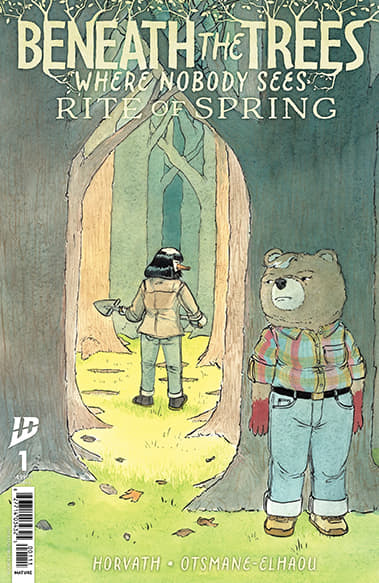
Beneath The Trees Where Nobody Sees: Rite Of Spring from IDW Dark
From the publisher
The six-issue return of the Eisner-nominated cozy horror smash hit!
It's been eight long years since a bloodlusting brown bear drove into the city, kidnapped a kind young duck, dissected his body, and buried the pieces in the woods. The duck's family painstakingly sought justice... but this brown bear was smart... she covered her tracks... and in the '80s, there simply wasn't a way for the duck's family to find answers.
But it's not the '80s anymore. Almost a decade after cuddly brown bear Samantha Strong solidified herself as the sole serial killer in Woodbrook, the world is entering a new era.
As Samantha will soon find out, there are no secrets in the age of the internet. And those who lost loved ones to her massacre haven't given up the flame of justice. A reckoning is coming to Woodbrook.
Join visionary writer and artist Patrick Horvath for one of the most anticipated comics of 2025.
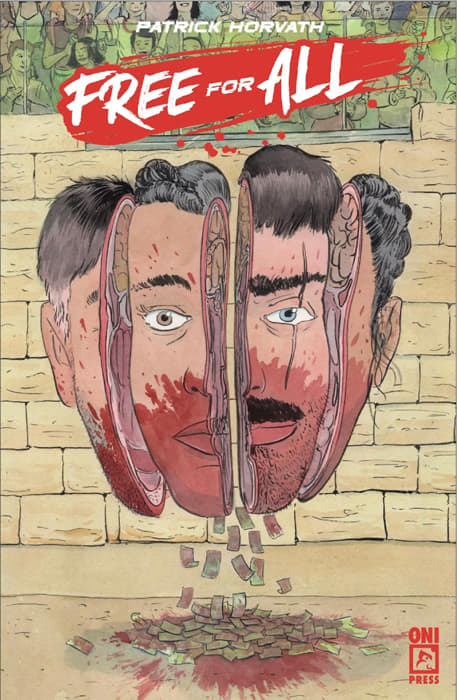
Free For All from Oni Press
From the publisher
From Eisner Award-nominated writer/artist Patrick Horvath (Beneath the Trees Where Nobody Sees) comes a 56-page, self-contained one-shot that delivers a brutal new vision of capitalism by combat . . .
In the future, the World Finance League exists to benefit all, randomly choosing those from among the billionaires and trillionaires of the world and presenting them with a choice: either donate half of their assets to the common good-or defend them in ritual combat.
Reigning champion and real estate magnate Ted Brooks has 22 victories under his belt-defending the wealth he schemed and stabbed to get-when he is forced to face his ex-wife, Luella Dominguez, in a fight to the death. Luella has been training, waiting for this moment. But will she have what it takes to defeat the man who would do anything-absolutely anything-to keep his fortune?
It's every shareholder for themselves when death and bankruptcy collide in Free for All #1, a giant-sized, one-shot spectacle of commerce and carnage coming this March from Eisner Award-nominated cartoonist Patrick Horvath!
Follow Comic Book Yeti
🔗 Comic Book Yeti LinkTree: https://linktr.ee/ComicBookYeti
Follow your hosts
🔗 Jimmy Gaspero: https://bsky.app/profile/jimmygaspero.bsky.social
🔗 Byron O’Neal: https://bsky.app/profile/byrononeal.com
For partnership and ad inquiries, please contact: thecomicsyeti@gmailcom
PATREON
We have a new Patreon, CryptidCreatorCornerpod. If you like what we do, please consider supporting us. We got two simple tiers, $1 and $3. Want to know more, you know what to do.
THE ORDER OF THE NUN-YA STARBURST: VIOLA
Make sure to check out our friend's new crowdfunding campaign The Order of the Nun-Ya Starburst: Viola that I mentioned in the episode. (LINK)
ARKENFORGE
Play TTRPG games? Make sure to check out our partner Arkenforge. Use the discount code YETI5 to get $5 off your order.
[00:00:00] Your ears do not deceive you. You have just entered the Cryptid Creator Corner brought to you by your friends at Comic Book Yeti. So without further ado, let's get on to the interview.
[00:00:30] Show Notes and thank you for your continued support. Thanks for your donation.
[00:01:02] Dan Abnett and so many others. Get a print subscription and it'll arrive to your door every week. And your first issue is free or subscribe digitally. Get free back issues and download DRM-free copies of every issue for just $9 a month. That's 128 pages of incredible comics every month for less than $10. That's like a whole graphic novels worth. All subscribers get amazing offers like discount vouchers and exclusive product offers.
[00:01:29] Head to 2000AD.com and click on subscribe now or download the 2000AD app and why wait? Start reading today. I'll put links in the show notes for you. Hello everybody and welcome to today's episode of the Cryptid Creator Corner. I'm Byron O'Neill, your host for our Comics Creator Chat. Today I'm joined by Risen, we can't say rising, although Risen sounds quite biblical.
[00:01:51] Eisner Award nominated indie comics writer and filmmaker. His breakout success story, Beneath the Trees Where Nobody Sees is back with another installment with everyone's favorite murder bear, Samantha with Rite of Spring, oddly releasing in the summer. So it is my pleasure to introduce the scribe of slashers, the mangler of the mundane, the urger of unlawful ursine urges. That one was a reach, but I really want to fade it in there. Patrick Horvath, welcome to the show. It's so nice to have you on.
[00:02:21] Hello, thank you. Thank you so much for having me on. I really appreciate it. Thank you for the wonderful intro. Yeah, I was a former production assistant for WCW Wrestling way back in what feels another lifetime, so you got to have a proper intro. Mr. Fuji taught me that. Very cool.
[00:02:38] Yeah. Well, let's start with the title, Rite of Spring. I associate that with the pagan or steward ritual on the spring echonage, which is when simplified just represents awakening, rebirth, renewal, or to use a bear's experience, the end of hibernation. So after the success of Beneath the Trees and given a little time to think, you decided to fast forward eight years. So walk me through the mental process of trying to build upon the formula of this very unique concept.
[00:03:07] Yeah. I initially had the ideas for what the follow-up would be by the time I finished like issue three, I think, of that first run of Beneath the Trees. And it very specifically was dealing with the, like, I really enjoyed issue three because it was starting to show consequences, impact in a community. You're at the funeral for Martin the goat. You're seeing grief play out amongst, you know, characters.
[00:03:35] Like, we're showing that this is a world that deals with this stuff, right? And for Samantha, she sort of checks, you know, like, she knows this intellectually. And she's sort of fascinated by it, but she has no idea of, like, what that is. But still fascinated, probably because she can't really make that emotional connection. Anyway, and all that stuff was sort of going around in my head.
[00:03:57] And I was like, you know, it'd be interesting would be for her to, like, have to deal with some sort of, you know, repercussion of a murder that was, like, further in the future. And it was essentially like having redefined someone's existential being as, you know, an obsession to find a loved one that essentially disappeared.
[00:04:23] And how that, you know, would change a character and for Samantha to be sort of, you know, faced with that. And so that was sort of where it all came from. Um, so by the time even, like, the first issue came out of Beneath the Trees, like, I'd already had an idea. Because I was, like, four issues in at that point, production-wise. And, um, and so IDW, like, the first issue came out. It was surprisingly, like, successful. Um, and it was picking up steam. And they were like, do you want to do more?
[00:04:53] We would like to do more with you. And I was like, yes. I was like, do you have any ideas? I was like, I do have an idea. Um, and so that's kind of how it came together. Um, and the Rite of Spring came to me just in turn, obviously, the Stravinsky connection. Um, and, uh, and the idea of sacrifice. And, uh, and the bears are involved. And there's hibernation, like you mentioned. Like, a lot of that sort of all came together. And that's how Rite of Spring, um, came to me.
[00:05:20] And there's more thematic sacrifice, uh, connection that I don't want to spoil. But, but it's, but it ties in. It ties in. Um, and, uh, and yeah. So that was kind of what, what was all sort of rolling around in my head. Well, I know you've done some other comics work, but for all intents and purposes, on the big stage, sophomore albums are notoriously challenging. Has there, was there any trepidation when you're, when you were kind of coming through this?
[00:05:46] I mean, you said you already had the idea halfway through basically the first one, you know, is there performance anxiety associated with kind of how do we do this again? Definitely. I feel like there was a lot of, um, if I, I felt, uh, there's like a combination of like anxiety, imposter syndrome. Um, the, um, the worry that like, I just got lucky.
[00:06:13] Uh, and I don't know what it was that honestly, cause I can't really put my finger on why the first one worked resonated so well with people other than I was just following my inspiration. And so the, the, the anxiety for me at the beginning of plotting out the second arc was that I, I was afraid I would just fall into a recipe of what did work the first time around. Sure.
[00:06:41] And then, and then you would kind of feel like you were retreading, even if it was like new plot points, but you were doing two similar things. Like I, that was my concern. And, um, and it wasn't until I honestly just like sunk my claws into the character of Monica, who is the new big character with the second arc that I was like, Oh, I, you know what? As soon as I put my head in her head, like I kind of realized like where this could go.
[00:07:09] We gave her, she has, as you see in like issue one, she has narration, like we're, we're with her. Um, and so I, at that point I, I kind of let everything go and then really leaned into just whatever weird thing I was feeling like that's what, that was the only sort of, you know, true North for me as I was putting it together. And then in regards to what happened, like I am kind of a formalist nerd in terms of having echoes that show up.
[00:07:36] And you can see that in the first arc, even like I just, or even within issues within the first arc, like I love those callbacks. If there's like added meeting or there's a cumulative element to it that makes it interesting or changes the meaning, whatever. And so, um, so that definitely is in play, but, um, in regards to the plotting of it all, like it's very different. Um, and we'll see. Oh, that's received. I don't know. But, um, but it's a, uh, yeah, I, I, I,
[00:08:04] for sure had a lot of trepidation at the beginning. Yeah, I, I really, I mean, if, if my read is any indication of how everybody else is going to respond, you're in great shape. Cause it was this, yeah, I mean, it was a really dramatic shift that honestly, I didn't anticipate with respect to tone. And if we were murder in Mayberry, now we're kind of killer in Queens.
[00:08:28] So it's a, a start, start contrast that reflected the change in our own ideals in this transition of disillusionment, you know, that seeped into the eighties culture in America, which seems sadly applicable to 2025. But what, what, what made you want to kind of make that, that shift tonally? I mean, aside from, uh, uh, I don't want to do the same thing again. Um, I, I, it just felt like it, it just, the story felt like that's what it needed to be
[00:08:57] because of the focus on a character that had been eight years into a completely fruitless search. Um, that was tied into the missing loved one who's like, you know, who just, it's like they're dead essentially in their mind, probably at this point in absentia, which is like one of the hardest things to sort of deal with. Like they're just gone. Um, and you have to assume they're probably dead or it's, I mean, it's like one of the hardest things is there's, there's no processing because there's no closure necessarily.
[00:09:24] And so, um, so to have that sort of mindset and then to put it in the thick of the nineties, which to me, um, it felt really interesting because of, it was such a change in regards to like the internet coming out. Um, having like, and, and this world is super similar to our world, right? Like, like if you actually want to be a nerd about it, if you look at the dates, the dates are, the calendar is misaligned with our calendar by like one day.
[00:09:52] And so as a result, like it kind of allowed, you know, now we have animal people, but it's very similar to the world we have. And so like, we have like globalization happening. We have like suburban development. We have like big box stores coming that are driving out, you know, customers from small mom and pop hardware stores, let's say. And then you have, you know, all these elements that are kind of happening. The world's shrinking. Like you can feel like there's just a change happening, especially if you're paying attention and Samantha is always paying attention.
[00:10:21] So like, that was kind of the, that was why, you know, I kind of went with this shift in the tone. Like, it felt like the world was sort of like, we can't pretend not to pay attention to it anymore. Yeah. It's one of the things that just immediately my buy-in was sucked in with, with that coming from a theatrical background. You know, it's the, it's the set pieces. It's the dressing that kind of really set the stage. And so cities are kind of an interesting way to explore identity and, you know, this contrast
[00:10:52] between rural and urban that we've got going on, you know, cities can have a vibe, right? And when they're not, DC does this where I think really, really well, where when you don't attach it to an actual physical place, like I'm thinking Gotham or Metropolis or something like that, they can take on these lives of their own. And Woodbrook, you had a very defined sense of self that you established in the first arc. Do you like developing place as a character in your work?
[00:11:21] Kind of, how do you use that? Yeah. I think that's super important to sort of have the context is none of this stuff happens in a vacuum. It feels like it would be genuine to have it happen in a vacuum. And because there's always a changing, like the first arc was very much like a loss of innocence, it felt like for Woodbrook. And so that had to be such a strong part of it. And then to have this city be the place to do like, you know, the murdering was very,
[00:11:48] like a very specific thing that was necessary for that dichotomy of like, you know, how Samantha lived her life. And so to continue it, it felt like it, that needed to be there. But now it's like, we're, you know, when we come back to Woodbrook, like we're going to see that, you know, it's different, but it's still the same, but it's sort of feels like it's, um, it's, I mean, without spoiling anything, there's definitely a vibe of the small town
[00:12:13] in the nineties had like a lot of that, you know, budgets were shrinking, like, like industry was going away and things were just changing, but we were somehow more aware of more of the world than we were before, you know? Yeah. Yeah. The world shrinks, but maybe not in such a good way. Yeah. Yes. Well, don't take this as a criticism. This is more of a curiosity, but right. A spring for me did not pull at those nostalgia strings really at all.
[00:12:42] You know, it delved into this darker recess. If listeners can believe that of isolation and compulsion and grief, you know, and I of course mainly attached that to the changes that were happening in society at that time. And it was a, it was a neat trick. And the first are using anthropomorphic animals, you know, and this though has become this real cat and mouse, bear and duck, I guess, if you will, crime drama with like longitudinal character development. Right.
[00:13:10] We thought we knew how diabolical Samantha was. And then she said, hold my beer. Yeah. I mean, I feel like it's, um, it's, it's just kind of, uh, I don't know. It's weird because the, the nostalgia part was obviously a big hook in the beginning. Right. Um, and it felt, I guess, like I mentioned, I mean, it's sort of disingenuous not to, not
[00:13:39] to carry this thing out. But I mean, like that's the entry point. You know what I mean? It's not like a clean slate and we come back to it and we're still all like living in busy town from Richard Scarry. Like, it's like busy towns changed. You know? Like, like, it's like, it's different. Um, and there's still that, you know, it's, I'm not going to say like it's completely vanished. Um, but it's, it is, uh, it is definitely like, you know, the characters that we'll see throughout,
[00:14:09] like you're definitely going to revisit characters that you saw from the first arc and, um, and they've changed. Like they've had that, the ones that survived had that trauma in some fashion. Yeah. With them. Yeah. And so, um, it's all part, it's all part of that. Yeah. You've alluded to the people growing up, you know, we're 10 years forward. So now you have some of the kids who are dealing with that trauma who are now teenagers and that sort of thing. Yeah, for sure.
[00:14:35] Well, it's, it's also quite topical to be peeling back the layers of the stranger among us narrative in 2025 that, that feels very now is your writing process. One of kind of channeling your own emotions and dealing with what's in front of us at this moment in time, or do you follow the characters as they just dictate you go? I, it's impossible for me to divorce like whatever I'm dealing with, I guess.
[00:15:01] And in the, in my life and the world as I see it, um, it, uh, I def, I mean, it's, it's my, that's how I love working with art. So that I, I like to channel all that stuff, you know, into it. Um, I'm also like, I'm like in my mid forties right now. So like, I was very much a child of the eighties and then my teens in the nineties. So like, to me, it's very fascinating to plot where we're at right now.
[00:15:26] Um, in a sociopolitical sense from those like 45 years. And so like, it's like, um, it's all connected. Like, I feel like it's all very connected very much. There's a through line to it all. Um, and, and it felt like this would, I just naturally felt like exploring some of that within this where it's not even like I'm exploring necessarily, but like, it's, it's part of it. Right. It's part of the world.
[00:15:55] Um, and it, it felt like to completely keep that out of it didn't feel, you know, uh, like it was being, I don't know if we're talking about anthropomorphic animals, but it didn't feel like it was truthful in the sense of like this story that we're telling, you know? Um, because it, because it is like all, it's all, it's all part of it and it informs it. And I feel like to, to not, I mean, I don't want to like beat anybody over the head with
[00:16:22] it, but it's like, it's still, um, something to consider. Right. I think a lot of the biggest problem is not considering it. Right. Just kind of ignoring all this stuff and then wondering why everything's weird, you know, and, and, and, and, you know, scary and whatever. And like, and I feel like it's, it's, it's worth it to, you know, to sort of have this life examined. Yeah. I mean, the, the best statement that, that you can really get to get people to kind of absorb
[00:16:51] thing is to look in sort of these dystopian, slightly future dystopian comedies where you were, you taking an absolutely absurd premise and then using what's happening today and, and, you know, commenting about it. I mean, I don't know how many times I keep coming back to idiocracy lately and how prescient that was and how much I wish it was not. I know.
[00:17:17] It's just, it's the terror to me is like, how much closer are we going to get? And every time you're like, Oh, it's, we're past the point of like, Oh, that's like mildly amusing how that's like sort of like idiocracy more and more. It's just kind of like, this is like way too close to idiocracy. Everybody like, it's not funny anymore. Like we need to stop. Like we need to like pump the brakes. Everybody's getting dumb. Like we need to please stop. Like, yeah. I'm waiting for somebody to come out with the real Brondo drink though. I mean, it's somebody needs to do, to do that. We're just watering.
[00:17:47] We're going to electrolytes. Mint. Uh, well, one of the things that I really, really enjoy about your approach visually is how you do a death scene. Like modern entertainment has a, a John Wick murder ballet problem to me. Don't get me wrong. I like the John Wick franchise, you know, but we, we've embraced this wholeheartedly embraced this choreographed death or violence to the point where it no longer feels real.
[00:18:14] And at one point in my life, I wanted to be a coroner and I did internships at the body farm at the university of Tennessee. Are you familiar with the body farm then? Yes. Oh, okay, cool. Cool. Like most people don't even have that. I've read the, I've read the book. Um, and I've definitely, at first it was like podcast through podcast, um, episode through the podcast criminal. And then, um, when I first heard about the body farm and then I, and I read the book about the body farm, uh, cause it was like totally fascinating. Yeah. Let me tell you, is a, is a wild place to spend two summers.
[00:18:44] Oh my gosh. Yeah. Oh my gosh. Yeah. Yeah. But while I was there, I developed this appreciation for a very matter of fact coldness of death that is short and punctuated with a period, you know, and we don't have these like rife run on sentences that are ubiquitous and like modern dramas in our entertainment. You know, have you ever seen Valhalla rising? Oh yeah. Okay. Yeah. That's, that's sort of my go-to in terms of, of something that really, really speaks to me in that way.
[00:19:13] One of my favorite movies. Yeah. Yeah. The brutality in that just feels so tangible, you know, it's violence. It's interesting. It's interesting too, because I also felt like, um, did you ever see green room? Yeah. Also felt like that violence was like very grounded in sort of a similar way in terms of it just, it happens. And then, and it's, it's, it's very brutal and traumatic, but it's not like a, there's nothing gratuitous about it. And it's also like not cool.
[00:19:40] Like, like it's just like, which is, it should not be cool. Same, like, you know, in regards to like a, like straw, like the original straw dogs or like I, I just, there shouldn't be nothing cool about the violence. Like it shouldn't be neat, you know, necessarily. I'm not definitely trying to do something. I mean, any, and I have a lot of problem with like making it like righteous violence. Like I feel like righteous violence is very problematic.
[00:20:06] Um, and, and it's, and it's something that like, you know, it's, um, should be like considered like every time you're depicting violence, like should be considered. Um, and so it's, yeah, it's, I definitely like, uh, don't want to have, I don't know, some like over the top choreographed, like, like, you know, uh, fight or whatever it is that's, that, that's doing this thing. It's, um, it's definitely, I mean, it's all for, for impact and dramatic impact, obviously.
[00:20:37] Um, but sure, but you, but I'm always, it's always, it's always something I'm considering. Is that why you approached it in that way? You know, something that is more subtle and more matter of fact. And like, I definitely, a lot of it's in tableau. Like, it's just, you reveal by nature of the comics, like it's, you know, you're sort of always kind of revealing like the shot or whatever, but let's, um, but it's, it's definitely like it, I didn't want to have too much of it like happening in, in the panel.
[00:21:06] Um, uh, I wanted that to be pretty limited and then, um, until it was like absolutely necessary. Uh, and, um, and a lot of it is just sort of like the reveal of what happened. Do you, do you approach that in your other work? I know you have a film background, you know, that's your kind of first creative language. So. Yeah, definitely. Um, it's, it's definitely been, uh, something that, um, I've been like thinking about how
[00:21:35] to approach for pretty much all my creative life, but definitely like, especially like maybe not with the first film that we did called, it was called Diner. Um, but the, like for sure entrance and, um, even like the stuff in, uh, Southbound, like it's, like, it's still genre and it's still, it's still fun in some regards, like the films itself, but like the violence that shows up, like it's, it is more like, man, I definitely gravitate more towards that. Like, you know, Valhalla rising or green, green sort of like matter of fact depiction.
[00:22:05] I feel like it's just, I don't know why it just feels like more, um, responsible in a weird way. I don't know. Well, we have, uh, anthero, antheromorphing murder animals. Okay. I get, I get what you're putting down Patrick. Okay. Okay. We'll go with that. Hey, I gotta admit. I saw just about everything you can imagine. I was a vat guy at the body farm. Oh my God. Okay. That was my job.
[00:22:33] That was my job was taking off the tops and stirring around the vats. And we had different salinity contents that had to be tested, body decompositions, all that. Oh yeah. But vivisection via paint can is a new one as a disposal method for me. And, and now I have to go back and hopefully not explain to my son why can paint cans break down tissue is in the Google search. Yeah. I, you know what?
[00:23:00] To be totally frank, that was a complete like shooting from the hip of like, this might be like an interesting way to like mask decomp and like mask, like detection from like, um, dogs or whatever. But I felt like for some reason I was like, well, if you cover them in latex paint, like, and then seal it, like that might be pretty effective. Well, my research tells me that it was, it was effective at the time period. Certainly of the first arc, I'd have to go back and get real technical because it was
[00:23:27] hydrocarbon based solvents actually will break tissue down. So you can get away with it up until point probably. Well, that's all right. I'm sure I should have looked it up, but I was just like, so like, I don't know, this would be cool. Like there was enough like napkin logic. I was like sort of thinking of it all, but I was like, I'll just run with it. Oh yeah. Yeah. Well, if you run out of stuff, just use diet Coke.
[00:23:55] I don't know if you know about this one, but, um, so taxidermists will use diet Coke to basically take tissue off bone. Oh yeah. Yeah. Yeah. Yeah. Yeah. Yeah. I, it's, uh, kind of shocking how effective it is at even like, uh, taking off corrosion and stuff. Yeah. Yeah. Super simple. You can find it anywhere. Now that we've totally convinced everybody that's listening. I feel like, I feel like diet Coke in the serial killer, uh, genre is like waiting to happen. If nobody jumps on this, I might do this.
[00:24:26] I'm sure I'm going to do another serial killer story at some point. Sponsorship. Yeah. Oh, that's such a good statement. Oh, you've got to have a sponsored serial killer with diet Coke. I mean, the running man is back. So, I mean, good. Yeah. Uh, uh, anyway. All right, everybody. We're going to take a quick break. We'll be right back.
[00:24:52] Far in the future and deep in space, humankind has been lost to the stock. Quiet rumors circulate of righteous heroes willing to fight and save the enslaved and oppressed masses. Stories of beautiful habit-clad saviors are giving hope to those crushed under the thumbs of tyrannical rulers and alien parasites. These are the stories of the Order of the Nenya. Interesting. Interesting.
[00:25:20] Now, if I can avoid all the Nenya knock-knock jokes in my head for a moment, this is a great new Kickstarter project from a few Yeti friends you should check out. With a story inspired by a 1937 Vatican photo, these weapon-wielding heroines strike me somewhere between warrior nun and 80s sci-fi adventurers like Flash Gordon. Who doesn't like a nun running around with a collapsible battle axe? Halberd? Hey, it's future check, so I don't ask questions. And she's trashing robots in stylistic fashion, riding around like Marty McFly on a...
[00:25:50] Well, I can't tell you more. But if it piqued your interest to hear about it, head on over to The Order of the Nenya on Kickstarter so you don't miss it. I'll put a link in the show notes for you to make it easy. Y'all, Jimmy, the Chaos Goblin strikes again. Ben, I should have known better than to mention I was working on my DC Universe meets Ravenloft hybrid D&D campaign on social media. My bad. He goes and tags a bunch of comics creators we know, and now I have to get it in gear and
[00:26:18] whip this campaign into shape so we can start playing. Another friend chimes in, are you going to make maps? It's fair to say it's been a while since I put something together, so I guess? Question mark? It was then that I discovered Arkenforge. If you don't know who Arkenforge is, they have everything you need to make your TTRPG more fun and immersive. Allowing you to build, play, and export animated maps, including in-person Fog of War capability
[00:26:44] that lets your players interact with maps as the adventure unfolds while you, the DM, get the full picture. Now I'm set to easily build high-res animated maps, saving myself precious time and significantly adding nuance to our campaign. That's a win every day in my book. Check them out at arkenforge.com and use the discount code YETI5 to get $5 off. I'll drop a link in the show notes for you, and big thanks to Arkenforge for partnering with our show.
[00:27:10] I think I'm going to make Jimmy play a goblin warlock just to get even. Welcome back. It's haunting to watch Samantha work, and that's where the fascination for me anyway lies in this series because we cannot look away from it. It's like a car wreck. Everybody will do it. And I really do think that's why this series was such a hit is because it just sucks you in in that primal lizard brain of just, oh, I've got to witness this horror.
[00:27:40] I don't know why we do it. I mean, it's the same, you know, I have a feeling that it's like, well, with this too, I feel like there was a compelling element of it tapping into that nostalgia of like the children's book characters. And then you're wondering like, how far is this going to go? And then it also is just like the Venn diagram includes like true crime fans and people that are interested in that. And so it's like all that stuff.
[00:28:09] I feel like it's that it's like, you know, it is the train wreck. It is also like the, you know, the weird revisiting our own childhoods. Yeah. Well, talk to me about Sam, because I know you've probably told this story a thousand times, but not to me. So where did she come from actually? So I did a, I had started a, just a practice of every morning to draw like first thing in the morning with my coffee.
[00:28:40] Okay. And for years, like for years and years, maybe like, I mean, I really started in like 2010 and then, um, by like 2017, I'd done a doodle in the morning that was like, it was an ink and watercolor thing. And it was a anthropomorphic bear walking in like a little field or whatever with an bloody ax on their shoulder. Oh, it wasn't even watercolor. It was like, I think I just inked it. And then I like maybe colored it in Photoshop or something. But I, but I was like, oh, that's interesting.
[00:29:08] What if there was like a serial killer in Busytown? You know, and that was kind of my thought. Um, and then, uh, and then the more I thought about it, I was like, it'd be interesting if there was like two serial killer in Busytown and the other one was giving this bear problems. Um, and then I, uh, had immediately thought of the, that children's song, um, Teddy Bear's Picnic, which was really old and whatever, but the, there was a children's, uh, album compilation from the nineties that I remember.
[00:29:37] Cause way back when we used to have TV commercials and they would have like these like compilation albums that would just be released by whomever. And it would be like, if you saw the commercials enough, like if you're a kid watching TV, you'd see these things all the time. One of the songs on the list would be, uh, was, um, uh, Teddy Bear's Picnic. And it was beneath the trees where nobody sees, uh, they hide and seek as long as they please. Yeah. Yeah. So like, I was like, wouldn't he, but what do they do beneath the trees that nobody sees? I'd always thought it was like, in my mind, especially being like a cynical teenager, I was like, what are they doing that nobody, you know?
[00:30:08] And so, um, and then anyway, so in a flash forward and now I'm in my thirties or whatever and I'm just kind of like, this is it. This is beneath the trees where nobody sees. This is what they do. And so that, that's just kind of how it all happened. So like it had to stay a bear because of the Teddy Bear's Picnic reference. Like it all, like it all just sort of kept building, you know, pretty quick, like just as that idea. And then I, I just wrote the idea down and a file where I keep all my ideas.
[00:30:33] And, and then when I had a chance to pitch something to IDW in 2021, I was like, how about this one? And I had a couple more too, but they were immediately like, we want to see everything on this one. I was like, okay. You have some sick editors because they just greenlit the longest title ever. I cannot believe this, that that flew. Yeah. They were, and nobody batted an eye to anything like I, it's, I mean, and it's pretty dark.
[00:30:58] Um, and all that stuff is bleak as it gets, especially at the end of the first run. Um, it, that was all in the outline that I sent. Uh, and so, and they were, cause I very much wanted to make sure they were cool with what I wanted to do with it. Um, and they were. And so it, uh, it just kind of became, uh, this awesome place for me to just, I mean, I really, all of the notes I got from editorial were, um, just to make it better, just to strengthen stuff up and, and make it hit even harder.
[00:31:28] Uh, it was pretty cool. It was a really cool experience. So she killed the duck in the original series. So were you just, were you just stuck with the duck? Cause for, I'm thinking of this transition essentially to, to Monica, you know, and kind of how you, the nucleus of her as a character and, you know, did you just have to get from A to B? Oh, she's, you know, gotta have a duck cause here's the duck. And pretty much. Yeah. Yeah. Yeah. It felt like strongest to do it that way. I guess.
[00:31:55] I mean, there's no like rules necessarily of like, cause there's probably like, there's definitely cross species couples. So I mean, like it's, it's possible that it could be something else, but like it felt very much like, um, uh, like it would just be strongest to keep it as a duck. But then the, um, and the other thing is funny because like in my mind, a lot of my interactions with ducks have to do with being in college. And I went to college at the university of Iowa, which is, it was just, you know, it was a nice college town to go to.
[00:32:25] And I had a good time there, but the, I remember specifically a lot of ducks, especially down with the river that goes through. And you would always be like walking by ducks or whatever. And they'd always just seem like kind of pissed off or just like, which I'm sure they don't want to do with people walking around. But in my mind, that sort of like level of like grumpiness was a hundred percent like, well, what I was like sort of at the base level of like Monica and Donald. I mean, like all ducks kind of seem upset. They do.
[00:32:52] And now that you bring that up, I'm thinking in my head, you're looking at Sam and Monica, you know, you have bear and a duck and I'm thinking of, okay, so this is supposed to sort of nostalgically appeal to all of us as kids. And I'm thinking of my own son when he was young, cause he's really into animals. A lot of kids are, but we go to the zoo and you know, he would, there was no hesitation towards a bear. You know, if he saw a bear behind glass or a bear, you know, it's like, oh, you go towards a bear. It's a swan, a duck, a goose or something.
[00:33:22] He's like, fuck that thing. Yeah. I don't know what it is. I mean, the beak. I don't know. Like the bill. I feel like it's so funny to there's, yeah. I mean like the, you know, having geese like terrorizing people, I feel like has become such a pop culture thing that it's, it's, you know, there's definitely a thing to it. Yeah. Yeah, for sure. Well, I'm curious in a writer spring. I don't want to spill the beans as to why this is important in the story, but with respect
[00:33:51] to its influence on you anyway, the 1943 film, La Corbeau or The Raven was a French film that was produced during the Nazi occupation of France and as an allegory of authoritarianism. So we'll also, also note that that was actually a band film as well. Again, feels very topical 2025. I know that's a deep cut as far as an Easter egg goes, but you don't do anything I've come to expect just by happenstance. Very, very populated. Yeah.
[00:34:19] So can you elaborate on its inclusion without giving too much away? Um, I mean, it was just, I think the idea of like a poison pen element to a storyline felt like a, felt like a fun nod to have. Um, I, a lot of the illusions I'll do aren't necessarily one-to-ones, but it's sort of thematically related. And I feel like, um, that was just a fun, honestly, I was like, when you see where that pops up, it was, I was trying to figure out how to address that place.
[00:34:48] Um, just from like a, you know, in my mind, I don't know if you've, I've mentioned this before, but like, I, you know, I come from, like you mentioned a film background. Um, and so when I put together comics, I very much have like, uh, all these different departments in my head.
[00:35:00] Um, and so there's production design department and like, how are we going to set dress this place?
[00:35:30] Almost mid nineties. She's in her thirties. Um, so she came into her twenties, like in the eighties and I was like, okay, so she's probably like, she seems kind of cool. So like, but utilitarian, like maybe she's like, was into like the no wave thing. And maybe she was into like Suzy and the Banshees type stuff. And like, and then there was like, she probably like dyed her hair, but like, she also isn't taking care of herself. She smokes like a chimney. So like, she let her hair grow out. And like, it was just like all this stuff where it was like, you know, and also like, it was
[00:35:57] just really interesting to have something to play against like a before time. So now we have this after and the sort of like whatever. So, so all these, she's definitely got an edge to her and it felt like all that stuff, you know, when you start putting together these people's homes, like it's, um, it feels very important to have a richness to it that you, cause you're like, we only got so many pages. Right. I tell the story. And you got to tell as much character as you can in the details of like what they wear,
[00:36:26] why they wear what they wear, like all that stuff. Yeah. But that's one of the, I think the great hallmarks of your type of storytelling is the strength in filling out these little pieces of life that enrich it. Because so often in modern comics, you know, we're dealing with page counts and it's like, I don't know, you gotta, you gotta fit and wedge everything in here. And you know, if you can't pull somebody in, blah, blah, blah. I'm very, uh, into limitations for sure.
[00:36:56] Um, even in filmmaking, um, I think it drives creativity and helps you be, you know, sort of inventive. Um, but also like really forced me to just utilize whatever we can in the time that you have, because you're also like every detail is an extra couple minutes on the, on the panel. And you're like, when you're just trying to get the page out for the day, like it's, you know, it's a struggle, but it's, but it feels like that's, you know, if it's important, like I'll put in the time for sure. Yeah.
[00:37:23] I mean, a lot of people have described your work as sort of like Lynchian is the thing that, and then I think that's a, just a buzzword to describe something that might be a little strange lately. Yeah. But I've heard that dropped a lot, you know, for me, that little nugget was the inclusion of the Bijou theater in the first art, because I was an assistant technical director at a Bijou theater that was in Knoxville, Tennessee. Oh, cool. And I've been a, yeah, yeah. I've been a technical director for, at, at multiple like roadhouse, uh, for people who know, actually know what that is, theaters and stuff.
[00:37:53] So yeah, I locked into that, but yeah, those, I, I appreciate that. What's the story behind the Bijou? Bijou we had in Iowa city and it was not its own theater. It was, it's like, it was just, it was called the Bijou as part of this. It was in the union, the student union, but it had, um, but that they would show like, you know, cool indie stuff that was coming through for like a night or two. Um, and their programming is always solid. Um, so it's, and I, I was in the film program at university of Iowa. So like, we were definitely aware of like what was programmed at the Bijou. Oh, that's cool.
[00:38:23] Nice little nod to, uh, alma mater then. Yeah. Nice. Well, out of all the various animals that you populate stories with, how do you go about choosing them? I mean, we, we went through sort of Samantha and Monica there, but like fess up Patrick, are there animals that you hate drawing? Um, no, I like drawing all of them. I pick, uh, most of it's like either picking, uh, depending on if it would be more amusing to have it be like going in with stereotype of what the animals like and the personality
[00:38:51] types like, or going playing against it. Um, sure. And so, um, so it's just kind of that, it's that, you know, uh, push and pull of like whether or not I, you know, how I want to, like who, what, how's this going to play out? Who should this be? Like having cherry gherkins be a pig was very like pushy piggy to me. Like it felt like it, you know, it was like she gets in at that trough and she gets what she wants. And I was like, yeah, yeah, yeah. That feels necessary.
[00:39:19] And, um, versus like having somebody like, you know, Nigel in the first arc be like very much, uh, at first like a meek sort of thing, like felt very fun to play with expectations. And so, so it was, um, it's definitely like it's, it's everything's, you know, everything's like I'm open to whatever, you know what I mean? Um, in terms of animals that I like to draw, wouldn't like to draw. I feel like they're all like, I have a much easier time drawing people.
[00:39:46] Uh, and, um, and it's funny because I've just, I've essentially become the animal guy at this point. Um, I've done some other stuff. People are waiting on that horse. Yeah, yeah, yeah. It's funny when you start thinking about like who, you know, what are, cause there's definitely a couple, like there's a prominent giraffe that lives in Woodbrook. Um, who hasn't been given like much feature, but it shows up from time to time.
[00:40:09] I always like imagine like what there's like such a, you know, there's such a, uh, uh, uh, just a variety of like stuff you could do. But then it also just opens all these other questions of like, like there's like, if you're familiar with Zootopia, Disney Zootopia, they very much lean into the size of everybody. And in my world, it's a sense they're all relatively the same size, even though they could be a little bit smaller, a little bit taller.
[00:40:37] But, um, but that's very much like a realistic depiction of like, no, they're all literally like as big as the animal would be or whatever. Um, and it's, I didn't want to go that route. And then you're also like, are insects like in on this or no? Or like what, you know, what animal is Jesus like shown as? Like what are like, you know, what are we going to, like, what do we do with this stuff? It's a platypus. It's a platypus. It's gotta be.
[00:41:06] There is no other right answer. Just saying, Patrick. Yeah. Yeah, yeah, yeah. I'm also a really big Pixies fan though. So like if I was going to do a monkey, um, I might do that. I haven't decided yet. That's a cheat. Like the only actual bipedal animal that you put in here. This is true. This is a monkey. They're monkey. Have I done a monkey? I think I've done monkey. I think there's probably some in there. I think there is. I'll tell you why.
[00:41:35] One of the hardest things that I do are crowds. Cause I'm just like, all right, what do we, I just have like literally tabs open on my computer of like just looking through all the different animals. They have like a nice variety of whatever. But then I'm also thinking about like where they come from. A lot of them are like woodland, like East coast animals for the most part. But like, I'm also, you know, I'm open to having obviously immigration is fine. And like, you know, there's also anyway, but I'm like constantly thinking about this sort of thing. You have built the most definite world for yourself, my friend.
[00:42:06] No, it's sort of like, oh, and fun. Predator prey relationships. Would they stand next to each? Like, yeah, it's, it's very complicated. It's interesting though. How many people I've talked to recently who are artists, um, who hate drawing crowds? Like, you know, you think horses, you always hear horse people hate drawing horses, but like crowds has come up more than once. Crowds are like, crowds are like, it's, um, you know, it's like such a hard thing because
[00:42:33] your cons is a sliding scale of like realism, uh, versus abstraction versus like, and yeah, and what's required. So like, and like when I did free for all, like there's tons of crowd stuff, but I mean, like, you know, it gets to a point where you're like, these are all circles. These are all, this is the, this is the circles. And it's like the broad color, block coloring. And we're, you know, we just got to move on. Like, unless it's important. And then if the emotion is important, then we're going to have to, you know, go in closer for a panel that shows that and whatever. Yeah.
[00:43:03] I mean, it just seems to be, to me, it would just be the time consuming element of it. Because, you know, you got to crank out all these pages and that's a lot of detail. Oh my God. Yeah. Yeah. Well, with, with Monica and Sam, I'm going to, I'm going to throw out a speculation here. And I do be clear, people who are listening, I have zero knowledge of this. Okay. Simply speculation. Right. But what, what I'm thinking of is this is moves forward. This is, uh, this scenario where we get, I keep coming back and hearkening to the, uh,
[00:43:32] the female duos of the time, like, you know, Cagney and Lacey or Thelma and Louise. Sure. So I'm not going to, I'm not going to, you know, pin you down here or anything like that. But my brain is saying that Sam and Monica might end up being a duo of killers. And if not, Sam is one ice cold motherfucker. And you'll probably win an Eisner again because of it. Oh yeah.
[00:44:03] I don't, I, yeah. Uh, the, the, um, the, well, I mean, obviously I'm not going to, I'm not going to say one way or the other, but, um, I don't want to be the one. I think the, the, the, the thing that really got me excited about, uh, this storyline is the, is the for sure collision of these two. Um, I wanted to make, uh, Monica somebody who felt like she could, um, hold her own
[00:44:32] to some regard with Samantha. Um, and so I, I do appreciate hearing that you would, uh, you could see them teaming out. Cool. Well, everybody, including myself, will have to wait and see. Yes. Well, moving on from murder bears, let's just move things and shift things to a brighter note. Okay. Fuck that. Now we're going to talk about free for all. Yeah. Recently launched by Oni, this one shot to give everybody kind of a lowdown of what's going on.
[00:45:02] Um, in the future, the world finance league exists to benefit all randomly choosing from those among us who are billionaires and trillionaires of the world and presenting them with a simple choice, donate half their essence to do assets to the public good or defend it in ritual combat. So I adore this project. Oh, thanks. Yeah. It was absolutely fantastic. So who can't get into that idea of billionaires fighting in 2025?
[00:45:32] I, how did you, we're talking about Mike judge's prescience here. So tell me, Patrick, how did you shake the magic eight ball? And it said free for all needs to come out now. Oh man. It's so, it's so bizarre how the timing worked out because I, I was, uh, I came up with the idea at the end of 2016 after the election that we all went through in the U S and then, um, I think I wrote most of the script in 2017.
[00:45:58] I had done, finished the art by 2020 and I just took my time doing the whole thing in between my regular day job stuff because I wanted to, um, just to have something at some point to show my sequential art for, um, you know, people to take a look at. And so I, cause I was becoming more and more serious about becoming a cartoonist for comic. And, um, and then, uh, I never thought anything was going to happen to it until like beneath the trees came out.
[00:46:24] I got some attention from that and I had free from my website and then, uh, Zoop wanted to know if I wanted to publish it using one of their campaigns. And then out of that campaign, Oni saw it and was like, Hey, what's going to happen with this after, um, after you're done with Zoop? And I was like, well, I'm just going to go back on my hard drive. So then they were like, well, let's, we would love to give it a home. I was like, that sounds awesome. Uh, and so then the timing just worked out so that it came out like right in the middle
[00:46:50] of like Elon Musk and, you know, this crazy de facto administrations. Like, yeah, yeah, yeah, yeah. Just all that madness. So like we're taking a wrecking ball, all these institutions. And like we were, um, you know, and then the book came out and it was like, and here we have like the richest guy in the world that's like destroying all these like federal institutions here. Like, how is this like even a reality right now? And what's wild though, is that it like, it doesn't, it's, it just, I don't know, man.
[00:47:18] It's just such a strange time regardless, but to have the weird timing of this book be then it's like, it's just so, it's so strange. Like you couldn't have imagined it. Um, so the, the other thing though, is that like income inequality is like an ancient, an ancient problem, you know? Um, and so it's not, uh, so that was kind of the, it's, it's evergreen. Right.
[00:47:44] And so I guess we're just, it's just another example of that. I, as the best thing I could think of. It is strange. The timing of it was just incredible. Just so, I don't know, man. It's a, I wish it wasn't the case though. I believe me. I don't know. I don't know if I do, Patrick. Cause Jesus, man, don't you write anything that's happy? No, no, I don't. I should, but I don't. Can't.
[00:48:10] No, I mean, we write, we, we, as artists, obviously we're just going to channel what we connect to and stuff, but, um, it might, it might give people a window into your personality. Oh my God. Yeah. Just a little bit. Well, everyone do their self a favor and pick this up. It's great. You know, for, for cathartic value alone with what we're all going through, but absolutely worth the price of admission. And I always wrap these things up, Patrick, on a positive note.
[00:48:36] And I know that's hard to believe given, given the ground we've tread so far, but I always do a shout out. There's been a lot of laughing. Yeah. Well, I mean, you have to, you have to, like, how do you, how do you deal with all this fucking craziness if you don't laugh about it? You gotta have a sense of humor. Even if it's from the gallows, you gotta have one. Yeah. I don't know. That's always been my, my form of humor. So, I mean, okay. I was just getting on you. That says a whole lot about me.
[00:49:03] So, Hey, eating popcorn at the guillotine, Patrick, we are brothers. There we go. But anyway, so this is a shout out. This can be somebody who did a kindness for you recently, or just something that inspired you. And I'll kind of go first to give you a moment to kind of reflect. Mine is a short YouTube video by Julie Gaultier called Bakelite. And in this, a woman is walking alone on the seafloor. Dancing actually might be more accurate, but she's moving through rhythmically.
[00:49:32] She'd come across an unexpected, seemingly sentient plastic monster. And what ensues is this kind of beautiful underwater choreography that they're doing a bit of a fight scene between the two of them. And it serves to kind of make a statement about the relationship with plastics and the ocean and us and people who are tree huggers like myself who want to get rid of it. So I highly recommend it.
[00:49:57] For those of you who don't know what Bakelite actually is, it was one of the world's first synthetic plastics. It was designed in 1907. It is still around. Oddly, it's worth money because people were weird and fucking strange. So Bakelite jewelry is like an in thing. But anyway, it's a great short film. About six minutes long. It's great. So what do you got? Um, oh man. Um, I, I need to take a moment to figure this out.
[00:50:27] I gave you a moment. I know, but I was listening to your stories really good. It's a good, it's a, it's a really good short film. And I thought you'd like it. This is kind of like up your alley. So it's like 100% up my alley. Yeah, yeah, yeah, yeah, yeah. I'm like, um, um, you know what? It, um, I don't even know if this is a, this isn't necessarily, I don't know if this matches or not.
[00:50:52] But, um, it was brought to my attention, uh, recently of the, um, there's this awesome, like, behind the scenes clip of, um, how the HBO, uh, intro was made. Um, which was completely analog. Like, like, the, there's the famous, if anybody's from, you grew up in the 80s and you happen to see HBO, there was a very famous miniatures, like, flying camera flying over the city HBO intro that they would do before movies.
[00:51:21] Especially, like, when it was, like, the big, like, Saturday premiere thing. Um, but the actual, like, looking up at the letters HBO and them rotating and they're, like, metallic. And then there's this crazy, like, starburst that's sort of coming towards us. And then you're inside and there's a curving light band as you're, like, in the O and it tells you, like, what you're going to see. That's all analog. Like, that's not digital.
[00:51:45] Um, and, um, and it was this incredible behind the scenes, uh, like, clip of it. Um, and given, given the, uh, current state of AI, et cetera. Um, and as you can probably tell, like, I love, um, uh, I love analog stuff. I love painting. I love inking, uh, on actual paper. Um, the, um, it was just a reminder of, like, yes, things are, um, problematic to say the least with all of this stuff.
[00:52:16] But that there's, like, a superpower in doing and, like, a, uh, and actually knowing the physical world that we're in and being able to manipulate that that's, like, so powerful. Uh, and I felt like it was just kind of, like, it's not, it feels like somehow we're already doomed and we, for something nobody asked for it. Um, and, and at the same time, you just take a step back. Like, it's all still here. Like, we can still do amazing things and we don't have to do anything with the digital world if we don't want to.
[00:52:46] Yeah, I think there, there definitely is a movement in younger people, though, towards analog, making things with your hands. I saw the other day that one of the fastest growing small businesses, like little mom and pop businesses in the U.S. are, are associated with sewing or quilting or something like that. Yes. So, I don't know. It gives me a little hope anyway. It does. It does. I guess it's like, you know, whatever big thing happens and we all get, hit the big reset button, there's definitely hope that life will continue.
[00:53:16] I don't know. I'm also, I'm also a trained anthropologist. So, I have this, this weird duality that is like, okay, you know, we're, we're just monkeys who think we're actually way smarter than we really are. Sure, sure. Do we really deserve to be the predominant species on this planet when we have things like cetaceans and ants? Yeah. But I'm also, I'm a father.
[00:53:39] So, you know, obviously perpetuity and, and caring about, I don't know, my progeny and their progeny in the future world. So, I have, I have this duality at play in my life. I feel like the world would be a much better place if everyone did to be totally frank, Carmen. Yeah. Yeah. I mean, or, or at least we went back down to manageable, like small groups of people. But we're not going to fix the problems for the world.
[00:54:07] But anyway, everybody should pick up Patrick's books. Now that they're all cheery after listening to this and are looking for the Jameson bottles. But, um, Beneath the Trees Where Nobody Sees, Rite of Spring is the longest title that I can recall in recent memory and a damn fine book. Ah, thank you. I appreciate that. Seriously. Somehow you managed to pull this off. So, in, in my opinion, it is actually better than the original. Oh, thank you. I'm actually, yeah.
[00:54:35] I mean, it was, it was a trick, right? The first one felt very much like a good trick, right? But it's, I love magic and you watch a magician and you're like, mm, they, they got that nugget. They pulled that string. I'm, I'm sucked into the concept. I really enjoyed it. Yeah. I put it down. I'd be satisfied with that. Right. But this as a launch, the departure that it is, I think is really also going to equally pull people right back in. So. I really appreciate that. Thank you kindly for saying that.
[00:55:04] It's definitely, um, I, I mean, I'm an artist and I constantly think everything I do is crap. So, you're like, I don't know. Is this, what am I doing? I don't know. I'm so close to it. I can't even tell. Um, so I really do appreciate it. Thank you so much for saying that. Oh, totally welcome. Yeah. I've dealt with when I was doing the on the road stuff, it was all backstage stuff. Like I have zero talent when it comes to singing, playing an instrument or anything like that.
[00:55:30] And I know better, but I have seen so many people over the years, I guess it's been. God. God. Three decades now, probably that I've either been a professional artist or worked with professional artists and the imposter syndrome is always something that people keep bringing on. It just, it, it kills me. It's not a problem I have with my own work personally, but maybe that's just because I saw many, so many people struggling with it. Sure. Sure. Sure.
[00:55:56] But, but yeah, I'm happy to be your source of, Hey man, keep at it. I appreciate the affirmations. That's very kind. No problem. Thank you. Yeah. Well, Patrick, thanks for coming on with me today and kind of writing the technical difficulties that were inevitable as two people who have worked in show business. Yes. Yeah. Yeah. Happy to do it. Thank you kindly. So glad we could make this happen. Um, it's been a total pleasure. Thank you.
[00:56:23] Well, this is Byron O'Neill and on behalf of all of us at Comic Book Yeti, thanks for tuning in and we will see you next time. This is Byron O'Neill. One of your hosts of the Cryptid Creator Corner brought to you by Comic Book Yeti. We hope you've enjoyed this episode of our podcast. Please rate, review, subscribe, all that good stuff. It lets us know how we're doing and more importantly, how we can improve. Thanks for listening.