
Horror is one of my favorite genres and I’ve often heard horror creators on the show talk about avoiding a modern setting in their work. How do you deal with technology, cell phones, and social media? It’s way easier to just drop it in the nostalgia of the 80s before much of that happened and we’ve seen an explosion of popular IPs set in the era of Pac Man and MTV, but what if you had a horror story with a social media influencer as the protagonist putting their experience front and center in front of a live worldwide audience? That’s the hook of the new five issue mini-series Dark Pyramid from Mad Cave Studios and I’m lucky enough to have co-creators Eisner Winning comics writer Paul Tobin and his extraordinary artist accomplice PJ Holden to tell us all about it on today's episode.
Truthfully, prior to my interest in this book, I didn't know all that much about the Dark Pyramid in Alaska. Conspiracy theorist I am not, but it does make for an interesting backdrop to this folk horror take in rural Alaska. We get into how the myth inspired some of the book's elements, how using a protagonist who is documenting their life live works in a horror story, and PJ tells us all about his experience starting improv.
Paul's website: https://www.paultobin.net
PJ's website: https://www.pauljholden.com
Dark Pyramid hits shelves on March 12th.
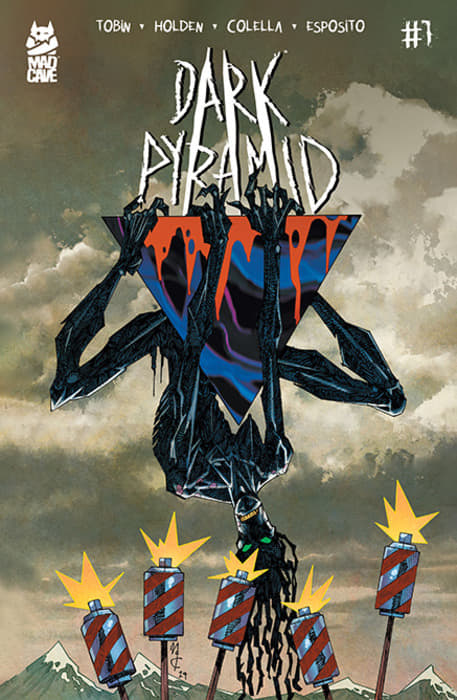
From the publisher
Hooky Hidalgo, adventurist and popular live streamer, has gone missing while climbing Mt. Denali in Alaska! When his girlfriend, Becca, arrives at the base of the mountain to retrace his steps, she soon discovers something beyond the dreamy and impressive landscape. There’s a conspiracy deep within the heart of Denali itself—a dark pyramid, silent, waiting. Becca—and the scores of Hooky fans determined to either find him or find some fun—will face death, avalanches….and monsters to find the truth.
PATREON
We have a new Patreon, CryptidCreatorCornerpod. If you like what we do, please consider supporting us. We got two simple tiers, $1 and $3. I’ll be uploading a story every Sunday about some of the crazy things I’ve gotten into over the years. The first one dropped last week about me relocating a drug lord’s sharks. Yes, it did happen, and the alligators didn’t even get in the way. Want to know more, you know what to do.
Arkenforge
Play TTRPG games? Make sure to check out our partner Arkenforge. They have everything you need to make your TTRPG more fun and immersive, allowing you to build, play, and export animated maps including in person fog of war capability that let’s your players interact with maps as the adventure unfolds while you, the DM get the full picture. Use the discount code YETI5 to get $5 off your order.
Global Comix
Save on a subscription to GlobalComix with us. Visit the link below and use the discount code COMICBOOKYETI.
[00:00:00] Your ears do not deceive you. You have just entered the Cryptid Creator Corner brought to you by your friends at Comic Book Yeti. So without further ado, let's get on to the interview. Y'all, Jimmy the Chaos Goblin strikes again! I should have known better than to mention I was working on my DC Universe meets Ravenloft hybrid D&D campaign on social media. My bad. He goes and tags a bunch of comics creators we know and now I have to get it in gear and whip this campaign into shape so we can start playing.
[00:00:29] Another friend chimes in, are you gonna make maps? It's fair to say it's been a while since I put something together so I guess? Question mark? It was then that I discovered Arkham Forge. If you don't know who Arkham Forge is, they have everything you need to make your TTRPG more fun and immersive. Allowing you to build, play, and export animated maps, including in-person, fog-of-war capability that lets your players interact with maps as the adventure unfolds while you, the DM, get the full picture.
[00:00:59] Now I'm set to easily build high-res animated maps saving myself precious time and significantly adding nuance to our campaign. That's a win every day in my book. Check them out at arkhamforge.com and use the discount code YETI5 to get $5 off. I'll drop a link in the show notes for you and big thanks to Arkham Forge for partnering with our show. I think I'm gonna make Jimmy play a goblin warlock just to get even. Hello everybody and welcome to today's episode of the Cryptic Creator Corner.
[00:01:28] I'm Byron O'Neill, your host for our Comics Creator Chat. Today's show is focused on a fantastic new book which I'm very excited to talk about. Horror is one of my favorite genres and I've often heard horror creators on the show talk about avoiding a modern setting in their work. How do you deal with technology, cell phone, social media? It's way easier to just drop it in the nostalgia of the 80s before much of that happened and we've seen an explosion of popular IPs set in the era of Pac-Man and MTV drop recently.
[00:01:54] But what if you had a horror story with a social media influencer as the protagonist putting their experiences front and center in front of a live worldwide audience? That's the hook of the new five-issue miniseries Dark Pyramid from Mad Cave Studios and I'm lucky enough to have co-creators Eisner-winning comics writer Paul Tobin and his extraordinary artist accomplice PJ Holden to tell me all about it. Before we jump in, a quick technical note.
[00:02:20] We had some trouble getting everyone synced up, happens sometimes, so this was recorded in pieces. Sometimes it's just one of them and other times it's both, so bear with us. I've done my best to splice it all together in a coherent fashion. The joys of technology. As Minerva says, though, without further ado, let's get on with the interview. So PJ, I understand you've recently gotten into improv, taking some classes and getting up on stage, doing it for the first time. What got you into it?
[00:02:46] Okay, well, so the short story is that I did a play recently. I've always enjoyed acting. And in my 20s, I would genuinely have said, and I actually believed, and in fact, it's not even that I believe it. It was true. I was a much better actor than I was an artist in my 20s. Much better on stage than I was on paper. This is our right, but yeah.
[00:03:11] Yeah, but acting and drawing were equally unattainable as careers in my 20s as well. So computers was my career. But it came to a point where they're both very time consuming. You know, if you decide you want to be an artist, that is sit down at a drawing table and just draw and draw and draw.
[00:03:34] And if you decide you want to act, you know, that's got to be, you can't half kind of take a half poke at those things. You have to go for them. So I kind of made a decision. And after a couple of years of doing a lot of student drama to kind of give it up. I mean, I was nominated for an award, the Irish Student Drama Festival for a non-speaking part, which was unusual. So, you know, and I every, you know, I think the first couple of plays I auditioned for.
[00:04:04] And then after that, I was basically cast as leads and main characters from then on. So it was sort of, it was very natural and I really loved doing it. And then I stopped for years and decades. Went back a couple of years before COVID by 2016. Did a couple of plays. Very different experience because at this stage, I would say definitely much better at drawing than I am at acting.
[00:04:32] And, you know, you're older and, you know, you're sort of, your confidence a little bit different than it was in your 20s. Your physical shape is different than in your 20s. And you kind of, you see photos of yourself on stage. You think, oh, I, that's not what I imagined I looked like. I, you think, you see, you know, in your head, you're thinking, well, I'm kind of, clearly they want a George Clooney-like character.
[00:04:59] And it turns out no more of a Danny DeVito vibe is what you're given. And, and that, all that stuff is kind of, it complicates the, the, the thing that you're doing. But I did a couple of plays. I really enjoyed doing it. Um, and then, um, my brother wasn't well. Uh, I kind of had to stop to help him. And then COVID happened.
[00:05:22] And then you sort of, the, the mental, the mental ability to kind of, the, it fades. You know, it's like, I wouldn't say a skill fade. It's where you just forget that it's a thing you're interested in because it just goes out of your head. Your, your other, life takes over, uh, and these things that, that were a big part of who you are because you haven't done them for so long. They are, you know, they're no longer there. You know, they're, they're just gone.
[00:05:49] So, um, around November or so, my wife said, why don't you audition for another play? You really love acting. Go and audition for another play. And I said, I think the last time I acted was 2017 or 2018. I went, no, okay. So I've auditioned. I was cast in a play playing a kind of Cornish, um, uh, a kind of Cornish, um, uh, station master of a, in a, in a, in a play called The Ghost Train. I grew a big bushy beard and actually looked the part. I like previous to that.
[00:06:19] I was like that fat little fat man. There's a bit weird looking. I'm, I don't like who I see. That's me. I know that's me. I don't like what I look like this time. I grew a big beard out and I was like, oh, that looks like the character. And I can see the character. And I like, I mean, I've shown this photo of me in this play to a few people. They've gone, is that you? Because the beard just changed the shape of my face. It was really strange. Right.
[00:06:44] Um, and, but there was a couple of people in the show doing improv and I thought, oh, I actually had a, a couple of years previously had emailed the guy who's teaching improv classes thinking I might like to do that. And then stuff happened and I never kind of followed up with it. They were doing improv classes. I went, okay. Because the thing is, even though you don't do this stuff anymore, I've done comic panels.
[00:07:09] You know, I've been on stage with an audience of whatever numbers of people, you know, from 20 to 300 where you're on a panel and talking. And I don't treat those as I don't enjoy this. I mean, I, I, every, I love every professional I work with. Some of them enjoy that. Some of them hate it. Some of them are deeply uncomfortable. A lot of them treat it as, well, this is an interview and I have always treated as like, this could be funny. This could be funnier.
[00:07:37] If, if something happened here, you're very slow and here's my funny answer. And I mean, there's a real answer, but here's my funny answer. So I was always treating those things as a kind of, I mean, I enjoy, I enjoy them. And the stupid things that I, if we're all sat, if four or five of us are sat on stage and they introduce us, I'll be the one making funny faces and sort of half dancing. And I'm going, and, you know, looking for the attention.
[00:08:03] So, which is a horrible aspect of my personality, but I can do nothing about it at this stage. So improv, I felt like I would enjoy. I felt like very early doors, I would enjoy it. And again, I, like a lot of British people my age, we'd have grown up watching Whose Line Is It Anyway? The British version of it, the UK version of it, which stopped quite a few years ago. And then panel shows here in the UK are quite big. And there's elements of those that are very improv-like.
[00:08:32] And so I kind of took a class and, and the, between the finishing of the play and the starting of the class, I kind of went, well, I'll go and see as many improv shows as I can. So I saw a load and I find the community really lovely. I felt like, I'm sort of, I wouldn't say I'm 55 at this point. So I'm quite, you know, I'm not, I'm not a young man. And most of them are in their twenties and thirties, you know, it's that sort of age. Uh, and I kind of feeling, there's a weirdness where you're sort of feeling,
[00:09:01] I am aware I'm the oldest one in the room. I'm aware of it. I could be their father. Yeah. Yeah. You know, or, or in some cases, grandfather. I do think I sort of keenly aware of this, but they are really nice. And they're, you know, because they're not children, children, you know, they are adults and, you know, they've lived some, you know, they've lived their lives and, and, um, and it's the improv comedy stuff that's bringing them all together. And that's their single, that's the single thing that ties them together.
[00:09:28] But that single thing encompasses their sense of humor and their sensibilities and their moral stance. And it encompasses so much of who a person is that when you meet these people, you kind of intuitively feel like, oh, I, I could get on with all of these people, you know, in a way that I, I love comics and I, there's this mad part of my brain that goes, that person likes the same comics as me. So we must be firm friends immediately.
[00:09:56] And then you find out that they're getting a different thing from the comic that you are. And you think, oh, we have a lot less in common than I first thought. So, you know, and also there's a, it's a much more, um, the comic creators are all, everyone I've ever met has been really, really lovely, but a lot of them are quite introverted and quite sort of, they don't quite like, you know, they picked comics because that's the thing that meant they could do it without being seen.
[00:10:25] Or, or it was the thing that in a, in a world that's hard and the world is hard, uh, that was the thing they had control over. And that's the thing they enjoyed doing. And so being out and about with people isn't naturally, it's not something they're super comfortable with. Um, and I, and I have friends like that. And, um, but with the improv group, these are people who like being out and about. These are people who like being in other people's company. These, and, and also frequently because there are, there's a show every Sunday.
[00:10:54] Uh, there's, uh, and I think there's two shows every week and, and it's not, you know, it's not like a hundred people at these things. There's 20, 30 people, you know, that kind of numbers at each of the shows, um, a cycling group of people, you know, different people rotate in and like, but it feels my son said to me, my 16 year old son says to me after I came home and had done our first graduation show. And I was like, that was great. I love that. I loved everything about that. I loved getting on stage.
[00:11:22] I was very excited about it. I felt it, I did some stuff that was, you know, it was enjoyable, it was good, was not bad. Um, the criteria for me is that I have a good time doing that. And I did. So that's good. Um, was there some moments where people laughed because of expressions on my face? Absolutely. Which makes me so happy because that's what I was going for. Um, and he, my son went, oh, you find your people. I went, yeah, but, but comics people are also white people, but it's a lot harder to get
[00:11:52] them in a room together. So it's a lot harder to, you know, cause most of, most of my peers, most of the people I worked with, most of the people I kind of like the people I started my career with who are at various levels of an industry. Now I, you know, all live all over the place. So the only time you ever see each other is at a comic convention and comic conventions are a young man's game. Yeah. Or at least there, there's a part of your life where a comic convention is the best thing you can do. And there's a part of your life where you go, this is hard work.
[00:12:22] This is a job. This is, this is going to a thing to hopefully make enough money to pay for me to go to the thing. But also I should be working and, you know, I, I don't know who's going to be at this thing anymore. And, and, and so it's a different, it, it has become a very different thing, but you know, I'm not a drinker. I've never really gone out to the bar to have a drink with people. I don't, I, you know, I would spend every day in sitting at the drawing table and not going out. And when I had the day job, I would be out and talk to the people and, and I love people.
[00:12:52] I love people. I love how different every individual person is. I love that about people. Um, and, and I sort of, that's that having not worked in a day job for 16 years now, that's sort of slowly been taken away from me. So it's just me and my wife and my kids and just raising the kids over the past, you know, eldest is 20 now. So the past 20 years that, that becomes your whole world and your whole, and it's not healthy for everyone.
[00:13:19] It's not, you know, you kind of want to bring, I mean, my wife's doing ukulele classes. I I'm doing, I was doing improv classes. We have things to talk about now that are not just about our kids. Yes. Yes. Just having something else, you know, it's good. It's good. Um, but yeah, I mean, honestly, improv, improv has been great. And I kind of, this is the insane thing that I have in my head, which is that I spent 20 years working in it roughly 24 really.
[00:13:48] Uh, I've spent my comics career now is about 24 years as well. There is an overlap, you know, cause I'm 55, that's a 50 year period. But I, you know, but I, for whatever number of years, uh, eight years, there was definitely an overlap of the two jobs. Um, I've got another 20 years of stuff to do. Uh, I, I would quite like it to be another 20 years of improv while I'm also drawing comics. I'm not going to stop drawing comics. Definitely not going to stop drawing comics. Uh, I might hopefully get more chances to write some comics as well.
[00:14:17] But, you know, improv is a very enjoyable thing to do. I think I might be good at it. I think given time I will get good at it and it's what I want to do. So that's, it's, you know, it's good to have an ambition. I mean, no, that's, that's amazing. And I'll share a personal story here. So I have found that laughter is one of the most amazing gifts that you can give somebody else. Um, regular listeners on the show will have heard me talk about lupus and how it hit me in 2020, just completely out of the blue.
[00:14:44] And I don't think I've ever shared this on the podcast, but I couldn't laugh for eight months. So I had, um, part of my big flare was pleurisy, which for people don't know is inflammation around the tissue that surrounds your lungs. It's incredibly painful, probably the worst pain I've ever experienced. And so even, even chuckling, uh, was, was excruciating for three quarters of a year.
[00:15:08] So somewhere along the line in, in all this recovery process, I realized I had simply forgotten how to laugh because I had trained myself out of doing it. And now that I can do that again, it is, it is absolutely one of the best joys. Just a big throaty laugh that comes from your core is, is blitzful. Um, especially in, in the world, which feels like it's constantly falling apart. So thank you for doing that. That's really, really cool.
[00:15:36] Yeah, no, no, I mean, it is, I think I absolutely agree with you. And I, I kind of, I used to do a podcast with friends of mine and that was, you know, you, you laugh with your family and you have a good time with your family. But doing a podcast with friends and, and kind of riffing on stupid ideas and is when you start cry laughing. And that is, you know, and my, like this is, I mean, my son, when he was very young, my
[00:16:04] eldest son, when he was very young, um, had him, he, uh, had a terrible period of anxiety, which took him out of school and he was crying every day. And it was very difficult to get him to, to kind of not obsess about death and stuff. It was very, very, it was horrible. He was about eight years old and it was laughing.
[00:16:25] It was kind of getting him to laugh again and, and seeing him laugh fully with his whole body just is when I kind of went, we've, we've helped him. This is, this is where we, this is how we, you know, it took a long time to get from where he was to there. And, you know, you never know if something like that is going to come back again, but by getting them to sit down and watch things like, um, bother Ted and, and, um, there's
[00:16:54] a TV show in the UK called kind Arthur strong, uh, which were just a delight to see his eyes light up. And I remember sitting, watching him laughing and taking a photo. I think it might've taken a video of just him laughing because it was so great to see again. And I, you know, I agree with you. It is, I mean, I chuckle when I'm drawing comics, when I'm drawing judge dread, punching someone in the face, it is very funny to me, but that sharing laughter and being able to
[00:17:22] laugh with a bunch of people, it is so, it is, I mean, it seems silly to talk about it. It seems a silly thing, but yes, it is. It's amazing. It's amazing. It's the happiest. I can't see any purpose of life if he, beyond laughter, you know, and it, and it, it is the thing I think that, that, um, is, you know, that and snogging my wife. Those are the two things that don't take those two things away from me. And if you have to take one of them, take the laughter, but you know, don't take either of them away from me.
[00:17:52] Well, I suppose we should actually talk about dark pyramid. The nice folks over at mad cave sent me a preview copy of issue one, and I loved it. The core of this thing revolves around the dark pyramid in Alaska. I'm not a conspiracy guy. I know on long drives working with bands back in the day, I listened to maybe a few episodes of art bell at 2am when there was nothing else on the radio, but like, that's the extent of it. So going in, were they something that you were both interested in previously? I like weird conspiracies.
[00:18:21] I mean, I, I'm, I'm old enough to have like watched like the Leonard Nimoy shows or it's like, Oh, are the pyramids going to fly off into space soon? And things like that. And for me, Arthur C. Clark's unexplained mysteries, that was sort of, that was just meat and potatoes for me growing up as well. So yeah, I like conspiracies like that, but you know, the, the weird political conspiracies, I don't. Well, no, so yeah.
[00:18:47] Unless it involves somebody, somebody being programmed to assassinate a president or something, which is a staple for some reason. You know, that sort of stuff always great. But yeah, no, I mean, I, I, I would say, I mean, I'm a, I'm a working comic book artist. So what I'm interested in is, is there a job? Is it a fun job? Is it by a writer I like? Will it be a fun gig to do? Will it be, you know? And, and so I don't, I don't spend a lot of time carrying it.
[00:19:15] I mean, I, I don't, um, from my perspective, things come to me rather than me looking for things. So I'm not, I'm not generating ideas really because I'm an artist. So that's the way it works is a writer will usually pitch him an idea. So it's, it's usually whatever's in the interest of the writer comes, comes together, uh, within the interest of the artist. And then if you're lucky, if you're lucky to get to draw monsters and that's all I really care about. Well, Paul, then he's putting the onus on you. So what drew you in?
[00:19:45] Well, Mike Martz, the editor actually brought up the idea, like a large part of the idea with it. And, and then he was like filling all the blanks basically. Okay. Uh, but Denali was there with him and the, and the, the black pyramid itself. And there's some basis for reality for, uh, uh, a black pyramid shape within Denali, which I find fascinating that, that part in the book where they talk about the, uh, the bombs
[00:20:12] going off and the, and the reading that is, that's actually true. That actually happened. But you know, what's in Denali is probably, you know, almost assuredly just a different style of rock. Not, yeah, not what we have it be in the end. Every, every conspiracy, every conspiracy and mad idea is insanely kind of insane until
[00:20:37] you find out it's just magnets or it's, you know, quartz crystal. I don't know. It's, it's just something, something we weren't expecting. And then you get the actual explanations of it. And you, and there's the, the bloop noise, the underwater bloop noise that was heard some time ago and was recorded, right? Like a whale fart and it turned out to be or something. Yeah. It was, it was, or no, it was an underground earthquake or something. And it's sort of, it takes some of the magic away from it a little bit, knowing what it is.
[00:21:05] Sometimes it's funner just not knowing what these things are, but, um. I still want to believe in the Bermuda Triangle. I was, oh yeah. It was a huge fear when I was growing up. It's like, what if I have to sail in the Bermuda Triangle? I will. The things I had to be scared of as a kid, Bermuda Triangle, uh, don't go near that at all. Uh, and in, in the UK, yeah, you had to be afraid of any kind of dark water on the ground in case you, you got swallowed into it in case it turned out to be deeper than you thought.
[00:21:31] These public information films, we got a lot of this stuff and kites flying near electric pylons. Those were our three fears, kites, dark water, Bermuda Triangle. Oh my God. You had the easiest childhood. I grew up in Oak Ridge, Tennessee. So that's, this is the Manhattan project. We had three nuclear power plants in my hometown. So for us, the cold war was, was quite real. I think we were a top target for, for, for Russia bombs, you know, when I was, that was ours.
[00:22:00] We had bomb nuclear bomb drills in, in elementary school. I mean, I got you beat. We got bombed out of school on the regular, you know, but not with nuclear bombs because I'm in Belfast. Okay. Okay. Okay. I forgot you were in Northern Ireland. I mean, I don't want to, I don't want to trump your non-existent nuclear bomb scare with actual bomb scares, but that's what we had to deal with on the regular. Fair, fair, fair. But I mean, you do, you do grow up.
[00:22:28] I mean, I think we're all sort of similar age. So, um, uh, you know, you grew up with fears of nuclear war, uh, as there was army running around with guns, machine guns in, in Northern Ireland. Uh, and, but it's this still the fear of nuclear war. You know, you're still, you're still afraid of that. And Northern Ireland, Belfast was a port, is a port city. So it would have been a target. But at the same time, the, their actual, the actual things were just scary in some ways,
[00:22:56] even though you'd see they were happening on the news and you go, well, that's down the street. I'm nowhere near that. But a nuclear bomb that could go off and take us all out. So, um, but I did, I mean, I used to, as a child, I used to fantasize about the idea of having a bunker with my family in it and bomb going off and just having a big excessive, uh, video library collection. And just, it's just taking it till night. Like, and that was my way of calming down at night and going to sleep. Just thinking about how lovely that would be.
[00:23:26] Weird Al's Christmas at Ground Zero. That was the thing. I don't know if you, you all remember. It's a great song. You should definitely go back and listen to it if you haven't. It's fantastic. But in doing the research for this, there, there's a lot, uh, that you could pull from. I went back and watched an episode of the Y files on YouTube. And clearly I'm talking about the wrong thing because this is a guy and is talking goldfish and he has 4.6 million followers.
[00:23:53] So a lot of people like this conspiracy theory stuff. And you've got the Chinese nuclear test, a former military intelligence officer's investigation, the U S military Stargate project, which is about remote viewing and at its core, the pyramid near Denali, which could or could not function as a UFO charging station on her. So this is like kind of everything you've got to work with. I like the idea of creating a nucleus.
[00:24:21] UFOs are just stopping off on earth just to charge up to get further on to Pluto or something. We're just, it's like, is there, does this place do snacks? A little vendor there. Yeah. Yeah. That's the U S military. They're, they're selling them Taco Bell on their way to Uranus. Well, not my, anyway. Yeah. No, I mean, I think, I mean, Paul took that as a starting point and kind of, we went off and did our own thing really with it. But that's, you know, I, I, I don't know.
[00:24:50] Would you feel more, would you feel happier with aliens or not aliens? I don't know. What was the decision making? I'm asking Paul questions. Like, what was, what made you go? You're stealing my job, BJ. Yeah. Sorry. Sorry. Cause I mean, I don't want, I mean, I don't want to spoil it for anyone. Um, but it's bigger than aliens, but also maybe aliens, but not aliens, but I don't know. I don't know. With the things you went, I'm not doing that. I'm just not doing that. That's the thing I'm staying away from. I just wanted it to be unique. Really?
[00:25:19] I didn't want it to be, you know, I wanted it to be something. I didn't want it to be like the end of it being, oh, it's just a magnet. Yeah. Yeah. That's boring. Five issue to get to one big magnet right in the center. A big U shaped magnet inside the center of the whole kilo. Oh, look, it's a magnet. But having grown up with, with all the, you know, the weirdo shows and reading, you know, all that stuff, I wanted it to be something that wasn't, you know, you know, fun,
[00:25:48] Dynakin or whatever was correct or something like that. Might've murdered his name, but that guy, that guy who was the, the space conspiracy or I don't know if it was conspiracies. I don't know if they called them that in the days they were just weird theories, you know, you know, the, you find a U S military base in the middle of nowhere, Alaska. People are going to ask questions. That's kind of only natural. Sure. Yeah. I want people to ask questions. Yeah.
[00:26:15] I wanted the town to be a little creepy and I thought PJ did a great job with that. How'd you guys connect as co-creators anyway? Yeah. Christina Harrington, the editor talked to me and she said, you know, uh, so this dark pyramid thing, you have an artist in mind. And, and, um, I didn't really, uh, but then it hit me that I'd worked with PJ before on
[00:26:38] a, on a couple of books and, uh, and, uh, he, uh, back when this was on the Twitter days back when it wasn't, you know, uh, what it is. And, uh, PJ had actually just done a, Hey, if anybody has a job, I'm kind of looking for a job right now. And I'm, you know, had looked at that going, Oh, I wish I had a job for PJ. And then Christina was like, do you have an artist in mind? I'm like, you know what I do. And it was one day later he was aboard.
[00:27:07] So, cause he, he's very good with monsters and storytelling. And, uh, it's something that I've talked to him about. Um, PJ, uh, does, uh, plays, he acts and plays. And I think he brings his acting to his page because one of the, one of the things I really look for in a, in an artist to work with is, is their storytelling. I mean, there's a lot of artists that can draw really pretty panels, but they don't tell the story.
[00:27:35] They don't, um, they don't really flow. And what's really important in comics sometimes is, is what's in panel one and what's in panel two, but also what's happening between those two panels. You need to lead the reader into a belief that things are occurring between the two. And if it's just them, you know, static, you know, uh, the X-Men looking at the camera in one panel, and then they're slightly changed looking at the camera in the next panel.
[00:28:03] There's no belief of story happening, um, of movement of, of continual event. Um, but PJ is really good for that. And I wanted that because, um, I, I would be hard pressed to say what the core of dark pyramid is, but horror is certainly one of those things and horror needs its pacing. You, you, you have to believe in that darkness. You have to, you know, let the reader scare themselves.
[00:28:28] You have to lead the reader into believing that, that the event is out of control to a certain degree and an artist that doesn't have good story capability, um, can't lead the reader in that way. So yeah, PJ was PJ was my choice. And then once all the pages were done, we're actually done with the series right now. Um, Oh wow. Okay. I looked at everything and went, yeah, he was the right choice. He absolutely was, which wasn't, you know, it wasn't a startling revelation.
[00:28:57] You know, everything that was coming in, there's several characters that I had, had decided were, um, minor characters. And then PJ started, you know, creating them there, they're monsters. And, uh, Christina and I went, Oh wait, those are real characters. Now we need more of those. So yeah, there's, there's, there's two monster types. Well, the main monster, um, became far more important, um, because, um, it was a
[00:29:27] PJ brought such life to it. So how do you go about solidifying who a character is through moments in your story? I won't, I won't spoil it for people, but there's a scene in the book that I'll only describe as the Becca only moment, only fans moment that maybe understand her and Hooky a little better in an indirect way, as opposed to going in loads of exposition. Um, I think just those small moments of life.
[00:29:57] Are the most important things in characters. And I, I see so many writers think that the big things are the most important, you know, it's like, Oh, how would they stop a meteor or whatever? And it's like, there's no connection to that, you know, because I mean, if you and I got interrupted right now with a phone call and I was like, Hey, you need to stop a meteor. We would go, uh, I can't do that. That's not me. But, uh, you know, but if we had to choose between potato chips, you know, it's like the
[00:30:27] barbecue ones that hurt my stomach, but I love, or the regular ones. And it's like, people have a connection to that. People can, can feel humanity then. And then they care about the characters and the stories. So that's, it's those little small moments of human connection. They're by far the most important to me. Cause it's like, you can, you can, you can give, like, if it's a villain, you can say,
[00:30:55] Oh, he wants to destroy all humanity. And it's like, okay, whatever. And it's like, he, he, uh, he hates cats and dogs. It's like, well, he doesn't sound like, you know, it's, it's, it's, you put it on a scale that you can believe. And then once you believe that scale, once you have that connection, you can grow that scale into, into greater heights, but you need, you need that base first.
[00:31:22] Um, I almost started to make a pyramid analogy, but that's too, too small. Spot on. Well, I really enjoyed the, the slow buildup of tension that, that the creative team created. There's a panoramic panel that functions as a story transition where the lighting through the color works shifts the tone for the remainder of the book. I know Sarah Colella, am I pronouncing Sarah's lesson? Okay. She's the colorist on the project, but walk me through your approaches to creating a crescendo
[00:31:52] in a comic book. It's one of those things you immediately know if is done correctly. In a book. And I think you definitely nailed it. Um, I think again, the small moments, I see so many creators that are like, Oh, I'm going to build to a thing. And it's like, Oh, here's a splash page. But, um, uh, earlier I was talking about European creators and there's a, uh, largely risque artist
[00:32:18] named, uh, Guido Krapax that, um, boy, he'll put on like, um, his scenes are kind of sexy. And as it kind of gets into it, there'll be 25 panels on a page, but they work because it's like this music. It's this rhythm. And I, I think, um, like I write in pretty much every category and I get a lot of people that say, well, I don't know how you can do comedy so well, but you can do horror so well.
[00:32:46] And it's like, because they're, they're both the same thing. They're pacing. They're like, when is it building? And when is it delivered? And it's just like, it's a different delivery, but you need that little slow, deliberate buildup, or sometimes a really fast one. I'm not really happy with the fast ones.
[00:33:06] Like if I, my favorite horror movies are almost all, um, from either Japan or Korea and things like that. Okay. Um, I think the American ones tend to, um, uh, build too quickly. Um, they can, they can go, you know, Oh boy, something's happened. No, I, here he is. And it's like, I didn't, I'm not even scared yet. You know, let me have that tension.
[00:33:34] And I think it's important too, in, in building tension that, um, sometimes you don't have to have something happen. Sometimes something not happening is, is even scarier because now, now the readers or the viewers, whatever, you know, uh, uh, media you're presenting horror in now, now the, the people watching don't know if there's going to be a scare at the end, which makes it even worse.
[00:34:03] It's for them because they can, there's like the emotional buildup gets released. But if you don't let them release, you know, it's like, then you go to the next scene and it's like, wait, I'm still carrying all this horror baggage. It's like, you know, and it's like, yeah, you're going to be for a while. Yeah. There's, there's one of my favorite movies.
[00:34:26] I'm blanking on the name is a Korean film that a woman is just terrified by a drip and basically never, nothing really happens. There's, there's a drip and it's like, but this there's, you can see it playing on her mind and, and her growing horror and what could be causing this. It doesn't seem to be a leaky pipe. Where is the water coming from? It's just like, it builds and builds and builds and builds until you're sort of in this psychosis with her and you never get it. You never really get a release.
[00:34:59] It feels a lot like pose telltale hard. Yeah. Yeah. To a certain degree. Yeah. Yeah. He was, he was good with, with pacing. We'll give, we'll give him some, some people seem to think so. Yes. Yeah. You know, if he's watching, then. It's always fascinating to me how horror and humor do go hand in hand. I, I, I, I throw out in our discord about upcoming interviews and solicit questions for anyone that has it beforehand.
[00:35:25] And it's funny because for this, I was like, Hey, does anybody have any dark pyramid questions? Well, everyone asks about plants versus zombies, which admittedly I feel bad because I haven't read those. I'm a big fan of your work. I've read a lot of other stuff, but I didn't know anything about plants versus zombies aside from, you know, playing the mobile game with my kid, you know? So making the transition between those two things and injecting it feels very much like your comfort zone. Yeah.
[00:35:53] Uh, I have a lot of comfort zones. Okay. Um, and I think part of the reason for that is, is because, uh, my mind tends to wander and, um, get filled up. And if I'm only working on like, let's say plants versus zombies, and I put three hours in, in a day and my mind says, you know what? I'm done. Um, if I wasn't working on other things, I'd, I'd be done.
[00:36:18] Um, but if I can move on to horror or, um, novels and things like that, it extends my work day and extends what I can do. So I, I like working on a whole bunch of, uh, different types of projects and, uh, going back and forth between novels and comics is very good for me too, because then I can, uh, it's just, my mind is like, Oh, I was pulled up and I was dead, but now you're working on a different thing. Okay. Okay. I'm ready to go.
[00:36:48] So it, it, it actually helps me. And I think one genre informs another. Um, and it's, it's hard anymore. I think you could like in the first days, like the 1800s, I think you could pick up a book and go, this is what this book is, you know, genre is. But anymore, it's like when, if you pick up a book and I like this, it's like, well, what is this book? Well, it's an adventure.
[00:37:16] It's an adventure, but also horror and romance. And, you know, and it's like, it's in space. So it's, it's in space. Yeah. Which, you know, I think, uh, fits because it, it allows, uh, readers and create, um, to build a world because I really hate, I really hate worlds that just exist within what's happening. In the story. A world should be expansive and have things going on.
[00:37:44] And it's like, you know, you and me, um, I don't know if it's going to make it in here or not. You and I talked about what's going on in the world and how it can be, you know, not so great. But at the same time, I'm having a blast. You know, it's like, I got some guys coming over to play D and D and things like that. And, you know, I, I laugh at this and I laugh at that. And it's like human beings are, you know, complex creatures and we have different emotions.
[00:38:11] So, uh, I go back to this and it's quite a while ago, so nobody can dig this up who it is or things like that. But, uh, but, um, uh, had a friend that was writing Batman for a while. Um, quite a few of my friends seem to write Batman. Um, I mean, there's a lot of Batman writers. There's a lot of Batman writers out there. Yeah. Uh, uh, but, um, uh, it was a, a scene where he literally saves an entire city.
[00:38:41] Um, the entire city is just about to be wiped out. And, uh, he put in the script, um, once the city is saved, he has this little smile. And, uh, the editors made him take that out because Batman doesn't smile. And it's like, well, then you don't have a character. You, you have, you have a stamp, you know?
[00:39:04] And it's like, it's like, if you can't have a character, a good guy smile after saving 12 million people, then I don't, I don't believe in your character. You know? And it's like, if that doesn't get a smile from him, then why is he even doing this? You know? Sure. So why is he put on the costume each day? So you gotta, you gotta let your character smile.
[00:39:29] You gotta let them, you know, say, oh boy, I gotta fight, you know, super X tomorrow. But I think that's gonna, I was kind of hoping to go to that kebab place and it's only open tomorrow. You know? So you gotta, you gotta have those moments. So for those of, of you don't know about your background, PJ, you were Belfast based. So I know McRae is, is, has been big and influential in your life.
[00:39:57] I didn't know that he was actually the first person to open up a Northern Ireland's first comic book shop. So that's pretty wild. Yeah. Um, and I kind of, it was 1988 and I saw the poster for the shop and I got, oh, I like comics, but I, you know, I kind of gone through a phase where I was like, people are going to make fun of me for reading comics. So I should stop reading comics.
[00:40:20] And then they kind of got to, you know, 15, 16, 17, 18, where I'd sort of forgotten about him, kind of left them behind a bit and, uh, saw John's artwork on a poster. I, I saw it. And, and so the artwork was black and white. And I love black and white artwork. I always love black and white artwork. But when you're not reading comics and this will, this will sound weird to anyone listening to this because they're obviously comic fans. But if you're not reading comics, you are not exposed to artwork.
[00:40:48] There was very little exposure to artwork. Um, unless you're, you know, if you really love museums and you go look at paintings and so on, but illustration, which is, you know, sort of black and white artwork, you'll see almost none of it in the world around you. I mean, maybe some advertising hoardings. Maybe every so often there'll be, I know a couple of years ago in the Olympics in the UK did a great, uh, Jamie Hewlett series of animations. But that's sort of it. That's your own. If you're not reading comics, that's your only exposure is, is advertisements.
[00:41:18] And I had kind of lost, um, lost comics for my life and lost reading comics, but also lost illustration for my life. And, and I used to like drawing even, even when I, even when that was gone, I'd still doodle a wee bit. Uh, but when I turned 18, I saw this, uh, well, I was 18 and it wasn't my birthday, but I saw this, this, uh, piece of artwork John had drawn.
[00:41:43] And I saw it and I thought that looks like Alan Davis, you know, and John had a very similar, you know, he was influenced by Alan Davis at that time anyway. Um, and it was beautiful black and white stuff. And I thought, and, and that's a comic shop where no one's going to make fun of you for reading comics. So that's, so I, I should go there. And I did, I met John and Fred who also ran the shop with John and John had no career at that stage. John had still not really broken into comics. I think he'd done one thing for Centurions. Uh, John and I became great friends.
[00:42:11] Um, I used to go around to his house, uh, just before, as his career was starting, as it was taken off, um, I would go around and, and, you know, watch him paint and draw. And I would, I would kind of recharge and, and I used to draw as a kid and I'd sort of stopped and sort of started drawing. Again, I'm, I was working in computers as well. So, you know, from the age of 14. So that was my career path was to work in IT. Um, and John drawing, got me drawing again.
[00:42:40] And I would sort of turn up and go, what do you think of this? And he'd go, well, you know, there's some, you know, some potential. That's all right. That's, you know, but you should draw comics. And I was just drawing arms and legs and bodies and this, you know, disconnected heads and things. Um, and so it was, I mean, it was thanks to John and Fred, uh, and the comic shop there, um, that, that I kind of started drawing again.
[00:43:03] And I mean, there are dips and from 18 on to, I think 25, I did my first comic, but there wasn't much between that in comics wise. There wasn't much drawn. Uh, and then from 25 to 30, I did a couple of bits and pieces, small press stuff mostly. And then 30 is when I sort of did some stuff for 2000 AD. And then that kind of was when my career sort of took off. Um, but it took another year. I was still working in IT then.
[00:43:29] It took another eight years for me to leave my day job in IT and just, and just concentrate in comics. Yeah. It's, um, it's a long path for, for most comics creators. You know, I think people on the outside tend to think that, oh, this is just your career and this is what you do. And not many people can, well, certainly immediately make that transition to full-time. It's a, it's a very, very, it's, I mean, it's more difficult. I think it was quite difficult for me because IT paid really well.
[00:43:59] You give you holidays and sick pay. And, um, and the, the day job I had was part-time two and a half days a week. So I are three and a half days a week. So I could, I could still draw comics. There was no, you know, I was never going to give up that day job. It was just, wasn't going to happen, um, until, uh, 2008 financial crisis. Um, and also I came up with a, uh, a comic reading app with a friend of mine and we kind of released that.
[00:44:26] And, uh, we, the, the, the app itself was, was Apple sort of went, kicked it back and said, you can't, but that's too violent. Uh, I'm summarizing a very long story. Uh, yeah. And then we got worldwide publicity with it. And I ended up tucking my day job because we'd sort of optioned it to NBC universal. This all happened within a week, two week period. It was a very, very quick. Uh, and I kind of went, well, I'm giving up my day job now. I've got to focus on this thing.
[00:44:52] But this thing actually was writing back end code for a comic reading app. And it wasn't comics. And I went, oh no, I've made a terrible mistake here. I'm doing less comic work than I thought I was going to do. And so I gave that up and just, and just, I kind of went, I grabbed enough money to go, well, that's about six months worth of money, six months of salary. Plus I've got about six months worth of work. So if I do it right and I keep getting the work, then, you know, it'll all kind of, it should work out.
[00:45:21] It took a long time for it to work out. It didn't quite work out quite as easily as that. I had some rough years right in the beginning and, you know, I wouldn't say every year's been easy, but every year's been sort of okay. Some years have been better than others. So, um, you know, but it's, it's a really hard, hard thing to do. And, um, it's, I wouldn't recommend it, but comics is like drawing comics is very much
[00:45:47] like, um, it is not something you wake up on a Thursday and go, well, I'm in mid twenties. No, I just fancy a new career. I'll start drawing comics today. That's not any comic artist or any that I know of has basically always been doing it, you know, and, and you, you meet them at some stage and they'll go, there's my, and the guys that show you a portfolio, you can very quickly tell just by the state of the portfolio and their general demeanor and stuff. You can look at them and go, yeah, you'll make this. It's just, it's a hard path.
[00:46:17] It is a hard path and, and you've got to be wary of that path and you've got to, you know, you've got to be resilient. There's certain things you're going to need to know before you really step on it. And if you can find and marry someone rich, do that first. Cause it'll make it a lot easier. There's your negative wisdom. Yeah. Yeah. That's the wisdom nugget for sure. When you, you're kind of probably best known for working on judge dread, which you talked about earlier. And this is, this is a blank slate.
[00:46:47] So as an artist, you sort of cut your teeth. Is it easier now to come up with a form language when you get a strip, a script, having worked on dread who has, as you talked about it, right? He's judge dread, you know, he has this grimace. He has certain things that dread dreads. I always think of dreads like the, you know, dreads, the central pillar of a lot of mad stories.
[00:47:12] He's the central unchanging granite foundation of whatever kind of mad, crazy house you want to build. And so as long as I draw a convincing dread and a dread that would look like that's a guy you don't want to mess with, you can go as mad as you want with the, with the people and the things around them. You can do almost anything. So, I mean, in dread, you know, dread as a character can sustain a Western and sustain
[00:47:37] a sci-fi adventure, can sustain a horror story, can sustain pure out and out comedy. I mean, it's an incredible, it's incredible gift as an artist to, to get to draw dread because, because of the range of stuff that, I mean, when somebody goes, oh, you get to draw judge dread and you go, yeah. And they'll go, what genre is it? You go, well, it's whatever the writer's written because it is whatever the writer's written.
[00:48:01] And so, you know, you, I mean, the other character I'm kind of mostly associated with in 2008 is called Norm Chimsky. And he is a super intelligent ape who is essentially a kind of, when he meets dread at any time, he's a foil for dread because he is sort of, he usually has the upper hand, which is very unusual for a dread character to have an upper hand on dread. But primarily it's because he's always sort of invisibly manipulating things in the background for good.
[00:48:30] He is a character who is trying to make the world a better place. And dread's world is an awful place. It's a lot of work to be done. But this, this single character is always trying to make things slightly better for people around him, which is a lovely kind of counterpoint to what dread is like as a character. And then whenever they get the meat, you know, you sort of, I mean, the thing a lot of writers will tell you about dread is no matter what the story is, if the end of it, dread turns up, he's just going to punch a solution out of somebody.
[00:48:58] It's like, you know, that's the, the puzzle with dread is how do you, how do you write a story that is interesting that so that when dread does turn up, there's something interesting about it rather than dread turns up and he just punches his way to the answer because that's what he will do. That's what he can do. So, um, yes, but, but it's like, I mean, it's a character I've loved since I was seven years old, you know, as well. So to get to draw that is kind of the aspiration I would have had as a kid is to draw a judge dread.
[00:49:28] I remember my, like one of my earliest memories is, um, dread spaceship, which is, uh, when dread goes out on a space mission, he goes on this big spaceship called justice one, which you might see there behind me, uh, on video camera. And that's a page by John McRae. Um, and justice one's this big kind of slightly phallic shaped spaceship, but we'll not talk about that. Um, one of my earliest memories, maybe when I was about eight or nine is my uncle and having
[00:49:55] computer punch card and assembling a model of that spaceship with the computer punch card. Now in my head, this spaceship was amazing, but it was made out of computer punch card. So I don't know what it looked like, but I'm amazing. It could have been, but in my head, it was incredible. And it was so detailed that even had like a bay for dread and his bikes to come out on. But I am quite sure the reality of that was like nothing like what I imagined it was, but that's, you know, that's some of my earliest memories sitting doing that sort of stuff
[00:50:25] and tracing, uh, or trying to draw a judge dread based on the 2008 annuals, which had, there was one that had a kind of, here's how to draw a judge dread and sitting down and just kind of seeing if I can do that, you know? Um, but, but I, in those early, early days, I didn't know anything about comic art. So I kind of just assumed, well, if you draw a character stand in front of a, uh, car, you've got to draw the whole car and then draw the whole character.
[00:50:51] And then where the panel border is, she just used some scissors to cut those things out and stick them down on the, so I was assembling kind of like, like montages of these things by using scissors. And I was like, that's no way to draw a comic. But I didn't know any better. Didn't know any better. Sure. I just, I wasn't skilled enough to kind of go, you can just draw through that stuff. You don't need to, you don't need it. And you can just cut it off where you want. You don't need to kind of, your imagination, oh, you know, kind of imagine where the legs are.
[00:51:20] You don't need to draw them and go, that's where the legs are. Yeah. Um, but yeah, I mean, dread was my first kind of professional gig. So that was sort of dream come true to do that. So where do you take your experience when you're creating a new character language, like, like in Dark Pyramid? And then how do you develop that from a script? Absolutely. It depends.
[00:51:45] So sometimes I, when I'm drawing shorter stuff, um, short five or six page stories, there's, there's definitely a kind of, oh, I would like to do that. I imagine this as a, an easy, uh, an easy horror story. So it's going to be black and inky and lots of kind of, you know, kind of heavily shadowed stuff. And like, uh, and if I'm drawing, I will often think of a mood when, when I'm reading a script and this is the mood I want to convey with longer stuff is a bit harder because longer
[00:52:14] stuff is sort of, it covers, um, much more of a spectrum of things. And so you're sort of more scene to scene. Uh, and then it's more kind of, I will read this. I will just draw whatever, however I see it in, in my head, which sometimes is, I mean, it's, it's, I don't know whether it's automatic now and, and I'm, I'm worried. I'm going to say, I just read it and I know what the answer is. Uh, and that's going to sound lazy, but I sort of, what's happening is I read it.
[00:52:43] I go, well, there's five panels on this page. So it's a five panel page. Well, panel two is the really big one. That's where we see the thing. So I've got to give lots of room for that panel three and four. Well, this would work really well in silhouette and that's what I do. So I'm not really, I don't do a stylized. It's a thing in those, in those longer pieces because I'm much more, uh, I want to be sort of in my own skin to do it. Um, whereas on a short thing, the joy of a short story, and I've done a lot of short
[00:53:12] stories and recently I've done a lot of short stories, a couple of short stories for EC comics as well is to be able to go, well, I can push this in a certain direction and see what happens and see how that goes. And if it doesn't work, you go, well, that didn't work, but I, it was only for six pages. It's okay. It's not the end of the world. So, yeah, I mean, that's kind of it. I mean, and I've done, I've done an extreme form of that where I've done, I did a thing
[00:53:39] with, uh, John Rapian, which was, uh, Thursday folk tales, which were John would write a tweet. This was a couple of years ago. Um, and I would take that tweet and I would break it down into a single page of comics. And then I would draw a comic from that. And every page was like, what was the last way I drew one? I'm going to do something very different from that. And sometimes it was as simple as last time I did a color, a slightly cartoony thing.
[00:54:05] This time I'm going to do a scratchy black and white Bill Sinkovichy kind of thing. And then this time I'm going to do a Frank Miller, you know, uh, uh, uh, uh, what do you call it? Sin City style. And this time I'm going to do, you know, let's go back to Goofy now and let's go, and this is going to be an illustration. So each one was a very different kind of tone. And I was kind of feeling each page out, but you can do that on single pages because
[00:54:31] on a single page you can go, wow, that experiment stank the roof off the place. So I'm never doing that again on a, on a five issue mini series, your responsibilities there are to not stink the house out and to make sure the story is told in a good way. So it's, and for me, the focus is always storytelling. It's like, well, I, you know, I'm reading it and going, well, the reader needs to know this information. They need to see that, you know, if, um, Eve, the monstrous character that we encounter
[00:55:00] in the first issue, if she's lurking in the background, you need to see that she's lurking in the background. But it also needs to be done with some style and, um, some expressiveness and also kind of, you want a creepy thing to it, but you can't, you can't sort of, um, only do the entire book that way because, you know, the opening pages are going to be different from the ending pages. It's just going to be, you're going to find the tone for the scenes. And there is a scene, I can't remember if it's in the first book or the second book,
[00:55:28] where they're being chased through a house and it was, I wanted it to have a kind of weird, um, lynching, maybe kind of slightly German expressionistic vibe. And it's, you know, so that's, that's the way you're, but it's seen to seen when you're, when you're doing that stuff. And it depends on the script as well. Some scripts will give a lot of leeway for that kind of experimental stuff. And, um, you know, Paul was kind of going, yeah, this is, this is great.
[00:55:56] We like, well, you know, let's do this. And, um, so it's, it's sort of fun to play with that. But I say your responsibility primarily is to tell that story and tell it to the reader in a way that makes sense and that they can understand what's going on and that there's no confusion unless you want to confuse them. Got it. Makes sense. Yeah. Yeah. There's a lot of envy artists who can talk about, um, bringing in influences from far,
[00:56:25] you know, from different kind of, oh, this is a Klimtian kind of, this is a, this is, this is a Jungian characters and a. Gestalt theory of polarization. Yeah. And my breed just doesn't work like that. It's like, no, there's a big, scary monster behind them. So I've got to see a big, scary monster behind them. Hey, blunt instruments work. Yeah. Simple as it simple does. That's the. Oh, your, your work is anything but simple. Oh, you're being too humble.
[00:56:56] Well, dark pyramid is currently solicited to be released on March the 12th, my brother's birthday. So it'll be easy for me to remember. Anyway, we're sadly after FOC, which is final order cutoff for those that don't know what that is. So if you'd like what you heard today, call your shops and let them know you want it. And I'll add that in 2025, if you want indie titles, order them in advance. You can't rely on stores to carry everything these days. Shelves get full really fast with all these variant covers. The market is challenging and pre-ordering whether we like it or not is probably the
[00:57:25] most likely signal that we can send to publishers that the audience is there for a title. And so make sure to do that. If you're inclined to drop a tie, then the offering plate, we have a Patreon with extra stuff on it, including PJ talking a little bit more about his improv experiences. I'll drop a link in the show notes for you. This is Byron O'Neill. And on behalf of all of us at Comic Book Yeti, thanks for tuning in and we will see you next time. Take care, everybody. This is Byron O'Neill, one of your hosts of the Cryptid Creator Corner, brought to you by Comic Book Yeti.
[00:57:53] We hope you've enjoyed this episode of our podcast. Please rate, review, subscribe, all that good stuff. It lets us know how we're doing and more importantly, how we can improve. Thanks for listening. If you enjoyed this episode of the Cryptid Creator Corner, maybe you would enjoy our sister podcast Into the Comics Cave. Listen and subscribe wherever you get your podcasts.