
Legendary comic creator Phil Hester joins Jimmy on the Cryptid Creator Corner to talk about his career in comics. Jimmy and Phil discuss some of his more recent work, like the excellent Gotham City: Year One with Tom King and the astounding Family Tree with Jeff Lemire. This is your chance to listen to a true master of his comic-making craft. It was also recently announced that Phil has teamed up with James Robinson for The Adventures of Lumen N. from Dark Horse Comics.
Follow Phil Hester on Bluesky
WATCH ON YOUTUBE
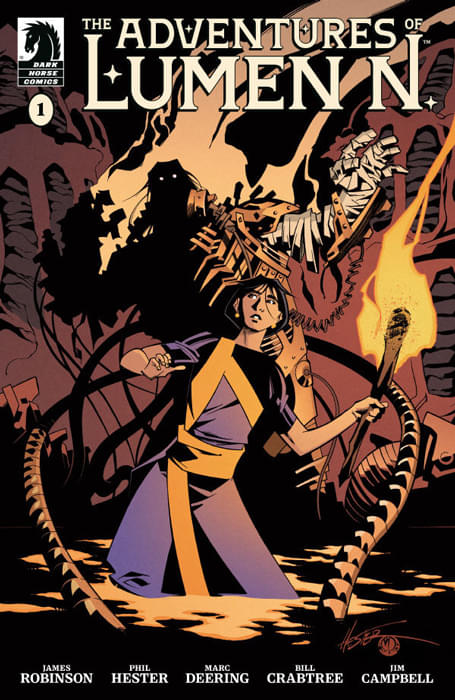
The Adventures of Lumen N.
From Dark Horse
The year is 1901 and our heroine Lumen is a precocious 13-year-old with many questions about her life. Why has her father been gone for years? Why must she learn so many languages and fighting techniques and what’s with all the lessons in seafaring? Then an attack on her home by a horde of steam-punk assassins delivers the first glimmer of an answer, when Lumen’s savior reveals himself as her grandfather, the legendary Captain Nemo, one of the greatest characters in Victorian science fiction literature. A brand-new world of steam-punk adventure and thrills is about to open up for Lumen as she connects with the grandfather she never knew while together they take on a cabal of evil masterminds, intent on world domination . . . a world full of heroes and villains from Victorian adventure and fantasy fiction.
Out September 3rd from Dark Horse Comics
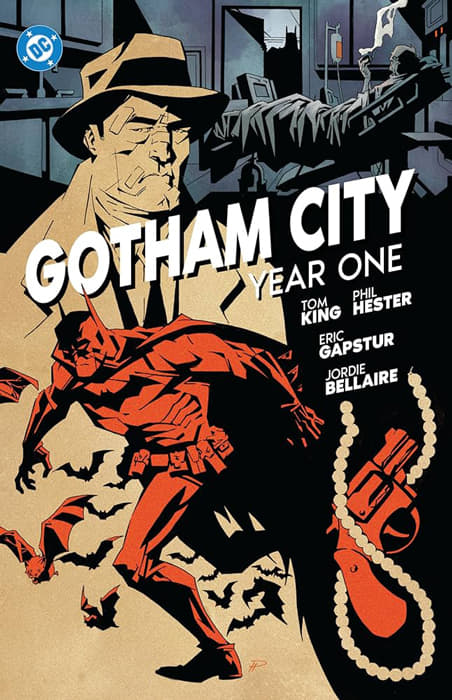
Gotham City: Year One
From the publisher
There once was a shining city on the water, a home for families, hope, and prosperity. It was Gotham and it was glorious. The story of its fall from grace, the legend that would birth the Bat, has remained untold for 80 years. That's about to change. Superstar creators Tom King and Phil Hester team up for the first time to tell the definitive origin of Gotham City: how it became the cesspool of violence and corruption it is today, and how it harbored and then unleashed the sin that led to the rise of the Dark Knight. Two generations before Batman, private investigator Slam Bradley gets tangled in the “kidnapping of the century” as the infant Wayne heir disappears in the night…and so begins a brutal, hard-boiled, epic tale of a man living on the edge and a city about to burn.
PATREON
We have a new Patreon, CryptidCreatorCornerpod. If you like what we do, please consider supporting us. We got two simple tiers, $1 and $3. Want to know more, you know what to do.
THE ORDER OF THE NUN-YA STARBURST: VIOLA
Make sure to check out our friend's new crowdfunding campaign The Order of the Nun-Ya Starburst: Viola that I mentioned in the episode. (LINK)
ARKENFORGE
Play TTRPG games? Make sure to check out our partner Arkenforge. Use the discount code YETI5 to get $5 off your order.
[00:00:00] Your ears do not deceive you. You have just entered the Cryptid Creator Corner brought to you by your friends at Comic Book Yeti. So without further ado, let's get on to the interview.
[00:00:30] Show notes and thank you for your continued support. Thanks for your donation.
[00:01:02] Dan Abnett and so many others. Get a print subscription and it'll arrive to your door every week. And your first issue is free or subscribe digitally. Get free back issues and download DRM free copies of every issue for just $9 a month. That's 128 pages of incredible comics every month for less than $10. That's like a whole graphic novels worth. All subscribers get amazing offers like discount vouchers and exclusive product offers.
[00:01:29] Head to 2000AD.com and click on subscribe now or download the 2000AD app and why wait? Start reading today. I'll put links in the show notes for you. Hello and welcome to Comic Book Yeti's Cryptid Creator Corner. I am one of your hosts, Jimmy Gasparro, and I have a fantastic guest on the podcast today that I am very excited to talk to. Chances are if you've picked up a comic in the last, I don't know, 10, 20, 30 years,
[00:01:58] This person, 35, have we hit 40 yet? Yeah, we're getting close. But they probably had something to do with it. He's drawn a ton of characters. He's written a fair number as well. And I'm very just just very excited to talk to today's guest. Please welcome to the podcast, Phil Hester. Phil, how are you doing today? Good, Jimmy. Thanks for having me.
[00:02:28] Yeah, I'm super excited to talk to you. I can't imagine listeners aren't familiar with your work if they're listening to a comics interview podcast. But just to recap a little bit, you had a great run on Green Arrow with Kevin Smith. You did Swamp Thing with Mark Miller. You've done Ant-Man with Robert Kirkman. One of my favorites, Family Tree, you did with Jeff Lemire.
[00:02:52] Only because, well, I love that whole comic, but in particular, I believe it was Family Tree that the end of the world started on my birthday, March 14th. Oh, no. Yeah, we planned it that way. Oh, thank you. But you've also, you know, if anyone's just familiar with your, you know, your art, you've also written, you know, Wonder Woman, Deathstroke, The Darkness.
[00:03:19] You co-created The Coffin, Fire Breather. Your series, The Wretch, was nominated for an Eisner for Best New Series in 1997. Yeah, you've, there's just a ton of stuff that you have worked on. I even was surprised because I was a big fan of Supernatural that I think you did some work when DC had the Supernatural license.
[00:03:43] Yeah, just a bit, just a backup. But, you know, it's crazy. I get a royalty on that every year. Like, that comic, I should have, I should have said yes to the regular assignment because it's, it sells like crazy and back issues. Yeah, well, I mean, you know, it's, it's probably a show. I mean, it had 15 seasons. It's probably always discovering, like, new fans. And they also, they do a good job in terms of, like, having their own specific, like, convention.
[00:04:11] Like, they're, the folks behind, like, Supernatural and whoever does their convention stuff. Like, I think they, they really do a good job of trying, you know, keeping that series going. So I'm sure that probably helps.
[00:04:24] It's a whole, it's a whole, it's a whole little world of its own. But at the time I did the backup, it was like just starting. And I was like, yeah, it's not really like, I'll do a backup, but that's it. And I should have done the series because it's, it's like, DC is really good about telling you how your books are selling.
[00:04:44] Like, you get, like, you get, like, a really detailed statement on how your back work sells. And just drawing, like, eight pages of, of Supernatural pays me every year. And if I'd drawn eight issues or 80 issues, hmm. Yeah. But still, it was, it was a fun gig. And, yeah, it was, you never know. Another cool thing about DC's royalty statements is you never know what's going to be hot where.
[00:05:13] Like, you get, now that, like, like, Green Arrow is huge in Poland. Like, and not something I'd put together. It's big in Brazil, too. But, like, you just see the different countries where, like, different, different aspects of your work click. And it's pretty interesting. Yeah, I love DC's work. Yeah. DC's royalty system is tops. I think that, that is pretty fascinating because that's not something I ever really, you know, considered.
[00:05:41] Like, I mean, I think overall when I think of different books and I look at, like, I've always been, like, a big DC fan. And, I mean, I love indie comics. But in terms of the big two, I've just gravitated more towards, like, DC. And you think about, like, what books are the best sellers. Like, what Batman book is doing well. But to put it in terms of what's doing well in different countries and, like, what does that say? I think that's pretty fascinating.
[00:06:09] It is. And there's no point in trying to figure it out because, you know, it's like when you find out some, like, obscure American thing is, like, a mad craze in Japan. You know, like that Simpsons episode with Homer. But, like, it's, there's no rhyme or reason to it. You just appreciate it and accept it. Yeah. Oh, that's funny. Speaking of some of your past work, one of the things I wanted to ask you about,
[00:06:36] and I think I saw you put this on social media. I think it was when the big, the new, the Swamp Thing omnibus, you know, you and Mark Miller's work. And you had, I guess you had reposted it maybe on Blue Sky, and you said there aren't enough therapists in the world to revisit my old work.
[00:07:02] You were promoting it, but you were like, I can't, I can't look at this myself. Is that something that you've always had with you? I'm sure it was a little bit in jest, but in terms of the nugget of truth behind it, you know, is that something that's always been with your career? Have you found it difficult to go back and look at your past work? I think it's a common thing for most artists. By the time you're done with something, all you see is what was wrong with it,
[00:07:29] you know, and then, and that's something you always have to struggle with. Cause hopefully if you're always getting better, your taste is always going to be out ahead of your skill. So your, your aim is always going to be higher than what you can achieve. The thing that's taken me a long time to learn and which is just as valuable is that you should not run down your past work because your past work means something to somebody.
[00:07:54] And when you, when you crap on it, you're sort of, you know, invalidating their experience as a reader. And, you know, you don't know what they were going through at that time or what age they were or what that book meant to them. So like, even if I look at it and I see that it's flawed, I can realize that this like was probably important work to somebody. And it took me a long time to realize that, but once I did, it's probably the most important lesson
[00:08:23] I've, I've, I've gotten from being a cartoonist for so long. Yeah. I mean, I, I, I see, I see that. I, I, I think I, um, I've not, I'm not an artist, you know, I have no artistic ability whatsoever, but I, uh, I've always found it fascinating when artists like talk about their, their past work, but I think your perspective on it, you know, however long it took you to reach that point. Um, you know, as well, well noted. Yeah.
[00:08:50] And I, I will say this, that Swamp Thing book specifically, um, there's a great editor at DC that was in charge of that volume named Alex Gaylor. And he did, he really went out of his way to like put together a special package and like reach out to me and like, uh, ask me what I wanted to see in that package and have me do a new cover and all this stuff that sort of made it a special experience for me.
[00:09:17] So I actually, I act like I'm not looking at it, but I did look at it. I had to look at it and, uh, Alex did a great job and the, uh, and I have some friends who are, who were not alive when that comic came out or children when it came out. So they haven't read it. So I'm getting reports from them as they, as they make their way through that omnibus, uh, of what stories appeal to them. And, and, uh, and it's given me some fresh eyes on it.
[00:09:45] And so I found a new way to appreciate it. And also look, uh, Mark Miller and Grant Morrison as writers, uh, pretty great company to be in. So like, I'm not going to complain about that side of the experience. I, uh, the stories are fantastic. And I, I learned a lot from working with both those guys. Did you learn a lot in terms of, um, how you would approach storytelling in the future?
[00:10:12] Or did you learn a lot about when you were going to write something, how to write to a particular artist? Like, what do you think were the biggest lessons you took away? You know, cause you're a writer yourself. You're not, you know, you, you're not just an artist, but I'm kind of curious, what did you take away from working with, you know, folks like Mark Miller and Grant Morrison? Uh, especially Mark and Grant make a huge effort to make each issue a distinct unit. And each issue has a theme and a rhythm and a pace and a good cliffhanger.
[00:10:42] So it's a, it's like a little packet of energy, like each issue. And I came up as a reader during the eighties, um, at a time when like writers and artists were given a lot of carte blanche to really explore what they wanted to explore in their comics, like, um, you know, Matt Wagner, right out of the gate, they're, they're letting him do whatever he wants on mage. Uh, Baron and rude are, you know, taking their time to do whatever they feel like on Nexus.
[00:11:09] Uh, the Hernandez brothers are, you know, and still are doing whatever they want on love and rockets. So I was, I sort of grew up reading all this and, you know, watchman's another great example, but I grew up during this time of like long form comics. Uh, and of course what came before that episode of comics also, but like the heyday of long form comics, um, it's sort of the working on Swamp Thing sort of brought it back to me
[00:11:35] that like each one of these issues might be the only time you ever get your work in front of somebody. So don't hold back like this. You gotta, you gotta go, you gotta hit a home run every time out if you can. Um, because you never know if someone's ever going to see your work again, or if they're never going to read another comic again or what. Um, so you have to give your best each and every time out. And I think that's something that I don't think anybody can argue that Mark is sort of
[00:12:02] like sort of the king of that, like going sort of balls out with everything he does. Yeah. Yeah. Yeah. I, I, I'd, I'd agree. I, I, I've read my fair share of, uh, of Mark's comics and you know, whether or not it's something like, uh, what irredeemable or, um, is that it? That's Mark's right. That's Mark Wade. What am I thinking of? I'm thinking there's a Mark one that I'm. Oh, well, I mean, he's got his whole Miller verse going on.
[00:12:29] So there's tons of books out there, you know, magic order and MPH and all sorts of things. Um, but he's, he's sort of the X, he's sort of the king of not holding back yet. No, absolutely. I, yeah, you're right. Irredeemable is, is Mark Wade. Um, I'm trying to think of, there was one, uh, Mark Miller, um, that I absolutely loved his crononauts with Sean. Oh yeah. Yeah. That was a phenomenal book was one I really enjoyed.
[00:12:58] Um, so kind of like moving forward to some of your more recent work. Uh, and it's, it's funny as I, um, as we record this, I just had a friend of mine who does some stuff with comic book Yeti covering, uh, like tabletop and role-playing games. He, he just sent me a, he did not know that we were, that I was interviewing you tonight, but he just, he had been asking for comic recommendations. I told him some recent stuff I really liked.
[00:13:23] And he, he told me this morning, he just finished Gotham city year one, which, cause I, I just, I love, I, I loved your work on that. You and Tom King. Um, I really liked the noir elements of it. I liked the, I, I really liked how it was all paneled and, and laid out. It, it, I mean, it, it felt like such a, I don't know, like a, an immersive experience.
[00:13:52] Um, and I just felt like I hadn't read like a modern comic done that way in quite some time. I don't know if that's a fair assessment, but I really loved it. Can you just talk to me a little bit about your approach and process with that? Yeah. I'm glad you felt that way. And, and, um, it's, uh, it's a book where like, I sort of, no one held me back.
[00:14:15] Like no one thought that layout's a little too weird or that's a little too like, cause it's, it's a very traditional, like, well, like everything Tom does, it comes at you as a, in a traditional package. And then as you're opening the package, it's turns into something else. Um, so it, it comes at you as a, a classic noir story, but then it turns into a larger
[00:14:39] thing about political corruption and racial tension and sexism and all these, you know, all these other things that sort of crop up and, and, and blow up in your face when you're, when you think you're consuming a discreet little noir package. It's something bigger and broader. And we wanted the art to reflect that too. So, um, I wanted to really push the layouts as far as I could in terms of storytelling.
[00:15:05] Um, and in terms of, uh, really playing with like high contrast, uh, artistic elements and, and never doing it at the expense of the story. Um, trying to do it in a way that really synced with the story. And I, I feel it was a success. I, it's one of the few things that like I got done with and I thought that turned out the way I wanted it to. Um, and a lot of that had to do with like, I was working with Eric Gapster, who's been
[00:15:35] my anchor for a long time. Um, and we were on the same page about high contrast work. And then also Jordi Belair, like Ben Abernathy, our editor on that book, he was like, how, how do you want Jordi to do this? And we're like, we want to Jordi to go as nuts as we are, you know? And she, she did. I mean, she went really like out there and, um, it's, I told her like, I have a hard time
[00:16:03] proofing my own work cause I don't want to see it again. It's like, like I said, seeing all those flaws again, seeing it colored by her. It was like, I was seeing it the way readers, like I was seeing it for the first time and it was really, it was really an amazing experience. So it w it was sort of, um, it was a chance to sort of like strut my stuff in a way that will a way that serve the story. So I, I feel really good about it.
[00:16:30] And, um, I, I can look back on it now and I don't cringe. Yeah. Yeah. I, I, I, uh, I, I wouldn't if I were you, it's so good. Um, and you know, you know, for listeners who haven't read it yet, I, I highly recommend it. Um, I mean, I'm a big Tom King fan anyway. I, I, I love his storytelling, but in particular, it's a great Gotham story or a great Batman story with not a lot of Batman.
[00:16:59] Uh, I, but it's on two pages. Yeah. But it's like, it feels so essential to what we as readers have been told about Gotham. Like it just, and the other thing I love in terms of like your layout is there's just some fun stuff that I'm sure is, you know, a technical in terms of how you approached it.
[00:17:24] But like, you know, there's a couple of scenes of like, you know, you'll, you'll have the, your main character, your main, you know, guy, and he's just maybe like three quarters of the page and you have other scenes and actions like within him, or there's the one scene where they're kind of working them over. I think he's just in like a, uh, uh, like a white t-shirt and he's like kind of through
[00:17:50] the middle of the page and like the top three panels, uh, just things like that, where you're kind of breaking panel borders and doing all these really interesting things. Um, also I thought the punches, like the action shots were great. They're brutal. Yeah. Yeah. They're not, they're not, um, they're not superhero punches. They're, they're consequences at the end of those punches. Yeah. Another thing we were going for with that book was that the theme of that book is that
[00:18:21] your actions may seem like small actions at the time, but they can reverberate over time into the future. And I mean, that book's a perfect example of that because there's all these little tiny crimes that sort of build on each other and become huge, uh, social forces that kind of destroy Gotham city. And so we really want, I really wanted to play with the idea of like repeating compositions throughout without necessarily re repeating the same elements in that composition.
[00:18:50] So I might have like a panel that is a, has like a pyramid composition that's composed of figures like they're in a triangle. Right. And then a couple of pages later, I'll have that triangle again, but this time it's made up of rain, you know, or it's made up of a crash car. Um, because I wanted to keep coming back to hitting those same notes again, because that's what this book is about.
[00:19:15] It's about sort of like those ripples spreading out from your actions, like into places that you can never foresee. Um, and, uh, for people that haven't read it, it is in con it is Canon. And there's some really cool stuff in there about, um, sort of the ultimate origin of not only Gotham city, but Batman himself. Yeah. And I would say even if you don't, even if you're not a fan of like a traditional noir
[00:19:43] or you don't know if you are, or don't think you are, um, I just feel like it's a, it's, it's a great story to kind of experience some of the, the tropes of the genre, like played around with a little bit, but you really capture a lot of those kind of moody visuals at times of when you think of a noir and you're right. Jordi Belair's coloring, I think is just exceptional.
[00:20:09] Um, you know, over top of your work, it just, it's so good. It was so, it was such fun to work with her. And like we said, we said like the leash is off, do whatever you want. And she came back and she said, you know what? I think this sequence, this, the sequence you're, we're working on right now. It shouldn't have any color. Like it should be black and white. And I was like, fine with me. I believe I, if that's what you think, that's cool.
[00:20:36] And DC was like, look, we can't go that far, but maybe do one color. But, but yeah, we, she really went like to the far frontier of, of, uh, of what her aesthetic is. And I think she's a genius and it was, it was great to work with her. Oh, that's awesome. Well, that's, that's, that's awesome to hear that it was, you know, when you, when you really kind of latch onto something, there's, there's part of me that always like, well, I hope that
[00:21:04] was like a, you know, I had a really good time, right? Took a lot away from this comic. I hope the people working on it also enjoyed it. We had a very good time. It was very fun and it was awesome to not, not have anybody ever tell us we were doing something wrong or, you know what I mean? Everyone was like, yeah, go ahead and push it. See what, see what happens. Right. And, uh, and that was a lot of fun because like, I mean, if you know, from reading a lot of Tom's stuff, a lot of it is very like, um, intentionally paced, you know, there are
[00:21:34] a lot of nine panel grids and he did not do that on this book. He let me do whatever I wanted. And I don't know if that was just him trusting me or him knowing that I, I've written enough to like pick up when things should be paced like that and when they should be blown open. Um, and, uh, it was, it was, like I said, a great experience. No, Ben, I can't say thank you to Ben Abernathy enough for letting us do that.
[00:22:01] How did you like become involved in that project? Is that something that Tom approached you or DC approached you? Tom's a shot caller, you know? So if, uh, if he wants you, he gets you. And, um, it's comics is a funny business cause, uh, your heroes aren't that much older than you are usually, you know, they're only like five or six years older than you are. So like when, yeah, like I can't remember how much older I am than Kevin Smith, like maybe four or five years. Right.
[00:22:31] But he remember reading Swamp Thing when he was like in college and I, and I was like 25, you know? Right. To him, he's like, oh, he's the Swamp Thing guy. Get him. You know? And that's how I started working with Kevin. Uh, and that's sort of the same, you know, Tom grew up steeped in comics. And so like he has, and that, I think that same dynamic existed with Jeff Lemire. Like, um, he, he grew up like a fan of like my more indie stuff.
[00:22:59] So like, uh, he came and got me to do family jury, which is, uh, if I ever thought I would be in a position like that, uh, it's really kind of a blessed state to be in where I, like, I haven't had to go look for work in a very, very long time. Um, I'm working with great writers who like request me, which is like flattering, but also kind of mind blowing to me. You think still after all, uh, you know, I don't want to say all this time, but you know,
[00:23:28] you, you've been working in the industry a while. Uh, you know, is it still mind blowing to you? Because, uh, I mean, look behind us. I'm in a little corner of a room and this is my world. And this is where I'm at like, you know, 12 hours a day. Whether it's writing or drawing and you don't, you don't really have a, uh, a proper relationship with the outside world because all your interactions with people are social media or email. Right.
[00:23:58] And so it's, it's hard to get a read on like where you fit in an industry. Um, even if you've been at it forever. Uh, I joke with my friends like about, we, you know, we're always comparing careers to other, other creators and we're like, you know, who's, who's sleeping soundly tonight? You know, who's like, which creator is sleeping soundly or which creator is like thinking
[00:24:24] about, you know, if you, you know, you think, oh, this guy's got a great career. Yeah. But at night he's, when he goes to bed, he wishes, he's wishing he was Raina Tellegmeyer. You know what I mean? Yeah. So what we always come back to is that Raina's sleeping well at night and Kirkland's sleeping well at night. Yeah. Those of them are probably, probably doing okay. Dave Pilkey's probably has a, he's doing our thing. He has, he's, he's REM sleep as soon as his head hits the pillow.
[00:24:53] You know? Yeah. On his, on his mattress stuffed with thousand dollar bills. Yeah. But not just in terms of career sex success, but also in terms of like what you're achieving with your art. So it's always like this job is great, but it's also has a lot of built in frustration and like, like any career.
[00:25:17] Um, but, um, in comics it's tough because what you do is you like, this is, it's not like I go to, it's not like I go to work and punch in some numbers. Um, what, what you're seeing on the page is me. So when it doesn't work or it doesn't connect with somebody, it's hard to not take that personally. So every time, every time you put out a piece of work, that's like somebody like a consumer
[00:25:45] or a reader might see it and go, eh, I don't have time for that. Uh, it's somebody who's like blood and sweat on that page. You know, like, even if it doesn't turn out, even if it's a bad comic, bad comics are hard to make, you know? Yeah. They took a lot out of somebody's life. Um, yeah, you, I, you, I, I feel that same way. Like when I first started with comic book Yeti reviewing comics, I was like, well, one, I don't have the art background or knowledge.
[00:26:14] I felt weird or well, not competent reviewing certain things. And I said also like, I I'm a bad reviewer cause I know how hard it is to make stuff, you know? And it's like, it's hard to, you know, I mean, you can critique things certainly. You're valid. There's valid criticism, but I feel bad because yeah, even if it's something's not to your
[00:26:38] taste or not great, you know, most times I'd say 98, 99% of the time, even if something isn't good, somebody put a lot of work for it to not be good, you know? And it's hard. Yeah. I'm the same way. So I, I, it's good that I like a lot of stuff, I guess, you know, cause I, I read, um, you know, I, a lot of comics and all over the place in terms of genre and indie and same,
[00:27:08] you know, I, I read a bunch of stuff. Um, I still haven't read a lot of manga. That's like the next thing on my, the cross off my list. But, um, I read a lot of old man, old man manga, you know, stuff that came out in the eighties, you know, that's my, my wheelhouse. All right, everybody, we're going to take a quick break. We'll be right back.
[00:27:33] Far in the future and deep in space, humankind has been lost to the star. Quiet rumors circulate of righteous heroes willing to fight and save the enslaved and oppressed masses. Stories of beautiful habit-clad saviors are giving hope to those crushed under the thumbs of tyrannical rulers and alien parasites. These are the stories of the Order of the Nunya. Interesting. Interesting.
[00:28:00] Now, if I can avoid all the Nunya knock-knock jokes in my head for a moment, this is a great new Kickstarter project from a few Yeti friends you should check out. With a story inspired by a 1937 Vatican photo, these weapon-wielding heroines strike me somewhere between warrior nun and 80s sci-fi adventurers like Flash Gordon. Who doesn't like a nun running around with a collapsible battle axe? Halberd? Hey, it's future check, so I don't ask questions. And she's trashing robots in stylistic fashion, riding around like Marty McFly on it.
[00:28:31] Well, I can't tell you more. But if it piqued your interest to hear about it, head on over to the Order of the Nunya on Kickstarter so you don't miss it. I'll put a link in the show notes for you to make it easy. Y'all, Jimmy the Chaos Goblin strikes again. I should have known better than to mention I was working on my DC Universe meets Ravenloft hybrid D&D campaign on social media. My bad. He goes and tags a bunch of comics creators we know, and now I have to get it in gear and whip this campaign into shape so we can start playing.
[00:29:01] Another friend chimes in, are you going to make maps? It's fair to say it's been a while since I put something together, so I guess? Question mark? It was then that I discovered Arkenforge. If you don't know who Arkenforge is, they have everything you need to make your TTRPG more fun and immersive, allowing you to build, play, and export animated maps, including in-person Fog of War capability that lets your players interact with maps as the adventure unfolds while you, the DM, get the full picture.
[00:29:31] Now I'm set to easily build high-res animated maps, saving myself precious time and significantly adding nuance to our campaign. That's a win every day in my book. Check them out at arkenforge.com and use the discount code YETI5 to get $5 off. I'll drop a link in the show notes for you, and big thanks to Arkenforge for partnering with our show. I think I'm going to make Jimmy play a goblin warlock just to get even. Welcome back.
[00:29:56] You talk about working in the industry and how difficult it can be at times. I'm curious, though, in terms of the changes you've seen overall to the industry, especially with the big two stuff. Because indie comics, you can kind of do whatever you want. And it always, I mean, it made the rounds on social media recently, people getting their
[00:30:23] hands on the old DC style guide and things along those lines. But do you think the Marvel and DC, in terms of the writers and artists that they hire, have broadened their horizons? Or your career? Because to me, it seems like they're taking a lot more chances on what's different. Oh, for sure. When I started, my style was an outlier in superhero comics.
[00:30:52] It was a little too weird. It was a little too angular, a little too cartony for mainstream superhero comics. I mean, I could still get work in it, but I was always kind of a tweener. I wasn't quite an indie auteur, and I wasn't quite a regular superhero guy. So I was always kind of trying to navigate in between.
[00:31:18] But now, I think largely due to the kind of aesthetic people are exposed to growing up with all the great kids' graphic novels that are out now, all the manga they see, all the video games they see, the aesthetic has just been busted wide open.
[00:31:40] And so Marvel and DC are willing to take chances on artistic styles that would not have been allowed in the 80s and 90s. There was definite house styles throughout time, and now there's no real house style either place. Now it's just sort of like people are judged on their own merit, and the aesthetic choices of the editors have broadened quite a great deal.
[00:32:08] And I think it's because the editors are more well-read in terms of different sources of comics. They don't just see what's coming through the production department of their own company. They're seeing other stuff. And it's led to sort of a great... So it's led to this time where when I started 30-some years ago, I was an outlier, and now
[00:32:34] I'm pretty tame by comparison to a lot of stuff that's out there, which is great, which is a great thing to see to me because my own tastes in art are pretty far-ranging. So I like to see all these different kind of styles make their way into the mainstream. Yeah. I wanted to pivot a little bit because I wanted to talk to you about your own kind of comic art collection.
[00:33:06] Because I read... I don't know where I read this, but I read about the Hester Paradox. Yeah. Where you... For anyone that doesn't know, listeners, the Hester Paradox is when you have a comic art collection that is so large, it's prohibitively expensive to insure and yet too valuable to not insure. Right. Yeah. I mean, I'm there. I mean, and I proved it.
[00:33:33] I went out and I asked, I will not name them, but I asked an auction house to assess my collection for insurance purposes. And the quote on the assessment was $30,000. And I was like, yeah, I can't afford to insure my... So the best I can do is bump up... The best I can do is bump up my homeowners as high as I legally can. Right. And I'm still...
[00:34:03] I think I'm still a little behind on what would happen if something happened to my collection. But yeah, it's a weird position to be in, especially because it's such a volatile market. And I did not get into it for that reason. I got into it for purely aesthetic reasons as an artist to learn from looking at other people's art. And also as a collector, because it seemed like art collecting was comic book collecting plus. You know what I mean?
[00:34:33] Like it was an even deeper dive into comic book collecting. Oh, sure. Yeah. And also, like I came... I grew up before the internet. And so like seeing anything behind the scenes was sort of like thrilling and almost forbidden. So like when you saw... Like I remember the first time I saw a piece of original art. I was a teenager, I think. And some people will know this piece and some won't.
[00:35:00] But Michael Golden did these covers for this thing called the X-Men Companion. And way back in the day, Fantagraphics put out like whatever hot comic was out. They would put out a companion, which was just a bunch of articles behind the scenes stuff about a comic, about the hot comic. And it was like a little... Almost like a journal. And Michael Golden did this X-Men cover of all the X-Men standing around a felled Sentinel.
[00:35:30] And I saw that in person. I was like, oh, that's what a page looks like. You know? And it was sort of like... I knew that cover from owning that book. But then seeing that actual piece was like, that's an even deeper dive. And that's an even... I can even pull that curtain back a little bit more and see behind. And I knew at that point in my life that I wanted to be a cartoonist. So the more I could see of those inner workings, the more enthralling it was to me.
[00:35:58] And so collecting original art just seemed like a natural extension of collecting comics. And I have never quit doing both. Do you remember what it was like the first piece that you got that really you knew you were kind of hooked into collecting comic art? Yeah. It's kind of goofy. I bought a page without seeing it. I bought...
[00:36:22] Because back then, for people that aren't fossils like me, there used to be a newspaper called the Comics Buyer's Guide. And it came out every week. And it was sort of the... It was the industry newspaper. It had reviews. It's where all the back issue services would run their ads. But also it's where original art dealers would run their ads.
[00:36:47] And if they were cheap, like most original art dealers were at the time, they would not pay to run a picture. They would just describe the page. And I saw this description and I was like, yeah, I'm going to get that. It sounds cool. And it was a Ron Wilson Marvel 2-in-1 page because I'm a huge fan of Black Goliath, Giant Man. Okay. And it was an issue where the thing was teaming up with Black Goliath. And that's all I needed to know.
[00:37:16] Like, I didn't need to know what it looked like. Like, I knew if I sent away $35, I could get back an actual page. And once I got it, I was like, I was hooked from then on. Wow. I've gone through and looked at, you know, on Comic Art Fans because you have like photos or, you know, of some of your collection.
[00:37:43] I don't know if it's your whole collection, but you know, you can go through the collection. There's some wonderful stuff that you have. I guess one of the things that I was kind of fascinated by, and I don't know why I had this like preconceived notion of collecting original art pages, like that it would be more so stuff in the past.
[00:38:09] You know, but you have a lot of that, but you also have a lot of like stuff like right now, like of current artists. And I'm kind of curious, like when having collected for a number of years and a lot of different pieces, as you do it now, do you gravitate like, you know, towards characters like you did, like Thing and Black Goliath? Or is it particular artists that you like?
[00:38:35] Like, like, is it a mix of things in terms of what you gravitate towards to collect now? Because you were there were so many like recent pieces and recent artists like you. Caitlin Yarsky was on the podcast recently. I love Caitlin Yarsky's work, and I was so jealous of the page you have from Bliss. Right. So I don't for the most part collect characters. I collect artists. So if I see an art and that's the way I buy comics, too. Now, I don't I don't buy Green Lantern because I like Green Lantern.
[00:39:04] I'll buy Green Lantern if somebody's drawing it or writing it that I'm a fan of. Yeah. So it's the same way with art. I'm just I'm drawn to the art. I'm drawn to the style. I'll I'll take a chance on it.
[00:39:17] Um, and I guess if I'm left to my own devices, if like somebody wants to do a piece from for me and they ask me, I'll usually say swap thing because I'm such a big swap thing fan and spend so much time drawing the character that I like to collect other people's swap things as well. Well, that's pretty cool. Yeah.
[00:39:38] Um, so now it's it's just in terms of a writer art or original art in terms of like the artists and you still are it. But you're still looking at like contemporaries and collecting their art as well. Oh, for sure. Yeah. I'm, uh, there's so much like it, like we were talking about earlier. There's so much exciting stuff happening now. Uh, and there's so many great new styles that are out there.
[00:40:03] Like it's fun to watch all these younger artists sort of synthesize what they see in manga, what they see in European comics, what they see in South American comics or underground comics or from the world of video games. It's, it's cool to see all that sort of like go into the melting pot. Like when I grew up, it was like you sort of picked and choose, chose your heroes from past cartoonists. Like, well, I'm going to be part Frank Miller and part Jack Kirby and, you know, and part Alex Toth.
[00:40:31] And those are all people that were from, you know, like as far ranging as their styles were, they were all people from mainstream comic. Yeah. And now when an artist comes up there, they're exposed to this crazy milieu of different styles, like from all over pop culture. So what they're producing is, is like a whole new animal. So it's exciting to see that stuff spring up. I don't get me wrong. I still love, I mean, I still love.
[00:41:01] I still love collecting like silver age art and eighties art, nineties art. That's all stuff that really appeals to me. Yeah. And it's all stuff I appreciate. Um, but I, I think stuff being made now is just as valuable and just as exciting. Yeah. Yeah. I want to, I want to put a link in the show notes for, for listeners to go and, and check it out because I, I, I've gone through it a number of times and it, it, it's, it just, there's some great stuff in there.
[00:41:30] Um, and I, I, I, I came across recently, you have, I think it's like Jack Kirby's pitch page for man Hunter, the, the Mark Shaw version of the character. And, um, and I bought it. I, I, I, I think I bought that from Glenn Danzig. Like, really, that's funny. Um, is there like a white whale out there for you? Like, is there something that you want to get your hands on that you, you, you haven't yet?
[00:41:58] Every time I think I got the whale, there's a, I know, like I see another like water spout on the horizon, you know, like, Oh yeah, I also want that whale. Um, Captain Ahab stuck in a time loop. Yeah. I'm getting dragged down to the bottom over and over again. Uh, I would really love Jim Stranko story page. Um, which are, they're hard to come by cause he only did, you know, a couple dozen comic
[00:42:24] book pages, uh, how very, very high impact comic book pages, you know, very innovative, but I, I'd love to have one of his, um, I really love a Kirby and Senate FF page, uh, which are crazy expensive. And I don't know, there's always, there's always stuff. I, I'm a huge Trevor Rondine fan and I'm always on the lookout for a thriller pages. If anybody remembers thriller, that's a book he did in the eighties that I thought was really
[00:42:54] groundbreaking. Um, and any like Batman pages he did too. I just think Trevor's like a, like a, an idiosyncratic genius. Um, but yeah, there's a, like I said, every time I think I got the whale, there's another one that pops up. So I will not say I have a white whale. Okay. Uh, just to, just to keep going and, and, uh, keep collecting. Yeah. Someday I'll have to stop, but, uh, I'm somebody, somebody's gonna have to make me.
[00:43:24] And, uh, something I noticed in following your, you know, following you on, uh, social media, um, you, you, you talk quite a bit now, I think in terms of being a grandfather now. Yeah. And I, I was curious in how, you know, your home life, your family life, like being a grandfather now, does that affect the stuff you want to work on or your approach to it at all?
[00:43:52] Or are you, have you always kind of been the, the, the same, same type of guy? Yeah. I mean, I, family's always been important to me. It's like, it's important to everybody, but, um, I think the best part, uh, when I started wanting to be a cartoonist, when I was a teenager, I thought the most important thing was to get out there and express myself. And it still is an important part of like why I want to do what I do. Right. But the best thing that happened to me from being a professional artist was I got to stay
[00:44:22] home with my kids when, um, they were little. Um, and I would, I would be in my studio when they were asleep, but during the day I'd, I'd be out being Mr. Mom and, uh, that was an incredible gift. And it's a, it's the best thing about my comics career. And I think, I think when I'm, especially when I'm writing something, I always try to get back to like the importance of like, um, familial bonds.
[00:44:48] Like, uh, even though the coffin is like a science fiction horror story, the fact that there's a shattered family at the heart of it that has to get built back together or fire breather going through, uh, the divorce of his parents, you know, those are all important. Like I'm always going to wind up back there. I've tried to not wind up back there and I was right back there. Um, those are all important themes to me.
[00:45:16] And, um, and I also think it's important to get back to those themes in a, in a sort of non hallmark way, like in a, in a very honest way and realistic way, but also, also visiting those themes through genre. So like, if I'm going to make them like, I, like I have a swamp monster comic that I've written and, uh, I haven't drawn it yet, but I've written the pitch and I want to do it
[00:45:43] someday, but it's basically about this, about a guy losing his family and sort of trying to build it back again as a monster. Right. So like as ludicrous as that sounds, uh, it's still got to pay off as a monster comic. Like it's gotta be fun, exciting, visually stimulating monster comic. But to me, there's nothing to, there's nothing to that unless there's some meat on those bones and the meat for me has to be about relationships. Yeah.
[00:46:12] That's, I mean, that, that makes a lot of sense. And, um, well, hopefully one day we'll get to see your, yeah, I just have to live long enough because I have this big board of like ideas I need to get to. Right. And it, every time I do one and like two more pop up. So it's like, I don't, you know, like my working career is probably, you know, maybe 13 years at the, at the longest from now.
[00:46:39] Like if I worked till in 70, um, uh, and you know, that's probably realistically 10 more projects and, and my list is 40 projects long. So I'm going to have to pick and choose and I'm also going to have to have like, uh, publishers and editors be really strict with me about what's worth doing. What's not. Right. For stuff now that you write, um, how do you go about, you know, having to select an artist
[00:47:07] when it's something that you've, you know, written? And I'm sure that's changed over the years when you're, you know, first starting out. Yeah. You know, but, but now like when you have an idea and you're like, oh, I want to write this, I don't want to draw it myself. How do you go about picking? Yeah. I try to be very, uh, realistic about how I cast my comics. So like if I'm not the right person to draw it, I go look for somebody else. And then there are two things I try to consider when I'm looking for an artist and that is, do I like their work?
[00:47:36] Um, and then secondly, can they do this? Which is a bigger question than most people want to grapple with. Like a lot of, a lot of really fantastic artists can't make a comic, um, or they can't make a comic reliably. So it limits your choices on what you can and can't do. So you might want to, you might have like really grand plans about using a certain artist in a certain way, but they can't meet a monthly schedule or they can't draw science fiction
[00:48:06] or, you know what I mean? So you have to like, you have to make compromises along the way. And so sometimes just getting somebody that's very reliable is like a huge load off your mind. Um, especially since I, uh, getting back to Mark Miller and Brian Bendis and Jason Aaron, all these like really huge name writers, they understand that like a good chunk of their success
[00:48:31] relies on how good the comic looks and sure they've got the juice to call shots. So they're going to go out and get the very best artists they can. And, um, we're going to sort of hoard those people, you know? And so what you've got to do is you have to find people on the way up or people that are, or people that are interested in you and what you're trying to do. So it's like a really tough balancing act.
[00:48:58] And this is going back to us talking about how hard it is to make comics. Um, you don't know when those things are all going to click into place, but when they do click into place, it feels great. And when they don't click into place, it still feels great. It's just harder. You know? No. Uh, it's, you know, that's comics and you got to sort of roll with it. Yeah. Uh, that's funny.
[00:49:24] Um, well, Bill, I, uh, I really appreciate you, you know, coming on the podcast. Um, I, this has been a real treat for me. I'm a big fan of your work. Uh, I'm really excited that you, you know, agreed to come on and talk about comics. Um, I'm going to put a link in the show notes so folks can follow you on social media and check out your comic art collection. Also, I'll put in again, my particular plug.
[00:49:50] If you haven't read Gotham City year one or family tree, uh, or your run on swap swap thing, then, you know, especially with that nice, uh, new omnibus, uh, no time like the present to check those out. Um, I don't know if you have anything coming out, you know, soon that you can talk about. There's a hot on the heels of the swamping omnibus. There's going to be a green arrow omnibus basically of my, I don't know if it's every
[00:50:18] last issue of green or arrow I drew, but it's pretty close. Okay. Um, and then, um, I'm doing a, I have a, I have an unannounced mini series of dark horse that's not out yet. Um, I'm writing and drawing, uh, an issue of GI Joe silent missions, which is sort of a tribute to the silent issue of GI Joe that Larry Hama did long ago. Nice. And mine's featuring the character beachhead.
[00:50:45] And, uh, I thought I saw that in preview. I was going to ask you about that. I'm doing some, I'm working on a couple of books for ignition press that I'm, I'm writing and drawing or just writing. And, uh, those will be announced in the coming year. Awesome. Uh, well, that's all fantastic stuff. And, um, I can't wait to, to read more of your work. Um, like I said, I, I Gotham city year one really blew me away.
[00:51:14] Um, it also got me on a kick of like going in, like finding all the noirs I could stream because I like, it like, it like ignited something in me and I'm like, Oh, is double indemnity available? Yeah. Right. Sorry. No, no. Blame Tom. Okay. Well, I'm, I'm both of you. I think it's a, it's a, it was a team effort, but, um, yeah, Phil, thank you so much for, for coming on the podcast.
[00:51:42] Um, a shout out to my brother, Bobby, the cryptic creator corners. Number one, most dedicated fan. Bobby listens to all my episodes and he, he checks out a lot of comics and, um, yeah, listeners check out Phil's work, uh, follow bill on, on blue sky. And so you'll know when all of this stuff is coming out and yeah, uh, Phil, I really appreciate it. Thank you very much. I appreciate it, Jimmy. Thanks for having me on. All right. And, uh, see you listeners. Thank you so much for listening and I will, uh, see you next time.
[00:52:12] This is Byron O'Neill. One of your hosts of the cryptic creator corner brought to you by comic book, Yeti. We hope you've enjoyed this episode of our podcast. Please rate review, subscribe all that good stuff. It lets us know how we're doing and more importantly, how we can improve. Thanks for listening.