
Part of Jimmy's DC December, Phillip Kennedy Johnson is on the podcast today to talk about writing Batman and Robin beginning with issue #14 that was out on October 9th. PKJ and Javier Fernandez kick off an all new adventure for Bruce and Damian. PKJ chats with Jimmy about how he wanted to take Batman back to his role as World's Greatest Detective and showcase those abilities. Jimmy also asks about his run on Superman and how he looks back on his time writing the character. Lastly, they chat about the Boom! Studios series Crocodile Black, with a main character very different from Superman or Batman and Robin. The trade for the Crocodile Black is out February 26, 2025.
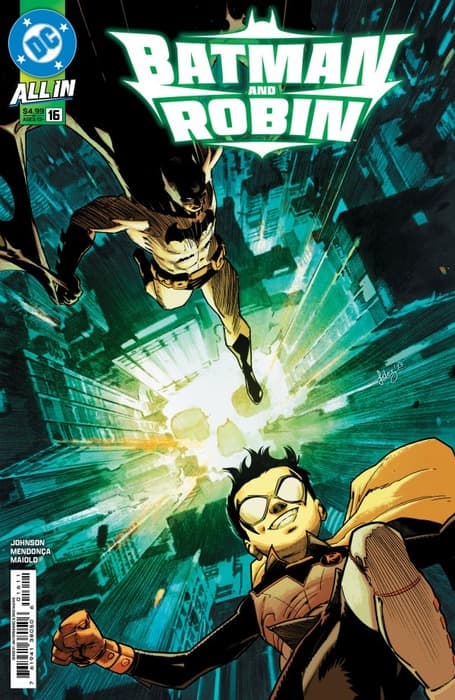
From the publisher
Damian Wayne is the son of the Bat, grandson of the Demon, and Robin—but as he nears the age at which his father traveled the world, one question is on his mind: Who is Damian outside of the crusades his family has tasked him with fighting since birth? When he starts to look beyond his life of endless violence, a different way to help the world begins to present itself—but when an enigmatic new murderer begins reenacting traumatic crimes from Gotham’s history, Batman will need Robin more than ever before! It’s a whole new dynamic for the Dynamic Duo as the powerhouse team of Phillip Kennedy Johnson (Superman: Warworld Saga) and Javier Fernandez (King Spawn, Nightwing) bring you the dark and mystifying next chapter in the lives of Bruce and Damian Wayne! You are not ready for what’s in store.
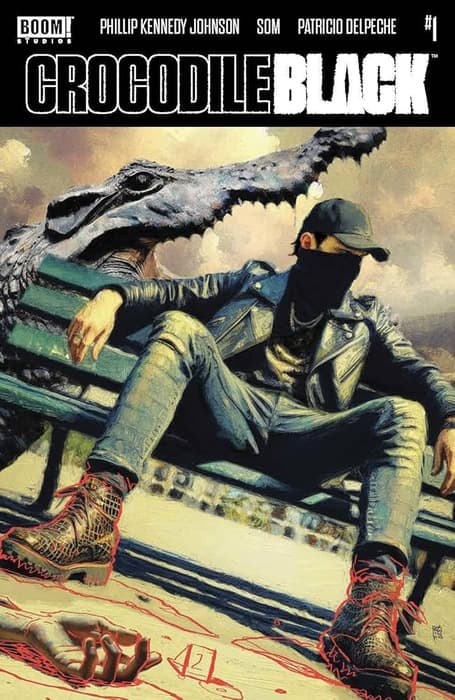
From the publisher
What makes someone turn to crime–especially in a modern, pandemic-riddled dystopia?
Danny, a seemingly mundane young man lost in escapism, with a spiraling lack of control over his life, witnesses something during a delivery job that will change him forever, turning things as dark as the black, crocodile skin boots that he can’t take his eyes off of…
In this criminal thriller perfect for fans of Kill Or Be Killed and A Righteous Thirst For Vengeance from Eisner-nominated writer Phillip Kennedy Johnson (Superman, Incredible Hulk) and rising star artist Somnath Pal (Brigands) give birth to an iconic new noir lead in the tradition of Elmore Leonard.
PATREON
We have a new Patreon, CryptidCreatorCornerpod. If you like what we do, please consider supporting us. We got two simple tiers, $1 and $3. I’ll be uploading a story every Sunday about some of the crazy things I’ve gotten into over the years. The first one dropped last week about me relocating a drug lord’s sharks. Yes, it did happen, and the alligators didn’t even get in the way. Want to know more, you know what to do.
Our episode sponsors
COMICS OVER TIME
Make sure to give a listen to our friends with Comics Over Time.
Arkenforge
Play TTRPG games? Make sure to check out our partner Arkenforge. They have everything you need to make your TTRPG more fun and immersive, allowing you to build, play, and export animated maps including in person fog of war capability that let’s your players interact with maps as the adventure unfolds while you, the DM get the full picture. Use the discount code YETI5 to get $5 off your order.
[00:00:00] Your ears do not deceive you. You've just entered the Cryptid Creator Corner brought to you by your friends at Comic Book Yeti. So without further ado, let's get on to the interview.
[00:00:10] Hey everyone, this is...
[00:00:13] Hi Byron.
[00:00:14] Who is this?
[00:00:15] I'm your fairy godmother.
[00:00:17] I have a fairy godmother?
[00:00:18] Of course you do.
[00:00:20] I'm 50 years old, why haven't you shown up before?
[00:00:22] I appear when I'm needed.
[00:00:24] And I didn't need you in all these years?
[00:00:27] Do you want my help or not?
[00:00:28] Um, sure.
[00:00:31] Exactly.
[00:00:32] I was just about to pitch our Patreon. Why would I need help with that?
[00:00:36] Because you're an idiot sometimes.
[00:00:38] That's hurtful.
[00:00:40] What were you going to put on there?
[00:00:42] We do comic stuff? So something along those lines?
[00:00:45] And this is why I'm here. You do know what people put on Patreon most of the time, right?
[00:00:52] Honestly, no.
[00:00:54] People need something a little bit spicy to entice them to support you.
[00:00:59] Nobody wants to see me shirtless.
[00:01:01] I doubt that's true. You are in pretty good shape considering your age.
[00:01:06] Thank you. Let's see. A little spicy. I've been bugging Jimmy to figure out what he's going to do.
[00:01:12] I know lately he's been playing around with his **** all the time.
[00:01:16] He loves to take it out and show it off. There's even a specific TikTok channel now. How's that sound?
[00:01:21] Not a bad start. People like Jimmy. What else you got?
[00:01:24] I told a story recently about being in a strip club with some of the four horsemen when I was working for WCW back in the day.
[00:01:30] I picked up an infection on my-
[00:01:32] WOOOOO!
[00:01:33] From the experience? I hate strip clubs. Is that better?
[00:01:37] Getting there? But maybe spicy shouldn't include infections you get in strip clubs.
[00:01:42] That's not sexy. We'll workshop it.
[00:01:46] Like I need more meating.
[00:01:47] At least tell them where to find it while we figure this out. Mother goddess, help this poor man.
[00:01:53] You can find us on Patreon at cryptidcreatorcornerpod. I'll put it in the show notes.
[00:01:58] Anything else you'd like to remind me that I'm bad at?
[00:02:01] How much time do you have?
[00:02:03] Why do you look like Rosario Dawson anyway?
[00:02:05] I appear the way you want me to look.
[00:02:07] Okay, that's disturbing. Wait, have you been showing up in my dreams?
[00:02:12] I'll never tell.
[00:02:14] And we're done here.
[00:02:16] Y'all, Jimmy the Chaos Goblin strikes again.
[00:02:20] I should have known better than to mention I was working on my DC Universe meets Ravenloft hybrid D&D campaign on social media.
[00:02:27] My bad.
[00:02:28] He goes and tags a bunch of comics creators we know, and now I have to get it in gear
[00:02:32] and whip this campaign into shape so we can start playing.
[00:02:35] Another friend chimes in, are you going to make maps?
[00:02:38] It's fair to say it's been a while since I put something together, so I guess, question mark?
[00:02:43] It was then that I discovered Arkhamforge.
[00:02:45] If you don't know who Arkhamforge is, they have everything you need to make your TTRPG more fun and immersive.
[00:02:52] Allowing you to build, play, and export animated maps, including in-person Fog of War capability that lets your players interact with maps as the adventure unfolds while you, the DM, get the full picture.
[00:03:04] Now I'm set to easily build high-res animated maps, saving myself precious time and significantly adding nuance to our campaign.
[00:03:12] That's a win every day in my book.
[00:03:14] Check them out at arkhamforge.com and use the discount code YETI5 to get $5 off.
[00:03:20] I'll drop a link in the show notes for you.
[00:03:22] And big thanks to Arkhamforge for partnering with our show.
[00:03:25] I think I'm going to make Jimmy play a goblin warlock just to get even.
[00:03:29] Hello and welcome to Comic Book YETI's Cryptid Creator Corner.
[00:03:32] I am one of your hosts, Jimmy Gasparo.
[00:03:34] And wow, am I excited about today's episode.
[00:03:38] This is a comic creator who I'm chatting with today, who I've been a fan of for a long time.
[00:03:45] I think I really fell in love with their work when I read The Last God, which was like a DC black label book, was absolutely phenomenal.
[00:03:55] The work that they did on that, but they you're very familiar with their work in terms of.
[00:04:05] Let's see, I can go through the list here.
[00:04:07] Low Road West, Smoketown, the recent Crocodile Black.
[00:04:11] We're going to talk about action comics, Last Sons of America, Warlords of Appalachia, Alien, The Incredible Hulk, Green Lantern War Journal.
[00:04:21] And the brand new just came out as we're recording this Batman and Robin number 14.
[00:04:27] Please welcome to the podcast, Philip Kennedy Johnson.
[00:04:31] How are you doing tonight?
[00:04:33] I'm good, Jimmy. Thanks for having me on, man.
[00:04:35] Yeah, I'm lucky enough. I know you've gone to Baltimore Comic Con.
[00:04:38] I've run into you a few times there to get you to.
[00:04:41] I think I got my copy of Action Comics, the arena right next to me that you've signed, along with, you know, a couple other things the past few years.
[00:04:50] And I'm just excited to get to talk to you.
[00:04:55] One, in part because I love a lot of the work that you've done, not just in terms of indie comics and your creator and stuff, but the work that you've done for DC as well, tackling some of the.
[00:05:07] I mean, Superman, there's really hardly any character more iconic.
[00:05:11] Yeah.
[00:05:12] And it's, it's just, it's something like I, you know, I've written a handful of like short comics that have been published in anthologies and I have no aspirations to write, you know, for the big two.
[00:05:26] And I'm just amazed when somebody comes along and not just tells a compelling story with a character that's been around for over 80 years.
[00:05:34] But what I think, you know, to start off with like your action comics work and the World World saga kind of really put your own stamp and an imprint on it.
[00:05:46] Um, I guess I kind of want to, you know, start there.
[00:05:52] Was the, what was the, like, a lot of nerves with having to do that?
[00:05:56] Or did you feel that you had the confidence to do it at the time you had the opportunity?
[00:06:01] Like, what was that process like?
[00:06:04] You know, I, I did expect, well, first, thanks for your kind words.
[00:06:07] I appreciate you saying all that stuff.
[00:06:08] And it's, it's good to see on the show here.
[00:06:10] We've, we have met at cons and stuff.
[00:06:12] Um, so thanks for picking up the books and for all the kind things I am.
[00:06:17] I expected nerves to be a, to be an issue when I got a shot at something.
[00:06:22] Well, first of all, I never thought I'd get a shot like Superman.
[00:06:24] Like I, um, when I was, when I first started doing creator on comics, I kind of figured that would be all I ever do.
[00:06:32] Um, just cause the, you know, the shots that you get at big two stuff are so rare.
[00:06:39] I did not really expect to, to get a shot like that.
[00:06:42] So when I did, man, I, I, the nerves I expected didn't really come.
[00:06:46] It was more, especially on Superman.
[00:06:48] I mean, at the time I was still kind of pitching for.
[00:06:52] More, um, ground level stuff.
[00:06:54] Sorry. My air conditioning just kicked on.
[00:06:55] I don't know if you can hear that or not.
[00:06:57] No, I can't.
[00:06:58] I can't, but you're, you're.
[00:06:59] All right, good.
[00:07:00] I got it.
[00:07:01] I'm off my office.
[00:07:02] It gets a little, the, gets a little weird up here anyway.
[00:07:04] Um, so I was, I was pitching for, I think like a red hood mini or something, or maybe even just like one shots.
[00:07:12] Um, I, cause I, I don't know.
[00:07:14] I really like, there's a lot of things that I wanted to say without, I didn't expect to get a shot like Batman.
[00:07:20] Um, and then I got, but I, um, the work that I had done on the last God at black label had, had made some fans within the editorial over there.
[00:07:28] And they noticed how, how off the deep end I went with world building.
[00:07:33] And they, they started thinking about me for a cosmic stuff.
[00:07:37] And at some point they asked me if I wanted to do, to write Superman and action both.
[00:07:43] And which was so far beyond what I expected to get a call for.
[00:07:48] I mean, first of all, for, I mean, first and foremost, like the answer is yes, of course, but also they could not have known what a massive Superman fan that I am and how Superman just changed my life.
[00:07:59] I mean, the comics of course, but also the film when I was, when I was a little kid, man, that first movie with Christopher Reeve in the titular role with John Williams music.
[00:08:10] Uh, it's, it just completely changed how I perceived the world and, and my place in it.
[00:08:16] So when they, when they, um, gave me a shot to write that character, I knew exactly what I wanted to do.
[00:08:23] I knew exactly who the character was like the, I knew his voice.
[00:08:26] Like I knew exactly what I wanted Superman's voice to be.
[00:08:29] Sometimes I read a Superman story, you know, every Superman story is through the lens of the creative team.
[00:08:35] And not every team on every character is going to speak to you.
[00:08:38] It's not like I, it's not like every Hulk book.
[00:08:42] The.
[00:08:44] It reads the same.
[00:08:45] It's not like every Batman story feels the same.
[00:08:47] It's, it's in the lens of those people.
[00:08:49] And, um, I don't love every Superman story.
[00:08:53] Like whenever I see it, whenever I see Superman acting out of character.
[00:08:56] Um, as I perceive him, I'm like, okay, that's, you know, that's, that's fan fiction.
[00:09:01] You know, like, that's not, that's not really what Superman would do.
[00:09:03] Yeah.
[00:09:04] My own, you know, if he says some douchey thing or his, if he's, he suddenly becomes a creature of ego.
[00:09:10] Um, then it's not, it's not real.
[00:09:13] And quote unquote, you know?
[00:09:14] Um, so I, I knew exactly who Superman was, who, what, who I wanted him to be.
[00:09:18] I just could not wait to get started.
[00:09:21] Um, so yeah, I expected, I expected nerves to be a big, a big problem.
[00:09:26] Um, Scott Snyder is a, is a huge influence on me and he's been very open about the nerves that he felt coming onto Batman.
[00:09:32] Like he, um, he kind of showed up out of nowhere in comics and his work was so strong.
[00:09:40] Um, he got a chance to do black mirror, which was a Dick Grayson Batman story.
[00:09:44] And it was fucking awesome.
[00:09:45] Yeah.
[00:09:45] I love black mirror.
[00:09:47] Yeah.
[00:09:47] It's incredible.
[00:09:48] And then they were like, Hey, do you want to do new 52 Batman?
[00:09:52] Not Batman.
[00:09:53] Number one, you know, and he just felt completely out of his depth.
[00:09:58] Um, as, as great a writer as he is, he was like, well, I'm not up to this.
[00:10:01] And that's kind of what his, um, that's what his Batman story is about.
[00:10:05] It's about being out of your depth.
[00:10:06] It's about being like he, he himself is in that role.
[00:10:11] Um, so anyway, I just, I didn't really feel the nerves I expected to get.
[00:10:14] And it, um, it became a story about Superman as the, like, when there was all this debate happening about the American way thing, like this should be about truth, justice, and the American way or the whole world.
[00:10:26] Or like what Superman supposed to be about.
[00:10:28] I was like, none of that matters.
[00:10:29] And it's all about the, the line from action comics, number one, which was champion of the oppressed.
[00:10:36] I'm going to write a story that defines Superman as the champion of the oppressed.
[00:10:39] I'm going to give him an enemy.
[00:10:41] That is the antithesis of that thing.
[00:10:44] And I'm going to put him on this.
[00:10:46] He's been, uh, lately he had been, uh, very humanized.
[00:10:49] There was a lot of, a lot of daily planet stuff, a lot of things with the supporting cast, a lot of stuff about journalism and about, uh, is, uh, all the, uh,
[00:10:56] all the other characters in his life.
[00:10:57] I want to put Superman in space and give him this gigantic, crazy Spartacus in space, John Carter of Mars epic.
[00:11:04] Uh, and just show him that he doesn't need his powers to be the greatest hero of all time.
[00:11:09] Uh, yeah.
[00:11:10] I mean, it's, it's interesting.
[00:11:11] You said that like Scott, uh, when he was asked to do Batman and like, didn't feel up to the task.
[00:11:17] And that's kind of what, you know, kind of bled its way into his Batman because, um, and then to hear you say that you really didn't have the nerves you thought would come because if anything, especially in world, world rising in that arc, I feel like your, your Superman is really all about.
[00:11:33] Not all about, but there's a huge component of the confidence of Superman knowing who he is, knowing his place in the world, knowing his place on the justice league, maybe not always knowing what the right answer is, but the confidence that once he figured it out, he was going to follow that through.
[00:11:52] There's, there's the, uh, listeners, if you haven't read it, do it because it's phenomenal, but there's a scene where there, there's an issue between Atlanta in that Atlantis and the U S and Steve Trevor gets involved and, you know, uh, very things kind of get like a little heated with between Batman and Aquaman and Superman's like, great.
[00:12:14] I get it.
[00:12:15] But we have refugees from war world who's saying there may be more people there and we need to deal with this.
[00:12:22] Like, you know, uh, he, he just, the, the, the character of the character, I, um, not to use that word twice, but, uh, I just think is really remarkable.
[00:12:34] Like you said, you knew his voice and it feels like you, you did.
[00:12:37] Like, I, I, I, there was something about that Superman that, um, was like, yeah, you know, you read it and you're like, yeah, this is who he is.
[00:12:46] This is, this is who this, this, this character is.
[00:12:49] This is who this man is.
[00:12:51] This Kryptonian is.
[00:12:53] And then it just, uh, you know, um, especially, and then it goes on from there, but the arena, especially this, the portions of it where you team back up with, uh, Ricardo Federici are just, I mean, like next level Superman comic.
[00:13:10] Yeah.
[00:13:10] Yeah.
[00:13:10] That dude is so good.
[00:13:11] And yeah, it was such a pleasure to get to do a book with that guy, especially the nature of the story that we were doing where it kind of had that John Carter of Mars, like almost like a Conan kind of quality to it.
[00:13:20] And that's just, uh, the stuff that Ricardo was just born to do.
[00:13:25] It's, it's crazy how good he is, that kind of stuff.
[00:13:27] Yeah.
[00:13:28] So yeah, it was, it was awesome to get to work with him again.
[00:13:31] Do you ever like now that you've gotten beyond that, you know, just in terms of moving on, do you ever think and look back and.
[00:13:39] You know, has it ever occurred to you like, wow, future writers of Superman.
[00:13:43] I mean, because a lot of your Superman was also about legacy, um, and heritage.
[00:13:49] Like, do you, have you thought about, oh, wow, there's got, there's some, some, someone right now who's reading this comic.
[00:13:55] Who's maybe, you know, 13 or 14 who in 10 to 15 years, when they get the shot, like the voice of Superman that they've come to know is what you've written.
[00:14:07] Does that, do you ever think about that?
[00:14:09] Does that do anything for you or.
[00:14:11] Yeah, I do.
[00:14:12] I do think about stuff like that.
[00:14:14] I think about, I mean, I know what a huge deal specific comics were to me growing up and, and also film and TV and just, yeah, just moments of those moments of various kinds of superhero media that, I mean, just the power fantasy of Superman and also the power fantasy of Batman as well.
[00:14:33] Those two, those two power fantasies are such different things, but they also are so important to me.
[00:14:39] Superman probably more than anything, which is so important to me, man.
[00:14:43] I just needed, I needed that right then.
[00:14:45] You know, I was just kind of the sad, lonely kid out in the country, uh, kind of didn't, you know, just didn't know what I was doing there or who I was supposed to be or what I was supposed to do.
[00:14:55] And, and then I, I see this story about this, you know, this guy discovers this thing in the barn and he realizes that he was sent there by people who loved him to do great things.
[00:15:07] Yeah.
[00:15:08] And to save everyone.
[00:15:09] Like that just, I just needed to believe that, you know?
[00:15:11] And like you hear John Williams music, that John Williams music just permeates you while you're, while you're hearing that story.
[00:15:16] It's, you just like, you would just on a deep, like soul kind of level, like this emotional level, you just believe it, you feel it, you know?
[00:15:26] Man, it was just so important.
[00:15:27] So I, yeah, I'm trying to, I'm trying to help people hear that music when they read the book.
[00:15:32] Like I want, I want those, those moments of that really powerful moment of dialogue, just a simple, short, powerful, concise line.
[00:15:40] And something that, something, something more meaningful and heroic and inspirational than I would be able to think of on the spot.
[00:15:52] You know, like I have to kind of pour myself, give it like everything I can to, to come up with the perfect line, perfect moment, just to inspire people.
[00:15:59] It's like, this is what we're all supposed to be.
[00:16:01] I, I read a lot of stuff like just, I read, you know, to get ready to read, to write Superman, I'll read some of the, just a great speeches in human history or a Pulitzer prize winning socially conscious journalism, stuff like that.
[00:16:16] But just try to capture that, that diamond that is Clark Kent, you know?
[00:16:21] Yeah.
[00:16:22] Yeah.
[00:16:23] That's, it's pretty interesting in terms of the reaching for those types of things, like great speeches or that those pieces.
[00:16:31] Of journalism, but yeah, it makes sense, you know, to try and capture that voice.
[00:16:35] Yeah.
[00:16:36] I, I kind of, I kind of strayed from your question, but I do think about that kid out there that's reading it.
[00:16:39] Cause I was that kid.
[00:16:41] Yeah.
[00:16:41] And I, I mean, I mean, in one case, that kid actually came up to me at a convention a few years ago.
[00:16:47] There was this, what was it?
[00:16:48] It was, I think it was at Awesome Con in DC.
[00:16:50] It might've been a Baltimore Con, but I think it might've been Awesome Con.
[00:16:55] His, this kid's dad had brought him to the convention one day.
[00:16:58] It's just kind of a, kind of a, just a surprise, fun thing.
[00:17:01] Then the parents were going through a divorce and the kid was having a hard time.
[00:17:04] And he, he was like, uh, it looks like he was probably about 15, maybe 16, but he was a huge Superman fan.
[00:17:11] And he, um, he talked about the early, the early part of the war.
[00:17:14] Actually, you know what?
[00:17:15] It wasn't even the war world saga yet.
[00:17:16] It was the, it was the future state issues.
[00:17:19] Oh, okay.
[00:17:20] Yeah.
[00:17:20] It was the future state worlds at war, worlds of war that were, it was like this two-parter that kind of summed up everything that we were about to do in the war world saga.
[00:17:30] It was kind of like a, like a, um, like a statement of faith kind of like it was, um, or like a proof of concept, proof of concept of what was coming.
[00:17:39] And you really got to expand on the, like the Superman family in that one too.
[00:17:44] Just really good.
[00:17:44] Yeah.
[00:17:45] A little bit.
[00:17:46] Well, that was the house of L issue.
[00:17:47] Yeah.
[00:17:48] There was a, there was this other two-parter that was all about Superman.
[00:17:51] Uh, but like a lot of people, like in the first one, it was, um, we see, we see earth a few years in the future and everyone by then knows that Clark Kent was Superman.
[00:18:04] And, um, Smallville has kind of become this like Roswell kitschy kind of, kind of place where like people are on main street selling Superman junk.
[00:18:14] Like, you know, fake kryptonite or, you know, little, um, musical instruments that they claim were kryptonite, were kryptonian and, um, you know, just whatever.
[00:18:25] Like little rides, like little shuttle rides around the town, like stuff like that.
[00:18:28] But there was also, there was, um, you could go to rocket field where people think that Superman landed as a baby and people that Superman saved during his life would gather there and memorialize him.
[00:18:41] Talk about how he saved them and where they think he is now.
[00:18:44] Superman has since left earth and they're kind of talking about where they think that he is.
[00:18:48] And it's all about what Superman means to us, like how much he inspires us.
[00:18:52] And in part two of that story, we see him where he actually is.
[00:18:57] And he's on a whirlpool getting his ass kicked.
[00:18:58] Getting dragged through the mud and trying to save this one slave.
[00:19:02] And, um, and that issue, we're reading this op-ed article that Clark Kent wrote for the Daily Planet while we see him fighting.
[00:19:09] We, when we see, we see what we meant to him.
[00:19:13] We see how we inspired him while he was among us.
[00:19:18] And that kid came and talked to me about how much that meant to him and about, I mean, he was, he was so into it.
[00:19:26] And he was, he was telling me like his philosophy on what, you know, what he, what people should be.
[00:19:31] And I mean, he like got the light of Jesus in his eyes and he was just like preaching to me about, about how, how much this meant to him.
[00:19:37] It's like, you get it, man.
[00:19:38] And he, he was just like, you get it.
[00:19:40] And I get it too.
[00:19:40] And here's why.
[00:19:41] And he started crying and we like, we like hugged it out.
[00:19:45] It was powerful.
[00:19:46] Oh, wow.
[00:19:47] Writing Superman, um, just carries this weight, carries this responsibility that, um, that other books you don't have.
[00:19:55] Cause you're making this philosophical statement about what humanity is supposed to be like what we're capable of.
[00:20:01] Yeah.
[00:20:01] You know, and I, I definitely, I'm trying to tell powerful stories with the other books too, but there's something about writing Superman that just deeply, deeply matters that I will never take that for granted.
[00:20:10] And I know that kids out there reading it.
[00:20:11] And so I take that extremely seriously.
[00:20:13] Yeah.
[00:20:14] I, well, I mean, I, I, I think you, you definitely did what it was you set out to do because it comes across as somebody who takes Superman very seriously.
[00:20:25] And, and, and does know his voice.
[00:20:27] All right.
[00:20:28] Let's take a quick break.
[00:20:29] I love comic books.
[00:20:30] Hey, children of the algorithm.
[00:20:32] I wanted to tell you about another great comics related podcast.
[00:20:35] Our friends, Dan, Dwayne, and Sienna with Comics Over Time have a great show that you should definitely check out.
[00:20:40] Dan has been a Comic Book Yeti contributor since before I was around and the show delves deep into comics history, analyzing it from the wider cultural landscape at the time.
[00:20:49] I learned a lot just listening in and they are keeping it fresh too with Sienna reporting in about the current Marvel offerings.
[00:20:55] I love seeing the next generation excited about comics and it's cool to see a family participating in comics journalism together.
[00:21:01] This season, they are focused on the history of everyone's favorite Hell's Kitchen vigilante daredevil.
[00:21:07] It's a fantastic show that you're going to want to add to your rotation.
[00:21:11] You can find them at Comics Over Time on your favorite podcasting platform or at their website, comicsovertime.podbean.com.
[00:21:18] I'll drop a link in the show notes to make it easy for you.
[00:21:21] He's a daredevil, Ned.
[00:21:31] After a string of unexplained disappearances in the southern parts of the United States, retired Detective Clint searches for his white trash brother.
[00:21:39] While searching for him, he ends up being abducted by aliens.
[00:21:43] He is now in the arena for big guns, stupid rednecks, an intergalactic cable's newest hit show, which puts him and other humans in laser gun gladiatorial combat.
[00:21:54] And his brother is the reigning champion with 27 kills.
[00:21:58] That's the premise for a new book from Band of Bards, Big Guns, Stupid Rednecks.
[00:22:03] I got a chance to see an advanced preview of this book and being from the south, honestly, I was a bit skeptical going in.
[00:22:09] But they won me over and nothing is more powerful than an initially skeptic convert in my book.
[00:22:14] In Jimmy's words, big guns, stupid rednecks is many things, but it isn't subtle.
[00:22:19] It tells you exactly what it is up front.
[00:22:21] Then it delivers with a great premise, fantastic art and a whole mess of fun.
[00:22:25] I had a great time reading big guns, stupid rednecks and what I thought was going to be an indictment of redneck culture quickly showed it was actually a love letter.
[00:22:33] A family mystery, brother pitted against brother, aliens, fighting for profit in a big arena.
[00:22:39] This truly has it all.
[00:22:41] Issue one is out already, but you can still pick up a copy on the Band of Bards website.
[00:22:45] And current issues are available via your previews or lunar order form or just ask your LCS.
[00:22:50] Don't miss it.
[00:22:51] Let's get back to the show.
[00:22:52] In terms of some of the other books, I just revisited the first arc.
[00:22:57] You know, I do some preparation.
[00:22:59] I don't always just wing it, despite what my co-host Byron might think.
[00:23:03] He has to edit all the episodes.
[00:23:06] But I revisited the first arc of Green Lantern War Journal.
[00:23:12] Oh, thanks.
[00:23:14] You're the Jon Stewart.
[00:23:16] And I think it was in that first arc.
[00:23:22] But there was, you know, talking about some of the, you know, the.
[00:23:29] Trying to like really capture the character.
[00:23:33] And that was another book where I'd wrote.
[00:23:37] I wrote the line down because I thought it was like.
[00:23:40] Really great.
[00:23:43] And now, of course, I can't find it.
[00:23:45] But.
[00:23:47] You really you took Jon, who is another character that has been around for a long time.
[00:23:53] A lot of different writers have, you know, left their their mark on.
[00:23:57] But, you know, you you start off the book.
[00:24:01] He's he's back on Earth.
[00:24:02] He's taking care of his mom.
[00:24:04] He is, you know, in a place where he's kind of like it has has left the core.
[00:24:09] You're kind of you're you're picking up from.
[00:24:12] You know what?
[00:24:13] I think the writer.
[00:24:14] I think Jeffrey Thorne.
[00:24:16] Yeah.
[00:24:16] Was was on it like was on it right before you.
[00:24:19] So and.
[00:24:22] Oh, the line.
[00:24:23] I don't have the exact quote because I can't find where I wrote it down, but it's something on the along the lines of like John when Jon Stewart says you.
[00:24:29] I think it's to shepherd one of the newer characters in it that you're finding out that your heroes are, you know, are fragile, just like the rest of us.
[00:24:39] And I just thought that was such like a powerful line for for Stewart to use.
[00:24:45] And I was I was kind of curious because I read somewhere that the war journal tag came up later.
[00:24:54] Like that wasn't something that you had picked for, you know, that your your Green Lantern arc.
[00:25:00] You know, how did that affect if it did at all like your writing of the story?
[00:25:07] Like like did that come across like like halfway through the process that it was going to be Green Lantern War Journal?
[00:25:13] Had you like started scripting that that affect in any way the story that you wanted to tell knowing it was going to kind of have that tag?
[00:25:21] It did a little bit.
[00:25:22] Yeah, I.
[00:25:24] I mean, I knew that I wanted to tell the story about about his mom and about how he was somebody who had just gone on this crazy space journey and came home.
[00:25:37] Talking about the Jeffrey Thorne run.
[00:25:39] And actually, I reached out to Jeffrey about Jon Stewart and asked him what he thought about the character because I wanted to get I was trying to get to know the character better.
[00:25:47] Because I grew up with Hal as my Green Lantern.
[00:25:49] And I did have books with with Jon in him.
[00:25:53] But I am I kind of felt like the.
[00:25:56] The identity of Jon Stewart has kind of strayed from how I knew him as a young reader, I didn't have a lot of comic books, really, but the ones that I did have that Jon.
[00:26:08] Was in he wasn't he was the architect.
[00:26:11] And now people know him better generally from from animation.
[00:26:16] And he's kind of the shorthand that people use to define him now is as the ex-marine.
[00:26:20] And he kind of kind of talks in this military jargon, as imagined by civilians.
[00:26:26] And it kind of boils him down in a way that I find a little bit unflattering, not unflattering, but just simplistic.
[00:26:32] He just kind of sounds like the drill sergeant sometimes.
[00:26:34] And I think it's very it's very, very simplistic view of Jon.
[00:26:38] So I wanted to.
[00:26:41] Since they were giving me this story, I wanted to make it more character driven and really try to show all the elements of who Jon is.
[00:26:48] So, yes, the ex-service member, but also the architect, also the son of a civil rights leader, which is well established, but not often brought up.
[00:26:58] The brother to a younger sister who had died.
[00:27:04] There are various things in his past, in his character that make him much more complex than people have seen.
[00:27:10] And I just wanted to basically I wanted to kind of plant plant all these seeds that future writers would have no choice but to draw upon.
[00:27:18] Like now that, you know, you know, War Journal established that he is the architect.
[00:27:22] So now he's got to be that.
[00:27:23] You know, I'm trying to kind of steer steer the ship a little bit more towards complexity.
[00:27:30] And because I just don't want to see.
[00:27:32] I don't know, man.
[00:27:33] Like there's a lot of people like he's one of the most prominent black superheroes in comic books, certainly at D.C.
[00:27:39] And I.
[00:27:42] And people need Jon to be fucking awesome and to not be to not be a stereotype, to not be just a sticker representing a person, but an actual fully fledged human being.
[00:27:55] Yeah.
[00:27:56] And there's also a certain kind of black reader that I've gotten to know over the course of writing, Jon, that to whom somebody like Luke Cage might not speak as much.
[00:28:06] Yeah.
[00:28:06] Something like that kind of character.
[00:28:08] Like they don't necessarily want to see somebody like Luke all the time.
[00:28:10] They want to see somebody different.
[00:28:12] Yeah.
[00:28:13] So anyway, I was just trying to.
[00:28:15] Sorry, this is so long winded here, but I am.
[00:28:18] I was trying to make Jon much, much more complex.
[00:28:20] And a big part of that is his relationship with his mom.
[00:28:23] He just came home from this big adventure.
[00:28:25] One thing that Jeffrey told me about Jon, he sees Jon Stewart as somebody who will do his time as a superhero and then eventually hang it up and do something else.
[00:28:37] And I thought that was interesting because we always think about these heroes as we kind of envision them as being in the saddle their whole lives, that they're going to die in the saddle someday.
[00:28:46] Like they're never going to.
[00:28:46] It's hard to imagine Bruce Wayne not being Batman forever until he literally is killed.
[00:28:51] Right.
[00:28:52] Same with Superman and everyone else.
[00:28:57] And he saw Jon more like a service member where they do their time, then they retire, then they go do their other thing.
[00:29:03] And I thought that was really interesting.
[00:29:05] So I wanted to kind of see that.
[00:29:06] Like, okay, now I've done my time.
[00:29:08] I've given everything I can give.
[00:29:10] My mom needs me real bad.
[00:29:12] So I'm going to go home and kind of take care of her in her last years.
[00:29:14] She's the – she's kind of the real hero.
[00:29:20] She's a real hero.
[00:29:21] Like he's always telling her, like the ring should have chosen you, not me.
[00:29:25] He sees her as this incredible hero.
[00:29:27] So he goes home to take care of her.
[00:29:28] But the ring is not done with him.
[00:29:29] The universe is not done with him.
[00:29:30] So then he kind of gets sucked back into this war story.
[00:29:33] And that's around the time where we were trying to figure out the subtitle because there was already an ongoing Green Lantern above Colin.
[00:29:39] So we couldn't just call it Green Lantern.
[00:29:41] And he – like my editor at the time suggested War Journal.
[00:29:47] And I did like the ring of it.
[00:29:49] It sounded cool.
[00:29:50] So I could see a book like that being well-received.
[00:29:54] It does kind of fit John.
[00:29:55] But again, it kind of fits into that stereotype like he's just the war guy.
[00:29:59] But if it's – but it does kind of fit people's perception of him.
[00:30:02] So I could kind of drag him into the book through the title of War Journal and then show them a much more complex character.
[00:30:07] But I did feel like I needed to kind of keep the promise of the title.
[00:30:11] So the second arc is more like this kind of war thing happening in space that he is on the front lines of.
[00:30:18] So that was – the title did somewhat shape the second arc.
[00:30:23] Oh, okay.
[00:30:24] I was curious about that.
[00:30:26] But I mean I really – I grew up the same way.
[00:30:29] Like Hal was always kind of my Green Lantern.
[00:30:33] I really – in later years when I got back into comics, only because I've dealt with anxiety, I kind of fell in love with Jessica Cruz.
[00:30:41] Green Lantern.
[00:30:45] Yeah, this – your arc of – with Jon Stewart.
[00:30:49] I love the interplay of the Marine and the architect.
[00:30:57] You know, I mean I love that his mom kept telling the same story about him taking apart an alarm clock.
[00:31:06] And then it kind of clicks that he, you know, he wanted to see how it worked from the middle.
[00:31:12] And that worked on so many levels.
[00:31:14] One, as someone whose grandmother who passed away a number of years ago but the last few years of her life, she suffered from dementia.
[00:31:22] And, you know, that's how – it rang true, you know.
[00:31:28] She used to tell the same story about the time she took my brother and I to an all-you-can-eat crab restaurant in Florida.
[00:31:34] And they brought us out three crabs to start.
[00:31:37] And then every time we wanted another one, they would only bring out one crab.
[00:31:40] And she just thought it was the funniest thing in the world.
[00:31:43] But every time, you know, she would just tell that same story.
[00:31:47] So there was a truth to that in the writing.
[00:31:50] Getting to see John interact, like, with his mother and a caregiver in that role, but also as the architect and the marine.
[00:31:59] Like, yeah, you really brought out the complexity of John.
[00:32:04] I just thought it was kind of, you know, remarkable that you have that in the front end and then it permeates throughout.
[00:32:13] But you have all this, like, crazy big, radiant dead, like, outer space stuff.
[00:32:20] The balance of it, I thought, was very, you know, well done.
[00:32:23] I'm sure that's something that, you know – was that difficult to get right?
[00:32:29] It just takes a lot of thought.
[00:32:31] You have to – like, the nature of the villain has to be something that fits a Green Lantern book.
[00:32:38] You know, it can't just be something that Batman could deal with or Aquaman or whoever.
[00:32:42] It needs to kind of fit what a Green Lantern book should be.
[00:32:47] And it's important that the themes that we established in the beginning, like, carry us all the way through.
[00:32:52] Like, the clock actually is a huge part of that.
[00:32:55] Like, at the end, his – like, another Green Lantern could not have done what he did and bring the Necropolis together and, like, rebuild it so that they're able to get back in and everything.
[00:33:05] Like, that's – he is the guardian and the builder.
[00:33:08] Like, that's why he's the man in this particular case.
[00:33:12] So, that's – all that stuff had to be there.
[00:33:14] The stuff with the memories with his mom, too.
[00:33:18] Like, that was – I wanted to see how somebody with these – he's always saying, like, a Green Lantern can do anything.
[00:33:26] Like, he – before he got the ring, he was – he felt fettered by the confines, by the constraints of three-dimensional space.
[00:33:35] Like, his brain conceived of things that, you know, that three-dimensional or four-dimensional reality, if you take time into it, cannot achieve.
[00:33:46] You know, like, his – and when he gets the ring, he can do literally anything.
[00:33:50] And so, now he's unconstrained.
[00:33:52] Like, he's the perfect – he's not just the great warrior, the great tactician, the great strategist, the brave guy.
[00:33:59] He's also the builder.
[00:34:00] He's, like, the entire package.
[00:34:04] And it was also important for me to show how somebody with that power would wield it when they're faced with real problems like you and I are faced with – like, your situation with your mom you talked about.
[00:34:16] Like, that's – I'm so sorry you went through that.
[00:34:20] But I just – I know that if somebody was missing their, you know, dead child and constantly thinking that they were alive in the afternoon, that would be intensely painful.
[00:34:34] Sorry, did you catch all that? Did you lose me?
[00:34:36] Yeah, it glitched for, like, a second.
[00:34:38] But, yeah.
[00:34:39] I can't hear you.
[00:34:39] No.
[00:34:40] There we go.
[00:34:41] Okay.
[00:34:42] Yeah, no, sorry. You were just saying –
[00:34:43] I know that if I was in that position – if I was in that position and, you know, my mother – I had to remind my mother over and over again that –
[00:34:54] her only daughter was dead.
[00:34:56] Yeah.
[00:34:56] And, like, seeing her, you know, suffer like that over and over again.
[00:35:01] I mean, I don't know.
[00:35:02] It just seemed – it made sense to me that John would just say screw it and just, like, give her her daughter back.
[00:35:09] Yeah.
[00:35:10] He has the power to do that.
[00:35:11] And I spoke to a reader at a convention who works in hospice care for people with dementia.
[00:35:23] And he said, you know, John's doing the wrong thing by doing this.
[00:35:26] Like, you know, you're not – you're supposed to keep moving.
[00:35:28] I'm like, dude, I know that.
[00:35:31] But, I mean, but still, that's what I would do.
[00:35:33] Like, that's – I mean, he has the power to ease her suffering.
[00:35:37] You think he wouldn't do it?
[00:35:38] But I'm not saying that John's always doing the right thing.
[00:35:40] I'm saying that he's doing the compassionate thing for the mother that he loves just like I would.
[00:35:45] And, yeah, maybe it's wrong.
[00:35:45] But what's the harm?
[00:35:47] He's just trying to make her – he's trying to make her okay.
[00:35:50] You know, he just can't – he can't deal with – he can't deal with her screaming and, you know, suffering all the time.
[00:35:56] And I wanted to see him use his power the way that any of us would in a flawed but compassionate way and see consequences grow out of that in a way that continued to impact the story that grew into something else.
[00:36:09] Yeah, I felt – I mean, look, we can have some great moments in certain superhero books.
[00:36:15] And I think, like, you know, we talked about with your Superman and plenty of other Superman stories.
[00:36:20] He's a character that I think more lends itself to those type of moments.
[00:36:25] But I guess part of me I was not expecting in, you know, a comic that was Green Lantern War Journal to find that – that element of the story I thought was so heartbreaking because it felt, you know, very real for John to be dealing with this thing that he really – he can't make better.
[00:36:44] He really can't fix, but he can try and, you know, take a little bit of the fear and the remembering, you know, when – to have to tell his mom that, you know, Ellie died years ago.
[00:37:00] Yeah, I thought it was just very well done.
[00:37:03] Thank you, man. I appreciate that a lot.
[00:37:06] And so, you know, I know we're kind of like running through things, but there really is so much to cover.
[00:37:11] But now with DC's all-in and absolute additions with these comics, you have now come on – I think you're taking over in terms of writing duties from Josh Williamson to Batman and Robin with issue number 14 just came out.
[00:37:30] I read it. I really liked it.
[00:37:33] I love how the opening feels very Batman, you know, like when you open a Batman comic and you're like,
[00:37:40] oh, yeah, there's Batman and Robin and what are they – they're trying to stop two cars racing down the street with a bomb.
[00:37:47] It's like, yeah, all right, you know.
[00:37:51] But I was curious with, you know, with Batman and Robin and taking on Bruce and Damien,
[00:38:02] you know, because looking at some of the things we've talked about already, like your approach to Superman,
[00:38:07] your approach to Jon Stewart.
[00:38:10] I mean, I'm assuming with Batman and Robin, the key is to really, you know, get to the heart of that relationship between, like, Bruce and Damien.
[00:38:21] Was that the key for you to get into that, or was it something else?
[00:38:27] Um, man.
[00:38:30] Such a broad – like, what I wanted to do with this book, I don't know where to begin.
[00:38:38] I had – when they approached me to do this book, like Batman and Robin – okay, so when I was able to write Superman,
[00:38:45] action comics would have been the title I chose of all comicdom.
[00:38:49] Like, in all comic books, if I got a chance to write one book, action comics would have been the one.
[00:38:52] Um, and I – there's, like, conventional wisdom says that as far as, like, sales, like, the Batman book sells more than detective,
[00:39:04] sells more than Superman, sells more than action.
[00:39:07] Like, the –
[00:39:07] Right.
[00:39:08] The book that actually has the character's name on the cover, for whatever reason, always sells better.
[00:39:12] Yeah.
[00:39:13] Sure.
[00:39:15] I guess I don't give a shit about that.
[00:39:17] Not like – not like people say I should or you're supposed to or –
[00:39:21] Yeah.
[00:39:21] Man, action – action comics is the old dog.
[00:39:23] That's the one.
[00:39:24] That's the one that everything else comes from, you know?
[00:39:25] I just – getting to write that was such an honor.
[00:39:29] And Batman and Robin would kind of be my choice now for a very different reason.
[00:39:34] My son and I – I got, like, a 10-year-old boy, and he and I are just best fucking friends.
[00:39:40] We got along so great, and he was a – he was the biggest – I mean, he's been a huge Superman fan his whole life, too.
[00:39:48] But when he started out, though, as soon as he had the capacity to love anything, he loved Batman.
[00:39:54] Yeah.
[00:39:55] He was just all in on Batman.
[00:39:57] I've got all these photos and videos of us playing together.
[00:39:59] I'm always Robin, and he's Batman, but it was like we always play together.
[00:40:03] And God, I'm so – and he had, like, this little Adam West, like, cape and cowl that they would wear.
[00:40:09] And he wore it to the playground.
[00:40:10] He wore it to the Mission Barbecue.
[00:40:13] He wore it to the – wherever we went, he'd wear that shit.
[00:40:18] And it was like if he ever gets a track scholarship, that cape and cowl is going to be why, because he ran everywhere.
[00:40:24] Oh, that's great.
[00:40:25] It was the best.
[00:40:27] And to get to write – and plus getting to write Superman and John and then later Superman and the Twins, you know, writing Superman as the ideal father, the dad that I aspire to be.
[00:40:39] Yeah.
[00:40:40] Yeah.
[00:40:40] And now getting to write Batman is, like, not quite the opposite of that, but certainly not a good dad.
[00:40:48] You know?
[00:40:48] Definitely different parenting styles.
[00:40:50] Yeah.
[00:40:51] I do have a tendency to get a little intense, not in a way that is shitty towards him at least.
[00:40:58] Like, to myself, yes.
[00:40:59] But, like, to him, I just try to – you know, I try to be mindful of certain things.
[00:41:04] I'm always trying to pay attention, like, make sure his diet's square away, he's getting some exercise, he's getting his stuff done, we're playing music, we're doing this business.
[00:41:12] And if you kind of pick apart what it would take to be – to literally be Batman, to stand shoulder to shoulder with people like Flash and Green Lantern and Superman and fight Superman and win, and you're just a guy.
[00:41:27] Like, what would it take to be that person?
[00:41:30] Like, what would it take to be – how differently would you have to live your life from everyone else?
[00:41:34] So the book has to show not just Batman taking attention to milliseconds, to every calorie, to every carb and protein macro, to every, you know, little thing you can possibly prepare for.
[00:41:52] To learn, you know, a hundred languages and different accents in each language and, like, just be so squared away.
[00:42:01] Like, what must it be like – like, I already worried about disappointing my dad growing up for, like, not being – like, letting him down.
[00:42:07] What if your dad is literally Batman and you have to live up to that?
[00:42:11] You know, that's got to be awful.
[00:42:13] You know, so I just want to explore that.
[00:42:15] I want to see – I want to explore how busted Damien is as a son and how busted Batman is as a father and a son.
[00:42:24] And how – what it must be like to grow up in that house with no Alfred even anymore.
[00:42:30] Like, everything is all different.
[00:42:31] And I – man, it's just – it's a relationship that I'm just fascinated with.
[00:42:36] So that's got to be at the core of it.
[00:42:38] I want people to see that relationship kind of come together and seeing how the characters are with each other.
[00:42:45] But I also have very strong opinions about Gotham, about Batman, about what I want to see in a Batman book.
[00:42:51] I think that very often a Batman book is missing the detective element.
[00:42:55] Yeah, I will agree with that.
[00:42:57] I – you know, if he's billed as the world's greatest detective, I – you know, he should be.
[00:43:02] You know?
[00:43:03] Yeah, exactly.
[00:43:04] We should see it.
[00:43:05] Exactly.
[00:43:06] I really don't like when – I really don't like when I – whether or not it's a movie or, you know, whatever it might be or a comic book where I feel like Batman –
[00:43:15] is like a particularly poor detective.
[00:43:19] So, yeah.
[00:43:20] I like the detective element of it.
[00:43:23] Like, we should – you know, we should see that.
[00:43:26] So, yeah.
[00:43:26] I appreciate that too.
[00:43:28] Yeah, thanks, man.
[00:43:29] There's a lot of that coming.
[00:43:30] Good.
[00:43:31] In the very next issue, you're going to see that coming together.
[00:43:35] So I wanted to see – another way that I wanted to show the Batman and Damien relationship – Batman and Robin relationship is seeing them at similar ages.
[00:43:44] Because I'm always – I'm always fascinated with the – seeing Batman's walkabout when he first left Gotham and went to gather all the tools to become Batman.
[00:43:54] I've always wanted to see more of that.
[00:43:55] We've actually have been – I mean, there was a time when I was younger where I kind of would fantasize about writing Batman someday.
[00:44:03] I mean, like, I'm going to show him more of his walkabout.
[00:44:05] And since then, writers have been doing that.
[00:44:08] So whenever I see that, I'm like, well, I guess that's taken care of.
[00:44:12] We've seen stuff with Ghostmaker.
[00:44:14] We saw all the stuff that Ships and Arsene do and the stuff in The Night that he wrote and then some of the things since then.
[00:44:20] That's all kind of been getting fleshed out.
[00:44:21] And actually, Scott Snyder kind of did some of that too.
[00:44:23] There were those backup issues that would show him, like learning how to crack safes or drive a getaway car, stuff like that with various people, kind of gathering all the tools.
[00:44:33] But there was still more to tell.
[00:44:35] And I wanted to see one of his very first cases in which he was studying with this – he has kind of a Sherlock Holmes-style teacher that kind of – that teaches him how to be a detective.
[00:44:48] And we meet that character in the next issue.
[00:44:51] Oh, nice.
[00:44:52] And there's also – there's this case that we see him working as a student.
[00:44:56] And we get to see a Batman at basically a Robin's age.
[00:45:00] And then we kind of cut to the future.
[00:45:03] We see Damien at that age.
[00:45:04] And then we see there's this character that knows them both.
[00:45:06] Somebody that knew Batman back in the day.
[00:45:08] But now we'll get to know Damien.
[00:45:11] And it's just really fun, man.
[00:45:13] It's a great time.
[00:45:14] We get to see this new villain that I've named Memento, which is kind of an Aleister Crowley slash Jack the Ripper, like super scary character that gives us like a dark, rainy, foggy kind of Gotham that I want to see with a proper murder mystery.
[00:45:32] Nice.
[00:45:33] I'm really excited, man.
[00:45:35] I think you're going to dig it.
[00:45:36] Oh, yeah.
[00:45:36] I mean I'm a huge Sherlock Holmes fan.
[00:45:40] And ever since I read my first Sherlock Holmes story, I've been a huge fan of that type of detective stuff.
[00:45:50] Man, me too.
[00:45:50] My dad had this old hardcover that collected all those stories.
[00:45:54] And originally they were all in magazines.
[00:45:55] They were periodical.
[00:45:56] Oh, yeah.
[00:45:56] Yeah.
[00:45:57] But my dad had a book.
[00:45:58] It was like this big fat thing that had them all in it.
[00:46:01] And I read through them all.
[00:46:02] I used to watch all the old Jeremy Brett episodes.
[00:46:06] It was on BBC.
[00:46:09] And very often I would see – I would find the episodes – I would find the original stories that never got turned into television.
[00:46:18] I'm like, oh, I wonder why this never got made.
[00:46:20] And you read it and you kind of discover why.
[00:46:23] Like there was one where the Mormons are the bad guys.
[00:46:27] There was one where it shows Conan Doyle's just gross misunderstanding of genetics in a way that is horribly racist and hard to read.
[00:46:38] Yeah.
[00:46:40] So there are stories that belong in the best bit of history.
[00:46:44] But man, the detective elements in those stories were so good and fun as a kid to read.
[00:46:52] So I'm definitely trying to use stuff like that in this run.
[00:46:57] Yeah.
[00:46:57] I was always fascinated by that somebody could be that knowledgeable and that observant.
[00:47:05] And, you know, like that was like the – I just loved that.
[00:47:09] And how – I mean, how Doyle wrote, how he put it, you know, all together.
[00:47:14] And he kind of came up with like the perfect way in for the audience, you know, with Dr. Watson.
[00:47:24] I just loved those stories.
[00:47:27] And, yeah, I'm very much in favor of a Batman that is, you know, once again influenced by being the world's greatest detective.
[00:47:39] So I'm looking forward to more.
[00:47:41] Yeah, that's definitely one of the – that's on the short list of priorities.
[00:47:44] So I think you'll dig it.
[00:47:45] Nice.
[00:47:47] Well –
[00:47:47] It's actually – this is a really fun time for that kind of a book too.
[00:47:50] This is like the fact that Absolute Batman came out the same day.
[00:47:55] And that's such a – the physicality of the Absolute Universe Batman is just so front and center.
[00:48:04] So to be able to give readers that contrast is just awesome.
[00:48:09] I don't know.
[00:48:09] It really shows the power and the – kind of just the staying power of a character like Batman where you can have –
[00:48:15] Yeah.
[00:48:16] You have one book where like the, you know, the Bat logo comes off and becomes a big battle axe and the ears come off and become batarangs.
[00:48:22] And it's all very physical and visual.
[00:48:24] And it's all about the bombast and the fighting and the – he's almost like a – he's like this punk rock freedom fighter kind of thing.
[00:48:33] It's not really about the detective work.
[00:48:34] It's about breaking the system in that world.
[00:48:37] Where in the story that we're telling, it's all about the detective work and like the old school –
[00:48:42] almost like a Gotham by Gaslight kind of like dark, rainy, like detective noir story.
[00:48:49] Yeah.
[00:48:49] It's so different from what people are getting from Absolute.
[00:48:52] So I'm stoked that they're on the shelves together.
[00:48:55] Yeah.
[00:48:55] And I mean I thought the best part – you know, I don't want to give too much away for listeners that haven't read it.
[00:49:00] But there's a scene – and I should say I think the artist you're working with is – it's Javi Fernandez?
[00:49:09] Yeah.
[00:49:11] Yeah.
[00:49:11] For Batman and Robin.
[00:49:13] But the – my favorite part is there's a scene where like for whatever reason Bruce can't get to his, you know, his bat costume and kind of has to just operate in the dark.
[00:49:28] And both the – in the writing of it but Fernandez's work.
[00:49:34] Like it is just – it is awesome.
[00:49:36] It is just a fantastic scene.
[00:49:38] It is so good.
[00:49:39] And you feel like, man, I just like – not to yuck anybody's yum, but, you know, if people like the armored Batman and like whatever, whatever.
[00:49:54] Great, good for them.
[00:49:57] There's enough around that this is like the golden age of comics.
[00:50:01] You can find whatever it is you like.
[00:50:03] But, man, something about like a stripped down, like Bruce Wayne detective story.
[00:50:08] Like let's get in there and like let's see, you know, that he's – you know, it's not just the money.
[00:50:14] He's brilliant.
[00:50:15] And, you know, I just love those aspects of the character.
[00:50:21] They're my favorite, you know, Batman stories.
[00:50:24] So, yeah, I just thought that scene looked great, worked great within the story.
[00:50:30] I was all in.
[00:50:33] Thank you, man.
[00:50:34] I really appreciate that.
[00:50:36] There is – I still am trying to bring a great visual element, especially because Javi just crushes the action so well.
[00:50:44] I told him like when we started, I was like, man, I'm going to give you – that will only work in a comic book.
[00:50:51] Like even with like half a billion dollar budget, you still couldn't do this in live action.
[00:50:59] Something that will only work in a comic because it's too complicated, too crazy.
[00:51:02] And we had him like, you know, using his grappling gun, like, you know, tying cars together and zinging them off bridges.
[00:51:07] And like Robin goes to the back window and like the bat wing, you know, grabs one of them and it explodes.
[00:51:14] It's just crazy.
[00:51:15] And he just completely nailed every panel.
[00:51:18] Oh, yeah.
[00:51:19] And then he also manages to show us – to show Bruce Wayne with no gear, you know, kicking six dudes' ass in the dark.
[00:51:27] And you can – it's in the dark, but you can still kind of see everything.
[00:51:30] You can tell what's happening.
[00:51:31] You know it's so dark.
[00:51:32] Oh, man.
[00:51:33] He just – I can't – and Marcelo, the colorist as well.
[00:51:37] So just, again, totally gets the assignment.
[00:51:39] I could not ask for a better art team.
[00:51:41] They're just the best, man.
[00:51:44] So loving every second of it.
[00:51:46] Yeah, I thought it was great.
[00:51:47] I know you have – you're heading off early tomorrow.
[00:51:53] But I did just quickly if we could.
[00:51:56] I just wanted to mention, because I think you just wrapped up with – recently came out episode.
[00:52:02] Issue five of Crocodile Black.
[00:52:04] I have my issue one right over to my left here with Boom Studios.
[00:52:08] Okay.
[00:52:08] Which is just kind of, you know, very different from a lot of the stuff that we've been talking about with your DC work.
[00:52:18] And my brother's going to be mad at me.
[00:52:19] My brother Bobby, who's the Cryptid Creator Corner's number one most dedicated fan.
[00:52:23] I say that every episode because Bobby listens to all of mine.
[00:52:27] He comes with me to Baltimore Comic Con.
[00:52:29] He's a huge, incredible Hulk fan.
[00:52:32] And he's going to be upset that we didn't talk too much about the Hulk.
[00:52:34] So you're going to have to come back, okay?
[00:52:36] Okay, I'll do it again.
[00:52:37] So please thank Bobby for me, and I will definitely come back.
[00:52:41] We'll do it again.
[00:52:42] Crocodile Black.
[00:52:42] It's this kind of, you know, pandemic-era story, you know, set a year – I guess like a year into the pandemic in 2021 – about this kid who has been suffering from some serious issues with escapism.
[00:53:05] And he's, you know, having issues at home.
[00:53:10] It's clear that something has happened where he's talking to a therapist.
[00:53:14] There are some other things alluded to in issue one that is going on in his family.
[00:53:20] He, you know, is doing like Instacart or something like that, making money delivering groceries and comes upon what appears to be a dead body of the scene.
[00:53:31] And I don't want to say anything more than that for anyone who, like, hasn't read it.
[00:53:37] But, man, I just thought this was very different from some of the other stuff that I have read from you.
[00:53:47] I mean, at first I thought it was going to be more like a straight crime story.
[00:53:52] And I don't know.
[00:53:53] There were just some very different elements to it.
[00:53:56] But you're working with – I don't know if it's – apologies if I get the pronunciation wrong.
[00:54:02] Is it Sam and Patricio Del Pesce?
[00:54:04] Yeah.
[00:54:05] Just blew me away.
[00:54:07] I just thought it was very unexpected.
[00:54:10] And, yeah, I don't want to say anything more than I did.
[00:54:13] But, man, Crocodile Black, I just thought was great.
[00:54:17] Thank you, man.
[00:54:18] Yeah.
[00:54:18] I have something very specific I wanted to say with that book.
[00:54:21] Yeah, Sam is the artist.
[00:54:23] And Patricio, both of those guys are killing it.
[00:54:25] Becca Carey on letters.
[00:54:28] Sam's full name is Samnath Paul.
[00:54:30] He's from Mumbai.
[00:54:31] And this is his first Western comic.
[00:54:33] He did a short thing with Rom V.
[00:54:35] Rom V and I are dear friends.
[00:54:37] And he – at some point he shared something.
[00:54:40] He shared a picture of something that Sam had done.
[00:54:43] And I just kind of – Sam has been on my radar ever since then.
[00:54:47] And this particular story – I know during COVID, the early days of COVID, there were not a lot of books that were acknowledging it.
[00:54:59] Like if you open up the comics that were coming out right then, everybody's just like living their lives like normal.
[00:55:07] Like no one's wearing a mask.
[00:55:08] Nobody's distancing.
[00:55:09] There's no – there's nothing happening bad at the stories.
[00:55:12] It was all just like business as usual.
[00:55:13] Everyone's kind of afraid to talk about it.
[00:55:15] And I thought that was a missed opportunity.
[00:55:17] There were a couple of things that came out that were cool that were – that talked about what was happening.
[00:55:22] But, you know, it's – I want to see books that talk about the human condition.
[00:55:27] That's a kind of show that, you know, art that, you know, communicates what we're living.
[00:55:33] So I kind of developed this idea for a story that took place during COVID that would only happen during COVID when the concept of masks kind of took on a new meaning.
[00:55:50] And at the time, I listened to a podcast.
[00:55:53] I listened to The Daily, which is like a New York Times-produced podcast.
[00:55:56] And usually it's like news – every day it's a news thing.
[00:55:59] But on Sunday, it's like personal interest things that are not necessarily current events.
[00:56:04] And on Sunday, there was one that talked about a guy who had died during COVID in New York.
[00:56:11] An old guy died at home in his apartment and didn't have any next of kin to speak of.
[00:56:17] No one really knew what to do.
[00:56:19] And it's just – it basically was about what happens when that happens.
[00:56:22] And it was just – it was kind of talking about these people kind of going through his stuff.
[00:56:26] And there was a guy that was moving things.
[00:56:28] And there was a box of new boots that had never been worn.
[00:56:33] They were still in the box.
[00:56:35] And for whatever reason, I had this – as the piece was going on, I was listening, I just imagined – I got a picture in my head of who that – like who the guy was that was actually, you know, bagging up stuff.
[00:56:49] I was like, what if they fit him?
[00:56:51] And he just put him on and walked out with him.
[00:56:55] And that idea, like that visual of that guy stealing the dead guy's boots just kind of grew into this larger story in my head and became a thing about COVID and also about, you know, the uncertainty that we all felt then.
[00:57:13] Like just that weird kind of mental illness that kind of permeated all of our relationships.
[00:57:19] Like no one knew what anyone else was going through at home at that time.
[00:57:22] No one knew what was going to happen next.
[00:57:24] Yeah.
[00:57:25] A lot of us were really stressed out over shit.
[00:57:28] Like people we're not used to or don't – just everything's different.
[00:57:32] You know, everyone's like just trying to get through it.
[00:57:35] And I just kind of envisioned this loser that was just kind of trying to get by delivering groceries through an app, hates his life, hates living at home with his dad, hates his job, has no prospects.
[00:57:47] And he finds this dead guy at home, puts on his boots, and he has this secret that no one else knows.
[00:57:54] And finally he gets fed up at home and just goes back to the cold guy's house and kind of squats there.
[00:57:59] And then he kind of develops this whole fantasy about who the guy might be.
[00:58:03] He goes through his stuff.
[00:58:04] He becomes addicted to his journals and kind of fills in all the gaps.
[00:58:07] And like, you know, he just works for the power company or whatever.
[00:58:10] He makes up the story how he was a contract killer.
[00:58:13] He slowly becomes this imagined person.
[00:58:17] Yeah.
[00:58:17] And that's kind of where Crocodile Black goes.
[00:58:20] Yeah.
[00:58:20] I just – yeah, I just thought it was very unexpected, very remarkable.
[00:58:28] I thought Sam actually killed it on the art, you know, because there's a – one of the things I really like, Danny, your main character essentially.
[00:58:40] Yeah, yeah.
[00:58:42] He kind of like doodles.
[00:58:44] And you kind of like – initially I really didn't know like what it was.
[00:58:48] Then there's a conversation between him and his therapist and you kind of – but there's these like red-lined like doodles that keep like showing up.
[00:58:57] And it's – yeah.
[00:58:59] You're like intruding on his reality, right?
[00:59:01] Yes.
[00:59:01] He's seen that, but he doesn't talk about it anymore.
[00:59:04] Right.
[00:59:05] And especially in the first issue, like it happens I think like three different times.
[00:59:10] But yeah, I just – I thought it was great.
[00:59:14] But yeah, it is interesting because, you know, you don't see too many things, you know, even now that reference, you know, four years later, like talk about what that was like.
[00:59:26] Like there were a couple of shows that like specifically were – like addressed it.
[00:59:29] There was like an NBC sitcom and like a couple of other things.
[00:59:34] But humans have a really good capacity for rationalizing things in order to like survive and, you know, just accepting what the new normal is because otherwise we'd just be like freaked out every day.
[00:59:46] Well, maybe some of us are.
[00:59:49] Yeah.
[00:59:50] I mean at the time when it first started – sorry, it looks like it's breaking up a little bit.
[00:59:56] Hopefully you can hear me.
[00:59:57] Oh, yeah.
[00:59:58] I can hear you.
[00:59:58] At the time I was writing Marvel Zombies.
[01:00:03] Like they had – Kirk had just announced that he was leaving Walking Dead and they asked me to do a relaunch of Marvel Zombies called Marvel Zombies Resurrection.
[01:00:15] And the whole – like the beginning of issue one is New York – like Times Square in terror.
[01:00:25] Everyone's running and there's these gigantic – like there's all these superhero zombies chasing them.
[01:00:29] And it was set to come out like March 2020.
[01:00:34] And they pushed it back because New York – at the time New York had become a ghost town.
[01:00:40] Like New York was shut the fuck down.
[01:00:41] Yeah.
[01:00:42] Yeah, yeah.
[01:00:43] And everyone was just freaked out.
[01:00:45] So they pushed it back because they said they didn't want to talk about it.
[01:00:49] And I understand.
[01:00:50] It's a corporation.
[01:00:51] The bigger a company is, the more jittery they tend to be about offending anyone or making – or taking risks.
[01:01:00] So I understood why they did it.
[01:01:02] And not long after that, they went pencil down too.
[01:01:06] Like they were – like comic stores had shut down, and they just shut down all the books for a bit.
[01:01:12] Yeah.
[01:01:12] It was just a scary time, man.
[01:01:14] Like no one knew what was going to happen next.
[01:01:16] I don't mean my day job.
[01:01:18] My other job is as a musician with the Army.
[01:01:20] And we play a lot of concerts every year.
[01:01:22] And when COVID hit, we started streaming everything.
[01:01:28] And there was speculation about whether that was going to be the end of like live performance, at least in a big way.
[01:01:35] No one knew what was going to happen with comics or any kind of social setting.
[01:01:40] So it was pretty – it was a crazy time.
[01:01:42] So anyway, Crocodile Black came out a good deal later, of course.
[01:01:47] But it's been something I've been meaning to say for a long time.
[01:01:49] And Psalm – like when I found Psalm, I was a perfect artist for it.
[01:01:52] Psalm has this amazing way of showing the grotesque intruding upon reality, which is exactly what we needed for this book.
[01:01:59] We needed to see this guy's nightmares and repressed memories kind of just crawling out of him and becoming his real world.
[01:02:07] Yeah.
[01:02:07] So Psalm was the perfect artist for that.
[01:02:10] Yeah, no, I thought it was great.
[01:02:12] But well, I know you have to go.
[01:02:16] I went over.
[01:02:18] I apologize.
[01:02:18] But I would love to have you back because, yeah, we didn't even talk about that you've been a trumpet player in the – I guess it's the U.S. Army field band for like 20 years.
[01:02:33] I mean –
[01:02:33] Yeah.
[01:02:33] If any listeners don't know that, I mean, it's remarkable all the different places that you have played with, the different things that you've done in terms of the Moscow Ballet, Dallas Opera, Washington, Symphonic Brass, Lexington Philharmonic, the Benny Goodman Orchestra.
[01:02:57] But, yeah, we'll have to do the Incredible Hulk and music next time.
[01:03:03] Totally, yeah.
[01:03:04] It sounds like we owe it to Bobby, so I'll come back and we'll talk Hulk first thing and then we'll talk music if you want to.
[01:03:11] I apologize.
[01:03:12] I went over.
[01:03:13] I really appreciate you taking the time.
[01:03:16] Good luck in your travels.
[01:03:19] And, yeah, I'm a massive fan.
[01:03:22] Oh, thanks, Jimmy.
[01:03:23] Listeners, if you haven't read World of World Saga, you absolutely have to check all of that out.
[01:03:29] Crocodile Black.
[01:03:30] But, yes, the new Batman and Robin.
[01:03:32] I'm very excited to see a Bruce Wayne be a detective.
[01:03:38] And I love the dynamic with Bruce and Damien.
[01:03:43] So I'm very much looking forward to that.
[01:03:45] And I liked in the first issue that you put him at the kids' table because that was funny.
[01:03:50] Thanks.
[01:03:52] All right.
[01:03:53] Listeners, thank you for listening.
[01:03:54] And I'll have in the show notes everywhere you can check out Philip's books.
[01:04:01] And, yeah, thanks again.
[01:04:04] And I'll see you next time.
[01:04:06] Thanks, Jimmy.
[01:04:07] This is Byron O'Neill, one of your hosts of the Cryptid Creator Corner, brought to you by Comic Book Yeti.
[01:04:13] We hope you've enjoyed this episode of our podcast.
[01:04:17] Please rate, review, subscribe, all that good stuff.
[01:04:20] It lets us know how we're doing and, more importantly, how we can improve.
[01:04:25] Thanks for listening.
[01:04:27] If you enjoyed this episode of the Cryptid Creator Corner, maybe you would enjoy our sister podcast, Into the Comics Cave.
[01:04:34] Listen and subscribe wherever you get your podcasts.
[01:04:37] We'll see you next time.
[01:04:38] Bye.
[01:04:38] Bye.
[01:04:38] Bye.
[01:04:39] Bye.