
Marvel March Madness continues with Spencer Ackerman. Spencer is a journalist and writer. He's won a 2012 National Magazine Award for reporting on biased FBI training materials and shared in a 2014 Pulitzer Prize for his coverage of the 2013 global surveillance disclosures. His book Reign of Terror: How the 9/11 Era Destabalized American and Produced Trump was named a best nonfiction book of 2021 by The New York Times, The Washington Post, and Foreign Policy. Spencer is now writing Iron Man and taking Tony through The Stark-Roxxon War. He comes on the podcast to talk about his career, the challenge of coming from journalism to comics, and how Iron Man ended up with that big 'ol sword. Plus he talks about what it's like working with the unbelievably talented Julius Ohta. Be sure to get caught up on Iron Man and don't miss the upcoming issue #6 titled The Insurgent Iron Man.
Follow Spencer on Bluesky: https://bsky.app/profile/attackerman.bsky.social
Forever Wars website: https://www.forever-wars.com/
Iron Man Trade Paperback Volume One: The Stark-Roxxon War
From the publisher
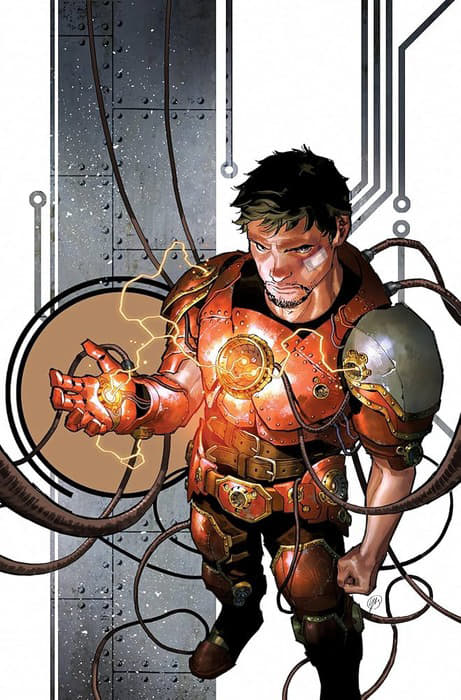
A new, brutal era begins for the Golden Avenger! With his company restored, Tony Stark’s first order of business is getting Stark Unlimited back out of the weapons game. But a multinational company doesn’t just stop selling weapons overnight, and the board is more concerned with profit margins than super-hero ethics. Now they’ve made a deal with the devil: Stark Unlimited is for sale, and the highest bidder represents the combined might of Tony’s two biggest competitors, Roxxon and A.I.M.! But they’re ready for the old Tony Stark. This one? He’s a lot angrier than he used to be. New armor, old enemies and unbelievable twists abound in this fresh take on a fury-powered Iron Man! Collecting IRON MAN (2024) #1-5.
Iron Man #6 hit shelves March 12th, 2025.
PATREON
We have a new Patreon, CryptidCreatorCornerpod. If you like what we do, please consider supporting us. We got two simple tiers, $1 and $3. I’ll be uploading a story every Sunday about some of the crazy things I’ve gotten into over the years. The first one dropped last week about me relocating a drug lord’s sharks. Yes, it did happen, and the alligators didn’t even get in the way. Want to know more, you know what to do.
Arkenforge
Play TTRPG games? Make sure to check out our partner Arkenforge. They have everything you need to make your TTRPG more fun and immersive, allowing you to build, play, and export animated maps including in person fog of war capability that let’s your players interact with maps as the adventure unfolds while you, the DM get the full picture. Use the discount code YETI5 to get $5 off your order.
The Lantern Catalog
Created on the premise of creating light in the dark, this is the the go to resource to keep you up to date on the indy projects and the creators you love. You can find them at https://www.thelanterncatalog.com/.
[00:00:00] Your ears do not deceive you. You have just entered the Cryptid Creator Corner brought to you by your friends at Comic Book Yeti. So without further ado, let's get on to the interview.
[00:00:30] Thanks for your continued support. Thanks for your donation.
[00:01:03] Brian, what does The Lantern Project fix? I'm a dude who loves indie comics and I know personally like I get very frustrated when something shows up in my social media timeline or something like that. And I feel like I can't keep track of everything. So really The Lantern Project was born out of that. It was an opportunity for me as a reader to kind of like have a place to want to consolidate all the stuff that I wanted to read.
[00:01:30] All the cool projects from cool creators that seemed interesting and kind of unique to like something that I would like, which is really not super represented everywhere else, but it's all over the indies. Having a spot to go to that felt like it consolidated a lot of those audiences and a lot of those places where I couldn't just get drowned out in the feed of social media seemed really valuable to me. What's the ultimate goal? It's really our hope with this project that creators feel like they're able to get in front of readers and that they're able to get in front of readers.
[00:02:00] And readers are able to get books that they actually want to read with a much easier time of keeping track of them and accessing them. The catalog is scheduled for a quarterly release. So head over to thelanterncatalog.com to sign up now so you don't miss your next favorite thing. I'll put a link in the show notes for you. Hello and welcome to Comic Book Yeti's Cryptic Creator Corner. I am one of your hosts, Jimmy Gasparo, and we are having some special episodes for March.
[00:02:30] We're doing a Marvel March featuring creators who are working on current Marvel comic books. And I have a very special guest today that I am excited to talk to. He is a journalist and a writer. He has covered the war on terror and many other issues throughout his career as a journalist.
[00:02:57] He's written the book Reign of Terror, How the 9-11er Destabilized America and Produced Trump. He's done a lot of articles that I have read and we'll share some in the show notes. But he is currently the writer for Iron Man. As we record this, issues one through four are already out. Issue five comes out February 25th.
[00:03:20] And issue six on March 12th is, I think, the insurgent Iron Man. It's starting like a brand new jumping on point for readers if you're not into Iron Man. But I've read the first four issues of This Gentleman's Run and it is phenomenal. I can't wait to talk about it. But please, welcome to the podcast, Spencer Ackerman. Spencer, how are you doing tonight? Hey, thanks very much, Jimmy. That was really very kind intro.
[00:03:46] Oh, well, thank you. Yeah. So listeners of this podcast know, you know, because we cover a lot of indie comics. And in particular, I've not read a bunch of Marvel comics. Marvel has always been like a blind spot for me, not really for any particular reason. I guess as a kid, I was always more of like a, you know, a DC person. And then when I got back into comics, I just hadn't gotten around to reading a lot of Marvel.
[00:04:16] And I've been trying to do better about that, especially when I have a lot of guests come on and we start talking about, hey, how did you get into comics? And the X-Men comes up all the time and so many different Marvel characters. And I'm familiar with them from the Marvel films, but I haven't read a lot of the actual books. And I thought this was a great excuse to have folks working on the comics now and to start reading them.
[00:04:37] As we record this, I already talked to David Pepos and started reading his cable run that's out right now, which I thought was fantastic. And so I don't have a lot of the, you know, not necessarily baggage, but knowledge of like current continuity. I just jumped in Iron Man number one. I read your issues, you know, one through four, and it's with Julius Ota is doing the art. Otois, yeah. Otois. Okay, I apologize.
[00:05:07] And I think Alex Sinclair is coloring and yes, incredible. And Joe Caramagna, who's been on the podcast recently, is lettering. I was like, and I guess I shouldn't be surprised because this has happened a number of times. I was just so drawn in to the world that you have created in terms of Iron Man. I didn't feel lost.
[00:05:35] I really was given just enough of, you know, exposition to kind of get what was going on. You know, I loved the interplay of, you know, Tony having to deal with essentially a hostile takeover somewhat of his company. I mean, I loved it. And it was funnier than I thought it was going to be as well.
[00:06:00] There were like a couple of moments, especially Tony dealing with the, I guess, what is it? The Iron GPT. Yeah, thank you. I was on for AI. Yeah, I especially wanted to have a running gag in the year of our Lord 2025 that Tony Stark has built an AI that sucks.
[00:06:29] And, you know, we're recording this in late January, right as news of China's DeepSeek AI has thrown Silicon Valley into absolute chaos and adject financial disarray.
[00:06:49] And you can believe that as soon as I learned about DeepSeek, I was thinking to myself, like, I need to get a gag in there about Tony threatening to replace Iron GPT with a Chinese AI. I just the fact that I mean, not to spoil anything, but these four issues are out. Just a little thing. The fact that it keeps referring to him as username. Thank you. I mean, just I love that every single time it it happened.
[00:07:18] And I mean, I've read a bunch of DC comics and I so I've read, you know, big two stuff and familiar with it. But like, one of the things I really like enjoyed about it was, you know, it Tony's essentially just gotten back into the company, you know, trying and instantly there's a board meeting.
[00:07:44] And, you know, Tony still is approaching this like these are, you know, these other companies, Roxanne and AIM are bad guys and like they're the enemy and he has to stop them. And it's, you know, the first issue sets up that like, well, it's a board vote. You just have a seat on the board. Like it was it was it was really laid out like, you know, a run of the mill type of one company buying another.
[00:08:13] And it wasn't dry at all, though. Like I was like riveted in these boardroom scenes. Thank you. I think that is, you know, a credit, you know, to your writing. But also Julius's art. Oh, yeah. Is so good. And, yeah, you mentioned Alex Sinclair. I mean, the colors are, you know, amazing, especially when we do have some of the fights when Force shows up and and Iron Monger.
[00:08:41] Yeah, there's just some some things in it that are you still have those big, you know, battles. And, yeah, I thought I thought it was great. But I wanted to ask you, you know, when you you know, the different things you've written and and your career as a journalist is, I mean, Pulitzer Prize winning. It's it's incredible with the work that you've done. And even, you know, I do a little bit of research.
[00:09:08] So I was on forever wars and reading some of the recent stuff that you had you and posted on there, which is, I think, your newsletter and kind of operates as a journalistic blog as well. So when when you are kind of get an opportunity to like like pitch stories for Iron Man, like, was it easy for you to figure out like, all right, this is where he was. This is what I want to do with it. Or did you have a bunch of things swirling around when you thought of the direction you could take this?
[00:09:37] So I was buying Iron Man in floppies when Jerry Duggan was writing the book. So I was sort of locked in on where the character was in current continuity. Not a character I thought I would be writing, certainly not right after Jerry. Now concurrently with Jerry, because he's writing West Coast Avengers, which is a real fun book and also using Iron Man.
[00:10:05] But I had when when I was approached by the the editor on the book, Sarah Brunstad to pitch for it. She had a certain concept, a kind of like a brief synopsis of what she thought would be interesting for the the book to kind of gravitate around. And you mentioned Ryan, who will be on this podcast.
[00:10:33] So not to steal his thunder and only to give him a bunch of shine. They let me know that Ryan was doing this one world under doom crossover. And I immediately wanted to play in that. Get ready for an incredible. I don't know if it's quite line wide, but nearly line wide. Let's cross over more status quo. That's going to be Dr.
[00:11:01] Doom centric in 2025 and raising a lot of very serious questions of why people would flock to Dr. Doom and why people would think that Doom is doing a superior job than our our Marvel superheroes are. And you'll see in our sixth issue, which will be out in March, how Iron Man is going to be reacting to this.
[00:11:29] And that was the the germ of the of the story. Some scheduling things happened and it became clear that that story would be preceded by a couple other issues. And I think this arc during the Doom story is going to be pretty shocking.
[00:11:55] And I wanted to take the opportunity of having like previous issues before leading into that to do a lot of groundwork. So that the choices that he makes when we get to issue six will make sense. And his recent experience will be informing that there's some foreshadowing already and there's some misdirection already. OK, nice.
[00:12:21] Yeah, I read this the synopsis of issue six from the solicit and, you know, which you can see on Marvel's website. And yeah, I just was instantly excited having just read issues one through four.
[00:12:40] And as someone who doesn't have a lot of history with the comic book version of Tony Stark, I think this, you know, and I've read a few other things, like some of Marvel's like big event series like Civil War and the like. But I this version of Tony Stark, I think is is phenomenal, you know, because we see a Tony who's gotten beaten up.
[00:13:09] He's just been through essentially hell and thinks he's getting back on his feet. And then the rug gets pulled out from under him with this, you know, company wide merger. But yeah, I mentioned the humor in it already, like there were so funny, more so than I was just expecting. And everyone there like the scene where he is handed off a hot towel and he's like, thank you. Is this being poisoned?
[00:13:38] And then like, you know, I think it's the doctor who's in charge of Roxanne is just like it's not poisoned. Like there's just all these like little moments that like really are not just funny and kind of break up some of the like little bit of exposition to kind of propel the story forward. But it really solid writing and like character informing as well. Love all of those, you know, little moments.
[00:14:08] Love Tony having to kind of face that he can't like, you know, punch his way, you know, out of it as much as he'd like to try. And I really kind of relish seeing the character like that and come to terms with that, that aspect of it, you know, what he was like fighting against. So I thought that was really, you know, really well done. Well, thanks very much. Yeah. No, go ahead. No, no, no. That's a good one. Go ahead. You can. I don't want to cut you off. No, no, no, no. People listen to me enough.
[00:14:38] No, I thought. So this is, you know, a character who, you know, in universe is one of the richest people alive. One of the most industrious people alive. Genius level inventor. It's hard to come up with challenges for someone like that. And I wanted to make it so that we've got, you know, this, this very big superhero tableau that challenges Iron Man.
[00:15:08] But Iron Man is put into a position where the old stuff that used to work doesn't work anymore. He gets all of his suits taken away from him. Yeah. And so at that point, you're kind of, you know, it becomes a strip hero to their essence story. And then if you take all that stuff away from him, he's still this guy. He's still Tony Stark.
[00:15:34] I reckon there's so much of this guy's character history that takes place in these boardrooms. And then it's just sort of like very often, you know, either the company is the villain or he's got to assert his control over villains taking the company.
[00:15:52] Or the company is something of a backdrop to be ignored, except perhaps in exposition scenes until you get to like him in the Iron Man suit doing stuff. And I wanted to do things a little bit different and make it so that, you know, you've we've we've let's not feed around the bush here. You know, many, many stories in this guy's character history about losing the company, the company being taken from him and so on and so forth.
[00:16:21] And, you know, with a launch like this, you know, the mandate is, you know, make it reminiscent of the classics, but don't just sing karaoke. Take it to a kind of different place. And I thought this would be a way of, you know, certainly for like the first arc of a book, orienting people while showing that we can nod to what's come before. But this is going to go in a pretty significantly different direction. Yeah. Yeah. No, that makes a lot of sense.
[00:16:49] I've never heard it put that way before, you know, like a nod to the classic, but don't don't sing karaoke like that. That is. Yeah, that that makes a lot of sense. You know, sometimes you'll hear creators talk about characters that they, you know, wanted to use, but couldn't in terms of if they're being used on other books like where. Did you have a lot of freedom in terms of the like the villains that and the other characters that you got to use to put into the story?
[00:17:19] Um, it took some doing. Um, the, the first three issues, uh, took a lot of refining. This is the second comic book I've ever written. Um, which, uh, is to say also the second fiction project I've ever completed. Um, I'm not a fiction writer. Yeah. Um, this is, this is a new, this is a new skill for me. Um, so, uh, I will fully admit to learning as I go.
[00:17:49] Um, I would not for the life of me, uh, consider myself, um, uh, a master or even really a novice of comic book craft. So I'm just reading, uh, my old comics, um, for craft at this point. Um, seeing, uh, what works and why, uh, learning a lot about, um, you know, space being time as the saying goes, because you've got 20 pages to tell these stories.
[00:18:17] Um, Marvel was very good about letting me, uh, play with a lot of, um, both A-list characters and then, um, some deep pulls. Um, so, uh, issue four has the Scarlet Witch. Um, this is a funny story. So I get, that was not. That was great when, when she showed up. I thought that was awesome. Thank you.
[00:18:38] Uh, and that's a credit to editor Sarah Brunstad because, um, I knew in issue four, we needed to have, uh, a character who would kind of play the role of, um, kind of a magic expositor, uh, in a way that kind of Tony can't. Um, and so first I thought, because I'm an X-Men fan, like, what if it's Ileana Rasputina, you know, magic.
[00:19:02] And then that came back, well, you know, she's on a flagship X-Men team, so probably not. And then I thought, well, I'm an Alpha Flight guy. I, you know, I loved reading Alpha Flight when, when I was a little kid. Um, what if we had, uh, Shaman, uh, the, the mystic guy from Alpha Flight?
[00:19:22] And my editor very calmly, uh, very respectfully, uh, gave me, um, a note after, you know, a nice pregnant pause and was like, I think maybe this should be the Scarlet Witch. We can go a little bit bigger than, uh, than, than Shaman. Um, so, uh, you know, use one of the, you know, A-list, you know, Avenger characters, an MCU character. You know, and here I thought, like, I didn't know I could ask for that.
[00:19:50] I, you know, I, I was, I was, I was trying to set, like, expectations for, like, well, you know, doesn't look like anyone's gonna be using Shaman from Alpha Flight. So let's see if I can do that. And then she's like, no, you can just take the Scarlet Witch. This should, and, you know, when she mentioned it, it was like, yes, that makes a lot more sense. Uh, you know, should be someone with quite an extensive character history with, with, um, with Iron Man. So, yeah, that's the right call. Um, and I didn't know that.
[00:20:18] So, you know, you can, you know, you might as well ask, and the worst you can hear is no, right? Um, so that's, that's, that's, that's a little bit of, of, um, the approach I took. Although sometimes after you hear the no, you might have to kind of wonder, like, where do I recalibrate so I get to a yes the next time? Right. Your, your background in, in, in journalism and, and, you know, all the work that you've done over your career.
[00:20:44] You said, you know, you're, you feel like you're not really a fiction writer. This is something you're new and getting into. But how much do you pull from the experiences that you've had and the stories you've covered, you know, to put into a book like Iron Man?
[00:20:59] I say that because reading issue four and, like, one of the first things I, I, I, that stood out to me, um, is, uh, one of the areas, you know, there's a reference to a Hellman Circle or Hellman Square. And I wondered how much that related to the work you did in terms of, uh, what is it? Hellman Circle. Hellman Square. Yeah. Hellman Square. No, I guess it's Hellman Circle. Yeah.
[00:21:28] Hellman Circle in the Marvel, in the Marvel Universe. Yeah. Hellman Square in the comics. And I'm sorry, I got that completely wrong. Hellman Square in Chicago. Yeah. Yeah. So I was like, well, I, so then that got me thinking in terms of like, you know, um, how much does that like, like bleed through? Do you like, oh, I, I have all these different experiences I'm dealing, you know, I, I've written about all these, you know, really, uh, important, heavy topics in terms of the things you've covered.
[00:21:56] And then, um, you know, do you, is, how do you kind of distill some of that experience for like a comic book audience? Do you have a particular approach or does it, it, it just happens? Like I'd say, I'm still learning how to do this. So, you know, I get the idea and I see how I can execute, um, without really having like a set group of tricks, um, that, you know, I know how to use yet.
[00:22:23] You know, if you were to ask me to prepare a piece of journalism, I can chop this up for you in any number of different ways. I understand templates that work. I understand formats that help tell certain kinds of stories and don't work for others. I don't really know that for comics yet. I will freely admit to you. Um, what happened was, is we were encouraged to use Ironheart, uh, for issues four and five.
[00:22:50] And that made me think, well, Ironheart is a Chicago character and I have a certain history with Chicago. And I thought about, um, how that could work as a setting for the story that I needed four and five to be knowing what's coming with six.
[00:23:09] And having certain elements, um, I'm trying to talk around this, uh, having certain elements in four and five that will, um, help inform choices that happen, um, in six and onward. Um, so from there, you know, I wanted to, you know, and then also like what's a dramatic setting.
[00:23:35] And I would think, uh, um, a place of enforced disappearances, um, is, is quite a dramatic setting. Um, and also one that could call attention to some things that happen in the real world, um, that very often get, um, ignored or marginalized, not dealt with and allowed to fester. Um, yeah.
[00:23:57] So one of the things that I will tell you, uh, you know, once I knew that I had a way of addressing, um, a home in square type of thing in the story, uh, I went back to, you know, my reporting on, on, on home and square, um, and remembered that. the actual physical warehouse where to this day chicago police hold people in incommunicado
[00:24:26] detention don't formally book them yet do not accordingly have a record of where they are on the outside that family uh can uh can access and know where their loved one is that attorneys can walk into yeah um i remember that as an attorney that's the most shock as an attorney myself that was like the most shocking when i read that that that they were they were turning like turn once
[00:24:51] attorneys away from the building yeah i'm sorry i'd cut no no no no no no i i want people to have that reaction right um the warehouse complex itself is a vestige of uh a sears roebuck um operation center uh that employed quite a lot of people um decades ago on the chicago uh west side
[00:25:15] and i wanted to have something in this story and this will make some more sense when issue five is out um that reminds people that uh it was probably a stark um back when it was his father's company a stark industries um a stark industries operation center that his dad closed during deindustrialization
[00:25:40] right he never thought of it again because that's you know many such examples of behavior by such ultra wealthy people but for the people who lost their jobs from that and the neighborhood that becomes blighted afterward they're never going to forget that that's going to be their impression of the stark legacy in a place like like chicago forever because that just affects so many people's
[00:26:08] lives so i wanted to have that in there so so it's not tony who did that that's his dad who did it so he gets a chance also to help kind of redeem somewhat uh dad's legacy while also getting this not to say too much getting this reminder that the obligations that he has for people that he freely assumes as iron man the superhero are not limited to his actions as iron man the superhero but the fact of
[00:26:38] the matter is this guy controls what in universe is one of the world's most strategically important corporations and i wanted to have stuff in this book interrogating what that means for everyone else who has to kind of you know uh catch a cold when tony stark sneezes so to speak yeah no that i mean
[00:27:04] that that makes a lot of sense um and i i'm i can't wait to see how it continues to you know to play out in issue five and then you know in issue six with this like kind of line-wide uh doom event that is is taking place with uh with marvel so it seems like um because you said you were um you know reading the
[00:27:28] run right right before yours that uh that uh jerry was writing um you know were comics like always a part of your life or was there ever a period of time where you know were you reading them as a kid and then took a break and or where you you always kind of with a toe in to the the waters of comics uh like
[00:27:50] a lot of fan yeah yeah um like a lot of people uh i you know this was so central uh to me as a child um uh i'm in my mid-40s so this is you know me you know my mother helped teach me to read uh thanks to
[00:28:11] the bill matlow sal buscema incredible hulk run um my uh my cousins when when we would go uh visit them on holidays um two of my cousins uh who are twins uh had in their room uh big long boxes of uh claremont cockram burn uh cockram again paul smith uh john ramita jr um x-men comics
[00:28:40] and i would just you know completely ignore my family and just read my cousins comics and um then you know like a lot of people uh you get to be like 13 and 14 and uh lots of other interests compete for your attention and your money um and so i put comics down for for a long time um until probably like
[00:29:03] my mid-20s late 20 my yeah mid-late 20s when you know now i was making you know my own money um and uh felt like um jumping back into it uh i was living in washington dc at the time um i had uh some roommates uh who were also uh comics readers um so i got back into the habit um and then i've just sort
[00:29:28] of stayed with it um and watched uh as all of these uh different amazing stories have been told didn't think that i would it would be something that i would ever do um but uh you know i my my work has taken me to a lot of places around the world um not often because good things are happening uh like i've been to afghanistan i've been to iraq i've been to guantanamo bay i've been on a variety of uh
[00:29:56] naval surface ships a submarine once um and i would very often think um how would this story that i'm on you know play out in the marvel universe um and you know i cover the intelligence agencies i cover um the defense department i cover the businesses that contract with both of those entities and that's one of the reasons you'll see all throughout this book i think in pretty much every
[00:30:24] issue there's like subtly a reference maybe not so subtly uh to shield and to the legacy of shield and to shield is an intelligence enterprise um who in that in many ways is tied into the character of iron man um iron man and nick fury uh have a very uh long and um i would probably say safe to say toxic
[00:30:48] history uh uh nick fury has manipulated tony stark a fair amount um and each one of these issues i guess this also speaks to an earlier question of yours about how i take my work and use it to inform my comic stuff um watches on that a bit and i didn't want to do it in a way that um is just basically uh
[00:31:14] comics talking to earlier iterations um of those comics but just more like imagine that uh some of that stuff is a marinade and the story i have is the big like protein that i'm gonna grill and i'm just i'm gonna stick that marinade it's gonna it's gonna you know infuse uh into that protein but the marinade shouldn't be the main thing you taste right it should be enhancing the flavor of what you're
[00:31:42] um tasting and that's kind of the approach i wanted to take um with with some of that stuff especially the stuff that's in my personal background as a writer i was really and i i just think it's it's so you know well done how you've kind of you know taken all of these things taken that that marinade and um and and used it uh to kind of enhance these stories um and then i i think being paired up with
[00:32:12] uh uh julius is just like one it's amazing and alex sinclair the the pages where tony um is kind of like under the spell of dr druid and you kind of see kind of tony being haunted by these things with references to like key like iron man stuff um those pages were like blew me away just incredible
[00:32:39] and you know julius o'twa is someone who i believe is gonna be a huge name in comics art uh i'm very lucky to have been strapped to his rocket ship uh for my first marvel work what can you say about alex sinclair he invented comic book coloring on computers like i i was lucky enough at new york comic
[00:33:07] con to get to have dinner with him um and hear his stories about literally being you know 1920 um and working at homage studios eventually wild storm and learning like illustrator 2 like like the the earliest days of of how to do this um on on computers and yeah he bent the comic book i mean he wasn't the
[00:33:35] only one um but he was a you know part of the part of that original crew um that basically bent the direction of of of the medium into like his direction um comics coloring has never been the same and just getting to be around someone like that is incredibly enriching and inspiring and then you'll notice when
[00:34:00] when you know there is that um that freaky dr druid scene um and then we have our pages from um you know that that kind of reference the famous demon in the bottle um story that that dealt with tony's alcoholism um right he goes back to a very like stipple um you know dot matrix 1970s 80s
[00:34:25] uh style coloring yeah it blew me away it's incredible yeah like the subtlety not everyone thinks in those terms and like that's you know when you know you're in the presence of the genius who's mastered his craft and i was i just i'll always be grateful and consider myself lucky that i got to work with both of these guys that's that's that's fantastic yeah there's those those pages are um you know are great um
[00:34:51] and so when you're when you're writing these these issues um because you're you know not used to fiction writing as as you've said um do you find it in any way like difficult to write like the actual like battle fight scenes like are you like tightly scripting those are you leaving that more so up to
[00:35:16] to julia soto as uh you know the artist in terms of like the paneling um or and as you as these issues went on did you feel like more comfortable kind of having more of a direction and like the choreography of the action scenes so i do some fairly tight fight choreography panel by panel um just because like when you do the like you know i don't know if this is everybody but like the the way the approach i try
[00:35:43] and take is you know you're doing rising and falling action in these fight scenes it's not just you know punching and punching and punching um it's it's storytelling and it's characterization um and given the realities of you know your hard limit uh 20 page comic book uh you really want to use those fight scenes for that and also for spectacle and um early on uh when we got paired up
[00:36:12] um i asked julius what does he like to draw and what does he hate to draw and what kind of script does he want to be receiving um right and my approach is uh the script is a template um there are certain things that i will make clear in the script have to be on panel but at all times when you come up with
[00:36:40] the better idea do that and i'll write around it like i don't think that i can better visually convey an idea than julius otois i would be an absolute fool if i thought that and i would rather have the the the page
[00:37:02] that julius is most like excited to draw come back to me different from how i scripted it and then you know stanley called scripting over finished art like doing a crossword puzzle and i really feel that you know like that that's a pretty apt thing like you know there there is and i feel this is exciting you know i found it exciting because it was so new it was so different from my experience of writing
[00:37:29] you know you you you you have almost like poetry uh this rhythm and this structure imposed upon you that that forces an incredible economy of expression and you should just go with that and let the the artwork guide a revision of of panel dialogue and so forth um sometimes you know expressions uh
[00:37:53] you know some you um without giving too specific an example uh there were times where i rewrote dialogue because the expressions shown on the page just did not have the tone that i had them in the script and i'm not gonna tell julius go back and redraw a page because it doesn't match like the subtle rep
[00:38:20] you know banter and repartee and you know conversational uh design of of the script i'd rather just re-script around what you know what he draws and i feel like that's made both of us able to do something that i didn't know i would want until i started writing comics which is uh the freedom to work something out on the page which is to say i go in scripting i know what the major beats are
[00:38:49] i don't know what i don't totally know and i don't really know at all until i start writing like really how this is gonna shake out um i have to see whether you know a scene is good for three page turns if it's good for two if it's good for only one um and write for those page turns um i get the joy
[00:39:15] of working that out on the page the last thing i want to do is take that away from julius i want julius to be able to work it out on the page and see what's working for him and what's not and i have a conversation with him uh before scripting so it's not so like his ideas can be represented so that if i'm doing something that he's not too thrilled about then we can brainstorm a better idea and so on
[00:39:44] and so forth so it's not just like i am the guy who's building this story and then i'm giving it to him to do the actual hard work um i i want to make sure that you know for a visual medium uh this starts out with um a major component of visual storytelling baked in based on uh the desires of
[00:40:09] the artist that i'm working with yeah oh yeah yeah no i love that um i also wanted to ask just from i i think fair to say like one comic book nerd to another i hope that's not offensive i mean it's not offensive in the slightest i understand my friend so we've you know talking about the the story and and how your work has influenced it and the you know difference between you the stuff you've done
[00:40:36] in journalism and then writing comic books but just on the on a pure fun level how great was it the first time you saw those pages come in with tony and that big freaking sword so incredible the sword the sword the sword is i want i want to i want to make this so so clear the sword was not my idea i didn't think of that i'm not you know i i do not think in terms of of of giant anime swords but julius
[00:41:04] otois does and when we were and when we were having that conversation where it started out with me asking him what do you love to draw and what do you prefer not to draw among the things he came back with was like i love you know really big anime swords is there any way you know at all and i think he wasn't even necessarily being super serious because like it's not what the character really does he's like is there any way we could maybe do that for iron man and like i froze for a moment
[00:41:34] because i was like i don't have any idea how to do that like i have the major plot beats for the first three issues because i needed to get that approved um before we move forward and none of that had to do with the sword and then i was just like no fuck it we're doing the sword like that's obviously like that's obviously the right call like you want you want to do this it's something we
[00:41:57] haven't really seen with the character it would look amazing um that's exciting oh no it it does it is it's so unexpected when it happens and you know when it when what it's like all there like on the page it just looks so cool it's like just just wait just wait there wait until you see this sword in issue
[00:42:21] six wait until you see this sword in issue seven like i it's it's so i i didn't think i could be this excited about a sword and who knew um yeah i'll tell you you know i the first arc i pitched as how to blow up a pipeline meets succession and when now suddenly there is this um idea that like hell yeah we're gonna do a giant anime sword i i had to go back and think like
[00:42:47] what thematically makes sense to explain this sword how can we make this not just like an add-on but something that's part of like the heart of what the story is and i knew that you know in issue two uh i guess this you know this comic has been out for a while but it's not you know spoilers uh iron
[00:43:17] man blows up an oil pipeline and then i was like what if we took the shards of an oil pipeline and turned it not into a plowshare my friend but into a giant anime sword that julius otois will can i just say when you're looking at that sword look at all the and this is the case for the armor as well but look at all the gear work on that there's so much detail incredible he has put into
[00:43:42] like i can see this thing retracting and moving and like generating energy through like i i love it it's the design is so incredible and the joy of this collaboration is that i simply never would have thought of oh wow yeah it's it's so good and yeah even the suit the suit that he has um it's has almost like not quite but like maybe a little bit of like a steampunk kind of like
[00:44:07] look to it that's it yeah you know and um and then this the this the line that i love that that's worked into it when it's kind of i think it's the same i think it's this i don't know maybe it's not the same scene where with the the hot towel and the poison comment but um i think it's the same character who says to him a little a little a little more leather than you're used to wearing like there's like those little those little side comments like worked in like about it i just thought
[00:44:37] were just very unexpected i felt like every one of them like worked and landed um yeah thank you one of the things such a fan thank you so much one of the things that i did not realize until i came onto this book and no one ever put it in these terms for me uh so this is this is me kind of
[00:44:58] inferring a bit but um iron man is a fashion book uh it's a fashion book probably for people who are not like used to reading a lot of look books or seeing a lot of look books i certainly have not okay but the emphasis that um both the the character history the fan base has and like what
[00:45:22] uh a lot of suggestions i was getting back um from editorial was like plan some armor iterations that will allow julius to stretch his design legs and like peg them to like particular covers that we can start like what issues will we see new armor developments with i was like wow
[00:45:46] in addition to coming up with this story in addition to coming up with you know particular characterization plots this also kind of has to be a lookbook and i just embrace that and yeah we should want to get you know our boy you know as the saying goes having that shit on yeah yeah man i i i didn't think i'm telling you yeah he does he's got it i don't think it's like a lookbook but it is true with all
[00:46:16] the different armors that that that that pop up yeah and one of the things i've noticed from from the fandom is like the fandom really likes like you know this armor is someone's favorite that armor is someone's favorite and you know when i would write it in uh to this script there would be a lot of places especially in the first issue where you see like tons of different armors i was just like in this panel just draw the your favorite armors what armor is he wearing when you know we start
[00:46:41] issue one what's your favorite armor and then we were like actually let's make it your second favorite armor because we want to have him in more of your favorite armor for most of issue one after something happens to that armor at the start of issue one and then something's going to happen to that armor by the end of issue one and then we're going to be kind of off into into our own world yeah that's so funny think of it as a lookbook but it is true with all the all the different types
[00:47:08] of armor um yeah i just you know um i'm really enjoying i'm glad i'm doing this uh you know for for for march and like kind of spreading out uh finally starting to make my way through some of the current marvel books because i am like i'm absolutely loving it and i mean i i'm i'm excited for five
[00:47:32] for issue five i'm excited for issue six um i i'm gonna have to start reading more of the you know the line uh and and the tie-ins but uh i'm all on board for for iron man and whatever comes next i just i just i loved it spencer it was so good thank you so much jimmy that's really gratifying this has been a dream come true uh i never thought i would uh have any marvel work uh let alone to get to work on
[00:48:01] um a character as as prestigious and as tentpole um as iron man is so i just hope i can you know for for whatever time i have on the book uh leave an impression well i you've definitely done that with me you and julius uh and alex and joe uh the entire the whole team is really just killer i'm i'm so grateful to be working with them yeah i i think it's great and i am very excited for what comes next
[00:48:25] so um yeah i'll be getting uh ready and on in february i think february 25th is when issue five comes out but as you're if you're listening to this podcast the day it comes out then uh today is tuesday uh march 11th and you can go to your local comic book shop tomorrow march 12th and you will be
[00:48:46] able to get issue six of iron man the insurgent iron man it's the stark insurgent prologue it kicks off a new arc um and if you have not been reading iron man that's okay you can go tomorrow and get issue six and just jump right in but i'm telling you you'd be doing yourself a disservice if you didn't go back
[00:49:10] and see if your local shop had issues one to five or you know you get them digitally get them however you get your comic books um because it's it's worth seeing tony with the big sword it's it's worth seeing how funny the book is as well and um i think you're going to have a really good time with it and uh yeah so uh spencer i uh really appreciate you coming on the podcast and i'd be remiss if i didn't say if
[00:49:38] anyone is just is not familiar with spencer's you know journalistic work please go to forever wars just google spencer ackerman and check out some of the the amazing stories that he has worked on and that he has uh covered throughout i think like a 20-year career in journalism um so you definitely do that and um uh yeah thanks you thank you so much spencer this is really i hope you had a nice time this is
[00:50:08] really been a pleasure i had a blast thank you jimmy i'm really gratified especially uh that you find the book funny i just really enjoyed it every time that uh the the iron gpt just cracked me up i just thought it was really good really appreciate um well listeners find me on blue sky or tiktok or the website let me know what it is you're reading especially if you're going to check out iron
[00:50:34] man let me know what you think i'd love to talk about it more and um uh yeah shout out to my brother bobby the cryptic creator corner's number one most dedicated fan bobby listens to uh all the episodes and he's very excited that i'm doing marvel march uh because he is a marvel fan and now we finally have more comic books to talk about um so thank you very much for listening thank you to my
[00:50:57] guest uh spencer ackerman um uh have a good night everybody and i will see you next time this is byron o'neill one of your hosts of the cryptic creator corner brought to you by comic book yeti we hope you've enjoyed this episode of our podcast please rate review subscribe all that good stuff it lets us know how we're doing and more importantly how we can improve thanks for listening if you enjoyed this
[00:51:25] episode of the cryptic creator corner maybe you would enjoy our sister podcast into the comics kate listen and subscribe wherever you get your podcasts