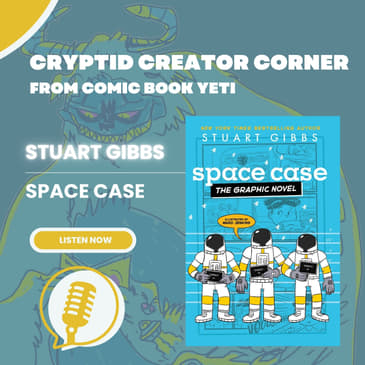

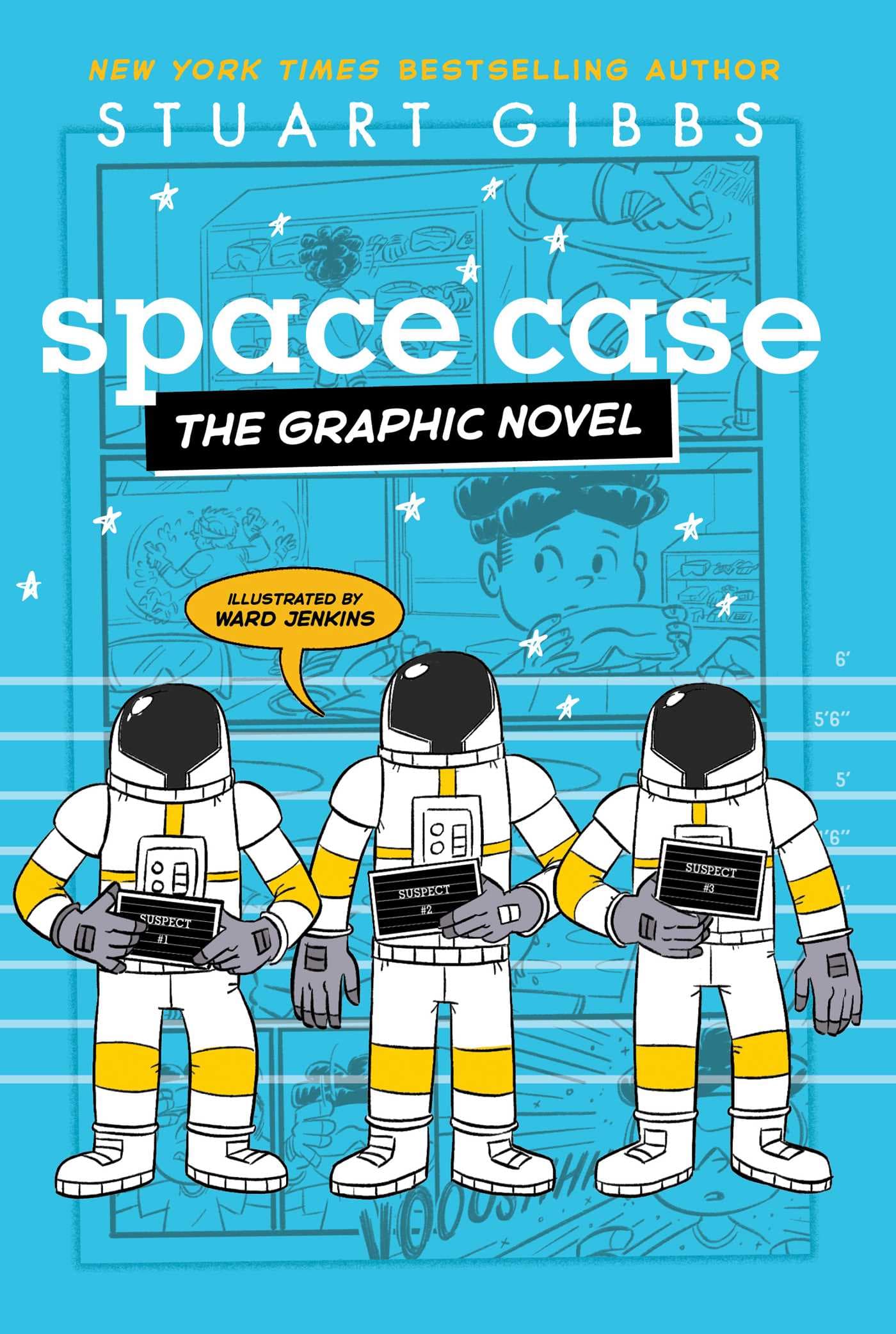
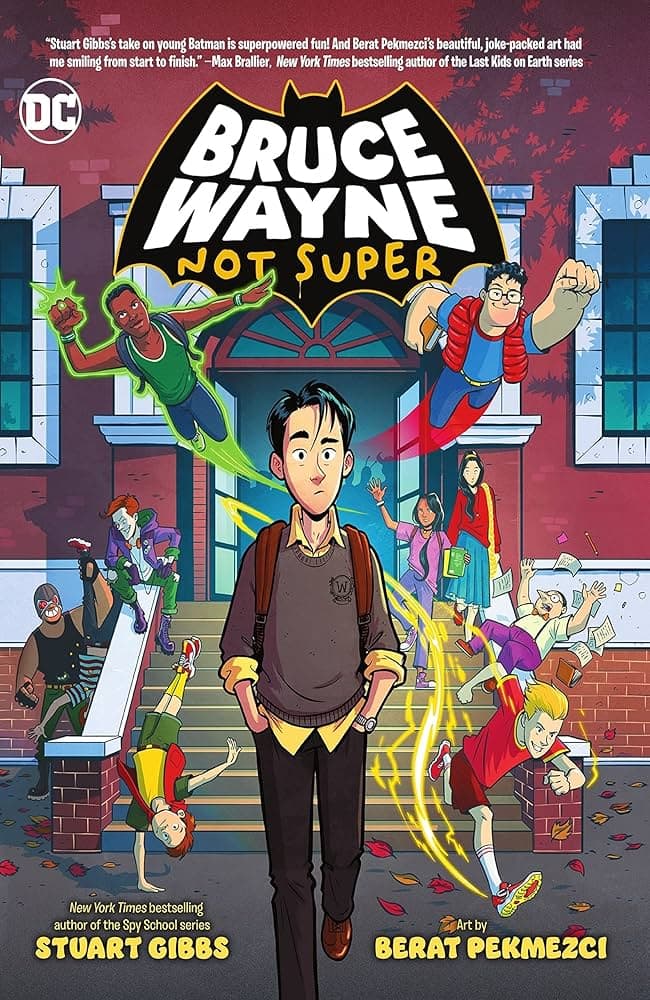
Just in time for the holiday season, Stuart Gibbs is on the podcast to chat about the graphic novel adaptations of his middle grade books. Stuart Gibbs is a New York Times bestselling author of a number of fantastic series. Jimmy and Stuart talk about Space Case the Graphic Novel, working with artist Ward Jenkins, along with some of Stuart's other book series like Spy School, Once Upon a Tim, The Funjungle Series, and Bruce Wayne: Not Super for DC Comics. We also touch on Stuart's time as the World's foremost capybara expert? You'll have to listen to find out more. Plus, if you're someone that needs good book recommendations for your kids for the holidays, you're definitely going to want to listen to this episode.
Buy Space Case the Graphic Novel
Follow Comic Book Yeti
🔗 Comic Book Yeti LinkTree: https://linktr.ee/ComicBookYeti
For partnership and ad inquiries, please contact: thecomicsyeti@gmailcom
Follow your hosts
🔗 Jimmy Gaspero: https://bsky.app/profile/jimmygaspero.bsky.social
🔗 Byron O’Neal: https://bsky.app/profile/byrononeal.com
PATREON
We have a new Patreon, CryptidCreatorCornerpod. If you like what we do, please consider supporting us. We got two simple tiers, $1 and $3. Want to know more, you know what to do.
ARKENFORGE
Play TTRPG games? Make sure to check out our partner Arkenforge. Use the discount code YETI5 to get $5 off your order.
Make sure to check out our sponsor 2000AD.

[00:00:00] Your ears do not deceive you. You have just entered the Cryptid Creator Corner brought to you by your friends at Comic Book Yeti. So without further ado, let's get on to the interview. Do you love sci-fi? Are you a horror fan? Maybe you prefer action or fantasy? 2000AD has it all and should be on your radar. With a whole universe of characters from Judge Dredd, Astronium Dog to Rogue Trooper, Shakara Halo Jones and many more,
[00:00:28] every weekly issue you get five action-packed thrills from incredible creators such as Garth Ennis, Rob Williams, Alex DeCampi, Dan Abnett and so many others. Get a print subscription and it'll arrive to your door every week. And your first issue is free or subscribe digitally. Get free back issues and download DRM-free copies of every issue for just $9 a month.
[00:00:51] That's 128 pages of incredible comics every month for less than $10. That's like a whole graphic novel's worth. All subscribers get amazing offers like discount vouchers and exclusive product offers. Head to 2000AD.com and click on subscribe now or download the 2000AD app and why wait? Start reading today. I'll put links in the show notes for you. Hello and welcome to Comic Book Yeti's Cryptid Creator Corner. I am one of your hosts, Jimmy Gasparo.
[00:01:18] And boy, am I excited for today's guest. He is a New York Times bestselling author of a ton of middle grade books for kids. He has also collaborated with some artists to turn some of his books into graphic novels. And he has some other graphic novel series that we're going to talk about. His most recent graphic novel, Space Case, all about moon base alpha or alpha moon base. I'm going to get I'll get it right eventually.
[00:01:47] Was I I don't know if I was right the first time, but I it just came out August 19th. We're going to talk all about it and hopefully talk about some of his other projects as well. But please welcome to the podcast. Stuart Gibbs. Stuart, how are you doing tonight? I'm doing very well. Thank you very much for having me. Yeah, I stumbled over that. Is it is it moon base alpha or is it? It's moon base alpha. Moon base alpha. It is moon base alpha. I should have just I should have just trusted my gut, just plowed through. Look, I record these at the end of the day.
[00:02:16] I'm doing you know, we're all just doing the best we can. Thanks so much for coming on the podcast. I mean, you have you've written so many kind of middle middle grade novels. You have the not just the space case books, but to go through for listeners to go through some of the other books. You have your spy school series fun jungle. You've also written some of the spy school books have become graphic novels as well.
[00:02:45] You did a project with DC Bruce Wayne, not super your Charlie Thorne series and a series that when I was preparing for this interview seemed like it was one of the greatest concepts I'd ever heard of. The once upon a Tim series where I think something I read said you were, you know, it's always focused on royalty or a princess or a night in medieval times.
[00:03:11] And you had the idea to take like a peasant, a background character, an NPC for anyone that plays like yes. Yes. Video games or Dungeons and Dragons and create a series about it. I just thought that sounded fantastic. Well, thank you. Thank you. Yeah, it's it's it's I've been very lucky to get to. I always love writing and, you know, never quite dream that I would get to have so many different books out there in the world.
[00:03:41] So it's been really a joy. Well, so let's talk about this. The space case, the graphic novel just came out on August 19th, illustrated by Ward Jenkins. Yeah. Amazing job. Absolutely amazing. All right. Yeah, I I saw I got sent like a PDF, got through most of it. And I the artwork in it is it's wonderful. I mean, just it's so much fun.
[00:04:10] The main, you know, the main character, Dashiell and then a sister, Violet, just absolutely adorable. And I love one of the things I really loved about it. And we'll talk about the plot, some of the other stuff in a minute. But one of the things I loved about it is like very early on, there's some really like to get into it. You talk about some of the technical things of being in space that like Dashiell hates. Like it's not like other things you might have seen.
[00:04:36] And you have like a very kind of I love how it's portrayed the the picture of the the space toilet and like all what all the different things do. It is such a like a wonder, a wonderful, informative nod to space travel. I thought that was great how that all came out in the graphic novel. I look, it was one of those things that, you know, you're adapting your book and you're trying to figure out like how to make a graphic novel out of it. And what can you do?
[00:05:05] And and, you know, one of the things is you can have diagrams in a graphic novel. So I'm like, why try and explain what its space toilet looks like? I mean, now I just draw it and put all little arrows in saying all this happens. Yeah. So, yeah, like this is this and this is this. And so that's just incredibly freeing suddenly when you're like, oh, I don't have to spend like three pages describing what a space toilet looks like. We can just have this great diagram right there.
[00:05:32] So with Space Case and I mean, you I said you had done some of the graphic novels before turn some of the the spy school books in, you know, you had adapted them into graphic novels. What was it about Space Case that you also thought that not just to exist as a, you know, as a novel, but specifically as a graphic novel?
[00:05:52] Well, look, the graphic novel thing has just been, you know, it's sort of, you know, they've exploded in popularity and which is which is wonderful. Right. I think I think what really happened was that there was a bit of a stigma against graphic novels or or very comics in general. And suddenly, yeah, basically, like all these studies were like reading is reading. Reading is good. Doesn't matter. You're reading graphic now, reading a book. It's all good for you. Right. Yeah.
[00:06:21] And and so then suddenly school started saying, oh, we could, you know, have them like whatever it takes to get kids reading. So like the the number of graphic novels getting read and sold and everything just and made just just exploded. So anytime there's a decision to turn one of my books into a graphic novel, that's that's a decision being made by me and really my publisher. I would probably be like, just turn them all into graphic novels. Do it for all of them.
[00:06:50] And we might someday. But my publisher really has to sort of take on this burden. And say, OK, like there's there's a lot of work that goes into it on on, you know, not just my end. But, you know, like we've got to find an artist and that artist has to do a tremendous amount of work. And then there's all this layout, all these layout issues and things like that. So so they they even though they might be like, OK, let's do them all. They can't really say like, right, we'll do all the different series at once.
[00:07:19] So, you know, there was something that would sounded like visually great about doing something set in space. You know, it's it's sci fi. It's going to be visually arresting. But also there was the idea that there were only three books in this series. And my publisher was kind of like, you know, maybe we'll just like, well, you know, it was kind of like spy school. It's just completely open ended. And we don't know. I don't know how many books are going to be in that. That means we don't know how many graphic novels are going to be in it.
[00:07:46] And I think there was something of them saying, well, let's let's do the one that's got three books in it. We can we can sort of get them. We can make a you know, we can make a box set really easy. We know what that is. It tells like this one sort of concise story. And let's let's focus on that one next. Whether or not we move on to one of the other series and do a graphic. Now, I would love to do that. But that's really kind of up to them. Yeah, there are all those practical considerations to to how that that takes, you know, to what happens. And, you know, and yeah, you're right.
[00:08:16] War Jenkins. It's a tremendous amount of work. And as I said earlier, the book, it looks great. You know, I just love all the characters and all the stuff you can all the fun stuff you can kind of do with space. But for listeners who don't know. So the space case is Dashiell and his family live on Moonbase Alpha.
[00:08:40] And there's somebody dies and Dashiell doesn't think that that it was accidental and thinks that there's foul play afoot. Yeah. I just wanted a great day. It's the first Moonbase. And they're really the first people to live on it. There's there's so there's not many people. There's about there's about 30 people.
[00:09:05] So it is kind of this locked room mystery is murder on the Orient Express, death on the Nile sort of thing where, you know, not only is there a killer, but you're you're locked in with them. And so and it also, you know, if I'm ever doing a story which is sort of talking about, you know, why is there a kid investigating? If I look for a reason, like, why are there no police around? Well, there aren't any there. There's no police in space yet. They don't have a police force. There's 30 people. Right.
[00:09:32] And if nobody else believes that this was actually foul play or maybe the government saying, like, OK, you can't admit that it's foul play, then right. Then, you know, here's this kid who's stuck here with, you know, potential murderer. He's going to try and figure out what's going on. What do you what are the I guess kind of the the things that you have to keep in mind when you're writing like a mystery like this for a younger audience?
[00:09:58] Like, whereas if you were tackling it more in like the adult market when you're zeroing in on that age group, is that like kind of a difficult like line to walk? There's a little bit of it. I mean, for the most part, kids can handle something. I think they can handle most of the stuff adults can. Can, you know, there are you don't want to deal with sex or, you know, gratuitous violence or something like that. But just about anything else they can really handle.
[00:10:26] They can handle like pretty big concepts and you can deal with like, you know, serious issues. They can they can handle this stuff. The one thing in this was this is the only time I ever wrote a mystery where a human was murdered. I the first book I ever did involved the murdered hippopotamus, which is a little bit different. And and so that was kind of an issue. But when I came up with the story idea for the book, it could only work as a as that.
[00:10:56] That was the only way the mystery could work. And actually, there was a bit where this was quite a while ago. My my editor had sent me an email like at two o'clock, like the day before everybody was going to go home for the holidays. Two o'clock my time, five o'clock New York time. And it says, maybe this shouldn't be a murder. And I think like, what? Like, oh, my God, how can it? And I start writing an email. I think, no, no, no. I'm calling. And I call.
[00:11:25] I'm like, get her like she's about to walk out the door or whatever. And I was like, it can't be. It has to be a murder. Here's all the reasons of, you know, like I was like, if I don't say it, like I was like, otherwise I'm going to be thinking about this for the next three weeks of the holidays or whatever. And I go through it all. And she's like, oh, yeah, no, it's totally fine. OK, yeah. Like murder. It's totally cool. And I was like, oh, my God, we got I called you sending an email. I'm waiting for three weeks. Yeah. Yeah.
[00:11:51] But the funny thing was that in the midst of it, she actually had said like she sent me this email and said like, OK, what if it was not or what if it was something less like, you know, like like a kidnapping? And I was like, it can't be a kidnapping because the kidnappers, if they take you, they have to go somewhere else and there's nowhere else to go. There's only one moon base. But in the course of me trying to work that out, even in those panic moments, I was like, oh, but somebody disappearing on the moon base is kind of an interesting idea.
[00:12:19] And then that's actually the second book in the series is that they actually disappeared. So so so her her note of like, let's figure something else out besides a murder actually ended up becoming the blot of the second book. OK. Yeah, I know. I think kids can handle, you know, more than I think some adults think, you know, they can. I mean, I think this type of book when I was, you know, in that that age group, you know, young kid to like early teens.
[00:12:49] I mean, I went from Encyclopedia Brown to reading every Hardy Boys case file. You know, the the newer ones that came out in the in the early 90s. I still have they're all behind me on a bookcase. I still have them. I went through every one I could. Yeah. Yeah. But then you sort of jump up to adult books right from there and adult mysteries. And they're really I mean, like I mean, I got to say, like, you know, I learned so much from Encyclopedia Brown.
[00:13:18] And and and there are mysteries in there that I was like, that's that's just as good. Like it turns on something just as smart as any adult mystery. And it's like eight pages long. Right. So, yeah. Oh, absolutely. Were there any was other than the freedom from not having to describe certain things? You know, you have to describe them for for the artist. Right.
[00:13:45] When you started doing that, like when you first started, not necessarily for Space Case, but writing graphic novels or adapting your work. I mean, because you have written screenplays before. Yeah. Right. Is it is it a similar muscle? Like, was it difficult at all to adapt your own work or did it come fairly naturally to you? No, I mean, it's a different muscle, but it's but it's but it is the screenwriting.
[00:14:09] I mean, the thing is, I like when I set out to do the graphic novel, I thought, oh, this is just a visual version of my of my my my novel. And I was like, that's just a screenplay. So honestly, for the for these books, I I write the screenplay version. I use screenplay software and I just say, like, you know, this is what's that now after I had done a couple of these and then I went I did a graphic novel with DC.
[00:14:38] You know, they were like, oh, you know, like traditionally you're supposed to say what happens in every single panel. And I thought, oh, man, like I like I can do that. But I thought, why? Why? You know, does my artist want me to do that? Like, it seems like maybe they don't want maybe they want to figure out what all the layout looks like or something. Yeah. So I I've been so I kind of have handed that part off to the artist to say, like, hey, figure out how you want to like here's here's the framework of the story. This is screenplay. Here's all the dialogue. Here's what has to happen.
[00:15:07] But they've always worked out all the all the layouts and everything like that. So so maybe I'm handing off a lot to them, but or maybe I'm just empowering them to do it. I don't know. I would think I'm empowering them to how to do all the layout. Because with with DC, I do say here's what should happen in every panel. But but I would be just as happy just leaving it up to the artist to come up with. Right. With, you know, Bruce Wayne, not super.
[00:15:36] Had you been like a comic book fan in terms of like Batman? Like, was that something like, oh, man, I get to do a Batman story. Like, what was that experience? No, that was it was it was so OK. My my my my dad was like a fantastic dad. But there were a few things that he would always be like, that's for kids. And one of those things was like comics. Right. Like, OK. Like, I get some comics and you'd be like, I don't know.
[00:16:03] And so so like so I would really kind of have to like take my own money and go, you know, buy my my, you know. And so I bought a Batman like this huge, like, like fancy, like, like special edition Batman comic for one dollar when I was like in first grade. And that was kind of the only company I had for for a long time. And it had this it had like this, you know, the secret maps of the Batcave and and all this.
[00:16:31] And I I mean, I just poured over this thing over and over and over again, just absolutely loved this this particular comic. And and I over the years, you know, I like I amassed others. But then, like, I got to college and I had a I had a housemate who bought comics like he went every Friday. We'll go to the comic store and buy, you know, six or seven comics, put them all in the plastic.
[00:16:56] So this guy was the guy who suddenly was like, well, here's all that here's here's the Watchmen and here's and here's Mouse and here and. Oh, OK. Suddenly, like I'm like, oh, man, there's all this other stuff there. So but I had had this this like one Batman like that was like my one of my most cherished possessions, like my whole life. I love this. I always loved Batman because he was like the hero that you could grow up to be. Right. Like he didn't come from another planet eating get bitten by a radioactive spider.
[00:17:25] He wasn't mutant. He was like a guy who was like, you know, really like he was a detective. Right. They said like he was. Yeah. World's greatest detective. Yeah. Right. So. So like I'm carrying this around and and then like through the film business, like I've met people. One guy, I swear, like it's like Halloween and he comes to my house with his kids trick or treating. I like run him and he's like, oh, I'm over at D.C. now you should come over in D.C. I'm like, OK, great. I go to D.C.
[00:17:54] I'm talking to him. He says, you should go out with this one woman, Michelle Wells. So Michelle takes me to lunch. We're sitting at lunch and Michelle just in the middle of lunch goes, you know, do you like Batman? Because like we don't really have a Batman. And I was like, are you kidding? Like Batman's open? I mean, like and they were looking to do like these these sort of middle grade graphic novels. And I just click on the moment. I was like, let's do like Bruce Wayne in middle school.
[00:18:23] Like the only kid is middle school doesn't have superpowers. And she's like, great. OK. And so I had to sort of write up a synopsis of it. But then like eventually got approved and I got a call from somebody over at D.C. who was like, I can't believe they're letting you do Batman. Everybody wants to do Batman. We get like a million Batman pitches all the time. Like, how did you get through? And I was like, I was told nobody was doing Batman. I just wanted to.
[00:18:51] So I just kind of like all the pieces sort of fell into place for me to do this. And that's awesome. Yeah. And and it's a great premise. I mean, listeners, if you're not familiar with it, that, you know, Bruce Wayne, not super. He's like he's going to school with everybody else that has superpowers. And he's got to kind of like, you know, make his way through. That's the premise of it. A lot more happens. But yeah, it's a fantastic premise.
[00:19:20] You're working with some fantastic artists on it. Oh, my gosh. Barrett on this is just incredibly. Yeah. Yeah. And yeah. And and I I mean, and DC's been wonderful because they haven't been like super precious, like like they they've let me kind of make fun of their characters. And, you know, like what, you know, what would Clark Kent be like in middle school? Well, you know, maybe maybe Clark's going to use his X-ray vision to kind of look through
[00:19:48] Bruce and cheat off his test or something like that, you know. So and there's been some purist fans out there who have been like, what? No, Clark Kent can never do anything wrong. But DC's been really, really just wonderful about like letting me do stuff. That's awesome. Yeah. I mean, listeners, if you like haven't checked them out yet, but all of those DC middle grade books are fantastic. I mean, I have two kids and we've read a bunch of them and they're all they're all wonderful. Yeah.
[00:20:18] So don't don't sleep on those DC middle grade books. They're a ton of fun. Yeah. And then the great and then and then probably like, you know, it sort of all came to this in where they invited me to like the DC premiere of Superman this summer, like over on the Warner Brothers lot. And so I could bring my kids onto the lot, you know, and and. Oh, wow. But I thought like I was like kind of an afterthought, like, oh, and then it turned out. No, this was like they were like, you know, I mean, they just had like so many
[00:20:47] of the greatest DC comics writers there and they were sort of like rattling off all the names of them. And my name was in the middle of that. And my kids were like, what? Like, you know, yeah. Like, wait, wait, you like like this is for you. Like, you know, you you weren't just invited to this premiere like, oh, we've got two tickets left over. It was like, oh, no, this is, you know, I was in the DC stable. Yeah. Wow. Yeah. I mean, it it is a little sad. They're the lengths as fathers.
[00:21:17] We have to go to impress our kids. But I'm glad you were able to do it. You know, I've gotten to do some cool stuff over the years. But but but yeah, it's it's like you're always like, you know, my kids are older now. So they're, you know, what would impress them? And like getting to go to the screening of Superman on the Warner Brothers lot like that was that was a big one. Yeah. Yeah. That that must have been awesome. And I really enjoyed Superman, too. I thought it was a great movie. So, you know, no, no.
[00:21:46] A lot of fun. Right. Yeah. To get back to, you know, Space Case, the book series and and, you know, the graphic novel that that came out. I noticed not just, you know, the storyline is a lot of fun, easy to follow. It looks great in the graphic novel form. But there's a there's a good sense of humor that runs through it, you know, as well. It's not just, you know, a mystery for middle grade. It's also like pretty funny.
[00:22:14] Your main character, Dashiell, has like, you know, he has a good sensibility to it. Like the opening of it really sets. You know, I don't want to talk about too much of the, you know, give the plot away, but the opening of it really sets the stage, you know, not just the the space toilet and talking about the things that don't you know, space isn't like what you you think it would be. But there's a lot of that, how he presents it and how it's done and the examples that,
[00:22:40] you know, that are used in terms of like the bed, the moon. It's built by the government by government contractors. Like he has all these little things that seem like, oh, it's surprising that a kid would notice this stuff. And it just comes across in like a really like funny way. What do you think has been the most influential on you to develop your sense of humor as a writer? Oh, gosh.
[00:23:08] Like, I think the funniest book of all time is The Hitchhiker's Guide to the Galaxy, which is a great space book to begin with. Uh, and but has kind of this brilliant, like underlying view of like where we are in the universe and all this kind of stuff that was really kind of revolutionary to me. I read it probably in when I was 12 or 13. And it was just one of those books that, you know, like that Douglas Adams, you know, sometimes
[00:23:37] he's writing about something funny and sometimes it's just his wordplay is just. Oh, yeah. Like there's still sentences from The Hitchhiker's Guide that I could I think I I can repeat verbatim because it was so influential. Uh, the Vogon ship hung in the sky in much the same way that bricks don't. Yes. I mean, it's one of the classics from there. Yeah. And I can't I like I was like there's part of me going like, can I write like that? And it's that's so Douglas Adams.
[00:24:07] It was like, but but there's stuff about how to get away with, you know, a joke. And then, uh, like, uh, Carl Hiaasen, who wrote, started writing for adults, but then wrote for kids who would sort of build in these like great sort of comic set pieces into his, uh, into his, you know, mystery crime novels in Florida. And, um, so there, there was, there was like looking at like how to sort of structure like a comic sequence or build a comic, uh, sequence.
[00:24:37] Like, like, I mean, there's just a brilliant comic sequence in Hitchhiker's Guide where they're being attacked by, uh, another spaceship and they're using the, this improbability drive and, and, you know, just making all these weird things happen. And it, but it's like an action sequence and you're actually like, are they going to get out of this? Like, how is this going to happen? So there's actually like this is, you know, it's like this, um, attention of, of watching it in addition to the fact that all these jokes are sort of like popping in and out.
[00:25:06] And so that's like something I think I really learned from there is like, if you can have an action sequence, that's kind of ridiculous. Like it's, you can build tension. You can have comedy at the same time and stuff. So that was kind of like, I feel like where I learned from those guys, uh, but, um, like my sensibility was really came from like in this in particular that, uh, the, the inspiration for this is that one of my closest friends became an astronaut. His name is Garrett reason.
[00:25:36] Um, if you would like to see something, it's absolutely hilarious. Like Google Garrett Reisman on Stephen Cole on the Colbert report. And it's Garrett being interviewed from space by Stephen Colbert. And it's so funny that Garrett became one of Colbert's favorite, uh, uh, people he ever interviewed had him back on after he, uh, um, uh, you know, after he got back to earth, he, uh, I actually got to meet Colbert with Garrett and he, Colbert went absolutely nuts. Right.
[00:26:04] So Garrett is just this incredibly funny guy, super close friend of mine. Uh, and when he was in space, uh, I would, he would call me and I would tell him when he would go do, when he was, you, I got to through him, I got to actually get on a space shot. I got to, I got to get into a mirror, uh, spacecraft and, and I'd been kind of like really jealous. Like, Oh my gosh, you get to be an astronaut. I don't. And then, yeah. But then like, when I got into like the space shuttle, I was like, this is really small.
[00:26:32] Like all I was in here. And then you're like, that's the toilet. Like, what the hell is that? Right. And, and all these things start like creeping in and you, and you go like, okay, like I thought I knew everything about space travel. Like I knew it wasn't Star Trek. I knew it wasn't Star Wars, but at least like I'd gone to see all those IMAX movies where you know, where they just made space travel look amazing. But you know, you know, it's being projected on this six story screen. So it looks enormous.
[00:27:00] And then when you're there, I was kind of like, I don't think I'm jealous anymore. I think this is not, you know, this is kind of typical to be an astronaut. So I was like, just thinking like, okay, like what if you put a kid in that scenario? Right. Like it, like it's already, it would already be tough to be an astronaut living on the moon base. But now like you go to the moon and you can never go outside and play because you'll die.
[00:27:27] And, uh, and you know, you've got like, there's, you're stuck with these other kids who are, are there with you. And you know, it's kind of like when you were a kid and you went to like a party, your parents said, Oh, come to these other people's house. You know, there'll be a kid there and you can hang out. And you were like, Oh my God, I don't like this kid. I have to hang out with them for three hours. But imagine you had to hang out with that kid for five years. Yeah. You're like, that's, that's your, that's your life. Stuck at, stuck at a, look at your parents' friends party. Right.
[00:27:57] That's great. So I was like, this is kind of like what it would be like for a kid. Like you think like, Oh my God, I'm going to go and it's going to be Star Wars or Star Trek. It's going to be amazing. And then you're like, Oh no, this is really just not fun at all. And yeah. So I, that was sort of the sense that was like my sort of comic route into it. And to give them that kind of sensibility. Well, I think it's, I think it works so well. Thank you. I, you know, it, it really does.
[00:28:26] It comes across so beautifully, like, you know, on the page and that chemistry of something that's like a well-written concept. And then when you see the art and, and the facial expressions, like the facial acting that Ward illustrates, it's, it's so good. I mean, I get it. That's so expressive. Like what Ward did. So when I first started reading the book, I had to map out the, the, like the first thing
[00:28:55] I do is draw out, uh, what my moon base would look like because like the moon base is almost kind of a character in the story. Like I was like, I gotta figure out like how I would lay it out. And I sat there like basically drawing maps over and over to figure out like what I wanted to be and Ward bless him, like built models of the moon base so that he could make sure that like when his characters were moving around, he would know what the angles look like.
[00:29:23] And he was kind of like, is it okay that I did this? And I was like, that is the greatest thing I've ever heard. I love the fact that you were building models to make sure that, you know, all this space work. Cause it's a little, I mean, I think one of the huge challenges for him was like, there's not that many, you know, areas of it. And it's, and, and, and so my characters are sort of going through the same places over and over. And it's not like, it's not the most exciting, like it's kind of a drab place and stuff like that.
[00:29:53] And yet Ward was able to keep shifting the angles, everything and make this like so dynamic. He just captured this and just, it's such an amazing way. I I'm just, I'm so lucky that I had such a talented artist for this. Yeah. It looks, it looks, it looks great. All righty, everybody. We're going to take a quick break. We'll be right back. Y'all Jimmy, the chaos goblin strikes again. I should have known better than to mention I was working on my DC universe meets Ravenloft
[00:30:23] hybrid D and D campaign on social media. My bad. He goes and tags a bunch of comics creators we know. And now I have to get it in gear and whip this campaign into shape so we could start playing. Another friend chimes in. Are you going to make maps? It's fair to say it's been a while since I put something together. So I guess question mark. It was then that I discovered Arkham Forge. If you don't know who Arkham Forge is, they have everything you need to make your TTRPG more fun and immersive.
[00:30:50] Allowing you to build, play, and export animated maps, including in-person Fog of War capability that lets your players interact with maps as the adventure unfolds while you, the DM, get the full picture. Now I'm set to easily build high-res animated maps, saving myself precious time and significantly adding nuance to our campaign. That's a win every day in my book. Check them out at arkhamforge.com and use the discount code YETI5 to get $5 off.
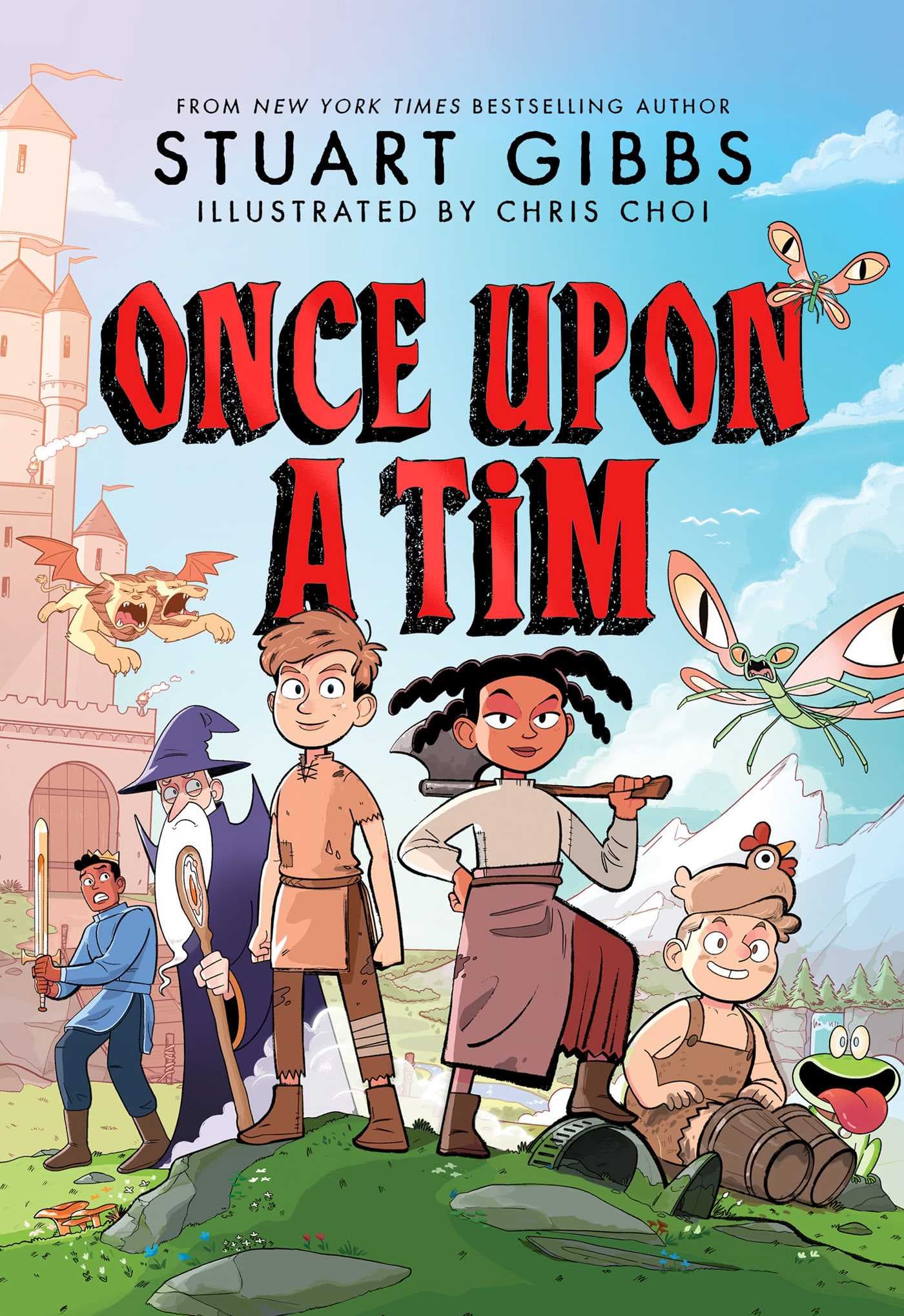
[00:31:18] I'll drop a link in the show notes for you. And big thanks to Arkham Forge for partnering with our show. I think I'm going to make Jimmy play a goblin warlock just to get even. Welcome back. I wanted to just turn a little bit. I haven't had a chance to read it, but like I said, going through preparing for this and looking at your bibliography and some of the other stuff you've done, I just was kind of captivated by the Once Upon a Tim series. I think there are four books out now.
[00:31:48] Yeah, yeah, yeah. I would love for there to be more, but we'll see. We'll see. Yeah. And that is a graphic novel, right? Illustrated by Chris Choi. Well, it's actually, I guess technically it's not officially a graphic novel, but it's an illustrated book. So it's a chapter book, but with a lot of illustrations. Yeah. Okay. Well, I just think the whole concept is, I mentioned it earlier, is just wonderful.
[00:32:17] And I wanted to just talk a little bit about it, if you could just kind of tell listeners a little bit more about the Once Upon the Tim series. Yeah, yeah. Well, you said it's like, I mean, the idea came to me when my kids were little and I was watching a lot of Disney movies with them and just thinking like, man, every one of these is about a princess. Where's everybody else in the kingdom? Like, what are you know?
[00:32:46] And so thought like, what have we all of a sudden zoomed in on the background character? And that was the person telling the story. And that's that's actually kind of what even we do that sort of graphically early on in the first book. And it's this guy, Tim, who, you know, you know, again, he's 12 again. But, you know, back then, like basically you were a peasant or you're a knight and you were perfectly allowed to go volunteer to be a knight at age 12. That was it was time to go off and get a job.
[00:33:13] And so it's kind of he's in a fairy tale or something for mythology. And, you know, he ends up on a quest very quickly. And with, you know, with some, you know, another sort of assorted group of characters, his his best friend Belinda has also come to try. She has to lie and even say she came to say she's a girl. She has to be a boy. So she's she comes.
[00:33:43] And then the the village idiot has just sort of shown up and just gotten picked anyhow. And and and they sort of get put on this team and go off. And so they have all these quests. But I was always just trying to look at like flip all these conventions from from, you know, mythology and fairy tales and Disney movies on their heads. And so like that, you know, nothing is ever quite what it seems to be and nothing plays out the way that they expect it to.
[00:34:13] And and Chris, again, great, just wonderful art. This is actually the first thing I did that was illustrated. And it was just a lot of fun, again, to sort of take advantage of that and be able to say, like, have my my narrator actually go like, well, just look at this. Look at this, you know, look here. Yeah. You know, and then again, it sounds like I'm constantly trying to get out of describing stuff. But but if you have an illustrator, why not let them?
[00:34:43] Why not let them draw it? Right. Why describe it when they can draw it? Yeah. Oh, absolutely. Yeah. Well, they just it's the you know, the chapter books. They just look like they're so much fun. I just love the concept of it. And, you know, just flipping through online, you know, some of the some of the pictures of it. And they just look great. So I just I love doing them. How old are your kids?
[00:35:11] My kids are eight and then my oldest Charlotte will be 13 next month in a couple of weeks. No, eight and 13. So, yeah, this is this is this is like this rate targeted eight year old. But the idea was that like that all the adults would think it was fun to read them anyhow. And, you know, I do try to write stuff with the idea that as an adult, you're often reading with your child and that you want to laugh just as much as as they do.
[00:35:39] And when I actually enjoy it. And so I try to write something that I think I would like to read or my friends would like to read to their kids and that the kids would. I feel like if you write that, then the kids probably can enjoy it. Oh, yeah, it is. It is so much better when there's when like it's perfect for kids, but there are some some things in there that like adults can can appreciate, not like adult humor, but that adults can appreciate.
[00:36:06] Like you can definitely, you know, tell. And especially now that Penny is eight, like she still wants to read like right before bed. But now she typically like reads to me. So so she has so she has some graphic novels that she likes and some chapter books. So, yeah, the Once Upon a Tim series, I think she will definitely enjoy. I hope so. I hope so.
[00:36:31] I've gotten a lot of good feedback on it, so I would I would love for there to be some more there. But we'll we'll see. And I saw that. And you had mentioned coming out October 7th. You have another school blackout novel. So blackout. Yeah. So Spiceful is, you know, this is actually 14 in that series. So which is something I I also never expected.
[00:36:58] But another idea was dear to me from as big a Batman fan as I was. I was also a big James Bond fan. And and so I when I was a kid, I wrote some James Bond fan fiction. But it was really like James Bond's son, Jimmy Bond, and thought he would go to high school. And so I had this idea like for decades and finally.
[00:37:27] was able to do something with it, like writing for middle grade and really, you know, you for the most part, you write one book and think like, OK, man, I you know, I hope this works. You know, maybe maybe I'll get to do another one. And it has just been such a hit that, you know, I'm at 14. There will be a 15. So, yeah. So blackout will be out.
[00:37:50] And this my my kids have sort of even though they're they're still supposed to be training some things, you know, things keep going on happening and wrapping them up in further adventures or blackout. They someone has figured out how to shut down the power all over the world. The country is everywhere. And not only they sort of, you know, so they're cut off from the rest of the CIA. There's no communication, anything like that.
[00:38:18] But they've also got to figure out how to thwart evil without using a cell phone or or the Internet or or anything that we've become so reliant upon these days. Awesome. Yeah, that sounds great. And that's out October 7th. October 7th. Yeah, right. And we will on John Sarkar is hard at work converting all of these books into graphic novels as well. So so the four of them are out. And then the fifth Spy School Secret Service will come out next spring.
[00:38:47] As always, he's done. I don't sound like a broker. I get to work with just incredible artists and they've all they've all done just such wonderful, wonderful work. And so on John has just brought this whole series of life. And so I'm way ahead of him. I'm doing one book a year and then he does one book a year. And so I'm on book 14. He's on book five. So it'll be a while till he catches. I'll put links in the show notes to everything, because like I, you know, like I said, Matt
[00:39:16] mentioned before, I was a big Encyclopedia Brown fan and like the Hardy Boys and that that type of, you know, stuff. I love James Bond and I like your your Jimmy Bond idea. I don't there in night. There was a James Bond Jr. cartoon that where he was. It was like ninety one or ninety two. He was James Bond's nephew, though, which I never kind of got why he was a junior. But I before that. Right. Yes.
[00:39:46] So you give me Bond, free dated James Bond Jr. Yeah. So, yeah, I saw James Bond was like, that's what I OK, that's what I want to do. And then it's kind of, you know, it's a little bit like the astronaut thing. It's like it still wouldn't work out the way I hope it would. Even as a kid, I feel like there's no way all those gadgets would work when you were trying to use them right there. Yeah. They would always they would always malfunction or something. Yeah. Absolutely.
[00:40:13] They they they you know, they they would not they would never go all all as planned, you know. But one thing, one other thing I did want to ask you about that I was I don't know if you've been asked this a lot in interviews before, but just reading another interview you had done. And one of my favorite animals is the capybara. Right. And I saw that for a period of time. Yeah.
[00:40:38] You were like an expert in the field of capybaras because like nobody else was studying them or something. I need I need to know more because I discovered. Right. Right. We're we're from the Philadelphia area. Right. So I was going to college and I didn't know how many we became a writer. So I was going to college in Philadelphia. And I was I I was studying field biology.
[00:41:05] And so for field biology, we would go to the Philadelphia Zoo and we would pick an animal that we were going to study and we would practice being field biologists. And the Philadelphia Zoo had just gotten a capybara, actually a couple of capybara. And I was like, I don't know anything about that. That world's largest rodent. Let me study that. And and then like after a couple of weeks, my professor's like, I think you're the first person to study this animal from what it spoke, you know, English speaking. Right.
[00:41:34] Obviously, people who lived in South America. So. Right. Like, so I I like like and it was like I would on it. There was one day I came to work like I've just been sort of sitting around studying and and the keepers at the zoo come up to me and they go, yeah, the capybara is they had a giant anteater in there in their exhibit, too, because they're both from South America. And they said, oh, they got a fight with the with the giant anteater the other day. And I said, well, why did that happen?
[00:42:02] They were like, oh, man, we were hoping you could tell us. Right. Right. Yeah. OK. Like, I don't know what happened. And so and at the time, like I they were right by the entrance to the zoo. I was I was there all the time. I know. But nobody ever stopped to look at him like I would be there for hours. Nobody. People just walk right by. Nobody cared. Now they're like the most popular animal on Earth.
[00:42:30] People can't get enough of capybaras. I should have copyrighted capybaras when I had the chance. And yeah. So so I there are obviously people who know far more about them than I do. But thanks to the Philadelphia Zoo, I I had this much the tiniest bit of expertise. But but I did make them some I didn't notice some things that apparently hadn't been documented yet. So that's great. Oh, any idea like what what made you pick that animal?
[00:43:00] It was really like everybody else is like picking monkeys and, you know, or I and and I I think there was part of me like, OK, you guys are going to do that. Here's this animal. I'd like heard of it, but I had never seen one before. Like they really weren't that there weren't at zoos that much. And so I was like, OK, like this. Oh, I'll study this thing.
[00:43:22] And I think part of me was like, hey, if people don't know that much about it, like then my professor, you know, has to give me a good grade because like what's he going to like if there's not much written down about it. He can't go check my work. Right. And he's going to strategic. Strategic. I like it. It was probably a pretty half ass decision. It was it was like I can pick something. So I'm going to pick that. Right. Oh, that's a winter. Sorry.
[00:43:50] So everybody else was like all the like they were studying monkey. They were they were often the nice warm, small mammal. Yeah. Like I was not an animal where it ever snowed. Right. And there we got cold there. But I was like sitting outside watching these animals. And then. Yeah. So that was probably not super well thought out. Well, I love it. I think that's very interesting. And yeah, as a fan of the Capybara, I I had to ask. Oh, you're welcome. I mean, that's the thing.
[00:44:20] Thank you. Who knows if it hadn't been for my hard work or maybe they never. Yeah. Caught on. I we I might have been there at the same time. Like if this was like if this was a lost like flashback there, there might have been both of us just by the railing staring at the Capybara in Philadelphia. Yeah. I remember seeing them there at the zoo dropping by. Right. Yeah. I was I was thinking of that. And then it's I I mean, my work at the zoo actually ended up inspiring the whole fun
[00:44:49] jungle series, which takes place behind behind the scenes at a zoo because while I was working there, I you know, not everybody was carrying a video camera around all the time. And the zoo actually needed somebody who could operate a video camera. And so I would I I could do it. And I ended up recording a bunch of stuff for the zoo. And so I yeah. So I was I was roaming around the zoo for like another year after that with my camera. Oh, wow. Yeah. Yeah.
[00:45:20] And then and get another tremendous book series out. Yeah. Yeah, I did. Right. Yeah. So we've covered how I got inspired for every single one of them today. I think we did. But well, Stuart, this has been a joy to have you on here. I really appreciate this so much chatting with you about all of your books. And I encourage listeners, go and check out Space Case. The graphic novel just came out in August.
[00:45:50] But there's so many other wonderful series that Stuart has written, whether or not it's Once Upon a Tim or Spy School or the Fun Jungle series that he just mentioned. I'm going to put links in the show notes for everything. And I get asked all the time from friends of mine because they know I like comics, like what kid comics are out there? Like what's good for kids? What's good for all ages? What's good for for middle grade?
[00:46:18] So I'm constantly looking to make like knowledgeable recommendations about stuff. So now I have I have I have some friends that I know their kids are going to go absolutely nuts for for Space Case in particular. So this has been a real pleasure, Stuart. And I really appreciate you coming on and chatting with me. Thank you for having me. It's been a pleasure on my end as well. All right. Shout out to my brother, Bobby. Always shout out Bobby every episode because he's the cryptic creator corners. Number one most dedicated fan.
[00:46:49] Bobby listens to all my episodes. And Bobby's got four kids and they love to read. So I'm going to turn him on to the Space Case graphic novel as well. And I think his kids will probably like the fun jungle series to solicitors. Check out all the links. Check out Stuart's stuff. If you're reading it, let me know. You can find me on Blue Sky and tell me what it is you're reading, what it is you're enjoying. Thank you so much for listening.
[00:47:16] And because Stuart was also born and went to college in Philadelphia. Go birds. All right. Good night. I'll see you next time, everybody. This is Byron O'Neill, one of your hosts of the cryptic creator corner brought to you by comic book yeti. We hope you've enjoyed this episode of our podcast. Please rate, review, subscribe, all that good stuff. It lets us know how we're doing and more importantly, how we can improve. Thanks for listening.
[00:47:46] If you enjoyed this episode of the cryptic creator corner, maybe you would enjoy our sister podcast into the comics case. Listen and subscribe wherever you get your podcasts.