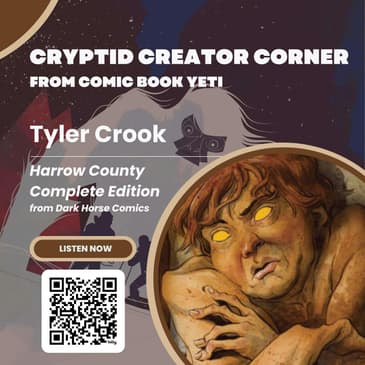

Eisner and Russ Manning Award winner Tyler Crook is back! Tyler is promoting the new Complete Edition of Harrow County from Dark Horse Comics, a massive tome of a book. We get to chat about some of the character design inspirations for the project and the other stuff he's been up to lately which include releasing a hardbound, collected edition of his series The Lonesome Hunters, producing of all things a skelton key design for the horror classic Sleepy Hollow, and his new series Out of Alcatraz with writer Christopher Cantwell (who was just on the pod with Jimmy.) If you are still looking for a holiday gift, what could be better for the comics fan in your life than either of these collected gems?
Make sure to sign up for Tyler's newsletter.
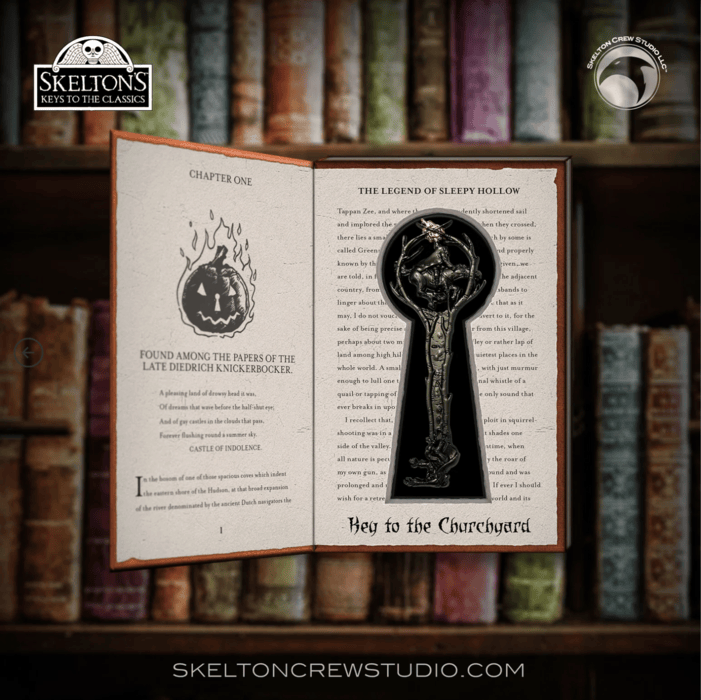
Skeleton Crew's Keys to the Classics series - Sleepy Hollow
Harrow County
From the publisher
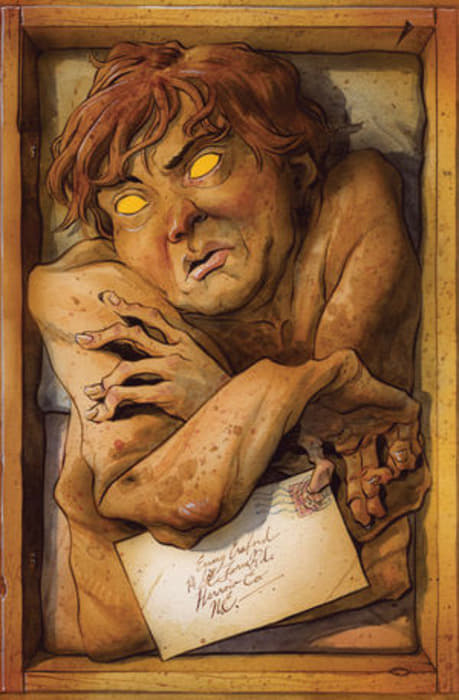
Dark Horse Comics proudly presents this complete collection of the entire comics run of essential horror series Harrow County in a single, oversized hardcover book with a slipcase, ribbon, and a brand-new painted cover.
Emmy always knew that the woods surrounding her home crawled with ghosts and monsters. But on the eve of her eighteenth birthday, she learns that she is connected to these creatures--and to the land itself—in a way she never imagined. Could Emmy be the reincarnation of an infamous witch? As supernatural forces that baffle the imagination align against her, Emmy must decide whether she will embrace or deny her destiny... with the fate of every soul—living or otherwise—hanging in the balance!
This volume collects the entirety of HARROW COUNTY, the dark southern gothic fairy tale by Cullen Bunn and Tyler Crook, along with all extras from every library edition!
The Lonesome Hunters
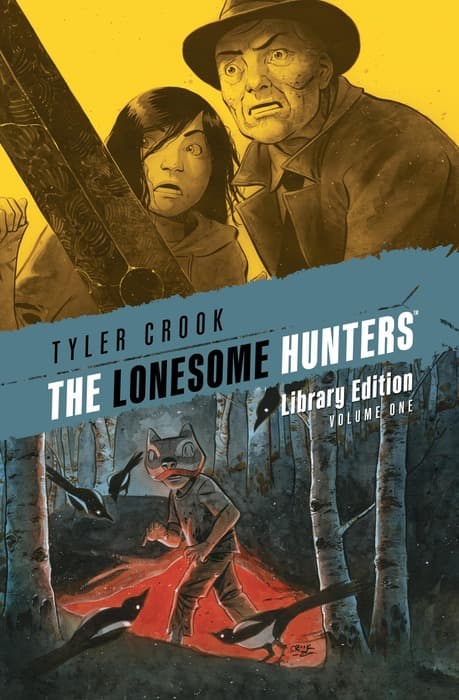
From the publisher
From Russ Manning award-winning and Eisner-nominated Harrow County co-creator Tyler Crook comes this supernatural fantasy about loss, power, and destiny.
An old and out-of-practice monster hunter in hiding crosses paths with a young girl that forces him to confront these chaotic creatures. As the beasts invade their tenement, they set off on a supernatural road trip to stop these ancient evils in a story that explores the ways that youth informs adulthood and how early traumas can haunt us in old age.
Collects Lonesome Hunters series I and II together for the first time in a deluxe, library edition hardcover book with a dustjacket and a new cover.
PATREON
We have a new Patreon, CryptidCreatorCornerpod. If you like what we do, please consider supporting us. We got two simple tiers, $1 and $3. I’ll be uploading a story every Sunday about some of the crazy things I’ve gotten into over the years. The first one dropped last week about me relocating a drug lord’s sharks. Yes, it did happen, and the alligators didn’t even get in the way. Want to know more, you know what to do.
Our episode sponsors
COMICS OVER TIME
Make sure to give a listen to our friends with Comics Over Time.
Arkenforge
Play TTRPG games? Make sure to check out our partner Arkenforge. They have everything you need to make your TTRPG more fun and immersive, allowing you to build, play, and export animated maps including in person fog of war capability that let’s your players interact with maps as the adventure unfolds while you, the DM get the full picture. Use the discount code YETI5 to get $5 off your order.
Global Comix
Save on a subscription to GlobalComix with us. Click on the link here and use the discount code COMICBOOKYETI.
[00:00:00] Your ears do not deceive you. You've just entered the Cryptid Creator Corner brought to you by your friends at Comic Book Yeti. So without further ado, let's get on to the interview.
[00:00:10] Hey everyone, this is...
[00:00:13] Hi Byron.
[00:00:14] Who is this?
[00:00:15] I'm your fairy godmother.
[00:00:17] I have a fairy godmother?
[00:00:18] Of course you do.
[00:00:20] I'm 50 years old, why haven't you shown up before?
[00:00:22] I appear when I'm needed.
[00:00:24] And I didn't need you in all these years?
[00:00:27] Do you want my help or not?
[00:00:29] Um...
[00:00:30] Sure.
[00:00:31] Exactly.
[00:00:32] I was just about to pitch our Patreon. Why would I need help with that?
[00:00:36] Because you're an idiot sometimes.
[00:00:38] That's hurtful.
[00:00:40] What were you going to put on there?
[00:00:42] We do comic stuff? So something along those lines?
[00:00:45] And this is why I'm here. You do know what people put on Patreon most of the time, right?
[00:00:52] Honestly, no.
[00:00:54] People need something a little bit spicy to entice them to support you.
[00:00:59] Nobody wants to see me shirtless.
[00:01:01] I doubt that's true. You are in pretty good shape considering your age.
[00:01:06] Thank you. Let's see. A little spicy. I've been bugging Jimmy to figure out what he's going to do.
[00:01:12] I know lately he's been playing around with his **** all the time.
[00:01:16] He loves to take it out and show it off. There's even a specific TikTok channel now. How's that sound?
[00:01:21] Not a bad start. People like Jimmy. What else you got?
[00:01:24] I told a story recently about being in a strip club with some of the four horsemen when I was working for WCW back in the day.
[00:01:30] I picked up an infection on my-
[00:01:32] Woo!
[00:01:33] From the experience, I hate strip clubs. Is that better?
[00:01:37] Getting there. But maybe spicy shouldn't include infections you get in strip clubs. That's not sexy. We'll workshop it.
[00:01:46] Like I need more meating.
[00:01:47] At least tell them where to find it while we figure this out. Mother goddess, help this poor man.
[00:01:53] You can find us on Patreon at cryptidcreatorcornerpod. I'll put it in the show notes.
[00:01:58] Anything else you'd like to remind me that I'm bad at?
[00:02:01] How much time do you have?
[00:02:03] Why do you look like Rosario Dawson anyway?
[00:02:05] I appear the way you want me to look.
[00:02:07] Okay, that's disturbing. Wait, have you been showing up in my dreams?
[00:02:12] I'll never tell.
[00:02:14] And we're done here.
[00:02:16] Y'all, Jimmy the Chaos Goblin strikes again.
[00:02:20] I should have known better than to mention I was working on my DC Universe meets Ravenloft hybrid D&D campaign on social media.
[00:02:27] My bad.
[00:02:28] He goes and tags a bunch of comics creators we know, and now I have to get it in gear and whip this campaign into shape so we can start playing.
[00:02:35] Another friend chimes in, are you going to make maps?
[00:02:38] It's fair to say it's been a while since I put something together, so I guess, question mark?
[00:02:43] It was then that I discovered Arkhamforge.
[00:02:45] If you don't know who Arkhamforge is, they have everything you need to make your TTRPG more fun and immersive.
[00:02:52] Allowing you to build, play, and export animated maps, including in-person Fog of War capability that lets your players interact with maps as the adventure unfolds while you, the DM, get the full picture.
[00:03:04] Now I'm set to easily build high-res animated maps, saving myself precious time and significantly adding nuance to our campaign.
[00:03:12] That's a win every day in my book.
[00:03:14] Check them out at arkhamforge.com and use the discount code YETI5 to get $5 off.
[00:03:20] I'll drop a link in the show notes for you.
[00:03:22] And big thanks to Arkhamforge for partnering with our show.
[00:03:25] I think I'm going to make Jimmy play a goblin warlock just to get even.
[00:03:29] Hello, everybody, and welcome to today's episode of the Crypto Creator Corner podcast.
[00:03:34] I am Byron O'Neill, your host for our Comics Creator Chat today.
[00:03:37] Today's guest is one of my favorite artists working in the game, and he's back on the show to promote a new version, hardcover, library edition.
[00:03:44] His score to Bram Stoker nomination was an Eisner-nominated book and actually won an Eisner for best ongoing title.
[00:03:51] That book is Harrow County, and that artist is Tyler Crook.
[00:03:55] Tyler, welcome back on the show.
[00:03:56] It's so nice to see you again.
[00:03:57] Yeah, it's good to see you too.
[00:03:59] Well, before we jump into Harrow County and Lonesome Hunters, which I will add also has the recent Library Edition release,
[00:04:05] I wanted to ask about the Sleepy Hollow key design.
[00:04:08] I was watching your YouTube show, you know, the comic book cool down, and I saw it,
[00:04:12] and I had no idea you were doing something like that.
[00:04:15] You know, not the key, the YouTube show, I knew that.
[00:04:18] But how did you get recruited to do a key design sort of all things?
[00:04:22] We worked with Skelton Crew a little bit for some Harrow County stuff, actually.
[00:04:29] Okay.
[00:04:30] We did a series of pins through them.
[00:04:33] And so that's where our relationship started.
[00:04:36] And then my understanding with their key line is that they're doing,
[00:04:42] they're just asking a ton of different artists to contribute to that.
[00:04:46] Okay.
[00:04:46] So I was just one of the artists that they knew and knew that I did spooky stuff, which is sort of their repartee also.
[00:04:53] So, yeah, so that's where I came from.
[00:04:57] Well, where did you kind of start mentally with wanting to lay out the whole Sleepy Hollow narrative and put it in a compact key?
[00:05:04] That's pretty challenging.
[00:05:05] Yeah, it was really challenging.
[00:05:06] And especially like looking at a lot of the other keys in the line that are a little bit more key-like.
[00:05:15] You know, mine is a little bit more, the key side of the design is a little bit more abstract or whatever.
[00:05:23] But while the story end is like more concrete.
[00:05:26] And I don't know.
[00:05:27] I guess it sort of came because that's like, that's where my brain usually goes is straight to like the storytelling thing.
[00:05:33] Yeah, yeah.
[00:05:34] I'm more of a storyteller than a designer.
[00:05:37] So like, I was just trying to figure out ways to tell that story.
[00:05:41] And yeah, I mean, for anyone who hasn't seen it, are we allowed to cuss on here?
[00:05:47] Oh, yeah.
[00:05:49] Let it rip.
[00:05:50] That's totally fine.
[00:05:50] But like the head of the key, like where you would put your hand to hold it is like the horseman on his horse riding.
[00:05:57] And then the key part that's like the little tines that would like unlock the lock is, I'm spacing on his name.
[00:06:06] What's the guy's name?
[00:06:07] Ichabod?
[00:06:08] Ichabod.
[00:06:08] Yeah, it's Ichabod Crane basically like eating shit as he's running away.
[00:06:14] So yeah, so that was the, that was just sort of my idea of the story.
[00:06:18] And I think they liked it because it was different than a lot of the other keys that they've done.
[00:06:24] And it did have like such a strong sort of clear narrative to it.
[00:06:28] Yeah. I mean, they've got a ton of stuff.
[00:06:30] This is part of their skeleton keys to the classic series.
[00:06:33] There's everything from Winnie the Pooh to a key that kind of unlocks Marley's change from A Christmas Carol.
[00:06:39] I thought they're awesome.
[00:06:40] Like I, they have a bunch of lock and key stuff too, right?
[00:06:44] Yeah. Yeah.
[00:06:45] I think, you know, I don't, I'd never, I've never actually talked to them about it, but I assumed that that was sort of where the key stuff sort of originated that they'd been doing.
[00:06:52] All those lock and key keys.
[00:06:56] I wanted to expand on their, their key library, I guess.
[00:07:00] Repertoire of keys.
[00:07:02] Well, I'll drop a link in the show notes so people can find it.
[00:07:05] And if you get your order in now, it should arrive by holidays because it's a one or two week turnaround.
[00:07:10] I think it's all.
[00:07:11] Yeah.
[00:07:11] Yeah.
[00:07:11] Yeah.
[00:07:12] All right.
[00:07:13] So the new library edition of Harrow County, this collects all 32 issues of the series in one heck of a big old tome.
[00:07:20] Usually these drop with a little something extra like scripts or process drawings or something there.
[00:07:25] Oh, there we go.
[00:07:26] That is massive.
[00:07:28] That's so big.
[00:07:29] So what else did, did you and Colin include in here?
[00:07:32] Like what, what are you proudest of this, with this particular edition?
[00:07:36] Oh, you know, I think with this one, I'm, I'm just very proud of the design of, of this package.
[00:07:45] The slip case designed to look like a drawer.
[00:07:48] Um, it's just very, really incredibly pleasing to me.
[00:07:53] You know, it's sort of, um, I wanted to do a design that was, uh, I don't know if I don't homage is the right word, but you know, was referencing the, the cover for issue number one, um, which is the skin in the drawer sort of reaching out.
[00:08:10] Right.
[00:08:11] And, um, having the opportunity to, um, and anyone who's listening to this on audio might not make any sense, but it's like, you know, the, the packages that it looks like a drawer.
[00:08:21] And then when you pull the book out of the slip case, it's the, you know, you can see the skinless boy inside.
[00:08:28] And, um, it's just like really, really pleasing to me.
[00:08:31] And that, and it also sort of ties in with the, uh, Harrow County board game that we did where we did a, uh, uh, uh, a satchel edition of that, which was, um, in the Harrow County book, Emmy has a leather satchel that her father made her.
[00:08:49] And so we made, uh, you know, a cardboard, one of those to put the board game in that, um, so I don't know.
[00:08:56] It's just nice to have, like, I just, I get such a kick out of these, uh, books that are sort of designed to look like they're not books or they're not board games.
[00:09:07] There's, there's something, you know, tangible from the story that then turns into the book or the, or the board game.
[00:09:12] And yeah, the, uh, that cross stitch cover, I thought that logo is, is fantastic.
[00:09:17] Cause it reminds me so much of the house I grew up in.
[00:09:20] And actually I've been trying to find the time to get back into doing some cross stitch.
[00:09:25] Cause I, I actually did it when I was in high school to kind of relax.
[00:09:28] And I don't know, it's just, it's just something that immediately takes me back to being a kid.
[00:09:32] So as soon as I saw it, I locked onto that.
[00:09:35] I was very tempted to try to do a real cross stitch for the, for the cover, but, um,
[00:09:42] decided I just did not have the skill or the time to, to make it work.
[00:09:47] Well, I went back and read all of Harold Kenney from the beginning in preparation for the chat.
[00:09:52] And last time you were on, we talked about, uh, the lonesome hunters and we got a little bit into how you actually physically create your work.
[00:09:59] You know, all the watercolor details.
[00:10:01] And so today I want to go a little bit more into the wise in terms of creating kind of the distinct visual language of the book.
[00:10:08] And one of the things for me that stood out on the reread was how this felt far less scary than the first time I read it.
[00:10:14] And maybe that's cause I knew it was where it was going, but there's a balance in creating something horrific and managing, managing to humanize it.
[00:10:21] So we empathize with it.
[00:10:23] Right.
[00:10:23] And the skinless boy comes to mind as an example.
[00:10:26] So as you progressed kind of working on this, how did you find that harmony and the tension between those two kinds of thing?
[00:10:34] Um, I think for Harold County specifically, like, I feel like that's the natural place where Cullen and I both land.
[00:10:43] Um, we don't like, we'd like things, we like things that are scary and we like things that are weird and spooky, but like, um, but those things don't have any value if you don't have the characters behind it or you don't feel like it's, uh, you know, a world that is, um, an interesting place to inhabit.
[00:11:01] So like, um, so much of it was just like, if we want the scary stuff to work, you have to spend the time and energy to get these characters to be like real and you have to like really care for Emmy.
[00:11:15] And, um, you had to really kind of understand why she would bring this horrific, um, flayed skin into her house.
[00:11:24] You know, like there's, there has to be some sort of, uh, uh, relationship there with between her and the skin that is, um, you know, that the reader can understand.
[00:11:34] So, I mean, it's just really about trying to make, um, characters that you care about so that when, you know, you throw them into danger, the reader is like, you know, cares that, that these things are happening to this person that they just learned to like.
[00:11:51] Yeah. And in that reread, I want to get into Emmy a little bit because one of the things that really, really stood out to me was the nuances in expression.
[00:12:00] Uh, and you have Emmy and you have Cammy and the characters go in a very different direction, of course.
[00:12:05] But, you know, at the beginning, there's much more of a duality at play looking at this darker version of yourself, or at least that's what I was getting that I love, which, which gets at the, the essence of, of horror in comics.
[00:12:16] And I've been chatting with a lot of people recently who are making that transition from writing from film or TV.
[00:12:22] And they all mentioned that challenge of translating their work into still frames.
[00:12:27] So even down to the animated skin here, there's a tremendous amount of emotion in that facial expression.
[00:12:33] And it's, it's one of the strongest qualities I think that you have as an artist for me anyway.
[00:12:38] And definitely why I think the series maintains a broad appeal beyond like our aficionados like me.
[00:12:44] So did you use models or picture references or, I mean, it's just something I locked onto this time?
[00:12:51] Um, no, no, not really.
[00:12:54] Like I do like, I used to use a mirror a lot when I was doing, um, facial expressions.
[00:13:01] And I can't remember if I had really sort of given up on that by the time I was working on Harrow County or if I was still really using that.
[00:13:08] But a lot of it for me comes down to, once again, it's just really trying to, to explain to the reader what these characters are going through.
[00:13:19] And, um, and so I have to make sure that the, that the facial expressions read clearly, you know, as clear as possible.
[00:13:27] So I think that, you know, I think my faces sometimes get very cartoony and sometimes they get very sort of exaggerated.
[00:13:36] Um, I know there, there are some, uh, faces, especially early on in Harrow County, um, where Emmy just looks sort of bonkers.
[00:13:46] Like, and they were, they're drawings that I was like kind of scared about at the time when I did them where they were, they felt like I was pushing these faces a little bit too extreme.
[00:13:56] But in retrospect, I, I think it, I think it works for the best.
[00:14:01] So is that a criticism you've heard about the facial expressions?
[00:14:04] No.
[00:14:05] No.
[00:14:05] Okay.
[00:14:05] It's just you being a maritical.
[00:14:07] Yes.
[00:14:07] I'm a maritical myself.
[00:14:10] Well, looking at the, uh, and thinking about the development of Malachi and his iteration as the abandoned, how much, how much of that, of the script did you have in advance from Colin?
[00:14:20] And I, because I was just wondering if you had to pivot, like in terms of how you approach some of them as, as their roles change, like how much did you know?
[00:14:28] Um, cause you've got 32 issues.
[00:14:30] That's in modern comics.
[00:14:31] That is a long, long time.
[00:14:33] Yeah.
[00:14:34] That was a real, that was a, and it was a successful book.
[00:14:37] So it was a really amazing that it was able to go that long.
[00:14:39] Um, but the, I don't think, I don't think that there was anyone that, like, I think when Colin introduced a character in the script,
[00:14:48] it was usually pretty clear about who, who this character was and, and how they were going to be used.
[00:14:54] Okay.
[00:14:55] I don't think anything really sort of changed.
[00:14:57] And even Malachi was like, like his character didn't change, but his feelings towards Emmy do change.
[00:15:04] Sure.
[00:15:04] You know, as, as he gets to know her.
[00:15:06] But, um, but I think the, I mean, the, the trick with, with some of those things, like with Malachi in particular, it was sort of, it was hard to know how much of, of him to show.
[00:15:18] At the beginning.
[00:15:19] And one of the things with Harrow County was that I always tried really, really hard to show as little as possible.
[00:15:26] So when there's a monster, you know, you just see their silhouette coming at you or you see, you know, um, you get glimpses of them until, until we're finally ready to show you the whole thing.
[00:15:36] Um, and Malachi, we took a, took a little while to really show, um, no, maybe we didn't.
[00:15:44] I'm trying to think.
[00:15:45] Like, I remember there was a scene in the first couple issues where he's like in his little, a burned out farmhouse where he's hanging out.
[00:15:56] And, um, and he's talking to him through the door and he's just, you know, he's just a shadow in the back.
[00:16:02] So then, you know, by the end of the series, he's walking next door.
[00:16:06] I mean, spoiler alert.
[00:16:09] Yeah.
[00:16:10] Yeah.
[00:16:11] But, uh, but you know, we, we get to see him very clearly and we get to know who he is pretty clearly by the end.
[00:16:16] So are you using, and I'm thinking about processing what you're saying, do the, do the trees basically become a, uh, uh, part of the obscure, you know, you're able to obscure the frame of the character, the monster, right.
[00:16:31] By using these topographical elements.
[00:16:33] Is that, is that a kind of thing or that?
[00:16:35] Yeah, that was, that's pretty, pretty normal thing.
[00:16:39] Like I really liked, um, with the woods, I, I really liked.
[00:16:45] I mean, that was one of the main reasons why I agreed to do this book with Colin was, um, that it was going to take place in the woods.
[00:16:51] Like so much of it was.
[00:16:53] And I really like drawing, um, like trying hard to get, uh, the reader to feel like they were inside of these forests, you know, not looking at a stage play of them.
[00:17:07] Um, and, um, so what you end up doing is you end up like putting, you know, trees and branches in front of other things, you know, to get that sort of inside the woods feel.
[00:17:20] Um, and I think that that, um, I don't know, I feel like I'm kind of just babbling, but that sort of was like, it did definitely helped with Malachi.
[00:17:29] And it helped with, um, some of the other creatures.
[00:17:32] Like there was the, uh, uh, the bird ladies, the harpies.
[00:17:38] Yeah.
[00:17:38] And they were always, you know, up in trees and, and up in the, the belfries and stuff, you know?
[00:17:46] Well, the counterpoint to that would be Priscilla, which I think is one of my favorite characters in the, in the series, you know, becoming the, the goblin friend of Emmy's.
[00:17:55] And she played more of a significant role for me this time around, kind of as a friend without the complexity of Emmy's ever evolving relationship with Bernice.
[00:18:04] So kind of like, I read her as a dog anyway, you know, on a fundamental level, she's far less complex, like grounded and kind of who and what she is, but it's not a standard interpretation from, for a goblin.
[00:18:17] So like, where did Priscilla come from?
[00:18:19] Um, you know, I'm not sure where, where Colin originally got her.
[00:18:22] I always sort of thought of Priscilla as, um, more of a guide.
[00:18:27] She was, cause she's the person who like has a fundamental lifelong understanding of the haint world.
[00:18:34] Sure.
[00:18:35] So as when she, when she and Emmy were interacting, she was always sort of like, um, you know, Priscilla was usually the one who actually knew what was going on better than, than anybody else in the, in the room.
[00:18:48] Yeah.
[00:18:48] So, I mean, it's just one of those things that's like, um, like if you've ever gone someplace, like I'm trying to think of a good example, like, how about like if you go to a farm and you're talking to the farmer and the farmer is like,
[00:19:03] you know, this is where we slaughter the cows and you're like, you slaughter cows here.
[00:19:07] And the farmer would be like, well, yeah, what do you, how do you think we do here?
[00:19:10] This is like, this is just how it goes.
[00:19:11] Right.
[00:19:12] And Emmy, like Priscilla is kind of that person where she's just like, you know, quit being dumb.
[00:19:18] This is how goblins work.
[00:19:19] This is how these other haints work.
[00:19:21] Okay.
[00:19:22] Why don't you know this already?
[00:19:23] Okay.
[00:19:24] Just need to vary matter of fact character.
[00:19:26] Yeah.
[00:19:27] Yeah.
[00:19:28] Yeah.
[00:19:28] Okay.
[00:19:28] And her, like her motivations are really pretty straightforward in that she is, um, well, she wants, she sort of wants peace in the haint world, which is kind of makes her special, I guess.
[00:19:40] Like she's, she doesn't want, like she doesn't want these terrible haints to be going around doing her terrible, their terrible stuff.
[00:19:48] Just like the terrible, the level of terrible that she would normally do.
[00:19:52] Yeah.
[00:19:53] Well, she's the outlier.
[00:19:54] Yeah.
[00:19:55] Yeah.
[00:19:56] Yeah.
[00:19:56] And part of that is that she gets that name, which no other goblin has a, has a name.
[00:20:02] And so she has, well, there's a, uh, a four page story in the back, um, that tells a little bit about Priscilla's, um, magic now that she has a name.
[00:20:15] Wow.
[00:20:16] Okay.
[00:20:16] I didn't even realize she was the only one with a name.
[00:20:18] Now that, now that you said that, I'm like, oh, duh, I should have picked up on that.
[00:20:22] Yeah.
[00:20:23] Well, one of the more sinister elements for me wasn't like the abandon or the haints.
[00:20:29] It was the water moccasins.
[00:20:30] And I have a family legend about them that I cannot personally confirm, but everybody has the same story.
[00:20:36] So if you let, let me like lay this out.
[00:20:39] So I assume there's at least a little bit of truth, maybe a little bit as Tennessee version.
[00:20:43] Right.
[00:20:43] So my family comes from the foothills of Appalachia in East Tennessee.
[00:20:46] My great uncle passed before I could remember him sadly, but he like became this mythic figure in my mind.
[00:20:53] So after getting back from the war, he did a bunch of bank backyard archeology on these native family burial mounds that dated back to the pre woodland period and beyond.
[00:21:03] And so TVA was, uh, was in the process at that time of buying up all the low lying land to, to build the dams and everything.
[00:21:11] So before it was all underwater, he wanted to excavate this.
[00:21:14] And when I was a kid, my aunt has just loads of these slides of all of the work that he was doing.
[00:21:21] So that's what inspired me to like study anthropology in college and get this background about the, the, the native ancestry in our own family.
[00:21:31] Anyway, back to water moccasins.
[00:21:33] They were allegedly quite aggressive around that area.
[00:21:36] And so when the kids would go to swimming in the creek, he grabbed them by the tail and he'd snap them so hard, like a towel that their heads would fly out.
[00:21:46] So sometimes you hear these things as kids, uh, as a kid, they'll stick with you, but, but water moccasins in any way have always had this strong fascination for me.
[00:21:56] So the obvious correlation with snakes and evil is, is the Bible, but how did they end up stored in jars?
[00:22:04] Cause I know a lot about like Appalachian culture and history.
[00:22:08] And I guess technically this, do we even say this isn't specifically Appalachia?
[00:22:13] I mean like water moccasins have to be, you know, yeah, it's sort of in a generic, I imagined it's sort of a Western, uh, North Carolina is where it's set.
[00:22:24] It's definitely set in North Carolina.
[00:22:26] Okay.
[00:22:26] Although I don't know if it's ever explicitly said in, in the book, but that was always where we, where we said it, um, was North Carolina.
[00:22:35] The, um, yeah, I don't know where the jars come from.
[00:22:39] Um, I mean, I, I, I was just assumed that, I mean, I come from a Mormon family.
[00:22:46] Okay.
[00:22:46] Um, and there's a huge, um, I don't know if it's as big anymore.
[00:22:52] Like we left the church years and years and years ago, but, um, when I was a kid, everyone I knew was always, um, uh, bottling and canning as part of their, you know, apocalyptic survival plan.
[00:23:06] You know what I mean?
[00:23:07] Yeah.
[00:23:07] So, um, so it always felt very natural that they would go in jars.
[00:23:11] Um, that was, that was Cullen's idea.
[00:23:15] Um, so I don't know exactly where he got, where he got the, the idea, but it always felt very natural to me that, um, rural people growing, you know, would just put stuff in jars.
[00:23:27] Which is safe.
[00:23:28] Yeah.
[00:23:28] Yeah.
[00:23:29] That was so much of my upbringing was, was all of the canning.
[00:23:32] My, uh, my grandparents farm there was 190 acres and we had two 90 acre farms that were within a quarter mile.
[00:23:40] So.
[00:23:40] Yeah.
[00:23:41] Yeah.
[00:23:42] Yeah.
[00:23:43] Yeah.
[00:23:43] Well, the backyard garden itself was five acres.
[00:23:46] So.
[00:23:46] Yeah.
[00:23:46] My parents, like my parents, I told you, I was telling you earlier, my parents live next door and we sort of share our two yards.
[00:23:53] So it's like almost all garden and nice.
[00:23:57] Yeah.
[00:23:58] So like whenever I need anything, I just go next door and they take me down into the storage room and we go shopping with all the canning.
[00:24:06] I missed that when we were, I know you're, you're, you're in Oregon, right?
[00:24:10] Yeah.
[00:24:11] Yeah.
[00:24:11] Yeah.
[00:24:11] Yeah.
[00:24:11] Yeah.
[00:24:12] When we were in the Pacific Northwest, we were, we were upside outside of Tacoma, but I missed that so much.
[00:24:17] And I don't think people realize how much gardening you can do in the Pacific Northwest.
[00:24:22] Yeah.
[00:24:22] Yeah.
[00:24:23] No, it's really, well, especially like we came here from Southern California and it's just like, it's night and day, like Southern California, you really have to work hard to get stuff to grow.
[00:24:33] And here it's like, you really have to work to like slow it down a little bit and just like get your garden to calm down and be normal.
[00:24:41] Yeah.
[00:24:42] It's a couple of things that are tricky.
[00:24:43] If you get into squashes and you end up with like a powdery mole, we grew kale year round.
[00:24:50] Like we had kale that was about eight feet tall.
[00:24:53] Crazy.
[00:24:53] Yeah.
[00:24:54] No.
[00:24:54] And our grapes have been really, really good and stuff.
[00:24:57] We actually, we planted a bunch of grapes around the house to cool it down in the summer.
[00:25:02] So like the walls that get the most sun have these big grape vines that grow up in the, in the summertime and make some shade.
[00:25:09] It's really nice.
[00:25:10] That's amazing.
[00:25:11] Listeners that you are now on plant chat.
[00:25:13] I heard the end, Tyler.
[00:25:15] Yeah.
[00:25:18] All right.
[00:25:19] Let's take a quick break.
[00:25:20] I love comic books.
[00:25:21] Hey, children of the algorithm.
[00:25:22] I wanted to tell you about another great comics related podcast.
[00:25:25] Our friends, Dan, Dwayne and Sienna with comics over time.
[00:25:28] I have a great show that you should definitely check out.
[00:25:31] Dan has been a comic book yetty contributor since before I was around and the show delves deep into comics history, analyzing it from the wider cultural landscape at the time.
[00:25:40] I learned a lot just listening in and they are keeping it fresh too, with Sienna reporting in about the current Marvel offerings.
[00:25:46] I love seeing the next generation excited about comics and it's cool to see a family participating in comics journalism together.
[00:25:52] This season, they are focused on the history of everyone's favorite Hell's Kitchen vigilante daredevil.
[00:25:57] It's a fantastic show that you're going to want to add to your rotation.
[00:26:01] You can find them at comics over time on your favorite podcasting platform or at their website, comics over time dot pod bean dot com.
[00:26:09] I'll drop a link in the show notes to make it easy for you.
[00:26:12] He's a daredevil, Ned.
[00:26:21] After a string of unexplained disappearances in the southern parts of the United States, retired Detective Clint searches for his white trash brother.
[00:26:29] While searching for him, he ends up being abducted by aliens.
[00:26:33] He is now in the arena for big guns, stupid rednecks at Intergalactic Cable's newest hit show, which puts him and other humans in laser gun gladiatorial combat.
[00:26:44] And his brother is the reigning champion with 27 kills.
[00:26:49] That's the premise for a new book from Band of Bards, Big Guns, Stupid Rednecks.
[00:26:54] I got a chance to see an advanced preview of this book and being from the south, honestly, I was a bit skeptical going in.
[00:27:00] But they won me over and nothing is more powerful than an initially skeptic convert in my book.
[00:27:05] In Jimmy's words, big guns, stupid rednecks is many things, but it isn't subtle.
[00:27:09] It tells you exactly what it is up front, then it delivers with a great premise, fantastic art, and a whole mess of fun.
[00:27:16] I had a great time reading Big Guns, Stupid Rednecks, and what I thought was going to be an indictment of redneck culture quickly showed it was actually a love letter.
[00:27:24] A family mystery, brother pitted against brother, aliens, fighting for profit in a big arena.
[00:27:29] This truly has it all.
[00:27:31] Issue one is out already, but you can still pick up a copy on the Band of Bards website.
[00:27:35] And current issues are available via your previews or lunar order form.
[00:27:39] Or just ask your LCS.
[00:27:40] Don't miss it.
[00:27:41] Let's get back to the show.
[00:27:43] Certainly ghosts are kind of a standard Gothic association.
[00:27:47] Hence, haints, right?
[00:27:48] But many of what we consider as other horror landmarks, you know, as a native Southerner, you know, aren't there.
[00:27:54] Except for the witch.
[00:27:56] That's fairly sort of universal, I guess, across Western cultural mythologies.
[00:28:00] But you didn't tap very much kind of into the folklore so much.
[00:28:06] I mean, I'm in Western North Carolina.
[00:28:08] Now I grew up in East Tennessee.
[00:28:10] So not a criticism, but was that just something that Cullen laid out in the script and stuff?
[00:28:16] You just kind of intentionally stayed away from it?
[00:28:18] Yeah, I think he mostly wanted to, he wanted it to be our own thing.
[00:28:25] Okay.
[00:28:25] You know, and I think, I mean, Cullen is really an expert, I think, in, you know, he grew up in North Carolina.
[00:28:34] And he is really an expert in North Carolina folklore and stuff.
[00:28:39] Okay.
[00:28:40] And my partner is, too.
[00:28:42] They grew up in North Carolina also and was sort of obsessed with all of the folk tales and stuff.
[00:28:49] And, but yeah, there were so many things that, I mean, Cullen is just so good at coming up with these creatures.
[00:28:57] Like he would, he'd send me the script and I would read it over and be like, oh, wow, where did you steal this character from?
[00:29:04] And he'd be like, oh, I just made it up.
[00:29:06] You know, and it's, it all, it feels very grounded in like what would be like real folklore stuff, but it's just all off the top of his head.
[00:29:16] Yeah, absolutely.
[00:29:17] There's a lot of, there are echoes, I should say, of so many other things that we would be familiar with.
[00:29:24] You'll have, you'll have to ask your partner, too, if they've ever watched as a kid.
[00:29:27] This was something in the evenings, it was around the evening news on Friday nights, but they did a show called the Heartland Series.
[00:29:36] And Bill Landry was the host of this and it was absolutely fantastic.
[00:29:40] You'd have these short eight to 12 minute segments on the people and the folklore and just everything of the region.
[00:29:49] They're just, they're, if people want to do a deep dive into what the old South was, not the bad aspects of the old South.
[00:29:57] Some very interesting aspects of the old South.
[00:30:00] The Heartland Series is awesome.
[00:30:01] Yeah.
[00:30:02] Oh, that's it.
[00:30:02] I would bet those are probably on YouTube nowadays.
[00:30:05] Yeah, they should be.
[00:30:06] Nice.
[00:30:07] That's like, yeah, in California, it was California Gold with Huell Hauser.
[00:30:15] Where he would go around all over California and just like do these little interviews.
[00:30:21] And oddly, he was like, he had a Southern accent, like a really strong Southern accent.
[00:30:25] I don't know why he was in California doing the show.
[00:30:28] But yeah, I love those regional shows like that where they go around and just talk about the culture and the folklore and the history of stuff is really, I think that might be a dying genre.
[00:30:42] Isn't that sad, though?
[00:30:43] It seems like now would be the perfect time for it.
[00:30:46] Yeah.
[00:30:46] You know, I've always like, I've never had the time to actually pursue this, but I've always wanted to do like a newspaper strip.
[00:30:54] Yeah.
[00:30:55] Like an adventure strip that was set in, you know, the Oregon, the past in Oregon.
[00:31:01] So that the papers, like it feels like every local paper should have an adventure strip set where the paper is printed.
[00:31:09] You know what I mean?
[00:31:10] And telling stories from the past and, you know, through that.
[00:31:14] Yeah.
[00:31:15] I'm trying to remember the gardener in the Pacific Northwest.
[00:31:20] It's very famous.
[00:31:22] It's on whatever the big Seattle TV is.
[00:31:26] I cannot remember his name and it's killing me right now.
[00:31:29] But just a great treasure trove of information about just the local history with plants and everything.
[00:31:37] Oh, that's awesome.
[00:31:38] Yeah.
[00:31:38] Yeah.
[00:31:39] Yeah.
[00:31:40] Anyway.
[00:31:42] Well, I'm always my own worst personal critic as an artist and my background being more of a nature photographer.
[00:31:52] I get to continually go back and play with my work and different iterations of it.
[00:31:57] Like I've taken a picture off the wall and been like, no, take it down, do it again.
[00:32:01] No, take it down, do it again.
[00:32:03] That's just part of the evolution of what I get to do, but I'm never happy with my work.
[00:32:07] So reflecting on Harrow County kind of as a whole now, 2024, what would you do differently, if anything?
[00:32:14] That's a good question.
[00:32:16] I would redraw the entire thing.
[00:32:20] No doubt.
[00:32:22] Yeah.
[00:32:23] You know, I mean, the big thing that I think Harrow County could use is just more time.
[00:32:30] You know, when I was working on that book, I was doing an issue every six weeks for like three and a half years.
[00:32:37] And most of that time I was working seven days a week.
[00:32:40] Wow.
[00:32:41] For that whole, that whole time.
[00:32:43] And it was, um, it was brutal.
[00:32:45] Like, and I think that the work would have been better served if I had, um, slowed it down and, and taken some time off and, you know, just sort of taken some time to reflect on the stuff before I get it instead of having to just constantly be like work, work, work, work, work.
[00:33:03] Sure.
[00:33:04] But at the same time, I do think that there's something, um, there's something sort of magical that happens when you work like an insane person like that, where, you know, where you're not like thinking too deeply about a thing.
[00:33:21] You're just like trying to get your headspace into, you know, what the story is and just never leaving it and just like going deeper and deeper and deeper into this, uh, the world that we were creating without ever coming up for air.
[00:33:36] And I think that that, I think that did make for, um, I think that, you know, ended up being kind of a strength, but, um, but yeah, no, I wonder what it would be like if I had taken a little bit more time with it.
[00:33:48] I imagine though it helps, has helped you develop a trust in yourself, in your process.
[00:33:54] Cause like, if you're working that in depth all the time, just immersed in it, um, you don't have, you don't have that, that pause to be like, oh, should I do this?
[00:34:04] Nope.
[00:34:04] Gotta grind it out.
[00:34:05] Gotta go.
[00:34:06] Yeah.
[00:34:07] Well, and I guess one of the things that I really learned about myself doing it was that, um, like there is, there's always days when you do a job like this, where, um, everything,
[00:34:17] you do just feels awful.
[00:34:19] You know, it just feels like you're not getting it and it's not working and it's not coming together.
[00:34:24] And, um, and I really have sort of come to trust my process so that if I just do the steps to get the page done at the end of the day, I'll have a page that's done and it'll look good.
[00:34:37] And what's really weird about it to me is that those, those days where I really, really struggle.
[00:34:44] Um, when I look at the page, you know, a few days later, I'm like, well, this looks great.
[00:34:49] This actually just looks like, you know, lots of times they look better than, um, you know, some of my other pages that came easily and felt good, you know, the whole time.
[00:34:58] So it's like, um, I definitely learned to trust my process and to be very, um, sort of process oriented when it comes to getting my pages done.
[00:35:08] Like I have, you know, very, um, like I keep my days pretty well structured and I just make sure I'm following the steps and doing everything in order and not jumping ahead.
[00:35:19] And, um, by the end of the day, I'll usually have something good.
[00:35:22] And I learned that from doing Harrow County.
[00:35:25] I was going to say, was there ever a time, ever a time where you were not able to, to recreate that structure that you needed?
[00:35:32] It sounds like Harrow County was the catalyst for your work process now.
[00:35:38] Yeah.
[00:35:38] And it really is like, um, you know, there are, there are definitely days when, you know, stuff comes up and screws up your whole, your whole workflow.
[00:35:48] Um, like we were, I think we're talking before we started recording just about trying to get anything done today, the day after Thanksgiving.
[00:35:55] Yeah.
[00:35:56] And it's, it's been really challenging today.
[00:35:58] Um, but that's just because of the holiday.
[00:36:01] Yeah.
[00:36:01] But I actually jokingly, um, my wife said, what are you doing?
[00:36:05] It's like, I'm making a list now of all the things that I'm not going to get done today.
[00:36:10] Yeah.
[00:36:13] Yeah.
[00:36:14] Well, when you're approaching the next project, so you've got the lonesome hunters.
[00:36:19] So the changes in your workflow lessons learned, how did that translate from A to B, if you will?
[00:36:27] Um, well, there was a, uh, a bit in between there where I did, um, a bunch of black hammer stuff.
[00:36:34] I did a couple of black hammer series and those, I actually tried a sort of slightly different approach that, um,
[00:36:42] there was basically just a change to the, how I inked things.
[00:36:46] And it ended up, uh, making my work a lot better.
[00:36:50] Like, I think it makes it a lot more sort of painterly when I, with Harrow County, it's, you know, I would do, I would ink a page completely just, you know, in black.
[00:36:58] And then I would paint over the top of it.
[00:37:01] And nowadays I do a much more convoluted process where I ink a page, like for, for lonesome hunters specifically, I started doing this where I would ink a page in a brown color.
[00:37:14] Okay.
[00:37:15] And then I color it.
[00:37:16] And then I go back in with black ink and I ink, but I ink a lot more selectively.
[00:37:22] So I'm not necessarily like outlining the full figure.
[00:37:26] I'm just going in where the shadows are and I'm inking, you know, reinforcing those lines in black.
[00:37:31] Okay.
[00:37:31] And it makes it just feel more, um, everything feels a little more 3d to me and a little more painterly feeling.
[00:37:39] Okay.
[00:37:41] Yeah.
[00:37:41] Yeah.
[00:37:42] Well, this has this library edition of the lonesome hunters that's coming, came out in October, right?
[00:37:48] Yeah.
[00:37:49] Yeah.
[00:37:49] That collects volumes one and two last time we were chatting about it before issue one came out.
[00:37:54] So now I've had the chance to see all of this.
[00:37:57] So I didn't go at all with, with the wolf child exactly where I thought it would.
[00:38:02] Not that I had a great perspective of where this might go, but, but I love the series and the wolf child felt like a bit of a side quest, right?
[00:38:10] Of sorts.
[00:38:12] Focused on, well, the wolf child and this, this very, very large mythological wolf.
[00:38:19] So the, the child's mask, I got to say as someone who actually helped put museum exhibits together about different aspects of native American material culture, that mask was so good.
[00:38:30] It's, it's, it's, yeah.
[00:38:31] Well, it definitely gave me like Pacific Northwest meets princess Mononoke vibes.
[00:38:35] And I saw that you did a 3d maquette that you put together in, in the extras to, to, to work on helping keep it consistent like that.
[00:38:44] The look was the same.
[00:38:45] So there's, there's something quite primal from the perspective of being a parent for me that you were tapping into with that story.
[00:38:53] You know, coming to grips, especially with, I've got a junior in high school and he's going to be leaving for college and that's all kinds of sad.
[00:38:59] But what were you wanting to explore with, with those characters specifically?
[00:39:03] Because I thought that the two main characters that we introduced in the first one became a bit of a sidecar, if you will.
[00:39:12] Yeah, I think the, well, the, the first series was really focused on basically just telling the story of how Howard and Lupe met and ended up going on this adventure together.
[00:39:27] And then the second story I wanted to, I wanted to basically write a story that illustrated why the sword was so dangerous.
[00:39:38] Okay.
[00:39:38] And, and by the end of that second story arc, I think it's, I hope it's pretty clear.
[00:39:45] So, but then I also was sort of like, I wanted to do like one of the things with, with Lonesome Hunters that I, that I really liked doing is finding examples of like contrasting examples of things.
[00:40:04] So we have the characters of Howard and Lupe and how they are sort of an older person and a younger person, Cherno having this relationship.
[00:40:14] And then I was like, well, let's have another older person and younger person relationship and see how their relationship could be different.
[00:40:22] And it also came from, you know, just that old idiom about being raised by wolves.
[00:40:30] And, and I was like, well, let's do that literal and we'll have a character who was raised by wolves.
[00:40:37] And, and, and sort of, you know, and then whenever I, whenever I write stories like that, I sort of just start off with characters like that.
[00:40:47] And then I just, you know, go for long walks around the neighborhood and let them like role play in my head until like things start to gel into some sort of a plot.
[00:40:57] Okay.
[00:40:58] So a lot of it just came from coming up with those characters and then trying to imagine how it would go down, like what would happen, you know?
[00:41:07] Yeah. It's, it's always fascinating.
[00:41:09] I think for people, anytime I talk about my experience of something, right.
[00:41:16] And they're like, wow, okay, whoa, I didn't really put that in there, but that's fantastic.
[00:41:20] You know, because with the wolf child, I got seeing as innocent kind of versus primal.
[00:41:28] Um, and with, with the other, the other people who are, who are kind of after, you know, our main protagonists and stuff, you even have a, and this has to be the overlay, uh, without getting into politics a whole lot here.
[00:41:44] But what people, when they're sort of in a cult mindset, you know, in this whole cult of personality thing that is influence, uh, influence them, what, what they will do.
[00:41:57] And even the fear of the other, you know, this, that's, that's what I was getting a lot of that.
[00:42:03] Yeah. No, that's sort of like the role of the, um, the, the ranchers in that story.
[00:42:10] Right.
[00:42:11] Are sort of, um, but at the same, like, so they, they react poorly to, um, this wolf coming into town and eating their, their cows.
[00:42:20] But they're also, um, you know, by the end of that story, I felt like they were kind of rational about their reaction about it.
[00:42:29] You know, although I do think that there was, um, there's some stuff in there where it's like clear that they're not going about, um, solving this wolf problem in the right way.
[00:42:42] Yeah.
[00:42:43] And one of the, one of the other characters is like, is it, is it legal to go hunt wolves?
[00:42:47] And he's like, shut up.
[00:42:48] We don't care.
[00:42:50] Yeah.
[00:42:50] I was definitely wondering if you were influenced by all this stuff that's going on out West because wolf introduction has been really controversial in Wyoming and outside of Yellowstone.
[00:43:00] And yeah, no, it's, um, yeah, like, I don't, I don't know.
[00:43:06] But it's, it's definitely informed by that.
[00:43:08] Although I didn't do a ton of research about, um, about that.
[00:43:11] Although my general understanding is that the reintroduction of wolves has been like really good for like everything for the environment, you know, like from an ecosystem perspective.
[00:43:23] Certainly.
[00:43:23] Like it's better for, even for, you know, just for hunters.
[00:43:26] If you hunt, um, you know, like deer and elk and stuff, like the herds are much more healthy nowadays because of the introduction of wolves.
[00:43:34] Yeah, it was, um, I'm good.
[00:43:37] It's going to escape me.
[00:43:38] But in, um, wildlife management, I take a class in wildlife management in college and there's a, a national park now that is the, the go-to reference point for looking at predator prey populations.
[00:43:51] And it's, I want to say it's off the coast, small island off the coast of Michigan, but they've been able to look at this longitudinally now over a hundred years.
[00:44:00] And they're able to study these populations and how they interact and how, if you don't have that predator species there, the prey species will eat down everything else.
[00:44:09] And that in turn affects everything else that's, that's using those things, you know, from squirrels eating acorns and what have you.
[00:44:16] So, um, anyway.
[00:44:18] Yeah.
[00:44:19] No, it's really fascinating stuff.
[00:44:20] And it, like, that definitely was, um, and one of the things in Lonesome Hunters is there is a, a tension between, um, like the human world and sort of the world inhabited by, um, the animals, you know?
[00:44:35] And, um, and, um, and I think that there's, there's no way to really do that, um, without having some sort of like an environmental perspective about it.
[00:44:46] Yeah.
[00:44:46] Well, I think I'm correct in that you will potentially be returning to this world.
[00:44:52] Is that correct?
[00:44:53] Um, I'm working on it right now.
[00:44:55] Um, but I, the, the schedule for it, like, it's not, um, you know, like dark horse hasn't said that they would publish another one.
[00:45:05] Um, so like where it ends up and how it goes is sort of, uh, up in the air right now, but it is something like I have, um, like I just finished the full outline for the next story arc and was trying to, was thinking I would just start drawing it, you know, on my spare time.
[00:45:21] Okay.
[00:45:22] Well, I don't know how you have time to get all this stuff in because you also have another book that was like just announced, I think a couple weeks ago, the out of Alcatraz with Christopher Cantwell.
[00:45:31] Well, Jimmy is actually, I think he may have already chatted with, with Christopher about, um, the other stuff, all that stuff, I guess that he's working on, but that's what the only, yeah, exactly.
[00:45:42] So, so tell me about out of Alcatraz.
[00:45:44] What's that about?
[00:45:44] Um, that is about, it follows a couple of characters, uh, the guys who escaped from Alcatraz in 1962 and sort of follows a, uh, hypothetical, um, story about what may have happened to them if they didn't actually drown in the, in the San Francisco Bay.
[00:46:03] Okay.
[00:46:04] If they made it out.
[00:46:05] And, um, it's really sort of a crime, uh, suspense kind of a story, um, really exploring like, um, like what, like what is freedom and, um, like, cause it's all characters who, um, you know, they, they got free from Alcatraz, but they're still sort of held prisoner by, um, you know, their own worst impulses.
[00:46:30] And, and have to try to get free from that.
[00:46:33] Even like if they're going to get free from, from the cops, they got to get free from themselves too.
[00:46:38] Yeah.
[00:46:39] I saw the preview pages, uh, and I don't, I can't recall ever seeing a whole lot of water in, in your work that much before.
[00:46:49] Has it been challenging, you know, switching gears?
[00:46:51] This is definitely different than your.
[00:46:54] No, no, not, I'm not really.
[00:46:56] It's, it's actually been, it's been really fun.
[00:46:59] Um, okay.
[00:47:00] Working on, like, I really liked doing period stuff.
[00:47:03] Yeah.
[00:47:03] Like Harrow County, when, um, when that was, when Cullen first proposed that to me, it was sort of set in a contemporary setting.
[00:47:11] And I was like, no, no, no, we got to put it in the, like, depression era, you know, North Carolina.
[00:47:18] And, um, and I did Petrograd, which was my very first book, which is, you know, set in the, uh, you know, 19 teens.
[00:47:27] I think it was 1914 or something.
[00:47:30] I can't remember.
[00:47:31] Um, yeah.
[00:47:34] Like, and, oh, and you know, and even, um, even the, the un-teens that I did with Jeff Lemire was set in the nineties, really.
[00:48:13] Um, or no, it wasn't.
[00:48:14] It was fun to try to capture that feeling of what Central Valley, California feels like.
[00:48:20] And, um, and doing the clothes and doing the cars and stuff has been really, really fun.
[00:48:25] I got my reference right here.
[00:48:28] My, um, 1962 Fresno State, um, class, uh, yearbook.
[00:48:39] That's awesome.
[00:48:40] To get all my hairstyles right.
[00:48:42] I was going to say, it's the hair.
[00:48:43] It's the hair.
[00:48:44] It's the hair.
[00:48:45] Yeah.
[00:48:46] Yeah.
[00:48:46] California has got so much rural charm to it.
[00:48:50] And I, I think people who haven't spent a lot of time outdoors in California have a, it's, it's a city.
[00:48:56] It's a city.
[00:48:56] You always think of, you know, the bay area.
[00:48:59] Right.
[00:48:59] Right.
[00:49:00] But the, the California wilderness, there's a, there's so much of it.
[00:49:05] It's just, and it changes so drastically from one kind of biome to another.
[00:49:10] I mean, where else are you going to get desert, you know, Joshua tree and redwoods in one state?
[00:49:17] It's bananas.
[00:49:18] Yeah.
[00:49:18] Yeah.
[00:49:18] And like, there's a, there's a kind of heat too that, um, I don't know if you get anywhere else.
[00:49:26] It's just like, just there's Central Valley and Southern California has those vast grasslands that are just like, you know, 10 months out of the year.
[00:49:37] It's just brown and gold and hot as hell.
[00:49:40] And then you get, you know, two good months of, of rain and everything's green and lush and just gorgeous for, for a little bit.
[00:49:47] And then it goes back to dusty and hot.
[00:49:51] Yeah.
[00:49:52] I don't know if you've ever been in that area where the, when the poppies bloom, when you actually have a good year for them.
[00:49:58] That's just mind blowing.
[00:50:01] Yeah.
[00:50:01] California poppies are some of my favorite, um, plants in the world.
[00:50:05] But there's other ones too.
[00:50:07] Like, yeah, out in the, the, um, there's blooms that happen out by, uh, death Valley and stuff where it's just, it would be just straight dirt.
[00:50:17] And then one good rain and everything comes alive for the first time in two or three years.
[00:50:24] Well, working with, uh, kind of another writer, are there, is there anything that when you see it in a script, you're like, Oh shit, I really hate drawing this.
[00:50:33] I'm, this is just me being nosy.
[00:50:36] No, there's really nothing like that.
[00:50:38] Like, well, I guess the, there's stuff that I don't like storytelling wise that, um, lots of times scripts will call for.
[00:50:46] And I, I sort of don't do it.
[00:50:48] Like, I don't like, um, inset panels very much.
[00:50:52] Okay.
[00:50:53] I usually like to keep my panels like consecutive.
[00:50:57] Um, this one called for, um, a couple of those.
[00:51:00] Um, and I did, I did some of them.
[00:51:02] Like if you've seen those preview pages online, there's at least one inset panel.
[00:51:06] Yeah.
[00:51:07] Oh no, there's like, uh, it's like three, three of them on one page or whatever.
[00:51:11] Um, but it made sense in that case to me, but no, like the, the big challenge with, um, with out of Alcatraz has been that, um, there's a lot of specific cars that get called out in the script.
[00:51:24] Yeah.
[00:51:25] And I've never really enjoyed drawing cars and I've sort of found my way to, um, liking him.
[00:51:33] Now I was sort of like, I got to get this car right or it won't feel like it's taking place in this time period.
[00:51:40] So I sat down and just really sort of focused on trying to get these cars right and I'm getting better at it.
[00:51:44] And, um, and it feels good.
[00:51:46] Like it's actually, um, starting to be fun to draw these cars.
[00:51:50] You can't have too many of them in a scene though, because like cars during that timeframe are massive.
[00:51:57] They were just like land yachts, you know?
[00:51:59] Yeah.
[00:52:00] Yeah.
[00:52:00] No, there's, um, well, you know, there's street scenes and there's, you know, I have to share like downtown of these different cities and stuff.
[00:52:07] And those have to be full of, you know, period cars.
[00:52:12] Sure.
[00:52:13] Yeah.
[00:52:14] Well, your process is so to me laborious.
[00:52:18] It just, it's like, it's so intense.
[00:52:21] I kind of put you on in a category of one in terms of just how long I'm imagining in my head.
[00:52:27] It takes you to crank this stuff out.
[00:52:29] So what, what attract you?
[00:52:31] I assume you, you get pitched all kinds of things.
[00:52:34] You know, what, what do you lock onto?
[00:52:36] What kind of stories do you love?
[00:52:37] Um, I like stories that are about, um, people more than anything else.
[00:52:43] I mean, although I, I generally think of myself as a, as a horror, um, guy.
[00:52:49] Um, I think the reason I like horror is because it is always sort of rooted, at least the good, good horror is rooted in like a strong, strong characters and, uh, real sort of human stories.
[00:53:01] Um, so that's sort of what I, what I look for.
[00:53:06] Um, like out of Alcatraz, I think, uh, was a really good mix because, you know, Chris sort of pitched what the story was and, and I could see, um, sort of the human drama in it, like right off the bat.
[00:53:22] Like it wasn't, um, it wasn't a plot that was driven by, um, by itself.
[00:53:28] You know, it was plots that was driven by the characters, uh, which is always my thing.
[00:53:33] Yeah.
[00:53:34] Is that, does that answer the question?
[00:53:35] I guess like, yeah, yeah.
[00:53:37] I just, I just always wonder what attracts an artist because I have worked commercially.
[00:53:43] Uh, but I, I, when I started out as a professional photographer, I made a really strong delineation line between this is personal work.
[00:53:53] This is commercial work, you know, and I always maintained that very strong boundary and it gave me the flexibility to, to say, no, I'm not going to use this in this application, but this, I don't care if people use it as toilet paper.
[00:54:06] Like it doesn't matter.
[00:54:08] Cash the check.
[00:54:09] Done.
[00:54:10] Right.
[00:54:10] Um, so I'm just always curious in comics, you know, kind of what attracts people to just specific projects.
[00:54:18] Well, you know, I've been really, really fortunate in that I haven't had to, there have only been a few projects that I've taken on where I did so because I needed, um, like I, I didn't have anything else and I needed work.
[00:54:34] You know what I mean?
[00:54:35] Um, yeah, at least 90% of the jobs that I've done are things where, um, the job came to me and I was, you know, ecstatic to, to get working on it.
[00:54:46] So I've been really, really lucky in that way.
[00:54:48] But even the stuff like the stuff that isn't personal, I, I try really hard to make it personal just because I don't, um, yeah, man, like you said, like making these comics takes so much just, um, time and energy.
[00:55:04] You know, it just feels like it takes, takes my life force.
[00:55:07] Yeah.
[00:55:08] I'm doing something that I don't feel, um, strongly about.
[00:55:12] It feels like I'm sort of wasting that energy.
[00:55:15] Yeah.
[00:55:16] No, I get that completely.
[00:55:17] There's only so much creative juice any of us have.
[00:55:20] And it, it's always an interesting, especially dialogue that, that we've seen recently about staying engaged and the, the mental health versus the grind, you know?
[00:55:35] Um, and I'm always curious how people find that balance.
[00:55:38] And my own and personal experience has always been, if I'm loving what I'm doing, then I'm loving what I'm doing.
[00:55:44] Right.
[00:55:44] It's not work.
[00:55:46] It's, you know, as long as you can stay in the pocket of being engaged with, with anything that you're, it's a creative outlet for you.
[00:55:54] You just, I don't personally even think about time.
[00:55:57] You know, I forget to eat.
[00:55:58] That's.
[00:56:00] Yeah.
[00:56:02] Don't like, yeah.
[00:56:04] Like I, like a lot of artists, I'm always chasing that, um,
[00:56:09] the, the, what do they call it?
[00:56:12] Of the flow, you know, where you lose time because you're just so, um, into what you're doing.
[00:56:18] Um, but you know, it, it happens, it feels like it happens less and less for me nowadays.
[00:56:22] And it sort of feels a lot more, um, of a, like a intentional intellectual pursuit for me to try to find like what, what I want this story to be.
[00:56:34] And I think a lot of that just comes from having starting to write my own stuff.
[00:56:38] Yeah.
[00:56:40] If everything goes well, I'm going to have a bunch of stuff, uh, that I'm working on next year that I'm writing and drawing also.
[00:56:46] Sweet.
[00:56:47] So like, I'm thinking about stories, um, a lot differently now than I sort of was when I, like when I started on Harrow County, for example.
[00:56:56] Yeah.
[00:56:57] And it's just because I'm sort of, I'm really wanting to, um, like just make my stories more clear and more readable.
[00:57:07] Um, like the guy, I think a lot about the guy who did, um, Nancy, uh, Bushmiller.
[00:57:14] Yeah.
[00:57:15] I think it was him.
[00:57:17] And I'm paraphrasing this quote terribly, but there was something he said where he wanted his comics to be so easy to read that if you looked at one, you would read one accidentally.
[00:57:27] Okay.
[00:57:28] Okay.
[00:57:29] And, um, and I think about that a lot with my stories where it's like, I want people to be able to look at one of my pages.
[00:57:35] And even if they don't take the time to read the, you know, the dialogue or anything that they will know what's happening on that page, you know, within a half a second or something, you know, make it brutally clear what's happening.
[00:57:47] Okay.
[00:57:48] So I, and I think about that now I'm thinking about that more on a, like a story scope instead of just a page scope.
[00:57:55] Like I, I was like now that I'm writing stuff, I'm sort of thinking of like, okay, how can I make someone feel this thing without it being spoiled?
[00:58:05] You know, it's just writing stuff.
[00:58:06] It's just, how do you tell the story in an engaging way?
[00:58:09] But it's a, but it's like, I mean, it's a different way of thinking.
[00:58:13] It is.
[00:58:13] It's, it's more conversational.
[00:58:15] Like, listen to you talk about it.
[00:58:16] That's, that's the way, way I'm getting that, you know, are you making art your art or are you trying to create a dialogue and a conversation with what you're doing with intention?
[00:58:28] Yeah.
[00:58:29] Yeah.
[00:58:29] No.
[00:58:30] And it's always like, um, letting the reader, but like one of the things that, um, like for me, stories come from, uh, not from having something I want to say, but from having something, I want an idea that I'm curious about that I want to explore.
[00:58:46] Okay.
[00:58:47] And so, um, what I want really badly with my stories is to, um, present that exploration in a way where the reader feels like they are also exploring it.
[00:59:00] You know what I mean?
[00:59:01] So that they are discovering the story in the same way that I did.
[00:59:04] So yeah, it's just like, yeah, it's hard to find that, like we were saying, or like I was saying earlier, it's like just hard to find that flow state when you have to be, um, thinking, you know, in both directions.
[00:59:16] Of like where you were and where you're going.
[00:59:19] And is this middle space that you're now working on?
[00:59:22] Is this actually the correct middle space to be exploring or no?
[00:59:27] Can you only get there through maturity as an artist?
[00:59:32] I mean, maybe that sounds weird, but I, I remember teaching, uh, photography students and.
[00:59:37] Um, there's always the, the initial phase or you're enamored by somebody else's work and, and by its very nature, you should be trying to mimic their work.
[00:59:48] You know, you're, you're trying to understand the dialogue and the language of a certain type of visual presentation and you have to understand it before you can manipulate it.
[00:59:59] You know, if that makes sense.
[01:00:00] So it feels like a, just a mature space to, to, but do you have to have done the grind, you know, to, to get to here?
[01:00:09] You know, I don't think everyone does.
[01:00:11] Like, I think that there's people out there who, um.
[01:00:14] Are blessed.
[01:00:15] Who are, yeah.
[01:00:16] Who are just blessed.
[01:00:17] Like, well, I always have this feel, I don't know if, I don't, I've never been able to really explain it well, but I always feel like.
[01:00:22] Like, to learn any one artistic skill, you have to learn like A, B and C.
[01:00:29] Sure.
[01:00:30] But no two people will be presented with A, B and C in the same order at the same time.
[01:00:36] Like sometimes you don't, you learn B first and then, you know, three years later you get this glimmer of what A is and then C, you know what I mean?
[01:00:45] So, and there's just some people who like, you know, on a weekend they hit A, B and C and they're like, oh, I get this.
[01:00:51] You know?
[01:00:53] But, but for people like me, it definitely is, is definitely about, um, doing the time and, and doing the, you know, you have to, you have to make a bunch of shitty stuff before you can make the good thing.
[01:01:08] You know?
[01:01:09] Not everybody can be Zoe Thurgood.
[01:01:11] Is that?
[01:01:11] Yeah.
[01:01:12] Yeah.
[01:01:13] Well, you know, even like, um, I think I, like I busted into comics in a similar way to Zoe.
[01:01:21] Like, uh, we both got the, um, wait, did she win the Russ Manning award?
[01:01:28] I don't recall.
[01:01:30] I wrote it.
[01:01:31] I voted for her anyway.
[01:01:32] Okay.
[01:01:33] So I, I think she did, but like, yeah, like we both sort of came out, but she is so much younger than I was when I, like I'd been working in video games for 12 years.
[01:01:42] And then, you know, doing art as a full-time job since, you know, for 15 or 20 years by that point, I don't even know.
[01:01:52] Yeah.
[01:01:53] It's weird.
[01:01:53] The people who find the, the magical chemistry and can just tap into whatever that is.
[01:01:59] I, I've got another interview set up, uh, coming up in a couple of weeks with Oliver Bly.
[01:02:03] And I don't know if you've seen the mushroom night.
[01:02:05] Oh yeah.
[01:02:06] Yeah.
[01:02:07] I, I don't, he is far too good to be, to be that young and to be able to produce volumes of work like that.
[01:02:17] And to, in his case, to engage people in something that is really obscure, like the conceptually I'm too, through two graphic novels.
[01:02:28] And I was like, I have no idea what the hell is going on, but I'm here for it.
[01:02:32] Yeah.
[01:02:33] Yeah.
[01:02:33] How old is he?
[01:02:35] He's got to be around 30, I would think.
[01:02:37] Okay.
[01:02:38] Yeah.
[01:02:38] My first book came out when I was 35, which like, it's so funny whenever I say that online, there's always somebody who's like, oh my God, thank you for saying that.
[01:02:48] Cause I'm 24 and I was losing my mind thinking I had to be a success by now.
[01:02:53] But even 35 is kind of young, to be honest.
[01:02:57] Like, um, like Ursula Le Guin didn't publish her first, she published her first poem, I think when she was in her mid thirties and didn't publish anything again for 10 years or something like that.
[01:03:09] You know?
[01:03:10] Yeah.
[01:03:11] It's like, uh, yeah.
[01:03:13] I wonder if it's different with authors though, because, you know, I think about people who have had decades long careers and, you know, the fantasy genre of like R.A.
[01:03:24] Salvatore.
[01:03:25] Just, uh, I don't, I don't even know how old that guy is.
[01:03:28] He's got to be 660 now because I remember reading those books.
[01:03:32] They came out when I was eight, nine.
[01:03:35] I'm 50.
[01:03:36] So presumably he's older than I am.
[01:03:43] Yeah.
[01:03:44] Yeah.
[01:03:44] Right.
[01:03:44] Writing, I think is, uh, definitely harder to sort of get, uh, get a career going as a writer.
[01:03:52] Like even I like having been having made comics for so long, um, trying to move into a space where I'm writing more stuff is challenging because, um, I have to convince people that I'm not just an artist that I can actually write these things.
[01:04:07] But convincing someone that you can write, like someone has to, like, you can tell if someone can draw in a few seconds, you know, and knowing if someone can write is like, cause you can also, you can write a page and be really good.
[01:04:23] But can you write a whole series and it'd be good?
[01:04:26] You know, it's a, there's only one way to find out, you know?
[01:04:30] I think that's what so many people are doing.
[01:04:32] So many younger people are doing now.
[01:04:34] They jump into the deep end because I'm talking to them and they're all working on graphic novels.
[01:04:38] And to me, as somebody who's relatively new to, to writing a comic script, I'm flabbergasted that somebody can just put together 250 pages of, you know, this was your first entrance into the medium is okay here.
[01:04:55] Here's a graphic novel.
[01:04:56] Holy cow.
[01:04:57] How do you do that?
[01:04:59] Well, I, I think my first published writing stuff was the, um, Tales of Harrow County stories.
[01:05:06] We did those one page stories in the back and, um, those are remarkably fun and challenging, you know?
[01:05:16] Like, um, just coming up with those has actually been a great, was a, it was a great sort of learning experience of just like making something from scratch.
[01:05:28] And usually we had to turn those around pretty quick.
[01:05:30] Um, cause you know, we did one in every issue.
[01:05:33] So it was like, uh, a story from scratch that usually had characters that weren't in the main series that, you know, existed only in this thing.
[01:05:44] And, um, and yeah, like that's a, that's such a great exercise.
[01:05:51] I'm really excited.
[01:05:52] I got to do a story in the, uh, Oni's EC comics.
[01:05:57] Oh yeah.
[01:05:58] And, um, doing a six page story.
[01:06:00] It was really, really fun.
[01:06:02] And like, I would like to do a lot more of those actually.
[01:06:06] Yeah.
[01:06:06] There's some really cool stuff coming out of the horror anthologies right now.
[01:06:10] Both, both those and what boom is doing that are giving established creators a different platform.
[01:06:16] I, you know, Sarah Anderson from Sarah scribbles has a story in there.
[01:06:22] And this is the first time she's kind of ventured beyond that, that, that, that comfort zone and trying to put something out there.
[01:06:30] And that's, I don't know.
[01:06:31] It's just really cool.
[01:06:31] We're, we're at a, a renaissance point in, in comics right now.
[01:06:37] And some, sometimes I talk to people and I was like, is there just too much good stuff out there?
[01:06:44] It's competing for everybody's money.
[01:06:46] So, yeah, no, it is really competitive.
[01:06:48] We just need more people, more people buying comics.
[01:06:51] Yeah, exactly.
[01:06:52] That's my job.
[01:06:53] So yeah.
[01:06:54] Get to work.
[01:06:56] Try it.
[01:06:56] I'm trying.
[01:06:57] I know I need, I don't want to keep you too long here because I know you got the Friday night YouTube show.
[01:07:02] I'll absolutely throw a link in the show notes.
[01:07:04] Um, but there was a big art drop announcement in your newsletter, a bunch of original pages from Harrow County, right?
[01:07:09] Oh yeah.
[01:07:10] We're doing, uh, our black Fridays to cyber Monday sale right now.
[01:07:14] I don't know when this is going to go live.
[01:07:16] It'll be after that, but yeah.
[01:07:17] Oh, okay.
[01:07:18] Um, he'll be over.
[01:07:19] Everyone will miss it.
[01:07:20] Sorry.
[01:07:21] Too bad.
[01:07:22] You should have been on the newsletter.
[01:07:24] But yeah.
[01:07:25] If, um, if you want to know about art drops, go to my website, mrcrook.com and sign up for the newsletter and we let everybody know.
[01:07:31] We usually do like a, uh, if you subscribe to the newsletter, you get, uh, early access when we do art drops.
[01:07:39] Yep.
[01:07:39] So you get a day to, to grab stuff before, you know, the unwashed masses enter the store.
[01:07:47] Like that, that, well, that's how I saw it.
[01:07:50] And so I went in there and I was like, oh wow.
[01:07:53] I was one of the people who enviously was looking at all the things that I would love to have, but I'm trying to put a kid through college soon.
[01:08:02] So I'm broke.
[01:08:04] But someday anyway, I will, I will, I'll grab something of yours and, and probably display it on the wall.
[01:08:10] Um, we actually have one of these sometime next year, we're going to do an art drop that is just, um, affordable, like pages that are especially, uh, affordable.
[01:08:23] Okay.
[01:08:23] That'll be really fun.
[01:08:24] I have to save up.
[01:08:26] So yeah.
[01:08:26] So sign up for the newsletter and keep an eye open for that.
[01:08:29] Cool.
[01:08:30] I'll put that in the show notes.
[01:08:32] And before I let you go, have you ever played the actual Harrow County board game?
[01:08:36] Are we now do games?
[01:08:38] So our game manager wanted to know, um, I played it a couple of times when I was in development.
[01:08:45] Um, but since I, since I got my copies, no, I, we haven't had time really to sit down and play it.
[01:08:52] Then did you contribute artwork for it too?
[01:08:54] I assume.
[01:08:55] Yeah.
[01:08:55] Yeah.
[01:08:55] No, I, I created, I created a ton of artwork for it.
[01:08:59] Okay.
[01:08:59] Is there like original stuff just for that?
[01:09:02] Yeah.
[01:09:02] There's a ton of original stuff for that.
[01:09:04] Like, um, I did all the art for the game board.
[01:09:06] I did all the little meeple art.
[01:09:08] I did.
[01:09:09] I even did like some 3d sculpts.
[01:09:11] Like we have some, uh, some little figures that are, that I did 3d sculpts for that they
[01:09:17] manufactured.
[01:09:18] That was pretty exciting.
[01:09:20] Yeah.
[01:09:20] That's awesome.
[01:09:21] Um, yeah.
[01:09:23] Yeah.
[01:09:24] I did a ton of stuff for that.
[01:09:24] And then we used, we, I, most of the art came from the book, but, um, but yeah, I was working
[01:09:30] on that for like three or four months of just like every day trying to squeeze in a little
[01:09:35] bit of Harrow County board game art.
[01:09:39] Have you done other board game art stuff?
[01:09:41] No, that was my first one.
[01:09:42] Okay.
[01:09:43] That was my first one.
[01:09:44] Are you, are you into it?
[01:09:45] Would you do it again?
[01:09:49] It was a lot of work.
[01:09:51] Like it was, it was more work than I anticipated.
[01:09:54] And, um, and yeah, I don't know if I would do it again.
[01:09:57] Um, I see, like I've done some magic cards, um, in recent years and those are really, really
[01:10:02] fun.
[01:10:03] Um, but that's just a single image, like trying to design, like making artwork around, you know,
[01:10:12] the dial that has to spin when you, you know, like all that kind of stuff is, is a lot more,
[01:10:16] more work than just doing an image that's a, you know, rectangle.
[01:10:21] Well, I'd imagine it's hardest banging their brain, probably too much, uh, focused on,
[01:10:26] well, it's gotta be perfect.
[01:10:30] That's how we are.
[01:10:32] So that's just how it is.
[01:10:33] All right.
[01:10:34] Well, if I've done my job, Tyler has set the plate here with a bunch of amazing stuff.
[01:10:37] So if you're still looking for a gift or like myself, always have to tell people what to
[01:10:42] buy for you, Harrow County and the big old hardcover is going to, is going to be available.
[01:10:47] When's that actually available?
[01:10:48] Um, it is available.
[01:10:50] Uh, now it came out on Tuesday.
[01:10:54] Okay.
[01:10:54] Yeah.
[01:10:54] So it's in, it's in stores right now.
[01:10:56] Okay.
[01:10:57] And you have the Lonesome Hunters, which came out in October and you can score at the original
[01:11:02] art or you could get a skeleton key.
[01:11:05] Yeah.
[01:11:05] Yeah.
[01:11:06] What is it?
[01:11:07] And, uh, out of Alcatraz comes out in March.
[01:11:10] Okay.
[01:11:10] So keep an eye out for that.
[01:11:12] Cool.
[01:11:13] Well, Tyler, thanks so much for hanging out today.
[01:11:15] It's always a pleasure to have you on.
[01:11:16] Oh, it's my pleasure, man.
[01:11:17] It's great to see you.
[01:11:18] Yeah.
[01:11:19] You too.
[01:11:19] Well, this is Byron O'Neill on behalf of all of us at Comic Book Yeti.
[01:11:22] Thanks for tuning in and we will see you next time.
[01:11:24] Take care, everybody.
[01:11:24] This is Byron O'Neill, one of your hosts of the Cryptid Creator Corner brought to you
[01:11:29] by Comic Book Yeti.
[01:11:30] We hope you've enjoyed this episode of our podcast.
[01:11:34] Please rate, review, subscribe, all that good stuff.
[01:11:38] It lets us know how we're doing and more importantly, how we can improve.
[01:11:42] Thanks for listening.
[01:11:44] If you enjoyed this episode of the Cryptid Creator Corner, maybe you would enjoy our sister podcast,
[01:11:50] Into the Comics Cave.
[01:11:52] Listen and subscribe wherever you get your podcasts.