
This is a truly wide-ranging and phenomenal episode as Jimmy welcomes Dave Chisholm onto the podcast to discuss his newest series with Mad Cave Studios: Is Ted OK? Issue #1 is out February 25, 2026. This series contains some of Dave's best work today, which is a high bar looking at his previous comics including the recent Spectrum with Rick Quinn. Dave discuses how every choice in his comics is deliberate and work to serve the story and compel the narrative forward. Dave also discusses his work on Spectrum and his different approach to that comic compared to Is Ted OK? Dave also drops a fascinating anecdote about the early Renaissance composer Guillaume Du Fay, and I've included a link below to an example of that music.

WATCH ON YOUTUBE!
Nuper rosarum flores by Guillaume Du Fay as sung by Quire Cleveland
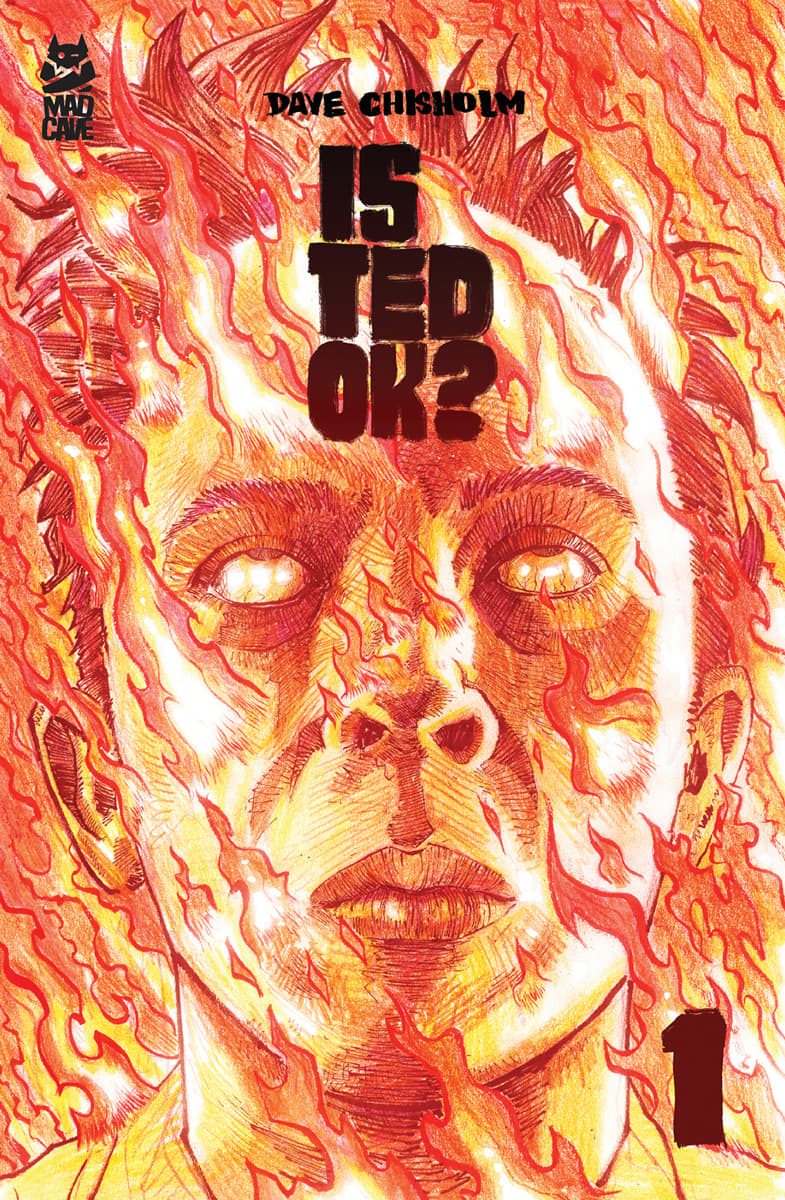
From the Publisher about Is Ted OK?
This is a story about Ted and Sarah.
Ted, isolated and paranoid, works for a mega-corporation owned by the world’s only trillionaire. He suffers from night terrors, obsessively draws the same mysterious figures again and again, all while listening to one track of music on repeat–oh, and the only “person” he ever talks to is a stray cat. His humanity is hanging by a thread.
Sarah is a new arrival to the city, fighting her own demons, and her job is to remotely spy on Ted to ensure he doesn’t hurt anyone…or himself. When Ted’s mental state begins to crack, Sarah compassionately intervenes to help, and things go catastrophically wrong.
IS TED OK? mashes up the paranoid existentialism of SEVERANCE with the cosmic sci-fi of AKIRA while exploring what happens when the act of help goes horribly wrong.
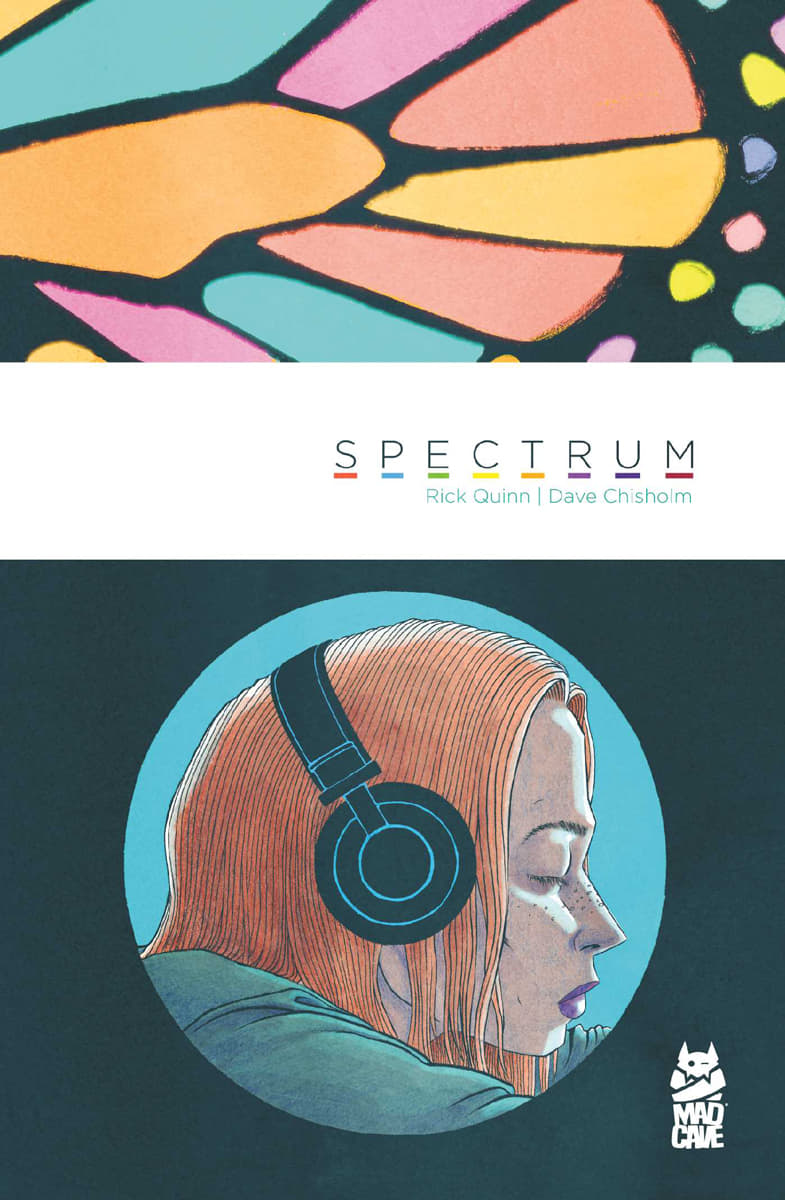
Spectrum is a frenetic, genre bending, formally inventive story about the magic and power of music with words by Rick Quinn and visuals by Dave Chisholm (Chasin' the Bird, Miles Davis and The Search for the Sound).
Melody Parker is losing her mind. She’s living on the streets of Seattle during the WTO protests of 1999. She is seeing things. Androids. Aliens. Pigs in high fashion. And a creature named Echo—one of the Sustained: elemental beings with the power to alter reality through music. She invites Melody to join her as she brings about the end of the world. As Melody tries to escape this strange woman, suppressed memories from across vast spans of time flood into her awareness, bringing her very identity into question.
Listen to our chat with creators Dave Chisholm and Rick Quinn.
Follow Comic Book Yeti
🔗 Comic Book Yeti LinkTree: https://linktr.ee/ComicBookYeti
For partnership and ad inquiries, please contact: thecomicsyeti@gmailcom
Follow your hosts
🔗 Jimmy Gaspero: https://bsky.app/profile/jimmygaspero.bsky.social
🔗 Byron O’Neal: https://bsky.app/profile/byrononeal.com
PATREON
We have a new Patreon, CryptidCreatorCornerpod. If you like what we do, please consider supporting us. We got two simple tiers, $1 and $3. Want to know more, you know what to do.
ARKENFORGE
Play TTRPG games? Make sure to check out our partner Arkenforge. Use the discount code YETI5 to get $5 off your order.
Make sure to check out our sponsor 2000AD.

[00:00:00] - [Speaker 0]
Your ears do not deceive you. You have just entered the cryptid creator corner brought to you by your friends at Comic Book Yeti. So without further ado, let's get on to the interview.
[00:00:11] - [Speaker 1]
Do you love sci fi?
[00:00:13] - [Speaker 2]
Are you a horror fan? Maybe you prefer action or
[00:00:17] - [Speaker 1]
fantasy. 2,000 AD has it all and should be on your radar. With a whole universe of characters from judge dread and strontium dog to rogue trooper, Shikara Halo Jones, and many more, every weekly issue, you get five action packed thrills from incredible creators such as Garth Ennis, Rob Williams, Alex Decampi, Dan Abnett, and so many others. Get a print subscription, and it'll arrive to your door every week. And your first issue is free or subscribe digitally.
[00:00:46] - [Speaker 1]
Get free back issues and download DRM free copies of every issue for just $9 a month. That's a 128 pages of incredible comics every month for less than $10. That's like a whole graphic novel's worth. All subscribers get amazing offers like discount vouchers and exclusive product offers. Head to 2000ad.com and click on subscribe now or download the 2000ad app.
[00:01:09] - [Speaker 1]
And why wait? Start reading today. I'll put links in the show notes for you.
[00:01:13] - [Speaker 3]
Hello, and welcome to Comic Book Yeti's cryptic creator corner. I am one of your hosts, Jimmy Gasparro, and I am very excited. I have a returning guest to the podcast today. Although last time, he was on, he was with Byron, it was him and Rick Quinn talking about their fantastic book, Spectrum, which I just finished rereading. And if you haven't, you gotta go get Spectrum.
[00:01:33] - [Speaker 3]
There's a beautiful hardcover that's coming out, I think at the end of this this month as we record this. But Spectrum's a phenomenal book, but, this this young man has a new comic that's gonna be out February 25 from Man Cave. I was lucky enough to read the first three issues, and I am so excited to talk about everything that's going on in this. And I know we can't we can't I don't really wanna spoil in everything. I want all the listeners to have the experience I did, So, we're gonna do our our best to kinda get into it, but that's is Ted okay?
[00:02:07] - [Speaker 3]
And please welcome to the podcast, Dave Chisholm. Dave, how are you doing today?
[00:02:13] - [Speaker 2]
Hey, Jimmy. I am doing okay. How are you?
[00:02:16] - [Speaker 3]
I'm okay. I'm I'm okay as well. I feel like we're gonna be saying okay a lot
[00:02:21] - [Speaker 2]
in this so Splendid. Oh,
[00:02:25] - [Speaker 3]
good. There we go. So is is Ted okay? I mean, the first three issues, what a wild ride this was. Because I felt like and I said this right before we were recording, but I wanna tell the listeners as well.
[00:02:38] - [Speaker 3]
I felt like I I did not quite get a handle on where this was going. I I wanna say, though, I was a 100% in and along for the ride from the very beginning. I mean, it starts out with your with your character, Sarah, I I think is her name, who we we learn her job is basically to watch another employee for this huge corporation. Like, she just watches him. And mainly, we learn she watches him to see any signs of suicidal or homicidal ideation.
[00:03:13] - [Speaker 3]
And then it it goes on from there where she feels like she has to go above and beyond just her obs observation and try and help, and it quickly goes off the rails from there. And, I mean, issue two and three are kinda bonkers once you learn a lot of this supporting cast. There's Noah, who's the CEO of the corporation. There's, Brody, who works for the company, who works in, I think the division is is Karma, which you will never guess listeners what it actually stands for. But, I mean and Ted himself, whose only friend appears to be a cat.
[00:03:52] - [Speaker 3]
Like, there is just, like, there is a lot going on about I feel like this current moment right now, whether or not we're talking about the power corporations have or or, politics or ideology.
[00:04:06] - [Speaker 2]
I mean,
[00:04:06] - [Speaker 3]
yeah, the surveillance state. There's there's so much going on here. How do you describe and and break this book down, like, in terms of, you know, the pitch to to Mad Cave or if you pitched it, like, anywhere else?
[00:04:20] - [Speaker 2]
Oh gosh. Well, it's it it is kinda tough because the way it is kinda structured a little bit like a mystery box kinda story where, like you said, you you never fully know what, like, the what's going on as a reader. And you're kind of plopped in the middle of this story with these characters, and then you it unfolds in in, like, some interesting and unpredictable ways. And so I think when I pitched it to Mad Cave, my pitch was, like, a very, like, top down big picture, like, the kind of stuff that you say to someone after they've read the whole thing. Right?
[00:04:58] - [Speaker 2]
All six
[00:04:58] - [Speaker 3]
issues
[00:04:59] - [Speaker 2]
of the thing. And then sort of, like and then as part of the pitch was, like, talking about, like, different themes and and ways that that we, like, ways that we could talk about it in terms of trying to sell a book without giving away the whole big picture of the story. Because, obviously, like, you can't you don't wanna necessarily, like, spoil the the ending and spoil the mystery, like, like, as a story, like, it's a when you're when you're trying to sell the thing. So so, yeah, like, it was really, like, a story. And and then and and then as I wrote it and kinda, like, I I I wrote I started writing it a really long time ago, maybe in, like, 2021, I think.
[00:05:42] - [Speaker 2]
And or I had the idea for this right before, like, Rick approached me with Spectrum, like, days before. And I put set it aside to do Spectrum and then came back to it, you know, and sort of, like, had this sort of, like, back and forth. I mean, I did Spectrum, and then in the middle of Spectrum, did the Miles Davis book. You know? And then I and then I worked on TED a little bit after that, and then I went back to Spectrum once we got, like, the deal with Mad Cave to finish Spectrum.
[00:06:09] - [Speaker 2]
Right? And so and then when I came back to TED, I was like, oh, I can't do this book. I it's too much of a mess. And then I I sort of was inspired to come back to it by watching, like, a TV show that I didn't really love. I didn't like it.
[00:06:23] - [Speaker 2]
I I watched this season of this TV show, and I was like I'm not gonna say which show it was, but it was the kind of thing that's, like, was almost great. And it, like, it it was inspiring. It it took some really big swings and maybe didn't and it made it inspired me to, like, with this book to be like, I'm gonna take I'm gonna take everything and, like, kinda crank it up a little bit and take some really big swings with the storytelling in this book and the plot stuff and the character stuff and not really play it safe, in a sense. And so pitching it was more like a bit a bit more like thematic stuff to saying, like, it's a story about, like, helping people. It's a story about empathy.
[00:07:01] - [Speaker 2]
It's a story about about violence and violent violence in men, and this kind of, like, crater of, like, empathy that we see in, like, modern men and stuff like that. And a story about the choices choices we make and connecting with people and everything like that. And then ultimately, it's a story about two people who are, like, at rock bottom, breaking bottom, who can who connect and see themselves in each other and then kind of, like, find their way helps them it helps each of them find their way. And then and then and then in the in the kind of the fun pitch, it's like, you know, it's a story about Ted and Sarah. Ted Ted has a high pressure job, and he's really stressed out all the time.
[00:07:48] - [Speaker 2]
And he's paranoid, and he's losing his mind. And Sarah's whole job is to make sure Ted like, secretly spy on Ted to make sure he doesn't, like, kill anybody or have any ideas to kill anybody or to hurt himself. And I think that's a pretty good pretty good hook. And, obviously, when, like you said, when she intervenes to try to help and kinda go above and beyond, the wheels come off, and then it just proceeds to kind of unfold, the scope of the whole story expands with each issue. Yeah, man.
[00:08:15] - [Speaker 2]
It gets really weird and cool.
[00:08:16] - [Speaker 3]
It does. It does get really weird and cool. Yeah. It is one that's like, I I there's so many things I wanna ask you, but I really want listeners to check it out and have the same experience I did because especially as we learn more, you know, about Ted. And, really, it's interesting because, like, we're we're reading the story.
[00:08:34] - [Speaker 3]
We're we're seeing everything play out in these panels. A lot of times, we're not just seeing Ted. We're seeing Ted through Sarah seeing Ted, which is kind of like so we're even, like, more one one step removed, but we do see things as Sarah learns more about the place where she works, as Ted learns more about this place, which, is it is it pronounced Einstein? But I is that how you say it in terms of how it's
[00:09:02] - [Speaker 2]
Yeah.
[00:09:02] - [Speaker 3]
The spelling? And so as we learn more and more about what, like, this company does, and then there's kind of, like, a section that every each issue, at least the first three ends with, like, the CEO Noah kind of being interviewed by a journalist, and you you learn more about the world of of of is is Ted okay. Yeah. It does get it does get really weird, and, I can't wait to see, like, where it goes because I feel like I have so many puzzle pieces. Like, it is a bit of a mystery box, but I'm really excited, especially the way issue three ends.
[00:09:36] - [Speaker 3]
I I don't wanna say too much. I did not see what happened in issue three, the end of issue three, like, coming at all. That that's good to hear. That's one hell of a way to end a comic book issue, because, yeah, I can't wait for issue four now. But, yeah, really, really fun stuff.
[00:09:56] - [Speaker 2]
I think the ending of issue four is is, I think it's just as I think, actually, the endings of three, four, and five are all plot points that I'm like, story beats that I'm really proud of. So I think it just kinda keeps, like, cranking the heat up on these characters and stuff. So I'm, without, like, betraying the characters, it's not like at least I'm I I I worked really hard to make sure that all this stuff happened in a way that wasn't, like, convoluted and, with in in a way that would betray the characters kind of in our worlds and stuff like that. You know? So Yeah.
[00:10:31] - [Speaker 2]
I mean, there there is a lot
[00:10:32] - [Speaker 3]
going on, but I I didn't ever feel like I was lost or that it was convoluted. I mean, there's certainly, you know, questions that I have about what is happening.
[00:10:39] - [Speaker 2]
Well, maybe are these choices made? So Maybe after we end the recording, we can you can ask me any questions that you have, like, off the record. I would be happy to talk about it, you know, as long as I as long as I know the answers, I guess I'll I'll, I'm happy to chat with you about it, man.
[00:10:55] - [Speaker 3]
Oh, I appreciate that. I'll I'll I'll wait. You know what? Maybe we'll have to do that once, once it's all done because I I don't I don't I don't wanna I don't I don't wanna give I don't wanna I don't wanna ruin the experience for myself. I wouldn't do
[00:11:07] - [Speaker 2]
I wouldn't do that to you, man. I I wouldn't.
[00:11:11] - [Speaker 3]
I've been having a very nice time. I I I wanted to say that I I love not not necessarily I love Easter eggs and stuff, but I also like, not necessarily Easter eggs, but just little nods to to other things. And so one of the things I did for this, because in the beginning of issue one, we learned that Ted always has headphones on. He's always listening to music, and I think, all we're we're told is that he listens to Paganini, which I was I was I I mean, I know the name, but I I'm I haven't listened really to classical music since college, and I took a a course at Saint Jude's called modern mosaic. And it was just music, art, and and literature kind of in place of, like, like, a western civ class.
[00:11:57] - [Speaker 3]
Yeah. We had to listen to a piece of music and identify it and talk about it. So I did, actually read issue one while listening to, a recording of Paganini's, 24
[00:12:10] - [Speaker 2]
Capri's. Yeah.
[00:12:11] - [Speaker 3]
Capri's. Yeah. Yeah. I was trying to think of how to pronounce it in Italian, and I get I don't if it would be Capri's. But Yeah.
[00:12:17] - [Speaker 3]
So I I I listened to I was trying to channel a little of Ted. I'm not sure what what I don't think it's been revealed what particular piece of
[00:12:25] - [Speaker 2]
music he listens to, but I
[00:12:26] - [Speaker 3]
put some Paganini on. I read issue one, and, I don't know. I recommend it. I had a good time.
[00:12:31] - [Speaker 2]
So Oh, cool, man. It's I I see, like, that piece of music or any of those, like, theme and variations by so for solo violin by Paganini really feel like it captures the obsession of this dude. Like, Ted's, like like, myopic kind of, like, like, existence is the in his, like, you know, stuck in a rut in a major way kinda guy. So, yeah, man. That's cool.
[00:12:57] - [Speaker 2]
That that's awesome that you looked that up.
[00:12:59] - [Speaker 3]
Like I said, I recognize the name, and I'm like, oh, I couldn't think of a piece of mute the piece of music or or, like, a single one. So I found something, and I listened to it. And I was like, oh, was the recording I found was, like, eight minutes. So I was like, alright. Well, I'm just gonna leave this on, and I'm gonna read issue one.
[00:13:13] - [Speaker 3]
And And then I was like, you know what? I really enjoyed that.
[00:13:16] - [Speaker 2]
That was That's cool, man. Awesome, man.
[00:13:19] - [Speaker 3]
That was a nice way to a nice way to do it.
[00:13:21] - [Speaker 2]
Hell, yeah.
[00:13:22] - [Speaker 3]
It there's a couple of other things that, you know, are mentioned throughout that I thought were very interesting because as Sarah gets into a situation and she you she's talking in the book, like, her narration is to somebody, to a person that she lost or that she's no longer in touch with. Like, you don't know all the details of what's going on as as issue one at least goes through and, like, then the further issues. And you're you learn a little bit more about this person that she might be talking to and what what the situation was. But I think it's still in issue one where she references, our lady of pity, the Pieta. And I thought, like, oh, that like, little things like that I thought were so, you know Oh, yeah.
[00:14:04] - [Speaker 3]
Fascinating. Because then I thought and then I I one of the reasons I went back and read Spectrum because I think in issue one of of Spectrum, not necessarily the statue, but Pieta is mentioned in in Spectrum issue one as well, just sparked a memory of of having read that.
[00:14:22] - [Speaker 2]
Was the I think it was the, the Vivaldi page.
[00:14:27] - [Speaker 3]
It is. Yeah. It's it's not the statue, but the same the I guess it's a piece of of music that carries the the the name, which is just, I guess, pity in Italian.
[00:14:36] - [Speaker 2]
Yeah. It's the Hospitalle Della Pieta in Venice, Italy. That's the name of the of the place of the orphanage where Vivaldi or where Vivaldi, like, taught it was a girls school of, like, orphaned girls and he he taught all of them music and his orchestra was all of these, like, like, an orchestra of, like, orphaned girls. Pretty pretty, pretty wild stuff, man.
[00:15:00] - [Speaker 3]
Oh, yeah. Speaking of of Spectrum, and I know you talked about it with and you and Rick talked about it with Byron, but I was just kinda curious going, you know, from Spectrum and then to Is It Ted? And and, you know, it's interesting finding out that you had the idea for Is It Ted? Did Spectrum? Did the Miles Davis book?
[00:15:20] - [Speaker 3]
Return to Is It Ted? How did your approach differ? Because, like, the paneling in Spectrum is, I think, very different, very fitting for Spectrum, but at least issue one and issue two Yeah. It feels more of like a a traditional paneling for Is It Ted? So kinda what was your, like, thought process in in that, you know, that approach?
[00:15:45] - [Speaker 2]
Oh, man. You know, I I think that always want my formal decisions to be led by the content of the story and not to have formal decisions be, like, thrust upon it just because I'm, like, bored. Right? So for this particular story, it didn't Spectrum is a very, like, formally adventurous, like, narrative. Right?
[00:16:18] - [Speaker 2]
It's got all those little asides. It's, like, touching on a lot of bases in each issue. And in order to keep that stuff clear, it was necessary. I I thought it would be helpful to for the storytelling to have the asides be in a completely different style than the proper story and to have, like, Melody's story look like this and Ada's story look like that. And then when they come together, it's like the two these two kind of color palettes come together.
[00:16:50] - [Speaker 2]
Right? Mhmm. And and then with, like, all of the interesting circular panels and stuff like that, it was treated like, trying to treat take take, like, an idea and treat it like a theme, like like, motivic development the way, like, Beethoven would take, like, a single idea and unfold it over the course of, like, a longer piece. Right? So taking this, like, idea of a circular panel and then using it in a in as many different ways and kind of trying to find ways to, like, keep that motif going throughout in, like you know, just trying to keep that going.
[00:17:29] - [Speaker 2]
And it felt a little a lot more, like, abstract and formalist. And I think Ted is narratively less ambitious than Spectrum. But the nice thing about that is the nice thing about that is so the the nice thing about using, like, a more typical kind of comic, like, compositional structure like, page layout panel flow idea is that you can set up a really clear sense of normal. Right? And the longer you stick with that normal, it means that when you break that normal, it hits so fucking hard, man.
[00:18:09] - [Speaker 2]
It hits so hard. So, like, there's that moment, again, without spoiling anything, in issue three where the normal gets completely rug pulled. Right? And that moment hits so so hard because you because it took that long to get to that point. Right?
[00:18:28] - [Speaker 2]
Whereas if I was playing around the form throughout willy nilly without really regard to the narrative, that moment wouldn't hit hard. Right? It's like if you had a to have a piece of music that is that has no, like, bass or drums in it for the first, like, three minutes of the song, and then the bass and drums come in really loud, like, at, like, four minutes, that's gonna hit so much harder than if there were bass and drums the whole time. What I tell my students is that if if everything is loud, then nothing is loud. If everything is colorful saturated, then nothing then then if not you might as well make it black and white.
[00:19:07] - [Speaker 2]
Right? The whole point of all of this stuff is using contrast to carry narrative. And so for Ted, it became about, like, setting up a very compelling normal visual language that gets, like, jolted at times, car accident scene. Right? But, again, maybe I'm saying too much, but it's in, like, my promo stuff.
[00:19:29] - [Speaker 2]
Like, it's in the promo videos and stuff. Like Yeah.
[00:19:32] - [Speaker 3]
These Which are great which are great, by the way.
[00:19:34] - [Speaker 2]
Oh, thank you
[00:19:35] - [Speaker 3]
very much, sir. I love all your promo videos.
[00:19:37] - [Speaker 2]
Thanks, man. I try to I try to have fun with it. And you and so little things, like, if like, knowing how many panels you allow on a page and how many tiers you allow and how many panels per tier you allow and, like, how much story each page can contain and all of these things and what's the color palette of the Ted scenes? What's the color palette of the Sarah scenes? How does Sarah's narration voice mail narration interact with Ted's stuff?
[00:20:11] - [Speaker 2]
And how does her narration interact with what she's do what we're seeing her do at any given moment. Right? And it becomes this really layered thing that is form is in a way, like, just as formally the just as formally purposeful as Spectrum is, but in a way that isn't quite as, as, like, forward with it. Right? It's a little bit more hidden in terms of how it is how it's carrying the story and stuff.
[00:20:44] - [Speaker 2]
And Spectrum is very purposefully form forward, like, very purposefully. I think our mantra was, like, trust your reader with that, with that book. I think that sometimes let me put it this way. I think that sometimes when people see a lot of text on a page, they they just assume it's overwritten without actually reading what's there and how it's interacting with what's in the visuals. Right?
[00:21:14] - [Speaker 2]
And this is, like, a source of I just it just it just bothers me because comics the the the easily the the best the the best the part of comics that carries the most information is text. Right? That's the tech that is the most efficient carrier of information is text. You can just fit so much information in the tiniest little spot. And people talk about the platonic ideal of comics being, like, pure visuals.
[00:21:41] - [Speaker 2]
This is it's a visual medium and all this stuff. And, like and it's, no, actually. Like, part of visuals is, like, in including text in it. Right? And making sure that your text is carrying x weight of a story and your visuals are carrying y weight of a story.
[00:21:57] - [Speaker 2]
And when then when you combine this x and y together, it makes a new thing. It makes a z aspect of it. And the way these three things can, like, create the the way, like, text and text can carry one thing, visuals can carry another thing, and then the the way the two of them rub up against each other carries a third thing. And that's to me where where the sauce really is for comics. There's a lot of this kind of stuff in, like, Fun Home and stuff like that.
[00:22:23] - [Speaker 2]
And, like, I think and, you know, all of the very wordy comics that we that are, like, really well known and we love. And I'm not trying to compare, like, Spectrum to, like, Fun Home or whatever, but I think I think that, you know, people should read it again because it's a really nuanced, like, deliberate, again, purposeful work.
[00:22:45] - [Speaker 3]
I mean, listeners, for for my my 2¢, I I don't I don't think Spectrum's overwritten at all. Spectrum to me felt like, a comic that, everything is deliberate. Everything is purposeful. And there's it there is a a lot of story, a lot of information, but I I'd never felt that it was never felt that it was ever written overwritten. Never felt that it was, like, dense.
[00:23:13] - [Speaker 3]
Never felt that it was a material that was, like, impenetrable. Mhmm. And, yeah, a story that I felt like at times I wasn't quite sure what it was going to end up being about, and I just kinda let myself read it, look at it, get into it, and take me where it wanted to take me. And then I said, well, I'll I'll think about it once I once I get there. Stop trying to analyze it as I go and just kinda let the kinda wash over me.
[00:23:42] - [Speaker 3]
Yeah. And because there's a lot of stuff, especially when you get into, like, issue four and five with Mhmm. With Melody and Ada and, like, the her dad Leon stuff and the George stuff. And when they get I think it's issue five, maybe into six when they get separated, that I think is just, like, wonderful. And I really like all the stuff when they're in the the Vivian dark is it Vivian dark bloom's dream?
[00:24:08] - [Speaker 3]
Like, the colorless muse like, museum that's, like, there's so much just in those I think it's only, like doesn't even last, like, maybe a a full page or, like, maybe a page and and a little bit more. But there's so much there that I really was was digging into.
[00:24:25] - [Speaker 2]
That's cool, man.
[00:24:26] - [Speaker 3]
Well So in any event.
[00:24:27] - [Speaker 2]
Your target audience achieved, man. We found you.
[00:24:30] - [Speaker 3]
But to get back to is Ted okay? There's a couple of things that I I I do wanna talk about that I thought were really, really interesting, you know, because you have this big corporate setting. You have the surveillance issues like we've talked about. One little thing that I thought was I was really fascinated by was every time Ted left the building, there there is a a message that is being broadcast that says, do not fraternize with your coworkers. I think at one time, it says, like, let them go home in peace.
[00:24:59] - [Speaker 3]
And then I think there's another issue where it's like, they just wanna decompress, which I just I felt was such, like, an interesting touch to really kind of convey the type of, you know, world that you're building here with this with this corporation because it's such, like, an interesting kind of thing that it's broadcast as Ted is leaving and as other people are coming to work in the building. Like, it's it's outside, it seemed like, once Ted left the building that that takes place. I thought that was so it's such an interesting touch.
[00:25:34] - [Speaker 2]
Yeah. Well, it's sort of the kind of like, thanks, man. I'm glad that there's there's some stuff in here that I think when I when I first wrote it, it was very clearly, like it was very obviously satire. And since the world has then just basically turned since then, now it's not quite so satirical, and it's a bit more like, yeah. I can see that happening.
[00:25:54] - [Speaker 2]
Yeah.
[00:25:55] - [Speaker 3]
Well, that is a problem when you live in a world where it seems like how far do we have to push things to get to get to satire. Right?
[00:26:03] - [Speaker 2]
Yeah. And so, yeah. Exactly. And so with that, it's like, this corporation is was really built on, like, what they call, like, positive paranoia. Right?
[00:26:15] - [Speaker 2]
Mhmm. Where it's like, you it's like, you know, in the wake of a big tragedy, there's people want security. And part of security is like looking at people with like suspicion and this company. So like if you notice like Ted's office, it's not like he's in a cubicle with four other people or something like that. He's, like, in a in a room that's, like like, this big.
[00:26:40] - [Speaker 2]
And he's got his computer and he's just alone in that room. And the only person he interfaces with is Skip, his boss. And and even then, Ted doesn't really wanna doesn't seem to be interested in talking to Skip much. And then and then so it's really the point being that, this company, it's in their best interest to keep people from building, like, relationships with other people that they work with. At least in that particular culture is, like, very pronounced at the New York branch of Einstein's.
[00:27:12] - [Speaker 3]
Yeah. Yeah. Yeah. Ted I mean, Ted doesn't even have he doesn't have anything on his walls. He's, he's got a drawer full of his little the same little sketch that he's doing.
[00:27:23] - [Speaker 3]
Is it? Mhmm. Yeah. Very or and very interesting interesting character Ted is. I I wanted to talk to you because I thought the color palette in issue three in particular was pretty fascinating, especially the choice when they're at they have to go to a a gala, like this mandatory company gala in issue three, like everybody at the company.
[00:27:46] - [Speaker 3]
And it's a lot of, you know, purple, like, you know, and then to a, like, a light blue, and it's I really I really like the colors of it, but then there's a Sarah tries to confront the character of Brody at one point and is talking about, like, her home life, and it is, like, red. It is, like the the the past is just, like, bright red, and it's so jarring. I just it's just so interesting in terms of what you can do with color and, like, what you were just talking about earlier with having a more traditional paneling. And then when it goes weird, you know, it it really hits harder. And I felt like the same way was you you have the same effect with color because you have, like, this very consistent color palette throughout.
[00:28:34] - [Speaker 3]
And when you do that flashback and what Sarah is talking about happened, like, with her father and his father before him, it is just, like, red. And it really it really is jarring. And I think real really effective in terms of, like, having a moment that the the reader can kind of, like, sit with. That's cool, man.
[00:28:54] - [Speaker 2]
Yeah. Yeah. Well, man, like, I I think I teach a class at the Rochester Institute of Technology. I live in Rochester, New York. I teach a class.
[00:29:06] - [Speaker 2]
I've taught this class since for two and a half years now. Because I know that I was asked to teach the the the first time I was asked to teach the class, I was asked two weeks before the start of the semester, and it and my child had just been born. It was crazy. That that semester was the most sleep deprived, but it's a great it was it's a really, really fun class to teach. And the big picture of that class is that every single thing you do on a page is an opportunity to carry the story, is an opportunity to tell the story and carry the story.
[00:29:42] - [Speaker 2]
And, I tell people I tell my students, when you're planning out any panel, there's two questions that you wanna ask yourself. One, what do people need to see in this panel? What's the crucial bit of visual information? And two, what do you want people to feel in this panel? And a lot of the times, feeling comes with color.
[00:30:06] - [Speaker 2]
Right? Color is what especially if we're working with, like, color comics, not black and white comics. Right? Color is a is a is a huge carrier of emotion. And so often, people default to coloring a default.
[00:30:19] - [Speaker 2]
They're like, well, I dropped this, fill it. I'm done. Right? Or and I I I really kinda come back to a lot with with my students. Like, color how things feel instead of what color they really are.
[00:30:33] - [Speaker 2]
Color how it feels. Color the emotion of a scene. And, you know, people peep and it and I I really do believe that, like, every aspect of this of that's one of the my that's probably my very favorite thing about making comics is that every is you can just get so in the weeds, and, like, every single thing can can be used with purpose. And if and to me, like, if if I'm making a page, I wanna, like my goal is to always make it so that everything is carrying story. So the the camera angles I'm choosing, the composition of each panel, the shape of each panel, the panel that's the first on the page, the panel that's the last on a page, the way pages interact with each other as you turn the page, color palette, what tools am I using for inking, what are the character designs, like, all of every single aspect is, like, an opportunity to carry story.
[00:31:28] - [Speaker 2]
And it's not it's not just, like, get get the hell out of the way of the story. It's like, this is the story. Like, this stuff carries the story. And that's what I that's, like, my bread and butter. Like, I I love that's I I lose sleep over that.
[00:31:41] - [Speaker 2]
I just, like, it just makes me so stoked about comics.
[00:31:46] - [Speaker 3]
Well, I mean, that's one of the things that I I love in in reading them, and I usually read especially comics that I mean, comics that I really love, I'll I'll read twice, but especially comics when I'm, like, having somebody on the podcast. I like to read it twice because I just like once just to I'm a fast reader. I always have to constantly slow down to pay attention, making sure I'm paying attention to to the art and seeing everything on the page.
[00:32:10] - [Speaker 2]
I get it. Yeah. But I'll read
[00:32:12] - [Speaker 3]
it once, and I'll go through, and then I'll read it a second time. And, you know, the question in my head will always be like, well, why why did the writer choose this? Why did the artist, the colorist, the letterer, whoever it might be? Like, why did they make, you know, this choice to try well, one, to try and think of things that we can, like, talk about on the podcast because I do like talking about, like, the actual creation of the comic, but also because, you know, I've been doing this for a couple of of years now. And, I mean, I, you know, over, like, 200 some episodes, and I'm I still Just love them, man.
[00:32:44] - [Speaker 3]
Fascinated by the creation of of comics and why certain choices are made. And Yeah. Because there's so you know, you can tell a story in a comic so many different ways in terms of color, panel composition, lettering, like, whatever it it might be. And I'm always fascinated by that. And I especially love, you know, to hear that you are someone that approaches it with every every choice is a choice to to tell the story.
[00:33:13] - [Speaker 3]
Like, there's no throwaway decisions because, you know, I just think it's that that it's even more fascinating for me when I go through, and it's like, well, why is Dave doing this? Especially with one with your writing and your I mean, the collaborative process is amazing, but I I do Yeah. When when something is when you're doing, you know, double duty or triple duty or quadrupled, whatever it is, you know, in terms of all the parts to think like, oh, why is Dave doing this? Why is he why does he why is he wanna why is he showing us this? This this hallway scene is this light blue, and now it has gone into, you know, more of a an amber.
[00:33:53] - [Speaker 3]
Like, why? What you know, I'm just I I love to get into that that nerdy stuff. So
[00:33:59] - [Speaker 1]
Yeah. Alright, everybody. We're gonna take
[00:34:00] - [Speaker 2]
a quick break. We'll be right back.
[00:34:04] - [Speaker 1]
Y'all, Jimmy, the chaos goblin strikes again. I should have known better than to mention I was working on my DC Universe meets Ravenloft hybrid D and D campaign on social media. My bad. He goes and tags a bunch of comics creators we know, and now I have to get it in gear and whip this campaign into shape so we could start playing. Another friend chimes in, are you gonna make maps?
[00:34:25] - [Speaker 1]
It's fair to say it's been a while since I put something together, so I guess, question mark? It was then that I discovered Arkham Forge. If you don't know who Arkham Forge is, they have everything you need to make your TTRPG more fun and immersive, allowing you to build, play, and export animated maps, including in person fog of war capability that lets your players interact with maps as the adventure unfolds while you, the DM, get the full picture. Now I'm set to easily build high res animated maps, saving myself precious time and significantly adding nuance to our campaign. That's a win every day in my book.
[00:35:01] - [Speaker 1]
Check them out at arkinforge.com and use the discount code yeti five to get $5 off. I'll drop a link in the show notes for you, and big thanks to arkin forge for partnering with our show. Think I'm gonna make Jimmy play a goblin warlock just to get even.
[00:35:18] - [Speaker 3]
Welcome back.
[00:35:19] - [Speaker 2]
Hey hey, man. Like, you know, there's this anecdote or this story about this composer. I can't remember his name. I think it was, like, Dufai or some, like it was some renaissance composer. God.
[00:35:35] - [Speaker 2]
And this is gonna bother me. Hang on just one sec. Yeah. Dufai. That's right.
[00:35:39] - [Speaker 2]
Okay. I was right. I can't believe I remembered that, by the way. I my doctorate really paid off just now. There was this composer named Dufai who lived in, like, the shoot, like, fourteen hundreds.
[00:35:51] - [Speaker 2]
And he, he he wrote music to commemorate the opening of the Duomo in Florence, the big dome in Florence. Alright. I've been there. It's it's it's awesome. Right?
[00:36:06] - [Speaker 2]
It's Yeah. So it's so stunning. And and there is this technique that composers used back then called isorhythm, which which sounds absolutely foreign to modern music writing process and technique. But isorhythm basically is you had a set order of notes and a set repeated rhythm. And those two things wouldn't exactly line up exactly.
[00:36:31] - [Speaker 2]
They would the order of notes would start over like this, and the rhythm would start over, but they might not line up all the time. So the rhythm might start over before the notes start over and stuff like that. And it was this it turned they and when you listen to pieces that have that were written with, like, this technique, it gets it sounds really, like, mixed up and complicated and stuff like that. And it's, like, all, like, different proportions of how these things interact with each other. A lot of different stuff happening at the same time with different proportions.
[00:37:00] - [Speaker 2]
And the cool thing is that somebody relatively recently was like, there's something weird about these proportions. And they measured the proportions out of all this, and it matches the proportions of the dome that he was writing this music about. The mathematical proportions of this dome are matched by the various, like, proportions in the isorhythm of this particular piece of music that he wrote. And this this dude just put this in there like nobody would hear this in their mind. This is not something you hear and go, yeah.
[00:37:30] - [Speaker 2]
That's a dome. It's it's absolutely the most esoteric, secret, hidden detail that is so meticulously put together that it took hundreds of years for someone to be like, hey. Wait a minute. That's what this is. Right?
[00:37:45] - [Speaker 2]
And maybe this dude wrote other music that has never been discovered reflects something else. Right? And I love that shit so much, man. I live for that stuff. I hope that someday, not that I'm, like, doing that level of, like, genius stuff or whatever, but, like, my goal is to make stuff that withstands that level of scrutiny that people can look at it and read it over and over again or listen to the music that I write over and over again and find connective tissue, find little things that, like, echo this and echo that, find bits that link together.
[00:38:20] - [Speaker 2]
They could read my Miles Davis book and read this book and maybe say, like, oh, this is something that's growing from this to that and stuff like that. I I I want I'm making all this stuff with real purpose. And I it sound I know it sounds silly because it's like, these are funny books, man. These are comic books. Like, take it easy, man.
[00:38:41] - [Speaker 2]
But, like, if I'm not trying to, like, make something that withstands scrutiny and withstands the test of time or whatever that means, like, that's how I operate. I wanna make stuff that's, like, really that I this is, like, the stuff that makes me geek out. You know? And so so yeah. Like, that's, I mean, it's kinda speaks to that same thing of, like, every aspect of this can carry story.
[00:39:02] - [Speaker 2]
And even if it's, like, a really secret hidden aspect that, like, nobody's really gonna even pick up on ever, like, I don't care. Like, I want that stuff to live in there. I want that stuff. That's why it was really cool to work with Rick, because Rick has kinda, like, a similar kind of, like, meticulousness with with his stuff. At the same time, I think if you look at my artwork, it's not exactly like I'm Jeff Darrow in meticulousness with my art.
[00:39:26] - [Speaker 2]
You know what I mean? My artwork I make my art in a in a frenzy. You know what I mean? Like, I'm I work really quickly. I work with a level of intensity and real real purpose when I sit down to work.
[00:39:40] - [Speaker 2]
I don't wanna, like, mess around and, you know, guess have guesswork. Like, so when I sit down to work, I know what exactly what I wanna put on the paper, and I, like, work as intensely as I can to get stuff down quickly so that I can not just make one thing before the end of my life. I can, like, keep making more and more things. You know what I mean? Yeah.
[00:40:04] - [Speaker 2]
I and all oh, I wanna see the sun too. You know what I mean? Like, I I tell my tell my students, like, you only have one you're only a metabolism. That's all you are is just a metabolism. Right?
[00:40:15] - [Speaker 2]
And so, like, you have to take care of that and you and you and don't get so bogged down in something that you can't that, like, it it that it's the only thing that you ever do. I don't know if that's good advice or bad advice, but for me, it's been good advice because it's allowed me to, like, work. So I I think, like, in some ways, I'm meticulous. In other ways, I'm very much a jazz musician where I'm, like, the first thing that I put down. What if I put a line down, that line stays down.
[00:40:45] - [Speaker 2]
You know? Like, I'm not gonna be, like, second guessing stuff. And e even if I maybe could or should, I'm, like, I'm very committed in that level of my work, you know? So, like, I don't wanna sell myself, like this meticulous whatever whatever. I also think, like, I'm also very much, like, from an improvisational kind of background.
[00:41:10] - [Speaker 2]
And I think that the meticulousness maybe comes through in some ways and then the improvisational stuff. And they're not they can coexist. Right? Like
[00:41:18] - [Speaker 3]
Oh, yeah.
[00:41:18] - [Speaker 2]
But, anyway, that's a lot of able gazey kind of stuff. Sorry.
[00:41:23] - [Speaker 3]
No. No. I no. I I that's it's a lot of information to take in. I wanna try well, now I gotta try and track down if I can find a recording of Defy's piece for the for the Duomo.
[00:41:36] - [Speaker 2]
Yeah. It's called Nupere Rosarum Flores, n u p e r, Rosarum, o s r o s a r u m f l o r e s. Yeah. Alright. It's cool, man.
[00:41:51] - [Speaker 2]
It's cool. It's it's I mean, the music is really weird. Renaissance music is before music started to sound like music sounds. So it's very strange to listen to. But it'll put you in a mindset.
[00:42:06] - [Speaker 2]
It's definitely interesting stuff, and it's an acquired taste, I think.
[00:42:12] - [Speaker 3]
Well, I at least wanna broaden my musical horizons and then and check it out because that's kind of interesting. I I wanted to ask. When would you when you do something like, is Ted okay? Like, do you do you work from a script? Do you work from an outline?
[00:42:27] - [Speaker 3]
Do you just start drawing? Like, how do you kinda plot that out?
[00:42:31] - [Speaker 2]
Yeah, man. I I I write scripts. I mean, I with with Mad Cave, I I have an editor, and so I I they want they want scripts. Okay. But, also, like, I am pretty particular and I'm pretty I think that's the part of the process where I'm, like, the most slow is scripting and everything.
[00:42:59] - [Speaker 2]
And when I when I I always, like this is I always sit I always take my script in draft and read through the whole thing with my wife, Elise, who's, like, the most amazing editor, like, ever. He has, like, a real a real, like I mean, how do I put it? Like, a combination of a real really oh, man. I'm sorry, Jimmy. A really, like, cal well calibrated compass for, like, is this bullshit?
[00:43:32] - [Speaker 2]
Like, the is your does character does your character is this something this person would do right now? Is this something that they would say right now? Because a lot of times, we let the plot write the characters and not the characters write the plot. And she can smell that. It's it's it's and it's and I'm really, really lucky that she that she has and for this book, I I did, ask her if she wanted to be listed as, like, a co writer, because I do think that, like, her fingerprints are all over it.
[00:44:05] - [Speaker 2]
And she's like, no. No. No way. And I I mean, so, you know, I the the kind of big ideas are my ideas, but without, like, having someone who is so good at this and unafraid to kind of be like, this isn't it to me, and someone who I trust completely with this with the these ideas and everything, like, I'm really lucky. So, like, before my stuff gets to my editor at Mad Cave, it has been through, like, the a really, like, high powered process of, like, getting it to the point where it's, like, ready to go.
[00:44:46] - [Speaker 2]
Yeah. I mean, it's it's she it's it's really it's really cool. Oh, that's awesome. Oh, cool. Yeah.
[00:44:53] - [Speaker 2]
I was curious.
[00:44:54] - [Speaker 3]
But, yeah, that's that's great to have somebody like that, especially who can tell, you know, that you're
[00:45:00] - [Speaker 2]
Yeah.
[00:45:00] - [Speaker 3]
You're not great in bullshit and that your characters are kinda staying true to who, you know, the the characters are. But, yeah, that that's an interesting point because a lot of times you have an idea where you want a story to go, and you're trying to just get to the point in the plot, and and your characters are servicing the plot. But I you're right. I think it it makes for a more compelling story when you have, you know, you have strong characters who are really making the choices that that drive everything. You know?
[00:45:26] - [Speaker 3]
Exactly.
[00:45:27] - [Speaker 2]
Yeah. Exactly. I mean, how many times have we seen, like, a Disney plus Star Wars show or, like, a show on, like, a streaming platform where, like, episode one is, like, a very compelling hook, And then episodes, like, two through seven is you can very clearly, the author is, like, moving them, like, action figures to where they want them to be for the finale, which then is good. Right?
[00:45:51] - [Speaker 3]
Yeah. I mean, we we've we've seen that play out.
[00:45:54] - [Speaker 2]
And so you can tell that they know where they want it to get to, and they know where that's starting. And they don't spend enough time asking what are the character where is the agency here? Where are they where is that happening? And so I work from a script. I usually do have, like, a clear picture in my head when I'm scripting in terms of panel layout and camera angles and, like, recurring visual motifs and stuff like that.
[00:46:21] - [Speaker 2]
And then I work on on, you know, traditionally for a lot of it, like the like, here's the the cover art for this.
[00:46:32] - [Speaker 3]
Oh, wow. Yeah. Listeners, Dave Dave's showing me, like, the the actual page of art from the cover of issue number one, which, is when you'll I'll I'll have a a link in the show notes. You can go to the mad cave and and page and see what the cover looks like. It's absolutely it's awesome.
[00:46:50] - [Speaker 3]
And so I try to
[00:46:51] - [Speaker 2]
get as much stuff on the page as I can. It usually, it ends up being, like, like a single color colored pencil or colored ink that I And if I'm doing, like, special effects, I'll add another color so that I can separate them out easily digitally afterwards and mess with them. The the for any, like, process nerds, the benefit of using a colored pencil instead of a regular graphite pencil is that I can separate the black line art really easily from the mid tones that I make using colored pencil if it's color. And it gives me total control over the line art that's separate from the control I have over the mid tones that are, like, colored pencil. So I can adjust those really easily.
[00:47:38] - [Speaker 2]
I I always whenever I see people use ink washes that are, like, black ink washes, I'm just like, why are you doing this? You should use a colored ink. You should use a red ink or a blue ink, and then your line art will be pure and separate from the washes that you do. And you can still it'll still have the same value range. Maybe just you're losing a little bit of the lower value of the darker values if you're using a color.
[00:48:07] - [Speaker 2]
But we don't really necessarily want stuff to live in that muddy value range anyway. That very, like, almost black, but not black range. Anyway, I just kind of I've been trying to, like, lightly proselytize this to and I haven't seen anybody else do it, but it's been a huge game changer for me. It's another thing that sped me up because I don't have to do as much, like, mid tone fussing in the inks stage, which usually ends up being, like, some kind of hatching or cross hatching that, you know, works at some sometimes and other times doesn't work as well and can kind of kill clarity sometimes. And I've found that using, colored pencils for that gives me that organic texture that I like that I have a hard time getting in digital colors.
[00:48:53] - [Speaker 2]
And I can do it a little bit quicker than I can work digitally, which I know sounds crazy for anyone who does a lot of digital art. But I'm kinda slow digit when I'm working digitally, which, again, sounds insane. I should if I practice more digitally, I probably would realize that that's, like, really silly.
[00:49:14] - [Speaker 3]
But But what but, you know, that's but that's where you are, and that's that's okay because you're cranking out a really amazing comic books, man.
[00:49:22] - [Speaker 4]
Thanks, dude.
[00:49:23] - [Speaker 3]
Well, look, Dave, I I I don't wanna I'll I'll I'll keep you all night, like, really get really getting into the weeds in terms of the the story of this. But, yeah, listeners, I I don't wanna give too much away about is Ted okay. I've said that already, but it's true. It is a really interesting premise, and this story gets weird. It gets really weird, and I'm here for it.
[00:49:48] - [Speaker 3]
I would say that I've said on this podcast before when I've talked to certain creators that I I love all kinds of comic books. This is, I think, the new golden age of comics. No matter what you're into, you can you can find something. But I I there's nothing I appreciate more than creators taking a big swing and doing things that I don't think I've ever seen before. And Dave is somebody who I've been wanting to talk to for a while because of his work.
[00:50:16] - [Speaker 3]
I thought what him and Rick did in in Spectrum was great. If you you haven't read any of, the Dave's Miles Davis book and then, what was the the other jazz one? Was it did it about char was it Charlie Parker?
[00:50:30] - [Speaker 2]
Yeah. There's a Charlie Parker book and then a book for Blue Note Blue Note records called Enter the Blue.
[00:50:35] - [Speaker 3]
Yep. And Enter the Blue. I mean, just amazing amazing comic books. But, is Ted okay? I feel like is a little bit of a departure from some of the stuff I've seen from Dave recently, and I just I I have no idea where it's gonna go next in issue four, so I cannot wait.
[00:50:57] - [Speaker 3]
I
[00:50:58] - [Speaker 2]
I'm having I'm having the most fun making this book than I I mean, this book, I think, is my best work. So for take that for what for what it's worth.
[00:51:08] - [Speaker 3]
Yeah. I I I think it's fantastic. So it's Man Cave Studios. It's gonna be out February 25. And I think the final order cutoff is, like, early February, maybe Feb February 1 or second.
[00:51:22] - [Speaker 3]
But, yeah, let you like I've said a million times, let your local shop know that you want it. It's the best way to let Mad Cave know is to tell your local shop to order it, or you can order it right through Mad Cave. I'll put links in the show notes. And if you haven't if you haven't checked out Spectrum, I mean, and you're you're you know, I would check out that hardcover if you haven't yet. It looks absolutely gorgeous.
[00:51:45] - [Speaker 3]
And so yeah. No, Dave, I really appreciate you coming on and and talking about comics with me. But, yeah, I I think that's that's about it.
[00:51:54] - [Speaker 2]
Alright, Jimmy. Thanks for having me, man. It's been a real pleasure.
[00:51:57] - [Speaker 3]
Yeah. Thank you, Dave. And listeners, thank you so much for listening. Rate review and do all these things they they tell you to do about, you know, podcasts. It it really helps.
[00:52:06] - [Speaker 3]
Shout out to my brother Bobby, the cryptic creator corner, number one number one most dedicated fan. Bobby listens to all my episodes. Thanks, Bob. And, alright. Thank you so much for listening, and, I will see you next time.
[00:52:20] - [Speaker 3]
Good night.
[00:52:21] - [Speaker 1]
This is Byron O'Neil, one of your hosts of the Cryptid Creator Corner brought to you by Comic Book Yeti. We hope you've enjoyed this episode of our podcast. Please rate, review, subscribe, all that good stuff. It lets us know how we're doing and more importantly, how we can improve. Thanks for listening.
[00:52:40] - [Speaker 0]
If you enjoyed this episode of the Cryptid Creator Corner, maybe you would enjoy our sister podcast, Into the Comics Cave. Listen and subscribe wherever you get your podcasts.
[00:52:52] - [Speaker 4]
This time of year, everyone talks about going dry. But at Athletic Brewing Company, we're skipping that because we prefer going athletic, which isn't dry at all. From crisp Goldens to hoppy IPAs and limited releases in between, you'll find something that fits your style. Every single nonalcoholic brew is packed with flavor and the same craft experience you love. So, yeah, you could call it dry, but there's really nothing dry about it.
[00:53:16] - [Speaker 4]
Find your new favorite near beer at athleticbrewing.com. Athletic Brewing Company, fit for all times.