
We have something a little different on today's podcast, but well worth the listen. Jimmy is chatting with Ian Doescher about William Shakespeare's Star Wars: The Mandalorian of Nevarro. Since 2012, Ian has been adapting Star Wars as if it were written by William Shakespeare, iambic pentameter and all. His newest book adapts the first season of The Mandalorian. Ian discusses how this all came about, the challenges of taking on a project like this, especially when it comes to some of the more famous lines of dialogue, hiding easter eggs for Shakespeare fans, the difference between taking on an 8 episode series compared to a movie, and Jimmy even does a reading from one of his favorite scenes in the book. Don't let the Shakespeare of it all keep you away, this is an incredible episode.
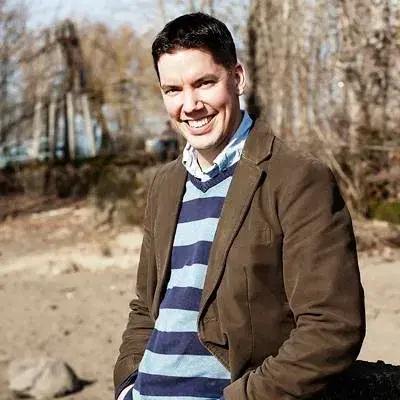
"I always sort of hoped maybe this is something that can help kids, it can sort of be a bridge into Shakespeare for kids. I think there's a lot of fear when it comes to Shakespeare for students, and so if this can help at all, I'm honored." - Ian Doescher
WATCH THE VIDEO VERSION OF OUR INTERVIEW ON YOUTUBE!
Buy William Shakespeare's Star Wars: The Mandalorian of Nevarro
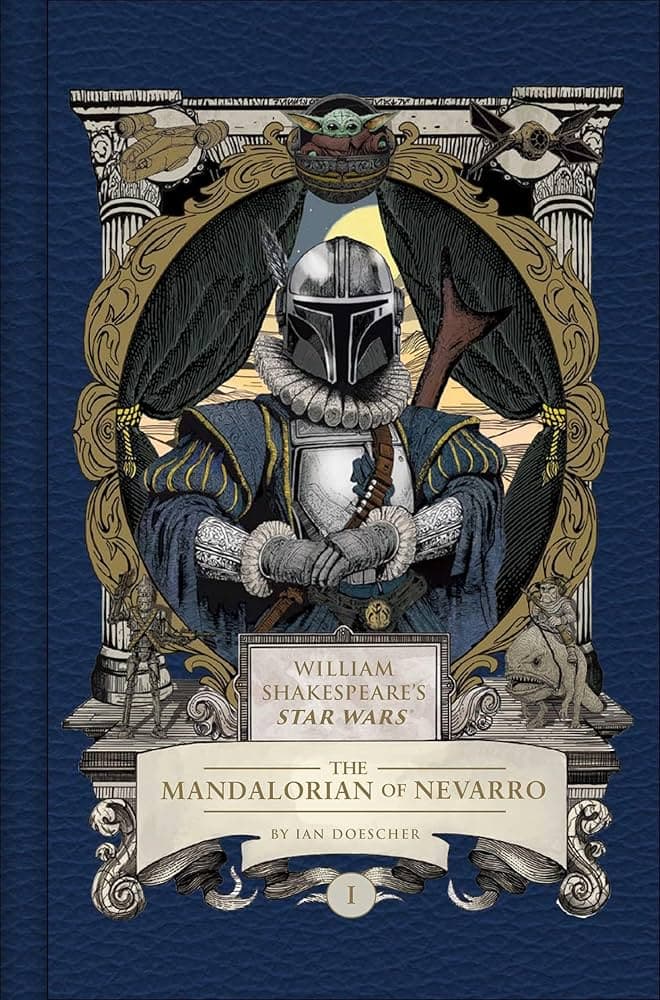
From the publisher
The Bard returns to a galaxy far, far away in the newest book in the NYT bestselling series, retelling the events of the hit Disney+ show The Mandalorian in the classic meter of William Shakespeare.
Enjoy the adventures of the Mandalorian and Grogu all over again, now with a fun Shakespearean twist! The newest book continuing the New York Times bestselling William Shakespeare's Star Wars series, William Shakespeare's Star Wars The Mandalorian of Nevarro retells the events of the hit Star Wars show in the meter and style of the Bard himself, including dialogue from each character from the show, stage directions, and plenty of Easter eggs, all alongside twenty gorgeous woodcut illustrations that give the iconic Star Wars characters a playful Elizabethan air.
WITH STUNNING ILLUSTRATIONS. Twenty woodcut-style illustrations accompany the text, putting a playful Shakespearean spin on the characters from The Mandalorian.
Follow Comic Book Yeti
🔗 Comic Book Yeti LinkTree: https://linktr.ee/ComicBookYeti
For partnership and ad inquiries, please contact: thecomicsyeti@gmailcom
Follow your hosts
ARKENFORGE
Play TTRPG games? Make sure to check out our partner Arkenforge. Use the discount code YETI5 to get $5 off your order.
Make sure to check out our sponsor 2000AD.

[00:00:00] - [Speaker 0]
Your ears do not deceive you. You have just entered the cryptid creator corner brought to you by your friends at Comic Book Yeti. So without further ado, let's get on to the interview.
[00:00:11] - [Speaker 1]
The future is calling. 2,000 AD is the galaxy's greatest comic with new issues published every single week. Every 32 page issue of 2,000 AD brings you the best in sci fi and horror featuring characters like judge dread, rogue trooper, and more. Get a print subscription in 2,000 AD, and it'll arrive to your mailbox every week.
[00:00:33] - [Speaker 2]
And your first issue is free. Or subscribe digitally, and you
[00:00:37] - [Speaker 1]
can download DRM free copies of each issue for only $9 a month. That's 128 pages of incredible comics every month for less than $10. Head to 2,000 AD and click on subscribe now or download the 2,000 AD app and start reading today.
[00:00:55] - [Speaker 2]
Hello, and welcome to Comic Book Yeti's Cryptid Creator Corner podcast. I'm one of your hosts, Jimmy Gasparo, and I I'm really excited about today's guest. We're gonna be talking about something a little different than, the norm in terms of the comic book creator interviews, but I'm really excited about this one. This guest has written, several books, where he has taken Star Wars movies and, basically reinvented them, as if they were written by William Shakespeare. The most recent one is, the Mandalorian of Navarro, but all nine films are in books in you know, as if they were written by Shakespeare.
[00:01:43] - [Speaker 2]
This is, like, a a wonderful idea. I can't get enough of it. And the books themselves, podcast guests, you know, listeners, you can't you can't see this, but it they're they're absolutely gorgeous. But we're gonna talk all about it. I'm so excited.
[00:01:59] - [Speaker 2]
Please welcome to the podcast, Ian Descher. Ian, how are you doing tonight?
[00:02:04] - [Speaker 3]
I'm doing great. Thank you so much for having me.
[00:02:08] - [Speaker 2]
No. No. Thank you for coming on because I'm a big I'm a big Shakespeare fan. I love I love seeing Shakespeare. I I've read not, you know, all of his plays, but quite a number of them.
[00:02:23] - [Speaker 2]
And I'm a big Star Wars fan, and, I just was not aware of this. I think you've been doing you've been writing these since at least 2012, but the you you did the the original trilogy, the prequels, the the sequels, and now I guess this is the tenth book of these that you have done. I I know I think you did some, you know, other other books covering some other things which we could talk about. But, yeah, the mandalorian of Navarro. This is the first time you're, you know, basically adapting an eight episode, television series rather than a two or two and a half hour movie.
[00:03:04] - [Speaker 2]
And it's it's absolutely wonderful. I I said it earlier, but we usually put these on YouTube. So if you're watching this on YouTube, you can see the book. It's absolutely gorgeous. Yeah.
[00:03:16] - [Speaker 2]
Ian has his copy. The other thing is there are also throughout this, there are some wonderful illustrations by Dennis Prisgada. And because one of the things I was wondering and thinking about, like, oh, before I started reading it was, is it is this just, you know, going to be an interpreting the the show through the the lens of of a Shakespeare play because I hadn't read any of the other books, but it really is done as if it is also staged. Because if you can see I mean, look at this wonderful drawing. Wonderful illustration by Dennis of an ATST.
[00:03:58] - [Speaker 2]
It's it's wooden, and it's you can see it's it's being flown in from from the rafters at the globe. Just tremendous stuff. But I guess I wanna start with, like, how how did this project even come about from the from the very beginning?
[00:04:19] - [Speaker 3]
So the original series came about. It was 2012. You're right. You got that right on. And what happened was that I watched the original Star Wars trilogy with some high school buddies of mine, movies that I grew up with and that I've been watching forever.
[00:04:35] - [Speaker 3]
But I hadn't seen them for a while. I hadn't seen them probably for a decade at that point. And so we so we we watched the trilogy one Saturday. And then not too long afterward, I read Pride and Prejudice and Zombies, which is one of the first really popular mashup books that was that was around. And and then just after finishing that book, my family and I went to the Oregon Shakespeare Festival.
[00:05:01] - [Speaker 3]
I'm over in Portland, and so we went down to Ashland and saw some plays there. And it was at the Oregon Shakespeare Festival where I had this idea. I was like, it would be really fun to take Star Wars and rewrite it as a play by Shakespeare. And so that was the genesis of the idea. And I and from there, it was kind of dumb luck because I I wrote to an editor at Quirk Books who they're the ones who had done Pride and Prejudice and Zombies.
[00:05:26] - [Speaker 3]
And he responded and was encouraging and said, you know, if you write something, let me know, and I'll take a look at it. And so I wrote the first act, the first one fifth, basically, of of the original A New Hope movie into into Shakespeare. And he called me when I sent it to him, and he said, okay. I really wanna do this. And now we need to go to Lucas for Lucasfilm for licensing, and we did that and sort of off to the races.
[00:05:52] - [Speaker 3]
And the the first book came out just under a year from when I first had the idea, which for for publishing is pretty darn fast.
[00:06:00] - [Speaker 2]
Yeah. That that that is. Especially, I think I would think for for a project like this. So so what is your background in terms of, you know, Shakespeare?
[00:06:10] - [Speaker 3]
Just just a fan from from forever ago. So when I was when I was in eighth grade, my brother was a senior in high school, and he was doing Hamlet in his senior English class. And I think I bought a copy of Hamlet back then because I wanted to be like my big brother. You know? And and and Sure.
[00:06:29] - [Speaker 3]
Didn't really read it. It wasn't until my freshman year of high school when we started doing Othello in my English class then that I really I I think I was really captured by the story. In Othello, I I really loved Iago as a villain.
[00:06:44] - [Speaker 2]
Oh, yeah.
[00:06:44] - [Speaker 3]
He's my language. Yeah.
[00:06:46] - [Speaker 2]
He's my favorite villain. Yeah.
[00:06:47] - [Speaker 3]
Totally. Right? And as somebody who grew up with, like, doctor Seuss and stuff like that, I I loved the feeling of verse and meter and all that stuff. And so I I always say I was sort of one of the lucky ones where Shakespeare came pretty naturally to me. And and so, you know, just just then went on to read, you know, all of his plays, and and it was the time that Kenneth Branagh was coming out with these great Shakespearean adaptation movies.
[00:07:18] - [Speaker 3]
And so it was just a really good time to be a young person getting into Shakespeare.
[00:07:22] - [Speaker 2]
Wow. Have you ever performed any Shakespeare? Have you done any any acting?
[00:07:29] - [Speaker 3]
Only barely. I was I was a theater kid back in the day. I didn't do any any Shakespeare in high school or anything, but had a a little role in production of the tempest a few years back.
[00:07:40] - [Speaker 2]
Oh, cool. And how was that experience for you?
[00:07:44] - [Speaker 3]
Really fun. Really fun. Yeah. Yeah.
[00:07:48] - [Speaker 2]
Yeah. There's a a local theater here. I'm in Delaware now. There's a little area in Delaware called Arden, and Arden Delaware started probably over a hundred years ago. It's like, I think, an artist's commune.
[00:08:03] - [Speaker 2]
It's like its own little community, but they have a Shakespeare guild. And every year, they do, they they do a a Shakespeare play, and they have a guild hall, which is a big barn, but then they will also do it outside. They have, like, an outdoor theater, and they've been doing it for years and years. And, it's it's probably twelve years ago at this point, maybe around 2004. They did Othello, and I I I I, I would have loved to have played Iago.
[00:08:34] - [Speaker 2]
I think I was a little young. The guy who played, Iago was was tremendous, but I I got the part of Casio.
[00:08:40] - [Speaker 3]
Oh, fun.
[00:08:41] - [Speaker 2]
So, yeah, it was it was real fun. And I had a very I had a I had a really good time doing it, so that was great. I think that I, that's really the only experience I had performing in it, but have always always been a a fan and always loved different adaptations and interpretations of of Shakespeare. So but but just being a fan, though, when you're thinking about adapting star wars, like, there's so many things I think you have to think about because you it's you're not just taking those the screenplay or the story. You know, you have to figure out how it fits within an actual play with, you know, scene breaks and and those types of things.
[00:09:27] - [Speaker 2]
You have to take the language and kind of put the language not only into what it would have been like in Shakespeare day, but, yeah, you have to do it in, you know, iambic pentameter and think about those things. So can you kinda take me through, like, did that process come easy to you at all? Were there any points that you found were more difficult or or or characters that were more difficult to kind of adapt into, you know, that that pattern of talking?
[00:09:59] - [Speaker 3]
I mean, there were getting used to iambic pentameter at the start. I mean, I had I I'm the kind of nerd who over the years had tried my hand at iambic pentameter and other types of of, you know, verse. And so it wasn't totally new to me writing an iambic pentameter, but doing that much, was was certainly new. And what I realized is it's it's really like exercising a muscle. The the more you do it, the the better you get at it, and, it becomes much much more easy.
[00:10:28] - [Speaker 3]
And so these days, writing an iambic pentameter is so much easier than it was in those in those first days of writing that first book. And and I would say, you know, the challenging parts are a couple of things. Right? First of all, it's like when you get to a a moment in Star Wars that is famous for some reason, it's like, okay, I really better handle this well because this is the part that people are gonna, you know in the bookstore, they're gonna, like, turn the pages to see how did he handle, you know, how did he handle Han and Greedo. Right?
[00:11:01] - [Speaker 3]
And so it was something like that. And so so those, I think, were were some of the trickier parts. And then as the series went on, you know, figuring out what to do with how to do some special things with different characters. So so when I got to the second book and I was doing the empire striketh back and all of a sudden, here's Yoda. Right?
[00:11:23] - [Speaker 3]
And and when the first book came out, you know, I I saw people sort of joking like, oh, everybody sounds like Yoda now because the nature of iandic pentameter is Wow. You're messing with word order some and things like that. So I knew I had to do something extra special with Yoda. Right? And then it's like, well, what is that extra special thing gonna be?
[00:11:41] - [Speaker 3]
And so I ended up writing all of his lines in haiku. And so which is not Shakespearean at all, but was sort of very much in keeping with with these books. So it it's things like that that have been challenges along the way.
[00:11:57] - [Speaker 2]
That's oh, that's I I love that, though. I mean, you know, that it's kind of kind of break the mold a little bit, you know, for a character like Yoda. And Haikyu, I think, is a very interesting, you know, way to do it. I I think for the mandalorian of Navarro, even though Grogu doesn't really speak, I noticed that you you did, like, short, long, short kind of for, like, the noises that baby Yoda makes.
[00:12:25] - [Speaker 3]
Exactly. Yeah. Yeah. I mean Yeah. Basically, as a, creature of the same race as Yoda, I was like, well, he's gotta mimic that haiku, you know, pattern in some way.
[00:12:36] - [Speaker 3]
And so, yeah, he said it has those short, long, short, lines.
[00:12:41] - [Speaker 2]
Yeah. So was there any particular, you know, challenge with the mandalorian of Navarro? Because, like, thinking of it and I I I didn't get a chance to rewatch the the first season, but I did watch it. And I, you know, I don't remember the Mandalorian really talking a whole bunch. And the thing about Shakespeare, like, with a play, and for listeners, if you've never seen a Shakespeare play, go see one.
[00:13:07] - [Speaker 2]
If you're not sure what show to see, let Ian or I know. We'll help you out. We'll we'll point you in the direction of a good one. Midsummer is always a good place to start. I think It's a it's a fun one.
[00:13:19] - [Speaker 3]
I agree. I agree. Yeah. Romeo and Juliet, Oselo. I mean, those are yeah.
[00:13:23] - [Speaker 2]
You know, with a play, be it it there is so much of, like, a character coming in. And rather than the action, like, they will describe the action. So you kinda have to, like, pick those moments with a character that is, like, fairly silent. Was there any point when you were, like, putting it together when you were like, oh, maybe I maybe I should have started with one of the side movies that there's more there's there's there's more talking.
[00:13:50] - [Speaker 3]
Because Well You really
[00:13:51] - [Speaker 2]
have to do a good job with that, and I I really think you did. But I would I would think there would have to come a point where it's like, you know, we're really doing a lot of, you know, Mando enters and kind of just, you know, expounds.
[00:14:07] - [Speaker 3]
Right. He definitely has way more dialogue in in my books than he does in the in the show. Right? Yeah. And and you kind of can't get around that, I think.
[00:14:16] - [Speaker 3]
Because I mean, one of the things I I used to say all the time is is, like, Shakespeare would never have Luke Skywalker staring out at the two sons of Tatooine silently. Right? In the movie, he's just sitting there. Big you know, Shakespeare would have you tell he would be talking about exactly what he's feeling in that moment and telling the audience, you know. And so that's just the nature of of the Shakespearean format is characters are gonna talk more and, you said, describe the action that's going on and talk about what they're feeling.
[00:14:44] - [Speaker 3]
And, so so even with Mando, you know, yeah, he's he's got a lot more to say.
[00:14:50] - [Speaker 2]
Oh, yeah. Definitely. But, I I I found it all, like, very, I don't know. I it's very interesting, and it's it's very fun. It reads it really well.
[00:15:03] - [Speaker 2]
It's I it's to me, it just seems like I I mean, it's one thing to write something, but to to take something like this. I guess to me, it's it seems so daunting, and you make it seem so easy. Like, reading the book, it is really brilliant.
[00:15:21] - [Speaker 3]
Thank you
[00:15:22] - [Speaker 2]
so much. How how it's how it's done. Do do you mind if I I I wanted to read something because I I wanted to kinda give the listeners of the podcast a chance to, like, hear what this is like. Do you do you mind if if I if if I do that? So listeners, I I don't really do this because we we talk a lot about comic books, but so this is, this is the end of scene six of act one.
[00:15:54] - [Speaker 2]
So just for fans of the television series, it's where, you know, Mando discovers what the asset is. And I just want you to to listen to this is the type of thing that that Ian Ian wrote to kind of adapt this story and which I think is just just brilliant. So if you'll indulge me for a second listeners. So the scene is Mando has, you know, found the asset. He says, an unexpected quarry, verily, beyond all expectation or surmise.
[00:16:26] - [Speaker 2]
I could no more destroy this innocent than harm myself for something in it speaks unto the deepest fathoms of my soul. Ne'er hath a target targeted my heart. Ne'er hath my prey so preyed upon my mind. I am a bounty hunter and shall prove as faithful to my calling as I ought, yet to fulfill this duty brings no joy. The treasure I believed I would obtain is not the self same treasure I have found.
[00:16:51] - [Speaker 2]
Reward I sought, but did not seek award. No riches I have found, but foundling rich in seeming purity and innocence. Keep thou thy senses, Mandalorian. Thou hast a client who hath the employed. Thou hast a clear objective to achieve, yet to the act am I unreconciled.
[00:17:08] - [Speaker 2]
The asset, nay. Herein, I find the child. I mean, that gives me chills reading that. And some of the things that, like, when you think about, like, how Shakespeare wrote and how, like, so clever the wordplay is for his day and time because he was he was writing for the people that would go see him play, but he's also writing for the, like, the groundlings, the people that, like, the the the common folk that also came to see the plays. But you have a wonderful, you know, play on words in here with, reward I sought but did not seek award.
[00:17:40] - [Speaker 2]
No riches I have found, but foundling rich. Like, it is. I I was, like, kind of blown away. I mean, it just I got to that part in the book, and I think I read that, like, three or four times in a row. I just it was really, really good.
[00:18:00] - [Speaker 2]
Like, what's kind of your, like, your, like, writing background in? Did you do you did you go to, school or college for it? Did you, like because this just seems like one you know, another another level, like, to than a a, you know, a casual Shakespeare fan.
[00:18:20] - [Speaker 3]
I mean, I didn't go to school for this. I I I was a music major in college, and then I was and then I went on to study theology in in graduate school. So I've been all over the place academically. But I I will say that when I first told friends back in 2012, right, that that, hey. I've just had this book thing happen, and it's gonna be Shakespeare Star Wars.
[00:18:42] - [Speaker 3]
Like, everybody who knew me was like, oh, of course. Of course, that's what you're doing. Right? Because because I was the What's I was the nerd who, when we had to memorize a a speech from Macbeth for English class, junior year, like, brought a fake sword to school to, like, perform it with the speech. Right?
[00:19:00] - [Speaker 3]
Like, I was I was that guy. Right? So, so nobody was surprised to hear that I was was doing this sort of thing.
[00:19:07] - [Speaker 2]
Wow. Yeah. Yeah. That is a little bit all over the place. Music, theology, and writing these.
[00:19:15] - [Speaker 2]
Yeah. So are there any specifically, or, I mean, you can bring up any of the other books. I'm just kinda curious. As a as a fan of star wars as well, you know, we talked a little bit about, like, some of the the the trickier aspects of it, but what you know? And, oh, I gotta get this scene right.
[00:19:33] - [Speaker 2]
But was there anything that you were really looking forward to? Like, was there anything that really stuck out to you where you're like, oh, this is kind of perfect for what I'm doing, and this this is going to come across great. And, you know, it was as much fun as you thought it would be when you got to that particular scene.
[00:19:50] - [Speaker 3]
You know, one of the one of the Lucasfilm in in their wisdom, I would say. Right? Like, when when we first when I first, when I wrote that first draft that I sent to the editor, I stayed very close to the original script. I mean, I I was in iambic pentameter and Shakespearean language, but I was not doing a lot of my own adding adding in things. Because I because I thought of George Lucas as I think we all kinda do as somebody who's very protective of his own material.
[00:20:21] - [Speaker 3]
Right? And so I was like, I don't wanna like, I want this to just, you know, be something they're gonna be okay with. And essentially, their their initial feedback was, we like the concept. We wanna see if you can have more fun with it. Like, can can you actually, like like, do more with this?
[00:20:38] - [Speaker 3]
You know? Go ahead and sort of take it outside the bounds. And that freedom has made the projects so much more fun than I think it would have been otherwise. I think it would have been much more like a almost like a translation project, which in some ways, it still is. But now I get to do all this additional stuff.
[00:20:58] - [Speaker 3]
Right? Like like writing a soliloquy for for Mando when he when he encounters the child. Right? And one of the first things I tried when I was writing the first book was, you know, there's there's the scene once the Millennium Falcon is is pulled into the Death Star by the tractor beam, and Han and Luke are all hiding in the in the sort of thing compartments below the floor.
[00:21:24] - [Speaker 2]
Yeah. Yeah.
[00:21:25] - [Speaker 3]
And then these stormtroopers who were standing guard outside the Millennium Falcon, and they get called inside and then killed. Right? And I gave them dialogue. I gave them a a conversation where one of them basically was like, don't you think that maybe like, it's weird that this empty ship showed up here, and isn't it possible that there are, like, people hiding inside? And his friend is like, dude, like like, do you think you really know better than Darth Vader and governor Tarkin and things like that?
[00:21:52] - [Speaker 3]
Like, just calm down. Everything's gonna be fine. Right? And then they get called inside and they get killed. And and that was like as I was writing it, like, I was just like, little geek Star Wars fan was, like, so excited.
[00:22:04] - [Speaker 3]
Like, oh, this is so fun, and I really hope they let me keep it. And they did let me keep it, and and that started a tradition in act four of every one of these books, including the new one, right, where there's this dialogue that does not exist at all in the in the movies or the shows, and it's just and it's kinda poking fun at the at Star Wars a little bit. Right? And and so, like, it's those kind of things that that have been have been so fun to do. And and that, I think, is also what what readers like more, you know, more than just rereading the traditional plot that they know already.
[00:22:40] - [Speaker 3]
So, yeah, that that that's been a lot of fun for me. And, basically, at this point, there's nothing that I won't try. I know they can always tell me no. They can always say no. That's that's too much.
[00:22:51] - [Speaker 3]
Right? And they have a couple of times, but but most of the time, they're just like, this is fun.
[00:22:57] - [Speaker 2]
Oh, that's so cool. You have, like, your own now now you have your own like, Rosencrantz and Gildenstern are dead Right. Within your your own little universe of of star wars books.
[00:23:09] - [Speaker 3]
A 100%.
[00:23:10] - [Speaker 2]
Yeah. Yeah. One of the other things that I thought was was interesting, as to how you handled it, and I really thought it it added something very unique and interesting to the story. You know, in the in the I I think this is still in the the first act of the Mandalorian where, like, his ship is attacked by the creature and, like but then further on, like, you have some of the creature you have some of the creatures, like, talk, which I thought was, like, very interesting. And I liked how you do it because they're always at least the ones I I read, they're always more of like a like a rhyming scheme, in terms of how you lay it out.
[00:23:55] - [Speaker 2]
What was kind of your thought process behind doing that?
[00:24:01] - [Speaker 3]
Yeah. I think I think part of it is that it's it's fun that it's kind of unexpected. Right? I mean, you you you know, in in Star Wars, I'm not sure there are any creatures that ever actually speak in Star Wars. Right?
[00:24:14] - [Speaker 3]
And so I think I think my the first time I did that was in the Empire Strikes Back with the Wampa, know, and part of it was just like, oh, this will be fun. Right? People won't people won't expect this to be, you know, to happen. And so Yeah. And and so then also to and then it kind of adds to the ridiculousness of it when a creature is talking in rhyme and is almost kind of, like, jaunty and happy.
[00:24:42] - [Speaker 3]
You know? And it's like this is it's a sort of a cognitive dissonance, I think, but in a a way that is that is fun, I hope, for people who are reading it.
[00:24:54] - [Speaker 2]
Yeah. I thought it I I definitely thought it was unexpected, and I I enjoyed it. I thought it was, you know, an interesting kind of aspect of it because, you know, even if it's even if you thought of it as it's not happening, like, literally, you know, it could be, but you're kinda giving some interior monologue to these to these creatures. And, yeah, I I I found it very interesting. I I really enjoyed that aspect of it.
[00:25:25] - [Speaker 3]
Thanks. A few a few years ago, we my editor at Quirk Books, he and I pitched a William Shakespeare's Jurassic Park to, you know, to the movie makers and the the Michael Crichton estate, and they did not like the idea of talking dinosaurs. So it's not for everyone. I'll admit that. It's not for everyone.
[00:25:49] - [Speaker 2]
I you know, I mean, I I think that would be for me. I would like to see that. I would like I would like to see how that would go. But, yeah, I guess I guess talking dinosaurs aren't aren't for everyone.
[00:26:04] - [Speaker 4]
Jimmy is too humble to do this. So as his stalwart ride or die, I wanted to tell you about his new graphic novel, Penny and the Yeti with artist Amber Aiken. What started as a comic short with his daughter that I've known about for ages now, and it's evolved and has become one of those annoying can't talk about it in comics things for too damn long. Yes, I'm predisposed to be supportive but after reading an advanced copy of it, I have to admit it's way better than I anticipated. No shade, but it's really good, remarkably so.
[00:26:35] - [Speaker 4]
Does it have a yeti? Yeah. Is it cute and adorable? Yeah. But it streak lies in effectively tapping into the all too familiar family dynamics that we all are facing in 2026 and approaching it in a way that doesn't insult the book's target audience, kids.
[00:26:51] - [Speaker 4]
They are way smarter and perceptive than we adults give them credit for. So I really appreciated Jimmy's narrative approach tapping into his own experiences as a dad and a spouse. I can hear his wife saying, get off your phone, Jimmy,
[00:27:03] - [Speaker 2]
through the
[00:27:03] - [Speaker 4]
pages. She's gonna kill me for saying that. It's hitting shelves on April 21, and I dropped the link in the show notes where you can preorder a copy today. Getty or not, here we come with Penny, Perry, Fenton, Maxine, and the magical, mythical, magnificent Yeti. On behalf of us both, we appreciate your support.
[00:27:25] - [Speaker 2]
Yahawala. So to talk a little bit more about kinda some of the the challenges of the Mandalorian of Navarro, and I I, you know, I mentioned you've done the movies before, and, you know, now this is, an eight episode series. And I know I think the prisoner and or the gunslinger and and the prisoner in here kind of more, of, like, Mando relating those events. So what were the kind of the how did you go about breaking it down into, you know, an eight episode show into a five act structure?
[00:27:57] - [Speaker 3]
Yeah. That was definitely the the biggest challenge of this of this one because, just because just like you said. Right? The others the others are about the length. I mean, those movies are about the length of a Shakespeare play, roughly.
[00:28:10] - [Speaker 3]
Right? So so a much more reasonable length. And in as opposed to an eight episode series, you know, and, so the first thing I did was was watch it watch the series through and outline, okay, how is this gonna go in a five act structure? And and as you said, right, this is what I did was take a couple of episodes that don't a couple of the episodes that don't actually contribute to the overall arc of what's happening in season one and have those told as as Mando is sort of recounting his adventures to Cara Dune as opposed to actually writing them out as their own scenes. And that that helped keep it a more manageable length, I think.
[00:28:58] - [Speaker 3]
It still is it still is one of my longer, if not the longest adaptation of mine, just because of how much material there is to cover. But that at least, I think, kept it a little bit more manageable. Yeah.
[00:29:13] - [Speaker 2]
Yeah. And that does seem like it would be you know, it does seem to me like it would be more difficult to take, you know, an eight episode show and put it into a you know, fit it into a five act structure than to, you know, take a movie that's typically written in a three act structure and just figure out two other break points. You know? Yeah. Yeah.
[00:29:34] - [Speaker 2]
It that does seem, like, particularly a a unique challenge. But, yeah, I I was really surprised just how well it all, you know, flowed together. I also love this is, like, such a nerdy theater kid thing. I loved all the stage directions in the book too. I mean, I don't know.
[00:29:54] - [Speaker 2]
I just got such a kick out of it. I just I was like, oh, yeah. Of course. There's gonna be, like, stage directions. It's just like a play.
[00:30:01] - [Speaker 2]
And Yeah. I will say I
[00:30:03] - [Speaker 3]
will say that that I definitely have way more stage directions than a Shakespearean play would, which is sort of the nature of writing what is essentially an action series, you know, into a a play. But, yeah, hopefully hopefully, it's fun. I I I really do try to imagine, like, what would this look like if it were actually being staged and and how where would you actually put people? And sometimes, you know, you have to kinda stretch your imagination to to really see this happening on a stage, but but I do try to keep that in mind as much as possible.
[00:30:39] - [Speaker 2]
What has been your well, not necessarily your favorite, but what what one of of yours do you think in terms of the the movies yeah. You know? Or or even this one, the Mandalorian of Navarro and and kind of, creating these these books that that you have done. What one do you think is there anyone in particular that you think real you, like, uniquely captured both the the, like, fun and adventure of the movie and kind of the the spirit or gravitas of a Shakespeare play?
[00:31:16] - [Speaker 3]
That's a that's a good that's a good question. And it's it's it's so hard to say. You know, there's there's when I was growing up because I was six years old when it came out, the return of the Jedi was my favorite. Right? And so Yeah.
[00:31:32] - [Speaker 3]
And so, like, writing that one was sort of extra fun for me. Would I say that it was necessarily the one that captures you know, I don't know. The you know, in some ways, I guess, I'd wanna say the tragedy of the Sith's revenge be just because there you get to see the fall of Anakin, which is which is Right. So so Shakespearean. Right?
[00:31:54] - [Speaker 2]
Well, that's what I was gonna say. And I haven't like I said, I I'm I'm gonna buy all of these and read them all
[00:31:59] - [Speaker 3]
because
[00:31:59] - [Speaker 2]
I love this one so much. But to me, out of when I think of Shakespeare and, like, Shakespeare's tragedies, yeah, that that one to me seems like it would lend itself the best to, yeah, to a Shakespearean tragedy. Yeah. The the the rise and then fall of Anakin is perfect.
[00:32:20] - [Speaker 3]
Yeah. I mean, really, episodes one through six are, like, almost like a classical tragedy, right, in terms of the rise and fall and everything. So yeah. Yeah. I so I I think I think there's probably a lot of that extra Shakespearean feeling in that in that one.
[00:32:37] - [Speaker 2]
Okay. Oh, awesome. So have you do you have to, like, revisit the movies, like, every time you've you've written one of these? Like, do you start by, like, watching them over again? Like, do you do you do you get us, like, like, get a script and look at a script at all, or you're just going by the movie?
[00:32:57] - [Speaker 3]
So, the the answer sort of differs by, by which ones we're talking about. So the original trilogy, those scripts are all you can find them online. So that so that was easy enough to do. The by the time of the prequels, though, those scripts are also online, and I was also, I think, probably starting to use the captions closed captioning on, you know, on, like, Disney plus and things like that. Right?
[00:33:24] - [Speaker 3]
Which helps
[00:33:24] - [Speaker 2]
a lot.
[00:33:25] - [Speaker 3]
The the tricky the trickiest ones were the sequel series because I wrote those I wrote those basically within about a month of the movies actually coming out. And so and I was not I was not given a script. I I wish I had been. That would have been that would have been cool. I I literally, I mean, this is not, like, something I'm I'm proud of and certainly was not something, Lucasfilm suggested that I do, but I would literally go into the theater and see the movies and record the movie on my cell phone as I was watching it so that I would be able to refer like, go back like, I needed something to refer to to be able to write these books.
[00:34:06] - [Speaker 3]
And those were those were also the ones where the the visual the DK visual dictionaries that come out. I bought those as well for those movies so that I could look up, okay, what's this what's this character's name? What is this weapon called? You know, those sorts of details. And then and then with Mando, again, was back to being able to use closed captioning and things like that.
[00:34:27] - [Speaker 3]
So so my process is is basically to answer your first question, right, is like, I usually will just watch the whole thing just to remind myself, okay, where are we? What's going on? You know? And certainly with with The Mandalorian, there was also that process of outlining. And then and then it's really just like, okay, watch a few seconds at a time.
[00:34:47] - [Speaker 3]
See, like, okay, what dialogue is going on here? How are we gonna render that in iambic pentameter? Is there a chance to do something fun with it? Or should there be an aside or a soliloquy or something like that? Or as as time has gone on, I've I've put various restrictions on myself with various characters, you know, like like Mace Windu always referenced the title of a Samuel L.
[00:35:13] - [Speaker 3]
Jackson movie in his lines. So it was it was things like that, right, where I would, like, impose these these conditions on myself. Right? So those were things to keep in mind as as the things went on. So Oh my gosh.
[00:35:27] - [Speaker 3]
Yeah.
[00:35:27] - [Speaker 2]
I need to read all of these right away. That's that's see.
[00:35:31] - [Speaker 3]
It's been I've I've never wanted I mean, there are readers, of course, who there have been readers who've been with me since the first book. Right? And I never want them to feel like there's nothing new for them. Right? I always want there to be something that feels like it's new.
[00:35:43] - [Speaker 2]
Well, I also I just love the the poetry, of of the language, and I I kinda love seeing the interpretation. Like, I do like that. Look. It's it's almost a translation. Right?
[00:35:55] - [Speaker 2]
I I do I like that aspect of it. I I I I love reading it. I love saying it out loud. I love hearing it. But, yeah, those things, like, that's, you know, that's some real fun nerd stuff, like, doing things like that.
[00:36:13] - [Speaker 2]
Well, I read, I think, in the, you know, in the in the afterword even of of this, like, you, did you didn't you put in here that with with Mando, you didn't realize it or maybe didn't intend to do it at first, but then you started doing it intentionally that, like, his lines never end on an un unstressed syllable, and you continued that throughout them, which so that's just another challenge. You're just giving yourself more challenges.
[00:36:47] - [Speaker 3]
It's just one more limitation to remember. You know? Yeah. Yeah. It was it it was just sort of a sort of a fluke, but then I was like, well, I guess I guess Mando is just always gonna have a full ten ten syllables and only 10 syllables as opposed to that extra eleventh that that Shakespeare sometimes does.
[00:37:06] - [Speaker 2]
And I also noticed, in my reading of it that you do you know, will sometimes work in references, little Easter eggs, if if you will, to, you know, famous lines of Shakespeare plays. So I know in in this one, the lark and the nightingale, came up. And there was another one that I I remember that sparked my memory right away in terms of a Shakespeare play, and I I can't remember what one it was. But I know there were a couple in here that I came across. So I guess that's another thing that you have gone and done and embedded some Shakespeare lines into, work them into these books, which is brilliant.
[00:37:51] - [Speaker 3]
Yeah. I try to do that for I mean, you know, it obviously, if you have no if you have no knowledge of Shakespeare at all, you should be able to come to these books and read them and not have a problem. Right? But for people who do know Shakespeare, right, there's that extra little added extra level of like, oh, hey. I okay.
[00:38:09] - [Speaker 3]
I see I see that line there. I got it. Yeah.
[00:38:12] - [Speaker 2]
Yeah. Yeah. Just really you really, really well done. You know? Thanks.
[00:38:20] - [Speaker 2]
And I I think that was in one of the scenes between Mando and, what's the character's name? Emera. Mhmm. Mhmm. Yeah.
[00:38:27] - [Speaker 2]
And you did another Shakespeare thing where they would sometimes kind of finish each other's couplets, if I'm not mistaken.
[00:38:37] - [Speaker 3]
Yeah. They have a they have a lot of of lines that that are split between the two of them. So one of them will start a line of iambic pentameter, and the other one will pick it up and finish it.
[00:38:46] - [Speaker 2]
And Yeah. I guess it's not really a couplet. But
[00:38:48] - [Speaker 3]
Yeah. And so and so it yeah. I did that because I think I say this in the afterward. Right? Like, there's never there's never any explicit romance.
[00:38:58] - [Speaker 3]
I mean, we we never see them, like, kiss in the in the show or anything like that. But, but it's suggested that, you know, that that's kinda what's going on. And so I was trying to sort of hint at, like, yeah, they've got a connection there.
[00:39:10] - [Speaker 2]
Yeah. Yeah. Just really, I'm just kinda giddy. It's really, really, well done. I've I haven't been on stage.
[00:39:21] - [Speaker 2]
I haven't done a play in fifteen years, but definitely made me wish I could still, you know, still go out and do some Shakespeare. Because other than Othello oh, you know what? I did much ado as well years years later. I did Nice. Much Ado.
[00:39:38] - [Speaker 2]
Yeah. Who are you who are you in Much Ado? Claudio.
[00:39:42] - [Speaker 3]
Okay. Wow. Yeah. Look at you go. Yeah.
[00:39:45] - [Speaker 2]
Yeah. So I have one comedy one comedy, one tragedy under my belt.
[00:39:50] - [Speaker 3]
And but and but you're like, I'll only play characters whose names start with c and end at o.
[00:39:56] - [Speaker 2]
That's all I'll do. That's it. Yeah. Casio, Claudio. Yeah.
[00:40:00] - [Speaker 2]
So if they're I'll have to see if there what other characters there are that, that fit that Yeah. That bill for maybe come out of retirement and, do another Shakespeare play. Yeah. So I I wanted to talk about a little bit if if we could because when I was getting ready for the interview, I, you know, saw that you had done some, you know, other types of books as well in in terms of the Shakespeare, which I thought listeners might be interested in. So did you do was there a was there a Deadpool one?
[00:40:37] - [Speaker 3]
Yeah. So that's the one comic book that I ever got to write for. So I so I got an email totally out of the blue from a, an editor at Marvel, and it said, you know, I'm interested in a project. Let me know if you wanna talk about it. And that's one of those ones where you, like, call back immediately.
[00:40:56] - [Speaker 3]
You're like, yes. I very much want to talk about this. And they were they were planning to do, an extra large, you know, edition of the of the Deadpool comic book. And, basically, they had their first 20 pages but needed the additional 60 pages. And they gave me sort of carte blanche to do what I want to do.
[00:41:16] - [Speaker 3]
I mean, the great thing about Deadpool is you can write whatever the heck you want to and and and basically, like, it's fair game. So, so I did a Shakespearean Deadpool, and that was that was a lot of fun. And not a process that I mean, I'd never written for a comic book before. So just even sort of learning about the the format for how you write those things and everything, was was really cool.
[00:41:37] - [Speaker 2]
Yeah. Yeah. Is that I just I saw that it came out, I think, in, like, 2021, but, but as that's fully illustrated?
[00:41:47] - [Speaker 3]
Yeah. Yep. It's just a it's just a normal normal comic book.
[00:41:53] - [Speaker 2]
Oh, that's fantastic. Yeah. I I just yeah. I was looking at some of these other things, and I was just like, I wanna talk about I wanna talk about all of them, not just the star wars stuff with the new book because you've you've a you've a pop Shakespeare series. You've Shakespearean horror trilogy.
[00:42:10] - [Speaker 2]
Yeah. I think you you self published some of those. I yeah. This is this
[00:42:15] - [Speaker 3]
is the past. With quirk books, I did back to the future and mean girls and clueless and also the four that that existed at the time, the four Avengers movies. And so those those were all ones that I did with Quirk in addition to the Star Wars books. And then yeah. And then, yeah, just just kinda for fun and during the pandemic, I I decided it'd be fun to do some horror classics.
[00:42:43] - [Speaker 3]
So I did a Shakespearean versions of Dracula and Frankenstein and Doctor. Jekyll and Mr. Hyde. And those were those were really fun to do. It's it's always different taking a a book and turning it into Shakespeare than taking a movie.
[00:42:57] - [Speaker 3]
It feels feels a little weirder doing it from a book because that's already a written medium. But yeah, so but it but they've been fun fun to do.
[00:43:06] - [Speaker 2]
Oh, that's awesome. You know, I mean, even if it's, you know, I under like, it's a written medium, but still, like, there's something about the language that I really love. You know? And, I think fans of Shakespeare and but I think even folks who, you know, even folks who aren't familiar with it and think that Shakespeare is just something they're gonna make me read at some point in school. But, you know, stuff like this, though, it just I don't know.
[00:43:36] - [Speaker 2]
It it it feels very it feels very fresh, very fun, and I I I just I love the the language of it. I can't I can't say that enough. And, you know, if this could be a really fun way for someone to get into Shakespeare and then discover, you know, Shakespeare's plays. And, also, because you're not just doing a translation, you are adding these these other things in it. You are having some fun with it.
[00:44:08] - [Speaker 2]
There there is stuff in here for, you know, for fans of of star wars, of the Mandalorian. So
[00:44:21] - [Speaker 3]
Yeah. Yeah. And that and that's always been sort of my my hidden agenda. Right? Like, I always say, like, yes.
[00:44:26] - [Speaker 3]
I just want people to enjoy these books, and that is a 100% true. But, also, there's always been part of me that's like and like I said at the start, right, I was lucky when it came to Shakespeare. I just sort of took to it, and that's not the story for most students, I think, especially in the in America. Right? And so, so I always sort of hoped, like, maybe this is something that can help kids it can sort of be a bridge into Shakespeare for for kids.
[00:44:51] - [Speaker 3]
And I've heard from a a lot of teachers who are are using it in just that way, right, where they're they'll read a little bit of one of my books so that they're getting a feel for the verse and for the overall structure and style and that kind of thing before they go into real Shakespeare. And that's and I just love that. Like, I I love hearing that because because, you know, I I don't want people to be I I think there's a lot of fear when it comes to Shakespeare for students. And so if this can help at all, I'm honored.
[00:45:21] - [Speaker 2]
I think that's awesome. Well, Ian, this has been an absolute delight. I'm gonna have to get all these other books and read them. But for folks on YouTube, I'm gonna show the cover here because these these books are gorgeous. But William Shakespeare's star wars, the Mandalorian of Navarro is out now.
[00:45:43] - [Speaker 2]
I will put links in the show notes so that you can make sure that you order and get yourself a copy. And, yeah, look, I'll I'll put a link to, Ian's website, so you can check out some of the other stuff. And you can be like me, and you can go catch up on, all these Shakespearean adaptations of, you know, some of my favorite movies of all time. Alright, Iain. Before I let you go, the the the one real Star Wars nerd question, what what how do you rank the movies?
[00:46:19] - [Speaker 2]
What's your what's your ranking order? Do you do you have it down?
[00:46:23] - [Speaker 3]
I don't I okay. I don't I don't have it down. Okay. But but let me let me try really fast. Right?
[00:46:30] - [Speaker 3]
Okay. So, I still have such a soft spot in my heart for, Return of the Jedi. Just as for the nostalgia as a kid, it's hard for me to to move that one from the top. Shortly followed by Empire and A New Hope. But I've also gotta put Rogue One up there among those somewhere.
[00:46:51] - [Speaker 3]
Just really love really love that. After that let's see. I think we're probably after that going oh, boy. This is gonna make me unpopular with a lot of people. After that, we're probably gonna go Last Jedi, and then we're probably gonna go Force Awakens, and then we're probably gonna go the Attack of the Clones, and then we're probably gonna go Revenge of the Sith, and then we're probably gonna go Rise of Skywalker, and then we're probably gonna go Phantom Menace.
[00:47:22] - [Speaker 3]
And I forgot Solo in there. So Solo's somewhere in there as well. But yeah. So I don't know. I don't even know what order I just told you, but but something like that.
[00:47:34] - [Speaker 3]
Yeah.
[00:47:36] - [Speaker 2]
No. I think that's, yeah. I I think I think it's a pretty good order. I think, you know, I I when I was younger, I I always use this. Oh, empire strikes back is my favorite.
[00:47:49] - [Speaker 2]
And I went and I re I rewatched all of them before force awakens came out. Like, I did like this you know, I watched the six movies before force awakens. And I was like, yeah. I think that's one of those things where everyone's like, oh, yeah. Empire is the my favorite.
[00:48:07] - [Speaker 2]
Empire is the best. And I'm like, it's go on. It's return of the Jedi. Return of the Jedi. Return of the Jedi is so much fun.
[00:48:14] - [Speaker 2]
What are we doing? What are we all doing saying empire strikes back is the best movie? It's return of the Jedi.
[00:48:19] - [Speaker 3]
I don't care if you're
[00:48:20] - [Speaker 2]
making fun me walks.
[00:48:22] - [Speaker 3]
I we really wanna get, like, into the the weeds as geeks. Right? Like like, really what it is for me is, like, there are there are sequences within movies that are my favorites. Right? So, like, yeah, I don't like, once it hits the Ewoks, I don't care much about Return of the Jedi.
[00:48:37] - [Speaker 3]
But I the Jabba the whole opening with the Jabba scene, I just absolutely love. Same with, like, same with Empire. Like, the opening on Hoth, I totally they just love. Yeah. Right?
[00:48:48] - [Speaker 2]
And It's such a great sequence.
[00:48:51] - [Speaker 3]
Yeah. And you can't beat the death star sequence at the end of a new hope. Right? I mean, till, like, really what it is for me is it's like there and even even in, like, Phantom Menace, right, the pod racing scene is just just for the speed of it and the adventure of it, I think, is is super fun. So there are elements within all of them that I that I love.
[00:49:10] - [Speaker 3]
Right? And
[00:49:11] - [Speaker 2]
Yeah. Oh, yeah. Absolutely.
[00:49:12] - [Speaker 3]
Yeah.
[00:49:13] - [Speaker 2]
Yeah. I I agree. Yeah. I I'm I mean, I really love return of the Jedi. I mean, I I do.
[00:49:21] - [Speaker 2]
I'm the same way. There's there's elements of all of them that, you know, that I really like. And, well, I can't wait to revisit them all now, in iambic pentameter. Look at this. Look at me.
[00:49:33] - [Speaker 2]
I got I got nine more books I get to I get to read. So that's exciting for me. But, yeah, Ian, thank you so much. This was a a real a real pleasure to chat with you. I I absolutely love the mandalorian of Navarro.
[00:49:47] - [Speaker 2]
I thought it was so good.
[00:49:49] - [Speaker 3]
Thank you so much.
[00:49:51] - [Speaker 2]
Yeah. Listeners, thank you for listening. Shout out to my brother Bobby, the cryptic creator corner's number one most dedicated fan. Bobby listens to all my episodes. I know listeners, you might be tired of hearing that, but, I mean, he keeps listening.
[00:50:03] - [Speaker 2]
What am I gonna do?
[00:50:04] - [Speaker 3]
Thank you, Bobby.
[00:50:08] - [Speaker 2]
And see now, I Bobby's gonna get a I'm gonna buy Bobby a copy of the Mandalorian and Navarro too. He really likes when the guest says, hi, Bobby. So that's that's exciting for him. Yeah. Rate, review us, do all the stuff they tell you to do about podcasts.
[00:50:22] - [Speaker 2]
It really helps. If you like YouTube, we've been putting a lot of these on YouTube, so you please subscribe to our YouTube channel. And, yeah, let me know. Find me on blue sky or or TikTok, or let me know, what your favorite star wars are. Let me know if you're gonna go get these books by, Ian Descher.
[00:50:43] - [Speaker 2]
And, yeah, let's talk Star Wars. Let's talk Shakespeare. These books are awesome, and you should check them out. So thank you so much for listening. Have a good night.
[00:50:54] - [Speaker 2]
I'll see you next
[00:50:55] - [Speaker 4]
This is Byron O'Neil, one of your hosts of the Cryptid Creator Corner brought to you by Comic Book Yeti. We hope you've enjoyed this episode of our podcast. Please rate, review, subscribe, all that good stuff. It lets us know how we're doing and more importantly, how we can improve. Thanks for listening.
[00:51:15] - [Speaker 0]
If you enjoyed this episode of the Cryptid Creator Corner, maybe you would enjoy our sister podcast, Into the Comics Cave. Listen and subscribe wherever you get your podcasts.